

Google Scholar to overshadow them all? Comparing the sizes of 12 academic search engines and bibliographic databases
Open accessThe DOI matches its Crossref record; 60 of the 61 references it cites were found in a registry or an index, and 1 are not checked yet.
Abstract
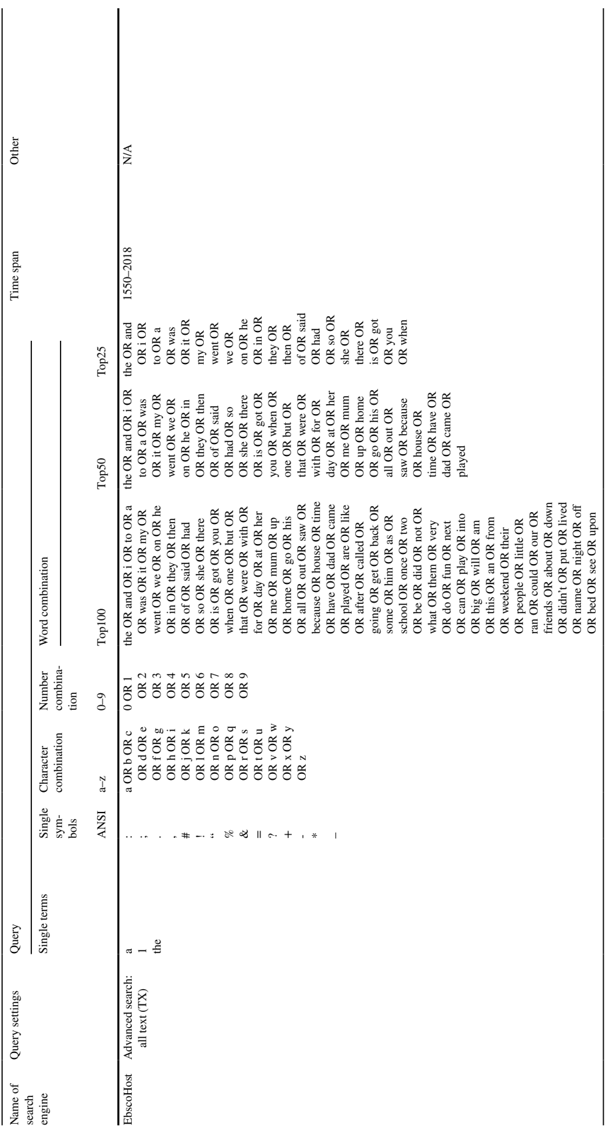
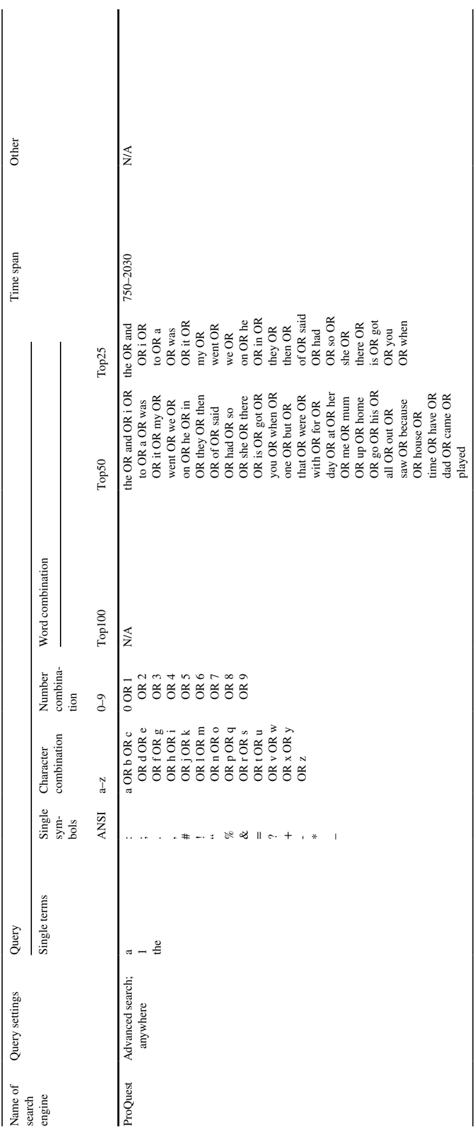
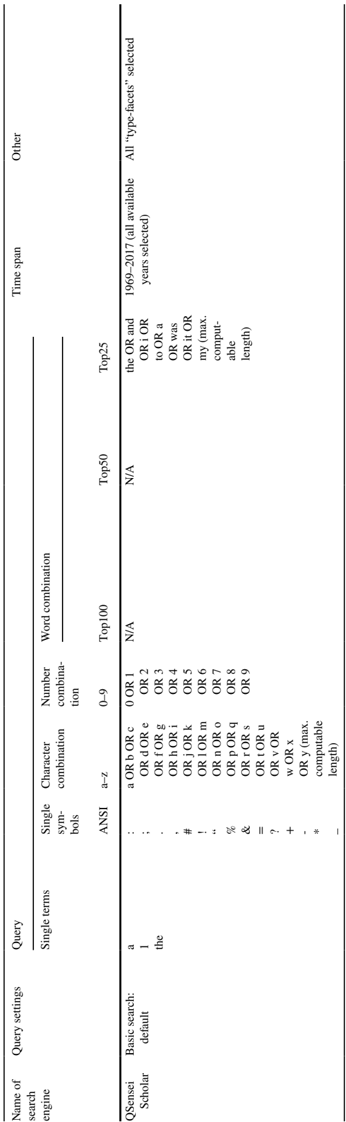
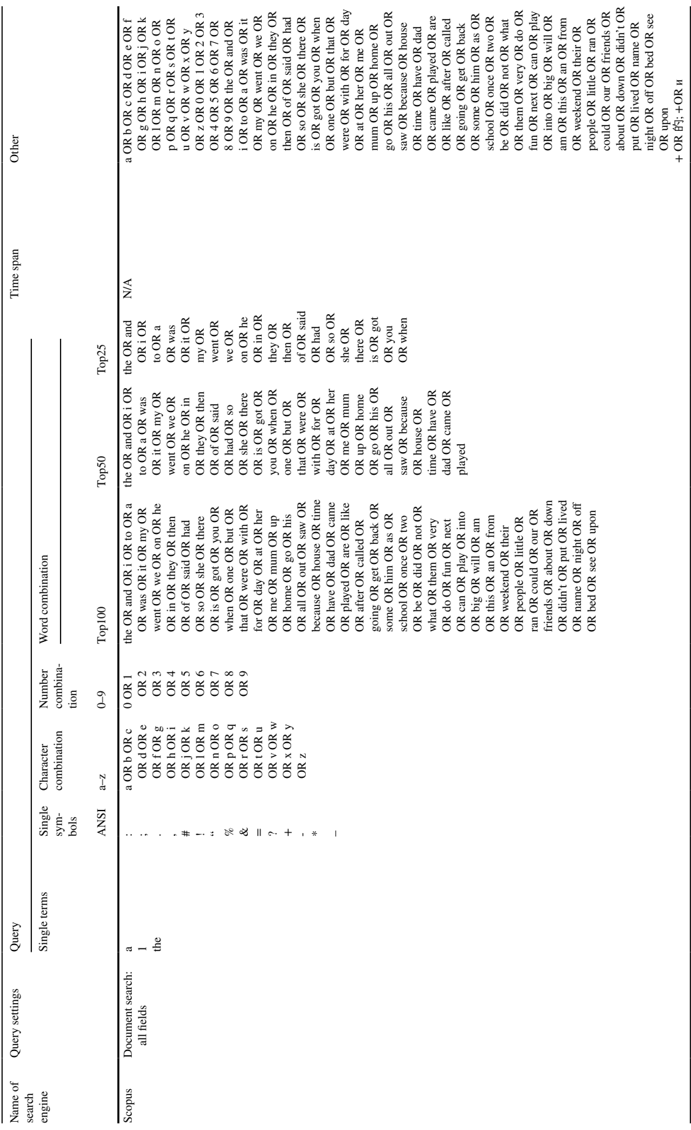
Information on the size of academic search engines and bibliographic databases (ASEBDs) is often outdated or entirely unavailable. Hence, it is difficult to assess the scope of specific databases, such as Google Scholar. While scientometric studies have estimated ASEBD sizes before, the methods employed were able to compare only a few databases. Consequently, there is no up-to-date comparative information on the sizes of popular ASEBDs. This study aims to fill this blind spot by providing a comparative picture of 12 of the most commonly used ASEBDs. In doing so, we build on and refine previous scientometric research by counting query hit data as an indicator of the number of accessible records. Iterative query optimization makes it possible to identify a maximum number of hits for most ASEBDs. The results were validated in terms of their capacity to assess database size by comparing them with official information on database sizes or previous scientometric studies. The queries used here are replicable, so size information can be updated quickly. The findings provide first-time size estimates of ProQuest and EbscoHost and indicate that Google Scholar’s size might have been underestimated so far by more than 50%. By our estimation Google Scholar, with 389 million records, is currently the most comprehensive academic search engine.
Overview
The claims and statistics of this paper haven’t been checked yet.
Free: it reads the open-access text and checks the first 5 claims that cite a source we can check. Create a free account to check every claim.
Integrity signals
Registry
Cites
Statistics
Figures
Verification
Claims the paper makes
The claims and statistics of this paper haven’t been checked yet.
Free: it reads the open-access text and checks the first 5 claims that cite a source we can check. Create a free account to check every claim.
Claims other papers make about this one
Each is checked against this paper’s own text: does it say what the citing paper says it does?
The source backs part of the claim, not all of it — or backs it for a different population, condition or comparison.
In the citing paper
“Unfortunately, the majority of DBs' end users are not usually aware of these limitations and how they can affect the accuracy, reliability, and reproducibility of their task's outcome [15,23].”
From Web of Science (WoS) and Scopus: The Titans of Bibliographic Information in Today’s Academic World (2021) · cites this paper as [23]
Experimental — accuracy not yet measuredThe source backs part of the claim, not all of it — or backs it for a different population, condition or comparison.
In the citing paper
“even when the dates of the last update are indicated to be very recent, the information provided is often clearly not the most recent one, especially regarding the numbers describing DBs coverage, which can confuse users in determining which information they can rely on”
From Web of Science (WoS) and Scopus: The Titans of Bibliographic Information in Today’s Academic World (2021) · cites this paper as [23]
Experimental — accuracy not yet measuredThe cited source says what the claim attributes to it.
In the citing paper
“These characteristics make it the most comprehensive academic search engine [28], removing the need to perform the search in each distinct reputable academic repository.”
From A Review of Design and Evaluation Practices in Mobile Text Entry for Visually Impaired and Blind Persons (2023) · cites this paper as [28]
The cited source says what the claim attributes to it.
In the citing paper
“1 Google Scholar was chosen because it is currently the most comprehensive academic search engine with 389 million records (Gusenbauer, 2019).”
From When Problem Solving Followed by Instruction Works: Evidence for Productive Failure (2021) · cites this paper as Gusenbauer, 2019
The cited source says what the claim attributes to it.
In the citing paper
“In these cases, the convenience and performance of the DB's web interface and provided additional functionalities may also greatly influence the preference of the DB [14,23,24].”
From Web of Science (WoS) and Scopus: The Titans of Bibliographic Information in Today’s Academic World (2021) · cites this paper as [23]
6 more claims about this paper
Create a free account to see every claim other papers make about this one.
Self-check
Percentages, sums and reported differences re-computed from the paper’s own numbers.
The self-check needs the paper’s full text.
Citations
Cites
Martín-Martín, A., Orduna-Malea, E., Thelwall, M., & Delgado López-Cózar, E. (2018) · Journal of Informetrics · doi:10.1016/j.joi.2018.09.002 · Cited by 1,990
Martín-Martín, A., Orduna-Malea, E., Thelwall, M., & López-Cózar, E. D. (2018) · doi:10.31235/osf.io/42nkm · Cited by 1,990
A Comparison between Two Main Academic Literature Collections: Web of Science and Scopus Databases
Chadegani, A. A., Salehi, H., Yunus, M. M., Farhadi, H., Fooladi, M., Farhadi, M., & Ebrahim, N. A. (2013) · Asian Social Science · doi:10.5539/ass.v9n5p18 · Cited by 1,925
Bornmann, L., & Mutz, R. (2015) · Journal of the Association for Information Science and Technology · doi:10.1002/asi.23329 · Cited by 1,576
Accessibility of information on the web
Lawrence, S., & Giles, C. L. (1999) · Nature · doi:10.1038/21987 · Cited by 1,349
The Literature of Bibliometrics, Scientometrics, and Informetrics
Hood, W. W., & Wilson, C. S. (2001) · Scientometrics · doi:10.1023/a:1017919924342 · Cited by 981
Meho, L. I., & Yang, K. (2007) · Journal of the American Society for Information Science and Technology · doi:10.1002/asi.20677 · Cited by 974 · cited 2×
“…have examined ASEBDs individually (Aguillo 2012; Halevi et al. 2017; Mayr and Walter 2007; Orduña-Malea et al. 2015; Hug and Braendle 2017; Harzing 2014) or compared them in pairs or multiples (Meho and Yang 2007; Shultz 2007; Chadegani et al. 2013; Khabsa and Giles 2014; de Winter et al. 2014).”
Search Engines: Information Retrieval in Practice
Croft, B. W., Metzler, D., & Strohman, T. (2009) · Medical Entomology and Zoology · Cited by 797
Online collaboration: Scientists and the social network
Van Noorden, R. (2014) · Nature · doi:10.1038/512126a · Cited by 654
Thelwall, M. (2008) · Journal of Information Science · doi:10.1177/0165551507087238 · Cited by 518 · cited 1×
“2015; Orduña-Malea and Delgado López-Cózar 2014; Hood and Wilson 2001; Thelwall 2008, 2009; Bar-Ilan 2008).”
Background
Research works printed but not linked: 6
- 13. Arts and Humanities Citation Index (1975-present) 4. Conference Proceedings Citation Index-Science (1990-present) 5. Conference Proceedings Citation Index-Social Science and Humanities (1990-pre- sent)
- 19. Data Citation Index (2010-present) 5. Derwent Innovations Index (2010-present) 6. KCI-Korean Journal Database (1980-present) 7. MEDLINE (1950-present)
- Ortega, J. L. (2014). Academic search engines: A quantitative outlook (Chandos information professional series). Oxford: Chandos Publishing.
- 63. Ortega, J. L. (2014). Academic search engines: A quantitative outlook (Chandos information professional series). Oxford: Chandos Publishing. Oxford University Press. (2008). Oxford wordlist. Oxford: Oxford University Press.
- 64. Pederson, J. P. (2001). International directory of company histories (International Directory of Company Histories Ser) (Vol. 40). Farmington Hills: Saint James Press. (Imprint); Cengage Gale.
- 69. Thelwall, M. (Ed.). (2009). Introduction to webometrics: Quantitative web research for the social sciences (Synthesis lectures on information concepts, retrieval, and services) (Vol. 4). San Francisco: Morgan & Claypool Publishers.
Cited by
Items 401–500 of 884
Critical Success Factors of Muslim Entrepreneurs: A Thematic Review
Rahman, S. S. A., Senik, Z. C., Hassan, W. Z. W., Yaacob, S. E., Zakaria, Z., & Nadzri, S. B. (2022) · International Journal of Academic Research in Business and Social Sciences · doi:10.6007/ijarbss/v12-i3/12329 · Cited by 7
“However, despite the shortcomings, Google Scholar is among the popular searching database, which has the largest amount of articles or documents (389 million) (Gusenbauer, 2019).”
BackgroundCitations in Google Scholar profiles by Kinesiology subdiscipline
Knudson, D. V. (2022) · Journal of Kinesiology & Wellness · doi:10.56980/jkw.v11i.102 · Cited by 8
“databases (Delgado-Lopez-Cozar & Cabezas-Clavjo, 2013; Gusenbauer, 2019; Halevi et al. 2017: Harzing & Alakangas, 2016; Martin-Martin et al., 2018, 2021; Meho & Yang, 2007) and this is particularly important in a diverse, multidisciplinary field like kinesiology.”
BackgroundFINANCIAL DEVELOPMENT AND POVERTY ALLEVIATION: A SYSTEMATIC REVIEW
Elumah, L. O., Muritala, T. A., & Zubairu, U. M. (2024) · JOURNAL OF ECONOMICS AND SUSTAINABILITY · doi:10.32890/jes2024.6.1.1 · Cited by 7
Hervas, G. (2021) · Revista Panamericana de Pedagogía · doi:10.21555/rpp.v33i33.2397 · Cited by 7
“…bibliometric information because recent scientometric studies have found that it is the most comprehensive academic search engine and bibliographic database (Gusenbauer, 2019) and that it offers significant additional coverage compared to World of Science and SCOPUS (Martín-Martín et al., 2018).”
MethodVrontis, D., Hulland, J. S., Shaw, J. D., Gaur, A. S., Czinkota, M., & Christofi, M. (2021) · International Marketing Review · doi:10.1108/imr-09-2021-387 · Cited by 7
Subramaniam, R., Palakkeel, P., & Arunmozhi, M. (2023) · Research Square · doi:10.21203/rs.3.rs-3304963/v1 · Cited by 7
Publication outlets for school psychology faculty: 2016–2020
Hulac, D., & Aspiranti, K. B. (2023) · Psychology in the Schools · doi:10.1002/pits.22981 · Cited by 6
A Methodological Framework for Stimuli Control: Insights From Numerical Cognition
Shilat, Y., Henik, A., Galili, H., Wasserman, S., Salzmann, A., & Salti, M. (2024) · Advances in Methods and Practices in Psychological Science · doi:10.1177/25152459241249185 · Cited by 6
“P a r k ( 2022 ) s u gg e s t e d t h e r e a r e s eve r a l f l a w s i n Y ou s i f a nd K e il ’ s ( 2019 ) s t ud y , w h i c h u s e d a dd i t i ve a r e a .”
InfluentialGhosh, P., Rajpal, M., Dwivedi, V., & Rahman, M. A. (2024) · Journal of Data Science Informetrics and Citation Studies · doi:10.5530/jcitation.3.3.30 · Cited by 6
Investigating the research output of institutions
Stock, W. G., Reichmann, G., & Schlögl, C. (2025) · Journal of Informetrics · doi:10.1016/j.joi.2025.101638 · Cited by 6
Ensemble and Hybrid Models in Automated Essay Scoring: A Literature Review
Ramnarain-Seetohul, V., Rosunally, Y. Z., & Bassoo, V. (2025) · SN Computer Science · doi:10.1007/s42979-025-04245-1 · Cited by 6
“The latter was chosen as it is the most wide-ranging academic search engine [100] and it indexes papers from a broad range of scholarly publishers and professional societies such as Science Direct, IEEE, ACM, Taylor & Francis, and Wiley, among others.”
Goyanes, M., Domínguez‐Díaz, A., Jordá, B., & de‐Marcos, L. (2025) · PLoS ONE · doi:10.1371/journal.pone.0334690 · Cited by 6
“In addition, most studies relied mainly on data from large-scale platforms such as SciVal or Web of Science, typically neglecting Google Scholar, despite it being one of the most popular academic search engines and increasingly relevant for bibliographic research [19,20].”
Rural livelihood strategies in Sub-Saharan Africa: a systematic review on Cameroon
Balgah, R. A., Buchenrieder, G. R., & Awazi, N. P. (2025) · SN Social Sciences · doi:10.1007/s43545-025-01265-9 · Cited by 6
“In addition, Google Scholar has a net higher performance in terms of hits, compared to other databases such as Scopus or Web of Science (Bar-IIan 2010), and remains the most comprehensive academic search engine, at least as compared to ProQuest and EbscoHost (Gusenbauer 2019).”
Martin, M. (2026) · Energy Research & Social Science · doi:10.1016/j.erss.2026.104577 · Cited by 6
Navion, F. P., Widyarto, W. G., Azmi, K. R., Zuhdi, M. S., Cahyono, F. T., Machfud, M. S., & Arifuddin, A. (2025) · Buletin Konseling Inovatif · doi:10.17977/um059v5i32025p349-362 · Cited by 6
In-text citation’s frequencies-based recommendations of relevant research papers
Shahid, A., Afzal, M. T., Alharbi, A., Aljuaid, H., & Al-Otaibi, S. T. (2021) · PeerJ Computer Science · doi:10.7717/peerj-cs.524 · Cited by 6
“Similarly, SCOPUS indexes and Google Scholar have indexed millions and billions of documents, respectively ( Scopus, 2021 ; Gusenbauer, 2019 ).”
BackgroundSystematic Literature Review on the Relationship between Religion and Business Success
Annuar, A. M. A., & Ali, J. K. (2021) · International Journal of Academic Research in Business and Social Sciences · doi:10.6007/ijarbss/v11-i7/10194 · Cited by 6
“…for scientific and systematic research with indexing of more than 5000 publishers, advance searching functions, they control the quality of articles and they have multidisciplinary focus, including business and entrepreneurship related studies (Gusenbauer, 2019; Martín-Martín et al., 2018).”
BackgroundHuang, E. I., Lu, A., Tsai, Y., Wang, T., Chuang, H., Chen, W., & Chen, P. (2021) · Medicine · doi:10.1097/md.0000000000027341 · Cited by 6
Tourism and Women Empowerment in Developing Economies: Systematic Literature Review
Mahwish, S., & Nawaz, M. A. (2022) · iRASD Journal of Management · doi:10.52131/jom.2022.0402.0086 · Cited by 6
Sustainable banking practices in Southern Africa
Mara, C. C. (2023) · Acta Commercii · doi:10.4102/ac.v23i1.1191 · Cited by 6
“A literature search conducted using Google Scholar and Ebsco Information Services, found these two search engines to be the most effective (Gusenbauer 2019).”
MethodFirmansyah, F., Sudirman, M. Y. D., & Putra, R. I. (2024) · International Journal of Power Electronics and Drive Systems/International Journal of Electrical and Computer Engineering · doi:10.11591/ijece.v14i3.pp2868-2874 · Cited by 6
“…our search strategy using google scholar is used in searching journals because according to [8], google scholar has successfully indexed articles from many professional scientific publishers and Gusenbauer [9] concluded that Google Scholar is the most comprehensive academic search engine today.”
MethodSilke, A. (2024) · Journal of Criminal Psychology · doi:10.1108/jcp-04-2024-0035 · Cited by 6
The Cow Paradox—A Scoping Review of Dairy Bovine Welfare in India Using the Five Freedoms
Mathkari, C. (2025) · Animals · doi:10.3390/ani15030454 · Cited by 6
“Google Scholar is currently the most comprehensive academic search engine [34], Scopus appears to have a predisposition to animal welfare science articles [35], and ScienceDirect retrieves the most relevant articles from the database using a fine-tuned semantic search model [36].”
Digital, IA et formation des adultes : synthèse de treize ans de recherche internationale
Blandin, B., Adinda, D., Jeunesse, C., & Vergnas, O. L. (2025) · Savoirs · doi:10.3917/savo.068.0013 · Cited by 6
Approaches for Representing Software as Graphs for Machine Learning Applications
Romanov, V., Ivanov, V. V., & Succi, G. (2020) · International Computer Symposium · doi:10.1109/ics51289.2020.00109 · Cited by 6
“Our choice of a single academic search engine was motivated by the study performed by Gusenbauer [24].”
MethodA Bibliometric Exploration of Events Literature In and Outside the Core Journals
Fletcher, R., & Bostock, J. (2022) · Event Management · doi:10.3727/152599522x16419948391177 · Cited by 6
Świgoń, M., Głowacka, E., & Kisilowska, M. (2022) · Media - Kultura - Komunikacja Społeczna · doi:10.31648/mkks.7182 · Cited by 6
Kamarrudin, H., Talib, O., Kamarudin, N., & Ismail, N. (2023) · Malaysian Journal of Social Sciences and Humanities (MJSSH) · doi:10.47405/mjssh.v8i6.2342 · Cited by 6
“Firstly, it provides massive results, as Gusenbauer (2019) determined in their analysis that this database has 389 million entries.”
BackgroundGsm_hdata: a bibliometric tool to analyze data from google scholar metrics
do Canto, F. L., Pinto, A. L., Dias, T. M. R., Gavron, E. M., & Talau, M. (2023) · Mobile Networks and Applications · doi:10.1007/s11036-023-02258-9 · Cited by 6
“The non-disclosure of a master list of indexed publications and the absence of a search resource by ISSN, country or region, or other editorial characteristics make large-scale analyses from the standard GSM search engine difficult [ 4, 8, 9].”
Soft TQM Elements for Digital Transformation in the Public Sector
Wahi, N. S. A., & Berényi, L. (2023) · Pro Publico Bono - Magyar Közigazgatás · doi:10.32575/ppb.2023.3.2 · Cited by 6
Dominic, E. D., Mahamed, M., Abdullah, Z., & Hashim, N. B. (2024) · Journal of Contingencies and Crisis Management · doi:10.1111/1468-5973.12535 · Cited by 7
Martínez-García, A., Ferrer-Rosell, B., Horrach-Rosselló, P., & Mulet-Forteza, C. (2024) · IntechOpen eBooks · doi:10.5772/intechopen.1005005 · Cited by 6
La Presencia del Investigador en el Ecosistema Digital de la Ciencia Abierta
García‐Peñalvo, F. J., Fidalgo-Blanco, Á., Séin-Echaluce, M. L., & García, F. T. (2019) · Congreso Internacional sobre Aprendizaje, Innovación y Competitividad (CINAIC) · doi:10.26754/cinaic.2019.0101 · Cited by 6
OhioLINK librarians and Google Scholar over time: a longitudinal analysis of attitudes and uses
Luftig, D., & Plungis, J. (2020) · Reference Services Review · doi:10.1108/rsr-04-2020-0031 · Cited by 6
Hayashi, M. C. P. I., Maroldi, A. M., & Hayashi, C. R. M. (2021) · Palabra clave · doi:10.24215/18539912e143 · Cited by 6
“…no Google Scholar escolhido por ter se tornado nos últimos anos um poderoso banco de dados da literatura acadêmica com livre acesso na Web, contendo cerca de 389 milhões de registros de publicações científicas de diversos campos de conhecimento web (Gusenbauer, 2019; Halevi, Moed & BarIlan, 2017).”
BackgroundTwitter library account: highlights for the users and librarians
Mnzava, E. E. (2020) · Library Hi Tech News · doi:10.1108/lhtn-07-2020-0064 · Cited by 6
Temporal changes of bat diversity in the urban habitat island of Batu Caves, Malaysia
Nordin, J., Chew, T. H., Lim, L.-S., & Shamsir, M. S. (2021) · IOP Conference Series Earth and Environmental Science · doi:10.1088/1755-1315/736/1/012051 · Cited by 6
“Google is the most comprehensive academic search engine with the largest coverage of literature found in academic search engines and bibliographic databases (ASEBDs), which include subscription-based SCOPUS and Web of Science databases [16,17].”
BackgroundNash, C. (2025) · Encyclopedia · doi:10.3390/encyclopedia5020056 · Cited by 6
“A 2019 study of twelve academic databases that found it the most comprehensive search engine [36], additionally reconfirmed with the 2023 research [37], was the basis for selecting Google Scholar as a search engine database.”
Artificial intelligence technologies to support research assessment: A review
Kousha, K., & Thelwall, M. (2022) · arXiv · doi:10.48550/arxiv.2212.06574 · Cited by 5
Investigating the Application of Thematic Progression in EFL Writing: A Systematic Review
Sun, G., & Ahmad, N. K. (2024) · International Journal of Learning Teaching and Educational Research · doi:10.26803/ijlter.23.2.14 · Cited by 5
Scoping Review of Triage Modifications to Emergency Medical Care in Hospitals Post-COVID-19
Nash, C. (2025) · Emergency Care and Medicine · doi:10.3390/ecm2010006 · Cited by 5
“Therefore, by following the PRISMA guidelines for this scoping review, the information provided on the chart is insufficient.”
Zuki, M. F. M., Rahim, R. T. A., & Noor, N. S. M. (2025) · Ulum Islamiyyah · doi:10.33102/uij.vol37no01.647 · Cited by 5
“First, it yields tremendous results; (Gusenbauer, 2019) Estimated that this database has 389 million records in its study.”
Topal, İ. H. (2025) · The JALT CALL Journal · doi:10.29140/jaltcall.v21n2.2184 · Cited by 5
A decade of financial literacy research in Indonesia: A bibliometric review (2014-2024)
Effendi, R., Sukmayadi, V., Holilah, M., & Haryanegara, M. E. A. (2026) · Social Sciences & Humanities Open · doi:10.1016/j.ssaho.2026.103149 · Cited by 5
A Quantitative Analysis of 21st Century Skills: A Case of Semantic and Psychometric Overlap
Teyssier‐Roberge, G., Gagnon, J., Tremblay, S., & Hodgetts, H. M. (2025) · International Journal of Selection and Assessment · doi:10.1111/ijsa.70030 · Cited by 5
Knight, R., Valappil, A. C., Bruton, A. M., & Greene, A. (2026) · Sports Biomechanics · doi:10.1080/14763141.2025.2603396 · Cited by 5
“The initial searching of the three databases and the subsequent search through retrieved reference lists may not have identified all possible articles for inclusion; searching of more comprehensive databases may have entailed greater coverage (Gusenbauer, 2019).”
Nash, C. (2026) · Publications · doi:10.3390/publications14020029 · Cited by 5
“(Gusenbauer, 2019)”
InfluentialZourmpakis, A.-I. (2026) · Computers · doi:10.3390/computers15070464 · Cited by 6
“Google Scholar was additionally chosen for being the largest academic search engine today [69] and for providing access to relevant articles outside the scope of traditional educational journals [70].”
Aljohani, N. R. (2023) · Applied Sciences · doi:10.3390/app13127172 · Cited by 5
Adesemowo, A. K. (2023) · Humanities and Social Sciences Communications · doi:10.1057/s41599-023-02498-w · Cited by 5
Plant-life vocabulary as metaphors for post-normal planetary challenges
Scarano, F. R., Aguiar, A. C. F., Holz, V. L., de Macedo, A. L., Lombardi, A., dos Santos, L. S., & Koch, F. (2024) · Theoretical and Experimental Plant Physiology · doi:10.1007/s40626-024-00333-4 · Cited by 5
Science, research, and innovation infospheres in Google results of the Ibero-American countries
Belli, S., & Gonzalo-Penela, C. (2020) · Scientometrics · doi:10.1007/s11192-020-03399-4 · Cited by 5
Systematic Literature Review on the Relationship Between Islam and Organizational Performance
Annuar, A. M. A., & Ali, J. K. (2021) · International Journal of Academic Research in Business and Social Sciences · doi:10.6007/ijarbss/v11-i10/11176 · Cited by 5
“…they offer, including vast resources and comprehensive collections of materials for scientific and systematic research, indexing of over 5000 publishers, advanced searching functions, quality control of articles, and multidisciplinary coverage (Gusenbauer, 2019; Martín-Martín et al., 2018).”
BackgroundDenissen, J. J. A., & Rauthmann, J. F. (2024) · PLoS ONE · doi:10.1371/journal.pone.0296421 · Cited by 5
The emergence of externally active representative bureaucracy, a narrative review
Keiff, S. (2024) · Administrative Theory & Praxis · doi:10.1080/10841806.2024.2331961 · Cited by 5
“To clarify the links and differences between citizen participation, representative bureau-cracy, and the EARB concept, our initial strategy involved identifying the most cited articles on Google Scholar (Gusenbauer, 2019; Jacs � o, 2005; Martin-Martin et al., 2017).”
Teper, T., Campo, K. X., Eaton, C., Bhatia, G., & Mesmer, B. L. (2025) · Systems Engineering · doi:10.1002/sys.21804 · Cited by 5
Pires, C. M. B. F. (2021) · International Journal of Clinical Practice · doi:10.1111/ijcp.14215 · Cited by 6
Goldman, G. A., & Tselepis, T. J. (2021) · Przedsiębiorczość Międzynarodowa · doi:10.15678/ier.2021.0701.01 · Cited by 5
“Google Scholar was used, as a recent study comparing it to 12 other search engines indicated that it is the most efficient search engine for literature (Gusenbauer, 2019).”
MethodToward a unified model of mobile Business Intelligence (m-BI) acceptance and use
Weichbroth, P., Kowal, J., & Kalinowski, M. (2022) · Hawaii International Conference on System Sciences (HICSS) · doi:10.24251/hicss.2022.036 · Cited by 5
The scientometric landscape of Evolang: A comprehensive database of the Evolang conference
Wacewicz, S., Sibierska, M., Placiński, M., Szczepańska, A., Poniewierska, A. E., Ng, Y. Y., & Żywiczyński, P. (2022) · Journal of Language Evolution · doi:10.1093/jole/lzad003 · Cited by 5
Ausgespielt?: Zu Risiken und Nebenwirkungen von Gamification
Heinz, M., & Fischer, H. (2020) · Qucosa (Saxon State and University Library Dresden) · Cited by 5
Recensements et mesures de la publication scientifique : l’article scientifique comme donnée
Egret, D. (2021) · Histoire de la recherche contemporaine · doi:10.4000/hrc.6388 · Cited by 5
Academic environment and quality of education : A literature review
Elken, M., & Wollscheid, S. (2019) · NORA - Norwegian Open Research Archives · Cited by 5
Advances in Electron Microscopy with Deep Learning
Ede, J. M. (2020) · Warwick Research Archive Portal (University of Warwick) · doi:10.48550/arxiv.2101.01178 · Cited by 5
CS-Insights: A System for Analyzing Computer Science ResearchPreprint
Ruas, T., Wahle, J. P., Küll, L., Mohammad, S. M., & Gipp, B. (2022) · arXiv (Cornell University) · doi:10.48550/arxiv.2210.06878 · Cited by 5
“With more than 389 million records, Google Scholar is probably the most comprehensive academic repository today (Gusenbauer, 2019).”
Background(2025) · doi:10.1145/3715275.3732087 · Cited by 4
“These databases include open-access and subscription-based publications, representing a broad disciplinary coverage such as science, engineering, medicine, and the humanities [24, 51, 52, 144, 169].”
Halal and Muslim-Minority Countries: A Systematic Literature Review
Adham, K. A., Muhamad, N. S., Said, M. F., & Nasir, N. M. (2024) · International journal of institutions and economies/Institutions and economies · doi:10.22452/ijie.vol16no4.2 · Cited by 4
Niedzwiedzki, D. M., Taniguchi, M., & Lindsey, J. S. (2025) · Photochemistry and Photobiology · doi:10.1111/php.70018 · Cited by 4
“The vast size of the literature—estimated at > 10 8 papers 21 —is perhaps coun-terintuitively no longer the intrinsic problem, as modern search engines can readily canvass such a large collection.”
Doan, D. T., Albsoul, H., Shobha, A. R., GhaffarianHoseini, A., & Ghaffarianhoseini, A. (2026) · Engineering Construction & Architectural Management · doi:10.1108/ecam-05-2025-0892 · Cited by 4
Torres-Polo, M., & Guzmán, E. (2026) · Computation · doi:10.3390/computation14040076 · Cited by 4
Elliott, T. C., Ayres, K. M., Hart, J. B., & Ledford, J. R. (2024) · Single Case in the Social Sciences · doi:10.15763/issn.1936-9298.2024.1.1.61-83 · Cited by 4
Eaton, C., Campo, K. X., Longhurst, A., Mesmer, B. L., & Ferreira, S. (2024) · Systems Engineering · doi:10.1002/sys.21799 · Cited by 4
Nash, C. (2025) · COVID · doi:10.3390/covid5050061 · Cited by 4
“This database is recognized to outperform the coverage of either Scopus or Web of Science [42], providing the reason for including this database as part of the search process.”
Nash, C. (2025) · Virtual Worlds · doi:10.3390/virtualworlds4020026 · Cited by 4
“Moreover, a 2019 study of twelve academic databases found it the most comprehensive search engine [55]—additionally reconfirmed with 2023 research [56].”
Alzahrani, K. K. (2025) · Frontiers in Microbiology · doi:10.3389/fmicb.2025.1638271 · Cited by 4
“…databases such as Scopus and WOS, Google Scholar has a broader scope since it captures links to works from a more diverse range of academic and non-academic sources, including conference proceedings, theses, book chapters, and non-indexed journals (Söderlund and Madison, 2015; Gusenbauer, 2019).”
Crowley, J., & WELLS, J. S. G. (2025) · Nursing Inquiry · doi:10.1111/nin.70052 · Cited by 4
“Academic search engines and bibliographic databases are the standard systems used for scientific research, and Google Scholar has become the most popular search engine in academia for its convenience and wide range of publicly available documents (Gusenbauer 2019).”
SwCS: Section-wise Content Similarity Approach to Exploit Scientific Big Data
Irshad, K., Afzal, M. T., Rizvi, S. S., Shahid, A., Riaz, R., & Chung, T. (2021) · Computers, materials & continua/Computers, materials & continua (Print) · doi:10.32604/cmc.2021.014156 · Cited by 4
“Further, SCOPUS indexes 75 million records [4] and Google Scholar indexes 389 million documents [5].”
BackgroundMethodBorycz, J., Carroll, A. J., & Eskridge, H. N. (2021) · Journal of eScience Librarianship · doi:10.7191/jeslib.2021.1192 · Cited by 4
Hathab, A. F. O., & Rosdi, M. S. M. (2021) · Academy of Information and Management Sciences journal · Cited by 4
A Thematic Review on Prophetic Leadership: Analysis of Publication Patterns from 2010 Till 2021
Rahman, S. S. A., Senik, Z. C., Hassan, W. Z. W., Yaacb, S. E., & Zakaria, Z. (2022) · International Journal of Academic Research in Business and Social Sciences · doi:10.6007/ijarbss/v12-i3/12330 · Cited by 4
“On the other hand, Google Scholar is among the popular searching database, which has the largest amount of articles or documents (389 million) (Gusenbauer, 2019).”
BackgroundA Thematic Review on Prophetic Leadership in Organisations: Analysis of Patterns and Impacts
Rahman, S. S. A., Senik, Z. C., Hassan, W. Z. W., Yaacob, S. E., & Zakaria, Z. (2022) · Jurnal Intelek · doi:10.24191/ji.v17i2.17952 · Cited by 4
Krach, S. K., McCreery, M. P., Monk, M. M., & Bagneris, J. R. (2022) · Journal of School Health · doi:10.1111/josh.13286 · Cited by 4
Perubahan guna tanah paya bakau di Malaysia: Satu ulasan sistematik
Pusat Pengajian Sosial, P. D. P., Rosli, N. N., Majid, N. A., Institut Alam Sekitar dan Pembangunan (LESTARI), U. K. M., Selamat, S. N., & Institut Alam Sekitar dan Pembangunan (LESTARI), U. K. M. (2023) · Malaysian Journal of Society and Space · doi:10.17576/geo-2023-1901-05 · Cited by 4
Factors influencing information-seeking behavior of academic scientists in the open access era
Devi, K. S., & Lawanda, I. I. (2023) · Journal of Electronic Resources Librarianship · doi:10.1080/1941126x.2023.2271369 · Cited by 4
“They do not need to formulate specific keywords or use search strategies, such as Boolean logic but can still access abundant reading materials (Gusenbauer, 2019; Salehi et al., 2018).”
BackgroundA Systematic Review of Model-Driven Game Development Studies
Payandeh, A., Sharbaf, M., & Kolahdouz-Rahimi, S. (2024) · IEEE Transactions on Games · doi:10.1109/tg.2024.3356408 · Cited by 4
“Games, Computer Games, Video Games These words can be combined to form the overall search string as follows: Search String: A and B We started by searching some of the terms on Google Scholar, which is considered a broad academic search engine [17].”
Potentials and pitfalls of using ChatGPT in journalism
Cyrek, B. (2024) · Zarządzanie Mediami · doi:10.4467/23540214zm.23.013.19741 · Cited by 4
Higher Education Sustainable Online Education for Institutions: A Systematic Literature Review
Amir, A. F., Mohamed, A. T. F. S., & Juhary, J. (2024) · Asia Pacific Journal of Educators and Education · doi:10.21315/apjee2024.39.1.3 · Cited by 4
Degha, H. E., & Laallam, F. Z. (2024) · ACM Transactions on Management Information Systems · doi:10.1145/3680287 · Cited by 4
Artificial Intelligence’s Impact on Personal Selling: A Profession in Danger?
Koukopoulos, A., Vrechopoulos, A., & Lazaris, C. (2024) · Lecture notes in information systems and organisation · doi:10.1007/978-3-031-65782-5_13 · Cited by 4
Rainer Willi Bussmann’s scholarly impact: a scientometric review
Malik, B. A., & Malik, Z. A. (2021) · Ethnobotany Research and Applications · doi:10.32859/era.21.14.1-19 · Cited by 4
“Google Scholar (GS) is considered as the world’s most comprehensive academic social networking database with 389 million records (Gusenbauer 2019).”
BackgroundLamy, G. (2022) · Politique et Sociétés · doi:10.7202/1092340ar · Cited by 4
Jima’ain, M. T. A., Ansar, A. M. H., Hehsan, A., & Mohamed, A. M. (2023) · UMRAN - International Journal of Islamic and Civilizational Studies · doi:10.11113/umran2023.10n2.612 · Cited by 4
“Kajian daripada Athukorala et al. (2016) dan Gusenbauer (2019) juga menyatakan dan mendapati bahawa Google Scholars dan Microsoft Academics adalah antara pangkalan data carian yang popular di dunia.”
BackgroundVocational interest measures across Africa: a scoping review
Scholtz, S. E. (2023) · British Journal of Guidance and Counselling · doi:10.1080/03069885.2023.2227335 · Cited by 4
“…the following search terms were also used in conjunction with each African country (e.g. “ Zimbabwe ” AND/OR) in Google Scholar, the largest database of academic resources (Gusenbauer, 2019): “ job ” , “ interest ” , “ career ” , “ adolescent ” , “ vocational ” , “ learner ” , “ student ” .”
Kisilowska, M., Świgoń, M., & Głowacka, E. (2023) · Przegląd Biblioteczny · doi:10.36702/pb.927 · Cited by 4
Agyei-Henaku, K. A. A.-O., Badu-Prah, C., Srofenyoh, F. Y., Gidiglo, F. K., Agyeiwaa-Afrane, A., & Djokoto, J. G. (2024) · SAGE Open · doi:10.1177/21582440241233406 · Cited by 4
“Google Scholar (GS) with 389 million records, is currently the most comprehensive academic search engine (Gusenbauer, 2019; Ordun˜a-Malea et al., 2015).”
Li, J., Goerlandt, F., van Nunen, K., & Reniers, G. (2021) · Journal of Integrated Security and Safety Science · doi:10.18757/jisss.2021.1.4638 · Cited by 6
“2020), it is known that the coverage differs somewhat between different academic databases such as Web of Science, Scopus, ProQuest, and Google Scholar, with some variations between scientific disciplines (Gusenbauer, 2019).”
BackgroundMeasurement-based Experiments on the Mobile Web: A Systematic Mapping Study
de Munk, O., & Malavolta, I. (2021) · International Conference on Evaluation and Assessment in Software Engineering (EASE) · doi:10.1145/3463274.3463318 · Cited by 4
Identifying Mis-Configured Author Profiles on Google Scholar Using Deep Learning
Tang, J., Chen, Y., She, G., Xu, Y., Sha, K., Wang, X., Wang, Y., Zhang, Z., & Hui, P. (2021) · Applied Sciences · doi:10.3390/app11156912 · Cited by 4
“…there is no official statement regarding the size of the Google Scholar database, it is estimated that the number of articles was about 160 million in May 2014 and the number reached 389 million in January 2018, which is much larger than other academic search engines and bibliographic datasets [4].”
BackgroundIsmail, Z. H., Liew, Y. K., Bahrudin, F. I., & Daud, N. (2022) · International Conference on Design Industries & Creative Culture (DESIGN DECODED) · doi:10.4108/eai.24-8-2021.2315177 · Cited by 4
Insights from twenty years of comparative research in Pacific Large Ocean States
Shurety, A. L., Bartelet, H. A., Chawla, S., James, N. L., Lapointe, M., Zoeller, K. C., Chua, C. M., & Cumming, G. S. (2022) · Ecosystems and People · doi:10.1080/26395916.2022.2086924 · Cited by 4
“As summarized in Figure 1, we chose to use Google Scholar as our first source of publications because its breadth of interdisciplinary literature is greater than other alternatives (Martín-Martín et al. 2018; Gusenbauer 2019).”
Method
Metadata
- Authors
- Gusenbauer, M.
- Affiliations
- Johannes Kepler University of Linz (AT)
- Corresponding author
- Gusenbauer, Michael
- ORCID
- Gusenbauer, Michael
- Venue
- Scientometrics
- Published
- 2018-11-10
- Volume
- 118
- Issue
- 1
- Pages
- 177-214
- ISSN
- 0138-9130 (ISSN-L)
- 1588-2861
- OpenAlex
- W2900201388
- Cited by
- 687
- References
- 60
- Citations by year
- 2026: 55 · 2025: 89 · 2024: 100 · 2023: 113 · 2022: 116 · 2021: 116 · 2020: 78 · 2019: 20
- FWCI
- 40.74
- Type
- journal article
- Language
- en
- Open access
- hybrid
- doi.org
- Licence
- cc-by
- creativecommons.org/licenses/by/4.0 (tdm)
- Locations
- Scientometrics (publishedVersion, cc-by)
- RePEc: Research Papers in Economics (submittedVersion)
- University Library Linz repository (Johannes Kepler Universitat Linz) (submittedVersion, cc-by)
- Topics
- Social Sciences › Library and Information Sciences › scientometrics and bibliometrics research
- Physical Sciences › Computer Science › Information Systems › Web visibility and informetrics
- Social Sciences › Library and Information Sciences › Library Science and Information
- Keywords
- academic search engines, bibliographic databases, Google Scholar, ProQuest, EBSCOhost
About these checks
Registry, retraction, Cites and statistics results are computed, not judged, with one exception: a printed reference that no index lists is read once by a model before it counts as a citation error. Claims are extracted by a model and kept only when their quote appears verbatim in the text; each cited source is then checked, with a model’s help, for whether it says what the claim relies on. Those verdicts can be wrong — read the claim’s quote and the cited source before relying on one.
Statistics and arithmetic are recomputed, not judged.
Confidence bands are shown only for fields calibrated on our annotated test set. None is calibrated yet, so no band is shown.
What counts as a claim ›How we measure confidence ›How we check this ›
Are you an author, or do you see a problem with this page? Request a review
Data sources
Bibliographic data: Semantic Scholar, OpenAlex, Crossref.
Contains information from the Semantic Scholar Academic Graph Datasets, made available under the ODC Attribution License (ODC-BY 1.0).
Semantic Scholar’s data is described in: Kinney, R., et al. (2023). The Semantic Scholar Open Data Platform. arXiv:2301.10140.
