

Teen Girls’ Experiences Negotiating the Ubiquitous Dick Pic: Sexual Double Standards and the Normalization of Image Based Sexual Harassment
Open accessThe DOI matches its Crossref record; 48 of the 49 references it cites were found in a registry or an index; 9 of the 27 sources its claims cite were checked for support.
Abstract
A range of important studies have recently explored adult women’s experiences of receiving unwanted dick pics (Amundsen, 2020). However, to date there has been limited research that has explored teen girls’ experiences of receiving unwanted penis images in depth. To address this gap we draw upon our findings from a qualitative study using focus group interviews and arts based drawing methods to explore social media image sharing practices with 144 young people aged 11–18 in seven secondary schools in England. We argue that being bombarded with unwanted dick pics on social media platforms like Snapchat normalises harassing practices as signs of desirability and popularity for girls, but suggest that being sent unsolicited dick pics from boys at school is more difficult for girls to manage or report than ignoring or blocking random older senders. We also found that due to sexual double standards girls were not able to leverage dick pics for status in the same way boys can use girls’ nudes as social currency, since girls faced the possibility of being shamed for being known recipients of dick pics. Finally we explore how some girls challenge abusive elements of toxic masculinity in the drawing sessions and our conclusion argues that unwanted dick pics should always be understood as forms of image based sexual harassment.
Overview
CoChat Summary
TL;DR
This qualitative study of 144 UK youth aged 11–18 finds that receiving unsolicited dick pics is normalized among teen girls, especially on Snapchat, and that girls rarely report them. It argues unwanted dick pics should be understood as image-based sexual harassment, with sexual double standards making peer senders harder to manage than anonymous older men.
Key findings
- In focus-group show-of-hands, 76% of girls had received a dick pic, and 70% had been asked to send nude pics; many requests came through unsolicited dick pics used to initiate “trades.”
- Girls described random older men on Snapchat as common and normalizing, but easier to ignore or block; dick pics from known boys at school were harder to navigate, especially when faceless, fake, accidental, or from “friends of friends.”
- Sexual double standards meant boys could use girls’ nudes as social currency or trophies, while girls risked shame for being known recipients of dick pics; a minority of girls saw dick pics as desirability or asked for/kept them.
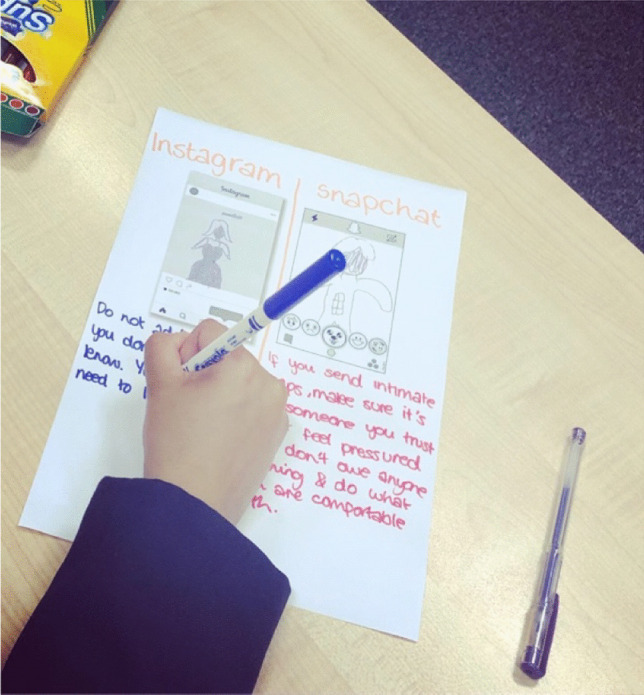
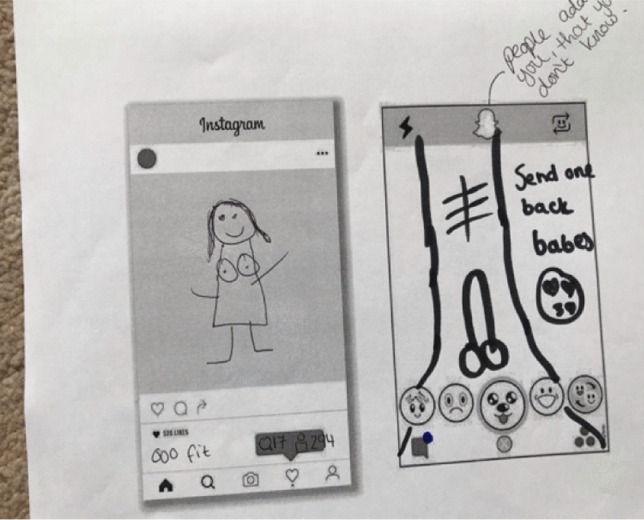
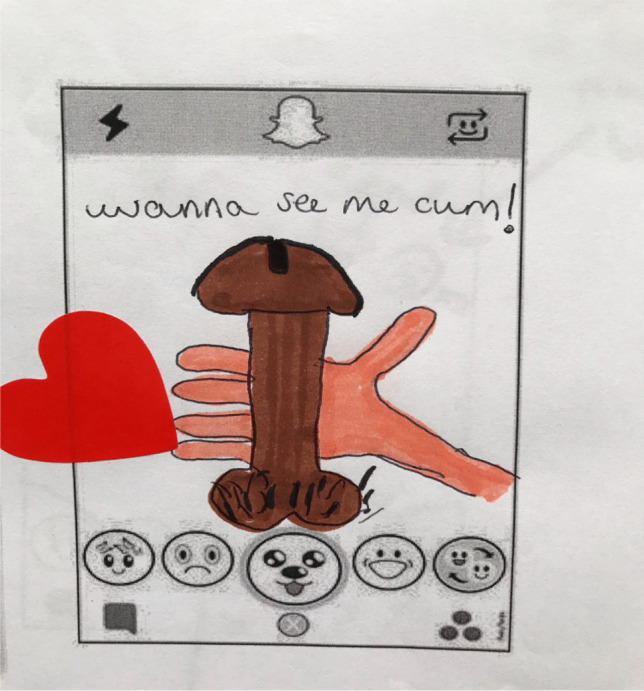
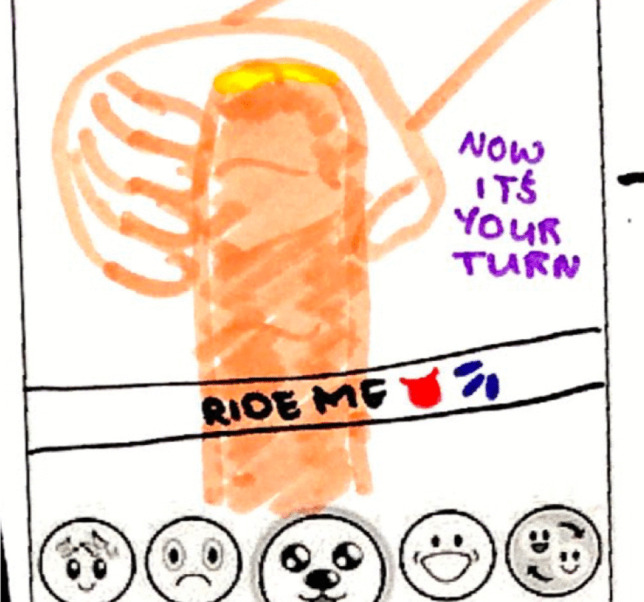
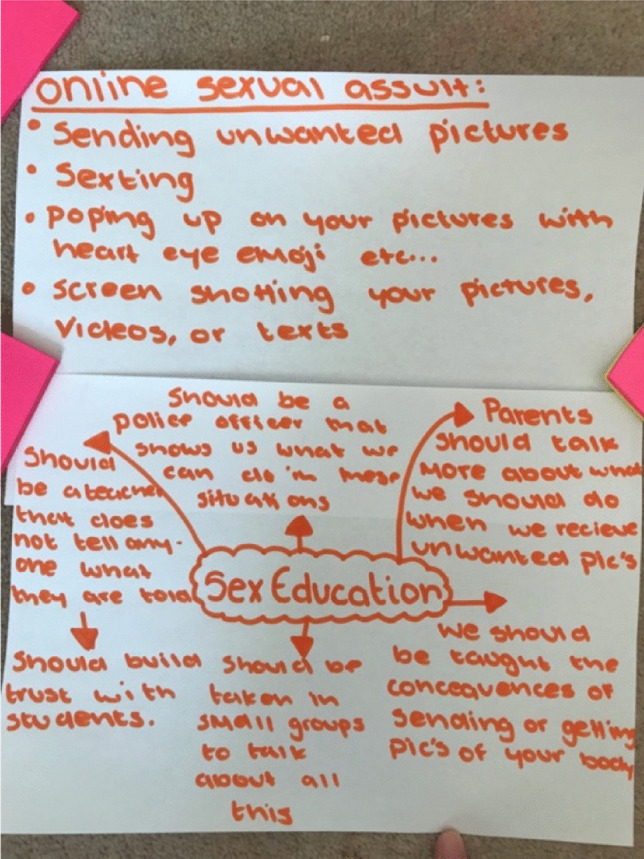
- Drawing sessions let some girls challenge toxic masculinity and name unwanted images as online sexual harassment or assault, while noting they had little relevant sex education.
Methods
- In 2019, the authors conducted focus group discussions and participatory arts-based social media post drawing (“SNIP mAPPing”) in seven diverse secondary schools in England with 144 young people aged 11–18; most were under 15.
- The study used a feminist discursive-material lens to analyze how gender and power operate in sexual image exchange, with ethical approval and parental consent for participants 16 and younger.
Limitations
- The paper states that focus groups may encourage uniformity because participants perform gender identity to the group, though arts-based drawing was used to address this.
- The paper states that it cannot confirm whether images were sent by a boy or a man, focuses on cisgender heterosexual norms, had few openly LGBTQ participants, and focuses on girls’ experiences while boys’ experiences are reported elsewhere.
- Evident from the text: the prevalence figures come from show-of-hands in a qualitative focus-group study, not a representative survey, and the data rely on self-report.
Model-written summary. Check it against the paper before relying on it.
Integrity signals
Registry
Cites
Statistics
Figures
Verification
Claims the paper makes
8 Valid · 2 Not valid · 13 Not checked · 68 Own results and interpretations
The cited sources support only part of this claim — read each source’s verdict below.
In the paper
“Now, a decade later, it appears that the central shift that has occurred in the relational dynamics of youth sexting is the normalisation of the dick pic in the social media ecosystems of young people (Ricciardelli & Adorjan, 2018).”
§ Teen Girls’ Experiences Negotiating the Ubiquitous Dick Pic: Sexual Double Standards and the Normalization of Image Based Sexual Harassment > Abstract
What the sources say
- Partly supportedcites Ricciardelli & Adorjan, 2018 matched to “‘If a girl’s photo gets sent around, that’s a way bigger deal than if a guy’s photo gets sent around’: gender, sexting, and the teenage years” (2019) sourceExperimental — accuracy not yet measured
The Results and the section ‘Debating “Dick Pics”: Gendered Conceptions and Consequences’ describe sending and receiving dick pics as normalized and commonplace among the teens studied. The paper does not establish that this normalization was the central shift in youth sexting over the preceding decade; that temporal comparison is not supported. (LLM, conf=0.84)
hedgedstates a cause- Asserted: passes — The authors put it forward as true.
- Checkable: passes — It can be checked against evidence.
- Load-bearing: passes — The paper’s conclusions depend on it.
- Based: passes — The paper gives a reason why it holds.
- Partly supported
The cited sources support only part of this claim — read each source’s verdict below.
In the paper
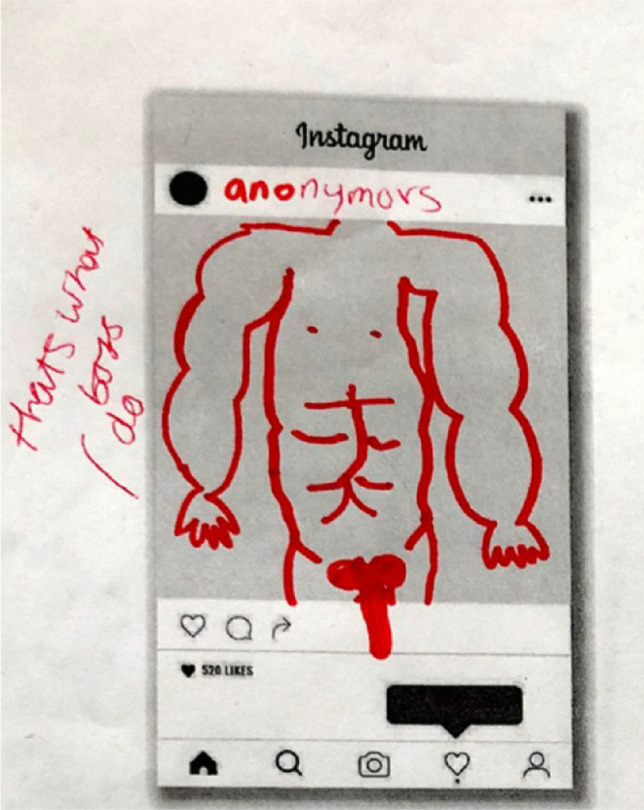
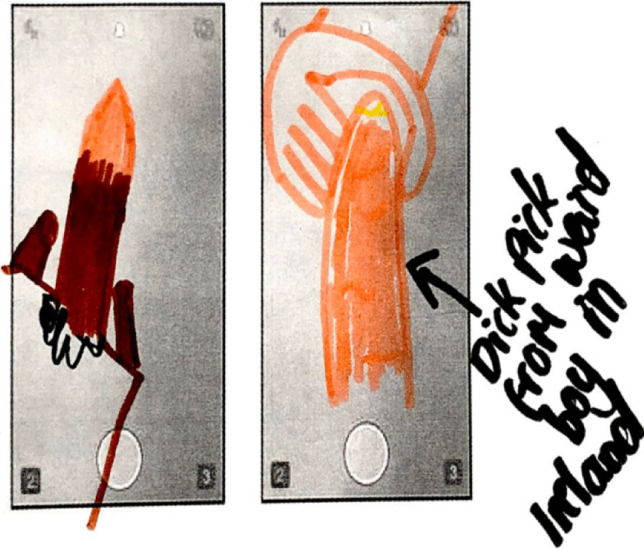
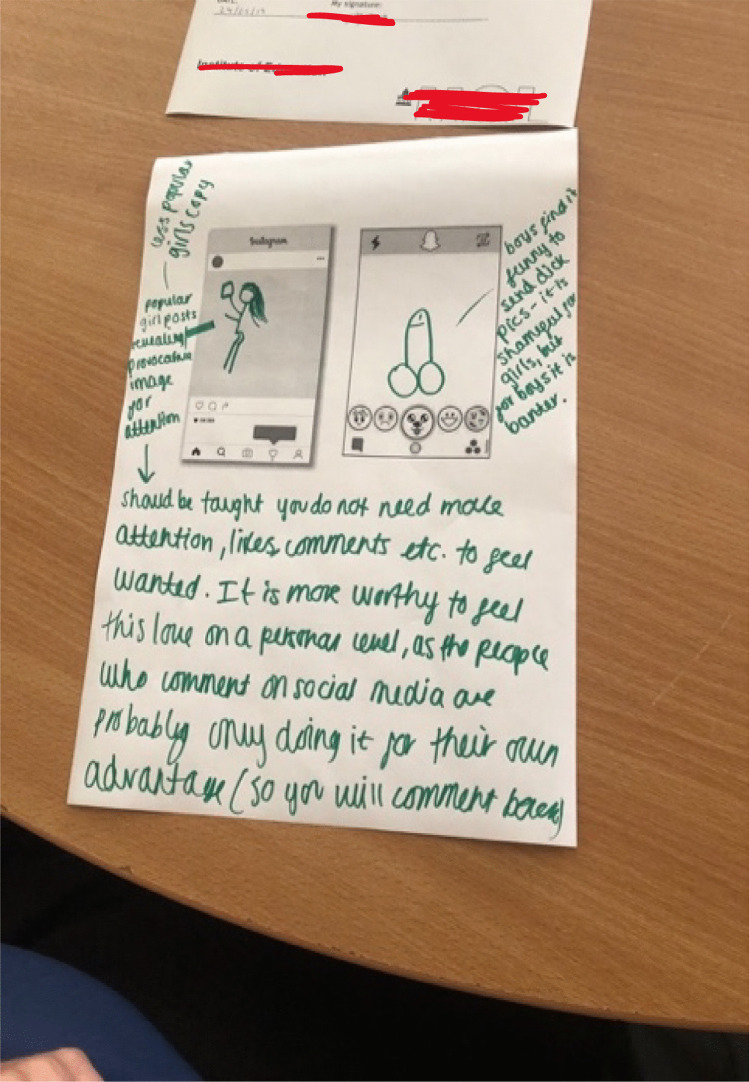
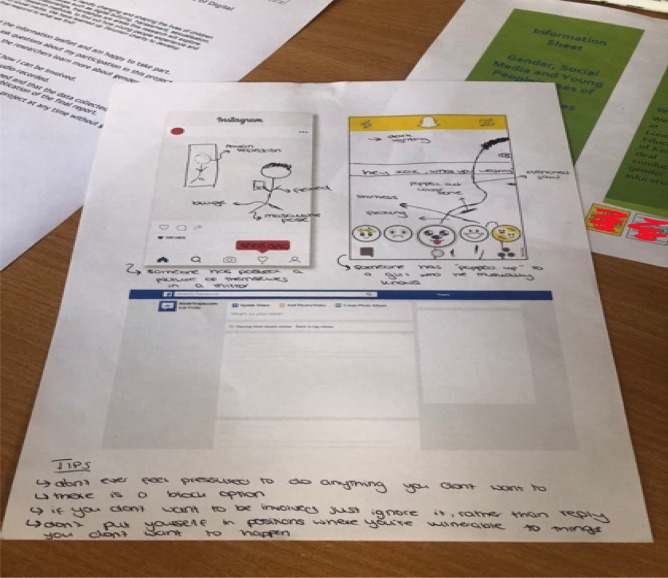
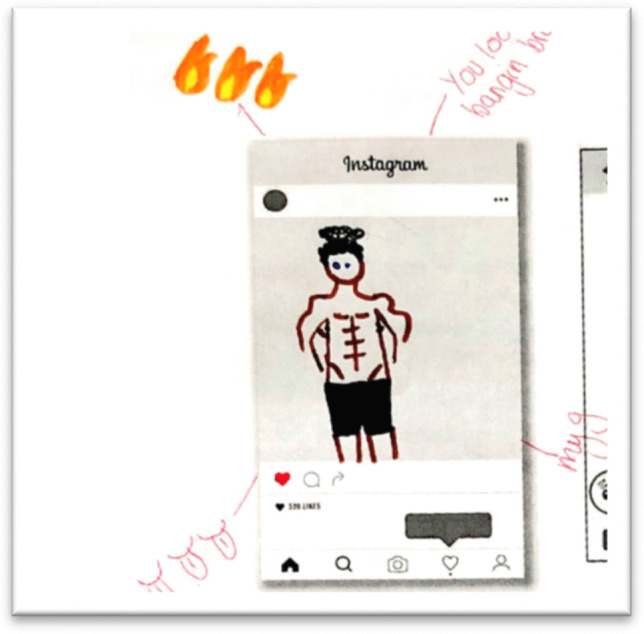
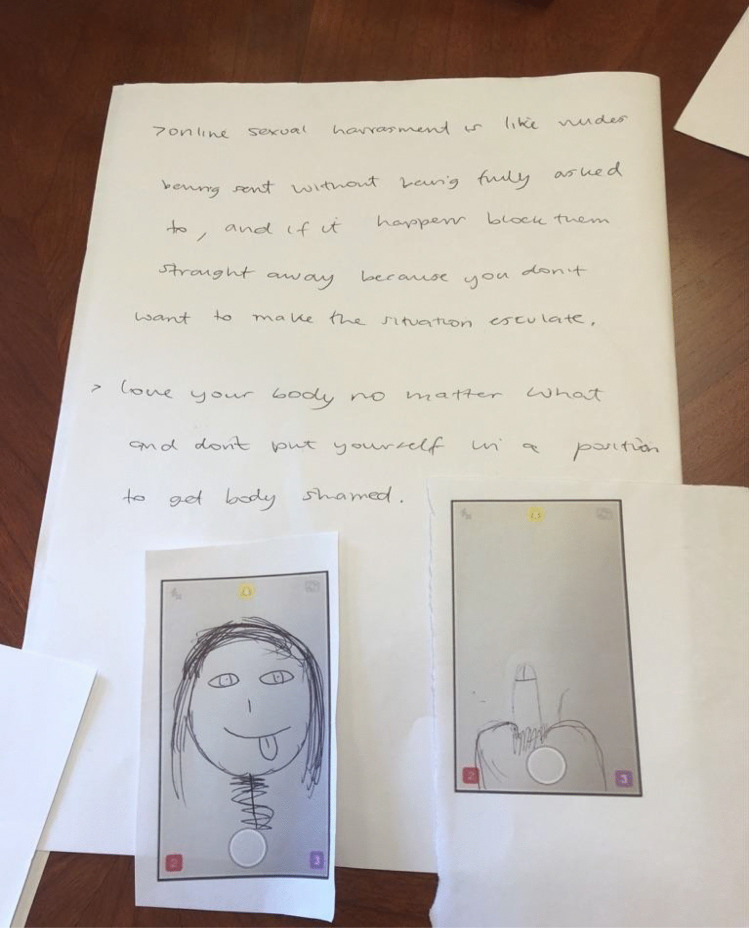
“Through the drawings and group discussion, then, the girls sometimes collectively challenged the normalisation of online sexual harassment via unwanted images, laughing and using sarcasm”
§ Teen Girls’ Experiences Negotiating the Ubiquitous Dick Pic: Sexual Double Standards and the Normalization of Image Based Sexual Harassment > Results > Resisting the Normalisation of Unsolicited Images: Re-animating the Dick Pic Through Drawings
What the sources say
- Not checked — no full text of the sourcecites Vitis and Gilmour, 2017 matched to “Dick pics on blast: A woman’s resistance to online sexual harassment using humour, art and Instagram” (2017) source
- Partly supportedcites Ringrose & Lawrence, 2018 matched to “Remixing misandry, manspreading, and dick pics: networked feminist humour on Tumblr” (2018) sourceExperimental — accuracy not yet measured
Our copy supports the substantive mechanism but not the study described: the Abstract (p. 1) and 'Deflating the sexual threat of the dick pic' (pp. 14–17) show the sites collectively subverting/renegotiating the normalisation of unwanted sexual images through humour, critique and sarcastic discourse (Introduction, p. 2 on Misandry Mermaid's 'sarcastic discourse of misandry'). However, the paper's own method ('Researching Tumblr feminist humour', pp. 2–3) is a case-study analysis of 25 randomly selected posts from three Tumblr sites (Misandry Mermaid, savingroomforcats, critiquemydickpic) — there are no girl participants, no drawings and no group-discussion activity anywhere in our copy, so those elements of the claim are not supported by this source. (LLM, conf=0.70)
hedgedstates a cause- Asserted: passes — The authors put it forward as true.
- Checkable: passes — It can be checked against evidence.
- Load-bearing: passes — The paper’s conclusions depend on it.
- Based: passes — The paper gives a reason why it holds.
The cited sources support only part of this claim — read each source’s verdict below.
In the paper
“Drawing social media experiences also helps to move beyond some of the ethical limitations of collecting sensitive, private digital data from young people (Facca et al., 2020).”
§ Teen Girls’ Experiences Negotiating the Ubiquitous Dick Pic: Sexual Double Standards and the Normalization of Image Based Sexual Harassment > Discussion > Limitations and Future Research Directions
What the sources say
- Partly supportedcites Facca et al., 2020 matched to “Exploring the ethical issues in research using digital data collection strategies with minors: A scoping review” (2020) sourceExperimental — accuracy not yet measured
The Results (Data handling; page unavailable) describe privacy and consent concerns when researchers collect minors’ social media data. The paper does not say that drawing social media experiences helps address those concerns; searches for drawing and visual elicitation found no such passage. (LLM, conf=0.83)
hedgedstates a cause- Asserted: passes — The authors put it forward as true.
- Checkable: passes — It can be checked against evidence.
- Load-bearing: unclear — It is unclear whether the paper’s conclusions depend on it.
- Based: passes — The paper gives a reason why it holds.
- Partly supported
Every source the paper cites for this claim was checked and supports it.
In the paper
“Our research confirms and extends earlier research that suggested dick pics have become a ubiquitous part of youth digital sexual cultures (Ricciardelli & Adorjan, 2018).”
§ Teen Girls’ Experiences Negotiating the Ubiquitous Dick Pic: Sexual Double Standards and the Normalization of Image Based Sexual Harassment > Conclusion
What the sources say
- Supportedcites Ricciardelli & Adorjan, 2018 matched to “‘If a girl’s photo gets sent around, that’s a way bigger deal than if a guy’s photo gets sent around’: gender, sexting, and the teenage years” (2019) source
The Results section describes an online youth social culture in which sending dick pics is “normalized and commonplace.” The “Debating ‘Dick Pics’” section likewise says sharing these images has become commonplace for many female teens, supporting the citing sentence’s hedged characterization. (LLM, conf=0.91)
boosted- Asserted: passes — The authors put it forward as true.
- Checkable: passes — It can be checked against evidence.
- Load-bearing: passes — The paper’s conclusions depend on it.
- Based: passes — The paper gives a reason why it holds.
- Supported
A result the paper states — it cites no source for it, so there is none to check. The quote shows it is in the paper.
In the paper
“Further some girls ask for penis images but can face sexual stigma and shame for doing so because of sexual double standards.”
§ Teen Girls’ Experiences Negotiating the Ubiquitous Dick Pic: Sexual Double Standards and the Normalization of Image Based Sexual Harassment > Abstract
plainstates a cause- Asserted: passes — The authors put it forward as true.
- Checkable: passes — It can be checked against evidence.
- Load-bearing: passes — The paper’s conclusions depend on it.
- Based: passes — The paper gives a reason why it holds.
- Rests on an assumption not shown here.
41 more claims
Create a free account to see all 91 claims and to verify the 5 references still open.
- Probably not a substantial claim. 15
- It may state two separate claims as one. 35
- The quote only partly states this claim. 2
Self-check
Percentages, sums and reported differences re-computed from the paper’s own numbers.
Each contradiction between two passages listed here was confirmed by an independent check.
Rated minor: it would not touch a result — a value no result rests on, a p-value that stays on the same side of the significance level, or a conflict that is clerical, resolved elsewhere in the paper, or outside its own findings.
In the paper
§ Teen Girls’ Experiences Negotiating the Ubiquitous Dick Pic: Sexual Double Standards and the Normalization of Image Based Sexual Harassment > Results > Girls’ Experiences of Receiving Random Anonymous Dick Pics
“(CLC1, Year 8 girls)”
§ Teen Girls’ Experiences Negotiating the Ubiquitous Dick Pic: Sexual Double Standards and the Normalization of Image Based Sexual Harassment > Method
“| Central London Mixed Comprehensive One (CLC1) | Mixed state secondary | Central London | Year 7Year 7Year 9Year 9 | 5 boys8 girls6 girls6 boys |”
Rated minor: it would not touch a result — a value no result rests on, a p-value that stays on the same side of the significance level, or a conflict that is clerical, resolved elsewhere in the paper, or outside its own findings.
In the paper
§ Teen Girls’ Experiences Negotiating the Ubiquitous Dick Pic: Sexual Double Standards and the Normalization of Image Based Sexual Harassment > Results > Receiving Unwanted Dick Pics from Peers
“(CLC1, Year 10 girls)”
§ Teen Girls’ Experiences Negotiating the Ubiquitous Dick Pic: Sexual Double Standards and the Normalization of Image Based Sexual Harassment > Method
“| Central London Mixed Comprehensive One (CLC1) | Mixed state secondary | Central London | Year 7Year 7Year 9Year 9 | 5 boys8 girls6 girls6 boys |”
Citations
Cites
The Managed Heart: Commercialization of Human Feeling
Tropman, J. E., & Hochschild, A. R. (1984) · Journal of Policy Analysis and Management · doi:10.2307/3324333 · Cited by 8,746
The Managed Heart: Commercialization of Human Feeling
Spelman, D. H., & Hochschild, A. R. (1985) · Academy of Management Review · doi:10.5465/amr.1985.4278667 · Cited by 3,372
The Managed Heart: Commercialization of Human Feeling
Spelman, D. H., & Hochschild, A. R. (1985) · The Academy of Management Review · doi:10.2307/257986 · Cited by 3,352
Social Network Sites as Networked Publics: Affordances, Dynamics, and Implications
(2010) · A Networked Self · doi:10.4324/9780203876527-8 · Cited by 1,724 · cited 1×
“Exploring the affective economies of social media platforms, it is crucial to acknowledge the platform affordances (Boyd, 2010), that is the technical functions through which the platform works and which create the conditions of possibility for communication.”
BackgroundStatus update: celebrity, publicity, and branding in the social media age
(2014) · Choice Reviews Online · doi:10.5860/choice.51-5062 · Cited by 1,163
(1989) · Choice Reviews Online · doi:10.5860/choice.26-5929 · Cited by 1,131
Williams, L. M., & Kelly, L. (1990) · Contemporary Sociology · doi:10.2307/2072480 · Cited by 725
Teen girls, sexual double standards and ‘sexting’: Gendered value in digital image exchange
Ringrose, J., Harvey, L., Gill, R., & Livingstone, S. (2013) · Feminist Theory · doi:10.1177/1464700113499853 · Cited by 618
Self-citationA qualitative study of children, young people and'sexting': A report prepared for the NSPCC
Ringrose, J., Gill, R., Livingstone, S., & Harvey, L. (2012) · Goldsmiths (University of London) · Cited by 550
Self-citationPrevalence of Multiple Forms of Sexting Behavior Among Youth: A Systematic Review and Meta-analysis
Madigan, S., Ly, A., Rash, C. L., Van Ouytsel, J., & Temple, J. R. (2018) · JAMA Pediatrics · doi:10.1001/jamapediatrics.2017.5314 · Cited by 519
Cited by
Ringrose, J., Milne, B., Mishna, F., Regehr, K., & Slane, A. (2022) · Women's Studies International Forum · doi:10.1016/j.wsif.2022.102615 · Cited by 67
Self-citationMishna, F., Milne, E., Cook, C., Slane, A., & Ringrose, J. (2023) · Youth & Society · doi:10.1177/0044118x211058226 · Cited by 48
“Research has explored homosocial masculinity practices in relation to sex-ting, which makes it normative for boys and men to share images of girls, as a form of social currency that garners homosocial reward (Ringrose et al., 2013, 2021; Roberts et al., 2021).”
Self-citationSchmidt, F., Varese, F., Larkin, A., & Bucci, S. (2024) · Trauma, Violence, & Abuse · doi:10.1177/15248380231207896 · Cited by 39
“Much of the research has discussed how heterosexual gender norms contribute to the sending of sexual images (Ringrose et al., 2021).”
BackgroundSetty, E., Ringrose, J., & Hunt, J. (2024) · Gender and Education · doi:10.1080/09540253.2024.2348534 · Cited by 49
“…of abuse due to fears about self-incrimination and punishment among victims while leading to efforts to avoid detection/punishment among those enacting abuse (Jørgensen et al. 2019; McGeeney and Hanson 2017; Phippen 2017; Setty, Ringrose, and Regehr 2022; Ringrose, Regehr, and Whitehead 2021).”
BackgroundSelf-citationDully, J., Walsh, K. S., Doyle, C., & O’Reilly, G. (2023) · Journal of Adolescence · doi:10.1002/jad.12181 · Cited by 51
Online Sexual Harassment in Adolescence: A Scoping Review
Angela, F., María-Luisa, R.-D., Annalaura, N., & Ersilia, M. (2024) · Sexuality Research and Social Policy · doi:10.1007/s13178-023-00869-1 · Cited by 29
“Nonetheless, some papers use specific labels— Potentially Offensive Sexual Behavior (Jewell et al., 2015) or Imaged-Based Sexual Abuse (Mandau, 2020; Ringrose et al., 2021a, b)—while others use very general labels, with the risk of not providing a real conceptual reference— Online Sexual Experience…”
Millanzi, W. C., Osaki, K. M., & Kibusi, S. M. (2022) · Health Psychology and Behavioral Medicine · doi:10.1080/21642850.2022.2046474 · Cited by 36
Pijlman, V., Eichelsheim, V. I., Pemberton, A., & de Waardt, M. (2024) · Journal of Interpersonal Violence · doi:10.1177/08862605241258996 · Cited by 26
“They may feel embarrassed due to receiving unwanted images (Ringrose et al., 2021, 2022), or due to their own images having been shared (Bates, 2017), and may not want others to find out (Campbell et al., 2022; Cense & Redert, 2022).”
The Help-Seeking Behavior of Victims of Image-Based Sexual Harassment and Abuse: A Scoping Review
Pijlman, V., de Waardt, M., Schoonmade, L. J., Eichelsheim, V. I., & Pemberton, A. (2024) · Trauma Violence & Abuse · doi:10.1177/15248380241289435 · Cited by 32
“From studies among youth, it becomes clear that young victims prefer help from informal sources, such as their peers, rather than their parents or formal sources (see, e.g., Dodge & Lockhart, 2022; Ringrose et al., 2021a; Vejmelka et al., 2023).”
InfluentialRisk or fun? Adolescent attitude towards sexting and parental practices
Cuccì, G., Olivari, M. G., Colombo, C. C., & Confalonieri, E. (2023) · Journal of Family Studies · doi:10.1080/13229400.2023.2189151 · Cited by 24
“…less positive attitude towards sexting of female adolescents may be related to their extensive experiences of being sent unsolicited sexual images (Ringrose et al., 2021; Setty et al., 2022) by their male counterparts or to the sexual double standard according to which females are labelled…”
BackgroundHonkatukia, P., Peltola, M., Aho, T., & Saukkonen, R. (2022) · Journal of Social Issues · doi:10.1111/josi.12512 · Cited by 31
Risks and opportunities of digitally mediated interactions: young people’s meanings and experiences
Setty, E. (2023) · Journal of Youth Studies · doi:10.1080/13676261.2023.2211929 · Cited by 42
“She explained, however, that anonymity may enable individuals to feel ‘ safe ’ to send the images, not-withstanding the potential harm to recipients, because senders can avoid stigma through ‘ plausible deniability ’ (see Ringrose, Regehr, and Whitehead 2021).”
Thomas, M. F., Binder, A., & Matthes, J. (2022) · Archives of Sexual Behavior · doi:10.1007/s10508-022-02292-w · Cited by 21
Online abuse: a systematic literature review and future research agenda
Saha, R., Ahlawat, S., Akram, U., Jangbahadur, U., Dhaigude, A. S., Sharma, P., & Kumar, S. (2024) · International Journal of Conflict Management · doi:10.1108/ijcma-09-2023-0188 · Cited by 21
Miano, P., & Urone, C. (2023) · Psychology and Sexuality · doi:10.1080/19419899.2023.2213736 · Cited by 19
“In particular, the use of certain social media platforms by teenagers has to be identified as a risk factor (Ringrose et al., 2021; Setty, 2019).”
BackgroundThe Role of Consent and Motivations in Sext Dissemination
Clancy, E. M., Hallford, D. J., March, E., Howard, D., Toumbourou, J. W., & Klettke, B. (2023) · Journal of Interpersonal Violence · doi:10.1177/08862605231163886 · Cited by 12
“…for dissemination of their images (Clancy et al., 2020, 2021), which may reflect gendered sexual double standards internalized across adolescence and adulthood (Harvey et al., 2020; Ringrose et al., 2013, 2021), with greater opprobrium directed to women who are sexually assertive or active.”
BackgroundDurán, M., & Rodríguez-Domínguez, C. (2022) · Journal of Interpersonal Violence · doi:10.1177/08862605221120906 · Cited by 25
“Studies also show that these sexual images are mostly sent to adult women and teenage girls (Amundsen, 2021; Hayes & Dragiewicz, 2018; Ringrose et al., 2021, 2022).”
BackgroundDolev-Cohen, M., & Shaul, H. (2025) · Computers in Human Behavior · doi:10.1016/j.chb.2025.108777 · Cited by 14
Data like any other? Sexual and reproductive health, Big Data and the Sustainable Development Goals
Hammond, N., & Moretti, A. (2023) · Sexualities · doi:10.1177/13634607231152599 · Cited by 16
“The digital sphere however also opens opportunities for sexual abuse, exploitation and harassment, paedophilia and traf fi cking (Holt et al., 2010; Kloesss et al., 2017; Machimbarrena et al., 2018; Mandau, 2020; McGlyn, 2017; Ringrose et al., 2021).”
Happy or Unhappy? Mental Health Correlates of Receiving Sexts and Unsolicited Sexual Images
Sciacca, B., Mazzone, A., Loftsson, M., Norman, J. O., & Foody, M. (2024) · Youth & Society · doi:10.1177/0044118x241230639 · Cited by 10
“…receiving unwanted sexual images, other forms of non-consensual sexting, and sexual harassment, thus reinforcing the idea that they form part of the same continuum of sexual violence (Hayes & Dragiewicz, 2018; Marcotte et al., 2020; Mishna et al., 2023; Oswald et al., 2020; Ringrose et al., 2021a).”
InfluentialA Thousand Catcalls: Survivors’ Experiences of Sexual Violence in Online Dating
Filice, E., Matharu, A., Parry, D. C., & Johnson, C. W. (2024) · Leisure Sciences · doi:10.1080/01490400.2024.2330946 · Cited by 17
“…perpetrated with the aid of technology, as consensus around emerging digital social practices is relatively further from solidifying—see, for example, the controversy surrounding the deviancy and harmfulness of unsolicited sending of “dick pics” (Hayes & Dragiewicz, 2018; Ringrose et al., 2021).”
Teachers' Discursive Constructions of Adolescent Sexting, Consent and Gender
Rousaki, A., Seymour‐Smith, S., Kitson‐Boyce, R., & Marriott, M. (2024) · Journal of Community & Applied Social Psychology · doi:10.1002/casp.70002 · Cited by 9
Horeck, T., Mendes, K., & Ringrose, J. (2021) · Springer eBooks · doi:10.1007/978-3-030-83734-1_31 · Cited by 11
Self-citationTeachers vs. Chat GPT: identifying and naming acts of online sexual abuse
Dolev-Cohen, M., & Henry, N. (2025) · Information, Communication & Society · doi:10.1080/1369118x.2025.2492585 · Cited by 8
Moore, A. (2022) · Teaching Education · doi:10.1080/10476210.2022.2044770 · Cited by 8
“normalised in schools (Ringrose et al., 2021), these spaces often function as training grounds for sexual harassment and assault (2005).”
BackgroundSetty, E. (2022) · Youth · doi:10.3390/youth2020015 · Cited by 8
“There was a sense of fatalism about the content and an individualistic responsibilisation of recipients to respond effectively without antagonising the senders or entering into a dynamic whereby more images may be sent, reflective of previous research findings on the topic [63,65].”
BackgroundInfluentialIdentifying trends and patterns in offending and victimization on Snapchat: a rapid review
Huie, K., Butler, M., & Percy, A. (2023) · Security Journal · doi:10.1057/s41284-023-00400-6 · Cited by 10
“This study’s findings also confirm past research indicating that women tend to be more likely to be victimized on social media (Ringrose et al. 2021; Salerno-Ferraro et al. 2021).”
InfluentialDodge, A. (2024) · Canadian Journal of Law and Society / Revue Canadienne Droit et Société · doi:10.1017/cls.2024.6 · Cited by 6
Pijlman, V., & Burgmeijer, A. (2024) · Computers in Human Behavior · doi:10.1016/j.chb.2024.108312 · Cited by 11
Prevalence and associated factors of sexting among Taiwanese adolescents
Wei, H.-S., Hsieh, Y., Chen, Y., Ma, J. K., & Lin, Y. (2024) · Behavioral Sciences & the Law · doi:10.1002/bsl.2697 · Cited by 6
Young people becoming intimate on social media: Digital desires and gender dynamics
Bhana, D., Reddy, V., & Moosa, S. (2024) · Sexualities · doi:10.1177/13634607241281449 · Cited by 9
“In particular, scholars have also demonstrated the ways in which the non-consensual sharing of images (D¨oring, 2014), sexting (Naezer and Oosterhout, 2021), the exchange of nudes and dick pics (Ringrose et al., 2021) within the online environment constitute sexual harassment and abuse.”
Almanssori, S., Aderinto, A., & Paskaran, L. (2025) · International Journal of Adolescence and Youth · doi:10.1080/02673843.2025.2536798 · Cited by 7
“Ringrose et al. (2021) thematic analysis of 144 UK teen girls revealed that image-based sexual harassment, including unsolicited “dick pics,” peer pressure to send nudes, and coercion into digital sexual interactions, is not only normalized but expected in teenage social life.”
‘It’s a generational thing, really’. Understandings of sexual rights in a digital age
Spišák, S. (2023) · Sexualities · doi:10.1177/13634607231160058 · Cited by 8
“However, we also have to acknowledge ‘ the dark side of sexting ’ (Clancy et al., 2019; Krieger, 2017), including the potential risk of image-based sexual violence, abuse or harassment (Ringrose et al., 2021; Dobson, 2019).”
‘It depends entirely on the person’: freedom and inequality in Spanish youth gender discourses
Hernández, A. B., Martín, I. M., & Canales, I. S. (2021) · Sex Education · doi:10.1080/14681811.2021.1984223 · Cited by 5
Sexuality on the Internet: Identity Exploration, Cybersex and Sexting
Caesar, A. (2023) · Springer eBooks · doi:10.1007/978-3-031-24804-7_7 · Cited by 6
Tinder for teens: Youth digital intimate cultures and tech facilitated violence on Snapchat
Milne, B., Ringrose, J., Horeck, T., & Mendes, K. (2025) · Computers in Human Behavior · doi:10.1016/j.chb.2025.108823 · Cited by 5
Self-citationDeryol, R., McNealey, R. L., & Wilcox, P. (2023) · Social Problems · doi:10.1093/socpro/spad049 · Cited by 4
Oswald, F., Pedersen, C. L., & Matsick, J. L. (2022) · The Journal of Sex Research · doi:10.1080/00224499.2022.2112647 · Cited by 4
“Further, though this attraction framing would suggest women being aroused by men’s genitalia, some women report disgust upon viewing images of men’s genitals (e.g., Oswald et al., 2020; Ringrose et al., 2021).”
BackgroundExperiences of Online Sexual Violence: Interviews With Swedish Teenage Girls in Psychiatric Care
Rindestig, F. C., Gådin, K. G., & Dennhag, I. (2023) · Violence Against Women · doi:10.1177/10778012231203000 · Cited by 8
Whitehead, S. (2023) · Journal of Gender Studies · doi:10.1080/09589236.2023.2216650 · Cited by 4
“Some aspects of sexual harm amongst young people are new of course, namely those facilitated by digital technologies, but the underlying issues of sexual harassment, violence and abuse experienced by young people – by girls in particular – are not (Ringrose et al., 2021).”
BackgroundSelf-citationVictims’ experiences of cyberflashing: an explorative study
Jeacock, B., Ohlsson, I., & Jafari, S. (2024) · Journal of Sexual Aggression · doi:10.1080/13552600.2024.2323190 · Cited by 9
“The participants highlighted that cyberflash-ing is common and begins at a young age, which corroborates previous research (Fisico, 2021; Freeman, 2020; Ringrose et al., 2021; Salerno-Ferraro et al., 2022) and may explain why cyberflashing is perceived as less serious than other offences.”
InfluentialGarcía‐Mingo, E., Lorca, J. G., & Ruíz-Repullo, C. (2025) · Athenea Digital Revista de pensamiento e investigación social · doi:10.5565/rev/athenea.3687 · Cited by 11
Gender identity is becoming more central to women of all ages, but less central to young men
Cone, D. H., Zubielevitch, E., Sibley, C. G., & Osborne, D. (2025) · Current Research in Ecological and Social Psychology · doi:10.1016/j.cresp.2025.100242 · Cited by 3
Challenges in investigating self-generated online child sexual abuse material
Meggyesfalvi, B. (2024) · Belügyi Szemle · doi:10.38146/bsz.2024.2.8 · Cited by 3
Johansen, K. B. H., & Tjørnhøj‐Thomsen, T. (2024) · Women s Studies International Forum · doi:10.1016/j.wsif.2024.102954 · Cited by 4
Meggyesfalvi, B. (2024) · Belügyi Szemle · doi:10.38146/bsz.2024.2.3 · Cited by 3
“…or prevented from further use by cyber-criminals can make victims of self-generated CSAM feel ashamed and guilty, besides being blamed by others because of what they did; all resulting in potentially continuous re-trau - matisation and victimisation ( Europol, 2020 ; Ringrose et al., 2021; URL6).”
BackgroundSafe uncertainty: rethinking consent and relational intimacies in adolescent post-digital cultures
Setty, E., & Hunt, J. (2025) · Pastoral Care in Education · doi:10.1080/02643944.2025.2576567 · Cited by 3
The silent epidemic: how sexual violence silences the mental health of college students
Arifah, S., Hambali, I., Akbar, S., et al. (2023) · Journal of Public Health · doi:10.1093/pubmed/fdad121 · Cited by 2
Pornography, social media, and sexuality
McCormack, M., & Wignall, L. (2024) · Elsevier eBooks · doi:10.1016/b978-0-443-28804-3.00011-9 · Cited by 3
EXPLORING THE COMPLEX NARRATIVES OF TOXIC MASCULINITY ON THE INSTAGRAM ACCOUNT @Thegentlemanrising
Anwary, A., & Istiadah, I. (2024) · Lire Journal (Journal of Linguistics and Literature) · doi:10.33019/lire.v8i1.259 · Cited by 2
“Ringrose et al. (2021), however, analyzed the normalization of sending unsolicited dick pics via social media and found that this seems to be a great part of youth digital culture.”
BackgroundVenäläinen, S. (2025) · Violence Against Women · doi:10.1177/10778012251329176 · Cited by 2
“Previous studies (e.g., Ringrose et al., 2021; Virrankari & Leemann, 2022) conducted both in Finland and in other Westernized countries, such as the United Kingdom, have shown that experiencing sexual harassment is not only frequent but can also have serious social and psychological consequences.”
Dayton, Z., Scarduzio, J. A., & Adams, M. (2025) · Western Journal of Communication · doi:10.1080/10570314.2025.2518049 · Cited by 2
“These behaviors have included the sending of unsolicited nude images (e.g., Handyside & Ringrose, 2017), requests for nude images (e.g., Ringrose et al., 2021), comments directed at a person’s gender (Vitis & Gilmour, 2017), and cyberstalking (Barak, 2005).”
A Critical Analysis of the Law Commission's Proposed Cyberflashing Offence
Wang, V. B. (2022) · The Journal of Criminal Law · doi:10.1177/00220183221125873 · Cited by 4
Girls Navigating the Context of Unwanted Dick Pics: ‘Some Things Just Can’t Be Unseen’
Barker-Clarke, E. (2023) · Youth · doi:10.3390/youth3030060 · Cited by 4
Mezzapelle, J. L., & Reiman, A. (2024) · Psychology of Women Quarterly · doi:10.1177/03616843241252658 · Cited by 2
“For example, students may also experience sexual harassment in classrooms, in student housing, in bars, at parties, or online (Fisher et al., 2000; Ivy & Hall, 1996; Ringrose et al., 2021).”
Berndtsson, K. H. (2023) · Young · doi:10.1177/11033088231204818 · Cited by 1
“…not to want unsolicited dick pics, as well as the fact that this phenomenon can be understood as image-based sexual harassment and cyber flashing (Ringrose et al. 2021), also in Swedish legislation (SFS 2008:567), is an aspect of this practice that needs to be explored: Interviewer: But if you…”
BackgroundResultInfluentialGómez, A. G. (2024) · Journal of Language and Sexuality · doi:10.1075/jls.00035.gar · Cited by 1
Dahlqvist, H. Z., Gådin, K. G., & Landstedt, E. (2025) · International Journal on Child Maltreatment Research Policy and Practice · doi:10.1007/s42448-024-00218-8 · Cited by 1
“However, newer forms of digital harassment, such as image-based sexual harassment (e.g., unsolicited explicit images and videos), represent more recent challenges (Amundsen, 2021; Bindesbøl Holm Johansen et al., 2019; Dahlqvist & Gil-lander Gådin, 2024; Ringrose et al., 2021).”
Child-to-child harmful online sexual exchanges: a systematic review of the literature
Themelidis, L., & Lorenzo-Dus, N. (2025) · Safer Communities · doi:10.1108/sc-01-2025-0004 · Cited by 2
Between Respectability and Resistance: Zulu Cultural Norms and Girls’ Online Sexual Expressions
Mhlongo, Z. (2025) · Studies in childhood and youth · doi:10.1007/978-3-031-86358-5_8 · Cited by 1
Emojis, Stickers and Nudes: Boys, Girls and Online Sexual Connections
Govender, D., & Syed, L. (2025) · Studies in childhood and youth · doi:10.1007/978-3-031-86358-5_2 · Cited by 1
Choi, S. Y. P., Yip, T. P. C., & Nakano, L. (2025) · Sexuality Research and Social Policy · doi:10.1007/s13178-025-01160-1 · Cited by 2
Håkansson, M., Näsström, M., Svensson, Å., Dahlqvist, H. Z., & Makenzius, M. (2026) · Sexual & Reproductive Healthcare · doi:10.1016/j.srhc.2026.101233 · Cited by 1
Hedlin, M., & Klope, E. (2023) · Young · doi:10.1177/11033088231180036 · Cited by 1
“(See for example: Bogart & Stein, 1987; Conroy, 2013; Gillander Gådin & Stein, 2019; Kelly, 1988; MacKinnon, 1979; Ringrose et al., 2021; Samuels, 2003) In recent years, sexual harassment has attracted new attention as a widespread problem in working life (Pétursdóttir & Greta Rúdólfsdóttir, 2022).”
BackgroundDurán-Guerrero, E., Sánchez, V., & Tramontano, C. (2025) · Sex Roles · doi:10.1007/s11199-025-01628-9 · Cited by 2
“…of the role for pro-sexual harassment attitudes in facilitating engagement in aggressive sexual behaviours (Brown & Biefeld, 2023; Horn & Poteat, 2023; Ringrose et al., 2021), the influence of pro-sexual harassment attitudes has not been evaluated across different forms of sexual harassment.”
Editorial: Pleasures, practices and troubles—Young people’s gendered sexualities in the 21st century
Honkatukia, P., Henriksen, A.-K., King, H., & Peltola, M. (2023) · Young · doi:10.1177/11033088231208282 · Cited by 1
Digital Relationships, Creative Methods
Marston, K. (2023) · Springer eBooks · doi:10.1007/978-3-030-95352-2_98-1
Exchanging intimacy for favors and nude photos among ninth graders
Ravn, J., Gulbech, A. V., Christensen, L. D., Karstensen, S. H., Ravn, P., Keudel, P. K., & Lauszus, F. F. (2023) · Danish Journal of Obstetrics and Gynaecology · doi:10.56182/djog.v2i1.35
Forms, Effects and Responses of Online Sexual Harassment
陈, 婷. (2024) · Advances in Social Sciences · doi:10.12677/ass.2024.133220
Lebedíková, M. Š., Tancoš, M., Cho, Y. W., Šmahel, D., & Chow, S. (2024) · PsyArXiv (OSF Preprints) · doi:10.31234/osf.io/eu2gf
Digital Gender-Sexual Violations and Social Marketing Campaigns
Lewis, R., Hearn, J., & Hall, M. (2024) · Springer eBooks · doi:10.1007/978-3-030-95352-2_133-1
Hedlin, M., Eek-Karlsson, L., & Olsson, R. (2024) · Nordisk tidsskrift for ungdomsforskning · doi:10.18261/ntu.5.1.4 · Cited by 2
Digital Relationships, Creative Methods
Marston, K. (2024) · Springer eBooks · doi:10.1007/978-3-031-56681-3_98
Digital Gender-Sexual Violations and Social Marketing Campaigns
Lewis, R., Hearn, J., & Hall, M. (2024) · Springer eBooks · doi:10.1007/978-3-031-56681-3_133
Setty, E., & Ringrose, J. (2024) · Palgrave Studies in Crime, Media and Culture · doi:10.1007/978-3-031-75372-5_12 · Cited by 1
Self-citationExhibitionism - a review of research
Wdowiak, K., Maciocha, A., Wąż, J., Witas, A., Drogoń, J., Chachaj, W., Słomka, P., & Gardocka, E. (2025) · Journal of Education Health and Sport · doi:10.12775/jehs.2025.77.56926 · Cited by 1
“One modern form of exhibitionism is unsolicited “dick pics” (DP), where individuals send an image of their penis to someone, typically via a dating platform, without their consent [29, 30, 31].”
Borderline personality disorder and non-consensual sexting by gender and sexuality
Mussap, A. J., Clancy, E. M., Howard, D., & Klettke, B. (2025) · Current Psychology · doi:10.1007/s12144-025-07687-1
“Finally, the general lack of involvement of affective symptoms of BPD argues against the idea that sexting exposure can stem from make it more difficult for them to reject or report inappropri - ate behaviours by men (Ringrose et al., 2021).”
Rodríguez-Domínguez, C., Vizcaíno-Cuenca, R., & Durán, M. (2025) · Violence Against Women · doi:10.1177/10778012251334763 · Cited by 5
“However, the literature has proven that not all women react the same way (Amundsen, 2021; Ringrose et al., 2021), as individual differences and social factors in fl uence how these incidents are experienced (Durán & Rodríguez-Domínguez, 2023).”
The Discursive Governance of Chastity: The Removal of the Interpretative PowerPreprint
Mao, Q. (2025) · SSRN Electronic Journal · doi:10.2139/ssrn.5216397
Buchanan, N., & Mahoney, A. (2025) · SSRN Electronic Journal · doi:10.2139/ssrn.5251559
Troubling Gender: Girls Perpetrating Online (Hetero)Sexual Harassment
Moosa, S., & Ngubo, M. (2025) · Studies in childhood and youth · doi:10.1007/978-3-031-86358-5_6
Girls Talk About Image-Sharing Practices and the Phallic Production of Masculinity
Lakhan, O. (2025) · Studies in childhood and youth · doi:10.1007/978-3-031-86358-5_3
Boys’ and Girls’ Experiences of Technology-Facilitated Gender-Based Violence
Basi, P. (2025) · Studies in childhood and youth · doi:10.1007/978-3-031-86358-5_5
Gender, Sexuality, and Young People’s Digital Cultures
Bhana, D. (2025) · Studies in childhood and youth · doi:10.1007/978-3-031-86358-5_1 · Cited by 2
Unsolicited: Dick Pics and Interactional Omissions as Visualized in Swedish Comic Art
Fägersten, K. B. (2025) · Sexuality & Culture · doi:10.1007/s12119-025-10475-5
“…of dick pic research suggests that, far from being viewed as the flirtatious overture their senders may claim them to be (see, for example, Oswald et al., 2020 ), unsolicited dick pics are classified by the majority of their targets as sexual harassment (Ringrose et al., 2021a, 2021b, 2022).”
Dietzel, C., Dodge, A., Kalwani, N., Pallottini, A., & Mendes, K. (2025) · Feminism & Psychology · doi:10.1177/09593535251400767 · Cited by 1
Dahlqvist, H. Z. (2026) · European Journal of Educational Research · doi:10.12973/eu-jer.15.2.497
Pediatric emergency medicine providers’ experience with digital sexual exposure and abuse
Reich, S. M., Starks, A., Zhu, J., & Brindis, S. L. (2026) · Pediatric Emergency Medicine Journal · doi:10.2196/preprints.91305
Dodge, A., Mendes, K., Dietzel, C., & Dunn, S. (2026) · Journal of Interpersonal Violence · doi:10.1177/08862605251414437 · Cited by 2
Women's Early Experiences with Online Stranger Sexual Harassment
Salerno‐Ferraro, A. C., Erentzen, C. A., & Schuller, R. A. (2026) · Violence Against Women · doi:10.1177/10778012261418690 · Cited by 1
Lorenzo-Dus, N., & Mullineux-Morgan, R. (2025) · De Gruyter eBooks · doi:10.1515/9783111348889-008
Cala, V. C., & Ayala, E. S. (2026) · Child Abuse & Neglect · doi:10.1016/j.chiabu.2026.108276
Ferreirós, L. S., Castro, Y. R., Román, R. M., & Fernández, M. L. (2026) · Adolescent Research Review · doi:10.1007/s40894-026-00281-x · Cited by 7
“…unsolicited images, and more frequently experience the non-consensual dissemination of their images, making them disproportionately affected by these forms of violence, becoming victims of image-based sexual harassment and image-based sexual abuse (Ringrose et al., 2021 b; Thorburn et al., 2021).”
Dolev-Cohen, M., & Shaul, H. (2026) · Frontiers in Psychology · doi:10.3389/fpsyg.2026.1790264 · Cited by 1
Castro, Y. R., Fernández-Cendón, M., Román, R. M., & Lago, X. M. M. (2026) · Behavioral Sciences · doi:10.3390/bs16030466
“In fact, recent studies indicate that one in four women has experienced some form of sexual violence, such as sexual harassment, during their manifestations known as technology-facilitated sexual violence (TFSV) (Powell & Henry, 2017; Ringrose et al., 2022).”
Snapchat victimization: an exploratory study
Huie, K., Butler, M., & Percy, A. (2026) · Security Journal · doi:10.1057/s41284-026-00548-x
“Women are also more likely to experience sex/harassment related cybercrimes, while men are more likely to be perpetrators (Ringrose et al. 2021; van Baak et al. 2022).”
Bernardini, V., Comunello, F., Parisi, L., & Scarcelli, C. M. (2026) · Culture Health & Sexuality · doi:10.1080/13691058.2026.2683627
Meggyesfalvi, B. (2026) · Belügyi Szemle · doi:10.38146/bsz-ajia.2026.v74.i6.pp1739-1761
“…them by citing pity for the ‘requester,’ obligations, or mutual commitment (e.g., a romantic relationship), or boys threatened them with hu-miliation, blocking (online disconnection), or the non-consensual redistribution or leaking of the pictures (Quayle & Karen, 2015; Ringrose et al., 2021).”
Beyond “Yes”/“No”: Exploring the Continuum of Consent in Online Sexual Image Sharing
Setty, E. (2026) · Springer eBooks · doi:10.1007/978-3-031-84546-8_4-1 · Cited by 1
Metadata
- Authors
- Ringrose, J., Regehr, K., & Whitehead, S.
- Affiliations
- University College London (GB)
- University of Kent (GB)
- King's College London (GB)
- Corresponding author
- Ringrose, Jessica
- Venue
- Sex Roles
- Published
- 2021-07-23
- Volume
- 85
- Issue
- 9-10
- Pages
- 558-576
- ISSN
- 0360-0025 (ISSN-L)
- 1573-2762
- PMC
- PMC8299453
- OpenAlex
- W3185951453
- Cited by
- 129
- References
- 49
- Citations by year
- 2026: 28 · 2025: 35 · 2024: 30 · 2023: 23 · 2022: 10 · 2021: 3
- FWCI
- 19.00
- Type
- journal article
- Language
- en
- Open access
- hybrid
- doi.org
- Licence
- cc-by
- creativecommons.org/licenses/by/4.0 (tdm)
- creativecommons.org/licenses/by/4.0 (vor)
- Locations
- Sex Roles (publishedVersion, cc-by)
- PubMed Central (publishedVersion, cc-by)
- PubMed (publishedVersion)
- UCL Discovery (University College London) (submittedVersion)
- Topics
- Social Sciences › Gender Studies › Gender, Feminism, and Media
- Social Sciences › Gender Studies › Sexual Assault and Victimization Studies
- Social Sciences › Sociology and Political Science › Stalking, Cyberstalking, and Harassment
- Keywords
- sexual double standard, teen girls, social media, Snapchat, normalization of harassment, toxic masculinity, social status, shame
About these checks
Registry, retraction, Cites and statistics results are computed, not judged, with one exception: a printed reference that no index lists is read once by a model before it counts as a citation error. Claims are extracted by a model and kept only when their quote appears verbatim in the text; each cited source is then checked, with a model’s help, for whether it says what the claim relies on. Those verdicts can be wrong — read the claim’s quote and the cited source before relying on one.
The claim verdicts this report counts are experimental: their accuracy is not yet measured.
A language model drew the claims from the paper on 2026-10-10, under version 3 of the claim definition (model deepseek-v4.1-flash, prompt extract-v3).
A second model labelled each claim on 2026-10-10 (model jev-1.13-20260917, definition revision gold-guideline-v0.2).
Cited sources are checked with a language model’s help (gpt-6-sol and qwen3.8-omni-flash).
Statistics and arithmetic are recomputed, not judged.
Confidence bands are shown only for fields calibrated on our annotated test set. None is calibrated yet, so no band is shown.
What counts as a claim ›How we measure confidence ›How we check this ›
Are you an author, or do you see a problem with this page? Request a review
Data sources
Bibliographic data: Semantic Scholar, OpenAlex, Crossref.
Contains information from the Semantic Scholar Academic Graph Datasets, made available under the ODC Attribution License (ODC-BY 1.0).
Semantic Scholar’s data is described in: Kinney, R., et al. (2023). The Semantic Scholar Open Data Platform. arXiv:2301.10140.
