

Deep Learning for Generic Object Detection: A Survey
Open accessThe DOI matches its Crossref record; 367 of the 370 references it cites were found in a registry or an index; 17 of the 301 sources its claims cite were checked for support.
Abstract
Object detection, one of the most fundamental and challenging problems in computer vision, seeks to locate object instances from a large number of predefined categories in natural images. Deep learning techniques have emerged as a powerful strategy for learning feature representations directly from data and have led to remarkable breakthroughs in the field of generic object detection. Given this period of rapid evolution, the goal of this paper is to provide a comprehensive survey of the recent achievements in this field brought about by deep learning techniques. More than 300 research contributions are included in this survey, covering many aspects of generic object detection: detection frameworks, object feature representation, object proposal generation, context modeling, training strategies, and evaluation metrics. We finish the survey by identifying promising directions for future research.
Overview
CoChat Summary
TL;DR
This survey reviews deep learning for generic object detection, covering more than 300 research contributions across detection frameworks, feature representation, proposal generation, context modeling, training strategies, and evaluation metrics. It organizes the field into two-stage and one-stage detectors, summarizes datasets and benchmarks, and identifies open challenges such as small-object detection, context reasoning, weak/few-shot learning, and open-world detection.
Key findings
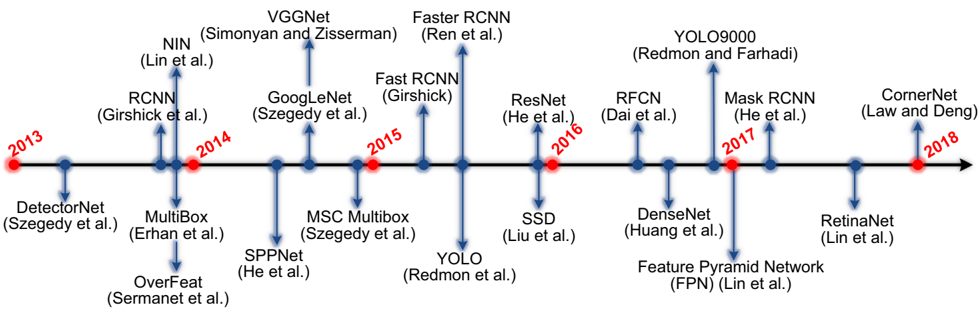
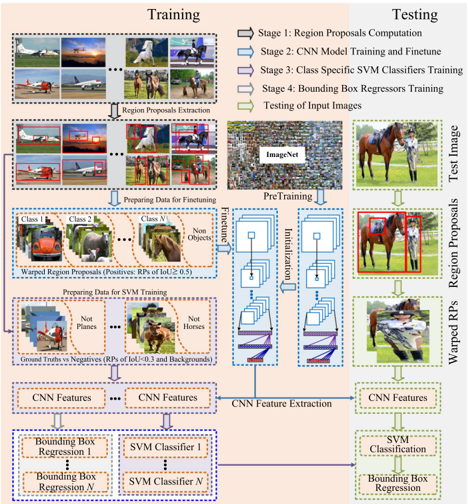
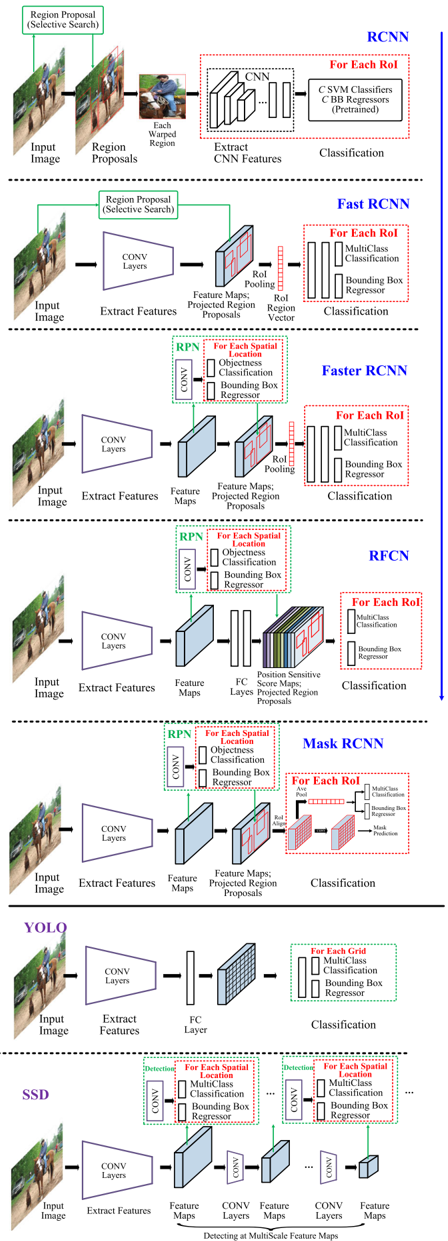
- The survey provides a taxonomy of deep learning based generic object detection, including region-based/two-stage frameworks (RCNN, Fast RCNN, Faster RCNN, RFCN, Mask RCNN) and unified/one-stage frameworks (YOLO, SSD), plus backbone CNN architectures, multiscale feature fusion, context modeling, detection proposals, and training strategies.
- Two-stage detectors generally achieve higher accuracy when large computation is allowed, while one-stage detectors are generally faster but weaker on small objects; for example, SSD achieves 74.3% mAP on VOC2007 test at 59 FPS versus Faster RCNN at 7 FPS / 73.2% mAP and YOLO at 45 FPS / 63.4% mAP. YOLO runs at 45 FPS and Fast YOLO at 155 FPS.
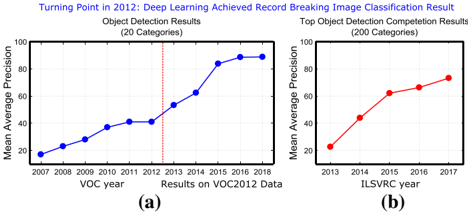
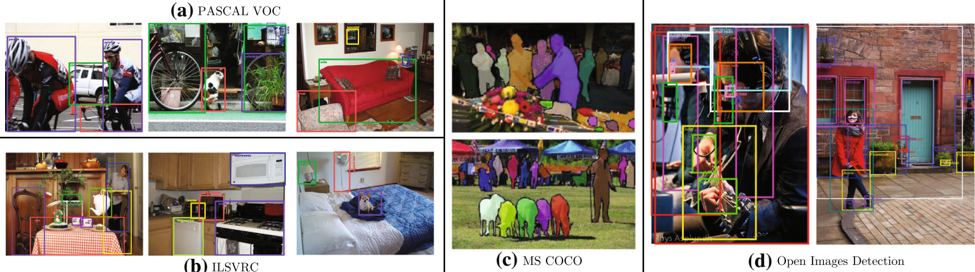
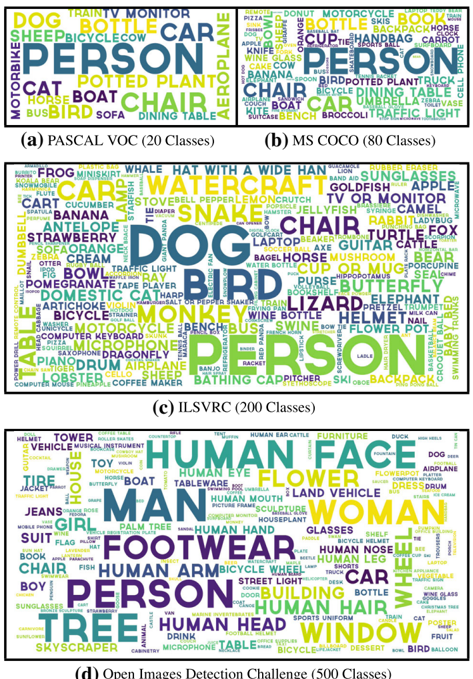
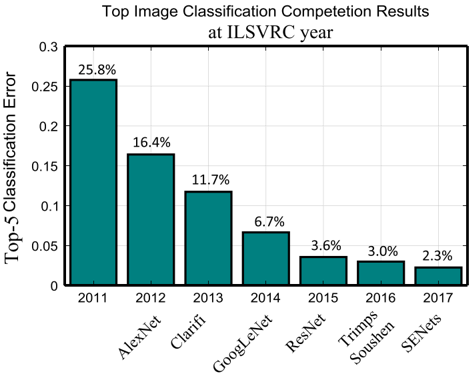
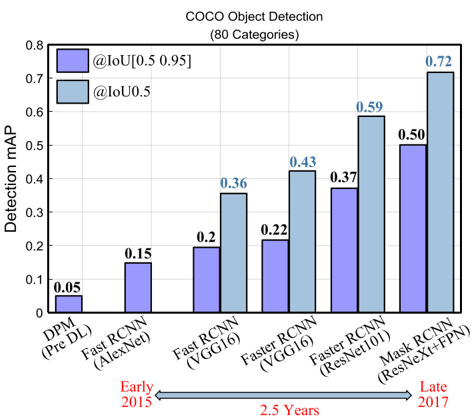
- The main datasets are PASCAL VOC, ImageNet/ILSVRC, MS COCO, and Open Images; COCO contains 41% small and 24% large objects, and the best COCO detector trained on 80 classes reaches only 73% mAP even at 0.5 IoU, while ImageNet Top-5 classification error dropped from 16% to 2% in less than five years. The Open Images challenge winner achieved 61.71% mAP on the public leaderboard and 58.66% mAP on the private leaderboard.
- Future directions include open-world learning, better and more efficient detection frameworks, compact CNN features, automatic neural architecture search, object instance segmentation, weakly supervised detection, few/zero-shot detection, other modalities, and universal object detection.
Methods
- Design: a comprehensive literature survey of deep learning based generic object detection, focusing on major progress of the last 5 years, restricted to still pictures and to top journal and conference papers, with more than 300 research contributions included.
- Organization: the survey presents a taxonomy covering detection frameworks, object feature representation, object proposal generation, context modeling, training strategies, and evaluation metrics, and summarizes popular datasets and evaluation criteria such as AP/mAP and IOU thresholds.
- Analysis: no new experiments are reported; the paper synthesizes and compares reported results across PASCAL VOC, ILSVRC, MS COCO, and Open Images, and discusses representative methods in tables and figures.
Limitations
- Stated: the survey limits its focus to top journal and conference papers, covers mainly the last 5 years, restricts attention to still pictures, and leaves video object detection for separate future consideration; the authors apologize to authors whose works are not included.
- Stated: comparing detectors by their originally reported performance may be misleading because methods differ in meta-frameworks, backbone networks, pretraining datasets, proposal methods, augmentation, and ensembling; there has been very limited unified comparison work.
- Evident: the survey is not exhaustive given the breadth of the field, and it excludes extensive work on specific object detection such as face, pedestrian, vehicle, and traffic sign detection; the provided text also contains fragmented tables and figures, which limits some detail.
Model-written summary. Check it against the paper before relying on it.
Integrity signals
Registry
Cites
Statistics
Figures


Verification
Claims the paper makes
14 Valid · 16 Not valid · 154 Not checked · 108 Own results and interpretations
The cited sources support only part of this claim — read each source’s verdict below.
In the paper
“To the best of our knowledge, for the evaluation of generic object detection algorithms, it is bounding boxes which are most widely used in the current literature (Everingham et al. 2010;Russakovsky et al. 2015), and therefore this is also the approach we adopt in this survey.”
§ Deep Learning for Generic Object Detection: A Survey > 2.1 The Problem
What the sources say
- Partly supportedcites Everingham et al. 2010 matched to “The pascal visual object classes (VOC) challenge” (2010) sourceExperimental — accuracy not yet measured
Section 2.2 (Detection) and “Bounding box evaluation” show that the VOC challenge evaluated object detections using predicted bounding boxes and their overlap with ground truth. The paper does not establish the broader comparative claim that bounding boxes were the most widely used evaluation approach in the literature. (LLM, conf=0.84)
- Not checked yetcites Russakovsky et al. 2015 matched to “ImageNet Large Scale Visual Recognition Challenge” (2015) source
hedged- Asserted: passes — The authors put it forward as true.
- Checkable: passes — It can be checked against evidence.
- Load-bearing: passes — The paper’s conclusions depend on it.
- Based: passes — The paper gives a reason why it holds.
- Partly supported
The sources with a verdict support this claim; the rest weren’t checked yet, have no full text we could read, or their verdicts aren’t rated yet.
In the paper
“In practice, current detectors focus mainly on structured object categories, such as the 20, 200 and 91 object classes in PASCAL VOC (Everingham et al. 2010), ILSVRC (Russakovsky et al. 2015) and MS COCO (Lin et al. 2014) respectively.”
§ Deep Learning for Generic Object Detection: A Survey > 2.2.1 Accuracy Related Challenges
What the sources say
- Supportedcites Everingham et al. 2010 matched to “The pascal visual object classes (VOC) challenge” (2010) source
The citation is offered for the identification of PASCAL VOC as the benchmark with 20 object classes. Our copy states this repeatedly: Sect. 3.2 'Choice of Classes' says 'Fig. 2 shows the 20 classes selected for annotation in the VOC2007 dataset' and that the count rose from 4 (VOC2005) to 10 (VOC2006) to 20 (VOC2007); Sect. 3.1 refers to 'each of the 20 object classes to be annotated'; Sect. 3.5 notes 'the number of classes doubled from 10 to 20'. The surrounding framing about detectors focusing on structured categories is the citing authors' own conclusion, not attributed to this source. (LLM, conf=0.90)
- Not checked yetcites Russakovsky et al. 2015 matched to “ImageNet Large Scale Visual Recognition Challenge” (2015) source
- Not checked yetcites Lin et al. 2014
plain- Asserted: passes — The authors put it forward as true.
- Checkable: passes — It can be checked against evidence.
- Load-bearing: unclear — It is unclear whether the paper’s conclusions depend on it.
- Based: passes — The paper gives a reason why it holds.
- Supported
The sources with a verdict support this claim; the rest weren’t checked yet, have no full text we could read, or their verdicts aren’t rated yet.
In the paper
“The Faster RCNN framework proposed by Ren et al. (2015Ren et al. ( , 2017) ) offered an efficient and accurate Region Proposal Network (RPN) for generating region proposals.”
§ Deep Learning for Generic Object Detection: A Survey > 5.1 Region Based (Two Stage) Frameworks
What the sources say
- Not checked yetcites Ren et al. 2015
- Supportedcites Ren et al. 2017 matched to “Faster R-CNN: Towards Real-Time Object Detection with Region Proposal Networks” (2017) source
The Abstract (p. 1) states the paper introduces an RPN that shares full-image convolutional features, enabling 'nearly cost-free region proposals' trained end-to-end 'to generate high-quality region proposals', and the Introduction (p. 1) gives the marginal cost as ~10ms per image. Efficiency and accuracy are both borne out: Section 3 (p. 3) defines the RPN as the proposal module of Faster R-CNN, and p. 2 reports it beats the Selective Search baseline in detection accuracy while waiving nearly all of its computational burden. The paraphrase matches the source at the same level of specificity. (LLM, conf=0.92)
plain- Asserted: passes — The authors put it forward as true.
- Checkable: passes — It can be checked against evidence.
- Load-bearing: unclear — It is unclear whether the paper’s conclusions depend on it.
- Based: passes — The paper gives a reason why it holds.
The sources with a verdict support this claim; the rest weren’t checked yet, have no full text we could read, or their verdicts aren’t rated yet.
In the paper
“In contrast, deep learning methods (especially deep CNNs) can learn powerful feature representations with multiple levels of abstraction directly from raw images (Bengio et al. 2013;LeCun et al. 2015).”
§ Deep Learning for Generic Object Detection: A Survey > 6 Object Representation
What the sources say
- Supportedcites Bengio et al. 2013 matched to “Representation Learning: A Review and New Perspectives” (2013) source
Section 3.4 (pp. 4-5) states that deep architectures 'can potentially lead to progressively more abstract features at higher layers' and that in the convolutional neural network this abstraction is built in explicitly via pooling, making representations 'generally highly non-linear functions of the raw input'. The Introduction (p. 1) frames the whole point as reducing dependence on labor-intensive feature engineering so that algorithms can extract discriminative information from low-level sensory data, and Section 11.2 (p. 24) applies this to the 2D layout of pixels in images via local receptive fields, convolution and pooling. Section 10.1 (p. 22-23) reinforces the 'powerful' element with the ImageNet deep convolutional result. Together these support the paraphrased claim, including the CNN emphasis and the multiple-levels-of-abstraction-from-raw-images core. (LLM, conf=0.90)
- Not checked yetcites LeCun et al. 2015 matched to “Deep learning” (2015) source
plainstates a cause- Asserted: passes — The authors put it forward as true.
- Checkable: passes — It can be checked against evidence.
- Load-bearing: passes — The paper’s conclusions depend on it.
- Based: passes — The paper gives a reason why it holds.
- Supported
The cited sources support only part of this claim — read each source’s verdict below.
In the paper
“Furthermore, the relationship between the source and target datasets plays a critical role, for example that ImageNet based CNN features show better performance for object detection than for human action (Zhou et al. 2015;Azizpour et al. 2016).”
§ Deep Learning for Generic Object Detection: A Survey > 6.1 Popular CNN Architectures
What the sources say
- Not checked yetcites Zhou et al. 2015
- Partly supportedcites Azizpour et al. 2016 matched to “Factors of Transferability for a Generic ConvNet Representation” (2016) sourceExperimental — accuracy not yet measured
The Introduction (p. 2) and Table I say that optimal transfer settings depend on the distance between the ImageNet source task and the target task, supporting the general point. The paper does not establish the citing sentence’s specific comparison that ImageNet-based features perform better for object detection than for human action recognition; its discussion of object detection in the Closing Discussion (p. 11) does not make that comparison. (LLM, conf=0.84)
plainstates an association- Asserted: passes — The authors put it forward as true.
- Checkable: passes — It can be checked against evidence.
- Load-bearing: unclear — It is unclear whether the paper’s conclusions depend on it.
- Based: passes — The paper gives a reason why it holds.
98 more claims · 5 with their cited sources checked
Create a free account to see all 292 claims and to verify the 284 references still open.
- Probably not a substantial claim. 108
- It may state two separate claims as one. 121
- The quote only partly states this claim. 2
Claims other papers make about this one
Each is checked against this paper’s own text: does it say what the citing paper says it does?
The cited source says what the claim attributes to it.
In the citing paper
“Modern object detectors employ many hand-crafted components (Liu et al., 2020), e.g., anchor generation, rule-based training target assignment, non-maximum suppression (NMS) post-processing.”
From Deformable DETR: Deformable Transformers for End-to-End Object Detection (2020) · cites this paper as Liu et al., 2020
The check wasn’t confident either way, so it gives no verdict — never disputed.
In the citing paper
“Over the last few decades, most deep learning-based object tracking systems have been based on CNN architectures [84, 139].”
From A survey on deep multimodal learning for computer vision: advances, trends, applications, and datasets (2022) · cites this paper as [84]
Experimental — accuracy not yet measuredIn the citing paper
“Fortunately, advanced imaging techniques and emerging machine learning methods jointly resist the challenges of unsatisfactory imaging environments and quasi real-time requirements [5], forcefully driving the progress of defect recognition, especially in learning classification [8].”
From Automated Visual Defect Classification for Flat Steel Surface: A Survey (2020) · cites this paper as [8]
Self-check
Percentages, sums and reported differences re-computed from the paper’s own numbers.
Rated minor: it would not touch a result — a value no result rests on, a p-value that stays on the same side of the significance level, or a conflict that is clerical, resolved elsewhere in the paper, or outside its own findings.
In the paper
“| VOC10 | 20 | 4998 | 5105 | 9637 | 11,577(13,339) 11,797(13,352) 10,103 | 23,374 | 2.4 | | |”
§ Deep Learning for Generic Object Detection: A Survey > 10.3 Research Directions
Reported 2.4 · recomputed 2.31357
Rated minor: it would not touch a result — a value no result rests on, a p-value that stays on the same side of the significance level, or a conflict that is clerical, resolved elsewhere in the paper, or outside its own findings.
In the paper
“| VOC09 | 20 | 3473 | 3581 | 6650 | 8505(9760) | 8713(9779) | 7054 | 17,218 | 2.3 |”
§ Deep Learning for Generic Object Detection: A Survey > 10.3 Research Directions
Reported 2.3 · recomputed 2.440885
Citations
Cites
Deep Residual Learning for Image Recognition
He, K., Zhang, X., Ren, S., & Sun, J. (2016) · 2016 IEEE Conference on Computer Vision and Pattern Recognition (CVPR) · doi:10.1109/cvpr.2016.90 · Cited by 235,474 · cited 5×
“GNet. Similarly, ResNet demonstrated the effectiveness of skip connections for learning extremely deep networks with hundreds of layers, winning the ILSVRC 2015 classification task. Inspired by ResNet [101], InceptionResNets [265] combined the Inception networks with shortcut connections, on the basis that shortcut con…”
BackgroundMethodInfluentialVaswani, A., Shazeer, N., Parmar, N., Uszkoreit, J., Jones, L., Gomez, A. N., Kaiser, L., & Polosukhin, I. (2017) · arXiv · doi:10.48550/arxiv.1706.03762 · Cited by 120,404 · cited 1×
“ning architecture where image and memory are processed in parallel to obtain detections which further update memory. Inspired by the recent success of attention modules in natural language processing [274], ORN processes a set of objects simultaneously through the interaction between their appearance 22 Li Liu et al.…”
BackgroundVery Deep Convolutional Networks for Large-Scale Image Recognition
Simonyan, K., & Zisserman, A. (2014) · arXiv · doi:10.48550/arxiv.1409.1556 · Cited by 114,148 · cited 1×
“including the following choices: Meta detection frameworks, such as RCNN [85], Fast RCNN [84], Faster RCNN [229], RFCN [50], Mask RCNN [102], YOLO [227] and SSD [175]; Backbone networks such as VGG [248], Inception [263,125, 264], ResNet [101], ResNeXt [291], and Xception [45] etc. listed in Table6; Innovations such a…”
MethodImageNet classification with deep convolutional neural networks
Krizhevsky, A., Sutskever, I., & Hinton, G. E. (2017) · Communications of the ACM · doi:10.1145/3065386 · Cited by 112,155
Hochreiter, S., & Schmidhuber, J. (1997) · Neural Computation · doi:10.1162/neco.1997.9.8.1735 · Cited by 102,318 · cited 1×
“Noting that message passing is not always helpful but dependent on individual samples, Zeng et al. used gated functions to control message transmission, like in Long Short Term Memory (LSTM) networks [83]. Concurrent with GBDNet, Li et al. [123] presented ACCNN (Fig.13(c)) to utilize both global and local contextual i…”
MethodLeCun, Y., Bengio, Y., & Hinton, G. (2015) · Nature · doi:10.1038/nature14539 · Cited by 84,126
Faster R-CNN: Towards Real-Time Object Detection with Region Proposal Networks
Ren, S., He, K., Girshick, R., & Sun, J. (2017) · IEEE Transactions on Pattern Analysis and Machine Intelligence · doi:10.1109/tpami.2016.2577031 · Cited by 73,472 · cited 5×
“Ren ら [229, 230] により提案された Faster RCNN フ レームワークは,物体領域候補(領域提案)生成用に効率的で Input Image Region Proposals Extract CNN Features Each Warped Region”
InfluentialFaster R-CNN: Towards Real-Time Object Detection with Region Proposal Networks
Ren, S., He, K., Girshick, R., & Sun, J. (2015) · arXiv · doi:10.48550/arxiv.1506.01497 · Cited by 70,812 · cited 5×
“Ren ら [229, 230] により提案された Faster RCNN フ レームワークは,物体領域候補(領域提案)生成用に効率的で Input Image Region Proposals Extract CNN Features Each Warped Region”
InfluentialImageNet: A large-scale hierarchical image database
Deng, J., Dong, W., Socher, R., Li, L.-J., Li, K., & Fei-Fei, L. (2009) · 2009 IEEE Conference on Computer Vision and Pattern Recognition · doi:10.1109/cvpr.2009.5206848 · Cited by 65,333 · cited 4×
“pretrained network is typically finetuned11 on a given detection dataset [58,83,85]. Several large scale image classification datasets are used for CNN pretraining. Among them the ImageNet1000 dataset [52,230] with 1.2 million images of 1000 object categories, or the Places dataset [311] which is much larger than ImageN…”
BackgroundMethodInfluentialGradient-based learning applied to document recognition
Lecun, Y., Bottou, L., Bengio, Y., & Haffner, P. (1998) · Proceedings of the IEEE · doi:10.1109/5.726791 · Cited by 58,805
Research works printed but not linked: 9
- 16. Biederman, I. (1987b). Recognition by components: A theory of human image understanding. Psychological Review, 94(2), 115. · DOI · Paper page
- 29. Chen, G., Choi, W., Yu, X., Han, T., & Chandraker M. (2017a). Learning efficient object detection models with knowledge distillation. In NIPS.
- 65. Endres, I., & Hoiem, D. (2010). Category independent object propos- als. In K. Daniilidis, P. Maragos, & N. Paragios (Eds.), European Conference on Computer Vision (pp. 575-588). Berlin: Springer.
- 128. Jaderberg, M., Simonyan, K., Zisserman, A., et al. (2015). Spatial trans- former networks. In NIPS (pp. 2017-2025).
- 143. Krizhevsky, A., Sutskever, I., & Hinton, G. (2012b). ImageNet clas- sification with deep convolutional neural networks. In NIPS (pp. 1097-1105).
- 195. Murase, H., & Nayar, S. (1995b). Visual learning and recognition of 3d objects from appearance. IJCV, 14(1), 5-24. · DOI · Paper page
- 231. Ren, M., Triantafillou, E., Ravi, S., Snell, J., Swersky, K., Tenenbaum, J. B., Larochelle, H., & Zemel R. S. (2018). Meta learning for semisupervised few shot classification. In ICLR.
- 279. Wan, L., Eigen, D., & Fergus, R. (2015). End to end integration of a convolution network, deformable parts model and nonmaximum suppression. In CVPR (pp. 851-859).
- 298. Yosinski, J., Clune, J., Bengio, Y., & Lipson, H. (2014). How trans- ferable are features in deep neural networks? In NIPS (pp. 3320-3328).
Cited by
Items 201–300 of 1,005
Deep learning-based software engineering: progress, challenges, and opportunities
Chen, X., Hu, X., Huang, Y., Jiang, H., Ji, W., Jiang, Y., Jiang, Y., Liu, B., Liu, H., Li, X., et al. (2024) · Science China Information Sciences · doi:10.1007/s11432-023-4127-5 · Cited by 153
Fast and Robust UAV to UAV Detection and Tracking From Video
Li, J., Ye, D. H., Kölsch, M., Wachs, J. P., & Bouman, C. A. (2021) · IEEE Transactions on Emerging Topics in Computing · doi:10.1109/tetc.2021.3104555 · Cited by 117
“While early object detection methods were based on simple feature extraction [11], more recent algorithms such as deep convolutional neural networks have been broadly accepted as having the best accuracy for the problem of detecting general objects in cluttered scenes [12].”
MethodConfidence Score: The Forgotten Dimension of Object Detection Performance Evaluation
Wenkel, S., Alhazmi, K., Liiv, T., Alrshoud, S. R., & Simón, M. (2021) · Sensors · doi:10.3390/s21134350 · Cited by 127
“Object detection models are primarily evaluated on very few datasets [24]; foremost they are evaluated on Pascal VOC [25] and COCO (Common Objects in Context) [26].”
BackgroundA systematic literature review on object detection using near infrared and thermal images
Bustos, N., Mashhadi, M., Lai-Yuen, S. K., Sarkar, S., Das, T. K., Zimmerman, W., & Erway, S. (2023) · Neurocomputing · doi:10.1016/j.neucom.2023.126804 · Cited by 120
Precision and speed: LSOD-YOLO for lightweight small object detection
Wang, H., Liu, J., Zhao, J., Zhang, J., & Zhao, D. (2025) · Expert Systems with Applications · doi:10.1016/j.eswa.2025.126440 · Cited by 121
A Comprehensive Survey of Machine Learning Techniques and Models for Object Detection
Τρίγκα, Μ., & Dritsas, E. (2025) · Sensors · doi:10.3390/s25010214 · Cited by 137
Progressive DARTS: Bridging the Optimization Gap for NAS in the Wild
Chen, X., Xie, L., Wu, J. H., & Tian, Q. C. (2020) · International Journal of Computer Vision · doi:10.1007/s11263-020-01396-x · Cited by 124
“Object detection is also a fundamental task in the vision community and also an important task of the scenario in the wild (Liu et al. 2019b).”
BackgroundMethodResultInfluentialYOLObile: Real-Time Object Detection on Mobile Devices via Compression-Compilation Co-Design
Cai, Y., Li, H., Yuan, G., Niu, W., Li, Y., Tang, X., Ren, B., & Wang, Y. (2021) · Proceedings of the AAAI Conference on Artificial Intelligence · doi:10.1609/aaai.v35i2.16179 · Cited by 93
Jiang, X., Yu, F. R., Song, T., & Leung, V. C. M. (2020) · IEEE Internet of Things Journal · doi:10.1109/jiot.2020.3026354 · Cited by 100
Peng, J., Wang, D., Liao, X., Shao, Q., Sun, Z., Yue, H., & Ye, H. (2020) · ISPRS Journal of Photogrammetry and Remote Sensing · doi:10.1016/j.isprsjprs.2020.08.026 · Cited by 105
On-Road Object Detection and Tracking Based on Radar and Vision Fusion: A Review
Tang, X., Zhang, Z., & Qin, Y. (2021) · IEEE Intelligent Transportation Systems Magazine · doi:10.1109/mits.2021.3093379 · Cited by 117
“In [22] and [23], various object detection methods were discussed in which most objects were unlikely to be on the road.”
BackgroundObject recognition datasets and challenges: A review
Salari, A., Djavadifar, A., Liu, X., & Najjaran, H. (2022) · Neurocomputing · doi:10.1016/j.neucom.2022.01.022 · Cited by 110
Self-citationArtificial Intelligence for Sustainability—A Systematic Review of Information Systems Literature
Hildesheim, U., Schoormann, T., Strobel, G., University Duisburg-Essen, Möller, F., ISST, T. D., Petrik, D., University of Stuttgart, Zschech, P., & Friedrich-Alexander University Erlangen-Nürnberg (2023) · Communications of the Association for Information Systems · doi:10.17705/1cais.05209 · Cited by 93
Xie, X., Cheng, G., Wang, J., Li, K., Yao, X., & Han, J. (2024) · International Journal of Computer Vision · doi:10.1007/s11263-024-01989-w · Cited by 116
“Driven by the availability of GPUs with very high computational capability and advanced deep learning algorithms (Xie et al., 2017; Liu et al., 2020; Hu et al., 2018; Huang et al., 2017; Gao et al., 2021; Cheng et al., 2023a), oriented object detection has achieved remarkable breakthroughs (Xu et…”
Deep learning approaches for challenging species and gender identification of mosquito vectors
Kittichai, V., Pengsakul, T., Chumchuen, K., Samung, Y., Sriwichai, P., Phatthamolrat, N., Tongloy, T., Jaksukam, K., Chuwongin, S., & Boonsang, S. (2021) · Scientific Reports · doi:10.1038/s41598-021-84219-4 · Cited by 97
Multi-Scale Video Super-Resolution Transformer With Polynomial Approximation
Zhang, F., Chen, G., Wang, H., Li, J., & Zhang, C. (2023) · IEEE Transactions on Circuits and Systems for Video Technology · doi:10.1109/tcsvt.2023.3278131 · Cited by 127
“object detection [38], [39], [40], and semantic segmentation”
BackgroundKarimi, N., Mishra, M., & Lourenço, P. B. (2024) · Journal of Cultural Heritage · doi:10.1016/j.culher.2024.05.009 · Cited by 114
Object Detection with Transformers: A Review
Shehzadi, T., Hashmi, K. A., Liwicki, M., Stricker, D., & Afzal, M. Z. (2025) · Sensors · doi:10.3390/s25196025 · Cited by 93
“Deep Learning for Generic Object Detection: A Survey [33] 2019 IJCV A review on deep learning techniques on generic object detection.”
LittleYOLO-SPP: A delicate real-time vehicle detection algorithm
S, S. J., & P, E. R. (2021) · Optik · doi:10.1016/j.ijleo.2020.165818 · Cited by 91
Reviewing methods of deep learning for intelligent healthcare systems in genomics and biomedicine
Zafar, I., Anwar, S., kanwal, F., Yousaf, W., Nisa, F. U., Kausar, T., Ain, Q. U., Unar, A., Kamal, M. A., Rashid, S., et al. (2023) · Biomedical Signal Processing and Control · doi:10.1016/j.bspc.2023.105263 · Cited by 124
A Comprehensive Survey of Multi-Level Thresholding Segmentation Methods for Image Processing
Amiriebrahimabadi, M., Rouhi, Z., & Mansouri, N. (2024) · Archives of Computational Methods in Engineering · doi:10.1007/s11831-024-10093-8 · Cited by 117
Hu, X., & Assaad, R. H. (2023) · Expert Systems with Applications · doi:10.1016/j.eswa.2023.120897 · Cited by 114
de Carvalho, O. L. F., Júnior, O. A. D. C., de Albuquerque, A. O., de Bem, P. P., Silva, C. R., Ferreira, P. H. G., de Moura, R. D. S., Gomes, R. A. T., Guimarães, R. F., & Borges, D. L. (2020) · Remote Sensing · doi:10.3390/rs13010039 · Cited by 113
A Full Featured Configurable Accelerator for Object Detection With YOLO
Pestana, D. G., Miranda, P. R., Lopes, J. D., Duarte, R. P., Véstias, M. P., Neto, H. C., & de Sousa, J. T. (2021) · IEEE Access · doi:10.1109/access.2021.3081818 · Cited by 102
“Object detection has been under extensive research in both academia [1], [2] and real-world applications [3], [4].”
BackgroundFSNet: Focus Scanning Network for Camouflaged Object Detection
Ze, S., Kang, X., Wei, X., Liu, H., Dian, R., & Li, S. (2023) · IEEE Transactions on Image Processing · doi:10.1109/tip.2023.3266659 · Cited by 102
“GOD locates object instances from images with predefined object classes [22].”
BackgroundHAT: Hybrid Attention Transformer for Image Restoration
Chen, X., Wang, X., Zhang, W., Kong, X., Qiao, Y., Zhou, J., & Dong, C. (2025) · IEEE Transactions on Pattern Analysis and Machine Intelligence · doi:10.1109/tpami.2025.3628275 · Cited by 251
“…of Transformer-based methods [15], [16], [17], [46], [47], [48], [49], [50], [51], [52], [53], [54] have been developed for high-level vision tasks, including image classification [15], [16], [46], [55], [56], object detection [16], [50], [57], [58], [59], segmentation [17], [60], [61], [62], etc .”
Self-citationGoing deep into schizophrenia with artificial intelligence
Cortes-Briones, J., Tapia, N. I., D’Souza, D. C., & Estévez, P. A. (2021) · Schizophrenia Research · doi:10.1016/j.schres.2021.05.018 · Cited by 113
“, 2020a), and object detection and recognition in images and videos (Liu et al., 2020), among others.”
Infrastructure-Based Object Detection and Tracking for Cooperative Driving Automation: A Survey
Bai, Z., Wu, G., Qi, X., Liu, Y., Oguchi, K., & Barth, M. (2022) · IEEE Intelligent Vehicles Symposium · doi:10.1109/iv51971.2022.9827461 · Cited by 108
Arbitrary-Oriented Ship Detection Through Center-Head Point Extraction
Zhang, F., Wang, X., Zhou, S., Wang, Y., & Hou, Y. (2021) · IEEE Transactions on Geoscience and Remote Sensing · doi:10.1109/tgrs.2021.3120411 · Cited by 106
“In recent years, deep convolutional neural networks (DCNNs) have been developed as a powerful tool for feature representation learning [12], [13] and have achieved significant improvements in horizontal object detection [14].”
Self-citationRemote Sensing for Monitoring Photovoltaic Solar Plants in Brazil Using Deep Semantic Segmentation
da Costa, M. V. C. V., de Carvalho, O. L. F., Orlandi, A. G., Hirata, I., de Albuquerque, A. O., Silva, F. V. E., Guimarães, R. F., Gomes, R. A. T., & Júnior, O. A. D. C. (2021) · Energies · doi:10.3390/en14102960 · Cited by 99
Towards High Performance Human Keypoint Detection
Zhang, J., Chen, Z., & Tao, D. (2021) · International Journal of Computer Vision · doi:10.1007/s11263-021-01482-8 · Cited by 105
Ghali, R., & Akhloufi, M. A. (2023) · Remote Sensing · doi:10.3390/rs15071821 · Cited by 112
“There exist two categories of region-based CNNs: single-stage (also called one-stage) and two-stage object detectors [76].”
Min-Entropy Latent Model for Weakly Supervised Object Detection
Wan, F., Wei, P., Han, Z., Jiao, J., & Ye, Q. (2019) · IEEE Transactions on Pattern Analysis and Machine Intelligence · doi:10.1109/tpami.2019.2898858 · Cited by 87
“SUPERVISED object detection has made great progress in recent years [1], [2], [3], [4], [5], [6], as concluded in the object detection survey [7].”
BackgroundA novel YOLOv3-arch model for identifying cholelithiasis and classifying gallstones on CT images
Pang, S., Ding, T., Qiao, S., Meng, F., Wang, S., Li, P., & Wang, X. (2019) · PLOS ONE · doi:10.1371/journal.pone.0217647 · Cited by 87
Self-citationX-Ray Baggage Inspection With Computer Vision: A Survey
Mery, D., Saavedra, D., & Prasad, M. (2020) · IEEE Access · doi:10.1109/access.2020.3015014 · Cited by 95
“The reader can find a survey of object detection approaches based on deep learning in [80].”
BackgroundOcclusion Handling in Generic Object Detection: A Review
Saleh, K., Szénási, S., & Vámossy, Z. (2021) · IEEE World Symposium on Applied Machine Intelligence and Informatics (SAMI) · doi:10.1109/sami50585.2021.9378657 · Cited by 125
“To avoid repeating what is already explained in [5], we will focus on the datasets for images in indoor environments.”
BackgroundInfluentialClass-Agnostic Object Detection with Multi-modal Transformer
Maaz, M., Rasheed, H., Khan, S. H., Khan, F. S., Anwer, R. M., & Yang, M. (2022) · Lecture notes in computer science · doi:10.1007/978-3-031-20080-9_30 · Cited by 124
“The recent years have witnessed significant advances in object detection (OD) [42] based on developments of large-scale annotated datasets and carefully designed deep learning models.”
BackgroundA deep learning approach to building an intelligent video surveillance system
Xu, J. (2020) · Multimedia Tools and Applications · doi:10.1007/s11042-020-09964-6 · Cited by 92
“Note that this was partially done in [23] with some information missing, which we are going to present later in this section.”
BackgroundRelation Graph Network for 3D Object Detection in Point Clouds
Feng, M., Gilani, S. Z., Wang, Y., Zhang, L., & Mian, A. S. (2020) · IEEE Transactions on Image Processing · doi:10.1109/tip.2020.3031371 · Cited by 94
“computer vision and has been an active area of research for several decades [18], [57].”
Region Similarity Representation Learning
Xiao, T., Reed, C. J., Wang, X., Keutzer, K., & Darrell, T. (2021) · 2021 IEEE/CVF International Conference on Computer Vision (ICCV) · doi:10.1109/iccv48922.2021.01037 · Cited by 80
“This is necessary for tasks such as object detection with Faster-RCNN [43] or related detectors [25, 34], which localize and then classify regions within the convolutional feature maps.”
BackgroundMethodSelf-citationRice Seedling Detection in UAV Images Using Transfer Learning and Machine Learning
Tseng, H.-H., Yang, M., Saminathan, R., Hsu, Y., Yang, C.-Y., & Wu, D. (2022) · Remote Sensing · doi:10.3390/rs14122837 · Cited by 101
Pozzer, S., Azar, E. R., Rosa, F. D., & Pravia, Z. M. C. (2020) · Journal of Performance of Constructed Facilities · doi:10.1061/(asce)cf.1943-5509.0001541 · Cited by 87
Precise Agriculture: Effective Deep Learning Strategies to Detect Pest Insects
Butera, L., Ferrante, A., Jermini, M., Prevostini, M., & Alippi, C. (2021) · IEEE/CAA Journal of Automatica Sinica · doi:10.1109/jas.2021.1004317 · Cited by 103
Multiple attentional path aggregation network for marine object detection
Yu, H., Li, X., Feng, Y., & Han, S. (2022) · Applied Intelligence · doi:10.1007/s10489-022-03622-0 · Cited by 98
“The feature pyramid network (FPN) [14] is the most popular network structure in recent object detectors.”
BackgroundWang, Y., Yan, X., Zhang, K., Gong, L., Xie, H., Wang, F. L., & Wei, M. (2022) · Computer Graphics Forum · doi:10.1111/cgf.14692 · Cited by 111
Facial Micro-Expressions: An Overview
Zhao, G., Li, X., Li, Y., & Pietikäinen, M. (2023) · Proceedings of the IEEE · doi:10.1109/jproc.2023.3275192 · Cited by 106
“In recent years, deep learning has achieved excellent performance in many research fields, such as facial expression recognition [138], object detection [139], and image classification [140].”
BackgroundSelf-citationPestLite: A Novel YOLO-Based Deep Learning Technique for Crop Pest Detection
Dong, Q., Sun, L., Han, T., Cai, M., & Gao, C. (2024) · Agriculture · doi:10.3390/agriculture14020228 · Cited by 104
AR and ARMA model order selection for time-series modeling with ImageNet classification
Moon, J.-H., Hossain, M.-B., & Chon, K. H. (2021) · Signal Processing · doi:10.1016/j.sigpro.2021.108026 · Cited by 92
A state-of-the-art review on robotics in waste sorting: scope and challenges
Satav, A. G., Kubade, S., Amrutkar, C., Arya, G., & Pawar, A. (2023) · International Journal on Interactive Design and Manufacturing (IJIDeM) · doi:10.1007/s12008-023-01320-w · Cited by 125
“Generic object detection is used to develop a general-purpose algorithm for detection with high accuracy and high efficiency [28].”
MethodDeep Domain Adaptive Object Detection: a Survey
Li, W., Li, F., Luo, Y., Wang, P., & Sun, J. (2020) · IEEE Symposium Series on Computational Intelligence (SSCI) · doi:10.1109/ssci47803.2020.9308604 · Cited by 97
“There have been some works concentrating on review domain adaptation [1, 2] and deep learning based object detection [3], while there is still lack of a survey on DDAOD.”
BackgroundMetamorphic object insertion for testing object detection systems
Wang, S., & Su, Z. (2020) · IEEE/ACM International Conference on Automated Software Engineering (ASE) · doi:10.1145/3324884.3416584 · Cited by 144
“, Table Two in [86] and Table Seven in [46]), one point mAP score increase is significant.”
BackgroundDeep learning object detection in materials science: Current state and future directions
Jacobs, R. M. (2022) · Computational Materials Science · doi:10.1016/j.commatsci.2022.111527 · Cited by 90
A Survey on Deep-Learning-Based Real-Time SAR Ship Detection
Li, J., Chen, J., Cheng, P., Yu, Z., Yu, L., & Chi, C. (2023) · IEEE Journal of Selected Topics in Applied Earth Observations and Remote Sensing · doi:10.1109/jstars.2023.3244616 · Cited by 98
“[88],andJiaoetal.”
Self-citationMaDiNet: Mamba Diffusion Network for SAR Target Detection
Zhou, J., Liu, Y., Peng, B., Liu, L., & Li, X. (2025) · IEEE Transactions on Circuits and Systems for Video Technology · doi:10.1109/tcsvt.2025.3574657 · Cited by 103
“However, the characteristics of SAR images are significantly distinct from those of natural images [7].”
Self-citationDeep Learning Framework for Vehicle and Pedestrian Detection in Rural Roads on an Embedded GPU
Barba-Guaman, L., Eugenio Naranjo, J., & Ortiz, A. (2020) · Electronics · doi:10.3390/electronics9040589 · Cited by 82
“Some deep neural network architectures have been proposed in the past [9], however, we have focused our implementation on the latest architectures that are rapid and well described in [46,47].”
BackgroundMethodInfluentialAcute Lymphoblastic Leukemia Detection Based on Adaptive Unsharpening and Deep Learning
Genovese, A., Hosseini, M. S., Piuri, V., Plataniotis, K. N., & Scotti, F. (2021) · IEEE International Conference on Acoustics Speech and Signal Processing · doi:10.1109/icassp39728.2021.9414362 · Cited by 86
DSFNet: Dynamic and Static Fusion Network for Moving Object Detection in Satellite Videos
Xiao, C., Yin, Q., Ying, X., Li, R., Wu, S., Li, M., Liu, L., An, W., & Chen, Z. (2021) · IEEE Geoscience and Remote Sensing Letters · doi:10.1109/lgrs.2021.3124222 · Cited by 92
Self-citationSTDnet: Exploiting high resolution feature maps for small object detection
Bosquet, B., Mucientes, M., & Brea, V. M. (2020) · Engineering Applications of Artificial Intelligence · doi:10.1016/j.engappai.2020.103615 · Cited by 80
Cazzato, D., Leo, M., Distante, C., & Voos, H. (2020) · Sensors · doi:10.3390/s20133739 · Cited by 94
“Once again, deep learning is largely exploited to recognize objects [77] and, to this aim, deformable convolutions [78] are very well suited, since they can model large unknown transformations that happen in egocentric vision.”
BackgroundHierarchical deep multi-modal network for medical visual question answering
Gupta, D., Suman, S., & Ekbal, A. (2020) · Expert Systems with Applications · doi:10.1016/j.eswa.2020.113993 · Cited by 89
Nguyen, C. T., Saputra, Y. M., Huynh, N. V., Nguyen, N.-T., Khoa, T. V., Tuan, B. M., Nguyen, D. N., Hoang, D. T., Vu, T. X., Dutkiewicz, E., et al. (2020) · IEEE Access · doi:10.1109/access.2020.3018124 · Cited by 88
“In such context, human detection features in object detection [49], a major sub-field of computer vision, can help to detect crowds in public areas through real-time images from surveillance cameras.”
BackgroundDeep Learning Techniques for Visual SLAM: A Survey
Mokssit, S., Licea, D. B., Guermah, B., & Ghogho, M. (2023) · IEEE Access · doi:10.1109/access.2023.3249661 · Cited by 94
“Initially, learning semantics from visual inputs was performed in the context of single 2D image classification [93] and object recognition [94].”
MethodXAIR: A Framework of Explainable AI in Augmented Reality
Xu, X., Yu, A., Jonker, T. R., Todi, K., Lu, F., Qian, X., Belo, J. M. E., Wang, T., Li, M., Mun, A., et al. (2023) · CHI Conference on Human Factors in Computing Systems · doi:10.1145/3544548.3581500 · Cited by 109
“The integration of sensors enables AR systems to understand users’ current states [99, 194, 204] and their environment [139, 153] to provide a variety of intelligent functionalities.”
BackgroundAI-enhanced Identification, Inspection and Sorting for Reverse Logistics in Remanufacturing
Schlüter, M., Lickert, H., Schweitzer, K., Bilge, P., Briese, C., Dietrich, F., & Krüger, J. (2021) · Procedia CIRP · doi:10.1016/j.procir.2021.01.107 · Cited by 78
Road object detection: a comparative study of deep learning-based algorithms
Mahaur, B., Singh, N., & Mishra, K. K. (2022) · Multimedia Tools and Applications · doi:10.1007/s11042-022-12447-5 · Cited by 95
“This continuous progress of local invariant handcrafted features gained popularity, finally led to the development of the first real-time object detector in 2001, known as the Viola-Jones (VJ) detector [36].”
BackgroundMethodInfluentialOriented object detection in optical remote sensing images using deep learning: a survey
Wang, K., Wang, Z., Li, Z., Su, A., Teng, X., Pan, E., Liu, M., & Yu, Q. (2025) · Artificial Intelligence Review · doi:10.1007/s10462-025-11256-0 · Cited by 118
“There are more surveys focus on generic horizontal object detection, aiming at detecting the objects of multiple predefined categories in natural scenarios (Jiao et al., 2019; Liu et al., 2020; Wu et al., 2020; Zhao et al., 2019b; Xiao et al., 2020a).”
Bird Image Retrieval and Recognition Using a Deep Learning Platform
Huang, Y., & Basanta, H. (2019) · IEEE Access · doi:10.1109/access.2019.2918274 · Cited by 83
Yue, J., Fang, L., Ghamisi, P., Xie, W., Li, J., Chanussot, J., & Plaza, A. (2022) · IEEE Geoscience and Remote Sensing Magazine · doi:10.1109/mgrs.2022.3161377 · Cited by 94
“The advantage of these methods is that they can be applied to the existing methods without modifying the network structure, but only modifying the loss function [153], [154].”
MethodSSD vs. YOLO for Detection of Outdoor Urban Advertising Panels under Multiple Variabilities
Morera, Á., Sánchez, Á., Moreno, A. B., Sappa, A. D., & Vélez, J. F. (2020) · Sensors · doi:10.3390/s20164587 · Cited by 79
Human Detection in Aerial Thermal Images Using Faster R-CNN and SSD Algorithms
Akshatha, K. R., Karunakar, A. K., Shenoy, B. S., Pai, A. K., Nagaraj, N., & Rohatgi, S. S. (2022) · Electronics · doi:10.3390/electronics11071151 · Cited by 96
“The general object detection performance improved significantly after the evolution of convolutional neural networks for image classification [5,6].”
BackgroundFindNet: Can You Find Me? Boundary-and-Texture Enhancement Network for Camouflaged Object Detection
Li, P., Yan, X., Zhu, H., Wei, M., Zhang, X.-P. S., & Qin, J. (2022) · IEEE Transactions on Image Processing · doi:10.1109/tip.2022.3189828 · Cited by 88
“Despite the great improvements recently, COD is still a challenging yet not well-solved problem in the image-based object detection domain [3].”
BackgroundDeep learning with RGB and thermal images onboard a drone for monitoring operations
Speth, S., Gonçalves, A., Rigault, B., Suzuki, S., Bouazizi, M., Matsuo, Y., & Prendinger, H. (2022) · Journal of Field Robotics · doi:10.1002/rob.22082 · Cited by 94
“Otherwise, the prediction is a false positive (FP) (Liu et al., 2020). dr .”
BackgroundDiabetic retinopathy screening using deep learning for multi-class imbalanced datasets
Saini, M., & Susan, S. (2022) · Computers in Biology and Medicine · doi:10.1016/j.compbiomed.2022.105989 · Cited by 93
Cooperative Perception With V2V Communication for Autonomous Vehicles
Ngo, H. T., Fang, H., & Wang, H. (2023) · IEEE Transactions on Vehicular Technology · doi:10.1109/tvt.2023.3264020 · Cited by 94
“An object detector typically has two layers: the backbone network and the baseline [13].”
BackgroundHCformer: Hybrid CNN-Transformer for LDCT Image Denoising
Yuan, J., Zhou, F., Guo, Z., Li, X., & Yu, H. (2023) · Journal of Imaging Informatics in Medicine · doi:10.1007/s10278-023-00842-9 · Cited by 93
“Transformer has achieved an excellent performance in image processing fields such as image classification [20, 21], image segmentation [22], and object detection [23, 24].”
MethodAngle-Closure Detection in Anterior Segment OCT Based on Multilevel Deep Network
Fu, H., Xu, Y., Lin, S., Wong, D. W. K., Baskaran, M., Mahesh, M., Aung, T., & Liu, J. (2019) · IEEE Transactions on Cybernetics · doi:10.1109/tcyb.2019.2897162 · Cited by 80
“performance in image classification [18], object detection [19], and image segmentation [20].”
BackgroundA deep learning based automatic defect analysis framework for In-situ TEM ion irradiations
Shen, M., Li, G., Wu, D., Yaguchi, Y., Haley, J. C., Field, K. G., & Morgan, D. D. (2021) · Computational Materials Science · doi:10.1016/j.commatsci.2021.110560 · Cited by 86
Razavi, M., Alikhani, H., Janfaza, V., Sadeghi, B., & Alikhani, E. (2021) · SN Computer Science · doi:10.1007/s42979-021-00894-0 · Cited by 75
Applications of deep learning in electron microscopy
Treder, K. P., Huang, C., Kim, J. S., & Kirkland, A. I. (2022) · Microscopy · doi:10.1093/jmicro/dfab043 · Cited by 91
“…Recognition Challenge, using convolutional neural networks (CNNs), and these have been adopted by the computer vision community and more broadly applied in diverse applications including consumer electronics, pedestrian detection, autonomous driving and computer-aided medical diagnosis [13,14].”
Visuals to Text: A Comprehensive Review on Automatic Image Captioning
Ming, Y., Hu, N., Fan, C., Feng, F., Zhou, J., & Yu, H. (2022) · IEEE/CAA Journal of Automatica Sinica · doi:10.1109/jas.2022.105734 · Cited by 73
“In brief, image captioning enhances the machine’s ability of multi-modal information understanding and is widely used in different areas such as image analysis and retrieval [2–4], human-robot interactions [5], intelligence education [6] and intelligent blind guidance [7].”
A Survey on Object Instance Segmentation
Sharma, R., Saqib, M., Lin, C., & Blumenstein, M. (2022) · SN Computer Science · doi:10.1007/s42979-022-01407-3 · Cited by 96
Segmentation in large-scale cellular electron microscopy with deep learning: A literature survey
Aswath, A., Alsahaf, A. M. J., Giepmans, B. N. G., & Azzopardi, G. (2023) · Medical Image Analysis · doi:10.1016/j.media.2023.102920 · Cited by 90
“…FastRCNN, and FasterRCNN are two-stage detection networks that use a deep neural network for feature extraction (encoder) and region proposals for the segmentation of objects of interest, followed by bounding box regression and classification to obtain instance segmentation (Liu et al., 2020b).”
BackgroundComprehensive review of recent developments in visual object detection based on deep learning
Edozie, E., Shuaibu, A. N., John, U. K., & Sadiq, B. O. (2025) · Artificial Intelligence Review · doi:10.1007/s10462-025-11284-w · Cited by 118
Scattering Model Guided Adversarial Examples for SAR Target Recognition: Attack and Defense
Peng, B., Peng, B., Zhou, J., Xie, J., & Liu, L. (2022) · IEEE Transactions on Geoscience and Remote Sensing · doi:10.1109/tgrs.2022.3213305 · Cited by 89
“[5], [6], [7], [8], [9] but are largely limited to the analysis of optical imagery.”
BackgroundSelf-citationSRAF-Net: A Scene-Relevant Anchor-Free Object Detection Network in Remote Sensing Images
Liu, J., Li, S., Zhou, C., Cao, X., Gao, Y., & Wang, B. (2021) · IEEE Transactions on Geoscience and Remote Sensing · doi:10.1109/tgrs.2021.3124959 · Cited by 83
Ding, K., Jun-feng, Y., Lin, H. Z., Wang, Z., Wang, D., Wang, X., Ni, K., & Zhou, Q. (2022) · Remote Sensing of Environment · doi:10.1016/j.rse.2022.113345 · Cited by 77
Self-citationDual-Constraint Coarse-to-Fine Network for Camouflaged Object Detection
Yue, G., Xiao, H., Xie, H., Zhou, T., Zhou, W., Yan, W., Zhao, B., Wang, T., & Jiang, Q. (2023) · IEEE Transactions on Circuits and Systems for Video Technology · doi:10.1109/tcsvt.2023.3318672 · Cited by 76
“…in various fields, such as industrial defect detection [5], [6], polyp segmentation [7], [8], [9], etc. Unlike traditional generic object detection [10], [11] and salient object detection [12], [13], [14], where the objects are easily distinguished from the background, COD aims at detecting…”
BackgroundA systematic review of object detection from images using deep learning
Kaur, J., & Singh, W. (2023) · Multimedia Tools and Applications · doi:10.1007/s11042-023-15981-y · Cited by 90
Strawberry R-CNN: Recognition and counting model of strawberry based on improved faster R-CNN
Li, J., Zhu, Z., Liu, H., Su, Y., & Deng, L. (2023) · Ecological Informatics · doi:10.1016/j.ecoinf.2023.102210 · Cited by 77
Towards Generalization Across Depth for Monocular 3D Object Detection
Simonelli, A., Buló, S. R., Porzi, L., Ricci, E., & Kontschieder, P. (2020) · Lecture Notes in Computer Science · doi:10.1007/978-3-030-58542-6_46 · Cited by 70
“In the last decade, thanks to the emergence of deep neural networks and to the availability of large-scale annotated datasets, the state of the art in 2D object detection has improved significantly [25,18,23,24,15,11], reaching near-human performance [16].”
BackgroundAutomated rip current detection with region based convolutional neural networks
de Silva, A., Mori, I., Dusek, G., Davis, J., & Pang, A. (2021) · Coastal Engineering · doi:10.1016/j.coastaleng.2021.103859 · Cited by 82
A Comprehensive Study of 3-D Vision-Based Robot Manipulation
Cong, Y., Chen, R., Ma, B., Liu, H., Hou, D., & Yang, C. (2021) · IEEE Transactions on Cybernetics · doi:10.1109/tcyb.2021.3108165 · Cited by 100
“Recently, the deep-learning-based methods [79] have become popular since the proposal of deep convolutional neural network (DCNN) [80], which can be divided into: 1) two-stage methods generate the region proposals containing potential objects in the first stage and classify each proposal soon.”
MethodDeepCrackAT: An effective crack segmentation framework based on learning multi-scale crack features
Lin, Q., Li, W., Zheng, X., Fan, H., & Li, Z. (2023) · Engineering Applications of Artificial Intelligence · doi:10.1016/j.engappai.2023.106876 · Cited by 83
Kim, Y. S., Baek, J. H., Im, I. H., Lee, D. H., Park, M. H., & Jang, H. W. (2024) · ACS Nano · doi:10.1021/acsnano.4c12884 · Cited by 76
Deep Learning for Image-based Automatic Dial Meter Reading: Dataset and Baselines
Salomon, G., Laroca, R., & Menotti, D. (2020) · International Joint Conference on Neural Networks (IJCNN) · doi:10.1109/ijcnn48605.2020.9207318 · Cited by 74
“YOLO’s accuracy while making it faster [31].”
Feature-specific neural reactivation during episodic memory
Bone, M. B., Ahmad, F. N., & Buchsbaum, B. R. (2020) · Nature Communications · doi:10.1038/s41467-020-15763-2 · Cited by 75
A hybrid tiny YOLO v4-SPP module based improved face mask detection vision system
Kumar, A., Kalia, A., Sharma, A., & Kaushal, M. (2021) · Journal of Ambient Intelligence and Humanized Computing · doi:10.1007/s12652-021-03541-x · Cited by 89
“…generalized object detection YOLO series has shown fascinating results in various real-world applications such as general category object detection (Liu et al. 2019; Yin et al. 2020),car license plate recognition (Hendry and Chen 2019), pedestrian detection (Yi et al. 2019), road marking detection…”
BackgroundAutomatic semantic style transfer using deep convolutional neural networks and soft masks
Zhao, H., Rosin, P. L., Lai, Y., & Wang, Y. (2019) · The Visual Computer · doi:10.1007/s00371-019-01726-2 · Cited by 74
“Recently, CNN architectures have been shown to be capable of providing semantic segmentation [19,40], generic object detection [31] and image completion [18].”
BackgroundMulti-Variate vocal data analysis for Detection of Parkinson disease using Deep Learning
Nagasubramanian, G., & Muthuramalingam, S. (2020) · Neural Computing and Applications · doi:10.1007/s00521-020-05233-7 · Cited by 70
“The relatedworks discussed above are mostly concentrating on the development of different ML and DL techniques [24, 25] for Parkinson detection.”
BackgroundHigh-throughput soybean seeds phenotyping with convolutional neural networks and transfer learning
Yang, S. Y., Zheng, L., He, P., Wu, T., Sun, S., & Wang, M. (2021) · Plant Methods · doi:10.1186/s13007-021-00749-y · Cited by 82
“Convolutional Neural Networks (CNN) are widely applied in various tasks, such as classification [24, 25], object detection [26, 27], semantic segmentation and instance segmentation [28, 29], which greatly improves the results while traditional image processing methods can’t achieve [30].”
Background
Metadata
- Authors
- Liu, L., Ouyang, W., Wang, X., Fieguth, P., Chen, J., Liu, X., & Pietikäinen, M.
- Affiliations
- National University of Defense Technology (CN)
- The University of Sydney (AU)
- Chinese University of Hong Kong (HK)
- University of Waterloo (CA)
- University of Oulu (FI)
- Corresponding author
- Liu, Li
- Venue
- International Journal of Computer Vision
- Published
- 2019-10-31
- Volume
- 128
- Issue
- 2
- Pages
- 261-318
- ISSN
- 0920-5691 (ISSN-L)
- 1573-1405
- OpenAlex
- W2988916019
- Cited by
- 2,965
- References
- 349
- Citations by year
- 2026: 217 · 2025: 362 · 2024: 396 · 2023: 485 · 2022: 538 · 2021: 544 · 2020: 319 · 2019: 92
- FWCI
- 166.93
- Type
- journal article
- Language
- en
- Open access
- hybrid
- doi.org
- Licence
- cc-by
- creativecommons.org/licenses/by/4.0 (tdm)
- creativecommons.org/licenses/by/4.0 (vor)
- Locations
- International Journal of Computer Vision (publishedVersion, cc-by)
- arXiv (Cornell University) (submittedVersion)
- arXiv (Cornell University)
- Funders
- NSFC China (61872379)
- Topics
- Physical Sciences › Computer Science › Computer Vision and Pattern Recognition › Advanced Neural Network Applications
- Physical Sciences › Computer Science › Computer Vision and Pattern Recognition › Advanced Image and Video Retrieval Techniques
- Physical Sciences › Computer Science › Computer Vision and Pattern Recognition › Visual Attention and Saliency Detection
- Keywords
- generic object detection, instance segmentation, object proposal generation, context modeling, training strategies, evaluation metrics, detection framework, deep learning
About these checks
Registry, retraction, Cites and statistics results are computed, not judged, with one exception: a printed reference that no index lists is read once by a model before it counts as a citation error. Claims are extracted by a model and kept only when their quote appears verbatim in the text; each cited source is then checked, with a model’s help, for whether it says what the claim relies on. Those verdicts can be wrong — read the claim’s quote and the cited source before relying on one.
The claim verdicts this report counts are experimental: their accuracy is not yet measured.
A language model drew the claims from the paper on 2026-09-28, under version 3 of the claim definition (prompt extract-v3).
A second model labelled each claim on 2026-09-28 (model jev-1.13-20260917, definition revision gold-guideline-v0.2).
Cited sources are checked with a language model’s help (gpt-6-sol and qwen3.8-omni-flash).
Statistics and arithmetic are recomputed, not judged.
Confidence bands are shown only for fields calibrated on our annotated test set. None is calibrated yet, so no band is shown.
What counts as a claim ›How we measure confidence ›How we check this ›
Are you an author, or do you see a problem with this page? Request a review
Data sources
Bibliographic data: Semantic Scholar, OpenAlex, Crossref.
Contains information from the Semantic Scholar Academic Graph Datasets, made available under the ODC Attribution License (ODC-BY 1.0).
Semantic Scholar’s data is described in: Kinney, R., et al. (2023). The Semantic Scholar Open Data Platform. arXiv:2301.10140.
