

Deep Learning for Generic Object Detection: A Survey
Open accessThe DOI matches its Crossref record; 367 of the 370 references it cites were found in a registry or an index; 17 of the 301 sources its claims cite were checked for support.
Abstract
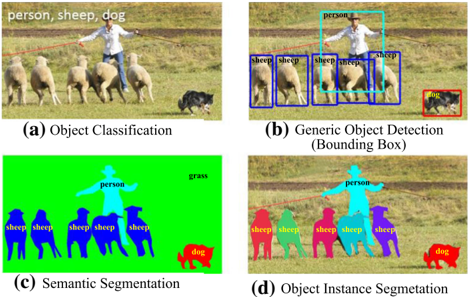
Object detection, one of the most fundamental and challenging problems in computer vision, seeks to locate object instances from a large number of predefined categories in natural images. Deep learning techniques have emerged as a powerful strategy for learning feature representations directly from data and have led to remarkable breakthroughs in the field of generic object detection. Given this period of rapid evolution, the goal of this paper is to provide a comprehensive survey of the recent achievements in this field brought about by deep learning techniques. More than 300 research contributions are included in this survey, covering many aspects of generic object detection: detection frameworks, object feature representation, object proposal generation, context modeling, training strategies, and evaluation metrics. We finish the survey by identifying promising directions for future research.
Overview
CoChat Summary
TL;DR
This survey reviews deep learning for generic object detection, covering more than 300 research contributions across detection frameworks, feature representation, proposal generation, context modeling, training strategies, and evaluation metrics. It organizes the field into two-stage and one-stage detectors, summarizes datasets and benchmarks, and identifies open challenges such as small-object detection, context reasoning, weak/few-shot learning, and open-world detection.
Key findings
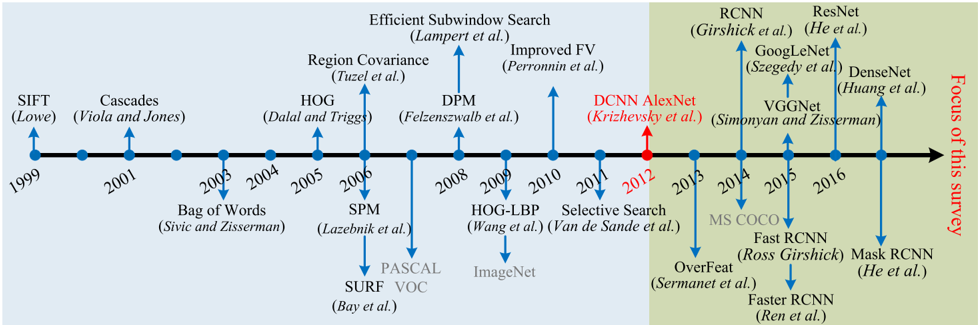
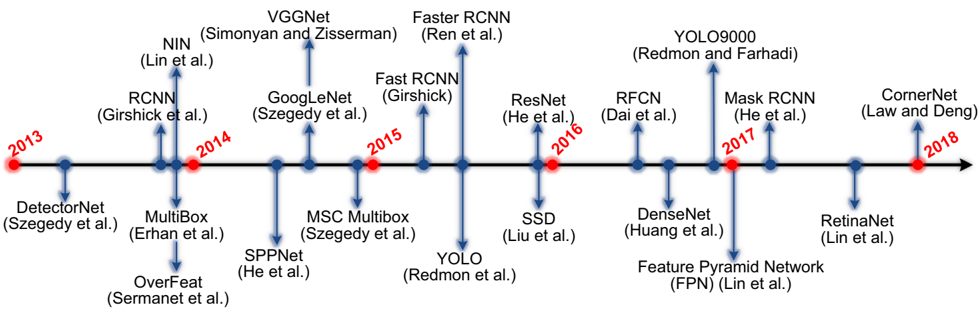
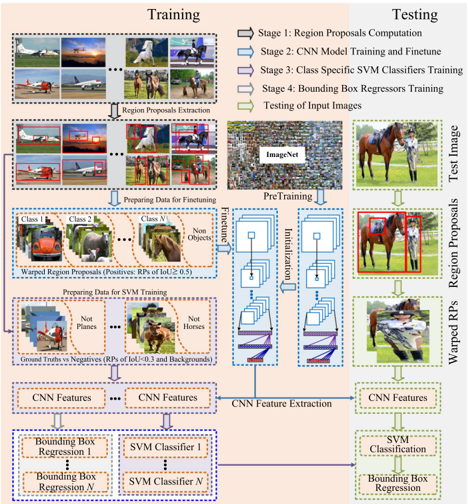
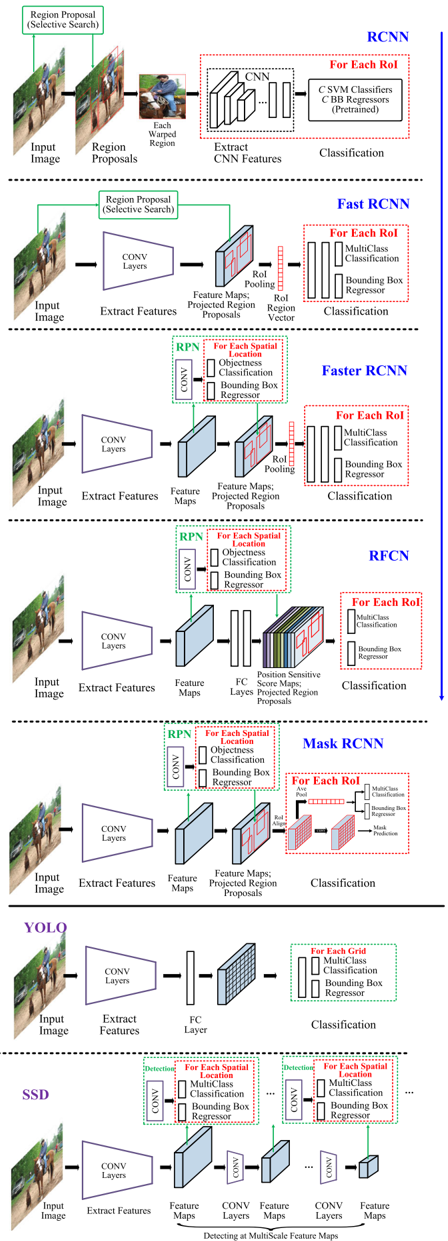
- The survey provides a taxonomy of deep learning based generic object detection, including region-based/two-stage frameworks (RCNN, Fast RCNN, Faster RCNN, RFCN, Mask RCNN) and unified/one-stage frameworks (YOLO, SSD), plus backbone CNN architectures, multiscale feature fusion, context modeling, detection proposals, and training strategies.
- Two-stage detectors generally achieve higher accuracy when large computation is allowed, while one-stage detectors are generally faster but weaker on small objects; for example, SSD achieves 74.3% mAP on VOC2007 test at 59 FPS versus Faster RCNN at 7 FPS / 73.2% mAP and YOLO at 45 FPS / 63.4% mAP. YOLO runs at 45 FPS and Fast YOLO at 155 FPS.
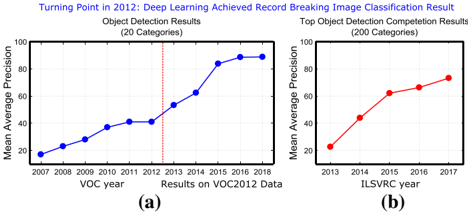
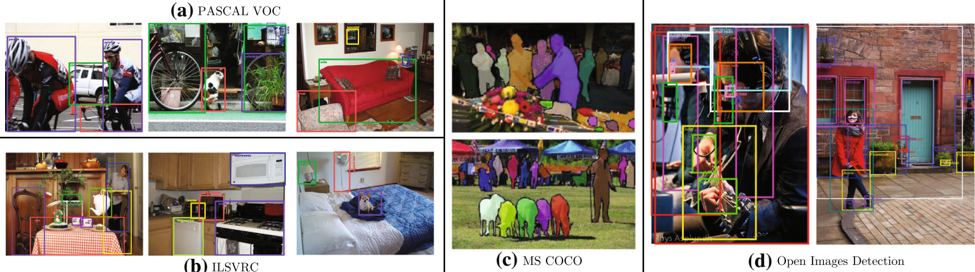
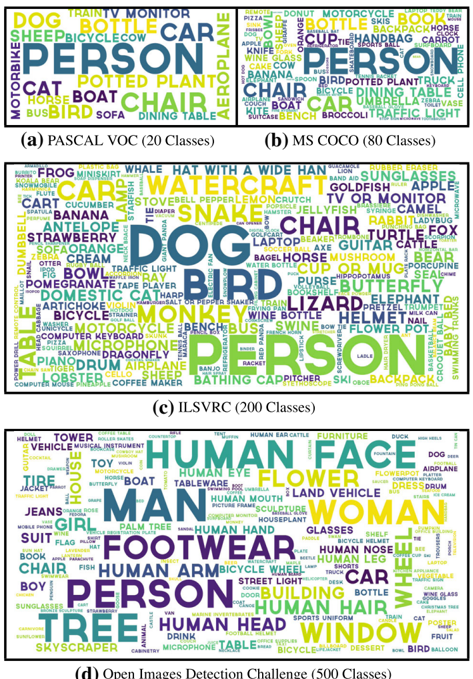
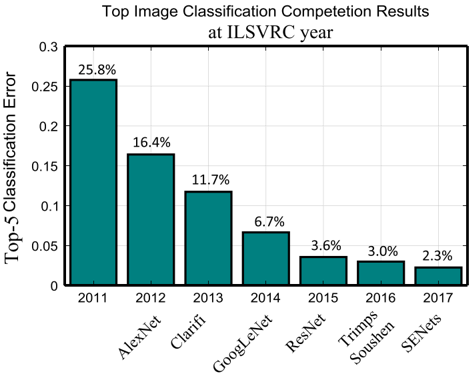
- The main datasets are PASCAL VOC, ImageNet/ILSVRC, MS COCO, and Open Images; COCO contains 41% small and 24% large objects, and the best COCO detector trained on 80 classes reaches only 73% mAP even at 0.5 IoU, while ImageNet Top-5 classification error dropped from 16% to 2% in less than five years. The Open Images challenge winner achieved 61.71% mAP on the public leaderboard and 58.66% mAP on the private leaderboard.
- Future directions include open-world learning, better and more efficient detection frameworks, compact CNN features, automatic neural architecture search, object instance segmentation, weakly supervised detection, few/zero-shot detection, other modalities, and universal object detection.
Methods
- Design: a comprehensive literature survey of deep learning based generic object detection, focusing on major progress of the last 5 years, restricted to still pictures and to top journal and conference papers, with more than 300 research contributions included.
- Organization: the survey presents a taxonomy covering detection frameworks, object feature representation, object proposal generation, context modeling, training strategies, and evaluation metrics, and summarizes popular datasets and evaluation criteria such as AP/mAP and IOU thresholds.
- Analysis: no new experiments are reported; the paper synthesizes and compares reported results across PASCAL VOC, ILSVRC, MS COCO, and Open Images, and discusses representative methods in tables and figures.
Limitations
- Stated: the survey limits its focus to top journal and conference papers, covers mainly the last 5 years, restricts attention to still pictures, and leaves video object detection for separate future consideration; the authors apologize to authors whose works are not included.
- Stated: comparing detectors by their originally reported performance may be misleading because methods differ in meta-frameworks, backbone networks, pretraining datasets, proposal methods, augmentation, and ensembling; there has been very limited unified comparison work.
- Evident: the survey is not exhaustive given the breadth of the field, and it excludes extensive work on specific object detection such as face, pedestrian, vehicle, and traffic sign detection; the provided text also contains fragmented tables and figures, which limits some detail.
Model-written summary. Check it against the paper before relying on it.
Integrity signals
Registry
Cites
Statistics
Figures


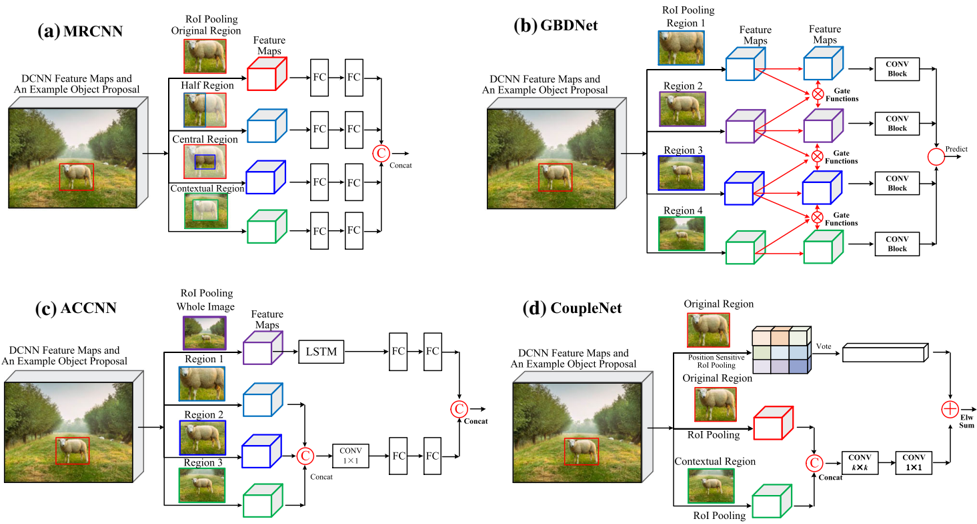
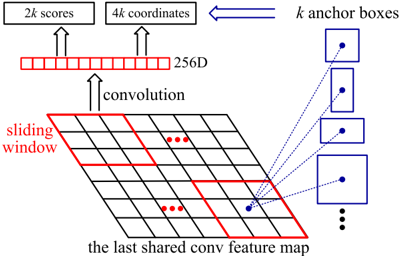
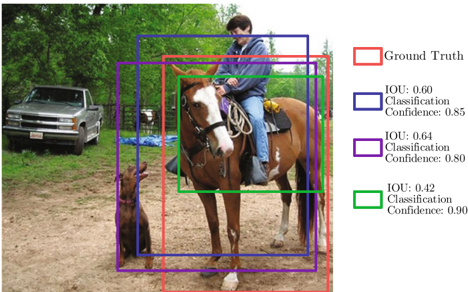
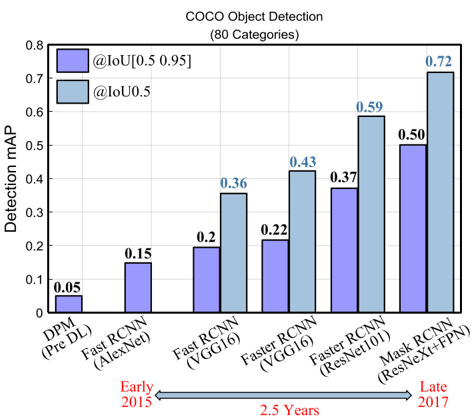
Verification
Claims the paper makes
14 Valid · 16 Not valid · 154 Not checked · 108 Own results and interpretations
The cited sources support only part of this claim — read each source’s verdict below.
In the paper
“To the best of our knowledge, for the evaluation of generic object detection algorithms, it is bounding boxes which are most widely used in the current literature (Everingham et al. 2010;Russakovsky et al. 2015), and therefore this is also the approach we adopt in this survey.”
§ Deep Learning for Generic Object Detection: A Survey > 2.1 The Problem
What the sources say
- Partly supportedcites Everingham et al. 2010 matched to “The pascal visual object classes (VOC) challenge” (2010) sourceExperimental — accuracy not yet measured
Section 2.2 (Detection) and “Bounding box evaluation” show that the VOC challenge evaluated object detections using predicted bounding boxes and their overlap with ground truth. The paper does not establish the broader comparative claim that bounding boxes were the most widely used evaluation approach in the literature. (LLM, conf=0.84)
- Not checked yetcites Russakovsky et al. 2015 matched to “ImageNet Large Scale Visual Recognition Challenge” (2015) source
hedged- Asserted: passes — The authors put it forward as true.
- Checkable: passes — It can be checked against evidence.
- Load-bearing: passes — The paper’s conclusions depend on it.
- Based: passes — The paper gives a reason why it holds.
- Partly supported
The sources with a verdict support this claim; the rest weren’t checked yet, have no full text we could read, or their verdicts aren’t rated yet.
In the paper
“In practice, current detectors focus mainly on structured object categories, such as the 20, 200 and 91 object classes in PASCAL VOC (Everingham et al. 2010), ILSVRC (Russakovsky et al. 2015) and MS COCO (Lin et al. 2014) respectively.”
§ Deep Learning for Generic Object Detection: A Survey > 2.2.1 Accuracy Related Challenges
What the sources say
- Supportedcites Everingham et al. 2010 matched to “The pascal visual object classes (VOC) challenge” (2010) source
The citation is offered for the identification of PASCAL VOC as the benchmark with 20 object classes. Our copy states this repeatedly: Sect. 3.2 'Choice of Classes' says 'Fig. 2 shows the 20 classes selected for annotation in the VOC2007 dataset' and that the count rose from 4 (VOC2005) to 10 (VOC2006) to 20 (VOC2007); Sect. 3.1 refers to 'each of the 20 object classes to be annotated'; Sect. 3.5 notes 'the number of classes doubled from 10 to 20'. The surrounding framing about detectors focusing on structured categories is the citing authors' own conclusion, not attributed to this source. (LLM, conf=0.90)
- Not checked yetcites Russakovsky et al. 2015 matched to “ImageNet Large Scale Visual Recognition Challenge” (2015) source
- Not checked yetcites Lin et al. 2014
plain- Asserted: passes — The authors put it forward as true.
- Checkable: passes — It can be checked against evidence.
- Load-bearing: unclear — It is unclear whether the paper’s conclusions depend on it.
- Based: passes — The paper gives a reason why it holds.
- Supported
The sources with a verdict support this claim; the rest weren’t checked yet, have no full text we could read, or their verdicts aren’t rated yet.
In the paper
“The Faster RCNN framework proposed by Ren et al. (2015Ren et al. ( , 2017) ) offered an efficient and accurate Region Proposal Network (RPN) for generating region proposals.”
§ Deep Learning for Generic Object Detection: A Survey > 5.1 Region Based (Two Stage) Frameworks
What the sources say
- Not checked yetcites Ren et al. 2015
- Supportedcites Ren et al. 2017 matched to “Faster R-CNN: Towards Real-Time Object Detection with Region Proposal Networks” (2017) source
The Abstract (p. 1) states the paper introduces an RPN that shares full-image convolutional features, enabling 'nearly cost-free region proposals' trained end-to-end 'to generate high-quality region proposals', and the Introduction (p. 1) gives the marginal cost as ~10ms per image. Efficiency and accuracy are both borne out: Section 3 (p. 3) defines the RPN as the proposal module of Faster R-CNN, and p. 2 reports it beats the Selective Search baseline in detection accuracy while waiving nearly all of its computational burden. The paraphrase matches the source at the same level of specificity. (LLM, conf=0.92)
plain- Asserted: passes — The authors put it forward as true.
- Checkable: passes — It can be checked against evidence.
- Load-bearing: unclear — It is unclear whether the paper’s conclusions depend on it.
- Based: passes — The paper gives a reason why it holds.
The sources with a verdict support this claim; the rest weren’t checked yet, have no full text we could read, or their verdicts aren’t rated yet.
In the paper
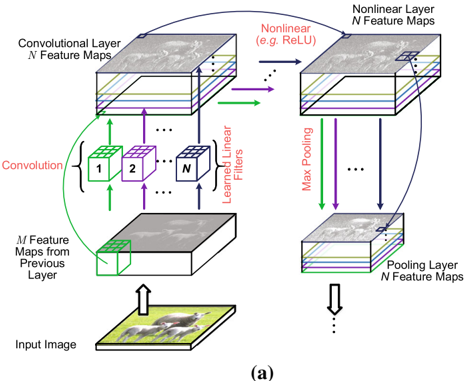
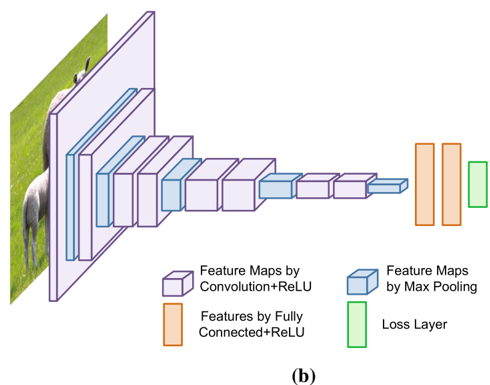
“In contrast, deep learning methods (especially deep CNNs) can learn powerful feature representations with multiple levels of abstraction directly from raw images (Bengio et al. 2013;LeCun et al. 2015).”
§ Deep Learning for Generic Object Detection: A Survey > 6 Object Representation
What the sources say
- Supportedcites Bengio et al. 2013 matched to “Representation Learning: A Review and New Perspectives” (2013) source
Section 3.4 (pp. 4-5) states that deep architectures 'can potentially lead to progressively more abstract features at higher layers' and that in the convolutional neural network this abstraction is built in explicitly via pooling, making representations 'generally highly non-linear functions of the raw input'. The Introduction (p. 1) frames the whole point as reducing dependence on labor-intensive feature engineering so that algorithms can extract discriminative information from low-level sensory data, and Section 11.2 (p. 24) applies this to the 2D layout of pixels in images via local receptive fields, convolution and pooling. Section 10.1 (p. 22-23) reinforces the 'powerful' element with the ImageNet deep convolutional result. Together these support the paraphrased claim, including the CNN emphasis and the multiple-levels-of-abstraction-from-raw-images core. (LLM, conf=0.90)
- Not checked yetcites LeCun et al. 2015 matched to “Deep learning” (2015) source
plainstates a cause- Asserted: passes — The authors put it forward as true.
- Checkable: passes — It can be checked against evidence.
- Load-bearing: passes — The paper’s conclusions depend on it.
- Based: passes — The paper gives a reason why it holds.
- Supported
The cited sources support only part of this claim — read each source’s verdict below.
In the paper
“Furthermore, the relationship between the source and target datasets plays a critical role, for example that ImageNet based CNN features show better performance for object detection than for human action (Zhou et al. 2015;Azizpour et al. 2016).”
§ Deep Learning for Generic Object Detection: A Survey > 6.1 Popular CNN Architectures
What the sources say
- Not checked yetcites Zhou et al. 2015
- Partly supportedcites Azizpour et al. 2016 matched to “Factors of Transferability for a Generic ConvNet Representation” (2016) sourceExperimental — accuracy not yet measured
The Introduction (p. 2) and Table I say that optimal transfer settings depend on the distance between the ImageNet source task and the target task, supporting the general point. The paper does not establish the citing sentence’s specific comparison that ImageNet-based features perform better for object detection than for human action recognition; its discussion of object detection in the Closing Discussion (p. 11) does not make that comparison. (LLM, conf=0.84)
plainstates an association- Asserted: passes — The authors put it forward as true.
- Checkable: passes — It can be checked against evidence.
- Load-bearing: unclear — It is unclear whether the paper’s conclusions depend on it.
- Based: passes — The paper gives a reason why it holds.
98 more claims · 5 with their cited sources checked
Create a free account to see all 292 claims and to verify the 284 references still open.
- Probably not a substantial claim. 108
- It may state two separate claims as one. 121
- The quote only partly states this claim. 2
Claims other papers make about this one
Each is checked against this paper’s own text: does it say what the citing paper says it does?
The cited source says what the claim attributes to it.
In the citing paper
“Modern object detectors employ many hand-crafted components (Liu et al., 2020), e.g., anchor generation, rule-based training target assignment, non-maximum suppression (NMS) post-processing.”
From Deformable DETR: Deformable Transformers for End-to-End Object Detection (2020) · cites this paper as Liu et al., 2020
The check wasn’t confident either way, so it gives no verdict — never disputed.
In the citing paper
“Over the last few decades, most deep learning-based object tracking systems have been based on CNN architectures [84, 139].”
From A survey on deep multimodal learning for computer vision: advances, trends, applications, and datasets (2022) · cites this paper as [84]
Experimental — accuracy not yet measuredIn the citing paper
“Fortunately, advanced imaging techniques and emerging machine learning methods jointly resist the challenges of unsatisfactory imaging environments and quasi real-time requirements [5], forcefully driving the progress of defect recognition, especially in learning classification [8].”
From Automated Visual Defect Classification for Flat Steel Surface: A Survey (2020) · cites this paper as [8]
Self-check
Percentages, sums and reported differences re-computed from the paper’s own numbers.
Rated minor: it would not touch a result — a value no result rests on, a p-value that stays on the same side of the significance level, or a conflict that is clerical, resolved elsewhere in the paper, or outside its own findings.
In the paper
“| VOC10 | 20 | 4998 | 5105 | 9637 | 11,577(13,339) 11,797(13,352) 10,103 | 23,374 | 2.4 | | |”
§ Deep Learning for Generic Object Detection: A Survey > 10.3 Research Directions
Reported 2.4 · recomputed 2.31357
Rated minor: it would not touch a result — a value no result rests on, a p-value that stays on the same side of the significance level, or a conflict that is clerical, resolved elsewhere in the paper, or outside its own findings.
In the paper
“| VOC09 | 20 | 3473 | 3581 | 6650 | 8505(9760) | 8713(9779) | 7054 | 17,218 | 2.3 |”
§ Deep Learning for Generic Object Detection: A Survey > 10.3 Research Directions
Reported 2.3 · recomputed 2.440885
Citations
Cites
Deep Residual Learning for Image Recognition
He, K., Zhang, X., Ren, S., & Sun, J. (2016) · 2016 IEEE Conference on Computer Vision and Pattern Recognition (CVPR) · doi:10.1109/cvpr.2016.90 · Cited by 235,474 · cited 5×
“GNet. Similarly, ResNet demonstrated the effectiveness of skip connections for learning extremely deep networks with hundreds of layers, winning the ILSVRC 2015 classification task. Inspired by ResNet [101], InceptionResNets [265] combined the Inception networks with shortcut connections, on the basis that shortcut con…”
BackgroundMethodInfluentialVaswani, A., Shazeer, N., Parmar, N., Uszkoreit, J., Jones, L., Gomez, A. N., Kaiser, L., & Polosukhin, I. (2017) · arXiv · doi:10.48550/arxiv.1706.03762 · Cited by 120,404 · cited 1×
“ning architecture where image and memory are processed in parallel to obtain detections which further update memory. Inspired by the recent success of attention modules in natural language processing [274], ORN processes a set of objects simultaneously through the interaction between their appearance 22 Li Liu et al.…”
BackgroundVery Deep Convolutional Networks for Large-Scale Image Recognition
Simonyan, K., & Zisserman, A. (2014) · arXiv · doi:10.48550/arxiv.1409.1556 · Cited by 114,148 · cited 1×
“including the following choices: Meta detection frameworks, such as RCNN [85], Fast RCNN [84], Faster RCNN [229], RFCN [50], Mask RCNN [102], YOLO [227] and SSD [175]; Backbone networks such as VGG [248], Inception [263,125, 264], ResNet [101], ResNeXt [291], and Xception [45] etc. listed in Table6; Innovations such a…”
MethodImageNet classification with deep convolutional neural networks
Krizhevsky, A., Sutskever, I., & Hinton, G. E. (2017) · Communications of the ACM · doi:10.1145/3065386 · Cited by 112,155
Hochreiter, S., & Schmidhuber, J. (1997) · Neural Computation · doi:10.1162/neco.1997.9.8.1735 · Cited by 102,318 · cited 1×
“Noting that message passing is not always helpful but dependent on individual samples, Zeng et al. used gated functions to control message transmission, like in Long Short Term Memory (LSTM) networks [83]. Concurrent with GBDNet, Li et al. [123] presented ACCNN (Fig.13(c)) to utilize both global and local contextual i…”
MethodLeCun, Y., Bengio, Y., & Hinton, G. (2015) · Nature · doi:10.1038/nature14539 · Cited by 84,126
Faster R-CNN: Towards Real-Time Object Detection with Region Proposal Networks
Ren, S., He, K., Girshick, R., & Sun, J. (2017) · IEEE Transactions on Pattern Analysis and Machine Intelligence · doi:10.1109/tpami.2016.2577031 · Cited by 73,472 · cited 5×
“Ren ら [229, 230] により提案された Faster RCNN フ レームワークは,物体領域候補(領域提案)生成用に効率的で Input Image Region Proposals Extract CNN Features Each Warped Region”
InfluentialFaster R-CNN: Towards Real-Time Object Detection with Region Proposal Networks
Ren, S., He, K., Girshick, R., & Sun, J. (2015) · arXiv · doi:10.48550/arxiv.1506.01497 · Cited by 70,812 · cited 5×
“Ren ら [229, 230] により提案された Faster RCNN フ レームワークは,物体領域候補(領域提案)生成用に効率的で Input Image Region Proposals Extract CNN Features Each Warped Region”
InfluentialImageNet: A large-scale hierarchical image database
Deng, J., Dong, W., Socher, R., Li, L.-J., Li, K., & Fei-Fei, L. (2009) · 2009 IEEE Conference on Computer Vision and Pattern Recognition · doi:10.1109/cvpr.2009.5206848 · Cited by 65,333 · cited 4×
“pretrained network is typically finetuned11 on a given detection dataset [58,83,85]. Several large scale image classification datasets are used for CNN pretraining. Among them the ImageNet1000 dataset [52,230] with 1.2 million images of 1000 object categories, or the Places dataset [311] which is much larger than ImageN…”
BackgroundMethodInfluentialGradient-based learning applied to document recognition
Lecun, Y., Bottou, L., Bengio, Y., & Haffner, P. (1998) · Proceedings of the IEEE · doi:10.1109/5.726791 · Cited by 58,805
Research works printed but not linked: 9
- 16. Biederman, I. (1987b). Recognition by components: A theory of human image understanding. Psychological Review, 94(2), 115. · DOI · Paper page
- 29. Chen, G., Choi, W., Yu, X., Han, T., & Chandraker M. (2017a). Learning efficient object detection models with knowledge distillation. In NIPS.
- 65. Endres, I., & Hoiem, D. (2010). Category independent object propos- als. In K. Daniilidis, P. Maragos, & N. Paragios (Eds.), European Conference on Computer Vision (pp. 575-588). Berlin: Springer.
- 128. Jaderberg, M., Simonyan, K., Zisserman, A., et al. (2015). Spatial trans- former networks. In NIPS (pp. 2017-2025).
- 143. Krizhevsky, A., Sutskever, I., & Hinton, G. (2012b). ImageNet clas- sification with deep convolutional neural networks. In NIPS (pp. 1097-1105).
- 195. Murase, H., & Nayar, S. (1995b). Visual learning and recognition of 3d objects from appearance. IJCV, 14(1), 5-24. · DOI · Paper page
- 231. Ren, M., Triantafillou, E., Ravi, S., Snell, J., Swersky, K., Tenenbaum, J. B., Larochelle, H., & Zemel R. S. (2018). Meta learning for semisupervised few shot classification. In ICLR.
- 279. Wan, L., Eigen, D., & Fergus, R. (2015). End to end integration of a convolution network, deformable parts model and nonmaximum suppression. In CVPR (pp. 851-859).
- 298. Yosinski, J., Clune, J., Bengio, Y., & Lipson, H. (2014). How trans- ferable are features in deep neural networks? In NIPS (pp. 3320-3328).
Cited by
Items 301–400 of 1,005
Musallam, M. A., Gaudillière, V., Ghorbel, E., Ismaeil, K. A., Perez, M. D., Poucet, M., & Aouada, D. (2021) · 2021 IEEE International Conference on Image Processing Challenges (ICIPC) · doi:10.1109/icipc53495.2021.9620184 · Cited by 68
“Moreover, in view of the major advances made in object recognition using DL [12], it is interesting to investigate the applicability of these methods for space data, and identify directions for furthering their performance in the space environment.”
Litter Detection with Deep Learning: A Comparative Study
Córdova, M., Pinto, A. D. S., Hellevik, C. C., Alaliyat, S., Hameed, I. A., Pedrini, H., & Torres, R. D. S. (2022) · Sensors · doi:10.3390/s22020548 · Cited by 88
“Currently, most of the state-of-the-art solutions for object detection and recognition exploit CNN approaches [20], which rely on the use of deep architectures, such as VGG [21].”
BackgroundCao, Z., Qin, Y., Xie, Z., Liu, Q., Zhang, E., Wu, Z., & Yu, Z. (2022) · Measurement · doi:10.1016/j.measurement.2021.110564 · Cited by 79
Akshatha, K. R., Karunakar, A. K., Shenoy, B. S., Phani Pavan, K., Dhareshwar, C. V., & Johnson, D. G. (2022) · ISPRS Journal of Photogrammetry and Remote Sensing · doi:10.1016/j.isprsjprs.2022.11.008 · Cited by 81
Deep Learning in Diverse Intelligent Sensor Based Systems
Zhu, Y., Wang, M., Yin, X., Zhang, J., Meijering, E. H. W., & Hu, J. (2022) · Sensors · doi:10.3390/s23010062 · Cited by 84
Vulnerable objects detection for autonomous driving: A review
Khatab, E., Onsy, A., Varley, M. R., & Abouelfarag, A. A. (2021) · Integration · doi:10.1016/j.vlsi.2021.01.002 · Cited by 75
Cordeiro, F. R., & Carneiro, G. (2020) · SIBGRAPI Conference on Graphics, Patterns and Images (SIBGRAPI) · doi:10.1109/sibgrapi51738.2020.00010 · Cited by 99
“Most of the methods treat the noisy and clean samples the same way, but penalise less the low confident prediction samples, compared to the standard crossentropy [3].”
BackgroundMethodA Review on Industrial Surface Defect Detection Based on Deep Learning Technology
Qi, S., Yang, J., & Zhong, Z. (2020) · International Conference on Machine Learning and Machine Intelligence (MLMI) · doi:10.1145/3426826.3426832 · Cited by 86
“According to different application requirements, object detection could be divided into specific instance detection and generic instance detection [9].”
BackgroundRun-Time Monitoring of Machine Learning for Robotic Perception: A Survey of Emerging Trends
Rahman, Q. M., Corke, P., & Dayoub, F. (2021) · IEEE Access · doi:10.1109/access.2021.3055015 · Cited by 94
“INTRODUCTION Deep Neural Networks (DNNs) show impressive results on many computer vision tasks such as image classification [1], object detection [2], depth estimation [3] and semantic segmentation [4].”
BackgroundAn Iteratively Optimized Patch Label Inference Network for Automatic Pavement Distress Detection
Tang, W., Huang, S., Zhao, Q., Ren, L., & Huangfu, L. (2021) · IEEE Transactions on Intelligent Transportation Systems · doi:10.1109/tits.2021.3084809 · Cited by 80
“The goal of object detection is to determine whether there are any instances of objects from given categories, such as humans, cars, bicycles, dogs or cats, in an image and if present, to return the spatial location and extent of each object instance [31], [32].”
BackgroundMulti defect detection and analysis of electron microscopy images with deep learning
Shen, M., Li, G., Wu, D., Liu, Y., Greaves, J. R. C., Hao, W., Krakauer, N. J., Krudy, L., Perez, J., Sreenivasan, V., et al. (2021) · Computational Materials Science · doi:10.1016/j.commatsci.2021.110576 · Cited by 74
Multiple Adverse Weather Conditions Adaptation for Object Detection via Causal Intervention
Zhang, H., Xiao, L., Cao, X., & Foroosh, H. (2022) · IEEE Transactions on Pattern Analysis and Machine Intelligence · doi:10.1109/tpami.2022.3166765 · Cited by 85
“General object detection : Object detection [44] is one of the fundamental tasks and research topics in the field of computer vision, whose goal is to locate a target object in natural images and recognize its category.”
BackgroundBSRT: Improving Burst Super-Resolution with Swin Transformer and Flow-Guided Deformable Alignment
Luo, Z., Li, Y., Cheng, S., Yu, L., Wu, Q., Wen, Z., Fan, H., Sun, J., & Liu, S. (2022) · IEEE/CVF Conference on Computer Vision and Pattern Recognition Workshops (CVPRW) · doi:10.1109/cvprw56347.2022.00113 · Cited by 84
“, Transformer, have shown great performance and gained much popularity in various high-level computer vision tasks [7,9,16,34,35,53,55].”
BackgroundReal-Time Personal Protective Equipment Compliance Detection Based on Deep Learning Algorithm
Lo, J.-H., Lin, L.-K., & Hung, C.-C. (2022) · Sustainability · doi:10.3390/su15010391 · Cited by 94
Enhanced Small Drone Detection Using Optimized YOLOv8 With Attention Mechanisms
Zamri, F. N. M., Gunawan, T. S., Yusoff, S. H., Alzahrani, A. A., Bramantoro, A., & Kartiwi, M. (2024) · IEEE Access · doi:10.1109/access.2024.3420730 · Cited by 96
“Compared to traditional methods, deep learning offers superior capabilities in automatically extracting and learning target features directly from data [13].”
MethodBai, Z., Wu, G., Barth, M., Liu, Y., Sisbot, E. A., Oguchi, K., & Huang, Z. (2024) · IEEE Transactions on Intelligent Transportation Systems · doi:10.1109/tits.2024.3436012 · Cited by 115
“For instance, cameras can provide detailed vision data to classify various kinds of traffic objects, such as vehicles, pedestrians, and cyclists [9].”
BackgroundChen, C., He, C., Hu, C., Pei, H., & Jiao, L. (2019) · IEEE Access · doi:10.1109/access.2019.2951030 · Cited by 67
“In the construction of CNN-based SAR image ship detection networks, it is necessary to fully consider the difference between optical and SAR images and design the CNN model in a targeted manner [33].”
MethodKarimi, N., Mishra, M., & Lourenço, P. B. (2024) · International Journal of Architectural Heritage · doi:10.1080/15583058.2024.2376177 · Cited by 89
“The main tasks in DL are classification (Figure 1_1), object detection (Figure 1_2), and semantic segmentation (Figure 1_3) (Liu et al. 2020).”
Disentangling Monocular 3D Object Detection: From Single to Multi-Class Recognition
Simonelli, A., Bulò, S. R., Porzi, L., López-Antequera, M., & Kontschieder, P. (2020) · IEEE Transactions on Pattern Analysis and Machine Intelligence · doi:10.1109/tpami.2020.3025077 · Cited by 81
Ship detection from coastal surveillance videos via an ensemble Canny-Gaussian-morphology framework
Chen, X., Ling, J., Wang, S., Yang, Y., Luo, L., & Yan, Y. M. (2021) · Journal of Navigation · doi:10.1017/s0373463321000540 · Cited by 62
“The visible light-based techniques have shown many successes in different fields, such as vehicle detection and tracking, pedestrian detection and behaviour analysis (Liu and Gao, 2020; Liu et al., 2020a, 2020b), and thus demonstrated their potential in ship detection applications.”
MethodEstimation of Yoga Postures Using Machine Learning Techniques
Kishore, D. M., Bindu, S., V, & Manjunath, N. K. (2022) · International Journal of Yoga · doi:10.4103/ijoy.ijoy_97_22 · Cited by 84
“[18,19] The pose estimation methods compared in this research include EpipolarPose, OpenPose, PoseNet, and MediaPipe.”
MethodHou, X., Liu, M., Zhang, S., Wei, P., & Chen, B. (2023) · Pattern Recognition · doi:10.1016/j.patcog.2023.109558 · Cited by 68
Lindroth, H. L., Nalaie, K., Raghu, R., Ayala, I. N., Busch, C., Bhattacharyya, A., Franco, P. M., Diedrich, D. A., Pickering, B. W., & Herasevich, V. (2024) · Journal of Imaging · doi:10.3390/jimaging10040081 · Cited by 87
“CV encompasses a multidisciplinary domain integrating advanced machine learning techniques, pattern recognition, and image processing to empower computers to comprehend the visual content present in images and videos [16,20–22].”
BackgroundCyclic Differentiable Architecture Search
Yu, H., Peng, H., Huang, Y., Fu, J., Du, H., Wang, L., & Ling, H. (2022) · IEEE Transactions on Pattern Analysis and Machine Intelligence · doi:10.1109/tpami.2022.3153065 · Cited by 75
“[40], [41], object detection [42], [43], segmentation [44], [45],”
ViDT: An Efficient and Effective Fully Transformer-based Object DetectorPreprint
Song, H., Deqing, S., Chun, S., Jampani, V., Han, D., Heo, B., Kim, W., & Yang, M. (2021) · arXiv (Cornell University) · doi:10.48550/arxiv.2110.03921 · Cited by 97
“Modern deep object detectors heavily rely on meticulously designed components, such as anchor generation and non-maximum suppression (Papageorgiou & Poggio, 2000; Liu et al., 2020).”
BackgroundShip Detection in High-Resolution Optical Remote Sensing Images Aided by Saliency Information
Ren, Z., Tang, Y., He, Z., Tian, L., Yang, Y., & Zhang, W. (2022) · IEEE Transactions on Geoscience and Remote Sensing · doi:10.1109/tgrs.2022.3173610 · Cited by 72
Li, R., Xiang, J., Sun, F., Yuan, Y., Yuan, L., & Gou, S. (2023) · IEEE Transactions on Multimedia · doi:10.1109/tmm.2023.3272471 · Cited by 80
“There is a common phenomenon in object detection that the goodness and reliability of the extracted image features directly affect the detection performance [31].”
BackgroundSODFormer: Streaming Object Detection With Transformer Using Events and Frames
Li, D., Tian, Y., & Li, J. (2023) · IEEE Transactions on Pattern Analysis and Machine Intelligence · doi:10.1109/tpami.2023.3298925 · Cited by 97
“OBJECT detection [1], [2], [3], one of the most fundamental and challenging topics, supports a wide range of computer vision tasks, such as autonomous driving, intelligent surveillance, robot vision, etc.”
BackgroundDeep Learning-Based Trees Disease Recognition and Classification Using Hyperspectral Data
Bhatti, U. A., Bazai, S. U., Hussain, S., Fakhar, S., Ku, C. S., Marjan, S., Por, L. Y., & Liu, J. (2023) · Computers, materials & continua/Computers, materials & continua (Print) · doi:10.32604/cmc.2023.037958 · Cited by 77
Structured Adversarial Self-Supervised Learning for Robust Object Detection in Remote Sensing Images
Zhang, C., Lam, K., Liu, T., Chan, Y., & Wang, Q. (2024) · IEEE Transactions on Geoscience and Remote Sensing · doi:10.1109/tgrs.2024.3375398 · Cited by 81
“To obtain f ( ·; θ ) , most object detection methods [69], [70], [71], [72] generally involve two stages: upstream pretraining and downstream detection fine-tuning.”
MethodA Dataset and a Convolutional Model for Iconography Classification in Paintings
Milani, F., & Fraternali, P. (2021) · Journal on Computing and Cultural Heritage · doi:10.1145/3458885 · Cited by 89
Naghizadeh, A., Tsao, W.-C., Cho, J. H., Xu, H., Mohamed, M., Li, D., Xiong, W., Metaxas, D., Ramos, C. A., & Liu, D. (2022) · PLoS Computational Biology · doi:10.1371/journal.pcbi.1009883 · Cited by 67
Tree detection and diameter estimation based on deep learning
Grondin, V., Fortin, J.-M., Pomerleau, F., & Giguère, P. (2022) · Forestry An International Journal of Forest Research · doi:10.1093/forestry/cpac043 · Cited by 86
“Tree segmentation: Pixel-level segmentation allows for a rich and detailed understanding of image content, which can play an important role in precisely delimiting the boundaries of individual trees [Liu et al., 2020].”
BackgroundIntersecting Machining Feature Localization and Recognition via Single Shot Multibox Detector
Shi, P., Qi, Q., Qin, Y., Scott, P. J., & Jiang, X. (2020) · IEEE Transactions on Industrial Informatics · doi:10.1109/tii.2020.3030620 · Cited by 63
“As suggested in [34], F-score is adopted in this comparative study as this metric is suitable for multiobject classification and detection problem [35].”
BackgroundMethodInfluentialMultimodal super-resolution reconstruction of infrared and visible images via deep learning
Wang, B., Zou, Y. L., Zhang, L., Li, Y., Chen, Q., & Zuo, C. (2022) · Optics and Lasers in Engineering · doi:10.1016/j.optlaseng.2022.107078 · Cited by 66
Distracted driving detection based on the fusion of deep learning and causal reasoning
Ping, P., Huang, C. M., Ding, W., Liu, Y., Chiyomi, M., & Takeda, K. (2022) · Information Fusion · doi:10.1016/j.inffus.2022.08.009 · Cited by 67
Dynamic identification of crane load fall zone: A computer vision approach
Chian, E. Y. T., Goh, Y. M., Tian, J., & Guo, B. H. W. (2022) · Safety Science · doi:10.1016/j.ssci.2022.105904 · Cited by 67
Lightweight Pixel Difference Networks for Efficient Visual Representation Learning
Su, Z., Zhang, J., Wang, L., Zhang, H., Liu, Z., Pietikäinen, M., & Liu, L. (2023) · IEEE Transactions on Pattern Analysis and Machine Intelligence · doi:10.1109/tpami.2023.3300513 · Cited by 79
“Edges and object boundaries play an important role in various high-level computer vision tasks such as object recognition and detection [7, 71], object proposal generation [72, 73], image editing [74], and image segmentation [75, 76].”
BackgroundSelf-citationTowards Efficient Use of Multi-Scale Features in Transformer-Based Object Detectors
Zhang, G., Luo, Z., Tian, Z., Zhang, J., Zhang, X., & Lu, S. (2023) · IEEE Computer Society Conference on Computer Vision and Pattern Recognition/Proceedings - IEEE Computer Society Conference on Computer Vision and Pattern Recognition/Proceedings · doi:10.1109/cvpr52729.2023.00601 · Cited by 81
“Detecting objects of vastly different scales has always been a major difficulty in object detection [1].”
BackgroundGLFF: Global and Local Feature Fusion for AI-Synthesized Image Detection
Ju, Y., Jia, S., Cai, J., Guan, H., & Lyu, S. (2023) · IEEE Transactions on Multimedia · doi:10.1109/tmm.2023.3313503 · Cited by 78
“Feature Fusion: Numerous works, which rely on feature fusion, have been proposed for computer vision tasks, including semantic segmentation [53], [54], [55] and object detection [56], [57], [58], [59], [60].”
BackgroundA Review of Electric UAV Visual Detection and Navigation Technologies for Emergency Rescue Missions
Tang, P., Li, J., & Sun, H. (2024) · Sustainability · doi:10.3390/su16052105 · Cited by 64
Small object detection using deep feature learning and feature fusion network
Tong, K., & Wu, Y. (2024) · Engineering Applications of Artificial Intelligence · doi:10.1016/j.engappai.2024.107931 · Cited by 69
A Simple and Efficient Network for Small Target Detection
Ju, M., Luo, J., Zhang, P., He, M., & Luo, H. (2019) · IEEE Access · doi:10.1109/access.2019.2924960 · Cited by 60
“At present, target detection has been widely used in our daily life [1], [2], such as pedestrian detection [3], face detection [4], [5], vehicle detection [6]–[8], intelligent surveillance [9]–[11] and autonomous driving [12], [13], etc.”
BackgroundAirborne Visual Detection and Tracking of Cooperative UAVs Exploiting Deep Learning
Opromolla, R., Inchingolo, G., & Fasano, G. (2019) · Sensors · doi:10.3390/s19194332 · Cited by 64
“A detailed overview of object detection systems using Deep Learning including comparisons in terms of accuracy and efficiency can be found in [59,60].”
MethodAnimal Detection in Man-made Environments
Singh, A. K., Pietrasik, M., Natha, G., Ghouaiel, N., Brizel, K., & Ray, N. (2020) · IEEE Winter Conference on Applications of Computer Vision · doi:10.1109/wacv45572.2020.9093504 · Cited by 65
“Object detection is an important field in computer vision that has seen very rapid improvements in recent years using deep learning [96, 48, 67].”
BackgroundGuided attention network for object detection and counting on drones
YuanQiang, C., Du, D., Zhang, L., Wen, L., Wang, W., Wu, Y., & Lyu, S. (2020) · Proceedings of the 28th ACM International Conference on Multimedia · doi:10.1145/3394171.3413816 · Cited by 58
Deep image retrieval: a surveyPreprint
Chen, W., Liu, Y., Wang, W., Bakker, E. M., Georgiou, T., Fieguth, P., Liu, L., & Lew, M. S. (2021) · Leiden Repository (Leiden University) · Cited by 58
Self-citationLocal keypoint-based Faster R-CNN
Ding, X., Li, Q., Cheng, Y., Wang, J., Bian, W., & Jie, B. (2020) · Applied Intelligence · doi:10.1007/s10489-020-01665-9 · Cited by 64
Human detection techniques for real time surveillance: a comprehensive survey
Ansari, M. A., & Singh, D. K. (2020) · Multimedia Tools and Applications · doi:10.1007/s11042-020-10103-4 · Cited by 62
Human-Aware Robot Task Planning Based on a Hierarchical Task Model
Cheng, Y., Sun, L., & Tomizuka, M. (2021) · IEEE Robotics and Automation Letters · doi:10.1109/lra.2021.3056370 · Cited by 61
“As the fast development in computer vision techniques, action recognition for videos can be accurate and fast using the state-of-the-art methods such as [28], [29], [30].”
MethodCNN Model & Tuning for Global Road Damage Detection
Vishwakarma, R., & Vennelakanti, R. (2020) · IEEE International Conference on Big Data (BigData) · doi:10.1109/bigdata50022.2020.9377902 · Cited by 59
Automated rail surface crack analytics using deep data-driven models and transfer learning
Zheng, Z., Qi, H., Li, Z., & Zhang, Z. (2021) · Sustainable Cities and Society · doi:10.1016/j.scs.2021.102898 · Cited by 61
YOLO-ReT: Towards High Accuracy Real-time Object Detection on Edge GPUs
Ganesh, P., Chen, Y., Yang, Y., Chen, D., & Winslett, M. (2022) · IEEE Winter Conference on Applications of Computer Vision · doi:10.1109/wacv51458.2022.00138 · Cited by 70
RF-Next: Efficient Receptive Field Search for Convolutional Neural Networks
Gao, S., Li, Z., Qi, H., Cheng, M., & Wang, L. (2022) · IEEE Transactions on Pattern Analysis and Machine Intelligence · doi:10.1109/tpami.2022.3183829 · Cited by 82
“More details about object detection can be referred to related surveys [90], [91], [92].”
BackgroundArya, D., Maeda, H., & Sekimoto, Y. (2024) · Advanced Engineering Informatics · doi:10.1016/j.aei.2024.102388 · Cited by 62
Kim, H., Moon, J., Hong, D., Cha, E.-Y., & Yun, B. (2020) · Nuclear Engineering and Technology · doi:10.1016/j.net.2020.12.007 · Cited by 61
Accuracy and Efficiency Comparison of Object Detection Open-Source Models
Jabir, B., Falih, N., & Rahmani, K. I. (2021) · International Journal of Online and Biomedical Engineering (iJOE) · doi:10.3991/ijoe.v17i05.21833 · Cited by 63
“Object detection is one of the most active fields of research in computer vision, where it involves both object classification, classifying every object in the image, and object localization [1].”
BackgroundRetinaFaceMask: A Single Stage Face Mask Detector for Assisting Control of the COVID-19 Pandemic
Fan, X., & Jiang, M. (2021) · Conference proceedings/Conference proceedings - IEEE International Conference on Systems, Man, and Cybernetics · doi:10.1109/smc52423.2021.9659271 · Cited by 67
“Without relying on prior knowledge to construct feature extractors, deep learning can learn the features in an end-to-end manner [13].”
MethodPierdicca, R., & Paolanti, M. (2022) · Geoscientific instrumentation, methods and data systems · doi:10.5194/gi-11-195-2022 · Cited by 87
Sylph: A Hypernetwork Framework for Incremental Few-shot Object Detection
Yin, L., Perez-Rua, J. M., & Liang, K. J. (2022) · 2022 IEEE/CVF Conference on Computer Vision and Pattern Recognition (CVPR) · doi:10.1109/cvpr52688.2022.00883 · Cited by 56
“This is especially true for object detection [18, 23, 37], particularly for the long tail of object categories, where data may be scarcer [22].”
BackgroundA Survey on Goal-Oriented Semantic Communication: Techniques, Challenges, and Future Directions
Getu, T. M., Kaddoum, G., & Bennis, M. (2024) · IEEE Access · doi:10.1109/access.2024.3381967 · Cited by 97
Li, X., Cai, M., Tan, X., Yin, C., Chen, W., Liu, Z., Wen, J., & Han, Y. (2024) · Computers and Electronics in Agriculture · doi:10.1016/j.compag.2024.109160 · Cited by 66
Modular Lightweight Network for Road Object Detection Using a Feature Fusion Approach
Liu, Y., Cao, S., Lasang, P., & Shen, S. (2019) · IEEE Transactions on Systems Man and Cybernetics Systems · doi:10.1109/tsmc.2019.2945053 · Cited by 73
“Comprehensive surveys for recent advances in object detection in the age of deep CNNs can be found in [30] and [31].”
BackgroundDistance-Normalized Unified Representation for Monocular 3D Object Detection
Shi, X., Chen, Z., & Kim, T. (2020) · Lecture notes in computer science · doi:10.1007/978-3-030-58526-6_6 · Cited by 63
“Object detection is a fundamental and challenging problem in computer vision [25].”
BackgroundSuccessive Graph Convolutional Network for Image De-raining
Fu, X., Qi, Q., Zha, Z.-J., Ding, X., Wu, F., & Paisley, J. W. (2021) · International Journal of Computer Vision · doi:10.1007/s11263-020-01428-6 · Cited by 61
Target‐driven visual navigation in indoor scenes using reinforcement learning and imitation learning
Fang, Q., Xu, X., Wang, X., & Zeng, Y. (2021) · CAAI Transactions on Intelligence Technology · doi:10.1049/cit2.12043 · Cited by 61
“Deep learning (DL) can extract useful features directly from pixels, which has made great progress in many fields, such as image classification [6], object detection [7] and image segmentation [8].”
BackgroundSelf-citationKöklü, M., Çınar, İ., & Taşpınar, Y. S. (2021) · Biomedical Signal Processing and Control · doi:10.1016/j.bspc.2021.103216 · Cited by 64
Benjdira, B., Koubâa, A., Azar, A. T., Khan, Z., Ammar, A., & Boulila, W. (2022) · Engineering Applications of Artificial Intelligence · doi:10.1016/j.engappai.2022.105095 · Cited by 60
“A description of the research works implemented in every class will be detailed in the following subsections.”
BackgroundDetecting human activity types from 3D posture data using deep learning models
Çalışkan, A. (2022) · Biomedical Signal Processing and Control · doi:10.1016/j.bspc.2022.104479 · Cited by 64
Muzammul, M., & Li, X. (2025) · Knowledge and Information Systems · doi:10.1007/s10115-025-02375-9 · Cited by 77
Bridging the Gap Between Detection and Tracking: A Unified Approach
Huang, L., Zhao, X., & Huang, K. (2019) · 2019 IEEE/CVF International Conference on Computer Vision (ICCV) · doi:10.1109/iccv.2019.00410 · Cited by 52
“Object detection is the task of locating and classifying objects in an image to a set of predefined classes [11, 13, 40, 15, 39].”
BackgroundVisual-based obstacle detection and tracking, and conflict detection for small UAS sense and avoid
Opromolla, R., & Fasano, G. (2021) · Aerospace Science and Technology · doi:10.1016/j.ast.2021.107167 · Cited by 54
Intelligent Machine Fault Diagnosis Using Convolutional Neural Networks and Transfer Learning
Zhang, W., Zhang, T., Cui, G., & Pan, Y. (2022) · IEEE Access · doi:10.1109/access.2022.3173444 · Cited by 60
“…branch of machine learning, DL has expanded the field of artificial intelligence and been successfully applied in many other research fields, such as object detection [5], image segmentation [6], natural language processing [7], fault diagnosis [8], visual tracking [9], and smart manufacturing [10].”
MethodA two-stage approach for road marking extraction and modeling using MLS point clouds
Mi, X., Yang, B., Dong, Z., Liu, C., Zong, Z., & Yuan, Z. (2021) · ISPRS Journal of Photogrammetry and Remote Sensing · doi:10.1016/j.isprsjprs.2021.07.012 · Cited by 55
FG-Net: A Fast and Accurate Framework for Large-Scale LiDAR Point Cloud Understanding
Liu, K., Gao, Z. Y., Lin, F., & Chen, B. M. (2022) · IEEE Transactions on Cybernetics · doi:10.1109/tcyb.2022.3159815 · Cited by 98
“In image processing, the networks are supposed to extract large feature maps for small objects and small feature maps for big objects [41], [42].”
BackgroundPotato Surface Defect Detection Based on Deep Transfer Learning
Wang, C., & Xiao, Z. (2021) · Agriculture · doi:10.3390/agriculture11090863 · Cited by 62
“We have seen both classification [42] and object detection [43] used in the literature to build a detection model.”
Deep learning computer vision for robotic disassembly and servicing applications
Brogan, D. P., DiFilippo, N. M., & Jouaneh, M. K. (2021) · Array · doi:10.1016/j.array.2021.100094 · Cited by 57
Fire Detection and Segmentation using YOLOv5 and U-NET
Mseddi, W. S., Ghali, R., Jmal, M., & Attia, R. (2021) · European Signal Processing Conference (EUSIPCO) · doi:10.23919/eusipco54536.2021.9616026 · Cited by 60
Nabi, S. T., Kumar, M., Singh, P., Aggarwal, N., & Kumar, K. (2022) · Multimedia Systems · doi:10.1007/s00530-021-00873-8 · Cited by 62
A Review of YOLO Object Detection Algorithms based on Deep Learning
Cong, X., Li, S., Chen, F., Liu, C., & Meng, Y. (2023) · Frontiers in Computing and Intelligent Systems · doi:10.54097/fcis.v4i2.9730 · Cited by 62
“[1]-[3] Based on the Convolutional Neural Network (CNN), in 2012 AlexNet [4] won the champion of ImageNet image recognition competition by a significant margin, and since then deep learning has received wide attention.”
MethodWang, S., Jiang, H., Yang, J., Ma, X., & Chen, J. (2024) · Drones · doi:10.3390/drones8100523 · Cited by 63
Self-citationDecoupled Adaptation for Cross-Domain Object DetectionPreprint
Jiang, J., Chen, B., Wang, J., & Long, M. (2021) · arXiv (Cornell University) · doi:10.48550/arxiv.2110.02578 · Cited by 90
“In the past few years, the development of deep neural networks has boosted the performance of object detectors [33; 15; 41].”
BackgroundA Deep Learning Method to Detect Foreign Objects for Inspecting Power Transmission Lines
Zhu, J., Guo, Y., Yue, F., Yuan, H., Yang, A., Wang, X., & Rong, M. (2020) · IEEE Access · doi:10.1109/access.2020.2995608 · Cited by 52
“With the development of deep learning, object detectors based on CNN have become a predominant trend in the field of generic object detection and have led to remarkable breakthroughs in the fields of detection applications [30], [35]–[37].”
BackgroundSelf-citationAluminum Casting Inspection using Deep Object Detection Methods and Simulated Ellipsoidal Defects
Mery, D. (2021) · Machine Vision and Applications · doi:10.1007/s00138-021-01195-5 · Cited by 66
Informative Feature Disentanglement for Unsupervised Domain Adaptation
Deng, W., Zhao, L., Liao, Q., Guo, D., Kuang, G., Hu, D., Pietikäinen, M., & Liu, L. (2021) · IEEE Transactions on Multimedia · doi:10.1109/tmm.2021.3080516 · Cited by 59
Self-citationHe, Y., Li, T., Ge, R., Yang, J., Kong, Y., Zhu, J., Shu, H., Yang, G., & Li, S. (2021) · IEEE Journal of Biomedical and Health Informatics · doi:10.1109/jbhi.2021.3095409 · Cited by 60
“The object detection task [22] is the perception of the object’s position and size in images, the instance segmentation [23] and semantic segmentation [24]– [26] tasks are the pixel level perception for instance objects and semantic objects, whereas the image recognition task [27] is also an…”
Evaluation Method of Deep Learning-Based Embedded Systems for Traffic Sign Detection
Lopez-Montiel, M. A., Orozco-Rosas, U., Sánchez-Adame, M., Picos, K., & Montiel, O. (2021) · IEEE Access · doi:10.1109/access.2021.3097969 · Cited by 63
“What has made DCNNs successful has been the availability of large, labeled datasets and hardware accelerators like GPUs with considerably high computational capabilities [9], [46].”
BackgroundMethodGan, H., Ou, M., Huang, E., Xu, C., Li, S., Li, J., Liu, K., & Xue, Y. (2021) · Computers and Electronics in Agriculture · doi:10.1016/j.compag.2021.106357 · Cited by 63
Computer vision approaches for detecting missing barricades
Chian, E. Y. T., Fang, W., Goh, Y. M., & Tian, J. (2021) · Automation in Construction · doi:10.1016/j.autcon.2021.103862 · Cited by 57
Ning, H., Li, Z., Ye, X., Wang, S., Wang, W., & Huang, X. (2021) · International Journal of Geographical Information Systems · doi:10.1080/13658816.2021.1981334 · Cited by 56
Deep learning for object recognition: A comprehensive review of models and algorithms
Tsirtsakis, P., Zacharis, G., Maraslidis, G. S., & Fragulis, G. F. (2025) · International Journal of Cognitive Computing in Engineering · doi:10.1016/j.ijcce.2025.01.004 · Cited by 102
Scale-aware Automatic Augmentation for Object Detection
Chen, Y., Li, Y., Kong, T., Qi, L., Chu, R., Li, L., & Jia, J. (2021) · IEEE Computer Society Conference on Computer Vision and Pattern Recognition/Proceedings - IEEE Computer Society Conference on Computer Vision and Pattern Recognition/Proceedings · doi:10.1109/cvpr46437.2021.00944 · Cited by 78
“, scaling, flipping, translation, and shearing), which require hyper-parameter tuning and are usually task-specific [31].”
BackgroundJoint Clustering and Discriminative Feature Alignment for Unsupervised Domain Adaptation
Deng, W., Liao, Q., Zhao, L., Guo, D., Kuang, G., Hu, D., & Liu, L. (2021) · IEEE Transactions on Image Processing · doi:10.1109/tip.2021.3109530 · Cited by 57
Self-citationAutomated detection of dental restorations using deep learning on panoramic radiographs
Çelik, B., & Çelik, M. E. (2022) · Dentomaxillofacial Radiology · doi:10.1259/dmfr.20220244 · Cited by 64
Road Damage Detection Acquisition System Based on Deep Neural Networks for Physical Asset Management
Angulo, A., Vega-Fernández, J. A., Aguilar-Lobo, L. M., Natraj, S., & Ochoa‐Ruiz, G. (2019) · Lecture notes in computer science · doi:10.1007/978-3-030-33749-0_1 · Cited by 61
“These advances have been possible due to the development of two-stage detectors such as Fast R-CNN and subsequently single stage detectors like YOLO (for a detailed discussion the reader is directed to an excellent survey [18]).”
BackgroundMethodAddagarla, S. K. (2020) · International Journal of Advanced Trends in Computer Science and Engineering · doi:10.30534/ijatcse/2020/33942020 · Cited by 68
Semantic segmentation and photogrammetry of crowdsourced images to monitor historic facades
Liu, Z., Brigham, R., Long, E. R., Wilson, L., Frost, A., Orr, S. A., & Grau‐Bové, J. (2022) · Heritage Science · doi:10.1186/s40494-022-00664-y · Cited by 56
“The image classification error rate of the ImageNet competition dramatically reduced from 2011 to 2017 [41].”
BackgroundHighly Efficient and Unsupervised Framework for Moving Object Detection in Satellite Videos
Xiao, C., An, W., Zhang, Y., Su, Z., Li, M., Sheng, W., Pietikäinen, M., & Liu, L. (2024) · IEEE Transactions on Pattern Analysis and Machine Intelligence · doi:10.1109/tpami.2024.3409824 · Cited by 62
“Model-based methods mainly exploit the prior knowledge of the targets to obtain SVMOD results, including frame differencing-based methods [20], [21] and background subtraction-based methods [18], [22], [23], [24].”
BackgroundMethodSelf-citationTowards Unified Deep Image Deraining: A Survey and a New Benchmark
Chen, X., Pan, J., Dong, J., & Tang, J. (2025) · IEEE Transactions on Pattern Analysis and Machine Intelligence · doi:10.1109/tpami.2025.3556133 · Cited by 90
“Application-based Evaluations: One of the goals of image deraining, in addition to enhancing the visual quality, is to serve high-level vision tasks, such as object recognition [119] and segmentation [120].”
A Class Imbalance Loss for Imbalanced Object Recognition
Zhang, L., Zhang, C., Quan, S., Xiao, H., Kuang, G., & Liu, L. (2020) · IEEE Journal of Selected Topics in Applied Earth Observations and Remote Sensing · doi:10.1109/jstars.2020.2995703 · Cited by 58
Self-citation
Metadata
- Authors
- Liu, L., Ouyang, W., Wang, X., Fieguth, P., Chen, J., Liu, X., & Pietikäinen, M.
- Affiliations
- National University of Defense Technology (CN)
- The University of Sydney (AU)
- Chinese University of Hong Kong (HK)
- University of Waterloo (CA)
- University of Oulu (FI)
- Corresponding author
- Liu, Li
- Venue
- International Journal of Computer Vision
- Published
- 2019-10-31
- Volume
- 128
- Issue
- 2
- Pages
- 261-318
- ISSN
- 0920-5691 (ISSN-L)
- 1573-1405
- OpenAlex
- W2988916019
- Cited by
- 2,965
- References
- 349
- Citations by year
- 2026: 217 · 2025: 362 · 2024: 396 · 2023: 485 · 2022: 538 · 2021: 544 · 2020: 319 · 2019: 92
- FWCI
- 166.93
- Type
- journal article
- Language
- en
- Open access
- hybrid
- doi.org
- Licence
- cc-by
- creativecommons.org/licenses/by/4.0 (tdm)
- creativecommons.org/licenses/by/4.0 (vor)
- Locations
- International Journal of Computer Vision (publishedVersion, cc-by)
- arXiv (Cornell University) (submittedVersion)
- arXiv (Cornell University)
- Funders
- NSFC China (61872379)
- Topics
- Physical Sciences › Computer Science › Computer Vision and Pattern Recognition › Advanced Neural Network Applications
- Physical Sciences › Computer Science › Computer Vision and Pattern Recognition › Advanced Image and Video Retrieval Techniques
- Physical Sciences › Computer Science › Computer Vision and Pattern Recognition › Visual Attention and Saliency Detection
- Keywords
- generic object detection, instance segmentation, object proposal generation, context modeling, training strategies, evaluation metrics, detection framework, deep learning
About these checks
Registry, retraction, Cites and statistics results are computed, not judged, with one exception: a printed reference that no index lists is read once by a model before it counts as a citation error. Claims are extracted by a model and kept only when their quote appears verbatim in the text; each cited source is then checked, with a model’s help, for whether it says what the claim relies on. Those verdicts can be wrong — read the claim’s quote and the cited source before relying on one.
The claim verdicts this report counts are experimental: their accuracy is not yet measured.
A language model drew the claims from the paper on 2026-09-28, under version 3 of the claim definition (prompt extract-v3).
A second model labelled each claim on 2026-09-28 (model jev-1.13-20260917, definition revision gold-guideline-v0.2).
Cited sources are checked with a language model’s help (gpt-6-sol and qwen3.8-omni-flash).
Statistics and arithmetic are recomputed, not judged.
Confidence bands are shown only for fields calibrated on our annotated test set. None is calibrated yet, so no band is shown.
What counts as a claim ›How we measure confidence ›How we check this ›
Are you an author, or do you see a problem with this page? Request a review
Data sources
Bibliographic data: Semantic Scholar, OpenAlex, Crossref.
Contains information from the Semantic Scholar Academic Graph Datasets, made available under the ODC Attribution License (ODC-BY 1.0).
Semantic Scholar’s data is described in: Kinney, R., et al. (2023). The Semantic Scholar Open Data Platform. arXiv:2301.10140.
