

Deep Learning for Generic Object Detection: A Survey
Open accessThe DOI matches its Crossref record; 367 of the 370 references it cites were found in a registry or an index; 17 of the 301 sources its claims cite were checked for support.
Abstract
Object detection, one of the most fundamental and challenging problems in computer vision, seeks to locate object instances from a large number of predefined categories in natural images. Deep learning techniques have emerged as a powerful strategy for learning feature representations directly from data and have led to remarkable breakthroughs in the field of generic object detection. Given this period of rapid evolution, the goal of this paper is to provide a comprehensive survey of the recent achievements in this field brought about by deep learning techniques. More than 300 research contributions are included in this survey, covering many aspects of generic object detection: detection frameworks, object feature representation, object proposal generation, context modeling, training strategies, and evaluation metrics. We finish the survey by identifying promising directions for future research.
Overview
CoChat Summary
TL;DR
This survey reviews deep learning for generic object detection, covering more than 300 research contributions across detection frameworks, feature representation, proposal generation, context modeling, training strategies, and evaluation metrics. It organizes the field into two-stage and one-stage detectors, summarizes datasets and benchmarks, and identifies open challenges such as small-object detection, context reasoning, weak/few-shot learning, and open-world detection.
Key findings
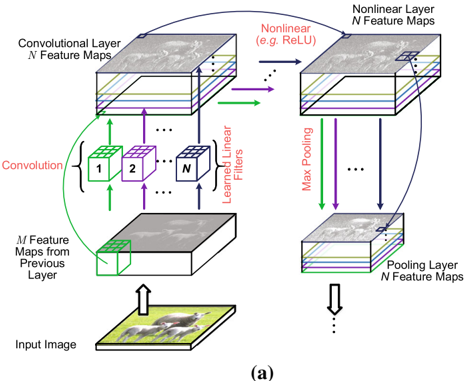
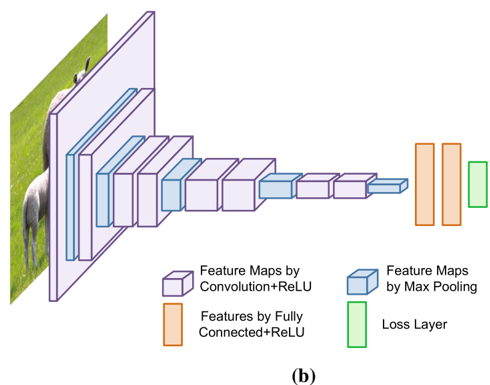
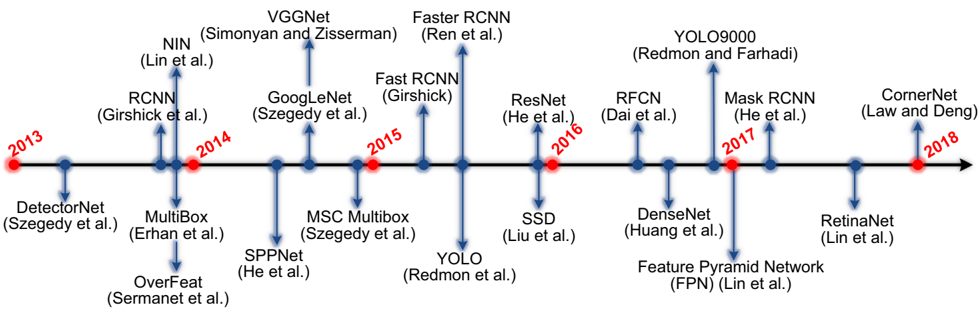
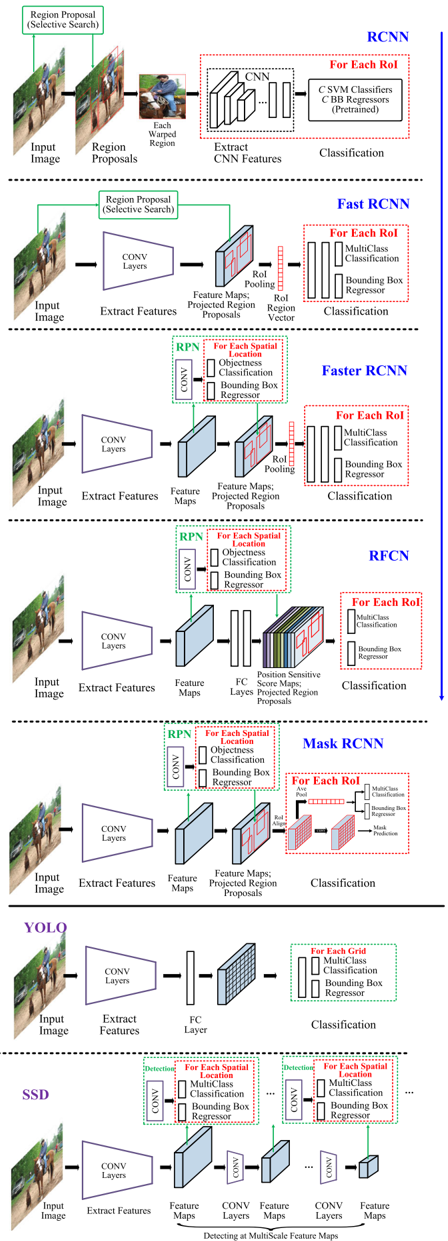
- The survey provides a taxonomy of deep learning based generic object detection, including region-based/two-stage frameworks (RCNN, Fast RCNN, Faster RCNN, RFCN, Mask RCNN) and unified/one-stage frameworks (YOLO, SSD), plus backbone CNN architectures, multiscale feature fusion, context modeling, detection proposals, and training strategies.
- Two-stage detectors generally achieve higher accuracy when large computation is allowed, while one-stage detectors are generally faster but weaker on small objects; for example, SSD achieves 74.3% mAP on VOC2007 test at 59 FPS versus Faster RCNN at 7 FPS / 73.2% mAP and YOLO at 45 FPS / 63.4% mAP. YOLO runs at 45 FPS and Fast YOLO at 155 FPS.
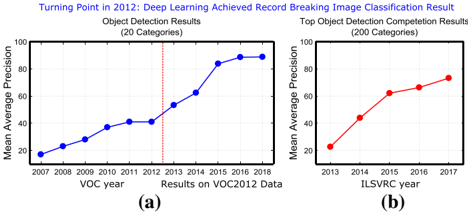
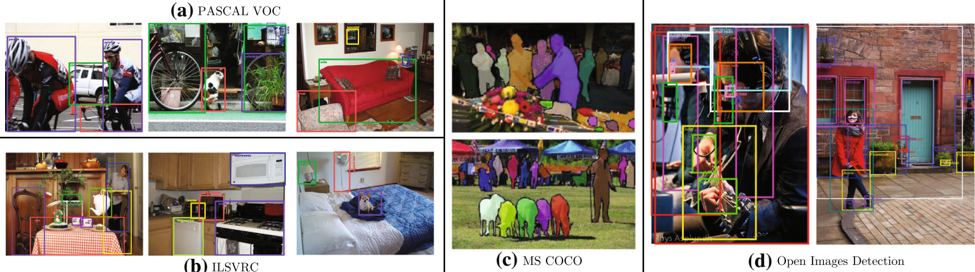
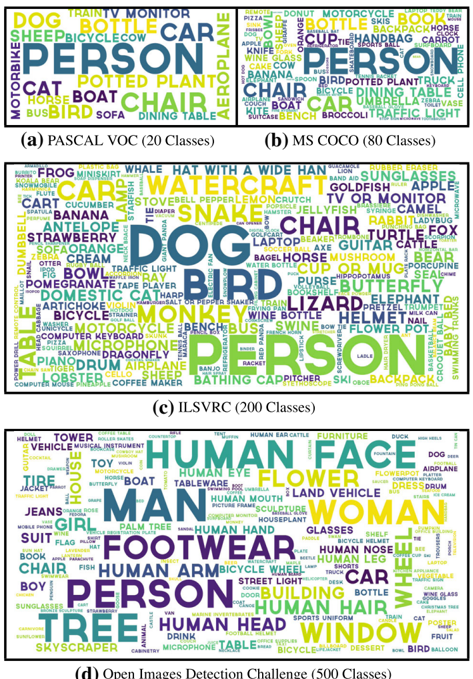
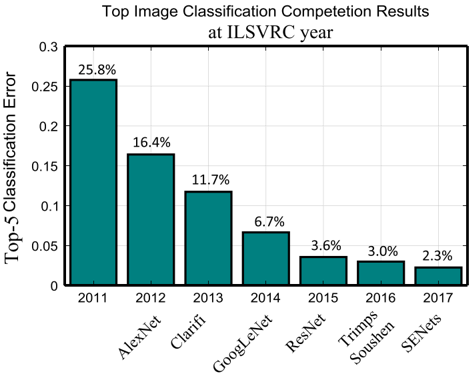
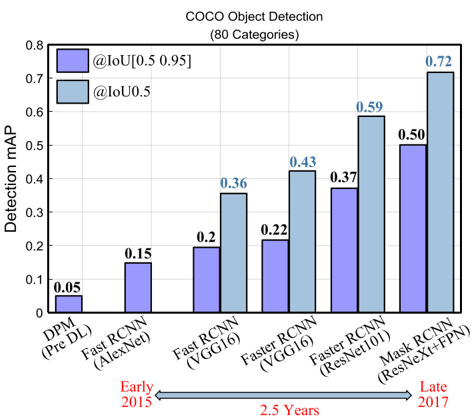
- The main datasets are PASCAL VOC, ImageNet/ILSVRC, MS COCO, and Open Images; COCO contains 41% small and 24% large objects, and the best COCO detector trained on 80 classes reaches only 73% mAP even at 0.5 IoU, while ImageNet Top-5 classification error dropped from 16% to 2% in less than five years. The Open Images challenge winner achieved 61.71% mAP on the public leaderboard and 58.66% mAP on the private leaderboard.
- Future directions include open-world learning, better and more efficient detection frameworks, compact CNN features, automatic neural architecture search, object instance segmentation, weakly supervised detection, few/zero-shot detection, other modalities, and universal object detection.
Methods
- Design: a comprehensive literature survey of deep learning based generic object detection, focusing on major progress of the last 5 years, restricted to still pictures and to top journal and conference papers, with more than 300 research contributions included.
- Organization: the survey presents a taxonomy covering detection frameworks, object feature representation, object proposal generation, context modeling, training strategies, and evaluation metrics, and summarizes popular datasets and evaluation criteria such as AP/mAP and IOU thresholds.
- Analysis: no new experiments are reported; the paper synthesizes and compares reported results across PASCAL VOC, ILSVRC, MS COCO, and Open Images, and discusses representative methods in tables and figures.
Limitations
- Stated: the survey limits its focus to top journal and conference papers, covers mainly the last 5 years, restricts attention to still pictures, and leaves video object detection for separate future consideration; the authors apologize to authors whose works are not included.
- Stated: comparing detectors by their originally reported performance may be misleading because methods differ in meta-frameworks, backbone networks, pretraining datasets, proposal methods, augmentation, and ensembling; there has been very limited unified comparison work.
- Evident: the survey is not exhaustive given the breadth of the field, and it excludes extensive work on specific object detection such as face, pedestrian, vehicle, and traffic sign detection; the provided text also contains fragmented tables and figures, which limits some detail.
Model-written summary. Check it against the paper before relying on it.
Integrity signals
Registry
Cites
Statistics
Figures


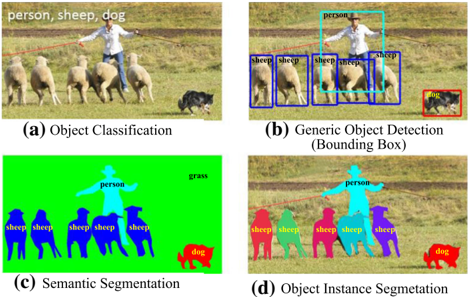
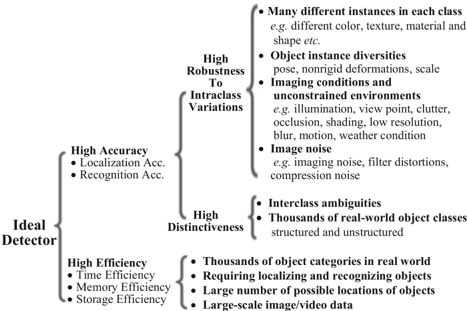
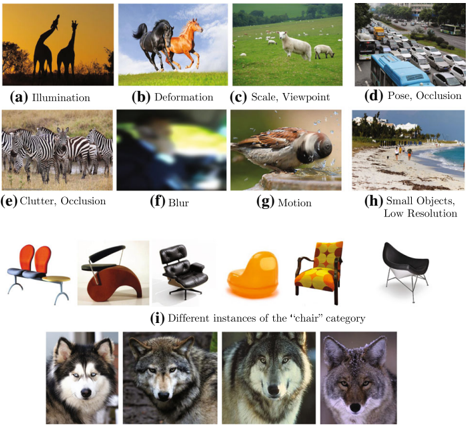
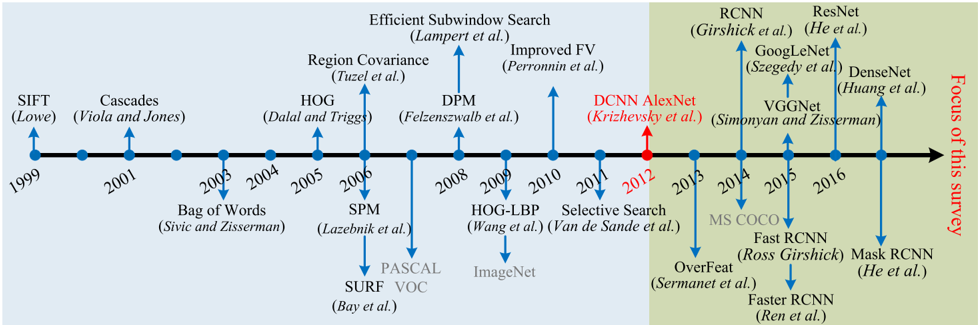

Verification
Claims the paper makes
14 Valid · 16 Not valid · 154 Not checked · 108 Own results and interpretations
The cited sources support only part of this claim — read each source’s verdict below.
In the paper
“To the best of our knowledge, for the evaluation of generic object detection algorithms, it is bounding boxes which are most widely used in the current literature (Everingham et al. 2010;Russakovsky et al. 2015), and therefore this is also the approach we adopt in this survey.”
§ Deep Learning for Generic Object Detection: A Survey > 2.1 The Problem
What the sources say
- Partly supportedcites Everingham et al. 2010 matched to “The pascal visual object classes (VOC) challenge” (2010) sourceExperimental — accuracy not yet measured
Section 2.2 (Detection) and “Bounding box evaluation” show that the VOC challenge evaluated object detections using predicted bounding boxes and their overlap with ground truth. The paper does not establish the broader comparative claim that bounding boxes were the most widely used evaluation approach in the literature. (LLM, conf=0.84)
- Not checked yetcites Russakovsky et al. 2015 matched to “ImageNet Large Scale Visual Recognition Challenge” (2015) source
hedged- Asserted: passes — The authors put it forward as true.
- Checkable: passes — It can be checked against evidence.
- Load-bearing: passes — The paper’s conclusions depend on it.
- Based: passes — The paper gives a reason why it holds.
- Partly supported
The sources with a verdict support this claim; the rest weren’t checked yet, have no full text we could read, or their verdicts aren’t rated yet.
In the paper
“In practice, current detectors focus mainly on structured object categories, such as the 20, 200 and 91 object classes in PASCAL VOC (Everingham et al. 2010), ILSVRC (Russakovsky et al. 2015) and MS COCO (Lin et al. 2014) respectively.”
§ Deep Learning for Generic Object Detection: A Survey > 2.2.1 Accuracy Related Challenges
What the sources say
- Supportedcites Everingham et al. 2010 matched to “The pascal visual object classes (VOC) challenge” (2010) source
The citation is offered for the identification of PASCAL VOC as the benchmark with 20 object classes. Our copy states this repeatedly: Sect. 3.2 'Choice of Classes' says 'Fig. 2 shows the 20 classes selected for annotation in the VOC2007 dataset' and that the count rose from 4 (VOC2005) to 10 (VOC2006) to 20 (VOC2007); Sect. 3.1 refers to 'each of the 20 object classes to be annotated'; Sect. 3.5 notes 'the number of classes doubled from 10 to 20'. The surrounding framing about detectors focusing on structured categories is the citing authors' own conclusion, not attributed to this source. (LLM, conf=0.90)
- Not checked yetcites Russakovsky et al. 2015 matched to “ImageNet Large Scale Visual Recognition Challenge” (2015) source
- Not checked yetcites Lin et al. 2014
plain- Asserted: passes — The authors put it forward as true.
- Checkable: passes — It can be checked against evidence.
- Load-bearing: unclear — It is unclear whether the paper’s conclusions depend on it.
- Based: passes — The paper gives a reason why it holds.
- Supported
The sources with a verdict support this claim; the rest weren’t checked yet, have no full text we could read, or their verdicts aren’t rated yet.
In the paper
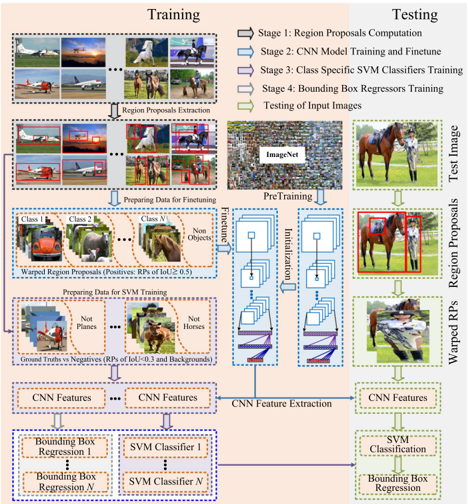
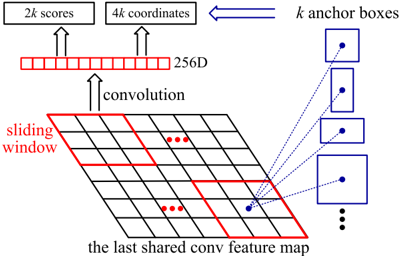
“The Faster RCNN framework proposed by Ren et al. (2015Ren et al. ( , 2017) ) offered an efficient and accurate Region Proposal Network (RPN) for generating region proposals.”
§ Deep Learning for Generic Object Detection: A Survey > 5.1 Region Based (Two Stage) Frameworks
What the sources say
- Not checked yetcites Ren et al. 2015
- Supportedcites Ren et al. 2017 matched to “Faster R-CNN: Towards Real-Time Object Detection with Region Proposal Networks” (2017) source
The Abstract (p. 1) states the paper introduces an RPN that shares full-image convolutional features, enabling 'nearly cost-free region proposals' trained end-to-end 'to generate high-quality region proposals', and the Introduction (p. 1) gives the marginal cost as ~10ms per image. Efficiency and accuracy are both borne out: Section 3 (p. 3) defines the RPN as the proposal module of Faster R-CNN, and p. 2 reports it beats the Selective Search baseline in detection accuracy while waiving nearly all of its computational burden. The paraphrase matches the source at the same level of specificity. (LLM, conf=0.92)
plain- Asserted: passes — The authors put it forward as true.
- Checkable: passes — It can be checked against evidence.
- Load-bearing: unclear — It is unclear whether the paper’s conclusions depend on it.
- Based: passes — The paper gives a reason why it holds.
The sources with a verdict support this claim; the rest weren’t checked yet, have no full text we could read, or their verdicts aren’t rated yet.
In the paper
“In contrast, deep learning methods (especially deep CNNs) can learn powerful feature representations with multiple levels of abstraction directly from raw images (Bengio et al. 2013;LeCun et al. 2015).”
§ Deep Learning for Generic Object Detection: A Survey > 6 Object Representation
What the sources say
- Supportedcites Bengio et al. 2013 matched to “Representation Learning: A Review and New Perspectives” (2013) source
Section 3.4 (pp. 4-5) states that deep architectures 'can potentially lead to progressively more abstract features at higher layers' and that in the convolutional neural network this abstraction is built in explicitly via pooling, making representations 'generally highly non-linear functions of the raw input'. The Introduction (p. 1) frames the whole point as reducing dependence on labor-intensive feature engineering so that algorithms can extract discriminative information from low-level sensory data, and Section 11.2 (p. 24) applies this to the 2D layout of pixels in images via local receptive fields, convolution and pooling. Section 10.1 (p. 22-23) reinforces the 'powerful' element with the ImageNet deep convolutional result. Together these support the paraphrased claim, including the CNN emphasis and the multiple-levels-of-abstraction-from-raw-images core. (LLM, conf=0.90)
- Not checked yetcites LeCun et al. 2015 matched to “Deep learning” (2015) source
plainstates a cause- Asserted: passes — The authors put it forward as true.
- Checkable: passes — It can be checked against evidence.
- Load-bearing: passes — The paper’s conclusions depend on it.
- Based: passes — The paper gives a reason why it holds.
- Supported
The cited sources support only part of this claim — read each source’s verdict below.
In the paper
“Furthermore, the relationship between the source and target datasets plays a critical role, for example that ImageNet based CNN features show better performance for object detection than for human action (Zhou et al. 2015;Azizpour et al. 2016).”
§ Deep Learning for Generic Object Detection: A Survey > 6.1 Popular CNN Architectures
What the sources say
- Not checked yetcites Zhou et al. 2015
- Partly supportedcites Azizpour et al. 2016 matched to “Factors of Transferability for a Generic ConvNet Representation” (2016) sourceExperimental — accuracy not yet measured
The Introduction (p. 2) and Table I say that optimal transfer settings depend on the distance between the ImageNet source task and the target task, supporting the general point. The paper does not establish the citing sentence’s specific comparison that ImageNet-based features perform better for object detection than for human action recognition; its discussion of object detection in the Closing Discussion (p. 11) does not make that comparison. (LLM, conf=0.84)
plainstates an association- Asserted: passes — The authors put it forward as true.
- Checkable: passes — It can be checked against evidence.
- Load-bearing: unclear — It is unclear whether the paper’s conclusions depend on it.
- Based: passes — The paper gives a reason why it holds.
98 more claims · 5 with their cited sources checked
Create a free account to see all 292 claims and to verify the 284 references still open.
- Probably not a substantial claim. 108
- It may state two separate claims as one. 121
- The quote only partly states this claim. 2
Claims other papers make about this one
Each is checked against this paper’s own text: does it say what the citing paper says it does?
The cited source says what the claim attributes to it.
In the citing paper
“Modern object detectors employ many hand-crafted components (Liu et al., 2020), e.g., anchor generation, rule-based training target assignment, non-maximum suppression (NMS) post-processing.”
From Deformable DETR: Deformable Transformers for End-to-End Object Detection (2020) · cites this paper as Liu et al., 2020
The check wasn’t confident either way, so it gives no verdict — never disputed.
In the citing paper
“Over the last few decades, most deep learning-based object tracking systems have been based on CNN architectures [84, 139].”
From A survey on deep multimodal learning for computer vision: advances, trends, applications, and datasets (2022) · cites this paper as [84]
Experimental — accuracy not yet measuredIn the citing paper
“Fortunately, advanced imaging techniques and emerging machine learning methods jointly resist the challenges of unsatisfactory imaging environments and quasi real-time requirements [5], forcefully driving the progress of defect recognition, especially in learning classification [8].”
From Automated Visual Defect Classification for Flat Steel Surface: A Survey (2020) · cites this paper as [8]
Self-check
Percentages, sums and reported differences re-computed from the paper’s own numbers.
Rated minor: it would not touch a result — a value no result rests on, a p-value that stays on the same side of the significance level, or a conflict that is clerical, resolved elsewhere in the paper, or outside its own findings.
In the paper
“| VOC10 | 20 | 4998 | 5105 | 9637 | 11,577(13,339) 11,797(13,352) 10,103 | 23,374 | 2.4 | | |”
§ Deep Learning for Generic Object Detection: A Survey > 10.3 Research Directions
Reported 2.4 · recomputed 2.31357
Rated minor: it would not touch a result — a value no result rests on, a p-value that stays on the same side of the significance level, or a conflict that is clerical, resolved elsewhere in the paper, or outside its own findings.
In the paper
“| VOC09 | 20 | 3473 | 3581 | 6650 | 8505(9760) | 8713(9779) | 7054 | 17,218 | 2.3 |”
§ Deep Learning for Generic Object Detection: A Survey > 10.3 Research Directions
Reported 2.3 · recomputed 2.440885
Citations
Cites
Deep Residual Learning for Image Recognition
He, K., Zhang, X., Ren, S., & Sun, J. (2016) · 2016 IEEE Conference on Computer Vision and Pattern Recognition (CVPR) · doi:10.1109/cvpr.2016.90 · Cited by 235,474 · cited 5×
“GNet. Similarly, ResNet demonstrated the effectiveness of skip connections for learning extremely deep networks with hundreds of layers, winning the ILSVRC 2015 classification task. Inspired by ResNet [101], InceptionResNets [265] combined the Inception networks with shortcut connections, on the basis that shortcut con…”
BackgroundMethodInfluentialVaswani, A., Shazeer, N., Parmar, N., Uszkoreit, J., Jones, L., Gomez, A. N., Kaiser, L., & Polosukhin, I. (2017) · arXiv · doi:10.48550/arxiv.1706.03762 · Cited by 120,404 · cited 1×
“ning architecture where image and memory are processed in parallel to obtain detections which further update memory. Inspired by the recent success of attention modules in natural language processing [274], ORN processes a set of objects simultaneously through the interaction between their appearance 22 Li Liu et al.…”
BackgroundVery Deep Convolutional Networks for Large-Scale Image Recognition
Simonyan, K., & Zisserman, A. (2014) · arXiv · doi:10.48550/arxiv.1409.1556 · Cited by 114,148 · cited 1×
“including the following choices: Meta detection frameworks, such as RCNN [85], Fast RCNN [84], Faster RCNN [229], RFCN [50], Mask RCNN [102], YOLO [227] and SSD [175]; Backbone networks such as VGG [248], Inception [263,125, 264], ResNet [101], ResNeXt [291], and Xception [45] etc. listed in Table6; Innovations such a…”
MethodImageNet classification with deep convolutional neural networks
Krizhevsky, A., Sutskever, I., & Hinton, G. E. (2017) · Communications of the ACM · doi:10.1145/3065386 · Cited by 112,155
Hochreiter, S., & Schmidhuber, J. (1997) · Neural Computation · doi:10.1162/neco.1997.9.8.1735 · Cited by 102,318 · cited 1×
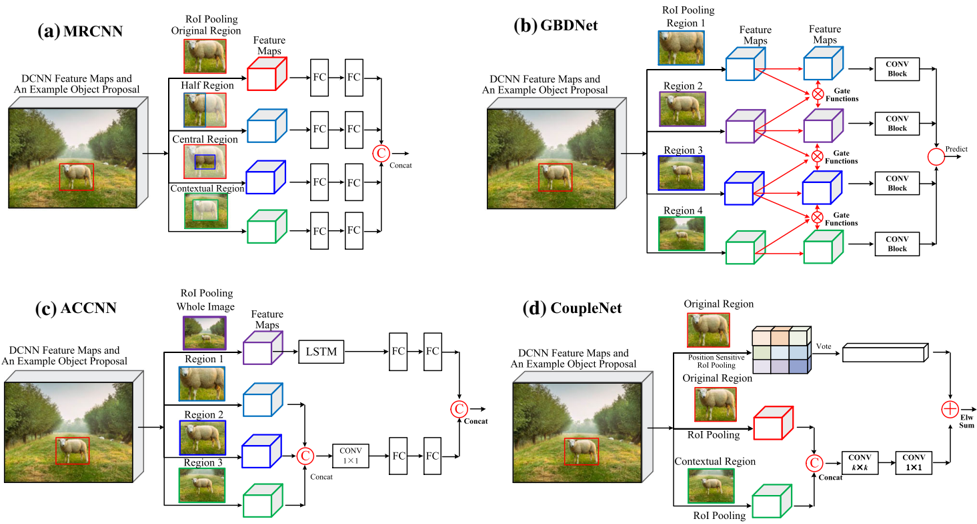
“Noting that message passing is not always helpful but dependent on individual samples, Zeng et al. used gated functions to control message transmission, like in Long Short Term Memory (LSTM) networks [83]. Concurrent with GBDNet, Li et al. [123] presented ACCNN (Fig.13(c)) to utilize both global and local contextual i…”
MethodLeCun, Y., Bengio, Y., & Hinton, G. (2015) · Nature · doi:10.1038/nature14539 · Cited by 84,126
Faster R-CNN: Towards Real-Time Object Detection with Region Proposal Networks
Ren, S., He, K., Girshick, R., & Sun, J. (2017) · IEEE Transactions on Pattern Analysis and Machine Intelligence · doi:10.1109/tpami.2016.2577031 · Cited by 73,472 · cited 5×
“Ren ら [229, 230] により提案された Faster RCNN フ レームワークは,物体領域候補(領域提案)生成用に効率的で Input Image Region Proposals Extract CNN Features Each Warped Region”
InfluentialFaster R-CNN: Towards Real-Time Object Detection with Region Proposal Networks
Ren, S., He, K., Girshick, R., & Sun, J. (2015) · arXiv · doi:10.48550/arxiv.1506.01497 · Cited by 70,812 · cited 5×
“Ren ら [229, 230] により提案された Faster RCNN フ レームワークは,物体領域候補(領域提案)生成用に効率的で Input Image Region Proposals Extract CNN Features Each Warped Region”
InfluentialImageNet: A large-scale hierarchical image database
Deng, J., Dong, W., Socher, R., Li, L.-J., Li, K., & Fei-Fei, L. (2009) · 2009 IEEE Conference on Computer Vision and Pattern Recognition · doi:10.1109/cvpr.2009.5206848 · Cited by 65,333 · cited 4×
“pretrained network is typically finetuned11 on a given detection dataset [58,83,85]. Several large scale image classification datasets are used for CNN pretraining. Among them the ImageNet1000 dataset [52,230] with 1.2 million images of 1000 object categories, or the Places dataset [311] which is much larger than ImageN…”
BackgroundMethodInfluentialGradient-based learning applied to document recognition
Lecun, Y., Bottou, L., Bengio, Y., & Haffner, P. (1998) · Proceedings of the IEEE · doi:10.1109/5.726791 · Cited by 58,805
Research works printed but not linked: 9
- 16. Biederman, I. (1987b). Recognition by components: A theory of human image understanding. Psychological Review, 94(2), 115. · DOI · Paper page
- 29. Chen, G., Choi, W., Yu, X., Han, T., & Chandraker M. (2017a). Learning efficient object detection models with knowledge distillation. In NIPS.
- 65. Endres, I., & Hoiem, D. (2010). Category independent object propos- als. In K. Daniilidis, P. Maragos, & N. Paragios (Eds.), European Conference on Computer Vision (pp. 575-588). Berlin: Springer.
- 128. Jaderberg, M., Simonyan, K., Zisserman, A., et al. (2015). Spatial trans- former networks. In NIPS (pp. 2017-2025).
- 143. Krizhevsky, A., Sutskever, I., & Hinton, G. (2012b). ImageNet clas- sification with deep convolutional neural networks. In NIPS (pp. 1097-1105).
- 195. Murase, H., & Nayar, S. (1995b). Visual learning and recognition of 3d objects from appearance. IJCV, 14(1), 5-24. · DOI · Paper page
- 231. Ren, M., Triantafillou, E., Ravi, S., Snell, J., Swersky, K., Tenenbaum, J. B., Larochelle, H., & Zemel R. S. (2018). Meta learning for semisupervised few shot classification. In ICLR.
- 279. Wan, L., Eigen, D., & Fergus, R. (2015). End to end integration of a convolution network, deformable parts model and nonmaximum suppression. In CVPR (pp. 851-859).
- 298. Yosinski, J., Clune, J., Bengio, Y., & Lipson, H. (2014). How trans- ferable are features in deep neural networks? In NIPS (pp. 3320-3328).
Cited by
Items 801–900 of 1,005
A Novel Effective Vehicle Detection Method Based on Swin Transformer in Hazy Scenes
Sun, Z., Liu, C., Qu, H., & Xie, G. (2022) · Mathematics · doi:10.3390/math10132199 · Cited by 24
Hebbache, L., Amirkhani, D., Allili, M. S., Hammouche, N., & Lapointe, J. (2023) · Remote Sensing · doi:10.3390/rs15051218 · Cited by 25
“Using the computed saliency map, we generated region candidates around the salient parts to narrow the search space for defects, similar to two-stage object detection using deep learning [58].”
Feasibility Analysis of Optical UAV Detection Over Long Distances Using Robotic Telescopes
Ojdanić, D., Sinn, A., Naverschnigg, C., & Schitter, G. (2023) · IEEE Transactions on Aerospace and Electronic Systems · doi:10.1109/taes.2023.3248560 · Cited by 25
Advancing Visual Grounding with Scene Knowledge: Benchmark and Method
Chen, Z., Zhang, R., Song, Y., Wan, X., & Li, G. (2023) · IEEE Computer Society Conference on Computer Vision and Pattern Recognition/Proceedings - IEEE Computer Society Conference on Computer Vision and Pattern Recognition/Proceedings · doi:10.1109/cvpr52729.2023.01444 · Cited by 44
“3Grounding categories is a very hot topic, where there are many research works [22, 24, 31, 32].”
BackgroundUnbalanced Optimal Transport: A Unified Framework for Object Detection
Plaen, H. D., Plaen, P.-F. D., Suykens, J. A. K., Proesmans, M., Tuytelaars, T., & Gool, L. V. (2023) · IEEE Computer Society Conference on Computer Vision and Pattern Recognition/Proceedings - IEEE Computer Society Conference on Computer Vision and Pattern Recognition/Proceedings · doi:10.1109/cvpr52729.2023.00312 · Cited by 36
“Moreover, the final performance of these models heavily depends on the hand-crafted anchors [35].”
BackgroundBRAIxDet: Learning to detect malignant breast lesion with incomplete annotations
Chen, Y., Liu, Y., Wang, C., Elliott, M. S., Kwok, C. F., Peña‐Solórzano, C. A., Tian, Y., Liu, F., Frazer, H. M. L., McCarthy, D. J., et al. (2024) · Medical Image Analysis · doi:10.1016/j.media.2024.103192 · Cited by 25
Deep learning-based object detection for dynamic construction site management
Xu, J., & Pan, W. (2024) · Automation in Construction · doi:10.1016/j.autcon.2024.105494 · Cited by 28
Improving Object Detection Performance Using Scene Contextual Constraints
Alamri, F., & Pugeault, N. (2020) · IEEE Transactions on Cognitive and Developmental Systems · doi:10.1109/tcds.2020.3008213 · Cited by 23
“1109/TCDS.2020.3008213 multiple object detection , which seems to be more complex, aims to detect multiple objects of the predefined classes [31].”
BackgroundMethodInfluentialSight-to-Sound Human-Machine Interface for Guiding and Navigating Visually Impaired People
Yang, G., & Saniie, J. (2020) · IEEE Access · doi:10.1109/access.2020.3029426 · Cited by 23
Discriminative Region Mining for Object Detection
Chen, L., Zheng, H., Yan, Z., & Li, Y. (2020) · IEEE Transactions on Multimedia · doi:10.1109/tmm.2020.3040539 · Cited by 24
Sun, H., Shen, Q., Ke, H., Duan, Z., & Tang, X. (2024) · Drones · doi:10.3390/drones8080346 · Cited by 25
Gomaa, A., & Saad, O. M. (2025) · Novel Intelligent and Leading Emerging Sciences Conference (NILES) · doi:10.1109/niles68063.2025.11232133 · Cited by 29
“However, these models typically focus on extracting global features while neglecting finer-grained local patterns [8].”
Learning content‐adaptive feature pooling for facial depression recognition in videos
Zhou, X., Huang, P., Liu, H., & Niu, S. (2019) · Electronics Letters · doi:10.1049/el.2019.0443 · Cited by 20
On the safety of vulnerable road users by cyclist detection and tracking
García-Venegas, M., Mercado-Ravell, D., Pinedo-Sánchez, L. A., & Carballo-Monsivais, C. A. (2021) · Machine Vision and Applications · doi:10.1007/s00138-021-01231-4 · Cited by 25
“10 presents the time response in FPS, using a testing video on our baseline hardware, for each model, where it can be identified that despite implementing multiclass detection, the response times are comparable with those obtained for single-class detection in Section IV-C.”
BackgroundInfluentialEquipment detection and recognition in electric power room based on faster R-CNN
Zhang, Q., Chang, X., Meng, Z., & Li, Y. (2021) · Procedia Computer Science · doi:10.1016/j.procs.2021.02.066 · Cited by 21
Provident vehicle detection at night for advanced driver assistance systems
Ewecker, L., Asan, E., Ohnemus, L., & Saralajew, S. (2022) · Autonomous Robots · doi:10.1007/s10514-022-10072-7 · Cited by 22
A New Model-Data Co-Driven Method for Radar Ship Detection
Dong, G., & Liu, H. (2022) · IEEE Transactions on Instrumentation and Measurement · doi:10.1109/tim.2022.3169573 · Cited by 20
Can we trust bounding box annotations for object detection?
Murrugarra-Llerena, J., Kirsten, L. N., & Jung, C. R. (2022) · IEEE/CVF Conference on Computer Vision and Pattern Recognition Workshops (CVPRW) · doi:10.1109/cvprw56347.2022.00528 · Cited by 40
“Object detection is a classical problem in computer vision and have greatly benefited from deep learning in the past years [12].”
BackgroundSwin Transformer Combined with Convolution Neural Network for Surface Defect Detection
Li, Y., Xiang, Y., Guo, H., Liu, P., & Liu, C. (2022) · Machines · doi:10.3390/machines10111083 · Cited by 25
Robust Data Augmentation Generative Adversarial Network for Object Detection
Lee, H., Kang, S., & Chung, K. (2022) · Sensors · doi:10.3390/s23010157 · Cited by 23
Ramezani, F., Parvez, S., Fix, J. P., Battaglin, A., Whyte, S., Borys, N. J., & Whitaker, B. M. (2023) · Scientific Reports · doi:10.1038/s41598-023-28664-3 · Cited by 26
RipViz: Finding Rip Currents by Learning Pathline Behavior
de Silva, A., Zhao, M., Stewart, D., Khan, F. H., Dusek, G., Davis, J., & Pang, A. (2023) · IEEE Transactions on Visualization and Computer Graphics · doi:10.1109/tvcg.2023.3243834 · Cited by 20
“Using an object detector, such as those included in a recent survey [22], would require a substantial training dataset for each type of rip current.”
MethodYOGA: Deep object detection in the wild with lightweight feature learning and multiscale attention
Sunkara, R., & Luo, T. (2023) · Pattern Recognition · doi:10.1016/j.patcog.2023.109451 · Cited by 23
“For a detailed review of such methods, the reader is referred to a comprehensive survey [18].”
BackgroundSmall object detection leveraging density‐aware scale adaptation
Wan, Y., Liao, Z., Liu, J., Song, W., Ji, H., & Gao, Z. Y. (2023) · The Photogrammetric Record · doi:10.1111/phor.12446 · Cited by 20
“…of small size, severe occlusion and variant scales, which are shown in columns 1, 2 and 3, respectively, marked and enlarged with red, blue and green boxes for convenience. clustering algorithms, and the imbalance between better performance and higher computational consumption (Liu et al., 2020).”
BackgroundUPerNet with ConvNeXt for Semantic Segmentation
Wang, R., Jiang, H., & Li, Y. (2023) · IEEE International Conference on Electronic Technology, Communication and Information (ICETCI) · doi:10.1109/icetci57876.2023.10177013 · Cited by 21
YOLO-FL: A target detection algorithm for reflective clothing wearing inspection
Ma, W., Guan, Z., Wang, X., Yang, C., & Cao, J. (2023) · Displays · doi:10.1016/j.displa.2023.102561 · Cited by 24
Self-citationUsman, M., Rehman, A., Shahid, A., Latif, S., & Shin, Y.-G. (2023) · Engineering Applications of Artificial Intelligence · doi:10.1016/j.engappai.2023.107597 · Cited by 25
Ma, H., Li, Y., Gao, Y., Zhang, Z., Abuadbba, A., Fu, A., Al-Sarawi, S. F., Nepal, ., & Abbott, D. (2023) · IEEE Symposium on Reliable Distributed Systems (SRDS) · doi:10.1109/srds60354.2023.00018 · Cited by 35
“Thus, it has been applied to several real-world scenarios, e.g., robot vision, autonomous driving, human-computer interaction, content-based image retrieval, intelligent video surveillance, augmented reality, and pedestrian detection [1], [2].”
BackgroundWeighted Dense Semantic Aggregation and Explicit Boundary Modeling for Camouflaged Object Detection
Liang, W., Wu, J., Mu, X., Hao, F., Du, J., Xu, J., & Li, P. (2024) · IEEE Sensors Journal · doi:10.1109/jsen.2024.3401722 · Cited by 24
“Feature pyramid network (FPN) [15] is a decoding structure adept at effectively utilizing multilevel features, which has been widely applied in tasks such as GOD [21] and SOD [22].”
MethodLv, B., Ni, J., Luo, Y., Zhao, S., Liang, J., Yuan, H., & Zhang, Q. (2024) · IEEE Journal of Selected Topics in Applied Earth Observations and Remote Sensing · doi:10.1109/jstars.2024.3457022 · Cited by 22
“Although SARATRhasbeendevelopedformanyyears,somechallenging tasksstillneedtobesolved[4].”
Comparative Analysis of YOLOv9, YOLOv10 and RT-DETR for Real-Time Weed Detection
Saltık, A. O., Allmendinger, A., & Stein, A. (2025) · Lecture notes in computer science · doi:10.1007/978-3-031-91835-3_12 · Cited by 28
Vehicle Path Prediction based on Radar and Vision Sensor Fusion for Safe Lane Changing
Kim, J., Emeršič, Ž., & Han, D. S. (2019) · International Conference on Artificial Intelligence in Information and Communication (ICAIIC) · doi:10.1109/icaiic.2019.8669081 · Cited by 22
Semi-Supervised Object Detection With Sparsely Annotated Dataset
Yoon, J., Hong, S., & Choi, M.-K. (2021) · Proceedings - International Conference on Image Processing · doi:10.1109/icip42928.2021.9506790 · Cited by 25
“Owing to the rapid evolution of convolutional neural networks (CNNs), the performance of object recognition networks, including object detection, has significantly improved [1].”
BackgroundThe detection of handguns from live-video in real-time based on deep learning
Ghazal, M. T., Waisi, N. Z., & Abdullah, N. Y. (2020) · TELKOMNIKA (Telecommunication Computing Electronics and Control) · doi:10.12928/telkomnika.v18i6.16174 · Cited by 20
Change Detection: The Framework of Visual Inspection System for Railway Plug Defects
Du, X., Cheng, Y., & Gu, Z. (2020) · IEEE Access · doi:10.1109/access.2020.3017691 · Cited by 23
“Next, in the first convolution layer named ‘conv1’, the size of the receptive field, defined as the size of the region in the input that produces the feature [26], is 5 5, its dimension is 32 and the step size is 1.”
BackgroundCamera-Based Fall Detection System for the Elderly With Occlusion Recognition
Lezzar, F., Benmerzoug, D., & Kitouni, I. (2020) · DOAJ (DOAJ: Directory of Open Access Journals) · Cited by 23
Metamorphic Testing for Object Detection SystemsPreprint
Wang, S., & Su, Z. (2019) · arXiv (Cornell University) · doi:10.48550/arxiv.1912.12162 · Cited by 20
“, Table Two in [87] and Table Seven in [45]), one point mAP score increase is significant.”
BackgroundDong, S., Xie, W., Yang, D., Li, Y., Zhang, J., Tian, J., & Lei, J. (2024) · IEEE Transactions on Circuits and Systems for Video Technology · doi:10.1109/tcsvt.2024.3520318 · Cited by 27
“O BJECT detection [1], an essential and challenging research task in computer vision, finds extensive applications in various fields such as image analysis [2], autonomous Shuhan Dong, Weiying Xie, Danian Yang, Yunsong Li, Jiaqing Zhang, and Jiayuan Tian are with the State Key Laboratory of…”
Zou, Y., Chen, Z., Zhang, Z. Y., Li, X., Ma, L., Liu, J., Wang, P., & zhang, Y. (2025) · International Journal of Computer Vision · doi:10.1007/s11263-025-02668-0 · Cited by 41
Changpinyo, S., Pang, B., Sharma, P. K., & Soricut, R. (2019) · Conference on Empirical Methods in Natural Language Processing (EMNLP) · doi:10.18653/v1/d19-1155 · Cited by 21
“However, object detection itself can be broken down into multiple subtasks (Liu et al., 2018).”
BackgroundNon-invasive technique for real-time myocardial infarction detection using faster R-CNN
Mohan, H., Rao, P. V., Kumara, H. C. S., & Manasa, S. (2021) · Multimedia Tools and Applications · doi:10.1007/s11042-021-10957-2 · Cited by 20
“In recent years, object proposal methods have proven to provide an unmatchable performance [21].”
BackgroundMethodInfluentialEfficient Visual Recognition: A Survey on Recent Advances and Brain-inspired Methodologies
Wu, Y., Wang, D., Lu, X., Yang, F., Yao, M., Dong, W., Shi, J., & Li, G. (2022) · Machine Intelligence Research · doi:10.1007/s11633-022-1340-5 · Cited by 25
“Recently, a few surveys are focusing on the progresses on specific tasks, such as 3D data representation (Ahmed et al., 2019) [17], texture representation (Liu et al., 2019) [18], generic object detection (Liu et al., 2019) [19].”
BackgroundMoDALAS: Model-Driven Assurance for Learning-Enabled Autonomous Systems
Langford, M. A., Chan, K. H., Fleck, J. E., McKinley, P. K., & Cheng, B. H. C. (2021) · ACM/IEEE International Conference on Model Driven Engineering Languages and Systems (MODELS) · doi:10.1109/models50736.2021.00027 · Cited by 23
Iterative Design and Prototyping of Computer Vision Mediated Remote Sighted Assistance
Xie, J., Reddie, M., Lee, S., Billah, S. M., Zhou, Z., Tsai, C.-H., & Carroll, J. M. (2022) · ACM Transactions on Computer-Human Interaction · doi:10.1145/3501298 · Cited by 32
“Object detection can be categorized into two types [62, 91, 159]: identifying specific instances (e.”
BackgroundDeep-Learning Based Algorithm for Detecting Targets in Infrared Images
Yang, L., Liu, S., & Zhao, Y. (2022) · Applied Sciences · doi:10.3390/app12073322 · Cited by 19
Emerging artificial intelligence methods for fighting lung cancer: A survey
Zhou, J., & Xin, H. (2022) · Clinical eHealth · doi:10.1016/j.ceh.2022.04.001 · Cited by 19
Detecting Marine Organisms Via Joint Attention-Relation Learning for Marine Video Surveillance
Shi, Z., Guan, C., Li, Q., Ju, L., Cao, L., Zheng, H., Gu, Z., & Zheng, B. (2022) · IEEE Journal of Oceanic Engineering · doi:10.1109/joe.2022.3162864 · Cited by 24
“2) One-Stage Detector: A main disadvantage of the two-stage detectors is that they are time-consuming, which limits in real-time applications and encourages the development of one-stage detectors [75], [77].”
BackgroundMethodMeeradevi, T., Sasikala, S., Gomathi, S., & Prabakaran, K. J. G. (2022) · Multimedia Tools and Applications · doi:10.1007/s11042-022-13575-8 · Cited by 23
“In this method, light beams based are proposed on material color which is more powerful than the white light beam [44].”
MethodImproved Lightweight YOLOv5 Using Attention Mechanism for Satellite Components Recognition
Li, C., Zhao, G., Gu, D., & Wang, Z. (2022) · IEEE Sensors Journal · doi:10.1109/jsen.2022.3222868 · Cited by 21
“Aside from improving computational power and datasets, many researchers have enhanced the recognition model for specific issues [6], [7], such as improving recognition accuracy and data privacy [10], [11], [12], [13], [14], [15], [16].”
BackgroundYORO - Lightweight End to End Visual Grounding
Ho, C.-H., Appalaraju, S., Jasani, B. A., Manmatha, R., & Vasconcelos, N. M. (2023) · Lecture notes in computer science · doi:10.1007/978-3-031-25085-9_1 · Cited by 26
Neural Architecture Search for Dense Prediction Tasks in Computer Vision
Mohan, R., Elsken, T., Zela, A., Metzen, J. H., Staffler, B., Brox, T., Valada, A., & Hutter, F. (2023) · International Journal of Computer Vision · doi:10.1007/s11263-023-01785-y · Cited by 34
“Auto-DeepLab (Liu et al, 2019a) builds upon the DARTS (Liu et al, 2019b) search space and algorithm, which were initially designed for learning optimal convolutional cells for image classification.”
BackgroundMethodInfluentialDistraction-aware camouflaged object segmentation
Mei, H., Yang, X., Zhou, Y., Ji, G., Wei, X., & Fan, D.-P. (2024) · Scientia Sinica Informationis · doi:10.1360/ssi-2022-0138 · Cited by 23
Using Deep Learning Model to Identify Iron Chlorosis in Plants
Majdalawieh, M., Khan, S. N., & Islam, M. T. (2023) · IEEE Access · doi:10.1109/access.2023.3273607 · Cited by 21
“SSD combines the principles of various networks, including RPN in faster R-CNN, YOLO, and multi-scale CONV features, to produce quick detection speeds while preserving excellent detection quality [17], [19].”
MethodLiu, Z., Xu, Y. T., Ji, X., & Chan, A. B. (2023) · IEEE Computer Society Conference on Computer Vision and Pattern Recognition/Proceedings - IEEE Computer Society Conference on Computer Vision and Pattern Recognition/Proceedings · doi:10.1109/cvpr52729.2023.01577 · Cited by 34
“UCSD Birds-200-2011 or CUB200 [60]), object detection [42] and semantic segmentation [49].”
BackgroundOriented object detection in satellite images using convolutional neural network based on ResNeXt
Haryono, A., Jati, G., & Jatmiko, W. (2023) · ETRI Journal · doi:10.4218/etrij.2022-0446 · Cited by 25
“Deep learning is promising for object detection [5], and various object detection methods with one or two stages are available.”
BackgroundPreetha, R., Priyadarsini, M. J. P., & Nisha, J. S. (2023) · IEEE Access · doi:10.1109/access.2023.3340443 · Cited by 27
“Table 2 lists the pertinent recent surveys together with their specifics and highlights [7], [8], [9], [10], [11], [12], [13], [14], [15], [16], [17], [18], [19], [20], [21], [22], [23], [24].”
Analysis of recent techniques in marine object detection: a review
Bhalla, S., Kumar, A., & Kushwaha, R. (2024) · Multimedia Tools and Applications · doi:10.1007/s11042-024-19782-9 · Cited by 20
Temporal Spiking Recurrent Neural Network for Action Recognition
Wang, W., Hao, S., Wei, Y., Xiao, S., Feng, J., & Sebe, N. (2019) · IEEE Access · doi:10.1109/access.2019.2936604 · Cited by 21
“Many researchers focus on learning better handcrafted [10] or deep features [11] to boost the performance of classification and detection tasks [12], [13].”
BackgroundLiu, S., & Tang, J. (2021) · ISPRS International Journal of Geo-Information · doi:10.3390/ijgi10030170 · Cited by 19
Toğaçar, M. (2021) · Computers in Biology and Medicine · doi:10.1016/j.compbiomed.2021.104659 · Cited by 22
“In the models trained from scratch, this process may be longer and the overall performance obtained from the model may be low [21].”
Deep ladder reconstruction-classification network for unsupervised domain adaptation
Deng, W., Su, Z., Qiu, Q., Zhao, L., Kuang, G., Pietikäinen, M., Xiao, H., & Liu, L. (2021) · Pattern Recognition Letters · doi:10.1016/j.patrec.2021.10.009 · Cited by 19
Self-citationA Metaheuristic Harris Hawks Optimization Algorithm for Weed Detection Using Drone Images
P., F. R. P., Ismail, W. N., & Ali, M. A. S. (2023) · Applied Sciences · doi:10.3390/app13127083 · Cited by 22
Peng, G., Ji, M., Xue, Y., & Sun, Y. (2020) · Measurement · doi:10.1016/j.measurement.2020.108294 · Cited by 20
A recurrent YOLOv8-based framework for event-based object detection
Silva, D., Smagulova, K., Elsheikh, A., Fouda, M. E., & Eltawil, A. M. (2025) · Frontiers in Neuroscience · doi:10.3389/fnins.2024.1477979 · Cited by 33
“Renowned for its real-time capabilities, YOLO stands out for its efficient performance with minimal parameters, as documented in various studies (Liu et al., 2020).”
Weed detection in cotton farming by YOLOv5 and YOLOv8 object detectors
Kanade, A. K., Potdar, M. P., Kumar, A., Balol, G., & Shivashankar, K. S. (2025) · European Journal of Agronomy · doi:10.1016/j.eja.2025.127617 · Cited by 22
Understanding user experience for mobile applications: a systematic literature review
Lu, G., Qu, S., & Chen, Y. (2025) · Discover Applied Sciences · doi:10.1007/s42452-025-07170-3 · Cited by 66
“Moreover, AI plays a pivotal role in optimizing backend operations, resulting in notable improvements in app performance and response times [185].”
Xue, W., Duan, A., Zhao, Y., Zuo, H., & Isleem, H. F. (2025) · Digital Health · doi:10.1177/20552076251384834 · Cited by 33
“12 In recent years, a considerable number of research papers have discussed the use of AI in objective assessment and continuous monitoring during rehabilitation.”
Shajeena, J., Govindasamy, B., Manikandan, G., & Joel, M. R. (2025) · Cybernetics & Systems · doi:10.1080/01969722.2025.2590761 · Cited by 33
“To optimize video surveillance systems, the data in video has to be compressed because of the presence of redundant and irrelevant data in videos throughout time and place (Kalirajan et al. 2012; Liu et al. 2020).”
Fast-D: When Non-Smoothing Color Feature Meets Moving Object Detection in Real-Time
Hossain, M. A., Hossain, M. I., Hossain, M. D., Thu, N. T., & Huh, E. (2020) · IEEE Access · doi:10.1109/access.2020.3030108 · Cited by 19
“In other words, extraction of deep features using a deeper architecture increases computational complexity in terms of running time, memory, and storage usage [7], [8].”
BackgroundInfluentialSnake Detection and Classification using Deep Learning
Yang, Z., & Sinnott, R. (2021) · Hawaii International Conference on System Sciences (HICSS) · doi:10.24251/hicss.2021.148 · Cited by 20
“This finding is consistent with [16] who also identify the key role of the backbone network in object feature representation.”
BackgroundResultInfluentialA Survey on Big IoT Data Indexing: Potential Solutions, Recent Advancements, and Open Issues
Kouahla, Z., Benrazek, A., Ferrag, M. A., Farou, B., Séridi, H., Kurulay, M., Anjum, A., & Asheralieva, A. (2021) · Future Internet · doi:10.3390/fi14010019 · Cited by 23
A robust object detection system with occlusion handling for mobile devices
Chilukuri, D., Yi, S., & Seong, Y. (2022) · Computational Intelligence · doi:10.1111/coin.12511 · Cited by 23
“15 Wang et al. 38 proposed a new adversarial learning strategy by creating examples of different occlusions and deformations and the network modifies the features to mimic these occlusions and deformations.”
BackgroundLim, W., Choi, K., Cho, W., Chang, B., & Ko, D. W. (2022) · Forest Science and Technology · doi:10.1080/21580103.2022.2048900 · Cited by 20
“The deep learning-based object detection models usually use a combination of accuracy and omission error for evaluating their performances (Jensen et al. 2016; Deng et al. 2020; Liu et al. 2020).”
MethodSLMS-SSD: Improving the balance of semantic and spatial information in object detection
Wang, K., Wang, Y., Zhang, S., Tian, Y., & Li, D. (2022) · Expert Systems with Applications · doi:10.1016/j.eswa.2022.117682 · Cited by 21
Wang, W., Tian, Y., Yang, X., Zhang, X., Li, Y.-S., Zhao, S., & Bai, Y. (2022) · BMC Medical Imaging · doi:10.1186/s12880-022-00852-z · Cited by 23
A Review of Multi-Modal Learning from the Text-Guided Visual Processing Viewpoint
Ullah, U., Lee, J.-S., An, C.-H., Lee, H., Park, S.-Y., Baek, R., & Choi, H. (2022) · Sensors · doi:10.3390/s22186816 · Cited by 22
“Based on the level of processing, vision can be low-level, such as segmentation and edge detection, or high-level involving machine learning, including Image classification [59], object detection [60], and Image generation [61].”
BackgroundACF: An Armed CCTV Footage Dataset for Enhancing Weapon Detection
Hnoohom, N., Chotivatunyu, P., & Jitpattanakul, A. (2022) · Sensors · doi:10.3390/s22197158 · Cited by 25
Spike-Event Object Detection for Neuromorphic Vision
Wang, Y.-K., Wang, S.-E., & Wu, P. (2023) · IEEE Access · doi:10.1109/access.2023.3236800 · Cited by 23
“Typical deep learning frameworks for object detection are divided into two categories [12]: two-stage and one-stage detection frameworks.”
BackgroundMonitoring of Pigmented Skin Lesions Using 3D Whole Body Imaging
Ahmedt‐Aristizabal, D., Nguyen, C., Tychsen-Smith, L., Stacey, A., Li, S., Pathikulangara, J., Petersson, L., & Wang, D. (2023) · Computer Methods and Programs in Biomedicine · doi:10.1016/j.cmpb.2023.107451 · Cited by 23
“Such a head can be a dense prediction (one-stage) or a sparse prediction (twostage) [44,65].”
BackgroundFeng, J., Wang, J., & Qin, R. (2023) · International Journal of Remote Sensing · doi:10.1080/01431161.2023.2197129 · Cited by 21
“Previous classic studies on generic horizontal detectors can mainly be divided into two categories: two-stage object detectors and single-stage object detectors (Liu et al. 2019).”
BackgroundWang, S., Huang, S., Liu, S., & Bi, Y. (2023) · Applied Soft Computing · doi:10.1016/j.asoc.2023.110570 · Cited by 18
Improving Crowded Object Detection via Copy-Paste
Deng, J., Fan, D., Qiu, X., & Zhou, F. (2023) · Proceedings of the AAAI Conference on Artificial Intelligence · doi:10.1609/aaai.v37i1.25124 · Cited by 20
VINet: Lightweight, scalable, and heterogeneous cooperative perception for 3D object detection
Bai, Z., Wu, G., Barth, M. J., Liu, Y., Sisbot, E. A., & Oguchi, K. (2023) · Mechanical Systems and Signal Processing · doi:10.1016/j.ymssp.2023.110723 · Cited by 20
Deep Learning-Based Multi-object Tracking
Kumar, A., Sareen, P., & Raja (2023) · Contributions to environmental sciences & innovative business technology · doi:10.1007/978-981-99-3288-7_8 · Cited by 18
Comparative Analysis of Resident Space Object (RSO) Detection Methods
Suthakar, V., Sanvido, A. A., Qashoa, R., & Lee, R. S. K. (2023) · Sensors · doi:10.3390/s23249668 · Cited by 29
“Meanwhile, the authors of [17] offered a com-Sensors prehensive review of deep learning techniques for object detection, and they addressed datasets, assessment metrics, context modeling, and detection proposal methods.”
BackgroundYin, T., Zhang, W., Kou, J., & Liu, N. (2024) · IEEE Transactions on Automation Science and Engineering · doi:10.1109/tase.2024.3379945 · Cited by 23
“Hence the anchor-based models are still predominant and are generally divided into one-stage models and two-stage models [23].”
Feature-adaptive FPN with multiscale context integration for underwater object detection
Bhalla, S., Kumar, A., & Kushwaha, R. (2024) · Earth Science Informatics · doi:10.1007/s12145-024-01473-6 · Cited by 19
“…generic object detection methods have made substantial advancements across different domains, they do not adequately address the distinctive difficulties posed by underwater environments, necessitating specialized approaches for object detection (Kumar et al. 2024; Kumar 2023; Liu et al. 2020).”
A Deep Neural Network Sensor for Visual Servoing in 3D Spaces
Durdevic, P., & Ortíz-Arroyo, D. (2020) · Sensors · doi:10.3390/s20051437 · Cited by 18
Zhang, W., Cheng, Y. H., Guo, X., Guo, Q., Wang, J., Wang, Q., Jiang, C., Wang, M., Xu, F., & Chu, W. (2020) · Proceedings of the AAAI Conference on Artificial Intelligence · doi:10.1609/aaai.v34i09.7110 · Cited by 21
“We adopt a two-stage detection model (Liu et al. 2019) and add a weakly supervised semantic segmentation branch to get accurate pixel level results from bounding box annotations.”
MethodCheaper Pre-training Lunch: An Efficient Paradigm for Object Detection
Zhou, D., Zhou, X., Zhang, H., Yi, S., & Ouyang, W. (2020) · Lecture notes in computer science · doi:10.1007/978-3-030-58598-3_16 · Cited by 28
Self-citationMaksimović, V., Petrović, M., Savic, D. A., Jaksic, B. S., & Spalević, P. (2021) · Optik · doi:10.1016/j.ijleo.2021.166476 · Cited by 20
Online variational inference on finite multivariate Beta mixture models for medical applications
Manouchehri, N., Kalra, M., & Bouguila, N. (2021) · IET Image Processing · doi:10.1049/ipr2.12154 · Cited by 20
Deep Ladder-Suppression Network for Unsupervised Domain Adaptation
Deng, W., Zhao, L., Kuang, G., Hu, D., Pietikäinen, M., & Liu, L. (2021) · IEEE Transactions on Cybernetics · doi:10.1109/tcyb.2021.3065247 · Cited by 19
“…result obtained by a deep convolutional neural network (DCNN), called AlexNet [1], deep neural networks (DNNs) have shone in a broad range of areas in computer vision, such as image classification [2]; object detection [3]; image segmentation [4], [5]; face recognition [6] and many others.”
BackgroundSelf-citationTraining Generative Adversarial Networks in One Stage
Shen, C., Yin, Y., Wang, X., Li, X., Song, J., & Song, M. (2021) · IEEE Computer Society Conference on Computer Vision and Pattern Recognition/Proceedings - IEEE Computer Society Conference on Computer Vision and Pattern Recognition/Proceedings · doi:10.1109/cvpr46437.2021.00336 · Cited by 21
“Recent object detection methods can be categorized into one-stage and two-stage frameworks [36].”
Self-citationEfficient Object Embedding for Spliced Image Retrieval
Chen, B.-C., Wu, Z., Davis, L. S., & Lim, S.-N. (2021) · IEEE Computer Society Conference on Computer Vision and Pattern Recognition/Proceedings - IEEE Computer Society Conference on Computer Vision and Pattern Recognition/Proceedings · doi:10.1109/cvpr46437.2021.01472 · Cited by 26
“A comprehensive survey of recent deep learning based object detection methods can be found in [38].”
BackgroundExploring Better Food Detection via Transfer Learning
Sun, J., Radecka, K., & Žilić, Ž. (2019) · Machine Vision Applications · doi:10.23919/mva.2019.8757886 · Cited by 18
“Existing object detection methods fall into two main categories [5].”
MethodQBox: Partial Transfer Learning With Active Querying for Object Detection
Tang, Y.-P., Wei, X.-S., Zhao, B., & Huang, S.-J. (2023) · IEEE Transactions on Neural Networks and Learning Systems · doi:10.1109/tnnls.2021.3111621 · Cited by 17
“The labeling costs become even prohibitive for deep models [3], [4] since they are extremely”
BackgroundChen, J., Liu, L., Deng, W., Liu, Z., Liu, Y., Wei, Y., & Liu, Y. (2025) · IEEE Transactions on Image Processing · doi:10.1109/tip.2024.3522807 · Cited by 24
“D EEP neural networks has brought remarkable success in object detection [1] which seeks to locate object instances from categories of interest in images.”
Self-citationVSTDet: A lightweight small object detection network inspired by the ventral visual pathway
Niu, Y., Lin, C., Jiang, X., & Qu, Z. (2025) · Applied Soft Computing · doi:10.1016/j.asoc.2025.112775 · Cited by 22
Machine learning-based detection of concept drift in business processes
Kraus, A., & van der Aa, H. (2025) · Process Science · doi:10.1007/s44311-025-00012-w · Cited by 22
“Deep learning methods have significantly advanced this field by directly learning features from data, leading to breakthroughs in object detection (Liu et al. 2020).”
Metadata
- Authors
- Liu, L., Ouyang, W., Wang, X., Fieguth, P., Chen, J., Liu, X., & Pietikäinen, M.
- Affiliations
- National University of Defense Technology (CN)
- The University of Sydney (AU)
- Chinese University of Hong Kong (HK)
- University of Waterloo (CA)
- University of Oulu (FI)
- Corresponding author
- Liu, Li
- Venue
- International Journal of Computer Vision
- Published
- 2019-10-31
- Volume
- 128
- Issue
- 2
- Pages
- 261-318
- ISSN
- 0920-5691 (ISSN-L)
- 1573-1405
- OpenAlex
- W2988916019
- Cited by
- 2,965
- References
- 349
- Citations by year
- 2026: 217 · 2025: 362 · 2024: 396 · 2023: 485 · 2022: 538 · 2021: 544 · 2020: 319 · 2019: 92
- FWCI
- 166.93
- Type
- journal article
- Language
- en
- Open access
- hybrid
- doi.org
- Licence
- cc-by
- creativecommons.org/licenses/by/4.0 (tdm)
- creativecommons.org/licenses/by/4.0 (vor)
- Locations
- International Journal of Computer Vision (publishedVersion, cc-by)
- arXiv (Cornell University) (submittedVersion)
- arXiv (Cornell University)
- Funders
- NSFC China (61872379)
- Topics
- Physical Sciences › Computer Science › Computer Vision and Pattern Recognition › Advanced Neural Network Applications
- Physical Sciences › Computer Science › Computer Vision and Pattern Recognition › Advanced Image and Video Retrieval Techniques
- Physical Sciences › Computer Science › Computer Vision and Pattern Recognition › Visual Attention and Saliency Detection
- Keywords
- generic object detection, instance segmentation, object proposal generation, context modeling, training strategies, evaluation metrics, detection framework, deep learning
About these checks
Registry, retraction, Cites and statistics results are computed, not judged, with one exception: a printed reference that no index lists is read once by a model before it counts as a citation error. Claims are extracted by a model and kept only when their quote appears verbatim in the text; each cited source is then checked, with a model’s help, for whether it says what the claim relies on. Those verdicts can be wrong — read the claim’s quote and the cited source before relying on one.
The claim verdicts this report counts are experimental: their accuracy is not yet measured.
A language model drew the claims from the paper on 2026-09-28, under version 3 of the claim definition (prompt extract-v3).
A second model labelled each claim on 2026-09-28 (model jev-1.13-20260917, definition revision gold-guideline-v0.2).
Cited sources are checked with a language model’s help (gpt-6-sol and qwen3.8-omni-flash).
Statistics and arithmetic are recomputed, not judged.
Confidence bands are shown only for fields calibrated on our annotated test set. None is calibrated yet, so no band is shown.
What counts as a claim ›How we measure confidence ›How we check this ›
Are you an author, or do you see a problem with this page? Request a review
Data sources
Bibliographic data: Semantic Scholar, OpenAlex, Crossref.
Contains information from the Semantic Scholar Academic Graph Datasets, made available under the ODC Attribution License (ODC-BY 1.0).
Semantic Scholar’s data is described in: Kinney, R., et al. (2023). The Semantic Scholar Open Data Platform. arXiv:2301.10140.
