

Comprehensive metabolome analyses reveal N-acetylcysteine-responsive accumulation of kynurenine in systemic lupus erythematosus: implications for activation of the mechanistic target of rapamycin
Open accessThe DOI matches its Crossref record; 44 of the 45 references it cites were found in a registry or an index.
Abstract
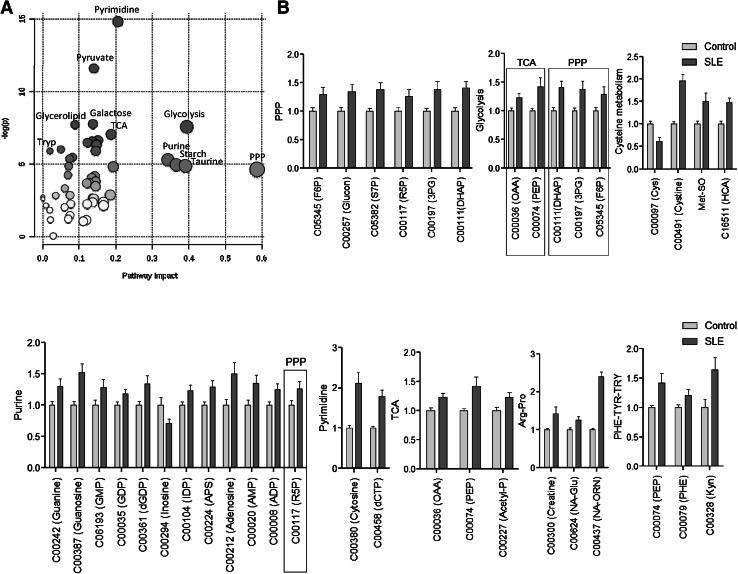
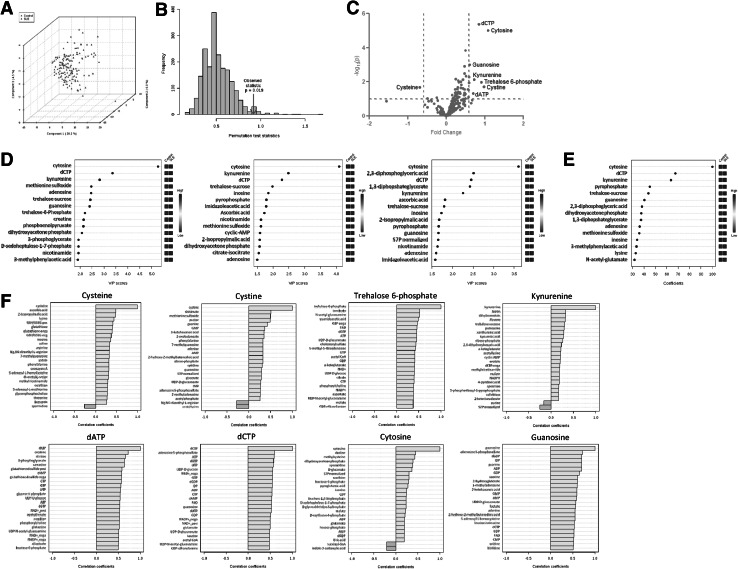
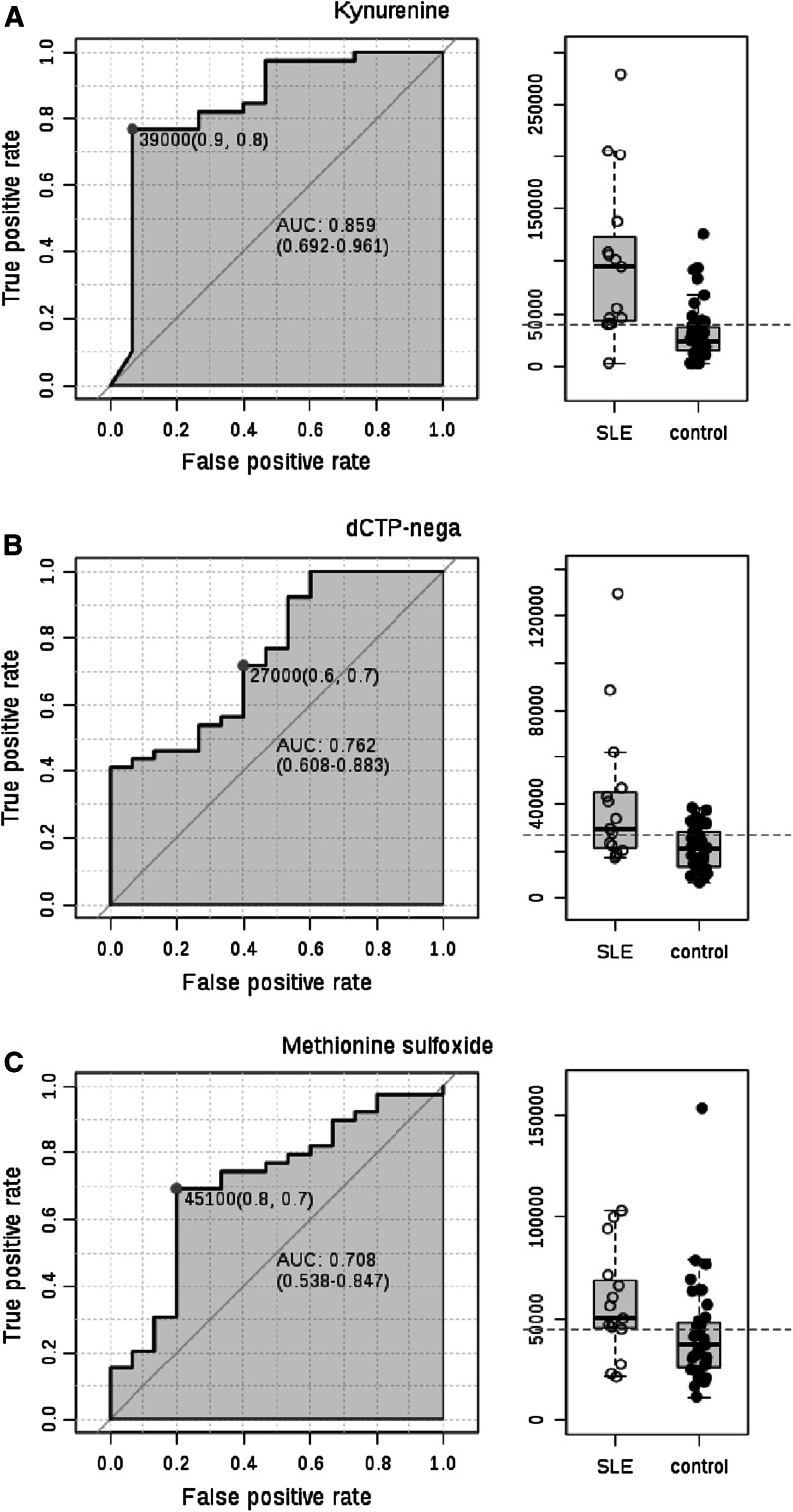
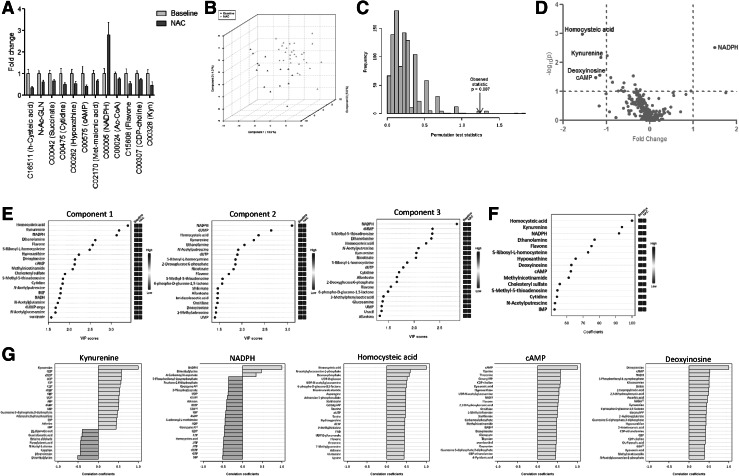
Systemic lupus erythematosus (SLE) patients exhibit depletion of the intracellular antioxidant glutathione and downstream activation of the metabolic sensor, mechanistic target of rapamycin (mTOR). Since reversal of glutathione depletion by the amino acid precursor, N -acetylcysteine (NAC), is therapeutic in SLE, its mechanism of impact on the metabolome was examined within the context of a double-blind placebo-controlled trial. Quantitative metabolome profiling of peripheral blood lymphocytes (PBL) was performed in 36 SLE patients and 42 healthy controls matched for age, gender, and ethnicity of patients using mass spectrometry that covers all major metabolic pathways. mTOR activity was assessed by western blot and flow cytometry. Metabolome changes in lupus PBL affected 27 of 80 KEGG pathways at FDR p < 0.05 with most prominent impact on the pentose phosphate pathway (PPP). While cysteine was depleted, cystine, kynurenine, cytosine, and dCTP were the most increased metabolites. Area under the receiver operating characteristic curve (AUC) logistic regression approach identified kynurenine (AUC = 0.859), dCTP (AUC = 0.762), and methionine sulfoxide (AUC = 0.708), as top predictors of SLE. Kynurenine was the top predictor of NAC effect in SLE (AUC = 0.851). NAC treatment significantly reduced kynurenine levels relative to placebo in vivo (raw p = 2.8 × 10 −7 , FDR corrected p = 6.6 × 10 −5 ). Kynurenine stimulated mTOR activity in healthy control PBL in vitro. Metabolome changes in lupus PBL reveal a dominant impact on the PPP that reflect greater demand for nucleotides and oxidative stress. The PPP-connected and NAC-responsive accumulation of kynurenine and its stimulation of mTOR are identified as novel metabolic checkpoints in lupus pathogenesis.
Overview
The claims and statistics of this paper haven’t been checked yet.
Free: it reads the open-access text and checks the first 5 claims that cite a source we can check. Create a free account to check every claim.
Integrity signals
Registry
Cites
Statistics
Figures
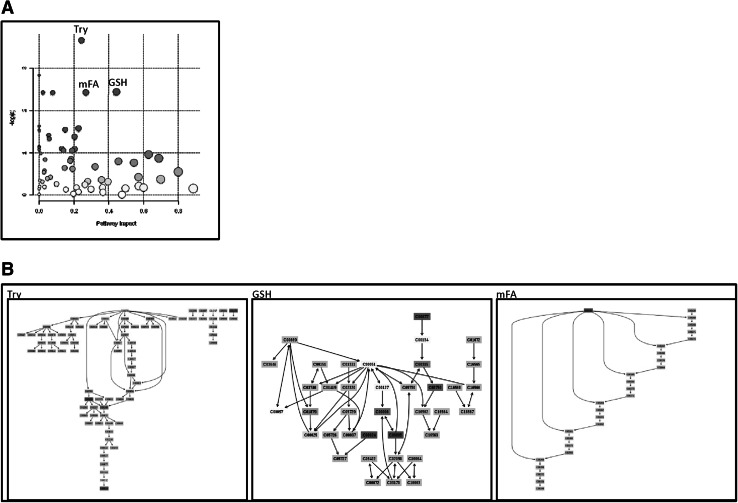
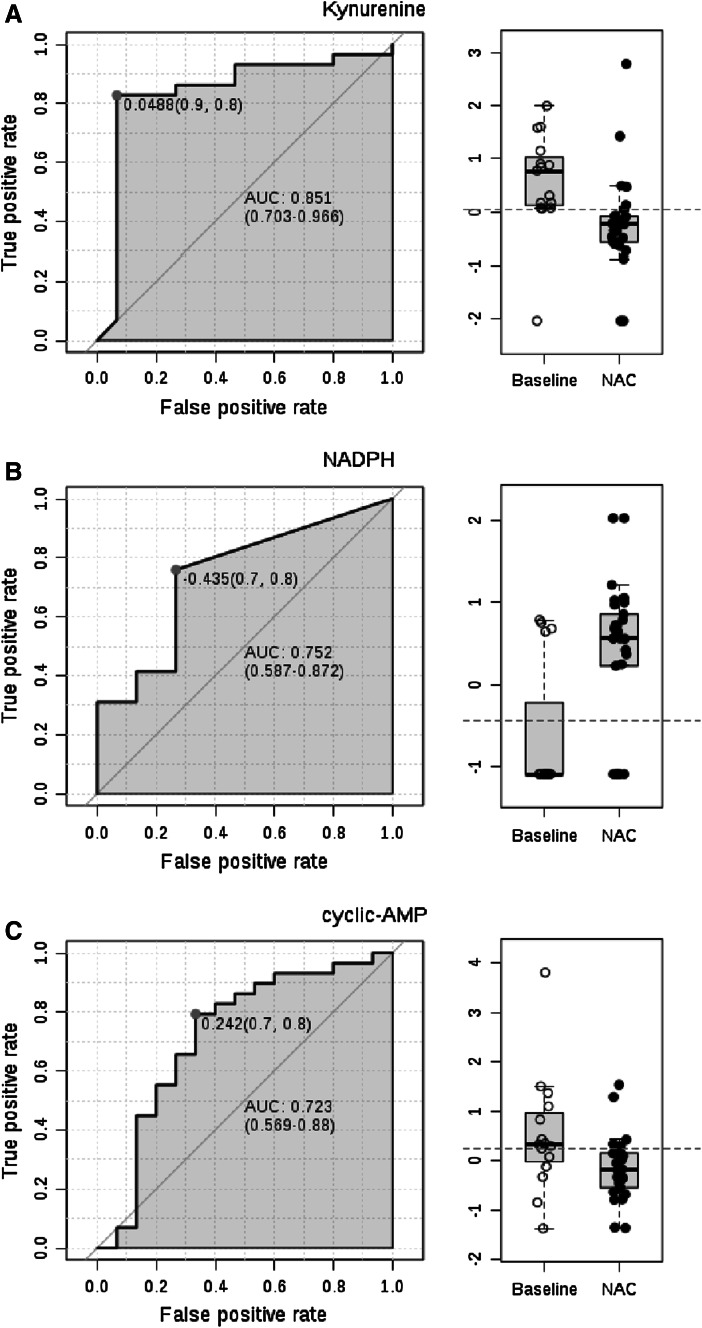
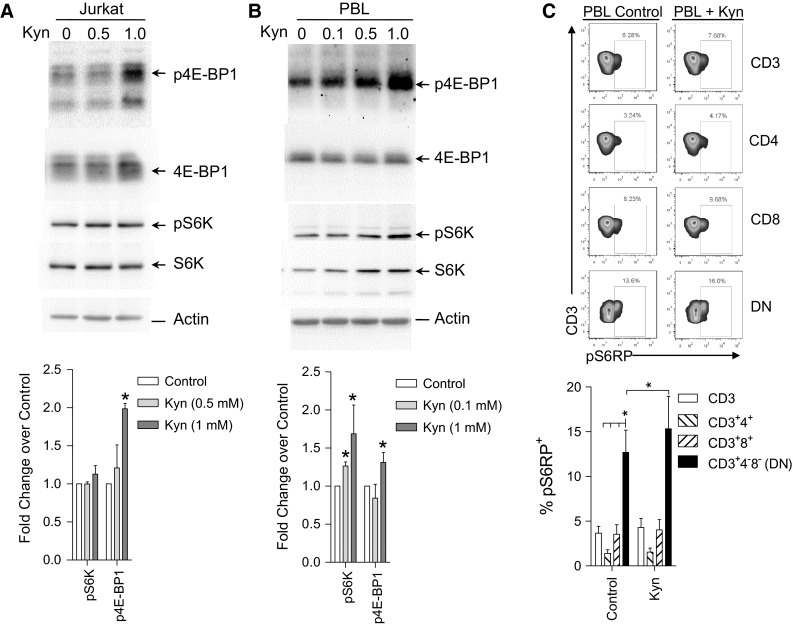
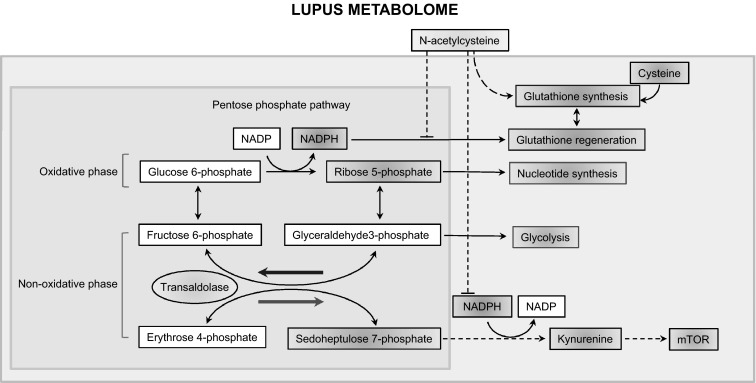
Verification
Claims the paper makes
The claims and statistics of this paper haven’t been checked yet.
Free: it reads the open-access text and checks the first 5 claims that cite a source we can check. Create a free account to check every claim.
Claims other papers make about this one
Each is checked against this paper’s own text: does it say what the citing paper says it does?
The source backs part of the claim, not all of it — or backs it for a different population, condition or comparison.
In the citing paper
“Dietary supplementation with N-acetylcysteine (a precursor of glutathione) inhibits the mTOR pathway, restores the mitochondrial membrane potential and increases the mitochondrial mass in lymphocytes from patients with SLE85,86”
From The role of mitochondria in rheumatic diseases (2022) · cites this paper as [86]
Experimental — accuracy not yet measured
Self-check
Percentages, sums and reported differences re-computed from the paper’s own numbers.
The self-check needs the paper’s full text.
Citations
Cites
A Simple Sequentially Rejective Multiple Test Procedure
(1979) · Scandinavian Journal of Statistics · doi:10.2307/4615733 · Cited by 21,526 · cited 1×
“The Holm p is the p value adjusted by Holm-Bonferroni method (Holm 1979).”
MethodHochberg, M. C. (1997) · Arthritis & Rheumatism · doi:10.1002/art.1780400928 · Cited by 11,409 · cited 7×
“10 Correlation t-stat p value FDR SLEDAI 1 Inf 0 0 BILAG 0.77074 8.8892 3.72E-12 4.41E-10 Compounds in italics correlated at FDR p\ 0.05 with SLE, BILAG, and FAS scores Correlation t-stat p value FDR BILAG 1 Inf 0 0 SLEDAI 0.77074 8.8892 3.72E-12 4.41E-10 Acetylphosphate 0.52377 4.5183 3.43E-05 0.002459 Deoxyribose-ph…”
MethodInfluentialKim, D.-H., Sarbassov, D. D., Ali, S. M., King, J. E., Latek, R. R., Erdjument-Bromage, H., Tempst, P., & Sabatini, D. M. (2002) · Cell · doi:10.1016/s0092-8674(02)00808-5 · Cited by 2,986 · cited 2×
“Although mTOR is widely recognized as a global sensor and integrator of nutrient pathways (Kim et al. 2002), in particular amino acids, the individual metabolites have not been identified (Jewell et al. 2013).”
BackgroundLu, S. C. (2013) · Biochimica et Biophysica Acta (BBA) - General Subjects · doi:10.1016/j.bbagen.2012.09.008 · Cited by 2,166 · cited 2×
“shown in this study, cysteine, which is the rate-limiting factor of de novo GSH synthesis (Lu 2013), was profoundly diminished in lupus PBL.”
BackgroundXia, J., & Wishart, D. S. (2011) · Nature Protocols · doi:10.1038/nprot.2011.319 · Cited by 1,349 · cited 7×
“Values reflect Pearson’s correlation coefficients between metabolite concentrations at FDR p\ 0.05 calculated by MetaboAnalyst (Color figure online) NAC was safe and effective in reducing disease activity in patients with SLE (Lai et al. 2012).”
MethodInfluentialMetaboAnalyst 2.0--a comprehensive server for metabolomic data analysis
Xia, J., Mandal, R., Sinelnikov, I. V., Broadhurst, D., & Wishart, D. S. (2012) · Nucleic Acids Research · doi:10.1093/nar/gks374 · Cited by 1,150 · cited 1×
“The pathways are arranged by the relative impact of the number of metabolites affected and their node of importance (Xia et al. 2012) 1162 A.”
BackgroundYuan, M., Breitkopf, S. B., Yang, X., & Asara, J. M. (2012) · Nature Protocols · doi:10.1038/nprot.2012.024 · Cited by 1,117 · cited 1×
“…interaction liquid chromatography with positive/negative ion switching to analyze 258 metabolites (289 Q1/Q3 transitions) from a single 15-min targeted liquid chromatography–tandem mass spectrometry (LC–MS/MS) acquisition with a 3-ms dwell time and a 1.55-s duty cycle time (Yuan et al. 2012).”
MethodInfluentialSelf-citationBar-Peled, L., Chantranupong, L., Cherniack, A. D., Chen, W. W., Ottina, K. A., Grabiner, B. C., Spear, E. D., Carter, S. L., Meyerson, M., & Sabatini, D. M. (2013) · Science · doi:10.1126/science.1232044 · Cited by 1,080 · cited 2×
“9). mTOR complex 1 (mTORC1), which was measured here via phosphorylation of its downstream substrate, pS6RP, is stimulated by oxidative stress (Sarbassov and Sabatini 2005) and the lysosomal accumulation of amino acids (Bar-Peled et al. 2013).”
BackgroundRegulation and function of mTOR signalling in T cell fate decisions
Chi, H. (2012) · Nature Reviews Immunology · doi:10.1038/nri3198 · Cited by 1,035 · cited 1×
“In turn, the mechanistic/mammalian target of rapamycin (mTOR) is a sensor of oxidative stress and regulator of T cell lineage specification (Chi 2012).”
BackgroundMurray, R. K. (1998) · Medical Entomology and Zoology · Cited by 905
Cited by
Pathogenesis of Human Systemic Lupus Erythematosus: A Cellular Perspective
Moulton, V. R., Suarez-Fueyo, A., Meidan, E., Li, H., Mizui, M., & Tsokos, G. C. (2017) · Trends in Molecular Medicine · doi:10.1016/j.molmed.2017.05.006 · Cited by 469
“Therefore, the accumulation of kynurenine in SLE patients and its stimulation of mTORmight constitute an important metabolic checkpoint in lupus pathogenesis [33].”
BackgroundDiverse Roles of Mitochondria in Immune Responses: Novel Insights Into Immuno-Metabolism
Angajala, A., Lim, S., Phillips, J. B., Kim, J.-H., Yates, C., You, Z., & Tan, M. (2018) · Frontiers in Immunology · doi:10.3389/fimmu.2018.01605 · Cited by 455
Lai, Z.-W., Kelly, R., Winans, T., Marchena, I., Shadakshari, A., Yu, J., Dawood, M., Garcia, R., Tily, H., Francis, L., et al. (2018) · The Lancet · doi:10.1016/s0140-6736(18)30485-9 · Cited by 412
Self-citationGorrochategui, E., Jaumot, J., Lacorte, S., & Tauler, R. (2016) · TrAC Trends in Analytical Chemistry · doi:10.1016/j.trac.2016.07.004 · Cited by 352
Activation of mTOR (mechanistic target of rapamycin) in rheumatic diseases
Perl, A. (2016) · Nature Reviews Rheumatology · doi:10.1038/nrrheum.2015.172 · Cited by 332
Self-citationT cell metabolism: new insights in systemic lupus erythematosus pathogenesis and therapy
Sharabi, A., & Tsokos, G. C. (2020) · Nature Reviews Rheumatology · doi:10.1038/s41584-019-0356-x · Cited by 290
Choi, S.-C., Brown, J., Gong, M., Ge, Y., Zadeh, M., Li, W., Croker, B. P., Michailidis, G., Garrett, T. J., Mohamadzadeh, M., et al. (2020) · Science Translational Medicine · doi:10.1126/scitranslmed.aax2220 · Cited by 266
Immunometabolism in systemic lupus erythematosus
Morel, L. (2017) · Nature Reviews Rheumatology · doi:10.1038/nrrheum.2017.43 · Cited by 219
Perl, A. (2015) · Annals of the New York Academy of Sciences · doi:10.1111/nyas.12756 · Cited by 218
Self-citationT Cell Metabolism: A New Perspective on Th17/Treg Cell Imbalance in Systemic Lupus Erythematosus
Shan, J., Jin, H., & Xu, Y. (2020) · Frontiers in Immunology · doi:10.3389/fimmu.2020.01027 · Cited by 213
“The metabolites of pentose phosphate pathway, such as R5P and F6P, were also higher in peripheral blood lymphocytes of SLE patients (34).”
BackgroundMetabolic pathways and immunometabolism in rare kidney diseases
Grayson, P. C., Eddy, S., Taroni, J. N., Lightfoot, Y. L., Mariani, L., Parikh, H., Lindenmeyer, M. T., Ju, W., Greene, C. S., Godfrey, B., et al. (2018) · Annals of the Rheumatic Diseases · doi:10.1136/annrheumdis-2017-212935 · Cited by 187
The immunology of systemic lupus erythematosus
Tsokos, G. C. (2024) · Nature Immunology · doi:10.1038/s41590-024-01898-7 · Cited by 162
“A major immunoregulatory metabolite is kynurenine, which derives from tryptophan and is associated with lupus in patients 133 and mice 134 .”
Islam, M. A., Khandker, S. S., Kotyla, P. J., & Hassan, R. (2020) · Frontiers in Immunology · doi:10.3389/fimmu.2020.01477 · Cited by 162
Bengtsson, A. A., Trygg, J., Wuttge, D. M., Sturfelt, G. K., Theander, E., Donten, M., Möritz, T., Sennbro, C.-J., Torell, F., Lood, C., et al. (2016) · PLoS ONE · doi:10.1371/journal.pone.0159384 · Cited by 151
“Lower levels of tryptophan could be also connected to kynurenine pathway, which has been related to activated immune response and involved in many diseases and disorders, including SLE [49,50].”
BackgroundMetabolism as a Target for Modulation in Autoimmune Diseases
Huang, N., & Perl, A. (2018) · Trends in Immunology · doi:10.1016/j.it.2018.04.006 · Cited by 137
Self-citationOaks, Z., Winans, T., Caza, T., Fernandez, D., Liu, Y., Landas, S. K., Banki, K., & Perl, A. (2016) · Arthritis & Rheumatology · doi:10.1002/art.39791 · Cited by 136
Self-citationLi, X., Zhang, Z., Zabed, H. M., Yun, J., Zhang, G., & Qi, X. (2021) · Molecular Nutrition & Food Research · doi:10.1002/mnfr.202000461 · Cited by 135
Differential Roles of IDO1 and IDO2 in T and B Cell Inflammatory Immune Responses
Merlo, L. M. F., DuHadaway, J. B., Montgomery, J. D., Peng, W., Murray, P. J., Prendergast, G. C., Caton, A. J., Muller, A. J., & Mandik‐Nayak, L. (2020) · Frontiers in Immunology · doi:10.3389/fimmu.2020.01861 · Cited by 132
Hedrich, C. M., Smith, E. M. D., & Beresford, M. W. (2017) · Best Practice & Research Clinical Rheumatology · doi:10.1016/j.berh.2018.02.001 · Cited by 121
Review: Metabolic Control of Immune System Activation in Rheumatic Diseases
Perl, A. (2017) · Arthritis & Rheumatology · doi:10.1002/art.40223 · Cited by 116
“GSH depletion occurs subsequent to a loss of NADPH and the accumulation of 3-carbon to 7-carbon sugars in SLE (22), indicating that glucose utilization in the PPP is diminished or inefficient.”
BackgroundResultInfluentialSelf-citationSystemic lupus erythematosus: pathogenesis and targeted therapy
Su, X., Yu, H. M., Lei, Q., Chen, X., Tong, Y., Zhang, Z., Yang, W., Guo, Y., & Lin, L. (2024) · Molecular Biomedicine · doi:10.1186/s43556-024-00217-8 · Cited by 111
“The activation of this pathway has been implicated in the development of SLE [255, 256], with both the activation of mTOR and the potential for therapeutic intervention being observed in T cells within the context of SLE [257–261].”
Oxidative Stress and Treg and Th17 Dysfunction in Systemic Lupus Erythematosus
Yang, J. Y., Yang, X., Zou, H., & Li, M. (2016) · Oxidative Medicine and Cellular Longevity · doi:10.1155/2016/2526174 · Cited by 98
Fecal Metabolomics and Potential Biomarkers for Systemic Lupus Erythematosus
Zhang, Q., Yin, X., Wang, H., Wu, X., Li, X., Li, Y., Zhang, X., Chen, F., Li, H., & Qiu, Y. (2019) · Frontiers in Immunology · doi:10.3389/fimmu.2019.00976 · Cited by 96
“(19) performed a quantitative metabolome study of peripheral blood lymphocytes and indicated accumulation of kynurenine and kynurenic acid in SLE patients, which could be reversed by N-acetylcysteine (NAC) treatment.”
BackgroundOaks, Z., Winans, T., Huang, N., Banki, K., & Perl, A. (2016) · Current Rheumatology Reports · doi:10.1007/s11926-016-0622-8 · Cited by 93
“In vivo, kynurenine accumulation was blocked in patients receiving NAC, a potent antioxidant and glutathione precursor [24].”
BackgroundInfluentialSelf-citationKoga, T., Sato, T., Furukawa, K., Morimoto, S., Endo, Y., Umeda, M., Sumiyoshi, R., Fukui, S., Kawashiri, S., Iwamoto, N., et al. (2019) · Arthritis & Rheumatology · doi:10.1002/art.40785 · Cited by 94
“In addition, naive CD4+ T cells from lupusprone mice showed higher glycolytic rates than those of agematched control cells (6).”
Huang, N., Winans, T., Wyman, B., Oaks, Z., Faludi, T., Choudhary, G., Lai, Z., Lewis, J., Beckford, M., Duarte, M., et al. (2024) · Nature Communications · doi:10.1038/s41467-024-46441-2 · Cited by 92
“Skewed tryptophan metabolism with characteristic accumulation of kynur-enine (KYN)hasbeen identi fi ed asthetopmetabolicbiomarker 21,22 and predictor of therapeutic mTOR blockade in patient with SLE 21 .”
BackgroundMethodSelf-citationImmunometabolism: An Overview and Therapeutic Prospects in Autoimmune Diseases
Stathopoulou, C., Nikoleri, D., & Bertsias, G. K. (2019) · Immunotherapy · doi:10.2217/imt-2019-0002 · Cited by 92
The role of mitochondria in rheumatic diseases
Becker, Y. L. C., Duvvuri, B., Fortin, P. R., Lood, C., & Boilard, E. (2022) · Nature Reviews Rheumatology · doi:10.1038/s41584-022-00834-z · Cited by 81
Intestinal Dysbiosis and Tryptophan Metabolism in Autoimmunity
Brown, J., Robusto, B. A., & Morel, L. M. (2020) · Frontiers in Immunology · doi:10.3389/fimmu.2020.01741 · Cited by 77
“In addition, Kyn was one of the most increased metabolites in the PBMCs of SLE patients, and it was the best metabolite to discriminate between responders and non-responders to N-acetylcysteine treatment (45).”
BackgroundInfluentialImmunometabolism in systemic lupus erythematosus
Patiño‐Martínez, E., & Kaplan, M. J. (2025) · Nature Reviews Rheumatology · doi:10.1038/s41584-025-01267-0 · Cited by 80
“Metabolome profiling of lymphocytes from patients with SLE found elevated levels of cystine, kynurenine, cytosine and dCTP, overall suggesting enhanced oxidative stress, chronic immune activation, altered nucleotide metabolism and DNA damage responses 46 .”
Glycolysis in Innate Immune Cells Contributes to Autoimmunity
Xu, Y., Chen, Y., Zhang, X., Ma, J., Liu, Y., Cui, L., & Wang, F. (2022) · Frontiers in Immunology · doi:10.3389/fimmu.2022.920029 · Cited by 59
Metabolism Characteristics of Th17 and Regulatory T Cells in Autoimmune Diseases
Qin, Y., Gao, C., & Luo, J. (2022) · Frontiers in Immunology · doi:10.3389/fimmu.2022.828191 · Cited by 77
Advances in systemic lupus erythematosus pathogenesis via mTOR signaling pathway
He, J., Ma, J., Ren, B., & Liu, A. (2019) · Seminars in Arthritis and Rheumatism · doi:10.1016/j.semarthrit.2019.09.022 · Cited by 71
Immunometabolic Pathways and Its Therapeutic Implication in Autoimmune Diseases
Wang, T., Jiao, Y., & Zhang, X. (2020) · Clinical Reviews in Allergy & Immunology · doi:10.1007/s12016-020-08821-6 · Cited by 69
The role of amino acid metabolism in inflammatory bowel disease and other inflammatory diseases
Zheng, X., Zhu, Y., Zhao, Z., Chu, Y., & Yang, W. (2023) · Frontiers in Immunology · doi:10.3389/fimmu.2023.1284133 · Cited by 68
Mixing omics: combining genetics and metabolomics to study rheumatic diseases
Menni, C., Zierer, J., Valdes, A. M., & Spector, T. D. (2017) · Nature Reviews Rheumatology · doi:10.1038/nrrheum.2017.5 · Cited by 67
Zhao, L., Tang, S., Chen, F., Ren, X., Han, X., & Zhou, X. (2024) · Molecular Medicine · doi:10.1186/s10020-024-00866-z · Cited by 65
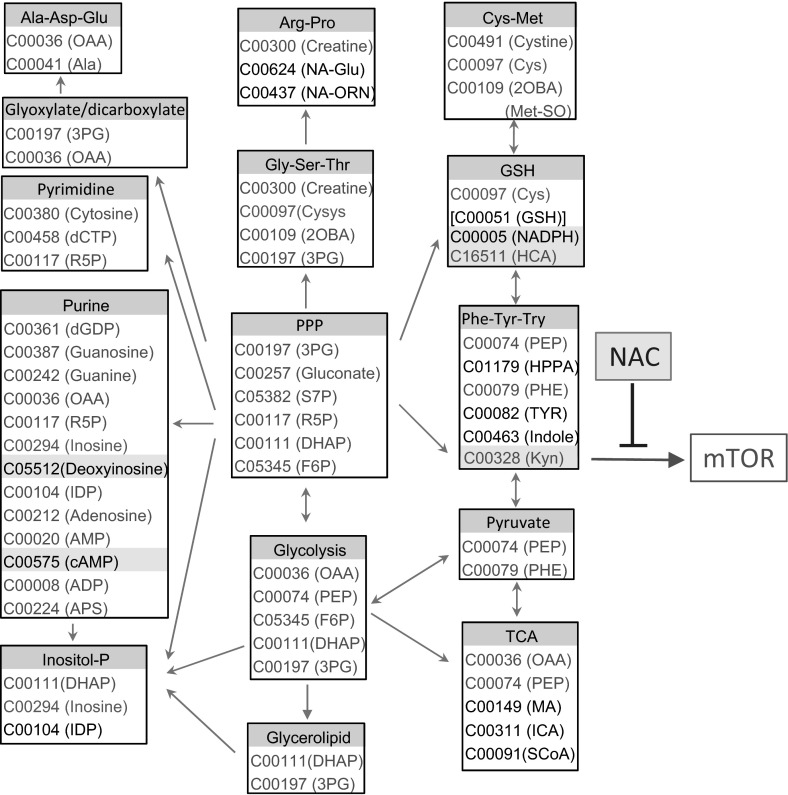
“The novel metabolic check-point in lupus pathogenesis may be the result of the activation of mTOR by elevated levels of KYN (Perl et al. 2015) (Fig.”
BackgroundInfluentialPathogenesis and treatment of autoimmune rheumatic diseases
Liu, E. V., & Perl, A. (2019) · Current Opinion in Rheumatology · doi:10.1097/bor.0000000000000594 · Cited by 63
Self-citationDifferential impact of environmental factors on systemic and localized autoimmunity
Touil, H., Mounts, K., & Jager, P. L. D. (2023) · Frontiers in Immunology · doi:10.3389/fimmu.2023.1147447 · Cited by 63
Tsai, C., Shen, C., Liao, H., Li, K., Lee, H.-T., Lu, C.-S., Wu, C.-H., Kuo, Y., Hsieh, S., & Yu, C. (2019) · International Journal of Molecular Sciences · doi:10.3390/ijms20163878 · Cited by 63
Endometriosis and autoimmunity
Blanco, L. P., Salmeri, N., Temkin, S. M., Shanmugam, V. K., & Stratton, P. (2025) · Autoimmunity Reviews · doi:10.1016/j.autrev.2025.103752 · Cited by 61
Glucose transporter 1 in rheumatoid arthritis and autoimmunity
Zezina, E. A., Sercan-Alp, Ö., Herrmann, M., & Biesemann, N. (2020) · WIREs Systems Biology and Medicine · doi:10.1002/wsbm.1483 · Cited by 59
Liu, Y., Yu, J., Oaks, Z., Marchena, I., Francis, L., Bonilla, E., Aleksiejuk, P. A., Patel, J., Bánki, K., LANDAS, S. K., et al. (2015) · Clinical Immunology · doi:10.1016/j.clim.2015.07.001 · Cited by 61
“In comparison to 42 matched healthy subjects, me-tabolome changes in peripheral blood lymphocytes (PBL) of 36 lupus patients have recently unveiled a prominent impact on the pentose phosphate pathway, which reflects a greater demand for nucleotides and oxidative stress [50].”
ResultSelf-citationMetabolic Targets for Treatment of Autoimmune Diseases
Piranavan, P., Bhamra, M. S., & Perl, A. (2020) · Immunometabolism · doi:10.20900/immunometab20200012 · Cited by 57
“Kynurenine is capable of activating mTORC1 in pro-inflammatory, CD4−CD8− double-negative T cells [45].”
BackgroundSelf-citationMetabolic determinants of lupus pathogenesis
Teng, X., Brown, J., Choi, S., Li, W., & Morel, L. M. (2020) · Immunological Reviews · doi:10.1111/imr.12847 · Cited by 56
Lu, L., Hu, C., Zhao, Y., He, L., Zhou, J., Li, H., Du, Y., Wang, Y., Wen, C., Han, X., et al. (2018) · Biomolecules · doi:10.3390/biom8040105 · Cited by 56
Microbiota-mediated skewing of tryptophan catabolism modulates CD4+ T cells in lupus-prone mice
Brown, J., Abboud, G., Ma, L., Choi, S., Kanda, N., Zeumer-Spataro, L., Lee, J. Y. H., Peng, W., Cagmat, J. G., Faludi, T., et al. (2022) · iScience · doi:10.1016/j.isci.2022.104241 · Cited by 54
Self-citationT Cells in Systemic Lupus Erythematosus
Paredes, J. L., Fernandez‐Ruiz, R., & Niewold, T. B. (2021) · Rheumatic Disease Clinics of North America · doi:10.1016/j.rdc.2021.04.005 · Cited by 52
Metabolic dysregulation of lymphocytes in autoimmune diseases
Wang, S., Yang, N., & Zhang, H. (2024) · Trends in Endocrinology and Metabolism · doi:10.1016/j.tem.2024.01.005 · Cited by 53
Amino Acid Catabolism in Multiple Sclerosis Affects Immune Homeostasis
Negrotto, L., & Correale, J. D. (2017) · The Journal of Immunology · doi:10.4049/jimmunol.1601139 · Cited by 52
“The effects were most prominent in CD4(2) CD8(2) double-negative (DN) T cells and metabolically linked to oxidative stress (35).”
BackgroundShaposhnikov, M. V., Zemskaya, N. V., Koval, L. A., Schegoleva, E. V., Zhavoronkov, A. A., & Moskalev, A. (2018) · Aging · doi:10.18632/aging.101561 · Cited by 52
Matthiesen, I., Voulgaris, D., Nikolakopoulou, P., Winkler, T. E., & Herland, A. (2021) · Small · doi:10.1002/smll.202101785 · Cited by 53
Anderson, E., Fishbein, J. S., Hong, J., Roeser, J., Furie, R. A., Aranow, C. B., Volpe, B. T., Diamond, B., & Mackay, M. C. (2021) · Lupus Science & Medicine · doi:10.1136/lupus-2021-000559 · Cited by 51
“9 Metabolomic studies of peripheral blood mononuclear cells in human SLE identified elevated KYN levels as a contributor to mammalian target of rapamycin (mTOR) activation, 15 associated with T cell dysfunction in SLE.”
Innate and adaptive immune abnormalities underlying autoimmune diseases: the genetic connections
Chi, X., Huang, M., Tu, H., Zhang, B., Lin, X., Xu, H., Dong, C., & Hu, X. (2023) · Science China Life Sciences · doi:10.1007/s11427-021-2187-3 · Cited by 50
“Moreover, the accumulation of ROS could also be resulted from impaired ROS-neutralizing system, antioxidant-glutathione and NADPH from pentose phosphate pathway, in SLE patients (Gergely et al., 2002; Perl et al., 2015).”
BackgroundVukelic, M., Li, Y., & Kyttaris, V. C. (2018) · Frontiers in Immunology · doi:10.3389/fimmu.2018.02658 · Cited by 49
Ren, Y., Jiang, H., Gu, S., Feng, N., Zhang, N., Lv, L., & Liu, F. (2020) · Frontiers in Immunology · doi:10.3389/fimmu.2020.02138 · Cited by 49
Duarte-Delgado, N. P., Cala, M. P., Barreto, A., & Rodríguez, L. (2022) · Journal of Translational Autoimmunity · doi:10.1016/j.jtauto.2022.100150 · Cited by 46
Immunometabolism in the pathogenesis of systemic lupus erythematosus
Zhang, C., Wang, H., Yin, L., Mao, Y., & Zhou, W. (2020) · Journal of Translational Autoimmunity · doi:10.1016/j.jtauto.2020.100046 · Cited by 46
“In support of this mechanism, N-acetylcysteine treatment, which restores NADPH levels, significantly decreased kynurenine levels in peripheral blood lymphocytes [145].”
BackgroundNouwen, L. V., & Everts, B. (2020) · Cells · doi:10.3390/cells9010161 · Cited by 45
“It is worth noting that, apart from tryptophan itself, breakdown products of tryptophan, for example kynurenine and serotonin, are also possible activators of mTORC1 [55,56].”
BackgroundCaution in studying and interpreting the lupus metabolome
Zhang, T., & Mohan, C. (2020) · Arthritis Research & Therapy · doi:10.1186/s13075-020-02264-2 · Cited by 44
Metabolite Transporters as Regulators of Immunity
Weiss, H. J., & Angiari, S. (2020) · Metabolites · doi:10.3390/metabo10100418 · Cited by 44
Latest developments in tryptophan metabolism: Understanding its role in B cell immunity
Dagenais-Lussier, X., Loucif, H., Beji, C., Telittchenko, R., Routy, J., & van Grevenynghe, J. (2021) · Cytokine & Growth Factor Reviews · doi:10.1016/j.cytogfr.2021.02.003 · Cited by 43
Mohammadnezhad, L., Azgomi, M. S., Manna, M. P. L., Sireci, G., Rizzo, C., Badami, G. D., Tamburini, B., Dieli, F., Guggino, G., & Caccamo, N. (2022) · Cells · doi:10.3390/cells11101663 · Cited by 40
Metabolic Fitness of T Cells in Autoimmune Disease
Wu, B., Goronzy, J. J., & Weyand, C. M. (2020) · Immunometabolism · doi:10.20900/immunometab20200017 · Cited by 39
“Interestingly, in SLE T cells the pentose phosphate pathway appears to be also hyperactive, although the underlying mechanisms remain unclear [27].”
BackgroundMetabolic regulation of pathogenic autoimmunity: therapeutic targeting
Teng, X., Cornaby, C., Li, W., & Morel, L. M. (2019) · Current Opinion in Immunology · doi:10.1016/j.coi.2019.07.001 · Cited by 38
Xu, J., Jiang, C., Cai, Y., Guo, Y., Wang, X., Zhang, J., Xu, J., Xu, K., Zhu, W., Wang, S., et al. (2020) · Arthritis Research & Therapy · doi:10.1186/s13075-020-02296-8 · Cited by 39
Exposure to Environmental Toxins and Autoimmune Conditions.
Kharrazian, D. (2021) · PubMed Central · Cited by 38
mTOR signaling: A pivotal player in Treg cell dysfunction in systemic lupus erythematosus
Zhao, X., Wang, S., Wang, S., Xie, J., & Cui, D. (2022) · Clinical Immunology · doi:10.1016/j.clim.2022.109153 · Cited by 213
Trace Elements Associated with Systemic Lupus Erythematosus and Insulin Resistance
Pedro, E. M., Santos, L. F. D. R. F., Scavuzzi, B. M., Iriyoda, T. M. V., Peixe, T. S., Lozovoy, M. A. B., Reiche, E. M. V., Dichi, I., Simão, A. N. C., & Santos, M. J. (2019) · Biological Trace Element Research · doi:10.1007/s12011-018-1592-7 · Cited by 36
Abbasifard, M., Khorramdelazad, H., Rostamian, A., Rezaeian, M., Saeed-Askari, P., Sharifi, G. T. K., Kardoust, M., Sharifi, M. T. K., & Najafizadeh, S. R. (2023) · Trials · doi:10.1186/s13063-023-07083-9 · Cited by 35
Efferocytosis: Unveiling its potential in autoimmune disease and treatment strategies
Xing, J., Wang, K., Xu, Y.-C., Pei, Z.-J., Yu, Q., Liu, X., Dong, Y.-L., Li, S., Chen, Y., Zhao, Y., et al. (2024) · Autoimmunity Reviews · doi:10.1016/j.autrev.2024.103578 · Cited by 33
Alterations in the human oral microbiota in systemic lupus erythematosus
Guo, J., Cui, G., Huang, W. M., Zheng, Z., Li, T., Gao, G., Huang, Z., Zhan, Y., Ding, S., Liu, S., et al. (2023) · Journal of Translational Medicine · doi:10.1186/s12967-023-03892-3 · Cited by 33
“In addition, the levels of glutathione and cysteine in serum and peripheral blood individual nuclei of SLE patients are lower than with healthy individuals, suggesting the presence of oxidative stress [37].”
BackgroundTan, M. K. X., Heng, T. Y. J., & Mak, A. (2019) · Cells · doi:10.3390/cells8040323 · Cited by 32
Oxidative stress and Treg depletion in lupus patients with anti-phospholipid syndrome
Lai, Z., Marchena, I., & Perl, A. (2015) · Clinical Immunology · doi:10.1016/j.clim.2015.03.024 · Cited by 32
“The prominent changes in DN T cells are consistent with earlier findings of their pro-inflammatory metabolic state (4;30) that generates oxidative stress in SLE (8).”
BackgroundSelf-citationRemodeling of T-cell mitochondrial metabolism to treat autoimmune diseases
Lin, L., Ren, R., Xiong, Q., Zheng, C., Yang, B., & Wang, H. (2024) · Autoimmunity Reviews · doi:10.1016/j.autrev.2024.103583 · Cited by 31
Chu, Y., Zhao, C., Zhang, B., Wang, X., Wang, Y., An, J., & Chen, J. (2019) · Lupus · doi:10.1177/0961203319877239 · Cited by 31
Hellén, M., Weert, I., Müller, S. A., Räsänen, N., Kettunen, P., Lehtonen, Š., Peitz, M., Fließbach, K., Takalo, M., Koskuvi, M., et al. (2025) · Journal of Neuroinflammation · doi:10.1186/s12974-025-03470-y · Cited by 31
“Additionally, the elevated kynurenine levels detected in E4/E4 iMGs after LPS/IFNγ stimulation may have contributed to mTORC1 activation, as kynurenine has been shown to directly activate mTORC1 in human lymphocytes [85].”
Hu, Y., Zhao, Q., Dai, H., Wu, Y., Tang, X., Zhang, N., Jiang, H., Rui, H., & Liu, B. (2025) · Frontiers in Immunology · doi:10.3389/fimmu.2025.1687755 · Cited by 30
A cellular overview of immunometabolism in systemic lupus erythematosus
Psarras, A., & Clarke, A. J. (2023) · Oxford Open Immunology · doi:10.1093/oxfimm/iqad005 · Cited by 31
The Influence of Diet and Obesity on Gene Expression in SLE
Cava, A. L. (2019) · Genes · doi:10.3390/genes10050405 · Cited by 30
“Accumulation of the tryptophan metabolite kynurenine or the depletion of cysteine and glutathione in SLE promote the activation of the mTOR kinase that fuels inflammation [23,24].”
BackgroundWang, X., Liu, T., Song, H., Cui, S., Liu, G., Christoforou, A., Flaherty, P., Luo, X., Wood, L. J., & Wang, Q. M. (2020) · Frontiers in Neurology · doi:10.3389/fneur.2019.01425 · Cited by 29
“5ml microcentrifuge tube, dried in a SpeedVac (Savant AS160, Farmingdale, NY), and stored at−80C until analysis (21, 22).”
MethodImmmunometabolism of systemic lupus erythematosus
Furment, M. M., & Perl, A. (2024) · Clinical Immunology · doi:10.1016/j.clim.2024.109939 · Cited by 29
Self-citationWu, J., Pang, T., Lin, Z., Zhao, M., & Jin, H. (2022) · Frontiers in Immunology · doi:10.3389/fimmu.2022.965941 · Cited by 28
Occupational dust and chemical exposures and the development of autoimmune rheumatic diseases
Nikpour, M., Morrisroe, K., Calderone, A., Yates, D. H., & Silman, A. J. (2025) · Nature Reviews Rheumatology · doi:10.1038/s41584-024-01216-3 · Cited by 27
Bánki, K., & Perl, A. (2025) · Autoimmunity Reviews · doi:10.1016/j.autrev.2025.103781 · Cited by 28
Self-citationThe role of mTOR signaling pathway in systemic lupus erythematosus and systemic vasculitis
Michailidou, D., Gartshteyn, Y., Askanase, A., & Perl, A. (2025) · Autoimmunity Reviews · doi:10.1016/j.autrev.2025.103910 · Cited by 26
Self-citationSong, X., Gao, J., Liu, H., Liu, X.-H., & Tang, K. (2021) · Biomedicine & Pharmacotherapy · doi:10.1016/j.biopha.2021.111289 · Cited by 26
Song, X., Zhang, H., Zhao, Y. F., Lin, Y., Tang, Q., Zhou, X., & Zhong, X. (2021) · Frontiers in Medicine · doi:10.3389/fmed.2021.636188 · Cited by 23
“A recent study found that mTOR signaling activation caused hyperpolarization of mitochondria, resulting in necrosis tendency of T cells, promoting the generation of anti-nuclear antibodies, activation of dendritic cells, and the occurrence of inflammation (30).”
BackgroundTerrell, M., & Morel, L. M. (2022) · Endocrinology · doi:10.1210/endocr/bqac067 · Cited by 23
Saadh, M. J., Kazemi, K., Khorramdelazad, H., Mousavi, M. J., Noroozi, N., Masoumi, M., & Karami, J. (2023) · International Immunopharmacology · doi:10.1016/j.intimp.2023.110246 · Cited by 198
Rebalancing redox homeostasis: A pivotal regulator of the cGAS-STING pathway in autoimmune diseases
Zhao, Y., Xu, T., Wu, Z., Li, N., & Liang, Q. (2025) · Autoimmunity Reviews · doi:10.1016/j.autrev.2025.103823 · Cited by 24
Shi, G., Li, D., Li, X., Ren, J., Xu, J., Ding, L., Dou, H., & Hou, Y. (2018) · Biochimica et Biophysica Acta (BBA) - Molecular Basis of Disease · doi:10.1016/j.bbadis.2018.10.007 · Cited by 22
Perry, D. J., Titov, A. A., Sobel, E. S., Brusko, T. M., & Morel, L. M. (2020) · Clinical Immunology · doi:10.1016/j.clim.2020.108602 · Cited by 21
Multivariate strategy for the sample selection and integration of multi-batch data in metabolomics
Surowiec, I., Johansson, E., Torell, F., Idborg, H., Gunnarsson, I., Svenungsson, E., Jakobsson, P., & Trygg, J. (2017) · Metabolomics · doi:10.1007/s11306-017-1248-1 · Cited by 20
“2016) and could be connected to changes in kynurenine pathway and activation of immune response (Lood et al. 2015; Perl et al. 2015).”
BackgroundPei, L., Fukutani, K. F., Tibúrcio, R., Rupert, A. W., Dahlstrom, E. W., Galindo, F., Laidlaw, E., Lisco, A., Manion, M. M., Andrade, B. B., et al. (2021) · Frontiers in Immunology · doi:10.3389/fimmu.2021.693074 · Cited by 20
Pesqueda-Cendejas, K., Rivera-Escoto, M., Meza-Meza, M. R., Campos-López, B., Parra‐Rojas, I., Montoya‐Buelna, M., & la Cruz-Mosso, U. D. (2023) · Nutrients · doi:10.3390/nu15041036 · Cited by 20
“This improvement is related to the fact that the accumulation of kynurenine (a tryptophan metabolite) and the depletion of cysteine and glutathione in SLE promote the activation of the mechanistic target to rapamycin (mTOR) inflammatory pathway [79].”
BackgroundMa, N., Liu, X., Chen, X., Wang, X., Wei, Y., Han, G., Chen, G., Hou, C., Shen, B., Li, Y., et al. (2015) · Clinical Immunology · doi:10.1016/j.clim.2015.05.016 · Cited by 20
Koola, M. M. (2019) · Asian Journal of Psychiatry · doi:10.1016/j.ajp.2019.02.007 · Cited by 20
Mitochondrial Control for Healthy and Autoimmune T Cells
Li, J., Zhang, L., Liu, M., Ji, H., Wen, Z., & Wang, C. (2023) · Cells · doi:10.3390/cells12131800 · Cited by 19
“F6P, are higher in peripheral blood lymphocytes from SLE patients, suggesting that activation of T cells in SLE patients involves three significant pathways of glucose metabolism: aerobic glycolysis, PPP, and mitochondrial oxidative phosphorylation [88].”
BackgroundMetabolite Alterations in Autoimmune Diseases: A Systematic Review of Metabolomics Studies
Mujalli, A., Farrash, W. F., Alghamdi, K. S., & Obaid, A. A. (2023) · Metabolites · doi:10.3390/metabo13090987 · Cited by 19
“, 2015 [31] Human Peripheral blood and lymphocytes GC-MS, LC-MS SLE = 36, HC = 39 14 Bengtsson et al.”
Background
Metadata
- Authors
- Perl, A., Hanczko, R., Lai, Z.-W., Oaks, Z., Kelly, R., Borsuk, R., Asara, J. M., & Phillips, P. E.
- Affiliations
- SUNY Upstate Medical University (US)
- Beth Israel Deaconess Medical Center (US)
- Venue
- Metabolomics
- Published
- 2015-01-20
- Volume
- 11
- Issue
- 5
- Pages
- 1157-1174
- ISSN
- 1573-3882 (ISSN-L)
- 1573-3890
- PMC
- PMC4559110
- OpenAlex
- W1993264589
- Semantic Scholar
- 3d97dd02e0b9a34aa8304196423821258d007452
- Cited by
- 189
- References
- 45
- Citations by year
- 2026: 13 · 2025: 32 · 2024: 27 · 2023: 15 · 2022: 22 · 2021: 12 · 2020: 23 · 2019: 13 · 2018: 12 · 2017: 10 · 2016: 5 · 2015: 5
- FWCI
- 8.95
- Type
- journal article
- Language
- en
- Open access
- hybrid
- doi.org
- Locations
- Metabolomics (publishedVersion, cc-by)
- Europe PMC (PubMed Central) (publishedVersion, cc-by)
- PubMed Central (publishedVersion, cc-by)
- PubMed (publishedVersion)
- Digital Access to Scholarship at Harvard (DASH) (Harvard University) (submittedVersion, cc-by)
- Funders
- Central New York Community Foundation
- National Institutes of Health (AI072648)
- National Cancer Institute (P01CA120964, P30CA006516)
- National Institute of Allergy and Infectious Diseases (R21AI061066, R01AI048079, R01AI122176, R01AI072648)
- National Institute of Diabetes and Digestive and Kidney Diseases (R01DK078922)
- National Institute of Arthritis and Musculoskeletal and Skin Diseases (U01AR076092)
- National Center for Complementary and Integrative Health (R01AT004332)
- Topics
- Health Sciences › Medicine › Rheumatology › Systemic Lupus Erythematosus Research
- Life Sciences › Biochemistry, Genetics and Molecular Biology › Molecular Biology › Metabolomics and Mass Spectrometry Studies
- Life Sciences › Neuroscience › Biological Psychiatry › Tryptophan and brain disorders
- Keywords
- systemic lupus erythematosus, N-acetylcysteine, kynurenine, mechanistic target of rapamycin, glutathione depletion, peripheral blood lymphocytes, pentose phosphate pathway, nucleotide metabolism, methionine sulfoxide, oxidative stress, lupus pathogenesis
About these checks
Registry, retraction, Cites and statistics results are computed, not judged, with one exception: a printed reference that no index lists is read once by a model before it counts as a citation error. Claims are extracted by a model and kept only when their quote appears verbatim in the text; each cited source is then checked, with a model’s help, for whether it says what the claim relies on. Those verdicts can be wrong — read the claim’s quote and the cited source before relying on one.
Statistics and arithmetic are recomputed, not judged.
Confidence bands are shown only for fields calibrated on our annotated test set. None is calibrated yet, so no band is shown.
What counts as a claim ›How we measure confidence ›How we check this ›
Are you an author, or do you see a problem with this page? Request a review
Data sources
Bibliographic data: Semantic Scholar, OpenAlex, Crossref.
Contains information from the Semantic Scholar Academic Graph Datasets, made available under the ODC Attribution License (ODC-BY 1.0).
Semantic Scholar’s data is described in: Kinney, R., et al. (2023). The Semantic Scholar Open Data Platform. arXiv:2301.10140.
