

Regulation of lysosomal ion homeostasis by channels and transporters
Open accessThe DOI matches its Crossref record; 169 of the 169 references it cites were found in a registry or an index.
Abstract
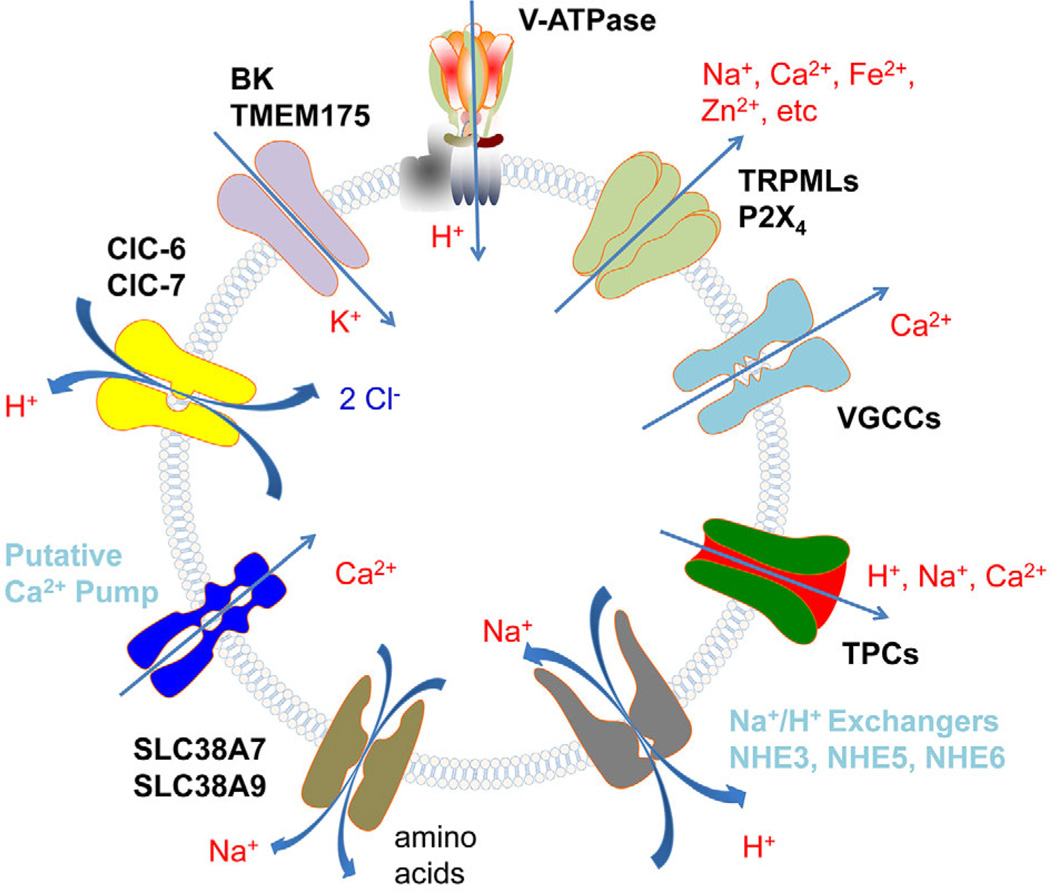
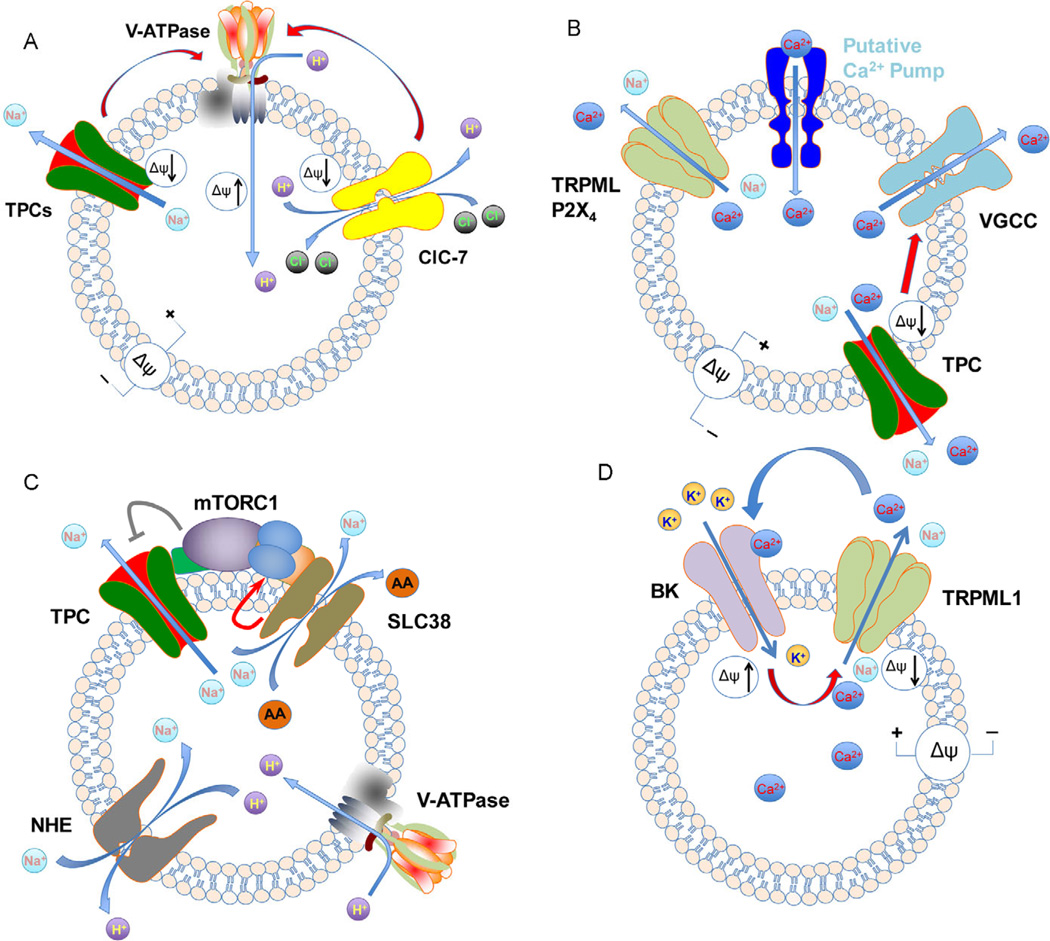
Lysosomes are the major organelles that carry out degradation functions. They integrate and digest materials compartmentalized by endocytosis, phagocytosis or autophagy. In addition to more than 60 hydrolases residing in the lysosomes, there are also ion channels and transporters that mediate the flux or transport of H(+), Ca(2+), Na(+), K(+), and Cl(-) across the lysosomal membranes. Defects in ionic exchange can lead to abnormal lysosome morphology, defective vesicle trafficking, impaired autophagy, and diseases such as neurodegeneration and lysosomal storage disorders. The latter are characterized by incomplete lysosomal digestion and accumulation of toxic materials inside enlarged intracellular vacuoles. In addition to degradation, recent studies have revealed the roles of lysosomes in metabolic pathways through kinases such as mechanistic target of rapamycin (mTOR) and transcriptional regulation through calcium signaling molecules such as transcription factor EB (TFEB) and calcineurin. Owing to the development of new approaches including genetically encoded fluorescence probes and whole endolysosomal patch clamp recording techniques, studies on lysosomal ion channels have made remarkable progress in recent years. In this review, we will focus on the current knowledge of lysosome-resident ion channels and transporters, discuss their roles in maintaining lysosomal function, and evaluate how their dysfunction can result in disease.
Overview
The claims and statistics of this paper haven’t been checked yet.
Free: it reads the open-access text and checks the first 5 claims that cite a source we can check. Create a free account to check every claim.
Integrity signals
Registry
Cites
Statistics
Figures
Verification
Claims the paper makes
The claims and statistics of this paper haven’t been checked yet.
Free: it reads the open-access text and checks the first 5 claims that cite a source we can check. Create a free account to check every claim.
Claims other papers make about this one
Each is checked against this paper’s own text: does it say what the citing paper says it does?
The cited source says what the claim attributes to it.
In the citing paper
“A key factor affecting lysosomal function is the pH controlled by the vacuolar (H+)-ATPase (V-ATPase), which uses the energy from ATP hydrolysis to drive H+ from the cytoplasm into the lysosome.”
From Recent advances in Alzheimer's disease: Mechanisms, clinical trials and new drug development strategies. (2024) · cites this paper as [264]
Self-check
Percentages, sums and reported differences re-computed from the paper’s own numbers.
The self-check needs the paper’s full text.
Citations
Cites
1 retracted
Two Pore Channel 2 (TPC2) Inhibits Autophagosomal-Lysosomal Fusion by Alkalinizing Lysosomal pH
Lu, Y., Hao, B.-X., Graeff, R., Wong, C. W. M., Wu, W.-T., & Yue, J. (2013) · Journal of Biological Chemistry · doi:10.1074/jbc.m113.484253 · Cited by 91 · cited 3×
“…of TPCs, recent studies have revealed the importance of these channels in vesicular trafficking associated with endocytosis, autophagy, platelet maturation, and viral infection (Ruas et al., 2010; Pereira et al., 2011; Lu et al., 2013; Lin et al., 2015; Sakurai et al., 2015; Ambrosio et al., 2015).”
RetractedFerroptosis: An Iron-Dependent Form of Nonapoptotic Cell Death
Dixon, S. J., Lemberg, K. M., Lamprecht, M. R., Skouta, R., Zaitsev, E. M., Gleason, C. E., Patel, D. N., Bauer, A. J., Cantley, A. M., Yang, W. S., et al. (2012) · Cell · doi:10.1016/j.cell.2012.03.042 · Cited by 18,691 · cited 1×
“Fe2+ catalyzes the hydrolysis of H2O2 and produces reactive oxygen species (Dixon et al., 2012).”
TFEB Links Autophagy to Lysosomal Biogenesis
Settembre, C., Di Malta, C., Polito, V. A., Arencibia, M. G., Vetrini, F., Erdin, S., Erdin, S. U., Huynh, T., Medina, D., Colella, P., et al. (2011) · Science · doi:10.1126/science.1204592 · Cited by 3,365 · cited 1×
“The activation of TFEB allows transcription of a set of genes involved in autophagy and lysosome biogenesis, including subunits of VATPase (Sardiello et al., 2009; Settembre et al., 2011) and thereby facilitates lysosomal degradation of nonessential cellular components to support survival.”
A Gene Network Regulating Lysosomal Biogenesis and Function
Sardiello, M., Palmieri, M., di Ronza, A., Medina, D. L., Valenza, M., Gennarino, V. A., Di Malta, C., Donaudy, F., Embrione, V., Polishchuk, R. S., et al. (2009) · Science · doi:10.1126/science.1174447 · Cited by 2,543 · cited 1×
“The activation of TFEB allows transcription of a set of genes involved in autophagy and lysosome biogenesis, including subunits of VATPase (Sardiello et al., 2009; Settembre et al., 2011) and thereby facilitates lysosomal degradation of nonessential cellular components to support survival.”
Quantitative proteomics identifies NCOA4 as the cargo receptor mediating ferritinophagy
Mancias, J. D., Wang, X., Gygi, S. P., Harper, J. W., & Kimmelman, A. C. (2014) · Nature · doi:10.1038/nature13148 · Cited by 2,084 · cited 2×
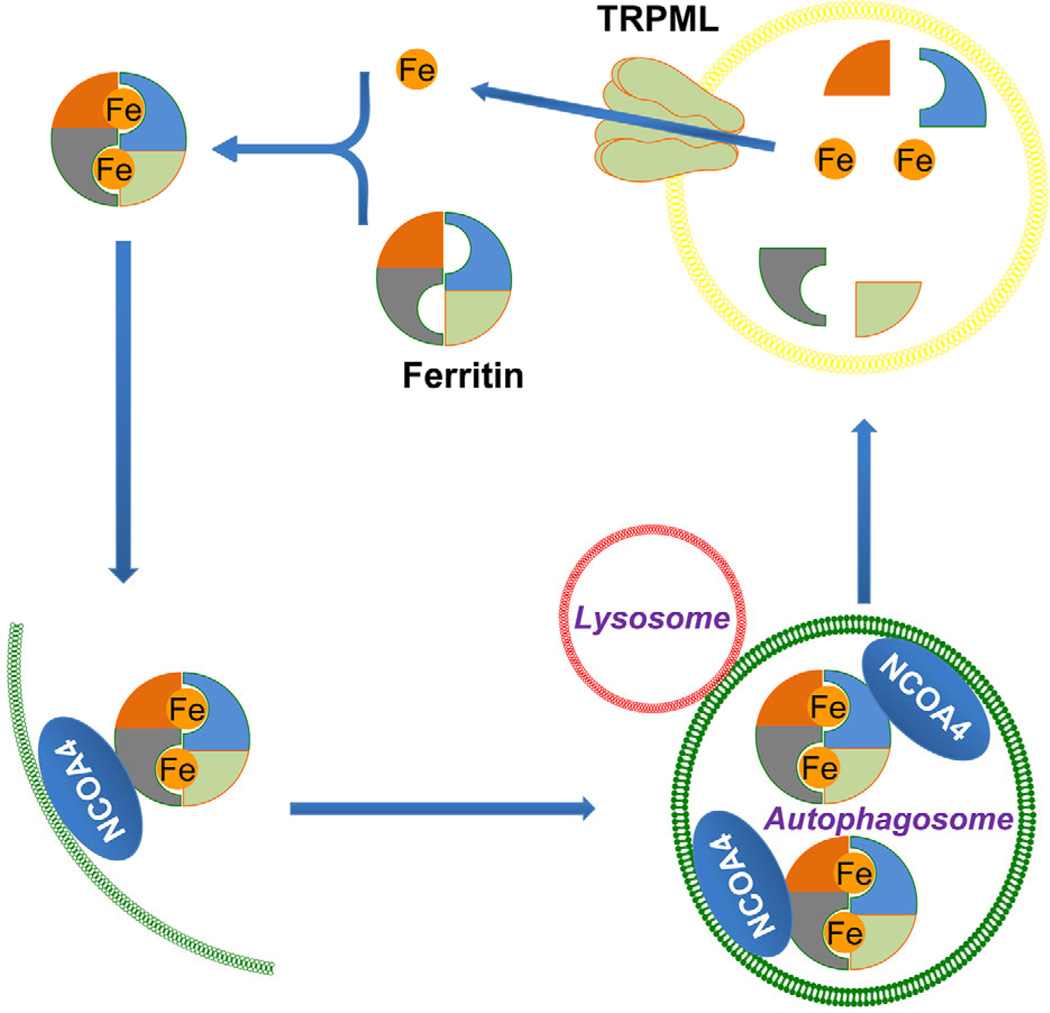
“After degradation of ferritin, Fe2+ is freed (Mancias et al., 2014) and subsequently released from the lysosomal lumen to the cytosol via TRPML1 in mammals and TRPML in flies (Dong et al., 2008; Feng et al., 2014) (Figure 4).”
Hentze, M. W., Muckenthaler, M. U., & Andrews, N. C. (2004) · Cell · doi:10.1016/s0092-8674(04)00343-5 · Cited by 1,736 · cited 1×
“Fe (Ferrous ion) In the intestine, Fe (ferric) taken from food needs to be converted to Fe by Dcytb (duodenal cytochrome b reductase) before DMT-1 (divalent cation/metal transporter-1, or DCT-1) on the apical membrane of enterocytes can take it up (Hentze et al., 2004).”
[41] Cathepsin B, cathepsin H, and cathepsin L
Barrett, A. J., & Kirschke, H. (1981) · Methods in Enzymology · doi:10.1016/s0076-6879(81)80043-2 · Cited by 1,698
Zoncu, R., Bar-Peled, L., Efeyan, A., Wang, S., Sancak, Y., & Sabatini, D. M. (2011) · Science · doi:10.1126/science.1207056 · Cited by 1,673 · cited 1×
“The latter function is crucial for the regulation of mTOR complex 1 (mTORC1) (Zoncu et al., 2011).”
Voltage-Gated Calcium Channels
Catterall, W. A. (2011) · Cold Spring Harbor Perspectives in Biology · doi:10.1101/cshperspect.a003947 · Cited by 1,628 · cited 2×
“…plasma membrane depolarization activates voltage-gated Ca2+ channels to initiate cytosolic Ca2+ concentration elevation, which in turn regulates many physiology processes, including muscle contraction, gene transcription, synaptic transmission and so on (Catterall, 2011, Buraei et al., 2015).”
InfluentialTermination of autophagy and reformation of lysosomes regulated by mTOR
Yu, L., McPhee, C. K., Zheng, L., Mardones, G. A., Rong, Y., Peng, J., Mi, N., Zhao, Y., Liu, Z., Wan, F., et al. (2010) · Nature · doi:10.1038/nature09076 · Cited by 1,544
Cited by
Zhang, J., Zhang, Y., Wang, J., Xia, Y., Zhang, J., & Chen, L. (2024) · Signal Transduction and Targeted Therapy · doi:10.1038/s41392-024-01911-3 · Cited by 1,138
“264,265 In AD, lysosomal acidi fi cation de fi cits may weaken the clearance of A β , ultimately leading to the accumulation of extracellular A β plaques.”
BackgroundYim, W. W.-Y., & Mizushima, N. (2020) · Cell Discovery · doi:10.1038/s41421-020-0141-7 · Cited by 803
Trebak, M., & Kinet, J.-P. (2019) · Nature Reviews Immunology · doi:10.1038/s41577-018-0110-7 · Cited by 508
Mechanisms of autophagy–lysosome dysfunction in neurodegenerative diseases
Nixon, R. A., & Rubinsztein, D. C. (2024) · Nature Reviews Molecular Cell Biology · doi:10.1038/s41580-024-00757-5 · Cited by 435
“…and these can be primary targets of disease-causing genes (see text). v-ATPase-mediated acidification of lysosomes, which hyperpolarizes the lysosomal membrane, is countered by ClC7 that exchanges two cytosolic Cl − ions for one luminal H + ion 201 and TPCs that transport Na + from the lysosomes.”
Lysosomal Biology and Function: Modern View of Cellular Debris Bin
Trivedi, P. C., Bartlett, J. J., & Pulinilkunnil, T. (2020) · Cells · doi:10.3390/cells9051131 · Cited by 296
“In addition, lysosomes contain ions and harbor ion channels, which exert an indispensable role in regulating lysosomal pH and function [11].”
BackgroundInfluentialParkinson’s disease-risk protein TMEM175 is a proton-activated proton channel in lysosomes
Hu, M., Li, P., Wang, C., Feng, X., Geng, Q., Chen, W., Marthi, M., Zhang, W., Gao, C., Reid, W., et al. (2022) · Cell · doi:10.1016/j.cell.2022.05.021 · Cited by 254
Lysosomal Ion Channels as Decoders of Cellular Signals
Li, P., Gu, M., & Xu, H. (2019) · Trends in Biochemical Sciences · doi:10.1016/j.tibs.2018.10.006 · Cited by 175
“Ion channels in the lysosome are essential transducers that mediate signal-initiated Ca2+/Fe2+/Zn2+ release and H+/Na+/K+dependent changes of membrane potential across the perimeter membrane.”
BackgroundChoy, C. H., Saffi, G., Gray, M. A., Wallace, C., Dayam, R. M., Ou, Z.-Y. A., Lenk, G., Puertollano, R., Watkins, S. C., & Botelho, R. J. (2018) · Journal of Cell Science · doi:10.1242/jcs.213587 · Cited by 149
“In addition, the vacuolar H+-pump ATPase generates a highly acidic lumen optimal for hydrolytic activity (Mindell, 2012; Schwake et al., 2013; Xiong and Zhu, 2016; Luzio et al., 2007).”
BackgroundInfluentialLysosomal quality control of cell fate: a novel therapeutic target for human diseases
Zhu, S., Yao, R.-Q., Li, Y., Zhao, P., Ren, C., Du, X., & Yao, Y.-M. (2020) · Cell Death and Disease · doi:10.1038/s41419-020-03032-5 · Cited by 161
Niemann–Pick type C disease: cellular pathology and pharmacotherapy
Wheeler, S., & Sillence, D. J. (2019) · Journal of Neurochemistry · doi:10.1111/jnc.14895 · Cited by 119
“Once the hybrid organelle has formed from an endosome and a lysosome catabolism of the contents is performed by an array of enzymes; the pH optima of many of these enzymes are low (Xiong and Zhu 2016) thus an acidic environment is necessary.”
Release and uptake mechanisms of vesicular Ca2+ stores
Yang, J., Zhao, Z., Gu, M., Feng, X., & Xu, H. (2018) · Protein & Cell · doi:10.1007/s13238-018-0523-x · Cited by 118
“To rule out the possibility that the GECI also detects ML-SA1-induced Ca2+ responses from organelles other than endolysosomes, control experiments were performed in which lysosomal Ca2+ stores were depleted with GPN. Importantly, a TRPML1 agonist, whose specificity was confirmed with mouse knockouts, was shown to be c…”
BackgroundInfluentialLysosomal Storage and Albinism Due to Effects of a De Novo CLCN7 Variant on Lysosomal Acidification
Nicoli, E.-R., Weston, M. R., Hackbarth, M., Becerril, A., Larson, A., Zein, W. M., Baker, P. R., Burke, J. D., Dorward, H., Davids, M., et al. (2019) · The American Journal of Human Genetics · doi:10.1016/j.ajhg.2019.04.008 · Cited by 95
“For optimal function, lysosomes rely on the maintenance of an acidic luminal pH;(1) the active accumulation of protons is driven primarily by V-ATPase, but luminal acidification also requires a neutralizing ion movement.(2,3) Defects in these ion channels or transporters can lead to physiological disruptions including…”
BackgroundThe ion channels of endomembranes
Hu, M., Feng, X., Liu, Q., Liu, S., Huang, F., & Xu, H. (2024) · Physiological Reviews · doi:10.1152/physrev.00025.2023 · Cited by 91
The lysosomal potassium channel TMEM175 adopts a novel tetrameric architecture
Lee, C., Guo, J., Zeng, W., Kim, S., She, J., Cang, C., Ren, D., & Jiang, Y. (2017) · Nature · doi:10.1038/nature23269 · Cited by 81
Voltage gated sodium channels in cancer and their potential mechanisms of action
Angus, M., & Ruben, P. C. (2019) · Channels · doi:10.1080/19336950.2019.1666455 · Cited by 84
“NHE is responsible for a number of things such as regulation of cell volume and pH [64], regulation of pH of lysosomes [65] and endosomes [66], and cell adhesion to the ECM [64].”
BackgroundZhang, X., Hu, M., Yang, Y., & Xu, H. (2018) · Nature Structural & Molecular Biology · doi:10.1038/s41594-018-0148-z · Cited by 77
Lysosomal solute and water transport
Hu, M., Zhou, N., Cai, W., & Xu, H. (2022) · The Journal of Cell Biology · doi:10.1083/jcb.202109133 · Cited by 64
“Lysosomal Δψ may regulate both catabolite export and membrane trafficking (Sagne et al., 2001; Xiong and Zhu, 2016).”
BackgroundStructure, mechanism and lipid-mediated remodeling of the mammalian Na+/H+ exchanger NHA2
Matsuoka, R., Fudim, R., Jung, S., Zhang, C., Bazzone, A., Chatzikyriakidou, Y., Robinson, C. V., Nomura, N., Iwata, S., Landreh, M., et al. (2022) · Nature Structural & Molecular Biology · doi:10.1038/s41594-022-00738-2 · Cited by 53
Pun, N. T., Jang, W., & Jeong, C. (2020) · Archives of Pharmacal Research · doi:10.1007/s12272-020-01239-w · Cited by 61
Faris, P. S., Shekha, M. S., Montagna, D., Guerra, G., & Moccia, F. D. (2018) · Cancers · doi:10.3390/cancers11010027 · Cited by 60
“Although lysosomal voltage-gated P/Q-type Ca2+ currents were not measured, this finding raises the possibility that lysosomal Ca2+ release could effectively occur in response to a positive shift in ∆Ψ [61].”
BackgroundFrom Pinocytosis to Methuosis—Fluid Consumption as a Risk Factor for Cell Death
Ritter, M., Bresgen, N., & Kerschbaum, H. (2021) · Frontiers in Cell and Developmental Biology · doi:10.3389/fcell.2021.651982 · Cited by 56
“…et al., 2019; Jin et al., 2020) and play important roles for vesicular fusion and endosomal trafficking, autophagy, nutrient sensing, protein processing, and macropinocytic virus entry (Wang et al., 2012; Bellono and Oancea, 2014; Sakurai et al., 2015; Xiong and Zhu, 2016; Castonguay et al., 2017).”
BackgroundInfluentialAgonist-specific voltage-dependent gating of lysosomal two-pore Na+ channels
Zhang, X., Chen, W., Li, P., Calvo, R., Southall, N. T., Hu, X., Bryant‐Genevier, M., Feng, X., Geng, Q., Gao, C., et al. (2019) · eLife · doi:10.7554/elife.51423 · Cited by 53
The hidden potential of lysosomal ion channels: A new era of oncogenes
Sterea, A. M., Almasi, S., & Hiani, Y. E. (2018) · Cell Calcium · doi:10.1016/j.ceca.2018.02.006 · Cited by 54
Rapid affinity purification of intracellular organelles using a twin strep tag
Xiong, J., He, J., Xie, W. P., Hinojosa, E., Ambati, C. R., Putluri, N., Kim, H.-E., Zhu, M. X., & Du, G. (2019) · Journal of Cell Science · doi:10.1242/jcs.235390 · Cited by 53
“mTORC1 is the master regulator of cell metabolism and has been demonstrated to be transiently activated on the surface of lysosomes in responses to the increased levels of intracellular nutrients, such as amino acids (Xiong and Zhu, 2016; Zoncu et al., 2011).”
BackgroundSelf-citationTumor‐derived microparticles in tumor immunology and immunotherapy
Ma, J., Zhang, H., Tang, K., & Huang, B. (2020) · European Journal of Immunology · doi:10.1002/eji.202048548 · Cited by 51
Lysosomal K+ channel TMEM175 promotes apoptosis and aggravates symptoms of Parkinson's disease
Qu, L., Lin, B., Zeng, W., Fan, C., Wu, H., Ge, Y., Li, Q., Li, C., Wei, Y., Xin, J., et al. (2022) · EMBO Reports · doi:10.15252/embr.202153234 · Cited by 52
“Transporters and ion channel proteins in lysosomal membranes play fundamental roles in maintaining lysosomal ion homeostasis (Xu & Ren, 2015; Xiong & Zhu, 2016; Sterea et al , 2018).”
Iron oxide nanoparticles enhancing magnetic resonance imaging: A review of the latest advancements
Aboushoushah, S. F. O. (2025) · Journal of Science Advanced Materials and Devices · doi:10.1016/j.jsamd.2025.100875 · Cited by 63
A subunit of V-ATPases, ATP6V1B2, underlies the pathology of intellectual disability
Zhao, W., Gao, X., Qiu, S., Gao, B., Gao, S., Zhang, X., Kang, D., Han, W., Dai, P., & Yuan, Y. (2019) · EBioMedicine · doi:10.1016/j.ebiom.2019.06.035 · Cited by 48
“Second, other H exchangers, such as Na /H and Cl /H exchangers, may compensate for VATPases dysfunction [62].”
BackgroundZhan, Y., Wang, K., Li, Q., Zou, Y., Chen, B., Gong, Q., Ho, I. H. T., Yin, T., Zhang, F., Lü, Y., et al. (2018) · International Journal of Molecular Sciences · doi:10.3390/ijms19103221 · Cited by 47
“In addition, although the Ca2+/H+ exchanger was not found in placental mammals, Ca2+ uptake and maintenance depend on the acidic pH in lysosome [46].”
BackgroundKang, H., & Lee, C. J. (2024) · Experimental and Molecular Medicine · doi:10.1038/s12276-024-01206-1 · Cited by 43
Lysosome function in glomerular health and disease
Meyer‐Schwesinger, C. (2021) · Cell and Tissue Research · doi:10.1007/s00441-020-03375-7 · Cited by 46
Lysosome toxicities induced by nanoparticle exposure and related mechanisms
Feng, Y., Fu, H., Zhang, X., Liu, S., & Wei, X. (2024) · Ecotoxicology and Environmental Safety · doi:10.1016/j.ecoenv.2024.117215 · Cited by 45
Halcrow, P. W., Lakpa, K. L., Khan, N., Afghah, Z., Miller, N., Datta, G., Chen, X., & Geiger, J. D. (2021) · Journal of Neuroimmune Pharmacology · doi:10.1007/s11481-021-09995-2 · Cited by 41
“Additionally, endolysosomes contain readily releasable stores of biologically important cations including calcium and iron (Xiong and Zhu, 2016).”
BackgroundGlycans in autophagy, endocytosis and lysosomal functions
Reggiori, F., Gabius, H., Aureli, M., Römer, W., Sonnino, S., & Eskelinen, E. (2021) · Glycoconjugate Journal · doi:10.1007/s10719-021-10007-x · Cited by 42
Two‐pore channels regulate Tat endolysosome escape and Tat‐mediated HIV‐1 LTR transactivation
Khan, N., Halcrow, P. W., Lakpa, K. L., Afghah, Z., Miller, N., Dowdy, S. F., Geiger, J. D., & Chen, X. (2020) · The FASEB Journal · doi:10.1096/fj.201902534r · Cited by 40
“60, 61 Because others and we have shown consistently that Tat treatment leads to calcium dyshomeostasis in neuronal and non-neuronal cells, [39] [40] [41] [42] [43] [44] [45] we investigated the involvement of calcium in Tat endolysosome escape and subsequent LTR transactivation using split-GFP Tat endolysosome escape…”
BackgroundMethodThe role of lysosomal ion channels in lysosome dysfunction
Kendall, R. L., & Holian, A. (2021) · Inhalation Toxicology · doi:10.1080/08958378.2021.1876188 · Cited by 39
Vera, D. M., Rosell‐Valle, C., López-Gambero, A. J., Navarro, J. A., Zambrana-Infantes, E. N., Rivera, P., Santín, L. J., Suárez, J., & de Fonseca, F. R. (2020) · Biology · doi:10.3390/biology9110377 · Cited by 41
Real-Time Recording of the Cellular Effects of the Anion Transporter Prodigiosin
Cheung, S., Wu, D., Daly, H. C., Busschaert, N., Morgunova, M., Simpson, J. C., Scholz, D., Gale, P. A., & O’Shea, D. F. (2018) · Chem · doi:10.1016/j.chempr.2018.02.009 · Cited by 39
“Dissipation of positive charge is achieved by influx of anions such as Cl, through the transmembrane anion channel ClC-7 and further supported by efflux of cations such as K (Figure 1).(4,5,6)”
BackgroundBK channels regulate extracellular Tat-mediated HIV-1 LTR transactivation
Khan, N., Lakpa, K. L., Halcrow, P. W., Afghah, Z., Miller, N., Geiger, J. D., & Chen, X. (2019) · Scientific Reports · doi:10.1038/s41598-019-48777-y · Cited by 38
Endolysosomal Ca2+ signaling in cardiovascular health and disease
Negri, S., Faris, P. S., & Moccia, F. D. (2021) · International review of cytology · doi:10.1016/bs.ircmb.2021.03.001 · Cited by 39
TMEM175: A lysosomal ion channel associated with neurological diseases
Wu, L., Lin, Y., Song, J., Li, L., Rao, X., Wan, W., Wei, G., Hua, F., & Ying, J. (2023) · Neurobiology of Disease · doi:10.1016/j.nbd.2023.106244 · Cited by 35
Methods for monitoring Ca2+ and ion channels in the lysosome
Zhong, X. Z., Yang, Y., Sun, X. J., & Dong, X. (2016) · Cell Calcium · doi:10.1016/j.ceca.2016.12.001 · Cited by 33
“Activation of TPCs may regulate lysosomal pH, trafficking, excitability and amino acid transport [8].”
BackgroundCytosolic glucosylceramide regulates endolysosomal function in Niemann-Pick type C disease
Wheeler, S., Haberkant, P., Bhardwaj, M., Tongue, P., Ferraz, M. J., Halter, D., Sprong, H., Schmid, R., Aerts, J. M. F. G., Sullo, N., et al. (2019) · Neurobiology of Disease · doi:10.1016/j.nbd.2019.03.005 · Cited by 34
MAPK Signaling in the Interplay Between Oxidative Stress and Autophagy
Desideri, E., Castelli, S., & Ciriolo, M. R. (2025) · Antioxidants · doi:10.3390/antiox14060662 · Cited by 32
“When the degradation is complete, macromolecule building blocks are transported out of the lysosomes via exporters or vesicular trafficking to be used for ATP production or as precursors of anabolic pathways [25].”
Correia, E., Keating, J. E., Glish, G. L., Tarran, R., & Sassano, M. F. (2020) · Nicotine & Tobacco Research · doi:10.1093/ntr/ntaa177 · Cited by 32
“42,43 However, more testing is needed to validate these results and to elucidate the underlying mechanism.”
Ziglari, T., Wang, Z., & Holian, A. (2021) · International Journal of Molecular Sciences · doi:10.3390/ijms22052277 · Cited by 33
“sosomal hyperpolarization would most likely occur due to cation uptake [23], these results”
BackgroundInfluentialSettembre, C., Cinque, L., Bartolomeo, R., Di Malta, C., De Leonibus, C., & Forrester, A. (2018) · Matrix Biology · doi:10.1016/j.matbio.2018.06.001 · Cited by 25
Huang, X., Ma, Y., Zheng, M., Chen, N., Hu, M.-N., Wu, L.-Y., Zheng, Y., Lou, Y., & Xie, D. (2020) · Frontiers in Cell and Developmental Biology · doi:10.3389/fcell.2020.587961 · Cited by 25
“Thus, the V-type proton ATPase complex, such as Atp6ap1, Atp6v1a, and Atp6v1h, is thought to be a dynamic marker for phagolysosomal fusion (Xiong and Zhu, 2016).”
BackgroundScerra, G., Pasquale, V. D., Pavone, L. M., Caporaso, M. G., Mayer, A., Renna, M., & D’Agostino, M. (2021) · iScience · doi:10.1016/j.isci.2021.102707 · Cited by 23
“In this regard, the activity of the vacuolar H+ATPase pump plays a key role in generating and maintaining a highly acidic lumen, therefore providing the optimal environment for maximizing the activity of such hydrolytic enzymes (Mindell, 2012; Xiong and Zhu, 2016).”
BackgroundA role for P2X4 receptors in lysosome function
Murrell‐Lagnado, R. D. (2018) · The Journal of General Physiology · doi:10.1085/jgp.201711963 · Cited by 22
“…function | Murrell‑Lagnado186 was obtained in astrocytes and, subsequently, microglia, where the regulated release of ATP as a result of partial lysosome exocytosis is important for the propagation of Ca2+ waves between neighboring cells and cell migration (Zhang et al., 2007; Dou et al., 2012).”
BackgroundTedeschi, V., Sapienza, S., Ciancio, R., Canzoniero, L. M. T., Pannaccione, A., & Secondo, A. (2024) · Current Neuropharmacology · doi:10.2174/1570159x22666240517101846 · Cited by 21
“This is exemplified by BK channels that couple with TRPML1 to regulate lysosomal Ca 2+ homeostasis through a fine modulation of TRPML1 function [19, 20] and lysosomal membrane trafficking [21, 22].”
Skeletal Muscle Lysosomal Function via Cathepsin Activity Measurement
Gumpper, K., Sermersheim, M., Zhu, M. X., & Lin, P. (2017) · Methods in molecular biology · doi:10.1007/7651_2017_64 · Cited by 23
“Recently, lysosomes have emerged as a signaling center that integrate many cellular processes, such as nutrient sensing, metabolism, and autophagy, which are essential to cell and tissue homeostasis [6, 7].”
BackgroundSelf-citationWu, Y., Xu, M., Wang, P., Syeda, A. K. R., Huang, P., & Dong, X. (2022) · Cell Calcium · doi:10.1016/j.ceca.2022.102536 · Cited by 21
The ionome and proteome landscape of aging in laying hens and relation to egg white quality
Li, G., Feng, Y., Cui, J., Hou, Q., Li, T., Jia, M., Lv, Z., Jiang, Q., Wang, Y., Zhang, M., et al. (2023) · Science China Life Sciences · doi:10.1007/s11427-023-2413-4 · Cited by 19
Sprenger, T., Schwarze, T., Müller, H., Sperlich, E., Kelling, A., Holdt, H., Paul, J., Riaño, V. M., & Nazaré, M. (2022) · ChemPhotoChem · doi:10.1002/cptc.202200270 · Cited by 17
Acrosomal alkalinization occurs during human sperm capacitation
Carrasquel‐Martínez, G., Aldana, A., Carneiro, J., Treviño, C. L., & Darszon, A. (2022) · Molecular Human Reproduction · doi:10.1093/molehr/gaac005 · Cited by 17
New Advanced Strategies for the Treatment of Lysosomal Diseases Affecting the Central Nervous System
Gigliobianco, M. R., Martino, P. D., Deng, S., Casadidio, C., & Censi, R. (2019) · Current Pharmaceutical Design · doi:10.2174/1381612825666190708213159 · Cited by 17
Impaired lysosomal acidity maintenance in acid lipase-deficient cells leads to defective autophagy
Moriwaki, T., Terawaki, S., & Otomo, T. (2024) · Journal of Biological Chemistry · doi:10.1016/j.jbc.2024.105743 · Cited by 17
“…K + channels TMEM175, and SLC family molecules that are transporters of organic substances, such as sugars and amino acids, work in cooperation with the acidi fi cation maintenance mechanism of lysosomes, and these are thought to contribute to the regulation of lysosomal size as well as pH (39).”
BackgroundGlutamine Produces Ammonium to Tune Lysosomal pH and Regulate Lysosomal Function
Xiong, J., Luu, T. T. T., Venkatachalam, K., Du, G., & Zhu, M. X. (2022) · Cells · doi:10.3390/cells12010080 · Cited by 15
“Interestingly, most of the hydrolases have optimal pH in the acidic range [1], which more or less matches the acidic environment of the lysosome lumen [2,3].”
BackgroundSelf-citationCurrent Methods to Unravel the Functional Properties of Lysosomal Ion Channels and Transporters
Festa, M., Minicozzi, V., Boccaccio, A., Lagostena, L., Gradogna, A., Qi, T., Costa, A., Larisch, N., Hamamoto, S., Pedrazzini, E., et al. (2022) · Cells · doi:10.3390/cells11060921 · Cited by 15
“Of prime importance to conduct these diverse cellular functions is a highly organized ion homeostasis and control of the organellar pH, which is achieved via a set of ion channels and transporters [6,7].”
Kondratskyi, A., Bazzone, A., Rapedius, M., Zerlotti, R., Masson, B., Sadanandan, N. P., Parker, J. L., Santinho, A., Moutia, M., Thiam, A. R., et al. (2025) · Bioelectricity · doi:10.1089/bioe.2025.0010 · Cited by 14
“4,7,18,160,161”
Tan, S. L., Barri, M., Atakpa‐Adaji, P., Taylor, C. W., Smith, E. S. J., & Murrell‐Lagnado, R. D. (2021) · International Journal of Molecular Sciences · doi:10.3390/ijms221910492 · Cited by 13
Optical profiling of autonomous Ca2+ nanodomains generated by lysosomal TPC2 and TRPML1
Davis, L. C., Morgan, A. J., & Galione, A. (2023) · Cell Calcium · doi:10.1016/j.ceca.2023.102801 · Cited by 13
Cytosolic and Acrosomal pH Regulation in Mammalian Sperm
Chávez, J. C., Carrasquel‐Martínez, G., Hernández-Garduño, S., Matamoros‐Volante, A., Treviño, C. L., Nishigaki, T., & Darszon, A. (2024) · Cells · doi:10.3390/cells13100865 · Cited by 13
“The V-ATPase, or V1V0-ATPase, is a H + pump located in the endomembrane system of all eukaryotic cells and is mainly responsible for acidifying the lumen of subcellular organelles such as lysosomes and endosomes [147,148].”
BackgroundTranscriptome alterations in spermatogonial stem cells exposed to bisphenol A
Ahn, J. S., Won, J.-H., Kim, D., Jung, S.-E., Kim, B., Kim, J., & Ryu, B. (2022) · Animal Cells and Systems · doi:10.1080/19768354.2022.2061592 · Cited by 13
“Data are shown as mean ± standard error of the mean (SEM) (n = 3). lysosomal functions (Rome and Hill 1986; Beyenbach and Wieczorek 2006; Wang et al. 2012; Xiong and Zhu 2016).”
BackgroundCan endolysosomal deacidification and inhibition of autophagy prevent severe COVID-19?
Morris, G., Athan, E., Walder, K. R., Bortolasci, C. C., O'Neil, A. E., Marx, W., Berk, M., Carvalho, A. F., Maes, M. H. J., & Puri, B. K. (2020) · Life Sciences · doi:10.1016/j.lfs.2020.118541 · Cited by 12
Brini, M., Leanza, L., & Szabó, I. (2017) · Antioxidants and Redox Signaling · doi:10.1089/ars.2017.7215 · Cited by 13
“For recent reviews providing a more detailed description of intracellular ion channel function, see, for example, Chec-chetto et al. (43), Kiselyov and Muallem (112), Xiong and Zhu (226), and Xu et al. (227).”
He, L.-N., Liu, Y.-J., Jiang, J., Wang, D.-Y., Li, Y., Zeng, S.-J., Guo, Z., Yao, P.-Y., Lin, Z.-C., Lv, S., et al. (2025) · Acta Pharmacologica Sinica · doi:10.1038/s41401-025-01507-9 · Cited by 11
“Normal lysosomal calcium ef fl ux is required to maintain lysosomal acidi fi cation [23], while lysosomal calcium overload can result in proton leakage [24], thereby disrupting the acidic environment necessary for proper lysosomal function.”
Pathological Functions of Lysosomal Ion Channels in the Central Nervous System
Cen, J.-K., Hu, N., Shen, J., Gao, Y., & Lu, H.-J. (2024) · International Journal of Molecular Sciences · doi:10.3390/ijms25126565 · Cited by 10
Dual Role of Lysosome in Cancer Development and Progression
Chen, X., Yang, Q., Chen, W., Chen, Z.-W., Guo, G.-H., Zhang, X., Sun, X.-M., Shen, T., Xiao, F., & Li, Y. (2024) · Frontiers in Bioscience-Landmark · doi:10.31083/j.fbl2911393 · Cited by 10
“H + is essential for maintaining the activity of lysosomal digestive enzymes, most of which require an acidic environment to function optimally [5,6].”
NAADP-Mediated Ca2+ Signalling
Galione, A., Davis, L. C., Martucci, L. L., & Morgan, A. J. (2022) · Handbook of experimental pharmacology · doi:10.1007/164_2022_607 · Cited by 11
Unveiling the impact of lysosomal ion channels: balancing ion signaling and disease pathogenesis
Jung, Y., Kim, W., Shin, N. K., Bae, Y. M., & Wie, J. (2023) · Korean Journal of Physiology and Pharmacology · doi:10.4196/kjpp.2023.27.4.311 · Cited by 10
“These dissolved components and substrates are then directed to their designated destinations via diverse routes, such as endocytosis, exocytosis, phagocytosis, and autophagy [2,30-32].”
BackgroundLysosomal physiology and pancreatic lysosomal stress in diabetes mellitus
Hao, M., Sebag, S. C., Qian, Q., & Yang, L. (2024) · eGastroenterology · doi:10.1136/egastro-2024-100096 · Cited by 10
Methods in Determination of Formaldehyde
Su, T., & He, R. (2017) · Springer eBooks · doi:10.1007/978-94-024-1177-5_14 · Cited by 10
Connecting Ca2+ and Lysosomes to Parkinson Disease
Kilpatrick, B. S. (2016) · Messenger · doi:10.1166/msr.2016.1059 · Cited by 14
“Other Ca2+-permeable channels reside on lysosomes (reviewed in Xiong & Zhu, 2016).”
BackgroundQu, M., Lü, J., & He, R. (2017) · Springer eBooks · doi:10.1007/978-94-024-1177-5_1 · Cited by 10
Khan, N., Halcrow, P. W., Lakpa, L. K., Rehan, M., Chen, X., & Geiger, J. D. (2021) · Journal of NeuroVirology · doi:10.1007/s13365-021-01016-5 · Cited by 9
Lysosomal Acidification: A New Perspective on the Pathogenesis and Treatment of Pulmonary Fibrosis
Tian, K., Yu, M., Jiang, M., Gao, Z., Zheng, D., Shi, W., Cheng, D., & Zhao, X. (2025) · Comprehensive physiology · doi:10.1002/cph4.70023 · Cited by 8
“These membrane proteins ensure that the pH value within lysosomes is maintained within an appropriate range, allowing hydrolytic enzymes within lysosomes to function stably and efficiently (Lee and Hong 2020; Xiong and Zhu 2016).”
feng, T., zheng, H., zhang, Z., fan, P., & yang, X. (2024) · Ageing Research Reviews · doi:10.1016/j.arr.2024.102373 · Cited by 8
Oliver, E. I., Jabloñski, M., Buffone, M. G., & Darszon, A. (2023) · The Journal of Physiology · doi:10.1113/jp284247 · Cited by 8
“Many of these molecular entities are pH dependent as part of their activation mechanism (Cang et al., 2014; Haller et al., 1996; Li et al., 2012; Tsukioka et al., 1994; Xiong & Zhu 2016).”
BackgroundThe hills and valleys of calcium signaling
Zhu, M. X., Tuo, B., & Yang, J. J. (2016) · Science China Life Sciences · doi:10.1007/s11427-016-5098-2 · Cited by 9
“Three articles in this spotlight issue (Evans et al., 2016; Zhou et al., 2016; Xiong and Zhu, 2016) include insights on the roles and regulation the new organellar Ca 2+ signaling pathways.”
Self-citationZhang, Z., li, X., Lu, T., Yang, J., Han, X., Bi, Z., Luo, J., Alu, A., Hong, W., Chen, S., et al. (2026) · Nature Communications · doi:10.1038/s41467-026-69546-2 · Cited by 7
“The v-ATPase hydrolyzes ATP to pump protons into lysosomes, and at the same time, cation ef fl ux or anion in fl ux through other ion channels is needed to balance the transmembrane potential 15,16 .”
Ballirano, P., Pacella, A., Mirata, S., Passalacqua, M., Carlo, M. C. D., Arrizza, L., Montereali, M. R., & Scarfì, S. (2025) · Journal of Hazardous Materials · doi:10.1016/j.jhazmat.2025.137546 · Cited by 6
Reconstitution of Ion Channels in Planar Lipid Bilayers: New Approaches
Gaburjáková, J., & Gaburjáková, M. (2018) · Advances in biomembranes and lipid self-assembly · doi:10.1016/bs.abl.2017.12.005 · Cited by 6
Molecular design of a pathogen activated, self-assembling mechanopharmaceutical device
Willmer, A. R., Nie, J., la Rosa, M. V. G. D., Wen, W., Dunne, S., & Rosania, G. R. (2022) · Journal of Controlled Release · doi:10.1016/j.jconrel.2022.05.029 · Cited by 8
Formaldehyde Exposure and Neuropsychiatric Disorders
Wang, X., & He, R. (2017) · Springer eBooks · doi:10.1007/978-94-024-1177-5_10 · Cited by 7
CLN3 mediates chloride efflux from lysosomes
Wang, Y., Li, K., Chen, W., Chen, C., Yong, A. J. H., Zhang, X., Fontaine, M. T.-L., Jan, Y. N., & Jan, L. Y. (2026) · Neuron · doi:10.1016/j.neuron.2025.11.013 · Cited by 5
Wang, Z., Tang, Y., Yue, R., Xu, J., Tao, Y., Chen, J., Li, S., Zhao, G., Xue, J., Sun, M., et al. (2026) · Advanced Science · doi:10.1002/advs.76780 · Cited by 5
“Lyso-somes are particularly important in this context because they are recognized as major intracellular reservoirs of Zn 2 + [ 19– 21 ].”
Tomihara, K., Satta, K., Matsuzaki, S., Yoshitake, K., Yamamoto, K., Uchiyama, H., Yajima, S., Futahashi, R., Katsuma, S., Osanai-Futahashi, M., et al. (2021) · Insect Biochemistry and Molecular Biology · doi:10.1016/j.ibmb.2021.103624 · Cited by 5
Cognitive Ability and Impairment Related to Formaldehyde
He, R. (2017) · Springer eBooks · doi:10.1007/978-94-024-1177-5_8 · Cited by 5
Metabolism of Formaldehyde In Vivo
Xiao, R., & He, R. (2017) · Springer eBooks · doi:10.1007/978-94-024-1177-5_2 · Cited by 5
Bidirectional regulation of Ca2+ in exo–endocytosis coupling
Song, Q., Huang, M., Wang, B., Kang, X., & Wang, C. (2018) · Science China Life Sciences · doi:10.1007/s11427-018-9429-6 · Cited by 5
Acheson, J., Joanisse, S., Sale, C., & Hodson, N. W. (2025) · Bioscience Reports · doi:10.1042/bsr20240137 · Cited by 6
“Such degradation can be carried out by over 60 lysosomal hydrolases [71], which require acidification of the autolysosome lumen by vacuolar H + -adenosine triphosphatases (v-ATPase) (Figure 1H).”
Ca2+ Signaling in Striated Muscle Cells During Intracellular Acidosis
Pluteanu, F., Musset, B., & Rinne, A. (2025) · Biomolecules · doi:10.3390/biom15091244 · Cited by 4
“…to an organelle with a very small lumen and to maintain the electrochemical gradient across the lysosomal membrane, any proton influx must be compensated either by import of anions, such as Cl − , or by export of cations, including Ca 2+ , via lysosomal ion channels and exchangers [199,200].”
Ionic Mechanisms of Two-Pore Channel Regulation of Vesicle Trafficking
Zhang, H., & Zhu, M. X. (2026) · Cells · doi:10.3390/cells15020194 · Cited by 4
“It has also been postulated that Na + dissipation through TPC2 can lower Na + -dependent amino acid export from the lysosome, thus allowing accumulation of amino acids at the luminal side [113].”
Self-citationZou, Z., Zhou, J., Lu, Y., Huang, Y., Zhou, L., Wang, X., Chen, J., Tian, H., Ge, X., Guo, C., et al. (2026) · Proceedings of the National Academy of Sciences · doi:10.1073/pnas.2534066123 · Cited by 4
“Because acidity is essential for hydrolase maturation (37), we examined lysosomal pH. Lysotracker staining revealed significantly reduced fluorescence in ATP13A2 - deficient microglia under all conditions tested ( α-syn, LPS+ATP, or Ni), indicating lysosomal alkalization (Fig.”
Yin, W., Mai, W., Hu, W., Li, Y., Cui, D., Sun, J., Li, J., Zhan, Y., & Chang, Y. (2025) · Marine Environmental Research · doi:10.1016/j.marenvres.2025.106951 · Cited by 4
Lysosomal membrane transporter purification and reconstitution for functional studies
Arines, F. M., Wielenga, A., Henn, D., Burata, O. E., Garcia, F. N., Stockbridge, R. B., & Li, M. (2023) · Molecular Biology of the Cell · doi:10.1091/mbc.e23-06-0259 · Cited by 4
“As a result, most lysosomal transporters (dozens in yeast and hundreds in humans) remain uncharacterized (Xu and Ren, 2015; Xiong and Zhu, 2016).”
Accardi, A. (2021) · The Journal of General Physiology · doi:10.1085/jgp.202012805 · Cited by 3
“Optimal function of lysosomal enzymes is dependent on a highly acidic lumenal environment and on the precise control of the ionic composition of the intravesicular compartment (Xiong and Zhu, 2016).”
BackgroundMethods in Determination of Formaldehyde
Yue, X., Su, T., & He, R. (2025) · Springer eBooks · doi:10.1007/978-981-96-7281-3_17 · Cited by 5
Metadata
- Authors
- Xiong, J., & Zhu, M. X.
- Affiliations
- The University of Texas Health Science Center at Houston (US)
- Corresponding author
- Zhu, Michael X.
- Venue
- Science China Life Sciences
- Published
- 2016-07-19
- Volume
- 59
- Issue
- 8
- Pages
- 777-791
- ISSN
- 1674-7305 (ISSN-L)
- 1869-1889
- PMC
- PMC5147046
- OpenAlex
- W2495355796
- Cited by
- 141
- References
- 167
- Citations by year
- 2026: 16 · 2025: 18 · 2024: 18 · 2023: 9 · 2022: 13 · 2021: 18 · 2020: 11 · 2019: 11 · 2018: 12 · 2017: 12 · 2016: 3
- FWCI
- 1.21
- Type
- journal article
- Language
- en
- Open access
- hybrid
- doi.org
- Licence
- cc-by
- Locations
- Science China Life Sciences (publishedVersion, cc-by)
- PubMed (publishedVersion)
- Europe PMC (PubMed Central) (acceptedVersion, cc-by)
- PubMed Central (acceptedVersion, cc-by)
- Funders
- American Heart Association (15GRNT23040032)
- University of Texas Health Science Center at Houston
- National Institutes of Health (NS092377)
- University of Texas MD Anderson Cancer Center
- National Institute of Neurological Disorders and Stroke (R01NS092377)
- Topics
- Life Sciences › Biochemistry, Genetics and Molecular Biology › Physiology › Calcium signaling and nucleotide metabolism
- Life Sciences › Biochemistry, Genetics and Molecular Biology › Cell Biology › Cellular transport and secretion
- Life Sciences › Biochemistry, Genetics and Molecular Biology › Cell Biology › Autophagy in Disease and Therapy
- Keywords
- lysosomes, ion channels, ion transporters, lysosomal storage disease, autophagy, endolysosomal trafficking, mTOR, TFEB, calcineurin, calcium signaling, lysosomal pH
- MeSH terms
- Homeostasis, Humans, Hydrogen-Ion Concentration, Intracellular Membranes, Ion Channels, Ions, Lysosomes, Models, Biological, Ion Transport, Membrane Transport Proteins
About these checks
Registry, retraction, Cites and statistics results are computed, not judged, with one exception: a printed reference that no index lists is read once by a model before it counts as a citation error. Claims are extracted by a model and kept only when their quote appears verbatim in the text; each cited source is then checked, with a model’s help, for whether it says what the claim relies on. Those verdicts can be wrong — read the claim’s quote and the cited source before relying on one.
Statistics and arithmetic are recomputed, not judged.
Confidence bands are shown only for fields calibrated on our annotated test set. None is calibrated yet, so no band is shown.
What counts as a claim ›How we measure confidence ›How we check this ›
Are you an author, or do you see a problem with this page? Request a review
Data sources
Bibliographic data: Semantic Scholar, OpenAlex, Crossref.
Contains information from the Semantic Scholar Academic Graph Datasets, made available under the ODC Attribution License (ODC-BY 1.0).
Semantic Scholar’s data is described in: Kinney, R., et al. (2023). The Semantic Scholar Open Data Platform. arXiv:2301.10140.
