

Calcium/calmodulin-stimulated adenylyl cyclases 1 and 8 regulate reward-related brain activity and ethanol consumption
Open accessThe DOI matches its Crossref record; 68 of the 68 references it cites were found in a registry or an index.
Abstract
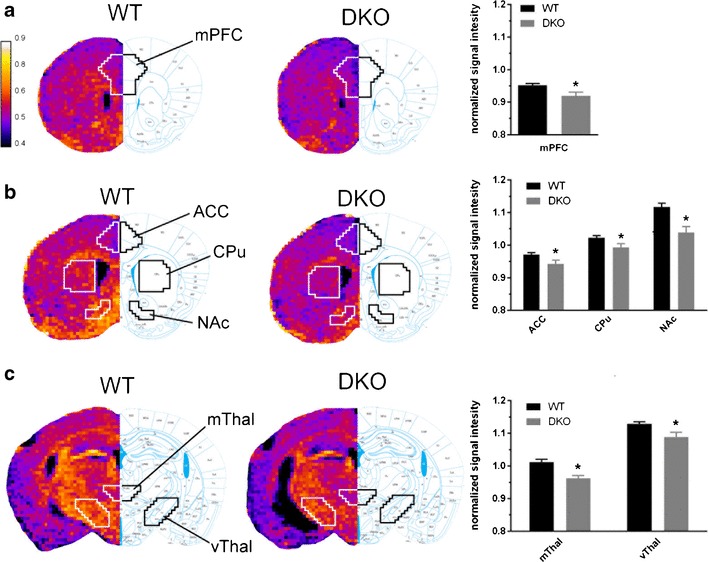
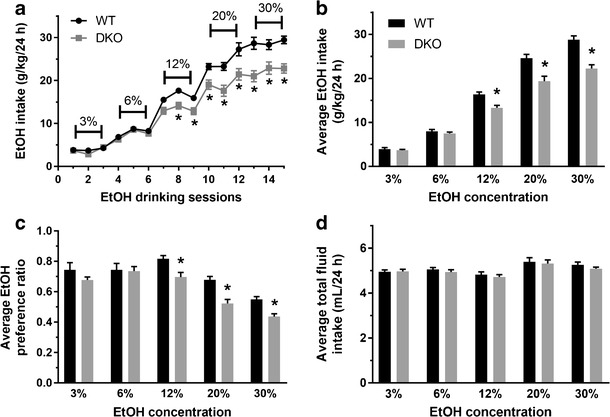
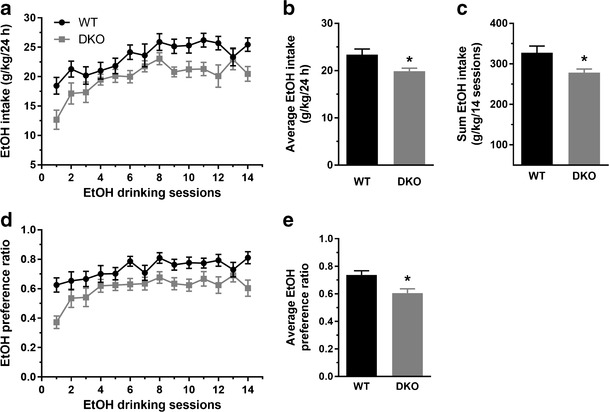
Evidence suggests a predictive link between elevated basal activity within reward-related networks (e.g., cortico-basal ganglia-thalamic networks) and vulnerability for alcoholism. Both calcium channel function and cyclic adenosine monophosphate (cAMP)/protein kinase A-mediated signaling are critical modulators of reward neurocircuitry and reward-related behaviors. Calcium/calmodulin-stimulated adenylyl cyclases (AC) 1 and 8 are sensitive to activity-dependent increases in intracellular calcium and catalyze cAMP production. Therefore, we hypothesized AC1 and 8 regulate brain activity in reward regions of the cortico-basal ganglia-thalamic circuit and that this regulatory influence predicts voluntary ethanol drinking responses. This hypothesis was evaluated by manganese-enhanced magnetic resonance imaging and chronic, intermittent ethanol access procedures. Ethanol-naïve mice with genetic deletion of both AC1 and 8 (DKO mice) exhibited bilateral reductions in baseline activity within cortico-basal ganglia-thalamic regions associated with reward processing compared to wild-type controls (WT, C57BL/6 mice). Significant activity changes were not evident in regions either outside of the cortico-basal ganglia-thalamic network or within the network that are not associated with reward processing. Parallel studies demonstrated that reward network hypoactivity in DKO mice predicted a significant attenuation in consumption and preference levels to escalating ethanol concentrations (12, 20 and 30%) compared to WT mice, an effect that was maintained over extended access (14 sessions) to 20% ethanol. Summarizing, these data support a contribution of AC1 and 8 in cortico-basal ganglia-thalamic activity and the predictive value of this regulatory influence on ethanol drinking behavior, which merits the future evaluation of calcium-stimulated ACs in the neural processes that engender vulnerability to maladaptive alcohol drinking.
Overview
The claims and statistics of this paper haven’t been checked yet.
Free: it reads the open-access text and checks the first 5 claims that cite a source we can check. Create a free account to check every claim.
Integrity signals
Registry
Cites
Statistics
Figures
Verification
Claims the paper makes
The claims and statistics of this paper haven’t been checked yet.
Free: it reads the open-access text and checks the first 5 claims that cite a source we can check. Create a free account to check every claim.
Claims other papers make about this one
Each is checked against this paper’s own text: does it say what the citing paper says it does?
The cited source says what the claim attributes to it.
In the citing paper
“This hypoactivity was linked to a significant decrease in ethanol consumption and preference over time and a range of ethanol concentrations.”
From Physiological roles of mammalian transmembrane adenylyl cyclase isoforms (2022) · cites this paper as [269]
The cited source says what the claim attributes to it.
In the citing paper
“Double-knockout studies have also revealed roles of AC1 and AC8 in the effects of a multitude of drugs of abuse including ethanol consumption and locomotor responses (247, 268–271), cocaine sensitization (272), opioid tolerance and withdrawal (246, 273), and methamphetamine activity (274).”
From Physiological roles of mammalian transmembrane adenylyl cyclase isoforms (2022) · cites this paper as [269]
In the citing paper
“These areas included the ACC, nucleus accumbens, medial prefrontal cortex, anterior caudate putamen, medial thalamus, and ventral lateral thalamus.”
From Physiological roles of mammalian transmembrane adenylyl cyclase isoforms (2022) · cites this paper as [269]
In the citing paper
“Manganese-enhanced magnetic resonance imaging (MEMRI), a novel brain imaging technique in live animals that maps the entry of manganese into active neurons through calcium channels, revealed that AC1/AC8 double-knockout animals had reduced activity in reward areas.”
From Physiological roles of mammalian transmembrane adenylyl cyclase isoforms (2022) · cites this paper as [269]
Self-check
Percentages, sums and reported differences re-computed from the paper’s own numbers.
The self-check needs the paper’s full text.
Citations
Cites
The Mouse Brain in Stereotaxic Coordinates
Paxinos, G. (2001) · Cited by 13,440
McBride, W. J., Murphy, J. M., & Ikemoto, S. (1999) · Behavioural Brain Research · doi:10.1016/s0166-4328(99)00022-4 · Cited by 574 · cited 1×
“The most pronounced effects were observed in the medial thalamus and NAc, the latter of which has long been recognized as critical for establishment of acute reinforcing effects of ethanol (Koob et al. 1998; McBride et al. 1999).”
Neurocircuitry Targets in Ethanol Reward and Dependence
Koob, G. F., Roberts, A. J., Schulteis, G., Parsons, L. H., Heyser, C. J., Hyyti??, P., Merlo-Pich, E., & Weiss, F. (1998) · Alcoholism: Clinical & Experimental Research · doi:10.1097/00000374-199802000-00001 · Cited by 560
Wong, S. T., Athos, J., Figueroa, X. A., Pineda, V. V., Schaefer, M. L., Chavkin, C. C., Muglia, L. J., & Storm, D. R. (1999) · Neuron · doi:10.1016/s0896-6273(01)80036-2 · Cited by 486
Manganese‐enhanced magnetic resonance imaging (MEMRI): methodological and practical considerations
Silva, A. C., Lee, J. H., Aoki, I., & Koretsky, A. P. (2004) · NMR in Biomedicine · doi:10.1002/nbm.945 · Cited by 486
Lin, Y., & Koretsky, A. P. (1997) · Magnetic Resonance in Medicine · doi:10.1002/mrm.1910380305 · Cited by 485
The ins and outs of the striatum: Role in drug addiction
Yager, L. M., Garcia, A. F., Wunsch, A. M., & Ferguson, S. M. (2015) · Neuroscience · doi:10.1016/j.neuroscience.2015.06.033 · Cited by 417
Altered behavior and long-term potentiation in type I adenylyl cyclase mutant mice.
Wu, Z. L., Thomas, S. A., Villacres, E. C., Xia, Z., Simmons, M. L., Chavkin, C., Palmiter, R. D., & Storm, D. R. (1995) · Proceedings of the National Academy of Sciences · doi:10.1073/pnas.92.1.220 · Cited by 370 · cited 3×
“Disruption of the AC1 and AC8 genes were directly confirmed through assessing Ca2+-stimulated AC activity in several brain regions, including the neocortex and striatum (DiRocco et al. 2009; Wu et al. 1995).”
Cali, J. J., Zwaagstra, J. C., Mons, N., Cooper, D. M., & Krupinski, J. (1994) · Journal of Biological Chemistry · doi:10.1016/s0021-9258(17)32700-x · Cited by 363
Hwa, L. S., Chu, A., Levinson, S. A., Kayyali, T. M., DeBold, J. F., & Miczek, K. A. (2011) · Alcoholism: Clinical and Experimental Research · doi:10.1111/j.1530-0277.2011.01545.x · Cited by 361
Intermittent ethanol access schedule in rats as a preclinical model of alcohol abuse
Carnicella, S., Ron, D., & Barak, S. (2014) · Alcohol · doi:10.1016/j.alcohol.2014.01.006 · Cited by 320
Xia, Z., Refsdal, C. D., Merchant, K. M., Dorsa, D. M., & Storm, D. R. (1991) · Neuron · doi:10.1016/0896-6273(91)90251-t · Cited by 270 · cited 2×
“2013), and exhibit Ca2+/calmodulin-stimulated AC activity and AC1 and 8 expression (Cali et al. 1994; Conti et al. 2007; DiRocco et al. 2009; Xia et al. 1991).”
Van de Moortele, P.-F., Auerbach, E. J., Olman, C., Yacoub, E., Uğurbil, K., & Moeller, S. (2009) · NeuroImage · doi:10.1016/j.neuroimage.2009.02.009 · Cited by 265
Ethanol consumption and reward are decreased in µ-opiate receptor knockout mice
Hall, F. S., Sora, I., & Uhl, G. R. (2001) · Psychopharmacology · doi:10.1007/s002130000622 · Cited by 213
Axonal transport of manganese and its relevance to selective neurotoxicity in the rat basal ganglia
Sloot, W. N., & Gramsbergen, J.-B. P. (1994) · Brain Research · doi:10.1016/0006-8993(94)90959-8 · Cited by 205
Type I Adenylyl Cyclase Mutant Mice Have Impaired Mossy Fiber Long-Term Potentiation
Villacres, E. C., Wong, S. T., Chavkin, C., & Storm, D. R. (1998) · The Journal of Neuroscience · doi:10.1523/jneurosci.18-09-03186.1998 · Cited by 204 · cited 2×
“These studies reveal limited evidence for the contribution of AC1 and 8 to basal Ca2+-dependent synaptic function, but, rather their regulatory role in electrophysiologic properties under evoked, activity-dependent conditions, such as pre- and post-synaptic long-term potentiation (Conti et al. 2009a; Moulder et al. 20…”
Disruption of dopamine D1 receptor gene expression attenuates alcohol-seeking behavior
El-Ghundi, M., George, S. R., Drago, J., Fletcher, P. J., Fan, T., Nguyen, T., Liu, C., Sibley, D. R., Westphal, H., & O'Dowd, B. F. (1998) · European Journal of Pharmacology · doi:10.1016/s0014-2999(98)00414-2 · Cited by 184
Andrews, M. M., Meda, S. A., Thomas, A. D., Potenza, M. N., Krystal, J. H., Worhunsky, P., Stevens, M. C., O'Malley, S., Book, G. A., Reynolds, B., et al. (2011) · Biological Psychiatry · doi:10.1016/j.biopsych.2010.09.049 · Cited by 181 · cited 5×
“2010), as well as in a monetary incentive delay task (Andrews et al. 2011) or a gambling task (Acheson et al.”
InfluentialManganese-Enhanced MRI: An Exceptional Tool in Translational Neuroimaging
Silva, A. C., & Bock, N. A. (2007) · Schizophrenia Bulletin · doi:10.1093/schbul/sbn056 · Cited by 181
Type I Calmodulin‐Sensitive Adenylyl Cyclase Is Neural Specific
Xia, Z., Choi, E., Wang, F., Blazynski, C., & Storm, D. R. (1993) · Journal of Neurochemistry · doi:10.1111/j.1471-4159.1993.tb05852.x · Cited by 178 · cited 1×
“In support of our interpretation, expression of AC1 is known to be neuron specific (Xia et al. 1993), however, the cellular specificity of AC8 is less definitive.”
γ-Aminobutyric acid A receptor subunit mutant mice: new perspectives on alcohol actions
Boehm, S. L., Ponomarev, I., Jennings, A. W., Whiting, P. J., Rosahl, T. W., Garrett, E. M., Blednov, Y. A., & Harris, R. A. (2004) · Biochemical Pharmacology · doi:10.1016/j.bcp.2004.07.023 · Cited by 173
Lee, J. H., Silva, A. C., Merkle, H., & Koretsky, A. P. (2005) · Magnetic Resonance in Medicine · doi:10.1002/mrm.20368 · Cited by 170
Murphy, J. G., Sanderson, J. L., Gorski, J. A., Scott, J. D., Catterall, W. A., Sather, W. A., & Dell’Acqua, M. L. (2014) · Cell Reports · doi:10.1016/j.celrep.2014.04.027 · Cited by 148
Bachtell, R. K., Wang, Y., Freeman, P. A., Risinger, F. O., & Ryabinin, A. E. (1999) · Brain Research · doi:10.1016/s0006-8993(99)02019-3 · Cited by 147
Vilpoux, C., Warnault, V., Pierrefiche, O., Daoust, M., & Naassila, M. (2009) · Alcoholism: Clinical and Experimental Research · doi:10.1111/j.1530-0277.2009.00916.x · Cited by 131 · cited 7×
“While future studies are necessary to establish a direct relationship between these outcomes, our findings are consistent with cortico-BG-thalamic involvement in alcohol behavioral responding (Balleine et al. 2015; Dudek et al. 2015; Noori et al. 2012; Vilpoux et al. 2009; Yager et al. 2015) and previous evidence for…”
InfluentialRegulation of neuronal voltage-gated calcium channels by ethanol
Walter, M. H., & Messing, R. O. (1999) · Neurochemistry International · doi:10.1016/s0197-0186(99)00050-9 · Cited by 120
Melendez, R. I. (2011) · Alcoholism: Clinical and Experimental Research · doi:10.1111/j.1530-0277.2010.01383.x · Cited by 120
Toward an analogue of alcoholism in mice: scale factors in the model.
Dole, V. P., & Gentry, R. T. (1984) · Proceedings of the National Academy of Sciences · doi:10.1073/pnas.81.11.3543 · Cited by 110
Cozzoli, D. K., Courson, J., Caruana, A. L., Miller, B. W., Greentree, D. I., Thompson, A. B., Wroten, M. G., Zhang, P., Xiao, B., Hu, J., et al. (2012) · Alcoholism: Clinical and Experimental Research · doi:10.1111/j.1530-0277.2012.01776.x · Cited by 105
Calcium-Stimulated Adenylyl Cyclases Are Critical Modulators of Neuronal Ethanol Sensitivity
Maas, J. W., Vogt, S. K., Chan, G. C. K., Pineda, V. V., Storm, D. R., & Muglia, L. J. (2005) · The Journal of Neuroscience · doi:10.1523/jneurosci.4273-04.2005 · Cited by 99 · cited 7×
“Further, our findings extend behavioral phenotypes, including increased sedation and reduced locomotor activation (Conti et al. 2012; Maas et al. 2005b), and neural outcomes related to PKA activation, neuronal reactivation and neuroapoptotic pathways (Conti et al. 2009b; Maas et al. 2005a; Moulder…”
InfluentialDistinct regional and subcellular localization of adenylyl cyclases type 1 and 8 in mouse brain
Conti, A. C., Maas, J. W., Muglia, L., Dave, B. A., Vogt, S. K., Tran, T., Rayhel, E. J., & Muglia, L. J. (2007) · Neuroscience · doi:10.1016/j.neuroscience.2007.01.045 · Cited by 94
Self-citationNeurocircuitry for modeling drug effects
Noori, H. R., Spanagel, R., & Hansson, A. C. (2012) · Addiction Biology · doi:10.1111/j.1369-1600.2012.00485.x · Cited by 91
Bissig, D., & Berkowitz, B. A. (2008) · NeuroImage · doi:10.1016/j.neuroimage.2008.10.013 · Cited by 87
Self-citationSignaling Pathways Mediating Alcohol Effects
Ron, D., & Messing, R. O. (2011) · Current Topics in Behavioral Neurosciences · doi:10.1007/7854_2011_161 · Cited by 85
Osterndorff-Kahanek, E., Ponomarev, I., Blednov, Y. A., & Harris, R. A. (2013) · PLoS ONE · doi:10.1371/journal.pone.0059870 · Cited by 82
Kareken, D. A., Bragulat, V., Dzemidzic, M., Cox, C., Talavage, T., Davidson, D., & O'Connor, S. J. (2010) · NeuroImage · doi:10.1016/j.neuroimage.2009.11.076 · Cited by 78
Kavalali, E. T., Hwang, K. S., & Plummer, M. R. (1997) · The Journal of Neuroscience · doi:10.1523/jneurosci.17-14-05334.1997 · Cited by 72
Schulte, T., Oberlin, B. G., Kareken, D. A., Marinković, K., Müller‐Oehring, E. M., Meyerhoff, D. J., & Tapert, S. F. (2012) · Alcoholism Clinical and Experimental Research · doi:10.1111/j.1530-0277.2012.01831.x · Cited by 69
Acheson, A., Robinson, J. L., Glahn, D. C., Lovallo, W. R., & Fox, P. T. (2009) · Drug and Alcohol Dependence · doi:10.1016/j.drugalcdep.2008.08.019 · Cited by 68
Localized Calcineurin Confers Ca 2+ -Dependent Inactivation on Neuronal L-Type Ca 2+ Channels
Oliveria, S. F., Dittmer, P. J., Youn, D.-H., Dell'Acqua, M. L., & Sather, W. A. (2012) · The Journal of Neuroscience · doi:10.1523/jneurosci.2302-12.2012 · Cited by 61
Fadda, F., GARAU, B., Colombo, G., & Gessa, G. L. (1992) · Alcoholism Clinical and Experimental Research · doi:10.1111/j.1530-0277.1992.tb01398.x · Cited by 59
Dittmer, P. J., Dell'Acqua, M., & Sather, W. (2014) · Cell Reports · doi:10.1016/j.celrep.2014.04.039 · Cited by 58
Effects of nimodipine and other calcium channel antagonists in alcohol-preferring AA rats
Beun, R. D., Schneider, R., Klein, A., Lohmann, A., & Vry, J. D. (1996) · Alcohol · doi:10.1016/0741-8329(95)02054-3 · Cited by 54
Same-session functional assessment of rat retina and brain with manganese-enhanced MRI
Bissig, D., & Berkowitz, B. A. (2011) · NeuroImage · doi:10.1016/j.neuroimage.2011.06.062 · Cited by 54
Self-citationA Role for Calmodulin-Stimulated Adenylyl Cyclases in Cocaine Sensitization
DiRocco, D. P., Scheiner, Z. S., Sindreu, C. B., Chan, G. C.-K., & Storm, D. R. (2009) · The Journal of Neuroscience · doi:10.1523/jneurosci.4356-08.2009 · Cited by 53
Zuo, W., Fu, R., Hopf, F. W., Xie, G., Krnjević, K., Li, J., & Ye, J. (2017) · Addiction Biology · doi:10.1111/adb.12298 · Cited by 52
A Specific Role for Ca2+-Dependent Adenylyl Cyclases in Recovery from Adaptive Presynaptic Silencing
Moulder, K. L., Jiang, X., Chang, C., Taylor, A. A., Benz, A. M., Conti, A. C., Muglia, L. J., & Mennerick, S. (2008) · The Journal of Neuroscience · doi:10.1523/jneurosci.5317-07.2008 · Cited by 52
Self-citationBalleine, B. W., Morris, R. W., & Leung, B. K. (2014) · Brain Research · doi:10.1016/j.brainres.2014.12.023 · Cited by 45
Dudek, M., Abo‐Ramadan, U., Hermann, D., Brown, M. R. G., Canals, S., Sommer, W. H., & Hyytiä, P. (2014) · Addiction Biology · doi:10.1111/adb.12179 · Cited by 43
Maas, J. W., Indacochea, R. A., Muglia, L. M., Tran, T. T., Vogt, S. K., West, T., Benz, A., Shute, A. A., Holtzman, D. M., Mennerick, S., et al. (2005) · The Journal of Neuroscience · doi:10.1523/jneurosci.4940-04.2005 · Cited by 42
Perez, P. D., Hall, G., Kimura, T., Ren, Y., Bailey, R. M., Lewis, J., Febo, M., & Sahara, N. (2013) · Molecular Neurodegeneration · doi:10.1186/1750-1326-8-9 · Cited by 41
Reduced limbic metabolism and fronto-cortical volume in rats vulnerable to alcohol addiction
Gozzi, A., Agosta, F., Massi, M., Ciccocioppo, R., & Bifone, A. (2013) · NeuroImage · doi:10.1016/j.neuroimage.2012.12.015 · Cited by 40
MRI of rod cell compartment-specific function in disease and treatment in vivo
Berkowitz, B. A., Bissig, D., & Roberts, R. A. (2015) · Progress in Retinal and Eye Research · doi:10.1016/j.preteyeres.2015.09.001 · Cited by 37
Self-citationKatsura, M., Shibasaki, M., Hayashida, S., Torigoe, F., Tsujimura, A., & Ohkuma, S. (2006) · Journal of Pharmacological Sciences · doi:10.1254/jphs.fp0060781 · Cited by 30
Yamamoto, M., Pohli, S., Durany, N., Ozawa, H., Saito, T., Boissl, K. W., Zöchling, R., Riederer, P. F., Böning, J., & Götz, M. E. (2001) · Brain Research · doi:10.1016/s0006-8993(00)03260-1 · Cited by 29
Adenylyl Cyclases 1 and 8 Initiate a Presynaptic Homeostatic Response to Ethanol Treatment
Conti, A. C., Maas, J. W., Moulder, K. L., Jiang, X., Dave, B. A., Mennerick, S., & Muglia, L. J. (2009) · PLoS ONE · doi:10.1371/journal.pone.0005697 · Cited by 29
Self-citationPerrine, S. A., Ghoddoussi, F., Desai, K., Köhler, R., Eapen, A. T., Lisieski, M. J., Angoa‐Pérez, M., Kuhn, D. M., Bosse, K. E., Conti, A. C., et al. (2015) · NMR in Biomedicine · doi:10.1002/nbm.3409 · Cited by 27
Self-citationBaliño, P., Pastor, R., & Aragón, C. M. G. (2010) · Behavioural Brain Research · doi:10.1016/j.bbr.2010.01.036 · Cited by 26
Traits of fear resistance and susceptibility in an advanced intercross line
McGuire, J. L., Bergstrom, H. C., Parker, C. C., Le, T., Morgan, M. A., Tang, H., Selwyn, R. G., Silva, A. C., Choi, K. H., Ursano, R. J., et al. (2013) · European Journal of Neuroscience · doi:10.1111/ejn.12337 · Cited by 25
Hoffman, P. L., Glanz, J. M., & Tabakoff, B. (2002) · Alcoholism Clinical and Experimental Research · doi:10.1111/j.1530-0277.2002.tb02642.x · Cited by 22
Baliño, P., Ledesma, J. C., & Aragón, C. M. G. (2013) · Alcoholism Clinical and Experimental Research · doi:10.1111/acer.12289 · Cited by 18
Structural and functional neuroimaging phenotypes in dysbindin mutant mice
Lutkenhoff, E., Karlsgodt, K., Gutman, B., Stein, J., Thompson, P., Cannon, T. D., & Jentsch, J. (2012) · NeuroImage · doi:10.1016/j.neuroimage.2012.05.008 · Cited by 18
Duncan, S. C., Strycker, L. A., & Duncan, T. E. (2012) · Journal of Ethnicity in Substance Abuse · doi:10.1080/15332640.2012.701550 · Cited by 17
Conti, A. C., Lowing, J. L., Susick, L. L., & Bowen, S. E. (2012) · Neurotoxicology and Teratology · doi:10.1016/j.ntt.2012.06.005 · Cited by 17 · cited 5×
“Further, our findings extend behavioral phenotypes, including increased sedation and reduced locomotor activation (Conti et al. 2012; Maas et al. 2005b), and neural outcomes related to PKA activation, neuronal reactivation and neuroapoptotic pathways (Conti et al. 2009b; Maas et al. 2005a; Moulder…”
InfluentialSelf-citationConti, A. C., Young, C., Olney, J. W., & Muglia, L. J. (2008) · Neurobiology of Disease · doi:10.1016/j.nbd.2008.09.022 · Cited by 16
Self-citationHattori, S., Hagihara, H., Ohira, K., Aoki, I., Saga, T., Suhara, T., Higuchi, M., & Miyakawa, T. (2013) · Frontiers in Integrative Neuroscience · doi:10.3389/fnint.2013.00076 · Cited by 13
Thinschmidt, J. S., Colón-Pérez, L. M., Febo, M., Caballero, S., King, M. A., White, F. A., & Grant, M. B. (2016) · Neuroscience Letters · doi:10.1016/j.neulet.2016.01.014 · Cited by 12
Generation of Adenylyl Cyclase Knockout Mice
Wong, S. T., & Storm, D. R. (2002) · Methods in enzymology on CD-ROM/Methods in enzymology · doi:10.1016/s0076-6879(02)45018-5 · Cited by 5
Cited by
Physiological roles of mammalian transmembrane adenylyl cyclase isoforms
Ostrom, K. F., LaVigne, J. E., Brust, T. F., Seifert, R., Dessauer, C. W., Watts, V. J., & Ostrom, R. S. (2022) · Physiological Reviews · doi:10.1152/physrev.00013.2021 · Cited by 131
Single-Prolonged Stress Impairs Prefrontal Cortex Control of Amygdala and Striatum in Rats
Piggott, V. M., Bosse, K. E., Lisieski, M. J., Strader, J. A., Stanley, J. A., Conti, A. C., Ghoddoussi, F., & Perrine, S. A. (2019) · Frontiers in Behavioral Neuroscience · doi:10.3389/fnbeh.2019.00018 · Cited by 48
Self-citationA systematic review and meta-analysis on the transcriptomic signatures in alcohol use disorder
Friske, M. M., Torrico, E. C., Haas, M. J. W., Borruto, A. M., Giannone, F., Hade, A.-C., Yu, Y., Gao, L., Sutherland, G. T., HITZEMANN, R. J., et al. (2024) · Molecular Psychiatry · doi:10.1038/s41380-024-02719-x · Cited by 40
Translational Structural and Functional Signatures of Chronic Alcohol Effects in Mice
Degiorgis, L., Arefin, T. M., Hamida, S. B., Noblet, V., Antal, M. C., Bienert, T., Reisert, M., von Elverfeldt, D., Kieffer, B. L., & Harsan, L. A. (2022) · Biological Psychiatry · doi:10.1016/j.biopsych.2022.02.013 · Cited by 23
Adenylyl cyclase isoform 1 contributes to sinoatrial node automaticity via functional microdomains
Ren, L., Thai, P. N., Gopireddy, R. R., Timofeyev, V., Ledford, H. A., Woltz, R. L., Park, S., Puglisi, J. L., Moreno, C. M., Santana, L. F., et al. (2022) · JCI Insight · doi:10.1172/jci.insight.162602 · Cited by 20
Self-citation
Metadata
- Authors
- Bosse, K. E., Ghoddoussi, F., Eapen, A. T., Charlton, J. L., Susick, L. L., Desai, K., Berkowitz, B. A., Perrine, S. A., & Conti, A. C.
- Affiliations
- Wayne State University (US)
- Corresponding author
- Conti, Alana C.
- Venue
- Brain Imaging and Behavior
- Published
- 2018-03-28
- Volume
- 13
- Issue
- 2
- Pages
- 396-407
- ISSN
- 1931-7557 (ISSN-L)
- 1931-7565
- PMC
- PMC6202255
- OpenAlex
- W2794851958
- Cited by
- 10
- References
- 68
- Citations by year
- 2024: 2 · 2022: 3 · 2021: 1 · 2020: 1 · 2019: 2 · 2018: 1
- FWCI
- 0.57
- Type
- journal article
- Language
- en
- Open access
- hybrid
- doi.org
- Licence
- cc-by
- creativecommons.org/licenses/by/4.0 (tdm)
- creativecommons.org/licenses/by/4.0 (vor)
- Locations
- Brain Imaging and Behavior (publishedVersion, cc-by)
- Europe PMC (PubMed Central) (publishedVersion, cc-by)
- PubMed Central (publishedVersion, cc-by)
- PubMed (publishedVersion)
- Funders
- John D. Dingell VA Medical Center
- Department of Psychiatry and Behavioral Neurosciences, School of Medicine, Wayne State University
- Wayne State University Office of the Vice President for Research
- National Institutes of Health (EY021619)
- Research to Prevent Blindness
- Department of Neurosurgery, School of Medicine, Wayne State University
- Topics
- Life Sciences › Neuroscience › Cellular and Molecular Neuroscience › Neurotransmitter Receptor Influence on Behavior
- Life Sciences › Neuroscience › Cellular and Molecular Neuroscience › Neuroscience and Neuropharmacology Research
- Health Sciences › Medicine › Epidemiology › Substance Abuse Treatment and Outcomes
- Keywords
- adenylyl cyclase 1, adenylyl cyclase 8, calcium/calmodulin signaling, reward processing, ethanol consumption, ethanol preference, cAMP/PKA signaling, manganese-enhanced MRI, gene deletion
- MeSH terms
- Adenylyl Cyclases, Ethanol, Animals, Behavior, Animal, Brain, Calcium, Calmodulin, Magnetic Resonance Imaging, Male, Mice, Inbred C57BL, Reward, Mice, Knockout, Mice
About these checks
Registry, retraction, Cites and statistics results are computed, not judged, with one exception: a printed reference that no index lists is read once by a model before it counts as a citation error. Claims are extracted by a model and kept only when their quote appears verbatim in the text; each cited source is then checked, with a model’s help, for whether it says what the claim relies on. Those verdicts can be wrong — read the claim’s quote and the cited source before relying on one.
Statistics and arithmetic are recomputed, not judged.
Confidence bands are shown only for fields calibrated on our annotated test set. None is calibrated yet, so no band is shown.
What counts as a claim ›How we measure confidence ›How we check this ›
Are you an author, or do you see a problem with this page? Request a review
Data sources
Bibliographic data: Semantic Scholar, OpenAlex, Crossref.
Contains information from the Semantic Scholar Academic Graph Datasets, made available under the ODC Attribution License (ODC-BY 1.0).
Semantic Scholar’s data is described in: Kinney, R., et al. (2023). The Semantic Scholar Open Data Platform. arXiv:2301.10140.
