

Consensus Paper: The Role of the Cerebellum in Perceptual Processes
Open accessThe DOI matches its Crossref record; 259 of the 260 references it cites were found in a registry or an index, and 1 are not checked yet.
Abstract
Various lines of evidence accumulated over the past 30 years indicate that the cerebellum, long recognized as essential for motor control, also has considerable influence on perceptual processes. In this paper, we bring together experts from psychology and neuroscience, with the aim of providing a succinct but comprehensive overview of key findings related to the involvement of the cerebellum in sensory perception. The contributions cover such topics as anatomical and functional connectivity, evolutionary and comparative perspectives, visual and auditory processing, biological motion perception, nociception, self-motion, timing, predictive processing, and perceptual sequencing. While no single explanation has yet emerged concerning the role of the cerebellum in perceptual processes, this consensus paper summarizes the impressive empirical evidence on this problem and highlights diversities as well as commonalities between existing hypotheses. In addition to work with healthy individuals and patients with cerebellar disorders, it is also apparent that several neurological conditions in which perceptual disturbances occur, including autism and schizophrenia, are associated with cerebellar pathology. A better understanding of the involvement of the cerebellum in perceptual processes will thus likely be important for identifying and treating perceptual deficits that may at present go unnoticed and untreated. This paper provides a useful framework for further debate and empirical investigations into the influence of the cerebellum on sensory perception.
Overview
The claims and statistics of this paper haven’t been checked yet.
Free: it reads the open-access text and checks the first 5 claims that cite a source we can check. Create a free account to check every claim.
Integrity signals
Registry
Cites
Statistics
Figures
Verification
Claims the paper makes
The claims and statistics of this paper haven’t been checked yet.
Free: it reads the open-access text and checks the first 5 claims that cite a source we can check. Create a free account to check every claim.
Claims other papers make about this one
Each is checked against this paper’s own text: does it say what the citing paper says it does?
The cited source says what the claim attributes to it.
In the citing paper
“While traditionally considered as primarily involved in motor functions, emerging research suggests that the cerebellum may also contribute to higher-order functions, including perception (Baumann et al. 2015).”
From Neuroanatomical correlates of peripersonal space: bridging the gap between perception, action, emotion and social cognition (2024) · cites this paper as Baumann et al. 2015
The cited source says what the claim attributes to it.
In the citing paper
“The cerebellum also has an important role in timing, prediction, and learning (Ivry and Keele, 1989, Baumann et al., 2015).”
From The impact of atypical sensory processing on social impairments in autism spectrum disorder (2018) · cites this paper as Baumann et al., 2015
Self-check
Percentages, sums and reported differences re-computed from the paper’s own numbers.
The self-check needs the paper’s full text.
Citations
Cites
Functional connectivity in the motor cortex of resting human brain using echo‐planar mri
Biswal, B., Zerrin Yetkin, F., Haughton, V. M., & Hyde, J. S. (1995) · Magnetic Resonance in Medicine · doi:10.1002/mrm.1910340409 · Cited by 9,812
(1982) · Trends in Neurosciences · doi:10.1016/0166-2236(82)90076-5 · Cited by 9,089
The free-energy principle: a unified brain theory?
Friston, K. (2010) · Nature Reviews Neuroscience · doi:10.1038/nrn2787 · Cited by 8,120 · cited 1×
“employed to describe brain function more generally [157].”
MethodDissociable intrinsic connectivity networks for salience processing and executive control
Seeley, W. W., Menon, V., Schatzberg, A. F., Keller, J., Glover, G. H., Kenna, H., Reiss, A. L., & Greicius, M. D. (2007) · The Journal of Neuroscience · doi:10.1523/jneurosci.5587-06.2007 · Cited by 7,426 · cited 1×
“The cerebellum is also involved in the limbic ‘salience network,’ mainly encompassing insula, frontal operculum, medial prefrontal cortex, and hypothalamus [35], and in charge of interoceptive and autonomic processing [41].”
BackgroundSequential Monte Carlo Methods in Practice
(2001) · Springer eBooks · doi:10.1007/978-1-4757-3437-9 · Cited by 7,366
The organization of the human cerebellum estimated by intrinsic functional connectivity
Buckner, R. L., Krienen, F. M., Castellanos, A., Diaz, J. C., & Yeo, B. T. T. (2011) · Journal of Neurophysiology · doi:10.1152/jn.00339.2011 · Cited by 7,304 · cited 2×
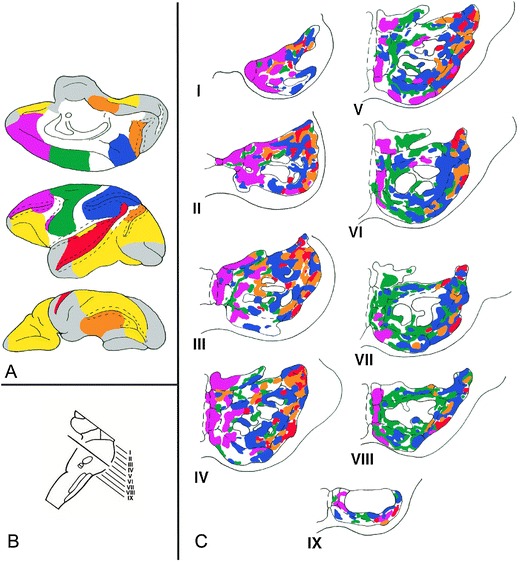
“These conclusions from tract tracing studies in the monkey are supported by resting state functional connectivity magnetic resonance imaging (MRI; [30]) and task-based functional MRI studies in humans [18], as well as by clinical investigations in patients with cerebellar damage [19].”
BackgroundWhatever next? Predictive brains, situated agents, and the future of cognitive science
Clark, A. (2013) · Behavioral and Brain Sciences · doi:10.1017/s0140525x12000477 · Cited by 5,924 · cited 1×
“Moreover, predictive processing represents a fundamental principle of neural computations in the brain [176].”
Visual perception of biological motion and a model for its analysis
Johansson, G. (1973) · Perception & Psychophysics · doi:10.3758/bf03212378 · Cited by 4,462 · cited 1×
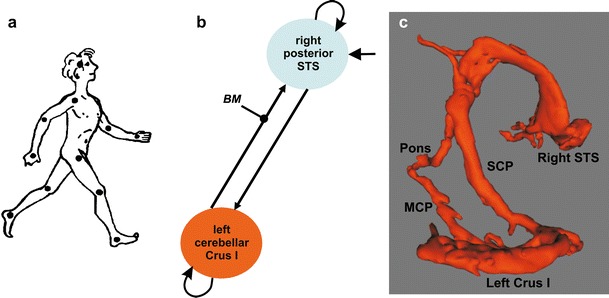
“Healthy adults and children easily recognize personality traits through actions of others, even if they are represented through a set of light dots placed on the main body joints, in “point-light biological motion displays” [100, 101] (see Fig.”
BackgroundPurcell, E. M. (1977) · American Journal of Physics · doi:10.1119/1.10903 · Cited by 4,360 · cited 1×
“This is not true of animals (or indeed objects of any kind) whose mass is small or drag is large relative to applied forces [68].”
BackgroundInvestigations into resting-state connectivity using independent component analysis
Beckmann, C. F., DeLuca, M., Devlin, J. T., & Smith, S. M. (2005) · Philosophical Transactions of the Royal Society B: Biological Sciences · doi:10.1098/rstb.2005.1634 · Cited by 3,398
Research works printed but not linked: 1
- Nieuwenhuys R, Pouwels E. A light and EM study of lobe C1 of the gigantocerebellum of the mormyrid fish Gnathonemus petersi. Anat Rec. 1973;175:399.
Cited by
Items 401–477 of 477
Carreres-Pons, M. (2018) · Dipòsit Digital de la Universitat de Barcelona (Universitat de Barcelona)
Associação entre a autorreferência de tontura e testes de equilíbrio estático e dinâmico em idosos
da Rosa, L. D., da Fonseca, A. B. M., Momensohn-Santos, T. M., & FIORINI, A. C. (2019) · Distúrbios da Comunicação · doi:10.23925/2176-2724.2019v31i1p3-11
A Normative Bayesian Model of Classification for Agents with Bounded MemoryPreprint
Lee, H., Lee, H.-J., Choe, K. W., & Lee, S. (2019) · bioRxiv (Cold Spring Harbor Laboratory) · doi:10.1101/787424
“Our findings also suggest that the cerebellum encodes task-relevant stimulus features during classification, in line with previous studies indicating the involvement of the cerebellum in sensory perception (Baumann et al., 2015; Gao et al., 1996).”
BackgroundResultMapping the anatomo-functional organization of human sensorimotor system : a multi-modal approach
Beuriat, P.-A. (2019) · theses.fr (ABES) · doi:10.70675/96a265abz3e58z4e6dz83e8zd3090b4c834c
A contrastive study of cerebellum development in very premature and full-term infants
Liu, R.-K., Li, L., Du, X., Wang, Y., Chen, S., Li, G., & Li, G. (2020) · Journal of King Saud University - Science · doi:10.1016/j.jksus.2020.03.028
Difficult-to-Characterize Cognitive/Behavioral Disorders
Josephs, K. A., Rodriguez‐Porcel, F. E., Shatz, R. S., Weintraub, D. A., & Espay, A. J. (2020)
Frontal, Parietal, or Neither?
Josephs, K. A., Rodriguez‐Porcel, F. E., Shatz, R. S., Weintraub, D. A., & Espay, A. J. (2020) · Cambridge University Press eBooks · doi:10.1017/9781108355841.022
Lockwood, M. D. (2021) · The AAO Journal · doi:10.53702/2375-5717-31.1.15
A Case Report of Perceptual Disturbances with Incidental Calcifications in the Cerebellum
Manzoor, S., Sangha, L., Badh, P., Azizi, H., & Jolayemi, A. (2021) · Case Reports in Psychiatry · doi:10.1155/2021/2680674
Sabry, D. A. (2021) · Egyptian Journal of Aquatic Biology and Fisheries · doi:10.21608/ejabf.2021.205673
Fleury, S., & Richir, S. (2021) · Wiley eBooks · doi:10.1002/9781119887294.refs
Orlando, B. C. G. S., Kiataqui, K. E., Reis-Silva, T. M., Mori, C. M. C., Manes, M., Santos, D. N. L., Massironi, S. M. G., Bondan, E. F., Kirsten, T. B., & Bernardi, M. M. (2021) · SSRN Electronic Journal · doi:10.2139/ssrn.3994526
Dürr, A. (2018) · Faculty Opinions – Post-Publication Peer Review of the Biomedical Literature · doi:10.3410/f.732610173.793552232
Motor Circuit Abnormalities During Cerebellar Development
Lackey, E. P., Hipolito, A. G. R., & Sillitoe, R. V. (2023) · Contemporary clinical neuroscience · doi:10.1007/978-3-031-23104-9_7 · Cited by 1
The Three Cornerstones of the Cerebellar Syndrome
Cabaraux, P., & Manto, M. U. (2023) · Springer eBooks · doi:10.1007/978-3-031-15070-8_73
Ogawa, K., Akimoto, T., Hara, M., Fujishiro, M., & Nakajima, H. (2023) · Neurology and Clinical Neuroscience · doi:10.1111/ncn3.12782
“We thank all members of the Division of Neurology, Department of Medicine, Nihon University School of Medicine, for their advice and help with the study.”
MethodLunde, C. E., Dudek, M. R., Talbert, C., Sieberg, C. B., Silva, K. E., Papadelis, C. L., Ullrich, N. J., Manley, P. E., & Moulton, E. A. (2024) · Applied Neuropsychology Child · doi:10.1080/21622965.2024.2337208 · Cited by 1
“The cerebellum assumes a critical role in motor control and coordination, as well as perception (Baumann et al., 2015), emotion (Adamaszek et al., 2017), cognition (Schmahmann, 2019; Schmahmann et al., 2019), and executive function (Koustenis et al., 2016).”
Self-citationArtificial Intelligence in Cerebellum Activation
Sikkander, A. R. M., Ranjan, R., & Mishra, S. R. (2024) · International Journal of Cheminformatics · doi:10.37591/ijci.v01i01.143947 · Cited by 12
Speech Rhythm in the Perception–Action Cycle
Verga, L., Kotz, S. A., & Schwartze, M. (2026) · Cambridge University Press eBooks · doi:10.1017/9781009295888.008
Konczak, J. (2024) · Springer eBooks · doi:10.1007/978-3-662-68476-4_21
Putting a forgotten glia back in place : anatomical and functional characterization of Fañanas cells
Singer, A. (2023) · theses.fr (ABES) · doi:10.70675/8fbc64bfz8256z41a3z85abzf1d729f0331e
The role of the cerebellum in music, speech, and language perception
Eggermont, J. J. (2025) · Elsevier eBooks · doi:10.1016/b978-0-443-29847-9.00006-1
Author response: Effort drives saccade selection
Koevoet, D., Zantwijk, L. V., Naber, M., Mathôt, S., der Stigchel, S. V., & Strauch, C. (2025) · eLife · doi:10.7554/elife.97760.3.sa2
Kubat, M., Özen, Ö., & Çolak, E. (2025) · Brazilian Journal of Otorhinolaryngology · doi:10.1016/j.bjorl.2025.101635
“27 Different studies have demonstrated varying morphological changes in cerebellar GM structure.”
Nishihata, Y., Yoshino, H., Ogawa, Y., Sugimura, T., Okamura, K., Kimoto, S., Yamamuro, K., Makinodan, M., Saito, Y., & Kishimoto, T. (2025) · Frontiers in Cellular Neuroscience · doi:10.3389/fncel.2025.1549352
Wu, C., Gong, C., Jia, Z., Xia, Y., Zhao, Y., Wu, Y., Chai, T., & Sun, L. (2025) · Hearing Research · doi:10.1016/j.heares.2025.109384 · Cited by 1
Atypical visual hallucinations in vascular depression following cerebellar stroke
Bottemanne, H., Wicker, A., Baudouin, É., Korngold, J., Martin, S., Haddadi, N., Choucha, W., Colle, R., & Corruble, E. (2025) · L Encéphale · doi:10.1016/j.encep.2025.06.001
Subthreshold violations of trajectory predictions are sensitive to TMS of cerebellum Crus I/II
Joos, E., Scherer, C., Isope, P., Foucher, J., & Giersch, A. (2026) · Neuroimage Reports · doi:10.1016/j.ynirp.2026.100382
“…prediction errors (Brooks and Cullen, 2013; Brooks et al., 2015), motion (Ivry and Diener, 1991; Thier et al., 1999), motion trajectory prediction (Baumann et al., 2015; Baumann and Mattingley, 2010; O'Reilly et al., 2008), and millisecond-level timing (Coull et al., 2011; Ivry and Spencer, 2004).”
Cerebellar Contributions to Spatial Learning and Memory: Effects of Discrete Immunotoxic Lesions
Leanza, M. H., Storelli, E., D’Arco, D., de Leo, G., Kleiner, G., Arancio, L., Capodieci, G., Gulino, R., Bava, A., & Leanza, G. (2025) · International Journal of Molecular Sciences · doi:10.3390/ijms26199553
“Evidence accumulating from clinical and neuroimaging studies have supported the view that the cerebellum, besides its classical role in motor control, is largely involved in emotion, language and cognition [49,58–61].”
Silbaugh, A. M., Koster, K. P., & Hansel, C. (2025) · eLife · doi:10.7554/elife.109183.1
Moreau, A., Tisserand, A., Sanna, L., Botzung, A., Blanc, F., & Philippi, N. (2025) · Journal of Alzheimer s Disease · doi:10.1177/13872877251389634
“38 The cerebellum acts as an anatomical relay between visual and motor cortical areas, modulating guidance to movement directed at a visual stimulus, and is thus part of the dorsal “ where ” pathway.”
A similarity-based memory retrieval model to orthographic processing
Hashem, R. (2025) · Developmental Review · doi:10.1016/j.dr.2025.101232
Silbaugh, A. M., Koster, K. P., & Hansel, C. (2025) · eLife · doi:10.7554/elife.109183.2 · Cited by 1
Cundari, M., Kirchhoff, L., Vestberg, S., van Westen, D., Dobloug, S., Bloch, K. M., Nilsson, M., Wennberg, L., Hansson, B., Priovoulos, N., et al. (2025) · Frontiers in Computational Neuroscience · doi:10.3389/fncom.2025.1710961
“Overlaps between those networks and cerebellar-vestibular regions point to these regions potentially encompassing spatial and orientational attention (Buckner et al., 2011; Baumann et al., 2015; Guell et al., 2018).”
Stößel, A. (2023) · Online Publication Service of Würzburg University (Würzburg University) · doi:10.25972/opus-31793 · Cited by 1
Early Neurodevelopmental Trajectories Underlying Typical and Atypical Behavioral Development
Wagner, L. (2025) · eScholarship (California Digital Library)
Ferreira, F. I. H. M. (2025) · Portuguese National Funding Agency for Science, Research and Technology (RCAAP Project by FCT)
Sensory deficits in a mouse model of Christianson Syndrome
Fatima, T. (2019) · eScholarship@McGill (McGill) · doi:10.82308/5899
Bylemans, T. (2023) · VUBIR (Vrije Universiteit Brussel)
Jensen, C. (2019) · NORA - Norwegian Open Research Archives
Persistent perceptual delay for head movement onset relative to sound onset with and without vision
Chung, W. (2017) · UWSpace (University of Waterloo)
Attentional focus and emotion modulate voice recognition deficits in cerebellar stroke patientsPreprint
Ceravolo, L., Stiennon, E., Constantin, I. M., Chassot, E., Thomasson, M., Pierce, J. E., Sveikata, L., Cionca, A., Ronchi, R., Carrera, E., et al. (2025) · bioRxiv (Cold Spring Harbor Laboratory) · doi:10.64898/2025.12.08.692937
Galetzka, C., El‐Tabbal, M., & Kuhn, B. (2026) · bioRxiv (Cold Spring Harbor Laboratory) · doi:10.64898/2026.01.25.701635
Regional homogeneity alterations reflect pain and emotional dysregulation in adenomyosis
Wei, W., Chen, Y., Hua, K., Xia, B., Li, R., Lin, W., Chen, Z., Xiao, W., Yu, K., Yin, Y., et al. (2026) · Annals of Medicine · doi:10.1080/07853890.2026.2620857
“Furthermore, greater dReHo of the right cerebellum was detected in patients with AMD, consistent with previous research implicating the cerebellum in various aspects of pain processing [46–49].”
Fountoulakis, K. Ν., Mitkani, C. A., Kyziridis, T. C., Παναγιωτίδης, Π., & Tsapakis, E.-M. (2026) · International Journal of Methods in Psychiatric Research · doi:10.1002/mpr.70060
Martín, M. G. (2021) · DeustoTeka
Rellini, E., Silvestri, V., Guidobaldi, M., Turco, S., Chieffo, D. P. R., Costanzo, E., Amore, F., & Fortini, S. (2026) · Healthcare · doi:10.3390/healthcare14070885
“If the score obtained in the questionnaire is greater than 5, it is important to refer the patient for a diagnostic investigation by a Clinical Psychologist, whereas if it is ≥ 15, a psychiatric evaluation is needed [31,32].”
Combes, A. (2017) · theses.fr (ABES) · doi:10.70675/96d21b87z9c73z4dfez94dez58674ce78770 · Cited by 1
Autisme et cervelet : le gradient des ions chlorures en question
Roux, S. (2018) · theses.fr (ABES) · doi:10.70675/a6f075d7ze2f7z4136z8b39zdeb288b0b7a3
Déterminants moteurs des troubles du spectre autistiques (TSA)
Sagheer, T. A. (2017) · theses.fr (ABES) · doi:10.70675/c5eec78az159az4adcz8f56ze9a4ebc82422
Rasschaert, M. (2019) · theses.fr (ABES) · doi:10.70675/24be134az3f46z4a30za655z8252290d88a8 · Cited by 4
Interactions between the cerebellum and the striatum in PRRT2 and ADCY5 dystonia
Ekmen, A. (2021) · theses.fr (ABES) · doi:10.70675/1290633fz622cz42b1z8953z676e0c712c77
Bases neuronales du jugement d’ordre temporel chez le rat
Paulcan, S. (2021) · theses.fr (ABES) · doi:10.70675/7ec2690fz9fb0z43daz9d8fz2b6264fba1e0
Cheviet, A. (2021) · theses.fr (ABES) · doi:10.70675/66ee7d58zb3d6z49fdz8463z9a5b3612db6f
Liu, L., Jia, M., Li, H., Zhou, Y., Jiang, H., Zhang, W., Zhou, C., Jian⁃gang, D., Meng, R., Zhou, C., et al. (2026) · Brain Imaging and Behavior · doi:10.1007/s11682-026-01144-8
“The cerebellum, although traditionally not considered part of the auditory pathway, is increasingly recognized for its role in sensory integration, cognitive processing, and auditory modulation (Baumann et al., 2015; Nguyen et al., 2017; Xiao Min Xu et al., 2019b).”
徐, 苒. (2026) · Advances in Psychology · doi:10.12677/ap.2026.164195
Meyer, L., Meyer, L., & Meyer, L. (2026) · Cambridge University Press eBooks · doi:10.1017/9781009295888.002
Ji, J., Baek, J., Hwang, K., Choi, S., Kasuya, J., Roh, S., Kim, S. J., Abel, T. G., An, J., & Lee, Y.-S. (2026) · Communications Biology · doi:10.1038/s42003-026-10034-0
When little brain goes to school: Impact of pedagogy on cerebellar peduncles’ development
Girard, G., Gaujard, M., Grosjean, C., Fischi-Gómez, E., & Denervaud, S. (2026) · Developmental Cognitive Neuroscience · doi:10.1016/j.dcn.2026.101748
“…Manto et al., 2012; Matsumura et al., 2004), the cerebellum is now increasingly recognized as a critical substrate for higher-order cognitive functions, including visuo-spatial processing, attentional control, working memory, and language (Baumann et al., 2015; Soko-lov, 2018; Zhang et al., 2023).”
Yue, Y., Yu, W., Jiang, D., Tian, Y., Wang, C., Sun, F., Shao, S., Wan, P., & Wang, Y. (2026) · Nuclear Medicine Communications · doi:10.1097/mnm.0000000000002185
Gazzellini, S., Lovardi, E., Schirinzi, T., Marotta, E. S., Summa, S., Smargiassi, C., Mazzoleni, S., Benso, F., Castelli, E., Lettori, D., et al. (2026) · Frontiers in Neurology · doi:10.3389/fneur.2026.1830073
Savychuk, N. O., Pekhno, V. V., Sulik, R. V., & Riabko, I. (2026) · Head & Face Medicine · doi:10.1186/s13005-026-00629-7
“The cerebellum contributes to sensory integration, affective regulation, and pain modulation in addition to motor coordination [1–4].”
Zafari, R., Taherkhani, T., & Aarabi, M. H. (2026) · The Cerebellum · doi:10.1007/s12311-026-02052-9
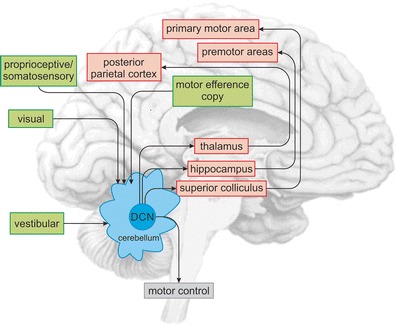
“Recent structural and functional studies have established that the cerebellum may be engaged in cognitive functions as it is closely connected to the cerebral cortex, mainly through the cortico-ponto-cerebellar and cerebello-thalamo-cortical pathways [27, 28 ].”
Destrebecq, V. (2026) · Dépôt institutionnel de l'Université libre de Bruxelles (Université Libre de Bruxelles)
Chiari I Malformation as a Human Disease Model of Cerebellar Cognitive–Affective Dysfunction
Davalan, W., Butler, W. E., Schmahmann, J. D., Muñoz, W., Mehta, N. H., Paulk, A. C., & Kahle, K. T. (2026) · The Cerebellum · doi:10.1007/s12311-026-02071-6 · Cited by 1
“The cerebellum contributes to the prediction and coordination of spatial transformations, enabling efficient interaction with the environment [ 58, 59].”
Self-citationCakar, M. E., Cummings, K. K., Bookheimer, S. Y., Dapretto, M., & Green, S. A. (2026) · Autism Research · doi:10.1002/aur.70313
Sun, J., Vocht, J. D., Laroy, M., Stam, D., Lien, C.-H., Lamaire, N., D’Hondt, A., Peeters, R., Sunaert, S. G., Damme, P. V., et al. (2026) · Annals of Neurology · doi:10.1002/ana.78355
Zhao, Z., Lu, X., Ma, Z., Pan, Y., Huang, J., Yu, Z., & Liu, J. (2026) · Psychiatry Research Neuroimaging · doi:10.1016/j.pscychresns.2026.112331
Brain-wide fMRI responses to auditory and visual stimuli in awake mice
Paasonen, J., Dvořáková, L., Stenroos, P., Salo, R. A., Paasonen, E., Michaeli, S., Mangia, S., Tanila, H., & Gröhn, O. H. J. (2026) · Cerebral Cortex · doi:10.1093/cercor/bhag137
“Finally, activity in the cerebellar vermis and hemispheres has been reported in response to visual and auditory stimulation, respectively ( Baumann and Mattingley 2010; Baumann et al. 2015), which aligns well with our observations.”
Song, W.-J., Zhang, G., Pu, Z., Jia-jia, W., Lu, J.-J., Ma, J., Hua, X.-Y., & Xu, J. (2026) · Journal of Alzheimer s Disease Reports · doi:10.1177/25424823261493009
“…of neural circuit mechanisms, brain regions including the primary motor cortex, 7 premotor cortex, 8 supplementary motor area, 9 cerebellum, 10,11 and basal ganglia 12 are involved in motor control processes essential for grip strength generation, such as motor neuron recruitment and…”
Clark-Taylor, T. (2026) · Translational Psychiatry · doi:10.1038/s41398-026-04461-0
Metadata
- Authors
- Baumann, O., Borra, R. J., Bower, J. M., Cullen, K. E., Habas, C., Ivry, R. B., Leggio, M., Mattingley, J. B., Molinari, M., Moulton, E. A., Paulin, M. G., Pavlova, M. A., Schmahmann, J. D., & Sokolov, A. A.
- Affiliations
- The University of Queensland (AU)
- Harvard University (US)
- McGill University (CA)
- Centre hospitalier national d'ophtalmologie des Quinze-Vingts (FR)
- University of California, Berkeley (US)
- Fondazione Santa Lucia (IT)
- Boston Children's Hospital (US)
- University of Otago (NZ)
- University of Tübingen (DE)
- Centre Hospitalier Universitaire Vaudois (CH)
- Corresponding author
- Baumann, Oliver
- ORCID
- Venue
- The Cerebellum
- Published
- 2014-12-06
- Volume
- 14
- Issue
- 2
- Pages
- 197-220
- ISSN
- 1473-4222 (ISSN-L)
- 1473-4230
- PMC
- PMC4346664
- OpenAlex
- W2145674835
- Cited by
- 462
- References
- 259
- Citations by year
- 2026: 30 · 2025: 41 · 2024: 44 · 2023: 42 · 2022: 41 · 2021: 58 · 2020: 53 · 2019: 48 · 2018: 42 · 2017: 24 · 2016: 25 · 2015: 12 · 2014: 1
- FWCI
- 11.52
- Type
- journal article
- Language
- en
- Open access
- hybrid
- doi.org
- Locations
- The Cerebellum (publishedVersion, cc-by)
- Europe PMC (PubMed Central) (publishedVersion, cc-by)
- PubMed Central (publishedVersion, cc-by)
- PubMed (publishedVersion)
- IRIS (submittedVersion)
- Digital Access to Scholarship at Harvard (DASH) (Harvard University) (submittedVersion, cc-by)
- IRIS Research product catalog (Sapienza University of Rome) (submittedVersion)
- SERVAL (Université de Lausanne) (submittedVersion, other-oa)
- University of Groningen research database (University of Groningen / Centre for Information Technology) (submittedVersion, other-oa)
- Funders
- Suomen Lääketieteen Säätiö
- Academy of Finland
- National Institutes of Health
- Australian Research Council (DE120100535)
- National Cancer Institute (R21CA185870)
- National Institute of Neurological Disorders and Stroke (R01NS074917, NS074917, R01NS084948, NS084948)
- Centre of Excellence for Integrative Brain Function, Australian Research Council (SR120300015, FL110100103, CE140100007)
- Topics
- Life Sciences › Neuroscience › Cognitive Neuroscience › Motor Control and Adaptation
- Life Sciences › Neuroscience › Neurology › Vestibular and auditory disorders
- Life Sciences › Neuroscience › Cognitive Neuroscience › Visual perception and processing mechanisms
- Keywords
- cerebellum, sensory perception, visual processing, auditory processing, biological motion perception, nociception, self-motion perception, timing, predictive processing, cerebellar connectivity, cerebellar disorders, autism spectrum disorder, schizophrenia, perceptual deficits
- MeSH terms
- Animals, Cerebellum, Biological Evolution, Humans, Models, Neurological, Neural Pathways, Pain, Perception
About these checks
Registry, retraction, Cites and statistics results are computed, not judged, with one exception: a printed reference that no index lists is read once by a model before it counts as a citation error. Claims are extracted by a model and kept only when their quote appears verbatim in the text; each cited source is then checked, with a model’s help, for whether it says what the claim relies on. Those verdicts can be wrong — read the claim’s quote and the cited source before relying on one.
Statistics and arithmetic are recomputed, not judged.
Confidence bands are shown only for fields calibrated on our annotated test set. None is calibrated yet, so no band is shown.
What counts as a claim ›How we measure confidence ›How we check this ›
Are you an author, or do you see a problem with this page? Request a review
Data sources
Bibliographic data: Semantic Scholar, OpenAlex, Crossref.
Contains information from the Semantic Scholar Academic Graph Datasets, made available under the ODC Attribution License (ODC-BY 1.0).
Semantic Scholar’s data is described in: Kinney, R., et al. (2023). The Semantic Scholar Open Data Platform. arXiv:2301.10140.
