

Consensus Paper: The Role of the Cerebellum in Perceptual Processes
Open accessThe DOI matches its Crossref record; 259 of the 260 references it cites were found in a registry or an index, and 1 are not checked yet.
Abstract
Various lines of evidence accumulated over the past 30 years indicate that the cerebellum, long recognized as essential for motor control, also has considerable influence on perceptual processes. In this paper, we bring together experts from psychology and neuroscience, with the aim of providing a succinct but comprehensive overview of key findings related to the involvement of the cerebellum in sensory perception. The contributions cover such topics as anatomical and functional connectivity, evolutionary and comparative perspectives, visual and auditory processing, biological motion perception, nociception, self-motion, timing, predictive processing, and perceptual sequencing. While no single explanation has yet emerged concerning the role of the cerebellum in perceptual processes, this consensus paper summarizes the impressive empirical evidence on this problem and highlights diversities as well as commonalities between existing hypotheses. In addition to work with healthy individuals and patients with cerebellar disorders, it is also apparent that several neurological conditions in which perceptual disturbances occur, including autism and schizophrenia, are associated with cerebellar pathology. A better understanding of the involvement of the cerebellum in perceptual processes will thus likely be important for identifying and treating perceptual deficits that may at present go unnoticed and untreated. This paper provides a useful framework for further debate and empirical investigations into the influence of the cerebellum on sensory perception.
Overview
The claims and statistics of this paper haven’t been checked yet.
Free: it reads the open-access text and checks the first 5 claims that cite a source we can check. Create a free account to check every claim.
Integrity signals
Registry
Cites
Statistics
Figures
Verification
Claims the paper makes
The claims and statistics of this paper haven’t been checked yet.
Free: it reads the open-access text and checks the first 5 claims that cite a source we can check. Create a free account to check every claim.
Claims other papers make about this one
Each is checked against this paper’s own text: does it say what the citing paper says it does?
The cited source says what the claim attributes to it.
In the citing paper
“While traditionally considered as primarily involved in motor functions, emerging research suggests that the cerebellum may also contribute to higher-order functions, including perception (Baumann et al. 2015).”
From Neuroanatomical correlates of peripersonal space: bridging the gap between perception, action, emotion and social cognition (2024) · cites this paper as Baumann et al. 2015
The cited source says what the claim attributes to it.
In the citing paper
“The cerebellum also has an important role in timing, prediction, and learning (Ivry and Keele, 1989, Baumann et al., 2015).”
From The impact of atypical sensory processing on social impairments in autism spectrum disorder (2018) · cites this paper as Baumann et al., 2015
Self-check
Percentages, sums and reported differences re-computed from the paper’s own numbers.
The self-check needs the paper’s full text.
Citations
Cites
Functional connectivity in the motor cortex of resting human brain using echo‐planar mri
Biswal, B., Zerrin Yetkin, F., Haughton, V. M., & Hyde, J. S. (1995) · Magnetic Resonance in Medicine · doi:10.1002/mrm.1910340409 · Cited by 9,812
(1982) · Trends in Neurosciences · doi:10.1016/0166-2236(82)90076-5 · Cited by 9,089
The free-energy principle: a unified brain theory?
Friston, K. (2010) · Nature Reviews Neuroscience · doi:10.1038/nrn2787 · Cited by 8,120 · cited 1×
“employed to describe brain function more generally [157].”
MethodDissociable intrinsic connectivity networks for salience processing and executive control
Seeley, W. W., Menon, V., Schatzberg, A. F., Keller, J., Glover, G. H., Kenna, H., Reiss, A. L., & Greicius, M. D. (2007) · The Journal of Neuroscience · doi:10.1523/jneurosci.5587-06.2007 · Cited by 7,426 · cited 1×
“The cerebellum is also involved in the limbic ‘salience network,’ mainly encompassing insula, frontal operculum, medial prefrontal cortex, and hypothalamus [35], and in charge of interoceptive and autonomic processing [41].”
BackgroundSequential Monte Carlo Methods in Practice
(2001) · Springer eBooks · doi:10.1007/978-1-4757-3437-9 · Cited by 7,366
The organization of the human cerebellum estimated by intrinsic functional connectivity
Buckner, R. L., Krienen, F. M., Castellanos, A., Diaz, J. C., & Yeo, B. T. T. (2011) · Journal of Neurophysiology · doi:10.1152/jn.00339.2011 · Cited by 7,304 · cited 2×
“These conclusions from tract tracing studies in the monkey are supported by resting state functional connectivity magnetic resonance imaging (MRI; [30]) and task-based functional MRI studies in humans [18], as well as by clinical investigations in patients with cerebellar damage [19].”
BackgroundWhatever next? Predictive brains, situated agents, and the future of cognitive science
Clark, A. (2013) · Behavioral and Brain Sciences · doi:10.1017/s0140525x12000477 · Cited by 5,924 · cited 1×
“Moreover, predictive processing represents a fundamental principle of neural computations in the brain [176].”
Visual perception of biological motion and a model for its analysis
Johansson, G. (1973) · Perception & Psychophysics · doi:10.3758/bf03212378 · Cited by 4,462 · cited 1×
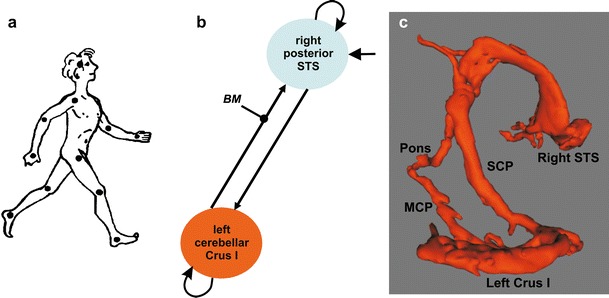
“Healthy adults and children easily recognize personality traits through actions of others, even if they are represented through a set of light dots placed on the main body joints, in “point-light biological motion displays” [100, 101] (see Fig.”
BackgroundPurcell, E. M. (1977) · American Journal of Physics · doi:10.1119/1.10903 · Cited by 4,360 · cited 1×
“This is not true of animals (or indeed objects of any kind) whose mass is small or drag is large relative to applied forces [68].”
BackgroundInvestigations into resting-state connectivity using independent component analysis
Beckmann, C. F., DeLuca, M., Devlin, J. T., & Smith, S. M. (2005) · Philosophical Transactions of the Royal Society B: Biological Sciences · doi:10.1098/rstb.2005.1634 · Cited by 3,398
Research works printed but not linked: 1
- Nieuwenhuys R, Pouwels E. A light and EM study of lobe C1 of the gigantocerebellum of the mormyrid fish Gnathonemus petersi. Anat Rec. 1973;175:399.
Cited by
Neural correlates of consciousness: progress and problems
Koch, C., Massimini, M., Boly, M., & Tononi, G. (2016) · Nature Reviews Neuroscience · doi:10.1038/nrn.2016.22 · Cited by 1,600
The cerebellum: adaptive prediction for movement and cognition
Sokolov, A. A., Miall, R. C., & Ivry, R. B. (2017) · Trends in Cognitive Sciences · doi:10.1016/j.tics.2017.02.005 · Cited by 691
Self-citationThe Theory and Neuroscience of Cerebellar Cognition
Schmahmann, J. D., Guell, X., Stoodley, C. J., & Halko, M. A. (2019) · Annual Review of Neuroscience · doi:10.1146/annurev-neuro-070918-050258 · Cited by 565
Self-citationConsensus Paper: Cerebellum and Emotion
Adamaszek, M., D’Agata, F., Ferrucci, R., Habas, C., Keulen, S., Kirkby, K. C., Leggio, M., Mariën, P., Molinari, M., Moulton, E., et al. (2017) · The Cerebellum · doi:10.1007/s12311-016-0815-8 · Cited by 567
“[2] for an extensive discussion of this issue).”
BackgroundSelf-citationThe impact of atypical sensory processing on social impairments in autism spectrum disorder
Thye, M. D., Bednarz, H. M., Herringshaw, A. J., Sartin, E. B., & Kana, R. K. (2018) · Developmental Cognitive Neuroscience · doi:10.1016/j.dcn.2017.04.010 · Cited by 513
Guell, X., Gabrieli, J. D. E., & Schmahmann, J. D. (2018) · NeuroImage · doi:10.1016/j.neuroimage.2018.01.082 · Cited by 460
“anuary 2018; Accepted 30 January 20 (Schmahmann and Pandya, 1997b; Strick et al., 2009; Schmahmann, 2010; Koziol et al., 2014; Mari€en et al., 2014; Baumann et al., 2015; Adamaszek et al., 2017).”
BackgroundSelf-citationConsensus Paper: Cerebellum and Social Cognition
Van Overwalle, F., Manto, M., Cattaneo, Z., Clausi, S., Ferrari, C., Gabrieli, J. D. E., Guell, X., Heleven, E., Lupo, M., Ma, Q., et al. (2020) · The Cerebellum · doi:10.1007/s12311-020-01155-1 · Cited by 442
Self-citationThe cerebellum in Alzheimer’s disease: evaluating its role in cognitive decline
Jacobs, H. I. L., Hopkins, D. A., Mayrhofer, H. C., Bruner, E., van Leeuwen, F. W., Raaijmakers, W., & Schmahmann, J. D. (2018) · Brain · doi:10.1093/brain/awx194 · Cited by 338
“…and predicting temporal order, development of automaticity through learning, perceptual processing, and the capacity of working memory load are tasks affected in patients with cerebellar damage (Schmahmann, 1998, 2004; Bellebaum and Daum, 2007; Baumann et al. , 2015; Leggio and Molinari, 2015).”
Self-citationEmerging connections between cerebellar development, behaviour and complex brain disorders
Sathyanesan, A., Zhou, J., Scafidi, J., Heck, D. H., Sillitoe, R. V., & Gallo, V. (2019) · Nature Reviews Neuroscience · doi:10.1038/s41583-019-0152-2 · Cited by 321
The Cerebellar Cognitive Affective/Schmahmann Syndrome: a Task Force Paper
Argyropoulos, G. P. D., van Dun, K., Adamaszek, M., Leggio, M., Manto, M., Masciullo, M., Molinari, M., Stoodley, C. J., Van Overwalle, F., Ivry, R. B., et al. (2020) · The Cerebellum · doi:10.1007/s12311-019-01068-8 · Cited by 246
Self-citationGet a grip: individual variations in grip strength are a marker of brain health
Carson, R. G. (2018) · Neurobiology of Aging · doi:10.1016/j.neurobiolaging.2018.07.023 · Cited by 237
“It has long been recognized that the cerebellum plays a key role not only in controlling and regulating movement, but also in facets of perception (Baumann et al., 2015) and learning”
BackgroundPalesi, F., De Rinaldis, A., Castellazzi, G., Calamante, F., Muhlert, N., Chard, D., Tournier, J. D., Magenes, G., D’Angelo, E., & Gandini Wheeler-Kingshott, C. A. M. (2017) · Scientific Reports · doi:10.1038/s41598-017-13079-8 · Cited by 235
(2018) · Handbook of Clinical Neurology · doi:10.1016/b978-0-444-63956-1.00006-0 · Cited by 208
Guo, C. C., Tan, R., Hodges, J. R., Hu, X., Sami, S., & Hornberger, M. (2016) · Brain · doi:10.1093/brain/aww003 · Cited by 205
“…ataxia, a symptoms that is typically absent in AD and FTD. Recent clinical and neuroimaging studies in human, however, have provided compelling evidence that the cerebellum is broadly involved in cognition, language and emotion (Baumann et al., 2014; Schmahmann and Sherman, 1998; Schmahmann, 2001).”
BackgroundCerebellar contribution to preparatory activity in motor neocortex
Chabrol, F. P., Blot, A., & Mrsic-Flogel, T. D. (2019) · Neuron · doi:10.1016/j.neuron.2019.05.022 · Cited by 182
“The fact that neurons in the deep cerebellar nuclei send excitatory projections to other thalamic regions subserving non-motor cortical areas (Kelly and Strick, 2003; Middleton and Strick, 1997) suggests that they may contribute to themaintenance of persistent neocortical activity during cognitive tasks requiring atte…”
BackgroundThe Neurology of Consciousness
Tononi, G., Boly, M., Gosseries, O., & Laureys, S. (2016) · The Neurology of Conciousness · doi:10.1016/b978-0-12-800948-2.00025-x · Cited by 168
Meta-analysis of neural systems underlying placebo analgesia from individual participant fMRI data
Zunhammer, M., Spisák, T., Wager, T. D., Bingel, U., The Placebo Imaging Consortium, Atlas, L., Benedetti, F., Büchel, C., Choi, J. C., Colloca, L., et al. (2021) · Nature Communications · doi:10.1038/s41467-021-21179-3 · Cited by 171
Consensus Paper: Experimental Neurostimulation of the Cerebellum
Miterko, L. N., Baker, K. B., Beckinghausen, J., Bradnam, L. V., Cheng, M. Y., Cooperrider, J., DeLong, M. R., Gornati, S. V., Hallett, M., Heck, D. H., et al. (2019) · The Cerebellum · doi:10.1007/s12311-019-01041-5 · Cited by 161
Insights into cerebellar development and connectivity
Beckinghausen, J., & Sillitoe, R. V. (2018) · Neuroscience Letters · doi:10.1016/j.neulet.2018.05.013 · Cited by 143
Bareš, M., Apps, R., Avanzino, L., Breska, A., D'Angelo, E. U., Filip, P., Gerwig, M., Ivry, R. B., Lawrenson, C. L., Louis, E. D., et al. (2018) · The Cerebellum · doi:10.1007/s12311-018-0979-5 · Cited by 141
“Over the past generation, our thinking about the cerebellum has undergone a dramatic transition from an oversimplified functional view restricted to the motor system to one in which this subcortical structure is recognized as part of networks involved in virtually all aspects of cognition [1-4].”
BackgroundSelf-citationAnomalous Perception of Biological Motion in Autism: A Conceptual Review and Meta-Analysis
Federici, A., Parma, V., Vicovaro, M., Radassao, L., Casartelli, L., & Ronconi, L. (2020) · Scientific Reports · doi:10.1038/s41598-020-61252-3 · Cited by 133
Welniarz, Q., Worbe, Y., & Gallea, C. (2021) · Frontiers in Systems Neuroscience · doi:10.3389/fnsys.2021.644059 · Cited by 125
Casula, E. P., Pellicciari, M. C., Ponzo, V., Stampanoni Bassi, M., Veniero, D., Caltagirone, C., & Koch, G. (2016) · Scientific Reports · doi:10.1038/srep36191 · Cited by 123
Deficits in reflexive covert attention following cerebellar injury
Striemer, C. L., Cantelmi, D., Cusimano, M. D., Danckert, J. A., & Schweizer, T. A. (2015) · Frontiers in Human Neuroscience · doi:10.3389/fnhum.2015.00428 · Cited by 119
“…such as attention, memory, language, emotion, and visual, auditory, and motion perception (for reviews see Schmahmann and Sherman, 1998; Cantelmi et al., 2008; Sacchetti et al., 2009; Stoodley and Schmahmann, 2009a,b; Marvel and Desmond, 2010; Stoodley and Stein, 2011; Baumann et al., 2015).”
BackgroundThe cerebellum and cognitive neural networks
Zhang, P., Duan, L., Ou, Y., Ling, Q., Cao, L., Qian, H., Zhang, J., Wang, J., & Yuan, X. (2023) · Frontiers in Human Neuroscience · doi:10.3389/fnhum.2023.1197459 · Cited by 130
Kilteni, K., & Ehrsson, H. H. (2019) · Journal of Neuroscience · doi:10.1523/jneurosci.1732-19.2019 · Cited by 117
“…the primary fissure – is considered to be involved in sensorimotor functions, both the posterior part of lobule VI and lobule Crus I are thought to be involved in cognitive processes (Diedrichsen and Bastian, 2013; Baumann et al., 2015; Sokolov et al., 2017; Guell et al., 2018; Schmahmann, 2018).”
BackgroundThe sensorimotor network dysfunction in migraineurs without aura: a resting-state fMRI study
Zhang, J., Su, J., Wang, M., Zhao, Y., Zhang, Q., Qian, Y., Lu, H., Zhang, H., Li, G., Wu, Y.-L., et al. (2017) · Journal of Neurology · doi:10.1007/s00415-017-8404-4 · Cited by 118
Comparing fully automated state-of-the-art cerebellum parcellation from magnetic resonance images
Carass, A., Cuzzocreo, J. L., Han, S., Hernandez-Castillo, C. R., Rasser, P. E., Ganz, M., Beliveau, V., Dolz, J., Ayed, I. B., Desrosiers, C., et al. (2018) · NeuroImage · doi:10.1016/j.neuroimage.2018.08.003 · Cited by 117
“…(Desmond and Fiez, 1998), and language (Silveri et al., 1994; Desmond and Fiez, 1998), regulates emotional responses (Schutter and Van Honk, 2005) including fear (Schmahmann and Caplan, 2006), and there is increasing understanding of perceptual processes in the cerebellum (Baumann et al., 2015).”
BackgroundTopographic Cortico-cerebellar Networks Revealed by Visual Attention and Working Memory
Brissenden, J. A., Tobyne, S. M., Osher, D. E., Levin, E. J., Halko, M. A., & Somers, D. C. (2018) · Current Biology · doi:10.1016/j.cub.2018.08.059 · Cited by 111
Dissociable Neuroanatomical Correlates of Subsecond and Suprasecond Time Perception
Hayashi, M. J., Kantele, M., Walsh, V., Carlson, S., & Kanai, R. (2014) · Journal of Cognitive Neuroscience · doi:10.1162/jocn_a_00580 · Cited by 107
Mallikarjun, P. K., Lalousis, P. A., Dunne, T. F., Heinze, K., Reniers, R. L. E. P., Broome, M. R., Farmah, B., Oyebode, F., Wood, S. J., & Upthegrove, R. (2018) · Translational Psychiatry · doi:10.1038/s41398-018-0118-6 · Cited by 99
Katsumi, Y., Kamona, N., Zhang, J., Bunce, J. G., Hutchinson, J. B., Yarossi, M., Tunik, E., Quigley, K. S., Dickerson, B. C., & Barrett, L. F. (2021) · doi:10.1101/2021.09.01.456844 · Cited by 89
(2023) · doi:10.1038/s42003-023-04796-0 · Cited by 89
Selective Optogenetic Control of Purkinje Cells in Monkey Cerebellum
El-Shamayleh, Y., Kojima, Y., Soetedjo, R., & Horwitz, G. D. (2017) · Neuron · doi:10.1016/j.neuron.2017.06.002 · Cited by 90
van Kemenade, B. M., Arikan, B. E., Podranski, K., Steinsträter, O., Kircher, T., & Straube, B. (2019) · Cerebral Cortex · doi:10.1093/cercor/bhy048 · Cited by 85
Manto, M. U., Argyropoulos, G. P. D., Bocci, T., Celnik, P. A., Corben, L. A., Guidetti, M., Koch, G., Priori, A., Rothwell, J. C., Sadnicka, A., et al. (2021) · The Cerebellum · doi:10.1007/s12311-021-01344-6 · Cited by 91
“Traditionally, researchers have focused on the role of the cerebellum in the control and coordination of movement [1], since the motor cortex is one of the main targets of cerebellar projections.”
BackgroundSmith, R. E. W., Avery, J. A., Wallace, G. L., Kenworthy, L. E., Gotts, S. J., & Martin, A. D. (2019) · Frontiers in Human Neuroscience · doi:10.3389/fnhum.2019.00104 · Cited by 86
Habitual coffee drinkers display a distinct pattern of brain functional connectivity
Magalhães, R. J. D. S., Picó‐Pérez, M., Esteves, M., Vieira, R., Castanho, T. C., Amorim, L., Sousa, M. M., Coelho, A., Fernandes, H. M., Cabral, J., et al. (2021) · Molecular Psychiatry · doi:10.1038/s41380-021-01075-4 · Cited by 90
“Lastly, evidence of strong rsFC between the cerebellum, known to be also implicated in sensory processing [53] and a number of sensorial cortices [54], explains the observed increased visual alertness/attention and readiness to sensorial perception among CD individuals.”
BackgroundNeuromorphic learning, working memory, and metaplasticity in nanowire networks
Loeffler, A., Álvarez, A. D., Zhu, R., Ganesh, N., Shine, J. M., Nakayama, T., & Kuncic, Z. (2023) · Science Advances · doi:10.1126/sciadv.adg3289 · Cited by 91
Britton, Z., & Arshad, Q. (2019) · Frontiers in Neurology · doi:10.3389/fneur.2019.00063 · Cited by 88
“Cerebellar Contributions to Self-Motion Perception Recently, the role of the cerebellum has been recognized as extending beyond the traditional confines of motor control of the eye movements and posture to include sensory discrimination and self-motion perception (99, 100).”
Marsden, J. F. (2018) · Handbook of clinical neurology · doi:10.1016/b978-0-444-63916-5.00017-3 · Cited by 89
Su, J., & Wang, S. (2024) · Frontiers in Nutrition · doi:10.3389/fnut.2023.1344237 · Cited by 92
Hutton, J. S., Phelan, K., Horowitz-Kraus, T., Dudley, J., Altaye, M., DeWitt, T., & Holland, S. K. (2017) · PLOS ONE · doi:10.1371/journal.pone.0177398 · Cited by 68
Altered microglia and neurovasculature in the Alzheimer's disease cerebellum
Singh‐Bains, M. K., Linke, V., Austria, M. D. R., Tan, A. Y. S., Scotter, E. L., Mehrabi, N. F., Faull, R. L. M., & Dragunow, M. (2019) · Neurobiology of Disease · doi:10.1016/j.nbd.2019.104589 · Cited by 78
Artificial selection on brain size leads to matching changes in overall number of neurons
Marhounová, L., Kotrschal, A., Kverková, K., Kolm, N., & Němec, P. (2019) · Evolution · doi:10.1111/evo.13805 · Cited by 81
Peiker, I., David, N., Schneider, T. R., Nolte, G., Schöttle, D., & Engel, A. K. (2015) · The Journal of Neuroscience · doi:10.1523/jneurosci.1442-15.2015 · Cited by 67
“Despite the classical assignment of motor functions to the cerebellum, there is growing evidence for its involvement in perception (Baumann et al., 2015), including the predictive processing of perceptual events (Shadmehr et al., 2010; Popa et al., 2012; Roth et al., 2013).”
BackgroundSex and gender affect the social brain: Beyond simplicity
Pavlova, M. A. (2016) · Journal of Neuroscience Research · doi:10.1002/jnr.23871 · Cited by 75
“Engagement of brain structures beyond the cerebral cortex, such as the cerebellum, has only recently been identified (Sokolov et al., 2012, 2014a, 2014b; see also Baumann et al., 2015).”
BackgroundSelf-citationStraube, B., van Kemenade, B. M., Arikan, B. E., Fiehler, K., Leube, D., Harris, L. R., & Kircher, T. T. J. (2017) · PLoS ONE · doi:10.1371/journal.pone.0169131 · Cited by 70
Hamamouche, K. A., & Cordes, S. (2019) · Psychonomic Bulletin & Review · doi:10.3758/s13423-018-1561-3 · Cited by 67
“It should be noted, however, that these brain regions (specifically the cerebellum) are also involved in visual and auditory perception (Baumann et al., 2015), and so its involvement in timing may reflect a more general perceptual processing function, rather than a unique role in timing.”
BackgroundLackey, E. P., Heck, D. H., & Sillitoe, R. V. (2018) · F1000Research · doi:10.12688/f1000research.15021.1 · Cited by 66
Disynaptic cerebrocerebellar pathways originating from multiple functionally distinct cortical areas
Henschke, J. U., & Pakan, J. M. P. (2020) · eLife · doi:10.7554/elife.59148 · Cited by 70
“Both the cerebral cortex (Stein and Stanford, 2008) and the cerebellum (Snider and Stowell, 1944; Rondi-Reig et al., 2014; Baumann et al., 2015) are major brain regions involved in this sensorimotor integration and translation.”
BackgroundThe Role of the Cerebellum in Unconscious and Conscious Processing of Emotions: A Review
Clausi, S., Iacobacci, C., Lupo, M., Olivito, G., Molinari, M., & Leggio, M. G. (2017) · Applied Sciences · doi:10.3390/app7050521 · Cited by 62
Self-citationFunctional Outcomes of Cerebellar Malformations
Gill, J. S., & Sillitoe, R. V. (2019) · Frontiers in Cellular Neuroscience · doi:10.3389/fncel.2019.00441 · Cited by 62
Ceravolo, L., Frühholz, S., Pierce, J. E., Grandjean, D., & Péron, J. (2021) · Scientific Reports · doi:10.1038/s41598-021-90222-6 · Cited by 59
Cerebellar Functions Beyond Movement and Learning
Kim, L. H., Heck, D. H., & Sillitoe, R. V. (2024) · Annual Review of Neuroscience · doi:10.1146/annurev-neuro-100423-104943 · Cited by 62
“…the cerebellum toward the regulation of various nonmotor behaviors, including cognition, memory, language, mood, and sleep (Adamaszek et al. 2017, Baumann et al. 2015, Koziol et al. 2014, Mariën et al. 2014, McAfee et al. 2021, Popa & Ebner 2018, Schmahmann et al. 2019, Van Overwalle et al.…”
Sawtell, N. B. (2016) · Annual Review of Physiology · doi:10.1146/annurev-physiol-021115-105003 · Cited by 59
Abnormal Cortico-Cerebellar Functional Connectivity in Autism Spectrum Disorder
Ramos, T. C., Balardin, J. B., Sato, J. R., & Fujita, A. (2019) · Frontiers in Systems Neuroscience · doi:10.3389/fnsys.2018.00074 · Cited by 59
Schwartze, M., & Kotz, S. A. (2015) · Brain and Language · doi:10.1016/j.bandl.2015.08.005 · Cited by 58
The Role of Astrocytes in the Development of the Cerebellum
Araújo, A. P. B., Carpi-Santos, R., & Gomes, F. C. A. (2019) · The Cerebellum · doi:10.1007/s12311-019-01046-0 · Cited by 66
Sensory Processing Impairments in Children with Developmental Coordination Disorder
Tran, H.-T., Li, Y., Lin, H., Lee, S., & Wang, P.-J. (2022) · Children · doi:10.3390/children9101443 · Cited by 61
Consensus Paper: Cerebellum and Reward
Manto, M. U., Adamaszek, M., Apps, R., Carlson, E. S., Guarque‐Chabrera, J., Heleven, E., Kakei, S., Khodakhah, K., Kuo, S., Lin, C.-Y. R., et al. (2024) · The Cerebellum · doi:10.1007/s12311-024-01702-0 · Cited by 64
“These subcomponents can be assigned to the bottom-up and top-down pathways that involve circumscribed areas of the cerebellum within lobule VI, VII, the latter particularly Crus I and II [24, 90, 91].”
Depression disorder in patients with cerebellar damage: Awareness of the mood state.
Clausi, S., Lupo, M., Olivito, G., Siciliano, L., Contento, M. P., Aloise, F., Pizzamiglio, L., Molinari, M., & Leggio, M. G. (2018) · Journal of Affective Disorders · doi:10.1016/j.jad.2018.11.029 · Cited by 58
Self-citationChandrasekaran, J., Petit, E., Park, Y. W., du Montcel, S. T., Joers, J. M., Deelchand, D. K., Považan, M., Banan, G., Valabrègue, R., Ehses, P., et al. (2022) · Annals of Neurology · doi:10.1002/ana.26573 · Cited by 50
Self-citationA causal role for the cerebellum in semantic integration: a transcranial magnetic stimulation study
Gatti, D., van Vugt, F. T., & Vecchi, T. (2020) · Scientific Reports · doi:10.1038/s41598-020-75287-z · Cited by 53
Schmahmann, J. D. (2021) · Handbook of clinical neurology · doi:10.1016/b978-0-12-822290-4.00016-5 · Cited by 54
Self-citationCerebellum and semantic memory: A TMS study using the DRM paradigm
Gatti, D., Vecchi, T., & Mazzoni, G. A. L. (2020) · Cortex · doi:10.1016/j.cortex.2020.11.017 · Cited by 49
Madhav, M. S., & Cowan, N. J. (2020) · Annual Review of Control Robotics and Autonomous Systems · doi:10.1146/annurev-control-060117-104856 · Cited by 56
“Specifically, the cerebellum is the region of the brain thought to contain internal models of the motor apparatus (39) and of perceptual processes (40).”
BackgroundPeng, J., Sheng, A.-L., Xiao, Q., Shen, L., Ju, X.-C., Zhang, M., He, S., Wu, C., & Luo, Z. (2019) · Journal of Molecular Cell Biology · doi:10.1093/jmcb/mjy089 · Cited by 59
“Recently, accumulating lines of evidence have suggested its roles in nonmotor functions such as cognition and emotion (Koziol et al., 2014; Baumann et al., 2015).”
BackgroundCerebellar alterations in cannabis users: A systematic review
Blithikioti, C., Miquel, L., Batalla, A., Ballester, B. R., Maffei, G., Herreros, I., Gual, A., Verschure, P. F. M. J., & Balcells‐Oliveró, M. (2019) · Addiction Biology · doi:10.1111/adb.12714 · Cited by 48
Xu, X., Jiao, Y., Tang, T., Lu, C., Zhang, J., Salvi, R., & Teng, G. (2019) · Frontiers in Neuroscience · doi:10.3389/fnins.2019.00246 · Cited by 49
Alwashmi, K., Meyer, G. F., Rowe, F. J., & Ward, R. J. (2023) · NeuroImage · doi:10.1016/j.neuroimage.2023.120483 · Cited by 50
“…correlated with increases in the perceptual demands of the task for both auditory and visual stimuli (Baumann and Mattingley, 2010), and a combined AV motion detection led to an increase in cerebellar activation compared to unimodal visual and auditory motion tasks (Baumann et al., 2015).”
BackgroundCerebellar cognitive disorder parallels cerebellar motor symptoms in Friedreich ataxia
Naeije, G., Rai, M., Alaerts, N., Sjøgård, M., Tiège, X. D., & Pandolfo, M. (2020) · Annals of Clinical and Translational Neurology · doi:10.1002/acn3.51079 · Cited by 50
TMS over the cerebellum interferes with short-term memory of visual sequences
Ferrari, C., Cattaneo, Z., Oldrati, V., Casiraghi, L., Castelli, F., D’Angelo, E., & Vecchi, T. (2018) · Scientific Reports · doi:10.1038/s41598-018-25151-y · Cited by 45
Felicetti, G., Thoumie, P., Do, M., & Schieppati, M. (2021) · Journal of the Peripheral Nervous System · doi:10.1111/jns.12429 · Cited by 62
Studying the effects of visual movement on creativity
Fleury, S., Agnès, A., Vanukuru, R., Goumillout, E., Delcombel, N., & Richir, S. (2020) · Thinking Skills and Creativity · doi:10.1016/j.tsc.2020.100661 · Cited by 44
Cerebellar circuitry and auditory verbal hallucinations: An integrative synthesis and perspective
Pinheiro, A. P., Schwartze, M., & Kotz, S. A. (2020) · Neuroscience & Biobehavioral Reviews · doi:10.1016/j.neubiorev.2020.08.004 · Cited by 45
Functional connectome of human cerebellum
Chen, Z., Zhang, R., Huo, H., Liu, P., Zhang, C., & Feng, T. (2022) · NeuroImage · doi:10.1016/j.neuroimage.2022.119015 · Cited by 44
When one is Enough: Impaired Multisensory Integration in Cerebellar Agenesis
Ronconi, L., Casartelli, L., Carna, S., Molteni, M., Arrigoni, F., & Borgatti, R. (2016) · Cerebral Cortex · doi:10.1093/cercor/bhw049 · Cited by 47
“Three major and non-mutually exclusive hypotheses have been proposed for the cerebellum (Baumann et al. 2015): (1) the cerebellum offers an “internal model” of sensory events, as if it would furnish a sort of support in information processing by making predictions (Cerminara et al. 2009); (2) the…”
InfluentialNetwork-specific resting-state connectivity changes in the premotor-parietal axis in writer's cramp
Mantel, T., Meindl, T., Li, Y., Jochim, A., Gora‐Stahlberg, G., Kräenbring, J., Berndt, M. T., Dresel, C., & Haslinger, B. A. (2017) · NeuroImage Clinical · doi:10.1016/j.nicl.2017.10.001 · Cited by 41
Wang, L., Chen, J., Hu, Y., Liao, A., Zheng, W., Wang, X., Lan, J., Shen, J., Wang, S., Yang, F., et al. (2022) · Translational Psychiatry · doi:10.1038/s41398-022-01875-4 · Cited by 44
Structural Covariance of Sensory Networks, the Cerebellum, and Amygdala in Autism Spectrum Disorder
Cardon, G. J., Hepburn, S., & Rojas, D. C. (2017) · Frontiers in Neurology · doi:10.3389/fneur.2017.00615 · Cited by 42
Lawn, T., Dipasquale, O., Vamvakas, A., Tsougos, I., Mehta, M. A., & Howard, M. A. (2022) · Psychopharmacology · doi:10.1007/s00213-022-06117-5 · Cited by 39
Norepinephrine system at the interface of attention and reward
Zhang, Y., Chen, Y., Xin, Y., Peng, B., & Liu, S. (2023) · Progress in Neuro-Psychopharmacology and Biological Psychiatry · doi:10.1016/j.pnpbp.2023.110751 · Cited by 43
Body Sway Increases After Functional Inactivation of the Cerebellar Vermis by cTBS
Colnaghi, S., Honeine, J.-L., Sozzi, S., & Schieppati, M. (2016) · The Cerebellum · doi:10.1007/s12311-015-0758-5 · Cited by 42
Mikami, M., Hirota, T., Takahashi, M., Adachi, M., Saito, M., Koeda, S., Yoshida, K., Sakamoto, Y., Kato, S., Nakamura, K., et al. (2021) · Child Psychiatry & Human Development · doi:10.1007/s10578-020-01013-5 · Cited by 37
“Studies have revealed abnormalities of functional networks involving the cerebellum in DCD [36], and the cerebellum also plays an important role in auditory processing [37].”
BackgroundCerebellar correlates of visual hallucinations in Parkinson's disease and Charles Bonnet Syndrome
Lawn, T., & Ffytche, D. H. (2020) · Cortex · doi:10.1016/j.cortex.2020.10.024 · Cited by 38
Cendelín, J., Cvetanović, M., Gandelman, M., Hirai, H., Orr, H. T., Pulst, S. M., Strupp, M., Tichánek, F., Tůma, J., & Manto, M. U. (2021) · The Cerebellum · doi:10.1007/s12311-021-01311-1 · Cited by 39
Cerebellum and Emotion Processing
Baumann, O., & Mattingley, J. B. (2022) · Advances in experimental medicine and biology · doi:10.1007/978-3-030-99550-8_3 · Cited by 44
Self-citationCerebellar contribution to higher and lower order rule learning and cognitive flexibility in mice
Dickson, P. E., Cairns, J., Goldowitz, D., & Mittleman, G. (2016) · Neuroscience · doi:10.1016/j.neuroscience.2016.03.040 · Cited by 38
Li, S., Li, P., Gong, H., Jiang, F., Liu, D., Cai, F., Pei, C.-G., Zhou, F., & Zeng, X. (2017) · PLoS ONE · doi:10.1371/journal.pone.0170598 · Cited by 36
Santarcangelo, E. L., & Scattina, E. (2016) · International Journal of Clinical and Experimental Hypnosis · doi:10.1080/00207144.2016.1171093 · Cited by 35
“Indeed, the human cerebellum has a number of nonmotor functions, ranging from perception (Baumann et al., 2015) to attention (Brissenden et al.”
BackgroundEvents in Early Nervous System Evolution
Paulin, M. G., & Cahill‐Lane, J. (2021) · Topics in Cognitive Science · doi:10.1111/tops.12461 · Cited by 35
Self-citationXu, X., Jiao, Y., Tang, T., Zhang, J., Lu, C., Luan, Y., Salvi, R., & Teng, G. (2019) · Neural Plasticity · doi:10.1155/2019/8354849 · Cited by 37
Distinct cerebellar regions for body motion discrimination
Ferrari, C., Ciricugno, A., Battelli, L., Grossman, E. D., & Cattaneo, Z. (2019) · Social Cognitive and Affective Neuroscience · doi:10.1093/scan/nsz088 · Cited by 36
Virtual Reality to Relieve Pain in Burn Patients Undergoing Imaging and Treatment
Bermo, M. S., Patterson, D. R., Sharar, S. R., Hoffman, H. G., & Lewis, D. H. (2020) · Topics in Magnetic Resonance Imaging · doi:10.1097/rmr.0000000000000248 · Cited by 40
“Cerebellar activation has been demonstrated in acute and chronic pain as well as pain anticipation.(47,48) Cerebellar activation was also demonstrated to be higher in noxious versus non-noxious thermal stimuli in an fMRI study.”
BackgroundZhao, G., Walsh, K., Long, J., Gui, W., & Denisova, K. (2018) · PLoS ONE · doi:10.1371/journal.pone.0196964 · Cited by 37
Probing cerebellar involvement in cognition through a meta-analysis of TMS evidence
Gatti, D., Rinaldi, L., Cristea, I. A., & Vecchi, T. (2021) · Scientific Reports · doi:10.1038/s41598-021-94051-5 · Cited by 37
Boukrina, O. V., & Chen, P. (2021) · Brain Sciences · doi:10.3390/brainsci11111468 · Cited by 34
“The cerebellum provides input to both the cortical and subcortical components of this network [83].”
BackgroundTůma, J., Kolinko, Y., Vožeh, F., & Cendelín, J. (2015) · Frontiers in Behavioral Neuroscience · doi:10.3389/fnbeh.2015.00116 · Cited by 34
Functional Connectivity Changes of the Visual Cortex in the Cervical Spondylotic Myelopathy Patients
Chen, Z., Zhao, R., Wang, Q., Yu, C., Li, F., Liang, M., Zong, Y., Zhao, Y., Xiong, W., Su, Z., et al. (2019) · Spine · doi:10.1097/brs.0000000000003245 · Cited by 33
Metadata
- Authors
- Baumann, O., Borra, R. J., Bower, J. M., Cullen, K. E., Habas, C., Ivry, R. B., Leggio, M., Mattingley, J. B., Molinari, M., Moulton, E. A., Paulin, M. G., Pavlova, M. A., Schmahmann, J. D., & Sokolov, A. A.
- Affiliations
- The University of Queensland (AU)
- Harvard University (US)
- McGill University (CA)
- Centre hospitalier national d'ophtalmologie des Quinze-Vingts (FR)
- University of California, Berkeley (US)
- Fondazione Santa Lucia (IT)
- Boston Children's Hospital (US)
- University of Otago (NZ)
- University of Tübingen (DE)
- Centre Hospitalier Universitaire Vaudois (CH)
- Corresponding author
- Baumann, Oliver
- ORCID
- Venue
- The Cerebellum
- Published
- 2014-12-06
- Volume
- 14
- Issue
- 2
- Pages
- 197-220
- ISSN
- 1473-4222 (ISSN-L)
- 1473-4230
- PMC
- PMC4346664
- OpenAlex
- W2145674835
- Cited by
- 462
- References
- 259
- Citations by year
- 2026: 30 · 2025: 41 · 2024: 44 · 2023: 42 · 2022: 41 · 2021: 58 · 2020: 53 · 2019: 48 · 2018: 42 · 2017: 24 · 2016: 25 · 2015: 12 · 2014: 1
- FWCI
- 11.52
- Type
- journal article
- Language
- en
- Open access
- hybrid
- doi.org
- Locations
- The Cerebellum (publishedVersion, cc-by)
- Europe PMC (PubMed Central) (publishedVersion, cc-by)
- PubMed Central (publishedVersion, cc-by)
- PubMed (publishedVersion)
- IRIS (submittedVersion)
- Digital Access to Scholarship at Harvard (DASH) (Harvard University) (submittedVersion, cc-by)
- IRIS Research product catalog (Sapienza University of Rome) (submittedVersion)
- SERVAL (Université de Lausanne) (submittedVersion, other-oa)
- University of Groningen research database (University of Groningen / Centre for Information Technology) (submittedVersion, other-oa)
- Funders
- Suomen Lääketieteen Säätiö
- Academy of Finland
- National Institutes of Health
- Australian Research Council (DE120100535)
- National Cancer Institute (R21CA185870)
- National Institute of Neurological Disorders and Stroke (R01NS074917, NS074917, R01NS084948, NS084948)
- Centre of Excellence for Integrative Brain Function, Australian Research Council (SR120300015, FL110100103, CE140100007)
- Topics
- Life Sciences › Neuroscience › Cognitive Neuroscience › Motor Control and Adaptation
- Life Sciences › Neuroscience › Neurology › Vestibular and auditory disorders
- Life Sciences › Neuroscience › Cognitive Neuroscience › Visual perception and processing mechanisms
- Keywords
- cerebellum, sensory perception, visual processing, auditory processing, biological motion perception, nociception, self-motion perception, timing, predictive processing, cerebellar connectivity, cerebellar disorders, autism spectrum disorder, schizophrenia, perceptual deficits
- MeSH terms
- Animals, Cerebellum, Biological Evolution, Humans, Models, Neurological, Neural Pathways, Pain, Perception
About these checks
Registry, retraction, Cites and statistics results are computed, not judged, with one exception: a printed reference that no index lists is read once by a model before it counts as a citation error. Claims are extracted by a model and kept only when their quote appears verbatim in the text; each cited source is then checked, with a model’s help, for whether it says what the claim relies on. Those verdicts can be wrong — read the claim’s quote and the cited source before relying on one.
Statistics and arithmetic are recomputed, not judged.
Confidence bands are shown only for fields calibrated on our annotated test set. None is calibrated yet, so no band is shown.
What counts as a claim ›How we measure confidence ›How we check this ›
Are you an author, or do you see a problem with this page? Request a review
Data sources
Bibliographic data: Semantic Scholar, OpenAlex, Crossref.
Contains information from the Semantic Scholar Academic Graph Datasets, made available under the ODC Attribution License (ODC-BY 1.0).
Semantic Scholar’s data is described in: Kinney, R., et al. (2023). The Semantic Scholar Open Data Platform. arXiv:2301.10140.
