

The DOI matches its Crossref record; 83 of the 83 references it cites were found in a registry or an index.
A Randomised Controlled Trial of a Brief Online Mindfulness-Based Intervention in a Non-clinical Population: Replication and Extension
Open accessAbstract
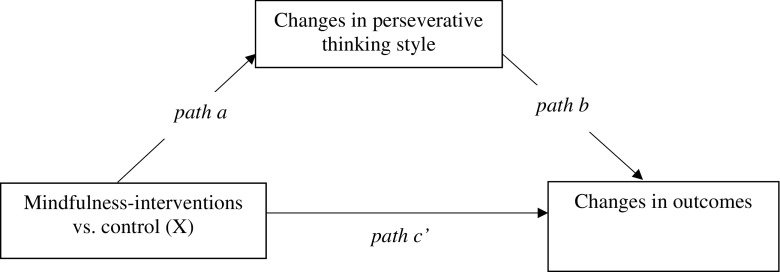
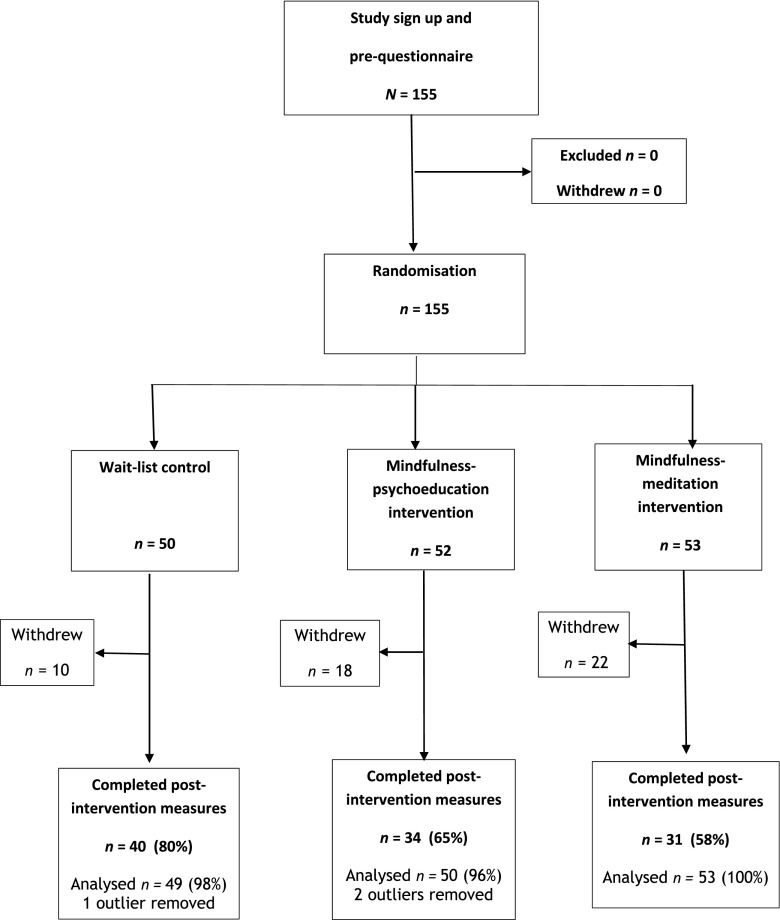
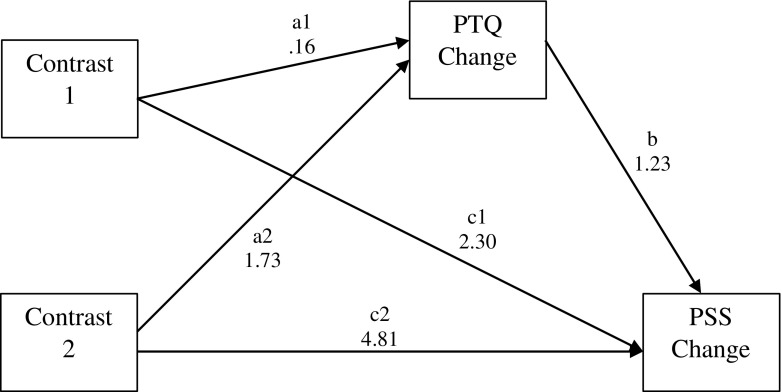
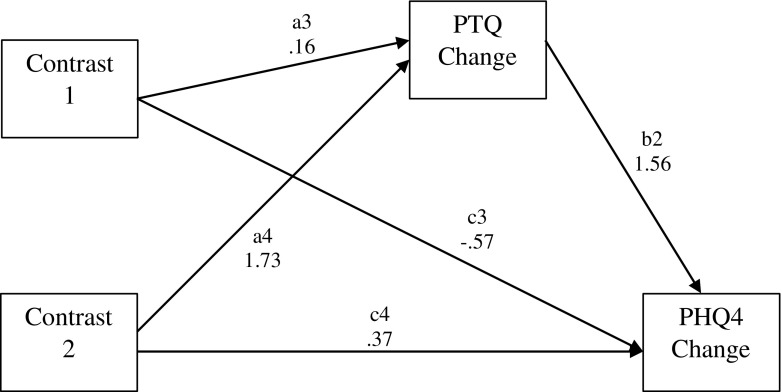
Building on previous research, this study compared the effects of two brief, online mindfulness-based interventions (MBIs; with and without formal meditation practice) and a no intervention control group in a non-clinical sample. One hundred and fifty-five university staff and students were randomly allocated to a 2-week, self-guided, online MBI with or without mindfulness meditation practice, or a wait list control. Measures of mindfulness, perceived stress, perseverative thinking and anxiety/depression symptoms within were administered before and after the intervention period. Intention to treat analysis identified significant differences between groups on change over time for all measured outcomes. Participation in the MBIs was associated with significant improvements in all measured domains (all p s < 0.05), with effect sizes in the small to medium range (0.25 to 0.37, 95% CIs 0.11 to 0.56). No significant changes on these measures were found for the control group. Change in perseverative thinking was found to mediate the relationship between condition and improvement on perceived stress and anxiety/depression symptom outcomes. Contrary to our hypotheses, no differences between the intervention conditions were found. Limitations of the study included reliance on self-report data, a relatively high attrition rate and absence of a longer-term follow-up. This study provides evidence in support of the feasibility and effectiveness of brief, self-guided MBIs in a non-clinical population and suggests that reduced perseverative thinking may be a mechanism of change. Our findings provide preliminary evidence for the effectiveness of a mindfulness psychoeducation condition, without an invitation to formal mindfulness meditation practice. Further research is needed to confirm and better understand these results and to test the potential of such interventions.
Overview
The claims and statistics of this paper haven’t been checked yet.
Run the check — free, no account needed. It reads the open-access text and checks the sources it cites.
Integrity signals
Registry
Cites
Statistics
Figures
Verification
Claims the paper makes
The claims and statistics of this paper haven’t been checked yet.
Run the check — free, no account needed. It reads the open-access text and checks the sources it cites.
Claims other papers make about this one
Each is checked against this paper’s own text: does it say what the citing paper says it does?
The cited source doesn’t support the claim as written.
In the citing paper
“studies solely including patients with psoriasis showed positive effects of a MBI on skin-related parameters, such as the severity of psoriasis (18–20) and the rate of skin clearing during phototherapy (21).”
From Effects of a Brief Mindfulness-based Intervention in Patients with Psoriasis: A Randomized Controlled Trial (2024) · cites this paper as [18]
Checked by a reasoning model — may be wrong.
Experimental — accuracy not yet measuredThe source backs part of the claim, not all of it — or backs it for a different population, condition or comparison.
In the citing paper
“Extensive mindfulness-based interventions have been shown to have positive effects in patients with psoriasis.”
From Effects of a Brief Mindfulness-based Intervention in Patients with Psoriasis: A Randomized Controlled Trial (2024) · cites this paper as [18]
Experimental — accuracy not yet measuredThe source backs part of the claim, not all of it — or backs it for a different population, condition or comparison.
In the citing paper
“Extensive mindfulness-based interventions have been shown to have positive effects in patients with psoriasis.”
From Effects of a Brief Mindfulness-based Intervention in Patients with Psoriasis: A Randomized Controlled Trial (2024) · cites this paper as [19]
Experimental — accuracy not yet measuredThe source backs part of the claim, not all of it — or backs it for a different population, condition or comparison.
In the citing paper
“Some studies also revealed positive effects on psychological outcome parameters (e.g. anxiety, depression or quality of life) (18, 19), while others did not (21, 22).”
From Effects of a Brief Mindfulness-based Intervention in Patients with Psoriasis: A Randomized Controlled Trial (2024) · cites this paper as [18]
Experimental — accuracy not yet measured
The source backs part of the claim, not all of it — or backs it for a different population, condition or comparison.
In the citing paper
“By promoting acceptance, non-reactivity, and present-moment awareness, mindfulness techniques offer a comprehensive framework for addressing the cognitive, emotional, and behavioral aspects of social anxiety(10) .”
From Mindful Steps Forward: Exploring the Impact of a Mindfulness-Based Intervention on Social Anxiety (2024) · cites this paper as [10]
Experimental — accuracy not yet measuredThe cited source says what the claim attributes to it.
In the citing paper
“Many mindfulness studies so far have suffered from samples of limited generalizability. Participants were frequently recruited at only one university or from one study course [30, 34, 101, 102].”
The check wasn’t confident either way, so it gives no verdict — never disputed.
In the citing paper
“studies solely including patients with psoriasis showed positive effects of a MBI on skin-related parameters, such as the severity of psoriasis (18–20) and the rate of skin clearing during phototherapy (21).”
From Effects of a Brief Mindfulness-based Intervention in Patients with Psoriasis: A Randomized Controlled Trial (2024) · cites this paper as [19]
Experimental — accuracy not yet measured
Self-check
Percentages, sums and reported differences re-computed from the paper’s own numbers.
The self-check needs the paper’s full text.
Citations
Cites
Baron, R. M., & Kenny, D. A. (1986) · Journal of Personality and Social Psychology · doi:10.1037/0022-3514.51.6.1173 · Cited by 91,532
Preacher, K. J., & Hayes, A. F. (2008) · Behavior Research Methods · doi:10.3758/brm.40.3.879 · Cited by 34,117
The benefits of being present: Mindfulness and its role in psychological well-being
Brown, K. W., & Ryan, R. M. (2003) · Journal of Personality and Social Psychology · doi:10.1037/0022-3514.84.4.822 · Cited by 13,448
Mindfulness-based interventions in context: Past, present, and future
Kabat-Zinn, J. (2003) · Clinical Psychology: Science and Practice · doi:10.1093/clipsy.bpg016 · Cited by 8,615 · cited 1×
“Mindfulness has been described as Bthe awareness that emerges through paying attention on purpose, in the present moment, and non-judgmentally to the unfolding of experience moment by moment^ (Kabat-Zinn 2003, p. 145).”
BackgroundMindfulness-based interventions in context: Past, present, and future.
Kabat-Zinn, J. (2003) · Clinical Psychology: Science and Practice · doi:10.1093/clipsy/bpg016 · Cited by 8,612
Using Self-Report Assessment Methods to Explore Facets of Mindfulness
Baer, R. A., Smith, G. T., Hopkins, J., Krietemeyer, J., & Toney, L. (2006) · Assessment · doi:10.1177/1073191105283504 · Cited by 7,511 · cited 1×
“Five Facet Mindfulness Questionnaire (FFMQ; Baer et al. 2006) This 39-item self-report scale is used to measure changes in participant’s tendency to be mindful in daily life.”
Method(2008) · Medical Entomology and Zoology · Cited by 7,477
An Ultra-Brief Screening Scale for Anxiety and Depression: The PHQ–4
Kroenke, K., Spitzer, R. L., Williams, J. B. W., & Löwe, B. (2009) · Psychosomatics · doi:10.1016/s0033-3182(09)70864-3 · Cited by 4,261
(1988) · Cited by 4,111
Shapiro, S. L., Carlson, L. E., Astin, J. A., & Freedman, B. (2006) · Journal of Clinical Psychology · doi:10.1002/jclp.20237 · Cited by 4,002
Mindfulness-based stress reduction and health benefits
Grossman, P., Niemann, L., Schmidt, S., & Walach, H. (2004) · Journal of Psychosomatic Research · doi:10.1016/s0022-3999(03)00573-7 · Cited by 3,958
The effect of mindfulness based therapy on anxiety and depression: A meta analytic review
Hofmann, S. G., Sawyer, A. T., Witt, A. A., & Oh, D. (2010) · Journal of Consulting and Clinical Psychology · doi:10.1037/a0018555 · Cited by 3,846
Effect size, confidence interval and statistical significance: a practical guide for biologists
Nakagawa, S., & Cuthill, I. C. (2007) · Biological Reviews · doi:10.1111/j.1469-185x.2007.00027.x · Cited by 3,835
Clinical Psychology: Science and Practice
(2021) · Clinical Psychology Science and Practice · doi:10.1111/(issn)1468-2850 · Cited by 3,683
Statistical mediation analysis with a multicategorical independent variable
Hayes, A. F., & Preacher, K. J. (2014) · British Journal of Mathematical and Statistical Psychology · doi:10.1111/bmsp.12028 · Cited by 3,403
Baer, R. A., Smith, G. T., Lykins, E., Button, D., Krietemeyer, J., Sauer, S., Walsh, E., Duggan, D., & Williams, J. M. G. (2008) · Assessment · doi:10.1177/1073191107313003 · Cited by 2,930
Effects of mindfulness on psychological health: A review of empirical studies
Keng, S.-L., Smoski, M. J., & Robins, C. J. (2011) · Clinical Psychology Review · doi:10.1016/j.cpr.2011.04.006 · Cited by 2,687 · cited 2×
“There is growing evidence that MBIs can have positive consequences for psychological (Brown and Ryan 2003; Keng et al. 2011) and physical (Grossman et al. 2004) health, in both clinical (Chiesa and Serretti 2011; Hofmann et al. 2010; Strauss et al. 2014; Vøllestad et al. 2012) and non-clinical…”
BackgroundMediators and Mechanisms of Change in Psychotherapy Research
Kazdin, A. E. (2007) · Annual Review of Clinical Psychology · doi:10.1146/annurev.clinpsy.3.022806.091432 · Cited by 2,504 · cited 1×
“As recommended (Kazdin 2007), only complete data sets were used for the mediation analyses.”
MethodLöwe, B., Wahl, I., Rose, M., Spitzer, C., Glaesmer, H., Wingenfeld, K., Schneider, A., & Brähler, E. (2010) · Journal of Affective Disorders · doi:10.1016/j.jad.2009.06.019 · Cited by 2,473
Intention-to-treat concept: A review
Gupta, S. (2011) · Perspectives in Clinical Research · doi:10.4103/2229-3485.83221 · Cited by 1,921
Carmody, J., & Baer, R. A. (2008) · Journal of Behavioral Medicine · doi:10.1007/s10865-007-9130-7 · Cited by 1,823
The clinical use of mindfulness meditation for the self-regulation of chronic pain
Kabat-Zinn, J., Lipworth, L., & Burney, R. (1985) · Journal of Behavioral Medicine · doi:10.1007/bf00845519 · Cited by 1,745
Gu, J., Strauss, C., Bond, R., & Cavanagh, K. (2015) · Clinical Psychology Review · doi:10.1016/j.cpr.2015.01.006 · Cited by 1,712 · cited 2×
“There is evidence that the effects of mindfulness training on reduction in mental health symptoms are mediated by reductions in rumination and worry (Gu et al. 2015).”
BackgroundSelf-citationMindfulness-based stress reduction for healthy individuals: A meta-analysis
Khoury, B., Sharma, M., Rush, S. E., & Fournier, C. (2015) · Journal of Psychosomatic Research · doi:10.1016/j.jpsychores.2015.03.009 · Cited by 1,617 · cited 2×
“…for psychological (Brown and Ryan 2003; Keng et al. 2011) and physical (Grossman et al. 2004) health, in both clinical (Chiesa and Serretti 2011; Hofmann et al. 2010; Strauss et al. 2014; Vøllestad et al. 2012) and non-clinical (Eberth and Sedlmeier 2012; Khoury et al. 2015) populations.”
BackgroundPrevalence and correlates of depression, anxiety, and suicidality among university students
Eisenberg, D., Gollust, S. E., Golberstein, E., & Hefner, J. L. (2007) · American Journal of Orthopsychiatry · doi:10.1037/0002-9432.77.4.534 · Cited by 1,592 · cited 1×
“However, our sample reported relatively high levels of baseline distress, which is perhaps unsurprising given the high prevalence of depression and anxiety in university samples (e.g. Eisenberg et al. 2007).”
ResultComputer-based psychological treatments for depression: A systematic review and meta-analysis
Richards, D., & Richardson, T. (2012) · Clinical Psychology Review · doi:10.1016/j.cpr.2012.02.004 · Cited by 1,442
Mindfulness-based cognitive therapy for depression
TEASDALE, J. D. (2006) · Routledge eBooks · doi:10.4324/9780203098899-33 · Cited by 1,332
Jain, S., Shapiro, S. L., Swanick, S., Roesch, S. C., Mills, P. J., Bell, I., & Schwartz, G. E. R. (2007) · Annals of Behavioral Medicine · doi:10.1207/s15324796abm3301_2 · Cited by 1,300 · cited 2×
“There is some evidence that brief (4 week) group mindfulness meditation training is associated with reductions in rumination in comparison to a control group (Jain et al. 2007), but to date, studies of briefer online MBIs have not considered the effects of these interventions on perseverative thinking.”
BackgroundShapiro, S. L., Brown, K. W., & Biegel, G. M. (2007) · Training and Education in Professional Psychology · doi:10.1037/1931-3918.1.2.105 · Cited by 1,134 · cited 2×
“2014) in MBIs, whilst others have not (Carmody and Baer 2009; Hindman et al. 2015; Shapiro et al. 2007).”
BackgroundAdherence in Internet Interventions for Anxiety and Depression
Christensen, H., Griffiths, K. M., & Farrer, L. (2009) · Journal of Medical Internet Research · doi:10.2196/jmir.1194 · Cited by 1,133
Mindfulness-based cognitive therapy for depression
Kumari, D., & Satyapal, N. (2024) · Industrial Psychiatry Journal · doi:10.4103/ipj.ipj_127_24 · Cited by 1,005
Spijkerman, M. P. J., Pots, W. T. M., & Bohlmeijer, E. T. (2016) · Clinical Psychology Review · doi:10.1016/j.cpr.2016.03.009 · Cited by 975 · cited 10×
“…self-help interventions are typically associated with better outcomes and higher rates of adherence in comparison to pure self-help (Gellatly et al. 2007; Richards and Richardson 2012; Spijkerman et al. 2016), and the potential added value of brief support for MBIs online should also be explored.”
BackgroundResultInfluentialEhring, T., Zetsche, U., Weidacker, K., Wahl, K., Schönfeld, S., & Ehlers, A. (2011) · Journal of Behavior Therapy and Experimental Psychiatry · doi:10.1016/j.jbtep.2010.12.003 · Cited by 888
The Delivery of Public Health Interventions via the Internet: Actualizing Their Potential
Bennett, G. G., & Glasgow, R. E. (2009) · Annual Review of Public Health · doi:10.1146/annurev.publhealth.031308.100235 · Cited by 800
The Effects of Mindfulness Meditation: A Meta-Analysis
Eberth, J., & Sedlmeier, P. (2012) · Mindfulness · doi:10.1007/s12671-012-0101-x · Cited by 791
Chiesa, A., & Serretti, A. (2011) · Psychiatry Research · doi:10.1016/j.psychres.2010.08.011 · Cited by 650
Carmody, J., & Baer, R. A. (2009) · Journal of Clinical Psychology · doi:10.1002/jclp.20555 · Cited by 568 · cited 2×
“2014) in MBIs, whilst others have not (Carmody and Baer 2009; Hindman et al. 2015; Shapiro et al. 2007).”
BackgroundStrauss, C., Cavanagh, K., Oliver, A., & Pettman, D. (2014) · PLoS ONE · doi:10.1371/journal.pone.0096110 · Cited by 495
Self-citation(2013) · Cited by 481
Vøllestad, J., Nielsen, M. B., & Nielsen, G. H. (2012) · British Journal of Clinical Psychology · doi:10.1111/j.2044-8260.2011.02024.x · Cited by 459 · cited 3×
“…for psychological (Brown and Ryan 2003; Keng et al. 2011) and physical (Grossman et al. 2004) health, in both clinical (Chiesa and Serretti 2011; Hofmann et al. 2010; Strauss et al. 2014; Vøllestad et al. 2012) and non-clinical (Eberth and Sedlmeier 2012; Khoury et al. 2015) populations.”
BackgroundGu, J., Strauss, C., Crane, C., Barnhofer, T., Karl, A., Cavanagh, K., & Kuyken, W. (2016) · Psychological Assessment · doi:10.1037/pas0000263 · Cited by 431 · cited 1×
“Psychometric papers on the FFMQ have supported the use of a total scale score (omitting scores from the observe subscale) in addition to subscale scores (e.g., Baer et al. 2008; Gu et al. 2016; Williams et al. 2014b).”
MethodSelf-citationWilliams, J. M. G., Crane, C., Barnhofer, T., Brennan, K., Duggan, D. S., Fennell, M. J. V., Hackmann, A., Krusche, A., Muse, K., Von Rohr, I. R., et al. (2014) · Journal of Consulting and Clinical Psychology · doi:10.1037/a0035036 · Cited by 420
GELLATLY, J., BOWER, P., HENNESSY, S., RICHARDS, D., GILBODY, S., & LOVELL, K. (2007) · Psychological Medicine · doi:10.1017/s0033291707000062 · Cited by 419 · cited 2×
“…self-help interventions are typically associated with better outcomes and higher rates of adherence in comparison to pure self-help (Gellatly et al. 2007; Richards and Richardson 2012; Spijkerman et al. 2016), and the potential added value of brief support for MBIs online should…”
BackgroundMindfulness, spirituality, and health-related symptoms
Carmody, J., Reed, G., Kristeller, J., & Merriam, P. (2008) · Journal of Psychosomatic Research · doi:10.1016/j.jpsychores.2007.06.015 · Cited by 394
Waller, R., & Gilbody, S. (2009) · Psychological Medicine · doi:10.1017/s0033291708004224 · Cited by 393 · cited 1×
“This summary data and those from the current study are more in line with the relatively high attrition rates found for other self-guided internet interventions (Christensen et al. 2009; Waller and Gilbody 2009).”
ResultShapiro, S. L., Bootzin, R. R., Figueredo, A. J., Lopez, A. M., & Schwartz, G. E. (2003) · Journal of Psychosomatic Research · doi:10.1016/s0022-3999(02)00546-9 · Cited by 350
A randomised controlled trial of a brief online mindfulness-based intervention
Cavanagh, K., Strauss, C., Cicconi, F., Griffiths, N., Wyper, A., & Jones, F. (2013) · Behaviour Research and Therapy · doi:10.1016/j.brat.2013.06.003 · Cited by 350
Self-citationCavanagh, K., Strauss, C., Forder, L., & Jones, F. (2014) · Clinical Psychology Review · doi:10.1016/j.cpr.2014.01.001 · Cited by 340 · cited 11×
“In addition to the potential for rapid and widespread dissemination of MBIs offered by the use of online resources, the computerisation of such interventions lends itself to component analyses and dismantling research which may help to address a number of pressing questions about their active ingredients (Marks and Ca…”
BackgroundResultInfluentialSelf-citationWilliams, M. J., Dalgleish, T., Karl, A., & Kuyken, W. (2014) · Psychological Assessment · doi:10.1037/a0035566 · Cited by 321
Warnecke, E., Quinn, S., Ogden, K., Towle, N., & Nelson, M. R. (2011) · Medical Education · doi:10.1111/j.1365-2923.2010.03877.x · Cited by 307
Ly, K. H., Trüschel, A., Jarl, L., Magnusson, S., Windahl, T., Johansson, R., Carlbring, P., & Andersson, G. (2014) · BMJ Open · doi:10.1136/bmjopen-2013-003440 · Cited by 269
Assessing treatments used to reduce rumination and/or worry: A systematic review
Querstret, D., & Cropley, M. (2013) · Clinical Psychology Review · doi:10.1016/j.cpr.2013.08.004 · Cited by 253
Person‐Based Cognitive Therapy for Distressing Psychosis
Chadwick, P. (2006) · Wiley eBooks · doi:10.1002/9780470713075 · Cited by 252
Internet-based mindfulness treatment for anxiety disorders: a randomized controlled trial
Boettcher, J., Åström, V., Påhlsson, D., Schenström, O., Andersson, G., & Carlbring, P. (2014) · Behavior Therapy · doi:10.1016/j.beth.2013.11.003 · Cited by 245
Herrero, J., & Meneses, J. (2006) · Computers in Human Behavior · doi:10.1016/j.chb.2004.03.007 · Cited by 222
Krusche, A., Cyhlarova, E., & Williams, J. M. G. (2013) · BMJ Open · doi:10.1136/bmjopen-2013-003498 · Cited by 192
Distance delivery of mindfulness-based cognitive therapy for depression: Project UPLIFT
Thompson, N. J., Walker, E. R., Obolensky, N., Winning, A., Barmon, C., DiIorio, C., & Compton, M. T. (2010) · Epilepsy & Behavior · doi:10.1016/j.yebeh.2010.07.031 · Cited by 185 · cited 4×
“Guided 8-week online mindfulness programmes have demonstrated comparable efficacy in comparison to active control conditions (Ly et al. 2014; Thompson et al. 2010), and unguided 8-week online mindfulness programmes have demonstrated efficacy in comparison to wait list conditions in randomised…”
BackgroundMethodInfluentialVisted, E., Vøllestad, J., Nielsen, M. B., & Nielsen, G. H. (2015) · Mindfulness · doi:10.1007/s12671-014-0283-5 · Cited by 178
Feasibility of an Online Mindfulness Program for Stress Management—A Randomized, Controlled Trial
Morledge, T. J., Allexandre, D., Fox, E., Fu, A. Z., Higashi, M. K., Kruzikas, D. T., Pham, S. V., & Reese, P. R. (2013) · Annals of Behavioral Medicine · doi:10.1007/s12160-013-9490-x · Cited by 176
Mindfulness Practice, Rumination and Clinical Outcome in Mindfulness-Based Treatment
Hawley, L. L., Schwartz, D., Bieling, P. J., Irving, J., Corcoran, K., Farb, N. A. S., Anderson, A. K., & Segal, Z. V. (2014) · Cognitive Therapy and Research · doi:10.1007/s10608-013-9586-4 · Cited by 170
A randomized controlled pilot study of a brief web-based mindfulness training
Glück, T. M., & Maercker, A. (2011) · BMC Psychiatry · doi:10.1186/1471-244x-11-175 · Cited by 168
Crane, C., Crane, R. S., Eames, C., Fennell, M. J. V., Silverton, S., Williams, J. M. G., & Barnhofer, T. (2014) · Behaviour Research and Therapy · doi:10.1016/j.brat.2014.08.015 · Cited by 163 · cited 3×
“…findings show an association between extent of mindfulness practice, increases inmindfulness and symptom reduction (Carmody and Baer 2008; Shapiro et al. 2003) and risk of relapse (Crane et al. 2014) in MBIs, whilst others have not (Carmody and Baer 2009; Hindman et al. 2015; Shapiro et al. 2007).”
BackgroundRose, R. D., Buckey, J. C., Zbozinek, T. D., Motivala, S. J., Glenn, D. E., Cartreine, J. A., & Craske, M. G. (2013) · Behaviour Research and Therapy · doi:10.1016/j.brat.2012.11.003 · Cited by 153 · cited 1×
“…note that 56% of our sample scored at least one standard deviation over the general population mean on the PHQ-4 measure (cf. Löwe et al. 2010), and 81% scored at least half a standard deviation above a community mean on the perceived stress scale (Cohen and Williamson 1988; cf. Rose et al. 2013).”
BackgroundComputer-Aided Psychological Treatments: Evolving Issues
Marks, I., & Cavanagh, K. (2009) · Annual Review of Clinical Psychology · doi:10.1146/annurev.clinpsy.032408.153538 · Cited by 133 · cited 4×
“which may help to address a number of pressing questions about their active ingredients (Marks and Cavanagh 2009; Cavanagh et al. 2014).”
BackgroundInfluentialSelf-citationKrusche, A., Cyhlarova, E., King, S., & Williams, J. M. G. (2012) · BMJ Open · doi:10.1136/bmjopen-2011-000803 · Cited by 121 · cited 2×
“The preliminary evaluation of briefer online interventions has also indicated some positive results, with one group reporting evidence of reductions in perceived stress (Krusche et al. 2012) and symptoms of anxiety and depression (Krusche et al.”
BackgroundResultA Comparison of Formal and Informal Mindfulness Programs for Stress Reduction in University Students
Hindman, R. K., Glass, C. R., Arnkoff, D. B., & Maron, D. D. (2015) · Mindfulness · doi:10.1007/s12671-014-0331-1 · Cited by 118
Wahbeh, H., Svalina, M. N., & Oken, B. S. (2014) · Open Medicine Journal · doi:10.2174/1874220301401010066 · Cited by 116 · cited 1×
“This summary data and those from the current study are more in line with the relatively high attrition rates found for other self-guided internet interventions (Christensen et al. 2009; Waller and Gilbody 2009).”
ResultGroup mindfulness-based intervention for distressing voices: A pragmatic randomised controlled trial
Chadwick, P., Strauss, C., Jones, A.-M., Kingdon, D., Ellett, L., Dannahy, L., & Hayward, M. (2016) · Schizophrenia Research · doi:10.1016/j.schres.2016.04.001 · Cited by 116
Self-citationMonitoring mindfulness practice quality: An important consideration in mindfulness practice
Del Re, A. C., Flückiger, C., Goldberg, S. B., & Hoyt, W. T. (2013) · Psychotherapy Research · doi:10.1080/10503307.2012.729275 · Cited by 113 · cited 1×
“This inconsistent pattern of findings may partly reflect the challenge of reliably measuring the amount and quality of mindfulness practice that people engage with (Del Re et al. 2013).”
BackgroundGrist, R., & Cavanagh, K. (2013) · Journal of Contemporary Psychotherapy · doi:10.1007/s10879-013-9243-y · Cited by 100
Self-citation(Inter)personal Computing: The Role of the Therapeutic Relationship in E-mental Health
Cavanagh, K., & Millings, A. (2013) · Journal of Contemporary Psychotherapy · doi:10.1007/s10879-013-9242-z · Cited by 88
Self-citationGroup person-based cognitive therapy for distressing voices: Pilot data from nine groups
Dannahy, L., Hayward, M., Strauss, C., Turton, W., Harding, E., & Chadwick, P. (2010) · Journal of Behavior Therapy and Experimental Psychiatry · doi:10.1016/j.jbtep.2010.07.006 · Cited by 82
Self-citationLever Taylor, B., Strauss, C., Cavanagh, K., & Jones, F. (2014) · Behaviour Research and Therapy · doi:10.1016/j.brat.2014.09.007 · Cited by 76
Self-citationA closer look at the baseline-observation-carried-forward (BOCF)
D’Souza, D. N. (2010) · Patient Preference and Adherence · doi:10.2147/ppa.s8135 · Cited by 70
Computerized cognitive behavioural therapy and the therapeutic alliance: A qualitative enquiry
Barazzone, N., Cavanagh, K., & Richards, D. A. (2012) · British Journal of Clinical Psychology · doi:10.1111/j.2044-8260.2012.02035.x · Cited by 67 · cited 1×
“Further methods of reducing attrition via manipulation and optimisation of both the programme content and the user experience should also be explored and evaluated (cf. Barazzone et al. 2012; Cavanagh and Millings 2013).”
MethodSelf-citationGulliver, A., Farrer, L. M., Chan, J. K., Tait, R. J., Bennett, K., Calear, A. L., & Griffiths, K. M. (2015) · Addiction Science & Clinical Practice · doi:10.1186/s13722-015-0027-4 · Cited by 63
Internet-based treatment of depression
Cuijpers, P. J., Riper, H. M., & Andersson, G. (2015) · Current Opinion in Psychology · doi:10.1016/j.copsyc.2014.12.026 · Cited by 55
Monshat, K., Vella‐Brodrick, D., Burns, J. M., & Herrman, H. (2011) · Health Promotion International · doi:10.1093/heapro/dar017 · Cited by 39
Group person‐based cognitive therapy for chronic depression: a pilot randomized controlled trial
Strauss, C., Hayward, M., & Chadwick, P. (2012) · British Journal of Clinical Psychology · doi:10.1111/j.2044-8260.2012.02036.x · Cited by 35
Self-citationChanges in Mindfulness Following a Mindfulness Telehealth Intervention
Niles, B. L., Vujanovic, A. A., Silberbogen, A. K., Seligowski, A. V., & Potter, C. M. (2012) · Mindfulness · doi:10.1007/s12671-012-0130-5 · Cited by 31
Olendzki, A. (2008) · Springer eBooks · doi:10.1007/978-0-387-09593-6_3 · Cited by 30
Strauss, C., Hayward, M., & Chadwick, P. (2012) · British Journal of Clinical Psychology · Cited by 28
Self-citationStrauss, C., Luke, G., Hayward, M., & Jones, F. W. (2014) · The Cognitive Behaviour Therapist · doi:10.1017/s1754470x14000312 · Cited by 7
Self-citation
Research works printed but not linked: 1
- Muthén, B., & Muthén, L. (1998-2012). Mplus User’s Guide (7th ed.). Los Angeles: Muthén and Muthén.
Cited by
Sorted by citations
Champion, L., Economides, M., & Chandler, C. (2018) · PLOS ONE · doi:10.1371/journal.pone.0209482 · Cited by 225
“This is consistent with other recent studies in healthy participants showing improvements in stress, affect and irritability [19], and symptoms of anxiety/depression [57], following online MM interventions as short as just two weeks.”
ResultSommers-Spijkerman, M., Austin, J., Bohlmeijer, E., & Pots, W. (2021) · JMIR Mental Health · doi:10.2196/28168 · Cited by 179
“Population, intervention, and methodological characteristics (Multimedia Appendix 1; Gao et al, unpublished data, 2021; [32-125]) as well as effect size data were extracted from the full-text papers by 3 raters (ie, MSS, JA, and WP) independently.”
BackgroundMethodWalsh, K. M., Saab, B. J., & Farb, N. A. (2019) · JMIR Mental Health · doi:10.2196/10844 · Cited by 123
Taylor, H., Strauss, C., & Cavanagh, K. (2021) · Clinical Psychology Review · doi:10.1016/j.cpr.2021.102078 · Cited by 102
Self-citationMatis, J., Svetlak, M., Slezackova, A., Svoboda, M., & Šumec, R. (2020) · doi:10.2196/preprints.20709 · Cited by 81
Metadata
- Authors
- Cavanagh, K., Churchard, A., O’Hanlon, P., Mundy, T., Votolato, P., Jones, F., Gu, J., & Strauss, C.
- Affiliations
- University of Sussex (GB)
- Canterbury Christ Church University (GB)
- Corresponding author
- Cavanagh, Kate
- Venue
- Mindfulness
- Published
- 2018-01-16
- Volume
- 9
- Issue
- 4
- Pages
- 1191-1205
- ISSN
- 1868-8527 (ISSN-L)
- 1868-8535
- PMC
- PMC6061247
- OpenAlex
- W2783009920
- Cited by
- 120
- References
- 83
- Citations by year
- 2026: 8 · 2025: 17 · 2024: 15 · 2023: 13 · 2022: 21 · 2021: 26 · 2020: 13 · 2019: 2 · 2018: 5
- FWCI
- 13.49
- Type
- journal article
- Language
- en
- Open access
- hybrid
- doi.org
- Licence
- Locations
- Mindfulness (publishedVersion, cc-by)
- Europe PMC (PubMed Central) (publishedVersion, cc-by)
- PubMed Central (publishedVersion, cc-by)
- PubMed (publishedVersion)
- Create (Canterbury Christ Church University) (acceptedVersion)
- UCL Discovery (University College London) (submittedVersion)
- Funders
- Economic and Social Research Council (es/j500173/1)
- Topics
- Social Sciences › Psychology › Clinical Psychology › Mindfulness and Compassion Interventions
- Social Sciences › Psychology › Applied Psychology › Digital Mental Health Interventions
- Social Sciences › Psychology › Social Psychology › Psychological Well-being and Life Satisfaction
- Keywords
- mindfulness-based interventions, online intervention, self-guided intervention, mindfulness meditation, perseverative thinking, perceived stress, anxiety, depression, university students, university employees, non-clinical population, psychoeducation, mechanisms of change, replication
About these checks
Registry, retraction, Cites and statistics results are computed, not judged, with one exception: a printed reference that no index lists is read once by a model before it counts as a citation error. Claims are extracted by a model and kept only when their quote appears verbatim in the text; each cited source is then checked, with a model’s help, for whether it says what the claim relies on. Those verdicts can be wrong — read the claim’s quote and the cited source before relying on one.
Statistics and arithmetic are recomputed, not judged.
Confidence bands are shown only for fields calibrated on our annotated test set. None is calibrated yet, so no band is shown.
What counts as a claim ›How we measure confidence ›How we check this ›
Are you an author, or do you see a problem with this page? Request a review
