

The DOI matches its Crossref record; 48 of the 48 references it cites were found in a registry or an index.
The Effects of an Online Mindfulness Intervention on Perceived Stress, Depression and Anxiety in a Non-clinical Sample: A Randomised Waitlist Control Trial
Open accessAbstract
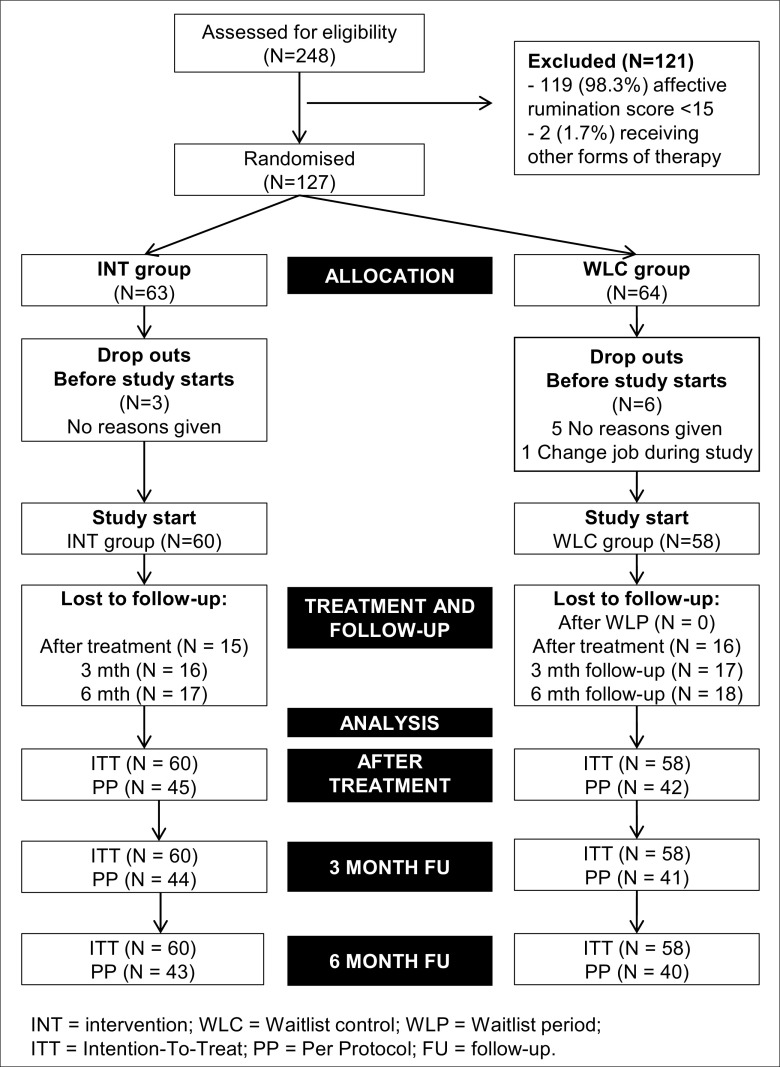
Mindfulness interventions have been shown to be effective for health and wellbeing, and delivering mindfulness programmes online may increase accessibility and reduce waiting times and associated costs; however, research assessing the effectiveness of online interventions is lacking. We sought to: (1) assess the effects of an online mindfulness intervention on perceived stress, depression and anxiety; (2) assess different facets of mindfulness (i.e. acting with awareness, describing, non-judging and non-reacting) as mechanisms of change and (3) assess whether the effect of the intervention was maintained over time. The sample was comprised of 118 adults (female, n = 95) drawn from the general population. Using a randomised waitlist control design, participants were randomised to either an intervention (INT) or waitlist control (WLC) group. Participants completed the online intervention, with the WLC group starting after a 6-week waitlist period. Participants completed measures of depression (PHQ-9), anxiety (GAD-7) and perceived stress (PSS-10) at baseline, post-treatment, 3- and 6-month follow-up. Participants who completed the mindfulness intervention ( n = 60) reported significantly lower levels of perceived stress ( d = − 1.25 [− 1.64, − 0.85]), anxiety ( d = − 1.09 [− 1.47, − 0.98]) and depression ( d = − 1.06 [− 1.44, − 0.67]), when compared with waitlist control participants ( n = 58), and these effects were maintained at follow-up. The effect of the intervention was primarily explained by increased levels of non-judging. This study provides support for online mindfulness interventions and furthers our understanding with regards to how mindfulness interventions exert their positive effects.
Overview
The claims and statistics of this paper haven’t been checked yet.
Run the check — free, no account needed. It reads the open-access text and checks the sources it cites.
Integrity signals
Registry
Cites
Statistics
Figures
Verification
Claims the paper makes
The claims and statistics of this paper haven’t been checked yet.
Run the check — free, no account needed. It reads the open-access text and checks the sources it cites.
Claims other papers make about this one
Each is checked against this paper’s own text: does it say what the citing paper says it does?
The source backs part of the claim, not all of it — or backs it for a different population, condition or comparison.
In the citing paper
“A study by Querstrert et al. [27] revealed that even a four-week training might be sufficient.”
From The Effectiveness of a Four-Week Online Mindfulness Training Course on Individual Mindfulness Skills and Personal Perception of Stress in Company Employees Working from Home (2022) · cites this paper as [27]
Experimental — accuracy not yet measuredThe source backs part of the claim, not all of it — or backs it for a different population, condition or comparison.
In the citing paper
“In previous studies, it has also been found that these effects can last up to several months after the end of the program (Khoury et al., 2015; Querstret et al., 2018).”
From Mindfulness-Based Stress Reduction Increases Mental Wellbeing and Emotion Regulation During the First Wave of the COVID-19 Pandemic: A Synchronous Online Intervention Study (2021) · cites this paper as Querstret et al., 2018
Experimental — accuracy not yet measured
Self-check
Percentages, sums and reported differences re-computed from the paper’s own numbers.
The self-check needs the paper’s full text.
Citations
Cites
Statistical Power Analysis for the Behavioral Sciences
Muller, K. E., & Cohen, J. (1989) · Technometrics · doi:10.2307/1270020 · Cited by 99,603
The PHQ-9: Validity of a brief depression severity measure
Kroenke, K., Spitzer, R. L., & Williams, J. B. W. (2001) · Journal of General Internal Medicine · doi:10.1046/j.1525-1497.2001.016009606.x · Cited by 44,910
Statistical power analyses using G∗Power 3.1: tests for correlation and regression analyses
Faul, F., Erdfelder, E., Buchner, A., & Lang, A.-G. (2009) · Behavior Research Methods · doi:10.3758/brm.41.4.1149 · Cited by 37,615
Statistical Power Analysis for the Behavioral Sciences (2nd ed.).
Lachenbruch, P. A., & Cohen, J. (1989) · Journal of the American Statistical Association · doi:10.2307/2290095 · Cited by 37,421
A Global Measure of Perceived Stress
Cohen, S., Kamarck, T., & Mermelstein, R. (1983) · Journal of Health and Social Behavior · doi:10.2307/2136404 · Cited by 32,807
A Brief Measure for Assessing Generalized Anxiety Disorder: The GAD-7
Spitzer, R. L., Kroenke, K., Williams, J. B. W., & Löwe, B. (2006) · Archives of Internal Medicine · doi:10.1001/archinte.166.10.1092 · Cited by 31,765
Using Self-Report Assessment Methods to Explore Facets of Mindfulness
Baer, R. A., Smith, G. T., Hopkins, J., Krietemeyer, J., & Toney, L. (2006) · Assessment · doi:10.1177/1073191105283504 · Cited by 7,511 · cited 1×
“Previous research has shown that the OBS facet is only predictive for participants with previous experience of meditation (Baer et al. 2006), and the participants in the current study were required to be naive to meditation; therefore, this facet was not utilised.”
Result(2008) · Medical Entomology and Zoology · Cited by 7,477
Introduction to mediation, moderation, and conditional process analysis :
Hayes, A. F., & names (2015) · Cited by 7,004
Required sample size to detect the mediated effect
Fritz, M. S., & MacKinnon, D. P. (2007) · Psychological Science · doi:10.1111/j.1467-9280.2007.01882.x · Cited by 4,810
Research works printed but not linked: 1
- IBM Corp. (2012). IBM SPSS statistics for Windows, Version 21.0. Armonk: IBM Corp.
Cited by
Sorted by citations
Carpenter, J. K., Conroy, K., Gomez, A. F., Curren, L. C., & Hofmann, S. G. (2019) · Clinical Psychology Review · doi:10.1016/j.cpr.2019.101785 · Cited by 342
The future of mindfulness training is digital, and the future is now
Mrazek, A. J., Mrazek, M. D., Cherolini, C. M., Cloughesy, J. N., Cynman, D. J., Gougis, L. J., Landry, A. P., Reese, J. V., & Schooler, J. W. (2019) · Current Opinion in Psychology · doi:10.1016/j.copsyc.2018.11.012 · Cited by 201
Sommers-Spijkerman, M., Austin, J., Bohlmeijer, E., & Pots, W. (2021) · JMIR Mental Health · doi:10.2196/28168 · Cited by 179
“dThree outliers were removed: Kladnitski et al [34] (study 4); Querstret et al [35,36]; Yang et al [37].”
BackgroundMethodInfluentialFauzi, M. F., Anuar, T. S., Teh, L. K., Lim, W. F., James, R. J., Ahmad, R., Mohamed, M. B., Bakar, S. H. A., Yusof, F. Z. M., & Salleh, M. Z. (2021) · International Journal of Environmental Research and Public Health · doi:10.3390/ijerph18063269 · Cited by 167
Domhardt, M., Steubl, L., Boettcher, J., Buntrock, C., Karyotaki, E., Ebert, D. D., Cuijpers, P., & Baumeister, H. (2021) · Clinical Psychology Review · doi:10.1016/j.cpr.2020.101953 · Cited by 106
Nadler, R., Carswell, J. J., & Minda, J. P. (2020) · Frontiers in Psychology · doi:10.3389/fpsyg.2020.00255 · Cited by 83
“Querstret et al. (2018) used 4 of the 5 facets of the FFMQ-SF (the observing facet was excluded due to prior research by Baer et al. (2006, 2008) showing that observing didn’t load onto a single mindfulness construct and did not show changes in meditation-naïve participants), and reported that the…”
BackgroundMethodMatis, J., Svetlak, M., Slezackova, A., Svoboda, M., & Šumec, R. (2020) · doi:10.2196/preprints.20709 · Cited by 81
Sin, J., Galeazzi, G. M., McGregor, E., Collom, J., Taylor, A. F., Barrett, B. M., Lawrence, V. C., & Henderson, C. (2020) · Journal of Medical Internet Research · doi:10.2196/20581 · Cited by 83
“9 | e20581 | p. 6https://www.jmir.org/2020/9/e20581 (page number not for citation purposes) XSL•FO RenderX Outcomes with validated measures Comparisons (n), gender distributionc (%F/M/other), and age Intervention approach (n)b, gender distri- butionc (%F/M/other), and age Targeted CMDaReference; country DASS-21aw, PHQ…”
BackgroundInfluentialPreuss, H., Capito, K., van Eickels, R. L., Zemp, M., & Kolar, D. R. (2021) · Internet Interventions · doi:10.1016/j.invent.2021.100388 · Cited by 64
“Previous studies found that web-based self-guided interventions were helpful in managing perceived stress in non-clinical samples (Querstret et al., 2018) and adjustment problems (Moser et al., 2019) in the short term.”
BackgroundSanilevici, M., Reuveni, O., Lev-Ari, S., Golland, Y., & Levit-Binnun, N. (2021) · Frontiers in Psychology · doi:10.3389/fpsyg.2021.720965 · Cited by 54
“In previous studies, it has also been found that these effects can last up to several months after the end of the program (Khoury et al., 2015; Querstret et al., 2018).”
BackgroundResultStratton, E., Lampit, A., Choi, I., Gavelin, H. M., Aji, M., Taylor, J., Calvo, R. A., Harvey, S. B., & Glozier, N. (2022) · Journal of Medical Internet Research · doi:10.2196/37776 · Cited by 67
Liu, X., Jiang, J., & Zhang, Y. (2021) · Iranian Journal of Public Health · doi:10.18502/ijph.v50i4.6005 · Cited by 36
“This result is consistent with the finding of Querstret et al (28).”
ResultRemskar, M., Western, M. J., & Ainsworth, B. (2024) · British Journal of Health Psychology · doi:10.1111/bjhp.12745 · Cited by 43
“…moderate effect size in a meta-analysis by Jayawardene et al. (2017), alleviate symptoms of depression and anxiety with similar potency (Boettcher et al., 2014; Querstret et al., 2018) and improve sleep—itself strongly associated with mental health outcomes (Jiang et al., 2021; Scott et al., 2021).”
Domhardt, M., Nowak, H., Engler, S., Baumel, A., Grund, S., Mayer, A., Terhorst, Y., & Baumeister, H. (2021) · Clinical Psychology Review · doi:10.1016/j.cpr.2021.102084 · Cited by 32
Patient Health Questionnaire-9 (PHQ-9)
Cheung, R. Y. M. (2024) · Springer eBooks · doi:10.1007/978-3-030-77644-2_63-2 · Cited by 29
Improvements in Mindfulness Facets Mediate the Alleviation of Burnout Dimensions
Kinnunen, S. M., Puolakanaho, A., Tolvanen, A., Mäkikangas, A., & Lappalainen, R. (2020) · Mindfulness · doi:10.1007/s12671-020-01490-8 · Cited by 25
Světlák, M., Linhartová, P., Knejzlíková, T., Knejzlík, J., Kóša, B., Horníčková, V., Jarolínová, K., Lučanská, K., Slezáčková, A., & Šumec, R. (2021) · Frontiers in Psychology · doi:10.3389/fpsyg.2020.581086 · Cited by 30
Aghamohammadi, F., Saed, O., Ahmadi, R., & Kharaghani, R. (2022) · BMC Psychology · doi:10.1186/s40359-022-00823-7 · Cited by 22
Reangsing, C., Trakooltorwong, P., Maneekunwong, K., Thepsaw, J., & Oerther, S. E. (2023) · BMC Complementary Medicine and Therapies · doi:10.1186/s12906-023-04102-9 · Cited by 23
Yuan, J., Sun, F., Zhao, X., Liu, Z., & Liang, Q. (2023) · Journal of Affective Disorders · doi:10.1016/j.jad.2023.02.012 · Cited by 22
“Although levels of mindfulness can be improved through mindfulness-based training (Querstret et al., 2018), mindfulness may also be conceptualized as a psychological trait that refers to the tendency to be mindful in daily life (Brown and Ryan, 2003).”
Parolin, L. A. L., Benzi, I. M. A., Fanti, E., Milesi, A., Cipresso, P., & Preti, E. (2021) · Research in Psychotherapy Psychopathology Process and Outcome · doi:10.4081/ripppo.2021.517 · Cited by 22
Lopez-Montoyo, A., Quero, S., Montero-Marin, J., Barcelo-Soler, A., Beltran, M., Campos, D., & Garcia-Campayo, J. (2019) · BMC Psychiatry · doi:10.1186/s12888-019-2298-x · Cited by 19
Balci, S., Küchler, A., Ebert, D. D., & Baumeister, H. (2023) · Clinical Psychology in Europe · doi:10.32872/cpe.9341 · Cited by 24
“…could be delivered successfully online (Jayawardene et al., 2017), and have been tested and found effective among students (Hall et al., 2018; Mak et al., 2015; Nguyen-Feng et al., 2017) and general and clinical populations (Querstret et al., 2018; Sevilla-Llewellyn-Jones et al., 2018).”
BackgroundOnline Mindfulness Intervention for Inflammatory Bowel Disease: Adherence and Efficacy
Forbes, L., & Johnson, S. K. (2022) · Frontiers in Psychology · doi:10.3389/fpsyg.2021.709899 · Cited by 18
Oberoi, D. V., Piedalue, K.-A. L., Pirbhai, H., Guirguis, S., Mina, D. S., & Carlson, L. E. (2020) · BMC Research Notes · doi:10.1186/s13104-020-05172-5 · Cited by 18
“This finding confirmed our hypothesis and was consistent with past research reporting a higher rate of LTFU in WLC groups [14, 15].”
ResultTement, S., Zorjan, S., Lavrič, M., Poštuvan, V., & Plohl, N. (2020) · BMC Public Health · doi:10.1186/s12889-020-09691-5 · Cited by 21
Saarinen, A., Hintsanen, M., Vahlberg, T., Hankonen, N., & Volanen, S. (2022) · Journal of Adolescence · doi:10.1002/jad.12011 · Cited by 17
Martínez-Pérez, I., García-Rodríguez, A., Morales-Rodríguez, F. M., & Pérez-Mármol, J. M. (2023) · Sustainability · doi:10.3390/su15064729 · Cited by 16
“In this sense, anxiety identifies the balance-imbalance of the demands of the environment and the capabilities of the person [38,39].”
BackgroundGuo, W., Nazari, N., & Sadeghi, M. (2024) · PeerJ · doi:10.7717/peerj.17491 · Cited by 15
The effect of brief mindfulness‐based intervention on patient satisfaction and loyalty after waiting
Sousa, E. C., & Freire, L. (2022) · Journal of Consumer Affairs · doi:10.1111/joca.12488 · Cited by 15
Optimizing Workplace Digital Mental Health Interventions: Systematic Review and Meta-Analysis
Stratton, E., Morris, R. W., Milton, A. C., Deady, M., Choi, I., & Glozier, N. (2025) · Journal of Medical Internet Research · doi:10.2196/71253 · Cited by 17
Web-Based Mindfulness-Based Interventions for Well-being: Randomized Comparative Effectiveness Trial
Sylvia, L. G., Lunn, M. R., Obedin‐Maliver, J., McBurney, R. N., Nowell, W. B., Nosheny, R. L., Mularski, R. A., Long, M. D., Merkel, P. A., Pletcher, M. J., et al. (2022) · Journal of Medical Internet Research · doi:10.2196/35620 · Cited by 14
“In a study that assessed the efficacy of a web-based MBCT course [45], participants (n=118) who completed the course demonstrated significant improvements in perceived stress, depression, and anxiety, which were maintained at the 3-and 6-month follow-ups [46].”
Patient Health Questionnaire-9 (PHQ-9)
Cheung, R. Y. M. (2023) · Springer eBooks · doi:10.1007/978-3-030-77644-2_63-1 · Cited by 14
Schultchen, D., Küchler, A., Schillings, C., Weineck, F., Karabatsiakis, A., Ebert, D. D., Baumeister, H., & Pollatos, O. (2020) · BMJ Open · doi:10.1136/bmjopen-2019-032775 · Cited by 17
A mindful approach to controlling intrusive thoughts
Ashton, S. M., Sambeth, A., & Quaedflieg, C. W. E. M. (2023) · Scientific Reports · doi:10.1038/s41598-023-37447-9 · Cited by 16
Wang, Z., Shalihaer, K., Hofmann, S. G., Feng, S., & Liu, X. (2024) · Clinical Psychology & Psychotherapy · doi:10.1002/cpp.2981 · Cited by 13
Parkinson, B., Lawrence, M., McElhinney, E., & Booth, J. (2022) · Journal of Holistic Nursing · doi:10.1177/08980101221135723 · Cited by 13
“An RCT recruited 118 participants (60 intervention group, 58 control group) from a non-clinical population and compared Be Mindful with a waiting list control (Querstret et al., 2018).”
BackgroundInfluentialTaha, P. H., & Slewa‐Younan, S. (2020) · International Journal of Mental Health Systems · doi:10.1186/s13033-020-00412-4 · Cited by 12
Chung, J., Mundy, M. E., & McKenzie, S. P. (2022) · Frontiers in Psychology · doi:10.3389/fpsyg.2022.869765 · Cited by 11
“There is significant evidence supporting the benefits of mindfulness for improving anxiety, stress, and wellbeing in both university and/or non-clinical samples (e.g., Kaviani et al., 2011; Demarzo et al., 2017; Cavanagh et al., 2018; Querstret et al., 2018; Chung et al., 2021).”
BackgroundBailey, N. W., Comte, W., Chambers, R., Bartlett, L., Connaughton, S., & Hassed, C. S. (2023) · Mindfulness · doi:10.1007/s12671-023-02168-7 · Cited by 13
Lippmann, M., Laudel, H., Heinzle, M., & Narciss, S. (2019) · Journal of Medical Internet Research · doi:10.2196/12497 · Cited by 10
“4 1 2 2 2 ++ Querstret et al (2018), United Kingdom [56]”
Patient Health Questionnaire-9 (PHQ-9)
Cheung, R. Y. M. (2025) · Springer eBooks · doi:10.1007/978-3-031-47219-0_63 · Cited by 10
Türkoğlu, N., & Kavuran, E. (2024) · Mindfulness · doi:10.1007/s12671-024-02336-3 · Cited by 12
“This finding aligns with the results reported by Querestret et al. ( 2018), who found sig - nificant reductions in perceived stress levels through online mindfulness-based cognitive therapy programs (Querstret et al., 2018 ).”
The uptake and outcomes of an online self-help mindfulness programme during COVID-19
Li, I., Chen, A. Z., Newby, J. M., Kladnitski, N., Haskelberg, H., Millard, M., & Mahoney, A. (2022) · Clinical Psychologist · doi:10.1080/13284207.2022.2045866 · Cited by 12
Malandrone, F., Urru, S., Berchialla, P., Rossini, P. G., Oliva, F., Bianchi, S., Ottaviano, M., Gonzalez-Martinez, S., Carli, V., Valenza, G., et al. (2024) · JMIR Mental Health · doi:10.2196/57415 · Cited by 9
Promising practices for health and wellbeing at work: A review of the evidence landscape
Whitmore, M., Stewart, K., Pollard, J., van Belle, J., Yang, M., & Stolk, C. V. (2018) · RAND Corporation eBooks · doi:10.7249/rr2409 · Cited by 8
Rana, M., Bock, L., Riedel, E., Moellmann, H., Schorn, L., & Rana, M. (2022) · International Journal of Environmental Research and Public Health · doi:10.3390/ijerph192416422 · Cited by 6
“[27] revealed that even a four-week training might be sufficient.”
BackgroundValidation of online mindfulness-enhanced course for stress reduction in teachers
Ye, Q., Huang, Y., Ge, X., & Song, X. (2023) · Frontiers in Psychiatry · doi:10.3389/fpsyt.2023.1086142 · Cited by 13
Liptáková, S., Světlák, M., Matis, J., Slezáčková, A., & Rastislav, R. (2022) · Ceskoslovenska psychologie · doi:10.51561/cspsych.66.3.233 · Cited by 8
“…al., 2018; Forbes et al., 2018; Gu et al., 2018; Krusche et al., 2013; Kvillemo et al., 2016; Morledge et al., 2013; Murray et al., 2015; Nguyen-Feng et al., 2017; Nissen et al., 2020; Shore et al., 2018; Trompetter et al., 2014; Querstret et al., 2017; Querstret et al., 2018; Wahbeh et al., 2016).”
BackgroundPal, A., Mukhopadhyay, P., Datta, S., & Pal, N. D. (2022) · Indian Journal of Psychiatry · doi:10.4103/indianjpsychiatry.indianjpsychiatry_4_21 · Cited by 6
“[14] In our study, the participants chose “positive mental state” and “non-judgmental” as the most prominent themes for stress relief.”
Pangngay, J. J. (2024) · Philippine Social Science Journal · doi:10.52006/main.v6i3.754 · Cited by 6
Evaluation of a Four-Week Online Resilience Training Program for Multiple Sclerosis Patients
Bock, L., Rana, M., Westemeyer, L., & Rana, M. (2024) · Healthcare · doi:10.3390/healthcare12060620 · Cited by 6
Naskar, S., Dixit, S., Varadharasu, S., Pattnaik, J. I., & Singh, R. (2024) · Journal of Family Medicine and Primary Care · doi:10.4103/jfmpc.jfmpc_1713_23 · Cited by 5
“[18] All therapy practitioners can provide MBI to those in need.”
BackgroundVainre, M., Galante, J., Watson, P., Dalgleish, T., & Hitchcock, C. (2022) · BMJ Open · doi:10.1136/bmjopen-2021-050951 · Cited by 4
Neate, S. L., Reece, J. C., Hassed, C. S., Chambers, R., Connaughton, S., & Nag, N. (2022) · Frontiers in Public Health · doi:10.3389/fpubh.2022.947898 · Cited by 5
Léger‐Goodes, T., Malboeuf‐Hurtubise, C., Herba, C. M., Taylor, G., Mageau, G. A., Chadi, N., & Lefrançois, D. (2023) · Mental Health Science · doi:10.1002/mhs2.17 · Cited by 6
Garfin, D. R., Cipres, A. L., & Reyes, R. M. (2021) · doi:10.15406/ijcam.2021.14.00534 · Cited by 6
Rajan, A., Kumar, M., & Pranav Raj, P. (2026) · npj Mental Health Research · doi:10.1038/s44184-026-00188-4 · Cited by 9
Aldbyani, A., & Al-Harbi, M. F. O. (2026) · Mindfulness · doi:10.1007/s12671-026-02837-3 · Cited by 4
“Empirical work comparing Islamic-spiritual mindfulness interventions has found significant reductions in anxiety and depression through practices aligned with tazkiyah (Aldbyani, 2024; Querstret et al., 2018; Rubin et al., 2021).”
Zainal, N. H., & Newman, M. G. (2024) · European Psychiatry · doi:10.1192/j.eurpsy.2024.1750 · Cited by 3
“In addition, four RCTs that reported how reduced reactivity [34, 35], judgment [36], and enhanced acting with awareness [37] mediated the effect of MBI against waitlist or treatment-as-usual on clinical outcomes in non-psychiatric samples failed to examine treatment arm as a moderator.”
BackgroundMindfulness in a Business Context, What Future? Bibiliometric Review
Esteves, L., Franco, M., & Rodrigues, M. M. M. (2025) · Journal of the Knowledge Economy · doi:10.1007/s13132-025-02663-3 · Cited by 3
“These states have been studied through mindfulness, mainly as therapies in psychology and health (Burgdorf et al., 2019; Kaplan et al., 2017; Querstret et al., 2018; Sharma et al., 2015).”
Mindfulness as an intervention after multisystem trauma
Clement, E., Murphy, P., Lee, A. S. Y., Ericson, A. D., Gratton, C., Clements, T. W., Ryan, J. F., Kim, M. J., Ball, C. G., & Widder, S. L. (2020) · Trauma · doi:10.1177/1460408620961014 · Cited by 3
Jong, F. J. X., Lee, C. C. W., Ting, R. S., Lin, M., Ong, L. K., Quek, X. F., Lee, S. W. H., Ng, A. L. O., & Teoh, S. L. (2025) · EXPLORE · doi:10.1016/j.explore.2025.103204 · Cited by 3
Schmelefske, E., Per, M., Anand, L., Khoury, B., & Heath, N. L. (2025) · BMC Complementary Medicine and Therapies · doi:10.1186/s12906-025-04962-3 · Cited by 2
Serenity, K., Komariah, M., & Sriati, A. (2023) · REAL in Nursing Journal · doi:10.32883/rnj.v6i2.2472 · Cited by 3
Hertinjung, W. S., Laksmadita, C. T., Ruhaena, L., Sulandari, S., & Kusumawati, D. A. (2023) · Humanitas Indonesian Psychological Journal · doi:10.26555/humanitas.v20i2.288 · Cited by 2
“While a study used a four-week online mindfulness intervention in which participants were required to complete 20-30 minutes of daily practice (Querstret et al., 2018).”
Lee, Y. H., & Cho, H. (2024) · International Journal of Sports Science & Coaching · doi:10.1177/17479541241247790 · Cited by 2
Sperling, J. B., Gray, M., Lee, V., Schmid, L., & Malinowski, N. (2025) · American Journal of Evaluation · doi:10.1177/10982140251322761 · Cited by 2
“This has been used in other studies (e.g. McNeil et al., 1999; Querstret et al., 2018) and has the added bene fi t of not withholding access to an intervention that could be potentially bene fi cial to the community.”
Kadir, N. B. A., Mohd, R. H., Ismail, W. N. K., Jalil, S. J. A., Abdullah, N.-A., Kasim, A. C., Hoesni, S. M., & Manaf, M. R. A. (2022) · Sustainability · doi:10.3390/su14031925 · Cited by 2
Skudder‐Hill, L., & Ghosh, S. D. S. (2020) · Encyclopedia of the UN sustainable development goals · doi:10.1007/978-3-319-69627-0_21-1 · Cited by 2
Mindfulness in the business context: a multi-level model
Esteves, L., Franco, M., & Rodrigues, M. M. M. (2024) · International journal of organizational analysis · doi:10.1108/ijoa-04-2024-4466 · Cited by 2
Cheng, D. K.-Y., Simpson, R., Moineddin, R., Katz, J., Mulsant, B. H., Vasudev, A., Greiver, M., Hosseiny, F., Inzitari, M., Newman, R. I., et al. (2025) · Journal of Pain Research · doi:10.2147/jpr.s515229 · Cited by 1
Papenfuss, I., Lommen, M. J. J., & Ostafin, B. D. (2025) · Journal of Experimental Psychopathology · doi:10.1177/20438087251347677 · Cited by 1
Murray, C. A., Hayden, N., Gordon‐Brown, A., Flynn, S., Bonetree, C., Harper, A., Kassa, C., Mahon, D., McGee, C. M., & Hastings, R. P. (2025) · Journal of Intellectual Disability Research · doi:10.1111/jir.70057 · Cited by 1
Effect of meditation on online college students’ stress and anxiety levels
Grebitus, C., & Martens, D. (2026) · Q Open · doi:10.1093/qopen/qoag003 · Cited by 1
Tong, M., Qiu, Y., Liu, J., Yue, Y., Gu, J., Zeng, L., Yu, Y., & Yang, F. (2026) · General Hospital Psychiatry · doi:10.1016/j.genhosppsych.2026.03.022 · Cited by 1
Feasibility of Mindfulness for Burn Survivors and Parents of Children with Burns
Papamikrouli, E., Kool, M. B., van Schie, C. H. M., & Loey, N. E. E. V. (2023) · European Burn Journal · doi:10.3390/ebj4020020 · Cited by 1
Dinesh, T. K., & Shetty, A. (2023) · Vision The Journal of Business Perspective · doi:10.1177/09722629231191312 · Cited by 2
“Apart from this, amid rapidly growing interest in work-place mindfulness, there is a need to examine the effects of a promising new technology for cultivating the well-being of employees through online mindfulness training (Querstret et al., 2018).”
Intervención online basada en mindfulness para la gestión del estrés en alumnado universitario
Camacho, C. R., & Delgado, M. G. (2024) · International Journal of Developmental and Educational Psychology Revista INFAD de psicología · doi:10.17060/ijodaep.2024.n1.v1.2649 · Cited by 1
Yan, X., Xiong, Z., Sun, H., Li, J., Gao, Y., Zhang, J., & Ding, X. (2024) · Frontiers in Psychology · doi:10.3389/fpsyg.2024.1372586 · Cited by 2
Enhancing constructive communication in the digital age through “textual healing,” a mindfulness app
Trub, L. R., Ahokas, R., Hubert, Z. M., & Starks, T. J. (2024) · Journal of Social and Personal Relationships · doi:10.1177/02654075241293824 · Cited by 1
“Utilization of a waitlist control re fl ects prior studies examining mindfulness interventions delivered digitally (Querstret et al., 2018; van Emmerik et al., 2018).”
Yan, K., Ikani, N., Yusainy, C., Witteman, C. L. M., & Spijker, J. (2025) · Trials · doi:10.1186/s13063-025-08858-y · Cited by 2
“Querstret et al. [70] reported large effect sizes for reductions in stress, anxiety, and depression following a mindfulness intervention over time.”
Vainre, M., Dalgleish, T., Watson, P., Haag, C., Dercon, Q., Galante, J., & Hitchcock, C. (2024) · BMJ Mental Health · doi:10.1136/bmjment-2023-300885 · Cited by 3
Vainre, M., Dalgleish, T., Watson, P., Haag, C., Dercon, Q., Galante, J., & Hitchcock, C. (2023) · doi:10.31234/osf.io/wamkn · Cited by 1
Development and evaluation of a wellbeing structural model for health sciences students
Zyl, R. V. (2019) · SUNScholar (Stellenbosch University)
Effectiveness of Online Mindfulness Training for People Experiencing Mental Illness
Griffiths, C., Hina, F., Pollard, L., & Reid, I. (2022) · Open Journal of Depression · doi:10.4236/ojd.2022.112002
Malandrone, F., Urru, S., Berchialla, P., Rossini, P. G., Oliva, F., Bianchi, S., Ottaviano, M., González-Martínez, S., Carli, V., Valenza, G., et al. (2024) · doi:10.2196/preprints.57415
Ashton, S. M. (2024) · Research Publications (Maastricht University) · doi:10.26481/dis.20240321sa
Tifft, E. D. (2023) · Scholars Archive - University at Albany (University at Albany, State University of New York) · doi:10.54014/naqt-ghda
Contributions of Mindfulness to the Treatment of Anxiety
Papenfuss, I., & Ostafin, B. D. (2025) · Springer eBooks · doi:10.1007/978-3-031-91451-5_16
Braese, O., Krath, J., Schubhan, M., Degraen, D., & Altmeyer, M. (2025) · Proceedings of the ACM on Human-Computer Interaction · doi:10.1145/3748597
Gaete, J., Núñez, D., Romo, V., Ramírez, S., Barrera, F. A., & Araya, R. (2025) · Research Square · doi:10.21203/rs.3.rs-5837565/v1
Fostering Psychophysical Well-Being via Remote Self-Managed Empowerment Protocols: A Scoping Review
Crivelli, D., & Vignati, B. (2025) · Brain Sciences · doi:10.3390/brainsci15111194 · Cited by 1
“…and perceived well-being, their widespread use as sole outcome measures introduces significant limitations [40,41,44–46, 48 –52 ,54 ,56 ,57 ,60, And again, although the triadic framework introduced in this review includes physical fitness as one of the foundational pillars of subjective…”
Nathanson, E. W., Rispoli, K. M., & Ramazon, N. H. (2025) · Journal of Child and Family Studies · doi:10.1007/s10826-025-03210-z
“We hypothe - sized that parents would show significantly decreased over - all stress immediately following the MBSR intervention because there were large effect sizes found for the Be Mind - ful online intervention in the general population (Krusche et al., 2012, 2013; Querstret et al., 2018 ).”
InfluentialReangsing, C., Trakooltorwong, P., Maneekunwong, K., Thepsaw, J., & Oerther, S. E. (2023) · Figshare · doi:10.6084/m9.figshare.23803102
Designing comparison and control groups
Gitlin, L. N., & Czaja, S. J. (2025) · Elsevier eBooks · doi:10.1016/b978-0-443-21664-0.00005-2 · Cited by 1
Dinesh, T. K., Shetty, A., & Kini, R. S. (2025) · Economic Research-Ekonomska Istraživanja · doi:10.32728/er-ei.38.2.3 · Cited by 1
Tassawar, M. A., Nazir, S., & Chaikumarn, M. (2026) · Fisioterapia · doi:10.1016/j.ft.2026.01.005
Ding, X., Cheng, X., Liu, Y., & Li, Q. (2026) · Mindfulness · doi:10.1007/s12671-026-02863-1
“The waitlist control design has inherent limitations (Bluth et al., 2016; Querstret et al., 2018).”
Metadata
- Authors
- Querstret, D., Cropley, M., & Fife-Schaw, C.
- Affiliations
- University of Surrey (GB)
- Corresponding author
- Querstret, Dawn
- Venue
- Mindfulness
- Published
- 2018-05-02
- Volume
- 9
- Issue
- 6
- Pages
- 1825-1836
- ISSN
- 1868-8527 (ISSN-L)
- 1868-8535
- PMC
- PMC6244637
- OpenAlex
- W2802354969
- Cited by
- 103
- References
- 48
- Citations by year
- 2026: 9 · 2025: 17 · 2024: 18 · 2023: 16 · 2022: 16 · 2021: 10 · 2020: 11 · 2019: 4 · 2018: 2
- FWCI
- 7.93
- Type
- journal article
- Language
- en
- Open access
- hybrid
- doi.org
- Licence
- Locations
- Mindfulness (publishedVersion, cc-by)
- Europe PMC (PubMed Central) (publishedVersion, other-oa)
- PubMed Central (publishedVersion, cc-by)
- PubMed (publishedVersion)
- Surrey Research Insight Open Access (The University of Surrey) (submittedVersion)
- Funders
- University of Surrey
- Topics
- Social Sciences › Psychology › Clinical Psychology › Mindfulness and Compassion Interventions
- Social Sciences › Psychology › Applied Psychology › Digital Mental Health Interventions
- Social Sciences › Psychology › Social Psychology › Psychological Well-being and Life Satisfaction
- Keywords
- online mindfulness intervention, perceived stress, depression, anxiety, non-judgment, mechanisms of change, non-clinical adults, maintenance of intervention effects, waitlist control
About these checks
Registry, retraction, Cites and statistics results are computed, not judged, with one exception: a printed reference that no index lists is read once by a model before it counts as a citation error. Claims are extracted by a model and kept only when their quote appears verbatim in the text; each cited source is then checked, with a model’s help, for whether it says what the claim relies on. Those verdicts can be wrong — read the claim’s quote and the cited source before relying on one.
Statistics and arithmetic are recomputed, not judged.
Confidence bands are shown only for fields calibrated on our annotated test set. None is calibrated yet, so no band is shown.
What counts as a claim ›How we measure confidence ›How we check this ›
Are you an author, or do you see a problem with this page? Request a review
