

Plant terpenes: defense responses, phylogenetic analysis, regulation and clinical applications
Open accessThe DOI matches its Crossref record; 293 of the 295 references it cites were found in a registry or an index.
Abstract
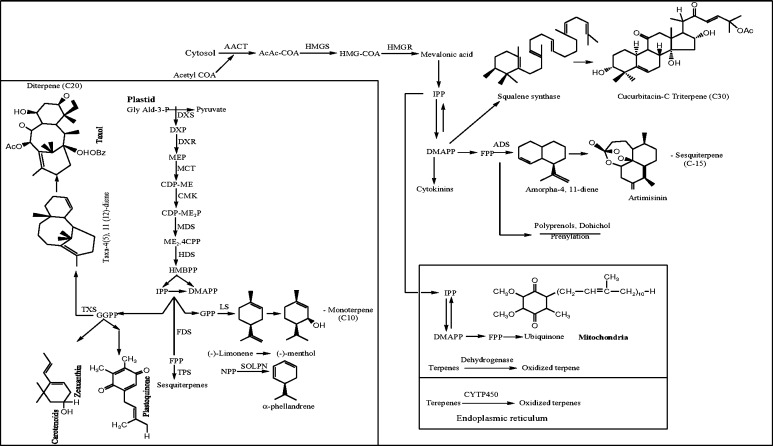
The terpenoids constitute the largest class of natural products and many interesting products are extensively applied in the industrial sector as flavors, fragrances, spices and are also used in perfumery and cosmetics. Many terpenoids have biological activities and also used for medical purposes. In higher plants, the conventional acetate-mevalonic acid pathway operates mainly in the cytosol and mitochondria and synthesizes sterols, sesquiterpenes and ubiquinones mainly. In the plastid, the non-mevalonic acid pathway takes place and synthesizes hemi-, mono-, sesqui-, and diterpenes along with carotenoids and phytol tail of chlorophyll. In this review paper, recent developments in the biosynthesis of terpenoids, indepth description of terpene synthases and their phylogenetic analysis, regulation of terpene biosynthesis as well as updates of terpenes which have entered in the clinical studies are reviewed thoroughly.
Overview
The claims and statistics of this paper haven’t been checked yet.
Free: it reads the open-access text and checks the first 5 claims that cite a source we can check. Create a free account to check every claim.
Integrity signals
Registry
Cites
Statistics
Figures
Verification
Claims the paper makes
The claims and statistics of this paper haven’t been checked yet.
Free: it reads the open-access text and checks the first 5 claims that cite a source we can check. Create a free account to check every claim.
Claims other papers make about this one
Each is checked against this paper’s own text: does it say what the citing paper says it does?
The cited source says what the claim attributes to it.
In the citing paper
“They present a wide-array of pharmacological properties, which have recently been described in several reviews (Russo, 2011; Singh and Sharma, 2015).”
From Cannabis sativa: The Plant of the Thousand and One Molecules (2016) · cites this paper as Singh and Sharma, 2015
The check wasn’t confident either way, so it gives no verdict — never disputed.
In the citing paper
“β-caryophyllene, a well-known active principle of black pepper and Copaiba balsam, possesses potent anti-inflammatory and gastric cytoprotector activities (Singh and Sharma, 2015).”
From Cannabis sativa: The Plant of the Thousand and One Molecules (2016) · cites this paper as Singh and Sharma, 2015
Experimental — accuracy not yet measuredThe check wasn’t confident either way, so it gives no verdict — never disputed.
In the citing paper
“The hydrolytic enzyme favors the release of active plant growth regulators from the conjugates stored in the plastids, thereby favoring trichome formation, as well as biomass production and leaf area (Singh et al., 2015).”
From Cannabis sativa: The Plant of the Thousand and One Molecules (2016) · cites this paper as Singh et al., 2015
Experimental — accuracy not yet measuredThe check wasn’t confident either way, so it gives no verdict — never disputed.
In the citing paper
“An additional study on A. annua has shown that the expression of a β-glucosidase from Trichoderma reesei increases glandular trichome density and artemisinin production (Singh et al., 2015).”
From Cannabis sativa: The Plant of the Thousand and One Molecules (2016) · cites this paper as Singh et al., 2015
Experimental — accuracy not yet measured
Self-check
Percentages, sums and reported differences re-computed from the paper’s own numbers.
The self-check needs the paper’s full text.
Citations
Cites
Ancestral polyploidy in seed plants and angiosperms
Jiao, Y., Wickett, N. J., Ayyampalayam, S., Chanderbali, A. S., Landherr, L., Ralph, P. E., Tomsho, L. P., Hu, Y., Liang, H., Soltis, P. S., et al. (2011) · Nature · doi:10.1038/nature09916 · Cited by 2,226 · cited 2×
“The D3 duplication event is highly likely to have been a tendem duplication that occurred during the ancient Poaceae genome before the q whole genome duplication, which was estimated to have occurred between 117 and 50 mya (Gaut 2002; Yu et al. 2005; Lescot et al. 2008; Jaio et al. 2011).”
BackgroundBIOSYNTHESIS AND ACTION OF JASMONATES IN PLANTS
Creelman, R. A., & Mullet, J. E. (1997) · Annual Review of Plant Physiology and Plant Molecular Biology · doi:10.1146/annurev.arplant.48.1.355 · Cited by 1,779 · cited 2×
“Methyl jasmonate is a cyclopentanone ring bearing lipophilic hormone synthesized in plants from octadecanoid pathway and they play role in development of responses to biotic stress (Creelman and Mullet 1997).”
BackgroundEngineering a mevalonate pathway in Escherichia coli for production of terpenoids
Martin, V. J. J., Pitera, D. J., Withers, S. T., Newman, J. D., & Keasling, J. D. (2003) · Nature Biotechnology · doi:10.1038/nbt833 · Cited by 1,725 · cited 1×
“On the basis of C5 units, we can classify the terpenoids as C5 (hemiterpenes), C10 (monoterpenes), C15 (sesquiterpenes), C20 (diterpenes), C25 (sesterpenes), C30 (triterpenes), C40 (tetraterpenes), [C40 (polyterpenes) (Ashour et al. 2010; Martin et al. 2003).”
Biological activities and distribution of plant saponins
Sparg, S. G., Light, M. E., & van Staden, J. (2004) · Journal of Ethnopharmacology · doi:10.1016/j.jep.2004.05.016 · Cited by 1,446 · cited 2×
“The class of triterpenes includes sterols and triterpe- noids, which can be synthesized as saponins and sapoge- nins sufficient amount in plants (Sparge et al. 2004).”
BackgroundChen, F., Tholl, D., Bohlmann, J., & Pichersky, E. (2011) · The Plant Journal · doi:10.1111/j.1365-313x.2011.04520.x · Cited by 1,446 · cited 5×
“In general, monoterpene synthases are localized on plastids, whereas sesquiterpene synthases are found in the cytosol (Chen et al. 2011; Aharoni et al. 2003).”
BackgroundInfluentialPlant Volatiles: Recent Advances and Future Perspectives
Dudareva, N., Negre, F., Nagegowda, D. A., & Orlova, I. (2006) · Critical Reviews in Plant Sciences · doi:10.1080/07352680600899973 · Cited by 1,395 · cited 4×
“Production of many trichome metabolites is also regulated tightly by transcriptional control, thereby allowing for tem- porally regulated emission of plant volatiles (Dudareva et al. 2006; Glas et al. 2012).”
BackgroundInfluentialPlant terpenoid synthases: Molecular biology and phylogenetic analysis
Bohlmann, J., Meyer-Gauen, G., & Croteau, R. (1998) · Proceedings of the National Academy of Sciences · doi:10.1073/pnas.95.8.4126 · Cited by 1,119 · cited 13×
“…of angiosperm terpene synthases (Bohlmann et al. 1998; Dudareva et al. 2003), the TPSb family contains angiosperm monoterpene synthases (Bohlmann et al. 1998; Dudareva et al. 2003), the TPSb includes angiosperm monoterpene synthases (Bohlmann et al. 1998; Dudareva et al. 2003), TPSd of…”
BackgroundInfluentialMonoterpene and sesquiterpene synthases and the origin of terpene skeletal diversity in plants
Degenhardt, J., Köllner, T. G., & Gershenzon, J. (2009) · Phytochemistry · doi:10.1016/j.phytochem.2009.07.030 · Cited by 1,093 · cited 5×
“Terpene synthases often catalyze the formation of multiple products from a prenyl diphosphate substrate, resulting from a catalytic mechanism that involves highly reactive carbocation intermediates (De- genhardt et al. 2009).”
BackgroundInfluentialThe Genomes of Oryza sativa: A History of Duplications
Yu, J., Wang, J., Lin, W., Li, S., Li, H., Zhou, J., Ni, P., Dong, W., Hu, S., Zeng, C., et al. (2005) · PLoS Biology · doi:10.1371/journal.pbio.0030038 · Cited by 983 · cited 2×
“The D3 duplication event is highly likely to have been a tendem duplication that occurred during the ancient Poaceae genome before the q whole genome duplication, which was estimated to have occurred between 117 and 50 mya (Gaut 2002; Yu et al. 2005; Lescot et al. 2008; Jaio et al. 2011).”
BackgroundORCA3, a Jasmonate-Responsive Transcriptional Regulator of Plant Primary and Secondary Metabolism
van der Fits, L., & Memelink, J. (2000) · Science · doi:10.1126/science.289.5477.295 · Cited by 917 · cited 1×
“Jasmonate was reported to be general inducer of bio- synthesis of plant secondary metabolite (Memelink et al. 2001; van der Fits and Memelink 2000).”
Background
Research works printed but not linked: 2
- Juergens UR Stober M Vetter H Steroid like inhibition of monocyte arachidonic acid metabolism and IL-1β production by 1,8-cineole Atemwegs Lungenkrankneitan 1998 24 3 11 9810029
- Pegel KH The importance of sitosterol and sitosterolin in human and animal nutrition S Afr J Sci 1997 93 263 268
Cited by
Items 301–400 of 658
Tiong, C. H. M., Saidin, S., Salleh, L. M., & Daud, N. M. (2025) · International Journal of Polymeric Materials · doi:10.1080/00914037.2025.2520507 · Cited by 9
“Linalool, carotenoid, ginsenosides, glycyrrhizin (CL), lupeol, and saponin are the most common examples of terpenoids that contribute to the characteristic flavors and aromas of many fruits, herbs, and spices [93] .”
Ceballos, R., Palma‐Millanao, R., Navarro, P. D., Urzúa, J., & Alveal, J. (2023) · International Journal of Molecular Sciences · doi:10.3390/ijms241310536 · Cited by 9
“HIPVs act as induced defenses, attracting natural enemies of herbivores, which mainly belong to terpenoids, jasmonates, and aromatic compounds [2].”
BackgroundCosta, S. N. D. O., Silva, M. V. T. E., Ribeiro, J. M., Castro, J. M. D. C. E., Muzitano, M. F., Garrett, R., Oliveira, A. E. A., & Fernandes, K. V. S. (2023) · Heliyon · doi:10.1016/j.heliyon.2023.e17778 · Cited by 9
The Capsicum terpenoid biosynthetic module is affected by spider-mite herbivory
Zhang, Y., Kashkooli, A. B., Blom, S., Zhao, T., Bouwmeester, H. J., & Kappers, I. F. (2023) · Plant Molecular Biology · doi:10.1007/s11103-023-01390-0 · Cited by 9
“These pre-nyl diphosphates are substrate for plant terpene synthases (TPSs)—monoterpene synthases, sesquiterpene synthases and diterpene synthases—generating monoterpenes (C10), sesquiterpenes (C15) and diterpenes (C20), respectively (Singh and Sharma 2015).”
BackgroundThe Role of Terpenoids in Plant Development and Stress Tolerance
Amerany, F. E. (2024) · BENTHAM SCIENCE PUBLISHERS eBooks · doi:10.2174/9789815179699124010006 · Cited by 9
Yang, L., Jin, J., Lyu, S., Zhang, F., Cao, P., Qin, Q., Zhang, G., Chen, F., Lü, P., Li, H., et al. (2024) · BMC Genomics · doi:10.1186/s12864-024-10509-6 · Cited by 9
“Commercially used essential oils, including myrtle oil, lavender oil and tea tree oil, are a mixture of volatile terpenes [19], with a growing amount of importance in industrial applications [20, 21].”
BackgroundBiomarkers from Medicinal Plants
Pradhan, A. K., Chowra, U., Nath, M., Roy, S. J., Kalita, B. K., Kundu, B. S., Rajkumari, J. D., & Tanti, B. (2024) · Interdisciplinary biotechnological advances · doi:10.1007/978-981-97-4600-2_8 · Cited by 9
Wu, H., Han, W., Liang, K., Wang, J., Zhang, F., Ji, S., Liu, S., & Wang, X. (2024) · Pest Management Science · doi:10.1002/ps.8461 · Cited by 9
Recent Advances in Fungal Secondary Metabolites and Their Applications
Sharma, N., Takkar, S., Bhatia, K., Vardhan, H., Tripathi, M., Iqbal, K., Shukla, S., Shukla, K., Tyagi, J., Varma, A. K., et al. (2023) · Springer eBooks · doi:10.1007/978-981-19-9103-5_15 · Cited by 9
Flavonoid Variations in Pathogen-Infected Plants
Desta, K. T., Shin, S. C., Shim, J., Kim, G. S., Shin, H.-C., & El‐Aty, A. M. A. (2016) · BENTHAM SCIENCE PUBLISHERS eBooks · doi:10.2174/9781681083599116020009 · Cited by 9
Cabrita, P. (2019) · Reference series in phytochemistry · doi:10.1007/978-3-030-11253-0_5-1 · Cited by 9
Tropane alkaloids and terpenes synthase genes of Datura stramonium (Solanaceae)
Velazquéz‐Marquez, S., De‐la‐Cruz, I. M., Tapia‐López, R., & Núñez‐Farfán, J. (2021) · PeerJ · doi:10.7717/peerj.11466 · Cited by 9
Effect of terpene treatment on tomato fruit
Orsi, B., Demétrio, C. A., Jacob, J. F. D. O., & Rodrigues, P. H. V. (2022) · Bragantia · doi:10.1590/1678-4499.20210134 · Cited by 9
Genome assembly and population analysis of tetraploid marama bean reveal two distinct genome types
Li, J., & Cullis, C. A. (2025) · Scientific Reports · doi:10.1038/s41598-025-86023-w · Cited by 8
“Additionally, pathways involved in terpenoid backbone biosynthesis (00900) and glucosinolate biosynthesis (00966) contribute to the synthesis of defense-related secondary metabolites, potentially enhancing marama’s ability to cope with both biotic and abiotic stressors 27,89,100 .”
Classification and Therapeutic Applications of Plant Secondary Metabolites
Javed, A., Hashmi, M. S., Javaid, U., & Amjad, R. (2025) · Wiley eBooks · doi:10.1002/9781394203680.ch10 · Cited by 8
Khan, A. H., & Chaudhary, M. T. (2025) · Phytopathogenomics and Disease Control · doi:10.22194/pdc/4.1028 · Cited by 9
Zhao, X.-R., Sun, X.-R., Zhang, X., Wu, X. W., Cheng, B., Ni, D., Huang, J.-B., Zhang, R., Li, X.-L., & Xiao, W. (2023) · Phytochemistry · doi:10.1016/j.phytochem.2023.113665 · Cited by 8
Allario, T., Fourquez, A., Magnin‐Robert, M., Siah, A., Maia‐Grondard, A., Gaucher, M., Brisset, M.-N., Hugueney, P., Reignault, P. L., Baltenweck, R., et al. (2023) · Phytopathology · doi:10.1094/phyto-10-22-0364-r · Cited by 8
Identification and purification of plant secondary metabolite as medicinal raw materials
Singh, D. K., Verma, S. K., & Shyam, P. (2024) · Elsevier eBooks · doi:10.1016/b978-0-443-16158-2.00003-3 · Cited by 8
Bruschi, M., Bozzoli, M., Ratti, C., Sciara, G., Goudemand, E., Devaux, P., Ormanbekova, D., Forestan, C., Corneti, S., Stefanelli, S., et al. (2024) · Theoretical and Applied Genetics · doi:10.1007/s00122-024-04709-7 · Cited by 8
“Singh and Sharma (2015) reported that several terpenoids have a role in plant defense, acting as phytoalexins, low molecular weight compounds, known to exhibit antimicrobial properties in rice (Prisic et al. 2004) and deterrent for insects and herbivores in corn, lima bean, poplar, and cotton…”
BackgroundGupta, N. S. (2024) · International Journal of Plant and Environment · doi:10.18811/ijpen.v10i01.03 · Cited by 8
“These are involved in defense reactions including abiotic and biotic stresses or as a signalling molecule in insect pollination (Singh and Sharma, 2015).”
Cometto, M. J., Naranjo-Viteri, A. J., Champarini, L. G., Hereñú, C. B., & Crespo, R. (2025) · Plants · doi:10.3390/plants14070999 · Cited by 8
SU AKTİVİTESİNİN VE FARKLI KURUTMA SİSTEMLERİNİN BİYOAKTİF BİLEŞENLERİN STABİLİTELERİ ÜZERİNE ETKİSİ
Yıldırım, A., Duran, M., & Koç, M. (2018) · GIDA / THE JOURNAL OF FOOD · doi:10.15237/gida.gd18023 · Cited by 8
Singewar, K., Moschner, C. R., Hartung, E., & Fladung, M. (2020) · Trees · doi:10.1007/s00468-020-01984-x · Cited by 8
“Terpenoids play a key role in plant defense (Singh and Sharma 2015) and their medicinal value is the subject of current clinical trials (Yin et al.”
BackgroundZhang, S., Qu-Bie, J.-Z., Feng, M., Qu-Bie, A., Huang, Y., Zhang, Z., Yan, X., & Liu, Y. (2023) · BMC Genomics · doi:10.1186/s12864-023-09138-2 · Cited by 8
Secondary Metabolites and Bioprospecting
Sharma, M., Bhardwaj, R., Saran, M., Prajapat, R. K., Sharma, D., & Mathur, M. (2023) · Springer eBooks · doi:10.1007/978-981-19-4124-5_12 · Cited by 8
Liu, Q., Bi, H., Wang, K., Zhang, Y., Chen, B., Zhang, H., Wang, M., & Fang, Y. (2023) · International Journal of Molecular Sciences · doi:10.3390/ijms242417366 · Cited by 8
“β -Farnesene, an acyclic sesquiterpene compound, as an advanced molecule, finds extensive applications across a multitude of fields, including pharmaceuticals, cosmetics, and bioenergy [1,2].”
BackgroundGene expression analysis associated with agarwood formation in Aquilaria malaccensis
Islam, M. R., Bhau, B. S., & Banu, S. (2020) · Plant Physiology Reports · doi:10.1007/s40502-020-00505-9 · Cited by 8
Attar, U. A., & Ghane, S. G. (2021) · Indian Journal of Pharmaceutical Sciences · doi:10.36468/pharmaceutical-sciences.819 · Cited by 8
“In addition, it also exhibit several biological activities[46].”
BackgroundSantana, M. L. G., de Melo, J. P. R., da Câmara, C. A. G., de Moraes, M. M., de ARAUJO, C. A., de Vasconcelos, G. J. N., Pereira, M. R., & Zartman, C. E. (2022) · Anais da Academia Brasileira de Ciências · doi:10.1590/0001-3765202220200072 · Cited by 8
“These behavioral effects of the Piper oils on P. xylostella larvae may stem from the monoterpenes and sesquiterpenes that compose the oils, as terpenes are known to have such effects as part of the defense of plants against herbivory (Singh & Sharma 2015, Pichersky & Raguso 2018, Block et al. 2019).”
BackgroundThe medicinal properties of Olax subscorpioidea
Agbabiaka, T. O., & Adebayo, I. A. (2021) · Elsevier eBooks · doi:10.1016/b978-0-12-824109-7.00019-4 · Cited by 8
ASSESSMENT OF OLIVE LEAVES EXTRACT – CYTOTOXICITY IN VITRO AND ANGIOGENESIS IN OVO
Borugă, M. (2021) · FARMACIA · doi:10.31925/farmacia.2021.1.5 · Cited by 8
“Several studies have highlighted antimicrobial, antitumour, antiallergic, antiinflammatory, hepatoprotective and other activities [18].”
BackgroundAdvances in Terpenoid Biosynthesis: Chemical Diversity and Emerging Industrial Applications
Patil, H. S., Baviskar, A. S., Dinore, J. M., & Yelwande, A. A. (2025) · Sciences of Phytochemistry · doi:10.58920/sciphy0402310 · Cited by 8
Beyond SEM: Stigmatic margins in Bromeliaceae
Siqueira, S. F. H., da Costa, A. F., & Toni, K. L. G. D. (2022) · Flora · doi:10.1016/j.flora.2022.152195 · Cited by 7
Agho, C. A., Runno-Paurson, E., Tähtjärv, T., Kaurilind, E., & Niinemets, Ü. (2023) · Plants · doi:10.3390/plants12112100 · Cited by 7
“Terpenes are important in biological processes related to plant defense against biotic and abiotic stresses [66] and constitute the largest class of plant compounds among the plant secondary metabolites.”
BackgroundSantos, E. F., Anselmo, W. M., de Lemos, E. E. P., de Aguiar, J. C. R. D. O. F., da Silva, A. C., dos Santos, F. H. G., Arruda, C. C. L., Aguiar, J. V. C., de Andrade, J. J. A., da Rocha, S. K. L., et al. (2025) · Molecules · doi:10.3390/molecules30153116 · Cited by 7
“Terpenes constitute one of the largest groups of natural bioactive compounds, encompassing monoterpenes, sesquiterpenes, diterpenes, hemiterpenes, and triterpenes [16].”
InfluentialRioja, T. C., Ceballos, R., Fernández, N., & Tomislav Curkovic, S. (2021) · International Journal of Acarology · doi:10.1080/01647954.2021.1913220 · Cited by 7
“…comprise green leaf volatiles (GLVs), terpenoids, jasmonates, and aromatic compounds (Holopainen and Blande 2013; Aartsma et al. 2017), that derived from the isoprenoid (Nagegowda 2010; Singh and Sharma 2015), lipoxygenase (Ruan et al. 2019), and shikimate/tryptophan pathways (Toghe et al. 2013).”
BackgroundmiRNA- and RNAi-Mediated Metabolic Engineering in Plants
Pandita, D. (2022) · Springer eBooks · doi:10.1007/978-981-16-7262-0_7 · Cited by 7
Tang, L., Zheng, J., Nousias, O., Yan, Y., Meinhardt, L. W., Goenaga, R., Zhang, D., & Yin, Y. (2024) · Plants · doi:10.3390/plants13050636 · Cited by 7
Phytochemical screening, antibacterial and allelopathic effects of few invasive plants of Kerala
James, J. M., Geethumol, C. U., Anilkumar, A., & Selvaraj, G. (2018) · Plant Science Today · doi:10.14719/pst.2018.5.4.408 · Cited by 7
Untangling plant immune responses through metabolomics
Williams, A., Gamir, J., Gravot, A., & Pétriacq, P. (2020) · Advances in botanical research · doi:10.1016/bs.abr.2020.09.017 · Cited by 7
Vago, R., Fiorio, F., Trevisani, F., Salonia, A., Montorsi, F., & Bettiga, A. (2022) · Nutrients · doi:10.3390/nu14030468 · Cited by 7
“The components of this large class of molecules are presently used in many industrial sectors, including their use as flavors and fragrances in perfumery and cosmetics [17], but are also widely used in medicine for their emerging antioxidant, anti‐inflammatory and analgesic properties.”
BackgroundOxidative stress mediated cytogenotoxicological effects of phytol in wistar albino rats
de Alencar, M. V. O. B., Islam, M. T., dos Reis, A. C., Santos, J. V. D. O., Nunes, A. M. V., da Silva, F. C. C., Machado, K. D. C., Sousa, J. M. D. C. E., Reiner, Ž., Martorell, M., et al. (2022) · Oriental Pharmacy and Experimental Medicine · doi:10.1007/s13596-022-00628-4 · Cited by 7
“Terpenes are synthesized from isoprene (C5) units like yellow and red pigmented carotenoids (C40) in plants, while chlorophyll is a chlorine ring compound with a long side chain which is known as phytol (PHY) (Oldfield 2010; Singh and Sharma 2015).”
BackgroundArid awakening: new opportunities for Australian plant natural product research
Simpson, B. S., Bulone, V., Semple, S. J., Booker, G. W., McKinnon, R. A., & Weinstein, P. (2016) · The Rangeland Journal · doi:10.1071/rj16004 · Cited by 7
Driscoll, K. M., Deshpande, A., Chapp, A. D., Li, K., Datta, R., & Ramakrishna, W. (2018) · Phytomedicine · doi:10.1016/j.phymed.2018.12.034 · Cited by 7
Almatwari, A. H. A., Hassandokht, M., Soltani, F., Gohari, A. M., & Javan-Nikkhah, M. (2021) · Journal of Plant Pathology · doi:10.1007/s42161-020-00714-z · Cited by 7
“More importantly, the necrotrophic nature of this fungus in such a way to kill the host cell through a variety of strategies is a pivotal factor to make more difficult its control (Subbarao 1998).”
BackgroundImportance of Lupinus albescens in agricultural and food-related areas: A review
Confortin, T. C., Todero, I., Luft, L., Soares, J. F., Mazutti, M. A., Zabot, G. L., & Tres, M. V. (2018) · 3 Biotech · doi:10.1007/s13205-018-1474-x · Cited by 7
“Essential oils and plant extracts are complex mixtures of various compounds, as terpenoids (Singh and Sharma 2015), monoterpenes, sesquiterpenes, alcohols, aldehydes, ethers, esters, ketones, and phenols, * Marcus Vinícius Tres marcusvtres@gmail.com 1 Department of Agricultural Engineering, Federal…”
BackgroundZou, W., Liu, C., Wang, H., Shen, R.-Y., Ji, M., Gu, C., & Yang, L.-Y. (2025) · Scientific Reports · doi:10.1038/s41598-025-04806-7 · Cited by 6
“Terpenoids are frequently found abundant in leaves and are related to antiherbivore defense 62 .”
Shemishere, U. B., Turaki, A. A., Yusuf, A. B., Anyebe, D., Erhovwosere, O., Aghayere, F., & Taiwo, J. E. (2023) · FUDMA Journal of Sciences · doi:10.33003/fjs-2023-0705-1973 · Cited by 6
Singh, A., Kant, R., Raina, R., Dhingra, V., Nema, R., Bairwa, M. C., Kanwar, V., Mukherjee, R. L. S., Mirza, A. A., & Agarwal, M. (2024) · Indian Journal of Endocrinology and Metabolism · doi:10.4103/ijem.ijem_84_23 · Cited by 6
“[22,23] Plasma glucose levels, HbA1c (”
Mechanistic docking in terpene synthases using EnzyDock
Schwartz, R., Zev, S., & Major, D. T. (2024) · Methods in enzymology on CD-ROM/Methods in enzymology · doi:10.1016/bs.mie.2024.04.005 · Cited by 7
Safety concern of drugs of herbal origin
Kapoor, V. K., Kaur, N., & Rana, S. (2025) · Phytochemistry Reviews · doi:10.1007/s11101-025-10070-4 · Cited by 6
“They act as defense mechanism of plant against the predators of herbivores and pathogens (Singh et al. 2015).”
Shan, Y., Deng, C., Hu, W., Chen, J., Chen, X., Qin, Q., & Zheng, S. (2019) · Scientia Horticulturae · doi:10.1016/j.scienta.2019.108873 · Cited by 6
Salehi, B., Rodrigues, C. F., Karaça, A. C., Gülseren, G., Åženol, E., Demircan, E., í–zçelik, B., Tütüncü, S., Sharopov, F. S., Sharifi‐Rad, J., et al. (2020) · Cellular and Molecular Biology · doi:10.14715/cmb/2020.66.4.28 · Cited by 6
“Terpenoids are divided into several classes: monoterpenes, diterpenes, triterpenes and tetraterpenes, according to the number of building blocks (49).”
BackgroundManagement of the diamondback moth via citrus oil
de Melo, J. P. R., da Câmara, C. A. G., & de Moraes, M. M. (2023) · Biocatalysis and Agricultural Biotechnology · doi:10.1016/j.bcab.2023.102775 · Cited by 6
Plant Metabolites as Immunomodulators
Jayaraman, S., & Jayadevi Variyar, E. (2020) · Springer eBooks · doi:10.1007/978-981-15-5136-9_18 · Cited by 6
Vanambathina, P., Henry, R. J., Rachaputi, R. C. N., & Furtado, A. (2021) · Annals of Applied Biology · doi:10.1111/aab.12730 · Cited by 6
Phytopharmacology of herbal biomolecules
Chaki, R., Ghosh, N., & Mandal, S. C. (2021) · Elsevier eBooks · doi:10.1016/b978-0-323-85852-6.00026-3 · Cited by 6
Alañón, M. E., Cádiz‐Gurrea, M. D. L. L., Oliver‐Simancas, R., Leyva‐Jiménez, F. J., Arraéz-Román, D., & Segura‐Carretero, A. (2021) · Food Control · doi:10.1016/j.foodcont.2021.108791 · Cited by 6
Dudzik, K., Wójcik, J., Ejchart, A., & Nowakowski, M. E. (2017) · Chirality · doi:10.1002/chir.22747 · Cited by 6
Prochnow, D., dos Santos, R. S., Barros, L. M., Schmidt, D., Heinzmann, B. M., da Luz, V. K., de Oliveira, C., Pegoraro, C., & da Maia, L. C. (2023) · Genetics and Molecular Research · doi:10.4238/gmr19160 · Cited by 5
Srivastav, Y., Thakur, G., & Tiwari, S. (2024) · Asian Journal of Biotechnology and Bioresource Technology · doi:10.9734/ajb2t/2024/v10i3209 · Cited by 5
Vedhamani, J., Ajithkumar, I. P., Mathivanan, J. S., Namasivayam, S. K. R., Vasavi, C. S., & Suvaithenamudhan, S. (2025) · World Academy of Sciences Journal · doi:10.3892/wasj.2025.390 · Cited by 5
“Terpenoids play a crucial role in plant defence against biotic and abiotic stresses and as signal molecules for pollination insects (61).”
Wang, Y., Yang, R., Shi, Y., & Liu, S. (2025) · Drug Design Development and Therapy · doi:10.2147/dddt.s530516 · Cited by 5
Yadav, G. K., Bhanwaria, R., Kumar, V., Sharma, V., & Jeet, S. (2025) · Journal of environmental chemical engineering · doi:10.1016/j.jece.2025.119956 · Cited by 5
Ma, Z., Tao, H., Li, L., Meng, R., Suo, J., Yu, W., Hu, Y., Gao, F., Farag, M. A., Zhang, Z., et al. (2025) · Postharvest Biology and Technology · doi:10.1016/j.postharvbio.2025.113838 · Cited by 5
Falcón-Piñeiro, A., Baños, A., Sehr, E. M., González-Gragera, E., Giampetruzzi, A., Kubaa, R. A., Antonielli, L., Wallner, A., Brader, G., Verma, S. K., et al. (2026) · Biotechnology Reports · doi:10.1016/j.btre.2026.e00945 · Cited by 5
“12) were enriched for processes related to the biosynthesis of secondary metabolites ( “ terpene synthase activity ” [74], GO:0010333; Cinnamic acid biosynthetic process, GO:0009800) and aromatic compounds ( “ chorismate biosynthetic process ” , GO: 0009423), involving enzymes like germacrene D…”
Tabassum, S., & Kumar, R. (2020) · Conference on Lasers and Electro-Optics · doi:10.1364/cleo_at.2020.atu4i.6 · Cited by 5
Jaiswal, G., Rana, R., Nayak, P. K., Chouhan, R., Gandhi, S. G., Patel, H. K., & Patil, P. B. (2024) · Current Microbiology · doi:10.1007/s00284-024-03950-z · Cited by 5
Duttaroy, A. K. (2021) · Elsevier eBooks · doi:10.1016/b978-0-12-822405-2.00017-7 · Cited by 5
Dun, H. F., Hung, T. H., Green, S., & MacKay, J. J. (2022) · BMC Plant Biology · doi:10.1186/s12870-022-03806-3 · Cited by 5
New Trends from Plant Secondary Metabolism in the Pharmaceutical Industry
Oliveira, H., Pérez-Gregório, R., Fernandes, I., Soares, S., de Freitas, V. A. P., & Dias, R. (2023) · Springer eBooks · doi:10.1007/978-3-031-18587-8_25 · Cited by 6
BABAÇU: EXPLORANDO SUAS CARACTERÍSTICAS E POTENCIALIDADES
Santos, S. S., de Carvalho, R. B. F., Silva, F. M. D. S. E., Lima, S. D. S., & Nunes, L. C. C. (2023) · doi:10.22533/at.ed.6652311126 · Cited by 5
van Aubel, G., Cutsem, E. V., Emond, A., Métillon, G., Cordier, É., & Cutsem, P. V. (2024) · Phytopathology · doi:10.1094/phyto-02-24-0070-kc · Cited by 5
Innovations in Textile Technology Against Pathogenic Threats: A Review of the Recent Literature
Venne, C., Vu, N., Ladhari, S., & Nguyen‐Tri, P. (2024) · Springer proceedings in earth and environmental sciences · doi:10.1007/978-3-031-60255-9_6 · Cited by 5
May, N., Shi, J., Clunas, H., Neri, J. L. D. S. A., Kelso, C., Morgan, J., Yu, Y., Charlton, K. E., & Weston–Green, K. (2024) · Food & Function · doi:10.1039/d4fo02942a · Cited by 5
Evaluating plant root uptake of dsRNA for application in pest management
Ludba, K. (2018) · Scholarship@Western (Western University) · Cited by 5
Iqbal, M. S., & Ansari, M. I. (2019) · Springer eBooks · doi:10.1007/978-981-13-7438-8_7 · Cited by 5
Boosting up the economy of Pakistan through agarwood production
Ullah, M. A. (2020) · International Journal of Horticulture and Food Science · doi:10.33545/26631067.2020.v2.i2a.49 · Cited by 5
“Agarwood formation can be related to the self-defense mechanism of Aquilaria trees in response to (Gao et al., 2012b; Singh and Sharma, 2015).”
BackgroundCannabis-derived terpenes and flavonoids as potential pharmaceuticals
Ofir, R. (2021) · Israel Journal of Plant Sciences · doi:10.1163/22238980-bja10022 · Cited by 5
Product Export in Cyanobacteria
Gonçalves, C. F., Lima, S., & Oliveira, P. (2021) · Wiley eBooks · doi:10.1002/9783527824908.ch12 · Cited by 5
Reim, S., Emeriewen, O. F., Peil, A., & Flachowsky, H. (2023) · International Journal of Molecular Sciences · doi:10.3390/ijms24076307 · Cited by 5
“The severity of ARD often varies significantly at the regional level but also at a subplot level, which is likely due to differences in soil type and other abiotic and biotic factors [12].”
BackgroundMatus, M. F., Jorquera-Román, M., & Zúñiga‐Hernández, J. (2017) · Revista chilena de nutrición · doi:10.4067/s0717-75182017000400371 · Cited by 5
Effects of Drought on Inflorescence Yield, and Secondary Metabolites in Cannabis sativa L.Preprint
Shenhar, I., Ifrach, I., Barkan, O., Guberman, O., Kerem, Z., Taler, D., Meiri, D., & Moshelion, M. (2025) · bioRxiv (Cold Spring Harbor Laboratory) · doi:10.1101/2025.02.16.638548 · Cited by 5
Cubillos-Quijano, L. G., Díaz, M. A., Coy-Barrera, E. D., & Rodríguez, D. (2025) · Insects · doi:10.3390/insects16020216 · Cited by 4
“Terpenoids play a crucial ecological role in interspecific plant communication, mediating responses to environmental stress and herbivory [39,40].”
Physicochemical and sensory properties of Southern Thai curry pastes
Samakradhamrongthai, R. S., Jannu, T., Tongboonchu, T., Sangpimpa, W., Srichan, P., Renaldi, G., Detarun, P., Siripongvutikorn, S., Utaipan, T., Wittaya, T., et al. (2025) · International Journal of Food Properties · doi:10.1080/10942912.2025.2545527 · Cited by 4
“[29] They could also be produced by biosynthesis by specific microbes; however, they are typically endogenous in plants as secondary metabolites.”
Mukherjee, A. B., & Singh, P. (2025) · Applied Fruit Science · doi:10.1007/s10341-025-01679-y · Cited by 4
Salt Stress Re‐Routes Terpenoid and Flavonoid Metabolism in Peppermint ( Mentha × Piperita L.)
Caldo, F., Mannino, G., & Maffei, M. E. (2025) · Physiologia Plantarum · doi:10.1111/ppl.70694 · Cited by 4
“…primary source of energy and carbon precursors (Hohmann-Marriott and Blankenship 2011), not only for terpenoid biosynthesis (Melis 2013) but also for the production of flavonoids (Kołton et al. 2022), which act as crucial defensive and antioxidant molecules (Singh and Sharma 2015; Mathesius 2018).”
Cárdenas, O. G. G., López-Macías, H. J., Calzada, K. P., Arias-Robledo, G., Oyoque-Salcedo, G., Jazo, I. Z., Loeza-Lara, P. D., Heil, M., & Hernández-Zepeda, O. F. (2026) · Plants · doi:10.3390/plants15010144 · Cited by 4
“In this context, entomopathogens have been described as microorganisms capable of invading and replicating within an insect host, subsequently disseminating to infect additional individuals [45], the most commonly used being BVs, EPFs, and EPNs [46–48].”
Du, Q., Diao, Y., Meng, Y., Wang, Z., Zhang, J., Wu, T., Huang, Q., Huang, X., & Yang, M. Y. (2026) · Pharmaceuticals · doi:10.3390/ph19030473 · Cited by 4
“However, a key limitation of the study by Singh et al. is the lack of control for geographical origin, which may confound the observed seasonal effects—especially as geographical variation is widely recognized as a major factor influencing the chemical composition of ZEO [12].”
Li, X.-Y., Luo, M., Song, H.-D., & Dong, Z. (2023) · Chiang Mai Journal of Science · doi:10.12982/cmjs.2023.052 · Cited by 4
Mattingly, A. A., Vickery, Z., Ivankovic, D. S., Farrell, C. L., Hakonarson, H. H., Nguyen, K., & Boccuto, L. (2024) · Metabolites · doi:10.3390/metabo14120652 · Cited by 4
A Review on Pharmacology and Therapeutic Applications of Alkanna tinctoria (L.) Tausch
Madihalli, S., & Patil, S. B. (2025) · Journal of Pharma Insights and Research. · doi:10.69613/hj7gk882 · Cited by 4
“[29]”
Banerjee, S., Roy, P., & Roy, S. (2022) · Springer eBooks · doi:10.1007/978-981-16-7262-0_4 · Cited by 4
An Overview of Metal and Metalloid Toxicity and Signaling in Plants
Singh, D., Verma, S. K., Wani, K. I., & Aftab, T. (2024) · Signaling and communication in plants · doi:10.1007/978-3-031-59024-5_1 · Cited by 4
Sun, P., Lv, F., Yang, Y., Hou, W., Xiao, M., Gao, Z., Xu, Y., & Wei, J. (2024) · Heliyon · doi:10.1016/j.heliyon.2024.e35874 · Cited by 4
“In plants, there are two biosynthetic pathways of sesquiterpenoids, namely the mevalonic acid (MVA) pathway and the methyl-erythritol phosphate (MEP) pathway [20,21].”
Parveen, F. S., Ahmed, K., Ahmed, N. Z., Ansari, A. P., Anwar, N., Ahmed, K. K., Akhlaq, S., Kulsum, U., & Sabrin, A. (2025) · Clinical Traditional Medicine and Pharmacology · doi:10.1016/j.ctmp.2025.200236 · Cited by 4
POTENT BIOACTIVE METABOLITES OF CASUARINA JUNGHUHNIANA MIQ. ROOTS–A THERAPEUTIC APPROACH
Chathurdevi, G., & Umagowrie, S. (2017) · International Journal of Pharmacy and Pharmaceutical Sciences · doi:10.22159/ijpps.2017v9i3.16264 · Cited by 4
Detection and Quantification of Terpenes and Terpenoids in Different Basil Species and Cultivars
Beck, S. (2022) · ACS Agricultural Science & Technology · doi:10.1021/acsagscitech.2c00129 · Cited by 4
Ecological and metabolomic responses of plants to deer exclosure in a suburban forest
Morrison, J. A., & Woldemariam, M. G. (2022) · Ecology and Evolution · doi:10.1002/ece3.9475 · Cited by 4
“Of these, the monoterpenoid biosynthetic pathway produces metabolites that mediate indirect defenses in many plant species (Singh & Sharma, 2014), while the cyanoamino acid pathway is implicated in detoxification (Machingura et al., 2016).”
Background
Metadata
- Authors
- Singh, B., & Sharma, R. A.
- Affiliations
- Amity University Jaipur (IN)
- University of Rajasthan (IN)
- Corresponding author
- Singh, Bharat
- Venue
- 3 Biotech
- Published
- 2014-04-29
- Volume
- 5
- Issue
- 2
- Pages
- 129-151
- ISSN
- 2190-572X (ISSN-L)
- 2190-5738
- PMC
- PMC4362742
- OpenAlex
- W2048175162
- Semantic Scholar
- 534ff96aa8cad327bf98a004d29dfba7de25c0c8
- Cited by
- 562
- References
- 295
- Citations by year
- 2026: 17 · 2025: 55 · 2024: 50 · 2023: 84 · 2022: 68 · 2021: 77 · 2020: 75 · 2019: 53 · 2018: 42 · 2017: 23 · 2016: 15 · 2015: 2 · 2014: 1
- FWCI
- 5.61
- Type
- journal article
- Language
- en
- Open access
- hybrid
- doi.org
- Locations
- 3 Biotech (publishedVersion, cc-by)
- Europe PMC (PubMed Central) (publishedVersion, cc-by)
- PubMed Central (publishedVersion, cc-by)
- PubMed (publishedVersion)
- Funders
- Amity University
- Topics
- Life Sciences › Biochemistry, Genetics and Molecular Biology › Molecular Biology › Plant biochemistry and biosynthesis
- Life Sciences › Agricultural and Biological Sciences › Plant Science › Plant tissue culture and regeneration
- Physical Sciences › Chemistry › Organic Chemistry › Sesquiterpenes and Asteraceae Studies
- Keywords
- terpenoid biosynthesis, terpene synthase, phylogenetic analysis, methylerythritol phosphate pathway, sesquiterpenes, diterpenoids, carotenoids, plant defense response, biosynthetic regulation, natural products
About these checks
Registry, retraction, Cites and statistics results are computed, not judged, with one exception: a printed reference that no index lists is read once by a model before it counts as a citation error. Claims are extracted by a model and kept only when their quote appears verbatim in the text; each cited source is then checked, with a model’s help, for whether it says what the claim relies on. Those verdicts can be wrong — read the claim’s quote and the cited source before relying on one.
Statistics and arithmetic are recomputed, not judged.
Confidence bands are shown only for fields calibrated on our annotated test set. None is calibrated yet, so no band is shown.
What counts as a claim ›How we measure confidence ›How we check this ›
Are you an author, or do you see a problem with this page? Request a review
Data sources
Bibliographic data: Semantic Scholar, OpenAlex, Crossref.
Contains information from the Semantic Scholar Academic Graph Datasets, made available under the ODC Attribution License (ODC-BY 1.0).
Semantic Scholar’s data is described in: Kinney, R., et al. (2023). The Semantic Scholar Open Data Platform. arXiv:2301.10140.
