

Plant terpenes: defense responses, phylogenetic analysis, regulation and clinical applications
Open accessThe DOI matches its Crossref record; 293 of the 295 references it cites were found in a registry or an index.
Abstract
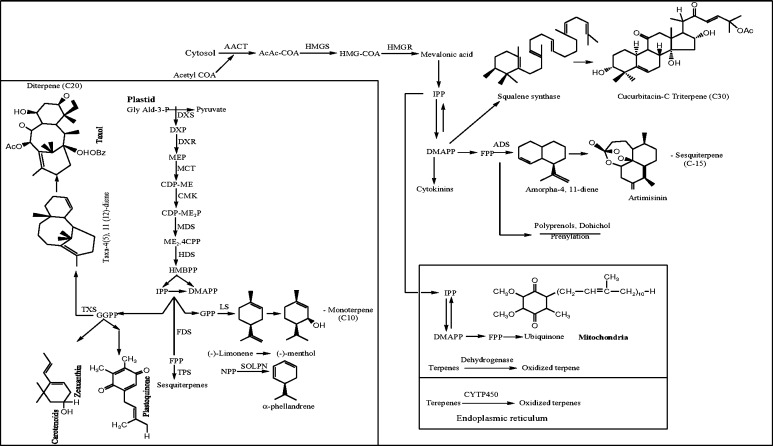
The terpenoids constitute the largest class of natural products and many interesting products are extensively applied in the industrial sector as flavors, fragrances, spices and are also used in perfumery and cosmetics. Many terpenoids have biological activities and also used for medical purposes. In higher plants, the conventional acetate-mevalonic acid pathway operates mainly in the cytosol and mitochondria and synthesizes sterols, sesquiterpenes and ubiquinones mainly. In the plastid, the non-mevalonic acid pathway takes place and synthesizes hemi-, mono-, sesqui-, and diterpenes along with carotenoids and phytol tail of chlorophyll. In this review paper, recent developments in the biosynthesis of terpenoids, indepth description of terpene synthases and their phylogenetic analysis, regulation of terpene biosynthesis as well as updates of terpenes which have entered in the clinical studies are reviewed thoroughly.
Overview
The claims and statistics of this paper haven’t been checked yet.
Free: it reads the open-access text and checks the first 5 claims that cite a source we can check. Create a free account to check every claim.
Integrity signals
Registry
Cites
Statistics
Figures
Verification
Claims the paper makes
The claims and statistics of this paper haven’t been checked yet.
Free: it reads the open-access text and checks the first 5 claims that cite a source we can check. Create a free account to check every claim.
Claims other papers make about this one
Each is checked against this paper’s own text: does it say what the citing paper says it does?
The cited source says what the claim attributes to it.
In the citing paper
“They present a wide-array of pharmacological properties, which have recently been described in several reviews (Russo, 2011; Singh and Sharma, 2015).”
From Cannabis sativa: The Plant of the Thousand and One Molecules (2016) · cites this paper as Singh and Sharma, 2015
The check wasn’t confident either way, so it gives no verdict — never disputed.
In the citing paper
“β-caryophyllene, a well-known active principle of black pepper and Copaiba balsam, possesses potent anti-inflammatory and gastric cytoprotector activities (Singh and Sharma, 2015).”
From Cannabis sativa: The Plant of the Thousand and One Molecules (2016) · cites this paper as Singh and Sharma, 2015
Experimental — accuracy not yet measuredThe check wasn’t confident either way, so it gives no verdict — never disputed.
In the citing paper
“The hydrolytic enzyme favors the release of active plant growth regulators from the conjugates stored in the plastids, thereby favoring trichome formation, as well as biomass production and leaf area (Singh et al., 2015).”
From Cannabis sativa: The Plant of the Thousand and One Molecules (2016) · cites this paper as Singh et al., 2015
Experimental — accuracy not yet measuredThe check wasn’t confident either way, so it gives no verdict — never disputed.
In the citing paper
“An additional study on A. annua has shown that the expression of a β-glucosidase from Trichoderma reesei increases glandular trichome density and artemisinin production (Singh et al., 2015).”
From Cannabis sativa: The Plant of the Thousand and One Molecules (2016) · cites this paper as Singh et al., 2015
Experimental — accuracy not yet measured
Self-check
Percentages, sums and reported differences re-computed from the paper’s own numbers.
The self-check needs the paper’s full text.
Citations
Cites
Ancestral polyploidy in seed plants and angiosperms
Jiao, Y., Wickett, N. J., Ayyampalayam, S., Chanderbali, A. S., Landherr, L., Ralph, P. E., Tomsho, L. P., Hu, Y., Liang, H., Soltis, P. S., et al. (2011) · Nature · doi:10.1038/nature09916 · Cited by 2,226 · cited 2×
“The D3 duplication event is highly likely to have been a tendem duplication that occurred during the ancient Poaceae genome before the q whole genome duplication, which was estimated to have occurred between 117 and 50 mya (Gaut 2002; Yu et al. 2005; Lescot et al. 2008; Jaio et al. 2011).”
BackgroundBIOSYNTHESIS AND ACTION OF JASMONATES IN PLANTS
Creelman, R. A., & Mullet, J. E. (1997) · Annual Review of Plant Physiology and Plant Molecular Biology · doi:10.1146/annurev.arplant.48.1.355 · Cited by 1,779 · cited 2×
“Methyl jasmonate is a cyclopentanone ring bearing lipophilic hormone synthesized in plants from octadecanoid pathway and they play role in development of responses to biotic stress (Creelman and Mullet 1997).”
BackgroundEngineering a mevalonate pathway in Escherichia coli for production of terpenoids
Martin, V. J. J., Pitera, D. J., Withers, S. T., Newman, J. D., & Keasling, J. D. (2003) · Nature Biotechnology · doi:10.1038/nbt833 · Cited by 1,725 · cited 1×
“On the basis of C5 units, we can classify the terpenoids as C5 (hemiterpenes), C10 (monoterpenes), C15 (sesquiterpenes), C20 (diterpenes), C25 (sesterpenes), C30 (triterpenes), C40 (tetraterpenes), [C40 (polyterpenes) (Ashour et al. 2010; Martin et al. 2003).”
Biological activities and distribution of plant saponins
Sparg, S. G., Light, M. E., & van Staden, J. (2004) · Journal of Ethnopharmacology · doi:10.1016/j.jep.2004.05.016 · Cited by 1,446 · cited 2×
“The class of triterpenes includes sterols and triterpe- noids, which can be synthesized as saponins and sapoge- nins sufficient amount in plants (Sparge et al. 2004).”
BackgroundChen, F., Tholl, D., Bohlmann, J., & Pichersky, E. (2011) · The Plant Journal · doi:10.1111/j.1365-313x.2011.04520.x · Cited by 1,446 · cited 5×
“In general, monoterpene synthases are localized on plastids, whereas sesquiterpene synthases are found in the cytosol (Chen et al. 2011; Aharoni et al. 2003).”
BackgroundInfluentialPlant Volatiles: Recent Advances and Future Perspectives
Dudareva, N., Negre, F., Nagegowda, D. A., & Orlova, I. (2006) · Critical Reviews in Plant Sciences · doi:10.1080/07352680600899973 · Cited by 1,395 · cited 4×
“Production of many trichome metabolites is also regulated tightly by transcriptional control, thereby allowing for tem- porally regulated emission of plant volatiles (Dudareva et al. 2006; Glas et al. 2012).”
BackgroundInfluentialPlant terpenoid synthases: Molecular biology and phylogenetic analysis
Bohlmann, J., Meyer-Gauen, G., & Croteau, R. (1998) · Proceedings of the National Academy of Sciences · doi:10.1073/pnas.95.8.4126 · Cited by 1,119 · cited 13×
“…of angiosperm terpene synthases (Bohlmann et al. 1998; Dudareva et al. 2003), the TPSb family contains angiosperm monoterpene synthases (Bohlmann et al. 1998; Dudareva et al. 2003), the TPSb includes angiosperm monoterpene synthases (Bohlmann et al. 1998; Dudareva et al. 2003), TPSd of…”
BackgroundInfluentialMonoterpene and sesquiterpene synthases and the origin of terpene skeletal diversity in plants
Degenhardt, J., Köllner, T. G., & Gershenzon, J. (2009) · Phytochemistry · doi:10.1016/j.phytochem.2009.07.030 · Cited by 1,093 · cited 5×
“Terpene synthases often catalyze the formation of multiple products from a prenyl diphosphate substrate, resulting from a catalytic mechanism that involves highly reactive carbocation intermediates (De- genhardt et al. 2009).”
BackgroundInfluentialThe Genomes of Oryza sativa: A History of Duplications
Yu, J., Wang, J., Lin, W., Li, S., Li, H., Zhou, J., Ni, P., Dong, W., Hu, S., Zeng, C., et al. (2005) · PLoS Biology · doi:10.1371/journal.pbio.0030038 · Cited by 983 · cited 2×
“The D3 duplication event is highly likely to have been a tendem duplication that occurred during the ancient Poaceae genome before the q whole genome duplication, which was estimated to have occurred between 117 and 50 mya (Gaut 2002; Yu et al. 2005; Lescot et al. 2008; Jaio et al. 2011).”
BackgroundORCA3, a Jasmonate-Responsive Transcriptional Regulator of Plant Primary and Secondary Metabolism
van der Fits, L., & Memelink, J. (2000) · Science · doi:10.1126/science.289.5477.295 · Cited by 917 · cited 1×
“Jasmonate was reported to be general inducer of bio- synthesis of plant secondary metabolite (Memelink et al. 2001; van der Fits and Memelink 2000).”
Background
Research works printed but not linked: 2
- Juergens UR Stober M Vetter H Steroid like inhibition of monocyte arachidonic acid metabolism and IL-1β production by 1,8-cineole Atemwegs Lungenkrankneitan 1998 24 3 11 9810029
- Pegel KH The importance of sitosterol and sitosterolin in human and animal nutrition S Afr J Sci 1997 93 263 268
Cited by
Items 101–200 of 658
Genus Lupinus (Fabaceae): a review of ethnobotanical, phytochemical and biological studies
Ishaq, A. R., El‐Nashar, H. A. S., Younis, T., Mangat, M. A., Shahzadi, M., Haq, A. S. U., & El‐Shazly, M. (2022) · Journal of Pharmacy and Pharmacology · doi:10.1093/jpp/rgac058 · Cited by 51
Trust Kasambala Donga, Vega, F. E., & Klingen, I. (2018) · Fungal ecology · doi:10.1016/j.funeco.2018.06.008 · Cited by 50
Kim, S., den Broeck, L. V., Karre, S., Choi, H., Christensen, S. A., Wang, G., Jo, Y., Cho, W. K., & Balint-Kurti, P. J. (2021) · Molecular Plant Pathology · doi:10.1111/mpp.13040 · Cited by 50
“Terpenoids probably comprise the largest class of plant secondary metabolites (Yazaki et al., 2017) and are known to play a major role in the responses to biotic and abiotic stress (Schmelz et al., 2011; Singh & Sharma, 2015).”
Sülsen, V. P., Lizárraga, E., Mamadalieva, N. Z., & Lago, J. H. G. (2017) · Evidence-based Complementary and Alternative Medicine · doi:10.1155/2017/6196198 · Cited by 52
“Terpenoids are of great interest due to the broad range of biological activities reported such as cancer preventive effects and analgesic, anti-inflammatory, antimicrobial, antifungal, antiviral, and antiparasitic activities [3].”
BackgroundSenji, B. M., & Mandoulakani, B. A. (2018) · Phytochemistry · doi:10.1016/j.phytochem.2018.09.006 · Cited by 49
Chang, H., Wang, Y., Xia, Q., Pan, D., He, J., Zhang, H., & Cao, J. (2020) · Poultry Science · doi:10.1016/j.psj.2020.09.059 · Cited by 49
“It has been demonstrated that terpenoids including 3,7-dimethyl-1,6-octadien-3-ol, terpinen-4-ol, isopinocarveol, a-acorenol, and 9-octadecen-1-ol were the major sources of natural flavor additives in foods and fragrances (Singh and Sharma, 2015), with those content was slower despite in the CB or CS.”
BackgroundBacterial Skin Infections in Livestock and Plant-Based Alternatives to Their Antibiotic Treatment
Malá, L., Laloučková, K., & Skřivanová, E. (2021) · Animals · doi:10.3390/ani11082473 · Cited by 49
Bubola, M., Lukić, I., Radeka, S., Sivilotti, P., Grozić, K., Vanzo, A., Bavčar, D., & Lisjak, K. (2018) · Journal of the Science of Food and Agriculture · doi:10.1002/jsfa.9262 · Cited by 51
The Therapeutic Potential of the Labdane Diterpenoid Forskolin
Salehi, B., Staniak, M., Czopek, K., Stępień-Warda, A., Dua, K., Wadhwa, R., Chellappan, D. K., Sytar, O., Brestič, M., Bhat, N. G., et al. (2019) · Applied Sciences · doi:10.3390/app9194089 · Cited by 48
Biosynthetic pathways and metabolic engineering of spice flavors
Huang, L., Ho, C., & Wang, Y. (2020) · Critical Reviews in Food Science and Nutrition · doi:10.1080/10408398.2020.1769547 · Cited by 49
Strategies for enhancing terpenoids accumulation in microalgae
Huang, P., Wang, L., Geng, S., Ye, C., Sun, X., & Huang, H. (2021) · Applied Microbiology and Biotechnology · doi:10.1007/s00253-021-11368-x · Cited by 48
Neophytadiene: Biological activities and drug development prospects
Rajeswaran, S., & Rajan, D. K. (2025) · Phytomedicine · doi:10.1016/j.phymed.2025.156872 · Cited by 47
Phytopharmaceuticals: A new class of drug in India
Nooreen, Z., Rai, V. K., & Yadav, N. P. (2018) · Annals of Phytomedicine An International Journal · doi:10.21276/ap.2018.7.1.4 · Cited by 46
“The presence of these molecules in animal tissues also provides a measure of protection from certain diseases (Singh and Sharma, 2015).”
BackgroundZhang, H., He, Q., Xing, L., Wang, R., Wang, Y., Liu, Y., Zhou, Q., Li, X., Zheng, J., Liu, Z., et al. (2023) · Plant Communications · doi:10.1016/j.xplc.2023.100677 · Cited by 47
“TPS is the key enzyme in terpene biosynthesis, and OSCs catalyze the first step in the structural diversification of triterpenes (Singh and Sharma, 2015; Wang et al., 2022b).”
BackgroundMacQueen, A., White, J. W., Lee, R., Osorno, J. M., Schmutz, J., Miklas, P. N., Myers, J. R., McClean, P. E., & Juenger, T. (2020) · Genetics · doi:10.1534/genetics.120.303038 · Cited by 48
Link between carrot leaf secondary metabolites and resistance to Alternaria dauci
Koutouan, C. E., Clerc, V. L., Baltenweck, R., Claudel, P., Halter, D., Hugueney, P., Hamama, L., Suel, A., Huet, S., Merlet, M.-H. B., et al. (2018) · Scientific Reports · doi:10.1038/s41598-018-31700-2 · Cited by 46
Triterpene Derivatives as Relevant Scaffold for New Antibiofilm Drugs
da Silva, G. N. S., Primon-Barros, M., Macêdo, A. J., & Gnoatto, S. C. B. (2019) · Biomolecules · doi:10.3390/biom9020058 · Cited by 44
Citrus species: Modern functional food and nutraceutical-based product ingredient
Leporini, M., Tundis, R., Sicari, V., & Loizzo, M. R. (2021) · Italian Journal of Food Science · doi:10.15586/ijfs.v33i2.2009 · Cited by 44
“In plants, these act as defense against biotic and abiotic stresses, or they are treated as signal molecules to attract insects for pollination (Singh and Sharma, 2015).”
BackgroundFactors that influence the extraction methods of terpenes from natural sources
González-Hernández, R. A., Valdez-Cruz, N. A., & Trujillo-Roldán, M. A. (2024) · Chemical Papers · doi:10.1007/s11696-024-03339-z · Cited by 43
“In blue, the fundamentals of the different methods of drying, extraction, and separation are mentioned compounds must be maintained during the drying process (Ebadi et al. 2015; Singh and Sharma 2015; Thamkaew et al. 2020).”
Scabiosa Genus: A Rich Source of Bioactive Metabolites
Pinto, D. C. G. A., Rahmouni, N., Beghidja, N., & Silva, A. M. S. (2018) · Medicines · doi:10.3390/medicines5040110 · Cited by 43
“humans in the pharmaceutical industry [49].”
BackgroundPromoting cannabis products to pharmaceutical drugs
Koltai, H., Poulin, P., & Namdar, D. (2019) · European Journal of Pharmaceutical Sciences · doi:10.1016/j.ejps.2019.02.027 · Cited by 43
Terpene core in selected aromatic and edible plants: Natural health improving agents
Petrović, J. D., Stojković, D. S., & Sokóvić, M. (2019) · Advances in food and nutrition research · doi:10.1016/bs.afnr.2019.02.009 · Cited by 44
Martins, B. X., Arruda, R. F., Costa, G. A., Jerdy, H., de Souza, S. B., Santos, J. M., de Freitas, W. R., Kanashiro, M. M., de Carvalho, E. C. Q., Sant’Anna, N. F., et al. (2018) · Biochimica et Biophysica Acta (BBA) - General Subjects · doi:10.1016/j.bbagen.2018.09.006 · Cited by 43
Essential Oils from Pines: Chemistry and Applications
Silori, G. K., Kushwaha, N., & Kumar, V. (2019) · Springer eBooks · doi:10.1007/978-3-030-16546-8_10 · Cited by 44
Jaiswal, D., & Agrawal, S. B. (2020) · Ecotoxicology and Environmental Safety · doi:10.1016/j.ecoenv.2020.111739 · Cited by 42
Kato, L. S., Lelis, C. A., da Silva, B. D., Galvan, D., & Conte‐Júnior, C. A. (2023) · Advances in food and nutrition research · doi:10.1016/bs.afnr.2022.10.003 · Cited by 43
Advances in functional studies of plant MYC transcription factors
Li, Z., Huang, Y., Shen, Z., Wu, M., Huang, M., Hong, S.-B., Xu, L., & Zang, Y. (2024) · Theoretical and Applied Genetics · doi:10.1007/s00122-024-04697-8 · Cited by 40
Guzmán, F., Kulcheski, F. R., Turchetto‐Zolet, A. C., & Margis, R. (2014) · Plant Science · doi:10.1016/j.plantsci.2014.10.003 · Cited by 40
Mining methods and typical structural mechanisms of terpene cyclases
Huang, Z., Ye, R.-Y., Yu, H., Li, A., & Xu, J. (2021) · Bioresources and Bioprocessing · doi:10.1186/s40643-021-00421-2 · Cited by 40
Shah, M., Bashir, S., Jaan, S., Nawaz, H., Nishan, U., Abbasi, S. W., Jamal, S. B., Khan, A., Afridi, S. G., & Iqbal, A. (2021) · South African Journal of Botany · doi:10.1016/j.sajb.2021.09.030 · Cited by 40
Chiral betulin-imino-chitosan hydrogels by dynamic covalent sonochemistry
Iftime, M.-M., & Marin, L. B. (2018) · Ultrasonics Sonochemistry · doi:10.1016/j.ultsonch.2018.03.022 · Cited by 40
Uawisetwathana, U., Graham, S. F., Kamolsukyeunyong, W., Sukhaket, W., Klanchui, A., Toojinda, T., Vanavichit, A., Karoonuthaisiri, N., & Elliott, C. T. (2015) · Metabolomics · doi:10.1007/s11306-015-0817-4 · Cited by 40
Bakuchiol and its pharmacological benefits
Nizam, N. N., Mahmud, S., Kamruzzaman, M., Kamruzzaman, M., & Hasan, M. K. (2023) · F1000Research · doi:10.12688/f1000research.129072.1 · Cited by 39
Jikah, A. N., & Edo, G. I. (2024) · Vegetos · doi:10.1007/s42535-024-01038-4 · Cited by 42
“In plants, terpenoids play the vital roles of protein modification, phytohormones etc. (Singh and Sharma 2015).”
Chukwuneme, C. F., & Babalola, O. O. (2025) · Agrosystems Geosciences & Environment · doi:10.1002/agg2.70169 · Cited by 38
Yogendra, K. N., & Kushalappa, A. C. (2016) · Functional Plant Biology · doi:10.1071/fp16028 · Cited by 37
“Alkaloids and terpenoids are another well characterised family of inducible defence chemicals, which are relevant components of plant disease response (Yogendra et al. 2014; Singh and Sharma 2015).”
BackgroundCurrent status of terpenoids as inflammasome inhibitors
Hortelano, S., González‐Cofrade, L., Cuadrado, I., & Heras, B. D. L. (2019) · Biochemical Pharmacology · doi:10.1016/j.bcp.2019.113739 · Cited by 36
Monoterpenes: Promising natural products for public health insect control- A review
Gad, H. A., Ramadan, G. R. M., El-Bakry, A. M., El-Sabrout, A. M., & Abdelgaleil, S. A. M. (2021) · International Journal of Tropical Insect Science · doi:10.1007/s42690-021-00692-4 · Cited by 37
“2006; Raguso 2008; Singh and Sharma 2015).”
Biswas, O., Kandasamy, P., Nanda, P. K., Biswas, S., Lorenzo, J. M., Das, A., Alessandroni, L., Lamri, M., Das, A. K., & Gagaoua, M. (2023) · Food Materials Research · doi:10.48130/fmr-2023-0005 · Cited by 36
Gaspar, D., Trindade, C. S., Usié, A., Meireles, B., Fortes, A. M., Guimarães, J. B., Simões, F., Costa, R. M. L., & Ramos, A. M. (2020) · Forests · doi:10.3390/f11020204 · Cited by 36
“The terpenoid backbone biosynthesis pathway includes two biosynthetic pathways, the mevalonate and the non-mevalonate pathway (MEP/DOXP), and has been associated with plants’ defense against pathogens [42].”
BackgroundInfluentialAndrés, C. M. C., de la Lastra, J. M. P., Munguira, E. B., Andrés, C., Plou, F. J., & Lebeña, E. P. (2024) · International Journal of Molecular Sciences · doi:10.3390/ijms25063521 · Cited by 35
“A comparison of the undissociated H 2 S molecule with its dissociated forms shows that A comparison of the undissociated H 2 S molecule with its dissociated forms shows that the dissociated versions are more stable at this pH value. dissociated versions are more stable at this pH value.”
BackgroundAdvanced antimicrobial surfaces in cellulose-based food packaging
Márquez, R., Aguado, R. J., BARRIOS, N. A., Arellano, H., Tolosa, L. I., & Delgado‐Aguilar, M. (2025) · Advances in Colloid and Interface Science · doi:10.1016/j.cis.2025.103472 · Cited by 35
Why Do Honeybees Exploit so Few Plant Species as Propolis Sources?
Salatino, A. (2017) · MOJ Food Processing & Technology · doi:10.15406/mojfpt.2017.04.00107 · Cited by 35
Ali, M., Miao, L., Hou, Q., Darwish, D. B. E., Alrdahe, S. S., Abdelhameed, A. A., Benedito, V. A., Tadege, M., Wang, X., & Zhao, J. H. (2021) · Frontiers in Plant Science · doi:10.3389/fpls.2021.783269 · Cited by 34
“Frontiers in Plant Science | www.frontiersin.org 5 December 2021 | Volume 12 | Article 783269 that produces sesquiterpenes, triterpenes, and sterols (Singh and Sharma, 2015; Pazouki and Niinemets, 2016).”
BackgroundResearch Progress of Arbuscular Mycorrhizal Fungi Improving Plant Resistance to Temperature Stress
Jian, P., Zha, Q., Hui, X., Tong, C., & Zhang, D. (2024) · Horticulturae · doi:10.3390/horticulturae10080855 · Cited by 33
Enhanced essential oil and leaf anatomy of Schinus molle plants under lead contamination
Ribeiro, V. E., Pereira, M. P., de Castro, E. M., Corrêa, F. F., Cardoso, M. D. G., & Pereira, F. J. (2019) · Industrial Crops and Products · doi:10.1016/j.indcrop.2019.02.014 · Cited by 33
Liu, W., Zhang, Z., Li, W., Zhu, W., Ren, Z., Wang, Z., Li, L., Jia, L., Zhu, S., & Ma, Z. (2018) · Molecules · doi:10.3390/molecules23020193 · Cited by 32
“Additionally, many terpenes are specialized compouds that are rich sources of commercial products widely used as flavors, fragrances and pharmaceuticals by humans [5,6].”
BackgroundNorvienyeku, J., Zhong, Z., Lin, L., Dang, X., Chen, M., Lin, X., Zhang, H., Anjago, W. M., Lin, L., Abdul, W., et al. (2017) · Environmental Microbiology · doi:10.1111/1462-2920.13888 · Cited by 32
“Plants produce multiple and diverse reactive molecules, including aldehydes, their intermediates and other alcohol derivatives in response to persistent irritations caused by pathogens (Singh and Sharma, 2015).”
BackgroundRahnamaie‐Tajadod, R., Goh, H., & Noor, N. M. (2019) · Journal of Plant Physiology · doi:10.1016/j.jplph.2019.152994 · Cited by 31
Simm, S., Scharf, K., Jegadeesan, S., Chiusano, M. L., Firon, N., & Schleiff, E. (2016) · Bioinformatics and Biology Insights · doi:10.4137/bbi.s38425 · Cited by 31
Spices: Secondary Metabolites and Medicinal Properties
Zachariah, T. J., & Leela, N. K. (2018) · Springer eBooks · doi:10.1007/978-3-319-75016-3_10 · Cited by 31
Fusarium Mycotoxins and Metabolites that Modulate Their Production
Jimenez-Garcia, S. N., García-Mier, L., García‐Trejo, J. F., Ramírez-Gómez, X. S., Guevara-González, R. G., & Feregrino‐Pérez, A. A. (2018) · InTech eBooks · doi:10.5772/intechopen.72874 · Cited by 31
Pushing the limits of concertedness. A waltz of wandering carbocations
Reis, M. C., López, C. S., Faza, O. N., & Tantillo, D. J. (2018) · Chemical Science · doi:10.1039/c8sc03567a · Cited by 31
Patzak, J., Henychová, A., Krofta, K., Svoboda, P., & Malířová, I. (2021) · Plants · doi:10.3390/plants10112297 · Cited by 31
“Terpenes, similar to flavonoids and phenylpropanoids, are involved in plant defense response [50], therefore viroid infection can activate their biosynthesis.”
BackgroundVečeřová, K., Klem, K., Veselá, B., Holub, P., Grace, J., & Urban, O. (2021) · Forests · doi:10.3390/f12121737 · Cited by 30
GC-MS analysis of Phytocomponents in the Methanol Extract of Premna latifolia Roxb
Kumar, R., Kumar, B., Kumar, A., Kumar, A., & Singh, M. (2021) · Pharmacognosy Research · doi:10.5530/pres.14.1.4 · Cited by 30
Effect of Phenolic Compounds and Terpenes on the Flavour and Functionality of Plant-Based Foods
Kurhaluk, N., Buyun, L., Kołodziejska, R., Kamiński, P., & Ткаченко, Г. М. (2025) · Nutrients · doi:10.3390/nu17213319 · Cited by 29
Exogenous and endogenous increase in fungal GGPP increased fungal Taxol production
Soliman, S. S. M., Mosa, K. A., El‐Keblawy, A. A., & Husseiny, M. I. (2017) · Applied Microbiology and Biotechnology · doi:10.1007/s00253-017-8509-9 · Cited by 29
He, S., Wang, X., Yang, S.-C., Dong, Y., Zhao, Q.-M., Yang, J., Cong, K., Zhang, J.-J., Zhang, G., Wang, Y., et al. (2018) · Frontiers in Plant Science · doi:10.3389/fpls.2018.01231 · Cited by 29
“Terpenoids are derived from two five-carbon compounds isopentenyl pyrophosphates (IPP) and its allylic isomer dimethylallyl pyrophosphate (DMAPP) via two alternative pathways: the cytosolic mevalonate (MVA) pathway and the plastidial methylerythritol phosphate (MEP) pathway (Nagegowda, 2010; Singh and Sharma, 2015).”
BackgroundXavier, V., Spréa, R. M., Finimundy, T. C., Heleno, S. A., Amaral, J. S., Barros, L., & Ferreira, I. C. F. R. (2023) · Springer eBooks · doi:10.1007/978-3-031-18587-8_5 · Cited by 29
Motiejauskaitė, D., Ullah, S., Kundrotaitė, A., Žvirdauskienė, R., Bakšinskaitė, A., & Barčauskaitė, K. (2023) · Antioxidants · doi:10.3390/antiox12050998 · Cited by 29
“Terpenes are well known for their anti-cancer, anti-heartburn and gastroesophageal reflux, antimicrobial, antiviral, antihyperglycemic, antihyperglycemic, anti-inflammatory, and immunomodulatory properties [15].”
BackgroundPhytoncides and immunity from forest to facility: A systematic review and meta-analysis
Lew, T., & Fleming, K. J. (2024) · Pharmacological Research - Natural Products · doi:10.1016/j.prenap.2024.100061 · Cited by 28
Role of secondary metabolites of medicinal plants againstAscaridia galli
Zaman, M. A., Abbas, R. Z., Qamar, W., Qamar, M. F., Mehreen, U., Shahid, Z., & Kamran, M. A. (2020) · World s Poultry Science Journal · doi:10.1080/00439339.2020.1782801 · Cited by 29
The impact of economy development of European north regionson the environment.
Дружинин, П. В., Шкиперова, Г. Т., & Potasheva, O. (2020) · Transaction Kola Science Centre · doi:10.37614/2307-5252.2020.2.8.016 · Cited by 28
Szaszkiewicz, J., Leigh, S., & Hamilton, T. J. (2021) · Scientific Reports · doi:10.1038/s41598-021-98768-1 · Cited by 28
Bordoloi, K. S., Baruah, P. M., Das, M. R., & Agarwala, N. (2021) · Food Bioscience · doi:10.1016/j.fbio.2021.101448 · Cited by 28
The insect microbiome is a vast source of bioactive small molecules
Grundmann, C. O., Guzman, J. D., Vilcinskas, A., & Pupo, M. T. (2024) · Natural Product Reports · doi:10.1039/d3np00054k · Cited by 27
Shared and tailored common bean transcriptomic responses to combined fusarium wilt and water deficit
Leitão, S. T., Santos, C., Araújo, S. D. S., Rubiales, D., & Patto, M. C. V. (2021) · Horticulture Research · doi:10.1038/s41438-021-00583-2 · Cited by 27
Conversion of Terpenes to Chemicals and Related Products
Harman-Ware, A. E. (2019) · Wiley eBooks · doi:10.1002/9783527814794.ch13 · Cited by 27
Cramer, G. R., Cochetel, N., Ghan, R., Destrac-Irvine, A., & Delrot, S. (2020) · BMC Plant Biology · doi:10.1186/s12870-020-2251-7 · Cited by 27
Marques, A. M., Fingolo, C. E., & Kaplan, M. A. C. (2017) · Food and Chemical Toxicology · doi:10.1016/j.fct.2017.04.026 · Cited by 27
Yu, L., Wang, Y., Wang, X., Han, S., Wang, L., & Wang, X. (2025) · BMC Plant Biology · doi:10.1186/s12870-025-06192-8 · Cited by 26
“Terpe-noid mixtures may be dimissed as defending barriers for conifers against pests and pathogens like bark bee-tles, weevils, and their associated fungi [43, 52, 53].”
Climate change shapes the future evolution of plant metabolism
Xu, S. Y., & Weng, J. (2020) · Advanced Genetics · doi:10.1002/ggn2.10022 · Cited by 26
“persers, and defending against herbivores and pathogens, among a multitude of other activities.(2-4) Many of these specialized metabolites have been explored and”
BackgroundEffects of Cannabis Consumption on Sleep
Mondino, A., Cavelli, M., González, J., Murillo‐Rodríguez, E., Torterolo, P., & Falconi, A. (2021) · Advances in experimental medicine and biology · doi:10.1007/978-3-030-61663-2_11 · Cited by 26
Soliman, M. F., Shetaia, Y. M., Tayel, A. A., Munshi, A. M., Alatawi, F. A., Alsieni, M., & Al‐Saman, M. A. (2022) · Antibiotics · doi:10.3390/antibiotics11030327 · Cited by 26
“These compounds’ low polarity corresponds to the ideal lipophilic properties needed to pass through the fungal cell wall [36].”
BackgroundNojadeh, M. S., Pouresmaeil, M., Amani, M., Younessi‐Hamzekhanlu, M., & Maggi, F. (2023) · Industrial Crops and Products · doi:10.1016/j.indcrop.2023.117831 · Cited by 26
Mahjoub, F., Salari, R., Yousefi, M., Mohebbi, M., Saki, A., & Rezayat, K. A. (2018) · Electronic physician · doi:10.19082/6997 · Cited by 26
“These components may increase peristaltic contraction in the fundus and antrum with strengthening of the gastric smooth muscles and nerves (36, 37).”
Backgroundda Silva, E. A., Belinato, J. R., Porto, C., Nunes, E. D. O., Marcelino‐Guimarães, F. C., Meyer, M. C., & Pilau, E. J. (2021) · Journal of Agricultural and Food Chemistry · doi:10.1021/acs.jafc.0c07758 · Cited by 26
Chen, X., Wang, X., Wu, D., Li, J., Huang, H., Wang, X., Zhan, R., & Chen, L. (2022) · Journal of Agricultural and Food Chemistry · doi:10.1021/acs.jafc.2c01660 · Cited by 25
Multienzyme Biosynthesis of Dihydroartemisinic Acid
Chen, X., Zhang, C., & Too, H. (2017) · Molecules · doi:10.3390/molecules22091422 · Cited by 25
“Terpenoids are an important class of natural products that play a critical role in many industrial sectors, such as healthcare, flavor and fragrance, and biofuels [1,2].”
Backgroundda Silva, J. J. M., Campanharo, S. C., & Paschoal, J. A. R. (2020) · Comprehensive Reviews in Food Science and Food Safety · doi:10.1111/1541-4337.12673 · Cited by 25
Tabassum, S., Kumar, D. P., & Kumar, R. (2021) · IEEE Sensors Journal · doi:10.1109/jsen.2021.3057619 · Cited by 25
Kaur, P., Pandey, D. K., Gupta, R. C., Kumar, V., Dwivedi, P., Sanyal, R., & Dey, A. (2021) · Applied Microbiology and Biotechnology · doi:10.1007/s00253-021-11345-4 · Cited by 25
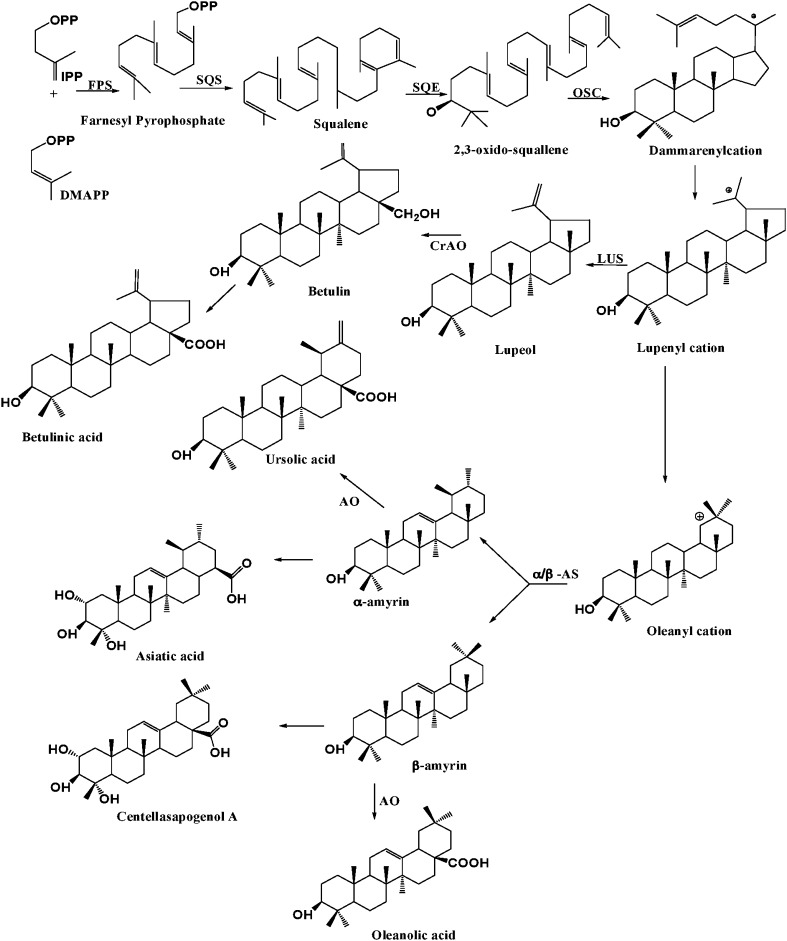
“…to form secondary triterpenoid metabolism in combination with dammarenyl carbocation intermediate while 2,3-oxidosqualene is cyclized in chair – boat – chair conformation by cycloartenol synthase (CAS) to yield the tetracyclic plant sterol precursor cycloartenol (Singh and Sharma 2015).”
RetractedDing, Y., Gardiner, D. M., Powell, J. J., Colgrave, M. L., Park, R., & Kazan, K. (2021) · Plant Cell & Environment · doi:10.1111/pce.14195 · Cited by 25
Wiles, D., Shanbhag, B. K., O’Brien, M., Doblin, M. S., Bacic, A., & Beddoe, T. (2022) · Phytochemistry · doi:10.1016/j.phytochem.2022.113380 · Cited by 25
Comparative metabolomic analysis between tomato and halophyte plants under intercropping conditions
Jurado‐Mañogil, C., Barba‐Espín, G., Hernández, J. A., & Díaz‐Vivancos, P. (2023) · Physiologia Plantarum · doi:10.1111/ppl.13971 · Cited by 24
Fradj, N., dos Santos, K. C. G., de Montigny, N., Awwad, F., Boumghar, Y., Germain, H., & Desgagné‐Penix, I. (2019) · International Journal of Molecular Sciences · doi:10.3390/ijms20184334 · Cited by 25
Ali, M., Miao, L., Soudy, F. A., Darwish, D. B. E., Alrdahe, S. S., Alshehri, D., Benedito, V. A., Tadege, M., Wang, X., & Zhao, J. H. (2022) · Cells · doi:10.3390/cells11172622 · Cited by 23
Wang, J., Yu, Y., Jiang, C., Sun, Z., Wang, X., Wang, Z., Ren, J., Wang, Z., Wang, X., Wang, X., et al. (2023) · Environmental and Experimental Botany · doi:10.1016/j.envexpbot.2023.105442 · Cited by 23
Boaro, C. S. F., Vieira, M. A. R., Campos, F. G., Ferreira, G., De‐la‐Cruz‐Chacón, I., & Marques, M. O. M. (2019) · Springer eBooks · doi:10.1007/978-3-030-16546-8_2 · Cited by 23
Pharmacologically active compounds from latex-bearing plants
Warowicka, A., Nawrot, R., & Goździcka‐Józefiak, A. (2019) · Advances in botanical research · doi:10.1016/bs.abr.2019.11.002 · Cited by 23
Transcriptomic responses to drought and salt stress in desert tree Prosopis juliflora
George, S., Manoharan, D., Li, J., Britton, M., & Parida, A. K. (2017) · Plant Gene · doi:10.1016/j.plgene.2017.09.004 · Cited by 23
Sharma, A. K., Angulo‐Bejarano, P. I., Madariaga-Navarrete, A., Oza, G., Iqbal, H. M. N., Cardoso-Taketa, A., & Villarreal, M. L. (2018) · Molecules · doi:10.3390/molecules23112985 · Cited by 23
“Terpenoids exert different biological activities which include anticancer, analgesic, antiinflammatory, antimicrobial, antifungal, antiviral and antiparasitic [37].”
BackgroundAdebo, O. A., Njobeh, P. B., Desobgo, S. C. Z., Pieterse, M., Kayitesi, E., & Ndinteh, D. T. (2018) · Food Science & Nutrition · doi:10.1002/fsn3.736 · Cited by 22
Ferreira, L. D. S. L., do Vale, A. E., de Souza, A. J., Leite, K. R. B., Sacramento, C., Moreno, M. L. V., Araújo, T. H. A., Soares, M. B. P., & Grassi, M. F. R. (2019) · Pharmacognosy Research · doi:10.4103/pr.pr_97_18 · Cited by 22
Li, J., Chen, X., Zhong, L., Wang, X., Zhou, X., Tang, Y., Liu, Y., Zheng, H., Zhan, R., & Chen, L. (2019) · Industrial Crops and Products · doi:10.1016/j.indcrop.2019.111661 · Cited by 22
Li, C., Sarangapani, S., Wang, Q., Kumar, N., & Sarojam, R. (2020) · International Journal of Molecular Sciences · doi:10.3390/ijms21176164 · Cited by 22
“Terpenes also have enormous commercial value because of their applications in food, cosmetic, agricultural, and pharmaceutical industries [3,4].”
BackgroundConstituents of Cannabis sativa
Echeverry, C., Reyes-Parada, M. I., & Scorza, C. (2021) · Advances in experimental medicine and biology · doi:10.1007/978-3-030-61663-2_1 · Cited by 22
Current advances in environmental stimuli regulating the glycyrrhizic acid biosynthesis pathway
Han, Y., Jia, Q., Yang, D., Chai, W., Zhang, X., He, Q., & Liang, Z. (2021) · Fitoterapia · doi:10.1016/j.fitote.2021.104860 · Cited by 22
Substantial effect of phytochemical constituents against the pandemic disease influenza—a review
Devi, A. B., & Sarala, R. (2021) · Future Journal of Pharmaceutical Sciences · doi:10.1186/s43094-021-00269-5 · Cited by 23
Metadata
- Authors
- Singh, B., & Sharma, R. A.
- Affiliations
- Amity University Jaipur (IN)
- University of Rajasthan (IN)
- Corresponding author
- Singh, Bharat
- Venue
- 3 Biotech
- Published
- 2014-04-29
- Volume
- 5
- Issue
- 2
- Pages
- 129-151
- ISSN
- 2190-572X (ISSN-L)
- 2190-5738
- PMC
- PMC4362742
- OpenAlex
- W2048175162
- Semantic Scholar
- 534ff96aa8cad327bf98a004d29dfba7de25c0c8
- Cited by
- 562
- References
- 295
- Citations by year
- 2026: 17 · 2025: 55 · 2024: 50 · 2023: 84 · 2022: 68 · 2021: 77 · 2020: 75 · 2019: 53 · 2018: 42 · 2017: 23 · 2016: 15 · 2015: 2 · 2014: 1
- FWCI
- 5.61
- Type
- journal article
- Language
- en
- Open access
- hybrid
- doi.org
- Locations
- 3 Biotech (publishedVersion, cc-by)
- Europe PMC (PubMed Central) (publishedVersion, cc-by)
- PubMed Central (publishedVersion, cc-by)
- PubMed (publishedVersion)
- Funders
- Amity University
- Topics
- Life Sciences › Biochemistry, Genetics and Molecular Biology › Molecular Biology › Plant biochemistry and biosynthesis
- Life Sciences › Agricultural and Biological Sciences › Plant Science › Plant tissue culture and regeneration
- Physical Sciences › Chemistry › Organic Chemistry › Sesquiterpenes and Asteraceae Studies
- Keywords
- terpenoid biosynthesis, terpene synthase, phylogenetic analysis, methylerythritol phosphate pathway, sesquiterpenes, diterpenoids, carotenoids, plant defense response, biosynthetic regulation, natural products
About these checks
Registry, retraction, Cites and statistics results are computed, not judged, with one exception: a printed reference that no index lists is read once by a model before it counts as a citation error. Claims are extracted by a model and kept only when their quote appears verbatim in the text; each cited source is then checked, with a model’s help, for whether it says what the claim relies on. Those verdicts can be wrong — read the claim’s quote and the cited source before relying on one.
Statistics and arithmetic are recomputed, not judged.
Confidence bands are shown only for fields calibrated on our annotated test set. None is calibrated yet, so no band is shown.
What counts as a claim ›How we measure confidence ›How we check this ›
Are you an author, or do you see a problem with this page? Request a review
Data sources
Bibliographic data: Semantic Scholar, OpenAlex, Crossref.
Contains information from the Semantic Scholar Academic Graph Datasets, made available under the ODC Attribution License (ODC-BY 1.0).
Semantic Scholar’s data is described in: Kinney, R., et al. (2023). The Semantic Scholar Open Data Platform. arXiv:2301.10140.
