

Plant terpenes: defense responses, phylogenetic analysis, regulation and clinical applications
Open accessThe DOI matches its Crossref record; 293 of the 295 references it cites were found in a registry or an index.
Abstract
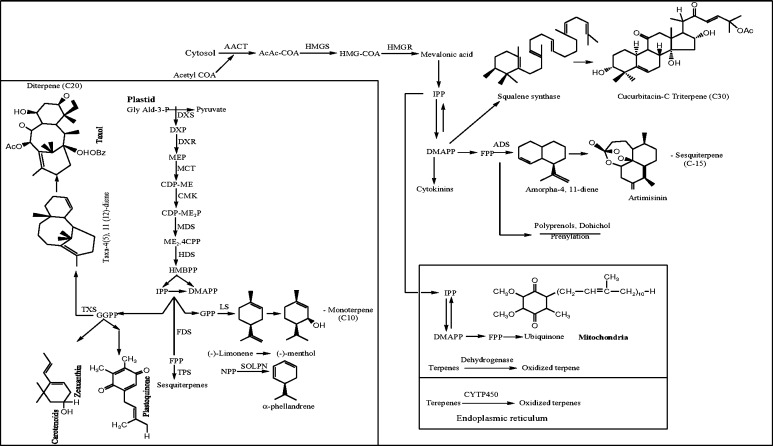
The terpenoids constitute the largest class of natural products and many interesting products are extensively applied in the industrial sector as flavors, fragrances, spices and are also used in perfumery and cosmetics. Many terpenoids have biological activities and also used for medical purposes. In higher plants, the conventional acetate-mevalonic acid pathway operates mainly in the cytosol and mitochondria and synthesizes sterols, sesquiterpenes and ubiquinones mainly. In the plastid, the non-mevalonic acid pathway takes place and synthesizes hemi-, mono-, sesqui-, and diterpenes along with carotenoids and phytol tail of chlorophyll. In this review paper, recent developments in the biosynthesis of terpenoids, indepth description of terpene synthases and their phylogenetic analysis, regulation of terpene biosynthesis as well as updates of terpenes which have entered in the clinical studies are reviewed thoroughly.
Overview
The claims and statistics of this paper haven’t been checked yet.
Free: it reads the open-access text and checks the first 5 claims that cite a source we can check. Create a free account to check every claim.
Integrity signals
Registry
Cites
Statistics
Figures
Verification
Claims the paper makes
The claims and statistics of this paper haven’t been checked yet.
Free: it reads the open-access text and checks the first 5 claims that cite a source we can check. Create a free account to check every claim.
Claims other papers make about this one
Each is checked against this paper’s own text: does it say what the citing paper says it does?
The cited source says what the claim attributes to it.
In the citing paper
“They present a wide-array of pharmacological properties, which have recently been described in several reviews (Russo, 2011; Singh and Sharma, 2015).”
From Cannabis sativa: The Plant of the Thousand and One Molecules (2016) · cites this paper as Singh and Sharma, 2015
The check wasn’t confident either way, so it gives no verdict — never disputed.
In the citing paper
“β-caryophyllene, a well-known active principle of black pepper and Copaiba balsam, possesses potent anti-inflammatory and gastric cytoprotector activities (Singh and Sharma, 2015).”
From Cannabis sativa: The Plant of the Thousand and One Molecules (2016) · cites this paper as Singh and Sharma, 2015
Experimental — accuracy not yet measuredThe check wasn’t confident either way, so it gives no verdict — never disputed.
In the citing paper
“The hydrolytic enzyme favors the release of active plant growth regulators from the conjugates stored in the plastids, thereby favoring trichome formation, as well as biomass production and leaf area (Singh et al., 2015).”
From Cannabis sativa: The Plant of the Thousand and One Molecules (2016) · cites this paper as Singh et al., 2015
Experimental — accuracy not yet measuredThe check wasn’t confident either way, so it gives no verdict — never disputed.
In the citing paper
“An additional study on A. annua has shown that the expression of a β-glucosidase from Trichoderma reesei increases glandular trichome density and artemisinin production (Singh et al., 2015).”
From Cannabis sativa: The Plant of the Thousand and One Molecules (2016) · cites this paper as Singh et al., 2015
Experimental — accuracy not yet measured
Self-check
Percentages, sums and reported differences re-computed from the paper’s own numbers.
The self-check needs the paper’s full text.
Citations
Cites
Ancestral polyploidy in seed plants and angiosperms
Jiao, Y., Wickett, N. J., Ayyampalayam, S., Chanderbali, A. S., Landherr, L., Ralph, P. E., Tomsho, L. P., Hu, Y., Liang, H., Soltis, P. S., et al. (2011) · Nature · doi:10.1038/nature09916 · Cited by 2,226 · cited 2×
“The D3 duplication event is highly likely to have been a tendem duplication that occurred during the ancient Poaceae genome before the q whole genome duplication, which was estimated to have occurred between 117 and 50 mya (Gaut 2002; Yu et al. 2005; Lescot et al. 2008; Jaio et al. 2011).”
BackgroundBIOSYNTHESIS AND ACTION OF JASMONATES IN PLANTS
Creelman, R. A., & Mullet, J. E. (1997) · Annual Review of Plant Physiology and Plant Molecular Biology · doi:10.1146/annurev.arplant.48.1.355 · Cited by 1,779 · cited 2×
“Methyl jasmonate is a cyclopentanone ring bearing lipophilic hormone synthesized in plants from octadecanoid pathway and they play role in development of responses to biotic stress (Creelman and Mullet 1997).”
BackgroundEngineering a mevalonate pathway in Escherichia coli for production of terpenoids
Martin, V. J. J., Pitera, D. J., Withers, S. T., Newman, J. D., & Keasling, J. D. (2003) · Nature Biotechnology · doi:10.1038/nbt833 · Cited by 1,725 · cited 1×
“On the basis of C5 units, we can classify the terpenoids as C5 (hemiterpenes), C10 (monoterpenes), C15 (sesquiterpenes), C20 (diterpenes), C25 (sesterpenes), C30 (triterpenes), C40 (tetraterpenes), [C40 (polyterpenes) (Ashour et al. 2010; Martin et al. 2003).”
Biological activities and distribution of plant saponins
Sparg, S. G., Light, M. E., & van Staden, J. (2004) · Journal of Ethnopharmacology · doi:10.1016/j.jep.2004.05.016 · Cited by 1,446 · cited 2×
“The class of triterpenes includes sterols and triterpe- noids, which can be synthesized as saponins and sapoge- nins sufficient amount in plants (Sparge et al. 2004).”
BackgroundChen, F., Tholl, D., Bohlmann, J., & Pichersky, E. (2011) · The Plant Journal · doi:10.1111/j.1365-313x.2011.04520.x · Cited by 1,446 · cited 5×
“In general, monoterpene synthases are localized on plastids, whereas sesquiterpene synthases are found in the cytosol (Chen et al. 2011; Aharoni et al. 2003).”
BackgroundInfluentialPlant Volatiles: Recent Advances and Future Perspectives
Dudareva, N., Negre, F., Nagegowda, D. A., & Orlova, I. (2006) · Critical Reviews in Plant Sciences · doi:10.1080/07352680600899973 · Cited by 1,395 · cited 4×
“Production of many trichome metabolites is also regulated tightly by transcriptional control, thereby allowing for tem- porally regulated emission of plant volatiles (Dudareva et al. 2006; Glas et al. 2012).”
BackgroundInfluentialPlant terpenoid synthases: Molecular biology and phylogenetic analysis
Bohlmann, J., Meyer-Gauen, G., & Croteau, R. (1998) · Proceedings of the National Academy of Sciences · doi:10.1073/pnas.95.8.4126 · Cited by 1,119 · cited 13×
“…of angiosperm terpene synthases (Bohlmann et al. 1998; Dudareva et al. 2003), the TPSb family contains angiosperm monoterpene synthases (Bohlmann et al. 1998; Dudareva et al. 2003), the TPSb includes angiosperm monoterpene synthases (Bohlmann et al. 1998; Dudareva et al. 2003), TPSd of…”
BackgroundInfluentialMonoterpene and sesquiterpene synthases and the origin of terpene skeletal diversity in plants
Degenhardt, J., Köllner, T. G., & Gershenzon, J. (2009) · Phytochemistry · doi:10.1016/j.phytochem.2009.07.030 · Cited by 1,093 · cited 5×
“Terpene synthases often catalyze the formation of multiple products from a prenyl diphosphate substrate, resulting from a catalytic mechanism that involves highly reactive carbocation intermediates (De- genhardt et al. 2009).”
BackgroundInfluentialThe Genomes of Oryza sativa: A History of Duplications
Yu, J., Wang, J., Lin, W., Li, S., Li, H., Zhou, J., Ni, P., Dong, W., Hu, S., Zeng, C., et al. (2005) · PLoS Biology · doi:10.1371/journal.pbio.0030038 · Cited by 983 · cited 2×
“The D3 duplication event is highly likely to have been a tendem duplication that occurred during the ancient Poaceae genome before the q whole genome duplication, which was estimated to have occurred between 117 and 50 mya (Gaut 2002; Yu et al. 2005; Lescot et al. 2008; Jaio et al. 2011).”
BackgroundORCA3, a Jasmonate-Responsive Transcriptional Regulator of Plant Primary and Secondary Metabolism
van der Fits, L., & Memelink, J. (2000) · Science · doi:10.1126/science.289.5477.295 · Cited by 917 · cited 1×
“Jasmonate was reported to be general inducer of bio- synthesis of plant secondary metabolite (Memelink et al. 2001; van der Fits and Memelink 2000).”
Background
Research works printed but not linked: 2
- Juergens UR Stober M Vetter H Steroid like inhibition of monocyte arachidonic acid metabolism and IL-1β production by 1,8-cineole Atemwegs Lungenkrankneitan 1998 24 3 11 9810029
- Pegel KH The importance of sitosterol and sitosterolin in human and animal nutrition S Afr J Sci 1997 93 263 268
Cited by
Items 401–500 of 658
Medicinal cannabis: Pharmaceutical forms and recent analytical methodologies
Fanovich, M. A., Churio, M. S., & Ramírez, C. L. (2020) · Comprehensive analytical chemistry · doi:10.1016/bs.coac.2020.04.001 · Cited by 4
Lycopene: Chemistry, Biosynthesis, Health Benefits and Nutraceutical Applications
Singh, S., & Gaur, S. (2020) · Springer eBooks · doi:10.1007/978-981-15-2361-8_11 · Cited by 4
Chemical communication between Trichoderma and plants
Nogueira-López, G., Lawry, R., Echaide-Aquino, J. F., & Mendoza‐Mendoza, A. (2020) · Elsevier eBooks · doi:10.1016/b978-0-12-819453-9.00005-2 · Cited by 4
Structurally Guided Reprogramming of Valerenadiene Synthase
Zinck, G., & Chappell, J. (2021) · Biochemistry · doi:10.1021/acs.biochem.1c00523 · Cited by 4
Secondary Metabolites from Plants: Role in Plant Diseases and Health Care
Datta, R., Sharma, A., & Thakur, A. (2022) · Springer eBooks · doi:10.1007/978-981-16-4779-6_11 · Cited by 4
Yarullina, L. G., Цветков, В. О., Khabibullina, V. O., Cherepanova, E. A., Burkhanova, G. F., Заикина, Е. А., & Kalatskaja, J. N. (2022) · Russian Journal of Plant Physiology · doi:10.1134/s1021443722040215 · Cited by 4
Oancea, I. A., van Staden, J. F., Oancea, E., & Ungureanu, E. (2019) · Analytical Letters · doi:10.1080/00032719.2019.1605373 · Cited by 4
Cabrita, P. (2020) · Reference series in phytochemistry · doi:10.1007/978-3-030-30185-9_5 · Cited by 4
Burdziej, A. (2020) · theses.fr (ABES) · doi:10.70675/fbfe3e9dz9d79z49f1z8baez2b4fb6c0168a · Cited by 4
Role of Arbuscular Mycorrhizal Fungi (AMF) in the Production of Medicinal Crops
Khan, A. G., & Naz, H. (2024) · Springer eBooks · doi:10.1007/978-981-97-0300-5_16 · Cited by 3
Plant Secondary Metabolites for Defense Against Herbivores
Divekar, P. A., Mishra, A., & Singh, A. K. (2025) · Reference series in phytochemistry · doi:10.1007/978-3-031-51158-5_24 · Cited by 3
Parvez, S. S., Mondal, A., Sharma, K., Steindorff, A. S., Grigoriev, I. V., Bakshi, U., & Banik, A. (2025) · Microbiological Research · doi:10.1016/j.micres.2025.128215 · Cited by 3
Liao, X., Wang, Q., Yang, X., Yao, Y., Zhu, D., Feng, J., & Wang, K. (2025) · BMC Pharmacology and Toxicology · doi:10.1186/s40360-025-00949-5 · Cited by 3
“Many ter-penes, including ursolic acid, betulinic acid, 1,8-cineole, β-sitosterol, and d-limonene, have been studied in clinical trials [22].”
Yadav, K., Sodhi, R. K., Sithta, A., Sharma, R., Venkatesan, K., Ahmed, R., Sirag, N., Elfadil, H., Elodemi, M., & Mohamed, J. M. M. (2026) · Journal of Pharmaceutical Innovation · doi:10.1007/s12247-025-10346-4 · Cited by 3
“The Salkowski test showed red and greenish-yellow fluores - cence, confirming steroids and triterpenoids, compounds reported for their anti-inflammatory, anticancer, and wound-healing potential [45].”
Self-citationDarwish, D. B. E., Ali, M. R. A., Soudy, F. A., Elazazi, E. M., Kawy, A. H. A., Makki, R. M., Aljabri, M., Al-Sulami, N., Yahya, N. A., & Zayed, M. (2026) · BMC Plant Biology · doi:10.1186/s12870-026-08193-7 · Cited by 3
Tenea, G. N. (2026) · Frontiers in Microbiology · doi:10.3389/fmicb.2026.1779198 · Cited by 3
Liu, Z., Wang, Y., Ma, K., He, Z., Zhiqi, L. I., Zhang, H., Zhang, Y., Zhao, M., Ma, X., & Li, J. (2026) · Journal of Agricultural and Food Chemistry · doi:10.1021/acs.jafc.5c10744 · Cited by 3
Belkin, V., Ilyukha, V. A., Хижкин, Е. А., Yakimova, A. E., Fyodorov, F., Antonova, E. P., Кижина, А. Г., Uzenbaeva, L. B., Ilyina, T. N., & Баишникова, И. В. (2020) · Transaction Kola Science Centre · doi:10.37614/2307-5252.2020.2.8.007 · Cited by 3
Development of school adjustment scale
Naz, H., & Ahmad, S. B. (2021) · International journal of economic perspectives · Cited by 3
Al-Madhagy, S. A., El‐Hawary, S. S., Sabry, O. M., Gad, S. S., & Mostafa, E. S. (2022) · Egyptian Journal of Chemistry · doi:10.21608/ejchem.2022.141268.6183 · Cited by 3
Dendritogenic Potential of the Ethanol Extract from Lippia alba Leaves in Rat Cortical Neurons
Toledo, M. M. V., Lattig, M. C., Chitiva, L. C., Costa, G. M., Sutachan, J. J., & Albarracín, S. L. (2023) · Molecules · doi:10.3390/molecules28186666 · Cited by 3
“The pharmacological properties of both terpenoids and flavonoids have been well documented, and many of them are even found in different types of drugs [46–48].”
BackgroundRole of Mutation and Stresses in the Production of Secondary Metabolite in Plants
Singh, S., Kaur, H., Kaur, R., Jagota, N., & Sharma, A. (2023) · Interdisciplinary biotechnological advances · doi:10.1007/978-981-99-4939-7_5 · Cited by 3
NATURALLY BIOSYNTHESIZED SECONDARY PLANT PRODUCTS AND ITS IMPORTANCE: AN OVERVIEW
Mishra, J. (2024) · PLANT ARCHIVES · doi:10.51470/plantarchives.2024.v24.no.1.131 · Cited by 3
Bahri, S., Setiadi, D., Lestari, T. A., Ilmi, M. Y. M., & Saputra, J. (2024) · JURNAL BIOLOGI TROPIS · doi:10.29303/jbt.v24i1b.8223 · Cited by 3
“Selain itu, terpenoid juga dikenal sebagai kelompok terbesar dari senyawa bioaktif alami (Singh & Sharma, 2015).”
Fofana, B., Soto‐Cerda, B. J., Zaidi, M. A., Main, D., & Fillmore, S. A. E. (2025) · International Journal of Molecular Sciences · doi:10.3390/ijms26031126 · Cited by 3
Natural Compounds That Target Glioma Stem Cells
Yaroshenko, M., Christoff, M., Ścibiorski, M., Surowiec, K., Jakubowicz-Gil, J., & Sumorek-Wiadro, J. (2025) · NeuroSci · doi:10.3390/neurosci6020052 · Cited by 3
“They act in various ways, including ROS induction, inhibition of the NF-κ B pathway, increases in pro-apoptotic proteins, reductions in VEGF expression, and promotion of autophagy [122,123].”
Ferchichi, A., Harrabi, S., Feki, M., & Fellah, H. (2020) · Acta Alimentaria · doi:10.1556/066.2020.49.3.3 · Cited by 3
ANTIOXIDANT AND ANTIHYPERURICEMIC POTENTIALS OF RARU (Cotylelobium melanoxylon Pierre) BARK
Sinaga, M. Z. E., Susilowati, A., Sebayang, F., Ginting, S. E. B., & Suhartati, T. (2020) · RASAYAN Journal of Chemistry · doi:10.31788/rjc.2020.1345942 · Cited by 3
Maldia, L. S. J., Combalicer, M. S., & Tinio, C. E. (2023) · Springer eBooks · doi:10.1007/978-981-19-8649-9_18 · Cited by 3
Secondary Metabolites From Plants for Cardiovascular Disease
Prakash, J. (2023) · Advances in medical diagnosis, treatment, and care (AMDTC) book series · doi:10.4018/978-1-6684-6737-4.ch010 · Cited by 3
Role of microbes in altering plant metabolome under stressful environments
Jha, Y. (2023) · Elsevier eBooks · doi:10.1016/b978-0-323-95241-5.00025-3 · Cited by 3
Plant Secondary Metabolites for Defense Against Herbivores
Divekar, P. A., Mishra, A., & Singh, A. K. (2023) · Reference series in phytochemistry · doi:10.1007/978-3-031-30037-0_24-1 · Cited by 4
Gaynes, M. N., Osika, K. R., & Christianson, D. W. (2024) · Biochemistry · doi:10.1021/acs.biochem.4c00476 · Cited by 3
RP-HPTLC fingerprinting of secondary metabolites from Nephrolepis exaltata and Cycas revoluta
Dave, R. S., Sharma, D. K., & Shah, K. R. (2023) · Journal of the Indian Chemical Society · doi:10.1016/j.jics.2023.100941 · Cited by 3
Functional polymers from biomass-based monomers
Wang, C., Surat’man, N. E. B., Wang, S., Li, Z., & Lim, J. Y. C. (2023) · Elsevier eBooks · doi:10.1016/b978-0-323-91198-6.00009-7 · Cited by 3
Role of Cannabis sativa L. in the Cosmetic Industry: Opportunities and Challenges
Sarkar, A. K., & Sadhukhan, S. (2023) · Advances in medical diagnosis, treatment, and care (AMDTC) book series · doi:10.4018/978-1-6684-5718-4.ch006 · Cited by 3
Phytochemicals as Modulators of Toll-Like Receptors: An Immunopharmacological Perspective
Chakraborty, P., Chatterjee, M., Chakraborty, A., Padma, S., & Mukherjee, S. (2024) · Springer eBooks · doi:10.1007/978-981-99-7261-6_3 · Cited by 3
Gene family evolution and natural selection signatures in Datura spp. (Solanaceae)
De‐la‐Cruz, I. M., Kariñho‐Betancourt, E., Núñez‐Farfán, J., & Oyama, K. (2022) · Frontiers in Ecology and Evolution · doi:10.3389/fevo.2022.916762 · Cited by 3
“Moreover, several terpenoids are volatilized to attract predators and parasitoids of herbivores (Singh and Sharma, 2015; Lackus et al., 2018; Boncan et al., 2020).”
BackgroundDeepak, V., Kruger, M. C., & Coetzee, M. (2016) · Medicinal Chemistry Research · doi:10.1007/s00044-016-1715-7 · Cited by 3
“Terpenes are a class of natural products abundantly present in medicinal plants and confer several pharmacological properties (Singh and Sharma 2015).”
BackgroundAssessment of the state of forest planting of the Monchegorsk Town (Murmansk Region)
Исаева, Л. Г., & Khimich, Y. R. (2020) · Transaction Kola Science Centre · doi:10.37614/2307-5252.2020.2.8.018 · Cited by 3
Estudo de reações de hidratação de pinenos utilizando resinas de troca iônica
Salvador, V. T. (2019) · doi:10.31414/eq.2019.d.130659 · Cited by 3
Michael, T. P., Ernst, E., Hartwick, N. T., Chu, P., Bryant, D. W., Gilbert, S., Ortleb, S., Baggs, E. L., Sree, K. S., Appenroth, K., et al. (2020) · bioRxiv (Cold Spring Harbor Laboratory) · doi:10.1101/2020.03.31.018291 · Cited by 3
“Since both terpenes and sphingolipids may play a predominant role in plant defense (Singh and Sharma 2015; Huby et al. 2020), it is possible that Wolffia has traded the terpene pathway for sphingolipids or that the aquatic environment favors the latter.”
Singewar, K. (2020) · MACAU: Open Access Repository of Kiel University (University Library Kiel) · Cited by 3
Terpenoid Biosynthetic Pathway in Ferula persica Using Transcriptome Analysis and Metabolome Data
Nasiri, J., Soorni, A., van Dijk, A. D. J., & Naghavi, M. R. (2024) · Wageningen University & Research Publications · doi:10.22034/jast.26.1.177 · Cited by 3
Understanding sudden larch death – from epidemiology to host resistance
Dun, H. F. (2021) · Oxford University Research Archive (ORA) (University of Oxford) · doi:10.5287/ora-54w2z0gge · Cited by 3
Mariné Casadó, R. (2018) · LA Referencia (Red Federada de Repositorios Institucionales de Publicaciones Científicas) · Cited by 3
Karamanos, Y. (2024) · Biochemistry · doi:10.5772/intechopen.115570 · Cited by 2
Tian, Y., Xia, G., Zhu, J., Li, L., & Zang, H. (2025) · Horticulturae · doi:10.3390/horticulturae11010060 · Cited by 2
“…steroids, demonstrating a wide range of biological activities, such as enhancing cholesterol synthesis, exhibiting anticancer, anti-inflammatory, and antiviral properties, lowering blood sugar levels, regulating the immune system, and preventing cardiovascular and cerebrovascular diseases [44,45].”
GWAS analysis of Fusarium head blight resistance in a Nordic-Baltic spring wheat panel
Syed, S., Aleliūnas, A., Armonienė, R., Brazauskas, G., & Gorash, A. (2025) · Frontiers in Plant Science · doi:10.3389/fpls.2025.1604296 · Cited by 2
Medicinal Plant-Derived Nanoparticles Against Foodborne Pathogens
Jeyaram, Y., Paul, F. R. E., Jeyaram, M., & Gurusamy, M. (2025) · Springer eBooks · doi:10.1007/978-3-032-03604-9_3 · Cited by 2
Cui, C., Li, B., Zeng, S., Zhang, Q., Chen, X., Lian, H., Yao, J., He, B., Chen, Y., & Hou, C. (2025) · Forests · doi:10.3390/f16111647 · Cited by 2
Kafley, M., Adhikari, H. S., Rijal, A., Lamichhane, N., & Chettri, M. K. (2025) · International Journal of Forestry Research · doi:10.1155/ijfr/7448656 · Cited by 2
Fungal Secondary Metabolites as Food Preservatives
Pandit, N. K., Sharma, P., Mohanty, A., Rout, P. R., & Meena, S. S. (2025) · Fungal biology · doi:10.1007/978-3-032-04519-5_3 · Cited by 2
Anticancer activity of Annona species: a systematic review
Corrêa, P. L. C., Martínez‐Vázquez, M., De‐la‐Cruz‐Chacón, I., Mimi, C. O., & Ferreira, G. (2025) · Phytochemistry Reviews · doi:10.1007/s11101-025-10205-7 · Cited by 2
Unveiling the chemical profile of Sicilian Coffea arabica L. leaves
Rovelli, D., Campmajó, G., Torrijos, R., Cirlini, M., Nucci, A., Serito, B., & Dall’Asta, C. (2025) · Future Foods · doi:10.1016/j.fufo.2025.100880 · Cited by 2
Fianko, A. O., Awuah‐Gyawu, M., Quayson, M., & Asongu, S. A. (2025) · Corporate Social Responsibility and Environmental Management · doi:10.1002/csr.70354 · Cited by 2
Bioproduction of terpenoid aroma compounds by microbial cell factories
Drummond, L. (2022) · Elsevier eBooks · doi:10.1016/b978-0-323-99900-7.00004-3 · Cited by 2
Kant, R., Singh, A., Raina, R., Dhingra, V., Bairwa, M. C., & Kanwar, V. (2024) · Indian Journal of Pharmacology · doi:10.4103/ijp.ijp_555_23 · Cited by 2
“[22,23] In the trial patients who received Pistacia lentiscus (mastic gum) for 8 weeks, were having statistically highly significant and sustained improvement in gastroparesis symptoms at 24 weeks [Table 3].”
Solvent‐Free Synthesis of Carvone Oxime Ester and Carvone Oxime Sulfonic Esters
Yang, H. Y., Yan, G., Zeng, G., Chen, J., Yao, H., Jiang, H., Gui, Q., & Liu, X. (2024) · ChemistrySelect · doi:10.1002/slct.202403018 · Cited by 2
Калинина, С. Н., Панченко, Д. В., Баишникова, И. В., Антонова, Е. П., Ilyukha, V. A., Shakun, V., & Алексеевна, З. И. (2020) · Transaction Kola Science Centre · doi:10.37614/2307-5252.2020.2.8.008 · Cited by 2
Section Acutifoliaof genus Sphagnum (Sphagnaceae, Bryphyta) in the herbarium of PABGI (KPABG)
Петровна, Д. Т. (2020) · Transaction Kola Science Centre · doi:10.37614/2307-5252.2020.2.8.003 · Cited by 2
Ermolaeva, O. V., & Shmakova, N. Y. (2020) · Transaction Kola Science Centre · doi:10.37614/2307-5252.2020.2.8.001 · Cited by 2
PRIMING-SIGNAL FUNCTION OF ANTIBIOTICS PRODUCED BY STREPTOMYCETES
Egorova, A. M., & Tarchevsky, I. A. (2019) · ÈKOBIOTEH · doi:10.31163/2618-964x-2019-2-4-504-509 · Cited by 2
Jamaladdeen, R., Coudour, B., Lemée, L., Wang, H., & Garo, J.-P. (2022) · Journal of Agricultural Chemistry and Environment · doi:10.4236/jacen.2022.112010 · Cited by 2
Dive, A., Singhal, R. S., Srivastava, S., Shukre, K., James, D., & Shetty, S. (2022) · 3 Biotech · doi:10.1007/s13205-022-03441-7 · Cited by 2
“2015; Singh and Sharma 2015) of a wide range of industrial products, including various elastomers used in surgical gloves, motor mounts, rubber bands, golf balls, condoms and shoes (Wittmann and Liao 2017).”
BackgroundBioactive constituents and potential health benefits of fermented seed products
Gandhi, G. R., Li, H., Vasconcelos, A. B. S., Montalvão, M. M., de Franca, M. N. F., He, X.-Q., Rong, P.-X., Li, H., & Gan, R. (2023) · Elsevier eBooks · doi:10.1016/b978-0-323-98341-9.00016-5 · Cited by 2
Sangeetha, K. D., Swaminathan, C., Vellaikumar, S., Nivethadevi, P., Kannan, P., & Subramanian, E. (2023) · Asian Journal of Chemistry · doi:10.14233/ajchem.2023.27552 · Cited by 2
Advances in the Bioactivity and Environmental of Hizikia Fusiformis : A Systematic Review
Hu, X., Li, X., Gao, W., Yang, D., Wu, T., Li, J., Dai, Y., & Jeon, Y. (2023) · Food Reviews International · doi:10.1080/87559129.2023.2276777 · Cited by 2
“[65,66] Recently, considerable attention has been focused on bioactive natural products from marine organisms due to the unique environment of the ocean.”
Methods for the preparation and analysis of the diterpene cyclase fusicoccadiene synthase
Wenger, E. S., & Christianson, D. W. (2023) · Methods in enzymology on CD-ROM/Methods in enzymology · doi:10.1016/bs.mie.2023.11.003 · Cited by 2
Singh, B., Nathawat, S., Saxena, A., Khangarot, K., & Sharma, R. A. (2024) · Journal of Biotechnology · doi:10.1016/j.jbiotec.2024.05.008 · Cited by 2
Self-citationHuynh, N. B., Krokene, P., Nybakken, L., Čėsna, V., & Magerøy, M. H. (2024) · Physiologia Plantarum · doi:10.1111/ppl.70009 · Cited by 2
Youssfi, M., Houssayni, S., Benkebboura, A., Akachoud, O., Zoubi, B., Assia, I., Bouamama, H., & Qaddoury, A. (2025) · Elsevier eBooks · doi:10.1016/b978-0-443-24863-4.00007-8 · Cited by 2
Hulu, E. H. Y., Dalimunthe, N. A., & Nasution, S. (2025) · Jurnal Ilmiah Pertanian ( JIPERTA) · doi:10.31289/jiperta.v7i1.5997 · Cited by 2
Physiological and molecular analysis of OsTPS30 by gamma irradiation
Kim, S. W., Jung, I. J., Kim, S. H., Choi, H., Kang, S., & Kim, J. (2019) · Journal of Plant Biotechnology · doi:10.5010/jpb.2019.46.2.088 · Cited by 2
Park, C., Garland, S. M., & Close, D. C. (2022) · Plants · doi:10.3390/plants12010020 · Cited by 2
“Terpenoids are important for plant survival and are produced in response to biotic and abiotic stress [19].”
BackgroundKharitonova, G. N. (2020) · Transaction Kola Science Centre · doi:10.37614/2307-5252.2020.2.8.017 · Cited by 2
Soil organic matter of katena near the Barentzburg (Western Spitzbergen)
Litvinova, T. I., Kashulina, G. M., & Korobeĭnikova, N. M. (2020) · Transaction Kola Science Centre · doi:10.37614/2307-5252.2020.2.8.002 · Cited by 2
Thomas, E., Rufatto, L. C., Touguinha, L. B. A., Crespam, P. C., Agostini, F., Moura, S., & Schwambach, J. (2022) · Research Society and Development · doi:10.33448/rsd-v11i1.21569 · Cited by 2
Gómez‐Hurtado, M. A., Ramírez‐Briones, E., Arreaga‐González, H. M., Rodríguez‐García, G., Cerda-García-Rojas, C. M., Joseph‐Nathan, P., & del Río, R. E. (2022) · Chirality · doi:10.1002/chir.23436 · Cited by 2
Hemp Varieties: Genetic and Chemical Diversity
Mishra, V., Dasila, K., Singh, M., & Tripathi, D. (2022) · Springer eBooks · doi:10.1007/978-3-031-05144-9_2 · Cited by 2
Wyk, V., & Susanna, A. (2020) · Unisa Institutional Repository (University of South Africa) · Cited by 2
Biokatalytische Diversität der Terpenbildung in Pflanzen und Bakterien
Kracht, O. N. (2017) · Dokumentenrepositorium der RUB (Ruhr University Bochum) · Cited by 2
GREEN(ER) Transition in Analytical Measurements for GREEN(NES) FOOD
CARATTI, A. (n.d.) · Institutional Research Information System University of Turin (University of Turin) · Cited by 2
Gebresilassie, A. B., & Engida, A. M. (2021) · Ethiopian Journal of Science and Technology · doi:10.4314/ejst.v14i2.6 · Cited by 1
Role of Plant Volatiles, Pest-Resistant Varieties and Transgenics in Tri-trophic Interactions
Jobichen, C., & Selvanarayanan, V. (2019) · Springer eBooks · doi:10.1007/978-981-13-2652-3_25 · Cited by 1
Murugan, P., & Venkatachalam, K. (2019) · International Research Journal of Pharmacy · doi:10.7897/2230-8407.1009283 · Cited by 1
Phytoperiphyton in rivers of Murmansk Region: structure and use in monitoring
Komulaynen, S. F. (2020) · Transaction Kola Science Centre · doi:10.37614/2307-5252.2020.2.8.006 · Cited by 1
Fiando processos de formAÇÃO: entre pontos, gestos e conversas
Cuevas, M. R. C., Battistelli, B. M., & César, J. M. (2022) · Educação em Foco · doi:10.36704/eef.v25i47.6911 · Cited by 1
Vaishali, K., & Himanshu, D. (2023) · International Journal of Ayurveda and Pharma Research · doi:10.47070/ijapr.v10i12.2636 · Cited by 1
MICROAGULHAS POLIMÉRICAS COMO SISTEMA PARA VETORIZAÇÃO DE FÁRMACOS
Silva, F. M. D. S. E., Ferreira, E. D. S., Lima, S. D. S., Júnior, J. C. V. D. C., Silva, G. C. S., de Almeida, A. A. C., & Nunes, L. C. C. (2023) · doi:10.22533/at.ed.6652311125 · Cited by 1
Chemical Composition and Medicinal Applications of Ferula assa-foetida
Haidari, A. (2024) · Scientific-Research Quarterly Journal of Medical Science · doi:10.62134/kjms09171 · Cited by 1
Pal, P., & Baksi, S. (2025) · Microorganisms for sustainability · doi:10.1007/978-981-96-9025-1_12 · Cited by 1
Das, S., Goswami, M., Paul, R. K., Yeasin, M., Sarkar, A., Maiti, C. S., Panja, S., Dutta, M., Saikia, J., & Karak, T. (2025) · Food Research International · doi:10.1016/j.foodres.2025.117337 · Cited by 1
Blacio, S., Gadvay, K., Rivas, K., Guaman, A., Parrales, J., & Calva, J. (2026) · Plants · doi:10.3390/plants15030373 · Cited by 1
“In contrast, in ARE where the soil is more saline and less fertile, a different chemical profile predominates, possibly due to the plant making metabolic adjustments in response to environmental stress and nitrogen availability [41].”
Plant Terpenoids in Cardioprotection: An Overview of Their Therapeutic Potential
Ríos-López, J. L., Salas, J. B., Cumplido-Laso, G., & Hortigon-Vinagre, M. P. (2026) · Current Issues in Molecular Biology · doi:10.3390/cimb48050479 · Cited by 1
Kharwar, S., Parveen, Z., Singh, R. P., Gautam, Y., & Kumar, V. (2026) · 3 Biotech · doi:10.1007/s13205-026-04870-4 · Cited by 1
“They can be categorized into seven groups: hemiterpenoids, monoterpenes, sesquiterpenes, diter - penes, triterpenes, tetraterpenes, and polyterpenesbased on their structural foundation of five-carbon isoprene units (Keeling And Bohlmann 2012; Singh And Sharma 2015).”
Natural Value-Added Compounds from Fungal Communities
Parasuraman, P., & Busi, S. (2019) · Fungal biology · doi:10.1007/978-3-030-14846-1_6 · Cited by 1
Reconstruction of Curcuma aeruginosa Secondary Metabolite Biosynthetic Pathway using Omics Data
Mohamad-Fauzi, N.-S., Zainal‐Abidin, R., Zaidan, M. W. A. M., Simoh, S., Zainal, A., & Mohamed‐Hussein, Z. (2018) · Sains Malaysiana · doi:10.17576/jsm-2018-4712-07 · Cited by 1
“Monoterpenoid and terpenoid are bioactive compounds involved in pharmacological activities with many pharmaceutical applications (Sawai & Saito 2011; Singh & Sharma 2015).”
BackgroundINFLUENCE OF SOLVENT ON THE DEGREE OF EXTRACTION AND THE COMPOSITION OF PEAT BITUMEN
Selyanina, S. B., Tatarintseva, V. G., Серебренникова, О. В., Zubov, I. N., & Orlov, A. S. (2019) · Успехи современного естествознания (Advances in Current Natural Sciences) · doi:10.17513/use.37126 · Cited by 1
“Эти соединения обладают широким спектром биологической активности и применяются в фармацевтической промышленности при получении препаратов для поддержания иммунитета, борьбы с простатитом и снижения уровня холестерина в крови [13].”
Metadata
- Authors
- Singh, B., & Sharma, R. A.
- Affiliations
- Amity University Jaipur (IN)
- University of Rajasthan (IN)
- Corresponding author
- Singh, Bharat
- Venue
- 3 Biotech
- Published
- 2014-04-29
- Volume
- 5
- Issue
- 2
- Pages
- 129-151
- ISSN
- 2190-572X (ISSN-L)
- 2190-5738
- PMC
- PMC4362742
- OpenAlex
- W2048175162
- Semantic Scholar
- 534ff96aa8cad327bf98a004d29dfba7de25c0c8
- Cited by
- 562
- References
- 295
- Citations by year
- 2026: 17 · 2025: 55 · 2024: 50 · 2023: 84 · 2022: 68 · 2021: 77 · 2020: 75 · 2019: 53 · 2018: 42 · 2017: 23 · 2016: 15 · 2015: 2 · 2014: 1
- FWCI
- 5.61
- Type
- journal article
- Language
- en
- Open access
- hybrid
- doi.org
- Locations
- 3 Biotech (publishedVersion, cc-by)
- Europe PMC (PubMed Central) (publishedVersion, cc-by)
- PubMed Central (publishedVersion, cc-by)
- PubMed (publishedVersion)
- Funders
- Amity University
- Topics
- Life Sciences › Biochemistry, Genetics and Molecular Biology › Molecular Biology › Plant biochemistry and biosynthesis
- Life Sciences › Agricultural and Biological Sciences › Plant Science › Plant tissue culture and regeneration
- Physical Sciences › Chemistry › Organic Chemistry › Sesquiterpenes and Asteraceae Studies
- Keywords
- terpenoid biosynthesis, terpene synthase, phylogenetic analysis, methylerythritol phosphate pathway, sesquiterpenes, diterpenoids, carotenoids, plant defense response, biosynthetic regulation, natural products
About these checks
Registry, retraction, Cites and statistics results are computed, not judged, with one exception: a printed reference that no index lists is read once by a model before it counts as a citation error. Claims are extracted by a model and kept only when their quote appears verbatim in the text; each cited source is then checked, with a model’s help, for whether it says what the claim relies on. Those verdicts can be wrong — read the claim’s quote and the cited source before relying on one.
Statistics and arithmetic are recomputed, not judged.
Confidence bands are shown only for fields calibrated on our annotated test set. None is calibrated yet, so no band is shown.
What counts as a claim ›How we measure confidence ›How we check this ›
Are you an author, or do you see a problem with this page? Request a review
Data sources
Bibliographic data: Semantic Scholar, OpenAlex, Crossref.
Contains information from the Semantic Scholar Academic Graph Datasets, made available under the ODC Attribution License (ODC-BY 1.0).
Semantic Scholar’s data is described in: Kinney, R., et al. (2023). The Semantic Scholar Open Data Platform. arXiv:2301.10140.
