

Designing cropping systems from nature
Open accessThe DOI matches its Crossref record; 100 of the 100 references it cites were found in a registry or an index.
Abstract
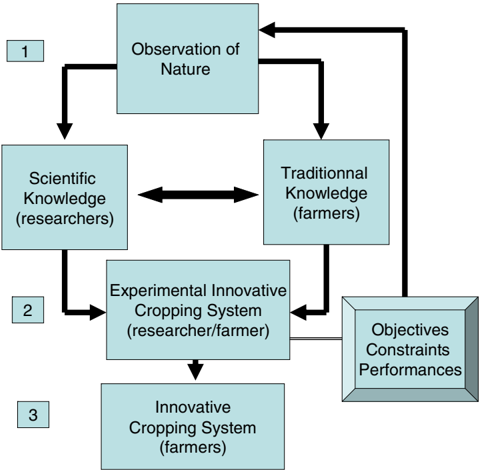
Despite huge gains in productivity, environmental impacts of industrial agriculture based on a few high-yielding crop cultivars and the massive use of chemical fertilisers and pesticides have led to a search for new pathways leading to more sustainable agriculture in both temperate and tropical regions. New strategies incorporating ecological knowledge gained from the observation of natural ecosystems is an alternative to design “ecologically intensive” agroecosystems. Such systems are indeed both ecological and productive. Designing ecologically intensive agroecosystems calls for in-depth knowledge of biological regulations in ecosystems, and for the integration of traditional agricultural knowledge held by local farmers. This article reviews the main initiatives underlying ecologically intensive agroecosystems, analyses basic concepts, and proposes a framework for action. The rainforest model, the dry forest model, and the American Prairie are exemplified as three main natural systems at the basis of the mimicry concept. The link between biodiversity and the mimicry hypotheses, and the use of the concepts of productivity, efficiency, stability, and resilience for agroecosystems are discussed. Six main principles for cropping system design based on natural ecosystem mimicry are identified. A three-step framework for action is proposed, including nature observation, experimental design, and participatory design. Although far from being a panacea, the mimicry approach can provide new ways for agroecosystem design both in temperate and tropical countries.
Overview
The claims and statistics of this paper haven’t been checked yet.
Free: it reads the open-access text and checks the first 5 claims that cite a source we can check. Create a free account to check every claim.
Integrity signals
Registry
Cites
Statistics
Figures

Verification
Claims the paper makes
The claims and statistics of this paper haven’t been checked yet.
Free: it reads the open-access text and checks the first 5 claims that cite a source we can check. Create a free account to check every claim.
Claims other papers make about this one
Each is checked against this paper’s own text: does it say what the citing paper says it does?
The cited source says what the claim attributes to it.
In the citing paper
“Based on the ecology of agricultural systems, their approach takes inspiration from natural or anthropized ecosystems to develop new objects at various scales (plot, farm, landscape) (Malézieux 2012).”
From Designing agroecological systems across scales: a new analytical framework (2022) · cites this paper as Malézieux 2012
The cited source says what the claim attributes to it.
In the citing paper
“Examples of such approaches include using the functional traits of a species, containing pests via complex trophic chains or using plant properties or other biological methods to control them (Malézieux 2012).”
From Designing agroecological systems across scales: a new analytical framework (2022) · cites this paper as Malézieux 2012
Self-check
Percentages, sums and reported differences re-computed from the paper’s own numbers.
The self-check needs the paper’s full text.
Citations
Cites
Resilience and Stability of Ecological Systems
Holling, C. S. (1973) · Annual Review of Ecology and Systematics · doi:10.1146/annurev.es.04.110173.000245 · Cited by 18,995 · cited 2×
“The concepts of production, efficiency, stability and resilience, as defined by Holling (1973), lie at the heart of natural ecosystem characterization by ecologists.”
BackgroundEFFECTS OF BIODIVERSITY ON ECOSYSTEM FUNCTIONING: A CONSENSUS OF CURRENT KNOWLEDGE
Hooper, D. U., Chapin, F. S., Ewel, J. J., Hector, A., Inchausti, P., Lavorel, S., Lawton, J. H., Lodge, D. M., Loreau, M., Naeem, S., et al. (2005) · Ecological Monographs · doi:10.1890/04-0922 · Cited by 8,046
Agricultural sustainability and intensive production practices
Tilman, D., Cassman, K. G., Matson, P. A., Naylor, R., & Polasky, S. (2002) · Nature · doi:10.1038/nature01014 · Cited by 7,957 · cited 1×
“Increased agricultural pressure on humans and on ecosystems means that it is now necessary to rethink the often unsustainable natural resource management methods used in agriculture (Brown et al. 2000; Tilman et al. 2002).”
BackgroundResilience, Adaptability and Transformability in Social–ecological Systems
Walker, B., Holling, C. S., Carpenter, S. R., & Kinzig, A. P. (2004) · Ecology and Society · doi:10.5751/es-00650-090205 · Cited by 7,821 · cited 3×
“More recently, Walker et al. (2004) proposed other attributes for ecosystem resilience: latitude (deformation limit beyond which a return to the initial state is impossible), resistance (varying degree of a system’s ability to change), precarity (closeness of the current state of the system to a…”
BackgroundInfluentialBiodiversity and ecosystem functioning: Current knowledge and future challenges
Loreau, M., Naeem, S., Inchausti, P., Bengtsson, J., Grime, J. P., Hector, A., Hooper, D. U., Huston, M. A., Raffaelli, D., Schmid, B., et al. (2001) · Science · doi:10.1126/science.1064088 · Cited by 4,649 · cited 1×
“A great deal of recent work has shown some positive correlations between biodiversity and primary productivity, nutrient retention and post-stress resilience in natural ecosystems (Hector et al. 1999; Loreau et al. 2001), but also in cultivated ecosystems (Altieri 1999).”
BackgroundAgricultural Intensification and Ecosystem Properties
Matson, P. A., Parton, W. J., Power, A. G., & Swift, M. J. (1997) · Science · doi:10.1126/science.277.5325.504 · Cited by 3,160 · cited 2×
“Modern agriculture, characterised by crop specialisation and a massive use of chemicals and energy, has generated and still generates major environmental problems on a local and global scale (Matson et al. 1997; Altieri 1999; Piper 1999; Figs.”
BackgroundLand mosaics: the ecology of landscapes and regions
(1996) · Choice Reviews Online · doi:10.5860/choice.33-6317 · Cited by 3,086
Productivity and sustainability influenced by biodiversity in grassland ecosystems.
Tilman, D., Wedin, D., & Knops, J. (1996) · Nature · doi:10.1038/379718a0 · Cited by 2,803 · cited 2×
“Tilman et al. (1996) assessed the sustainability of numerous prairie ecosystems characterised by different levels of biological diversity (number of plant species present).”
BackgroundThe ecological role of biodiversity in agroecosystems
Altieri, M. A. (1999) · Agriculture, Ecosystems & Environment · doi:10.1016/s0167-8809(99)00028-6 · Cited by 2,561
Land Mosaics: The Ecology of Landscapes and Regions
Forman, R. T. T., & Wilson, E. O. (1995) · doi:10.1017/9781107050327 · Cited by 2,386
Research works printed but not linked: 7
- 17. Dupraz C, Capillon A (2005) L'agroforesterie: une voie de diversification écologique de l'agriculture européenne? Cahier d'études DEMETER. Economie et Stratégie agricole, Paris, pp 101-113
- 30. Götz S, da Fonseca GAB, Harvey CA, Gascon C, Vasconcelos HL, Izac A-MN (eds) Agroforestry and biodiversity conservation in tropical landscapes. Island Press, Washington, pp 227-260
- 33. Gunderson LH, Holling CS (2002) Panarchy. Understanding transformation in human and natural systems. Island Press, Washington
- 53. Mitsch WJ (1996) Ecological engineering: a new paradigm for engineers and ecologists. In: Scultze PC (ed) Engineering with ecological constraints. National Academy Press, Washington DC, pp 114-132
- 57. O'Neill R (2001) Is it time to bury the ecosystem concept? Ecology 82 (12):3275-3284
- 70. Schroth G, Da Fonseca GAB, Harvey CA, Gascon C, Vasconcelos HL, Izac A-M (2004) Agroforestry and biodiversity conservation in tropical landscapes. Island Press, Washington
- 81. Vandermeer J (ed) (2003) Tropical agroecosystems. CRC Press, Florida, USA
Cited by
Tittonell, P., & Giller, K. E. (2013) · Field Crops Research · doi:10.1016/j.fcr.2012.10.007 · Cited by 1,098
Ecological intensification of agriculture — sustainable by nature
Tittonell, P. (2014) · Current Opinion in Environmental Sustainability · doi:10.1016/j.cosust.2014.08.006 · Cited by 770
“[36]), and some forms of conservation agriculture (e.”
BackgroundHow to implement biodiversity-based agriculture to enhance ecosystem services: A review
Duru, M., Therond, O., Martin, G., Martin-Clouaire, R., Magne, M.-A., Justes, E., Journet, E.-P., Aubertot, J.-N., Savary, S., Bergez, J.-E., et al. (2015) · Agronomy for Sustainable Development · doi:10.1007/s13593-015-0306-1 · Cited by 659
“tems (Malézieux 2011), (ii) assessment of risks associated with new practices (Le Gall et al.”
BackgroundInfluentialDoré, T., Makowski, D., Malézieux, E., Munier-Jolain, N., Tchamitchian, M., & Tittonell, P. (2011) · European Journal of Agronomy · doi:10.1016/j.eja.2011.02.006 · Cited by 474
“natural ecosystems, guiding alternative agronomic practices (Malézieux, 2011).”
BackgroundInfluentialTechnological Approaches to Sustainable Agriculture at a Crossroads: An Agroecological Perspective
Altieri, M., Nicholls, C., & Montalba, R. (2017) · Sustainability · doi:10.3390/su9030349 · Cited by 364
“richness of planned and associated biodiversity improves nutrient cycling and soil fertility, limit nutrient leaching losses, reduces the negative impacts of pests, diseases and weeds and enhances overall resilience of the cropping system (Figure 2) [28].”
BackgroundEarthworm services for cropping systems. A review
Bertrand, M., Barot, S., Blouin, M., Whalen, J., de Oliveira, T., & Roger-Estrade, J. (2015) · Agronomy for Sustainable Development · doi:10.1007/s13593-014-0269-7 · Cited by 353
“4Managing earthwormbeneficial effects in cropped fields Increasing biodiversity in cropping systems is the key to improve agriculture sustainability, and diverse earthworm communities can contribute positively to this objective (Brussaard et al. 2007; Malezieux 2012).”
BackgroundPermaculture for agroecology: design, movement, practice, and worldview. A review
Ferguson, R. S., & Lovell, S. T. (2014) · Agronomy for Sustainable Development · doi:10.1007/s13593-013-0181-6 · Cited by 292
“This view is largely consonant with the emerging scientific perspective on perennial polycultures (Ewel 1999; Lefroy 1999; Jordan and Warner 2010; Malézieux 2012; Picasso et al. 2011; Schoeneberger et al. 2012), as well as the more extensive discussions of field-scale diversity (Francis and Porter…”
BackgroundResultInfluentialDesigning mixtures of varieties for multifunctional agriculture with the help of ecology. A review
Barot, S., Allard, V., Cantarel, A., Enjalbert, J., Gauffreteau, A., Goldringer, I., Lata, J.-C., Le Roux, X., Niboyet, A., & Porcher, E. (2017) · Agronomy for Sustainable Development · doi:10.1007/s13593-017-0418-x · Cited by 282
“…general idea, in the line of agroecology, ecological engineering, or nature-based solutions (Altieri 1989; Barot et al. 2012; Eggermont et al. 2015; Malézieux 2011), is to increase the biodiversity of cultivated systems to mimic, to a certain extent, natural ecosystems and hopefully benefit from…”
BackgroundWhat is sustainable intensification? Views from experts
Petersen, B., & Snapp, S. (2015) · Land Use Policy · doi:10.1016/j.landusepol.2015.02.002 · Cited by 271
Seed exchange networks for agrobiodiversity conservation. A review
Pautasso, M., Aistara, G., Barnaud, A., Caillon, S., Clouvel, P., Coomes, O. T., Delêtre, M., Demeulenaere, E., De Santis, P., Döring, T., et al. (2013) · Agronomy for Sustainable Development · doi:10.1007/s13593-012-0089-6 · Cited by 259
“There is a need to transcend boundaries between disciplines, perspectives, and kinds of expertise (holistic and multidisciplinary approaches; Malézieux 2012) as well as stakeholders.”
BackgroundAdaptation of Agriculture to Climate Change: A Scoping Review
Grigorieva, E., Livenets, A., & Stelmakh, E. (2023) · Climate · doi:10.3390/cli11100202 · Cited by 255
Taking Complexity in Food Systems Seriously: An Interdisciplinary Analysis
Foran, T., Butler, J. R. A., Williams, L. J., Wanjura, W. J., Hall, A., Carter, L., & Carberry, P. S. (2014) · World Development · doi:10.1016/j.worlddev.2014.03.023 · Cited by 238
“Farms and landscapes deliver both agricultural production and ecosystem services (Altieri et al., 2012; Malezieux, 2012).”
Backgroundde Bon, H., Huat, J., Parrot, L., Sinzogan, A., Martin, T., Malézieux, E., & Vayssières, J.-F. (2014) · Agronomy for Sustainable Development · doi:10.1007/s13593-014-0216-7 · Cited by 226
“Their rules of application in the field are well defined, and the use of chemical pesticides is not entirely banned (Malézieux 2012; Ratnadass et al. 2012).”
BackgroundAgroecology: Principles for the Conversion and Redesign of Farming Systems
CI, N., & MA, A. (2016) · Journal of Ecosystem & Ecography · doi:10.4172/2157-7625.s5-010 · Cited by 216
“Rather, it relies on a set of complex interactions that emerge when adequate combinations of various practices are operationalized on each farm [30].”
BackgroundAgroecological crop protection for sustainable agriculture
Deguine, J., Aubertot, J., Bellon, S., Côté, F., Lauri, P., Lescourret, F., Ratnadass, A., Scopel, É., Andrieu, N., Bàrberi, P., et al. (2023) · Advances in agronomy · doi:10.1016/bs.agron.2022.11.002 · Cited by 203
Wheat (Triticum aestivum L.)‐based intercropping systems for biological pest control
Lopes, T. C. M., Hatt, S., Xu, Q., Chen, J., Liu, Y., & Francis, F. (2016) · Pest Management Science · doi:10.1002/ps.4332 · Cited by 197
An urgent need for sustainable thinking in agriculture – An Indian scenario
Srivastava, P., Singh, R., Tripathi, S., & Raghubanshi, A. S. (2016) · Ecological Indicators · doi:10.1016/j.ecolind.2016.03.015 · Cited by 184
Cereal+Legume Intercropping: An Option for Improving Productivity and Sustaining Soil Health
Layek, J., Das, A., Mitran, T., Nath, C. P., Meena, R. S., Yadav, G. S., Shivakumar, B. G., Kumar, S., & Lal, R. (2018) · Springer eBooks · doi:10.1007/978-981-13-0253-4_11 · Cited by 181
Lovell, S. T., Dupraz, C., Gold, M. A., Jose, S., Revord, R. S., Stanek, E. C., & Wolz, K. J. (2017) · Agroforestry Systems · doi:10.1007/s10457-017-0087-4 · Cited by 180
“Decisions about the experimental design include: specific species/varieties and arrangement of species within treatments, necessary size of plots, number of replications to provide statistical significance, and arrangement of plots in the landscape (Lefroy 2009; Malezieux 2012).”
BackgroundInfluentialPermaculture—Scientific Evidence of Principles for the Agroecological Design of Farming Systems
Krebs, J., & Bach, S. (2018) · Sustainability · doi:10.3390/su10093218 · Cited by 176
“The main patterns/models that are usable for agricultural ecosystems are grasslands, such as savanna or prairie, dry forests, and tropical rainforests [80].”
BackgroundBorg, J., Kiær, L. P., Lecarpentier, C., Goldringer, I., Gauffreteau, A., Saint-Jean, S., Barot, S., & Enjalbert, J. (2018) · Field Crops Research · doi:10.1016/j.fcr.2017.09.006 · Cited by 167
Ecological Intensification: Local Innovation to Address Global Challenges
Tittonell, P. A., Klerkx, L., Baudron, F., Félix, G. F., Ruggia, A., van Apeldoorn, D. F., Dogliotti, S., Mapfumo, P., & Rossing, W. A. H. (2016) · Sustainable agriculture reviews · doi:10.1007/978-3-319-26777-7_1 · Cited by 171
Plant–soil synchrony in nutrient cycles: Learning from ecosystems to design sustainable agrosystems
Fontaine, S., Abbadie, L., Aubert, M., Barot, S., Bloor, J., Derrien, D., Duchêne, O., Gross, N., Henneron, L., Roux, X. L., et al. (2023) · Global Change Biology · doi:10.1111/gcb.17034 · Cited by 166
“However, effective guidelines for redesigning cropping systems based on natural systems remain lim - ited (Malézieux, 2012 ; Pulleman et al., 2022 ).”
BackgroundRoutledge Handbook Of Food As A Commons: Expanding Approaches
Luis, V.-P. J., Tomaso, F., Schutter, O. D., & Ugo, M. (2018) · Routledge eBooks · doi:10.4324/9781315161495 · Cited by 160
Innovative design for agriculture in the move towards sustainability: scientific challenges
Prost, L., Berthet, E. T. A., Cerf, M., Jeuffroy, M., Labatut, J., & Meynard, J.-M. (2016) · Research in Engineering Design · doi:10.1007/s00163-016-0233-4 · Cited by 159
“…design processes, because the expression of biological regulation and interactions in specific local conditions is still poorly known (Doré et al. 2011; Malézieux 2012), and because the knowledge produced through the use of designed objects is largely implicit yet fully relevant (Altieri 1989).”
BackgroundHatt, S., Boeraeve, F., Artru, S., Dufrêne, M., & Francis, F. (2017) · The Science of The Total Environment · doi:10.1016/j.scitotenv.2017.11.296 · Cited by 147
Epron, D., Nouvellon, Y., Mareschal, L., Moreira, R. M. E., Koutika, L., Geneste, B., Delgado-Rojas, J. S., Laclau, J., Sola, G., Gonçalves, J. L. D. M., et al. (2012) · Forest Ecology and Management · doi:10.1016/j.foreco.2012.10.034 · Cited by 142
“However, the increasing cost of fertilizers and related environmental issues (water pollution and greenhouse gas emissions) favor the emergence of alternative management options to reduce fertilizer inputs taking better advantage of ecological mechanisms that occur in natural ecosystems to sustain productivity (Malezi…”
BackgroundFunctional agrobiodiversity and agroecosystem services in sustainable wheat production. A review
Costanzo, A., & Bàrberi, P. (2013) · Agronomy for Sustainable Development · doi:10.1007/s13593-013-0178-1 · Cited by 142
Proietti, I., Frazzoli, C., & Mantovani, A. (2015) · Healthcare · doi:10.3390/healthcare3020172 · Cited by 130
“proneness to intensification, which clearly limits its resilience in a scenario characterized by major changes and challenges [4–6].”
BackgroundEstimating yield gaps at the cropping system level
Guilpart, N., Grassini, P., Sadras, V. O., Timsina, J., & Cassman, K. G. (2017) · Field Crops Research · doi:10.1016/j.fcr.2017.02.008 · Cited by 127
“…to conduct exploratory field studies, our framework ould add value to tools commonly used in the fields of cropping and farming system design (Malézieux, 2012; Martin et al., 2013), like crop sequence generators (Dogliotti et al., 2003), analysis of large farm surveys databases (Henderson et…”
BackgroundMethodAnalysis of ecosystem services trade-offs to design agroecosystems with perennial crops
Rapidel, B., Ripoche, A., Allinne, C., Metay, A., Deheuvels, O., Lamanda, N., Blazy, J.-M., Valdés-Gómez, H., & Gary, C. (2015) · Agronomy for Sustainable Development · doi:10.1007/s13593-015-0317-y · Cited by 90
Agroecología: Principios para la conversión y el rediseño de sistemas agrícolas
Nicholls, C. I., Altieri, M. A., & Vázquez, L. L. (2015) · Digitum: Institutional Repository of the University of Murcia (University of Murcia) · Cited by 115
Hatt*, S., Artru*, S., Brédart, D., Lassois, L., Francis, F., Haubruge, É., Garré, S., Stassart, P. M., Dufrêne, M., Monty, A., et al. (2016) · BASE · doi:10.25518/1780-4507.12997 · Cited by 74
“…principles suggest that we should safeguard local ecological processes that underpin the delivery of ecosystem services (ES) crucial to agricultural activities (e.g., natural soil fertility, biological control), while maintaining the productive function of agriculture (Malézieux, 2012).”
BackgroundInfluentialProst, L., Reau, R., Paravano, L., Cerf, M., & Jeuffroy, M.-H. (2018) · Agricultural Systems · doi:10.1016/j.agsy.2018.04.009 · Cited by 69
“…Meynard et al., 2017), most are contributing to innovation studies by developing design approaches, as a growing literature on the subject attests (e.g. Le Gal et al., 2011; Meynard et al., 2012; Malezieux, 2012; Cerf et al., 2012; Martin et al., 2013; Dogliotti et al., 2014; Prost et al., 2017).”
BackgroundAubin, J., Callier, M. D., Rey‐Valette, H., Mathé, S., Wilfart, A., Legendre, M., Slembrouck, J., Caruso, D., Chía, E., Masson, G., et al. (2017) · Reviews in Aquaculture · doi:10.1111/raq.12231 · Cited by 115
Frontiers in alley cropping: Transformative solutions for temperate agriculture
Wolz, K. J., Lovell, S. T., Branham, B. E., Eddy, W., Keeley, K. O., Revord, R. S., Wander, M. M., Yang, W. H., & DeLucia, E. H. (2017) · Global Change Biology · doi:10.1111/gcb.13986 · Cited by 112
Bases agroecológicas para la adaptación de la agricultura al cambio climático
Nicholls, C. I., & Altieri, M. A. (2019) · UNED Research Journal · doi:10.22458/urj.v11i1.2322 · Cited by 110
“En casos de extrema sequía, muchos agricultores al perder sus cosechas, intercambian madera por alimentos y también suplementan sus dietas con frutas, vainas y hojas de árboles resistentes (Malezieux, 2012).”
BackgroundEpilogue: global food security, rhetoric, and the sustainable intensification debate
Kuyper, T. W., & Struik, P. C. (2014) · Current Opinion in Environmental Sustainability · doi:10.1016/j.cosust.2014.09.004 · Cited by 106
Land Use and Food Security in 2050: a Narrow Road
Mouël, C. L., Lattre-Gasquet, M. D., & Mora, O. (2018) · Éditions Quæ eBooks · doi:10.35690/978-2-7592-2880-5 · Cited by 113
“Principally, under this hypothesis the cropping system uses biological regulations produced by the ecosystem itself, in a sustainable manner (Altieri, 2002; Malézieux, 2012).”
BackgroundPesticide transfer models in crop and watershed systems: a review
Mottes, C., Jannoyer, M., Bail, M. L., & Malézieux, É. (2013) · Agronomy for Sustainable Development · doi:10.1007/s13593-013-0176-3 · Cited by 101
“…despite progress in using ecological processes to manage agro-systems with less chemicals (Altieri 1995; Altieri and Nicholls 2000; Kogan 1998; Malézieux 2012; Rosset and Altieri 1997), in practice, the use of pesticides is still widespread and even in innovative practices such as no-till…”
BackgroundStructural characteristics determine productivity in complex cocoa agroforestry systems
Jagoret, P., Michel, I. P., Ngnogue, H. T., Lachenaud, P., Snoeck, D., & Malézieux, É. (2017) · Agronomy for Sustainable Development · doi:10.1007/s13593-017-0468-0 · Cited by 100
“Different “ecologically intensive” model design frameworks have thus been proposed (Malézieux 2012; Gaba et al. 2015).”
BackgroundBiodiversity is affected by changes in management intensity of cocoa-based agroforests
Deheuvels, O., Rousseau, G. X., Quiroga, G. S., Franco, M. D., Cerda, R. H., Mendoza, S. V., & Somarriba, E. (2014) · Agroforestry Systems · doi:10.1007/s10457-014-9710-9 · Cited by 99
“This indicates that even botanically and structurally complex agroforests may mimic the architecture of tropical forests (Malézieux 2011) but they do not mimic their botanical diversity or their botanical composition.”
BackgroundToffolini, Q., Jeuffroy, M.-H., Mischler, P., Pernel, J., & Prost, L. (2017) · NJAS: Wageningen Journal of Life Sciences · doi:10.1016/j.njas.2016.11.004 · Cited by 68
Ditzler, L., van Apeldoorn, D. F., Schulte, R. P. O., Tittonell, P. A., & Rossing, W. A. H. (2020) · European Journal of Agronomy · doi:10.1016/j.eja.2020.126197 · Cited by 100
Bohan, D. A., Raybould, A. F., Mulder, C., Woodward, G., Tamaddoni‐Nezhad, A., Blüthgen, N., Pocock, M. J. O., Muggleton, S., Evans, D. M., Astegiano, J., et al. (2013) · Advances in ecological research/Advances in Ecological Research · doi:10.1016/b978-0-12-420002-9.00001-9 · Cited by 96
Ecologically intensive agriculture: Nature and challenges
Bonny, S. (2011) · Cahiers Agricultures · doi:10.1684/agr.2011.0526 · Cited by 95
Genealogy of design reasoning in agronomy: Lessons for supporting the design of agricultural systems
Salembier, C., Segrestin, B., Berthet, E. T. A., Weil, B., & Meynard, J.-M. (2018) · Agricultural Systems · doi:10.1016/j.agsy.2018.05.005 · Cited by 94
Rehabilitation and renovation of cocoa (Theobroma cacao L.) agroforestry systems. A review
Somarriba, E., Peguero, F., Cerda, R. H., Orozco-Aguilar, L., López-Sampson, A., Leandro-Muñoz, M. E., Jagoret, P., & Sinclair, F. (2021) · Agronomy for Sustainable Development · doi:10.1007/s13593-021-00717-9 · Cited by 89
“A growing body of research focuses on the development and use of methodologies and tools to aid in the optimal design of cocoa shade canopies (Somarriba et al. 2018, 2020; Álvarez-Carrillo et al. 2012; Malézieux 2012; Guharay et al. 2001; Tscharntke et al. 2011).”
BackgroundHimanen, S., Mäkinen, H., Rimhanen, K., & Savikko, R. (2016) · Agriculture · doi:10.3390/agriculture6030034 · Cited by 90
“Designing intercropping is a knowledge-intensive process that combines scientific and practical expertise [57].”
BackgroundDo diversified crop rotations influence soil physical health? A meta-analysis
Iheshiulo, E. M., Larney, F. J., Hernandez‐Ramirez, G., Luce, M. S., Liu, K., & Chau, H. W. (2023) · Soil and Tillage Research · doi:10.1016/j.still.2023.105781 · Cited by 86
Martens, J. R. T., Entz, M. H., & Wonneck, M. D. (2015) · Canadian Journal of Plant Science · doi:10.4141/cjps-2014-173 · Cited by 85
“…enterprise diversity; integration, multifunctionality, and redundancy among components; effective nutrient cycling through promotion of soil biological activity and minimal use of external inputs; leveraging of natural ecosystem processes; and minimal soil disturbance (Lin 2011; Malézieux 2012).”
BackgroundInfluentialContribution of agroecological farming systems to the delivery of ecosystem services
Boeraeve, F., Dendoncker, N., Cornélis, J.-T., Degrune, F., & Dufrêne, M. (2020) · Journal of Environmental Management · doi:10.1016/j.jenvman.2019.109576 · Cited by 83
“aesthetic landscapes, healthy food) (Zhang et al., 2007; Malézieux, 2012; Duru et al., 2015).”
BackgroundAllinne, C., Savary, S., & Avelino, J. (2016) · Agriculture Ecosystems & Environment · doi:10.1016/j.agee.2016.02.001 · Cited by 79
Isaacs, K., Snapp, S. S., Chung, K. R., & Waldman, K. B. (2016) · Food Security · doi:10.1007/s12571-016-0582-x · Cited by 76
“These traditional systems are designed to elicit multiple provision services (food, fuel, fiber) (Power 2010; Lin 2011) and are reliant on integrated management of local natural resources (Malézieux 2012) because input markets are unreliable or inaccessible.”
BackgroundResultInfluentialEco-Evolutionary Dynamics of Agricultural Networks
Loeuille, N., Barot, S., Georgelin, E., Kylafis, G., & Lavigne, C. (2013) · Advances in ecological research/Advances in Ecological Research · doi:10.1016/b978-0-12-420002-9.00006-8 · Cited by 78
“The industrialization of agriculture has also altered the temporal dynamics of land use, replacing stable perennial cultivated areas, such as orchards or pastures, with arable land (Malézieux, 2011; Tscharntke et al., 2005) and a fast habitat turnover through crop rotations.”
BackgroundInfluentialLevers for the agroecological transition of tropical agriculture
Côté, F., Rapidel, B., Sourisseau, J.-M., Affholder, F., Andrieu, N., Bessou, C., Caron, P., Deguine, J., Faure, G. O., Hainzelin, E. M., et al. (2022) · Agronomy for Sustainable Development · doi:10.1007/s13593-022-00799-z · Cited by 76
“This is undoubtedly the most commonly accepted principle when referring to agroecology, and all the promoters of tropical agroecology subscribe to this principle (Malézieux 2012).”
BackgroundUndersowing winter oilseed rape with frost-sensitive legume living mulches to improve weed control
Lorin, M., Jeuffroy, M.-H., Butier, A., & Valantin‐Morison, M. (2015) · European Journal of Agronomy · doi:10.1016/j.eja.2015.09.001 · Cited by 73
Martin, G., Allain, S., Bergez, J.-É., Leenhardt, D., Constantin, J., Duru, M., Hazard, L., Lacombe, C., Magda, D. D., Magne, M.-A., et al. (2018) · Sustainability · doi:10.3390/su10062083 · Cited by 74
“In contrast, strong ecological modernization of agriculture relies on increasing “agrobiodiversity across multiple spatial and/or temporal scales” in farming systems [8] to generate ecosystem services that replace synthetic inputs [9,10].”
BackgroundCo-design of innovative mixed crop‑livestock farming systems in the cotton zone of Burkina Faso
Vall, É., Blanchard, M., Coulibaly, K., Ouédraogo, S., Dabiré, D., Douzet, J.-M., Kouakou, P. K., Andrieu, N., Havard, M., Chia, E., et al. (2019) · Agritrop (Cirad) · doi:10.35690/978-2-7592-3057-0 · Cited by 4
“As demonstrated in practice, the introduction of biodiversity has significant implications for the functioning of an agrosystem (Malézieux, 2012).”
BackgroundYoung, K. J. (2017) · Advances in agroforestry · doi:10.1007/978-3-319-69371-2_8 · Cited by 68
Modelling Interaction Networks for Enhanced Ecosystem Services in Agroecosystems
Tixier, P., Peyrard, N., Aubertot, J., Gaba, S., Radoszycki, J. J., Caron-Lormier, G., Vinatier, F., Mollot, G., & Sabbadin, R. (2013) · Advances in ecological research/Advances in Ecological Research · doi:10.1016/b978-0-12-420002-9.00007-x · Cited by 70
“Comprehensive representation becomes especially important in agroecosystems that have higher levels of biodiversity than intensively managed systems (Malézieux, 2012).”
BackgroundA revised trait‐based framework for agroecosystems including decision rules
Damour, G., Navas, M., & Garnier, É. (2017) · Journal of Applied Ecology · doi:10.1111/1365-2664.12986 · Cited by 68
Mattia, C. M., Lovell, S. T., & Davis, A. S. (2016) · Agroforestry Systems · doi:10.1007/s10457-016-0053-6 · Cited by 66
“Natural resource professionals or conservation organizations could reach out to the landowners with environmental motivations to present MPCs as a practice to enhance ecosystem services (Malézieux 2012).”
BackgroundInfluentialAddressing crop interactions within cropping systems in LCA
Goglio, P., Brankatschk, G., Knudsen, M. T., Williams, A. G., & Nemecek, T. (2017) · The International Journal of Life Cycle Assessment · doi:10.1007/s11367-017-1393-9 · Cited by 67
Queyrel, W., Florence Habets, L., Blanchoud, H., Ripoche, D., & Launay, M. (2015) · The Science of The Total Environment · doi:10.1016/j.scitotenv.2015.10.066 · Cited by 63
Ratnadass, A., Avelino, J., Fernandes, P., Letourmy, P., Babin, R., Deberdt, P., Deguine, J., Grechi, I., Naudin, K., Rhino, B., et al. (2021) · Crop Protection · doi:10.1016/j.cropro.2021.105658 · Cited by 62
“…to pest and disease outbreaks could be obtained through diversified plantings that approach the structure and trait composition of proximate natural ecosystems, similar to those found in many traditional agroecosystems (Dawson and Fry, 1998; Jackson, 2002; Lewis et al., 1997; Malézieux, 2012).”
BackgroundSustainable Intensification of Tropical Agro-Ecosystems: Need and Potentials
Andrès, C., & Bhullar, G. S. (2016) · Frontiers in Environmental Science · doi:10.3389/fenvs.2016.00005 · Cited by 61
Björklund, J., Eksvärd, K., & Schaffer, C. (2018) · Agroforestry Systems · doi:10.1007/s10457-018-0208-8 · Cited by 58
“In northern temperate regions, light, for example, could be a critical resource, and Malézieux (2012) therefore questions whether this form of land use is optimal in temperate climates.”
BackgroundCarbon storage potential of cacao agroforestry systems of different age and management intensity
Nadège, M. T., Zapfack, L., Chimi, C. D., Roger, K. B. L. P., Funwi, F. P., Tsopmejio, I. T., Tajeukem, V. C., Flore, N. Y. A., Bruno, T. M. R., & Nasang, J. M. (2018) · Climate and Development · doi:10.1080/17565529.2018.1456895 · Cited by 57
“…found by Somarriba et al. (2013) in Costa Rica, Gockowski et al. (2013) in Ghanaian CAS, Jagoret, Michel-Dounias, Snoeck, Todem Ngnogue, and Malézieux (2012) in the cocoa plantations of Savannah areas in Central Region of Cameroon, and by Sonwa et al. (2017) in the Central and Southern…”
BackgroundRizzo, D., Marraccini, E., Lardon, S., Rapey, H., Debolini, M., Benoît, M., & Thénail, C. (2013) · Geografisk Tidsskrift-Danish Journal of Geography · doi:10.1080/00167223.2013.849391 · Cited by 62
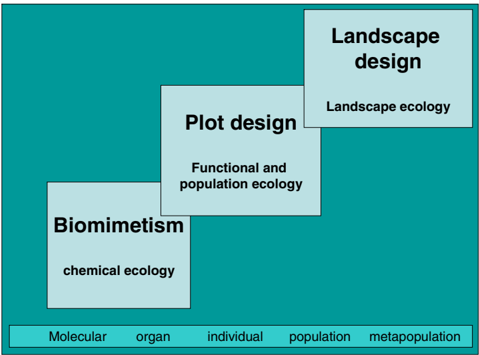
“Later on, its principles have been used to promote a wiser landscape design of agricultural landscape patterns (e.g. Lovell & Johnston, 2009; Malézieux, 2011; Wojtkoswki, 2004) thus shifting from the pure ecology toward a more integrative landscape ecology approach.”
BackgroundSoil biodiversity and nature-mimicry in agriculture; the power of metaphor?
Pulleman, M., de Boer, W., Giller, K. E., & Kuyper, T. W. (2022) · Outlook on Agriculture · doi:10.1177/00307270221080180 · Cited by 58
“Characteristics Trends from modern agriculture, traditional and natural ecosystems (Malézieux, 2012) Trends in attributes going from early to late successional development (Odum, 1969)”
BackgroundInfluentialPenvern, S., Fernique, S., Cardona, A., Herz, A., Ahrenfeldt, E. J., Dufils, A., Jamar, L., Korsgaard, M., Kruczyńska, D. E., Mátray, S., et al. (2019) · Agriculture Ecosystems & Environment · doi:10.1016/j.agee.2019.05.014 · Cited by 56
Buzhdygan, O. Y., & Petermann, J. S. (2023) · Journal of Plant Ecology · doi:10.1093/jpe/rtad019 · Cited by 55
Acuna, R. A. V., & Avelino, J. (2020) · Agronomía Mesoamericana · doi:10.15517/am.v31i2.37591 · Cited by 54
“Dicho de otro modo, a través de la sombra se puede regular el rendimiento de los cafetos (Perfecto et al., 2005; Malézieux, 2012).”
BackgroundConboy, N. J. A., McDaniel, T., Ormerod, A., George, D., Gatehouse, A. M. R., Wharton, E., Donohoe, P., Curtis, R., & Tosh, C. R. (2019) · PLoS ONE · doi:10.1371/journal.pone.0213071 · Cited by 54
Cereal species mixtures: an ancient practice with potential for climate resilience. A review
McAlvay, A. C., DiPaola, A., D’Andrea, A. C., Ruelle, M., Mosulishvili, M., Halstead, P., & Power, A. G. (2022) · Agronomy for Sustainable Development · doi:10.1007/s13593-022-00832-1 · Cited by 55
“Diversity in maslins mirrors natural grassland ecosystems, representing a traditional example of the “prairie model” (Malézieux 2012) of ecological mimicry.”
BackgroundUsing Functional Traits to Assess the Services Provided by Cover Plants
Damour, G., Garnier, É., Navas, M., Dorel, M., & Risède, J. (2015) · Advances in agronomy · doi:10.1016/bs.agron.2015.06.004 · Cited by 52
Integrating biodiversity and conservation with modern agricultural landscapes
Kumaraswamy, S., & Kunte, K. K. (2013) · Biodiversity and Conservation · doi:10.1007/s10531-013-0562-9 · Cited by 50
“Any efforts to revive the biodiversity of agricultural landscapes require documented traditional knowledge of native species at micro to macro scale, which can be used to design locationspecific offset mechanisms (Jackson 2002; Altieri 2002; Vandermeer 2003; Malezieux 2012).”
BackgroundLeclère, M., Loyce, C., & Jeuffroy, M. (2018) · European Journal of Agronomy · doi:10.1016/j.eja.2018.08.006 · Cited by 48
Lefèvre, A., Perrin, B., Lesur‐Dumoulin, C., Salembier, C., & Navarrete, M. (2020) · Agricultural Systems · doi:10.1016/j.agsy.2020.102953 · Cited by 52
Loucougaray, G., Dobremez, L., Gos, P., Pauthenet, Y., Nettier, B., & Lavorel, S. (2015) · Environmental Management · doi:10.1007/s00267-015-0550-9 · Cited by 47
Computational Agroecology: Sustainable Food Ecosystem Design
Raghavan, B., Nardi, B. A., Lovell, S. T., Norton, J., Tomlinson, B., & Patterson, D. J. (2016) · CHI Conference Extended Abstracts on Human Factors in Computing Systems (CHI EA) · doi:10.1145/2851581.2892577 · Cited by 46
“A common feature of agroecological systems is the use of perennial polycultures [13, 26, 35, 36, 40].”
BackgroundCrop vs. tree: Can agronomic management reduce trade-offs in tree-crop interactions?
Sida, T. S., Baudron, F., Hadgu, K., Derero, A., & Giller, K. E. (2018) · Agriculture Ecosystems & Environment · doi:10.1016/j.agee.2018.03.011 · Cited by 46
“Even under situations where short-term negative effects of on-farm trees on crop yield may prevail (Clough et al., 2011), they were reported to have long-term positive effects on the overall system productivity and sustainability (Malézieux, 2012).”
BackgroundPlant domestication disrupts biodiversity effects across major crop types
Chacón‐Labella, J., García‐Palacios, P., Matesanz, S., Schöb, C., & Milla, R. (2019) · Ecology Letters · doi:10.1111/ele.13336 · Cited by 49
“Genetic variability and phenotypic plasticity trigger resource use complementarity in mixtures (Mal ezieux 2012; Zeller et al. 2012; ZuppingerDingley et al. 2014; Prieto et al. 2015).”
BackgroundAudu, V., Rasche, F., Mårtensson, L.-M. D., & Emmerling, C. (2022) · Applied Soil Ecology · doi:10.1016/j.apsoil.2022.104414 · Cited by 46
Early assessment of ecological services provided by forage legumes in relay intercropping
Vrignon‐Brenas, S., Celette, F., Piquet, A., Jeuffroy, M.-H., & David, C. (2016) · European Journal of Agronomy · doi:10.1016/j.eja.2016.01.011 · Cited by 45
Segnon, A. C., Achigan-Dako, E. G., Gaoue, O. G., & Ahanchédé, A. (2015) · Sustainability · doi:10.3390/su7066573 · Cited by 44
“, fertilizers, pesticides) and fossil fuels [1–4].”
Intercropping Empower Reduces Insect Pests and Increases Biodiversity in Agro-Ecosystem
Afrin, S., Latif, A., Banu, N. M. A., Kabir, M. M. M., Haque, S. S., Ahmed, M., Tonu, N. N., & Ali, M. P. (2017) · Agricultural Sciences · doi:10.4236/as.2017.810082 · Cited by 44
“synthetized fertilizers, chemical pesticides, growth regulators), favoured the simplification of agroecosystems [15] [16].”
BackgroundFayaud, B., Coste, F., Corre‐Hellou, G., Gardarin, A., & Dürr, C. (2013) · European Journal of Agronomy · doi:10.1016/j.eja.2013.09.009 · Cited by 42
Podadera, D. S., Engel, V. L., Parrotta, J. A., Machado, D. L., Sato, L. M., & Durigan, G. (2015) · Environmental Management · doi:10.1007/s00267-015-0560-7 · Cited by 41
“in the meaning of ecological intensification (Malézieux 2012; Bommarco et al. 2013).”
BackgroundFirth, A. G., Baker, B. H., Brooks, J. P., Smith, R. K., Iglay, R. B., & Davis, J. B. (2020) · Agriculture Ecosystems & Environment · doi:10.1016/j.agee.2020.106962 · Cited by 41
Agroecology as farmers’ situated ways of acting : a conceptual framework
Toffolini, Q., Cardona, A., Casagrande, M., Dedieu, B., Girard, N., & Ollion, E. (2018) · Agroecology and Sustainable Food Systems · doi:10.1080/21683565.2018.1514677 · Cited by 43
“A gap nevertheless remains to be bridged between the design of agroecological farming systems on the basis of agroecological principles, and the analysis of specific systems practices showing a low degree of artificialization (Altieri 2009; Girard et al. 2015; Malézieux 2012; Toledo, Ortiz-Espejel, and Cortés et al. 2…”
BackgroundAgroecological Principles for the Conversion of Farming Systems
Nicholls, C. I., Altieri, M. A., & Vázquez, L. L. (2017) · WORLD SCIENTIFIC (EUROPE) eBooks · doi:10.1142/9781786343062_0001 · Cited by 37
Cardona, A., Lefèvre, A., & Simon, S. (2018) · Revue d anthropologie des connaissances · doi:10.3917/rac.039.0139 · Cited by 36
“…à produire des savoirs sur les systèmes de culture modélisés et pilotés finement, mais aussi à proposer à de futurs utilisateurs, des méthodes pour concevoir et tester des agro-écosystèmes tentant de s’inspirer de systèmes naturels (Doré, Makowski, Malézieux et al., 2011 ; Malézieux, 2012).”
Defining biotechnological solutions for insect control in sub‐Saharan Africa
Botha, A., Kunert, K. J., Malinga, J., & Foyer, C. H. (2019) · Food and Energy Security · doi:10.1002/fes3.191 · Cited by 34
An Ecosystem Service Approach to Assessing Agro-Ecosystems in Urban Landscapes
Thiesen, T. H., Bhat, M. G., Liu, H., & Rovira, R. (2022) · Land · doi:10.3390/land11040469 · Cited by 33
Deffontaines, L., Mottes, C., Della Rossa, P., Lesueur-Jannoyer, M., Cattan, P., & Le Bail, M. (2020) · Agricultural Systems · doi:10.1016/j.agsy.2019.102769 · Cited by 32
Georgelin, E., & Loeuille, N. (2013) · Journal of Theoretical Biology · doi:10.1016/j.jtbi.2013.12.012 · Cited by 30
“The way to return to the equilibrium after a disturbance may be longer and so the return time due to the higher number of dimensions of the space in which the system moves (May, 1972, 1973).”
BackgroundHill, S. B. (2014) · Springer eBooks · doi:10.1007/978-94-007-7927-3_22 · Cited by 29
Intraspecific crop diversity for enhanced crop pollination success. A review
Chabert, S., Eeraerts, M., DeVetter, L. W., Borghi, M., & Mallinger, R. E. (2024) · Agronomy for Sustainable Development · doi:10.1007/s13593-024-00984-2 · Cited by 29
“Ecological intensification, in contrast, aims to partially replace or complement external farm inputs with ecological processes and services (Malézieux 2012; Kleijn et al. 2019).”
Metadata
- Authors
- Malézieux, E.
- Venue
- Agronomy for Sustainable Development
- Published
- 2011-06-01
- Volume
- 32
- Issue
- 1
- Pages
- 15-29
- ISSN
- 1773-0155 (ISSN-L)
- 1774-0746
- OpenAlex
- W2044459925
- Cited by
- 295
- References
- 100
- Citations by year
- 2026: 14 · 2025: 17 · 2024: 19 · 2023: 23 · 2022: 26 · 2021: 26 · 2020: 25 · 2019: 23 · 2018: 21 · 2017: 23 · 2016: 18 · 2015: 18 · 2014: 15 · 2013: 21 · 2012: 4
- FWCI
- 25.89
- Type
- journal article
- Language
- en
- Open access
- hybrid
- doi.org
- Licence
- cc-by-nc
- Locations
- Agronomy for Sustainable Development (publishedVersion, cc-by-nc)
- HAL (submittedVersion, other-oa)
- Agritrop (Cirad) (submittedVersion)
- Topics
- Life Sciences › Agricultural and Biological Sciences › Agronomy and Crop Science › Agronomic Practices and Intercropping Systems
- Life Sciences › Agricultural and Biological Sciences › General Agricultural and Biological Sciences › Plant and soil sciences
- Life Sciences › Agricultural and Biological Sciences › Forestry › Agroforestry and silvopastoral systems
- Keywords
- agroecosystem design, cropping systems, biodiversity, agroecosystem resilience, agroecosystem stability, efficiency, traditional agricultural knowledge, participatory design, sustainable agriculture
About these checks
Registry, retraction, Cites and statistics results are computed, not judged, with one exception: a printed reference that no index lists is read once by a model before it counts as a citation error. Claims are extracted by a model and kept only when their quote appears verbatim in the text; each cited source is then checked, with a model’s help, for whether it says what the claim relies on. Those verdicts can be wrong — read the claim’s quote and the cited source before relying on one.
Statistics and arithmetic are recomputed, not judged.
Confidence bands are shown only for fields calibrated on our annotated test set. None is calibrated yet, so no band is shown.
What counts as a claim ›How we measure confidence ›How we check this ›
Are you an author, or do you see a problem with this page? Request a review
Data sources
Bibliographic data: Semantic Scholar, OpenAlex, Crossref.
Contains information from the Semantic Scholar Academic Graph Datasets, made available under the ODC Attribution License (ODC-BY 1.0).
Semantic Scholar’s data is described in: Kinney, R., et al. (2023). The Semantic Scholar Open Data Platform. arXiv:2301.10140.
