

The DOI matches its Crossref record; 81 of the 81 references it cites were found in a registry or an index; none of the 113 sources its claims cite is checked for support yet.
The Use of Medications and Dietary Supplements by Masters Athletes—A Review
Open accessAbstract
Purpose of Review: Masters athletes (MA) are generally considered healthier than their sedentary peers. However, the prevalence of chronic conditions in any population increases with age. Treatments involve pharmacological and non-pharmacological interventions. A substantial proportion of the general population also use dietary supplements (DS). This raises questions about the potential for drug-nutrient interactions which may lead to adverse effects. We sought to determine the potential for drug-nutrient interactions MA may be exposed to by examining the prevalence of chronic conditions treated with medications and their DS use. Recent Findings: Common conditions in MA include hypertension, hyperlipidemia, asthma, osteoarthritis, depression and anxiety. Treatments may involve prescribed medications. Few recent studies were identified on DS use; however, indications are for around 60% prevalence of supplement usage. Summary: The higher prevalence of DS use by MA may result in drug-nutrient interactions that impact the effectiveness and safety of prescribed medications for chronic conditions.
Overview
CoChat Summary
TL;DR
This narrative review examines chronic conditions and dietary supplement (DS) use among masters athletes (MA) and the potential for drug–nutrient interactions with prescribed medications. It concludes that MA generally have lower chronic disease prevalence than general populations, but substantial DS use—around 60%—means interactions warrant caution, monitoring, and disclosure.
Key findings
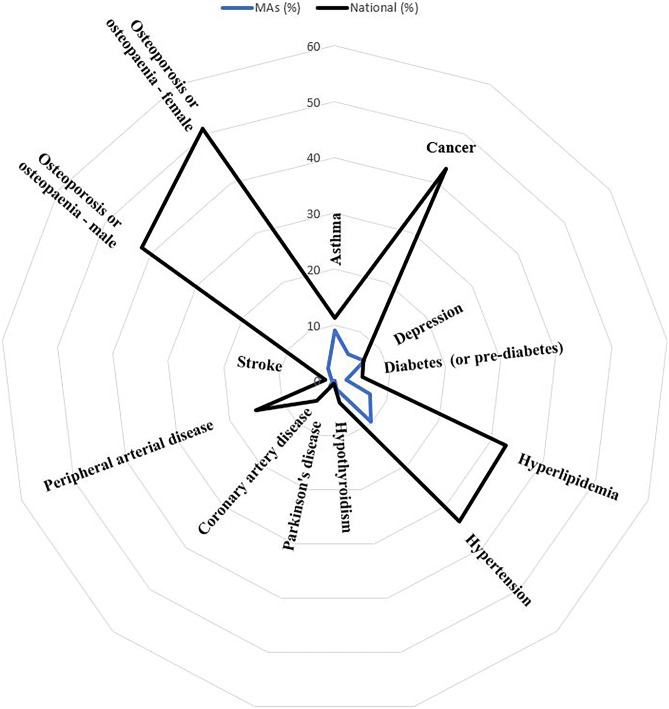
- MA generally show lower prevalence of several chronic conditions than general populations. For example, Halar et al. (817 MA) reported lower age–gender-adjusted prevalence of hypertension (4.6% vs 18.7%), hyperlipidemia (1.6% vs 12.1%), type 2 diabetes (1.6% vs 5.5%), asthma (9.9% vs 20.7%), and anxiety-related disorders (9.3% vs 18.1%).
- Coronary artery findings complicate this picture: among 195 low-to-intermediate-risk MA, 25.7% had high atherosclerotic burden and approximately 6% had obstructive lesions; Merghani et al. found MA had higher plaque prevalence than sedentary controls (p = 0.009), predominantly calcified plaque (72.7%), and male MA had higher atrial fibrillation (sixfold), supraventricular tachycardia (threefold), and non-sustained supraventricular tachycardia (ninefold).
- DS use is common: Guthrie et al. reported 62% overall supplement use among 1042 US Masters Swimming members, with vitamins (55.8%), calcium (23.1%), glucosamine/chondroitin (11.6%), and coenzyme Q10 (5.4%) most common; Striegel et al. reported 60.5% DS use at the 2004 World Masters Athletic Championships (n = 598).
- Potential interactions discussed include glucosamine/chondroitin with warfarin (increased INR/bleeding risk), ginkgo biloba with anticoagulants/antiplatelets/SSRIs, CoQ10 with warfarin/antiplatelets/statins/antihypertensives/diabetes medications, red yeast rice with statins/CYP3A4 inhibitors, calcium with bisphosphonates/antibiotics, and creatine plus caffeine in Parkinson disease (faster progression). Aznar-Lou et al. found one in two of 820 people taking tetracyclines, thiazides, or angiotensin II receptor blockers were at risk of a DS interaction; the authors’ own observations at the 2017 Australian Masters Games and 2018 Pan Pacific Masters Games found almost 50% of MA reported taking up to 16 DS/sports foods and almost 50% used two or more therapies including medications.
Methods
- Design: narrative review examining literature from the last decade on chronic conditions in MA and DS use, followed by discussion of possible drug–nutrient interactions.
- Data/sample: no primary sample; synthesizes prior survey and clinical studies, including World Masters Games, Australian Masters Games, Pan Pacific Masters Games, and US Masters Swimming participants, plus a representative US population study (n = 820) and case reports.
- Analysis: narrative/descriptive synthesis and mechanistic discussion; no meta-analysis or formal risk-of-bias assessment is described.
Limitations
- The paper states that literature is scarce regarding prevalence of chronic conditions and DS use in the broader MA population; few recent DS studies were identified; Guthrie et al.’s results cannot be generalised to all MA, and only supplements comparable to NHANES were collected; the authors’ own AMG/PPMG data lacked information on concurrent administration; further research is needed to establish stronger causal associations.
- The paper states that no large-scale, longitudinal study has investigated whether MA are immune from developing chronic diseases and how those conditions are managed.
- Evident from the text: as a narrative review, it reports no systematic search strategy or formal quality appraisal; interaction evidence is often theoretical, from case reports, or from non-MA populations, limiting causal inference.
Model-written summary. Check it against the paper before relying on it.
Integrity signals
Registry
Cites
Statistics
Figures
Verification
Claims the paper makes
0 Valid · 1 Not valid · 80 Not checked · 6 Own results and interpretations
In the paper
“Our observations from data collection at the 2017 Australian Masters Games (AMG) and the 2018 Pan Pacific Masters Games (PPMG) are that almost 50% of MA respondents reported taking up to 16 DS and sports foods”
§ The Use of Medications and Dietary Supplements by Masters Athletes — a Review > Dietary Supplement Use in Masters Athletes
What the sources say
- Not checked yetcites [58] Chalmers J, Halar F, O'Connor H, Prvan T, Climstein M, Stuart-Smith W, Reaburn P, Gifford J. Medication and dietary supplement use in masters athletes; prevalence and safety. Sports Medicine New Zealand Conference 2019; 2019 31 October-2 November; Dunedin. Dunedin: Sports Medicine Inc; 2019.
plain- Asserted: passes — The authors put it forward as true.
- Checkable: passes — It can be checked against evidence.
- Load-bearing: unclear — It is unclear whether the paper’s conclusions depend on it.
- Based: passes — The paper gives a reason why it holds.
In the paper
“almost 50% used two or more therapies inclusive of medications to treat chronic conditions [58].”
§ The Use of Medications and Dietary Supplements by Masters Athletes — a Review > Dietary Supplement Use in Masters Athletes
What the sources say
- Not checked yetcites [58] Chalmers J, Halar F, O'Connor H, Prvan T, Climstein M, Stuart-Smith W, Reaburn P, Gifford J. Medication and dietary supplement use in masters athletes; prevalence and safety. Sports Medicine New Zealand Conference 2019; 2019 31 October-2 November; Dunedin. Dunedin: Sports Medicine Inc; 2019.
plain- Asserted: passes — The authors put it forward as true.
- Checkable: passes — It can be checked against evidence.
- Load-bearing: unclear — It is unclear whether the paper’s conclusions depend on it.
- Based: passes — The paper gives a reason why it holds.
None of the sources cited for this claim have been checked yet.
In the paper
“Interestingly, to date, no studies have investigated a causal relationship between statin-associated muscle symptoms and CoQ10 depletion which may explain the conflicting results between reviews of clinical studies reporting on the efficacy of CoQ10 in treating this side effect [84, 85].”
§ The Use of Medications and Dietary Supplements by Masters Athletes — a Review > Potential Interactions Between Commonly Used Medicines for Chronic Conditions, and Dietary Supplements Used by Masters Athletes > Coenzyme Q10 and Interactions with Medicines Used to Treat Cardiovascular Risk Factors
What the sources say
- Not checked yetcites [84] Kennedy C, Köller Y, Surkova E. Effect of Coenzyme Q10 on statin-associated myalgia and adherence to statin therapy: a systematic review and meta-analysis. Atherosclerosis. 2020;299:1–8. https://doi.org/10.1016/j.atherosclerosis.2020.03.006. source
- Not checked yetcites [85] Qu H, Guo M, Chai H, Wang WT, Gao ZY, Shi DZ. Effects of coenzyme Q10 on statin-induced myopathy: an updated meta-analysis of randomized controlled trials. J Am Heart Assoc. 2018;7(19):e009835. https://doi.org/10.1161/jaha.118.009835. source
plain- Asserted: passes — The authors put it forward as true.
- Checkable: passes — It can be checked against evidence.
- Load-bearing: passes — The paper’s conclusions depend on it.
- Based: passes — The paper gives a reason why it holds.
In the paper
“Apart from the report from Guthrie et al. [44•], there are few recent studies specifically in MA that report the prevalence of supplement use.”
§ The Use of Medications and Dietary Supplements by Masters Athletes — a Review > Dietary Supplement Use in Masters Athletes
What the sources say
- Not matchedcites [44•]
Couldn’t be matched to a paper in Crossref, so it can’t be checked.
plain- Asserted: passes — The authors put it forward as true.
- Checkable: passes — It can be checked against evidence.
- Load-bearing: unclear — It is unclear whether the paper’s conclusions depend on it.
- Based: passes — The paper gives a reason why it holds.
- Not matched
A conclusion the paper draws from its own results — it cites no other source for it, so there is none to check. The quote shows it is in the paper.
In the paper
“The possibility of taking prescribed medications for a chronic condition along with the prevalent use of dietary supplements (DS) in the sporting environment may expose MA to adverse effects due to drug-nutrient interaction(s).”
§ The Use of Medications and Dietary Supplements by Masters Athletes — a Review > Introduction
hedgedstates a possible cause- Asserted: passes — The authors put it forward as true.
- Checkable: passes — It can be checked against evidence.
- Load-bearing: passes — The paper’s conclusions depend on it.
- Based: passes — The paper gives a reason why it holds.
37 more claims
Create a free account to see all 87 claims and to verify the 84 references still open.
- Probably not a substantial claim. 17
- It may state two separate claims as one. 30
- The quote only partly states this claim. 1
Claims other papers make about this one
Each is checked against this paper’s own text: does it say what the citing paper says it does?
In the citing paper
“This may be explained by the known skewed distribution of iron intakes [66] and supplement use among MAs [32,67]”
From Dietary Intake of Masters Athletes: A Systematic Review (2023) · cites this paper as [67]
Self-check
Percentages, sums and reported differences re-computed from the paper’s own numbers.
Each contradiction between two passages listed here was confirmed by an independent check.
Rated major: it would touch a result — a value a result rests on, reported and recomputed p-values on opposite sides of the significance level, two passages that conflict with no sign which is right, or a cited work retracted before this paper was published.
In the paper
§ The Use of Medications and Dietary Supplements by Masters Athletes — a Review > Dietary Supplement Use in Masters Athletes
“The prevalence of supplement use overall (62%) and all supplement categories (1.1–55.8%) was higher than the NHANES cohort in all instances except for ginkgo biloba.”
§ The Use of Medications and Dietary Supplements by Masters Athletes — a Review > Potential Interactions Between Commonly Used Medicines for Chronic Conditions, and Dietary Supplements Used by Masters Athletes > Ginkgo biloba and Interactions with Medicines Used in Cardiovascular Disease, Anxiety and Depression
“The use of gingko biloba supplements was also reported by Guthrie et al. to be higher among MA included in their study than the general population [44•].”
Rated minor: it would not touch a result — a value no result rests on, a p-value that stays on the same side of the significance level, or a conflict that is clerical, resolved elsewhere in the paper, or outside its own findings.
In the paper
§ The Use of Medications and Dietary Supplements by Masters Athletes — a Review > Chronic Conditions in Masters Athletes
“MA had a lower prevalence of a number of chronic conditions as compared to the US general population”
§ The Use of Medications and Dietary Supplements by Masters Athletes — a Review > Chronic Conditions in Masters Athletes
“hypercholesterolemia (8.0% vs 6.7%; p < 0.01)”
Rated minor: it would not touch a result — a value no result rests on, a p-value that stays on the same side of the significance level, or a conflict that is clerical, resolved elsewhere in the paper, or outside its own findings.
In the paper
§ The Use of Medications and Dietary Supplements by Masters Athletes — a Review > Dietary Supplement Use in Masters Athletes
“The prevalence of supplement use overall (62%) and all supplement categories (1.1–55.8%) was higher than the NHANES cohort in all instances except for ginkgo biloba.”
§ The Use of Medications and Dietary Supplements by Masters Athletes — a Review > Dietary Supplement Use in Masters Athletes
“While the intake of the DS red rice yeast/extract by MA was lower than the general population, there are concerns about it interacting with statins as discussed below.”
Citations
Cites
López-Otín, C., Blasco, M. A., Partridge, L., Serrano, M., & Kroemer, G. (2013) · Cell · doi:10.1016/j.cell.2013.05.039 · Cited by 14,982
Bauer, J., Biolo, G., Cederholm, T., Cesari, M., Cruz-Jentoft, A. J., Morley, J. E., Phillips, S., Sieber, C., Stehle, P., Teta, D., et al. (2013) · Journal of the American Medical Directors Association · doi:10.1016/j.jamda.2013.05.021 · Cited by 2,553
Lear, S. A., Hu, W., Rangarajan, S., Gasevic, D., Leong, D., Iqbal, R., Casanova, A., Swaminathan, S., Anjana, R. M., Kumar, R., et al. (2017) · The Lancet · doi:10.1016/s0140-6736(17)31634-3 · Cited by 1,331
Cunningham, C., O' Sullivan, R., Caserotti, P., & Tully, M. A. (2020) · Scandinavian Journal of Medicine & Science in Sports · doi:10.1111/sms.13616 · Cited by 1,154
The Minimum Inhibitory Concentration of Antibiotics: Methods, Interpretation, Clinical Relevance
Kowalska-Krochmal, B., & Dudek-Wicher, R. (2021) · Pathogens · doi:10.3390/pathogens10020165 · Cited by 1,039
Management and Prevention Strategies for Non-communicable Diseases (NCDs) and Their Risk Factors
Budreviciute, A., Damiati, S., Sabir, D. K., Onder, K., Schuller-Goetzburg, P., Plakys, G., Katileviciute, A., Khoja, S., & Kodzius, R. (2020) · Frontiers in Public Health · doi:10.3389/fpubh.2020.574111 · Cited by 946
The Critical Role of Metabolic Pathways in Aging
Barzilai, N., Huffman, D. M., Muzumdar, R. H., & Bartke, A. (2012) · Diabetes · doi:10.2337/db11-1300 · Cited by 803
Physical activity, all-cause and cardiovascular mortality, and cardiovascular disease
KRAUS, W. E., POWELL, K. E., HASKELL, W. L., JANZ, K. F., CAMPBELL, W. W., JAKICIC, J. M., TROIANO, R. P., SPROW, K., TORRES, A., & PIERCY, K. L. (2019) · Medicine & Science in Sports & Exercise · doi:10.1249/mss.0000000000001939 · Cited by 671
Origin of atherosclerosis in childhood and adolescence
McGill, H. C., McMahan, C. A., Herderick, E. E., Malcom, G. T., Tracy, R. E., & Strong, J. P. (2000) · The American Journal of Clinical Nutrition · doi:10.1093/ajcn/72.5.1307s · Cited by 653
The Role of Coenzyme Q10 in Statin-Associated Myopathy
Marcoff, L., & Thompson, P. D. (2007) · Journal of the American College of Cardiology · doi:10.1016/j.jacc.2007.02.049 · Cited by 537
Lobelo, F., Rohm Young, D., Sallis, R., Garber, M. D., Billinger, S. A., Duperly, J., Hutber, A., Pate, R. R., Thomas, R. J., Widlansky, M. E., et al. (2018) · Circulation · doi:10.1161/cir.0000000000000559 · Cited by 402
Merghani, A., Maestrini, V., Rosmini, S., Cox, A. T., Dhutia, H., Bastiaenan, R., David, S., Yeo, T. J., Narain, R., Malhotra, A., et al. (2017) · Circulation · doi:10.1161/circulationaha.116.026964 · Cited by 398
Zhao, M., Veeranki, S. P., Magnussen, C. G., & Xi, B. (2020) · BMJ · doi:10.1136/bmj.m2031 · Cited by 397
Athletes and Supplements: Prevalence and Perspectives
Garthe, I., & Maughan, R. J. (2018) · International Journal of Sport Nutrition and Exercise Metabolism · doi:10.1123/ijsnem.2017-0429 · Cited by 383
Disclosure of complementary medicine use to medical providers: a systematic review and meta-analysis
Foley, H., Steel, A., Cramer, H., Wardle, J., & Adams, J. (2019) · Scientific Reports · doi:10.1038/s41598-018-38279-8 · Cited by 253
Coenzyme Q10 supplementation: Efficacy, safety, and formulation challenges
Arenas‐Jal, M., Suñé‐Negre, J. M., & García‐Montoya, E. (2020) · Comprehensive Reviews in Food Science and Food Safety · doi:10.1111/1541-4337.12539 · Cited by 239
Problems and Prospects: Public Health Regulation of Dietary Supplements
Binns, C. W., Lee, M. K., & Lee, A. H. (2018) · Annual Review of Public Health · doi:10.1146/annurev-publhealth-040617-013638 · Cited by 186
Interactions between Herbs and Conventional Drugs: Overview of the Clinical Data
Izzo, A. A. (2012) · Medical Principles and Practice · doi:10.1159/000334488 · Cited by 182
Qu, H., Guo, M., Chai, H., Wang, W., Gao, Z., & Shi, D. (2018) · Journal of the American Heart Association · doi:10.1161/jaha.118.009835 · Cited by 178
Dolan, E., Gualano, B., & Rawson, E. S. (2019) · European Journal of Sport Science · doi:10.1080/17461391.2018.1500644 · Cited by 171
Gerards, M. C., Terlou, R. J., Yu, H., Koks, C. H. W., & Gerdes, V. E. A. (2015) · Atherosclerosis · doi:10.1016/j.atherosclerosis.2015.04.004 · Cited by 169
Aengevaeren, V. L., Mosterd, A., Sharma, S., Prakken, N. H. J., Möhlenkamp, S., Thompson, P. D., Velthuis, B. K., & Eijsvogels, T. M. H. (2020) · Circulation · doi:10.1161/circulationaha.119.044467 · Cited by 165
Rundek, T., Naini, A., Sacco, R., Coates, K., & DiMauro, S. (2004) · Archives of Neurology · doi:10.1001/archneur.61.6.889 · Cited by 161
Coenzyme Q10 in Cardiovascular and Metabolic Diseases: Current State of the Problem
Zozina, V. I., Covantev, S., Goroshko, O. A., Krasnykh, L. M., & Kukes, V. G. (2018) · Current Cardiology Reviews · doi:10.2174/1573403x14666180416115428 · Cited by 158
Lipid-modifying effects of nutraceuticals: An evidence-based approach
Sahebkar, A., Serban, M.-C., Gluba-Brzózka, A., Mikhailidis, D. P., Cicero, A. F., Rysz, J., & Banach, M. (2016) · Nutrition · doi:10.1016/j.nut.2016.04.007 · Cited by 157
Mechanisms of statin-associated skeletal muscle-associated symptoms
Bouitbir, J., Sanvee, G. M., Panajatovic, M. V., Singh, F., & Krähenbühl, S. (2020) · Pharmacological Research · doi:10.1016/j.phrs.2019.03.010 · Cited by 136
Coles, L. T., & Clifton, P. M. (2012) · Nutrition Journal · doi:10.1186/1475-2891-11-106 · Cited by 119
Fogacci, F., Banach, M., Mikhailidis, D. P., Bruckert, E., Toth, P. P., Watts, G. F., Reiner, Ž., Mancini, J., Rizzo, M., Mitchenko, O., et al. (2019) · Pharmacological Research · doi:10.1016/j.phrs.2019.02.028 · Cited by 117
Mabuchi, H., Higashikata, T., Kawashiri, M., Katsuda, S., Mizuno, M., Nohara, A., Inazu, A., Koizumi, J., & Kobayashi, J. (2005) · Journal of Atherosclerosis and Thrombosis · doi:10.5551/jat.12.111 · Cited by 102
Coenzyme Q10, Rosuvastatin, and Clinical Outcomes in Heart Failure
McMurray, J. J. V., Dunselman, P., Wedel, H., Cleland, J. G. F., Lindberg, M., Hjalmarson, Å., Kjekshus, J., Waagstein, F., Apetrei, E., Barrios, V., et al. (2010) · Journal of the American College of Cardiology · doi:10.1016/j.jacc.2010.02.075 · Cited by 98
Exercise and the master athlete—a model of successful aging
Hawkins, S. A., Wiswell, R. A., & Marcell, T. J. (2003) · The Journals of Gerontology Series A: Biological Sciences and Medical Sciences · doi:10.1093/gerona/58.11.m1009 · Cited by 97
Aging and Physiological Lessons from Master Athletes
Tanaka, H., Tarumi, T., & Rittweger, J. (2019) · Comprehensive physiology · doi:10.1002/cphy.c180041 · Cited by 88
Knudsen, J. F., & Sokol, G. H. (2008) · Pharmacotherapy: The Journal of Human Pharmacology and Drug Therapy · doi:10.1592/phco.28.4.540 · Cited by 77
The use of nutritional supplements among master athletes
Striegel, H., Simon, P., Wurster, C., Niess, A., & Ulrich, R. (2005) · International Journal of Sports Medicine · doi:10.1055/s-2005-865648 · Cited by 75
Yang, W., Sun, C., He, S. Q., Chen, J. Y., Wang, Y., & Zhuo, Q. (2021) · Journal of General Internal Medicine · doi:10.1007/s11606-021-06755-z · Cited by 68
Masters Athletes: Exemplars of Successful Aging?
Geard, D., Reaburn, P. R. J., Rebar, A. L., & Dionigi, R. A. (2017) · Journal of Aging and Physical Activity · doi:10.1123/japa.2016-0050 · Cited by 67
Köhler, S., Funk, P., & Kieser, M. (2004) · Blood Coagulation & Fibrinolysis · doi:10.1097/00001721-200406000-00003 · Cited by 65
Chan, L. (2013) · Journal of Parenteral and Enteral Nutrition · doi:10.1177/0148607113488799 · Cited by 62
Bleeding complications precipitated by unrecognized Gingko biloba use after liver transplantation
Hauser, D., Gayowski, T., & Singh, N. (2002) · Transplant International · doi:10.1111/j.1432-2277.2002.tb00182.x · Cited by 62
What are the dangers of drug interactions with herbal medicines?
Gouws, C., & Hamman, J. H. (2020) · Expert Opinion on Drug Metabolism & Toxicology · doi:10.1080/17425255.2020.1733969 · Cited by 57
Complementary and Integrative Treatments in Psychiatric Practice
Shah, K., & Pheister, M. (2018) · Journal of Psychiatric Practice · doi:10.1097/pra.0000000000000339 · Cited by 55
Stares, A., & Bains, M. (2020) · Journal of Geriatric Physical Therapy · doi:10.1519/jpt.0000000000000222 · Cited by 54
Kennedy, C., Köller, Y., & Surkova, E. (2020) · Atherosclerosis · doi:10.1016/j.atherosclerosis.2020.03.006 · Cited by 51
Role of alendronate and risedronate in preventing and treating osteoporosis.
Peters, M. L., Leonard, M., & Licata, A. A. (2001) · Cleveland Clinic Journal of Medicine · doi:10.3949/ccjm.68.11.945 · Cited by 48
Vascular health in the ageing athlete
DeVan, A. E., & Seals, D. R. (2012) · Experimental Physiology · doi:10.1113/expphysiol.2011.058792 · Cited by 46
Doering, T. M., Reaburn, P. R., Phillips, S. M., & Jenkins, D. G. (2016) · International Journal of Sport Nutrition and Exercise Metabolism · doi:10.1123/ijsnem.2015-0102 · Cited by 41
The Evolving Applications of Creatine Supplementation: Could Creatine Improve Vascular Health?
Clarke, H., Kim, D.-H., Meza, C. A., Ormsbee, M. J., & Hickner, R. C. (2020) · Nutrients · doi:10.3390/nu12092834 · Cited by 41
Possible augmentation of warfarin effect by glucosamine-chondroitin
Rozenfeld, V., Crain, J. L., & Kevin Callahan, A. (2004) · American Journal of Health-System Pharmacy · doi:10.1093/ajhp/61.3.306 · Cited by 39
Retrobulbar haemorrhage associated with chronic Gingko biloba ingestion
Fong, K. C. S., & Kinnear, P. E. (2003) · Postgraduate Medical Journal · doi:10.1136/pmj.79.935.531 · Cited by 38
Bonakdar, R. A., & Guarneri, E. M. (2005) · PubMed · Cited by 35
Internationalization of Traditional/Complementary Medicine products: market entry as medicine
Li, J., Zhu, J., Hu, H., Harnett, J. E., Lei, C. I., Chau, K. Y., Chan, G., & Ung, C. O. L. (2018) · Chinese Medicine · doi:10.1186/s13020-018-0209-6 · Cited by 34
Self-citationOranje, W. A., Sels, J.-P. J. E., Rondas-Colbers, G. J. W. M., Lemmens, P. J. M. R., & Wolffenbuttel, B. H. R. (2001) · Clinica Chimica Acta · doi:10.1016/s0009-8981(01)00549-6 · Cited by 31
Serebruany, V. L., Ordonez, J. V., Herzog, W. R., Rohde, M., Mortensen, S. A., Folkers, K., & Gurbel, P. A. (1997) · Journal of Cardiovascular Pharmacology · doi:10.1097/00005344-199701000-00003 · Cited by 31
Selective Serotonin Reuptake Inhibitor Use and Risk of Gastrointestinal and Intracranial Bleeding
Yuet, W. C., Derasari, D., Sivoravong, J., Mason, D., & Jann, M. (2019) · Journal of Osteopathic Medicine · doi:10.7556/jaoa.2019.016 · Cited by 29
Belay, E. S., Penrose, C. T., Ryan, S. P., Bergen, M. A., Bolognesi, M. P., & Seyler, T. M. (2019) · The Journal of Arthroplasty · doi:10.1016/j.arth.2019.04.057 · Cited by 29
Nutritional Supplement Habits of Athletes With an Impairment and Their Sources of Information
Graham-Paulson, T. S., Perret, C., Smith, B., Crosland, J., & Goosey-Tolfrey, V. L. (2015) · International Journal of Sport Nutrition and Exercise Metabolism · doi:10.1123/ijsnem.2014-0155 · Cited by 27
Chen, C.-H., Uang, Y.-S., Wang, S.-T., Yang, J.-C., & Lin, C.-J. (2012) · Evidence-Based Complementary and Alternative Medicine · doi:10.1155/2012/127043 · Cited by 27
Caffeine and Progression of Parkinson Disease: A Deleterious Interaction With Creatine
Simon, D. K., Wu, C., Tilley, B. C., Wills, A.-M., Aminoff, M. J., Bainbridge, J., Hauser, R. A., Schneider, J. S., Sharma, S., Singer, C., et al. (2015) · Clinical Neuropharmacology · doi:10.1097/wnf.0000000000000102 · Cited by 26
Dores, H., de Araújo Gonçalves, P., Monge, J., Costa, R., Tátá, L., Malhotra, A., Sharma, S., Cardim, N., & Neuparth, N. (2020) · British Journal of Sports Medicine · doi:10.1136/bjsports-2018-099840 · Cited by 25
Vitamin supplementation benefits in master athletes
Brisswalter, J., & Louis, J. (2014) · Sports Medicine · doi:10.1007/s40279-013-0126-x · Cited by 24
Wiesner, A., Szuta, M., Galanty, A., & Paśko, P. (2021) · Foods · doi:10.3390/foods10040720 · Cited by 23
Chitose, T., Sugiyama, S., Sakamoto, K., Shimomura, H., Yamashita, T., Hokamaki, J., Tsunoda, R., Shiraishi, S., Yamashita, Y., & Ogawa, H. (2014) · Atherosclerosis · doi:10.1016/j.atherosclerosis.2014.08.053 · Cited by 20
Use of nutritional supplements by Danish elite athletes and fitness customers
Solheim, S. A., Nordsborg, N. B., Ritz, C., Berget, J., Kristensen, A. H., & Mørkeberg, J. (2017) · Scandinavian Journal of Medicine & Science in Sports · doi:10.1111/sms.12704 · Cited by 20
Body Mass Index in Master Athletes: Review of the Literature
Walsh, J., Heazlewood, I. T., & Climstein, M. (2018) · Journal of Lifestyle Medicine · doi:10.15280/jlm.2018.8.2.79 · Cited by 20
Self-citationCardiovascular risk profiles of world masters games participants
Climstein, M., Walsh, J., DeBeliso, M., Heazlewood, T., Sevene, T. G., & Adams, K. (2018) · The Journal of Sports Medicine and Physical Fitness · doi:10.23736/s0022-4707.16.06673-1 · Cited by 18
Self-citationNutritional supplement use among fitness club participants in Tehran, Iran
Saeedi, P., Mohd Nasir, M. T., Hazizi, A. S., Vafa, M. R., & Rahimi Foroushani, A. (2013) · Appetite · doi:10.1016/j.appet.2012.09.011 · Cited by 17
Prevalence of Medication-Dietary Supplement Combined Use and Associated Factors
Aznar‐Lou, I., Carbonell-Duacastella, C., Rodriguez, A., Mera, I., & Rubio-Valera, M. (2019) · Nutrients · doi:10.3390/nu11102466 · Cited by 17
The exercise heart rate profile in master athletes compared to healthy controls
Kwon, O., Park, S., Kim, Y., Min, S., Kim, Y. R., Nam, G., Choi, K., & Kim, Y. (2016) · Clinical Physiology and Functional Imaging · doi:10.1111/cpf.12226 · Cited by 16
Development and preliminarily validation of the Complementary Medicine Disclosure Index
McIntyre, E., Foley, H., Diezel, H., Harnett, J., Adams, J., Sibbritt, D. W., & Steel, A. (2020) · Patient Education and Counseling · doi:10.1016/j.pec.2020.01.008 · Cited by 16
Self-citationDores, H., Gonçalves, P. D. A., Monge, J., Costa, R., Tátá, L., Cardim, N., Neuparth, N., & Sharma, S. (2020) · Revista Portuguesa de Cardiologia · doi:10.1016/j.repc.2019.10.009 · Cited by 15
Joe, W., Mike, C., Timothy, H. I., Burke, S., Kettunen, J. A., Adams, K., & Mark, D. (2011) · Cross Connect (Southern Cross University) · doi:10.5281/zenodo.1055179 · Cited by 13
Interactions between nutraceuticals/nutrients and nutrients and therapeutic drugs
Anadón, A., Ares, I., Martínez-Larrañaga, M.-R., & Martínez, M.-A. (2021) · Nutraceuticals · doi:10.1016/b978-0-12-821038-3.00070-7 · Cited by 13
Nutrition and Performance in Masters Athletes
Reaburn, P. R. J. (2014) · CRC Press eBooks · doi:10.1201/b17541 · Cited by 10
Hong, S.-P., Yang, J.-S., Han, J.-Y., Ha, S.-I., Chung, J.-W., Koh, Y.-Y., Chang, K.-S., & Choi, D.-H. (2011) · Journal of Pharmacy and Pharmacology · doi:10.1111/j.2042-7158.2010.01160.x · Cited by 8
Clinical considerations for the ageing athlete.
Brun, S. P. (2016) · PubMed · Cited by 6
Development and preliminary evaluation of the Conventional Medicine Disclosure Index
McIntyre, E., Foley, H., Harnett, J., Adams, J., & Steel, A. (2021) · Research in Social and Administrative Pharmacy · doi:10.1016/j.sapharm.2021.01.015 · Cited by 6
Self-citationGuthrie, S. K., & Erickson, S. R. (2015) · International Journal of Sport Nutrition and Exercise Metabolism · doi:10.1123/ijsnem.2015-0043 · Cited by 5
An Overview of Risk Factors for Disease in Masters Athletes
Climstein, M., Walsh, J., Heazlewood, T., & MEIR, R. A. (2021) · Routledge eBooks · doi:10.4324/9781003025368-5 · Cited by 5
Self-citationHalar, F., O'Connor, H. T., Climstein, M., Prvan, T., Black, D. A., Reaburn, P. R. J., Stuart‐Smith, W., Wu, X. S., & Gifford, J. A. (2025) · PeerJ · doi:10.7717/peerj.18912 · Cited by 4
Self-citationInvestigation of Fasting Plasma Glucose in Masters Athletes
Walsh, J., Heazlewood, I., DeBeliso, M., & Climstein, M. (2020) · International Journal of Sport Exercise and Health Research · doi:10.31254/sportmed.4207 · Cited by 2
Self-citation(2013) · PubMed
Self-citation
Research works printed but not linked: 8
- Climstein M, Walsh J, Heazlewood I, DeBeliso M. Endurance masters athletes: a model of successful ageing with clinically superior BMI? The Sport Journal. 2019;21(April):1–11.
- Walsh J, Climstein M, Heazelwood I,DeBeliso M, Adams K, Burke S. Body mass index of masters basketball players. Medicina Sportiva, J Romanian Sports Med Soc. 2013;7:1700–5.
- Walsh J, Climstein M, Heazlewood IT, Burke S, Kettunen J, Adams K, DeBeliso M. Improved body mass index classification for football code masters athletes: a comparison to the Australian national population. Int J Biol Med Sci. 2011;1(1):37–40.
- Walsh J, Heazlewood IT, DeBeliso M, Climstein M. Comparison of obesity prevalence across 28 world masters games sports. Sport Sci. 2018;11(1):30–6.
- DeBeliso M, Walsh J, Climstein M, Heazlewood IT, Kettunen J, Sevene T, Adams K. World Masters Games: North American participant medical and health history survey. Sport J. 2014;55(17):1–9.
- Climstein M, Walsh J, Heazlewood T, Burke S, Kettunen J, Adams K, DeBeliso M. Incidence of chronic disease and lipid profile in veteran rugby athletes. Int J Biol Med Sci. 2011;1(1):41.
- Chalmers J, Halar F, O'Connor H, Prvan T, Climstein M, Stuart-Smith W, Reaburn P, Gifford J. Medication and dietary supplement use in masters athletes; prevalence and safety. Sports Medicine New Zealand Conference 2019; 2019 31 October-2 November; Dunedin. Dunedin: Sports Medicine Inc; 2019.
- Coxeter PD, Duke CC, Roufogalis B, McLachlan AJ. Ginkgo biloba interactions. Journal of Complementary Medicine: CM, The. 2003;2(3):62–4.
Cited by
Mitochondria as Nutritional Targets to Maintain Muscle Health and Physical Function During Ageing
Broome, S. C., Whitfield, J., Karagounis, L. G., & Hawley, J. A. (2024) · Sports Medicine · doi:10.1007/s40279-024-02072-7 · Cited by 47
Dietary Intake of Masters Athletes: A Systematic Review
Guo, S., Shaoni, G. L. L., Stuart-Smith, W. A., Davies, A. J., & Gifford, J. A. (2023) · Nutrients · doi:10.3390/nu15234973 · Cited by 21
Self-citationForsyth, A. K., & Mantzioris, E. (2023) · British Journal Of Nutrition · doi:10.1017/s0007114523000648 · Cited by 11
Use of pharmaceuticals amongst athletes tested by Anti-Doping Norway in a five-year period
Gjelstad, A., Herlofsen, T. M., Bjerke, A.-L., Lauritzen, F., & Björnsdóttir, I. (2023) · Frontiers in Sports and Active Living · doi:10.3389/fspor.2023.1260806 · Cited by 10
Yasuda, J., Myoenzono, K., Takai, E., Toguchi, M., Tsunezumi, S., Kondo, C., Kaizaki, A., Ode, S., Ohno, H., Namma-Motonaga, K., et al. (2023) · Frontiers in Sports and Active Living · doi:10.3389/fspor.2023.1188224 · Cited by 8
Metadata
- Authors
- Harnett, J., Climstein, M., Walsh, J., & Gifford, J.
- Affiliations
- The University of Sydney (AU)
- Corresponding author
- Gifford, Janelle
- Venue
- Current Nutrition Reports
- Published
- 2022-05-30
- Volume
- 11
- Issue
- 2
- Pages
- 253-262
- ISSN
- 2161-3311 (ISSN-L)
- PMC
- PMC9174319
- OpenAlex
- W4281918145
- Semantic Scholar
- 11ca31ce5cfa4a11339b5e4255d2bc8bace5873d
- Cited by
- 12
- References
- 81
- Citations by year
- 2026: 3 · 2025: 1 · 2024: 2 · 2023: 5 · 2022: 1
- FWCI
- 0.46
- Type
- journal article
- Language
- en
- Open access
- hybrid
- doi.org
- Licence
- cc-by
- creativecommons.org/licenses/by/4.0 (tdm)
- creativecommons.org/licenses/by/4.0 (vor)
- Locations
- Current Nutrition Reports (publishedVersion, cc-by)
- PubMed (publishedVersion)
- PubMed Central (publishedVersion, cc-by)
- Cross Connect (Southern Cross University) (submittedVersion, cc-by)
- Funders
- University of Sydney
- Topics
- Health Sciences › Medicine › Complementary and alternative medicine › Complementary and Alternative Medicine Studies
- Health Sciences › Medicine › Public Health, Environmental and Occupational Health › Nutrition and Health Studies
- Social Sciences › Sociology and Political Science › Doping in Sports
- Keywords
- masters athletes, dietary supplements, drug-nutrient interactions, medication use, chronic disease, hypertension, hyperlipidemia, osteoarthritis, depression, anxiety, asthma, drug safety
- MeSH terms
- Humans, Prevalence, Dietary Supplements, Athletes
About these checks
Registry, retraction, Cites and statistics results are computed, not judged, with one exception: a printed reference that no index lists is read once by a model before it counts as a citation error. Claims are extracted by a model and kept only when their quote appears verbatim in the text; each cited source is then checked, with a model’s help, for whether it says what the claim relies on. Those verdicts can be wrong — read the claim’s quote and the cited source before relying on one.
A language model drew the claims from the paper on 2026-11-14, under version 3 of the claim definition (model deepseek-v4.1-flash, prompt extract-v3).
A second model labelled each claim on 2026-11-14 (model jev-1.13-20260917, definition revision gold-guideline-v0.2).
Statistics and arithmetic are recomputed, not judged.
Confidence bands are shown only for fields calibrated on our annotated test set. None is calibrated yet, so no band is shown.
What counts as a claim ›How we measure confidence ›How we check this ›
Are you an author, or do you see a problem with this page? Request a review
Data sources
Bibliographic data: Semantic Scholar, OpenAlex, Crossref.
Contains information from the Semantic Scholar Academic Graph Datasets, made available under the ODC Attribution License (ODC-BY 1.0).
Semantic Scholar’s data is described in: Kinney, R., et al. (2023). The Semantic Scholar Open Data Platform. arXiv:2301.10140.
