

Cellulose-based hydrogel materials: chemistry, properties and their prospective applications
Open accessThe DOI matches its Crossref record; 237 of the 237 references it cites were found in a registry or an index.
Abstract
Hydrogels based on cellulose comprising many organic biopolymers including cellulose, chitin, and chitosan are the hydrophilic material, which can absorb and retain a huge proportion of water in the interstitial sites of their structures. These polymers feature many amazing properties such as responsiveness to pH, time, temperature, chemical species and biological conditions besides a very high-water absorption capacity. Biopolymer hydrogels can be manipulated and crafted for numerous applications leading to a tremendous boom in research during recent times in scientific communities. With the growing environmental concerns and an emergent demand, researchers throughout the globe are concentrating particularly on naturally derived hydrogels due to their biocompatibility, biodegradability and abundance. Cellulose-based hydrogels are considered as useful biocompatible materials to be used in medical devices to treat, augment or replace any tissue, organ, or help function of the body. These hydrogels also hold a great promise for applications in agricultural activity, as smart materials and some other useful industrial purposes. This review offers an overview of the recent and contemporary research regarding physiochemical properties of cellulose-based hydrogels along with their applications in multidisciplinary areas including biomedical fields such as drug delivery, tissue engineering and wound healing, healthcare and hygienic products as well as in agriculture, textiles and industrial applications as smart materials.
Overview
The claims and statistics of this paper haven’t been checked yet.
Free: it reads the open-access text and checks the first 5 claims that cite a source we can check. Create a free account to check every claim.
Integrity signals
Registry
Cites
Statistics
Figures
Verification
Claims the paper makes
The claims and statistics of this paper haven’t been checked yet.
Free: it reads the open-access text and checks the first 5 claims that cite a source we can check. Create a free account to check every claim.
Self-check
Percentages, sums and reported differences re-computed from the paper’s own numbers.
The self-check needs the paper’s full text.
Citations
Cites
Scaling Concepts in Polymer Physics
de Gennes, P. G., & Witten, T. A. (1980) · Physics Today · doi:10.1063/1.2914118 · Cited by 9,348
Removal of heavy metal ions from wastewaters: A review
Fu, F., & Wang, Q. (2011) · Journal of Environmental Management · doi:10.1016/j.jenvman.2010.11.011 · Cited by 8,703 · cited 3×
“2005), crystallization of the metal ions with the complexed metals as nucleation sites (Fu and Wang 2011; Sklenář et al.”
BackgroundMethodInfluentialHydrogel: Preparation, characterization, and applications: A review
Ahmed, E. M. (2015) · Journal of Advanced Research · doi:10.1016/j.jare.2013.07.006 · Cited by 5,800 · cited 1×
“On the other hand, chemical crosslinking is a permanent junction formed by covalent bonds, along with a relatively stronger ionic communication between various functional groups of introduced crosslinking agents (Ahmed 2015).”
BackgroundHydrogels for Tissue Engineering
Lee, K. Y., & Mooney, D. J. (2001) · Chemical Reviews · doi:10.1021/cr000108x · Cited by 5,277 · cited 1×
“For example, scaffolds provide proper conditions (space and nutrients) for a desired new tissue generation and potentially regulate the structure and function of the engineered tissue in situ or in vitro (Lee and Mooney 2001; Shen et al.”
BackgroundHydrogels for biomedical applications
Hoffman, A. S. (2002) · Advanced Drug Delivery Reviews · doi:10.1016/s0169-409x(01)00239-3 · Cited by 4,864
Hydrogels in pharmaceutical formulations
Peppas, N. (2000) · European Journal of Pharmaceutics and Biopharmaceutics · doi:10.1016/s0939-6411(00)00090-4 · Cited by 4,011
Hydrogels for biomedical applications
Hoffman, A. S. (2012) · Advanced Drug Delivery Reviews · doi:10.1016/j.addr.2012.09.010 · Cited by 3,396
Biomedical applications of hydrogels: A review of patents and commercial products
Caló, E., & Khutoryanskiy, V. V. (2015) · European Polymer Journal · doi:10.1016/j.eurpolymj.2014.11.024 · Cited by 2,634 · cited 2×
“Hydrogels possess diverse properties with biocompatibility and resemblance to living tissue that allows ample opportunities for biomedical applications, particularly in drug delivery and release systems, wound dressings as well as tissue engineering (Caló and Khutoryanskiy 2015).”
BackgroundChitosan-based hydrogels for controlled, localized drug delivery
Bhattarai, N., Gunn, J., & Zhang, M. (2010) · Advanced Drug Delivery Reviews · doi:10.1016/j.addr.2009.07.019 · Cited by 2,451
Statistical Mechanics of Cross-Linked Polymer Networks I. Rubberlike Elasticity
Flory, P. J., & Rehner, J. (1943) · The Journal of Chemical Physics · doi:10.1063/1.1723791 · Cited by 2,421 · cited 1×
“…mechanical behaviors of hydrogels, rubber elastic theory is regarded as the most efficient approach, because it associates important bulk property of hydrogels: rubbery modulus scales, temperature, and crosslinking density (De Gennes 1979; Flory and Rehner 1943; James and Guth 1943; Wall 1942).”
Background
Research works printed but not linked: 5
- Jafarzadeh S, Eghbal M, Jalalian A (2005) Biological and mechanical stabilization of sand dunes using super-absorbent polymers and clay mulch in Ardestan area (Isfahan). In: Proceedings of international conference on human impacts on soil quality attributes, Isfahan, IR Iran
- Okoh Grace Polyscaccharides in drug delivery: applications of cellulose derivatives for oral drug delivery 2017 San Francisco American Chemical Society
- Roman M (2017) Cellulose nanocrystal conjugates for drug delivery and bioimaging applications. American Chemical Society, San Francisco. http://cell.sites.acs.org/meetings/2017_ACSspring/253_CELL_Draft_Final%20Program_3-2-2017.pdf
- Tosh B Esterification and etherification of cellulose synthesis and application of cellulose derivatives cellulose and cellulose derivatives synthesis, modification and applications 2015 New York Nova Science Publishers 259 298
- Yuan P (2013) Design, fabrication, and application of stimuli-responsive hydrogel actuators. University of Illinois at Urbana-Champaign. http://hdl.handle.net/2142/46812
Cited by
Items 401–500 of 618
In Vitro Study of Cyano-Phycocyanin Release from Hydrogels and Ex Vivo Study of Skin Penetration
Galinytė, D., Bernatonienė, J., Žilius, M., Rysevaitė-Kyguolienė, K., Savickas, A., Karosienė, J., Briedis, V., Pauža, D. H., & Savickienė, N. (2024) · Pharmaceuticals · doi:10.3390/ph17091224 · Cited by 5
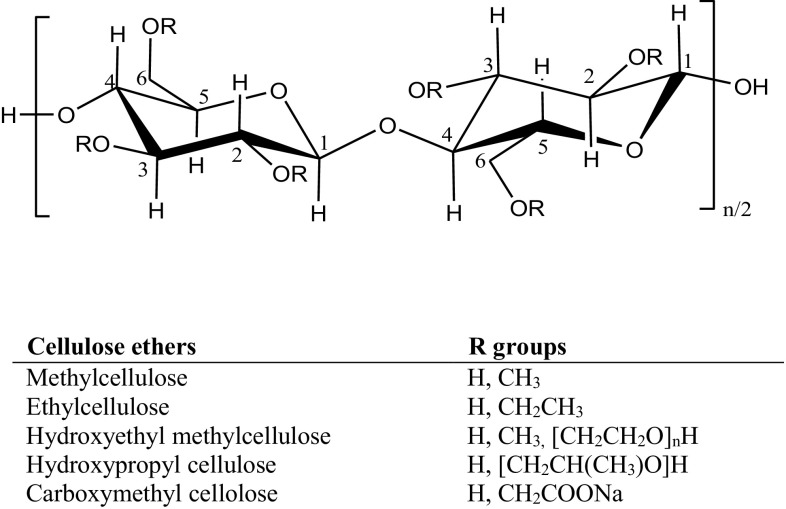
“Water-soluble cellulose derivatives are typically produced by etherifying cellulose, reacting its hydroxyl groups with organic compounds such as methyl and ethyl groups [28].”
BackgroundSharma, N., Mishra, K., Singh, N., Siwal, S. S., Hart, P., & Thakur, V. K. (2024) · Macromolecular Materials and Engineering · doi:10.1002/mame.202400129 · Cited by 5
Conclusion and future prospects of cellulose-based hydrogels
Bora, N. S., Kashyap, B., Barua, S., & Baruah, S. (2025) · Elsevier eBooks · doi:10.1016/b978-0-443-22049-4.00017-5 · Cited by 5
Wang, M., Xia, W., Fu, X.-L., Fan, J., Lu, Z.-H., & Du, Y. (2025) · Construction and Building Materials · doi:10.1016/j.conbuildmat.2025.140972 · Cited by 5
Hybrid Hydrogels for pH Indicator
Kertkal, N., Jinawong, P., Rithiyong, A., & Kusuktham, B. (2021) · Silicon · doi:10.1007/s12633-021-01054-y · Cited by 5
Pramanick, B. (2022) · Materials Today Proceedings · doi:10.1016/j.matpr.2022.01.226 · Cited by 5
Loosely Crosslinked Hydrogel with Combined Water-Retaining and Anti-Erosion Effect
Ilyasov, L. O., Panova, I. G., Khrabrov, N., Кущев, П. О., Лойко, Н. Г., Nikolaev, Y. A., & Yaroslavov, A. A. (2021) · Polymer Science Series B · doi:10.1134/s1560090421060105 · Cited by 5
Cellulose and cellulose derivatives in drug delivery
Sapa, H., Nair, S. C., & Sabitha, M. (2023) · Elsevier eBooks · doi:10.1016/b978-0-323-98827-8.00023-0 · Cited by 5
Development of three-dimensional printed biocompatible materials for cartilage replacement
Hashemi, S., Amani, A. M., Abbasi, M., & Golchin, A. (2023) · Elsevier eBooks · doi:10.1016/b978-0-323-90597-8.00015-3 · Cited by 5
Optical properties of water absorbing textiles for camouflage
Örtenberg, E., Rejmstad, P., & Åkerlind, C. (2023) · Target and Background Signatures · doi:10.1117/12.2683969 · Cited by 5
Dharela, R., Kaushik, A., & Chauhan, G. S. (2022) · RASAYAN Journal of Chemistry · doi:10.31788/rjc.2022.1558166 · Cited by 5
Impact of Electrolytes on the Rheology of TEMPO-oxidized Cellulose Nanofibril
Rahmini, Juhn, S., Lee, K.-H., & Shin, S. (2020) · Journal of Korea Technical Association of The Pulp and Paper Industry · doi:10.7584/jktappi.2020.10.52.5.5 · Cited by 5
Hydrogel Composite Films for Wound Healing
Khan, I. U., Mahmood, H., Shahzad, Y., Asghar, S., & Syed, H. K. (2020) · Elsevier eBooks · doi:10.1016/b978-0-12-819724-0.00033-1 · Cited by 5
Preparation and application of cellulose-based hydrogels derived from bambooPreprint
Cao, X., Li, F., Li, Y., Chen, S., Li, X., & Lu, Y. (2022) · ChemRxiv · doi:10.26434/chemrxiv-2022-134z8 · Cited by 5
Iqbal, A., & Saeed, R. (2025) · Journal of the Chinese Chemical Society · doi:10.1002/jccs.70041 · Cited by 4
Cellulose-Based Hydrogels for Controlled Drug Delivery
Nicu, R., & Ciolacu, D. E. (2025) · Lecture notes in nanoscale science and technology · doi:10.1007/978-3-032-03008-5_5 · Cited by 4
Wang, Q., Liu, Z., & Jin, K. (2026) · International Journal of Nanomedicine · doi:10.2147/ijn.s581940 · Cited by 4
Mishra, S., Chatterjee, A., Ghosh, S., Choudhary, N. N., Sen, S., Saha, S., Mandal, D., & Maji, P. K. (2026) · Journal of Materials Chemistry A · doi:10.1039/d6ta00799f · Cited by 4
Parthasarathy, S., Zhang, Y., & Wang, Y. (2024) · Advanced Sustainable Systems · doi:10.1002/adsu.202400383 · Cited by 4
Intelligent Wound Dressing Textile Fabric Using Various SMART Materials
(2023) · Materials International · doi:10.33263/materials51.001 · Cited by 4
“…systems, biosensors, disposable diapers, sanitary towels, contact lenses (silicone hydrogels, polyacrylamides) and medical electrodes using the hydrogels composed of crosslinked polymers such as chitosan, poly(ethylene oxide) (PEO), poly(vinyl alcohol) (PVA), poly(2-acrylamido-(PVP) [90,91].”
Properties, Preparation, and Applications of Cellulose-Based Hydrogels
Lee, T. J., Lee, H. W., & Kim, H. J. (2025) · Journal of Korea Technical Association of The Pulp and Paper Industry · doi:10.7584/jktappi.2025.6.57.3.5 · Cited by 4
Cellulose-based sponge@ZIF-8 from waste straws for water disinfection
Li, J., Zhang, Y., & Sui, G. (2023) · RSC Advances · doi:10.1039/d3ra00243h · Cited by 4
Natural polymer hydrogels and aerogels for biomedical applications
García‐González, C. A., Iglesias‐Mejuto, A., López‐Iglesias, C., Santos‐Rosales, V., Ardao, I., & Alvarez‐Lorenzo, C. (2024) · Elsevier eBooks · doi:10.1016/b978-0-12-823135-7.00001-2 · Cited by 4
Su, Z., Kinoshita, H., Ogaito, M., Takeda, Y., Toyotake, Y., & Wakayama, M. (2024) · Chemistry Letters · doi:10.1093/chemle/upae120 · Cited by 4
Золь-гель перехід у гідрогелях як фазовий перехід першого роду
Zabashta, Y. F., Kovalchuk, V. I., Svechnikova, O. S., Vergun, L. Y., & Булавін, Л. А. (2024) · Ukrainian Journal of Physics · doi:10.15407/ujpe69.6.409 · Cited by 4
Biopolymer-based hydrogel nanocomposites for water remediation
Shekhawat, A., Khapre, M. A., Pandey, S., & Jugade, R. (2024) · Elsevier eBooks · doi:10.1016/b978-0-443-21794-4.00006-5 · Cited by 4
Hongrattanavichit, I., Somsesta, N., & Aht‐Ong, D. (2024) · Polymers from Renewable Resources · doi:10.1177/20412479241300225 · Cited by 4
“25 Due to their high-water absorption capacity, hydrogels are soft, stretchy, and fl exible.”
Hadsell, A., Chau, H., Barber, R., Kim, U., & Mobed-Miremadi, M. (2021) · Materials · doi:10.3390/ma14216724 · Cited by 4
“Cellulose-based hydrogels are susceptible to swelling [35], with a reported swelling ratio (SR) ranging from 50% to 3000% for regenerated cellulose [36,37].”
BackgroundBiomedical applications of biopolymer-based (nano)materials
Nasrollahzadeh, M., Bidgoli, N. S. S., Soleimani, F., Shafiei, N., Nezafat, Z., & Baran, T. (2021) · Elsevier eBooks · doi:10.1016/b978-0-323-89970-3.00005-6 · Cited by 4
Clinical applications of biopolymer-based hydrogels
Ghosh, B., & Kirtania, M. D. (2021) · Elsevier eBooks · doi:10.1016/b978-0-12-821649-1.00015-5 · Cited by 4
Topical Polydeoxyribonucleotide Loaded in Hydrogel Formulation for Wound Healing in Diabetic Rats
Dmitriyeva, M., Suleimenov, T., Yessenbayev, D., Turebayev, D., Urazova, S., Izimbergenov, M., Kozhakhmetov, S., Omarov, T., & Toleubayev, M. (2022) · Open Access Macedonian Journal of Medical Sciences · doi:10.3889/oamjms.2022.8161 · Cited by 4
“We hypothesized the delivery of PDRN loaded in hydrogel directly application on diabetic wound and provide functional recovery [23], [24], [25], [26].”
BackgroundRheological Characterization of Some Cellulose Derivatives-Based Hydrogels
Tudoroiu, E.-E., Ghica, M. V., Albu‐Kaya, M. G., Dinu‐Pîrvu, C., Popa, L., Anuța, V., Velescu, B. Ș., Kaya, D. A., Marin, M. M., & Prisada, R. M. (2022) · International Conference on Advanced Materials and Systems (ICAMS) · doi:10.24264/icams-2022.ii.26 · Cited by 4
Development of lignin biochar and its incorporation in cellulose hydrogels for water decontamination
Gonçalves, L. R., Ferreira, R. R., Souza, A. G., Barbosa, R. F. S., da Costa, T. B., & Rosa, D. D. S. (2025) · Polymer Bulletin · doi:10.1007/s00289-025-05715-5 · Cited by 3
Fully Biobased, Biodegradable Superabsorbent Polymers Based on Citric Acid and Sorbitol
Chen, J., Chan, D. Y., Veldhuis, T. F. J., Reuvers, B., Brooijmans, T., Wu, J., Picchioni, F., Raffa, P., & Koning, C. E. (2025) · ACS Applied Polymer Materials · doi:10.1021/acsapm.5c01569 · Cited by 3
Sasikumar, M., Zhao, T. Y., Neela, V. K., Hassan, M., Selvaraja, M., & Kumar, P. V. (2026) · Discover Nano · doi:10.1186/s11671-026-04792-3 · Cited by 3
A Roadmap from Functional Materials to Plant Health Monitoring (PHM)
Babangida, A. A., Uddin, A., Stephen, K. T., Yusuf, B. A., Zhang, L., & Ge, D. (2023) · Macromolecular Bioscience · doi:10.1002/mabi.202300283 · Cited by 3
An overview of smart textiles from natural resources
Esmaeili, A., & Mondal, M. I. H. (2024) · Elsevier eBooks · doi:10.1016/b978-0-443-15471-3.00025-x · Cited by 3
Simões, M. G., Ulz, M. H., Ravanello, B. B., Elsayad, K., Hirn, U., Koski, K. J., & Czibula, C. (2026) · Applied Physics Letters · doi:10.1063/5.0299927 · Cited by 3
Edirisinghe, E. A. K. D., Haddad, C., & Ostrowski, A. D. (2022) · ACS Applied Bio Materials · doi:10.1021/acsabm.2c00529 · Cited by 3
Preparation of Conductive Hydrogel Based on Wastepaper
Nguyễn, T. H., Mai, N. N., Thuy, T. T., Nghia, P. T., & Le, T. H. (2023) · Journal of Polymers and the Environment · doi:10.1007/s10924-023-03091-7 · Cited by 3
“Cellulose is an attractive material to prepare hydrogel because it is a hydrophilic polymer of which ability to form stable crosslinked 3D-network is great [9, 10].”
Bio-organic approach for monitoring the Plant growth for Sustainable agriculture
Narula, G. B., Soni, K., Vadakan, A. B., Sharma, S., Notnani, P., Ghai, N., & Gandhi, K. (2023) · Journal of Agriculture and Applied Biology · doi:10.11594/jaab.04.02.06 · Cited by 3
Biomedical Applications of Cellulose
Kanugo, A., Chaudhari, P., & Gautam, R. K. (2024) · Wiley eBooks · doi:10.1002/9781119865452.ch4 · Cited by 3
BC-g-PAA: Characterization and Establishment of the IPN Hydrogel
Jelita, J., Saragih, S. W., & Irham, W. H. (2024) · Jurnal Penelitian Pendidikan IPA · doi:10.29303/jppipa.v10i5.7007 · Cited by 3
“Hydrogel has been developed from both a) natural include chitosan, gelatin, alginate, agarose, collagen, cellulose etc. and b) synthetic polymers include polyvinyl alcohol, polyethylene oxide, polyphosphazene, polyacrylic acid, etc (Kabir et al., 2018).”
BackgroundHydrogel Effects on Soil Nitrogen Transformations in pH-Contrasting Soils
Womack, N., Cabrera, M. L., Franklin, D. H., Piccoli, I., Camarotto, C., Maggini, M., Guerrini, G., & Morari, F. (2024) · Communications in Soil Science and Plant Analysis · doi:10.1080/00103624.2024.2378973 · Cited by 3
“Cellulose-based HGs are synthesized with naturally derived polysaccharides including cellulose, chitin, chitosan, and starch, while acrylate-based HGs are manufactured with synthetic polymers, such as acrylamide (Kabir et al. 2018).”
Rahman, M. M., Ihara, H., & Takafuji, M. (2022) · Springer eBooks · doi:10.1007/978-3-030-99858-5_16 · Cited by 3
Application of Cellulose-Based Biomaterials in Textile Wastewater
Abdelghaffar, F. (2022) · Sustainable textiles · doi:10.1007/978-981-19-2832-1_5 · Cited by 3
Hastuti, N., Agustini, L., Hardiningtyas, S. D., Ramadhan, W., Indrawan, D. A., Ismayati, M., & Tazkiatunnisa, A. (2024) · AIP conference proceedings · doi:10.1063/5.0184557 · Cited by 3
Flexible and wearable electronic systems based on 2D hydrogel composites
Verma, S. K., Tyagi, V., Sonika, S., Dutta, T., & Mishra, S. K. (2024) · Analytical Methods · doi:10.1039/d4ay01124d · Cited by 3
Blažic, R., Lenac, K., & Vidović, E. (2020) · Kemija u industriji · doi:10.15255/kui.2020.013 · Cited by 3
Jiang, S., & Mohanty, M. (2023) · ChemRxiv · doi:10.26434/chemrxiv-2023-s233k · Cited by 3
Jiang, S., & Mohanty, M. (2023) · ChemRxiv · doi:10.26434/chemrxiv-2023-s233k-v2 · Cited by 3
The effects of novel nanohydroxyapatite/hydrogel/N- fertilizers on the growth and quality of lettuce
Zyadeh, M., KASRAWI, M. A.-R., Hamadneh, I., & Jaradat, S. (2025) · Journal of the Saudi Society of Agricultural Sciences · doi:10.1007/s44447-025-00018-7 · Cited by 2
“Hydrogels are either natural or synthetic and are an excellent way to control the release rate of fertilizers (Kabir et al. 2018).”
Zauro, S. A., Yahaya, S., Muhammad, C., & Magami, I. M. (2025) · American Journal of Physical Chemistry · doi:10.11648/j.ajpc.20251403.12 · Cited by 2
Yashini, M., Haritha, C. I., Sheeba, K. N., & Kumar, P. S. (2026) · Food and Bioprocess Technology · doi:10.1007/s11947-025-04176-y · Cited by 2
“…to generate cellulose derivatives that are water-soluble, such as carboxymethyl cellulose, hydroxyethyl methylcel-lulose, and ethylcellulose, the hydroxyl groups of cellulose are etherified with organic molecules including methyl or ethyl groups (Kabir et al., 2018; Liu, et al., 2021a, 2021b).”
Luo, X., Liang, J., Yan, Y., Huang, J., Li, L., Li, Y., & Zhao, Z. (2026) · Journal of environmental chemical engineering · doi:10.1016/j.jece.2026.121772 · Cited by 2
Kacaribu, A. A., Aisyah, Y., Febriani, Damanik, M. R. F., & Darwin (2026) · Journal of Industrial and Engineering Chemistry · doi:10.1016/j.jiec.2026.02.043 · Cited by 2
Jeon, H. Y., Park, B. Y., Min, J. H., Shin, G. R., Jeong, H. M., Seol, K. Y., Lee, J.-H., Kim, Y., Yang, J., & Jung, Y. H. (2026) · Gels · doi:10.3390/gels12060491 · Cited by 2
“CNF-based hydrogels primarily formed physical interactions rather than ionic crosslinking; they often exhibit limited responsiveness to environmental conditions [32–34].”
Research Progress in Biomedical Materials
Wang, Y., Wang, D., Ma, X., Cui, Y., Liu, J., & Fang, W. (2026) · Biomolecules · doi:10.3390/biom16060844 · Cited by 2
“…compressive resilience and low-friction biome-chanics of native cartilage, supporting chondrocyte proliferation and extracellular matrix synthesis [34]; (3) Accelerated wound healing—chitosan-based hydrogels integrate high hydration, oxygen permeability, and inherent antibacterial activity to…”
Recent developments and emerging applications of advanced biopolymers and bioplastics: a review
Bhatia, S., Sahil, S., Tejocote-López, H., Das, B., Kalwani, M., & Nanda, S. (2026) · Biomass Futures · doi:10.1016/j.bmf.2026.100065 · Cited by 2
Junaid, A., Ali, M. N., Mir, M., & Hassan, S. (2022) · Sensor Review · doi:10.1108/sr-10-2021-0366 · Cited by 2
Yatsenko, V. V., Yatsenko, N. V., Rogalskyi, S. V., Січкар, А. О., & Novak, Y. V. (2023) · Plant varieties studying and protection · doi:10.21498/2518-1017.19.4.2023.291231 · Cited by 2
Naturally Occurring and Nature-derived Polymers as Injectable Hydrogels
Draghi, L. (2021) · Royal Society of Chemistry eBooks · doi:10.1039/9781839163975-00077 · Cited by 2
Cellulose Nanosystems from Synthesis to Applications
Alvi, S. B., Jogdand, A. B., & Rengan, A. K. (2021) · Springer eBooks · doi:10.1007/978-3-030-62976-2_10-1 · Cited by 2
pH-thermoresponsive hydrogel-treated fabric for treating reinfected wounds
Shirazi, M., Mohammadi, R. A., Moaref, R., Kardani, F., Jamalpour, S., Tamsilian, Y., & Kiasat, A. R. (2022) · Elsevier eBooks · doi:10.1016/b978-0-323-90479-7.00002-6 · Cited by 2
Microbial Biopolymers and Enzymes Involved in the Biosynthesis of PHAs
Goyal, C., Rai, S., Tripathi, A. D., & Rai, D. C. (2022) · Springer eBooks · doi:10.1007/978-981-19-5743-7_8 · Cited by 2
An Introduction to Regenerated Cellulose: Morphologies and Applications
Khatoon, F., Shabbir, M., & Annu, A. (2023) · Engineering materials · doi:10.1007/978-981-99-1655-9_1 · Cited by 2
Sri, C. B., Shanmugasundaram, R., Marimuthu, S., Chitdeshwari, T., Senthil, A., & Kalaiselvi, T. (2023) · Agricultural Science Digest - A Research Journal · doi:10.18805/ag.d-5783 · Cited by 2
Hydrogels as three-dimensional scaffold materials in tissue engineering and as organoid platforms
Munguia-López, J. G., Pillai, S., Zhang, Y., Kort-Mascort, J., Zhu, Z., Kinsella, J. M., & Tran, S. D. (2023) · Elsevier eBooks · doi:10.1016/b978-0-12-823948-3.00038-5 · Cited by 3
Preparation of hydrogel based on cellulose from sugarcane bagasse
Thu, N. H., Quyen, N. T., Duc, V. A., Hang, H. T., Ha, D. T., Anh, T. N., & Nguyen, M. N. (2024) · Vietnam Journal of Science and Technology/Science and Technology · doi:10.15625/2525-2518/17983 · Cited by 2
“The preparation procedure followed the method reported in previous works [12, 13].”
MethodCellulose for Biomedical and Pharmaceutical Applications
Akhtar, S., Mandal, S. K., Singh, L., Aqeel, S., Banerjee, S., & Bose, S. (2024) · Wiley eBooks · doi:10.1002/9783527848133.ch31 · Cited by 2
Sustainable Synthesis of Cellulose-Derived Hydrogels for Tissue Engineering
Jasni, A. H., Azmi, A. S., Puad, N. I. M., Ali, F. B., & Nor, Y. A. (2025) · Springer eBooks · doi:10.1007/978-3-031-79062-1_14 · Cited by 2
Фазовий перехід і утворення мікрогелів у полімерних розчинах з іонами солей
Zabashta, Y. F., Kovalchuk, V. I., & Gryn, S. V. (2025) · Ukrainian Journal of Physics · doi:10.15407/ujpe70.3.200 · Cited by 2
Characterization and Application of Cellulose-Humic Acid-Based Composite Superabsorbent Hydrogel
He, L., Guo, Y., Wang, Z., Hou, K., Wei, L., & Zhang, J. (2025) · Polymer Science Series B · doi:10.1134/s1560090425600706 · Cited by 2
Performance Testing of NaCMC/HPC/NaAlg Hydrogels for Agricultural Applications
Andes, J. F. E., Jao, A. F., Zacarias, J. H., & Tumolva, T. (2021) · Key engineering materials · doi:10.4028/www.scientific.net/kem.891.105 · Cited by 2
Polymeric Hydrogels for Dye Adsorption
Stanciu, C. (2022) · Sustainable textiles · doi:10.1007/978-981-19-0886-6_6 · Cited by 2
Patel, T., Lata, R., Sharma, R., & Rohindra, D. R. (2023) · ChemistrySelect · doi:10.1002/slct.202302206 · Cited by 2
Hastuti, N., Agustini, L., Amin, Y., Indrawan, D. A., & Efiyanti, L. (2023) · Bulletin of Materials Science · doi:10.1007/s12034-023-03065-4 · Cited by 2
Zallaghi, M., Esmkhani, M., & Javanshir, S. (2023) · SSRN Electronic Journal · doi:10.2139/ssrn.4786699 · Cited by 2
Senevirathna, P. (2025) · Queensland University of Technology · doi:10.5204/thesis.eprints.256508 · Cited by 3
Cellulose-based self-healing and conductive hydrogels for ammonia gas sensors
Yousefi, I. (2021) · Mspace (University of Manitoba) · Cited by 2
Preenan, N., Beskers, N., & Gibson, K. (2023) · One Health Innovation · doi:10.24908/ohi.v1i2.16617 · Cited by 1
Kovalchuk, V. I., Zabashta, Y. F., & Булавін, Л. А. (2024) · Ukrainian Journal of Physics · doi:10.15407/ujpe69.3.207 · Cited by 1
A Simple Regeneration Process Using a CO2‐Switchable‐Polarity Solvent for Cellulose Hydrogels
Matsui, A., Putri, D. A., Thomas, M. L., Takeoka, Y., Rikukawa, M., & Yoshizawa‐Fujita, M. (2024) · ChemSusChem · doi:10.1002/cssc.202401848 · Cited by 1
Fabrication and Characterisation of Cross-linked Cellulose hydrogel from Residual papers
Kiprotich, H., Nthiga, E. W., & Onyancha, D. O. (2024) · Asian Journal of Research in Chemistry · doi:10.52711/0974-4150.2024.00038 · Cited by 1
Spectroscopic and microscopic characterization of cellulose-based hydrogels
Das, S., Dutta, G. K., Barua, S., & Bishwas, N. R. G. (2025) · Elsevier eBooks · doi:10.1016/b978-0-443-22049-4.00006-0 · Cited by 1
Biglari, Z., & Akbari, B. (2025) · Starch - Stärke · doi:10.1002/star.70015 · Cited by 1
Synthesis and Characterization of Crosslinked Hydrogel with Rice Straw-Based Cellulose
Mahmod, S. S., AL-Rajabi, M. M., Abdullah, N. A., Ruslan, K. N., Ng, W. P. Q., Hossain, M. B., Montepio, R. C., & Wantha, L. (2025) · Green energy and technology · doi:10.1007/978-981-96-3785-0_17 · Cited by 1
The Rise of Ingestible Sensors: Transforming the Future of Healthcare
Sahoo, S., Pradhan, P. K., Jain, H., & Prajapati, U. (2025) · Journal of Advances in Medical and Pharmaceutical Sciences · doi:10.9734/jamps/2025/v27i7796 · Cited by 1
Bioactive compounds with antioxidant activity extracted from lignocellulosic biomass of Galium verum
Turcov, D., Zbranca, A., Maxim, C., & Șuteu, D. (2025) · BioResources · doi:10.15376/biores.20.4.9438-9457 · Cited by 1
Ritonga, S. A., Dalimunthe, G. I., Lubis, M. S., & Yuniarti, R. (2025) · Journal of Pharmaceutical And Sciences · doi:10.36490/journal-jps.com.v8i3.1058 · Cited by 1
Cellulose-Based Hydrogels for Woung Dressing
Zhang, M., Chen, S., & Wang, H. (2025) · Lecture notes in nanoscale science and technology · doi:10.1007/978-3-032-03008-5_4 · Cited by 1
Design, Characteristics, and Biomedical Applications of Cellulose-Based Hydrogel
Bappy, M. A., Uddin, M. N., Moniruzzaman, M., Irizarry, N., & Rahman, M. M. (2025) · Sustainable materials and technology · doi:10.1007/978-981-96-9904-9_5 · Cited by 1
Valorization of PPI waste—Present and upcoming bioproducts
Bajpai, P. (2025) · Elsevier eBooks · doi:10.1016/b978-0-443-33663-8.00009-6 · Cited by 1
Solis, D. M., Nader, G., Haas, T. L., & Czekanski, A. (2025) · Transactions of the Canadian Society for Mechanical Engineering · doi:10.1139/tcsme-2024-0097 · Cited by 1
Janceva, S., Lauberte, L., Zaharova, N., Schastnaja, K., Rieksts, G., & Andersone, A. (2026) · Plants · doi:10.3390/plants15030472 · Cited by 1
“Furthermore, these OH_aliph groups provide reactive sites for chemical modification, such as esterification and etherification, which are widely used strategies to tailor biomass-derived materials for advanced biomaterial applications [32–35].”
Zhang, L., Li, Y., Ullah, M. W., & Wang, Z. (2026) · ACS Sustainable Chemistry & Engineering · doi:10.1021/acssuschemeng.5c14068 · Cited by 1
Keke, Z. S., Özdamar, K. T., Alanalp, M. B., & Kurt, E. A. (2026) · International Journal of Biological Macromolecules · doi:10.1016/j.ijbiomac.2026.151677 · Cited by 1
Zhang, J., Hou, S., He, X., Li, H., Wang, X., Gao, Z., & Guo, Y. (2026) · Langmuir · doi:10.1021/acs.langmuir.6c00102 · Cited by 1
Huang, W., Li, W., Huang, R., Huang, Y., Wu, J., Zhao, Y., Liang, J., Xie, Y., Wu, J., Li, J., et al. (2026) · Journal of Thermal Analysis and Calorimetry · doi:10.1007/s10973-026-15517-0 · Cited by 1
“(4) Application of special fire scenarios The hydrogel formula can be optimized for special scenarios such as electrical and chemical fires to give it electrical insulation or chemical neutralization ability [347].”
RGD-mediated biomimetic dynamic matrix stiffness signaling enable rapid 3D organoid formation
Ji, X., Li, X., Wang, Y., Li, W., Xie, Y., Li, J., & Leng, L. (2026) · Cell Reports Physical Science · doi:10.1016/j.xcrp.2026.103283 · Cited by 2
Metadata
- Authors
- Kabir, S. M. F., Sikdar, P. P., Haque, B., Bhuiyan, M. A. R., Ali, A., & Islam, M. N.
- Affiliations
- Louisiana State University (US)
- University of Georgia (US)
- University of Chittagong (BD)
- Dhaka University of Engineering & Technology (BD)
- Corresponding author
- Kabir, S M Fijul
- Venue
- Progress in Biomaterials
- Published
- 2018-09
- Volume
- 7
- Issue
- 3
- Pages
- 153-174
- ISSN
- 2194-0509 (ISSN-L)
- 2194-0517
- PMC
- PMC6173681
- OpenAlex
- W2890014534
- Cited by
- 565
- References
- 237
- Citations by year
- 2026: 38 · 2025: 87 · 2024: 93 · 2023: 96 · 2022: 76 · 2021: 101 · 2020: 51 · 2019: 21 · 2018: 2
- FWCI
- 3.65
- Type
- journal article
- Language
- en
- Open access
- hybrid
- doi.org
- Licence
- cc-by
- creativecommons.org/licenses/by/4.0 (tdm)
- Locations
- Progress in Biomaterials (publishedVersion, cc-by)
- Europe PMC (PubMed Central) (publishedVersion, cc-by)
- PubMed Central (publishedVersion, cc-by)
- PubMed (publishedVersion)
- DOAJ (DOAJ: Directory of Open Access Journals) (submittedVersion)
- Greater South Information System
- Topics
- Physical Sciences › Materials Science › Biomaterials › Hydrogels: synthesis, properties, applications
- Physical Sciences › Materials Science › Biomaterials › Advanced Cellulose Research Studies
- Life Sciences › Agricultural and Biological Sciences › Food Science › Polysaccharides Composition and Applications
- Keywords
- cellulose hydrogels, biopolymer hydrogels, chitin, chitosan, water absorption, stimuli-responsive materials, biocompatibility, biodegradability, drug delivery, tissue engineering, wound healing, smart materials, agricultural applications, textiles, hygienic products
About these checks
Registry, retraction, Cites and statistics results are computed, not judged, with one exception: a printed reference that no index lists is read once by a model before it counts as a citation error. Claims are extracted by a model and kept only when their quote appears verbatim in the text; each cited source is then checked, with a model’s help, for whether it says what the claim relies on. Those verdicts can be wrong — read the claim’s quote and the cited source before relying on one.
Statistics and arithmetic are recomputed, not judged.
Confidence bands are shown only for fields calibrated on our annotated test set. None is calibrated yet, so no band is shown.
What counts as a claim ›How we measure confidence ›How we check this ›
Are you an author, or do you see a problem with this page? Request a review
Data sources
Bibliographic data: Semantic Scholar, OpenAlex, Crossref.
Contains information from the Semantic Scholar Academic Graph Datasets, made available under the ODC Attribution License (ODC-BY 1.0).
Semantic Scholar’s data is described in: Kinney, R., et al. (2023). The Semantic Scholar Open Data Platform. arXiv:2301.10140.
