

Pharmacokinetic Characteristics of Long-Acting Injectable Antipsychotics for Schizophrenia: An Overview
Open accessThe DOI matches its Crossref record; 119 of the 121 references it cites were found in a registry or an index; 45 of the 232 sources its claims cite were checked for support.
Abstract
The availability of long-acting injectable (LAI) antipsychotics for the treatment of schizophrenia provides clinicians with options that deliver continuous drug exposure and may improve adherence compared with daily oral antipsychotics. However, all LAI antipsychotics have unique formulations and pharmacokinetic characteristics that have implications for medication selection, administration interval, and injection site. This review outlines key differences in drug formulations and pharmacokinetics among LAI antipsychotics. A systematic search of the PubMed database was conducted to identify physical and formulation properties and pharmacokinetic data of commercially available LAI antipsychotics, including flupentixol decanoate, fluphenazine decanoate, haloperidol decanoate, zuclopenthixol decanoate, aripiprazole monohydrate, aripiprazole lauroxil, olanzapine pamoate, paliperidone palmitate, risperidone microspheres, and risperidone polymeric microspheres. Additional information was obtained from package inserts and product monographs. Relevant data on drug properties, administration details, pharmacokinetic parameters, and oral dose equivalencies of LAI antipsychotics are summarized. Based on our analysis, formulation characteristics (e.g., vehicle medium) and administration characteristics (e.g., injection site) can affect rate of absorption and adverse effects and may factor into whether oral supplementation or an additional injection is needed. Dose adjustments may be necessary based on potential drug-drug interactions, and approximate dose equivalence with oral formulations can help inform titration when switching from oral to LAI formulations. Clinicians administering LAI antipsychotics should consider these formulation and pharmacokinetic factors to maximize clinical impact and to adjust to an individual patient's needs and treatment goals.
Overview
CoChat Summary
TL;DR
This overview summarizes formulation and pharmacokinetic characteristics of commercially available long-acting injectable (LAI) antipsychotics for schizophrenia, drawing on a systematic PubMed search plus package inserts and product monographs. It emphasizes that LAI absorption, half-life, injection site, interactions, and oral dose equivalence differ substantially and should guide drug selection, dosing, and administration.
Key findings
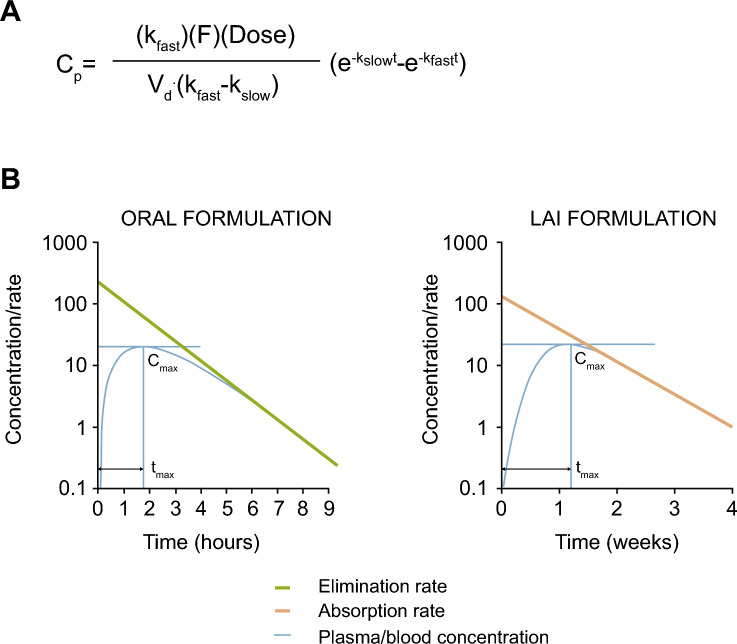
- LAI antipsychotics generally show “flip-flop” kinetics: absorption is slower than elimination, so time to steady state is driven by absorption, and steady state typically occurs after 4–5 half-lives. Reported apparent half-lives vary widely, e.g., fluphenazine decanoate 7–10 days, haloperidol decanoate 21 days, aripiprazole monohydrate 29.9–46.5 days, aripiprazole lauroxil 53.9–57.2 days, paliperidone palmitate every 3 months 84–95 days (deltoid) and 118–139 days (gluteal), risperidone microspheres 3–6 days, and risperidone polymer total active moiety 8–9 days.
- Time to peak concentration also differs by formulation and site: flupentixol decanoate 4–10 days, haloperidol decanoate 3–9 days, aripiprazole lauroxil 41 days, paliperidone palmitate once monthly 13 days, paliperidone palmitate every 3 months 30–33 days, risperidone microspheres ~30 days, and risperidone polymer 4–6 h.
- Formulation and administration factors can affect absorption and adverse effects; for example, aripiprazole monohydrate median tmax is 4 days after deltoid injection versus 5–7 days after gluteal injection, and paliperidone palmitate every 3 months has a longer apparent half-life after gluteal than deltoid injection.
- Drug–drug interactions and oral dose equivalencies are clinically relevant: CYP2D6/CYP3A4 inhibitors or inducers may require dose adjustments for several LAIs, and examples include 15–20 mg oral aripiprazole daily corresponding to 400 mg aripiprazole monohydrate every 4 weeks, and 3 mg or 4 mg oral risperidone daily corresponding to 90 mg or 120 mg risperidone polymer, respectively.
Methods
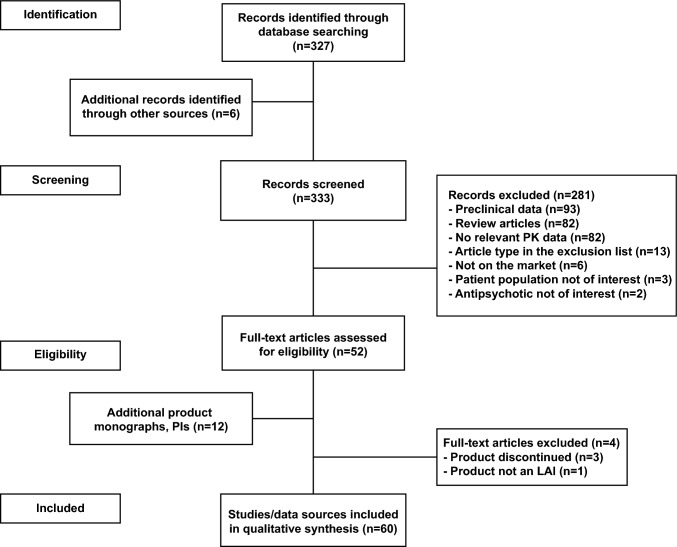
- Narrative overview with a systematic literature search of PubMed performed on 17 October 2018 using terms: (Long-acting OR depot OR injectable) AND (antipsychotic* OR neuroleptic*) AND (pharmacokinetic* OR PK), limited to English; a second search was performed on 11 September 2020 for articles published after 18 October 2018.
- The initial search returned 327 English-language articles; after manual screening, 52 abstracts with relevant LAI pharmacokinetic data were identified, plus data from 12 product package inserts and/or monographs; the second search identified three relevant abstracts.
- The review summarizes formulation properties, pharmacokinetic characteristics, administration details, and oral dose equivalencies for commercially available LAIs including flupentixol decanoate, fluphenazine decanoate, haloperidol decanoate, zuclopenthixol decanoate, aripiprazole monohydrate, aripiprazole lauroxil, olanzapine pamoate, paliperidone palmitate, risperidone microspheres, and risperidone polymeric microspheres.
Limitations
- The paper states that LAI antipsychotics have fewer available dosage strengths than oral formulations; for example, PP1M, PP3M, and aripiprazole lauroxil have five, four, and three available oral dose equivalents, respectively, whereas olanzapine pamoate and risperidone polymer have two and aripiprazole monohydrate has one.
- The paper states that long half-lives may prolong adverse effects, so tolerability should be assessed with shorter-acting preparations before longer-acting formulations are initiated; it also notes that no guidance is provided for missed doses of some first-generation LAIs and risperidone microspheres.
- The paper cautions that a comparison of aripiprazole plasma concentrations between aripiprazole monohydrate 400 mg and aripiprazole lauroxil 882 mg should be interpreted cautiously because data inputs came from different time points and different steady-state concentrations (average vs. minimum). Evident from the text: this is an overview relying largely on published studies, package inserts, and product monographs rather than a formal meta-analysis with patient-level data or risk-of-bias assessment.
Model-written summary. Check it against the paper before relying on it.
Integrity signals
Registry
Cites
Statistics
Figures
Verification
Claims the paper makes
36 Valid · 4 Not valid · 133 Not checked · 29 Own results and interpretations
The cited sources support only part of this claim — read each source’s verdict below.
In the paper
“Relapses may also lead to reduced response to previously effective antipsychotics, potentially contributing to treatment resistance [10–12].”
§ Pharmacokinetic Characteristics of Long-Acting Injectable Antipsychotics for Schizophrenia: An Overview > Introduction
What the sources say
- Partly supportedcites [10] Wiersma D, Nienhuis FJ, Slooff CJ, Giel R. Natural course of schizophrenic disorders: a 15-year followup of a Dutch incidence cohort. Schizophr Bull. 1998;24(1):75–85. 9502547 sourceExperimental — accuracy not yet measured
The Results section reports that the probability of chronicity increased with successive episodes, supporting the broader concern that relapses may be followed by deterioration. But it attributes that increase to negative symptoms, not reduced response to previously effective antipsychotics; the paper does not establish the proposed treatment-resistance mechanism. Page numbers were not available in our copy. (LLM, conf=0.83)
- Not checked — no full text of the sourcecites [11] Emsley R, Nuamah I, Hough D, Gopal S. Treatment response after relapse in a placebo-controlled maintenance trial in schizophrenia. Schizophr Res. 2012;138(1):29–34. 22446143 source
- Supportedcites [12] Takeuchi H, Siu C, Remington G, Fervaha G, Zipursky RB, Foussias G, et al. Does relapse contribute to treatment resistance? Antipsychotic response in first- vs second-episode schizophrenia. Neuropsychopharmacology. 2019;44(6):1036–42. 30514883 PMC6462044 source
The Discussion reports that patients who had responded to an antipsychotic, discontinued it, and relapsed showed reduced or delayed response when reinstated on the same drug. It links this finding to increasing treatment resistance; the claim’s cautious wording matches the paper’s interpretation. No page number is provided in our copy. (LLM, conf=0.92)
hedgedstates a possible cause- Asserted: passes — The authors put it forward as true.
- Checkable: passes — It can be checked against evidence.
- Load-bearing: unclear — It is unclear whether the paper’s conclusions depend on it.
- Based: passes — The paper gives a reason why it holds.
- Partly supported
The cited sources support only part of this claim — read each source’s verdict below.
In the paper
“Absorption from the injection site can be influenced by properties of the drug, including water solubility and the delivery vehicle, and patient factors such as body weight, subcutaneous fat, and vascularity of the site of injection [25, 34, 35].”
§ Pharmacokinetic Characteristics of Long-Acting Injectable Antipsychotics for Schizophrenia: An Overview > Introduction > Pharmacokinetics by Formulation
What the sources say
- Not matchedcites [25] Kenakin TP. A pharmacology primer: theory, applications, and methods. 3rd ed. Burlington: Elsevier Academic Press; 2009.
We searched by its title and found no matching paper.
- Partly supportedcites [34] Soliman E, Ranjan S, Xu T, Gee C, Harker A, Barrera A, et al. A narrative review of the success of intramuscular gluteal injections and its impact in psychiatry. Biodes Manuf. 2018;1(3):161–70. 30546922 PMC6267269 sourceExperimental — accuracy not yet measured
The Introduction links tissue vascularity to drug absorption, and 'Consequences of unsuccessful injections' says subcutaneous deposition can slow absorption. 'Subcutaneous fat, BMI, and gender' discusses weight, fat thickness, and low-solubility oil depots that release drug over time. The paper does not specifically identify water solubility as a factor. (LLM, conf=0.83)
- Not checked — no full text of the sourcecites [35] Zuidema J, Pieters FAJM, Duchateau GSMJE. Release and absorption rate aspects of intramuscularly injected pharmaceuticals. Int J Pharm. 1988;47(1):1–12. source
plainstates a cause- Asserted: passes — The authors put it forward as true.
- Checkable: passes — It can be checked against evidence.
- Load-bearing: unclear — It is unclear whether the paper’s conclusions depend on it.
- Based: passes — The paper gives a reason why it holds.
- Not matched
Every source the paper cites for this claim was checked and supports it.
In the paper
“Aripiprazole lauroxil, another long-acting formulation of aripiprazole, consists of the nonester prodrug N-lauroyloxymethyl aripiprazole [63].”
§ Pharmacokinetic Characteristics of Long-Acting Injectable Antipsychotics for Schizophrenia: An Overview > Second-Generation LAI Antipsychotics > Aripiprazole Lauroxil
What the sources say
- Supportedcites [63] Hard ML, Mills RJ, Sadler BM, Turncliff RZ, Citrome L. Aripiprazole lauroxil: pharmacokinetic profile of this long-acting injectable antipsychotic in persons with schizophrenia. J Clin Psychopharmacol. 2017;37(3):289–95. 28350572 PMC5400404 source
The introductory text following the Conclusions in our copy identifies aripiprazole lauroxil as a covalent nonester modification of aripiprazole forming N-lauroyloxymethyl aripiprazole. The copy does not provide a page number for this passage. (LLM, conf=0.95)
plain- Asserted: passes — The authors put it forward as true.
- Checkable: passes — It can be checked against evidence.
- Load-bearing: unclear — It is unclear whether the paper’s conclusions depend on it.
- Based: passes — The paper gives a reason why it holds.
- Supported
The cited sources support only part of this claim — read each source’s verdict below.
In the paper
“Aripiprazole concentrations achieved by aripiprazole monohydrate 400 mg once monthly are comparable to those with oral aripiprazole 15–20 mg daily [62].”
§ Pharmacokinetic Characteristics of Long-Acting Injectable Antipsychotics for Schizophrenia: An Overview > Second-Generation LAI Antipsychotics > Aripiprazole Monohydrate
What the sources say
- Partly supportedcites [62] Raoufinia A, Peters-Strickland T, Nylander AG, Baker RA, Eramo A, Jin N, et al. Aripiprazole once-monthly 400 mg: comparison of pharmacokinetics, tolerability, and safety of deltoid versus gluteal administration. Int J Neuropsychopharmacol. 2017;20(4):295–304. 28204607 PMC5409034 sourceExperimental — accuracy not yet measured
The Introduction and Discussion say that trough concentrations with once-monthly 400 mg are similar to those with oral aripiprazole 15–20 mg daily. They compare peak concentrations instead with oral doses of 20–30 mg daily, so the unqualified claim about concentrations is broader than the comparison reported. (LLM, conf=0.83)
plain- Asserted: passes — The authors put it forward as true.
- Checkable: passes — It can be checked against evidence.
- Load-bearing: unclear — It is unclear whether the paper’s conclusions depend on it.
- Based: passes — The paper gives a reason why it holds.
- Partly supported
The cited sources support only part of this claim — read each source’s verdict below.
In the paper
“Using data after tmax (41 days) estimates the elimination half-life of aripiprazole lauroxil at 53.9–57.2 days [66].”
§ Pharmacokinetic Characteristics of Long-Acting Injectable Antipsychotics for Schizophrenia: An Overview > Second-Generation LAI Antipsychotics > Aripiprazole Lauroxil
What the sources say
- Partly supportedcites [66] Hard ML, Mills RJ, Sadler BM, Wehr AY, Weiden PJ, von Moltke L. Pharmacokinetic profile of a 2-month dose regimen of aripiprazole lauroxil: a phase i study and a population pharmacokinetic model. CNS Drugs. 2017;31(7):617–24. 28597226 PMC5511303 sourceExperimental — accuracy not yet measured
The Results (Phase I Pharmacokinetics; page unavailable) report a mean elimination half-life of 53.9–57.2 days for aripiprazole after the last aripiprazole lauroxil injection. They place maximum aripiprazole concentrations at 24.4–35.2 days, not a tmax of 41 days. The paper does not say the half-life was estimated using data only after day 41, and the reported half-life is for aripiprazole rather than the prodrug. (LLM, conf=0.88)
hedgedstates a cause- Asserted: passes — The authors put it forward as true.
- Checkable: passes — It can be checked against evidence.
- Load-bearing: unclear — It is unclear whether the paper’s conclusions depend on it.
- Based: passes — The paper gives a reason why it holds.
- Partly supported
69 more claims · 9 with their cited sources checked
Create a free account to see all 202 claims and to verify the 6 references still open.
- Probably not a substantial claim. 65
- It may state two separate claims as one. 82
Self-check
Percentages, sums and reported differences re-computed from the paper’s own numbers.
Each contradiction between two passages listed here was confirmed by an independent check.
Rated minor: it would not touch a result — a value no result rests on, a p-value that stays on the same side of the significance level, or a conflict that is clerical, resolved elsewhere in the paper, or outside its own findings.
In the paper
§ Pharmacokinetic Characteristics of Long-Acting Injectable Antipsychotics for Schizophrenia: An Overview > First-Generation Long-Acting Injectable (LAI) Antipsychotics > Zuclopenthixol Decanoate
“Zuclopenthixol decanoate is meant for maintenance treatment after patients have been stabilized with an oral antipsychotic or other short-acting medications; no specific initiation regimen is recommended [59].”
§ Pharmacokinetic Characteristics of Long-Acting Injectable Antipsychotics for Schizophrenia: An Overview > Introduction > Literature Search
“Zuclopenthixol decanoate | 100–300 mg, with or without oral supplementation (in diminishing dosage) [59]”
Citations
Cites
Discovering the Neural Basis of Human Social Anxiety: A Diagnostic and Therapeutic Imperative
Charney, D. S. (2004) · American Journal of Psychiatry · doi:10.1176/appi.ajp.161.1.1 · Cited by 1,428
Lacro, J. P., Dunn, L. B., Dolder, C. R., Leckband, S. G., & Jeste, D. V. (2002) · The Journal of Clinical Psychiatry · doi:10.4088/jcp.v63n1007 · Cited by 1,383
(1997) · American Journal of Psychiatry · doi:10.1176/ajp.154.4.1 · Cited by 1,348 · cited 1×
“Antipsychotic medications are a fundamental element of treatment used to reduce intensity and frequency of symptoms [3].”
Robinson, D., Woerner, M. G., Alvir, J. M. J., Bilder, R., Goldman, R., Geisler, S., Koreen, A., Sheitman, B., Chakos, M., Mayerhoff, D., et al. (1999) · Archives of General Psychiatry · doi:10.1001/archpsyc.56.3.241 · Cited by 1,327
Kahn, R. S., Sommer, I. E., Murray, R. M., Meyer-Lindenberg, A., Weinberger, D. R., Cannon, T. D., O'Donovan, M., Correll, C. U., Kane, J. M., van Os, J., et al. (2015) · Nature Reviews Disease Primers · doi:10.1038/nrdp.2015.67 · Cited by 1,124
Self-citation(2007) · PubMed · Cited by 953
Pharmacokinetics and drug metabolism in the elderly
Klotz, U. (2009) · Drug Metabolism Reviews · doi:10.1080/03602530902722679 · Cited by 826
Tiihonen, J., Mittendorfer-Rutz, E., Majak, M., Mehtälä, J., Hoti, F., Jedenius, E., Enkusson, D., Leval, A., Sermon, J., Tanskanen, A., et al. (2017) · JAMA Psychiatry · doi:10.1001/jamapsychiatry.2017.1322 · Cited by 670
Natural Course of Schizophrenic Disorders: A 15-Year Followup of a Dutch Incidence Cohort
Wiersma, D., Nienhuis, F. J., Slooff, C. J., & Giel, R. (1998) · Schizophrenia Bulletin · doi:10.1093/oxfordjournals.schbul.a033315 · Cited by 649
Weiden, P. J., Kozma, C., Grogg, A., & Locklear, J. (2004) · Psychiatric Services · doi:10.1176/appi.ps.55.8.886 · Cited by 621
Research works printed but not linked: 1
- Gelenberg AJ. Significant greater loss of medication from the injection site when fluphenazine (Prolixin) decanoate was injected intramuscularly as contrasted with subcutaneously. J Clin Psychiatry. 1987;48(10):425. 3667545
Cited by
Solubilization techniques used for poorly water-soluble drugs
Xie, B., Liu, Y., Li, X., Yang, P., & He, W. (2024) · Acta Pharmaceutica Sinica B · doi:10.1016/j.apsb.2024.08.027 · Cited by 196
Kane, J. M., McEvoy, J. P., Correll, C. U., & Llorca, P. (2021) · CNS Drugs · doi:10.1007/s40263-021-00861-6 · Cited by 94
Self-citationMashabela, L. T., Maboa, M. M., Miya, N. F., Ajayi, T. O., Chasara, R. S., Milne, M., Mokhele, S., Demana, P. H., Witika, B. A., Siwe‐Noundou, X., et al. (2022) · Gels · doi:10.3390/gels8090563 · Cited by 75
Wei, Y., Yan, V. K. C., Kang, W. C. M., Wong, I. C. K., Castle, D. J., Gao, L., Chui, C. S. L., Man, K. K. C., Hayes, J., Chang, W. C., et al. (2022) · JAMA Network Open · doi:10.1001/jamanetworkopen.2022.24163 · Cited by 66
Guinart, D., Misawa, F., Rubio, J. M., Pereira, J., de Filippis, R., Gastaldon, C., Kane, J. M., & Correll, C. U. (2021) · Acta Psychiatrica Scandinavica · doi:10.1111/acps.13359 · Cited by 69
“Age (years) median (Q1;Q3) 42 (32;58) 35 (26;48) 36 (26;48) 0.”
Self-citationLipid based intramuscular long-acting injectables: Current state of the art
Wilkinson, J. M., Ajulo, D., Tamburrini, V., Gall, G. L., Kimpe, K., Holm, R., Belton, P., & Qi, S. (2022) · European Journal of Pharmaceutical Sciences · doi:10.1016/j.ejps.2022.106253 · Cited by 63
Drug Nanocrystals: Focus on Brain Delivery from Therapeutic to Diagnostic Applications
Zingale, E., Bonaccorso, A., Carbone, C., Musumeci, T., & Pignatello, R. (2022) · Pharmaceutics · doi:10.3390/pharmaceutics14040691 · Cited by 57
Long-acting antipsychotics in the treatment of schizophrenia: opportunities and challenges
Haddad, P. M., & Correll, C. U. (2023) · Expert Opinion on Pharmacotherapy · doi:10.1080/14656566.2023.2181073 · Cited by 63
“some FGA LAIs also include the lateral thigh as an additional injection site) [28,29,35].”
BackgroundInfluentialSelf-citationLong-Acting Injectable Antipsychotics—A Review on Formulation and In Vitro Dissolution
Markowicz-Piasecka, M., Kubisiak, M., Asendrych-Wicik, K., Kołodziejczyk, M. K., Grzelińska, J., Fabijańska, M., & Pietrzak, T. M. (2023) · Pharmaceutics · doi:10.3390/pharmaceutics16010028 · Cited by 51
“The first and most important factor is drug absorption from the injection site which is influenced by water solubility of the drug and the properties of the delivery vehicle, as well as patient factors including body weight, subcutaneous fat, and vascularity of the site of injection [32].”
BackgroundInfluentialWang, D., Schneider-Thoma, J., Siafis, S., Qin, M., Wu, H., Zhu, Y., Davis, J. M., Priller, J., & Leucht, S. (2024) · European Neuropsychopharmacology · doi:10.1016/j.euroneuro.2024.03.003 · Cited by 44
“LAIs offer advantages over OAPs, including improved adherence, less frequent dosing, knowing immediately when treatment is stopped, and then giving more time to react due to their longer half-life (Correll et al., 2021).”
BackgroundHarlin, M., Yildirim, M., Such, P., Madera‐McDonough, J., Jan, M., Jin, N., Watkin, S., & Larsen, F. (2023) · CNS Drugs · doi:10.1007/s40263-023-00996-8 · Cited by 50
Guinart, D., Taipale, H. T., Rubio, J. M., Tanskanen, A. J., Correll, C. U., Tiihonen, J., & Kane, J. M. (2021) · Schizophrenia Bulletin · doi:10.1093/schbul/sbab062 · Cited by 54
Self-citationIssa, A. A., Kamel, M. D., & El‐Sayed, D. S. (2024) · Journal of Molecular Modeling · doi:10.1007/s00894-024-05896-2 · Cited by 39
Coles, A. S., Knezevic, D., George, T. P., Correll, C. U., Kane, J. M., & Castle, D. J. (2021) · Frontiers in Psychiatry · doi:10.3389/fpsyt.2021.808002 · Cited by 46
Self-citationVandenBerg, A. (2022) · Mental Health Clinician · doi:10.9740/mhc.2022.10.270 · Cited by 41
“7 g/mol that requires 2 steps of hydrolysis to be converted to active medication.(2,8) This compares to AM, which is active medication with a molecular weight of 466.”
BackgroundInfluentialHøjlund, M., & Correll, C. U. (2023) · Expert Opinion on Pharmacotherapy · doi:10.1080/14656566.2023.2228686 · Cited by 40
Self-citationWang, D., Schneider-Thoma, J., Siafis, S., Burschinski, A., Dong, S., Wu, H., Zhu, Y., Davis, J. M., Priller, J., & Leucht, S. (2024) · Schizophrenia Bulletin · doi:10.1093/schbul/sbad089 · Cited by 29
Vita, G., Tavella, A., Ostuzzi, G., Tedeschi, F., Prisco, M. D., Segarra, R., Solmi, M., Barbui, C., & Correll, C. U. (2024) · Therapeutic Advances in Psychopharmacology · doi:10.1177/20451253241257062 · Cited by 35
“76 However, LAIs and OAPs might have different effectiveness when tested in generalizable, real-world clinical settings where degrees of nonadherence vary across LAIs and OAPs.”
BackgroundSelf-citationOlanzapine Pharmacokinetics: A Clinical Review of Current Insights and Remaining Questions
Kolli, P., Kelley, G., Rosales, M., Faden, J., & Serdenes, R. (2023) · Pharmacogenomics and Personalized Medicine · doi:10.2147/pgpm.s391401 · Cited by 55
Sugandhi, V. V., Gadhave, D. G., Ugale, A. R., Kulkarni, N. N., Nangare, S., Patil, H. P., Rath, S., Saxena, R., Lavate, A., Patel, A. T., et al. (2025) · Ageing Research Reviews · doi:10.1016/j.arr.2025.102775 · Cited by 36
“It has a long half-life of seventy hours, making it a once-daily dosage and after 3 months of administration, the drug ’ s plasma concentration stabilizes and stays at that level over time (Correll et al., 2021).”
Schizophrenia: Antipsychotics and drug development
Remington, G. J., Hahn, M., Agarwal, S. M., Chintoh, A. F., & Agid, O. (2021) · Behavioural Brain Research · doi:10.1016/j.bbr.2021.113507 · Cited by 35
Second International Consensus Study of Antipsychotic Dosing (ICSAD-2)
McAdam, M., Baldessarini, R. J., Murphy, A. L., & Gardner, D. M. (2023) · Journal of Psychopharmacology · doi:10.1177/02698811231205688 · Cited by 34
“…injection. a Clinically equivalent doses were recommended for two distinct dosing intervals (14 and 28 days) for olanzapine pamoate. b Paliperidone palmitate ester dosing in parentheses. c Subcutaneous long-acting risperidone uses a biodegradable polymer delivery system (Correll et al., 2021).”
BackgroundAntipsychotic-Related Prolactin Changes: A Systematic Review and Dose–Response Meta-analysis
Lin, X. J., Siafis, S., Tian, J., Wu, H., Qin, M., Correll, C. U., Schneider‐Thoma, J., & Leucht, S. (2025) · CNS Drugs · doi:10.1007/s40263-025-01218-z · Cited by 27
“…the amplitude of the curve in LAI studies was approximately half that of the oral ones—had been reported previously for prolactin levels and the finding of hyperprolactinemia [21], and is likely due to less peak-to-trough variations and more stable serum drug concentrations with LAI usage [38].”
Self-citationAntipsychotic Safety in Liver Disease: A Narrative Review and Practical Guide for the Clinician
Gunther, M. G., & Dopheide, J. A. (2022) · Journal of the Academy of Consultation-Liaison Psychiatry · doi:10.1016/j.jaclp.2022.09.006 · Cited by 31
Neurostructural changes in schizophrenia and treatment-resistance: a narrative review
Paul, T., See, J. W., Vijayakumar, V., Njideaka-Kevin, T., Loh, H., Lee, V. J. Q., & Doğrul, B. N. (2024) · Psychoradiology · doi:10.1093/psyrad/kkae015 · Cited by 27
Coliță, C.-I., Hermann, D. M., Fîlfan, M., Coliță, D., Doeppner, T. R., Tica, O. S., Glăvan, D., & Popa‐Wagner, A. (2024) · Clocks & Sleep · doi:10.3390/clockssleep6040043 · Cited by 32
“This alignment of lipid-lowering treatment with the body’s natural cycles, a concept known as chronotherapy, suggests that the timing of medication administration can affect its effectiveness [66].”
Risperidone ISM as a New Option in the Clinical Management of Schizophrenia: A Narrative Review
Álamo, C. (2022) · Advances in Therapy · doi:10.1007/s12325-022-02299-8 · Cited by 25
“However, some second-generation LAIs do not reach therapeutic plasma levels rapidly after the first administration, making it necessary to provide a loading dose of the same active substance, either with the oral formulation or with a second supplementary injectable administration [33].”
BackgroundResultInfluentialRobinson, D. G., Suett, M., Wilhelm, A., Chaijale, N., Franzenburg, K. R., Gandhi, S. K., Cloud, B., & Mychaskiw, M. A. (2023) · Advances in Therapy · doi:10.1007/s12325-023-02455-8 · Cited by 25
Role of Modeling and Simulation in Preclinical and Clinical Long-Acting Injectable Drug Development
Siemons, M., Schroyen, B., Darville, N., & Goyal, N. (2023) · The AAPS Journal · doi:10.1208/s12248-023-00864-9 · Cited by 23
“The LAI PK profile gradually progresses to the slow-release terminal phase which is characterized by flip-flop PK (3, 49, 50), resulting from the absorption rate being slower than the elimination rate (in contrast to typical PK in which the elimination rate is slower than the absorption rate).”
BackgroundWalling, D. P., Hassman, H. A., Anta, L., D., L. O., Ayani, I., Martínez, J., & Gutierro, I. (2021) · Drug Design Development and Therapy · doi:10.2147/dddt.s332026 · Cited by 21
Yang, K., Liao, Y., Yang, Y. K., Lin, S., Liang, C., & Bai, Y. (2021) · CNS Drugs · doi:10.1007/s40263-021-00838-5 · Cited by 21
The risk of drug resistance during long-acting antimicrobial therapy
Nande, A., & Hill, A. L. (2022) · Proceedings of the Royal Society B Biological Sciences · doi:10.1098/rspb.2022.1444 · Cited by 19
New approaches to antipsychotic medication adherence – safety, tolerability and acceptability
Taub, S., Krivoy, A., Whiskey, E., & Shergill, S. S. (2021) · Expert Opinion on Drug Safety · doi:10.1080/14740338.2021.1983540 · Cited by 15
“and their long half-lives may prolong duration of adverse effects, if present [24].”
BackgroundInfluentialSchoretsanitis, G., Meyer, J. M., Conca, A., & Hiemke, C. (2023) · Expert Opinion on Drug Metabolism & Toxicology · doi:10.1080/17425255.2023.2220962 · Cited by 18
“Risperidone is slowly released when PLGA is degraded DM or GM [28,30,36]”
BackgroundInfluentialLong acting injectables for the treatment of prostate cancer
Modi, D., Hussain, M. S., Ainampudi, S., & Prajapati, B. G. (2024) · Journal of Drug Delivery Science and Technology · doi:10.1016/j.jddst.2024.105996 · Cited by 23
Scherf‐Clavel, M., Baumann, P., Hart, X. M., Schneider, H., Schoretsanitis, G., Steimer, W., Zernig, G., & Zurek, G. (2023) · Therapeutic Drug Monitoring · doi:10.1097/ftd.0000000000001092 · Cited by 15
Safety and Efficacy of Aripiprazole 2-Month Ready-to-Use 960 mg
Citrome, L., Such, P., Yıldırım, M., Madera‐McDonough, J., Beckham, C., Zhang, Z., Larsen, F., & Harlin, M. (2023) · The Journal of Clinical Psychiatry · doi:10.4088/jcp.23m14873 · Cited by 14
Malamatari, M. (2023) · Processes · doi:10.3390/pr11102919 · Cited by 23
Correll, C. U., Johnston, K., Turkoz, I., Gray, J., Sun, L. L., Doring, M., & Sajatovic, M. (2024) · JAMA Network Open · doi:10.1001/jamanetworkopen.2024.21495 · Cited by 21
Self-citationGarcía-Carmona, J. A., Barnett, J., Campos-Navarro, M. P., Mason, K., Valdivia-Muñoz, F., & Pappa, S. (2022) · Neuroscience Applied · doi:10.1016/j.nsa.2022.100111 · Cited by 13
“LAIs provide more reliable drug delivery, maintaining steady plasma concentrations, and offer greater dosing precision helping in reducing relapse and risk of overdose [Correll et al., 2021].”
Vita, A., Fagiolini, A. M., Maina, G., Mencacci, C., Spina, E., & Galderisi, S. (2023) · Annals of General Psychiatry · doi:10.1186/s12991-022-00430-1 · Cited by 14
de Filippis, R., Staltari, F. A., Aloi, M., Carbone, E. A., Rania, M., Destefano, L., Steardo, L., Segura‐Garcìa, C., & Fazio, P. D. (2023) · Brain Sciences · doi:10.3390/brainsci13040577 · Cited by 14
“Thus, it may be deduced once again that the timely initiation of therapy and the maintenance of the peculiar LAI pharmacokinetics are more important than the choice of the molecule itself [36,37].”
BackgroundHarlin, M., Chepke, C., Larsen, F., Lynum, K. S. B., Chumki, S. R., Fitzgerald, H. M., Such, P., Madera‐McDonough, J., Yildirim, M., Panni, M. K., et al. (2023) · Neuropsychiatric Disease and Treatment · doi:10.2147/ndt.s412357 · Cited by 11
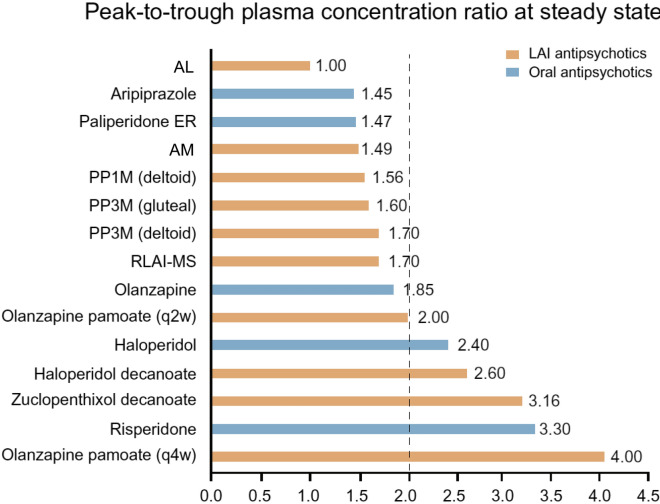
“49.(12,35) The PTF ratio of an LAI formulation may have important tolerability implications; low PTF fluctuation has been suggested to offer a reasonable balance between LAI treatment efficacy and tolerability.”
BackgroundSelf-citationO’Neill, J. R., Taylor, D. M., & Horowitz, M. A. (2023) · Therapeutic Advances in Psychopharmacology · doi:10.1177/20451253231198463 · Cited by 12
Wang, Y., Harlin, M., Larsen, F., Wang, X., Park, W., Rich, B., Gobburu, J. V. S., & Raoufinia, A. (2024) · Clinical Pharmacology in Drug Development · doi:10.1002/cpdd.1397 · Cited by 12
Kane, J. M., Agid, O., Castle, D. J., Citrome, L., Fagiolini, A. M., Kishimoto, T., Larrauri, C. A., Leucht, S., Rubio, J. M., Sajatovic, M., et al. (2025) · Neurology and Therapy · doi:10.1007/s40120-025-00838-3 · Cited by 21
Self-citationBramante, S., Salvo, G. D., Maina, G., & Rosso, G. (2023) · Neuropsychiatric Disease and Treatment · doi:10.2147/ndt.s374696 · Cited by 9
“Several studies showed clinical and economics advantages of long-acting injectables (LAI) compared to oral antipsychotics (OA), with a higher clinical effectiveness and better tolerability, due to a greater compliance, the more stable blood levels and the specific modality of administration.(20) As a consequence, diff…”
BackgroundFagiolini, A. M., Cuomo, A., Berardis, D. D., Dell’Osso, B. M., Pompili, M., & Serafini, G. (2025) · International Clinical Psychopharmacology · doi:10.1097/yic.0000000000000578 · Cited by 16
“A review by Correll et al .”
Martiadis, V., Pessina, E., Raffone, F., Martini, A., Vincenzo, M. D., Rocca, B. D., Berardis, D. D., Cattaneo, C. I., & Sampogna, G. (2025) · Journal of Clinical Medicine · doi:10.3390/jcm14030954 · Cited by 14
“In particular, monthly ARI-LAI have the most favorable peak-to-trough plasma concentration ratio compared to oral antipsychotics, but also to other LAIs at steady state [37].”
Correll, C. U. (2025) · CNS Spectrums · doi:10.1017/s1092852925100503 · Cited by 15
“LAIs provide multiple pharmacokinetic and clinical advantages 18,55,34,35 that are especially beneficial during the vulnerable early phase of schizophrenia.”
InfluentialSelf-citationCicala, G., de Filippis, R., Barbieri, M. A., Cutroneo, P. M., Fazio, P. D., Schoretsanitis, G., & Spina, E. (2023) · Frontiers in Psychiatry · doi:10.3389/fpsyt.2023.1130636 · Cited by 13
“However, concerning LAI formulations, a number of literature sources enlist aripiprazole-based LAIs as part of SGA-LAIs (29, 30).”
BackgroundAguglia, A., Fusar‐Poli, L., Natale, A., Amerio, A., Espa, I., Villa, V., Martinotti, G., Carrà, G., Bartoli, F., D’Agostino, A., et al. (2022) · Pharmacopsychiatry · doi:10.1055/a-1804-6211 · Cited by 12
“Indeed, patients treated with LAI antipsychotics need regular visits with a specialist, monitoring the clinical condition and decreasing the risk of relapse [28].”
Baune, B. T. (2023) · Current Medical Research and Opinion · doi:10.1080/03007995.2023.2287612 · Cited by 10
“Tolerability of LAIs may be enhanced in comparison to their oral counter-parts because of more stable plasma concentration 42 .”
BackgroundEvaluating the Real-World Pharmacokinetics of Risperidone ISM® in Routine Clinical Practice
Toja-Camba, F. J., Millares, M. V., Durán-Maseda, M. J., Arrojo, M., Iglesias, M. P., Hermelo-Vidal, G., Feitosa-Medeiros, C., Fernández‐Ferreiro, A., & Mondelo‐García, C. (2025) · Biomedicines · doi:10.3390/biomedicines13020384 · Cited by 8
“This issue has been associated with the risk of relapse and disease progression, and it has been partially addressed with the introduction of typical long-acting injectable (LAI) antipsychotics [8].”
Schoretsanitis, G., Correll, C. U., Agorastos, A., Compaired, A., Erzın, G., Grigoras, R. M., Benussi, M. G., Gondek, T. M., Gülöksüz, S., Højlund, M., et al. (2024) · The World Journal of Biological Psychiatry · doi:10.1080/15622975.2024.2367138 · Cited by 10
“…assessment tool could potentially imply that a knowledge update for clinicians regarding latest evidence on the TDM utility, such as switching between oral and long-acting injectable antipsychotics (Correll et al. 2021; Schoretsanitis et al. 2023), would be necessary and potentially helpful.”
BackgroundSelf-citationTurkoz, I., Wong, J. G. X., Chee, B., Siddiqui, U., Knight, R. K., Richarz, U., & Correll, C. U. (2023) · Therapeutic Advances in Psychopharmacology · doi:10.1177/20451253231200258 · Cited by 10
“14 ,15–21 In a controlled non-inferiority RCT setting, PP6M was similarly effective in preventing relapses over a 12-month period compared to PP3M.”
ResultSelf-citationO’Neill, J. R., Taylor, D. M., & Horowitz, M. A. (2024) · Therapeutic Advances in Psychopharmacology · doi:10.1177/20451253241272790 · Cited by 7
“Half-life 31 and t max32–34 information for the three decanoate-based LIDAs have been taken from existing literature, and pharmacokinetic studies for flupentixol decanoate, 35–37 haloperidol decanoate 33 and zuclopenthixol decanoate 32 were used to devise in silico models for plasma levels over…”
MethodÇelebi, Z., Yazıcı, E., Güzel, D., Davutoglu, O., & Yazıcı, A. B. (2025) · BMC Psychiatry · doi:10.1186/s12888-025-06469-0 · Cited by 10
“The chlorpromazine equivalent doses of depot antipsychotics were first converted to their oral form equivalent doses before being calculated [41].”
Pharmacokinetic characteristics of risperidone ISM for the treatment of schizophrenia
Schoretsanitis, G., & Correll, C. U. (2025) · Expert Opinion on Drug Metabolism & Toxicology · doi:10.1080/17425255.2025.2474126 · Cited by 8
“In line with our ratio estimations, a population pharmacokinetic model pooling active moiety levels from approval studies [21,27,62,65,66] suggested that slightly higher dose fractions were absorbed when risperidone ISM was applied into deltoid compared to gluteal muscle, although the same model…”
InfluentialSelf-citationSilva, D. A., Merdy, M. L., Mullin, J., Malavia, N., Alam, K., Tsakalozou, E., Shoyaib, A. A., Wang, Y., Burgess, D. J., & Lukáčová, V. (2025) · The AAPS Journal · doi:10.1208/s12248-025-01171-1 · Cited by 9
“This, in turn, significantly improves patient compliance compared to regimens that require daily oral administration (1).”
Insights into development of long-acting injectable suspensions
Malavia, N., & Burgess, D. J. (2026) · Journal of Controlled Release · doi:10.1016/j.jconrel.2026.114721 · Cited by 9
Sánchez, P., Álamo, C., Almendros, M., Schlueter, M., Tasoulas, A., & Martínez, J. (2023) · Annals of General Psychiatry · doi:10.1186/s12991-023-00464-z · Cited by 12
“However, unmet clinical need persists with regards to LAIs achieving adequate therapeutic plasma levels at treatment initiation [14, 19, 20], as well as gaps in the evidence of and opportunities for improvements in their long-term safety profiles [17, 21].”
BackgroundCirnigliaro, G., Battini, V., Castiglioni, M., Renne, M., Mosini, G., Cheli, S., Carnovale, C., & Dell’Osso, B. M. (2024) · Expert Review of Neurotherapeutics · doi:10.1080/14737175.2024.2325655 · Cited by 8
“Furthermore, they show reduced fluctuations in peak-to-trough plasma concentration, which may result in fewer adverse effects and better tolerability [13].”
BackgroundZhao, L., Li, L., Larrañeta, E., Paredes, A. J., & Donnelly, R. F. (2024) · European Journal of Pharmaceutics and Biopharmaceutics · doi:10.1016/j.ejpb.2024.114481 · Cited by 7
Citrome, L., Correll, C. U., Cutler, A. J., Dunbar, M., Hoberg, A. R., Hopkinson, C., Mattingly, G. W., McGrory, J. A., Rege, B., Weiden, P. J., et al. (2025) · Neuropsychiatric Disease and Treatment · doi:10.2147/ndt.s499367 · Cited by 9
Self-citationSchizophrenia and Related Psychoses
(2021) · Wiley eBooks · doi:10.1002/9781119870203.mpg001 · Cited by 9
In vitro modelling of intramuscular injection site events
McCartan, A. J. S., & Mrsny, R. J. (2024) · Expert Opinion on Drug Delivery · doi:10.1080/17425247.2024.2388841 · Cited by 10
“The successful development of IM-administered pharmaceuticals has been well appraised [10,15,16].”
Lin, C., Lin, Y.-P., Park, S., Jang, O., Si, T., Xiang, Y., Lin, H.-L., Javed, A., Khan, M. N. S., Grover, S., et al. (2024) · Asian Journal of Psychiatry · doi:10.1016/j.ajp.2024.104338 · Cited by 6
Bediako-Kakari, P., Monyo, M., Atoyebi, S., & Olagunju, A. (2025) · npj Women s Health · doi:10.1038/s44294-025-00077-9 · Cited by 5
“43 reported the peak-to-trough plasma concentration of oral olanzapine in comparison to its LAI once monthly formulation has an approximate 2-fold difference accounting for the disparities in PK pro fi les.”
Rathore, G., & Singh, R. P. (2025) · Intelligent Hospital · doi:10.1016/j.inhs.2025.100001 · Cited by 11
Correll, C. U. (2025) · CNS Drugs · doi:10.1007/s40263-025-01206-3 · Cited by 10
“Distribution of the drug occurs as it circulates systemically throughout the body from the plasma and potentially into other tissues [33].”
InfluentialSelf-citationDo antipsychotics work in people with schizophrenia? A review of outcomes and effect sizes
Correll, C. U. (2025) · CNS Spectrums · doi:10.1017/s1092852925100461 · Cited by 10
“46 Efficacy and effect sizes: How well do antipsychotics work?”
Self-citationWei, Y., Yan, V. K. C., Castle, D. J., Huang, C., Deng, E. K., Leung, S. K., Yiu, H. H. E., Lee, K. J., Lui, S. S. Y., Ng, V. W. S., et al. (2025) · The Lancet Psychiatry · doi:10.1016/s2215-0366(25)00268-8 · Cited by 8
Lin, Y., Hou, W., & Lin, M. (2023) · Healthcare · doi:10.3390/healthcare11121670 · Cited by 8
“They are usually injected into the gluteal muscles [8,9].”
BackgroundNarayanan, V. H. B., Kost, B., Lewandowski, A., Durai, R. D., Wawrzyniak, P., Biela, T., Wingenfeld, R., Sperber, H. S., Schwarzer, R., & Brzeziński, M. (2023) · Advanced Powder Technology · doi:10.1016/j.apt.2023.104205 · Cited by 6
Use of First-Generation Antipsychotics in an Adolescent Male with Catatonic Schizophrenia
Patterson, E., Lim, J. R., Fuchs, P., Smith, J. R., Moussa‐Tooks, A. B., & Ward, H. B. (2023) · Harvard Review of Psychiatry · doi:10.1097/hrp.0000000000000381 · Cited by 5
The development of paliperidone nanocrystals for the treatment of schizophrenia
Lhaglham, P., Jiramonai, L., Liang, X., Liu, B., & Li, F. (2024) · Progress in Biomedical Engineering · doi:10.1088/2516-1091/ad8fe7 · Cited by 10
“In general, this type of drug nanosuspension provides flip-flop kinetics, in which the slow rate of absorption determines the time to steady state and half-life [103].”
Perlstein, I., Wagner, A. M., Elgart, A., Zandvliet, A. S., Hellmann, F., Lin, Y., van Maanen, E., Plock, N., Fauchet, F., & Singh, R. (2025) · Neurology and Therapy · doi:10.1007/s40120-025-00723-z · Cited by 9
Samalin, L., Boudieu, L., & Llorca, P. (2024) · Expert Review of Neurotherapeutics · doi:10.1080/14737175.2024.2313550 · Cited by 6
“It is a centrally active dopamine D2 receptor antagonist and a serotonin (5HT2A) receptor antagonist with a safety profile following the known profile of the oral molecule such as adverse drug reaction on the endocrine system impacting patient sexuality and fertility [13,14].”
BackgroundInfluentialCipolla, S., Catapano, P., D’Amico, D., Monda, R., Sallusto, N. P., Perris, F., Santis, V. D., Catapano, F., Luciano, M., & Fiorillo, A. (2024) · Brain Sciences · doi:10.3390/brainsci14050433 · Cited by 15
“Clinicians administering LAI APs should consider the pharmacokinetic properties of these molecules to maximize their clinical impact [106], avoiding concentration peak in the hours following administration, and thus limiting excessive receptor occupancy and the consequent onset of adverse effects,…”
BackgroundGoppers, J. S., Mittendorfer‐Rutz, E., Cullen, A. E., de Montgomery, C. J., Tanskanen, A. J., Nørredam, M. L., & Taipale, H. T. (2023) · BJPsych Open · doi:10.1192/bjo.2023.38 · Cited by 8
“26 We additionally observed that disability pension was associated with increased chances of antipsychotic use.”
BackgroundHemingway, S., Lui, S., & White, J. (2023) · British Journal of Nursing · doi:10.12968/bjon.2023.32.13.628 · Cited by 8
Fagiolini, A. M., Wang, Y., Bioque, M., Harlin, M., Larsen, F., Wang, X., Park, W., Rich, B. E., Gobburu, J. V. S., & Raoufinia, A. (2025) · Current Medical Research and Opinion · doi:10.1080/03007995.2025.2456014 · Cited by 7
“The use of overlapping oral aripiprazole is to ensure that therapeutic levels of plasma aripiprazole are maintained during the transition period, given the slow absorption of Ari 2MRTU, a finding that is typical of other LAI antipsychotics 37 .”
Ross, C., Adams, K. S., & Crouse, E. L. B. (2025) · Mental Health Clinician · doi:10.9740/mhc.2025.02.009 · Cited by 5
Jobe, L. B., Mårtensson, S., & Düring, S. W. (2023) · Nordic Journal of Psychiatry · doi:10.1080/08039488.2023.2277820 · Cited by 8
“Instead, the type of depot medication injected within the first 28 days was included in the admission period, since most AP depot must be administered within a 28-day interval [18].”
BackgroundOrsolini, L., Biagiotti, S. P., Martino, L. M., & Volpe, U. (2024) · Asian Journal of Psychiatry · doi:10.1016/j.ajp.2024.103992 · Cited by 7
Wang, X., Xiu, M., Wang, K., Su, X., Li, X., & Wu, F. (2022) · Metabolomics · doi:10.1007/s11306-022-01909-4 · Cited by 6
“Olanzapine (OLA) is considered to be one of the first-line atypical antipsychotic drugs for the treatment of SZ, which can be used for fist-episode SZ or long-term maintenance treatment (Correll et al., 2021).”
BackgroundKishi, T., Sakuma, K., & Iwata, N. (2022) · Translational Psychiatry · doi:10.1038/s41398-022-02286-1 · Cited by 5
“LAI-APs are considered to have some advantages over OAPs, such as improved pharmacokinetic profile (consistent bioavailability and more stable blood levels) and predictable adherence to the medication, all of which allow for lower dosages, though LAI-APs have disadvantages, such as injection site pain [2].”
BackgroundInfluentialLee, J., Oh, S., Moon, S., Loh, S. K., Kim, M., Lee, T. Y., & Kwon, J. S. (2023) · International Clinical Psychopharmacology · doi:10.1097/yic.0000000000000492 · Cited by 5
“…phar-macometric properties and superior efficacy in terms of symptom reduction and relapse prevention compared to oral APs (Tiihonen et al ., 2019; Correll et al ., 2021), it may be possible that aripiprazole LAI stabilised the clinical course of patients and led to a reduction in the number and…”
BackgroundCitrome, L., Nagaraj, N., Traverso, G., Dumas, T., & Scranton, R. E. (2025) · The Lancet Psychiatry · doi:10.1016/s2215-0366(25)00135-x · Cited by 6
Approaches to Medication Administration in Patients With Lack of Insight
Okobi, O. E., Agazie, O., Ayisire, O. E., Babalola, F., Dick, A. I., Akinsola, Z., Adeosun, A. A., Owolabi, O. J., Ajayi, T. O., & Odueke, A. Y. (2022) · Cureus · doi:10.7759/cureus.27143 · Cited by 9
“The ethical dilemma in emergency psychiatry continues to remain debatable [8-17].”
BackgroundPatel, C. A., Emont, S. L., Cao, Z., Tyagi, M., & Benson, C. J. (2023) · Drugs - Real World Outcomes · doi:10.1007/s40801-023-00408-9 · Cited by 5
“Although these differences are relatively small, our findings build upon prior studies and reinforce the clinical advantages of LAI formulations over OAPs given their more stable pharmacokinetics and longer dosing intervals [20, 22, 34, 35].”
ResultWang, F., Wang, F., Tao, X., Ni, W., Li, W., & Lin, J. (2024) · Actas Españolas de Psiquiatría · doi:10.62641/aep.v52i4.1681 · Cited by 4
“However, the discontinuation rate of oral antipsychotics is estimated to be between 26% and 44%, with up to two-thirds of patients failing to adhere to their prescribed regimen [7].”
BackgroundTurkoz, I., Daskiran, M., Starr, H. L., Najarian, D. M., Lopena, O. J., Obando, C., Keenan, A., Benson, C. J., & Gopal, S. (2022) · Neuropsychiatric Disease and Treatment · doi:10.2147/ndt.s373725 · Cited by 4
“Because of the long-acting nature of PP3M, it may be difficult to adjust the dose after initiating treatment because changes in plasma concentration will not be fully evident for several months (compared with days or weeks for OAPs).(15,16) Following the recommended prescribing information dosing plays a critical role…”
Self-citationKorkmaz, U., & Şimşek, M. H. (2025) · Frontiers in Psychiatry · doi:10.3389/fpsyt.2025.1624706 · Cited by 3
“LAI formulations provide predictable and stable plasma drug concentrations through slow release and depot effects (37).”
Kalyoncu, S., Aytaç, H. M., & Güçlü, O. (2025) · International Journal of Psychiatry in Clinical Practice · doi:10.1080/13651501.2025.2560349 · Cited by 3
“…in contrast, with oral antipsychotics, the daily dosing results in more fluctuating blood levels, which may account for this difference (correll et al., 2021). the fact that the current study is the first to group scZ patients based on the use of multiple medications or depot…”
Advances in implementation strategies for treatment adherence in schizophrenia: a narrative review
Shen, Y., & Wu, X. (2026) · Frontiers in Psychiatry · doi:10.3389/fpsyt.2026.1752130 · Cited by 9
Oumary, O. E., Laaraj, H., Ouhamou, M., Mouhadi, K., Doufik, J., Akebour, K., Hamri, S., & Rammouz, I. (2026) · Frontiers in Psychiatry · doi:10.3389/fpsyt.2026.1718815 · Cited by 3
“From a pharmacokinetic perspective, PP1M is distinguished by its prolonged release following intramuscular injection, with a half-life ranging from 25 to 49 days and a plasma peak observed around day 12 (24).”
Correll, C. U., Rohner, H., Dimalta, S., Göldner, R. S., Assion, H., Langner-Timm, S., Sande, C. N., Rodríguez–Jiménez, R., Bioque, M., Gahr, M., et al. (2026) · The World Journal of Biological Psychiatry · doi:10.1080/15622975.2026.2628198 · Cited by 4
“Nonetheless, despite currently available second-generation LAIs, some unmet clinical needs remain, e.g. the need for loading doses, booster injections, or oral co-treatment for 2–3 weeks to achieve therapeutic drug levels when starting treatment with a LAI (Correll et al. 2021; Højlund and Correll 2023).”
InfluentialSelf-citationDesign and formulation strategies to modulate drug release from implantable devices
Magill, E. R., Adhami, M., Fandiño, O. E., Lu, Y., Domínguez‐Robles, J., & Larrañeta, E. (2026) · International Journal of Pharmaceutics · doi:10.1016/j.ijpharm.2026.126947 · Cited by 4
Metadata
- Authors
- Correll, C. U., Kim, E., Sliwa, J. K., Hamm, W., Gopal, S., Mathews, M., Venkatasubramanian, R., & Saklad, S. R.
- Affiliations
- Donald & Barbara Zucker School of Medicine at Hofstra/Northwell (US)
- Janssen Scientific Affairs (United States) (US)
- The University of Texas at San Antonio Health Science Center (US)
- Corresponding author
- Saklad, Stephen R.
- ORCID
- Venue
- CNS Drugs
- Published
- 2021-01
- Volume
- 35
- Issue
- 1
- Pages
- 39-59
- ISSN
- 1172-7047 (ISSN-L)
- 1179-1934
- PMC
- PMC7873121
- OpenAlex
- W3124121244
- Cited by
- 205
- References
- 121
- Citations by year
- 2026: 44 · 2025: 53 · 2024: 36 · 2023: 41 · 2022: 20 · 2021: 11
- FWCI
- 4.87
- Type
- journal article
- Language
- en
- Update notices
- correction (2024-11-26)
- Open access
- hybrid
- doi.org
- Licence
- cc-by-nc
- creativecommons.org/licenses/by-nc/4.0 (tdm)
- creativecommons.org/licenses/by-nc/4.0 (vor, 27 d)
- Locations
- CNS Drugs (publishedVersion, cc-by-nc)
- PubMed Central (publishedVersion, cc-by-nc)
- PubMed (publishedVersion)
- Funders
- Janssen Research and Development
- Topics
- Health Sciences › Medicine › Psychiatry and Mental health › Schizophrenia research and treatment
- Health Sciences › Medicine › Pediatrics, Perinatology and Child Health › Pharmaceutical studies and practices
- Life Sciences › Pharmacology, Toxicology and Pharmaceutics › Pharmacology › Pharmacogenetics and Drug Metabolism
- Keywords
- long-acting injectable antipsychotics, schizophrenia, pharmacokinetics, drug formulation, fluphenazine decanoate, haloperidol decanoate, aripiprazole, olanzapine pamoate, paliperidone palmitate, injection site, drug-drug interactions, dose equivalence, oral supplementation, medication adherence
- MeSH terms
- Administration, Oral, Delayed-Action Preparations, Dose-Response Relationship, Drug, Humans, Injections, Schizophrenia, Antipsychotic Agents
About these checks
Registry, retraction, Cites and statistics results are computed, not judged, with one exception: a printed reference that no index lists is read once by a model before it counts as a citation error. Claims are extracted by a model and kept only when their quote appears verbatim in the text; each cited source is then checked, with a model’s help, for whether it says what the claim relies on. Those verdicts can be wrong — read the claim’s quote and the cited source before relying on one.
The claim verdicts this report counts are experimental: their accuracy is not yet measured.
A language model drew the claims from the paper on 2026-10-10, under version 3 of the claim definition (model deepseek-v4.1-flash, prompt extract-v3).
A second model labelled each claim on 2026-10-10 (model jev-1.13-20260917, definition revision gold-guideline-v0.2).
Cited sources are checked with a language model’s help (gpt-6-sol).
Statistics and arithmetic are recomputed, not judged.
Confidence bands are shown only for fields calibrated on our annotated test set. None is calibrated yet, so no band is shown.
What counts as a claim ›How we measure confidence ›How we check this ›
Are you an author, or do you see a problem with this page? Request a review
Data sources
Bibliographic data: Semantic Scholar, OpenAlex, Crossref.
Contains information from the Semantic Scholar Academic Graph Datasets, made available under the ODC Attribution License (ODC-BY 1.0).
Semantic Scholar’s data is described in: Kinney, R., et al. (2023). The Semantic Scholar Open Data Platform. arXiv:2301.10140.
