

The Economic Burden of Adults with Major Depressive Disorder in the United States (2010 and 2018)
Open accessThe DOI matches its Crossref record; 33 of the 33 references it cites were found in a registry or an index.
Abstract
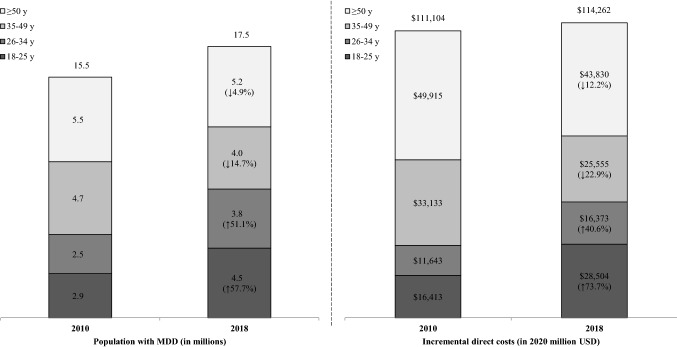
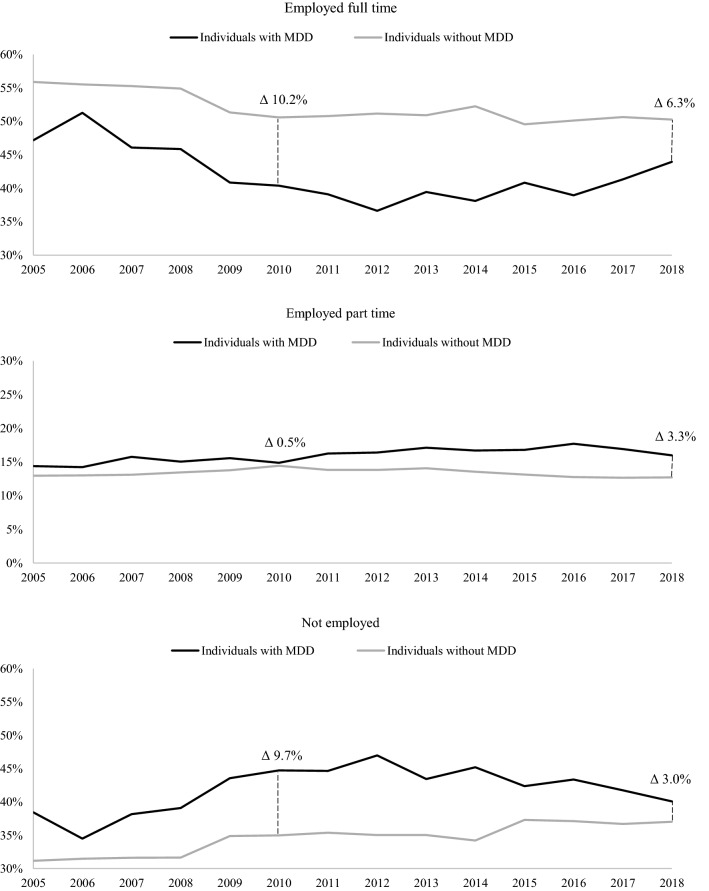
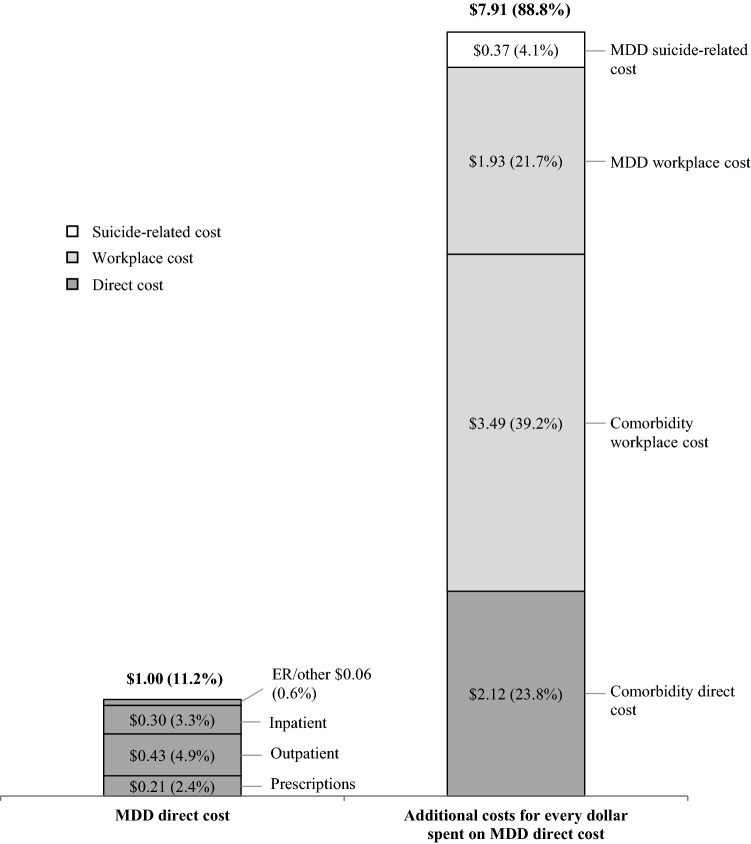
BACKGROUND: The incremental economic burden of US adults with major depressive disorder (MDD) was estimated at $US210.5 billion in 2010 (year 2012 values). OBJECTIVE: Following a similar methodology, this study updates the previous findings with more recent data to report the economic burden of adults with MDD in 2018. METHOD: This study used a framework for evaluating the incremental economic burden of adults with MDD in the USA that combined original and literature-based estimates, focusing on key changes between 2010 and 2018. The prevalence rates of MDD by sex, age, employment, and treatment status over time were estimated based on the National Survey on Drug Use and Health (NSDUH). The incremental direct and workplace costs per individual with MDD were primarily derived from administrative claims data and NSDUH data using comparative analyses of individuals with and without MDD. Societal direct and workplace costs were extrapolated by multiplying NSDUH estimates of the number of people with MDD by the direct and workplace cost estimates per patient. The suicide-related costs were estimated using a human capital method. RESULTS: The number of US adults with MDD increased by 12.9%, from 15.5 to 17.5 million, between 2010 and 2018, whereas the proportion of adults with MDD aged 18-34 years increased from 34.6 to 47.5%. Over this period, the incremental economic burden of adults with MDD increased by 37.9% from $US236.6 billion to 326.2 billion (year 2020 values). All components of the incremental economic burden increased (i.e., direct costs, suicide-related costs, and workplace costs), with the largest growth observed in workplace costs, at 73.2%. Consequently, the composition of 2018 costs changed meaningfully, with 35% attributable to direct costs (47% in 2010), 4% to suicide-related costs (5% in 2010), and 61% to workplace costs (48% in 2010). This increase in the workplace cost share was consistent with more favorable employment conditions for those with MDD. Finally, the proportion of total costs attributable to MDD itself as opposed to comorbid conditions remained stable at 37% (38% in 2010). CONCLUSION: Workplace costs accounted for the largest portion of the growing economic burden of MDD as this population trended younger and was increasingly likely to be employed. Although the total number of adults with MDD increased from 2010 to 2018, the incremental direct cost per individual declined. At the same time, the proportion of adults with MDD who received treatment remained stable over the past decade, suggesting that substantial unmet treatment needs remain in this population. Further research is warranted into the availability, composition, and quality of MDD treatment services.
Overview
The claims and statistics of this paper haven’t been checked yet.
Free: it reads the open-access text and checks the first 5 claims that cite a source we can check. Create a free account to check every claim.
Integrity signals
Registry
Cites
Statistics
Figures
Verification
Claims the paper makes
The claims and statistics of this paper haven’t been checked yet.
Free: it reads the open-access text and checks the first 5 claims that cite a source we can check. Create a free account to check every claim.
Claims other papers make about this one
Each is checked against this paper’s own text: does it say what the citing paper says it does?
The cited source doesn’t support the claim as written.
In the citing paper
“The current estimate of total incremental costs of MDD in 2019 represents a 3.5% increase in the burden compared with a prior estimate in 2018 (when standardized to 2019 values), with 36.0% of the total incremental costs of MDD in 2019 coming from novel components not previously included in the prior estimate (i.e., unemployment, all-cause mortality, householdrelated costs) [8].”
From The Economic Burden of Adults with Major Depressive Disorder in the United States (2019) (2023) · cites this paper as [8]
Checked by a reasoning model — may be wrong.
Experimental — accuracy not yet measuredThe cited source says what the claim attributes to it.
In the citing paper
“one of the key differentiators of the current study from previous estimations of the economic burden of MDD [8,33,34] was the consideration of household-related costs.”
From The Economic Burden of Adults with Major Depressive Disorder in the United States (2019) (2023) · cites this paper as [8]
The check wasn’t confident either way, so it gives no verdict — never disputed.
In the citing paper
“The COVID-19 pandemic exacerbated many risk factors for depression across countries of disparate economic status 5,6 ;”
From Digital health technologies and major depressive disorder (2023) · cites this paper as [5]
Experimental — accuracy not yet measuredIn the citing paper
“The current estimate of total incremental costs of MDD in 2019 represents a 3.5% increase in the burden compared with a prior estimate in 2018 (when standardized to 2019 values), with 36.0% of the total incremental costs of MDD in 2019 coming from novel components not previously included in the prior estimate (i.e., unemployment, all-cause mortality, householdrelated costs) [8].”
From The Economic Burden of Adults with Major Depressive Disorder in the United States (2019) (2023) · cites this paper as [8]
In the citing paper
“which was an increase from the previous estimate of 7.1% in 2018 [8].”
From The Economic Burden of Adults with Major Depressive Disorder in the United States (2019) (2023) · cites this paper as [8]
Self-check
Percentages, sums and reported differences re-computed from the paper’s own numbers.
The self-check needs the paper’s full text.
Citations
Cites
Charlson, M. E., Pompei, P., Ales, K. L., & MacKenzie, C. R. (1987) · Journal of Chronic Diseases · doi:10.1016/0021-9681(87)90171-8 · Cited by 49,742
Coding algorithms for defining comorbidities in ICD-9-CM and ICD-10 administrative data
Quan, H., Sundararajan, V., Halfon, P., Fong, A., Burnand, B., Luthi, J.-C., Saunders, L. D., Beck, C. A., Feasby, T. E., & Ghali, W. A. (2005) · Medical Care · doi:10.1097/01.mlr.0000182534.19832.83 · Cited by 10,669
Scoville, W. B. (1949) · Journal of neurosurgery · doi:10.3171/jns.1949.6.1.0065 · Cited by 7,381
Centers for Disease Control and Prevention
(2007) · Encyclopedia of Measurement and Statistics · doi:10.4135/9781412952644.n74 · Cited by 6,444
Quan, H., Li, B., Couris, C. M., Fushimi, K., Graham, P., Hider, P., Januel, J.-M., & Sundararajan, V. (2011) · American Journal of Epidemiology · doi:10.1093/aje/kwq433 · Cited by 5,843
The outbreak of COVID-19 coronavirus and its impact on global mental health
Torales, J., O’Higgins, M., Castaldelli-Maia, J. M., & Ventriglio, A. (2020) · International Journal of Social Psychiatry · doi:10.1177/0020764020915212 · Cited by 3,013
Prevalence of depression symptoms in US adults before and during the COVID-19 pandemic
Ettman, C. K., Abdalla, S. M., Cohen, G. H., Sampson, L., Vivier, P. M., & Galea, S. (2020) · JAMA Network Open · doi:10.1001/jamanetworkopen.2020.19686 · Cited by 2,138
The Economic Burden of Adults With Major Depressive Disorder in the United States (2005 and 2010)
Greenberg, P. E., Fournier, A.-A., Sisitsky, T., Pike, C. T., & Kessler, R. C. (2015) · The Journal of Clinical Psychiatry · doi:10.4088/jcp.14m09298 · Cited by 1,779
Self-citationMokdad (2018) · doi:10.1001/jama.2018.0158 · Cited by 1,517
Depression Is the Leading Cause of Disability Around the World
Friedrich, M. J. (2017) · JAMA · doi:10.1001/jama.2017.3826 · Cited by 1,459
Cited by
Items 201–300 of 1,000
Pelgrim, T. A. D., Philipsen, A., Young, A. H., Juruena, M. F., Jiménez, E., Vieta, E., Jukić, M. M., der Eycken, E. V., Heilbronner, U., Moldovan, R., et al. (2024) · Pharmaceuticals · doi:10.3390/ph17020151 · Cited by 16
Blake, C. (2022) · Workplace Health & Safety · doi:10.1177/21650799221119147 · Cited by 16
Modeling the Future of Prevention in Primary Mental Health Care: A Narrative Literature Review
Doyle, S. J., Feingold, J. H., & Gilder, T. J. V. (2023) · AJPM Focus · doi:10.1016/j.focus.2023.100092 · Cited by 16
Penev, T., Zhao, S., Lee, J. L., Chen, C., Metcalfe, L. N., & Ozminkowski, R. J. (2023) · Population Health Management · doi:10.1089/pop.2022.0240 · Cited by 15
Optimizing the predictive power of depression screenings using machine learning
Terhorst, Y., Sander, L., Ebert, D. D., & Baumeister, H. (2023) · Digital Health · doi:10.1177/20552076231194939 · Cited by 16
Increased brain nucleus accumbens functional connectivity in melancholic depression
Chen, Z., Ou, Y., Liu, F., Li, H., Li, P., Xie, G., Cui, X., & Guo, W. (2023) · Neuropharmacology · doi:10.1016/j.neuropharm.2023.109798 · Cited by 15
Batievsky, D., Weiner, M. D., Kaplan, S. B., Thase, M. E., Maglione, D. N., & Vidot, D. C. (2023) · Frontiers in Pain Research · doi:10.3389/fpain.2023.1127863 · Cited by 15
Li, F., Jörg, F., Li, X., & Feenstra, T. (2022) · PharmacoEconomics · doi:10.1007/s40273-022-01185-z · Cited by 15
Shi, T.-S., Li, W.-Y., Chen, Y., Huang, J., Guan, W., Xu, D., & Jiang, B. (2023) · Journal of Affective Disorders · doi:10.1016/j.jad.2023.05.085 · Cited by 15
Macroeconomics of Mental HealthPreprint
Abramson, B., Boerma, J., & Tsyvinski, A. (2024) · SSRN Electronic Journal · doi:10.2139/ssrn.4793015 · Cited by 15
Li, M., & Zhai, Z. (2025) · Journal of Affective Disorders · doi:10.1016/j.jad.2025.119470 · Cited by 15
The burden of major depressive disorder in the Middle East and North Africa region, 1990–2019
Safiri, S., Mousavi, S. E., Nejadghaderi, S. A., Noori, M., Sullman, M. J. M., Kolahi, A., & Shekarriz‐Foumani, R. (2023) · Acta Neuropsychiatrica · doi:10.1017/neu.2023.42 · Cited by 14
Pharmacological Monotherapy for Depressive Disorders: Current and Future—A Narrative Review
Gao, K., Oruc, E. B., & Koparal, B. (2025) · Medicina · doi:10.3390/medicina61040558 · Cited by 14
Felice, G. D., Luciano, M., Boiano, A., Colangelo, G., Catapano, P., Rocca, B. D., Lapadula, M. V., Piegari, E., Toni, C., & Fiorillo, A. (2023) · Brain Sciences · doi:10.3390/brainsci13081221 · Cited by 14
Pinna, G. (2023) · Journal of Neuroendocrinology · doi:10.1111/jne.13226 · Cited by 14
Forma, F. M., Chiu, K., Shafrin, J. T., Boskovic, D. H., & Veeranki, S. P. (2022) · Digital Health · doi:10.1177/20552076221084472 · Cited by 14
Synaptic priming: A framework for pharmacotherapy in depression
Brown, K. A., Ajibola, M. I., Medeiros, G. C., & Gould, T. D. (2025) · Neuron · doi:10.1016/j.neuron.2025.09.010 · Cited by 13
Rothman, B., Slomkowski, M., Speier, A., Rush, A. J., Trivedi, M. H., Lawson, E., Fahmy, M., Carpenter, D., Chen, D., & Forbes, A. (2024) · JMIR Research Protocols · doi:10.2196/56960 · Cited by 13
Paquette, R., Highsmith, M. J., Carnaby, G., Reistetter, T., Phillips, S. L., & Hill, O. T. (2023) · Disability and Rehabilitation · doi:10.1080/09638288.2023.2276838 · Cited by 13
WhatsApp social media addiction and mental health: mindfulness and healing use interventions
Moqbel, M., Alshare, K. A., Erskine, M. A., & Bartelt, V. L. (2023) · Behaviour and Information Technology · doi:10.1080/0144929x.2023.2253932 · Cited by 13
Challenges in Managing Depression in Clinical Practice: Result of a Global Survey
Kar, N. (2025) · Pharmacoepidemiology · doi:10.3390/pharma4010005 · Cited by 13
Oh, J., Lee, S., Sim, J., Kim, S., Cho, A., Yun, B., & Yoon, J. (2021) · International Journal of Environmental Research and Public Health · doi:10.3390/ijerph181910330 · Cited by 13
Anesthetics as Treatments for Depression: Clinical Insights and Underlying Mechanisms
Breault, M. S., Orguc, S., Kwon, O., Kang, G. H., Tseng, B., Schreier, D. R., & Brown, E. N. (2025) · Annual Review of Neuroscience · doi:10.1146/annurev-neuro-112723-062031 · Cited by 13
da Cruz, L. V. M., Bienemann, B., Palhano-Fontes, F., Tófoli, L. F., de Araújo, D. B., & Mograbi, D. C. (2023) · Scientific Reports · doi:10.1038/s41598-023-44193-5 · Cited by 13
Effect of Makeup Use on Depressive Symptoms: An Open, Randomized and Controlled Trial
Veçoso, M. C., Zalla, S., Andréo‐Filho, N., Lopes, P. S., Bagatin, E., Fonseca, F. L. A., Benson, H. A., & Leite‐Silva, V. R. (2024) · Dermatology and Therapy · doi:10.1007/s13555-024-01128-w · Cited by 13
Lee, S., Mun, S., Lee, J., & Kang, H. (2023) · Journal of Psychiatric Research · doi:10.1016/j.jpsychires.2023.11.005 · Cited by 13
Synergistic air pollution exposure elevates depression risk: A cohort study
Hao, Y., Xu, L., Peng, M., Yang, Z., Wang, W., & Meng, F. (2024) · Environmental Science and Ecotechnology · doi:10.1016/j.ese.2024.100515 · Cited by 13
Misaki, M., Young, K. D., Tsuchiyagaito, A., Savitz, J. B., & Guinjoan, S. M. (2024) · Molecular Psychiatry · doi:10.1038/s41380-024-02880-3 · Cited by 13
Gonçalves, J. P. D. B., Braghetta, C. C., Alvarenga, W. D. A., Gorenstein, C., Lucchetti, G., & Vallada, H. (2023) · Frontiers in Psychiatry · doi:10.3389/fpsyt.2023.1064137 · Cited by 13
A holistic view of gender traits and personality traits predict human health
Liu, W., Li, Z., Ding, C., Wang, X., & Hong, C. (2024) · Personality and Individual Differences · doi:10.1016/j.paid.2024.112601 · Cited by 13
Valentino, K., Teopiz, K., Wong, S., Le, G. H., Badulescu, S., Johnson, D., Ho, R., Rhee, T. G., Cao, B., Rosenblat, J., et al. (2025) · CNS Spectrums · doi:10.1017/s1092852925000318 · Cited by 12
Arulsamy, K., Effendy, E., Mardhiyah, S. A., Amin, M. M., Husada, M. S., Camellia, V., Stona, A., & Finkelstein, E. A. (2025) · Frontiers in Public Health · doi:10.3389/fpubh.2025.1667726 · Cited by 13
Pharmacological Mechanism and Drug Research Prospects of Ginsenoside Rb1 as an Antidepressant
Zhuang, S., Shi, F., Cannella, N., Ubaldi, M., Ciccocioppo, R., Li, H., & Qin, D. (2025) · Antioxidants · doi:10.3390/antiox14020238 · Cited by 12
Pereira-Payo, D., Mendoza-Muñoz, M., Denche-Zamorano, Á. M., la Osa, A. R.-D., Moreno-Quintanilla, M., & Pastor-Cisneros, R. (2024) · Healthcare · doi:10.3390/healthcare12050552 · Cited by 12
Vitali, E., Cattane, N., D’Aprile, I., Petrillo, G., & Cattaneo, A. (2025) · International Journal of Molecular Sciences · doi:10.3390/ijms26199382 · Cited by 12
Dalhuisen, I., Smit, F., Spijker, J., van Oostrom, I., van Exel, E. R., van Mierlo, H. C., de Waardt, D., Arns, M., Tendolkar, I., & van Eijndhoven, P. (2022) · BMC Psychiatry · doi:10.1186/s12888-022-03732-6 · Cited by 12
Fu, J., Cai, X., Huang, S., Qiu, X., Li, Z., Hong, H., Qu, S., & Huang, Y. (2023) · Journal of Psychiatric Research · doi:10.1016/j.jpsychires.2023.10.040 · Cited by 12
Mohammed, H. S., Hosny, E. N., Sawie, H. G., & Khadrawy, Y. A. (2025) · Neurochemical Research · doi:10.1007/s11064-025-04447-2 · Cited by 12
Zainal, N. H. (2023) · Psychological Medicine · doi:10.1017/s0033291723003306 · Cited by 11
Liu, C., Chen, R., Jia, S., Guo, Z., Wei, C., & Wang, X. (2026) · International Journal of Behavioral Nutrition and Physical Activity · doi:10.1186/s12966-026-01902-3 · Cited by 11
Wiggins, L. D., Daniels, J. L., Overwyk, K. J., Croen, L., DiGuiseppi, C. G., Bradley, C., Powell, P. S., Dichter, G. S., Moody, E. J., & Pazol, K. (2024) · Disability and health journal · doi:10.1016/j.dhjo.2024.101633 · Cited by 11
Dextromethorphan/Bupropion: A Novel Treatment for Patients With Major Depressive Disorder
Willett, K. C., Bond, L. R., Morrill, A. M., Dima, L., & Ifteni, P. I. (2024) · American Journal of Therapeutics · doi:10.1097/mjt.0000000000001699 · Cited by 11
Morris, L. S., Costi, S., Hameed, S., Collins, K. A., Stern, E. R., Chowdhury, A., Morel, C., Salas, R., Iosifescu, D. V., Han, M., et al. (2025) · Molecular Psychiatry · doi:10.1038/s41380-025-02957-7 · Cited by 11
Continuous remote monitoring of neurophysiologic Immersion accurately predicts mood
Merritt, S. H., & Zak, P. J. (2024) · Frontiers in Digital Health · doi:10.3389/fdgth.2024.1397557 · Cited by 11
Adler, J., & Brunt, D. V. (2025) · Journal of Medical Internet Research · doi:10.2196/63791 · Cited by 11
Identifying Depression Through Machine Learning Analysis of Omics Data: Scoping Review
Taylor, B., Hobensack, M., de Rivera, S. N., Zhao, Y., Creber, R. M., & Cato, K. (2024) · JMIR Nursing · doi:10.2196/54810 · Cited by 11
de Andrade, D. C., & Valiengo, L. D. C. L. (2025) · European Journal of Pain · doi:10.1002/ejp.70077 · Cited by 11
O’Callaghan, L., Chertavian, E., Johnson, S. J., Ferries, E., & Deligiannidis, K. M. (2024) · Journal of Medical Economics · doi:10.1080/13696998.2024.2327946 · Cited by 11
Five-year outcomes of psilocybin-assisted therapy for Major Depressive Disorder
Davis, A. K., DellaCrosse, M. A., Sepeda, N. D., Levin, A. W., Cosimano, M. P., Shaub, H., Washington, T., Gooch, P. M., Gilead, S., Gaughan, S. J., et al. (2025) · Journal of Psychedelic Studies · doi:10.1556/2054.2025.00461 · Cited by 11
Current Opinions about the Use of Duloxetine: Results from a Survey Aimed at Psychiatrists
Álvarez-Mon, M. Á., Montero, C. G., Fraile‐Μartinez, O., Quintero, J., Fernández-Rojo, S., Mora, F., Gutiérrez-Rojas, L., Molina-Ruiz, R. M., Lahera, G., Álvarez-Mon, M., et al. (2023) · Brain Sciences · doi:10.3390/brainsci13020333 · Cited by 11
Poirot, M. G., Boucherie, D. E., Caan, M. W. A., Goya‐Maldonado, R., Belov, V. S., Corruble, E., Colle, R., Couvy‐Duchesne, B., Kamishikiryo, T., Shinzato, H., et al. (2025) · Human Brain Mapping · doi:10.1002/hbm.70053 · Cited by 11
Gary, A. A., Prislovsky, A., Tovar, A., Locatelli, E. V. T., Felix, E. R., Stephenson, D., Chalfant, C. E., Lai, J. M., Kim, C. K., Mandal, N. A., et al. (2023) · Clinical and Experimental Ophthalmology · doi:10.1111/ceo.14343 · Cited by 11
Wang, Y., Yang, X., Zhou, Y., Ruan, W., Li, H., Han, Y., & Wang, H. (2024) · Journal of Affective Disorders · doi:10.1016/j.jad.2024.05.057 · Cited by 11
Tsuchiyagaito, A., Kuplicki, R., Misaki, M., Edwards, L. S., Camprodon, J. A., Fitzgerald, K. D., Khalsa, S. S., Philip, N. S., Paulus, M. P., & Guinjoan, S. M. (2025) · Neuropsychopharmacology · doi:10.1038/s41386-025-02252-7 · Cited by 11
Blended treatment for depression in routine practice: Exploring usage patterns and effectiveness
Kemmeren, L. (2023) · doi:10.5463/thesis.122 · Cited by 11
Mu, Y., Lü, P., & Liu, Q. (2025) · Journal of Affective Disorders · doi:10.1016/j.jad.2025.119602 · Cited by 11
Acceptance of smart sensing: a barrier to implementation—results from a randomized controlled trial
Terhorst, Y., Weilbacher, N., Suda, C., Simon, L., Messner, E.-M., Sander, L. B., & Baumeister, H. (2023) · Frontiers in Digital Health · doi:10.3389/fdgth.2023.1075266 · Cited by 10
Improving Psychiatry Services with Artificial Intelligence: Opportunities and Challenges
Eser, H. Y., BALLI, M., & DOĞAN, A. E. (2024) · Turkish Journal of Psychiatry · doi:10.5080/u27604 · Cited by 10
Bimerew, M., Gebremeskel, T., Abate, B. B., Ayaliew, W., Arage, M. W., & Ayalneh, M. (2024) · BMC Psychiatry · doi:10.1186/s12888-024-05755-7 · Cited by 10
Wang, X., Zhang, Z., Li, Y., Gao, Y., & Cao, Q. (2025) · Journal of Affective Disorders · doi:10.1016/j.jad.2025.120132 · Cited by 10
Mehra, A., Khanna, J., Singh, G., Sachdeva, V., & Bedi, N. (2025) · Current Behavioral Neuroscience Reports · doi:10.1007/s40473-025-00308-y · Cited by 10
Medication economic burden of antidepressant non-adherence in Spain
Gutiérrez‐Abejón, E., Pedrosa-Naudín, M. A., Fernández‐Lázaro, D., & Alvarez, E. (2023) · Frontiers in Pharmacology · doi:10.3389/fphar.2023.1266034 · Cited by 10
Jiang, Z., & Park, B.-Y. (2025) · Journal of Affective Disorders · doi:10.1016/j.jad.2025.120309 · Cited by 10
Tredici, A. L. D., Johnson, H. L., DeHart, W. B., Gutin, A., Morin, P. E., Kasten, C. R., Becker, L. K., Taber, K. J., Chawla, D., & Nierenberg, A. A. (2025) · Journal of Clinical Psychopharmacology · doi:10.1097/jcp.0000000000001999 · Cited by 10
Wang, M., Liu, Q., Yang, X., Dou, Y., Wang, Y., Zhang, Z., Luo, R., Ma, Y., Wang, Q., Li, T., et al. (2023) · Frontiers in Psychiatry · doi:10.3389/fpsyt.2023.1084993 · Cited by 10
Pharmacogenomic Testing to Guide Treatment of Major Depressive Disorder: A Systematic Review
Khorassani, F., Jermain, M., & Cadiz, C. L. (2024) · Current Treatment Options in Psychiatry · doi:10.1007/s40501-024-00316-x · Cited by 10
Yadav, K., & Bhutia, D. T. (2025) · Scientific Reports · doi:10.1038/s41598-025-18053-3 · Cited by 10
Kline, E. A., Lekkas, D., Bryan, A. C., Nemesure, M. D., Griffin, T. Z., Collins, A. C., Price, G. D., Heinz, M. V., Nepal, S. K., Pillai, A., et al. (2024) · Journal of Affective Disorders · doi:10.1016/j.jad.2024.07.104 · Cited by 10
Identification of depression predictors from standard health surveys using machine learning
Jamali, A. A., Berger, C., & Spiteri, R. J. (2024) · Current Research in Behavioral Sciences · doi:10.1016/j.crbeha.2024.100157 · Cited by 10
Waller, B., Lee, S., Legros, N. C., Ombayo, B. K., Mootz, J. J., Green, M. C., Hankerson, S. H., Williams, S. N., Williams, J. E., & Wainberg, M. L. (2023) · Trauma Violence & Abuse · doi:10.1177/15248380231206113 · Cited by 10
A multiple health behaviour change intervention to prevent depression: A randomized controlled trial
Gómez‐Gómez, I., Motrico, E., Moreno-Peral, P., Casajuana‐Closas, M., López‐Jiménez, T., Zabaleta‐del‐Olmo, E., Clavería, A., Llobera, J., Martí‐Lluch, R., Ramos, R., et al. (2023) · General Hospital Psychiatry · doi:10.1016/j.genhosppsych.2023.02.004 · Cited by 10
Predicting cognitive functioning in mood disorders through smartphone typing dynamics.
Ning, E., Estabrook, R., Tulabandhula, T., Zulueta, J., Ross, M. K., Kabir, S., Hussain, F., Langenecker, S. A., Ajilore, O., Leow, A., et al. (2025) · Journal of Psychopathology and Clinical Science · doi:10.1037/abn0001052 · Cited by 10
ALHarthi, S. S., Divakar, D. D., Alwahibi, A., & BinShabaib, M. S. (2022) · Photodiagnosis and Photodynamic Therapy · doi:10.1016/j.pdpdt.2022.103042 · Cited by 10
Hennekam, S., & Descubes, I. (2023) · Equality Diversity and Inclusion An International Journal · doi:10.1108/edi-12-2022-0341 · Cited by 10
Holleman, A. (2023) · Journal of Religion and Health · doi:10.1007/s10943-023-01804-9 · Cited by 10
Interpretable depression assessment using a large language model
Lee, J., Han, J., & Woo, C. (2026) · PLOS Digital Health · doi:10.1371/journal.pdig.0001205 · Cited by 10
Tahir, T. (2024) · arXiv (Cornell University) · doi:10.48550/arxiv.2412.00251 · Cited by 10
Cross-Subject Depression Level Classification Using EEG Signals with a Sample Confidence MethodPreprint
Zhang, Z., Xu, C., Zhao, L., Hou, H., & Meng, Q. (2025) · arXiv (Cornell University) · doi:10.48550/arxiv.2503.13475 · Cited by 10
Knoedler, L., Ruppel, F., Kauke‐Navarro, M., Obed, D., Wu, M., Prantl, L., Broer, P. N., Panayi, A. C., & Knoedler, S. A. (2023) · Plastic & Reconstructive Surgery Global Open · doi:10.1097/gox.0000000000005386 · Cited by 10
Zhang, H., Liu, X., Su, Z., Wang, Y., Chen, B., Zhang, Z., Wang, B., Zhou, J. L., Zhang, L., & Zhao, X. (2024) · Frontiers in Neuroscience · doi:10.3389/fnins.2024.1429019 · Cited by 9
Zou, Y., Wu, Y., Han, Y.-J., He, X., & Jiang, Z. (2024) · World Journal of Psychiatry · doi:10.5498/wjp.v14.i11.1652 · Cited by 9
Baldwin, D. S., Adair, M., Micheelsen, A., Åström, D. O., & Reines, E. H. (2024) · Current Medical Research and Opinion · doi:10.1080/03007995.2024.2313108 · Cited by 9
Shi, J., Zhao, Q., Liang, Z., Cui, H., Liu, Y., Cheng, Y., & Zhang, M. (2024) · Environmental Health and Preventive Medicine · doi:10.1265/ehpm.24-00202 · Cited by 9
Electrophysiological evidence of mal-adaptation to error in remitted depression
Li, L. Y., Glazer, J. E., Helgren, F., Funkhouser, C. J., Auerbach, R. P., & Shankman, S. A. (2022) · Biological Psychology · doi:10.1016/j.biopsycho.2023.108555 · Cited by 9
Kwon, C. (2022) · Journal of Clinical Medicine · doi:10.3390/jcm11237022 · Cited by 9
Arpacı, R., & Tanrıverdi, D. (2024) · The Journal of Nervous and Mental Disease · doi:10.1097/nmd.0000000000001813 · Cited by 9
Liu, J., Ye, Z., Cai, Y., Li, J., Dong, Z., Zhang, X., & Lei, M. (2025) · PLoS ONE · doi:10.1371/journal.pone.0326974 · Cited by 9
Impact of living with an adult with depressive symptoms among households in the United States
Greenberg, P. E., O’Callaghan, L., Fournier, A.-A., Gagnon‐Sanschagrin, P., Maitland, J., & Chitnis, A. S. (2023) · Journal of Affective Disorders · doi:10.1016/j.jad.2023.12.040 · Cited by 9
Self-citationSocial Media App Usage in Relation with PHQ-9 Depression Scores during the COVID-19 Pandemic
Mulansky, L., Pryss, R. C., Cohrdes, C., Baumeister, H., & Beierle, F. (2022) · ACM International Joint Conference on Pervasive and Ubiquitous Computing (UbiComp) · doi:10.1145/3544793.3563411 · Cited by 9
Kelly, N. R., Osa, M. L., Luther, G. M., Guidinger, C., Folger, A. C., Williamson, G., Esquivel, J., & Budd, E. L. (2024) · Evaluation and Program Planning · doi:10.1016/j.evalprogplan.2024.102434 · Cited by 9
Larson, S. L., Nemoianu, A., Lawrence, D. F. E., Troup, M. A., Gionfriddo, M. R., Pousti, B. T., Sun, H., Riaz, F., Wagner, E. S., Chrones, L., et al. (2021) · Journal of Affective Disorders · doi:10.1016/j.jad.2021.12.096 · Cited by 9
The evolving role of pharmacists in depression care: a scoping review
Shalash, A. A., & Zolezzi, M. (2024) · International Journal of Clinical Pharmacy · doi:10.1007/s11096-024-01759-1 · Cited by 9
Motivation and Use of Telehealth Among People with Depression in the United States
Bhuyan, S. S., Kalra, S., Mahmood, A., Rai, A., Bordoloi, K., Basu, U., O’Callaghan, E., & Gardner, M. M. (2024) · Journal of Primary Care & Community Health · doi:10.1177/21501319241266515 · Cited by 9
Factors affecting major depression in Iran: a mixed-method study
Hosseinzadeh, Z., Zarnaq, R. K., Khosravi, M. F., Arab‐Zozani, M., & Alizadeh, G. (2024) · Journal of Health Population and Nutrition · doi:10.1186/s41043-024-00571-x · Cited by 9
Renemane, L., & Rancāns, E. (2024) · Frontiers in Psychiatry · doi:10.3389/fpsyt.2024.1456455 · Cited by 9
Wang, N., Gao, B., Stewart, S. L., Hoch, J. S., & Guo, J. (2025) · BMC Psychiatry · doi:10.1186/s12888-025-07125-3 · Cited by 9
Chehadi, A. C., Pereira de Lima, E., Detregiachi, C. R. P., Santos de Argollo Haber, R., Catharin, V. M. C. S., Fornari Laurindo, L., Engracia Valenti, V., Machado Galhardi, C., Tanaka, M., & Maria Barbalho, S. (2026) · International Journal of Molecular Sciences · doi:10.3390/ijms27010465 · Cited by 8
Depression, an unmet health need in Africa: Understanding the promise of ketamine
Millen, A. M. E., Daniels, W. M. U., & Baijnath, S. (2024) · Heliyon · doi:10.1016/j.heliyon.2024.e28610 · Cited by 8
Villarreal‐Zegarra, D., Al‐kassab‐Córdova, A., Otazú-Alfaro, S., & Cabieses, B. (2024) · SSM - Population Health · doi:10.1016/j.ssmph.2024.101724 · Cited by 8
Hou, L., Long, F., Zhou, W., & Zhou, R. (2023) · Biological Psychology · doi:10.1016/j.biopsycho.2023.108710 · Cited by 8
Metadata
- Authors
- Greenberg, P. E., Fournier, A.-A., Sisitsky, T., Simes, M., Berman, R., Koenigsberg, S. H., & Kessler, R. C.
- Affiliations
- Analysis Group (United States) (US)
- Harvard University (US)
- Venue
- PharmacoEconomics
- Published
- 2021-05-05
- Volume
- 39
- Issue
- 6
- Pages
- 653-665
- ISSN
- 1170-7690 (ISSN-L)
- 1179-2027
- PMC
- PMC8097130
- OpenAlex
- W3157759986
- Cited by
- 838
- References
- 33
- Citations by year
- 2026: 123 · 2025: 204 · 2024: 221 · 2023: 177 · 2022: 95 · 2021: 14
- FWCI
- 124.30
- Type
- journal article
- Language
- en
- Open access
- hybrid
- doi.org
- Licence
- cc-by-nc
- creativecommons.org/licenses/by-nc/4.0 (tdm)
- creativecommons.org/licenses/by-nc/4.0 (vor)
- Locations
- PharmacoEconomics (publishedVersion, cc-by-nc)
- PubMed Central (publishedVersion, cc-by-nc)
- PubMed (publishedVersion)
- RePEc: Research Papers in Economics (submittedVersion)
- Topics
- Health Sciences › Medicine › Psychiatry and Mental health › Mental Health Treatment and Access
- Social Sciences › Economics, Econometrics and Finance › Economics and Econometrics › Health Systems, Economic Evaluations, Quality of Life
- Health Sciences › Medicine › Pharmacology (medical) › Treatment of Major Depression
- Keywords
- major depressive disorder, economic burden, direct medical costs, human capital, depression prevalence, comorbidities, United States adults, National Survey on Drug Use and Health, administrative claims data, productivity loss, age and sex differences
- MeSH terms
- Adult, Major Depressive Disorder, Humans, United States, Prevalence, Health Care Costs, Cost of Illness
About these checks
Registry, retraction, Cites and statistics results are computed, not judged, with one exception: a printed reference that no index lists is read once by a model before it counts as a citation error. Claims are extracted by a model and kept only when their quote appears verbatim in the text; each cited source is then checked, with a model’s help, for whether it says what the claim relies on. Those verdicts can be wrong — read the claim’s quote and the cited source before relying on one.
Statistics and arithmetic are recomputed, not judged.
Confidence bands are shown only for fields calibrated on our annotated test set. None is calibrated yet, so no band is shown.
What counts as a claim ›How we measure confidence ›How we check this ›
Are you an author, or do you see a problem with this page? Request a review
Data sources
Bibliographic data: Semantic Scholar, OpenAlex, Crossref.
Contains information from the Semantic Scholar Academic Graph Datasets, made available under the ODC Attribution License (ODC-BY 1.0).
Semantic Scholar’s data is described in: Kinney, R., et al. (2023). The Semantic Scholar Open Data Platform. arXiv:2301.10140.
