

The Economic Burden of Adults with Major Depressive Disorder in the United States (2010 and 2018)
Open accessThe DOI matches its Crossref record; 33 of the 33 references it cites were found in a registry or an index.
Abstract
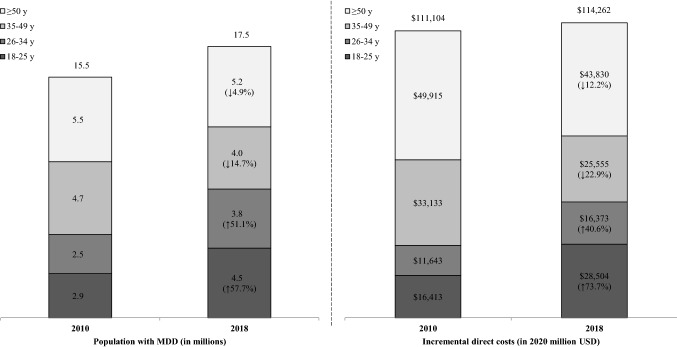
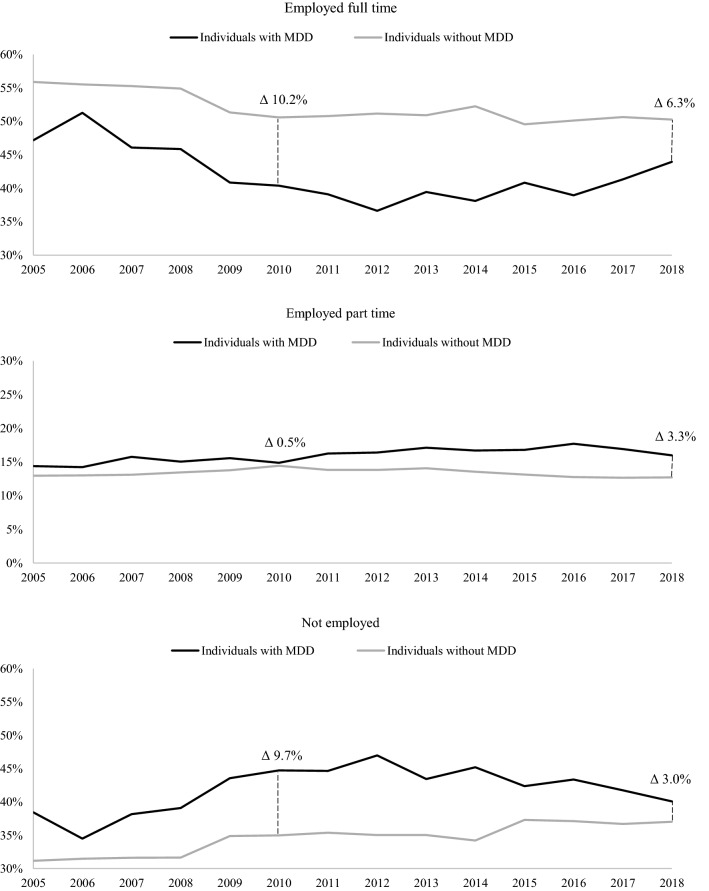
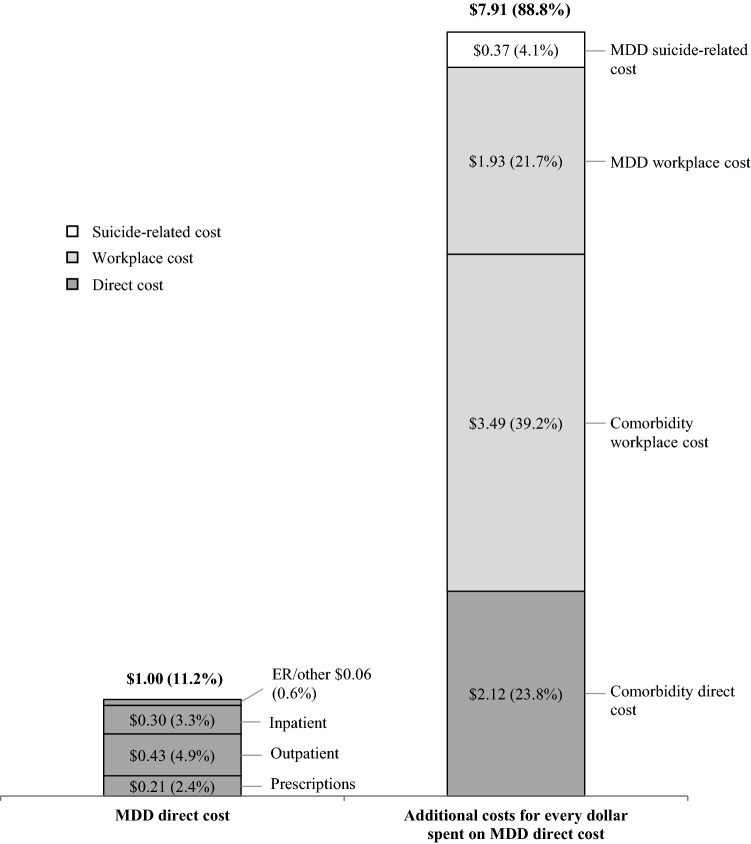
BACKGROUND: The incremental economic burden of US adults with major depressive disorder (MDD) was estimated at $US210.5 billion in 2010 (year 2012 values). OBJECTIVE: Following a similar methodology, this study updates the previous findings with more recent data to report the economic burden of adults with MDD in 2018. METHOD: This study used a framework for evaluating the incremental economic burden of adults with MDD in the USA that combined original and literature-based estimates, focusing on key changes between 2010 and 2018. The prevalence rates of MDD by sex, age, employment, and treatment status over time were estimated based on the National Survey on Drug Use and Health (NSDUH). The incremental direct and workplace costs per individual with MDD were primarily derived from administrative claims data and NSDUH data using comparative analyses of individuals with and without MDD. Societal direct and workplace costs were extrapolated by multiplying NSDUH estimates of the number of people with MDD by the direct and workplace cost estimates per patient. The suicide-related costs were estimated using a human capital method. RESULTS: The number of US adults with MDD increased by 12.9%, from 15.5 to 17.5 million, between 2010 and 2018, whereas the proportion of adults with MDD aged 18-34 years increased from 34.6 to 47.5%. Over this period, the incremental economic burden of adults with MDD increased by 37.9% from $US236.6 billion to 326.2 billion (year 2020 values). All components of the incremental economic burden increased (i.e., direct costs, suicide-related costs, and workplace costs), with the largest growth observed in workplace costs, at 73.2%. Consequently, the composition of 2018 costs changed meaningfully, with 35% attributable to direct costs (47% in 2010), 4% to suicide-related costs (5% in 2010), and 61% to workplace costs (48% in 2010). This increase in the workplace cost share was consistent with more favorable employment conditions for those with MDD. Finally, the proportion of total costs attributable to MDD itself as opposed to comorbid conditions remained stable at 37% (38% in 2010). CONCLUSION: Workplace costs accounted for the largest portion of the growing economic burden of MDD as this population trended younger and was increasingly likely to be employed. Although the total number of adults with MDD increased from 2010 to 2018, the incremental direct cost per individual declined. At the same time, the proportion of adults with MDD who received treatment remained stable over the past decade, suggesting that substantial unmet treatment needs remain in this population. Further research is warranted into the availability, composition, and quality of MDD treatment services.
Overview
The claims and statistics of this paper haven’t been checked yet.
Free: it reads the open-access text and checks the first 5 claims that cite a source we can check. Create a free account to check every claim.
Integrity signals
Registry
Cites
Statistics
Figures
Verification
Claims the paper makes
The claims and statistics of this paper haven’t been checked yet.
Free: it reads the open-access text and checks the first 5 claims that cite a source we can check. Create a free account to check every claim.
Claims other papers make about this one
Each is checked against this paper’s own text: does it say what the citing paper says it does?
The cited source doesn’t support the claim as written.
In the citing paper
“The current estimate of total incremental costs of MDD in 2019 represents a 3.5% increase in the burden compared with a prior estimate in 2018 (when standardized to 2019 values), with 36.0% of the total incremental costs of MDD in 2019 coming from novel components not previously included in the prior estimate (i.e., unemployment, all-cause mortality, householdrelated costs) [8].”
From The Economic Burden of Adults with Major Depressive Disorder in the United States (2019) (2023) · cites this paper as [8]
Checked by a reasoning model — may be wrong.
Experimental — accuracy not yet measuredThe cited source says what the claim attributes to it.
In the citing paper
“one of the key differentiators of the current study from previous estimations of the economic burden of MDD [8,33,34] was the consideration of household-related costs.”
From The Economic Burden of Adults with Major Depressive Disorder in the United States (2019) (2023) · cites this paper as [8]
The check wasn’t confident either way, so it gives no verdict — never disputed.
In the citing paper
“The COVID-19 pandemic exacerbated many risk factors for depression across countries of disparate economic status 5,6 ;”
From Digital health technologies and major depressive disorder (2023) · cites this paper as [5]
Experimental — accuracy not yet measuredIn the citing paper
“The current estimate of total incremental costs of MDD in 2019 represents a 3.5% increase in the burden compared with a prior estimate in 2018 (when standardized to 2019 values), with 36.0% of the total incremental costs of MDD in 2019 coming from novel components not previously included in the prior estimate (i.e., unemployment, all-cause mortality, householdrelated costs) [8].”
From The Economic Burden of Adults with Major Depressive Disorder in the United States (2019) (2023) · cites this paper as [8]
In the citing paper
“which was an increase from the previous estimate of 7.1% in 2018 [8].”
From The Economic Burden of Adults with Major Depressive Disorder in the United States (2019) (2023) · cites this paper as [8]
Self-check
Percentages, sums and reported differences re-computed from the paper’s own numbers.
The self-check needs the paper’s full text.
Citations
Cites
Charlson, M. E., Pompei, P., Ales, K. L., & MacKenzie, C. R. (1987) · Journal of Chronic Diseases · doi:10.1016/0021-9681(87)90171-8 · Cited by 49,742
Coding algorithms for defining comorbidities in ICD-9-CM and ICD-10 administrative data
Quan, H., Sundararajan, V., Halfon, P., Fong, A., Burnand, B., Luthi, J.-C., Saunders, L. D., Beck, C. A., Feasby, T. E., & Ghali, W. A. (2005) · Medical Care · doi:10.1097/01.mlr.0000182534.19832.83 · Cited by 10,669
Scoville, W. B. (1949) · Journal of neurosurgery · doi:10.3171/jns.1949.6.1.0065 · Cited by 7,381
Centers for Disease Control and Prevention
(2007) · Encyclopedia of Measurement and Statistics · doi:10.4135/9781412952644.n74 · Cited by 6,444
Quan, H., Li, B., Couris, C. M., Fushimi, K., Graham, P., Hider, P., Januel, J.-M., & Sundararajan, V. (2011) · American Journal of Epidemiology · doi:10.1093/aje/kwq433 · Cited by 5,843
The outbreak of COVID-19 coronavirus and its impact on global mental health
Torales, J., O’Higgins, M., Castaldelli-Maia, J. M., & Ventriglio, A. (2020) · International Journal of Social Psychiatry · doi:10.1177/0020764020915212 · Cited by 3,013
Prevalence of depression symptoms in US adults before and during the COVID-19 pandemic
Ettman, C. K., Abdalla, S. M., Cohen, G. H., Sampson, L., Vivier, P. M., & Galea, S. (2020) · JAMA Network Open · doi:10.1001/jamanetworkopen.2020.19686 · Cited by 2,138
The Economic Burden of Adults With Major Depressive Disorder in the United States (2005 and 2010)
Greenberg, P. E., Fournier, A.-A., Sisitsky, T., Pike, C. T., & Kessler, R. C. (2015) · The Journal of Clinical Psychiatry · doi:10.4088/jcp.14m09298 · Cited by 1,779
Self-citationMokdad (2018) · doi:10.1001/jama.2018.0158 · Cited by 1,517
Depression Is the Leading Cause of Disability Around the World
Friedrich, M. J. (2017) · JAMA · doi:10.1001/jama.2017.3826 · Cited by 1,459
Cited by
Major depressive disorder: hypothesis, mechanism, prevention and treatment
Cui, L., Li, S., Wang, S., Wu, X., Liu, Y., Yu, W., Wang, Y., Tang, Y., Xia, M., & Li, B. (2024) · Signal Transduction and Targeted Therapy · doi:10.1038/s41392-024-01738-y · Cited by 1,244
“46,47 Furthermore, compared to people without depression, patients with MDD have been demonstrated to have a shorter life expectancy.”
BackgroundMajor Depression and Its Recurrences: Life Course Matters
Monroe, S. M., & Harkness, K. L. (2022) · Annual Review of Clinical Psychology · doi:10.1146/annurev-clinpsy-072220-021440 · Cited by 608
The Economic Burden of Adults with Major Depressive Disorder in the United States (2019)
Greenberg, P., Chitnis, A., Louie, D., Suthoff, E., Chen, S.-Y., Maitland, J., Gagnon-Sanschagrin, P., Fournier, A.-A., & Kessler, R. C. (2023) · Advances in Therapy · doi:10.1007/s12325-023-02622-x · Cited by 223
Self-citationModern views of machine learning for precision psychiatry
Chen, Z. S., Kulkarni, P. (., Galatzer-Levy, I. R., Bigio, B., Nasca, C., & Zhang, Y. (2022) · Patterns · doi:10.1016/j.patter.2022.100602 · Cited by 210
Proudman, D., Greenberg, P., & Nellesen, D. (2021) · PharmacoEconomics · doi:10.1007/s40273-021-01040-7 · Cited by 194
Self-citationWinter, N. R., Leenings, R., Ernsting, J., Sarink, K., Fisch, L., Emden, D., Blanke, J., Goltermann, J., Opel, N., Barkhau, C., et al. (2022) · JAMA Psychiatry · doi:10.1001/jamapsychiatry.2022.1780 · Cited by 186
Mechanisms of ketamine and its metabolites as antidepressants
Hess, E. M., Riggs, L. M., Michaelides, M., & Gould, T. D. (2022) · Biochemical Pharmacology · doi:10.1016/j.bcp.2021.114892 · Cited by 175
Kwapong, Y. A., Boakye, E., Khan, S. S., Honigberg, M. C., Martin, S. S., Oyeka, C. P., Hays, A. G., Natarajan, P., Mamas, M. A., Blumenthal, R. S., et al. (2023) · Journal of the American Heart Association · doi:10.1161/jaha.122.028332 · Cited by 160
Chodavadia, P., Teo, I., Poremski, D., Fung, D. S. S., & Finkelstein, E. A. (2023) · BMC Psychiatry · doi:10.1186/s12888-023-04581-7 · Cited by 158
Qaseem, A., Owens, D. K., Etxeandia‐Ikobaltzeta, I., Tufte, J., Cross, J. T., Wilt, T. J., Crandall, C. J., Balk, E., Cooney, T. G., Fitterman, N., et al. (2023) · Annals of Internal Medicine · doi:10.7326/m22-2056 · Cited by 154
Prevalence of Depression in Adolescents and Adults: United States, August 2021–August 2023
Brody, D. J., & Hughes, J. P. (2025) · doi:10.15620/cdc/174579 · Cited by 152
The voice of depression: speech features as biomarkers for major depressive disorder
Menne, F., Dörr, F., Schräder, J., Tröger, J., Habel, U., König, A., & Wagels, L. (2024) · BMC Psychiatry · doi:10.1186/s12888-024-06253-6 · Cited by 126
Blood brain barrier and inflammation in depression
Medina-Rodriguez, E. M., & Beurel, E. (2022) · Neurobiology of Disease · doi:10.1016/j.nbd.2022.105926 · Cited by 123
Zhang, Z., Meng, Q., Jin, L.-C., Wang, H.-G., & Hou, H.-R. (2023) · Expert Systems with Applications · doi:10.1016/j.eswa.2023.122356 · Cited by 106
Handing, E. P., Strobl, C., Jiao, Y., Feliciano, L., & Aichele, S. (2022) · The Lancet Regional Health - Europe · doi:10.1016/j.lanepe.2022.100391 · Cited by 106
Wu, C., Huang, H.-C., Huang, S., Chen, I., Liao, S., Chen, C., Lin, C., Lee, S., Chen, M., Tsai, C.-F., et al. (2021) · Biosensors · doi:10.3390/bios11120499 · Cited by 101
Klopack, E. T., Crimmins, E. M., Cole, S. W., Seeman, T. E., & Carroll, J. (2022) · SSM - Population Health · doi:10.1016/j.ssmph.2022.101071 · Cited by 101
Financial strain and depression in the U.S.: a scoping review
Ettman, C. K., Fan, A. Y., Philips, A. P., Adam, G. P., Ringlein, G., Clark, M. A., Wilson, I. B., Vivier, P. M., & Galea, S. (2023) · Translational Psychiatry · doi:10.1038/s41398-023-02460-z · Cited by 101
Liwinski, T., Lang, U. E., Brühl, A. B., & Schneider, E. (2023) · Biomedicines · doi:10.3390/biomedicines11123128 · Cited by 96
Gkintoni, E., Vassilopoulos, S. P., & Νικολάου, Γ. (2025) · Medicina · doi:10.3390/medicina61030431 · Cited by 95
Forbes, A., Keleher, M. R., Venditto, M., & DiBiasi, F. (2023) · Journal of Medical Internet Research · doi:10.2196/43727 · Cited by 94
Laird, E. J., Rasmussen, C. L., Kenny, R. A., & Herring, M. P. (2023) · JAMA Network Open · doi:10.1001/jamanetworkopen.2023.22489 · Cited by 91
Liwinski, T., & Lang, U. E. (2023) · Nutrients · doi:10.3390/nu15173859 · Cited by 89
Ortega, M. A., Fraile‐Μartinez, O., Montero, C. G., Álvarez-Mon, M. Á., Lahera, G., Monserrat, J., Llavero-Valero, M., Gutiérrez-Rojas, L., Molina, R., Rodríguez–Jiménez, R., et al. (2022) · Nutrients · doi:10.3390/nu14153099 · Cited by 89
Yadav, S., Delau, O., Bonner, A. J., Markovic, D., Patterson, W., Ottey, S., Buyalos, R. P., & Azziz, R. (2023) · eLife · doi:10.7554/elife.85338 · Cited by 85
“Annual cost data for medical treatment of depression for individuals 18–49 years of age was obtained from a 2021 study (Greenberg et al., 2021), for anxiety for ages 15–54 was obtained from a 1999 study (Greenberg et al.”
Buntrock, C., Harrer, M., Sprenger, A. A., Illing, S., Sakata, M., Furukawa, T. A., Ebert, D. D., Cuijpers, P. J., Adriaanse, M. C., Albert, S. M., et al. (2024) · The Lancet Psychiatry · doi:10.1016/s2215-0366(24)00316-x · Cited by 80
Zare, H., Meyerson, N. S., Nwankwo, C. A., & Thorpe, R. J. (2022) · International Journal of Environmental Research and Public Health · doi:10.3390/ijerph19106227 · Cited by 77
Macroeconomics of Mental Health
Abramson, B., Boerma, J., & Tsyvinski, A. (2024) · National Bureau of Economic Research · doi:10.3386/w32354 · Cited by 77
Wu, Y., Song, J., Zhang, Q., Yan, S., Sun, X., Mei, L., Yi, W., Pan, R., Li, Y., Jin, X., et al. (2022) · Environmental Pollution · doi:10.1016/j.envpol.2022.120445 · Cited by 76
The correlation of Esketamine with specific adverse events: a deep dive into the FAERS database
Jiang, Y., Du, Z., Shen, Y., Zhou, Q., & Zhu, H. (2023) · European Archives of Psychiatry and Clinical Neuroscience · doi:10.1007/s00406-023-01732-5 · Cited by 74
Wu, Y., Fan, L., Xia, F., Zhou, Y., Wang, H., Feng, L., Xie, S., Xu, W., Xie, Z., He, J., et al. (2024) · Annals of General Psychiatry · doi:10.1186/s12991-024-00513-1 · Cited by 71
A mentally healthy framework to guide employers and policy makers
Deady, M., Sanatkar, S., Tan, L., Glozier, N., Gayed, A., Petrie, K., Dalgaard, V. L., Stratton, E., LaMontagne, A. D., & Harvey, S. B. (2024) · Frontiers in Public Health · doi:10.3389/fpubh.2024.1430540 · Cited by 69
Simmatis, L. E. R., Russo, E. E., Geraci, J., Harmsen, I. E., & Samuel, N. (2023) · npj Mental Health Research · doi:10.1038/s44184-023-00038-7 · Cited by 69
Neuroinflammation and neuroprogression in depression: Effects of alternative drug treatments
Richardson, B., MacPherson, A., & Bambico, F. R. (2022) · Brain Behavior & Immunity - Health · doi:10.1016/j.bbih.2022.100554 · Cited by 66
Health impacts of bike-sharing systems in the U.S.
Clockston, R. L. M., & Rojas‐Rueda, D. (2021) · Environmental Research · doi:10.1016/j.envres.2021.111709 · Cited by 65
Economic Burden Associated With Untreated Mental Illness in Indiana
Taylor, H., Menachemi, N., Gilbert, A. L., Chaudhary, J., & Blackburn, J. L. (2023) · JAMA Health Forum · doi:10.1001/jamahealthforum.2023.3535 · Cited by 65
Ren, F.-F., Hillman, C. H., Wang, W., Li, R., Zhou, W.-S., Liang, W.-M., Yang, Y., Chen, F., & Chang, Y. (2024) · International Journal of Clinical and Health Psychology · doi:10.1016/j.ijchp.2024.100447 · Cited by 64
Nutrition, Epigenetics, and Major Depressive Disorder: Understanding the Connection
Ortega, M. A., Fraile‐Μartinez, O., Montero, C. G., Álvarez-Mon, M. Á., Lahera, G., Monserrat, J., Llavero-Valero, M., Mora, F., Rodríguez–Jiménez, R., Fernández-Rojo, S., et al. (2022) · Frontiers in Nutrition · doi:10.3389/fnut.2022.867150 · Cited by 64
Chan, V. K. Y., Leung, M. Y. M., Chan, S. S. M., Yang, D., Knapp, M. R. J., Luo, H., Craig, D., Chen, Y., Bishai, D. M., Wong, G. H. Y., et al. (2024) · The Lancet Regional Health - Western Pacific · doi:10.1016/j.lanwpc.2024.101026 · Cited by 63
Ohse, J., Hadžić, B., Mohammed, P., Peperkorn, N., Danner, M., Yorita, A., Kubota, N., Rätsch, M., & Shiban, Y. (2024) · Computer Speech & Language · doi:10.1016/j.csl.2024.101663 · Cited by 63
Anxiety and depression amongst youth as adverse effects of using social media : A Review
Prasad, S., Souabni, S. A., Anugwom, G., Aneni, K., Anand, A., Urhi, A., Obi-Azuike, C., Gibson, T., Khan, A., & Oladunjoye, A. F. (2023) · Annals of Medicine and Surgery · doi:10.1097/ms9.0000000000001066 · Cited by 59
Prevalence of depressive symptoms in U.S. adults during the COVID-19 pandemic: A systematic review
Ettman, C. K., Fan, A. Y., Subramanian, M., Adam, G. P., Goicoechea, E. B., Abdalla, S. M., Stuart, E. A., & Galea, S. (2023) · SSM - Population Health · doi:10.1016/j.ssmph.2023.101348 · Cited by 58
Zyoud, S. H., Shakhshir, M. H., Abushanab, A. S., Koni, A. A., Shahwan, M. J., Jairoun, A. A., & Al‐Jabi, S. W. (2023) · Journal of Health Population and Nutrition · doi:10.1186/s41043-023-00378-2 · Cited by 58
Effects of psilocybin versus escitalopram on rumination and thought suppression in depression
Barba, T., Buehler, S., Kettner, H., Radu, C., Cunha, B. G., Nutt, D. J., Erritzoe, D., Roseman, L., & Carhart-Harris, R. (2022) · BJPsych Open · doi:10.1192/bjo.2022.565 · Cited by 57
Sex Differences in Depression-Like Behaviors in Adult Mice Depend on Endophenotype and Strain
Pitzer, C., Kurpiers, B., & Eltokhi, A. (2022) · Frontiers in Behavioral Neuroscience · doi:10.3389/fnbeh.2022.838122 · Cited by 55
Jain, S., Gupta, S., Li, V. W., Suthoff, E., & Arnaud, A. (2022) · BMC Psychiatry · doi:10.1186/s12888-022-04165-x · Cited by 53
Han, H., Yao, J., Wu, J., Mao, S., Pan, H., Qv, L., Zhu, G., Ren, J., Yu, Y., Xuan, F., et al. (2025) · Molecular Psychiatry · doi:10.1038/s41380-025-03044-7 · Cited by 52
Neuroimaging for precision medicine in psychiatry
Williams, L. M., & Whitfield, S. (2024) · Neuropsychopharmacology · doi:10.1038/s41386-024-01917-z · Cited by 52
Decoding Depression Severity From Intracranial Neural Activity
Xiao, J., Provenza, N. R., Asfouri, J., Myers, J. C., Mathura, R. K., Metzger, B. A., Adkinson, J. A., Allawala, A. B., Pirtle, V., Oswalt, D. N., et al. (2023) · Biological Psychiatry · doi:10.1016/j.biopsych.2023.01.020 · Cited by 52
Price, G. D., Heinz, M. V., Song, S. H., Nemesure, M. D., & Jacobson, N. C. (2023) · Translational Psychiatry · doi:10.1038/s41398-023-02669-y · Cited by 52
Acceptability of Digital Mental Health Interventions for Depression and Anxiety: Systematic Review
Lau, C. K. Y., Saad, A., Camara, B., Rahman, D., & Bolea-Alamanac, B. (2024) · Journal of Medical Internet Research · doi:10.2196/52609 · Cited by 51
“Depression and anxiety disorders are common [1] and have high and increasing societal costs [2,3].”
The Economics of Treatment for Depression
Stecher, C. D., Cloonan, S., & Domino, M. E. (2023) · Annual Review of Public Health · doi:10.1146/annurev-publhealth-061022-040533 · Cited by 51
Personalized use of ketamine and esketamine for treatment-resistant depression
Medeiros, G. C., Demo, I., Goes, F. S., Zarate, C. A., & Gould, T. D. (2024) · Translational Psychiatry · doi:10.1038/s41398-024-03180-8 · Cited by 51
Biological correlates of treatment resistant depression: a review of peripheral biomarkers
Mancuso, E., Sampogna, G., Boiano, A., Rocca, B. D., Vincenzo, M. D., Lapadula, M. V., Martinelli, F., Lucci, F., & Luciano, M. (2023) · Frontiers in Psychiatry · doi:10.3389/fpsyt.2023.1291176 · Cited by 50
Targeting metaplasticity mechanisms to promote sustained antidepressant actions
Brown, K. A., & Gould, T. D. (2024) · Molecular Psychiatry · doi:10.1038/s41380-023-02397-1 · Cited by 49
A theory of the neural mechanisms underlying negative cognitive bias in major depression
Jiang, Y. (2024) · Frontiers in Psychiatry · doi:10.3389/fpsyt.2024.1348474 · Cited by 49
Personalised depression forecasting using mobile sensor data and ecological momentary assessment
Kathan, A., Harrer, M., Küster, L., Triantafyllopoulos, A., He, X., Milling, M., Gerczuk, M., Yan, T., Rajamani, S. T., Heber, E., et al. (2022) · Frontiers in Digital Health · doi:10.3389/fdgth.2022.964582 · Cited by 47
The Individual and Societal Burden of Treatment-Resistant Depression
Baig-Ward, K. M., Jha, M. K., & Trivedi, M. H. (2023) · Psychiatric Clinics of North America · doi:10.1016/j.psc.2023.02.001 · Cited by 47
Mavranezouli, I., Megnin‐Viggars, O., Pedder, H., Welton, N. J., Dias, S., Watkins, E. R., Nixon, N. L., Daly, C., Keeney, E., Eadon, H., et al. (2024) · EClinicalMedicine · doi:10.1016/j.eclinm.2024.102780 · Cited by 46
Choudhary, S., Thomas, N., Ellenberger, J., Srinivasan, G., & Cohen, R. (2022) · JMIR Formative Research · doi:10.2196/37736 · Cited by 46
Effects of pharmacological treatment on metabolomic alterations in animal models of depression
Pu, J., Liu, Y., Gui, S., Tian, L., Yu, Y., Wang, D., Zhong, X., Chen, W., Chen, X., Chen, Y., et al. (2022) · Translational Psychiatry · doi:10.1038/s41398-022-01947-5 · Cited by 45
Emotional Schemas and Psychological Distress: Mediating Role of Resilience and Cognitive Flexibility
Mohammadkhani, S., Foroutan, A., Akbari, M., & Shahbahrami, M. (2022) · Iranian Journal of Psychiatry · doi:10.18502/ijps.v17i3.9728 · Cited by 45
Exploring depression in adults over a decade: a review of longitudinal studies
de Sousa, R. D., Zagalo, D. M., Costa, T., de Almeida, J. M. C., Canhão, H., & Rodrigues, A. (2025) · BMC Psychiatry · doi:10.1186/s12888-025-06828-x · Cited by 44
Vincenzo, M. D., Martiadis, V., Rocca, B. D., Arsenio, E., D’Arpa, A., Volpicelli, A., Luciano, M., Sampogna, G., & Fiorillo, A. (2024) · Frontiers in Psychiatry · doi:10.3389/fpsyt.2024.1394787 · Cited by 43
A Prompt-Based Topic-Modeling Method for Depression Detection on Low-Resource Data
Guo, Y., Liu, J., Wang, L., Qin, W., Hao, S., & Hong, R. (2023) · IEEE Transactions on Computational Social Systems · doi:10.1109/tcss.2023.3260080 · Cited by 43
A novel peripheral biomarker for depression and antidepressant response
Targum, S. D., Schappi, J. M., Koutsouris, A., Bhaumik, R., Rapaport, M. H., Rasgon, N., & Rasenick, M. M. (2022) · Molecular Psychiatry · doi:10.1038/s41380-021-01399-1 · Cited by 43
Neurobiological mechanisms of mood disorders: Stress vulnerability and resilience
Pereira, C. M., Castro, F. C. D. A. Q., Barcelos, R. M., Chiepe, K. C. M. B., Rossoni, J. V., Ambrósio, R. P., Chiarelli-Neto, O., & Pesarico, A. P. (2022) · Frontiers in Behavioral Neuroscience · doi:10.3389/fnbeh.2022.1006836 · Cited by 43
Laditka, J. N., Laditka, S. B., Arif, A. A., & Adeyemi, O. J. (2023) · BMC Psychology · doi:10.1186/s40359-023-01119-0 · Cited by 42
Dalhuisen, I., van Bronswijk, S. C., Bors, J., Smit, F., Spijker, J., Tendolkar, I., Ruhé, H. G., & van Eijndhoven, P. (2022) · Neuroscience & Biobehavioral Reviews · doi:10.1016/j.neubiorev.2022.104848 · Cited by 40
Horwitz, A. G., Mills, E. D., Sen, S., & Bohnert, A. S. B. (2024) · JAMA Network Open · doi:10.1001/jamanetworkopen.2024.22115 · Cited by 40
Gao, M., Xin, R., Wang, Q., Gao, D., Wang, J., & Yu, Y. (2023) · General Hospital Psychiatry · doi:10.1016/j.genhosppsych.2023.04.010 · Cited by 40
Valenza, G. (2023) · Frontiers in Network Physiology · doi:10.3389/fnetp.2023.1125495 · Cited by 39
Digital health technologies and major depressive disorder
McIntyre, R. S., Greenleaf, W., Bulaj, G., Taylor, S. T., Mitsi, G., Saliu, D., Czysz, A., Silvesti, G., Garcia, M., & Jain, R. (2023) · CNS Spectrums · doi:10.1017/s1092852923002225 · Cited by 38
Terhorst, Y., Kaiser, T., Brakemeier, E., Moshe, I., Philippi, P., Cuijpers, P. J., Baumeister, H., & Sander, L. (2024) · JAMA Network Open · doi:10.1001/jamanetworkopen.2024.23241 · Cited by 38
McIntyre, R. S., Florea, I., Pedersen, M. M., & Christensen, M. C. (2023) · The Journal of Clinical Psychiatry · doi:10.4088/jcp.23m14780 · Cited by 38
Ellis, S., Bostian, C. M., Feng, W., Fischer, E. G., Schwartz, G., Eisen, K., Lean, M., Conlan, E., Ostacher, M. J., Aaronson, S. T., et al. (2024) · Journal of Affective Disorders · doi:10.1016/j.jad.2024.09.133 · Cited by 38
Magid, K., Henson, S. J. S., Castro, C. M., Smith, B. J., Chamberlain, C. E. W., & Levens, S. M. (2023) · International Journal of Behavioral Medicine · doi:10.1007/s12529-023-10204-y · Cited by 38
Vertsberger, D., Naor, N., & Winsberg, M. E. (2022) · JMIR AI · doi:10.2196/38171 · Cited by 37
Sun, X., Huang, W., Wang, J., Xu, R., Zhang, X., Zhou, J., Zhu, J., & Qian, Y. (2023) · Psychological Medicine · doi:10.1017/s0033291722003750 · Cited by 37
Woodham, R. D., Rimmer, R. M., Young, A. H., & Fu, C. H. Y. (2022) · Journal of Psychiatric Research · doi:10.1016/j.jpsychires.2022.07.026 · Cited by 36
Yetsenga, R., Banerjee, R., Streatfeild, J., McGregor, K., Austin, S. B., Lim, B. W. X., Diedrichs, P. C., Greaves, K., Mattei, J., Puhl, R. M., et al. (2024) · Eating Disorders · doi:10.1080/10640266.2024.2328461 · Cited by 36
Kamra, V., Kumar, P., & Mohammadian, M. (2022) · Intelligent Systems with Applications · doi:10.1016/j.iswa.2023.200208 · Cited by 36
The conscious processing of emotion in depression disorder: a meta-analysis of neuroimaging studies
Gou, X.-Y., Li, Y., Guo, L.-X., Zhao, J., Zhong, D., Liu, X., Xia, H., Fan, J., Zhang, Y., Ai, S., et al. (2023) · Frontiers in Psychiatry · doi:10.3389/fpsyt.2023.1099426 · Cited by 35
Six, S. G., Byrne, K. A., Aly, H., & Harris, M. W. (2022) · JMIR Mental Health · doi:10.2196/39516 · Cited by 35
Olfati, M., Samea, F., Faghihroohi, S., Balajoo, S. M., Küppers, V., Genon, S., Patil, K. R., Eickhoff, S. B., & Tahmasian, M. (2024) · EBioMedicine · doi:10.1016/j.ebiom.2024.105313 · Cited by 35
Miao, C., Gao, Y., Li, X., Zhou, Y., Chung, J. W.-Y., & Smith, G. D. (2023) · BMC Complementary Medicine and Therapies · doi:10.1186/s12906-023-04141-2 · Cited by 34
“From 2010 to 2018, the number of adults with MDD in the United States increased from 15.5 to 17.5 million, while the proportion of adults aged 18 to 34 with MDD rose from 34.6–47.5% [3].”
BackgroundInfluentialFinancial assets and mental health over time
Ettman, C. K., Thornburg, B., Abdalla, S. M., Meiselbach, M. K., & Galea, S. (2024) · Scientific Reports · doi:10.1038/s41598-024-76990-x · Cited by 34
The societal economic value of COVID-19 vaccines in the United States
Kirson, N. Y., Swallow, E., Lu, J., Mesa‐Frias, M., Bookhart, B., Maynard, J., Shivdasani, Y., & Lefèbvre, P. (2022) · Journal of Medical Economics · doi:10.1080/13696998.2022.2026118 · Cited by 34
Zhuang, Y., Zeng, R., Liu, X., Yang, L., & Chan, Z. (2022) · Marine Drugs · doi:10.3390/md20110725 · Cited by 33
Engler-Chiurazzi, E. B. (2024) · Frontiers in Cellular Neuroscience · doi:10.3389/fncel.2024.1360242 · Cited by 32
Economic burden of major depressive disorder: a case study in Southern Iran
Keshavarz, K., Hedayati, A., Rezaei, M., Goudarzi, Z., Moghimi, E., Rezaee, M., & Lotfı, F. H. (2022) · BMC Psychiatry · doi:10.1186/s12888-022-04220-7 · Cited by 31
Manipulating Reward Sensitivity Using Reward Circuit–Targeted Transcranial Magnetic Stimulation
Ryan, J., Pouliot, J. J., Hajcak, G., & Nee, D. E. (2022) · Biological Psychiatry Cognitive Neuroscience and Neuroimaging · doi:10.1016/j.bpsc.2022.02.011 · Cited by 31
Kopf-Beck, J., Müller, C. L., Tamm, J., Fietz, J., Rek, N., Just, L., Spock, Z. I., Weweck, K., Takano, K., Rein, M., et al. (2024) · Psychotherapy and Psychosomatics · doi:10.1159/000535492 · Cited by 30
Lee, S., Cho, Y., Ji, Y., Jeon, M., Kim, A., Ham, B., & Joo, Y. Y. (2024) · Journal of Psychiatric Research · doi:10.1016/j.jpsychires.2024.02.036 · Cited by 30
Rizk, M., Bolton, L., Cathomas, F., He, H., Russo, S. J., Guttman‐Yassky, E., Mann, J. J., & Murrough, J. W. (2024) · The Journal of Clinical Psychiatry · doi:10.4088/jcp.23nr15243 · Cited by 30
Psychological distress and productivity loss: a longitudinal analysis of Australian working adults
Keramat, S. A., Comans, T. A., Pearce, A. M., Basri, R., Hashmi, R., & Dissanayaka, N. N. (2025) · The European Journal of Health Economics · doi:10.1007/s10198-025-01764-9 · Cited by 30
Current and future directions of drug delivery for the treatment of mental illnesses
Brewster, P. R., Bari, S. M. I., Walker, G. M., & Werfel, T. A. (2023) · Advanced Drug Delivery Reviews · doi:10.1016/j.addr.2023.114824 · Cited by 30
Lee, E., Kang, E. H., Kang, H., & Lee, H. Y. (2023) · Frontiers in Psychology · doi:10.3389/fpsyg.2023.1217038 · Cited by 30
Terhorst, Y., Knauer, J., Philippi, P., & Baumeister, H. (2024) · Journal of Medical Internet Research · doi:10.2196/51875 · Cited by 29
Vieira, W. F., Gersten, M. B., Caldieraro, M. A., & Cassano, P. (2023) · Harvard Review of Psychiatry · doi:10.1097/hrp.0000000000000363 · Cited by 28
Metadata
- Authors
- Greenberg, P. E., Fournier, A.-A., Sisitsky, T., Simes, M., Berman, R., Koenigsberg, S. H., & Kessler, R. C.
- Affiliations
- Analysis Group (United States) (US)
- Harvard University (US)
- Venue
- PharmacoEconomics
- Published
- 2021-05-05
- Volume
- 39
- Issue
- 6
- Pages
- 653-665
- ISSN
- 1170-7690 (ISSN-L)
- 1179-2027
- PMC
- PMC8097130
- OpenAlex
- W3157759986
- Cited by
- 838
- References
- 33
- Citations by year
- 2026: 123 · 2025: 204 · 2024: 221 · 2023: 177 · 2022: 95 · 2021: 14
- FWCI
- 124.30
- Type
- journal article
- Language
- en
- Open access
- hybrid
- doi.org
- Licence
- cc-by-nc
- creativecommons.org/licenses/by-nc/4.0 (tdm)
- creativecommons.org/licenses/by-nc/4.0 (vor)
- Locations
- PharmacoEconomics (publishedVersion, cc-by-nc)
- PubMed Central (publishedVersion, cc-by-nc)
- PubMed (publishedVersion)
- RePEc: Research Papers in Economics (submittedVersion)
- Topics
- Health Sciences › Medicine › Psychiatry and Mental health › Mental Health Treatment and Access
- Social Sciences › Economics, Econometrics and Finance › Economics and Econometrics › Health Systems, Economic Evaluations, Quality of Life
- Health Sciences › Medicine › Pharmacology (medical) › Treatment of Major Depression
- Keywords
- major depressive disorder, economic burden, direct medical costs, human capital, depression prevalence, comorbidities, United States adults, National Survey on Drug Use and Health, administrative claims data, productivity loss, age and sex differences
- MeSH terms
- Adult, Major Depressive Disorder, Humans, United States, Prevalence, Health Care Costs, Cost of Illness
About these checks
Registry, retraction, Cites and statistics results are computed, not judged, with one exception: a printed reference that no index lists is read once by a model before it counts as a citation error. Claims are extracted by a model and kept only when their quote appears verbatim in the text; each cited source is then checked, with a model’s help, for whether it says what the claim relies on. Those verdicts can be wrong — read the claim’s quote and the cited source before relying on one.
Statistics and arithmetic are recomputed, not judged.
Confidence bands are shown only for fields calibrated on our annotated test set. None is calibrated yet, so no band is shown.
What counts as a claim ›How we measure confidence ›How we check this ›
Are you an author, or do you see a problem with this page? Request a review
Data sources
Bibliographic data: Semantic Scholar, OpenAlex, Crossref.
Contains information from the Semantic Scholar Academic Graph Datasets, made available under the ODC Attribution License (ODC-BY 1.0).
Semantic Scholar’s data is described in: Kinney, R., et al. (2023). The Semantic Scholar Open Data Platform. arXiv:2301.10140.
