

The Economic Burden of Adults with Major Depressive Disorder in the United States (2010 and 2018)
Open accessThe DOI matches its Crossref record; 33 of the 33 references it cites were found in a registry or an index.
Abstract
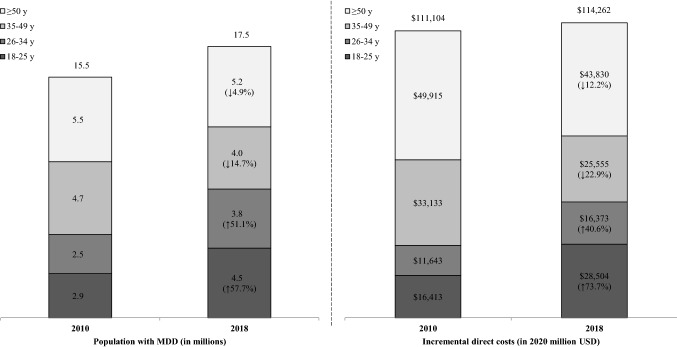
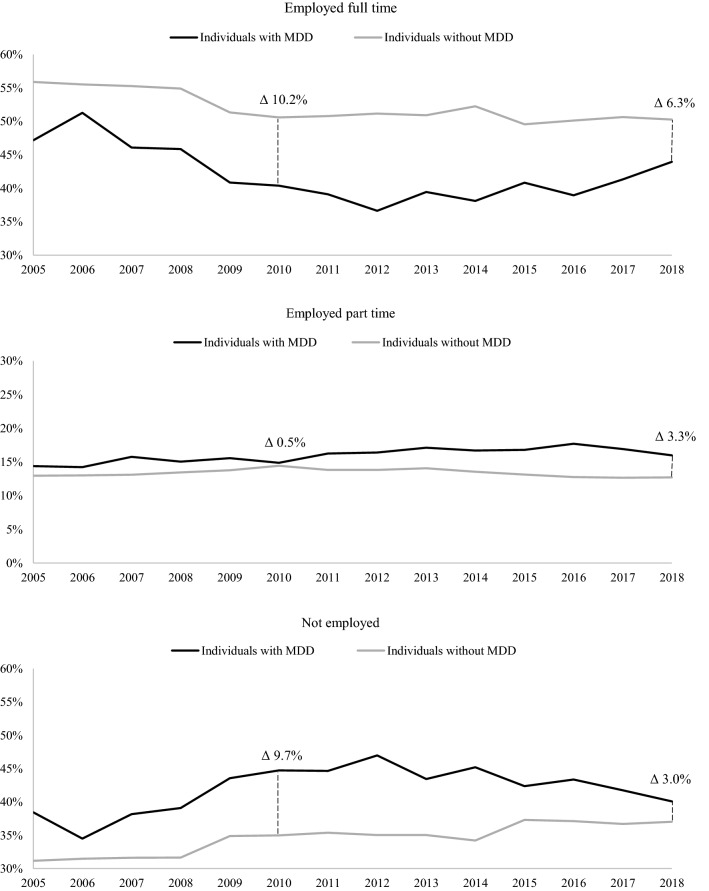
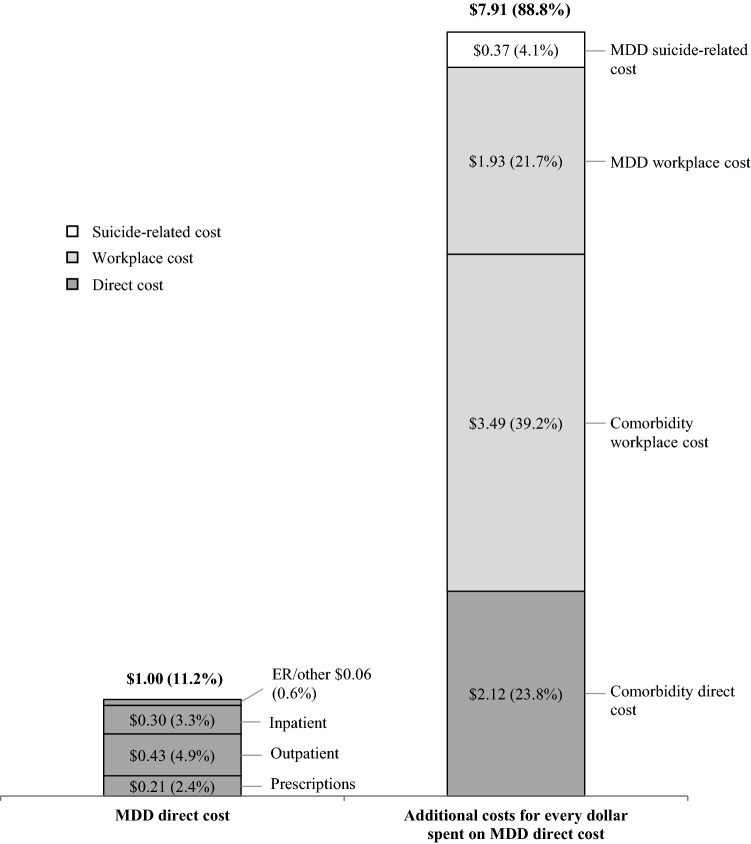
BACKGROUND: The incremental economic burden of US adults with major depressive disorder (MDD) was estimated at $US210.5 billion in 2010 (year 2012 values). OBJECTIVE: Following a similar methodology, this study updates the previous findings with more recent data to report the economic burden of adults with MDD in 2018. METHOD: This study used a framework for evaluating the incremental economic burden of adults with MDD in the USA that combined original and literature-based estimates, focusing on key changes between 2010 and 2018. The prevalence rates of MDD by sex, age, employment, and treatment status over time were estimated based on the National Survey on Drug Use and Health (NSDUH). The incremental direct and workplace costs per individual with MDD were primarily derived from administrative claims data and NSDUH data using comparative analyses of individuals with and without MDD. Societal direct and workplace costs were extrapolated by multiplying NSDUH estimates of the number of people with MDD by the direct and workplace cost estimates per patient. The suicide-related costs were estimated using a human capital method. RESULTS: The number of US adults with MDD increased by 12.9%, from 15.5 to 17.5 million, between 2010 and 2018, whereas the proportion of adults with MDD aged 18-34 years increased from 34.6 to 47.5%. Over this period, the incremental economic burden of adults with MDD increased by 37.9% from $US236.6 billion to 326.2 billion (year 2020 values). All components of the incremental economic burden increased (i.e., direct costs, suicide-related costs, and workplace costs), with the largest growth observed in workplace costs, at 73.2%. Consequently, the composition of 2018 costs changed meaningfully, with 35% attributable to direct costs (47% in 2010), 4% to suicide-related costs (5% in 2010), and 61% to workplace costs (48% in 2010). This increase in the workplace cost share was consistent with more favorable employment conditions for those with MDD. Finally, the proportion of total costs attributable to MDD itself as opposed to comorbid conditions remained stable at 37% (38% in 2010). CONCLUSION: Workplace costs accounted for the largest portion of the growing economic burden of MDD as this population trended younger and was increasingly likely to be employed. Although the total number of adults with MDD increased from 2010 to 2018, the incremental direct cost per individual declined. At the same time, the proportion of adults with MDD who received treatment remained stable over the past decade, suggesting that substantial unmet treatment needs remain in this population. Further research is warranted into the availability, composition, and quality of MDD treatment services.
Overview
The claims and statistics of this paper haven’t been checked yet.
Free: it reads the open-access text and checks the first 5 claims that cite a source we can check. Create a free account to check every claim.
Integrity signals
Registry
Cites
Statistics
Figures
Verification
Claims the paper makes
The claims and statistics of this paper haven’t been checked yet.
Free: it reads the open-access text and checks the first 5 claims that cite a source we can check. Create a free account to check every claim.
Claims other papers make about this one
Each is checked against this paper’s own text: does it say what the citing paper says it does?
The cited source doesn’t support the claim as written.
In the citing paper
“The current estimate of total incremental costs of MDD in 2019 represents a 3.5% increase in the burden compared with a prior estimate in 2018 (when standardized to 2019 values), with 36.0% of the total incremental costs of MDD in 2019 coming from novel components not previously included in the prior estimate (i.e., unemployment, all-cause mortality, householdrelated costs) [8].”
From The Economic Burden of Adults with Major Depressive Disorder in the United States (2019) (2023) · cites this paper as [8]
Checked by a reasoning model — may be wrong.
Experimental — accuracy not yet measuredThe cited source says what the claim attributes to it.
In the citing paper
“one of the key differentiators of the current study from previous estimations of the economic burden of MDD [8,33,34] was the consideration of household-related costs.”
From The Economic Burden of Adults with Major Depressive Disorder in the United States (2019) (2023) · cites this paper as [8]
The check wasn’t confident either way, so it gives no verdict — never disputed.
In the citing paper
“The COVID-19 pandemic exacerbated many risk factors for depression across countries of disparate economic status 5,6 ;”
From Digital health technologies and major depressive disorder (2023) · cites this paper as [5]
Experimental — accuracy not yet measuredIn the citing paper
“The current estimate of total incremental costs of MDD in 2019 represents a 3.5% increase in the burden compared with a prior estimate in 2018 (when standardized to 2019 values), with 36.0% of the total incremental costs of MDD in 2019 coming from novel components not previously included in the prior estimate (i.e., unemployment, all-cause mortality, householdrelated costs) [8].”
From The Economic Burden of Adults with Major Depressive Disorder in the United States (2019) (2023) · cites this paper as [8]
In the citing paper
“which was an increase from the previous estimate of 7.1% in 2018 [8].”
From The Economic Burden of Adults with Major Depressive Disorder in the United States (2019) (2023) · cites this paper as [8]
Self-check
Percentages, sums and reported differences re-computed from the paper’s own numbers.
The self-check needs the paper’s full text.
Citations
Cites
Charlson, M. E., Pompei, P., Ales, K. L., & MacKenzie, C. R. (1987) · Journal of Chronic Diseases · doi:10.1016/0021-9681(87)90171-8 · Cited by 49,742
Coding algorithms for defining comorbidities in ICD-9-CM and ICD-10 administrative data
Quan, H., Sundararajan, V., Halfon, P., Fong, A., Burnand, B., Luthi, J.-C., Saunders, L. D., Beck, C. A., Feasby, T. E., & Ghali, W. A. (2005) · Medical Care · doi:10.1097/01.mlr.0000182534.19832.83 · Cited by 10,669
Scoville, W. B. (1949) · Journal of neurosurgery · doi:10.3171/jns.1949.6.1.0065 · Cited by 7,381
Centers for Disease Control and Prevention
(2007) · Encyclopedia of Measurement and Statistics · doi:10.4135/9781412952644.n74 · Cited by 6,444
Quan, H., Li, B., Couris, C. M., Fushimi, K., Graham, P., Hider, P., Januel, J.-M., & Sundararajan, V. (2011) · American Journal of Epidemiology · doi:10.1093/aje/kwq433 · Cited by 5,843
The outbreak of COVID-19 coronavirus and its impact on global mental health
Torales, J., O’Higgins, M., Castaldelli-Maia, J. M., & Ventriglio, A. (2020) · International Journal of Social Psychiatry · doi:10.1177/0020764020915212 · Cited by 3,013
Prevalence of depression symptoms in US adults before and during the COVID-19 pandemic
Ettman, C. K., Abdalla, S. M., Cohen, G. H., Sampson, L., Vivier, P. M., & Galea, S. (2020) · JAMA Network Open · doi:10.1001/jamanetworkopen.2020.19686 · Cited by 2,138
The Economic Burden of Adults With Major Depressive Disorder in the United States (2005 and 2010)
Greenberg, P. E., Fournier, A.-A., Sisitsky, T., Pike, C. T., & Kessler, R. C. (2015) · The Journal of Clinical Psychiatry · doi:10.4088/jcp.14m09298 · Cited by 1,779
Self-citationMokdad (2018) · doi:10.1001/jama.2018.0158 · Cited by 1,517
Depression Is the Leading Cause of Disability Around the World
Friedrich, M. J. (2017) · JAMA · doi:10.1001/jama.2017.3826 · Cited by 1,459
Cited by
Items 101–200 of 1,000
Menon, V., Ramamurthy, P., Venu, S., & Andrade, C. (2024) · Acta Psychiatrica Scandinavica · doi:10.1111/acps.13778 · Cited by 28
Reyes-Lizaola, S., Luna-Zarate, U., Tendilla‐Beltrán, H., Morales‐Medina, J. C., & Flores, G. (2023) · Progress in Neuro-Psychopharmacology and Biological Psychiatry · doi:10.1016/j.pnpbp.2023.110876 · Cited by 28
Gonterman, F. (2023) · Neuropsychiatric Disease and Treatment · doi:10.2147/ndt.s388164 · Cited by 28
Machine learning for antidepressant treatment selection in depression
Arnold, P. I. M., Janzing, J., & Hommersom, A. (2024) · Drug Discovery Today · doi:10.1016/j.drudis.2024.104068 · Cited by 28
Paul, M., Bullock, K. D., Bailenson, J. N., & Burns, D. D. (2024) · JMIR Mental Health · doi:10.2196/52326 · Cited by 28
Use of Lysergic Acid Diethylamide by Major Depression Status
Walsh, C. A., Gorfinkel, L., Shmulewitz, D., Stohl, M., & Hasin, D. S. (2023) · JAMA Psychiatry · doi:10.1001/jamapsychiatry.2023.3867 · Cited by 28
Role of Glial Cells in Neuronal Function, Mood Disorders, and Drug Addiction
Tizabi, Y., Getachew, B., Hauser, S. R., Tsytsarev, V., Manhães, A. C., & da Silva, V. D. A. (2024) · Brain Sciences · doi:10.3390/brainsci14060558 · Cited by 27
“Mood disorders account for one of the highest work force disabilities worldwide [1].”
BackgroundAdvances in biosensors for major depressive disorder diagnostic biomarkers
Dong, T., Yu, C., Mao, Q., Han, F., Yang, Z., Yang, Z., Pires, N. M. M., Wei, X., Jing, W., Lin, Q., et al. (2024) · Biosensors and Bioelectronics · doi:10.1016/j.bios.2024.116291 · Cited by 27
Singhal, G., Singhal, S., & Baune, B. T. (2025) · Neuroprotection/Neuroprotection (Chichester, England. Print) · doi:10.1002/nep3.70009 · Cited by 27
Hlynsson, J. I., Skúlason, S., Andersson, G., & Carlbring, P. (2025) · Psychiatric Quarterly · doi:10.1007/s11126-025-10208-9 · Cited by 27
Oliva, V., Fanelli, G., Kasper, S., Zohar, J., Souery, D., Montgomery, S., Albani, D., Forloni, G., Ferentinos, P. P., Rujescu, D., et al. (2022) · Journal of Affective Disorders · doi:10.1016/j.jad.2022.10.003 · Cited by 27
Neurocognitive effects of subanesthetic serial ketamine infusions in treatment resistant depression
Zavaliangos‐Petropulu, A., McClintock, S. M., Khalil, J., Joshi, S. H., Taraku, B., Al‐Sharif, N., Espinoza, R. T., & Narr, K. L. (2023) · Journal of Affective Disorders · doi:10.1016/j.jad.2023.04.015 · Cited by 27
Joshi, R., & Salton, S. R. (2022) · Frontiers in Molecular Neuroscience · doi:10.3389/fnmol.2022.932497 · Cited by 27
Jiang, M., & Zhao, H. (2023) · Environmental Research · doi:10.1016/j.envres.2023.117807 · Cited by 27
Unni, E., Gupta, S., & Sternbach, N. (2023) · Journal of Affective Disorders · doi:10.1016/j.jad.2023.10.010 · Cited by 27
Dietary Fats and Depressive Symptoms in Italian Adults
Currenti, W., Godos, J., Alanazi, A. M., Lanza, G., Ferri, R., Caraci, F., Galvano, F., Castellano, S., & Grosso, G. (2023) · Nutrients · doi:10.3390/nu15030675 · Cited by 26
Capturing mood dynamics through adolescent smartphone social communication.
Li, L. Y., Trivedi, E., Helgren, F., Allison, G. O., Zhang, E., Buchanan, S. N., Pagliaccio, D., Durham, K., Allen, N. B., Auerbach, R. P., et al. (2023) · Journal of Psychopathology and Clinical Science · doi:10.1037/abn0000855 · Cited by 26
The Neurochemistry of Depression: The Good, The Bad and The Ugly.
Pearson, K., Beier, K., Mardis, T., Munoz, B., & Zaidi, A. (2024) · PubMed Central · Cited by 26
Zhang, G., Li, S., Wang, S., Deng, F., Sun, X., & Pan, J. (2023) · BMC Psychiatry · doi:10.1186/s12888-023-04935-1 · Cited by 26
Depression Detection Through Smartphone Sensing: A Federated Learning Approach
Tabassum, N., Ahmed, M., Shorna, N. J., Sowad, M. M. U. R. S., & Haque, H. M. Z. (2023) · International Journal of Interactive Mobile Technologies (iJIM) · doi:10.3991/ijim.v17i01.35131 · Cited by 26
Prompiengchai, S., & Dunlop, K. (2024) · Neuropsychopharmacology · doi:10.1038/s41386-024-01907-1 · Cited by 26
Liu, Y., Zhang, B., Zhou, Y., Li, M., Gao, Y. H., Qin, W., Xie, Y., Liu, W., Jing, Y., & Li, J. (2024) · Psychiatry Research · doi:10.1016/j.psychres.2024.115742 · Cited by 25
Wittenborn, A. K., Woods, S., Priest, J. B., Morgan, P. C., Tseng, C., Huerta, P. L., & Edwards, C. (2021) · Journal of Marital and Family Therapy · doi:10.1111/jmft.12569 · Cited by 25
Preventing the Onset of Depressive Disorders: State of the Art and Future Directions
Cuijpers, P. J. (2024) · Current Directions in Psychological Science · doi:10.1177/09637214241297667 · Cited by 25
Suthoff, E. D., Kosinski, M. R., Arnaud, A. M., Hodgkins, P., Gunduz‐Bruce, H., Lasser, R. A., Silber, C., Sankoh, A. J., Li, H., WERNEBURG, B. G., et al. (2022) · Journal of Affective Disorders · doi:10.1016/j.jad.2022.03.068 · Cited by 25
Area-level deprivation, neighbourhood factors and associations with mental health
Mohan, G., & Barlow, P. G. (2023) · PLoS ONE · doi:10.1371/journal.pone.0281146 · Cited by 25
Owusu, J. T., Wang, P., Wickham, R. E., Varra, A. A., Chen, C., & Lungu, A. (2022) · Telemedicine and e-Health · doi:10.1089/tmj.2021.0590 · Cited by 24
Benrimoh, D. A., Armstrong, C., Mehltretter, J., Fratila, R., Perlman, K., Israel, S. A., Kapelner, A. D., Parikh, S. V., Karp, J. F., Heller, K., et al. (2025) · npj Mental Health Research · doi:10.1038/s44184-025-00136-8 · Cited by 24
Dhingra, R., He, F., Al‐Shaar, L., Saunders, E. F. H., Chinchilli, V. M., Yanosky, J. D., & Liao, D. (2022) · Journal of Affective Disorders · doi:10.1016/j.jad.2022.12.038 · Cited by 24
Smith, M. M., & Hewitt, P. L. (2024) · Journal of Clinical Psychology · doi:10.1002/jclp.23649 · Cited by 25
Understanding and Addressing Mental Health Disorders: a Workplace Imperative
Taubman, D. S., & Parikh, S. V. (2023) · Current Psychiatry Reports · doi:10.1007/s11920-023-01443-7 · Cited by 24
Galla, B. M., Karanam, A., Pelakh, A., & Goldberg, S. B. (2024) · Frontiers in Psychology · doi:10.3389/fpsyg.2024.1384531 · Cited by 24
Ettman, C. K., Ringlein, G., Dohlman, P., Straub, J., Lupton‐Smith, C., Chin, E. T., Sthapit, S., Goicoechea, E. B., Mojtabai, R., Albert, M., et al. (2025) · PNAS Nexus · doi:10.1093/pnasnexus/pgaf016 · Cited by 24
Esketamine combined with SSRI or SNRI for treatment-resistant depression
Del Casale, A., Spirito, S., Arena, J. F., Preissner, S., Borro, M., Gentile, G., Modesti, M. N., Preissner, R., Ferracuti, S., & Simmaco, M. (2025) · JAMA Psychiatry · doi:10.1001/jamapsychiatry.2025.0200 · Cited by 23
Seok, J., & Kim, J. I. (2024) · Journal of Clinical Medicine · doi:10.3390/jcm13185633 · Cited by 23
Faugère, M., Maakaron, É., Achour, V., Verney, P., Andrieu-Haller, C., Obadia, J., Fond, G. B., Lançon, C., & Korchia, T. (2025) · Nutrients · doi:10.3390/nu17071167 · Cited by 23
Li, S., Zhang, J., Li, J., Hu, Y., Zhang, M., & Wang, H. (2025) · Frontiers in Neural Circuits · doi:10.3389/fncir.2025.1516839 · Cited by 23
Attridge, M. D., & Dickens, S. P. (2022) · SAGE Open · doi:10.1177/21582440221087278 · Cited by 23
Depressão e hipotireoidismo: Uma revisão sistemática
Souza, E. S., Chriguer, R. S., & Mazzaia, M. C. (2023) · Revista Portuguesa de Investigação Comportamental e Social · doi:10.31211/rpics.2023.9.2.314 · Cited by 23
Depression and labor supply: Evidence from the Netherlands
Ringdal, C., & Rootjes, F. (2022) · Economics & Human Biology · doi:10.1016/j.ehb.2021.101103 · Cited by 23
Kemmeren, L. L., van Schaik, A., Draisma, S., Kleiboer, A., Riper, H., & Smit, J. H. (2023) · Cognitive Therapy and Research · doi:10.1007/s10608-023-10363-y · Cited by 22
“, 2019), but also poses a substantial societal and economic burden (Greenberg et al., 2021; Lépine & Briley, 2011).”
BackgroundCausal effects of closing businesses in a pandemic
Barrot, J.-N., Bonelli, M., Grassi, B., & Sauvagnat, J. (2024) · Journal of Financial Economics · doi:10.1016/j.jfineco.2024.103794 · Cited by 22
Oetzmann, C., White, K. M., Ivan, A., Julie, J., Leightley, D., Lavelle, G., Lamers, F., Siddi, S., Annas, P., Arranz, S., et al. (2022) · npj Digital Medicine · doi:10.1038/s41746-022-00680-z · Cited by 22
Vasiliu, O. (2023) · Pharmaceuticals · doi:10.3390/ph16030411 · Cited by 22
Crișan, C. A., Milhem, Z., Stretea, R., Țața, I.-M., Cherecheș, R. M., & Micluția, I. (2023) · Journal of Personalized Medicine · doi:10.3390/jpm13020306 · Cited by 21
Wu, S., Chen, W.-J., Chang, J. P., Guu, T., Hsin, M.-C., Huang, C., Mischoulon, D., Capuron, L., & Su, K. (2023) · Journal of Personalized Medicine · doi:10.3390/jpm13061003 · Cited by 21
Petrucci, A. B. C., Fernandes, J. V. A., Reis, I. A., da Silva, G. H. S., RECLA, B. M. F., de Mendonça, J. C., Pedro, V. C. S., d’Assunção, L. E. N., & Valiengo, L. D. C. L. (2024) · Psychiatry Research · doi:10.1016/j.psychres.2024.115994 · Cited by 21
Culpepper, L., Martin, A., Nabulsi, N. A., & Parikh, M. (2024) · Advances in Therapy · doi:10.1007/s12325-024-02817-w · Cited by 21
Lou, T.-W., Tao, B., & Chen, M. (2023) · Neuroscience · doi:10.1016/j.neuroscience.2023.01.032 · Cited by 21
Association between depression and macrovascular disease: a mini review
Zhao, S., Zhu, L., & Yang, J. (2023) · Frontiers in Psychiatry · doi:10.3389/fpsyt.2023.1215173 · Cited by 20
Corponi, F., Li, B. M., Anmella, G., Mas, A., Pacchiarotti, I., Valentí, M., Grande, I., Benabarre, A., Garriga, M., Vieta, E., et al. (2024) · Translational Psychiatry · doi:10.1038/s41398-024-02876-1 · Cited by 20
Galla, B. M. (2024) · Child Development Perspectives · doi:10.1111/cdep.12508 · Cited by 20
Imans, D., Abuhmed, T., Alharbi, M., & El–Sappagh, S. (2024) · Diagnostics · doi:10.3390/diagnostics14212385 · Cited by 20
Alves, P., Marci, C. D., Cohen-Stavi, C. J., Whelan, K. M., & Boussios, C. (2025) · Journal of Affective Disorders · doi:10.1016/j.jad.2025.01.152 · Cited by 20
Zhou, Y., Wang, C., Lan, X., Zheng, W., Li, H., Chao, Z., McIntyre, R. S., & Ning, Y. (2022) · Journal of Affective Disorders · doi:10.1016/j.jad.2022.02.032 · Cited by 19
Milic, J., Jovic, S., & Sapic, R. (2025) · Genes · doi:10.3390/genes16050487 · Cited by 19
“Between 2005 and 2018, the number of U.S. adults diagnosed with MDD increased from 13.7 million to 17.5 million, with the prevalence rate climbing from 6.8% to 7.1% [5,6].”
InfluentialAdjei, K., Adunlin, G., & Ali, A. A. (2023) · Healthcare · doi:10.3390/healthcare11050740 · Cited by 19
Psychedelic Therapy: A Primer for Primary Care Clinicians—Ketamine
Evans, V. D., Arenas, A., Shinozuka, K., Tabaac, B. J., Beutler, B. D., Cherian, K. N., Fasano, C., & Muir, O. S. (2024) · American Journal of Therapeutics · doi:10.1097/mjt.0000000000001721 · Cited by 19
Zhu, L., Ferries, E., Suthoff, E. D., Namjoshi, M. A., & Bera, R. B. (2022) · Journal of Managed Care & Specialty Pharmacy · doi:10.18553/jmcp.2022.28.11-a.s1 · Cited by 20
White, K. M., Dawe‐Lane, E., Siddi, S., Lamers, F., Simblett, S. K., Alacid, G. R., Ivan, A., Myin‐Germeys, I., Haro, J. M., Oetzmann, C., et al. (2023) · JMIR Human Factors · doi:10.2196/39479 · Cited by 19
Systematic review and meta-analysis: Impact of unipolar depression on P300 amplitude and latency
Santopetro, N. J., Thompson, B., Garron, A., Keith, L., Brush, C. J., Schmidt, B., & Hajcak, G. (2025) · Neuroscience & Biobehavioral Reviews · doi:10.1016/j.neubiorev.2025.106230 · Cited by 19
Marijuana Legalization and Mental HealthPreprint
Borbely, D., Lenhart, O., Norris, J., & Romiti, A. (2022) · RePEc: Research Papers in Economics · Cited by 19
Ettman, C. K., Badillo‐Goicoechea, E., & Stuart, E. A. (2023) · AJPM Focus · doi:10.1016/j.focus.2023.100140 · Cited by 18
Salvetti, G., Saccenti, D., Moro, A. S., Lamanna, J., & Ferro, M. (2024) · Brain Sciences · doi:10.3390/brainsci14080829 · Cited by 18
Gülpen, J., Breedvelt, J., van Dis, E. A. M., Geurtsen, G. J., Warren, F. C., Heeringen, C. V., Hitchcock, C., Holländare, F., Huijbers, M. J., Jarrett, R. B., et al. (2025) · Psychological Medicine · doi:10.1017/s0033291725000157 · Cited by 18
Weissman, C. R., Bermudes, R. A., Voigt, J. D., Liston, C. M., Williams, N., Blumberger, D. M., Fitzgerald, P. B., & Daskalakis, Z. J. (2023) · The Journal of Clinical Psychiatry · doi:10.4088/jcp.22com14575 · Cited by 18
Naor, N., Frenkel, A., & Winsberg, M. E. (2022) · JMIR Formative Research · doi:10.2196/36018 · Cited by 18
Hakulinen, C. A., Böckerman, P., Pulkki-Råbäck, L., Virtanen, M., & Elovainio, M. J. (2020) · Occupational and Environmental Medicine · doi:10.1136/oemed-2020-106660 · Cited by 18
Jain, R., Higa, S., Keyloun, K. R., Park, J., Bonafede, M., Tung, A., Gillard, P. J., & Cutler, A. J. (2022) · Drugs - Real World Outcomes · doi:10.1007/s40801-022-00316-4 · Cited by 18
The association of positive emotions with absenteeism and presenteeism in Japanese workers
Chen, C., Okubo, R., Hagiwara, K., Mizumoto, T., Nakagawa, S., & Tabuchi, T. (2023) · Journal of Affective Disorders · doi:10.1016/j.jad.2023.10.091 · Cited by 19
Wilhelm, S., Bernstein, E. E., Bentley, K. H., Snorrason, Í., Hoeppner, S. S., Klare, D. L., Greenberg, J. L., Weingarden, H. M., McCoy, T. H., & Harrison, O. (2024) · JMIR Mental Health · doi:10.2196/53998 · Cited by 18
How Income Inequality and Race Concentrate Depression in Low-Income Women in the US; 2005–2016
Zare, H., Fugal, A., Azadi, M., & Gaskin, D. J. (2022) · Healthcare · doi:10.3390/healthcare10081424 · Cited by 18
Nawrin, S. S., Inada, H., Momma, H., & Nagatomi, R. (2024) · BMC Public Health · doi:10.1186/s12889-024-18759-5 · Cited by 18
Modifiable risk factors of major depressive disorder: A Mendelian randomization study
Zheng, X., Li, T., Zhang, C., Zhang, C., Zhang, C., & Wan, B. (2023) · PLoS ONE · doi:10.1371/journal.pone.0289419 · Cited by 18
Munthuli, A., Pooprasert, P., Klangpornkun, N., Phienphanich, P., Onsuwan, C., Jaisin, K., Pattanaseri, K., Lortrakul, J., & Tantibundhit, C. (2023) · PLoS ONE · doi:10.1371/journal.pone.0283095 · Cited by 18
Yu, W. S., Kwon, S., Agadagba, S. K., Chan, L.-L.-H., Wong, K.-H., & Lim, L. W. (2021) · Cells · doi:10.3390/cells10092492 · Cited by 18
Association between social media use and depressive symptoms in middle-aged and older Chinese adults
Qi, Y., Zhang, C., Zhou, M., Zhang, R., Chen, Y., & Li, C. (2024) · Translational Psychiatry · doi:10.1038/s41398-024-03142-0 · Cited by 17
de Cates, A. N., Martens, M., Wright, L. C., Gibson, D., Spitz, G., van Praag, C. G., Suri, S., Cowen, P. J., Murphy, S. E., & Harmer, C. J. (2023) · Biological Psychiatry Cognitive Neuroscience and Neuroimaging · doi:10.1016/j.bpsc.2023.03.014 · Cited by 17
Belay, Y. B., Engel, L., Lee, Y. Y., Le, N., & Mihalopoulos, C. (2023) · PharmacoEconomics · doi:10.1007/s40273-023-01257-8 · Cited by 17
Rivera, K. M., & Mollalo, A. (2022) · Geospatial health · doi:10.4081/gh.2022.1132 · Cited by 17
Promising new pharmacological targets for depression: The search for efficacy
Tsugiyama, L. E., de Moraes, R. C. M., Moraes, Y. A. C., & de Oliveira, J. F. (2023) · Drug Discovery Today · doi:10.1016/j.drudis.2023.103804 · Cited by 17
Dalhuisen, I., Bui, K. A., Kleijburg, A., van Oostrom, I., Spijker, J., van Exel, E. R., van Mierlo, H. C., de Waardt, D., Arns, M., Tendolkar, I., et al. (2024) · Acta Psychiatrica Scandinavica · doi:10.1111/acps.13782 · Cited by 17
Multi Fine-Grained Fusion Network for Depression Detection
Zhou, L., Liu, Z., Li, Y., Duan, Y., Yu, H., & Hu, B. (2024) · ACM Transactions on Multimedia Computing Communications and Applications · doi:10.1145/3665247 · Cited by 17
Association of aging related genes and immune microenvironment with major depressive disorder
Yan, B., Liao, P., Han, Z., Zhao, J. H., Gao, H., Liu, Y., Chen, F., & Lei, P. (2024) · Journal of Affective Disorders · doi:10.1016/j.jad.2024.10.053 · Cited by 17
Urbanization and depressive symptoms among middle-aged and older adults in China
Hong, C., Xiong, X., Li, J., Ning, X., Qi, D., Yang, Y., Liu, Y., & Luo, Y. (2022) · Frontiers in Public Health · doi:10.3389/fpubh.2022.1086248 · Cited by 17
Albizu, A., Indahlastari, A., Suen, P. J. C., Huang, Z., Waner, J. L., Stolte, S. E., Fang, R., Brunoni, A. R., & Woods, A. J. (2024) · Bioelectronic Medicine · doi:10.1186/s42234-024-00157-2 · Cited by 17
Ali, A. M., AL-Dossary, S. A., Fekih‐Romdhane, F., Alameri, R. A., Laranjeira, C., Khatatbeh, H., Zoromba, M. A., Alkhamees, A. A., Aljaberi, M. A. A., Pakai, A., et al. (2025) · International Journal of Nursing Studies Advances · doi:10.1016/j.ijnsa.2025.100310 · Cited by 17
Sampson, E., Mills, N. T., Hori, H., Cearns, M., Schwarte, K., Hohoff, C., Schubert, K. O., Fourrier, C., & Baune, B. T. (2024) · Brain Behavior and Immunity · doi:10.1016/j.bbi.2024.09.003 · Cited by 17
Working memory updating in individuals with bipolar and unipolar depression: fMRI study
Manelis, A., Halchenko, Y. O., Bonar, L. K., Stiffler, R. S., Satz, S., Miceli, R., Ladouceur, C. D., Bebko, G. M., Iyengar, S., Swartz, H. A., et al. (2022) · Translational Psychiatry · doi:10.1038/s41398-022-02211-6 · Cited by 17
Exploring adverse events of Vilazodone: evidence from the FAERS database
Jiang, Y., Qu, Y., Du, Z., Ou, M., Shen, Y., Zhou, Q., Tian, L., & Zhu, H. (2024) · BMC Psychiatry · doi:10.1186/s12888-024-05813-0 · Cited by 17
Steiner, Q., Watson, A. M., Mosiman, S. J., & Spiker, A. M. (2024) · The American Journal of Sports Medicine · doi:10.1177/03635465241252821 · Cited by 17
Korenblik, V., Schilder, N., de Lange, I. G. S., Daams, J. G., Bockting, C., Brul, S., Nieuwdorp, M., Lok, A., & Kőrösi, A. (2025) · Brain Behavior and Immunity · doi:10.1016/j.bbi.2025.106237 · Cited by 16
Song, E. J., Tozzi, L., & Williams, L. M. (2024) · Biological Psychiatry · doi:10.1016/j.biopsych.2024.03.016 · Cited by 16
When the Stars Misfire: Astrocytic Dysfunctions in Major Depressive Disorder
González-Arias, C., & Perea, G. (2025) · Neurochemical Research · doi:10.1007/s11064-025-04483-y · Cited by 16
Benefits and risks of esketamine nasal spray continuation in treatment-resistant depression
Price, M. Z., & Price, R. L. (2024) · Biomarkers in Neuropsychiatry · doi:10.1016/j.bionps.2024.100104 · Cited by 16
Minbay, M., Khan, A., Ghasemi, A. R., Ingram, K. K., & Ay, A. A. (2024) · Psychiatry Research · doi:10.1016/j.psychres.2024.115948 · Cited by 16
Relationship between cognitive function and functional outcomes in remitted major depression
Luo, R., Fan, N., Dou, Y., Wang, Y., Wang, M., Yang, X., & Ma, X. (2024) · BMC Psychiatry · doi:10.1186/s12888-024-05675-6 · Cited by 16
Polygenic heterogeneity in antidepressant treatment and placebo response
Nøhr, A. K., Forsingdal, A., Moltke, I., Howes, O. D., Vitezic, M., Albrechtsen, A., & Dalby, M. (2022) · Translational Psychiatry · doi:10.1038/s41398-022-02221-4 · Cited by 16
Tang, W.-K., & Lee, J. C. (2024) · Nutrients · doi:10.3390/nu16193317 · Cited by 16
Parikh, S. V., Voort, J. L. V., Yocum, A. K., Achtyes, E. D., Goes, F. S., Nykamp, L. J., Singh, B., Lopez-Vives, D., Sera, C. E., Maixner, D. F., et al. (2023) · Journal of Affective Disorders · doi:10.1016/j.jad.2023.12.033 · Cited by 16
Metadata
- Authors
- Greenberg, P. E., Fournier, A.-A., Sisitsky, T., Simes, M., Berman, R., Koenigsberg, S. H., & Kessler, R. C.
- Affiliations
- Analysis Group (United States) (US)
- Harvard University (US)
- Venue
- PharmacoEconomics
- Published
- 2021-05-05
- Volume
- 39
- Issue
- 6
- Pages
- 653-665
- ISSN
- 1170-7690 (ISSN-L)
- 1179-2027
- PMC
- PMC8097130
- OpenAlex
- W3157759986
- Cited by
- 838
- References
- 33
- Citations by year
- 2026: 123 · 2025: 204 · 2024: 221 · 2023: 177 · 2022: 95 · 2021: 14
- FWCI
- 124.30
- Type
- journal article
- Language
- en
- Open access
- hybrid
- doi.org
- Licence
- cc-by-nc
- creativecommons.org/licenses/by-nc/4.0 (tdm)
- creativecommons.org/licenses/by-nc/4.0 (vor)
- Locations
- PharmacoEconomics (publishedVersion, cc-by-nc)
- PubMed Central (publishedVersion, cc-by-nc)
- PubMed (publishedVersion)
- RePEc: Research Papers in Economics (submittedVersion)
- Topics
- Health Sciences › Medicine › Psychiatry and Mental health › Mental Health Treatment and Access
- Social Sciences › Economics, Econometrics and Finance › Economics and Econometrics › Health Systems, Economic Evaluations, Quality of Life
- Health Sciences › Medicine › Pharmacology (medical) › Treatment of Major Depression
- Keywords
- major depressive disorder, economic burden, direct medical costs, human capital, depression prevalence, comorbidities, United States adults, National Survey on Drug Use and Health, administrative claims data, productivity loss, age and sex differences
- MeSH terms
- Adult, Major Depressive Disorder, Humans, United States, Prevalence, Health Care Costs, Cost of Illness
About these checks
Registry, retraction, Cites and statistics results are computed, not judged, with one exception: a printed reference that no index lists is read once by a model before it counts as a citation error. Claims are extracted by a model and kept only when their quote appears verbatim in the text; each cited source is then checked, with a model’s help, for whether it says what the claim relies on. Those verdicts can be wrong — read the claim’s quote and the cited source before relying on one.
Statistics and arithmetic are recomputed, not judged.
Confidence bands are shown only for fields calibrated on our annotated test set. None is calibrated yet, so no band is shown.
What counts as a claim ›How we measure confidence ›How we check this ›
Are you an author, or do you see a problem with this page? Request a review
Data sources
Bibliographic data: Semantic Scholar, OpenAlex, Crossref.
Contains information from the Semantic Scholar Academic Graph Datasets, made available under the ODC Attribution License (ODC-BY 1.0).
Semantic Scholar’s data is described in: Kinney, R., et al. (2023). The Semantic Scholar Open Data Platform. arXiv:2301.10140.
