

Using Molecular Biology to Maximize Concurrent Training
Open accessThe DOI matches its Crossref record; 68 of the 69 references it cites were found in a registry or an index; 33 of the 118 sources its claims cite were checked for support.
Abstract
Very few sports use only endurance or strength. Outside of running long distances on a flat surface and power-lifting, practically all sports require some combination of endurance and strength. Endurance and strength can be developed simultaneously to some degree. However, the development of a high level of endurance seems to prohibit the development or maintenance of muscle mass and strength. This interaction between endurance and strength is called the concurrent training effect. This review specifically defines the concurrent training effect, discusses the potential molecular mechanisms underlying this effect, and proposes strategies to maximize strength and endurance in the high-level athlete.
Overview
CoChat Summary
TL;DR
This review defines the concurrent training effect—endurance exercise can impair strength and muscle hypertrophy—and proposes molecular mechanisms centered on AMPK/SIRT1 inhibition of mTORC1. It concludes with training and nutrition recommendations intended to maximize simultaneous endurance and strength adaptations in high-level athletes.
Key findings
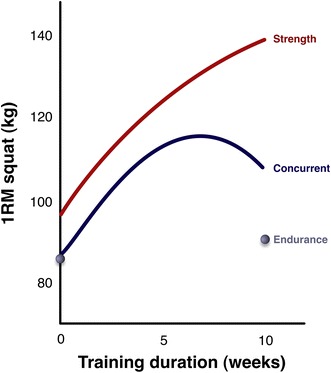
- Hickson’s classic 10-week study found strength training alone did not impair endurance: VO2max increased 4 % on the bike and did not change on the treadmill, whereas endurance and concurrent groups increased VO2max by 17 % on the treadmill and ~20 % on the bike. Strength in the concurrent group leveled off between weeks 7 and 8 and decreased during weeks 9–10, while strength-only training continued to increase.
- Concurrent endurance training can impair hypertrophy: Kraemer and colleagues reported ~28 % hypertrophy with strength training alone versus ~16 % with concurrent training. A meta-analysis found effect sizes for strength training alone of 1.22 for hypertrophy and 1.71 for strength, versus 0.8 and 1.28 for concurrent training.
- Interference depends on endurance exercise frequency and intensity: cycling 3 days/week for 50 min at 70 % VO2max did not impair strength or hypertrophy, and cycling 30 min twice/week below anaerobic threshold did not impair strength or lean mass. Once frequency exceeds 4 days/week or intensity exceeds 80 % VO2max, endurance exercise prevents increases in muscle mass and strength.
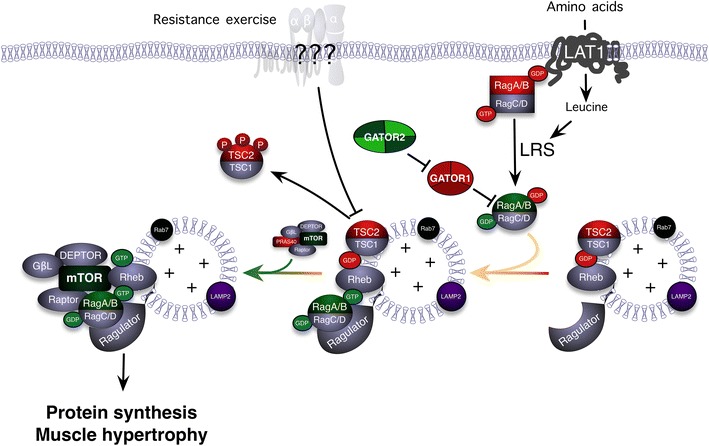
- Molecular evidence implicates AMPK and possibly SIRT1/ER stress in inhibiting mTORC1. Mice lacking the α1 AMPK isoform showed a 33 % greater increase in muscle fiber size and enhanced mTOR signaling to S6K and 4E-BP1 than wild-type mice.
Methods
- Narrative review that defines the concurrent training effect, discusses potential molecular mechanisms, and proposes strategies to maximize strength and endurance in high-level athletes.
- Synthesizes prior human training studies, meta-analytic data, animal models, and acute human molecular signaling studies; no new primary data or sample are reported.
- Main analysis is a mechanistic synthesis linking resistance exercise–induced mTORC1 activation, endurance exercise–induced AMPK/SIRT1/ER stress signaling, and practical training/nutrition recommendations.
Limitations
- The paper states that reducing complex physiology to simple molecular switches is an oversimplification; improving endurance and strength together in an elite athlete involves more than balancing AMPK/SIRT1 and mTORC1, especially when performance depends on skill optimization, and these complex processes are poorly understood.
- The text notes that no one has measured the effect of concurrent training on connective tissue stiffness, so its role in impaired strength is unknown.
- The text makes evident that acute human molecular studies are not definitive: AMPK phosphorylation is not the most sensitive measure of AMPK activity, and in one sprint-interval study AMPK activation was the same in both training groups, suggesting AMPK alone could not explain mTOR inhibition.
Model-written summary. Check it against the paper before relying on it.
Integrity signals
Registry
Cites
Statistics
Figures
Verification
Claims the paper makes
26 Valid · 2 Not valid · 65 Not checked · 18 Own results and interpretations
The cited sources support only part of this claim — read each source’s verdict below.
In the paper
“This increase in leucine within the muscle is likely the result of an increase in the primary leucine transporter (LAT1) messenger RNA (mRNA) [16] and protein [17].”
§ Using Molecular Biology to Maximize Concurrent Training > Molecular Underpinning of Muscle Hypertrophy
What the sources say
- Partly supportedcites [16] Churchward-Venne TA Burd NA Mitchell CJ Supplementation of a suboptimal protein dose with leucine or essential amino acids: effects on myofibrillar protein synthesis at rest and following resistance exercise in men J Physiol 2012 590 2751 2765 10.1113/jphysiol.2012.228833 22451437 PMC3424729 sourceExperimental — accuracy not yet measured
The Discussion (page unavailable) reports a large increase in LAT1 gene expression, supporting the mRNA portion attributed to this paper. It does not establish that increased LAT1 mRNA caused leucine to increase within muscle. The citing sentence assigns the separate protein claim to reference [17], not this paper. (LLM, conf=0.84)
- Partly supportedcites [17] Drummond MJ Fry CS Glynn EL Skeletal muscle amino acid transporter expression is increased in young and older adults following resistance exercise J Appl Physiol 2011 111 135 142 10.1152/japplphysiol.01408.2010 21527663 PMC3137547 sourceExperimental — accuracy not yet measured
The Results report increased LAT1 mRNA after resistance exercise, supporting the part of the sentence attached to this citation. But the Results also state that muscle intracellular leucine did not increase, and the Discussion says the study could not establish the direction of amino acid transport. This source therefore does not support the proposed explanation for an increase in muscle leucine; the protein claim is cited separately. (LLM, conf=0.90)
hedgedstates a possible cause- Asserted: passes — The authors put it forward as true.
- Checkable: passes — It can be checked against evidence.
- Load-bearing: passes — The paper’s conclusions depend on it.
- Based: passes — The paper gives a reason why it holds.
- Partly supported
Every source the paper cites for this claim was checked and supports it.
In the paper
“More recently, a third group has shown that in some cells, metabolic stress inhibits mTOR in an AMPK-independent manner by preventing mTOR localization to the lysosome [45].”
§ Using Molecular Biology to Maximize Concurrent Training > Current Data on the Molecular Underpinning of the Concurrent Training Effect
What the sources say
- Supportedcites [45] Kim SG Hoffman GR Poulogiannis G Metabolic stress controls mTORC1 lysosomal localization and dimerization by regulating the TTT-RUVBL1/2 complex Mol Cell 2013 49 172 185 23142078 PMC3545014 source
The Discussion states that glucose- and glutamine-related energetic stress regulates mTORC1 through an AMPK-independent mechanism, in part by preventing mTOR localization to lysosomes. The Results also report mTORC1 inhibition in AMPK-deficient cells after glucose/glutamine deprivation. (LLM, conf=0.94)
plainstates a cause- Asserted: passes — The authors put it forward as true.
- Checkable: passes — It can be checked against evidence.
- Load-bearing: unclear — It is unclear whether the paper’s conclusions depend on it.
- Based: passes — The paper gives a reason why it holds.
- Supported
Every source the paper cites for this claim was checked and supports it.
In the paper
“SIRT1 is able to inhibit mTOR [57].”
§ Using Molecular Biology to Maximize Concurrent Training > Alternative Molecular Underpinning of the Concurrent Training Effect
What the sources say
- Supportedcites [57] Ghosh HS McBurney M Robbins PD SIRT1 negatively regulates the mammalian target of rapamycin PLoS One 2010 5 e9199 10.1371/journal.pone.0009199 20169165 PMC2821410 source
The Results section reports that SIRT1 acts upstream of mTORC1 to downregulate mTOR signaling. The Discussion describes SIRT1’s inhibitory effect on mTOR, potentially mediated through TSC2. The supplied passages do not give page numbers. (LLM, conf=0.94)
plainstates a cause- Asserted: passes — The authors put it forward as true.
- Checkable: passes — It can be checked against evidence.
- Load-bearing: passes — The paper’s conclusions depend on it.
- Based: passes — The paper gives a reason why it holds.
- Supported
The cited sources support only part of this claim — read each source’s verdict below.
In the paper
“endurance exercise activates the sirtuin family of NAD+-dependent deactetylases including SIRT1 [55].”
§ Using Molecular Biology to Maximize Concurrent Training > Alternative Molecular Underpinning of the Concurrent Training Effect
What the sources say
- Partly supportedcites [55] Philp A Chen A Lan D Sirtuin 1 (SIRT1) deacetylase activity is not required for mitochondrial biogenesis or peroxisome proliferator-activated receptor-gamma coactivator-1alpha (PGC-1alpha) deacetylation following endurance exercise J Biol Chem 2011 286 30561 30570 10.1074/jbc.M111.261685 21757760 PMC3162416 sourceExperimental — accuracy not yet measured
The Abstract reports that SIRT1 is an NAD+-dependent deacetylase and that its activity increases with endurance exercise training. The Discussion likewise reports increased SIRT1 activity in response to exercise. Neither passage establishes that endurance exercise activates the sirtuin family more broadly. (LLM, conf=0.84)
plainstates a cause- Asserted: passes — The authors put it forward as true.
- Checkable: passes — It can be checked against evidence.
- Load-bearing: passes — The paper’s conclusions depend on it.
- Based: passes — The paper gives a reason why it holds.
- Partly supported
The cited sources support only part of this claim — read each source’s verdict below.
In the paper
“AMPK activity increases rapidly and then returns to baseline levels within the first 3 h after high-intensity exercise [63]”
§ Using Molecular Biology to Maximize Concurrent Training > Science-Based Recommendations for Training to Maximize Concurrent Training
What the sources say
- Partly supportedcites [63] Wojtaszewski JF Nielsen P Hansen BF Isoform-specific and exercise intensity-dependent activation of 5’-AMP-activated protein kinase in human skeletal muscle J Physiol 2000 528 221 226 10.1111/j.1469-7793.2000.t01-1-00221.x 11018120 PMC2270117 sourceExperimental — accuracy not yet measured
The Results report that α2-AMPK activity increased 3- to 4-fold after 60 minutes of high-intensity bicycle exercise and returned to basal levels after 3 hours of recovery. The paper does not establish how rapidly activity increased, and it reports that α1-AMPK activity did not increase; the claim omits that isoform distinction. (LLM, conf=0.87)
plainstates a cause- Asserted: passes — The authors put it forward as true.
- Checkable: passes — It can be checked against evidence.
- Load-bearing: passes — The paper’s conclusions depend on it.
- Based: passes — The paper gives a reason why it holds.
- Partly supported
68 more claims · 10 with their cited sources checked
Create a free account to see all 111 claims and to verify the 4 references still open.
- It may state two separate claims as one. 33
- Probably not a substantial claim. 5
Claims other papers make about this one
Each is checked against this paper’s own text: does it say what the citing paper says it does?
The source backs part of the claim, not all of it — or backs it for a different population, condition or comparison.
In the citing paper
“Seminal reviews by Baar and Murlasits have dictated that the molecular interference effect can be significantly mitigated if the energetic stress (AMPK activation) is spatially or temporally separated from the mechanical tension signal [138,139].”
From Ribosome Biogenesis as a Putative Bottleneck to Skeletal Muscle Hypertrophy: Mechanisms, Human Evidence, and Practical Modulators (2026) · cites this paper as [139]
Experimental — accuracy not yet measuredThe source backs part of the claim, not all of it — or backs it for a different population, condition or comparison.
In the citing paper
“Overcoming the interference effect requires practitioners to precisely manage metabolic stress to ensure that the nucleolar bottleneck remains open long enough to successfully assemble the ribosomal machinery [133,139].”
From Ribosome Biogenesis as a Putative Bottleneck to Skeletal Muscle Hypertrophy: Mechanisms, Human Evidence, and Practical Modulators (2026) · cites this paper as [139]
Experimental — accuracy not yet measuredThe source backs part of the claim, not all of it — or backs it for a different population, condition or comparison.
In the citing paper
“Human trials have shown that spacing endurance and resistance sessions by at least 6 to 24 h allows the acute nucleolar spark (c-Myc and 45S pre-rRNA) to initiate and stabilize before the catabolic, ATP-depleting endurance stimulus is introduced [138,139].”
From Ribosome Biogenesis as a Putative Bottleneck to Skeletal Muscle Hypertrophy: Mechanisms, Human Evidence, and Practical Modulators (2026) · cites this paper as [139]
Experimental — accuracy not yet measuredThe source backs part of the claim, not all of it — or backs it for a different population, condition or comparison.
In the citing paper
“However, human evidence reveals that the capacity bottleneck is highly sensitive to temporal recovery and modality selection.”
From Ribosome Biogenesis as a Putative Bottleneck to Skeletal Muscle Hypertrophy: Mechanisms, Human Evidence, and Practical Modulators (2026) · cites this paper as [139]
Experimental — accuracy not yet measured
Citations
Cites
AMPK: a nutrient and energy sensor that maintains energy homeostasis
Hardie, D. G., Ross, F. A., & Hawley, S. A. (2012) · Nature Reviews Molecular Cell Biology · doi:10.1038/nrm3311 · Cited by 4,602 · cited 5×
“Active CaMK can increase both the capacity for glucose uptake through upregulation of the glucose transporter GLUT4 [31], and mitochondrial mass by transcriptional upregulation of the mitochondrial biogenesis regulator PGC-1a (peroxisome proliferator c coactivator 1a) [32].”
BackgroundInfluentialTSC2 Mediates Cellular Energy Response to Control Cell Growth and Survival
Inoki, K., Zhu, T., & Guan, K.-L. (2003) · Cell · doi:10.1016/s0092-8674(03)00929-2 · Cited by 3,914 · cited 8×
“The effect of metabolic stress on mTOR was first suggested to be the result of AMPK phosphorylating and activating the mTOR inhibitor TSC2 [43].”
BackgroundInfluentialAMPK Phosphorylation of Raptor Mediates a Metabolic Checkpoint
Gwinn, D. M., Shackelford, D. B., Egan, D. F., Mihaylova, M. M., Mery, A., Vasquez, D. S., Turk, B. E., & Shaw, R. J. (2008) · Molecular Cell · doi:10.1016/j.molcel.2008.03.003 · Cited by 3,849 · cited 1×
“Later, another group showed that AMPK could phosphorylate raptor and dissociate the mTORC1 [44].”
BackgroundNutrient control of glucose homeostasis through a complex of PGC-1α and SIRT1
Rodgers, J. T., Lerin, C., Haas, W., Gygi, S. P., Spiegelman, B. M., & Puigserver, P. (2005) · Nature · doi:10.1038/nature03354 · Cited by 3,160
The Rag GTPases Bind Raptor and Mediate Amino Acid Signaling to mTORC1
Sancak, Y., Peterson, T. R., Shaul, Y. D., Lindquist, R. A., Thoreen, C. C., Bar-Peled, L., & Sabatini, D. M. (2008) · Science · doi:10.1126/science.1157535 · Cited by 2,773 · cited 9×
“As discussed above, the activator of mTOR, Rheb, is also located on the lysosome, so the net effect of leucine is to bring mTOR to its activator.”
BackgroundInfluentialBodine, S. C., Stitt, T. N., Gonzalez, M., Kline, W. O., Stover, G. L., Bauerlein, R., Zlotchenko, E., Scrimgeour, A., Lawrence, J. C., Glass, D. J., et al. (2001) · Nature Cell Biology · doi:10.1038/ncb1101-1014 · Cited by 2,752 · cited 1×
“In mice, Bodine and colleagues showed that daily injections of rapamycin could inhibit muscle hypertrophy [27], and in humans, Drummond and colleagues showed that rapamycin could block the acute increase in protein synthesis after resistance exercise [28].”
BackgroundSancak, Y., Bar-Peled, L., Zoncu, R., Markhard, A. L., Nada, S., & Sabatini, D. M. (2010) · Cell · doi:10.1016/j.cell.2010.02.024 · Cited by 2,464 · cited 3×
“At the Ragulator, the Rag heterodimer interacts with GATOR (GAP Activity Towards Rags), an octomeric complex that controls the activity of the Rag proteins [22].”
BackgroundRegulation of TORC1 by Rag GTPases in nutrient response
Kim, E., Goraksha-Hicks, P., Li, L., Neufeld, T. P., & Guan, K.-L. (2008) · Nature Cell Biology · doi:10.1038/ncb1753 · Cited by 1,349 · cited 9×
“As discussed above, the activator of mTOR, Rheb, is also located on the lysosome, so the net effect of leucine is to bring mTOR to its activator.”
BackgroundInfluentialRegulation of the mTOR Complex 1 Pathway by Nutrients, Growth Factors, and Stress
Sengupta, S., Peterson, T. R., & Sabatini, D. M. (2010) · Molecular Cell · doi:10.1016/j.molcel.2010.09.026 · Cited by 1,241 · cited 1×
“In many cells, mTOR is activated by growth factors as a way to stimulate protein synthesis [11].”
BackgroundBar-Peled, L., Chantranupong, L., Cherniack, A. D., Chen, W. W., Ottina, K. A., Grabiner, B. C., Spear, E. D., Carter, S. L., Meyerson, M., & Sabatini, D. M. (2013) · Science · doi:10.1126/science.1232044 · Cited by 1,080 · cited 1×
“At the Ragulator, the Rag heterodimer interacts with GATOR (GAP Activity Towards Rags), an octomeric complex that controls the activity of the Rag proteins [22].”
Background
Cited by
Stimuli and sensors that initiate skeletal muscle hypertrophy following resistance exercise
Wackerhage, H., Schoenfeld, B. J., Hamilton, D. L., Lehti, M., & Hulmi, J. J. (2019) · Journal of Applied Physiology · doi:10.1152/japplphysiol.00685.2018 · Cited by 357
Egan, B., & Sharples, A. P. (2023) · Physiological Reviews · doi:10.1152/physrev.00054.2021 · Cited by 278
Blagrove, R. C., Howatson, G., & Hayes, P. R. (2018) · Sports Medicine · doi:10.1007/s40279-017-0835-7 · Cited by 212
“Moreover, the degree of interference with strength-adaptation also appears to be exacerbated when volumes of endurance training are increased and the duration of concurrent training programs is longer [30, 146].”
BackgroundMethodThe Impact of Resistance Training on Swimming Performance: A Systematic Review
Crowley, E., Harrison, A. J., & Lyons, M. (2017) · Sports Medicine · doi:10.1007/s40279-017-0730-2 · Cited by 181
Balsalobre-Fernández, C., Santos-Concejero, J., & Grivas, G. V. (2016) · Journal of Strength and Conditioning Research · doi:10.1519/jsc.0000000000001316 · Cited by 166
“Thus, finding the right balance between strength and endurance training sessions seems to be crucial (1,13,16).”
BackgroundMurach, K. A., & Bagley, J. R. (2016) · Sports Medicine · doi:10.1007/s40279-016-0496-y · Cited by 158
“Dr. Keith Baar [8] recently provided an in-depth overview of the various molecular events that could potentially mediate acute concurrent exercise interference.”
BackgroundInfluentialMurlasits, Z., Kneffel, Z., & Thalib, L. (2018) · Journal of Sports Sciences · doi:10.1080/02640414.2017.1364405 · Cited by 150
“…resistance exercise sessions preferably by 24hrs whenever it is realistic, could be a useful strategy to optimise concurrent training adaptations and avoid acute interference (Baar, 2014; Cantrell et al., 2014; Eklund, Häkkinen, et al., 2016; Robineau, Babault, Piscione, Lacome, & Bigard, 2016).”
BackgroundSchoenfeld, B., Fisher, J., Grgic, J., Haun, C., Helms, E., Phillips, S., Steele, J., & Vigotsky, A. (2021) · International Journal of Strength and Conditioning · doi:10.47206/ijsc.v1i1.81 · Cited by 124
Gäbler, M., Prieske, O., Hortobágyi, T., & Granacher, U. (2018) · Frontiers in Physiology · doi:10.3389/fphys.2018.01057 · Cited by 161
“Adhering to previous recommendations could help minimize interference effects (García-Pallarés and Izquierdo, 2011; Baar, 2014; Murlasits et al., 2017).”
BackgroundJNK regulates muscle remodeling via myostatin/SMAD inhibition
Lessard, S. J., MacDonald, T. L., Pathak, P., Han, M. S., Coffey, V. G., Edge, J., Rivas, D. A., Hirshman, M. F., Davis, R. J., & Goodyear, L. J. (2018) · Nature Communications · doi:10.1038/s41467-018-05439-3 · Cited by 119
Glycogen availability and skeletal muscle adaptations with endurance and resistance exercise
Knuiman, P., Hopman, M. T. E., & Mensink, M. (2015) · Nutrition & Metabolism · doi:10.1186/s12986-015-0055-9 · Cited by 113
“Low glycogen availability and protein metabolism”
A Brief Review on Concurrent Training: From Laboratory to the Field
Methenitis, S. (2018) · Sports · doi:10.3390/sports6040127 · Cited by 109
“endurance training prescription can determine the magnitude of the CTE [2,8,19,33,36,37], probably in a volume-intensity-type-frequency dependent manner [8,36].”
BackgroundInfluentialThe Effect of Strength Training on Performance Indicators in Distance Runners
Beattie, K., Carson, B. P., Lyons, M., Rossiter, A., & Kenny, I. C. (2017) · Journal of Strength and Conditioning Research · doi:10.1519/jsc.0000000000001464 · Cited by 104
“Recently, there has been a growth in the literature investigating the compatibility of concurrent training methodologies and their underpinning mechanisms for protein synthesis (e.g., Baar 2014) (1).”
BackgroundTraining Specificity for Athletes: Emphasis on Strength-Power Training: A Narrative Review
Stone, M. H., Hornsby, W. G., Suarez, D. G., Duca, M., & Pierce, K. C. (2022) · Journal of Functional Morphology and Kinesiology · doi:10.3390/jfmk7040102 · Cited by 142
Wang, Y., Zhu, X., Jiang, X., Guo, J., Fu, Z., Zhou, Z., Yang, P., Guo, H., Guo, X., Liang, G., et al. (2021) · Signal Transduction and Targeted Therapy · doi:10.1038/s41392-021-00716-y · Cited by 79
“Eight-weeks integrative training The 8-weeks integrative training programme was mainly based on previous reports.(31,32) All participants were randomly divided into the control group and the exercise group.”
MethodTsitkanou, S., Spengos, K., Stasinaki, A., Zaras, N., Bogdanis, G., Papadimas, G., & Terzis, G. (2017) · Scandinavian Journal of Medicine & Science in Sports · doi:10.1111/sms.12751 · Cited by 65
“…induces muscle hypertrophy resulting in enhanced muscle strength and power (American College of Sports Medicine, 2009; Cormie et al., 2011; Baar, 2014), while long-term endurance activities induce elevated muscle mitochondria, aerobic enzyme activities, and capillary density resulting in…”
BackgroundInfluentialDi Filippo, E. S., Mancinelli, R., Marrone, M., Doria, C., Verratti, V., Toniolo, L., Dantas, J. L., Fulle, S., & Pietrangelo, T. (2017) · Journal of Applied Physiology · doi:10.1152/japplphysiol.00855.2016 · Cited by 66
“Moreover, it could be that the NMES protocol has to be performed with other strategies, such as active training, to reduce MPC general oxidation (4).”
BackgroundFyfe, J. J., & Loenneke, J. P. (2018) · Sports Medicine · doi:10.1007/s40279-017-0812-1 · Cited by 64
The effect of concurrent training organisation in youth elite soccer players
Enright, K. J., Morton, J. P., Iga, J., & Drust, B. (2015) · European Journal of Applied Physiology · doi:10.1007/s00421-015-3218-5 · Cited by 78
“For example, the majority of concurrent training studies investigating the effects of training organisation have used untrained participants (Hawley 2009) and incorporated training practices not representative of ‘real world’ practice in the English soccer leagues (Baar 2014).”
BackgroundLee, M. J. C., Ballantyne, J. K., Chagolla, J., Hopkins, W. G., Fyfe, J. J., Phillips, S. M., Bishop, D. J., & Bartlett, J. D. (2020) · PLOS ONE · doi:10.1371/journal.pone.0233134 · Cited by 46
“However, in many applied sport settings, concurrent sessions are separated by a few hours of recovery [40–43], which may minimise the potential antagonism between transient molecular-level responses that respectively promote endurance and resistance adaptations [44].”
BackgroundTerzis, G. D., Spengos, K., Methenitis, S. K., Aagaard, P., Karandreas, N., & Bogdanis, G. C. (2016) · European Journal of Applied Physiology · doi:10.1007/s00421-016-3369-z · Cited by 55
“Data at the cellular level suggest that endurance adaptations, such as increases in the mitochondrial content may compete with muscle fiber hypertrophy (Baar 2014; Atherton et al. 2005).”
BackgroundHartono, F. A., Martin-Arrowsmith, P. W., Peeters, W., & Churchward‐Venne, T. A. (2022) · Sports Medicine · doi:10.1007/s40279-021-01620-9 · Cited by 53
Neuroprotective effects of exercise on the aging human neuromuscular system
Allen, M. D., Dalton, B. H., Gilmore, K. J., McNeil, C. J., Doherty, T. J., Rice, C. L., & Power, G. A. (2021) · Experimental Gerontology · doi:10.1016/j.exger.2021.111465 · Cited by 49
Aerobic Adaptations to Resistance Training: The Role of Time under Tension
Mang, Z. A., Ducharme, J. B., Mermier, C. M., Kravitz, L. R., Magalhães, F. D. C., & Amorim, F. T. (2022) · International Journal of Sports Medicine · doi:10.1055/a-1664-8701 · Cited by 48
Biological Background of Block Periodized Endurance Training: A Review
Issurin, V. B. (2018) · Sports Medicine · doi:10.1007/s40279-018-1019-9 · Cited by 48
Jones, J. V., Pyne, D. B., Haff, G. G., & Newton, R. U. (2017) · International Journal of Sports Science & Coaching · doi:10.1177/1747954117726017 · Cited by 37
“These points indicate that the coach should prioritize pool, dry-land, and recovery training depending on the primary objective(s) of the training phase, It is also possible concurrent training prevented an increase in muscle mass (hypertrophy).(27) A minimum of six h is needed between factors to minimize the negative…”
BackgroundDeng, N., Soh, K. G., Zaremohzzabieh, Z., Abdullah, B., Salleh, K. M., & Huang, D. (2022) · International Journal of Environmental Research and Public Health · doi:10.3390/ijerph20010482 · Cited by 58
Superhero physiology: the case for Captain America
Brown, S. P., Smith, J. W., McAllister, M. J., & Joe, L. (2017) · AJP Advances in Physiology Education · doi:10.1152/advan.00106.2016 · Cited by 35
“These adaptations are extremely difficult to achieve through a single mode of training, especially since endurance training has been shown to deactivate the mammalian target of the rapamycin (mTOR) pathway of protein synthesis, which is important to facilitate skeletal muscle hypertrophy and increased strength (2).”
BackgroundTelles, G. D., Libardi, C. A., Conceição, M. S., VECHIN, F. C., Lixandrão, M. E., de Andrade, A. L. L., Guedes, D. N., Ugrinowitsch, C., & CAMERA, D. M. (2021) · Medicine & Science in Sports & Exercise · doi:10.1249/mss.0000000000002632 · Cited by 38
Shamim, B., Devlin, B. L., Timmins, R. G., Tofari, P., Lee Dow, C., Coffey, V. G., Hawley, J. A., & Camera, D. M. (2018) · Sports Medicine · doi:10.1007/s40279-018-0999-9 · Cited by 32
Exercise and physical activity in cirrhosis: opportunities or perils
Bellar, A., Welch, N., & Dasarathy, S. (2020) · Journal of Applied Physiology · doi:10.1152/japplphysiol.00798.2019 · Cited by 37
Anderson, L., Drust, B., Close, G. L., & Morton, J. P. (2022) · Journal of Sports Sciences · doi:10.1080/02640414.2022.2044135 · Cited by 29
“AMPK is activated by a fall in ATP (concomitant with a rise in ADP and AMP), leading to an increase in the ADP/ATP ratio.”
BackgroundInfluentialSmoothness: an Unexplored Window into Coordinated Running Proficiency
Kiely, J., Pickering, C., & Collins, D. (2019) · Sports Medicine - Open · doi:10.1186/s40798-019-0215-y · Cited by 39
“Engaging in training strategies serving to upgrade the structural and material resilience of biological tissues habitually subjected to mechanical stress during running activities [41], for example, resistance loading strategies [72], and/or strategies promoting more finely calibrated joint control, for example, dynam…”
BackgroundMarkov, A., Chaabène, H., Hauser, L., Behm, S., Bloch, W., Puta, C., & Granacher, U. (2021) · Sports Medicine · doi:10.1007/s40279-021-01615-6 · Cited by 38
“Other important factors that might (partly) explain the conflicting findings in the literature are the complexity of the underpinning mechanisms of adaptations as well as factors such as the rest between AE and SE and type of SE/AE [4, 12, 36].”
BackgroundMethodÁlvarez, C., Ramírez‐Campillo, R., Lucia, A., Ramírez‐Vélez, R., & Izquierdo, M. (2019) · Scandinavian Journal of Medicine and Science in Sports · doi:10.1111/sms.13413 · Cited by 31
Does Concurrent Training Intensity Distribution Matter?
Varela-Sanz, A., Tuimil, J. L., Abreu, L., & Boullosa, D. A. (2016) · The Journal of Strength and Conditioning Research · doi:10.1519/jsc.0000000000001474 · Cited by 30
“, maximum strength training and explosive strength/plyometric training) (38,43) with a weekly frequency up to 3 days (4).”
BackgroundEffects of Concurrent Training on 1RM and VO2 in Adults: Systematic Review with Meta-analysis
Pito, P. G., Cardoso, J. R., Tufano, J. J., & Guariglia, D. A. (2021) · International Journal of Sports Medicine · doi:10.1055/a-1506-3007 · Cited by 28
“Since then, many CT-related reviews have been performed [1, 6, 8–11] to address the acute responses through molecular pathways [1, 9, 11], to explain the possible interference effect between aerobic and strength pathways [1, 9, 12], to explore the effects of high-intensity interval training [10, 13], and to understand…”
BackgroundConcurrent training in team sports: A systematic review
Seipp, D., Quittmann, O. J., Fasold, F., & Klatt, S. (2022) · International Journal of Sports Science & Coaching · doi:10.1177/17479541221099846 · Cited by 28
“For example, the activity of endurance specific signalling molecules (AMPK and SIRT1) induced by high intensity endurance training returns to baseline levels after 3 h, whereas strength training induced MTORC1 activity can be maintained for at least 18 h.(133) Further studies concluded that the suppression of hypertro…”
BackgroundEfficacy of an 8-Week Concurrent Strength and Endurance Training program on Hand Cycling Performance
Nevin, J., Smith, P. M., Waldron, M., Patterson, S. D., Price, M., Hunt, A., & Blagrove, R. C. (2018) · The Journal of Strength and Conditioning Research · doi:10.1519/jsc.0000000000002569 · Cited by 21
“However, it must be noted that, despite enhancing endurance performance, relative to strength training alone, concurrent training has been shown to attenuate gains in muscle hypertrophy, maximal strength, rate of force development, and peak power output through a phenomenon commonly known as the interference effect (4…”
BackgroundFragile bones of elite cyclists: to treat or not to treat?
Hilkens, L., Knuiman, P., Heijboer, M., Kempers, R., Jeukendrup, A. E., van Loon, L. J. C., & van Dijk, J. (2021) · Journal of Applied Physiology · doi:10.1152/japplphysiol.01034.2020 · Cited by 25
“Impact training is likely more effective than resistance exercise training (33) and may 105 interfere less with the adaptation to endurance training (1).”
BackgroundChapman, S., Chung, H. C., Rawcliffe, A. J., Izard, R., Smith, L., & Roberts, J. D. (2021) · Nutrients · doi:10.3390/nu13051416 · Cited by 17
Mikkonen, R. S., Ihalainen, J. K., Hackney, A. C., & Häkkinen, K. (2023) · Sports Medicine · doi:10.1007/s40279-023-01955-5 · Cited by 23
Neuromuscular Adaptations to Combined Strength and Endurance Training: Order and Time-of-Day
Küüsmaa-Schildt, M., Eklund, D., Avela, J., Rytkönen, T., Newton, R. U., Izquierdo, M., & Häkkinen, K. (2017) · International Journal of Sports Medicine · doi:10.1055/s-0043-101376 · Cited by 19
“This possible interference by prior endurance training has been attributed both to impeded molecular adaptations [3, 12, 26] and to acute fatigue developed in the neuromuscular system [37].”
BackgroundStrength and Conditioning for Competitive Rowers
Nugent, F. J., Flanagan, E. P., Wilson, F., & Warrington, G. D. (2020) · Strength and conditioning journal · doi:10.1519/ssc.0000000000000531 · Cited by 16
“Baar K.”
BackgroundInfluentialRibeiro, J., Afonso, J. R., Camões, M., Sarmento, H., Sá, M., Lima, R., Oliveira, R. F. S., & Clemente, F. M. (2021) · Healthcare · doi:10.3390/healthcare9081075 · Cited by 27
“This could be caused by high lipid exposure and glycose deprivation [24].”
BackgroundRasdal, V., Moen, F., & Sandbakk, Ø. (2018) · Frontiers in Physiology · doi:10.3389/fphys.2018.00931 · Cited by 12
“This shift of exercise content, with more specificity when the level of strength was sufficient, also allowed for maintaining his jump capacity along with the large increase of endurance training that often induce negative influence on power development (Nader, 2006; Wilson et al., 2012; Baar, 2014).”
BackgroundGentil, P., de Lira, C. A. B., Filho, S. G. C., Teixeira, C. V. L. S., Steele, J., Fisher, J. P., Carneiro, J. A., & Campos, M. H. (2017) · European Journal of Applied Physiology · doi:10.1007/s00421-017-3614-0 · Cited by 17
“Another source of interference of HIIT in RT could be related to muscle hypertrophy through an effect in the mTOR axis (Baar 2014).”
BackgroundPhysiological and Molecular Adaptations to Strength Training
Ahtiainen, J. P. (2018) · Springer eBooks · doi:10.1007/978-3-319-75547-2_5 · Cited by 23
Chen, Y., Feng, X., Huang, L., Wang, K., & Mi, J. (2023) · Journal of Exercise Science & Fitness · doi:10.1016/j.jesf.2023.12.005 · Cited by 13
“5,6 24 Currently, endurance training type, training load, training frequency, and the interval between endurance training and strength training are considered important variables affecting the effectiveness of concurrent training.”
BackgroundOptimizing concurrent training programs: A review on factors that enhance muscle strength
Wang, T., & Bo, S. (2024) · Medicine · doi:10.1097/md.0000000000041055 · Cited by 11
Lee, M. J.-C., Caruana, N. J., Saner, N. J., Kuang, J., Stokes, T., Mcleod, J. C., Oikawa, S. Y., Bishop, D. J., Bartlett, J. D., & Phillips, S. M. (2023) · The FASEB Journal · doi:10.1096/fj.202302024r · Cited by 13
“It was hypothesized that 3 h of recovery between sessions might be needed to minimize the potential for ‘competing’ molecular responses 41 ; this was also recommended for strength adaptations to concurrent training in a recent meta-analysis.”
BackgroundShamim, B., Camera, D. M., & Whitfield, J. (2021) · Frontiers in Physiology · doi:10.3389/fphys.2021.625044 · Cited by 8
“…adapt to divergent training stimuli is a topic that has received considerable attention (Nader, 2006; Wilson et al., 2012; Hamilton and Philp, 2013; Baar, 2014; Fyfe et al., 2014; Perez-Schindler et al., 2015; Murach and Bagley, 2016; VarelaSanz et al., 2016; Coffey and Hawley, 2017; Doma et al.,…”
BackgroundThe Skeletal Muscle Response to Energy Deficiency: A Life History Perspective
Júnior, G. N. D. O., Pinto, R. S., Shirley, M. K., Longman, D. P., Koehler, K., Saunders, B., Roschel, H., & Dolan, E. (2022) · Adaptive Human Behavior and Physiology · doi:10.1007/s40750-021-00182-4 · Cited by 9
Monserdà-Vilaró, A., Balsalobre‐Fernández, C., Hoffman, J. R., Alix‐Fages, C., & Sáiz, S. L. J. (2022) · The Journal of Strength and Conditioning Research · doi:10.1519/jsc.0000000000004304 · Cited by 11
“Although the mechanisms underpinning this interference effect are not well understood, potential candidates include a compromised resistance training stimulus due to residual neuromuscular fatigue, substrate depletion, and/or an attenuated postexercise anabolic response exacerbated by the increased training volume or…”
BackgroundJerger, S., Jendricke, P., Centner, C., Bischof, K., Kohl, J., Keller, S., Gollhofer, A., & König, D. (2023) · Sports Medicine - Open · doi:10.1186/s40798-023-00654-9 · Cited by 12
“Although the close sequential combination of different training modalities within CT promises efficient improvements in strength and endurance performance, a compromising effect of the combination on adaptations compared to training both exercise modalities alone is commonly discussed [10, 44, 45].”
BackgroundConcurrent Training in Children and Adolescents
Gäbler, M., & Granacher, U. (2018) · Springer eBooks · doi:10.1007/978-3-319-75547-2_17 · Cited by 7
Strength and Conditioning for Adolescent Endurance Runners
Blagrove, R. C., Howe, L., Howatson, G., & Hayes, P. R. (2018) · Strength and conditioning journal · doi:10.1519/ssc.0000000000000425 · Cited by 9
“RT sessions should ideally take place at least 3 hours after a running session (6) and at least 24 hours of recovery should follow after ST before an intensive running session (31).”
BackgroundTHE EFFECT OF BCAA ON ISOMETRIC FORCE FOLLOWING ENDURANCE EXERCISE IN A HOT ENVIRONMENT
Moraes, M. M., Paulinelli-Júnior, R. T., Teixeira-Coelho, F., Cançado, G. H. D. C. P., Wanner, S. P., Chagas, M. H., & Soares, D. D. (2019) · Revista Brasileira de Medicina do Esporte · doi:10.1590/1517-869220192501178036 · Cited by 7
Denadai, B. S., & Greco, C. C. (2017) · The Journal of Strength and Conditioning Research · doi:10.1519/jsc.0000000000001858 · Cited by 6
Are Exercise Benefits in Nonalcoholic Fatty Liver Disease Due to Increased Autophagy?
Dasarathy, S. (2017) · Exercise and Sport Sciences Reviews · doi:10.1249/jes.0000000000000118 · Cited by 7
Overcoming nature’s paradox in skeletal muscle to optimise animal production
Lynch, G. S., & Koopman, R. (2019) · Animal Production Science · doi:10.1071/an19361 · Cited by 8
“…of exercising humans training simultaneously for both strength and endurance who experience less of an adaptation than if they trained just for one outcome; this is a phenomenon called the ‘interference effect’ or ‘concurrent training effect’ (Baar 2014; Fyfe et al. 2014; Coffey and Hawley 2017).”
BackgroundLi, Z., Li, W., Bai, S., & Yang, T. (2025) · Frontiers in Medicine · doi:10.3389/fmed.2025.1614054 · Cited by 7
“In contrast, endurance training activates the calmodulin-dependent protein kinase CaMK and upregulates PGC-1 α expression by releasing Ca 2 + in the sarcoplasmic reticulum, enhancing mitochondrial biosynthesis (54).”
Körperliches Training in Prävention und Therapie – Gestaltung und Effekte
Thiel, C., Bernardi, A., & Hübscher, M. (2016) · Springer eBooks · doi:10.1007/978-3-662-50335-5_2 · Cited by 12
Przyklenk, A., Aussieker, T., Gutmann, B., Schiffer, T., Brinkmann, C. K., Strüder, H. K., Bloch, W., Mierau, A., & Gehlert, S. (2018) · The Journal of Strength and Conditioning Research · doi:10.1519/jsc.0000000000002753 · Cited by 6
“Contraction-induced mechanical strain on myofibers is a major activator of the mTOR signaling cascade on resistance exercise (3) and is modulated by exercise intensity, contraction frequency, and contraction force (7).”
BackgroundMillet, G. P., & Chamari, K. (2023) · Frontiers in Sports and Active Living · doi:10.3389/fspor.2022.1072154 · Cited by 5
“Nowadays however, strength and power training is an important component of the endurance athletes preparation (79).”
The impact of concurrent training in team sports and soccer
Malamud, O., & Smukas, I. I. R. (2024) · The Journal of Sports Medicine and Physical Fitness · doi:10.23736/s0022-4707.24.16357-8 · Cited by 6
Wang, S.-J., Wen, D., Gao, Y., Wang, J., & Ma, X. (2025) · PLoS ONE · doi:10.1371/journal.pone.0311159 · Cited by 5
Nitzsche, N., Neuendorf, T., Gehlert, S., Fröhlich, M., & Schulz, H. (2017) · German Journal of Exercise and Sport Research · doi:10.1007/s12662-017-0473-0 · Cited by 5
A Discussion of Exercise Programs Performed During Firefighter Training Academies
Mang, Z. A., Beam, J. R., & Martinez, A. H. (2023) · Strength and conditioning journal · doi:10.1519/ssc.0000000000000826 · Cited by 4
“…defined as including AT and RT within the same training day, week, month, or block, has been thoroughly studied in the exercise science literature (4,11,22,33,55,64,76) hypertrophy, strength, and power (76) However, a more recent meta-analysis meta-analysis concluded that AT does not blunt…”
A Description of Exercise Programs Implemented During a Firefighter Training Academy
Mang, Z. A., Beam, J. R., Vigil, E. D., & Martinez, A. H. (2023) · Journal of Occupational and Environmental Medicine · doi:10.1097/jom.0000000000003030 · Cited by 5
“68,69 70 – 72 As shown in Table 3, the highest cardiorespiratory stress and sRPE were sustained during AT, while the lowest cardiorespiratory stress and sRPE were sustained during RT and CT.”
BackgroundMolecular Adaptations to Concurrent Strength and Endurance Training
Souza, E. O. D. (2018) · Springer eBooks · doi:10.1007/978-3-319-75547-2_8 · Cited by 3
Does Sprint Interval Training Cause Interference in Concurrent Training? A Meta-Analysis Study
Ferraro-Farro, D., Bandeira‐Guimarães, M., Blanco‐Rambo, E., Vieira, A., Cadore, E. L., & Benítez‐Flores, S. (2026) · International Journal of Sports Medicine · doi:10.1055/a-2820-4527 · Cited by 2
Gomes, M., Gonçalves, A. D., Pezarat‐Correia, P., & Mendonça, G. V. (2025) · European Journal of Applied Physiology · doi:10.1007/s00421-025-05775-5 · Cited by 5
“A 20-min rest period was afforded between the two exercise modalities, similar to previous studies (Baar 2014; Ruiz-Alias et al. 2024).”
Proposed Mechanisms Underlying the Interference Effect
Ellefsen, S., & Baar, K. (2018) · Springer eBooks · doi:10.1007/978-3-319-75547-2_7 · Cited by 2
Self-citationMiroshnikov, A. B., Smolensky, A. V., & Форменов, А. Д. (2021) · Human Physiology · doi:10.1134/s0362119721010084 · Cited by 2
Chapman, S., Roberts, J., Roberts, A. J., Ogden, H. B., Izard, R. M., Smith, L., Chichger, H., Struszczak, L., & Rawcliffe, A. J. (2023) · Frontiers in Nutrition · doi:10.3389/fnut.2023.1262044 · Cited by 2
Superiority of High-Load vs. Low-Load Resistance Training in Military Cadets
Øfsteng, S. J., Hammarström, D., Knox, S., Jøsok, Ø., Helkala, K. M., Koll, L., Hanestadhaugen, M., Raastad, T., Rønnestad, B. R., & Ellefsen, S. (2024) · The Journal of Strength and Conditioning Research · doi:10.1519/jsc.0000000000004830 · Cited by 4
“This should have been enough to reduce its negative effects (2).”
Physical Fitness Key Parameter for Sport Schools Young Athletes in Malaysia
Hadi, N. H. A., Abdullah, M. R., Juahir, H., Rahim, A. I., Elumalai, G., Nadzmi, A., & Maliki, A. B. H. M. (2021) · International Journal of Academic Research in Progressive Education and Development · doi:10.6007/ijarped/v10-i2/8799 · Cited by 3
“456 endurance training and strength training (Baar, 2014; Gäbler et al., 2018). In addition to the development of sport-specific athletic skill during long-term development, a physical fitness evaluation may also be used to classify the talent. The skills and the potential of athlete can be established by these physic…”
BackgroundMuñoz López, M., López-Gil, J. F., Ramírez de la piscina Viúdez, X., Baz-Valle, E., & Tornero Aguilera, J. F. (2026) · Cells · doi:10.3390/cells15111041 · Cited by 1
“Human trials have shown that spacing endurance and resistance sessions by at least 6 to 24 h allows the acute nucleolar spark (c-Myc and 45S pre-rRNA) to initiate and stabilize before the catabolic, ATP-depleting endurance stimulus is introduced [138,139].”
Do skeletal muscles compete with each other for growth?
Kataoka, R., Yamada, Y., Hammert, W. B., Kang, A., & Loenneke, J. P. (2024) · Medical Hypotheses · doi:10.1016/j.mehy.2024.111525 · Cited by 1
Gracioli, M. D. S. P., Pasqualoto, A. S., Feltrin, T. D., Mezzalira, R. M., Souza, J. A., Moraes, D. A. D. O., & Cielo, C. A. (2025) · Journal of Voice · doi:10.1016/j.jvoice.2025.04.007 · Cited by 1
Maximizing Adaptations in Concurrent Training: An Umbrella Review of Meta-analyses
Held, S., Wolf, L., Rappelt, L., Bloch, W., Donath, L., Micke, F., Geisler, S., & Isenmann, E. (2026) · Sports Medicine · doi:10.1007/s40279-026-02401-y · Cited by 3
“Emerging evidence indicates that training order can influence strength and hypertrophy outcomes, with RT performed before ET often yielding more favorable strength and hypertrophy adaptations, likely due to reduced neuromuscular fatigue and a more anabolic environment [13–17].”
InfluentialCui, F., Sun, Z., Ma, M., Dong, A., Xu, C., Zhu, J., & Ma, G. (2026) · Frontiers in Pediatrics · doi:10.3389/fped.2026.1800025 · Cited by 2
“Multiple studies support this view: training more than three times per week produces an interference effect (49), Interference level reduced to ≤ 3 training sessions (22, 41, 52).”
Strength Training for Endurance Runners
Beattie, K. (2018) · Springer eBooks · doi:10.1007/978-3-319-75547-2_23 · Cited by 3
Skeletal Muscle Protein Metabolism During Exercise
Joanisse, S., McKendry, J., Nunes, E. A., Thomas, A. C. Q., & Phillips, S. M. (2022) · Physiology in health and disease · doi:10.1007/978-3-030-94305-9_9 · Cited by 2
Recovery Strategies to Optimise Adaptations to Concurrent Aerobic and Strength Training
Allen, N. G., Higham, S. M., & Duffield, R. (2018) · Springer eBooks · doi:10.1007/978-3-319-75547-2_15 · Cited by 1
de Sousa, L. G. O. (2016) · Digital Library of Theses and Dissertations (Universidade de São Paulo) · doi:10.11606/t.87.2016.tde-06042016-152104
Effects of upper body concurrent training in trained individuals: a review
Hansson, B. (2017) · DiVA (Linnaeus University)
Physiology of Training Plan: Periodization
Radak, Z. O. (2018) · Elsevier eBooks · doi:10.1016/b978-0-12-815137-2.00012-7
Tyre-pulling as concurrent training
Mamen, A., & Fredriksen, P. M. (2018) · Sport Sciences for Health · doi:10.1007/s11332-018-0476-8 · Cited by 1
Manechini, J. P. V. (2018) · Digital Library of Theses and Dissertations (Universidade de São Paulo) · doi:10.11606/d.17.2018.tde-17042018-162823
Bliss, A., & Harley, R. (2017) · Routledge eBooks · doi:10.4324/9781315542348-5
Lower-Limb Explosive Power did not Improve during 8 Weeks of Integrative Military Physical TrainingPreprint
Ma, J., Fei, H. U., Huang, Q. N., Wei, J. I. A., Ding, M. C., Zhang, X. P., Xu, S. J., & Dong, T. (2020) · Research Square · doi:10.21203/rs.2.23492/v1
“In addition, there is an incompatibility and adaptation interference with concurrent training whereby endurance training attenuates hypertrophy or strength [1-3, 5, 10, 22], which may also have influenced the ability of lower-limb explosive power to improve.”
BackgroundMethodInfluentialRaja, S. C. (2021) · International Journal of Physical Education Sports and Health · doi:10.22271/kheljournal.2021.v8.i3e.2099
Telles, G. D. (2019) · Digital Library of Theses and Dissertations (Universidade de São Paulo) · doi:10.11606/d.39.2019.tde-22102021-122843
Shamim, B., CAMERA, D. M., & Whitfield, J. (2021) · Frontiers in Physiology · doi:10.3389/fphys.2021.736848
“…adapt to divergent training stimuli is a topic that has received considerable attention (Nader, 2006;Wilson et al., 2012; Hamilton and Philp, 2013; Baar, 2014; Fyfe et al., 2014; Perez-Schindler et al., 2015; Murach and Bagley, 2016; Varela-Sanz et al., 2016; Coffey and Hawley, 2017; Doma et al.,…”
BackgroundFaculty Opinions recommendation of JNK regulates muscle remodeling via myostatin/SMAD inhibition.
Debold, E. P. (2018) · Faculty Opinions – Post-Publication Peer Review of the Biomedical Literature · doi:10.3410/f.733755069.793550548
Jafari, A., Etemadian, F., Baradaran, B., & Malekırad, A. A. (2021) · Journal of Sport and Exercise Physiology · doi:10.52547/joeppa.14.2.21
Zhang, F., Moritz, S., Lin, J., Tian, H., & Wang, J. (2023) · Research Square · doi:10.21203/rs.3.rs-3257908/v1 · Cited by 1
Metadata
- Authors
- Baar, K.
- Affiliations
- University of California, Davis (US)
- Corresponding author
- Baar, Keith
- ORCID
- Baar, Keith
- Venue
- Sports Medicine
- Published
- 2014-10-30
- Volume
- 44
- Issue
- S2
- Pages
- 117-125
- ISSN
- 0112-1642 (ISSN-L)
- 1179-2035
- PMC
- PMC4213370
- OpenAlex
- W2045843489
- Cited by
- 135
- References
- 69
- Citations by year
- 2026: 15 · 2025: 7 · 2024: 11 · 2023: 15 · 2022: 10 · 2021: 17 · 2020: 7 · 2019: 6 · 2018: 21 · 2017: 16 · 2016: 7 · 2015: 3
- FWCI
- 1.55
- Type
- journal article
- Language
- en
- Open access
- hybrid
- doi.org
- Locations
- Sports Medicine (publishedVersion, cc-by)
- Europe PMC (PubMed Central) (publishedVersion, cc-by)
- PubMed Central (publishedVersion, cc-by)
- PubMed (publishedVersion)
- eScholarship (California Digital Library) (submittedVersion)
- eScholarship (California Digital Library) (submittedVersion, cc-by)
- Funders
- PepsiCo
- Gran Sasso Science Institute
- Topics
- Health Sciences › Medicine › Orthopedics and Sports Medicine › Sports Performance and Training
- Health Sciences › Nursing › Nutrition and Dietetics › Muscle metabolism and nutrition
- Health Sciences › Medicine › Physiology (medical) › Cardiovascular and exercise physiology
- Keywords
- concurrent training, endurance training, resistance training, muscle mass, molecular mechanisms, elite athletes, training strategies
- MeSH terms
- Animals, Humans, Physical Education and Training, Physical Endurance, Muscle, Skeletal, Muscle Strength, Athletic Performance, Resistance Training, AMP-Activated Protein Kinases, Sirtuin 1, TOR Serine-Threonine Kinases
About these checks
Registry, retraction, Cites and statistics results are computed, not judged, with one exception: a printed reference that no index lists is read once by a model before it counts as a citation error. Claims are extracted by a model and kept only when their quote appears verbatim in the text; each cited source is then checked, with a model’s help, for whether it says what the claim relies on. Those verdicts can be wrong — read the claim’s quote and the cited source before relying on one.
The claim verdicts this report counts are experimental: their accuracy is not yet measured.
A language model drew the claims from the paper on 2026-10-10, under version 3 of the claim definition (model deepseek-v4.1-flash, prompt extract-v3).
A second model labelled each claim on 2026-10-10 (model jev-1.13-20260917, definition revision gold-guideline-v0.2).
Cited sources are checked with a language model’s help (gpt-6-sol).
Statistics and arithmetic are recomputed, not judged.
Confidence bands are shown only for fields calibrated on our annotated test set. None is calibrated yet, so no band is shown.
What counts as a claim ›How we measure confidence ›How we check this ›
Are you an author, or do you see a problem with this page? Request a review
Data sources
Bibliographic data: Semantic Scholar, OpenAlex, Crossref.
Contains information from the Semantic Scholar Academic Graph Datasets, made available under the ODC Attribution License (ODC-BY 1.0).
Semantic Scholar’s data is described in: Kinney, R., et al. (2023). The Semantic Scholar Open Data Platform. arXiv:2301.10140.
