

Using Molecular Biology to Maximize Concurrent Training
Open accessThe DOI matches its Crossref record; 68 of the 69 references it cites were found in a registry or an index; 33 of the 118 sources its claims cite were checked for support.
Abstract
Very few sports use only endurance or strength. Outside of running long distances on a flat surface and power-lifting, practically all sports require some combination of endurance and strength. Endurance and strength can be developed simultaneously to some degree. However, the development of a high level of endurance seems to prohibit the development or maintenance of muscle mass and strength. This interaction between endurance and strength is called the concurrent training effect. This review specifically defines the concurrent training effect, discusses the potential molecular mechanisms underlying this effect, and proposes strategies to maximize strength and endurance in the high-level athlete.
Overview
CoChat Summary
TL;DR
This review defines the concurrent training effect—endurance exercise can impair strength and muscle hypertrophy—and proposes molecular mechanisms centered on AMPK/SIRT1 inhibition of mTORC1. It concludes with training and nutrition recommendations intended to maximize simultaneous endurance and strength adaptations in high-level athletes.
Key findings
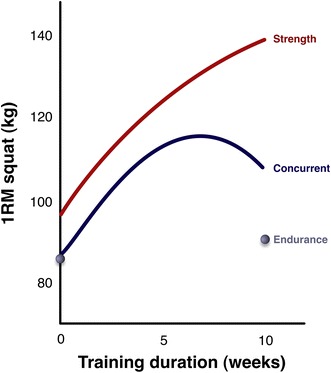
- Hickson’s classic 10-week study found strength training alone did not impair endurance: VO2max increased 4 % on the bike and did not change on the treadmill, whereas endurance and concurrent groups increased VO2max by 17 % on the treadmill and ~20 % on the bike. Strength in the concurrent group leveled off between weeks 7 and 8 and decreased during weeks 9–10, while strength-only training continued to increase.
- Concurrent endurance training can impair hypertrophy: Kraemer and colleagues reported ~28 % hypertrophy with strength training alone versus ~16 % with concurrent training. A meta-analysis found effect sizes for strength training alone of 1.22 for hypertrophy and 1.71 for strength, versus 0.8 and 1.28 for concurrent training.
- Interference depends on endurance exercise frequency and intensity: cycling 3 days/week for 50 min at 70 % VO2max did not impair strength or hypertrophy, and cycling 30 min twice/week below anaerobic threshold did not impair strength or lean mass. Once frequency exceeds 4 days/week or intensity exceeds 80 % VO2max, endurance exercise prevents increases in muscle mass and strength.
- Molecular evidence implicates AMPK and possibly SIRT1/ER stress in inhibiting mTORC1. Mice lacking the α1 AMPK isoform showed a 33 % greater increase in muscle fiber size and enhanced mTOR signaling to S6K and 4E-BP1 than wild-type mice.
Methods
- Narrative review that defines the concurrent training effect, discusses potential molecular mechanisms, and proposes strategies to maximize strength and endurance in high-level athletes.
- Synthesizes prior human training studies, meta-analytic data, animal models, and acute human molecular signaling studies; no new primary data or sample are reported.
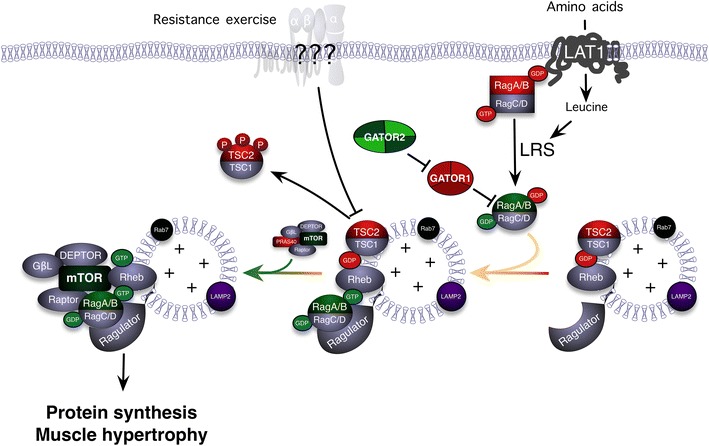
- Main analysis is a mechanistic synthesis linking resistance exercise–induced mTORC1 activation, endurance exercise–induced AMPK/SIRT1/ER stress signaling, and practical training/nutrition recommendations.
Limitations
- The paper states that reducing complex physiology to simple molecular switches is an oversimplification; improving endurance and strength together in an elite athlete involves more than balancing AMPK/SIRT1 and mTORC1, especially when performance depends on skill optimization, and these complex processes are poorly understood.
- The text notes that no one has measured the effect of concurrent training on connective tissue stiffness, so its role in impaired strength is unknown.
- The text makes evident that acute human molecular studies are not definitive: AMPK phosphorylation is not the most sensitive measure of AMPK activity, and in one sprint-interval study AMPK activation was the same in both training groups, suggesting AMPK alone could not explain mTOR inhibition.
Model-written summary. Check it against the paper before relying on it.
Integrity signals
Registry
Cites
Statistics
Figures
Verification
Claims the paper makes
26 Valid · 2 Not valid · 65 Not checked · 18 Own results and interpretations
The cited sources support only part of this claim — read each source’s verdict below.
In the paper
“This increase in leucine within the muscle is likely the result of an increase in the primary leucine transporter (LAT1) messenger RNA (mRNA) [16] and protein [17].”
§ Using Molecular Biology to Maximize Concurrent Training > Molecular Underpinning of Muscle Hypertrophy
What the sources say
- Partly supportedcites [16] Churchward-Venne TA Burd NA Mitchell CJ Supplementation of a suboptimal protein dose with leucine or essential amino acids: effects on myofibrillar protein synthesis at rest and following resistance exercise in men J Physiol 2012 590 2751 2765 10.1113/jphysiol.2012.228833 22451437 PMC3424729 sourceExperimental — accuracy not yet measured
The Discussion (page unavailable) reports a large increase in LAT1 gene expression, supporting the mRNA portion attributed to this paper. It does not establish that increased LAT1 mRNA caused leucine to increase within muscle. The citing sentence assigns the separate protein claim to reference [17], not this paper. (LLM, conf=0.84)
- Partly supportedcites [17] Drummond MJ Fry CS Glynn EL Skeletal muscle amino acid transporter expression is increased in young and older adults following resistance exercise J Appl Physiol 2011 111 135 142 10.1152/japplphysiol.01408.2010 21527663 PMC3137547 sourceExperimental — accuracy not yet measured
The Results report increased LAT1 mRNA after resistance exercise, supporting the part of the sentence attached to this citation. But the Results also state that muscle intracellular leucine did not increase, and the Discussion says the study could not establish the direction of amino acid transport. This source therefore does not support the proposed explanation for an increase in muscle leucine; the protein claim is cited separately. (LLM, conf=0.90)
hedgedstates a possible cause- Asserted: passes — The authors put it forward as true.
- Checkable: passes — It can be checked against evidence.
- Load-bearing: passes — The paper’s conclusions depend on it.
- Based: passes — The paper gives a reason why it holds.
- Partly supported
Every source the paper cites for this claim was checked and supports it.
In the paper
“More recently, a third group has shown that in some cells, metabolic stress inhibits mTOR in an AMPK-independent manner by preventing mTOR localization to the lysosome [45].”
§ Using Molecular Biology to Maximize Concurrent Training > Current Data on the Molecular Underpinning of the Concurrent Training Effect
What the sources say
- Supportedcites [45] Kim SG Hoffman GR Poulogiannis G Metabolic stress controls mTORC1 lysosomal localization and dimerization by regulating the TTT-RUVBL1/2 complex Mol Cell 2013 49 172 185 23142078 PMC3545014 source
The Discussion states that glucose- and glutamine-related energetic stress regulates mTORC1 through an AMPK-independent mechanism, in part by preventing mTOR localization to lysosomes. The Results also report mTORC1 inhibition in AMPK-deficient cells after glucose/glutamine deprivation. (LLM, conf=0.94)
plainstates a cause- Asserted: passes — The authors put it forward as true.
- Checkable: passes — It can be checked against evidence.
- Load-bearing: unclear — It is unclear whether the paper’s conclusions depend on it.
- Based: passes — The paper gives a reason why it holds.
- Supported
Every source the paper cites for this claim was checked and supports it.
In the paper
“SIRT1 is able to inhibit mTOR [57].”
§ Using Molecular Biology to Maximize Concurrent Training > Alternative Molecular Underpinning of the Concurrent Training Effect
What the sources say
- Supportedcites [57] Ghosh HS McBurney M Robbins PD SIRT1 negatively regulates the mammalian target of rapamycin PLoS One 2010 5 e9199 10.1371/journal.pone.0009199 20169165 PMC2821410 source
The Results section reports that SIRT1 acts upstream of mTORC1 to downregulate mTOR signaling. The Discussion describes SIRT1’s inhibitory effect on mTOR, potentially mediated through TSC2. The supplied passages do not give page numbers. (LLM, conf=0.94)
plainstates a cause- Asserted: passes — The authors put it forward as true.
- Checkable: passes — It can be checked against evidence.
- Load-bearing: passes — The paper’s conclusions depend on it.
- Based: passes — The paper gives a reason why it holds.
- Supported
The cited sources support only part of this claim — read each source’s verdict below.
In the paper
“endurance exercise activates the sirtuin family of NAD+-dependent deactetylases including SIRT1 [55].”
§ Using Molecular Biology to Maximize Concurrent Training > Alternative Molecular Underpinning of the Concurrent Training Effect
What the sources say
- Partly supportedcites [55] Philp A Chen A Lan D Sirtuin 1 (SIRT1) deacetylase activity is not required for mitochondrial biogenesis or peroxisome proliferator-activated receptor-gamma coactivator-1alpha (PGC-1alpha) deacetylation following endurance exercise J Biol Chem 2011 286 30561 30570 10.1074/jbc.M111.261685 21757760 PMC3162416 sourceExperimental — accuracy not yet measured
The Abstract reports that SIRT1 is an NAD+-dependent deacetylase and that its activity increases with endurance exercise training. The Discussion likewise reports increased SIRT1 activity in response to exercise. Neither passage establishes that endurance exercise activates the sirtuin family more broadly. (LLM, conf=0.84)
plainstates a cause- Asserted: passes — The authors put it forward as true.
- Checkable: passes — It can be checked against evidence.
- Load-bearing: passes — The paper’s conclusions depend on it.
- Based: passes — The paper gives a reason why it holds.
- Partly supported
The cited sources support only part of this claim — read each source’s verdict below.
In the paper
“AMPK activity increases rapidly and then returns to baseline levels within the first 3 h after high-intensity exercise [63]”
§ Using Molecular Biology to Maximize Concurrent Training > Science-Based Recommendations for Training to Maximize Concurrent Training
What the sources say
- Partly supportedcites [63] Wojtaszewski JF Nielsen P Hansen BF Isoform-specific and exercise intensity-dependent activation of 5’-AMP-activated protein kinase in human skeletal muscle J Physiol 2000 528 221 226 10.1111/j.1469-7793.2000.t01-1-00221.x 11018120 PMC2270117 sourceExperimental — accuracy not yet measured
The Results report that α2-AMPK activity increased 3- to 4-fold after 60 minutes of high-intensity bicycle exercise and returned to basal levels after 3 hours of recovery. The paper does not establish how rapidly activity increased, and it reports that α1-AMPK activity did not increase; the claim omits that isoform distinction. (LLM, conf=0.87)
plainstates a cause- Asserted: passes — The authors put it forward as true.
- Checkable: passes — It can be checked against evidence.
- Load-bearing: passes — The paper’s conclusions depend on it.
- Based: passes — The paper gives a reason why it holds.
- Partly supported
68 more claims · 10 with their cited sources checked
Create a free account to see all 111 claims and every source verdict.
- It may state two separate claims as one. 33
- Probably not a substantial claim. 5
Claims other papers make about this one
Each is checked against this paper’s own text: does it say what the citing paper says it does?
The source backs part of the claim, not all of it — or backs it for a different population, condition or comparison.
In the citing paper
“Seminal reviews by Baar and Murlasits have dictated that the molecular interference effect can be significantly mitigated if the energetic stress (AMPK activation) is spatially or temporally separated from the mechanical tension signal [138,139].”
From Ribosome Biogenesis as a Putative Bottleneck to Skeletal Muscle Hypertrophy: Mechanisms, Human Evidence, and Practical Modulators (2026) · cites this paper as [139]
Experimental — accuracy not yet measuredThe source backs part of the claim, not all of it — or backs it for a different population, condition or comparison.
In the citing paper
“Overcoming the interference effect requires practitioners to precisely manage metabolic stress to ensure that the nucleolar bottleneck remains open long enough to successfully assemble the ribosomal machinery [133,139].”
From Ribosome Biogenesis as a Putative Bottleneck to Skeletal Muscle Hypertrophy: Mechanisms, Human Evidence, and Practical Modulators (2026) · cites this paper as [139]
Experimental — accuracy not yet measuredThe source backs part of the claim, not all of it — or backs it for a different population, condition or comparison.
In the citing paper
“Human trials have shown that spacing endurance and resistance sessions by at least 6 to 24 h allows the acute nucleolar spark (c-Myc and 45S pre-rRNA) to initiate and stabilize before the catabolic, ATP-depleting endurance stimulus is introduced [138,139].”
From Ribosome Biogenesis as a Putative Bottleneck to Skeletal Muscle Hypertrophy: Mechanisms, Human Evidence, and Practical Modulators (2026) · cites this paper as [139]
Experimental — accuracy not yet measuredThe source backs part of the claim, not all of it — or backs it for a different population, condition or comparison.
In the citing paper
“However, human evidence reveals that the capacity bottleneck is highly sensitive to temporal recovery and modality selection.”
From Ribosome Biogenesis as a Putative Bottleneck to Skeletal Muscle Hypertrophy: Mechanisms, Human Evidence, and Practical Modulators (2026) · cites this paper as [139]
Experimental — accuracy not yet measured
Citations
Cites
AMPK: a nutrient and energy sensor that maintains energy homeostasis
Hardie, D. G., Ross, F. A., & Hawley, S. A. (2012) · Nature Reviews Molecular Cell Biology · doi:10.1038/nrm3311 · Cited by 4,602 · cited 5×
“Active CaMK can increase both the capacity for glucose uptake through upregulation of the glucose transporter GLUT4 [31], and mitochondrial mass by transcriptional upregulation of the mitochondrial biogenesis regulator PGC-1a (peroxisome proliferator c coactivator 1a) [32].”
BackgroundInfluentialTSC2 Mediates Cellular Energy Response to Control Cell Growth and Survival
Inoki, K., Zhu, T., & Guan, K.-L. (2003) · Cell · doi:10.1016/s0092-8674(03)00929-2 · Cited by 3,914 · cited 8×
“The effect of metabolic stress on mTOR was first suggested to be the result of AMPK phosphorylating and activating the mTOR inhibitor TSC2 [43].”
BackgroundInfluentialAMPK Phosphorylation of Raptor Mediates a Metabolic Checkpoint
Gwinn, D. M., Shackelford, D. B., Egan, D. F., Mihaylova, M. M., Mery, A., Vasquez, D. S., Turk, B. E., & Shaw, R. J. (2008) · Molecular Cell · doi:10.1016/j.molcel.2008.03.003 · Cited by 3,849 · cited 1×
“Later, another group showed that AMPK could phosphorylate raptor and dissociate the mTORC1 [44].”
BackgroundNutrient control of glucose homeostasis through a complex of PGC-1α and SIRT1
Rodgers, J. T., Lerin, C., Haas, W., Gygi, S. P., Spiegelman, B. M., & Puigserver, P. (2005) · Nature · doi:10.1038/nature03354 · Cited by 3,160
The Rag GTPases Bind Raptor and Mediate Amino Acid Signaling to mTORC1
Sancak, Y., Peterson, T. R., Shaul, Y. D., Lindquist, R. A., Thoreen, C. C., Bar-Peled, L., & Sabatini, D. M. (2008) · Science · doi:10.1126/science.1157535 · Cited by 2,773 · cited 9×
“As discussed above, the activator of mTOR, Rheb, is also located on the lysosome, so the net effect of leucine is to bring mTOR to its activator.”
BackgroundInfluentialBodine, S. C., Stitt, T. N., Gonzalez, M., Kline, W. O., Stover, G. L., Bauerlein, R., Zlotchenko, E., Scrimgeour, A., Lawrence, J. C., Glass, D. J., et al. (2001) · Nature Cell Biology · doi:10.1038/ncb1101-1014 · Cited by 2,752 · cited 1×
“In mice, Bodine and colleagues showed that daily injections of rapamycin could inhibit muscle hypertrophy [27], and in humans, Drummond and colleagues showed that rapamycin could block the acute increase in protein synthesis after resistance exercise [28].”
BackgroundSancak, Y., Bar-Peled, L., Zoncu, R., Markhard, A. L., Nada, S., & Sabatini, D. M. (2010) · Cell · doi:10.1016/j.cell.2010.02.024 · Cited by 2,464 · cited 3×
“At the Ragulator, the Rag heterodimer interacts with GATOR (GAP Activity Towards Rags), an octomeric complex that controls the activity of the Rag proteins [22].”
BackgroundRegulation of TORC1 by Rag GTPases in nutrient response
Kim, E., Goraksha-Hicks, P., Li, L., Neufeld, T. P., & Guan, K.-L. (2008) · Nature Cell Biology · doi:10.1038/ncb1753 · Cited by 1,349 · cited 9×
“As discussed above, the activator of mTOR, Rheb, is also located on the lysosome, so the net effect of leucine is to bring mTOR to its activator.”
BackgroundInfluentialRegulation of the mTOR Complex 1 Pathway by Nutrients, Growth Factors, and Stress
Sengupta, S., Peterson, T. R., & Sabatini, D. M. (2010) · Molecular Cell · doi:10.1016/j.molcel.2010.09.026 · Cited by 1,241 · cited 1×
“In many cells, mTOR is activated by growth factors as a way to stimulate protein synthesis [11].”
BackgroundBar-Peled, L., Chantranupong, L., Cherniack, A. D., Chen, W. W., Ottina, K. A., Grabiner, B. C., Spear, E. D., Carter, S. L., Meyerson, M., & Sabatini, D. M. (2013) · Science · doi:10.1126/science.1232044 · Cited by 1,080 · cited 1×
“At the Ragulator, the Rag heterodimer interacts with GATOR (GAP Activity Towards Rags), an octomeric complex that controls the activity of the Rag proteins [22].”
BackgroundCantó, C., Jiang, L. Q., Deshmukh, A. S., Mataki, C., Coste, A., Lagouge, M., Zierath, J. R., & Auwerx, J. (2010) · Cell Metabolism · doi:10.1016/j.cmet.2010.02.006 · Cited by 921 · cited 1×
“Further, since SIRT1 and AMPK signaling are closely linked [58], it is possible that SIRT1 and not AMPK is the direct mediator of mTOR inactivation that was discussed above following high-intensity exercise.”
BackgroundLeucyl-tRNA Synthetase Is an Intracellular Leucine Sensor for the mTORC1-Signaling Pathway
Han, J. M., Jeong, S. J., Park, M. C., Kim, G., Kwon, N. H., Kim, H. K., Ha, S. H., Ryu, S. H., & Kim, S. (2012) · Cell · doi:10.1016/j.cell.2012.02.044 · Cited by 824 · cited 1×
“This not only conjugates leucine to its tRNAs, but the LRS also acts as the first step in the amino acid activation of the mTORC1 [20].”
BackgroundWinder, W. W., & Hardie, D. G. (1996) · American Journal of Physiology-Endocrinology and Metabolism · doi:10.1152/ajpendo.1996.270.2.e299 · Cited by 799 · cited 1×
“Active AMPK is involved in the increase in fat oxidation during exercise [33] and also plays a role in the long-term regulation of mitochondrial mass by controlling the transcription and activity of PGC-1a [34].”
BackgroundKraemer, W. J., Patton, J. F., Gordon, S. E., Harman, E. A., Deschenes, M. R., Reynolds, K., Newton, R. U., Triplett, N. T., & Dziados, J. E. (1995) · Journal of Applied Physiology · doi:10.1152/jappl.1995.78.3.976 · Cited by 782 · cited 5×
“When others have repeated the frequency and intensity that Hickson employed in his study, they have found a similar attenuation in strength and, importantly, impaired muscle fiber hypertrophy [2, 3].”
BackgroundResultInfluentialInterference of strength development by simultaneously training for strength and endurance.
Hickson, R. C. (1980) · European Journal of Applied Physiology and Occupational Physiology · doi:10.1007/bf00421333 · Cited by 753 · cited 9×
“Published in 1980 [1], Hickson’s classic study trained three groups of subjects: Group 1 performed strength training alone; Group 2 performed endurance training alone; and Group 3 performed strength and endurance together.”
BackgroundResultInfluentialCytokine Stimulation of Energy Expenditure through p38 MAP Kinase Activation of PPARγ Coactivator-1
Puigserver, P., Rhee, J., Lin, J., Wu, Z., Yoon, J. C., Zhang, C.-Y., Krauss, S., Mootha, V. K., Lowell, B. B., & Spiegelman, B. M. (2001) · Molecular Cell · doi:10.1016/s1097-2765(01)00390-2 · Cited by 732
Baar, K., & Esser, K. (1999) · American Journal of Physiology-Cell Physiology · doi:10.1152/ajpcell.1999.276.1.c120 · Cited by 726 · cited 3×
“This suggestion is based on the fact that AMPK activity increases rapidly and then returns to baseline levels within the first 3 h after high-intensity exercise [63], whereas mTORC1 activity can be maintained for at least 18 h after resistance exercise [8, 9].”
BackgroundAkimoto, T., Pohnert, S. C., Li, P., Zhang, M., Gumbs, C., Rosenberg, P. B., Williams, R. S., & Yan, Z. (2005) · Journal of Biological Chemistry · doi:10.1074/jbc.m408862200 · Cited by 714
Biolo, G., Maggi, S. P., Williams, B. D., Tipton, K. D., & Wolfe, R. R. (1995) · American Journal of Physiology-Endocrinology and Metabolism · doi:10.1152/ajpendo.1995.268.3.e514 · Cited by 713 · cited 1×
“Specifically, leucine and glutamine are increased within the working muscle [9, 15].”
BackgroundRegulation of mitochondrial biogenesis in skeletal muscle by CaMK
Wu, H., Kanatous, S. B., Thurmond, F. A., Gallardo, T., Isotani, E., Bassel-Duby, R., & Williams, R. S. (2002) · Science · doi:10.1126/science.1071163 · Cited by 684 · cited 1×
“Active CaMK can increase both the capacity for glucose uptake through upregulation of the glucose transporter GLUT4 [31], and mitochondrial mass by transcriptional upregulation of the mitochondrial biogenesis regulator PGC-1a (peroxisome proliferator c coactivator 1a) [32].”
BackgroundPostexercise net protein synthesis in human muscle from orally administered amino acids
Tipton, K. D., Ferrando, A. A., Phillips, S. M., Doyle, D., & Wolfe, R. R. (1999) · American Journal of Physiology-Endocrinology and Metabolism · doi:10.1152/ajpendo.1999.276.4.e628 · Cited by 616 · cited 2×
“This complex molecular process explains both the load-dependent activation of mTOR (more activation of the RxRxx kinase [14]) and the effects of amino acid consumption (increased movement of mTOR to the lysosome and its activator Rheb [23, 24]) on protein synthesis and, finally, muscle hypertrophy [25, 26].”
BackgroundWilson, J. M., Marin, P. J., Rhea, M. R., Wilson, S. M., Loenneke, J. P., & Anderson, J. C. (2012) · Journal of Strength and Conditioning Research · doi:10.1519/jsc.0b013e31823a3e2d · Cited by 587 · cited 3×
“When others have repeated the frequency and intensity that Hickson employed in his study, they have found a similar attenuation in strength and, importantly, impaired muscle fiber hypertrophy [2, 3].”
BackgroundHartman, J. W., Tang, J. E., Wilkinson, S. B., Tarnopolsky, M. A., Lawrence, R. L., Fullerton, A. V., & Phillips, S. M. (2007) · The American Journal of Clinical Nutrition · doi:10.1093/ajcn/86.2.373 · Cited by 498 · cited 1×
“This complex molecular process explains both the load-dependent activation of mTOR (more activation of the RxRxx kinase [14]) and the effects of amino acid consumption (increased movement of mTOR to the lysosome and its activator Rheb [23, 24]) on protein synthesis and, finally, muscle hypertrophy [25, 26].”
BackgroundAreta, J. L., Burke, L. M., Ross, M. L., Camera, D. M., West, D. W. D., Broad, E. M., Jeacocke, N. A., Moore, D. R., Stellingwerff, T., Phillips, S. M., et al. (2013) · The Journal of Physiology · doi:10.1113/jphysiol.2012.244897 · Cited by 495 · cited 1×
“digestible, leucine-rich protein as soon as possible after training to maximize leucine uptake [64], mTOR”
BackgroundDrummond, M. J., Fry, C. S., Glynn, E. L., Dreyer, H. C., Dhanani, S., Timmerman, K. L., Volpi, E., & Rasmussen, B. B. (2009) · The Journal of Physiology · doi:10.1113/jphysiol.2008.163816 · Cited by 439 · cited 1×
“In mice, Bodine and colleagues showed that daily injections of rapamycin could inhibit muscle hypertrophy [27], and in humans, Drummond and colleagues showed that rapamycin could block the acute increase in protein synthesis after resistance exercise [28].”
BackgroundWojtaszewski, J. F. P., Nielsen, P., Hansen, B. F., Richter, E. A., & Kiens, B. (2000) · The Journal of Physiology · doi:10.1111/j.1469-7793.2000.t01-1-00221.x · Cited by 435 · cited 1×
“This suggestion is based on the fact that AMPK activity increases rapidly and then returns to baseline levels within the first 3 h after high-intensity exercise [63], whereas mTORC1 activity can be maintained for at least 18 h after resistance exercise [8, 9].”
BackgroundThe Glycogen-Binding Domain on the AMPK β Subunit Allows the Kinase to Act as a Glycogen Sensor
McBride, A., Ghilagaber, S., Nikolaev, A., & Hardie, D. G. (2009) · Cell Metabolism · doi:10.1016/j.cmet.2008.11.008 · Cited by 432
SIRT1 Negatively Regulates the Mammalian Target of Rapamycin
Ghosh, H. S., McBurney, M., & Robbins, P. D. (2010) · PLoS ONE · doi:10.1371/journal.pone.0009199 · Cited by 397 · cited 1×
“In HeLa cells, where AMPK activity is reduced, the knockdown or inhibition of SIRT1 increased mTORC1 activity, whereas the SIRT1 activator resveratrol decreased mTOR activity [57].”
BackgroundThe transcriptional coactivator PGC-1α mediates exercise-induced angiogenesis in skeletal muscle
Chinsomboon, J., Ruas, J., Gupta, R. K., Thom, R., Shoag, J., Rowe, G. C., Sawada, N., Raghuram, S., & Arany, Z. (2009) · Proceedings of the National Academy of Sciences · doi:10.1073/pnas.0909131106 · Cited by 379 · cited 5×
“Active CaMK can increase both the capacity for glucose uptake through upregulation of the glucose transporter GLUT4 [31], and mitochondrial mass by transcriptional upregulation of the mitochondrial biogenesis regulator PGC-1a (peroxisome proliferator c coactivator 1a) [32].”
BackgroundInfluentialOral leucine administration stimulates protein synthesis in rat skeletal muscle
Crozier, S. J., Kimball, S. R., Emmert, S. W., Anthony, J. C., & Jefferson, L. S. (2005) · The Journal of Nutrition · doi:10.1093/jn/135.3.376 · Cited by 371 · cited 1×
“As leucine enters the muscle it acts to trigger protein synthesis largely through its ability to activate mTORC1 [19].”
BackgroundEffect of Exercise Intensity on Skeletal Muscle AMPK Signaling in Humans
Chen, Z.-P., Stephens, T. J., Murthy, S., Canny, B. J., Hargreaves, M., Witters, L. A., Kemp, B. E., & McConell, G. K. (2003) · Diabetes · doi:10.2337/diabetes.52.9.2205 · Cited by 369 · cited 2×
“With the caveat that the phosphorylation of AMPK is not the most sensitive measure of AMPK activity (a direct measure of activity or the phosphorylation of its downstream target acetyl-CoA carboxylase show both the allosteric activation by AMP or ADP and the effect of phosphorylation [54]), this suggests that another…”
BackgroundResultChurchward‐Venne, T. A., Burd, N. A., Mitchell, C. J., West, D. W. D., Philp, A., Marcotte, G. R., Baker, S. K., Baar, K., & Phillips, S. M. (2012) · The Journal of Physiology · doi:10.1113/jphysiol.2012.228833 · Cited by 314 · cited 1×
“This increase in leucine within the muscle is likely the result of an increase in the primary leucine transporter (LAT1) messenger RNA (mRNA) [16] and protein [17].”
BackgroundSelf-citationWu, J., Ruas, J. L., Estall, J. L., Rasbach, K. A., Choi, J. H., Ye, L., Boström, P., Tyra, H. M., Crawford, R. W., Campbell, K. P., et al. (2011) · Cell Metabolism · doi:10.1016/j.cmet.2011.01.003 · Cited by 312
The role of skeletal muscle mTOR in the regulation of mechanical load‐induced growth
Goodman, C. A., Frey, J. W., Mabrey, D. M., Jacobs, B. L., Lincoln, H. C., You, J., & Hornberger, T. A. (2011) · The Journal of Physiology · doi:10.1113/jphysiol.2011.218255 · Cited by 297 · cited 3×
“However, in the mice expressing a rapamycin-resistant mutant of mTOR muscle, hypertrophy occurred normally both in the presence and absence of rapamycin [29].”
BackgroundIncreased Protein Intake Reduces Lean Body Mass Loss during Weight Loss in Athletes
METTLER, S., MITCHELL, N., & TIPTON, K. D. (2010) · Medicine & Science in Sports & Exercise · doi:10.1249/mss.0b013e3181b2ef8e · Cited by 288 · cited 1×
“If it is not possible to refuel completely because of the training volume and intensity, it might be best to reserve a portion of the offseason (and short periods in season) exclusively for increasing muscle size and strength and then use higher dietary protein intakes to maintain that muscle mass as the aerobic load…”
BackgroundNeuromuscular adaptations to concurrent strength and endurance training
McCARTHY, J. P., POZNIAK, M. A., & AGRE, J. C. (2002) · Medicine & Science in Sports & Exercise · doi:10.1097/00005768-200203000-00019 · Cited by 261 · cited 1×
“For example, in two separate studies McCarthy and colleagues showed that cycling 3 days a week for 50 min at 70 % VO2max was not enough to impair strength [4] or hypertrophy [5] as a result of concurrent strength training.”
BackgroundRose, A. J., Kiens, B., & Richter, E. A. (2006) · The Journal of Physiology · doi:10.1113/jphysiol.2006.111757 · Cited by 247
Terzis, G., Georgiadis, G., Stratakos, G., Vogiatzis, I., Kavouras, S., Manta, P., Mascher, H., & Blomstrand, E. (2007) · European Journal of Applied Physiology · doi:10.1007/s00421-007-0564-y · Cited by 242 · cited 1×
“demonstrated in humans [10], suggesting that activation of mTORC1 is key to increasing muscle mass and strength.”
BackgroundCompatibility of adaptive responses with combining strength and endurance training
McCARTHY, J. P., AGRE, J. C., GRAF, B. K., POZNIAK, M. A., & VAILAS, A. C. (1995) · Medicine & Science in Sports & Exercise · doi:10.1249/00005768-199503000-00021 · Cited by 228 · cited 1×
“For example, in two separate studies McCarthy and colleagues showed that cycling 3 days a week for 50 min at 70 % VO2max was not enough to impair strength [4] or hypertrophy [5] as a result of concurrent strength training.”
BackgroundProtein Ingestion before Sleep Improves Postexercise Overnight Recovery
RES, P. T., GROEN, B., PENNINGS, B., BEELEN, M., WALLIS, G. A., GIJSEN, A. P., SENDEN, J. M. G., & VAN LOON, L. J. C. (2012) · Medicine & Science in Sports & Exercise · doi:10.1249/mss.0b013e31824cc363 · Cited by 226 · cited 1×
“Since, in this scenario, resistance exercise is performed later in the day, it becomes even more important to also consume protein immediately prior to sleep to maximize the synthetic response overnight [65].”
BackgroundKim, S. G., Hoffman, G. R., Poulogiannis, G., Buel, G. R., Jang, Y. J., Lee, K. W., Kim, B.-Y., Erikson, R. L., Cantley, L. C., Choo, A. Y., et al. (2013) · Molecular Cell · doi:10.1016/j.molcel.2012.10.003 · Cited by 215 · cited 1×
“More recently, a third group has shown that in some cells, metabolic stress inhibits mTOR in an AMPK-independent manner by preventing mTOR localization to the lysosome [45].”
BackgroundSirt1 enhances skeletal muscle insulin sensitivity in mice during caloric restriction
Schenk, S., McCurdy, C. E., Philp, A., Chen, M. Z., Holliday, M. J., Bandyopadhyay, G. K., Osborn, O., Baar, K., & Olefsky, J. M. (2011) · Journal of Clinical Investigation · doi:10.1172/jci58554 · Cited by 197 · cited 1×
“Members of this family control metabolic flux through the tricarboxylic acid (TCA) cycle, insulin sensitivity [38], and PGC-1a activity [39].”
BackgroundSelf-citationSillanpää, E., Laaksonen, D. E., Häkkinen, A., Karavirta, L., Jensen, B., Kraemer, W. J., Nyman, K., & Häkkinen, K. (2009) · European Journal of Applied Physiology · doi:10.1007/s00421-009-1013-x · Cited by 186 · cited 1×
“showed that cycling for 30 min twice a week below anaerobic threshold was not enough to impair strength or lean mass in middleaged women [6] or old men [7].”
BackgroundPhilp, A., Chen, A., Lan, D., Meyer, G. A., Murphy, A. N., Knapp, A. E., Olfert, I. M., McCurdy, C. E., Marcotte, G. R., Hogan, M. C., et al. (2011) · Journal of Biological Chemistry · doi:10.1074/jbc.m111.261685 · Cited by 184 · cited 10×
“3, endurance exercise activates the sirtuin family of NAD-dependent deactetylases including SIRT1 [55].”
BackgroundInfluentialSelf-citationWang, L., Mascher, H., Psilander, N., Blomstrand, E., & Sahlin, K. (2011) · Journal of Applied Physiology · doi:10.1152/japplphysiol.00086.2011 · Cited by 181 · cited 1×
“Performing a strength session immediately after a low-intensity endurance session results in a greater stimulus for endurance adaptation than the low-intensity endurance session alone [68] and the low-intensity session will not affect signaling pathways regulating strength gains [51–53].”
BackgroundPogozelski, A. R., Geng, T., Li, P., Yin, X., Lira, V. A., Zhang, M., Chi, J.-T., & Yan, Z. (2009) · PLoS ONE · doi:10.1371/journal.pone.0007934 · Cited by 164
Deldicque, L., Cani, P. D., Philp, A., Raymackers, J.-M., Meakin, P. J., Ashford, M. L. J., Delzenne, N. M., Francaux, M., & Baar, K. (2010) · American Journal of Physiology-Endocrinology and Metabolism · doi:10.1152/ajpendo.00038.2010 · Cited by 163 · cited 2×
“Interestingly, the unfolded protein response is activated in muscle by acute endurance exercise [42], a high-fat diet [60], or the combination of both stimuli [41].”
BackgroundSelf-citationThomson, D. M., Fick, C. A., & Gordon, S. E. (2008) · Journal of Applied Physiology · doi:10.1152/japplphysiol.00915.2007 · Cited by 153 · cited 1×
“They went further using the AMP mimetic AICAR (5-aminoimidazole-4-carboxamide ribonucleotide) to activate AMPK in muscles before resistance exercise and, consistent with the hypothesis, AICAR treatment blocked S6K phosphorylation [47].”
MethodProtein Folding in the Endoplasmic Reticulum and the Unfolded Protein Response
Zhang, K., & Kaufman, R. J. (2005) · Handbook of Experimental Pharmacology · doi:10.1007/3-540-29717-0_3 · Cited by 152 · cited 1×
“Periods of high lipid exposure, glucose deprivation, or increased synthesis of secretory proteins, lead to the accumulation of unfolded or misfolded proteins within the ER lumen [59].”
BackgroundImportant role for AMPKαl in limiting skeletal muscle cell hypertrophy
Mounier, R., Lantier, L., Leclerc, J., Sotiropoulos, A., Pende, M., Daegelen, D., Sakamoto, K., Foretz, M., & Viollet, B. (2009) · The FASEB Journal · doi:10.1096/fj.08-119057 · Cited by 133 · cited 1×
“Consistent with the hypothesis that a1-AMPK limited growth, mice in which the a1 isoform of AMPK was knocked out showed a 33 % greater increase in muscle fiber size and enhanced mTOR signaling to S6K and 4E-BP1 in response to training than wild-type mice [49].”
BackgroundPhilp, A., Hamilton, D. L., & Baar, K. (2011) · Journal of Applied Physiology · doi:10.1152/japplphysiol.00941.2010 · Cited by 131 · cited 1×
“However, resistance exercise activates mTOR in a growth factor-independent manner [12].”
BackgroundSelf-citationThomson, D. M., & Gordon, S. E. (2005) · Journal of Applied Physiology · doi:10.1152/japplphysiol.00811.2004 · Cited by 131 · cited 1×
“Regardless of the mechanism, putting together the effect of metabolic stress/AMPK activation on mTOR and the fact that metabolic stress and AMPK activity were increased during endurance exercise, exercise physiologists began to ask the question ‘‘can AMPK limit muscle hypertrophy?’’ Thomson and Gordon were the first t…”
BackgroundBody composition and fitness during strength and/or endurance training in older men
SILLANPÄÄ, E., HÄKKINEN, A., NYMAN, K., MATTILA, M., CHENG, S., KARAVIRTA, L., LAAKSONEN, D. E., HUUHKA, N., KRAEMER, W. J., & HÄKKINEN, K. (2008) · Medicine & Science in Sports & Exercise · doi:10.1249/mss.0b013e318165c854 · Cited by 130 · cited 1×
“showed that cycling for 30 min twice a week below anaerobic threshold was not enough to impair strength or lean mass in middleaged women [6] or old men [7].”
BackgroundDrummond, M. J., Fry, C. S., Glynn, E. L., Timmerman, K. L., Dickinson, J. M., Walker, D. K., Gundermann, D. M., Volpi, E., & Rasmussen, B. B. (2011) · Journal of Applied Physiology · doi:10.1152/japplphysiol.01408.2010 · Cited by 120 · cited 1×
“This increase in leucine within the muscle is likely the result of an increase in the primary leucine transporter (LAT1) messenger RNA (mRNA) [16] and protein [17].”
BackgroundCoffey, V. G., Jemiolo, B., Edge, J., Garnham, A. P., Trappe, S. W., & Hawley, J. A. (2009) · American Journal of Physiology-Regulatory, Integrative and Comparative Physiology · doi:10.1152/ajpregu.00351.2009 · Cited by 120 · cited 3×
“In the first, they showed that the activation of the mTORC1 following eight sets of five repetitions at 80 % of their one repetition maximum (1RM) was completely lost if the subjects had performed ten 6-second maximal sprint efforts on a bicycle 15 min before strength training, and mTOR activity rapidly returned to ba…”
BackgroundResultConsecutive bouts of diverse contractile activity alter acute responses in human skeletal muscle
Coffey, V. G., Pilegaard, H., Garnham, A. P., O'Brien, B. J., & Hawley, J. A. (2009) · Journal of Applied Physiology · doi:10.1152/japplphysiol.91221.2008 · Cited by 116 · cited 2×
“The most interesting of these studies is a pair from John Hawley’s laboratory [50, 51].”
BackgroundSmith, J. A. H., Kohn, T. A., Chetty, A. K., & Ojuka, E. O. (2008) · American Journal of Physiology-Endocrinology and Metabolism · doi:10.1152/ajpendo.00747.2007 · Cited by 115 · cited 1×
“Active CaMK can increase both the capacity for glucose uptake through upregulation of the glucose transporter GLUT4 [31], and mitochondrial mass by transcriptional upregulation of the mitochondrial biogenesis regulator PGC-1a (peroxisome proliferator c coactivator 1a) [32].”
BackgroundApró, W., Wang, L., Pontén, M., Blomstrand, E., & Sahlin, K. (2013) · American Journal of Physiology-Endocrinology and Metabolism · doi:10.1152/ajpendo.00091.2013 · Cited by 109 · cited 1×
“Further, Apró and colleagues did not report any decrease in mTOR signaling when subjects performed 30 min of cycling at 70 % of VO2max 15 min after completing a resistance training session [53].”
BackgroundMcGee, S. L., Mustard, K. J., Hardie, D. G., & Baar, K. (2008) · The Journal of Physiology · doi:10.1113/jphysiol.2007.143685 · Cited by 105 · cited 1×
“We then used an animal model of concurrent training to show that the isoform of AMPK that was activated by concurrent training (a1) was not the form that was associated with endurance adaptations (a2), suggesting that during concurrent training a different form of AMPK was activated to prevent growth [48].”
MethodSelf-citationChronic high fat feeding attenuates load‐induced hypertrophy in mice
Sitnick, M., Bodine, S. C., & Rutledge, J. C. (2009) · The Journal of Physiology · doi:10.1113/jphysiol.2009.180174 · Cited by 104 · cited 1×
“Furthermore, both endurance exercise [2] and a highfat diet [61] impair muscle hypertrophy and ER stress decreases mTORC1 activity and protein synthesis in muscle [60, 62].”
BackgroundmVps34 is activated following high‐resistance contractions
MacKenzie, M. G., Hamilton, D. L., Murray, J. T., Taylor, P. M., & Baar, K. (2009) · The Journal of Physiology · doi:10.1113/jphysiol.2008.159830 · Cited by 94 · cited 3×
“This suggestion is based on the fact that AMPK activity increases rapidly and then returns to baseline levels within the first 3 h after high-intensity exercise [63], whereas mTORC1 activity can be maintained for at least 18 h after resistance exercise [8, 9].”
BackgroundSelf-citationJacobs, B. L., You, J., Frey, J. W., Goodman, C. A., Gundermann, D. M., & Hornberger, T. A. (2013) · The Journal of Physiology · doi:10.1113/jphysiol.2013.256339 · Cited by 91 · cited 2×
“2) that phosphorylates the potent mTOR inhibitor tuberin (TSC2) on RxRxx motifs [14].”
BackgroundAerobic Exercise Alters Skeletal Muscle Molecular Responses to Resistance Exercise
LUNDBERG, T. R., FERNANDEZ-GONZALO, R., GUSTAFSSON, T., & TESCH, P. A. (2012) · Medicine & Science in Sports & Exercise · doi:10.1249/mss.0b013e318256fbe8 · Cited by 86 · cited 1×
“did not find any inhibition of mTOR activation when subjects performed 45 min of cycling at 70 % VO2max 6 h before performing resistance exercise [52].”
MethodBaird, F. E., Bett, K. J., MacLean, C., Tee, A. R., Hundal, H. S., & Taylor, P. M. (2009) · American Journal of Physiology-Endocrinology and Metabolism · doi:10.1152/ajpendo.00330.2009 · Cited by 83 · cited 1×
“Interestingly, the increase in glutamine can help drive leucine uptake since LAT1 transports glutamine out of the muscle as it transports leucine into the muscle in a process called tertiary active transport [18].”
BackgroundHamilton, D. L., Philp, A., MacKenzie, M. G., & Baar, K. (2010) · PLoS ONE · doi:10.1371/journal.pone.0011624 · Cited by 71 · cited 1×
“Unlike growth factors that use a receptor tyrosine kinase to signal through phosphoinositide 3-kinase (PI3K) to PKB, resistance exercise activates mTOR without activating PI3K [13].”
BackgroundSelf-citationER Stress Induces Anabolic Resistance in Muscle Cells through PKB-Induced Blockade of mTORC1
Deldicque, L., Bertrand, L., Patton, A., Francaux, M., & Baar, K. (2011) · PLoS ONE · doi:10.1371/journal.pone.0020993 · Cited by 50 · cited 1×
“Furthermore, both endurance exercise [2] and a highfat diet [61] impair muscle hypertrophy and ER stress decreases mTORC1 activity and protein synthesis in muscle [60, 62].”
BackgroundSelf-citationEndurance training in mice increases the unfolded protein response induced by a high-fat diet
Deldicque, L., Cani, P. D., Delzenne, N. M., Baar, K., & Francaux, M. (2013) · Journal of Physiology and Biochemistry · doi:10.1007/s13105-012-0204-9 · Cited by 41 · cited 2×
“exercise is known to increase other processes, such as free radical generation or endoplasmic reticulum (ER) stress [41, 42] that might influence mTOR activity or protein synthesis in response to resistance exercise.”
BackgroundSelf-citationUnraveling the Complexities of SIRT1-Mediated Mitochondrial Regulation in Skeletal Muscle
Philp, A., & Schenk, S. (2013) · Exercise and Sport Sciences Reviews · doi:10.1097/jes.0b013e3182956803 · Cited by 39 · cited 1×
“Like AMPK, SIRT1 is activated by metabolic stress and as a result of its relationship with lactate/NAD, is activated in an intensity-dependent manner [56].”
Background
Cited by
Stimuli and sensors that initiate skeletal muscle hypertrophy following resistance exercise
Wackerhage, H., Schoenfeld, B. J., Hamilton, D. L., Lehti, M., & Hulmi, J. J. (2019) · Journal of Applied Physiology · doi:10.1152/japplphysiol.00685.2018 · Cited by 357
Egan, B., & Sharples, A. P. (2023) · Physiological Reviews · doi:10.1152/physrev.00054.2021 · Cited by 278
Blagrove, R. C., Howatson, G., & Hayes, P. R. (2018) · Sports Medicine · doi:10.1007/s40279-017-0835-7 · Cited by 212
“Moreover, the degree of interference with strength-adaptation also appears to be exacerbated when volumes of endurance training are increased and the duration of concurrent training programs is longer [30, 146].”
BackgroundMethodThe Impact of Resistance Training on Swimming Performance: A Systematic Review
Crowley, E., Harrison, A. J., & Lyons, M. (2017) · Sports Medicine · doi:10.1007/s40279-017-0730-2 · Cited by 181
Balsalobre-Fernández, C., Santos-Concejero, J., & Grivas, G. V. (2016) · Journal of Strength and Conditioning Research · doi:10.1519/jsc.0000000000001316 · Cited by 166
“Thus, finding the right balance between strength and endurance training sessions seems to be crucial (1,13,16).”
Background
Metadata
- Authors
- Baar, K.
- Affiliations
- University of California, Davis (US)
- Corresponding author
- Baar, Keith
- ORCID
- Baar, Keith
- Venue
- Sports Medicine
- Published
- 2014-10-30
- Volume
- 44
- Issue
- S2
- Pages
- 117-125
- ISSN
- 0112-1642 (ISSN-L)
- 1179-2035
- PMC
- PMC4213370
- OpenAlex
- W2045843489
- Cited by
- 135
- References
- 69
- Citations by year
- 2026: 15 · 2025: 7 · 2024: 11 · 2023: 15 · 2022: 10 · 2021: 17 · 2020: 7 · 2019: 6 · 2018: 21 · 2017: 16 · 2016: 7 · 2015: 3
- FWCI
- 1.55
- Type
- journal article
- Language
- en
- Open access
- hybrid
- doi.org
- Locations
- Sports Medicine (publishedVersion, cc-by)
- Europe PMC (PubMed Central) (publishedVersion, cc-by)
- PubMed Central (publishedVersion, cc-by)
- PubMed (publishedVersion)
- eScholarship (California Digital Library) (submittedVersion)
- eScholarship (California Digital Library) (submittedVersion, cc-by)
- Funders
- PepsiCo
- Gran Sasso Science Institute
- Topics
- Health Sciences › Medicine › Orthopedics and Sports Medicine › Sports Performance and Training
- Health Sciences › Nursing › Nutrition and Dietetics › Muscle metabolism and nutrition
- Health Sciences › Medicine › Physiology (medical) › Cardiovascular and exercise physiology
- Keywords
- concurrent training, endurance training, resistance training, muscle mass, molecular mechanisms, elite athletes, training strategies
- MeSH terms
- Animals, Humans, Physical Education and Training, Physical Endurance, Muscle, Skeletal, Muscle Strength, Athletic Performance, Resistance Training, AMP-Activated Protein Kinases, Sirtuin 1, TOR Serine-Threonine Kinases
About these checks
Registry, retraction, Cites and statistics results are computed, not judged, with one exception: a printed reference that no index lists is read once by a model before it counts as a citation error. Claims are extracted by a model and kept only when their quote appears verbatim in the text; each cited source is then checked, with a model’s help, for whether it says what the claim relies on. Those verdicts can be wrong — read the claim’s quote and the cited source before relying on one.
The claim verdicts this report counts are experimental: their accuracy is not yet measured.
A language model drew the claims from the paper on 2026-10-10, under version 3 of the claim definition (model deepseek-v4.1-flash, prompt extract-v3).
A second model labelled each claim on 2026-10-10 (model jev-1.13-20260917, definition revision gold-guideline-v0.2).
Cited sources are checked with a language model’s help (gpt-6-sol).
Statistics and arithmetic are recomputed, not judged.
Confidence bands are shown only for fields calibrated on our annotated test set. None is calibrated yet, so no band is shown.
What counts as a claim ›How we measure confidence ›How we check this ›
Are you an author, or do you see a problem with this page? Request a review
Data sources
Bibliographic data: Semantic Scholar, OpenAlex, Crossref.
Contains information from the Semantic Scholar Academic Graph Datasets, made available under the ODC Attribution License (ODC-BY 1.0).
Semantic Scholar’s data is described in: Kinney, R., et al. (2023). The Semantic Scholar Open Data Platform. arXiv:2301.10140.
