

Dose–Response Relationships of Resistance Training in Healthy Old Adults: A Systematic Review and Meta-Analysis
Open accessThe DOI matches its Crossref record; 103 of the 104 references it cites were found in a registry or an index.
Abstract
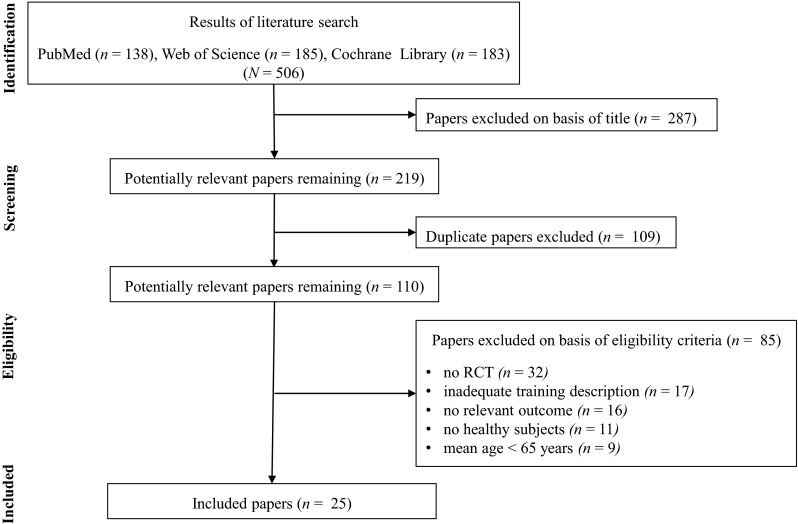
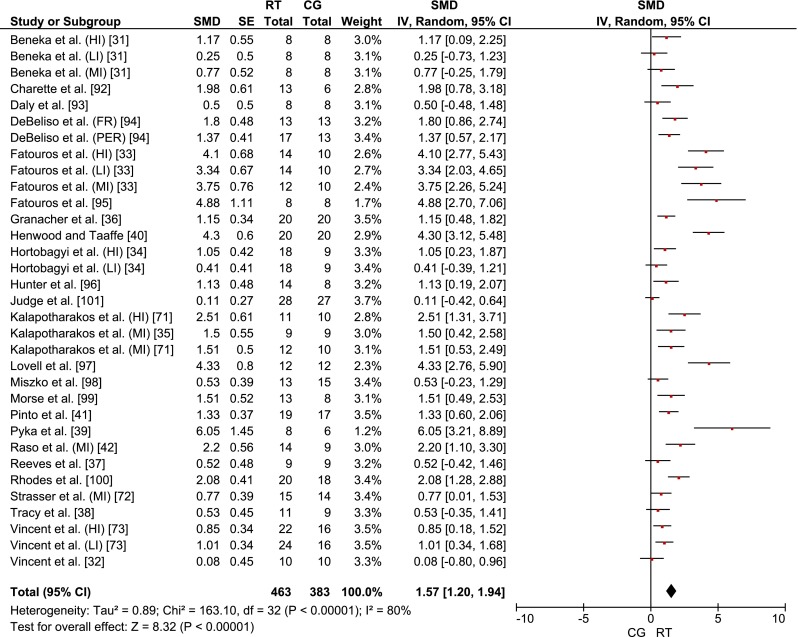
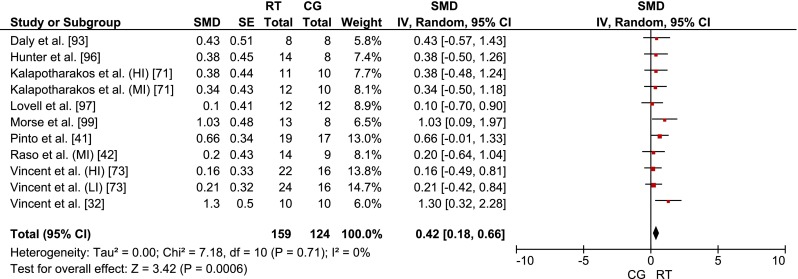
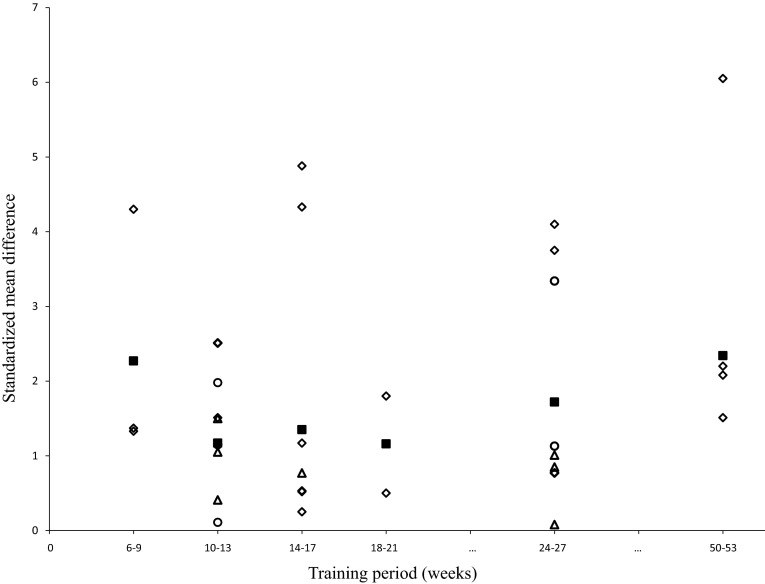
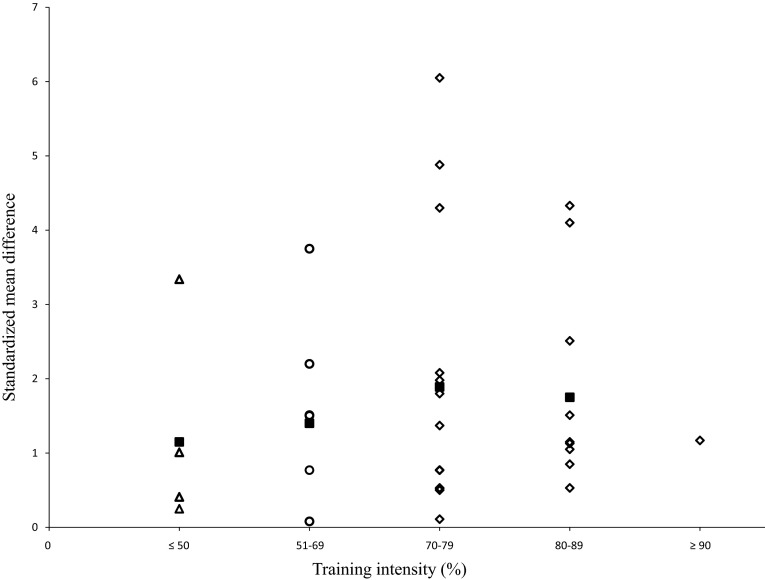
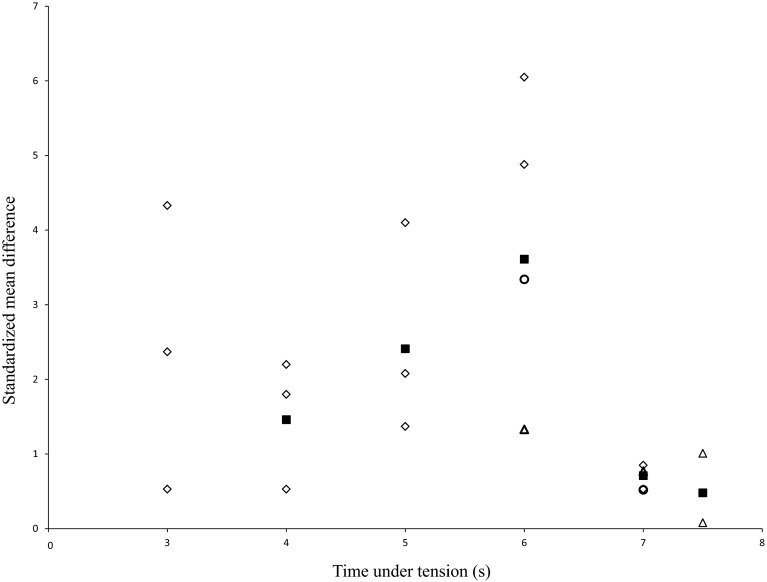
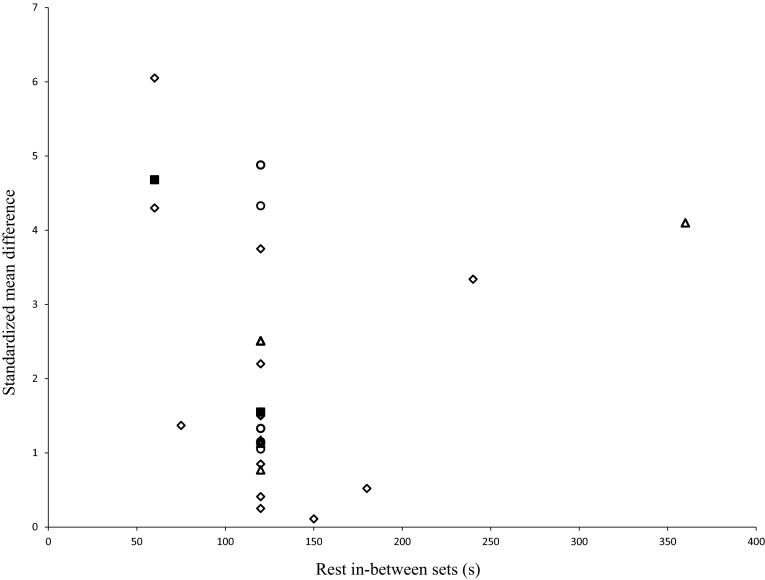
BACKGROUND: Resistance training (RT) is an intervention frequently used to improve muscle strength and morphology in old age. However, evidence-based, dose-response relationships regarding specific RT variables (e.g., training period, frequency, intensity, volume) are unclear in healthy old adults. OBJECTIVES: The aims of this systematic review and meta-analysis were to determine the general effects of RT on measures of muscle strength and morphology and to provide dose-response relationships of RT variables through an analysis of randomized controlled trials (RCTs) that could improve muscle strength and morphology in healthy old adults. DATA SOURCES: A computerized, systematic literature search was performed in the electronic databases PubMed, Web of Science, and The Cochrane Library from January 1984 up to June 2015 to identify all RCTs related to RT in healthy old adults. STUDY ELIGIBILITY CRITERIA: The initial search identified 506 studies, with a final yield of 25 studies. Only RCTs that examined the effects of RT in adults with a mean age of 65 and older were included. The 25 studies quantified at least one measure of muscle strength or morphology and sufficiently described training variables (e.g., training period, frequency, volume, intensity). STUDY APPRAISAL AND SYNTHESIS METHODS: We quantified the overall effects of RT on measures of muscle strength and morphology by computing weighted between-subject standardized mean differences (SMDbs) between intervention and control groups. We analyzed the data for the main outcomes of one-repetition maximum (1RM), maximum voluntary contraction under isometric conditions (MVC), and muscle morphology (i.e., cross-sectional area or volume or thickness of muscles) and assessed the methodological study quality by Physiotherapy Evidence Database (PEDro) scale. Heterogeneity between studies was assessed using I2 and χ2 statistics. A random effects meta-regression was calculated to explain the influence of key training variables on the effectiveness of RT in terms of muscle strength and morphology. For meta-regression, training variables were divided into the following subcategories: volume, intensity, and rest. In addition to meta-regression, dose-response relationships were calculated independently for single training variables (e.g., training frequency). RESULTS: RT improved muscle strength substantially (mean SMDbs = 1.57; 25 studies), but had small effects on measures of muscle morphology (mean SMDbs = 0.42; nine studies). Specifically, RT produced large effects in both 1RM of upper (mean SMDbs = 1.61; 11 studies) and lower (mean SMDbs = 1.76; 19 studies) extremities and a medium effect in MVC of lower (mean SMDbs = 0.76; four studies) extremities. Results of the meta-regression revealed that the variables "training period" (p = 0.04) and "intensity" (p < 0.01) as well as "total time under tension" (p < 0.01) had significant effects on muscle strength, with the largest effect sizes for the longest training periods (mean SMDbs = 2.34; 50-53 weeks), intensities of 70-79% of the 1RM (mean SMDbs = 1.89), and total time under tension of 6.0 s (mean SMDbs = 3.61). A tendency towards significance was found for rest in between sets (p = 0.06), with 60 s showing the largest effect on muscle strength (mean SMDbs = 4.68; two studies). We also determined the independent effects of the remaining training variables on muscle strength. The following independently computed training variables are most effective in improving measures of muscle strength: a training frequency of two sessions per week (mean SMDbs = 2.13), a training volume of two to three sets per exercise (mean SMDbs = 2.99), seven to nine repetitions per set (mean SMDbs = 1.98), and a rest of 4.0 s between repetitions (SMDbs = 3.72). With regard to measures of muscle morphology, the small number of identified studies allowed us to calculate meta-regression for the subcategory training volume only. No single training volume variable significantly predicted RT effects on measures of muscle morphology. Additional training variables were independently computed to detect the largest effect for the single training variable. A training period of 50-53 weeks, a training frequency of three sessions per week, a training volume of two to three sets per exercise, seven to nine repetitions per set, a training intensity from 51 to 69% of the 1RM, a total time under tension of 6.0 s, a rest of 120 s between sets, and a rest of 2.5 s between repetitions turned out to be most effective. LIMITATIONS: The current results must be interpreted with caution because of the poor overall methodological study quality (mean PEDro score 4.6 points) and the considerable large heterogeneity (I2) = 80%, χ2 = 163.1, df = 32, p < 0.01) for muscle strength. In terms of muscle morphology, our search identified nine studies only, which is why we consider our findings preliminary. While we were able to determine a dose-response relationship based on
Overview
The claims and statistics of this paper haven’t been checked yet.
Free: it reads the open-access text and checks the first 5 claims that cite a source we can check. Create a free account to check every claim.
Integrity signals
Registry
Cites
Statistics
Figures
Verification
Claims the paper makes
The claims and statistics of this paper haven’t been checked yet.
Free: it reads the open-access text and checks the first 5 claims that cite a source we can check. Create a free account to check every claim.
Claims other papers make about this one
Each is checked against this paper’s own text: does it say what the citing paper says it does?
The source backs part of the claim, not all of it — or backs it for a different population, condition or comparison.
In the citing paper
“> 3 to 4 sets of training have been reported to result in a ceiling effect with, for example, older adults [52].”
From Minimalist Training: Is Lower Dosage or Intensity Resistance Training Effective to Improve Physical Fitness? A Narrative Review (2024) · cites this paper as [52]
Experimental — accuracy not yet measuredThe cited source says what the claim attributes to it.
In the citing paper
“meta-analysis by Borde and colleagues (6) suggested that resistance exercise for older adults improves muscle strength but had small effect on muscle morphology.”
From Modulation of Neural and Muscular Adaptation Processes During Resistance Training by Fish Protein Ingestions in Older Adults (2020) · cites this paper as [6]
The check wasn’t confident either way, so it gives no verdict — never disputed.
In the citing paper
“While interesting, the inability of the group that delayed supplementation but still completed the resistance training program to experience any measurable increase in muscle cross-sectional area has led some to question the outcomes resulting from this study [5, 123].”
From International society of sports nutrition position stand: nutrient timing (2017) · cites this paper as [123]
Experimental — accuracy not yet measuredIn the citing paper
“Research indicates TRT duration has a significant effect on improvements in muscle strength [107].”
From Comparison of weightlifting, traditional resistance training and plyometrics on strength, power and speed: a systematic review with meta-analysis. (2022) · cites this paper as [107]
In the citing paper
“Fortunately, various types of exercise interventions can reverse or at least mitigate such age-related declines in health and daily life.”
From The efficacy and safety of lower-limb plyometric training in older adults: a systematic review. (2019) · cites this paper as [17]
1 more claim about this paper
Create a free account to see every claim other papers make about this one.
Self-check
Percentages, sums and reported differences re-computed from the paper’s own numbers.
The self-check needs the paper’s full text.
Citations
Cites
Liberati, A., Altman, D. G., Tetzlaff, J., Mulrow, C., Gøtzsche, P. C., Ioannidis, J. P. A., Clarke, M., Devereaux, P. J., Kleijnen, J., & Moher, D. (2009) · PLoS Medicine · doi:10.1371/journal.pmed.1000100 · Cited by 28,164 · cited 15×
“Considering that the already published meta-analyses are methodologically limited in terms of study selection criteria {inclusion of non-randomized controlled trials (RCTs) [12, 13] }, the number of included training variables (e.g., traditional variables such as training period, frequency, volume, intensity only) [14…”
BackgroundMethodInfluentialAssessing the quality of reports of randomized clinical trials: Is blinding necessary?
Jadad, A. R., Moore, R. A., Carroll, D., Jenkinson, C., Reynolds, D. J. M., Gavaghan, D. J., & McQuay, H. J. (1996) · Controlled Clinical Trials · doi:10.1016/0197-2456(95)00134-4 · Cited by 17,582
Zhang, Q., Wang, C., Zheng, M., Li, Y., Li, J., Zhang, L., Shang, X., & Yan, C. (2015) · Cerebrovascular Diseases · doi:10.1159/000369778 · Cited by 11,533
Statistical Methods for Meta-Analysis
Wasserman, S., Hedges, L. V., & Olkin, I. (1988) · Journal of Educational Statistics · doi:10.2307/1164953 · Cited by 10,326
Exercise and Physical Activity for Older Adults
Chodzko-Zajko, W. J., Proctor, D. N., Fiatarone Singh, M. A., Minson, C. T., Nigg, C. R., Salem, G. J., & Skinner, J. S. (2009) · Medicine & Science in Sports & Exercise · doi:10.1249/mss.0b013e3181a0c95c · Cited by 5,153
Reliability of the PEDro Scale for Rating Quality of Randomized Controlled Trials
Maher, C. G., Sherrington, C., Herbert, R. D., Moseley, A. M., & Elkins, M. (2003) · Physical Therapy · doi:10.1093/ptj/83.8.713 · Cited by 4,808
Dong, Y., Hao, L., Shi, Z., Wang, G., Zhang, Z., & Han, C. (2013) · Urologia Internationalis · doi:10.1159/000351405 · Cited by 4,540
Falls in older people: epidemiology, risk factors and strategies for prevention
Rubenstein, L. Z. (2006) · Age and Ageing · doi:10.1093/ageing/afl084 · Cited by 3,287
Verhagen, A. P., de Vet, H. C. W., de Bie, R. A., Kessels, A. G. H., Boers, M., Bouter, L. M., & Knipschild, P. G. (1998) · Journal of Clinical Epidemiology · doi:10.1016/s0895-4356(98)00131-0 · Cited by 2,379
Investigating and dealing with publication and other biases in meta-analysis
Sterne, J. A. C., Egger, M., & Smith, G. D. (2001) · BMJ · doi:10.1136/bmj.323.7304.101 · Cited by 2,225
Research works printed but not linked: 5
- American College of Sports M. ACSM’s guidelines for exercise testing and prescription. Baltimore: Lippincott,Williams & Wilkins; 2009.
- Deeks J Higgins J Statistical algorithms in Review Manager 5 2010 Melbourne The Cochrane Collaboration
- Cohen J Statistical power for the behavioral sciences 1988 Hillsdale Erlbaum
- Marschall F Buesch D Positionspapier für eine beanspruchungsorientierte Trainingsgestaltung im Krafttraining Schweiz Z Sportmed Sporttraumatol 2014 62 1 24 31
- Judge JO Whipple RH Wolfson LI Effects of resistive and balance exercises on isokinetic strength in older persons J Am Geriatr Soc 1994 42 9 937 946 10.1111/j.1532-5415.1994.tb06584.x 8064101 · DOI · Paper page
Cited by
Items 401–500 of 735
Paneroni, M., Vogiatzis, I., Belli, S., Savio, G., Visca, D., Zampogna, E., Aliani, M., Carolis, V. D., Maniscalco, M., Simonelli, C., et al. (2019) · Journal of Clinical Medicine · doi:10.3390/jcm8071052 · Cited by 6
“Training volume may be increased by increasing the exercise duration, the exercise intensity, or both [14].”
BackgroundEffects of Power on Balance and Fall Prevention in Aging and Older Adults
Chen, T., & Yoshida, Y. (2021) · Topics in Geriatric Rehabilitation · doi:10.1097/tgr.0000000000000296 · Cited by 7
Timmons, J. F., Hone, M., Duffy, O., & Egan, B. (2021) · The Journal of Strength and Conditioning Research · doi:10.1519/jsc.0000000000003987 · Cited by 7
Takahashi, R., Yabe, H., Hibino, T., Yamaguchi, T., Morishita, S., Kono, K., Moriyama, Y., & Yamada, T. (2022) · Journal of Renal Nutrition · doi:10.1053/j.jrn.2022.09.005 · Cited by 5
Rocha, J. N. D. S., Vasconcelos, A. B. S., Aragão-Santos, J. C., de Resende–Neto, A. G., Monteiro, M. R. P., Nogueira, A. C., Pantoja-Cardoso, A., Corrêa, C. B., de Moura, T. R., & Silva‐Grigoletto, M. E. D. (2023) · Frontiers in Physiology · doi:10.3389/fphys.2023.1054424 · Cited by 6
“With respect to resistance training volume, some studies pointed out the superior effects of multiple sets to increase muscle strength and improve body composition (Peterson et al., 2011; Borde et al., 2015).”
ResultPal, C. P., Agarwal, V., Srivastav, R., Gupta, M., & Singh, S. K. (2023) · Journal of Bone and Joint Diseases · doi:10.4103/jbjd.jbjd_9_23 · Cited by 10
Baxter, B. A., Baross, A., Ryan, D. J., Wright, B., & Kay, A. D. (2023) · European Journal of Applied Physiology · doi:10.1007/s00421-023-05226-z · Cited by 7
“Resistance training in older populations improves muscle size, strength, explosive capacity (rate of torque development [RTD]), and functional ability (LaStayo et al. 2003; Caserotti et al. 2008; Borde et al. 2015; Lopez et al. 2017; Grgic et al. 2020), which can decrease the risk of falling (Sherrington et al.”
BackgroundLiu, H., & Chang, S.-J. (2023) · Journal of Food and Drug Analysis · doi:10.38212/2224-6614.3470 · Cited by 5
“A systematic review and meta-analysis confirmed a dose-response relationship between training intensity and muscle strength in healthy older adults, indicating that the largest gain in muscle strength was obtained under a training load of 70%e79% 1RM [29].”
BackgroundGiangregorio, L., Bleakney, R. R., Brien, S., Butcher, S. J., Chan, B., Chilibeck, P. D., Devries, M. C., Funnell, L., Jain, R., Keller, H., et al. (2023) · Physical Therapy · doi:10.1093/ptj/pzad120 · Cited by 6
Nunes, P. R. P., Kassiano, W., Castro-e-Souza, P., Camilo, B. D. F., Cristina-Souza, G., Souza, L. M. V., Cyrino, E. S., & Carneiro, M. A. S. (2024) · Archives of Gerontology and Geriatrics · doi:10.1016/j.archger.2024.105474 · Cited by 10
Savolainen, L., Timpmann, S., Mooses, M., Mäestu, E., Medijainen, L., Lellsaar, M., Tiimann, K., Piir, A., Zilmer, M., Unt, E., et al. (2024) · Nutrients · doi:10.3390/nu16193356 · Cited by 6
Choi, A.-Y., Lim, J., & Kim, B.-G. (2024) · Journal of Exercise Rehabilitation · doi:10.12965/jer.2448428.214 · Cited by 12
“These strength exercises are systematically performed with appropriate exercise intensity for older adults (Borde et al., 2015; de Freitas et al., 2019; Mayer et al., 2011).”
BackgroundPrieske, O., & Granacher, U. (2019) · Springer eBooks · doi:10.1007/978-3-662-53386-4_19-1 · Cited by 5
Self-citationHan, S., Jang, H., Nah, S., Han, K., Lim, H., Kim, W. S., & Hong, J. (2021) · PLoS ONE · doi:10.1371/journal.pone.0249819 · Cited by 6
“Long-term, progressive resistance exercise improves muscle strength and morphology [20, 21]; muscle protects bone from severe trauma and stress [22].”
BackgroundIntroducing Progressive Strength Training Program in Singapore's Elder Care Settings
Björkgren, M., Borg, F., Tan, K., Laxåback, G., & Nygård, L. (2021) · Frontiers in Medicine · doi:10.3389/fmed.2021.515898 · Cited by 6
Leitão, L., Venturini, G. R., Júnior, R. L. P., Monteiro, E. R., Telles, L. G. D. S., Araújo, G. D. S., Novaes, J. D. S., Tavares, C. G., Neto, S. R. M., & Filho, M. L. M. (2022) · International Journal of Environmental Research and Public Health · doi:10.3390/ijerph191811765 · Cited by 10
“RT is an effective method to increase fat-free mass, bone strength, muscle strength and functional capacity, and reduce risk factors for several diseases such as cardiovascular and metabolic diseases [3,4,6,7,9].”
MethodTsai, S., Cheng, H.-C., & Liu, H. (2022) · Geriatric Nursing · doi:10.1016/j.gerinurse.2022.11.001 · Cited by 7
Scorcelletti, M., Zange, J., Böcker, J., Sies, W., Lau, P., Mittag, U., Reeves, N. D., Ireland, A., & Rittweger, J. (2023) · Frontiers in Physiology · doi:10.3389/fphys.2023.1150562 · Cited by 5
“Muscle function can adapt dramatically in response to physical activity and exercise even in older age (Borde et al., 2015), whereas the current study suggests that the potential for exercise-related adaptations in bone geometry during adulthood is very limited.”
BackgroundPontes‐Silva, A. (2024) · European Journal of Pain · doi:10.1002/ejp.2264 · Cited by 5
“Although exercise repetitions are widely used in clinical trials (Franco et al., 2023), this is insufficient to compare different types of exercise, because the number of repetitions hides cadence, time under tension, and total physical effort (Borde et al., 2015).”
InfluentialBewegung und Gesundheit im Alter
Füzéki, E., & Banzer, W. E. (2016) · Springer eBooks · doi:10.1007/978-3-662-50335-5_10 · Cited by 6
McCullough, D., Kirwan, R., Butler, T., de Heredia, F. P., Thijssen, D. H. J., Lip, G. Y. H., Mills, J. D., & Davies, I. G. (2021) · Clinical Nutrition ESPEN · doi:10.1016/j.clnesp.2021.08.001 · Cited by 8
Psatha, M., Wu, Z., Gammie, F. M., Ratkevičius, A., Wackerhage, H., Redpath, T. W., Gilbert, F. J., Meakin, J. R., & Aspden, R. M. (2017) · BMJ Open Sport & Exercise Medicine · doi:10.1136/bmjsem-2017-000249 · Cited by 8
“20 Another study found significant increases in quadriceps CSA following 9 weeks of strength training when comparing the trained with the untrained limb.”
BackgroundHolm, L., & Nordsborg, N. B. (2017) · American Journal of Clinical Nutrition · doi:10.3945/ajcn.117.165860 · Cited by 6
“all studies of resistance training in an elderly population found increases in strength of ;24–33% (9) and of ;1–21% in muscle mass (10).”
BackgroundYang, Y., Wang, G., Zhang, S., Wang, H., Zhou, W., Ren, F.-F., Liang, H., Wu, D., Ji, X., Hashimoto, M., et al. (2022) · SSRN Electronic Journal · doi:10.2139/ssrn.4002393 · Cited by 5
Validity of repetitions in reserve for prescribing resistance exercise in older adults
Gómez-Redondo, P., Alcázar, J., Valenzuela, P. L., Ara, I., Alegre, L. M., & Mañas, A. (2025) · Experimental Gerontology · doi:10.1016/j.exger.2025.112884 · Cited by 6
Roth, C., Maier, L., Abel, B., Roigk, P., Rapp, K., Schmidberger, O., Bongartz, M., Maier, S., Wirth, I., Metz, B., et al. (2024) · BMC Geriatrics · doi:10.1186/s12877-024-05277-7 · Cited by 4
“Although research has shown that several months of exercise are necessary to improve balance and strength most effectively [12, 13], the average length of stay in inpatient GR varies from only 7 to 65 days throughout Europe [14, 15].”
BackgroundKramer, C. S., Monsegue, A. P., Morwani‐Mangnani, J., Grootswagers, P., Beekman, M., Slagboom, P. E., Verdijk, L. B., & de Groot, C. P. G. M. (2024) · Mechanisms of Ageing and Development · doi:10.1016/j.mad.2024.112002 · Cited by 5
“…et al., 2018; Barker et al., 2023), showing increases in muscle mass and strength in healthy older adults (Peterson et al., 2010; Stewart et al., 2014; Borde et al., 2015) as well as strength and physical performance in pre-frail and frail older adults (Jadczak et al., 2018; Liu and Latham, 2009).”
Rauzi, M. R., Abbate, L. M., Churchill, L., Garbin, A. J., Forster, J. E., Christiansen, C. L., & Stevens‐Lapsley, J. E. (2025) · PM&R · doi:10.1002/pmrj.13299 · Cited by 6
Li, Y., Huang, J., Wang, J., & Cheng, Y. (2025) · Frontiers in Aging Neuroscience · doi:10.3389/fnagi.2025.1496112 · Cited by 9
“Previous research has highlighted exercise intensity as a crucial factor influencing exercise effectiveness (Borde et al., 2015; Milanović et al., Li et al. 10.3389/fnagi.2025.1496112 Frontiers in Aging Neuroscience 09 frontiersin.org 2015).”
InfluentialImpact of higher resistance exercise and bathing habits on cardiovascular risks in older adults
Takeda, R., Hirono, T., Yoshiko, A., Nishikawa, T., Ueda, S., Igawa, K., Shinoda, R., Kawakami, S., Tominari, Y., & Watanabe, K. (2025) · International Journal of Biometeorology · doi:10.1007/s00484-025-02888-6 · Cited by 4
“Systematic review and meta-analysis on the dose-response relationships of resistance exercise training in older adults have provided a higher intensity of resistance exercise can contribute to a more pronounced increase in muscle strength (Borde et al. 2015).”
Mulcahy, J., DeLaRosby, A., & Norwood, T. (2025) · Physical Therapy · doi:10.1093/ptj/pzaf061 · Cited by 8
“32,46 Additional studies are required to draw conclusions for best practices to preserve muscle mass for patients taking GLP-1 agonist medications, however consistent resistance training and high protein diets should be considered until further studies are completed.”
de Moura, B. M., Ruas, C. V., & Diefenthaeler, F. (2020) · Physical & Occupational Therapy In Geriatrics · doi:10.1080/02703181.2020.1809601 · Cited by 5
Bezerra, E. D. S., Orssatto, L. B. R., de Oliveira, S. N., Sakugawa, R. L., Ribeiro, A. S., Diefenthaeler, F., & Moro, A. R. P. (2020) · Sport Sciences for Health · doi:10.1007/s11332-020-00695-7 · Cited by 5
“However, adherence to the exercise training and a minimum frequency of attendance are required to ensure continuous training adaptations [11, 17, 18], whereas training interruption (i.”
BackgroundSotomayor, E. M., Espinoza-Salinas, A., Arenas-Sánchez, G., de la Fuente, F. P., León-Prados, J. A., & González-Jurado, J. A. (2021) · Sustainability · doi:10.3390/su13147687 · Cited by 6
“Muscle resistance training is known to produce significant improvements of muscle strength and muscle circumferences in healthy older adults [13].”
BackgroundBanzer, W. E., Fischer, M., & Groneberg, D. A. (2021) · Deutsche Zeitschrift für Akupunktur · doi:10.1007/s42212-021-00415-3 · Cited by 4
Ghasemabad, K. H., Kamalden, T. F. T., Dev, R. D. O., Nekooei, P., Majlesi, S., Alemi, B., & Nekouei, P. (2022) · Pertanika journal of social science & humanities · doi:10.47836/pjssh.30.1.04 · Cited by 6
“The results demonstrated that the intensity levels between 70 to 79% 1RM contributed to greater strength (Borde et al., 2015).”
BackgroundResultThe Relationship between Resistance Training Frequency and Muscle Quality in Adolescents
Naimo, M. A., & Gu, J. K. (2022) · International Journal of Environmental Research and Public Health · doi:10.3390/ijerph19138099 · Cited by 9
Domingues, L. B., Payano, C. E., Peres, M. D. S., Sant’Anna, V. H., Cadore, E. L., Rodrigues-Krause, J. D. C., & Ferrari, R. (2023) · Journal of Aging and Physical Activity · doi:10.1123/japa.2023-0010 · Cited by 7
LEAP! Rx: A randomized trial of a pragmatic approach to lifestyle medicine
Watts, A. S., Szabo‐Reed, A. N., Baker, J., Morris, J. K., Vacek, J. L., Clutton, J. E., Mahnken, J. D., Key, M. N., Vidoni, E. D., & Burns, J. M. (2024) · Alzheimer s & Dementia · doi:10.1002/alz.14265 · Cited by 5
Magtouf, E., Peyrot, N., Cherni, Y., Chortane, O. G., Jolibois, J., Rahmani, A., & Maktouf, W. (2024) · Journal of Functional Morphology and Kinesiology · doi:10.3390/jfmk9040261 · Cited by 6
Gismondi, A., Iellamo, F., Caminiti, G., Sposato, B., Gregorace, E., D’Antoni, V., Biasio, D. D., Vadalà, S., Franchini, A., Mancuso, A., et al. (2024) · Journal of Cardiovascular Development and Disease · doi:10.3390/jcdd12010008 · Cited by 6
Gómez-Álvarez, N., Hermosilla, N. J., Matus-Castillo, C. A., & Pávez-Adasme, G. (2019) · Cultura Ciencia y Deporte · doi:10.12800/ccd.v14i42.1334 · Cited by 9
Shoepe, T. C., LaBrie, J. W., Mello, G. T., Leggett, A. G., & Almstedt, H. C. (2020) · BMC Musculoskeletal Disorders · doi:10.1186/s12891-020-03753-w · Cited by 4
A Collective Review of the Research on Training the Oldest-Old
Capanema, B. D. S. V., Franco, P. S., Gil, P. R., & Mazo, G. Z. (2022) · Strength and conditioning journal · doi:10.1519/ssc.0000000000000725 · Cited by 7
Fernández-Matías, R., García-Pérez, F., Requejo-Salinas, N., Gavín-González, C., Martínez-Martín, J., García-Valencia, H., & Flórez-García, M. T. (2022) · Shoulder & Elbow · doi:10.1177/17585732221140113 · Cited by 6
“46 The studies that measured muscle strength 24,30 did it at follow-up periods longer than 3 months, ranging from 5 months 30 to 2 years 24 within the prospective studies.”
BackgroundPrieske, O., & Granacher, U. (2023) · Springer eBooks · doi:10.1007/978-3-662-53410-6_19 · Cited by 7
Self-citationRazdan, S., Pandav, K. B., Altschuler, J., Moody, K. A., Martin, L. K., Patel, H. D., Mohamed, N., Dovey, Z. S., & Tewari, A. K. (2023) · PubMed Central · Cited by 4
Lee, J. H., Lee, H., Kim, H.-M., Kim, R.-K., Lee, T. L., Ko, D.-K., Lee, H., & Kang, N. (2024) · EXCLI journal · doi:10.17179/excli2023-6777 · Cited by 9
Jardim, R. A. C., de Sousa, T. S., Santos, W. N. N., Matos, A. P., & Iosimuta, N. C. R. (2022) · Trials · doi:10.1186/s13063-022-05998-3 · Cited by 13
Strength Training for the Prevention and Treatment of Dynapenia
(2017) · Journal of Bones and Muscles Study · doi:10.29199/2637-7039/boms-101015 · Cited by 4
Brigatto, F. A., de Camargo, J. B. B., Ungaro, W. F. D., Germano, M. D., Marchetti, P. H., Aoki, M. S., Braz, T. V., & Lopes, C. R. (2020) · International journal of exercise science · doi:10.70252/llhu2255 · Cited by 8
“com 1678 quality of life and sports (3, 27).”
BackgroundMeigh, N. J., Hing, W. A., Schram, B., & Keogh, J. (2021) · bioRxiv (Cold Spring Harbor Laboratory) · doi:10.1101/2021.05.17.444430 · Cited by 4
“Additionally, current resistance training guidelines for older adults (14-16) do not translate to hardstyle kettlebell practices.”
BackgroundPentewar, S., Sawant, S., & Deshmukh, P. (2023) · International Journal of Health Sciences and Research · doi:10.52403/ijhsr.20230642 · Cited by 3
Sherman, D. A., Neogi, T., Hornsby, S., Felson, D. T., LaValley, M. P., Stefanik, J. J., & for the OAI investigators (2025) · ACR Open Rheumatology · doi:10.1002/acr2.70067 · Cited by 3
Yu, Z. H., Ni, P., Wang, Z., Zhao, Z., Chen, B., Zhang, Z.-E., & Li, F. (2025) · Cell Biochemistry and Biophysics · doi:10.1007/s12013-025-01848-6 · Cited by 4
“Resistance exercise (RES) emphasizes muscle strength and mass enhancement through resistance loading [8], whereas endurance exercise (END) primarily aims to improve cardiovascular function and maintain muscle endurance [9].”
García‐Ramos, A. (2025) · Applied Sciences · doi:10.3390/app152010874 · Cited by 3
Toosi, M., Daneshmandi, H., Mottaghitalab, M., & Zarei, H. (2026) · Journal of Aging and Physical Activity · doi:10.1123/japa.2025-0070 · Cited by 4
Shen, Y., Chen, K., Hou, W., Kang, Y., Shen, W., Hoang, K. D., Huang, Y., & Chen, C. (2026) · Geriatrics and gerontology international/Geriatrics & gerontology international · doi:10.1111/ggi.70607 · Cited by 4
“Meta-analyzes have indicated that RT considerably enhances muscle strength, even in very old individuals [9, 10].”
Krčmár, M., Halmová, N., Krajčovič, J., & Krčmárová, B. (2020) · Physical & Occupational Therapy In Geriatrics · doi:10.1080/02703181.2020.1809602 · Cited by 4
Abreu, F., Rodrigues, A., & Baptista, F. (2025) · Frontiers in Sports and Active Living · doi:10.3389/fspor.2025.1542188 · Cited by 5
“Several proposed resistance exercise programs have been based on the dose-response relationship for healthy older adults (33), which might disregard speci fi c characteristics of frail individuals (34) (e.g., low adherence, reduced energy and exercise tolerance).”
Thiel, U., Halfpaap, N., Labott, B. K., Herold, F., Langhans, C., Heinrichs, K. I., Müller, P., Mueller, N. G., & Hökelmann, A. (2025) · Geriatrics · doi:10.3390/geriatrics10030067 · Cited by 4
“Moreover, the moderate exercise intensity might have further limited the neuromuscular stimulus necessary to elicit substantial improvements in postural control [73,74].”
Zhou, H., Yang, J., Li, N., Li, J., Ran, J., Zheng, Y., Long, Y., Fang, C. R., & Liao, Y. (2025) · PLoS ONE · doi:10.1371/journal.pone.0333343 · Cited by 4
“Prior studies on resistance and vibration training for sarcopenia typically range between 8–12 weeks, with 12 weeks allowing both early neural adaptation and later-stage hypertrophy to manifest [41–43].”
Lyristakis, P., Wundersitz, D. W. T., Cousins, S. D., Huynh, M., Zadow, E. K., & Gordon, B. A. (2026) · Sports Medicine · doi:10.1007/s40279-026-02432-5 · Cited by 3
“These findings are supported by previous reviews in which volume [43, 44], frequency [43, 44], duration [12, 45] and intensity [9, 13] were reported to be important variables in developing upper-body and lower-body muscle strength.”
CIAFIS – Congresso Internacional de Atividade Física, Nutrição e Saúde
Soares, N. M. M., Dantas, E. H. M., Silva‐Grigoletto, M. E. D., Silva, R. J. D. S., Aidar, F. J. M., Júnior, W. M. D. S., Cabral, B. T., Carneiro, A. L. G., Garrido, N. D., & Reis, V. M. (2018) · Motricidade · doi:10.6063/motricidade.14077 · Cited by 4
do Nascimento, M. A., da Silva, D. R. P., Ribeiro, A. S., Pina, F. L. C., Gerage, A. M., Gobbo, L. A., Mayhew, J. L., & Cyrino, E. S. (2018) · The Journal of Strength and Conditioning Research · doi:10.1519/jsc.0000000000002581 · Cited by 6
“to attenuate or possibly reverse the numerous changes resulting from the natural aging process (8).”
BackgroundOrssatto, L. B. R., Bezerra, E. D. S., Zwaal, G. I., Moreira, J. D., Moro, A. R. P., de Moura, B. M., Willardson, J. M., Junior, R. F. S., & Diefenthaeler, F. (2020) · Sport Sciences for Health · doi:10.1007/s11332-020-00628-4 · Cited by 3
de Moura, B. M., Bezerra, E. D. S., Orssatto, L. B. R., Moro, A. R. P., & Diefenthaeler, F. (2020) · Journal of Science in Sport and Exercise · doi:10.1007/s42978-020-00077-y · Cited by 4
“Specially, MSP design may induce improvements of thigh lean mass because specific hypertrophic stimuli were induced during all the intervention period, and matched with a recent meta-analysis [5] recommendation of weekly frequency = 3x, recovery between sets of 2 min, training intensity between 50%–60% of 1-RM, and 3…”
BackgroundResultInfluentialKutsuna, T., Sugawara, H., Kurita, H., Kusaka, S., & Takahashi, T. (2020) · Hong Kong Physiotherapy Journal · doi:10.1142/s1013702521500013 · Cited by 4
Resistance Training for Rehabilitation in Patients with Idiopathic Pulmonary Fibrosis
Vainshelboim, B., & MYERS, J. N. (2021) · Translational Medicine and Exercise Prescription · doi:10.53941/tmep.v1i1.34 · Cited by 2
Covid-19 Analysis: Is there an Association Between Covid-19 and Development of Cognitive Deficits?
Sachdev, A., & Amanullah, S. (2022) · PubMed · doi:10.36131/cnfioritieditore20220508 · Cited by 5
“Additionally, exercise has long been known to have protective effects on cognitive decline (Ashworth et al., 2005; Bherer, 2015; Borde et al., 2015; DesjardinsCrépeau et al., 2016; Liu-Ambrose et al., 2012).”
BackgroundEffect of resistance exercise on bone health of old aged individuals: Review
Khanna, A. (2022) · Science & Sports · doi:10.1016/j.scispo.2022.09.003 · Cited by 6
Pedersen, B. S., Kodal, L. S., Kaalund, A. B., Holm-Yildiz, S. D., Pedersen, M. M., & Dysgaard, T. (2023) · Frontiers in Physiology · doi:10.3389/fphys.2023.1158039 · Cited by 5
“and functional outcomes in healthy young and older adults (de Vos et al., 2005; Liu and Latham, 2009; Garber et al., 2011; Raymond et al., 2013; Borde et al., 2015; Hvid et al., 2016; Chen et al., 2021), patients with stroke (Hill et al.”
BackgroundResistive strength training for arm rehabilitation after stroke
Högg, S., Elsner, B., Saunders, D. H., van Wijck, F., & Mehrholz, J. (2021) · Cochrane Database of Systematic Reviews · doi:10.1002/14651858.cd014279 · Cited by 3
Nishikawa, T., Hirono, T., Takeda, R., Okudaira, M., Ohya, T., & Watanabe, K. (2024) · Physiology & Behavior · doi:10.1016/j.physbeh.2024.114585 · Cited by 5
DEVELOPING A LIFELONG RESISTANCE TRAINING PROGRAM
Kravitz, L. R. (2019) · ACSMʼs Health & Fitness Journal · doi:10.1249/fit.0000000000000450 · Cited by 3
Meigh, N. J., Davidson, A. R., Keogh, J., & Hing, W. A. (2022) · BMC Geriatrics · doi:10.1186/s12877-022-03174-5 · Cited by 4
Effect of Different Circuit Training on Cardiovascular Responses in Cirrhotic Patients
Nasser, I., Willardson, J. M., Perez, R. D. M., Reis, M. S., Brito, A. D. A., Dias, I., & Miranda, H. L. (2018) · International Journal of Sports Medicine · doi:10.1055/a-0783-2747 · Cited by 3
“Resistance training (RT) is well documented as a key modality to improve functional capacity [3] and may improve metabolic processes to reduce the risk of comorbidities in cirrhotic patients [11].”
BackgroundExercise prescription in patients with chronic obstructive pulmonary disease
Alcázar, J., Rodríguez-López, C., Alfaro‐Acha, A., Alegre, L. M., & Ara, I. (2018) · Dialnet (Universidad de la Rioja) · Cited by 5
López, R., Cisternas, P., Devaud, Y., Muñoz-Cofré, R., Gómez‐Bruton, A., & Lizana, P. A. (2020) · International Journal of Morphology · doi:10.4067/s0717-95022020000501173 · Cited by 4
Effects of exercise on skeletal muscles and tendons
Minetto, M. A., Giannini, A., McConnell, R., Busso, C., & Massazza, G. (2019) · Current Opinion in Endocrine and Metabolic Research · doi:10.1016/j.coemr.2019.09.001 · Cited by 4
Metabolic Syndrome and Metabolic Dysfunction‐Associated Fatty Liver Disease
Koo, B. K., & Lim, S. K. (2022) · Wiley eBooks · doi:10.1002/9781119695257.ch13 · Cited by 3
Wang, Y., Hsu, A.-Y., Huang, S.-C., Chuang, H.-C., & Hsu, W. (2025) · Geriatric Nursing · doi:10.1016/j.gerinurse.2025.04.026 · Cited by 3
Pontes‐Silva, A. (2025) · Sao Paulo Medical Journal · doi:10.1590/1516-3180.2024.0374.29012025 · Cited by 2
Benali, M., van den Helder, J., Biersteker, E. J. M., Schoufour, J. D., Weijs, P. J. M., & Tieland, M. (2025) · BMC Geriatrics · doi:10.1186/s12877-025-06209-9 · Cited by 5
Effects of resistance exercise programs on older adults: a systematic review and meta-analysis
Choi, S.-H., & Lee, J. (2025) · Journal of Exercise Rehabilitation · doi:10.12965/jer.2550362.181 · Cited by 8
“This aligns with previous research high-lighting the strength-enhancing effects of resistance training in older adults (Borde et al., 2015; Jiang et al., 2025) and its importance in maintaining walking ability and functional independence (Fraga-Germade et al., 2024; Sherrington et al., 2011).”
Aminirakan, D., Linnhoff, D., & Wollesen, B. (2026) · European Review of Aging and Physical Activity · doi:10.1186/s11556-026-00403-3 · Cited by 4
“In particular, the dose-response relationships, training progression principles, and interaction effects specific to resistance-based cognitive-motor interventions remain underexplored [11].”
Effectiveness of physical exercise on osteosarcopenia in older adults: A systematic review
Silveira, É. A., Souza, G. V. E., Rodrigues, L. P., Rezende, A. T. D. O., Romeiro, A. M. D. S., Noll, M., & de Oliveira, C. M. (2026) · Geriatric Nursing · doi:10.1016/j.gerinurse.2026.103878 · Cited by 3
Torii, M., Onishi, A., Uozumi, R., Hidaka, Y., Onizawa, H., Fujii, T., Murata, K., Murakami, K., Tanaka, M., Oshima, Y., et al. (2026) · Arthritis Research & Therapy · doi:10.1186/s13075-026-03751-8 · Cited by 2
Moumeni, I. N., Abdel-Nasser, N. M., Abdullahi, A., Horlister, T. K. B., Mourey, F., & Tsatedem, F. A. (2026) · Journal of Aging and Rehabilitation · doi:10.1097/jagr.0000000000000041 · Cited by 2
Saez-Berlanga, Á., Gené‐Morales, J., Babiloni-López, C., Jiménez‐Martínez, P., Juesas, Á., & Colado, J. C. (2026) · Archives of Physical Medicine and Rehabilitation · doi:10.1016/j.apmr.2026.02.485 · Cited by 2
Li, Q., Zhao, R., Tian, X., & Xu, H. (2026) · Frontiers in Aging Neuroscience · doi:10.3389/fnagi.2026.1780247 · Cited by 2
“Additionally, this type of training significantly enhances muscle strength, promotes muscle mass growth, and comprehensively optimizes various muscle-related motor function performances (Borde et al., 2015; Rahmati et al., 2023).”
Schütze, K., Shehatha, R., Beer, K., Needham, M., Smith, T., Bagg, M. K., Doverty, A., & Cooper, I. (2026) · Neuromuscular Disorders · doi:10.1016/j.nmd.2026.106418 · Cited by 2
Which exercise intervention is most promising for Parkinson's balance? A network meta-analysis
Li, Y., Zhao, M., Luo, Z., & Tang, Y. (2026) · Frontiers in Aging Neuroscience · doi:10.3389/fnagi.2026.1879017 · Cited by 2
“Second, concerning the reporting of intervention details, we did not account for variations in intervention frequency (Borde et al., 2015; Milanovi´c et al., 2015).”
Naimo, M. A., Gu, J. K., Lilly, C. L., Kelley, G. A., & Baker, B. A. (2018) · JCSM Clinical Reports · doi:10.17987/jcsm-cr.v3i2.64 · Cited by 2
Physical Activity of the Elderly in Light of the 2020 WHO Guidelines
Husejko, J., Strugała, M., Modrzejewski, M., Wąsicki, M., Kędziora–Kornatowska, K., & Podhorecka, M. (2021) · Rehabilitacja Medyczna · doi:10.5604/01.3001.0014.8724 · Cited by 3
Graça, Á., Fonseca, H. S., Pina, F. L. C., Fiorillo, R. G., Mayhew, J. L., Gerage, A. M., de Oliveira, D. V., & do Nascimento, M. A. (2022) · Geriatrics Gerontology and Aging · doi:10.53886/gga.e0220013 · Cited by 2
FORÇA MUSCULAR EM IDOSOS DE ACORDO COM O ESTADO NUTRICIONAL E GRUPO ETÁRIO
Aragão, A. C. D., dos Santos, L., Pedreira, R. B. S., Fernandes, M. H., Coqueiro, R. D. S., & Carneiro, J. A. O. (2023) · Revista Brasileira de Ciência e Movimento · doi:10.31501/rbcm.v30i2.13289 · Cited by 3
Chia, C. L. K., Yong, N. T. W. M., Ong, M. W., Lam, X. Y., Soon, B. L. L., & Tan, K. Y. (2023) · Topics in Geriatric Rehabilitation · doi:10.1097/tgr.0000000000000394 · Cited by 2
“Most of the studies employ a minimum of 1 to 4 weeks of preoperative exercises prior to surgery although some studies have shown that fitness improvements can be demonstrated as short as 2 weeks.(50) Ultimately, an effective exercise plan has to be one that has a high compliance rate to produce the greatest benefit.”
BackgroundIs there enough evidence to prescribe exercise to older adults living in residential care?
Coelho, H. J., & Marzetti, E. (2023) · The Lancet Healthy Longevity · doi:10.1016/s2666-7568(23)00063-6 · Cited by 3
Park, J. H., Lim, N.-K., & Park, H. (2024) · European Review of Aging and Physical Activity · doi:10.1186/s11556-024-00339-6 · Cited by 6
“…findings are consistent with those from a previous study that conducted a meta-analysis of RCTs involving RT programs lasting 6–52 weeks, which found that the longest training period of RT (i.e., 52 weeks) had the largest effect on both muscle strength and muscle mass in healthy older adults [35].”
Result
Metadata
- Authors
- Borde, R., Hortobágyi, T., & Granacher, U.
- Affiliations
- University of Potsdam (DE)
- University Medical Center Groningen (NL)
- Corresponding author
- Borde, Ron
- Venue
- Sports Medicine
- Published
- 2015-09-29
- Volume
- 45
- Issue
- 12
- Pages
- 1693-1720
- ISSN
- 0112-1642 (ISSN-L)
- 1179-2035
- PMC
- PMC4656698
- OpenAlex
- W1840491359
- Cited by
- 737
- References
- 104
- Citations by year
- 2026: 69 · 2025: 61 · 2024: 76 · 2023: 91 · 2022: 103 · 2021: 82 · 2020: 77 · 2019: 67 · 2018: 63 · 2017: 32 · 2016: 14 · 2015: 2
- FWCI
- 6.15
- Type
- journal article
- Language
- en
- Open access
- hybrid
- doi.org
- Locations
- Sports Medicine (publishedVersion, cc-by)
- PubMed (publishedVersion)
- University of Groningen research database (University of Groningen / Centre for Information Technology) (publishedVersion)
- University of Groningen research database (University of Groningen / Centre for Information Technology) (submittedVersion)
- Funders
- Deutsche Forschungsgemeinschaft (DE) ((MU 3327/2-1))
- Topics
- Health Sciences › Medicine › Orthopedics and Sports Medicine › Sports Performance and Training
- Health Sciences › Medicine › Physiology (medical) › Nutrition and Health in Aging
- Health Sciences › Nursing › Nutrition and Dietetics › Muscle metabolism and nutrition
- Keywords
- resistance training, older adults, dose-response relationship, muscle strength, muscle morphology, training volume, exercise intensity, exercise frequency, rest periods, one-repetition maximum, cross-sectional area, healthy aging
- MeSH terms
- Aged, Aged, 80 and over, Humans, Time Factors, Muscle, Skeletal, Muscle Strength, Resistance Training
About these checks
Registry, retraction, Cites and statistics results are computed, not judged, with one exception: a printed reference that no index lists is read once by a model before it counts as a citation error. Claims are extracted by a model and kept only when their quote appears verbatim in the text; each cited source is then checked, with a model’s help, for whether it says what the claim relies on. Those verdicts can be wrong — read the claim’s quote and the cited source before relying on one.
Statistics and arithmetic are recomputed, not judged.
Confidence bands are shown only for fields calibrated on our annotated test set. None is calibrated yet, so no band is shown.
What counts as a claim ›How we measure confidence ›How we check this ›
Are you an author, or do you see a problem with this page? Request a review
Data sources
Bibliographic data: Semantic Scholar, OpenAlex, Crossref.
Contains information from the Semantic Scholar Academic Graph Datasets, made available under the ODC Attribution License (ODC-BY 1.0).
Semantic Scholar’s data is described in: Kinney, R., et al. (2023). The Semantic Scholar Open Data Platform. arXiv:2301.10140.
