

Dose–Response Relationships of Resistance Training in Healthy Old Adults: A Systematic Review and Meta-Analysis
Open accessThe DOI matches its Crossref record; 103 of the 104 references it cites were found in a registry or an index.
Abstract
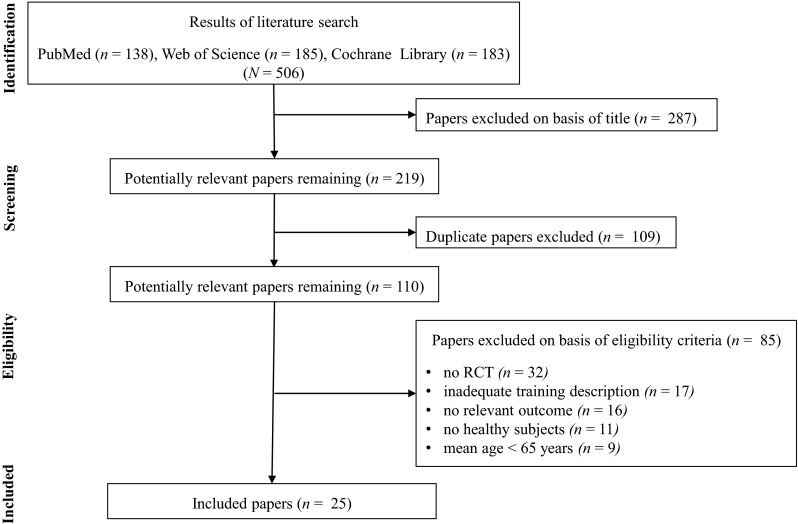
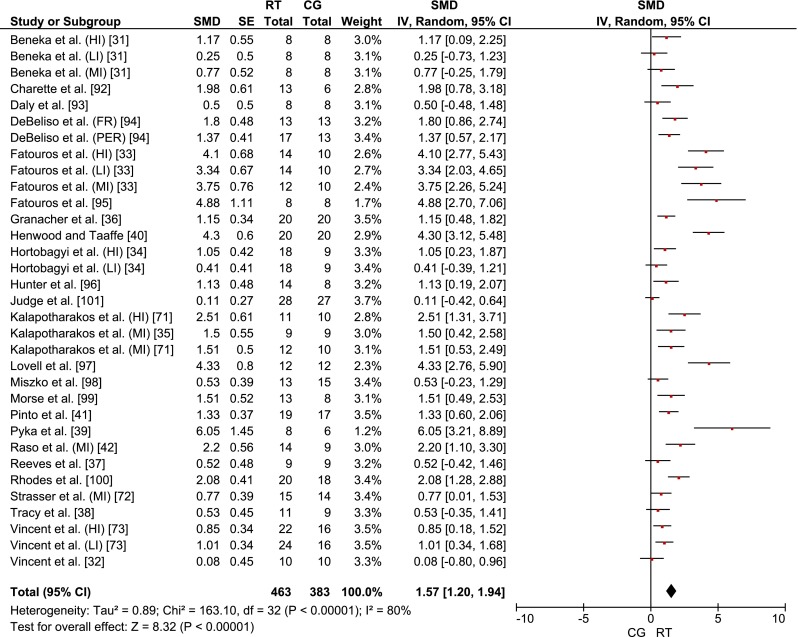
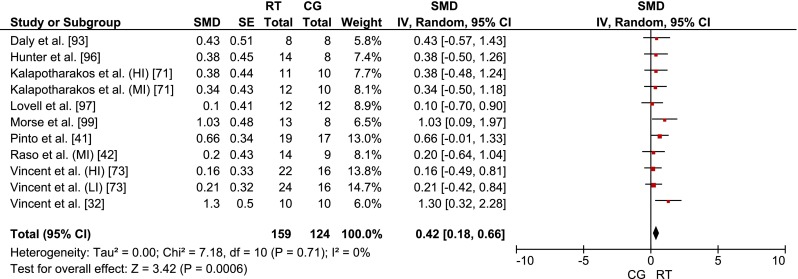
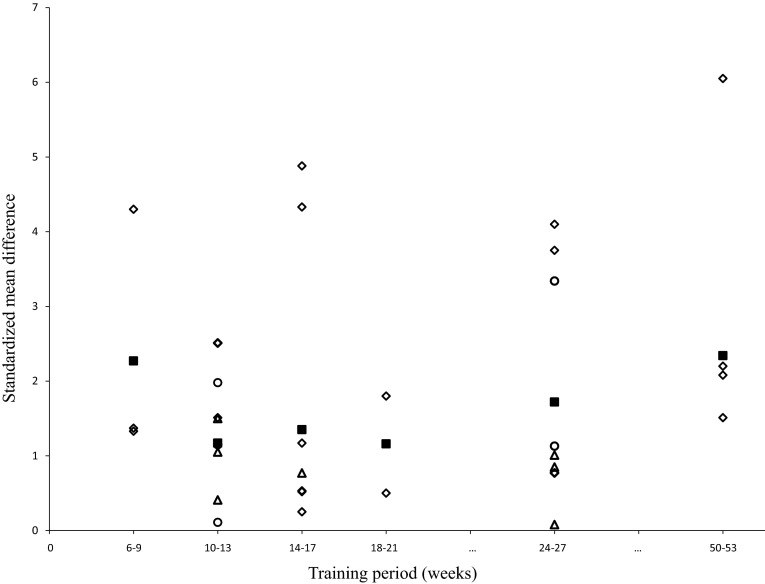
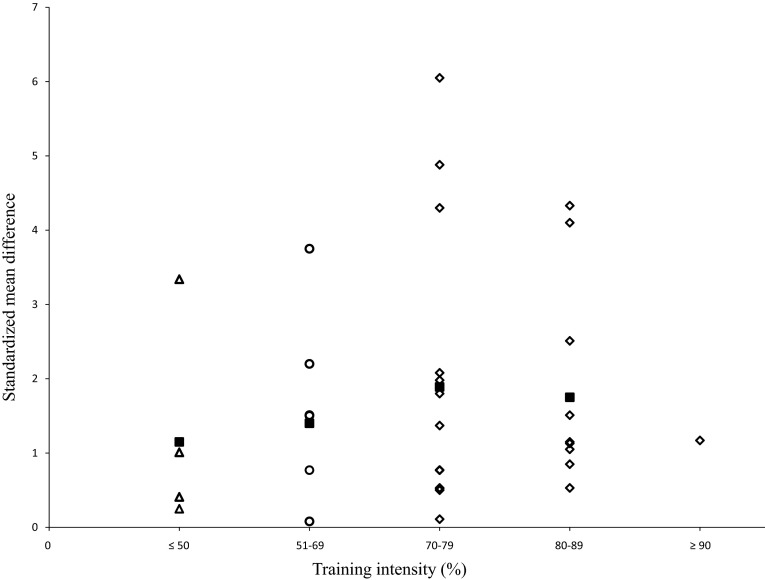
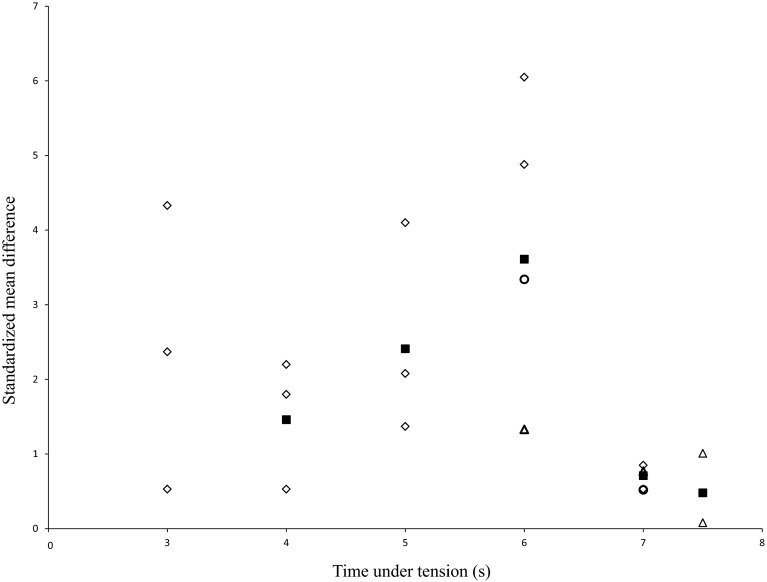
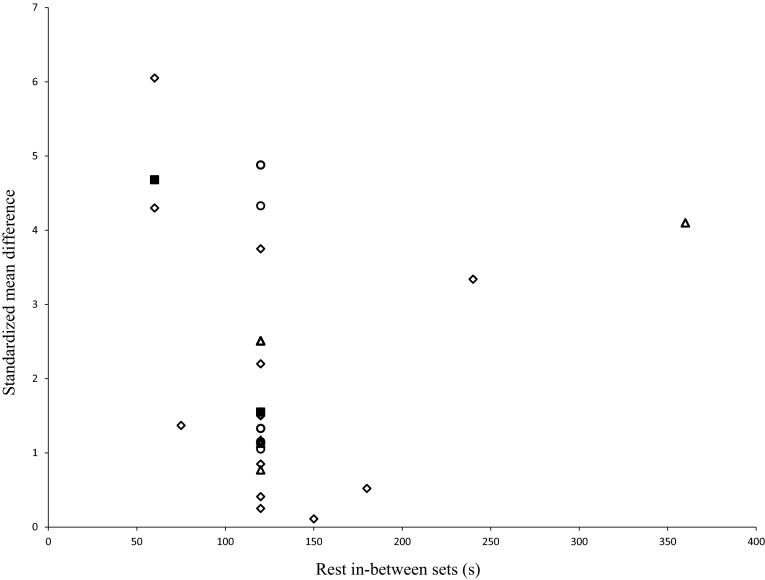
BACKGROUND: Resistance training (RT) is an intervention frequently used to improve muscle strength and morphology in old age. However, evidence-based, dose-response relationships regarding specific RT variables (e.g., training period, frequency, intensity, volume) are unclear in healthy old adults. OBJECTIVES: The aims of this systematic review and meta-analysis were to determine the general effects of RT on measures of muscle strength and morphology and to provide dose-response relationships of RT variables through an analysis of randomized controlled trials (RCTs) that could improve muscle strength and morphology in healthy old adults. DATA SOURCES: A computerized, systematic literature search was performed in the electronic databases PubMed, Web of Science, and The Cochrane Library from January 1984 up to June 2015 to identify all RCTs related to RT in healthy old adults. STUDY ELIGIBILITY CRITERIA: The initial search identified 506 studies, with a final yield of 25 studies. Only RCTs that examined the effects of RT in adults with a mean age of 65 and older were included. The 25 studies quantified at least one measure of muscle strength or morphology and sufficiently described training variables (e.g., training period, frequency, volume, intensity). STUDY APPRAISAL AND SYNTHESIS METHODS: We quantified the overall effects of RT on measures of muscle strength and morphology by computing weighted between-subject standardized mean differences (SMDbs) between intervention and control groups. We analyzed the data for the main outcomes of one-repetition maximum (1RM), maximum voluntary contraction under isometric conditions (MVC), and muscle morphology (i.e., cross-sectional area or volume or thickness of muscles) and assessed the methodological study quality by Physiotherapy Evidence Database (PEDro) scale. Heterogeneity between studies was assessed using I2 and χ2 statistics. A random effects meta-regression was calculated to explain the influence of key training variables on the effectiveness of RT in terms of muscle strength and morphology. For meta-regression, training variables were divided into the following subcategories: volume, intensity, and rest. In addition to meta-regression, dose-response relationships were calculated independently for single training variables (e.g., training frequency). RESULTS: RT improved muscle strength substantially (mean SMDbs = 1.57; 25 studies), but had small effects on measures of muscle morphology (mean SMDbs = 0.42; nine studies). Specifically, RT produced large effects in both 1RM of upper (mean SMDbs = 1.61; 11 studies) and lower (mean SMDbs = 1.76; 19 studies) extremities and a medium effect in MVC of lower (mean SMDbs = 0.76; four studies) extremities. Results of the meta-regression revealed that the variables "training period" (p = 0.04) and "intensity" (p < 0.01) as well as "total time under tension" (p < 0.01) had significant effects on muscle strength, with the largest effect sizes for the longest training periods (mean SMDbs = 2.34; 50-53 weeks), intensities of 70-79% of the 1RM (mean SMDbs = 1.89), and total time under tension of 6.0 s (mean SMDbs = 3.61). A tendency towards significance was found for rest in between sets (p = 0.06), with 60 s showing the largest effect on muscle strength (mean SMDbs = 4.68; two studies). We also determined the independent effects of the remaining training variables on muscle strength. The following independently computed training variables are most effective in improving measures of muscle strength: a training frequency of two sessions per week (mean SMDbs = 2.13), a training volume of two to three sets per exercise (mean SMDbs = 2.99), seven to nine repetitions per set (mean SMDbs = 1.98), and a rest of 4.0 s between repetitions (SMDbs = 3.72). With regard to measures of muscle morphology, the small number of identified studies allowed us to calculate meta-regression for the subcategory training volume only. No single training volume variable significantly predicted RT effects on measures of muscle morphology. Additional training variables were independently computed to detect the largest effect for the single training variable. A training period of 50-53 weeks, a training frequency of three sessions per week, a training volume of two to three sets per exercise, seven to nine repetitions per set, a training intensity from 51 to 69% of the 1RM, a total time under tension of 6.0 s, a rest of 120 s between sets, and a rest of 2.5 s between repetitions turned out to be most effective. LIMITATIONS: The current results must be interpreted with caution because of the poor overall methodological study quality (mean PEDro score 4.6 points) and the considerable large heterogeneity (I2) = 80%, χ2 = 163.1, df = 32, p < 0.01) for muscle strength. In terms of muscle morphology, our search identified nine studies only, which is why we consider our findings preliminary. While we were able to determine a dose-response relationship based on
Overview
The claims and statistics of this paper haven’t been checked yet.
Free: it reads the open-access text and checks the first 5 claims that cite a source we can check. Create a free account to check every claim.
Integrity signals
Registry
Cites
Statistics
Figures
Verification
Claims the paper makes
The claims and statistics of this paper haven’t been checked yet.
Free: it reads the open-access text and checks the first 5 claims that cite a source we can check. Create a free account to check every claim.
Claims other papers make about this one
Each is checked against this paper’s own text: does it say what the citing paper says it does?
The source backs part of the claim, not all of it — or backs it for a different population, condition or comparison.
In the citing paper
“> 3 to 4 sets of training have been reported to result in a ceiling effect with, for example, older adults [52].”
From Minimalist Training: Is Lower Dosage or Intensity Resistance Training Effective to Improve Physical Fitness? A Narrative Review (2024) · cites this paper as [52]
Experimental — accuracy not yet measuredThe cited source says what the claim attributes to it.
In the citing paper
“meta-analysis by Borde and colleagues (6) suggested that resistance exercise for older adults improves muscle strength but had small effect on muscle morphology.”
From Modulation of Neural and Muscular Adaptation Processes During Resistance Training by Fish Protein Ingestions in Older Adults (2020) · cites this paper as [6]
The check wasn’t confident either way, so it gives no verdict — never disputed.
In the citing paper
“While interesting, the inability of the group that delayed supplementation but still completed the resistance training program to experience any measurable increase in muscle cross-sectional area has led some to question the outcomes resulting from this study [5, 123].”
From International society of sports nutrition position stand: nutrient timing (2017) · cites this paper as [123]
Experimental — accuracy not yet measuredIn the citing paper
“Research indicates TRT duration has a significant effect on improvements in muscle strength [107].”
From Comparison of weightlifting, traditional resistance training and plyometrics on strength, power and speed: a systematic review with meta-analysis. (2022) · cites this paper as [107]
In the citing paper
“Fortunately, various types of exercise interventions can reverse or at least mitigate such age-related declines in health and daily life.”
From The efficacy and safety of lower-limb plyometric training in older adults: a systematic review. (2019) · cites this paper as [17]
1 more claim about this paper
Create a free account to see every claim other papers make about this one.
Self-check
Percentages, sums and reported differences re-computed from the paper’s own numbers.
The self-check needs the paper’s full text.
Citations
Cites
Liberati, A., Altman, D. G., Tetzlaff, J., Mulrow, C., Gøtzsche, P. C., Ioannidis, J. P. A., Clarke, M., Devereaux, P. J., Kleijnen, J., & Moher, D. (2009) · PLoS Medicine · doi:10.1371/journal.pmed.1000100 · Cited by 28,164 · cited 15×
“Considering that the already published meta-analyses are methodologically limited in terms of study selection criteria {inclusion of non-randomized controlled trials (RCTs) [12, 13] }, the number of included training variables (e.g., traditional variables such as training period, frequency, volume, intensity only) [14…”
BackgroundMethodInfluentialAssessing the quality of reports of randomized clinical trials: Is blinding necessary?
Jadad, A. R., Moore, R. A., Carroll, D., Jenkinson, C., Reynolds, D. J. M., Gavaghan, D. J., & McQuay, H. J. (1996) · Controlled Clinical Trials · doi:10.1016/0197-2456(95)00134-4 · Cited by 17,582
Zhang, Q., Wang, C., Zheng, M., Li, Y., Li, J., Zhang, L., Shang, X., & Yan, C. (2015) · Cerebrovascular Diseases · doi:10.1159/000369778 · Cited by 11,533
Statistical Methods for Meta-Analysis
Wasserman, S., Hedges, L. V., & Olkin, I. (1988) · Journal of Educational Statistics · doi:10.2307/1164953 · Cited by 10,326
Exercise and Physical Activity for Older Adults
Chodzko-Zajko, W. J., Proctor, D. N., Fiatarone Singh, M. A., Minson, C. T., Nigg, C. R., Salem, G. J., & Skinner, J. S. (2009) · Medicine & Science in Sports & Exercise · doi:10.1249/mss.0b013e3181a0c95c · Cited by 5,153
Reliability of the PEDro Scale for Rating Quality of Randomized Controlled Trials
Maher, C. G., Sherrington, C., Herbert, R. D., Moseley, A. M., & Elkins, M. (2003) · Physical Therapy · doi:10.1093/ptj/83.8.713 · Cited by 4,808
Dong, Y., Hao, L., Shi, Z., Wang, G., Zhang, Z., & Han, C. (2013) · Urologia Internationalis · doi:10.1159/000351405 · Cited by 4,540
Falls in older people: epidemiology, risk factors and strategies for prevention
Rubenstein, L. Z. (2006) · Age and Ageing · doi:10.1093/ageing/afl084 · Cited by 3,287
Verhagen, A. P., de Vet, H. C. W., de Bie, R. A., Kessels, A. G. H., Boers, M., Bouter, L. M., & Knipschild, P. G. (1998) · Journal of Clinical Epidemiology · doi:10.1016/s0895-4356(98)00131-0 · Cited by 2,379
Investigating and dealing with publication and other biases in meta-analysis
Sterne, J. A. C., Egger, M., & Smith, G. D. (2001) · BMJ · doi:10.1136/bmj.323.7304.101 · Cited by 2,225
Research works printed but not linked: 5
- American College of Sports M. ACSM’s guidelines for exercise testing and prescription. Baltimore: Lippincott,Williams & Wilkins; 2009.
- Deeks J Higgins J Statistical algorithms in Review Manager 5 2010 Melbourne The Cochrane Collaboration
- Cohen J Statistical power for the behavioral sciences 1988 Hillsdale Erlbaum
- Marschall F Buesch D Positionspapier für eine beanspruchungsorientierte Trainingsgestaltung im Krafttraining Schweiz Z Sportmed Sporttraumatol 2014 62 1 24 31
- Judge JO Whipple RH Wolfson LI Effects of resistive and balance exercises on isokinetic strength in older persons J Am Geriatr Soc 1994 42 9 937 946 10.1111/j.1532-5415.1994.tb06584.x 8064101 · DOI · Paper page
Cited by
Fragala, M. S., Cadore, E. L., Dorgo, S., Izquierdo, M., Kraemer, W. J., Peterson, M. D., & Ryan, E. D. (2019) · Journal of Strength and Conditioning Research · doi:10.1519/jsc.0000000000003230 · Cited by 1,290
Dent, E., Morley, J. E., Cruz-Jentoft, A. J., Arai, H., Kritchevsky, S. B., Guralnik, J., Bauer, J. M., Pahor, M., Clark, B. C., Cesari, M., et al. (2018) · The Journal of nutrition, health and aging · doi:10.1007/s12603-018-1139-9 · Cited by 1,130
International society of sports nutrition position stand: nutrient timing
Kerksick, C. M., Arent, S., Schoenfeld, B. J., Stout, J. R., Campbell, B., Wilborn, C. D., Taylor, L., Kalman, D., Smith-Ryan, A. E., Kreider, R. B., et al. (2017) · Journal of the International Society of Sports Nutrition · doi:10.1186/s12970-017-0189-4 · Cited by 622
Malm, C., Jakobsson, J., & Isaksson, A. (2019) · Sports · doi:10.3390/sports7050127 · Cited by 610
“In describing the relationship between physical activity and falling ill with certain diseases, the dose–response relationship, the effect size (the risk reduction that is shown in studies), and the recommended type and dose of physical activity are considered [122].”
BackgroundEl Assar, M., Álvarez-Bustos, A., Sosa, P., Angulo, J., & Rodríguez-Mañas, L. (2022) · International Journal of Molecular Sciences · doi:10.3390/ijms23158713 · Cited by 371
Grgic, J., Schoenfeld, B. J., Davies, T. B., Lazinica, B., Krieger, J. W., & Pedisic, Z. (2018) · Sports Medicine · doi:10.1007/s40279-018-0872-x · Cited by 365
“A recent meta-regression suggested that older adults should engage in two RT sessions per week for the most efficient muscular strength results [58].”
Herold, F., Törpel, A., Schega, L., & Müller, N. G. (2019) · European Review of Aging and Physical Activity · doi:10.1186/s11556-019-0217-2 · Cited by 349
Hansen, D., Abreu, A., Ambrosetti, M., Cornelissen, V., Gevaert, A., Kemps, H., Laukkanen, J. A., Pedretti, R., Simonenko, M., Wilhelm, M., et al. (2022) · European Journal of Preventive Cardiology · doi:10.1093/eurjpc/zwab007 · Cited by 321
A Review on Aging, Sarcopenia, Falls, and Resistance Training in Community-Dwelling Older Adults
Rodrigues, F., Domingos, C., Monteiro, D., & Morouço, P. (2022) · International Journal of Environmental Research and Public Health · doi:10.3390/ijerph19020874 · Cited by 320
“(2015), in their meta-analytic review, found that the most effective doseresponse of resistance training on increasing muscle strength and morphology was a frequency of three sessions per week, a training volume of 2–3 sets per exercise, 7–9 repetitions per set, a training intensity ranging from 50 to 70% of the 1RM […”
BackgroundSarcopenia during COVID-19 lockdown restrictions: long-term health effects of short-term muscle loss
Kirwan, R., McCullough, D., Butler, T., Perez de Heredia, F., Davies, I. G., & Stewart, C. (2020) · GeroScience · doi:10.1007/s11357-020-00272-3 · Cited by 324
Resistance exercise as a treatment for sarcopenia: prescription and delivery
Hurst, C., Robinson, S. M., Witham, M. D., Dodds, R. M., Granic, A., Buckland, C., De Biase, S., Finnegan, S., Rochester, L., Skelton, D. A., et al. (2022) · Age and Ageing · doi:10.1093/ageing/afac003 · Cited by 319
“Substantial benefits can be gained from two RE sessions per week [10, 34, 36] and those prescribing exercise should be mindful that prescribing a greater number of RE sessions will not necessarily induce greater effects (i.”
BackgroundSanders, L. M. J., Hortobágyi, T., la Bastide-van Gemert, S., van der Zee, E. A., & van Heuvelen, M. J. G. (2019) · PLOS ONE · doi:10.1371/journal.pone.0210036 · Cited by 311
“Meta-analyses revealed that longer program duration [16–18] and higher intensity [16,18] were associated with gains in muscle strength and VO2max of older adults.”
BackgroundSelf-citationEffects of Resistance Exercise on Bone Health
Hong, A. R., & Kim, S. W. (2018) · Endocrinology and Metabolism · doi:10.3803/enm.2018.33.4.435 · Cited by 291
Paluch, A. E., Boyer, W. R., Franklin, B. A., Laddu, D., Lobelo, F., Lee, D.-C., McDermott, M. M., Swift, D. L., Webel, A. R., Lane, A., et al. (2024) · Circulation · doi:10.1161/cir.0000000000001189 · Cited by 290
“…per exercise) and intensity (55%–80% of 1 repetition maximum [RM]), compared with lower volume (1 set per exercise) and intensity (<55% of 1-RM) resulted in greater reductions in total body fat mass and waist circumference 55,60 and enhanced muscle quality, mass, strength, and functional status.”
BackgroundLacroix, A., Hortobágyi, T., Beurskens, R., & Granacher, U. (2017) · Sports Medicine · doi:10.1007/s40279-017-0747-6 · Cited by 279
Self-citationVikberg, S., Sörlén, N., Brandén, L., Johansson, J., Nordström, A., Hult, A., & Nordström, P. (2019) · Journal of the American Medical Directors Association · doi:10.1016/j.jamda.2018.09.011 · Cited by 261
The 2017 Dutch Physical Activity Guidelines
Committee Dutch Physical Activity Guidelines 2017, Weggemans, R. M., Backx, F. J. G., Borghouts, L., Chinapaw, M., Hopman, M. T. E., Koster, A., Kremers, S., van Loon, L. J. C., May, A., et al. (2018) · International Journal of Behavioral Nutrition and Physical Activity · doi:10.1186/s12966-018-0661-9 · Cited by 227
“Strength training two to three times a week at light to moderate intensity increases the fat-free mass [48] and the beneficial effect on muscle strength increases with the intensity of strength training [49, 50].”
BackgroundStamatakis, E., Lee, I. M., Bennie, J., Freeston, J., Hamer, M., O’Donovan, G., Ding, D., Bauman, A., & Mavros, Y. (2018) · American Journal of Epidemiology · doi:10.1093/aje/kwx345 · Cited by 198
Figueiredo, V. C., de Salles, B. F., & Trajano, G. S. (2018) · Sports Medicine · doi:10.1007/s40279-017-0793-0 · Cited by 194
“In this article we review the effects of volume on hypertrophy and health, but not strength, because exercise intensity seems to be the predominant variable modulating muscle strength, in comparison to other variables [19].”
BackgroundBao, W., Sun, Y., Zhang, T., Zou, L., Wu, X., Wang, D., & Chen, Z. (2020) · Aging and disease · doi:10.14336/ad.2019.1012 · Cited by 186
“Other reviews have reported that exercise training is generally effective for muscle strength and performance of healthy elderly adults regardless of training programs [45-47], while large clinical trials of exercise for individuals diagnosed with sarcopenia are still lacking.”
BackgroundChen, N., He, X., Feng, Y., Ainsworth, B. E., & Liu, Y. (2021) · European Review of Aging and Physical Activity · doi:10.1186/s11556-021-00277-7 · Cited by 178
Mcleod, J. C., Currier, B. S., Lowisz, C. V., & Phillips, S. M. (2024) · Journal of Sport and Health Science · doi:10.1016/j.jshs.2023.06.005 · Cited by 176
Valenzuela, P. L., Saco-Ledo, G., Morales, J. S., Gallardo-Gómez, D., Morales-Palomo, F., López-Ortiz, S., Rivas-Baeza, B., Castillo-García, A., Jiménez-Pavón, D., Santos-Lozano, A., et al. (2023) · The Lancet Healthy Longevity · doi:10.1016/s2666-7568(23)00057-0 · Cited by 173
Exercise-induced hypoalgesia: A meta-analysis of exercise dosing for the treatment of chronic pain
Polaski, A. M., Phelps, A. L., Kostek, M. C., Szucs, K. A., & Kolber, B. J. (2019) · PLoS ONE · doi:10.1371/journal.pone.0210418 · Cited by 173
Grgić, J., Schoenfeld, B. J., Skrepnik, M., Davies, T. B., & Mikulić, P. (2017) · Sports Medicine · doi:10.1007/s40279-017-0788-x · Cited by 186
“However, the position stand is based on level 4 category of evidence or ‘‘expert level,’’ not on level 1 evidence (systematic reviews provide level 1 evidence [15, 16]).”
BackgroundHollings, M., Mavros, Y., Freeston, J., & Fiatarone Singh, M. (2017) · European Journal of Preventive Cardiology · doi:10.1177/2047487317713329 · Cited by 148
Guizelini, P. C., de Aguiar, R. A., Denadai, B. S., Caputo, F., & Greco, C. C. (2018) · Experimental Gerontology · doi:10.1016/j.exger.2017.11.020 · Cited by 146
Chaabene, H., Prieske, O., Herz, M., Moran, J., Höhne, J., Kliegl, R., Ramirez-Campillo, R., Behm, D. G., Hortobágyi, T., & Granacher, U. (2021) · Ageing Research Reviews · doi:10.1016/j.arr.2021.101265 · Cited by 146
Self-citationKemmler, W., Kohl, M., Fröhlich, M., Jakob, F., Engelke, K., von Stengel, S., & Schoene, D. (2020) · Journal of Bone and Mineral Research · doi:10.1002/jbmr.4027 · Cited by 139
“Exercise volume (2× 45–50 min/wk) was much lower, however, compared with the three sessions of multiple-set exercise protocol predominately applied in the area of “muscle” or “bone” (see reviews((6,39,51))).”
BackgroundYamada, M., Kimura, Y., Ishiyama, D., Nishio, N., Otobe, Y., Tanaka, T., Ohji, S., Koyama, S., Sato, A., Suzuki, M., et al. (2019) · Geriatrics & Gerontology International · doi:10.1111/ggi.13643 · Cited by 138
Paravlic, A. H., Slimani, M., Tod, D., Marušič, U., Milanović, Z., & Pišot, R. (2018) · Sports Medicine · doi:10.1007/s40279-018-0874-8 · Cited by 148
Common Musculoskeletal Disorders in the Elderly: The Star Triad
Minetto, M. A., Giannini, A., McConnell, R., Busso, C., Torre, G., & Massazza, G. (2020) · Journal of Clinical Medicine · doi:10.3390/jcm9041216 · Cited by 156
“As older individuals seem to prefer easy and accessible training regimens that are easy to perform in any setting, body weight-based exercise programs for strength training may be preferable to programs involving gym equipment [28].”
BackgroundKemmler, W., Weissenfels, A., Teschler, M., Willert, S., Bebenek, M., Shojaa, M., Kohl, M., Freiberger, E., Sieber, C., & von Stengel, S. (2017) · Clinical Interventions in Aging · doi:10.2147/cia.s137987 · Cited by 123
“6,68 In summary, WB-EMS&P can be considered as an effective, time saving, joint-friendly and low-threshold intervention to fight both, sarcopenia and obesity in older people at risk.”
O’Bryan, S. J., Giuliano, C., Woessner, M. N., Vogrin, S., Smith, C., Duque, G., & Levinger, I. (2022) · Sports Medicine · doi:10.1007/s40279-022-01675-2 · Cited by 154
“Limitations of the evidence include a lack of specific details pertaining to the rate of mechanical loading/movement velocity [98], time under tension [25], contraction type [99], and whether repetitions were completed to failure [100], some of which may explain some of the reported heterogeneity and lack of significa…”
BackgroundResultHuang, D., Zhou, C.-J., Wang, S.-L., Mao, S.-T., Zhou, X.-Y., Lou, N., Zhang, Z., Yu, Z., Shen, X., & Zhuang, C. (2016) · Surgery · doi:10.1016/j.surg.2016.08.030 · Cited by 128
“It has been reported that the training period and intensity are both important factors in determining the effect of resistance training.(21) As for the training period, it has been recognized that a short duration is not effective, whereas a long duration could result in a low compliance.”
BackgroundNutritional Supplements to Support Resistance Exercise in Countering the Sarcopenia of Aging
McKendry, J., Currier, B. S., Lim, C., Mcleod, J. C., Thomas, A. C. Q., & Phillips, S. M. (2020) · Nutrients · doi:10.3390/nu12072057 · Cited by 118
“The persistent practice of RE remains the most potent strategy to combat age-related skeletal muscle deterioration [16,32].”
BackgroundChase, J.-A. D., Phillips, L. J., & Brown, M. (2017) · Journal of Aging and Physical Activity · doi:10.1123/japa.2016-0040 · Cited by 112
Physical activity and skeletal health in adults
Cauley, J. A., & Giangregorio, L. (2019) · The Lancet Diabetes & Endocrinology · doi:10.1016/s2213-8587(19)30351-1 · Cited by 131
Eckardt, N. (2016) · BMC Geriatrics · doi:10.1186/s12877-016-0366-3 · Cited by 133
Exercise and the Aging Brain: Considerations for Sex Differences
Barha, C. K., & Liu-Ambrose, T. (2018) · Brain Plasticity · doi:10.3233/bpl-180067 · Cited by 110
“Muscle mass, strength and quality decline with age [153], and strength exercises help maintain and improve these indices in older adults [154]; however, the degree of benefit may differ by sex with”
BackgroundComparison of time‐matched aerobic, resistance, or concurrent exercise training in older adults
Timmons, J. F., Minnock, D., Hone, M., Cogan, K. E., Murphy, J. C., & Egan, B. (2018) · Scandinavian Journal of Medicine & Science in Sports · doi:10.1111/sms.13254 · Cited by 109
Coelho-Junior, H., Marzetti, E., Calvani, R., Picca, A., Arai, H., & Uchida, M. (2022) · Aging & Mental Health · doi:10.1080/13607863.2020.1857691 · Cited by 105
Anabolic Resistance of Muscle Protein Turnover Comes in Various Shapes and Sizes
Paulussen, K. J. M., McKenna, C. F., Beals, J. W., Wilund, K. R., Salvador, A. F., & Burd, N. A. (2021) · Frontiers in Nutrition · doi:10.3389/fnut.2021.615849 · Cited by 107
Morris, S. J., Oliver, J. L., Pedley, J. S., Haff, G. G., & Lloyd, R. S. (2022) · Sports Medicine · doi:10.1007/s40279-021-01627-2 · Cited by 103
“Research indicates TRT duration has a significant effect on improvements in muscle strength [107].”
BackgroundA usability study of a multicomponent video game-based training for older adults
Adcock, M., Sonder, F., Schättin, A., Gennaro, F., & de Bruin, E. D. (2020) · European Review of Aging and Physical Activity · doi:10.1186/s11556-019-0233-2 · Cited by 112
Zhidong, C., Wang, X., Yin, J., Song, D., & Chen, Z. (2021) · European Review of Aging and Physical Activity · doi:10.1186/s11556-021-00272-y · Cited by 114
de Guia, R. M., Agerholm, M., Nielsen, T. S., Consitt, L. A., Søgaard, D., Helge, J. W., Larsen, S., Brandauer, J., Houmard, J. A., & Treebak, J. T. (2019) · Physiological Reports · doi:10.14814/phy2.14139 · Cited by 99
“Both aerobic and resistance exercise training exert multiple beneficial effects on the aging body (Vopat et al. 2014; Borde et al. 2015; Milanovic et al. 2015; Mancini et al. 2017).”
BackgroundExercise and nutritional approaches to prevent frail bones, falls and fractures: an update
Daly, R. M. (2017) · Climacteric · doi:10.1080/13697137.2017.1286890 · Cited by 97
Jones, M. D., Wewege, M. A., Hackett, D. A., Keogh, J. W. L., & Hagstrom, A. D. (2021) · Sports Medicine · doi:10.1007/s40279-020-01388-4 · Cited by 96
Fitness and Fatness as Health Markers through the Lifespan: An Overview of Current Knowledge
Ortega, F. B., Cadenas‐Sánchez, C., Lee, D.-C., Ruiz, J. R., Blair, S. N., & Sui, X. (2018) · Progress in Preventive Medicine · doi:10.1097/pp9.0000000000000013 · Cited by 122
“In this context, Borde et al.[31] systematically reviewed and meta-analyzed the existing randomized controlled trials exploring the effects of strength training (also called resistance training) on muscular strength and muscle morphology in individuals aged 65 years or older.”
BackgroundOtsuka, Y., Yamada, Y., Maeda, A., Izumo, T., Rogi, T., Shibata, H., Fukuda, M., Arimitsu, T., Miyamoto, N., & Hashimoto, T. (2022) · Journal of Cachexia, Sarcopenia and Muscle · doi:10.1002/jcsm.12941 · Cited by 96
“Meanwhile, a systematic review of dose–response relationships of resistance training in muscle morphology of healthy elderly persons showed that exercise protocols with less than 80% 1-RM intensity are also effective.(11) Indeed, low-intensity (40% 1-RM) resistance exercise for 52 weeks showed an increase in cross-sec…”
BackgroundResistance Training as a Tool for Preventing and Treating Musculoskeletal Disorders
Ciolac, E. G., & da Silva, J. M. R. (2016) · Sports Medicine · doi:10.1007/s40279-016-0507-z · Cited by 126
Preoperative exercise interventions to optimize continence outcomes following radical prostatectomy
Mungovan, S. F., Carlsson, S., Gass, G. C., Graham, P. L., Sandhu, J. S., Akın, O., Scardino, P. T., Eastham, J. A., & Patel, M. I. (2021) · Nature Reviews Urology · doi:10.1038/s41585-021-00445-5 · Cited by 111
Hurst, C., Weston, K. L., McLaren, S. J., & Weston, M. (2019) · Aging Clinical and Experimental Research · doi:10.1007/s40520-019-01124-7 · Cited by 89
da Rosa Orssatto, L. B., de la Rocha Freitas, C., Shield, A. J., Silveira Pinto, R., & Trajano, G. S. (2019) · Experimental Gerontology · doi:10.1016/j.exger.2019.110731 · Cited by 86
“Resistance training is an effective intervention to improve functional capacity in the elderly (Borde et al., 2015; Byrne et al., 2016; Csapo and Alegre, 2015; Fiatarone et al., 1990; Orssatto et al., 2019; Skelton et al., 1995; Steib et al., 2010; Tschopp et al., 2011).”
BackgroundThe effects of resistance training volume on osteosarcopenic obesity in older women
Cunha, P. M., Ribeiro, A. S., Tomeleri, C. M., Schoenfeld, B. J., Silva, A. M., Souza, M. F., Nascimento, M. A., Sardinha, L. B., & Cyrino, E. S. (2018) · Journal of Sports Sciences · doi:10.1080/02640414.2017.1403413 · Cited by 88
Hou, L., Lei, Y., Li, X., Huo, C., Jia, X., Yang, J., Xu, R., & Wang, X.-M. (2019) · The Journal of nutrition, health and aging · doi:10.1007/s12603-019-1181-2 · Cited by 87
Cunha, P. M., Nunes, J. P., Tomeleri, C. M., Nascimento, M. A., Schoenfeld, B. J., Antunes, M., Gobbo, L. A., Teixeira, D., & Cyrino, E. S. (2020) · Journal of Strength and Conditioning Research · doi:10.1519/jsc.0000000000002847 · Cited by 86
“However, although it is suggested that older adults perform RT with multiple sets (MS) rather than with single sets (SS) (1), current evidence on the topic indicates the data are insufficient to draw firm conclusions (3,28,31,35).”
BackgroundEffect of velocity loss during squat training on neuromuscular performance
Rodríguez‐Rosell, D., Yáñez‐García, J. M., Mora‐Custodio, R., Sánchez‐Medina, L., Ribas‐Serna, J., & González‐Badillo, J. J. (2021) · Scandinavian Journal of Medicine & Science in Sports · doi:10.1111/sms.13967 · Cited by 86
Verdicchio, C. V., Freene, N., Hollings, M., Maiorana, A., Briffa, T. G., Gallagher, R. D., Hendriks, J., Abell, B., Brown, A. D. H., Colquhoun, D., et al. (2023) · Heart Lung and Circulation · doi:10.1016/j.hlc.2023.06.854 · Cited by 101
Cognitive-Based Interventions to Improve Mobility: A Systematic Review and Meta-analysis
Marušič, U., Verghese, J., & Mahoney, J. R. (2018) · Journal of the American Medical Directors Association · doi:10.1016/j.jamda.2018.02.002 · Cited by 97
Hansen, D., Abreu, A., Doherty, P., & Völler, H. (2019) · European Journal of Preventive Cardiology · doi:10.1177/2047487319847003 · Cited by 97
Myokine Response to High-Intensity Interval vs. Resistance Exercise: An Individual Approach
He, Z., Tian, Y., Valenzuela, P. L., Huang, C., Zhao, J., Hong, P., He, Z., Yin, S., & Lucia, A. (2018) · Frontiers in Physiology · doi:10.3389/fphys.2018.01735 · Cited by 82
Kemmler, W., Kohl, M., Jakob, F., Engelke, K., & von Stengel, S. (2020) · Nutrients · doi:10.3390/nu12082341 · Cited by 81
Sæterbakken, A. H., Stien, N., Andersen, V. S., Scott, S., Cumming, K. T., Behm, D. G., Granacher, U., & Prieske, O. (2022) · Sports Medicine · doi:10.1007/s40279-021-01637-0 · Cited by 110
“This could be due to a potential ceiling effect, whereby the effect of TMT on performance-related gains demonstrated saturation or, alternatively, to differences in athletes’ training experience and history, and a wide range of age and/or expertise level [27, 98, 101] included in the studies.”
BackgroundSelf-citationKey, M. N., & Szabo‐Reed, A. N. (2023) · Nutrients · doi:10.3390/nu15112495 · Cited by 95
“It uses muscular contraction against resistance to mitigate the effects of aging on neuromuscular function and functional capacity [201–205].”
BackgroundThe efficacy and safety of lower-limb plyometric training in older adults: a systematic review.
Vetrovsky, T., Steffl, M., Stastny, P., & Tufano, J. J. (2019) · Sports Medicine · doi:10.1007/s40279-018-1018-x · Cited by 79
Periodized Resistance Training for Enhancing Skeletal Muscle Hypertrophy and Strength: A Mini-Review
Evans, J. W. (2019) · Frontiers in Physiology · doi:10.3389/fphys.2019.00013 · Cited by 106
Ortiz-Alonso, J., Bustamante-Ara, N., Valenzuela, P. L., Vidán-Astiz, M., Rodríguez-Romo, G., Mayordomo-Cava, J., Javier-González, M., Hidalgo-Gamarra, M., Lopéz-Tatis, M., Valades-Malagón, M. I., et al. (2020) · Journal of the American Medical Directors Association · doi:10.1016/j.jamda.2019.11.027 · Cited by 76
Yang, Y., Wang, G., Zhang, S., Wang, H., Zhou, W.-S., Ren, F.-F., Liang, H., Wu, D., Ji, X., Hashimoto, M., et al. (2022) · BMC Geriatrics · doi:10.1186/s12877-022-03510-9 · Cited by 96
“Previous studies have shown that exercise intensity was also an important factor affecting exercise effects [70, 71].”
BackgroundEscriche-Escuder, A., Fuentes-Abolafio, I. J., Roldán‐Jiménez, C., & Vargas, A. I. C. (2021) · Experimental Gerontology · doi:10.1016/j.exger.2021.111420 · Cited by 88
Brandt, J. D., Spruit, M. A., Hansen, D., Franssen, F. M. E., Derave, W., Sillen, M. J. H., & Burtin, C. (2017) · Chronic Respiratory Disease · doi:10.1177/1479972317709642 · Cited by 86
Effects of free weights and machine training on muscular strength in high-functioning older adults
Schott, N., Johnen, B., & Holfelder, B. (2019) · Experimental Gerontology · doi:10.1016/j.exger.2019.03.012 · Cited by 79
Damanti, S., Azzolino, D., Roncaglione, C., Arosio, B., Rossi, P. D., & Cesari, M. (2019) · Nutrients · doi:10.3390/nu11091991 · Cited by 91
Gustafsson, T. P., & Ulfhake, B. (2024) · International Journal of Molecular Sciences · doi:10.3390/ijms252010932 · Cited by 99
Vezzoli, A., Mrakic‐Sposta, S., Montorsi, M., Porcelli, S., Vago, P., Cereda, F., Longo, S., Maggio, M. G., & Narici, M. V. (2019) · Antioxidants · doi:10.3390/antiox8100431 · Cited by 71
“Indeed, a wealth of studies has shown that RT is effective for recovering muscle mass, strength and physical performance in older individuals [14], even in the oldest old [15] as defined by the WHO [16].”
BackgroundMakizako, H., Nakai, Y., Tomioka, K., Taniguchi, Y., Sato, N., Wada, A., Kiyama, R., Tsutsumimoto, K., Ohishi, M., Kiuchi, Y., et al. (2020) · Journal of Clinical Medicine · doi:10.3390/jcm9051386 · Cited by 86
“Nutrition may be another key element of multimodal interventions for sarcopenia [39,40].”
Backgroundda Silva, L. X. N., Teodoro, J. L., Menger, E., Lopez, P., Grazioli, R., Farinha, J., Moraes, K., Bottaro, M., Pinto, R. S., Izquierdo, M., et al. (2018) · Experimental Gerontology · doi:10.1016/j.exger.2018.03.017 · Cited by 63
“The influence of ST total volume on muscle size adaptations has been previously shown in elderly individuals (Radaelli et al., 2014; Borde et al., 2015), whereas no direct evidence of the influence of fatigue during ST sets on muscle hypertrophy has been provided.”
Lavin, K. M., Coen, P. M., Baptista, L. C., Bell, M. B., Drummer, D., Harper, S. A., Lixandrão, M. E., McAdam, J. S., O'Bryan, S. M., Ramos, S., et al. (2022) · Comprehensive Physiology · doi:10.1002/cphy.c200033 · Cited by 60
Steele, J., Raubold, K., Kemmler, W., Fisher, J., Gentil, P., & Giessing, J. (2017) · BioMed Research International · doi:10.1155/2017/2541090 · Cited by 59
Ponzano, M., Rodrigues, I. B., Hosseini, Z., Ashe, M. C., Butt, D. A., Chilibeck, P. D., Stapleton, J. E., Thabane, L., Wark, J. D., & Giangregorio, L. (2020) · Physical Therapy · doi:10.1093/ptj/pzaa221 · Cited by 65
Influence of Resistance Training on Gait & Balance Parameters in Older Adults: A Systematic Review
Keating, C. J., Linares, J. C. C., MONTILLA, J. A. P., Román, P. Á. L., del Castillo, R. M., & García‐Pinillos, F. (2021) · International Journal of Environmental Research and Public Health · doi:10.3390/ijerph18041759 · Cited by 86
“Common knowledge amongst the scientific literature suggests that the rest time between sets should range between 180–300 s when the objective is to increase maximum strength, 1–2 min for muscle gain through hypertrophy, and 30–60 s for improving muscular endurance [48].”
BackgroundCURRENT CONCEPTS OF MUSCLE AND TENDON ADAPTATION TO STRENGTH AND CONDITIONING.
Brumitt, J., & Cuddeford, T. J. (2015) · PubMed Central · Cited by 100
Coelho‐Júnior, H. J., Uchida, M. C., Picca, A., Bernabei, R., Landi, F., Calvani, R., Cesari, M., & Marzetti, E. (2021) · Aging Clinical and Experimental Research · doi:10.1007/s40520-021-01802-5 · Cited by 70
Stojanović, M. D. M., Mikić, M. J., Milošević, Z., Vuković, J., Jezdimirović, T., & Vučetić, V. (2021) · Journal of Sports Science and Medicine · doi:10.52082/jssm.2021.133 · Cited by 77
“The lack of significant functional fitness changes with resistance training in comparison to our study could be due to lower exercise number (5 vs 10-12, respectively) and substantially lower attendance rate (51%), which seems insufficient training stimulus for adaptation to occur (Borde et al., 2015).”
ResultKhalafi, M., Maleki, A. H., Sakhaei, M. H., Rosenkranz, S. K., Pourvaghar, M. J., Ehsanifar, M., Bayat, H., Korivi, M., & Liu, Y. (2023) · Frontiers in Endocrinology · doi:10.3389/fendo.2023.1183765 · Cited by 79
Toward the recognition and management of sarcopenia in routine clinical care
Dent, E., Woo, J., Scott, D. S., & Hoogendijk, E. O. (2021) · Nature Aging · doi:10.1038/s43587-021-00136-1 · Cited by 63
The Interaction between Mobility Status and Exercise Specificity in Older Adults
Brahms, C. M., Hortobágyi, T., Kressig, R. W., & Granacher, U. (2021) · Exercise and Sport Sciences Reviews · doi:10.1249/jes.0000000000000237 · Cited by 54
Self-citationMuscles adaptation to aging and training: architectural changes – a randomised trial
Létocart, A., Mabesoone, F., Charleux, F., Couppé, C., Svensson, R. B., Marin, F., Magnusson, S. P., & Grosset, J.-F. (2021) · BMC Geriatrics · doi:10.1186/s12877-020-02000-0 · Cited by 63
CURRIER, B. S., D’SOUZA, A. C., SINGH, M. A. F., LOWISZ, C. V., RAWSON, E. S., SCHOENFELD, B. J., SMITH-RYAN, A. E., STEEN, J. P., THOMAS, G. A., TRIPLETT, N. T., et al. (2026) · Medicine & Science in Sports & Exercise · doi:10.1249/mss.0000000000003897 · Cited by 105
Cunha, P. M., Tomeleri, C. M., do Nascimento, M. A., Nunes, J. P., Antunes, M., Nabuco, H. C. G., Quadros, Y., Cavalcante, E. F., Mayhew, J. L., Sardinha, L. B., et al. (2018) · Journal of Sports Sciences · doi:10.1080/02640414.2018.1479103 · Cited by 57
“Although there is a recent meta-analysis (Borde et al., 2015) which shows advantage for multiple- vs.”
BackgroundRooks, D., Petricoul, O., Praestgaard, J., Bartlett, M., Laurent, D., & Roubenoff, R. (2020) · Journal of Cachexia, Sarcopenia and Muscle · doi:10.1002/jcsm.12639 · Cited by 54
Exercise for Toxicity Management in Cancer—A Narrative Review
Kleckner, I. R., Dunne, R. F., Asare, M., Cole, C. L., Fleming, F. J., Fung, C., Lin, P., & Mustian, K. M. (2018) · touchREVIEWS in Oncology & Haematology · doi:10.17925/ohr.2018.14.1.28 · Cited by 67
Griffen, C., Duncan, M., Hattersley, J., Weickert, M. O., Dallaway, A., & Renshaw, D. (2022) · Experimental Gerontology · doi:10.1016/j.exger.2021.111651 · Cited by 54
Hernández-Reyes, A., Cámara-Martos, F., Molina-Luque, R., Romero-Saldaña, M., Molina-Recio, G., & Moreno-Rojas, R. (2019) · BMC Women's Health · doi:10.1186/s12905-019-0864-5 · Cited by 53
Campa, F., Colognesi, L. A., Moro, T., Paoli, A., Casolo, A., Santos, L., Correia, R. R., Lemes, Í. R., Milanez, V. F., Christófaro, D. G. D., et al. (2022) · Reviews in Endocrine and Metabolic Disorders · doi:10.1007/s11154-022-09747-4 · Cited by 63
“Resistance training has stood out as one of the more effective strategies for counteracting the remodeling in body composition caused by the aging process [2, 3].”
BackgroundCareccia, G., Mangiavini, L., & Cirillo, F. (2023) · International Journal of Molecular Sciences · doi:10.3390/ijms25010512 · Cited by 74
The Independent Effects of Strength Training in Cancer Survivors: a Systematic Review
Hanson, E. D., Wagoner, C. W., Anderson, T., & Battaglini, C. L. (2016) · Current Oncology Reports · doi:10.1007/s11912-016-0511-3 · Cited by 61
Sæterbakken, A. H., Stien, N., Andersen, V. S., Scott, S., Cumming, K. T., Behm, D. G., Granacher, U., & Prieske, O. (2022) · NORA - Norwegian Open Research Archives · Cited by 51
Self-citationde Zwart, A. H., Dekker, J., Roorda, L. D., van der Esch, M., Lips, P. T. A. M., van Schoor, N. M., Heijboer, A. C., Turkstra, F., Gerritsen, M., HÄKKINEN, A. H., et al. (2022) · Clinical Rehabilitation · doi:10.1177/02692155211073039 · Cited by 60
“however, did support the American College of Sports Medicine recommendations with an optimum intensity of 70–79% of the one-repetition maximum in healthy older adults, which aligns with the training intensity of our high-intensity resistance group.(21) It may be that American College of Sports Medicine guidelines only…”
BackgroundResult
Metadata
- Authors
- Borde, R., Hortobágyi, T., & Granacher, U.
- Affiliations
- University of Potsdam (DE)
- University Medical Center Groningen (NL)
- Corresponding author
- Borde, Ron
- Venue
- Sports Medicine
- Published
- 2015-09-29
- Volume
- 45
- Issue
- 12
- Pages
- 1693-1720
- ISSN
- 0112-1642 (ISSN-L)
- 1179-2035
- PMC
- PMC4656698
- OpenAlex
- W1840491359
- Cited by
- 737
- References
- 104
- Citations by year
- 2026: 69 · 2025: 61 · 2024: 76 · 2023: 91 · 2022: 103 · 2021: 82 · 2020: 77 · 2019: 67 · 2018: 63 · 2017: 32 · 2016: 14 · 2015: 2
- FWCI
- 6.15
- Type
- journal article
- Language
- en
- Open access
- hybrid
- doi.org
- Locations
- Sports Medicine (publishedVersion, cc-by)
- PubMed (publishedVersion)
- University of Groningen research database (University of Groningen / Centre for Information Technology) (publishedVersion)
- University of Groningen research database (University of Groningen / Centre for Information Technology) (submittedVersion)
- Funders
- Deutsche Forschungsgemeinschaft (DE) ((MU 3327/2-1))
- Topics
- Health Sciences › Medicine › Orthopedics and Sports Medicine › Sports Performance and Training
- Health Sciences › Medicine › Physiology (medical) › Nutrition and Health in Aging
- Health Sciences › Nursing › Nutrition and Dietetics › Muscle metabolism and nutrition
- Keywords
- resistance training, older adults, dose-response relationship, muscle strength, muscle morphology, training volume, exercise intensity, exercise frequency, rest periods, one-repetition maximum, cross-sectional area, healthy aging
- MeSH terms
- Aged, Aged, 80 and over, Humans, Time Factors, Muscle, Skeletal, Muscle Strength, Resistance Training
About these checks
Registry, retraction, Cites and statistics results are computed, not judged, with one exception: a printed reference that no index lists is read once by a model before it counts as a citation error. Claims are extracted by a model and kept only when their quote appears verbatim in the text; each cited source is then checked, with a model’s help, for whether it says what the claim relies on. Those verdicts can be wrong — read the claim’s quote and the cited source before relying on one.
Statistics and arithmetic are recomputed, not judged.
Confidence bands are shown only for fields calibrated on our annotated test set. None is calibrated yet, so no band is shown.
What counts as a claim ›How we measure confidence ›How we check this ›
Are you an author, or do you see a problem with this page? Request a review
Data sources
Bibliographic data: Semantic Scholar, OpenAlex, Crossref.
Contains information from the Semantic Scholar Academic Graph Datasets, made available under the ODC Attribution License (ODC-BY 1.0).
Semantic Scholar’s data is described in: Kinney, R., et al. (2023). The Semantic Scholar Open Data Platform. arXiv:2301.10140.
