

Context matters: revisiting the first step of the 'Sequence of Prevention' of sports injuries
Open accessThe DOI matches its Crossref record; 47 of the 47 references it cites were found in a registry or an index.
Abstract
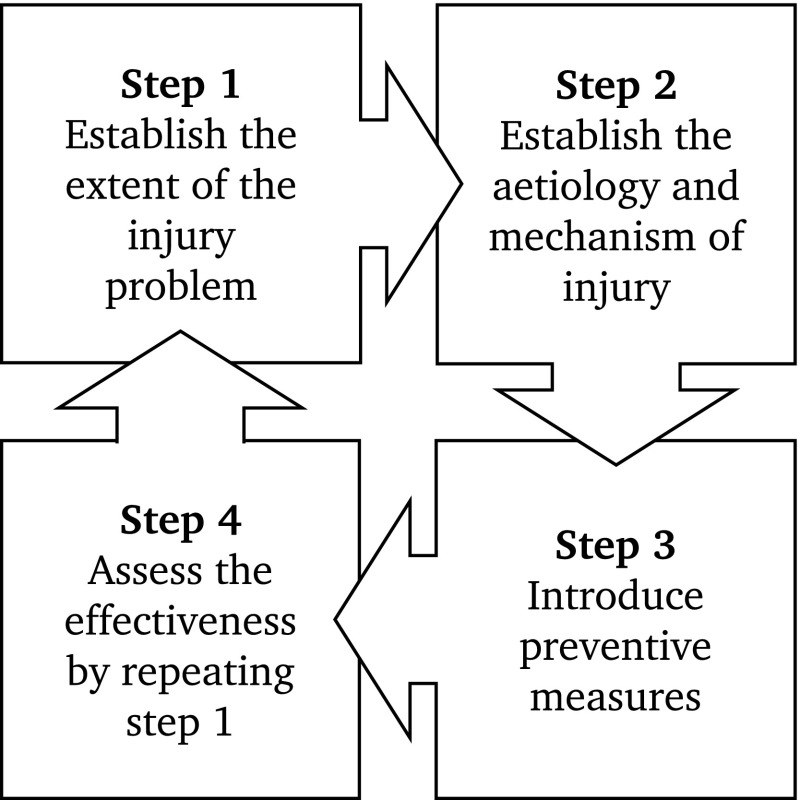
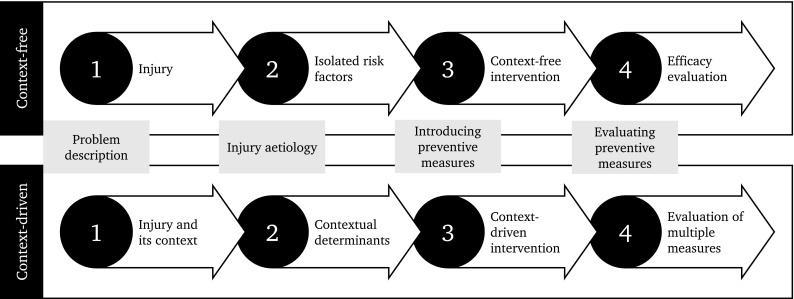
It is possible to prevent sports injuries. Unfortunately, the demonstrated efficacy and effectiveness of injury prevention approaches are not translated into lasting real-world effects. Contemporary views in sports medicine and injury prevention suggest that sports injuries are 'complex' phenomena. If the problem we aim to prevent is complex, then the first step in the 'sequence of prevention' that defines the 'injury problem' already needs to have considered this. The purpose of this paper is to revisit the first step of the 'sequence of prevention', and to explore new perspectives that acknowledge the complexity of the sports injury problem. First, this paper provides a retrospective of the 'sequence of prevention', acknowledging contemporary views on sports injuries and their prevention. Thereafter, from the perspective of the socioecological model, we demonstrate the need for taking into account the complex nature of sports injuries in the first step. Finally, we propose an alternative approach to explore and understand injury context through qualitative research methods. A better understanding of the injury problem in context will guide more context-sensitive studies, thus providing a new perspective for sports injury prevention research.
Overview
The claims and statistics of this paper haven’t been checked yet.
Free: it reads the open-access text and checks the first 5 claims that cite a source we can check. Create a free account to check every claim.
Integrity signals
Registry
Cites
Statistics
Figures
Verification
Claims the paper makes
The claims and statistics of this paper haven’t been checked yet.
Free: it reads the open-access text and checks the first 5 claims that cite a source we can check. Create a free account to check every claim.
Claims other papers make about this one
Each is checked against this paper’s own text: does it say what the citing paper says it does?
The cited source says what the claim attributes to it.
In the citing paper
“Previous authors have suggested a real need to understand the broader factors at play, 52 53 yet there has been a curious and alarming absence of gender in the conversation, given that the higher rate of ACL injury in girls and women reported in the 1990s caused an explosion of research in the area.”
From Anterior cruciate ligament injury: towards a gendered environmental approach (2021) · cites this paper as [52]
Self-check
Percentages, sums and reported differences re-computed from the paper’s own numbers.
The self-check needs the paper’s full text.
Citations
Cites
Research Design: Qualitative, Quantitative, and Mixed Methods Approaches
Creswell, J. W. (1994) · Cited by 35,508
Evaluating the public health impact of health promotion interventions: the RE-AIM framework.
Glasgow, R. E., Vogt, T. M., & Boles, S. M. (1999) · American Journal of Public Health · doi:10.2105/ajph.89.9.1322 · Cited by 7,217
Nature-nurture reconceptualized in developmental perspective: A bioecological model.
Bronfenbrenner, U., & Ceci, S. J. (1994) · Psychological Review · doi:10.1037/0033-295x.101.4.568 · Cited by 2,973 · cited 1×
“Bronfenbrenner and Ceci [29] postulated that to understand an individual’s development and behaviour, the entire ecological system in which this individual acts needs to be taken into account.”
BackgroundTwycross, A. (2004) · Nurse Researcher · doi:10.7748/nr.12.1.82.s2 · Cited by 2,031
Incidence, Severity, Aetiology and Prevention of Sports Injuries: A Review of Concepts
van Mechelen, W., Hlobil, H., & Kemper, H. C. G. (1992) · Sports Medicine · doi:10.2165/00007256-199214020-00002 · Cited by 2,015 · cited 4×
“Conflict of interest Caroline Bolling, Willem van Mechelen, Roeline Pasman and Evert Verhagen declare that they have no conflicts of interest relevant to the content of this review.”
BackgroundInfluential(2010) · Oxford University Press eBooks · doi:10.1093/acref/9780199571123.001.0001 · Cited by 1,610 · cited 1×
“In the Oxford Dictionary, ‘context’ is defined as “the interrelated conditions in which something exists or occurs” [8].”
BackgroundThe need for a complex systems model of evidence for public health
Rutter, H., Savona, N., Glonti, K., Bibby, J., Cummins, S., Finegood, D. T., Greaves, F., Harper, L., Hawe, P., Moore, L., et al. (2017) · The Lancet · doi:10.1016/s0140-6736(17)31267-9 · Cited by 1,260
Evidence-based intervention in physical activity: lessons from around the world
Heath, G. W., Parra, D. C., Sarmiento, O. L., Andersen, L. B., Owen, N., Goenka, S., Montes, F., & Brownson, R. C. (2012) · The Lancet · doi:10.1016/s0140-6736(12)60816-2 · Cited by 1,199
A new framework for research leading to sports injury prevention
Finch, C. (2006) · Journal of Science and Medicine in Sport · doi:10.1016/j.jsams.2006.02.009 · Cited by 1,071
The RE-AIM framework: a systematic review of use over time
Gaglio, B., Shoup, J. A., & Glasgow, R. E. (2013) · American Journal of Public Health · doi:10.2105/ajph.2013.301299 · Cited by 1,029
Research works printed but not linked: 1
- McGlashan AJ Enhancing the integration of specialised exercise training into coach practices to prevent lower-limb injury: using theory and exploring coaches’ salient beliefs (PhD) 2015 Ballarat Federation University Australia
Cited by
Items 101–200 of 300
Hendricks, M., Verhagen, E. A. L. M., & van de Water, A. T. M. (2024) · Scandinavian Journal of Medicine and Science in Sports · doi:10.1111/sms.14614 · Cited by 13
Self-citationBjørndal, C. T., Hausken‐Sutter, S. E., Møller, M., Myklebust, G., & Grindem, H. (2024) · BMJ Open Sport & Exercise Medicine · doi:10.1136/bmjsem-2024-001964 · Cited by 10
“In contrast, sports injury prevention intervention research focuses notably different 16 and is preoccupied predominantly with injuries to specific body parts.”
Preventing or promoting muscle injuries? Strength training as a risk factor in professional football
Balagué, N., Hristovski, R., Pol, R., Borrallo, A., & García‐Retortillo, S. (2024) · Apunts Sports Medicine · doi:10.1016/j.apunsm.2024.100462 · Cited by 13
“9-11 Furthermore, while the interactions of physiological, biomechanical, and psychosocial sports injury risk factors have been discussed, albeit partially addressed, 8,12 the impact of physical conditioning and training methodologies on muscle injuries keeps relatively understudied.”
BackgroundJacobsson, J., Mirkovic, D., Hansson, P.-O., Lundqvist, C., Mann, R. H., & Tranæus, U. (2023) · BMJ Open Sport & Exercise Medicine · doi:10.1136/bmjsem-2022-001527 · Cited by 12
“11 Also, research with youth athletes that has used mixed methods or qualitative approaches has shown that complex causal relationships (eg, between sleep and training volume) may exist.”
Sorg, M., Ruffault, A., Martin, S., Hanon, C., Jacquet, L., Verhagen, E. A. L. M., & Édouard, P. (2020) · Journal de Traumatologie du Sport · doi:10.1016/j.jts.2020.09.004 · Cited by 17
“[12] Bolling C, van Mechelen W, Pasman HR, Verhagen E.”
Self-citationTee, J. C., & Rongen, F. (2020) · SportRxiv (OSF Preprints) · doi:10.31236/osf.io/7qh4c · Cited by 15
Holm-Jensen, A., Vlachos, E., Storm, L. K., & Myburgh, C. (2025) · Sports Medicine - Open · doi:10.1186/s40798-025-00823-y · Cited by 9
“Based on our rapid review, we suggest to modify the ‘Sequence of Prevention’ model [29], in order to expand and detail Step 3, Introduce Preventive Measures (Fig.”
Fallon, T., Palmer, D., Bigard, X. A., & Heron, N. (2025) · BMJ Open Sport & Exercise Medicine · doi:10.1136/bmjsem-2024-002364 · Cited by 11
Oxendale, C. L., Green, M., Stokes, K., Cumming, S. P., Parry, G., & Williams, S. (2025) · British Journal of Sports Medicine · doi:10.1136/bjsports-2024-109612 · Cited by 9
Bel, L., Duc, M., Bizzini, M., Fournier, P., & Allet, L. (2022) · BMJ Open Sport & Exercise Medicine · doi:10.1136/bmjsem-2022-001386 · Cited by 9
“10 It was suggested that instead of focusing on whether an intervention is efficient for a specific problem, the questions should focus on how the contexts impact this problem.”
Yang, F., Wang, Z., Zhang, H., Xie, B., Zhao, H., Gan, L., Li, T., Zhang, J., Chen, Z., Li, T., et al. (2023) · Frontiers in Public Health · doi:10.3389/fpubh.2023.1226930 · Cited by 12
“However, before developing and recommending preventive strategies and keeping medical readiness, injury assessment models must first identify prevalence rates and etiological factors (17, 18).”
BackgroundFallon, T., Nolan, R., Peters, J., & Heron, N. (2025) · Sports · doi:10.3390/sports13010020 · Cited by 13
Kamran, K., Akbar, A., Naseem, M., Samad, A., Ullah, S., Achakzai, J. K., Rehman, Z. U., Sajid, M. S., & Ali, A. (2022) · Frontiers in Veterinary Science · doi:10.3389/fvets.2022.1005079 · Cited by 9
Weiler, R., Ahmed, O. H., van Mechelen, W., Verhagen, E. A. L. M., & Bolling, C. S. (2023) · British Journal of Sports Medicine · doi:10.1136/bjsports-2022-106256 · Cited by 9
Self-citationLuijten, S. C. M., Nauta, J., Janssen, T. W. J., Holla, J., Jenniskens, S. C. N., van Reuler, A. V. R., & Verhagen, E. A. L. M. (2023) · Journal of science and medicine in sport · doi:10.1016/j.jsams.2023.11.013 · Cited by 9
Self-citationMonsonís, O. B., Verhagen, E. A. L. M., Spörri, J., Gouttebarge, V., & Bolling, C. S. (2024) · Injury Prevention · doi:10.1136/ip-2023-045084 · Cited by 9
“11 In this connection, qualitative research methods 11 provide insight into the meaning and understanding of contextual factors and can help us understand how and why injury prevention is adopted in elite sports.”
BackgroundSelf-citationThornton, J. S., & Bahr, R. (2024) · British Journal of Sports Medicine · doi:10.1136/bjsports-2024-108573 · Cited by 9
Beck, L., Bekker, S., Verhagen, E. A. L. M., Bolling, C. S., & Spörri, J. (2024) · BMJ Open Sport & Exercise Medicine · doi:10.1136/bmjsem-2023-001643 · Cited by 10
“1 23 Current snowsport research has shown that single-leg balance and correct landing biomechanics are essential for performance and injury prevention.”
BackgroundSelf-citationUncovering injuries in Brazilian elite women's football: A prospective cohort study
Gasparin, G. B., Ribas, L. O., Flores, H. N., Bueno, G. B. D. B., Vrkoslaw, L., Bittencourt, N. F. N., & Baroni, B. M. (2024) · Journal of science and medicine in sport · doi:10.1016/j.jsams.2024.01.008 · Cited by 8
Lau, R., & Mukherjee, S. (2024) · Physical Therapy in Sport · doi:10.1016/j.ptsp.2024.03.003 · Cited by 11
Abdoshahi, M. (2024) · Physical activity in children. · doi:10.61186/pach.2024.488934.1038 · Cited by 10
Hall, N., Constantinou, M., Brown, M., Beck, B. R., & Kuys, S. S. (2021) · Military Medicine · doi:10.1093/milmed/usab186 · Cited by 8
Boson, K. M., Couret, A. F., Bretas, A. C., Bolling, C. S., & Andrade, C. M. (2023) · Physical Therapy in Sport · doi:10.1016/j.ptsp.2023.05.007 · Cited by 9
Self-citationCornelissen, M., Kemler, E., Baan, A., & van Nassau, F. (2023) · BMJ Open Sport & Exercise Medicine · doi:10.1136/bmjsem-2022-001456 · Cited by 8
Profiles of psychosocial factors: Can they be used to predict injury risk?
Clement, D., Tranæus, U., Johnson, U., Stenling, A., & Ivarsson, A. (2021) · Scandinavian Journal of Medicine and Science in Sports · doi:10.1111/sms.14110 · Cited by 9
Linton, L., Barr, M., & Valentin, S. (2022) · Journal of Sport Rehabilitation · doi:10.1123/jsr.2021-0364 · Cited by 11
“88 Investigating a runner’s beliefs and attitudes in order to discover the associated factors influencing 89 participant’s behaviour and engagement with injury prevention is needed.(16) This approach embraces 90 the runner’s perspective on both their interpretation, and their response to injury prevention strategies.”
BackgroundBuchholtz, K., Barnes, C., & Burgess, T. L. (2022) · International Journal of Sports Physical Therapy · doi:10.26603/001c.35581 · Cited by 8
Belmar-Arriagada, H., Gajardo-Burgos, R. E., Armstrong, R., & Bascour–Sandoval, C. (2025) · BMC Sports Science Medicine and Rehabilitation · doi:10.1186/s13102-025-01141-2 · Cited by 7
“Therefore, despite the developing evidence available reported in systematic and exploratory reviews, there is still a need to expand the demographic population of padel players studied [12].”
Sport Injury Primary and Secondary Prevention
Pereira, R., Andrade, R., Rebelo‐Marques, A., & Espregueira‐Mendes, J. (2019) · Springer eBooks · doi:10.1007/978-3-030-10433-7_11 · Cited by 11
Vianna, K. B., Ribas, L. O., Rodrigues, L. G., Gasparin, G. B., Mendonça, L. D. M., & Baroni, B. M. (2024) · Physical Therapy in Sport · doi:10.1016/j.ptsp.2024.04.001 · Cited by 10
Monsonís, O. B., Balsiger, P., Verhagen, E. A. L. M., Gouttebarge, V., Spörri, J., & Bolling, C. S. (2024) · Sports Medicine · doi:10.1007/s40279-024-02106-0 · Cited by 7
“While snow sports are well known for their performance-driven environment [1, 19], whose ultimate goal is winning, protecting an ath-lete’s health has also become paramount [4, 16, 27, 39].”
Self-citationWang, D., Valtonen, A. M., Thiel, T. P. H., Stenroth, L., Gao, Y., & Kulmala, J. (2024) · Journal of Orthopaedic and Sports Physical Therapy · doi:10.2519/jospt.2024.12720 · Cited by 8
Olaskoaga, L. Z., Weigert, M., Larruskain, J., Bikandi, E., Setuain, I., Lekue, J. A., Küchenhoff, H., & Lee, D. (2021) · AStA Advances in Statistical Analysis · doi:10.1007/s10182-021-00428-2 · Cited by 7
“Sports injuries are “complex” phenomena, as recent views in sports medicine and injury prevention suggest (Bolling et al., 2018).”
BackgroundPsychological risk factors for a first hamstring strain injury in soccer: a qualitative study
Baize, D., d’Arripe-Longueville, F., Piponnier, E., & Scoffier‐Mériaux, S. (2024) · Frontiers in Sports and Active Living · doi:10.3389/fspor.2024.1377045 · Cited by 7
The Underlying Mechanisms of Sports Injuries in Paralympic Goalball: A Mixed-Method Study
Rebai, M., Tan, R., Vanlandewijck, Y., Derman, W. E., Webborn, N., & Fagher, K. (2022) · American Journal of Physical Medicine & Rehabilitation · doi:10.1097/phm.0000000000002095 · Cited by 7
“Injury incidence rates were analyzed from data collected during the 2012 and 2016 Paralympic Games.”
BackgroundInfluentialIs it Time to Consider Quaternary Injury Prevention in Sports?
Brito, J., Mendes, R., Figueiredo, P., Marques, J. P., Beckert, P., & Verhagen, E. A. L. M. (2022) · Sports Medicine · doi:10.1007/s40279-022-01765-1 · Cited by 7
“Although sports injury prevention has emerged as a public health issue [3] (2), the efficacy and effectiveness of most injury prevention approaches have not been proven, and they may not translate into lasting realworld effects [2].”
BackgroundSelf-citationBeyond tame solutions: a new paradigm for injury prevention in sports
Verhagen, E. A. L. M., McGinley, P., & McKay, C. D. (2025) · BMJ Open Sport & Exercise Medicine · doi:10.1136/bmjsem-2025-002478 · Cited by 7
Self-citationAlnefaie, Y. M., Seyam, M. K., Alzhrani, M., Alanazi, A., Alzahrani, F., Alsaadoon, S. M., & Hasan, S. (2025) · Medicina · doi:10.3390/medicina61010121 · Cited by 8
Lau, R., & Mukherjee, S. (2025) · Research in Sports Medicine · doi:10.1080/15438627.2025.2475037 · Cited by 7
“…in sport injury prevention research, there has been increasing discussion regarding the importance of context-specific injury prevention programmes to enhance the translation of these programmes from research into practice (Bolling et al., 2018; Donaldson et al., 2016; O’Brien et al., 2016).”
Hopkinson, M., Hendricks, S., Jones, B. L., Nicholson, G., Patricios, J., Dane, K., Gardner, A. J., Howell, D. R., Owen, C., Quarrie, K. L., et al. (2025) · British Journal of Sports Medicine · doi:10.1136/bjsports-2024-108992 · Cited by 7
“28 35 The primary means of understanding tackle injuries and associated mechanisms in rugby has been via video analysis during matches.”
Édouard, P., Mulenga, D., Dandrieux, P., Salati, F., Wallace, J., & Owoeye, O. B. A. (2024) · Journal of science and medicine in sport · doi:10.1016/j.jsams.2024.07.014 · Cited by 6
Silva, J. N., Gava, V., Ribeiro, A. P., Silva, R. S., Kamonseki, D. H., & Barbosa, G. M. (2025) · Shoulder & Elbow · doi:10.1177/17585732251327677 · Cited by 6
Langhout, R., & Tak, I. J. R. (2019) · Physical Therapy in Sport · doi:10.1016/j.ptsp.2019.09.013 · Cited by 6
Vella, S., Bolling, C. S., Verhagen, E. A. L. M., & Moore, I. S. (2023) · Science and Medicine in Football · doi:10.1080/24733938.2023.2290077 · Cited by 6
“Hence, to sustain players’ reporting efforts, ISSs, should not merely serve as data collection tools but should allow for action to be taken.”
InfluentialSelf-citationBadenhorst, M., Verhagen, E. A. L. M., Lambert, M., van Mechelen, W., & Brown, J. C. (2019) · Qualitative Health Research · doi:10.1177/1049732319834930 · Cited by 6
Self-citationBolling, C. S. (2020) · British Journal of Sports Medicine · doi:10.1136/bjsports-2020-102984 · Cited by 6
Self-citationHEALTH PROBLEMS OF BASKETBALL REFEREES:A PROSPECTIVE STUDY
de Paula, D. A. G., da Cunha, R. A., & Andreoli, C. V. (2021) · Revista Brasileira de Medicina do Esporte · doi:10.1590/1517-8692202127022021_0128 · Cited by 8
“11,12 Although a sports injury in the biomedical perspective it is the same type of injury, with similar tissue damage and clinical prognosis, when considering the context in which each individual fits, the same injury can have different implications.”
Guex, K., Svensson, F., & Édouard, P. (2023) · Journal de Traumatologie du Sport · doi:10.1016/j.jts.2023.03.001 · Cited by 6
Impact and costs of injuries in professional basketball: Insights from a four-season analysis
Rubio-Jiménez, A., Peña, J., Sabata, A., Caparrós, T., & Casals, M. (2025) · Apunts Sports Medicine · doi:10.1016/j.apunsm.2025.100482 · Cited by 5
A stakeholder perspective on risk and safety planning in a major sporting event
Børve, H. E., & Thøring, T. A. (2022) · International Journal of Event and Festival Management · doi:10.1108/ijefm-11-2021-0082 · Cited by 9
Developing the Singapore youth shoulder overuse injury prevention program
Lau, R., & Mukherjee, S. (2023) · Physical Therapy in Sport · doi:10.1016/j.ptsp.2023.11.001 · Cited by 6
Read, D., & Rosenbloom, C. (2024) · Science and Medicine in Football · doi:10.1080/24733938.2024.2316093 · Cited by 5
“Contextual factors have been recognised as an influential part of player availability decision-making in sport medicine (Ardern et al. 2016; Bolling et al. 2018; Yung et al. 2022) that should be balanced against research and scientific evidence (McCall et al. 2017).”
Pi, R., Verhagen, E. A. L. M., Blanc, M., & Rodas, G. (2024) · BMJ Open Sport & Exercise Medicine · doi:10.1136/bmjsem-2024-001890 · Cited by 5
Self-citationBolling, C. S., Ekstrand, J., Waldén, M., Bengtsson, H., Davison, M. J., Verhagen, E. A. L. M., & Hägglund, M. (2025) · BMJ Open Sport & Exercise Medicine · doi:10.1136/bmjsem-2024-002392 · Cited by 5
“16 17 Considering the importance of communication and the context of professional football in players’ welfare and team performance, it is necessary to understand how team doctors perform their roles and communicate with other stakeholders within their organisations.”
Self-citationBarendrecht, M., Tak, I. J. R., Barten, C. C., & Verhagen, E. A. L. M. (2022) · BMJ Open Sport & Exercise Medicine · doi:10.1136/bmjsem-2022-001415 · Cited by 5
Self-citationVerhagen, E. A. L. M., Kryger, K. O., Bahtijarević, Z., Pangrazio, O., & Forriol, F. (2025) · BMJ Open Sport & Exercise Medicine · doi:10.1136/bmjsem-2025-002671 · Cited by 4
Self-citationRisk management framework for competitive alpine skiing—co-developed with stakeholders
Monsonís, O. B., Verhagen, E. A. L. M., Gouttebarge, V., Alhammoud, M., Collins, D. J., Ellenberger, L., Gilgien, M., Jordan, M. J., Lasshofer, M., Mitterbauer, G., et al. (2025) · BMJ Open Sport & Exercise Medicine · doi:10.1136/bmjsem-2025-002507 · Cited by 5
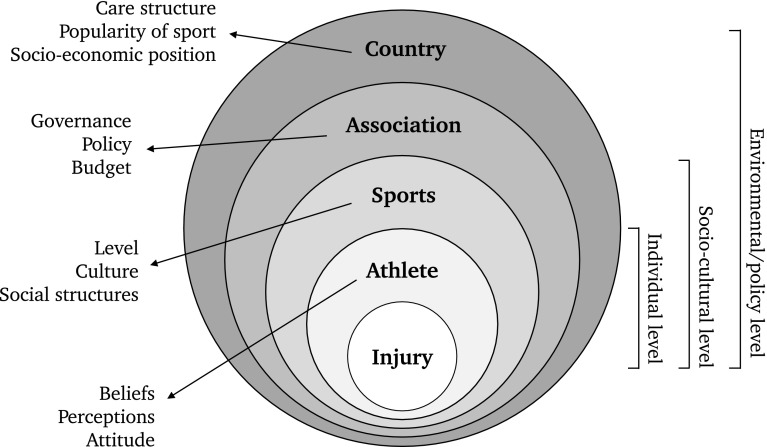
“25 Inju-ries and their prevention are complex and multifactorial; 26–29 thus, approaches such as complex systems and socioecological perspectives can be of interest.”
InfluentialSelf-citationTooth, C., Fischer, L., Macquet, A., Leclerc, S., Douryang, M., Aminake, G. N., Delvaux, F., Kaux, J., Seil, R., Hannouche, D., et al. (2026) · British Journal of Sports Medicine · doi:10.1136/bjsports-2025-110611 · Cited by 5
“14 Implementation strategies are therefore paramount to maximising the real effectiveness of prevention measures.”
InfluentialPurcell, C., Fullen, B. M., Ward, T. E., & Caulfield, B. (2024) · Journal of Orthopaedic and Sports Physical Therapy · doi:10.2519/jospt.2024.12807 · Cited by 4
Teillol, L., Ruffault, A., Hanon, C., & Édouard, P. (2021) · Journal de Traumatologie du Sport · doi:10.1016/j.jts.2021.04.005 · Cited by 4
Méndez, D. H., Policastro, P. O., & Silva, D. D. O. (2022) · Journal of Sport Rehabilitation · doi:10.1123/jsr.2022-0044 · Cited by 4
Gilhooly, M., Cahalan, R., O’Sullivan, K., & Norton, C. (2024) · Journal of Sport Rehabilitation · doi:10.1123/jsr.2024-0181 · Cited by 5
Bliekendaal, S., Barendrecht, M., Stubbe, J. H., Bolling, C. S., & Verhagen, E. (2022) · Journal of Physical Education and Sport · doi:10.7752/jpes.2022.09276 · Cited by 4
Self-citationWang, Q., & Yao, N. (2023) · Optical and Quantum Electronics · doi:10.1007/s11082-023-05803-8 · Cited by 4
“of the Shoulder joint (Bossuyt et al. 2018).”
RetractedAgusti, D., & Alvarez, J. (2020) · SportRxiv (OSF Preprints) · doi:10.31236/osf.io/m248r · Cited by 4
Lacey, A., Whyte, E. F., Burke, A., O’Connor, S., Dillon, S., & Moran, K. (2024) · Scandinavian Journal of Medicine and Science in Sports · doi:10.1111/sms.14704 · Cited by 3
“Furthermore, capturing injury severity over time is crucial for the assessment of the effectiveness of injury prevention or rehabilitation interventions [13, 19, 20].”
Ekelschot, R., van den Bekerom, M. P. J., van Maanen-Coppens, L., & Verhagen, E. A. L. M. (2025) · BMJ Open Sport & Exercise Medicine · doi:10.1136/bmjsem-2024-002204 · Cited by 3
Self-citationLuijten, S. C. M., Nauta, J., Janssen, T. W. J., Holla, J., Jenniskens, S. C. N., & Verhagen, E. A. L. M. (2024) · BMJ Open Sport & Exercise Medicine · doi:10.1136/bmjsem-2024-001945 · Cited by 3
“A 17–19 In the Netherlands, the above-mentioned novel individ-ualistic approach has been developed to provide timely, tailored injury prevention advice for athletes with a physical impairment, hereafter referred to as ‘athletes’.”
Self-citationLuijten, S. C. M., Jenniskens, S. C. N., Holla, J., Janssen, T. W. J., Nauta, J., Twisk, J. W. R., & Verhagen, E. A. L. M. (2025) · British Journal of Sports Medicine · doi:10.1136/bjsports-2024-108782 · Cited by 3
“46 Furthermore, with future research focussing on the contexts of the athletes, the tool can be further tailored to the needs of the athletes.”
Self-citationSjølie, E. S., McKay, C. D., Gjesdal, S., Grindem, H., Myklebust, G., Bjørndal, C. T., & Møller, M. (2025) · Journal of science and medicine in sport · doi:10.1016/j.jsams.2025.10.009 · Cited by 3
Lu, D., McCall, A., Jones, M. A., & Duffield, R. (2022) · Journal of Science and Medicine in Sport · doi:10.1016/j.jsams.2022.03.017 · Cited by 2
Shrier, I., Mattiello, R., Caron, M., Verhagen, E. A. L. M., & Steele, R. J. (2022) · Clinical Journal of Sport Medicine · doi:10.1097/jsm.0000000000001045 · Cited by 3
“However, artist routines are sometimes adapted to workload and logistical factors.(13) This article used prospectively collected data from the historical records of a private company (CdS) that were not gathered for research purposes.”
BackgroundSelf-citationStrategy of Preventing Sports Injuries of Students in Schools with Grounded Theory Approach
Salemi, S., Hamidi, M., Tabrizi, Y. M., Alizadeh, H., & Ardakani, M. K. (2023) · Physical Treatments - Specific Physical Therapy · doi:10.32598/ptj.13.4.575.1 · Cited by 5
“For instance, a study conducted at the New Metal Show in Australia revealed that preventive measures, such as improving physical fitness and skills, including proprioception exercises, have the potential to decrease the occurrence of sports injuries in school [22].”
Lau, R., & Mukherjee, S. (2025) · Journal of Clinical Medicine · doi:10.3390/jcm14030971 · Cited by 3
“…is likely to improve program acceptance and uptake, maximize the use of limited resources, and consequently reduce the frequently discussed “research ‐ to ‐ practice” gap during real ‐ world program implementation [1,4,29,30]. laboration with a strongly representative sample of the ment [3,31,32].”
InfluentialMonsonís, O. B., Spörri, J., Gouttebarge, V., Bolling, C. S., & Verhagen, E. A. L. M. (2025) · Sports Medicine - Open · doi:10.1186/s40798-025-00818-9 · Cited by 3
“These findings resonate with socioecological sports injury prevention models, emphasising shared responsibilities across individual, sociocultural, and policy levels through active, passive, or both measures [34, 58–60].”
Self-citationMendonça, L. D. M., Ley, C., Schuermans, J., Wezenbeek, E., & Witvrouw, E. (2021) · Physical Therapy in Sport · doi:10.1016/j.ptsp.2021.08.014 · Cited by 4
A framework for safe, healthy and sustainable participation in elite Para sport
Fagher, K., Runciman, P., Adam, F., Badenhorst, M., Eken, M. M., Jóhannesdóttir, H., Kenttä, G., Kunorozva, L., Lexell, J. E., Stenman, A., et al. (2025) · British Journal of Sports Medicine · doi:10.1136/bjsports-2025-109959 · Cited by 3
Mariano, I. G., Alves, L. E. M., Rodrigues, E. L., Azevedo, B., Castro, A. L. O., & Mendonça, L. D. M. (2025) · Physical Therapy in Sport · doi:10.1016/j.ptsp.2025.02.009 · Cited by 2
Dixon, B., Alexander, J., & Harper, D. J. (2026) · International Journal of Sports Science & Coaching · doi:10.1177/17479541251413466 · Cited by 2
Nauta, J., Haugg, J., Németh, R., Verhagen, E. A. L. M., McKay, C. D., & van Nassau, F. (2026) · BMJ Open Sport & Exercise Medicine · doi:10.1136/bmjsem-2025-002931 · Cited by 3
Self-citationTooth, C., Fischer, L., Leclerc, S., Douryang, M., Aminake, G. N., Delvaux, F. H., Seil, R., Hannouche, D., Martens, G., Verhagen, E. A. L. M., et al. (2026) · Journal of science and medicine in sport · doi:10.1016/j.jsams.2026.03.010 · Cited by 2
Self-citationGuevara, S. A., Appaneal, R. N., Keegan, R. J., Waddington, G. S., Drew, M. K., & Dare, L. (2026) · Journal of science and medicine in sport · doi:10.1016/j.jsams.2026.03.014 · Cited by 2
Профілактика пателофеморального больового синдрому та тендінопатії колінного суглобу у спортсменів
Stepanenko, O. (2022) · Physical education sport and health culture in modern society · doi:10.29038/2220-7481-2022-03-62-68 · Cited by 2
Stegerhoek, P. M., van der Zande, J. J., IJzerman, H., Verhagen, E. A. L. M., Kuijer, P., & Bolling, C. S. (2024) · Journal of Occupational and Environmental Medicine · doi:10.1097/jom.0000000000003073 · Cited by 2
“17,18 Employees can provide information about how they perceive and handle the workload and its related organizational factors, providing a comprehensive understanding of workload in various contexts.”
BackgroundSelf-citationVorbeugen ist besser als heilen: Präventionsstrategien für Arthrose
Bacher, S. F., & Whittaker, J. L. (2025) · MSK – Muskuloskelettale Physiotherapie · doi:10.1055/a-2452-1533 · Cited by 2
Injury Prevention in Track and Field
Édouard, P. (2021) · Springer eBooks · doi:10.1007/978-3-030-60216-1_29 · Cited by 2
Lower Extremity Injury Prevention in Taekwondo Poomsae Athletes: An Educational Intervention
Limos, N., & Calimag, M. M. P. (2022) · Journal of Sports and Physical Education Studies · doi:10.32996/jspes.2022.2.1.1 · Cited by 2
Contact injuries in field hockey and the potential role for personal protective equipment
Rees, H., Persson, U. M., Delahunt, E., Boreham, C. A., & Blake, C. M. (2023) · Journal of Sports Sciences · doi:10.1080/02640414.2023.2197356 · Cited by 2
“The introduction of all elements of injury prevention needs to account for human behaviour and contextual factors associated with the sport (Bolling et al., 2018).”
BackgroundNurturing nature: the greenhouse concept for health and performance
Veith, S., Mosler, A., Møller, M., Kryger, K. O., & Whalan, M. (2025) · British Journal of Sports Medicine · doi:10.1136/bjsports-2024-109268 · Cited by 2
Gramage, K., Delvaux, F. H., Schwartz, C., Berwart, G., Barnerat, T., Croisier, J., & Kaux, J. (2024) · International Journal of Sports Science & Coaching · doi:10.1177/17479541241289419 · Cited by 1
Apophyseal Physeal Stress Injury (PSI): An Overview
Materne, O., Nguyen, J. C., Yaya-Quezada, C., & Caine, D. (2024) · Contemporary pediatric and adolescent sports medicine · doi:10.1007/978-3-031-70455-0_3 · Cited by 1
Tsarbou, C. (2025) · British Journal of Sports Medicine · doi:10.1136/bjsports-2025-110409 · Cited by 1
Evans, J., Weiler, R., Peek, K., Bolling, C. S., Parry, K., & Ahmed, O. H. (2025) · Clinical Journal of Sport Medicine · doi:10.1097/jsm.0000000000001394 · Cited by 1
Self-citationFallon, T., Decorte, R., Verstockt, S., Palmer, D., Bigard, X. A., & Heron, N. (2026) · BMJ Open Sport & Exercise Medicine · doi:10.1136/bmjsem-2025-003192 · Cited by 1
Gornall, H., Truscott, H., Shill, I., Ashford, M., & Palmer, D. (2026) · Sports Medicine · doi:10.1007/s40279-026-02405-8 · Cited by 1
“Achieving this requires early consultation to understand the varied contexts and attitudes towards injury risk and prevention [98, 99].”
A Holistic Ecological Approach to Injury Prevention and Management in Youth Sport: A Scoping Review
Venzel, N. S., Henriksen, K., Møller, M., & Storm, L. K. (2026) · Scandinavian Journal of Medicine and Science in Sports · doi:10.1111/sms.70341 · Cited by 1
“…are the outcome of complex inter-plays between the individual, the physical surroundings, and the social relations [20, 24–25], which is a reason to shift focus from the injured individual towards the context within which the individual is situated when injured and working to return to play [26].”
When evidence fails in real life: Rethinking sports injury rehabilitation and prevention
Fonseca, S. T., Verhagen, E. A. L. M., & Bolling, C. S. (2026) · Brazilian Journal of Physical Therapy · doi:10.1016/j.bjpt.2026.101666 · Cited by 1
Self-citationTekyol, D., Akman, G., Doğruyol, S., & Akbaş, İ. (2022) · Cureus · doi:10.7759/cureus.21758 · Cited by 3
“Due to their complex nature, examining and understanding injuries is the most important part of the dynamic process for injury prevention interventions [8].”
BackgroundReuter, S. (2020) · Springer eBooks · doi:10.1007/978-3-662-62052-6_7 · Cited by 1
Grosso, S. (2023) · Argentinian Journal of Respiratory & Physical Therapy · doi:10.58172/ajrpt.v5i2.270 · Cited by 1
Metadata
- Authors
- Bolling, C., van Mechelen, W., Pasman, H. R., & Verhagen, E.
- Affiliations
- Amsterdam Public Health (NL)
- University of Cape Town (ZA)
- Corresponding author
- Pasman, H. Roeline
- Venue
- Sports Medicine
- Published
- 2018-06-28
- Volume
- 48
- Issue
- 10
- Pages
- 2227-2234
- ISSN
- 0112-1642 (ISSN-L)
- 1179-2035
- PMC
- PMC6132444
- OpenAlex
- W2811471078
- Cited by
- 262
- References
- 47
- Citations by year
- 2026: 29 · 2025: 33 · 2024: 46 · 2023: 44 · 2022: 38 · 2021: 30 · 2020: 23 · 2019: 15 · 2018: 4
- FWCI
- 3.69
- Type
- journal article
- Language
- en
- Open access
- hybrid
- doi.org
- Licence
- cc-by
- creativecommons.org/licenses/by/4.0 (tdm)
- Locations
- Sports Medicine (publishedVersion, cc-by)
- Europe PMC (PubMed Central) (publishedVersion, other-oa)
- PubMed Central (publishedVersion, cc-by)
- PubMed (publishedVersion)
- Pure Amsterdam UMC (publishedVersion, cc-by)
- Amsterdam UMC (VU Amsterdam) - Institutional Repository (submittedVersion, other-oa)
- VUBIR (Vrije Universiteit Brussel) (submittedVersion)
- Data Archiving and Networked Services (DANS) (submittedVersion, other-oa)
- Funders
- Ministério da Ciência, Tecnologia e Inovação (202242/2015-3)
- Topics
- Health Sciences › Medicine › Orthopedics and Sports Medicine › Sports injuries and prevention
- Health Sciences › Medicine › Public Health, Environmental and Occupational Health › Injury Epidemiology and Prevention
- Social Sciences › Psychology › Developmental and Educational Psychology › Sport Psychology and Performance
- Keywords
- sports injury prevention, socio-ecological model, qualitative research
- MeSH terms
- Athletic Injuries, Humans, Sports Medicine
About these checks
Registry, retraction, Cites and statistics results are computed, not judged, with one exception: a printed reference that no index lists is read once by a model before it counts as a citation error. Claims are extracted by a model and kept only when their quote appears verbatim in the text; each cited source is then checked, with a model’s help, for whether it says what the claim relies on. Those verdicts can be wrong — read the claim’s quote and the cited source before relying on one.
Statistics and arithmetic are recomputed, not judged.
Confidence bands are shown only for fields calibrated on our annotated test set. None is calibrated yet, so no band is shown.
What counts as a claim ›How we measure confidence ›How we check this ›
Are you an author, or do you see a problem with this page? Request a review
Data sources
Bibliographic data: Semantic Scholar, OpenAlex, Crossref.
Contains information from the Semantic Scholar Academic Graph Datasets, made available under the ODC Attribution License (ODC-BY 1.0).
Semantic Scholar’s data is described in: Kinney, R., et al. (2023). The Semantic Scholar Open Data Platform. arXiv:2301.10140.
