

Effects of Interrupting Prolonged Sitting with Physical Activity Breaks on Blood Glucose, Insulin and Triacylglycerol Measures: A Systematic Review and Meta-analysis
Open accessThe DOI matches its Crossref record; 156 of the 156 references it cites were found in a registry or an index.
Abstract
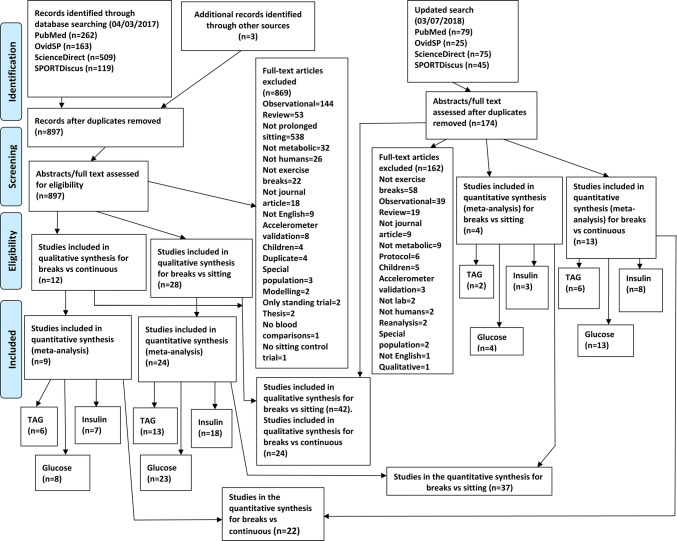
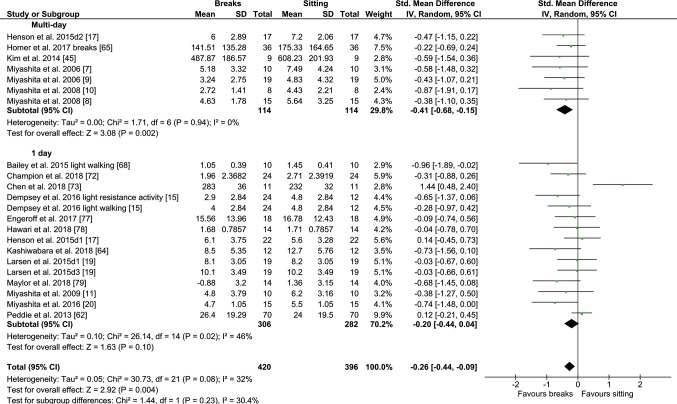
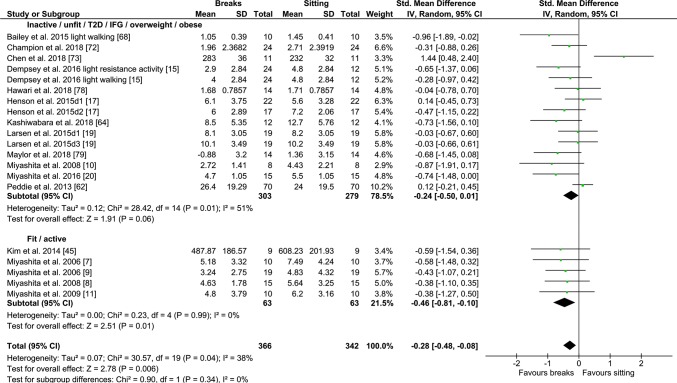
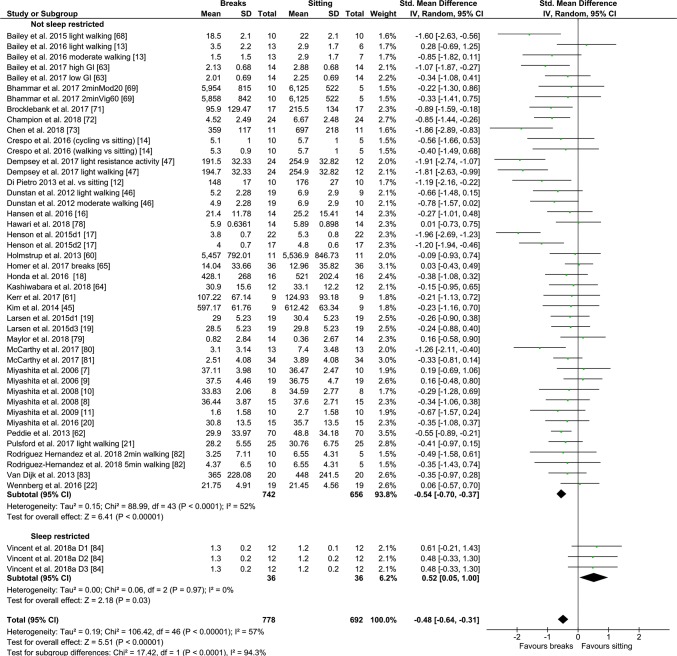
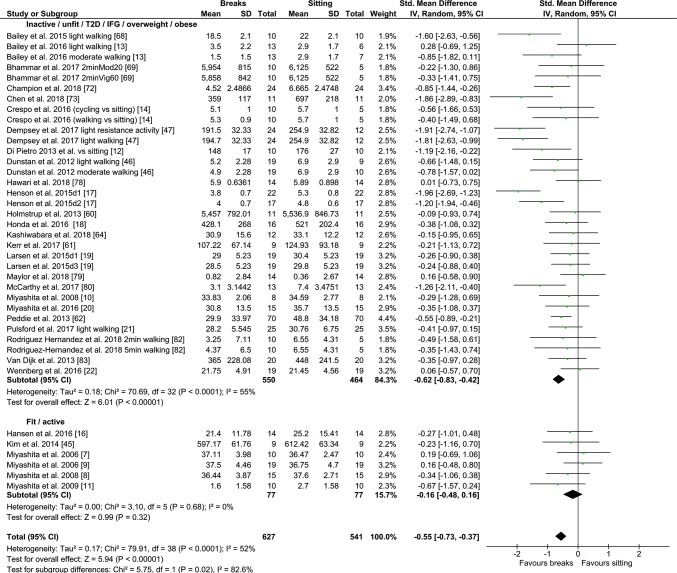
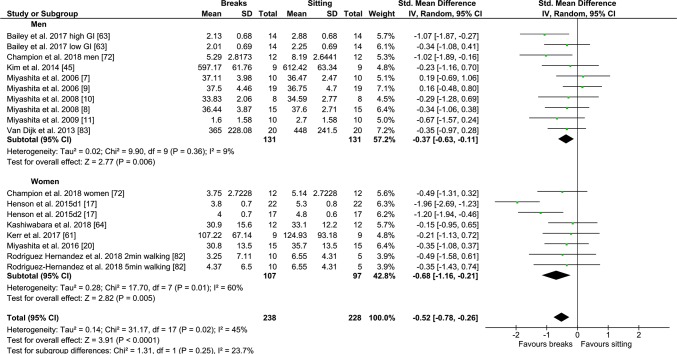
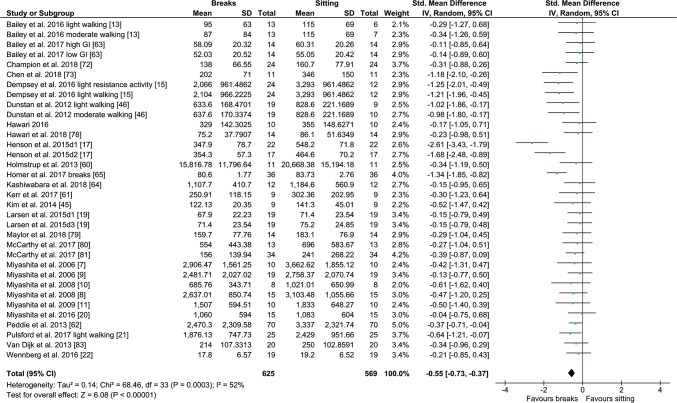
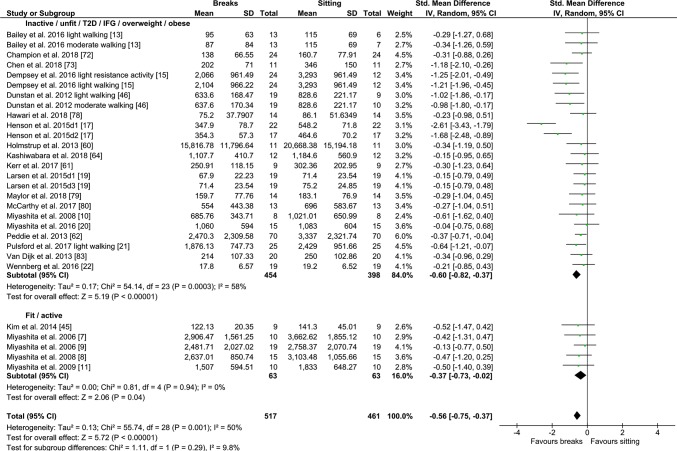
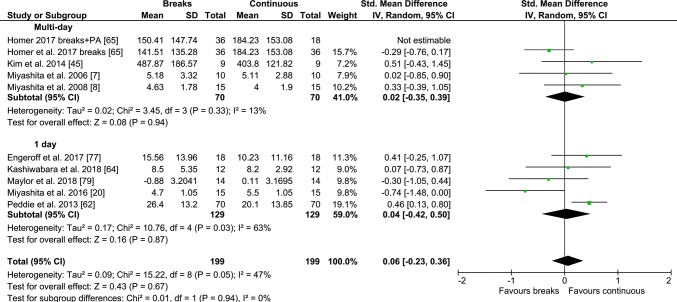
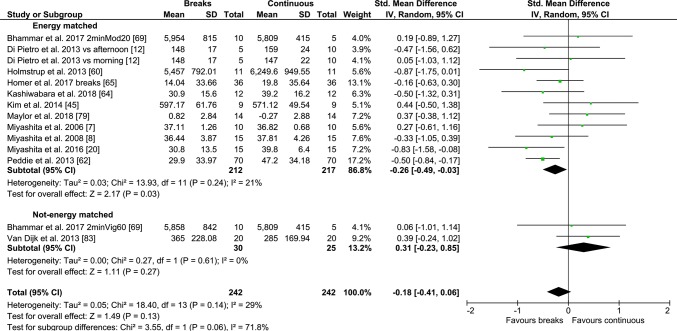
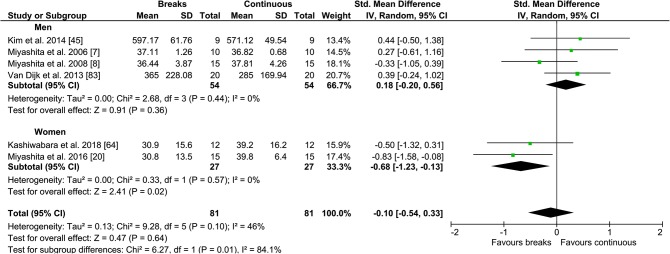
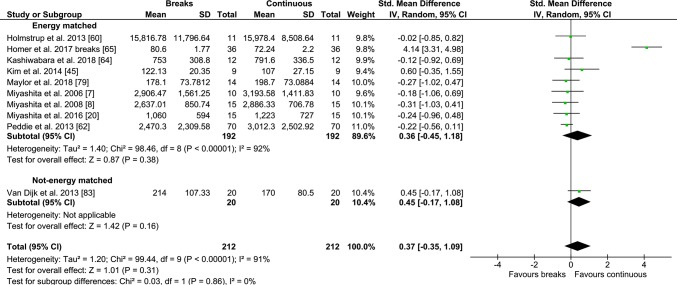
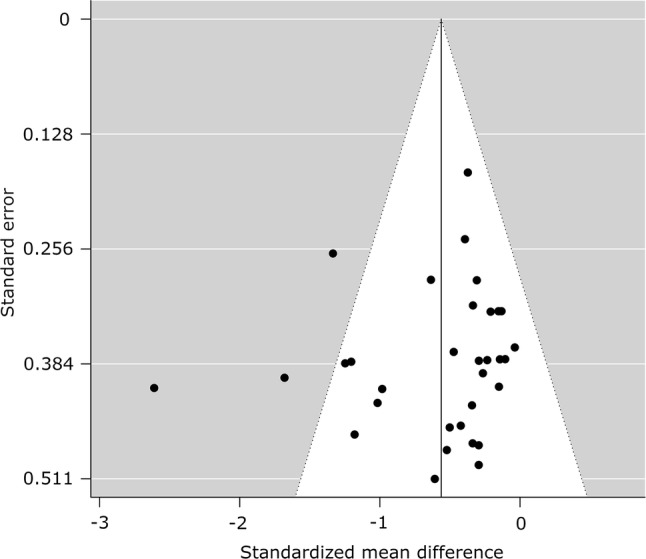
Background: Physical activity (PA) breaks in sitting time might attenuate metabolic markers relevant to the prevention of type 2 diabetes. Objectives: The primary aim of this paper was to systematically review and meta-analyse trials that compared the effects of breaking up prolonged sitting with bouts of PA throughout the day (INT) versus continuous sitting (SIT) on glucose, insulin and triacylglycerol (TAG) measures. A second aim was to compare the effects of INT versus continuous exercise (EX) on glucose, insulin and TAG measures. Methods: The review followed the Preferred Reporting Items for Systematic Reviews and Meta-analyses (PRISMA) recommendations. Eligibility criteria consisted of trials comparing INT vs. SIT or INT vs. one bout of EX before or after sitting, in participants aged 18 or above, who were classified as either metabolically healthy or impaired, but not with other major health conditions such as chronic obstructive pulmonary disease or peripheral arterial disease. Results: A total of 42 studies were included in the overall review, whereas a total of 37 studies were included in the meta-analysis. There was a standardised mean difference (SMD) of − 0.54 (95% CI − 0.70, − 0.37, p = 0.00001) in favour of INT compared to SIT for glucose. With respect to insulin, there was an SMD of − 0.56 (95% CI − 0.74, − 0.38, p = 0.00001) in favour of INT. For TAG, there was an SMD of − 0.26 (95% CI − 0.44, − 0.09, p = 0.002) in favour of INT. Body mass index (BMI) was associated with glucose responses ( β = − 0.05, 95% CI − 0.09, − 0.01, p = 0.01), and insulin ( β = − 0.05, 95% CI − 0.10, − 0.006, p = 0.03), but not TAG ( β = 0.02, 95% CI − 0.02, 0.06, p = 0.37). When energy expenditure was matched, there was an SMD of − 0.26 (95% CI − 0.50, − 0.02, p = 0.03) in favour of INT for glucose, but no statistically significant SMDs for insulin, i.e. 0.35 (95% CI − 0.37, 1.07, p = 0.35), or TAG i.e. 0.08 (95% CI − 0.22, 0.37, p = 0.62). It is worth noting that there was possible publication bias for TAG outcomes when PA breaks were compared with sitting. Conclusion: The use of PA breaks during sitting moderately attenuated post-prandial glucose, insulin, and TAG, with greater glycaemic attenuation in people with higher BMI. There was a statistically significant small advantage for PA breaks over continuous exercise for attenuating glucose measures when exercise protocols were energy matched, but no statistically significant differences for insulin and TAG. PROSPERO Registration: CRD42017080982. PROSPERO Registration: CRD42017080982.
Overview
The claims and statistics of this paper haven’t been checked yet.
Free: it reads the open-access text and checks the first 5 claims that cite a source we can check. Create a free account to check every claim.
Integrity signals
Registry
Cites
Statistics
Figures
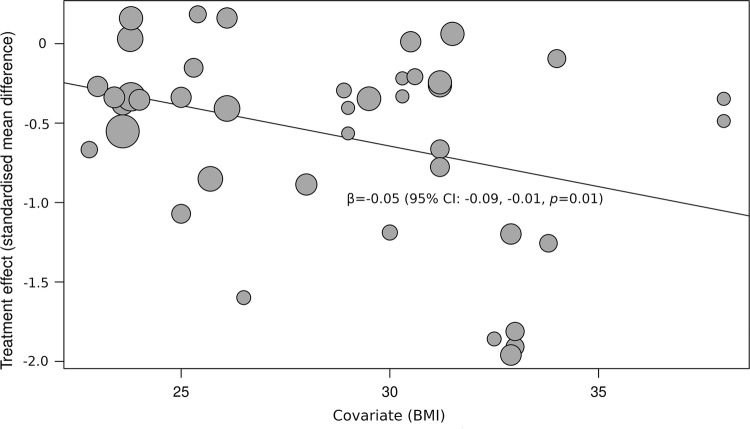
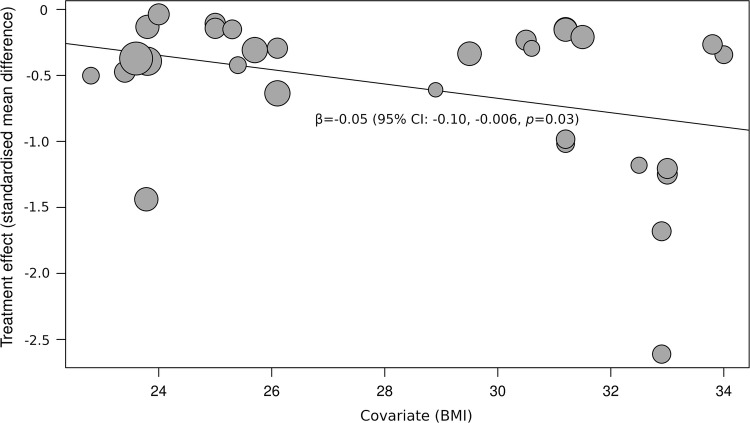
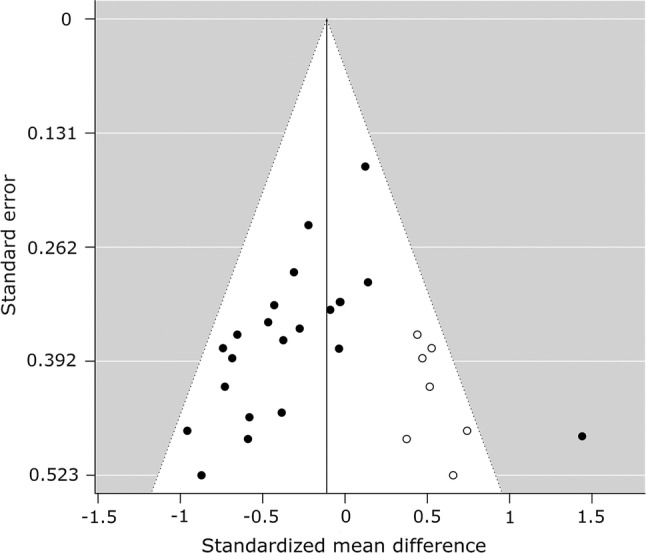
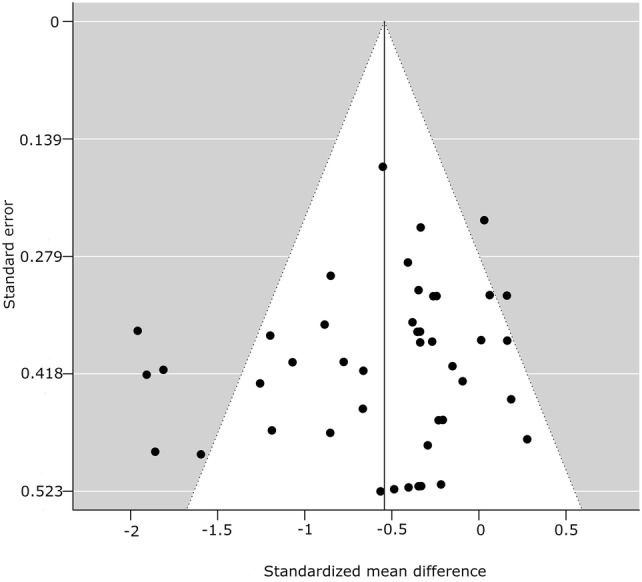
Verification
Claims the paper makes
The claims and statistics of this paper haven’t been checked yet.
Free: it reads the open-access text and checks the first 5 claims that cite a source we can check. Create a free account to check every claim.
Claims other papers make about this one
Each is checked against this paper’s own text: does it say what the citing paper says it does?
The source backs part of the claim, not all of it — or backs it for a different population, condition or comparison.
In the citing paper
“As is the case for persons with T2D, studies have demonstrated beneficial effects of both aerobic and resistance exercise and additive benefits when both forms of exercise are combined.727,847–852”
From American Association of Clinical Endocrinology Clinical Practice Guideline: Developing a Diabetes Mellitus Comprehensive Care Plan-2022 Update. (2022) · cites this paper as [852]
Experimental — accuracy not yet measuredThe source backs part of the claim, not all of it — or backs it for a different population, condition or comparison.
In the citing paper
“In adults with T2D, the interruption of sedentary time with short, regular and frequent episodes of light-intensity physical activity such as walking or simple resistance activities attenuates the level of postprandial glucose, insulin, C-peptide and triglycerides [45], and reduces waist circumference, body mass index (BMI) [46] and blood pressure [47].”
From Impact of a primary care-based mobile health intervention to ‘sit less and move more’ on HbA1c, blood pressure, and other clinical outcomes in office employees with type 2 diabetes: A randomized controlled trial (2025) · cites this paper as [45]
Experimental — accuracy not yet measuredThe cited source says what the claim attributes to it.
In the citing paper
“Instead, PA reinforces cardiorespiratory fitness, 31 inhibits inflammatory responses, 32 and improves glucose metabolism.33”
The check wasn’t confident either way, so it gives no verdict — never disputed.
In the citing paper
“For cardiometabolic conditioning, the guidelines proposed by the ACC/AHA,728,852 AACE,286,674 ADA,199,679 European Society of Cardiology/European Association for the Study of Diabetes,431 and the American College of Sports Medicine727,853 are well aligned.”
From American Association of Clinical Endocrinology Clinical Practice Guideline: Developing a Diabetes Mellitus Comprehensive Care Plan-2022 Update. (2022) · cites this paper as [852]
Experimental — accuracy not yet measured
Self-check
Percentages, sums and reported differences re-computed from the paper’s own numbers.
The self-check needs the paper’s full text.
Citations
Cites
Statistical Power Analysis for the Behavioral Sciences
Muller, K. (1989) · Technometrics · doi:10.1080/00401706.1989.10488618 · Cited by 99,167
Statistical power analysis for the behavioral sciences
(1990) · Computers, Environment and Urban Systems · doi:10.1016/0198-9715(90)90050-4 · Cited by 65,269
Bias in meta-analysis detected by a simple, graphical test
Egger, M., Smith, G. D., Schneider, M., & Minder, C. (1997) · BMJ · doi:10.1136/bmj.315.7109.629 · Cited by 56,722 · cited 2×
“10 Publication Bias Funnel plots, Begg and Mazumdar’s rank correlation test [53], Egger’s regression test [54] and Rosenthal’s fail-safe N [55] were used to assess publication bias if more than ten studies were included in the meta-analysis [26, 56].”
MethodThe Cochrane Collaboration's tool for assessing risk of bias in randomised trials
Higgins, J. P. T., Altman, D. G., Gotzsche, P. C., Juni, P., Moher, D., Oxman, A. D., Savovic, J., Schulz, K. F., Weeks, L., Sterne, J. A. C., et al. (2011) · BMJ · doi:10.1136/bmj.d5928 · Cited by 33,817
Liberati, A., Altman, D. G., Tetzlaff, J., Mulrow, C., Gøtzsche, P. C., Ioannidis, J. P. A., Clarke, M., Devereaux, P. J., Kleijnen, J., & Moher, D. (2009) · PLoS Medicine · doi:10.1371/journal.pmed.1000100 · Cited by 28,164
Liberati, A., Altman, D. G., Tetzlaff, J., Mulrow, C., Gotzsche, P. C., Ioannidis, J. P. A., Clarke, M., Devereaux, P. J., Kleijnen, J., & Moher, D. (2009) · BMJ · doi:10.1136/bmj.b2700 · Cited by 17,648
Operating characteristics of a rank correlation test for publication bias
Begg, C. B., & Mazumdar, M. (1994) · Biometrics · doi:10.2307/2533446 · Cited by 16,955 · cited 2×
“10 Publication Bias Funnel plots, Begg and Mazumdar’s rank correlation test [53], Egger’s regression test [54] and Rosenthal’s fail-safe N [55] were used to assess publication bias if more than ten studies were included in the meta-analysis [26, 56].”
MethodDuval, S., & Tweedie, R. (2000) · Biometrics · doi:10.1111/j.0006-341x.2000.00455.x · Cited by 14,099 · cited 1×
“The trim and fill method, with L0 as the estimator [57], was used to estimate “missing” studies, if any, in the funnel plots.”
MethodShamseer, L., Moher, D., Clarke, M., Ghersi, D., Liberati, A., Petticrew, M., Shekelle, P., Stewart, L. A., & the PRISMA-P Group (2015) · BMJ · doi:10.1136/bmj.g7647 · Cited by 13,120
Sterne, J. A. C., Sutton, A. J., Ioannidis, J. P. A., Terrin, N., Jones, D. R., Lau, J., Carpenter, J., Rucker, G., Harbord, R. M., Schmid, C. H., et al. (2011) · BMJ · doi:10.1136/bmj.d4002 · Cited by 7,709 · cited 2×
“10 Publication Bias Funnel plots, Begg and Mazumdar’s rank correlation test [53], Egger’s regression test [54] and Rosenthal’s fail-safe N [55] were used to assess publication bias if more than ten studies were included in the meta-analysis [26, 56].”
BackgroundMethod
Research works printed but not linked: 1
- Frayn KN Metabolic regulation a human perspective third edition 2010 3 Oxford Wiley-Blackwell
Cited by
Items 201–300 of 325
Les effets des comportements sédentaires (temps assis) sur la santé. Quelle prévention ?
Duclos, M. (2025) · Bulletin de l Académie Nationale de Médecine · doi:10.1016/j.banm.2024.12.017 · Cited by 5
Wang, X., & Ma, T. (2025) · Journal of Physical Activity and Health · doi:10.1123/jpah.2025-0031 · Cited by 2
Freire, Y. A., Browne, R. A. V., Cabral, L. L. P., Rosa-Souza, F. J., Silva, R. D. M., Alves, C. P. D. L., Câmara, M., Waters, D. L., Barreira, T. V., & Costa, E. C. (2025) · BMC Geriatrics · doi:10.1186/s12877-025-06283-z · Cited by 1
“Experimental studies have shown a deterioration in cardiometabolic parameters, including increases in blood pressure, blood glucose, and triglycerides, when there is a substantial accumulation of prolonged sedentary bouts throughout the day in older adults [41].”
Corona, J. A. A., Espinoza-Gutiérrez, R., Herrera, B. M., Cerna, J., Serrano‐Medina, A., Sánchez-Revilla, J., Pineda, L. T. B., & Calleja-Núñez, J. J. (2025) · International Journal of Computer Games Technology · doi:10.1155/ijcg/8291009 · Cited by 3
Effects of stabilization and yoga training on neuromuscular performance in sedentary women
Erkan, R., Yılmaz, E., & Çalık, İ. (2025) · European Journal of Applied Physiology · doi:10.1007/s00421-025-06058-9 · Cited by 1
“Therefore, develop - ing effective exercise programs to mitigate these effects in healthy individuals has become increasingly important (Loh et al. 2020 ).”
Firkin, C. J., Vemuri, A. K., Rahman, T., Bodt, B., Orsega-Smith, E. M., Decker, K., & Dominick, G. M. (2026) · JMIR Research Protocols · doi:10.2196/79022 · Cited by 2
Lee, C., & Lee, S. (2026) · Exercise Science · doi:10.15857/ksep.2025.00542 · Cited by 1
Jiesisibieke, Z. L., & Schooling, C. M. (2026) · European Review of Aging and Physical Activity · doi:10.1186/s11556-026-00406-0 · Cited by 1
“Benefits may arise from transitioning from a sedentary state to one of movement, regardless of intensity [78, 79].”
Pastilha, T., Macedo, R., Vale, S. M. C. G., Santos, R., Martins, V., Borges, J. A., Sebastião, V. S. O., & Alexandrino, A. S. (2026) · Journal of Cardiopulmonary Rehabilitation and Prevention · doi:10.1097/hcr.0000000000001027 · Cited by 1
Huang, H., Chen, Z., Liu, J., Huang, Z., Sun, D. J. Y., Qi, L., & Zhou, T. (2026) · Journal of Epidemiology & Community Health · doi:10.1136/jech-2025-225695 · Cited by 1
“36 Additionally, studies have shown that replacing SB with PA in older adults confers additional cardiovascular benefits by increasing high-density lipoprotein cholesterol and reducing blood pressure, total cholesterol and BMI.”
Ma, S., Lin, Y.-Y., Liu, X.-M., Zhu, Z., & Cao, Z. (2026) · Journal of Exercise Science & Fitness · doi:10.1016/j.jesf.2026.200464 · Cited by 2
“10,11 However, less frequent break schedules show mixed findings: low-intensity walking for 5 – 12 min every 60 – 120 min does not consistently reduce glycemic responses, 12,13 whereas higher-intensity walking for 5 min every 60 min improves blood glucose in higher-risk adults.”
Cai, Y., Ma, T., Sirard, J. R., Xie, Y. J., Yang, Q., Lee, C.-D., Wang, X., Liang, X., Li, Y., Lei, J., et al. (2026) · Communications Medicine · doi:10.1038/s43856-026-01421-z · Cited by 2
Acute metabolic responses to breaking up sedentary time in older adults
Maréchal, R., St‐Martin, P., Desjardins, C., Ghachem, A., Mekari, S., Bélanger, M. F., Cohen, A. A., & Dionne, I. J. (2026) · Physiology & Behavior · doi:10.1016/j.physbeh.2026.115361 · Cited by 1
Diaz, K. M., Murdock, M. E., Serafini, M. A., Clark, A. W., Boudreaux, B. D., Duran, A. T., Meshkinpour, S., Monteleone, K., Cheung, Y. K., & Zomorodi, M. (2026) · British Journal of Sports Medicine · doi:10.1136/bjsports-2025-111221 · Cited by 3
Huang, Z., Yin, M., Li, G., He, J., Qing, Y., Zhuang, M., Wu, B., Toledo, M. J. L., Wongpipit, W., & Xu, W. (2026) · International Journal of Behavioral Nutrition and Physical Activity · doi:10.1186/s12966-026-01942-9 · Cited by 1
“Previous studies have suggested that walking breaks during sedentary behavior may benefit cardiometabolic and cognitive outcomes [18, 38, 42, 44, 48, 68, 69].”
Zhuang, M., Li, Y., Qiu, Z., & Zhang, X. F. (2026) · Metabolites · doi:10.3390/metabo16080528 · Cited by 1
“Third, many previous meta-analyses synthesized broad adult populations or metabolically vulnerable groups, including individuals with obesity, diabetes or older age, which limits direct inference for apparently healthy participants [10,11,13].”
Möckel, J., Wallmann-Sperlich, B., Rupp, R., & Bucksch, J. (2026) · Frontiers in Public Health · doi:10.3389/fpubh.2026.1754818 · Cited by 1
Davies, M. J., Aroda, V. R., Bajaj, M. S., ElSayed, N. A., Giorgino, F., Green, J., Kalyani, R. R., Maruthur, N. M., Mathieu, C., Rosas, S. E., et al. (2026) · Diabetologia · doi:10.1007/s00125-026-06855-7 · Cited by 1
Haraldsson, P., Rolander, B., Jonker, D., Strengbom, E., & Josefsson, K. A. (2022) · Work · doi:10.3233/wor-210095 · Cited by 3
Roychowdhury, R., Rao, C. R., D’Silva, R. M., & Chandrasekaran, B. (2022) · Work · doi:10.3233/wor-205315 · Cited by 1
La sédentarité : nouveau facteur de risque ?
Pavy, B. (2023) · Archives des Maladies du Coeur et des Vaisseaux - Pratique · doi:10.1016/j.amcp.2023.02.013 · Cited by 1
Impact of Sleep Disturbances on Metabolic and Cardiovascular Risk Factors
Lygkoni, S., Hesse, M., & Elefteri, B. (2023) · doi:10.36000/hbt.2023.10.002 · Cited by 2
Riley, S., Paterson, C. A., Bates‐Fraser, L. C., Ondrak, K. S., Stoner, L. R., & Hanson, E. D. (2024) · European Journal of Applied Physiology · doi:10.1007/s00421-024-05419-0 · Cited by 4
“However, several meta-analyses have suggested that regularly interrupting sitting may confer a protective effect against the detrimental impact of sitting (Loh et al. 2020; Paterson et al. 2020, 2022; Adams et al. 2023).”
Management of Chronic Venous Insufficiency of the Lower Extremities Based on Podiatrists’ Opinions
Komoda, T. (2024) · The Japanese Journal of Phlebology · doi:10.7134/phlebol.23-37 · Cited by 1
Poovitha Shruthi, P., Obhuli Chandran, M., Chandrasekaran, B., Vaishali, K., Sukumar, S., & Kadavigere, R. (2025) · F1000Research · doi:10.12688/f1000research.110911.3 · Cited by 1
Gupta, C. C., Vitanege, I., Ferguson, S. A., Vandelanotte, C., Duncan, M. J., Easton, D. F., Tuckwell, G. A., Shay, C. A., Tucker, P., Lastella, M., et al. (2025) · Scientific Reports · doi:10.1038/s41598-025-04955-9 · Cited by 1
Precision Exercise and Physical Activity for Diabetes
Boulé, N. G., & Yardley, J. E. (2022) · Springer eBooks · doi:10.1007/978-3-030-98927-9_13 · Cited by 1
Higgins, S., Cowley, E. S., Paterson, C. A., Hanson, E. D., Dave, G., Meyer, M. L., Lin, F., Gibbs, B. B., Vu, M. B., & Stoner, L. R. (2022) · Contemporary Clinical Trials · doi:10.1016/j.cct.2022.107048 · Cited by 2
(2024) · Frontiers research topics · doi:10.3389/978-2-8325-4959-9 · Cited by 1
Methnani, J., Amor, D., Yousfi, N., Bouslama, A., Omezzine, A., & Bouhlel, E. (2020) · Preprints.org · doi:10.20944/preprints202010.0270.v1 · Cited by 1
Alòs, F., Puig-Ribera, A. M., Bort‐Roig, J., Chirveches-Pérez, E., Martín-Cantera, C., Franch‐Nadal, J., & Colomer, M. À. (2023) · Research Square · doi:10.21203/rs.3.rs-3128775/v1 · Cited by 2
Timing of Physical Activity and Cardiovascular Health
Ma, T. (2024) · JACC Advances · doi:10.1016/j.jacadv.2024.101325 · Cited by 1
Freire, Y. A., Silva, C. A., Macêdo, G. A. D., Browne, R. A. V., de Oliveira, B. M., Martins, G. F. C., Farias-Junior, L. F., Brito, L. C., & Costa, E. C. (2021) · Journal of Aging and Physical Activity · doi:10.1123/japa.2020-0418
The couch potato syndrome: A major concern in Covid 19 pandemic
Kour, H. (2021) · Indian Journal of Clinical Anatomy and Physiology · doi:10.18231/j.ijcap.2021.018
Sharma, B., Obeid, J., DeMatteo, C. A., Noseworthy, M. D., & Timmons, B. W. (2021) · medRxiv · doi:10.1101/2021.07.15.21260582
Kariippanon, K. E., Chong, K. H., Janssen, X., Tomaz, S. A., Ribeiro, E. H. C., Munambah, N., Chan, C. H., Chathurangana, P., Draper, C. E., Hamdouchi, A. E., et al. (2021) · SSRN Electronic Journal · doi:10.2139/ssrn.3907830
Sitzunterbrechungen mit Aktivität bessern den Glukosestoffwechsel
Müssig, K. (2021) · Info Diabetologie · doi:10.1007/s15034-021-3753-6
Flores, D., Murúa, F., & Acosta, J. C. (2007) · Boletín de la SEA
Pinto, A. J. (2021) · Digital Library of Theses and Dissertations (Universidade de São Paulo) · doi:10.11606/t.39.2021.tde-12112021-154750 · Cited by 1
Sedentary behavior and cardiometabolic disease: Experimental evidence and mechanisms
Kosaki, K., Maeda, S., & Oka, K. (2022) · 体力科學 · doi:10.7600/jspfsm.71.147
Poovitha Shruthi, P., Obhuli Chandran, M., Chandrasekaran, B., Vaishali, K., Sukumar, S., & Kadavigere, R. (2022) · F1000Research · doi:10.12688/f1000research.110911.2 · Cited by 5
Franssen, W. M. A. (2022) · Research Publications (Maastricht University) · doi:10.26481/dis.20221121wf · Cited by 1
Rao, C. R., Chandrasekaran, B., Ravishankar, N., Rutebemberwa, E., & Okello, D. (2022) · International Journal of Noncommunicable Diseases · doi:10.4103/jncd.jncd_37_22
Paterson, C. A. (2022) · doi:10.46289/p4s9t25l · Cited by 1
โตเจริญบดี, ช. (2022) · Chula Digiverse · doi:10.58837/chula.the.2022.984
dos Santos, K. M. (2023) · Digital Library of Theses and Dissertations (Universidade de São Paulo) · doi:10.11606/t.39.2023.tde-14092023-115128
Haris, F., Jan, Y., Liau, B.-Y., Hsieh, C.-W., Shen, W.-C., Tai, C., Shih, Y.-H., & Lung, C.-W. (2023) · Research Square · doi:10.21203/rs.3.rs-3379312/v1
Aluko, E. O. (2023) · International Journal of Research Publications · doi:10.47119/ijrp10013411020235536
Maldonado, M., Orbe, N., & María Gabriela García, P. (2021) · International Conference on Industrial Engineering and Operations Management (IEOM) · doi:10.46254/sa02.20210918 · Cited by 1
“At the same time, Loh et al. (2020) says that moderate paused breaks during workday, reduces the risk of chronic diseases like type 2 diabetes and cardiovascular diseases when glucose is high.”
BackgroundFactors Influencing Glucose Response to Exercise Following Oral Glucose Load
Jo, E., Wu, S., Han, H.-R., Kim, B. H., Kim, N., & Park, J.-J. (2023) · Exercise Science · doi:10.15857/ksep.2023.00521
Relations activité physique et santé : existe-t-il encore des controverses ?
Duclos, M. (2024) · Staps · doi:10.3917/sta.143.0013
Dehdari, T., Shahraki‐Sanavi, F., Nasiri, A., Nouri, R., Ansari‐Moghaddam, A., & Mohammadi, M. (2024) · Research Square · doi:10.21203/rs.3.rs-4117125/v1
Duan, T., Cao, Z., Wang, X., Min, J., Sun, T., Luo, H., & Xu, C. (2024) · SSRN Electronic Journal · doi:10.2139/ssrn.4812481
Jankowska, M. M., Tribby, C. P., Hibbing, P. R., Carlson, J., Greenwood-Hickman, M. A., Sears, D. D., LaCroix, A. Z., & Natarajan, L. (2024) · Journal of Racial and Ethnic Health Disparities · doi:10.1007/s40615-024-02114-w · Cited by 1
“Furthermore, breaking up sedentary time with PA breaks is associated with a reduction in some components of MetS [45].”
Fochesatto, C. F., Brand, C., Cristi‐Montero, C., da Costa, B. G. G., Dias, A. F., Gaya, A. C. A., & Gaya, A. R. (2024) · Applied Neuropsychology Child · doi:10.1080/21622965.2024.2432342 · Cited by 2
Free-Living Muscle Activity in Type 2 Diabetes: Sitting, Standing and WalkingPreprint
Lamberg, S., Brakenridge, C. J., Gao, Y., Dunstan, D. W., Finni, T. J., Healy, G. N., Owen, N. G., & Pesola, A. J. (2025) · Research Square · doi:10.21203/rs.3.rs-5918242/v1
Suorsa, K., Leskinen, T., Pasanen, J., Pentti, J., Vahtera, J., & Stenholm, S. (2025) · Scandinavian Journal of Medicine and Science in Sports · doi:10.1111/sms.70030 · Cited by 1
Stelmakhivska, V., & Berzin, O. V. (2025) · Scientific Journal of National Pedagogical Dragomanov University Series 15 Scientific and pedagogical problems of physical culture (physical culture and sports) · doi:10.31392/udu-nc.series15.2025.03k(188).68
Asadi, N., Sadeghi‐Yarandi, M., Eyvazlou, M., Ghasemi, N., Hosseinzadeh, K., & Azizi, G. (2025) · Work · doi:10.1177/10519815251390841
“24 The aforementioned evidence indicates that optimal PE promotes people ’ s physical and psychological performance.”
Liu, Z., Chen, G., LaMonte, M. J., Kamensky, V., Evenson, K. R., Shadyab, A. H., Luo, J., Allison, M., Wild, R. A., Going, S. B., et al. (2025) · GeroScience · doi:10.1007/s11357-025-01945-7 · Cited by 1
“A shift towards sedentariness and physical inactivity can promote insulin resistance, dyslipidemia, and hypertension, thereby elevating cardiovascular risk [32–34].”
Xue, M., Zhang, Z.-F., Zhang, Z.-X., Li, C.-Q., Wang, X.-Q., Zheng, F., Zhang, Z., & Niu, W. (2025) · Sleep Medicine · doi:10.1016/j.sleep.2025.108667
Leskinen, T., Tuominen, M., Suorsa, K., Pasanen, J., Pasanen, S., Iisalo, V., Ruohomäki, V., Pahkala, K., Heinonen, O. J., & Stenholm, S. (2025) · medRxiv · doi:10.1101/2025.11.11.25339977
Petrie, M. A., Johnson, K. A., McCue, P. M., Aggarwal, A., Brown, T., Grevengoed, K., Hoyman, J., Kallner, A., Klein, J., Lloyd, M., et al. (2025) · Physiological Reports · doi:10.14814/phy2.70657 · Cited by 1
“A recent meta-analysis offers sound evidence that hyperinsulinemia after a meal may be attenuated with various forms of physical activity (Loh et al., 2020), but no head- to-head assessment of chronically active older and younger participants was identified.”
NAKADA, K., & Atogami, F. (2025) · American Journal of Men s Health · doi:10.1177/15579883251394806 · Cited by 1
“Interrupting sitting behavior for a period of time has been found to lead to moderate decreases in postprandial glucose, insulin, and triacylglycerol levels (Loh et al., 2020).”
Heiland, E. G., Kjellenberg, K., Tarassova, O., Fernström, M., Nyberg, G., Ekblom, M. M., Helgadóttir, B., & Ekblom, Ö. (2022) · Figshare · doi:10.6084/m9.figshare.17982973
Chandrasekaran, B., Pesola, A. J., Rao, C. R., & Arumugam, A. (2021) · Figshare · doi:10.6084/m9.figshare.14211828
Wheeler, M. J., Green, D. J., Cerin, E., Ellis Kathryn, A., Heinonen, I., Lewis, J., Naylor, L. H., Cohen, N. D., Larsen, R., Dempsey, P. C., et al. (2020) · Figshare · doi:10.6084/m9.figshare.13467153
Edwardson, C. L., Maylor, B. D., Biddle, S., Clarke-Cornwell, A. M., Clemes, S., Davies, M. J., Dunstan, D. W., Granat, M. H., Gray, L. J., Hadjiconstantinou, M., et al. (2024) · Figshare · doi:10.6084/m9.figshare.26647827
Zhang, X., Chen, Z., Ho, R. S. T., Miyashita, M., & Wong, S. H. S. (2022) · Figshare · doi:10.6084/m9.figshare.19029204
van Bakel, B. M. A., Kroesen, S. H., Bakker, E. A., van Miltenburg, R. V., Günal, A., Scheepmaker, A., Aengevaeren, W. R. M., Willems, F. F., Wondergem, R., Pisters, M. F., et al. (2023) · Figshare · doi:10.6084/m9.figshare.22604716
Ma, T., Sirard, J. R., Yang, L., Li, Y., Tsang, S., & Fu, A. (2024) · Figshare · doi:10.6084/m9.figshare.26755519
van Bakel, B. M. A., Kroesen, S. H., Bakker, E. A., van Miltenburg, R. V., Günal, A., Scheepmaker, A., Aengevaeren, W. R. M., Willems, F. F., Wondergem, R., Pisters, M. F., et al. (2023) · Figshare · doi:10.6084/m9.figshare.22604731
Ma, T., Sirard, J. R., Yang, L., Li, Y., Tsang, S., & Fu, A. (2024) · Figshare · doi:10.6084/m9.figshare.26401871
van Bakel, B. M. A., Kroesen, S. H., Bakker, E. A., van Miltenburg, R. V., Günal, A., Scheepmaker, A., Aengevaeren, W. R. M., Willems, F. F., Wondergem, R., Pisters, M. F., et al. (2023) · Figshare · doi:10.6084/m9.figshare.22604725
Wheeler, M. J., Green, D. J., Cerin, E., Ellis Kathryn, A., Heinonen, I., Lewis, J., Naylor, L. H., Cohen, N. D., Larsen, R., Dempsey, P. C., et al. (2020) · Figshare · doi:10.6084/m9.figshare.13467151
Ma, T., Sirard, J. R., Yang, L., Li, Y., Tsang, S., & Fu, A. (2024) · Figshare · doi:10.6084/m9.figshare.26755543
Ma, T., Sirard, J. R., Yang, L., Li, Y., Tsang, S., & Fu, A. (2024) · Figshare · doi:10.6084/m9.figshare.26402055
Chandrasekaran, B., Pesola, A. J., Rao, C. R., & Arumugam, A. (2021) · Figshare · doi:10.6084/m9.figshare.14211825
Ma, T., Sirard, J. R., Yang, L., Li, Y., Tsang, S., & Fu, A. (2024) · Figshare · doi:10.6084/m9.figshare.26755513
van Bakel, B. M. A., Kroesen, S. H., Bakker, E. A., van Miltenburg, R. V., Günal, A., Scheepmaker, A., Aengevaeren, W. R. M., Willems, F. F., Wondergem, R., Pisters, M. F., et al. (2023) · Figshare · doi:10.6084/m9.figshare.22604737
Lau, J. H., Nair, A., Abdin, E., Roystonn, K., Wang, P., Devi, F., Sum, C. F., Lee, E. S., Müller‐Riemenschneider, F., & Subramaniam, M. (2021) · Figshare · doi:10.6084/m9.figshare.16869796
Dempsey, P. C., Biddle, S., Buman, M. P., Chastin, S., Ekelund, U., Friedenreich, C. M., Katzmarzyk, P. T., Leitzmann, M. F., Stamatakis, E., Ploeg, H. P. V. D., et al. (2020) · Figshare · doi:10.6084/m9.figshare.13290965
Self-citationWheeler, M. J., Green, D. J., Cerin, E., Ellis Kathryn, A., Heinonen, I., Lewis, J., Naylor, L. H., Cohen, N. D., Larsen, R., Dempsey, P. C., et al. (2020) · Figshare · doi:10.6084/m9.figshare.13467147
Ma, T., Sirard, J. R., Yang, L., Li, Y., Tsang, S., & Fu, A. S. (2024) · Figshare · doi:10.6084/m9.figshare.26755525
Heiland, E. G., Kjellenberg, K., Tarassova, O., Fernström, M., Nyberg, G., Ekblom, M. M., Helgadóttir, B., & Ekblom, Ö. (2022) · Figshare · doi:10.6084/m9.figshare.17982979
van Bakel, B. M. A., Kroesen, S. H., Bakker, E. A., van Miltenburg, R. V., Günal, A., Scheepmaker, A., Aengevaeren, W. R. M., Willems, F. F., Wondergem, R., Pisters, M. F., et al. (2023) · Figshare · doi:10.6084/m9.figshare.22604734
Wheeler, M. J., Green, D. J., Cerin, E., Ellis Kathryn, A., Heinonen, I., Lewis, J., Naylor, L. H., Cohen, N. D., Larsen, R., Dempsey, P. C., et al. (2020) · Figshare · doi:10.6084/m9.figshare.13467157
Kanning, M. K., Niermann, C. Y. N., Ebner-Primer, U., & Giurgiu, M. (2021) · Figshare · doi:10.6084/m9.figshare.15178787
Ma, T., Sirard, J. R., Yang, L., Li, Y., Tsang, S., & Fu, A. (2024) · Figshare · doi:10.6084/m9.figshare.26755540
Ma, T., Sirard, J. R., Yang, L., Li, Y., Tsang, S., & Fu, A. (2024) · Figshare · doi:10.6084/m9.figshare.26755510
van Bakel, B. M. A., Kroesen, S. H., Bakker, E. A., van Miltenburg, R. V., Günal, A., Scheepmaker, A., Aengevaeren, W. R. M., Willems, F. F., Wondergem, R., Pisters, M. F., et al. (2023) · Figshare · doi:10.6084/m9.figshare.22604728
Edwardson, C. L., Maylor, B. D., Biddle, S., Clarke-Cornwell, A. M., Clemes, S., Davies, M. J., Dunstan, D. W., Granat, M. H., Gray, L. J., Hadjiconstantinou, M., et al. (2024) · Figshare · doi:10.6084/m9.figshare.26647833
Ma, T., Sirard, J. R., Yang, L., Li, Y., Tsang, S., & Fu, A. (2024) · Figshare · doi:10.6084/m9.figshare.26755516
Stephenson, A., García-Constantino, M., Murphy, M. H., McDonough, S. M., Nugent, C. D., & Mair, J. L. (2021) · Figshare · doi:10.6084/m9.figshare.15001318
Heiland, E. G., Kjellenberg, K., Tarassova, O., Fernström, M., Nyberg, G., Ekblom, M. M., Helgadóttir, B., & Ekblom, Ö. (2022) · Figshare · doi:10.6084/m9.figshare.17982970
Backes, A., Aguayo, G. A., Collings, P. J., Fatouhi, D. E., Fagherazzi, G., & Malisoux, L. (2024) · Figshare · doi:10.6084/m9.figshare.26553251
van Bakel, B. M. A., Kroesen, S. H., Bakker, E. A., van Miltenburg, R. V., Günal, A., Scheepmaker, A., Aengevaeren, W. R. M., Willems, F. F., Wondergem, R., Pisters, M. F., et al. (2023) · Figshare · doi:10.6084/m9.figshare.22604713
Ma, T., Sirard, J. R., Yang, L., Li, Y., Tsang, S., & Fu, A. (2024) · Figshare · doi:10.6084/m9.figshare.26755531
van Bakel, B. M. A., Kroesen, S. H., Bakker, E. A., van Miltenburg, R. V., Günal, A., Scheepmaker, A., Aengevaeren, W. R. M., Willems, F. F., Wondergem, R., Pisters, M. F., et al. (2023) · Figshare · doi:10.6084/m9.figshare.22604722
van Bakel, B. M. A., Kroesen, S. H., Bakker, E. A., van Miltenburg, R. V., Günal, A., Scheepmaker, A., Aengevaeren, W. R. M., Willems, F. F., Wondergem, R., Pisters, M. F., et al. (2023) · Figshare · doi:10.6084/m9.figshare.22604719
Metadata
- Authors
- Loh, R., Stamatakis, E., Folkerts, D., Allgrove, J. E., & Moir, H. J.
- Affiliations
- Kingston University London (GB)
- The University of Sydney (AU)
- Corresponding author
- Loh, Roland
- Moir, Hannah J.
- Venue
- Sports Medicine
- Published
- 2019-09-24
- Volume
- 50
- Issue
- 2
- Pages
- 295-330
- ISSN
- 0112-1642 (ISSN-L)
- 1179-2035
- PMC
- PMC6985064
- OpenAlex
- W2975931332
- Cited by
- 326
- References
- 156
- Citations by year
- 2026: 38 · 2025: 40 · 2024: 60 · 2023: 52 · 2022: 50 · 2021: 51 · 2020: 32 · 2019: 1
- FWCI
- 3.94
- Type
- journal article
- Language
- en
- Open access
- hybrid
- doi.org
- Licence
- cc-by
- creativecommons.org/licenses/by/4.0 (tdm)
- creativecommons.org/licenses/by/4.0 (vor)
- Locations
- Sports Medicine (publishedVersion, cc-by)
- Europe PMC (PubMed Central) (publishedVersion, cc-by)
- PubMed Central (publishedVersion, cc-by)
- PubMed (publishedVersion)
- Research Repository (Kingston University London) (acceptedVersion)
- Funders
- Kingston University
- University of Sydney
- Topics
- Health Sciences › Medicine › Public Health, Environmental and Occupational Health › Physical Activity and Health
- Health Sciences › Medicine › Endocrinology, Diabetes and Metabolism › Diabetes, Cardiovascular Risks, and Lipoproteins
- Social Sciences › Human Factors and Ergonomics › Ergonomics and Musculoskeletal Disorders
- Keywords
- prolonged sitting, physical activity breaks, sedentary behavior, blood glucose, insulin, triglycerides, type 2 diabetes prevention, body mass index, energy expenditure, metabolic biomarkers, metabolic health, metabolic dysfunction, glycemic control, insulin sensitivity, dyslipidemia, diabetes risk factors
- MeSH terms
- Sitting Position, Blood Glucose, Diabetes Mellitus, Type 2, Humans, Insulin, Triglycerides, Exercise, Postprandial Period, Sedentary Behavior
About these checks
Registry, retraction, Cites and statistics results are computed, not judged, with one exception: a printed reference that no index lists is read once by a model before it counts as a citation error. Claims are extracted by a model and kept only when their quote appears verbatim in the text; each cited source is then checked, with a model’s help, for whether it says what the claim relies on. Those verdicts can be wrong — read the claim’s quote and the cited source before relying on one.
Statistics and arithmetic are recomputed, not judged.
Confidence bands are shown only for fields calibrated on our annotated test set. None is calibrated yet, so no band is shown.
What counts as a claim ›How we measure confidence ›How we check this ›
Are you an author, or do you see a problem with this page? Request a review
Data sources
Bibliographic data: Semantic Scholar, OpenAlex, Crossref.
Contains information from the Semantic Scholar Academic Graph Datasets, made available under the ODC Attribution License (ODC-BY 1.0).
Semantic Scholar’s data is described in: Kinney, R., et al. (2023). The Semantic Scholar Open Data Platform. arXiv:2301.10140.
