

Effects of Interrupting Prolonged Sitting with Physical Activity Breaks on Blood Glucose, Insulin and Triacylglycerol Measures: A Systematic Review and Meta-analysis
Open accessThe DOI matches its Crossref record; 156 of the 156 references it cites were found in a registry or an index.
Abstract
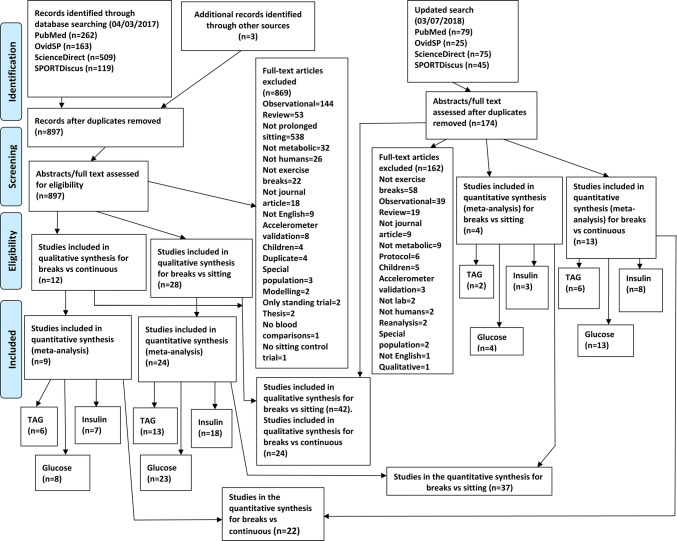
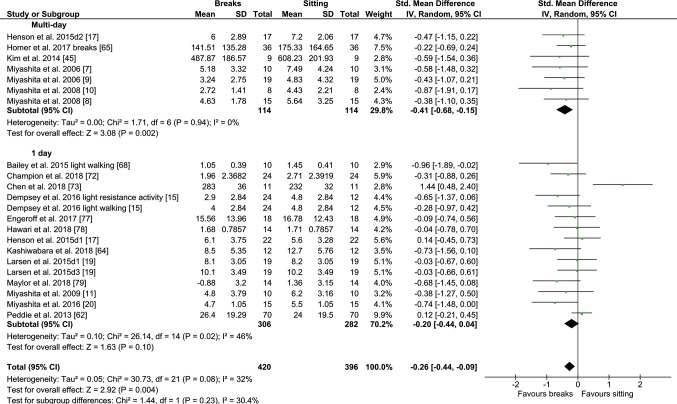
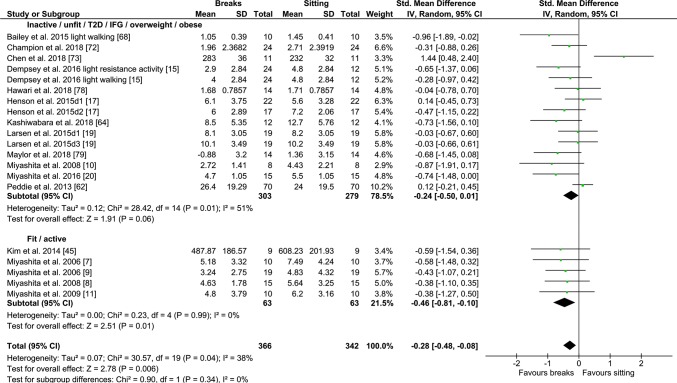
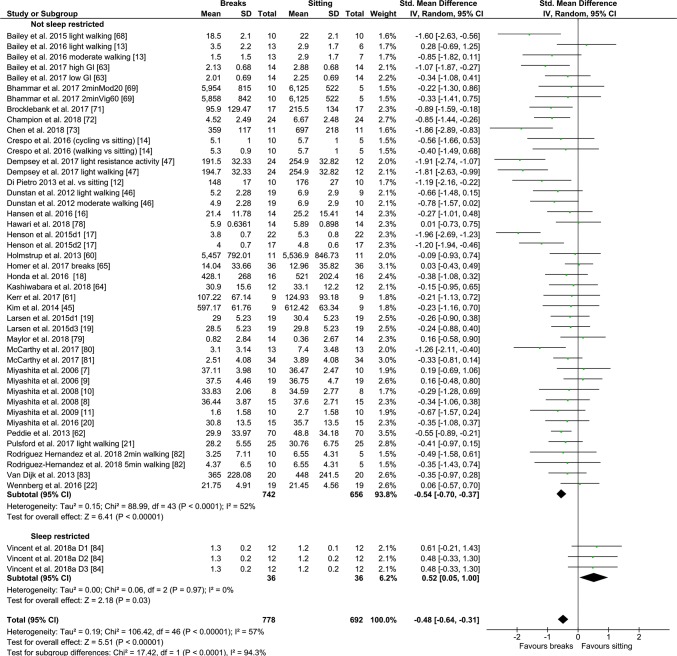
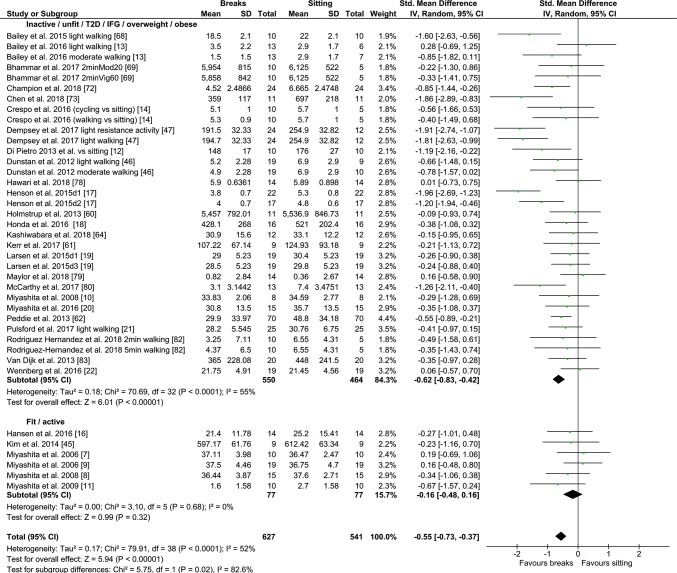
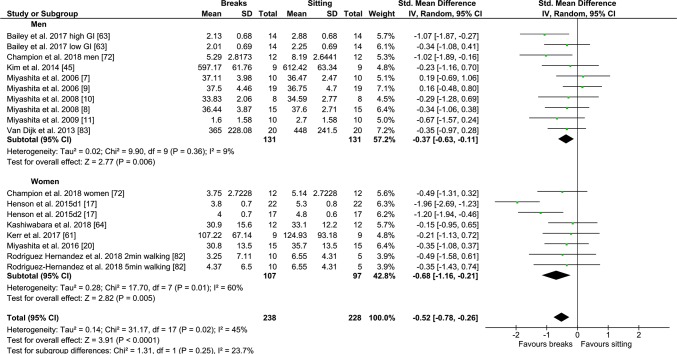
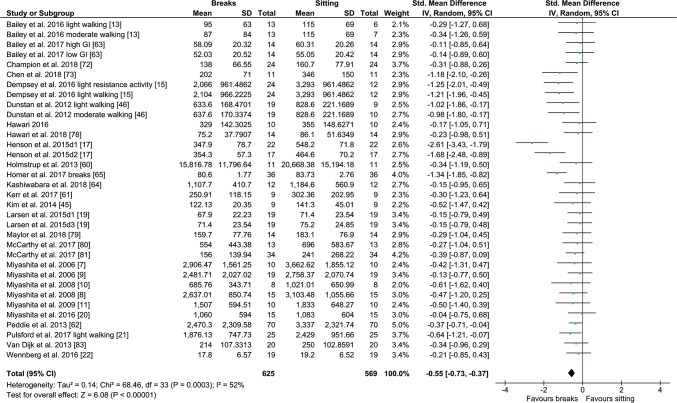
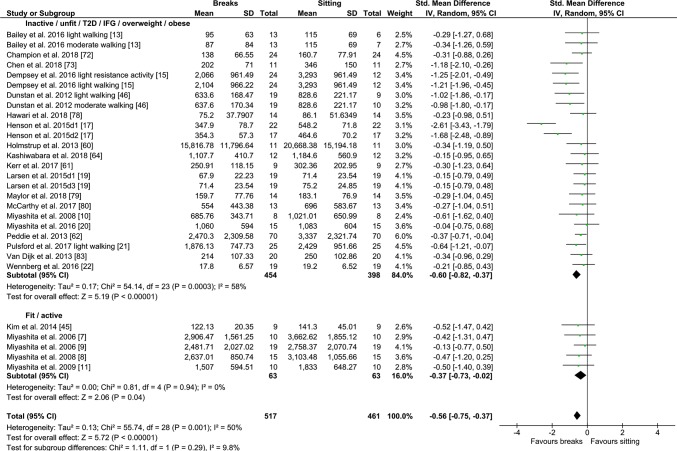
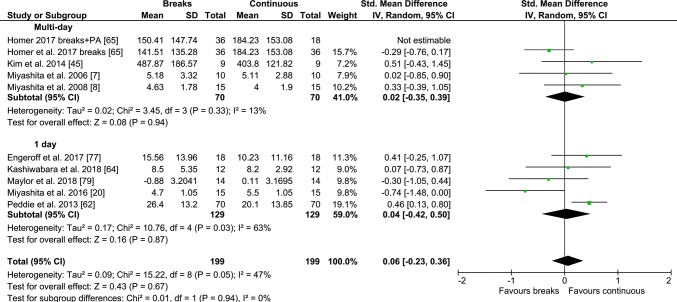
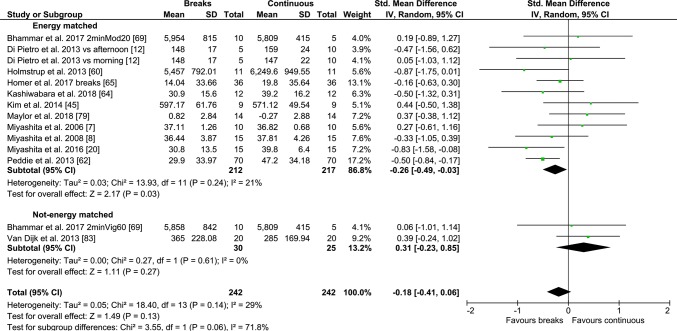
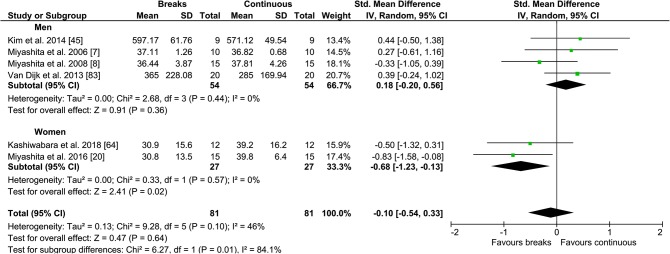
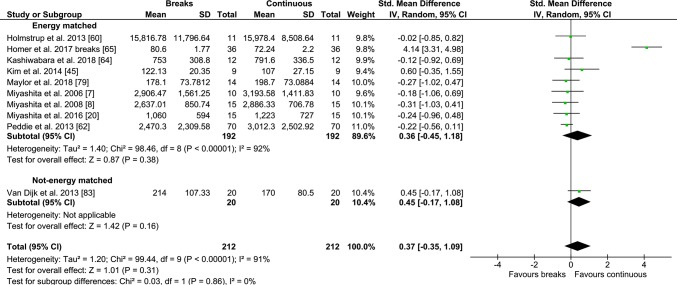
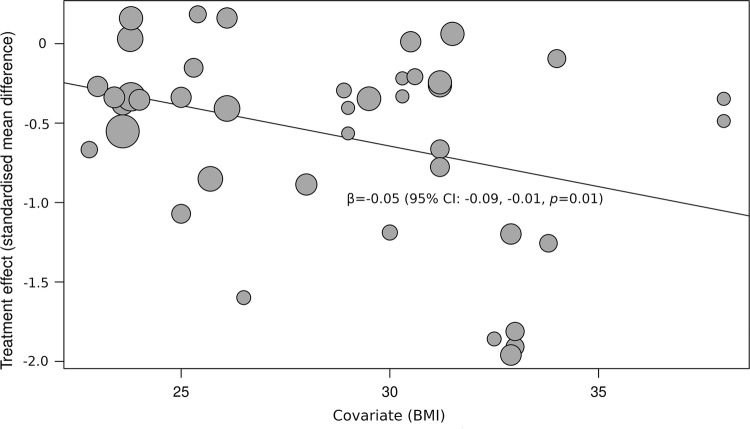
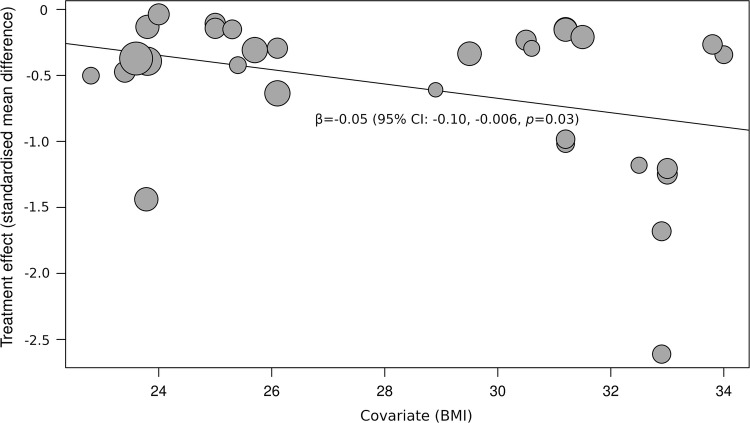
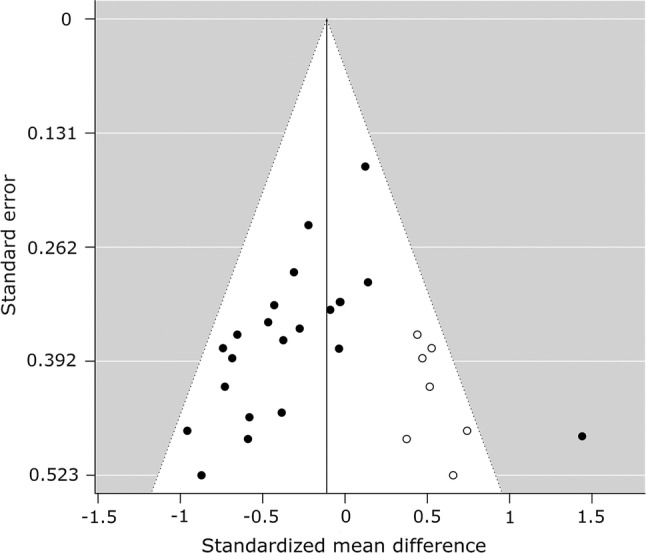
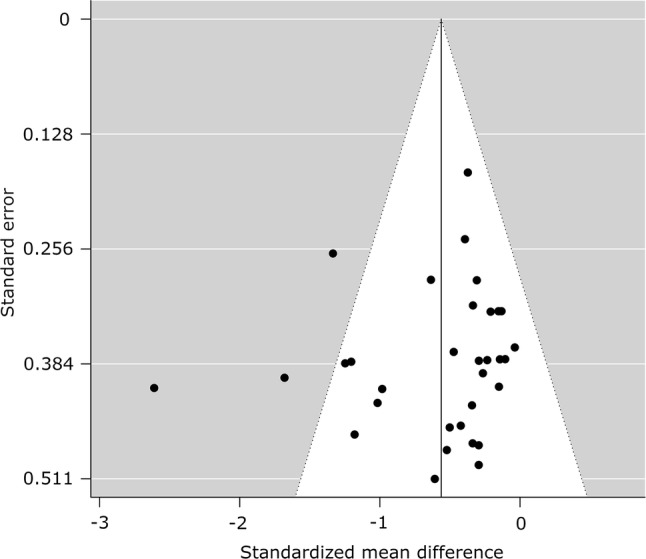
Background: Physical activity (PA) breaks in sitting time might attenuate metabolic markers relevant to the prevention of type 2 diabetes. Objectives: The primary aim of this paper was to systematically review and meta-analyse trials that compared the effects of breaking up prolonged sitting with bouts of PA throughout the day (INT) versus continuous sitting (SIT) on glucose, insulin and triacylglycerol (TAG) measures. A second aim was to compare the effects of INT versus continuous exercise (EX) on glucose, insulin and TAG measures. Methods: The review followed the Preferred Reporting Items for Systematic Reviews and Meta-analyses (PRISMA) recommendations. Eligibility criteria consisted of trials comparing INT vs. SIT or INT vs. one bout of EX before or after sitting, in participants aged 18 or above, who were classified as either metabolically healthy or impaired, but not with other major health conditions such as chronic obstructive pulmonary disease or peripheral arterial disease. Results: A total of 42 studies were included in the overall review, whereas a total of 37 studies were included in the meta-analysis. There was a standardised mean difference (SMD) of − 0.54 (95% CI − 0.70, − 0.37, p = 0.00001) in favour of INT compared to SIT for glucose. With respect to insulin, there was an SMD of − 0.56 (95% CI − 0.74, − 0.38, p = 0.00001) in favour of INT. For TAG, there was an SMD of − 0.26 (95% CI − 0.44, − 0.09, p = 0.002) in favour of INT. Body mass index (BMI) was associated with glucose responses ( β = − 0.05, 95% CI − 0.09, − 0.01, p = 0.01), and insulin ( β = − 0.05, 95% CI − 0.10, − 0.006, p = 0.03), but not TAG ( β = 0.02, 95% CI − 0.02, 0.06, p = 0.37). When energy expenditure was matched, there was an SMD of − 0.26 (95% CI − 0.50, − 0.02, p = 0.03) in favour of INT for glucose, but no statistically significant SMDs for insulin, i.e. 0.35 (95% CI − 0.37, 1.07, p = 0.35), or TAG i.e. 0.08 (95% CI − 0.22, 0.37, p = 0.62). It is worth noting that there was possible publication bias for TAG outcomes when PA breaks were compared with sitting. Conclusion: The use of PA breaks during sitting moderately attenuated post-prandial glucose, insulin, and TAG, with greater glycaemic attenuation in people with higher BMI. There was a statistically significant small advantage for PA breaks over continuous exercise for attenuating glucose measures when exercise protocols were energy matched, but no statistically significant differences for insulin and TAG. PROSPERO Registration: CRD42017080982. PROSPERO Registration: CRD42017080982.
Overview
The claims and statistics of this paper haven’t been checked yet.
Free: it reads the open-access text and checks the first 5 claims that cite a source we can check. Create a free account to check every claim.
Integrity signals
Registry
Cites
Statistics
Figures
Verification
Claims the paper makes
The claims and statistics of this paper haven’t been checked yet.
Free: it reads the open-access text and checks the first 5 claims that cite a source we can check. Create a free account to check every claim.
Claims other papers make about this one
Each is checked against this paper’s own text: does it say what the citing paper says it does?
The source backs part of the claim, not all of it — or backs it for a different population, condition or comparison.
In the citing paper
“As is the case for persons with T2D, studies have demonstrated beneficial effects of both aerobic and resistance exercise and additive benefits when both forms of exercise are combined.727,847–852”
From American Association of Clinical Endocrinology Clinical Practice Guideline: Developing a Diabetes Mellitus Comprehensive Care Plan-2022 Update. (2022) · cites this paper as [852]
Experimental — accuracy not yet measuredThe source backs part of the claim, not all of it — or backs it for a different population, condition or comparison.
In the citing paper
“In adults with T2D, the interruption of sedentary time with short, regular and frequent episodes of light-intensity physical activity such as walking or simple resistance activities attenuates the level of postprandial glucose, insulin, C-peptide and triglycerides [45], and reduces waist circumference, body mass index (BMI) [46] and blood pressure [47].”
From Impact of a primary care-based mobile health intervention to ‘sit less and move more’ on HbA1c, blood pressure, and other clinical outcomes in office employees with type 2 diabetes: A randomized controlled trial (2025) · cites this paper as [45]
Experimental — accuracy not yet measuredThe cited source says what the claim attributes to it.
In the citing paper
“Instead, PA reinforces cardiorespiratory fitness, 31 inhibits inflammatory responses, 32 and improves glucose metabolism.33”
The check wasn’t confident either way, so it gives no verdict — never disputed.
In the citing paper
“For cardiometabolic conditioning, the guidelines proposed by the ACC/AHA,728,852 AACE,286,674 ADA,199,679 European Society of Cardiology/European Association for the Study of Diabetes,431 and the American College of Sports Medicine727,853 are well aligned.”
From American Association of Clinical Endocrinology Clinical Practice Guideline: Developing a Diabetes Mellitus Comprehensive Care Plan-2022 Update. (2022) · cites this paper as [852]
Experimental — accuracy not yet measured
Self-check
Percentages, sums and reported differences re-computed from the paper’s own numbers.
The self-check needs the paper’s full text.
Citations
Cites
Statistical Power Analysis for the Behavioral Sciences
Muller, K. (1989) · Technometrics · doi:10.1080/00401706.1989.10488618 · Cited by 99,167
Statistical power analysis for the behavioral sciences
(1990) · Computers, Environment and Urban Systems · doi:10.1016/0198-9715(90)90050-4 · Cited by 65,269
Bias in meta-analysis detected by a simple, graphical test
Egger, M., Smith, G. D., Schneider, M., & Minder, C. (1997) · BMJ · doi:10.1136/bmj.315.7109.629 · Cited by 56,722 · cited 2×
“10 Publication Bias Funnel plots, Begg and Mazumdar’s rank correlation test [53], Egger’s regression test [54] and Rosenthal’s fail-safe N [55] were used to assess publication bias if more than ten studies were included in the meta-analysis [26, 56].”
MethodThe Cochrane Collaboration's tool for assessing risk of bias in randomised trials
Higgins, J. P. T., Altman, D. G., Gotzsche, P. C., Juni, P., Moher, D., Oxman, A. D., Savovic, J., Schulz, K. F., Weeks, L., Sterne, J. A. C., et al. (2011) · BMJ · doi:10.1136/bmj.d5928 · Cited by 33,817
Liberati, A., Altman, D. G., Tetzlaff, J., Mulrow, C., Gøtzsche, P. C., Ioannidis, J. P. A., Clarke, M., Devereaux, P. J., Kleijnen, J., & Moher, D. (2009) · PLoS Medicine · doi:10.1371/journal.pmed.1000100 · Cited by 28,164
Liberati, A., Altman, D. G., Tetzlaff, J., Mulrow, C., Gotzsche, P. C., Ioannidis, J. P. A., Clarke, M., Devereaux, P. J., Kleijnen, J., & Moher, D. (2009) · BMJ · doi:10.1136/bmj.b2700 · Cited by 17,648
Operating characteristics of a rank correlation test for publication bias
Begg, C. B., & Mazumdar, M. (1994) · Biometrics · doi:10.2307/2533446 · Cited by 16,955 · cited 2×
“10 Publication Bias Funnel plots, Begg and Mazumdar’s rank correlation test [53], Egger’s regression test [54] and Rosenthal’s fail-safe N [55] were used to assess publication bias if more than ten studies were included in the meta-analysis [26, 56].”
MethodDuval, S., & Tweedie, R. (2000) · Biometrics · doi:10.1111/j.0006-341x.2000.00455.x · Cited by 14,099 · cited 1×
“The trim and fill method, with L0 as the estimator [57], was used to estimate “missing” studies, if any, in the funnel plots.”
MethodShamseer, L., Moher, D., Clarke, M., Ghersi, D., Liberati, A., Petticrew, M., Shekelle, P., Stewart, L. A., & the PRISMA-P Group (2015) · BMJ · doi:10.1136/bmj.g7647 · Cited by 13,120
Sterne, J. A. C., Sutton, A. J., Ioannidis, J. P. A., Terrin, N., Jones, D. R., Lau, J., Carpenter, J., Rucker, G., Harbord, R. M., Schmid, C. H., et al. (2011) · BMJ · doi:10.1136/bmj.d4002 · Cited by 7,709 · cited 2×
“10 Publication Bias Funnel plots, Begg and Mazumdar’s rank correlation test [53], Egger’s regression test [54] and Rosenthal’s fail-safe N [55] were used to assess publication bias if more than ten studies were included in the meta-analysis [26, 56].”
BackgroundMethod
Research works printed but not linked: 1
- Frayn KN Metabolic regulation a human perspective third edition 2010 3 Oxford Wiley-Blackwell
Cited by
KANALEY, J. A., COLBERG, S. R., CORCORAN, M. H., MALIN, S. K., RODRIGUEZ, N. R., CRESPO, C. J., KIRWAN, J. P., & ZIERATH, J. R. (2022) · Medicine & Science in Sports & Exercise · doi:10.1249/mss.0000000000002800 · Cited by 931
Blonde, L., Umpierrez, G. E., Reddy, S. S., McGill, J. B., Berga, S. L., Bush, M., Chandrasekaran, S., DeFronzo, R. A., Einhorn, D., Galindo, R. J., et al. (2022) · Endocrine Practice · doi:10.1016/j.eprac.2022.08.002 · Cited by 507
Physiology of sedentary behavior
Pinto, A. J., Bergouignan, A., Dempsey, P. C., Roschel, H., Owen, N., Gualano, B., & Dunstan, D. W. (2023) · Physiological Reviews · doi:10.1152/physrev.00022.2022 · Cited by 358
Suzuki, Y., Maeda, N., Hirado, D., Shirakawa, T., & Urabe, Y. (2020) · International Journal of Environmental Research and Public Health · doi:10.3390/ijerph17186591 · Cited by 368
“For example, one way is to take a break from sitting with two-minute walks every 20–30 min at home [30].”
BackgroundSit less and move more for cardiovascular health: emerging insights and opportunities
Dunstan, D. W., Dogra, S., Carter, S. E., & Owen, N. (2021) · Nature Reviews Cardiology · doi:10.1038/s41569-021-00547-y · Cited by 333
Okamura, T., Tsukamoto, K., Arai, H., Fujioka, Y., Ishigaki, Y., Koba, S., Ohmura, H., Shoji, T., Yokote, K., Yoshida, H., et al. (2024) · Journal of Atherosclerosis and Thrombosis · doi:10.5551/jat.gl2022 · Cited by 302
Dempsey, P. C., Biddle, S. J. H., Buman, M. P., Chastin, S., Ekelund, U., Friedenreich, C. M., Katzmarzyk, P. T., Leitzmann, M. F., Stamatakis, E., van der Ploeg, H. P., et al. (2020) · International Journal of Behavioral Nutrition and Physical Activity · doi:10.1186/s12966-020-01044-0 · Cited by 275
“However, it should also be noted that most of the review-level evidence is based on cross-sectional [45] or acute laboratory-based [46] studies, or free-living short to medium duration intervention studies with behavioural or surrogate disease risk biomarkers as primary outcomes [47–49].”
BackgroundSelf-citationHadgraft, N. T., Winkler, E., Climie, R. E., Grace, M. S., Romero, L., Owen, N., Dunstan, D., Healy, G., & Dempsey, P. C. (2021) · British Journal of Sports Medicine · doi:10.1136/bjsports-2019-101154 · Cited by 179
Diet and exercise in NAFLD/NASH: Beyond the obvious
Semmler, G., Datz, C., Reiberger, T., & Trauner, M. (2021) · Liver International · doi:10.1111/liv.15024 · Cited by 179
Jakobsson, J., Malm, C., Furberg, M., Ekelund, U., & Svensson, M. (2020) · Frontiers in Sports and Active Living · doi:10.3389/fspor.2020.00057 · Cited by 172
“, insulin sensitivity and blood lipids (Loh et al., 2020).”
The importance of exercise for glycemic control in type 2 diabetes
Syeda, U. S. A., Battillo, D. J., Visaria, A., & Malin, S. K. (2023) · American Journal of Medicine Open · doi:10.1016/j.ajmo.2023.100031 · Cited by 234
Sedentary Behavior and Chronic Disease: Mechanisms and Future Directions
Dempsey, P. C., Matthews, C. E., Dashti, S. G., Doherty, A., Bergouignan, A., van Roekel, E. H., Dunstan, D. W., Wareham, N. J., Yates, T. E., Wijndaele, K., et al. (2019) · Journal of Physical Activity and Health · doi:10.1123/jpah.2019-0377 · Cited by 167
Zeng, X.-F., Varady, K. A., Wang, X.-D., Targher, G., Byrne, C. D., Tayyem, R., Latella, G., Bergheim, I., Valenzuela, R., George, J., et al. (2024) · Metabolism · doi:10.1016/j.metabol.2024.156028 · Cited by 124
Buffey, A. J., Herring, M. P., Langley, C. K., Donnelly, A., & Carson, B. P. (2022) · Sports Medicine · doi:10.1007/s40279-022-01649-4 · Cited by 153
“Currently, few studies have investigated the effects of sedentary breaks and measured the implications on blood pressure, resulting in two previous reviews excluding blood pressure from the meta-analysis [12, 14].”
BackgroundResultInfluentialSchwendinger, F., & Pocecco, E. (2020) · International Journal of Environmental Research and Public Health · doi:10.3390/ijerph17113909 · Cited by 134
“For individuals at home, one way to achieve this is to break sitting time with two minutes of walking every 20–30 min [8].”
BackgroundChandrasekaran, B., Pesola, A. J., Rao, C. R., & Arumugam, A. (2021) · BMC Musculoskeletal Disorders · doi:10.1186/s12891-021-04136-5 · Cited by 136
“A recent systematic review by Loh et al. (2020) found a significant reduction in glucose (effect size, d = − 0.56; 95 CI -0.70, − 0.30) and insulin (d = − 0.56; 95% CI − 0.74, − 0.38) after physical activity at 40–70% of VO2max or self-selected walk breaks every 30 min to 1 h for 2 min to 30 min…”
BackgroundInfluentialBrowne, R. A. V., Macêdo, G. A. D., Cabral, L. L. P., Oliveira, G. T. A., Vivas, A., Fontes, E. B., Elsangedy, H. M., & Costa, E. C. (2020) · Experimental Gerontology · doi:10.1016/j.exger.2020.111121 · Cited by 118
Liang, Y. Y., Feng, H., Chen, Y., Jin, X., Xue, H., Zhou, M., Ma, H., Ai, S., Wing, Y.-K., Geng, Q., et al. (2023) · European Journal of Preventive Cardiology · doi:10.1093/eurjpc/zwad060 · Cited by 102
Roux, E. L., Jong, N. P. D., Blanc, S., Simon, C., Bessesen, D. H., & Bergouignan, A. (2021) · The Journal of Physiology · doi:10.1113/jp281064 · Cited by 117
“all these studies, the resistance exercise session was performed as a single continuous bout; however 192 novel data suggest that spreading activity throughout the day as multiple short active bouts may 193 have more potent health-enhancing effects (Loh et al., 2019).”
Timing of physical activity in relation to liver fat content and insulin resistance
van der Velde, J. H. P. M., Boone, S. C., Winters-van Eekelen, E., Hesselink, M. K. C., Schrauwen-Hinderling, V. B., Schrauwen, P., Lamb, H. J., Rosendaal, F. R., & de Mutsert, R. (2023) · Diabetologia · doi:10.1007/s00125-022-05813-3 · Cited by 82
“Findings from observational studies are supported by (semi-)experimental studies showing that frequent interruptions of prolonged sitting with standing or light activities resulted in improved glycaemic responses [7–11] and triacylglycerol levels [9, 12].”
BackgroundResultMetabolic Effect of Breaking Up Prolonged Sitting with Stair Climbing Exercise Snacks
Rafiei, H., Omidian, K., Myette‐Côté, É., & Little, J. P. (2020) · Medicine & Science in Sports & Exercise · doi:10.1249/mss.0000000000002431 · Cited by 87
“Although the optimal exercise strategy (dose, duration, timing) for improving postprandial glycemia is not known, a recent systematic review that included a total of 42 studies concluded that physical activity breaks were slightly more effective than one continuous bout of physical activity for glycemic attenuation wh…”
BackgroundLau, J. H., Nair, A., Abdin, E., Roystonn, K., Wang, P., Devi, F., Sum, C. F., Lee, E. S., Müller‐Riemenschneider, F., & Subramaniam, M. (2021) · BMC Public Health · doi:10.1186/s12889-021-11902-6 · Cited by 72
“The bulk of research has provided evidence that breaking up prolonged and uninterrupted periods of sedentary time may provide beneficial metabolic effects [5, 32, 47].”
BackgroundStoner, L. R., Gibbs, B. B., Meyer, M. L., Fryer, S. M., Credeur, D. P., Paterson, C. A., Stone, K. J., Hanson, E. D., Kowalsky, R. J., Horiuchi, M., et al. (2021) · Frontiers in Cardiovascular Medicine · doi:10.3389/fcvm.2021.716938 · Cited by 67
“Metabolically, lack of muscle contractile stimulation suppresses lipoprotein lipase activity—required for triglyceride uptake and highdensity lipoprotein production—and glucose uptake (32, 33).”
BackgroundPaterson, C. A., Fryer, S. M., Stone, K. J., Zieff, G. H., Turner, L. A., & Stoner, L. R. (2021) · Sports Medicine · doi:10.1007/s40279-021-01614-7 · Cited by 68
Li, X., Zhou, T., Ma, H., Liang, Z., Fonseca, V. A., & Qi, L. (2021) · Diabetes Care · doi:10.2337/dc21-0455 · Cited by 58
Quan, M., Xun, P., Hua, W., Wang, J., Cheng, W., Cao, M., Zhou, T., Huang, T., Gao, Z., & Chen, P. (2020) · Journal of sport and health science/Journal of Sport and Health Science · doi:10.1016/j.jshs.2020.12.006 · Cited by 63
Katzmarzyk, P. T., Ross, R., Blair, S. N., & Després, J. (2020) · Atherosclerosis · doi:10.1016/j.atherosclerosis.2020.07.010 · Cited by 79
Hamilton, M. T., Hamilton, D. G., & Zderic, T. W. (2022) · iScience · doi:10.1016/j.isci.2022.104869 · Cited by 58
“, 2–5 min activity breaks each half hour or 6 min once each hour (Henson et al., 2020; Larsen et al., 2015; Loh et al., 2020; Thorsen et al., 2019).”
Feter, N., Ligeza, T. S., Bashir, N., Shanmugam, R., Herrera, B. M., Aldabbagh, T., Usman, A.-F., Yonezawa, A., McCarthy, S., Herrera, D., et al. (2024) · British Journal of Sports Medicine · doi:10.1136/bjsports-2024-108444 · Cited by 56
Exercise snacks and physical fitness in sedentary populations
Wang, T., Laher, I., & Li, S. (2025) · Sports Medicine and Health Science · doi:10.1016/j.smhs.2024.02.006 · Cited by 51
Lam, K., Baurecht, H., Pahmeier, K., Niemann, A., Romberg, C., Biermann‐Stallwitz, J., Neusser, S., Wasem, J., Mugler, N., Welker, C., et al. (2022) · Obesity Reviews · doi:10.1111/obr.13422 · Cited by 54
Sjöros, T., Vähä‐Ypyä, H., Laine, S., Garthwaite, T., Lahesmaa, M., Laurila, S., Latva‐Rasku, A., Savolainen, A., Miikkulainen, A., Löyttyniemi, E., et al. (2020) · Scientific Reports · doi:10.1038/s41598-020-77637-3 · Cited by 55
Lynch, J., O’Donoghue, G., & Peiris, C. L. (2022) · International Journal of Environmental Research and Public Health · doi:10.3390/ijerph19137775 · Cited by 44
“Published reviews have also synthesised data on the use of active workstations [34,35] (a form of PAL) and physical activity breaks [36] (a form of CMB) in the adult working population and found they were feasible [37], increased physical activity, resulted in positive physiological changes [34,36] and were not detrim…”
van Bakel, B. M. A., Kroesen, S. H., Bakker, E. A., van Miltenburg, R. V., Günal, A., Scheepmaker, A., Aengevaeren, W. R. M., Willems, F. F., Wondergem, R., Pisters, M. F., et al. (2023) · International Journal of Behavioral Nutrition and Physical Activity · doi:10.1186/s12966-023-01419-z · Cited by 49
Antidiabetic Effects of Physical Activity: How It Helps to Control Type 2 Diabetes
Wake, A. D. (2020) · Diabetes Metabolic Syndrome and Obesity · doi:10.2147/dmso.s262289 · Cited by 69
Wanders, L., Cuijpers, I., Kessels, R. P. C., van de Rest, O., Hopman, M. T. E., & Thijssen, D. H. J. (2020) · Clinical Nutrition · doi:10.1016/j.clnu.2020.10.006 · Cited by 56
“Twenty-four overweight or obese (age 45 years, BMI 25 and 35 kg/m2) individuals were recruited for this study.”
BackgroundResultInfluentialWheeler, M. J., GREEN, D. J., Cerin, E., Ellis, K. A., HEINONEN, I. H. A., Lewis, J., Naylor, L. H., Cohen, N. D., Larsen, R. N., Dempsey, P. C., et al. (2020) · International Journal of Behavioral Nutrition and Physical Activity · doi:10.1186/s12966-020-01057-9 · Cited by 50
Wanders, L., Bakker, E. A., van Hout, H. P. J., Eijsvogels, T. M. H., Hopman, M. T. E., Visser, L. N. C., Wouters, H., & Thijssen, D. H. J. (2021) · Preventive Medicine · doi:10.1016/j.ypmed.2021.106731 · Cited by 54
Dillon, K., Rollo, S., & Prapavessis, H. (2021) · Psychology and Health · doi:10.1080/08870446.2021.1900574 · Cited by 44
Is Sedentary Behavior a Novel Risk Factor for Cardiovascular Disease?
Duran, A. T., Romero, E., & Diaz, K. M. (2022) · Current Cardiology Reports · doi:10.1007/s11886-022-01657-w · Cited by 50
Yin, M., Xu, K., Deng, J., Deng, S., Chen, Z., Zhang, B., Zhong, Y., Li, H., Zhang, X., Toledo, M. J. L., et al. (2024) · Scandinavian Journal of Medicine and Science in Sports · doi:10.1111/sms.14769 · Cited by 47
Heiland, E. G., Tarassova, O., Fernström, M., English, C., Ekblom, Ö. B., & Ekblom, M. (2021) · Frontiers in Human Neuroscience · doi:10.3389/fnhum.2021.719509 · Cited by 42
Effects of Different Exercise Strategies to Improve Postprandial Glycemia in Healthy Individuals
Bellini, A., Nicolò, A., Bazzucchi, I., & Sacchetti, M. (2021) · Medicine & Science in Sports & Exercise · doi:10.1249/mss.0000000000002607 · Cited by 43
Smith, J. A. B., Savikj, M., Sethi, P., Platt, S., Gabriel, B. M., Hawley, J. A., Dunstan, D. W., Krook, A., Zierath, J. R., & Näslund, E. B. (2021) · American Journal of Physiology-Endocrinology and Metabolism · doi:10.1152/ajpendo.00599.2020 · Cited by 41
Impact assessment of e-trainings in occupational safety and health: a literature review
Jozan, M. M. B., Ghorbani, B. D., Khalid, M. S., Lotfata, A., & Tabesh, H. (2023) · BMC Public Health · doi:10.1186/s12889-023-16114-8 · Cited by 74
Yin, M., Li, Y., Aziz, A. R., Buffey, A., Bishop, D. J., Bao, D., Nassis, G. P., Islam, H., Wang, H., Fyfe, J. J., et al. (2026) · Journal of Sport and Health Science · doi:10.1016/j.jshs.2025.101088 · Cited by 35
Tascón, M. G., Cuervo, C. M., Sahelices‐Pinto, C., & Magaz-González, A. M. (2022) · Retos · doi:10.47197/retos.v42i0.88098 · Cited by 60
Exploration of physical activity, sedentary behavior and insulin level among short sleepers
Chen, Y., You, Y., Wei, M., Yang, P., Zhang, Q., Li, X., Zuo, Q., & Cao, Q. (2024) · Frontiers in Endocrinology · doi:10.3389/fendo.2024.1371682 · Cited by 37
Wan, K., Dai, Z., Wong, P., Huang, Y., Lei, E. F., Little, J. P., Lin, F., & Tam, B. T. (2025) · Scandinavian Journal of Medicine and Science in Sports · doi:10.1111/sms.70114 · Cited by 42
“Furthermore, previous research has shown that ExSn can improve insulin sensitivity and reduce insulin resistance [12, 70], which helps regulate lipid metabolism.”
Sedentary behavior and cardiovascular disease risk: An evolutionary perspective
Higgins, S., Pomeroy, A., Bates, L., Paterson, C. A., Gibbs, B. B., Pontzer, H., & Stoner, L. R. (2022) · Frontiers in Physiology · doi:10.3389/fphys.2022.962791 · Cited by 48
“(Loh et al., 2020) The downregulation of these metabolic pathways is thought to increase systemic inflammation, which may further impair vascular function and contribute to increased cardiovascular burden.”
BackgroundSjöros, T., Laine, S., Garthwaite, T., Vähä‐Ypyä, H., Löyttyniemi, E., Koivumäki, M., Houttu, N., Laitinen, K., Kalliokoski, K. K., Sievänen, H. T., et al. (2022) · Medicine & Science in Sports & Exercise · doi:10.1249/mss.0000000000003054 · Cited by 43
Gillen, J. B., Estafanos, S., Williamson, E., Hodson, N. W., Malowany, J. M., Kumbhare, D. A., & Moore, D. R. (2020) · Journal of Applied Physiology · doi:10.1152/japplphysiol.00796.2020 · Cited by 40
Zhang, X., Zheng, C., Ho, R. S. T., Miyashita, M., & Wong, S. H. (2022) · Sports Medicine - Open · doi:10.1186/s40798-021-00401-y · Cited by 36
“Previous systematic review and meta-analyses [17, 19] have compared the acute effects of PA breaks and continuous exercise on glucose regulation, finding that when energy expenditure was matched, the former had a greater effect on glucose regulation than the latter.”
BackgroundInfluentialDifferent Patterns of Walking and Postprandial Triglycerides in Older Women
Kashiwabara, K., Kidokoro, T., Yanaoka, T., Burns, S. F., Stensel, D. J., & Miyashita, M. (2017) · Medicine & Science in Sports & Exercise · doi:10.1249/mss.0000000000001413 · Cited by 30
Huang, B., Hamer, M., CHASTIN, S. F. M., Koster, A., Pearson, N., & Stamatakis, E. (2020) · Diabetic Medicine · doi:10.1111/dme.14392 · Cited by 30
Self-citationAthletes’ Psychological Adaptation to Confinement Due to COVID-19: A Longitudinal Study
Rubio, V. J., Sánchez‐Iglesias, I., Bueno, M., & Martin, G. (2021) · Frontiers in Psychology · doi:10.3389/fpsyg.2020.613495 · Cited by 40
Ashizawa, R., Honda, H., Take, K., Yoshizawa, K., Ooba, Y., Kameyama, Y., & Yoshimoto, Y. (2021) · Archives of Physical Medicine and Rehabilitation · doi:10.1016/j.apmr.2021.08.019 · Cited by 31
Yerramalla, M. S., van Hees, V. T., Chen, M., Fayossé, A., CHASTIN, S. F. M., & Sabia, S. (2022) · The Journals of Gerontology Series A · doi:10.1093/gerona/glac023 · Cited by 36
“Experimental studies have reported that interrupting sedentary time with physical activity (PA) has acute benefits on controlling postprandial glucose and insulin levels (7,8).”
BackgroundAdams, N. T., Paterson, C. A., Poles, J., Higgins, S., & Stoner, L. R. (2023) · Sports Medicine · doi:10.1007/s40279-023-01915-z · Cited by 35
“Previous work has identified the importance of regularly interrupting bouts of prolonged sitting to maintain BP as well as other cardiometabolic markers [14–16].”
Gao, Y., Li, Q.-H., Finni, T. J., & Pesola, A. J. (2024) · Scandinavian Journal of Medicine and Science in Sports · doi:10.1111/sms.14628 · Cited by 27
“This aligns with recent meta-analysis findings 37 and field study.”
BackgroundResultMontoye, A. H. K., Vondrasek, J. D., Neph, S. E., Basu, N., Paul, L., Bachmair, E., Stefanov, K., & Gray, S. R. (2022) · Journal for the Measurement of Physical Behaviour · doi:10.1123/jmpb.2021-0053 · Cited by 24
Leg Fidgeting During Prolonged Sitting Improves Postprandial Glycemic Control in People with Obesity
Pettit‐Mee, R. J., Ready, S. T., Padilla, J., & Kanaley, J. A. (2021) · Obesity · doi:10.1002/oby.23173 · Cited by 21
“Overall, physical activity breaks moderately attenuated postprandial glucose and insulin iAUC within these dysglycemic populations (26).”
BackgroundPinto, A. J., Meireles, K., Peçanha, T., Mazzolani, B. C., Smaira, F. I., Rezende, D. A. N., Benatti, F. B., Ribeiro, A. C. D. M., Pinto, A. L. S., Lima, F. R., et al. (2021) · American Journal of Physiology-Endocrinology and Metabolism · doi:10.1152/ajpendo.00259.2021 · Cited by 23
Pesola, A. J., Gao, Y., & Finni, T. J. (2022) · Scientific Reports · doi:10.1038/s41598-022-25128-y · Cited by 22
Willems, I., Verbestel, V., Dumuid, D., Stanford, T., Calders, P., Lapauw, B., Bogaert, L., Blom, M. T., den Braver, N. R., van der Velde, J. H. P. M., et al. (2023) · Journal of science and medicine in sport · doi:10.1016/j.jsams.2023.11.010 · Cited by 21
Kariippanon, K. E., Chong, K. H., Janssen, X., Tomaz, S. A., Ribeiro, E. H. C., Munambah, N., Chan, C. H. S., Chathurangana, P., Draper, C. E., Hamdouchi, A. E., et al. (2022) · Medicine & Science in Sports & Exercise · doi:10.1249/mss.0000000000002886 · Cited by 23
“Although there is currently no definition for what constitutes prolonged sitting in the early years, there is evidence showing the physiological (36) and cognitive (37) benefits of breaking up sitting periods in adult populations.”
Suzuki, Y., Maeda, N., Hirado, D., Shirakawa, T., & Urabe, Y. (2021) · Vide Leaf, Hyderabad eBooks · doi:10.37247/paenvr.1.2021.28 · Cited by 19
Moore, D. R., Williamson, E., Hodson, N. W., Estafanos, S., Mazzulla, M., Kumbhare, D. A., & Gillen, J. B. (2022) · Journal of Applied Physiology · doi:10.1152/japplphysiol.00106.2022 · Cited by 22
Food & You: A digital cohort on personalized nutrition
Héritier, H., Allémann, C., Balakiriev, O., Boulanger, V., Carroll, S. F., Froidevaux, N., Hugon, G., Jaquet, Y., Kebaili, D., Riccardi, S., et al. (2023) · PLOS Digital Health · doi:10.1371/journal.pdig.0000389 · Cited by 24
Wongpipit, W., Zhang, X., Miyashita, M., & Wong, S. H. (2020) · The Journal of Clinical Endocrinology & Metabolism · doi:10.1210/clinem/dgaa834 · Cited by 22
Edwardson, C. L., Maylor, B. D., Biddle, S., Clarke-Cornwell, A. M., Clemes, S. A., Davies, M. J., Dunstan, D. W., Granat, M. H., Gray, L. J., Hadjiconstantinou, M., et al. (2023) · International Journal of Behavioral Nutrition and Physical Activity · doi:10.1186/s12966-023-01539-6 · Cited by 20
“This is in response to the rapidly growing evidence showing that high levels of sedentary time are detrimentally associated with morbidity and mortality [5] and that reducing and regularly breaking up sedentary time has numerous benefits [6], at least acutely.”
BackgroundHealthy Teleworking: Towards Personalized Exercise Recommendations
Almarcha, M., Balagué, N., & Torrents, C. (2021) · Sustainability · doi:10.3390/su13063192 · Cited by 25
“Interrupting prolonged sitting time has proved to have metabolic health benefits [42].”
BackgroundDaley, A., Griffin, R. A., Sanders, J. P., Gokal, K., Ives, N. J., Skrybant, M., Parretti, H. M., Edwardson, C. L., Biddle, S., Jolly, K. B., et al. (2025) · International Journal of Behavioral Medicine · doi:10.1007/s12529-025-10352-3 · Cited by 23
“…that short bouts of accumulated physical activity might improve health can be drawn from findings of systematic reviews and several experimental studies that have shown no differences between continuous and accumulated exercise bouts on metabolic health outcomes immediately post exercise [9–13].”
Whipple, M. O., Masters, K. S., Huebschmann, A. G., Scalzo, R. L., Reusch, J. E. B., Bergouignan, A., & Regensteiner, J. G. (2021) · Vascular Medicine · doi:10.1177/1358863x211009307 · Cited by 22
“56 Additional studies are needed to evaluate if the effects of SB breaks are aligned with or different from improvements in vascular outcomes observed with exercise.”
BackgroundStephenson, A., García-Constantino, M., MURPHY, M. H., McDonough, S., Nugent, C., & Mair, J. L. (2021) · BMC Public Health · doi:10.1186/s12889-021-11473-6 · Cited by 26
“Regularly interrupting SB with light-intensity physical activity can improve several cardiometabolic, musculo-skeletal and psychological health outcomes [9 – 12].”
BackgroundAshizawa, R., Honda, H., Yoshizawa, K., Kameyama, Y., & Yoshimoto, Y. (2022) · Journal of Stroke and Cerebrovascular Diseases · doi:10.1016/j.jstrokecerebrovasdis.2022.106641 · Cited by 19
Sjöros, T., Laine, S., Garthwaite, T., Vähä‐Ypyä, H., Koivumäki, M., Eskola, O., Löyttyniemi, E., Houttu, N., Laitinen, K., Kalliokoski, K. K., et al. (2023) · American Journal of Physiology-Endocrinology and Metabolism · doi:10.1152/ajpendo.00018.2023 · Cited by 22
Dillon, K., & Prapavessis, H. (2020) · Journal of Aging and Physical Activity · doi:10.1123/japa.2019-0440 · Cited by 19
Associations of Sedentary Patterns with Cardiometabolic Biomarkers in Physically Active Young Males
Zheng, C., Tian, X. Y., Sun, F., Huang, Y., Sheridan, S. E., Wu, Y., & Wong, S. H. (2020) · Medicine & Science in Sports & Exercise · doi:10.1249/mss.0000000000002528 · Cited by 20
“Thus, reducing total ST and interrupting ST with LPA or MPA may be beneficial for cardiometabolic-related outcomes (36).”
BackgroundZhang, X., Wongpipit, W., Sun, F., Sheridan, S. E., Huang, Y., Sit, C. H. P., & Wong, S. H. (2020) · Journal of Nutrition · doi:10.1093/jn/nxaa420 · Cited by 21
Kanning, M. K., Niermann, C. Y. N., Ebner-Primer, U., & Giurgiu, M. (2021) · International Journal of Behavioral Nutrition and Physical Activity · doi:10.1186/s12966-021-01170-3 · Cited by 19
“Especially prolonged sitting bouts (> 20 or 30 min) seem to be associated with health risks [9, 10] and such findings led to a consensus statement to increase sitting breaks [11].”
BackgroundWanders, L., Gijbels, A., Bakker, E. A., Trouwborst, I., Jardon, K. M. C., Manusama, K., Hul, G. B. J., Feskens, E. J. M., Afman, L. A., Blaak, E. E., et al. (2023) · Acta Physiologica · doi:10.1111/apha.13945 · Cited by 17
Stoner, L. R., Higgins, S., & Paterson, C. A. (2023) · American Journal of Physiology-Heart and Circulatory Physiology · doi:10.1152/ajpheart.00258.2023 · Cited by 21
Smith, S. T., Salmani, B., LeSarge, J. C., Dillon-Rossiter, K., Morava, A., & Prapavessis, H. (2024) · PLoS ONE · doi:10.1371/journal.pone.0306439 · Cited by 26
Wu, H., Wei, J., Chen, W., Chen, L., Zhang, J., Wang, N., Wang, S., & Tan, X. W. (2024) · Arteriosclerosis Thrombosis and Vascular Biology · doi:10.1161/atvbaha.124.321214 · Cited by 21
Nicolson, G., Hayes, C. B., & Darker, C. D. (2021) · International Journal of Environmental Research and Public Health · doi:10.3390/ijerph18179292 · Cited by 16
“Recent reviews of the literature [36,37] investigating metabolic markers in the prevention of type-2 diabetes have called for further exploration of the effects of very light intensity breaks of short duration to address concerns about productivity, practicality issues, the habitual nature of workplace SB, and managem…”
BackgroundToledo, M. J. L., Ainsworth, B. E., Gaesser, G. A., Hooker, S. P., Pereira, M. A., & Buman, M. P. (2023) · Scandinavian Journal of Medicine and Science in Sports · doi:10.1111/sms.14344 · Cited by 19
Kirsch, M., & Vitiello, D. (2022) · International Journal of Environmental Research and Public Health · doi:10.3390/ijerph19031108 · Cited by 19
“For example, increasing the daily step count by only breaking sitting time with two minutes of walking every 20–30 min [59] has a positive impact on mortality and CVD risk [60].”
BackgroundChang, C. R., Russell, B. M., Dempsey, P. C., Christie, H. E., Campbell, M. D., & Francois, M. E. (2020) · Canadian Journal of Diabetes · doi:10.1016/j.jcjd.2020.10.013 · Cited by 14
Novák, J., Jurková, K., Lojkaskova, A., Jaklova, A., Kühnová, J., Pfeiferová, M., Král, N., Janek, M., Omcirk, D., Malisova, K., et al. (2024) · BMC Public Health · doi:10.1186/s12889-024-18384-2 · Cited by 16
Physical Sports Activities and Exercise Addiction during Lockdown in the Spanish Population
Berengüí, R., Gullón, J. M. L., & Sánchez, S. A. (2021) · International Journal of Environmental Research and Public Health · doi:10.3390/ijerph18063119 · Cited by 17
“[60] recommend that one way to break up sitting time is to take a two-minute walk every 20–30 min seated.”
BackgroundBellini, A., Nicolò, A., Bazzucchi, I., & Sacchetti, M. (2022) · Nutrients · doi:10.3390/nu14051080 · Cited by 24
Engeroff, T., Füzéki, E., Vogt, L., & Banzer, W. E. (2022) · International Journal of Environmental Research and Public Health · doi:10.3390/ijerph19084422 · Cited by 15
“In a sub-analysis, Loh and colleagues compared only experimental designs with matched energy expenditure, and confirmed a significant advantage of exercise breaks [8].”
BackgroundInfluentialAlansare, A. B., Paley, J. L., Quinn, T. D., & Gibbs, B. B. (2023) · Journal of Occupational and Environmental Medicine · doi:10.1097/jom.0000000000002873 · Cited by 16
Kuo, F.-C., Lin, Y.-T., Chueh, T., Chang, Y., Hung, T., & Chen, Y.-C. (2023) · European Journal of Applied Physiology · doi:10.1007/s00421-023-05278-1 · Cited by 15
“…time with regular short bouts of walking has been shown as a promising approach to ameliorate detrimental impact of prolonged sitting (e.g. to reduce post-prandial glucose and insulin concentrations) and increase physical activity levels in the laboratory (Chen et al. 2018; Loh et al. 2020).”
Khalafi, M., Mojtahedi, S., Ostovar, A., Rosenkranz, S. K., & Korivi, M. (2022) · Obesity Reviews · doi:10.1111/obr.13459 · Cited by 16
“A total of 467 participants (350 adults) were included in the metaanalysis, with a range of sample sizes of 651 to 39.31 Mean age of participants ranged from 8.830 to 62 years,26 23 studies included adults, and 7 included children (between 8 and 18 years).27,29–31,52–54 Both males and females were included in 12 studi…”
BackgroundResultInfluentialBackes, A., Aguayo, G., Collings, P. J., Fatouhi, D. E., Fagherazzi, G., Malisoux, L., ORISCAV-LUX Study Group, Alkerwi, A., Noppe, S., Delagardelle, C., et al. (2022) · Sports Medicine - Open · doi:10.1186/s40798-022-00541-9 · Cited by 13
“With regard to accumulation patterns, meta-analyses of controlled trials have shown that breaking-up prolonged and uninterrupted sedentary behaviour with PA attenuates postprandial blood glucose and insulin levels [5, 6].”
BackgroundBayrami, S., Chamani, M., Jamalimoghadamsiahkali, S., SeyedAlinaghi, S., Shirmard, L. R., Bayrami, S., Javar, H. A., Ghahremani, M. H., Amini, M., Tehrani, M. R., et al. (2024) · Journal of Pharmaceutical Sciences · doi:10.1016/j.xphs.2024.03.010 · Cited by 12
Ma, T., Sirard, J. R., Yang, L., Li, Y., Tsang, S. M. H., & Fu, S. N. (2024) · International Journal of Behavioral Nutrition and Physical Activity · doi:10.1186/s12966-024-01631-5 · Cited by 16
“Although performing brief, sporadic MVPA to interrupt sedentary time has been shown to reduce glucose, triglycerides, and blood pressure [10], whether it can increase VO 2Max remains to be researched.”
BackgroundDong, R., Rafique, H., Niu, Q., Zeng, X., Messia, M. C., Yuan, L., Shi, L. S., Zou, L., Li, L., & Hu, X. (2024) · Food & Function · doi:10.1039/d4fo03374d · Cited by 12
Metadata
- Authors
- Loh, R., Stamatakis, E., Folkerts, D., Allgrove, J. E., & Moir, H. J.
- Affiliations
- Kingston University London (GB)
- The University of Sydney (AU)
- Corresponding author
- Loh, Roland
- Moir, Hannah J.
- Venue
- Sports Medicine
- Published
- 2019-09-24
- Volume
- 50
- Issue
- 2
- Pages
- 295-330
- ISSN
- 0112-1642 (ISSN-L)
- 1179-2035
- PMC
- PMC6985064
- OpenAlex
- W2975931332
- Cited by
- 326
- References
- 156
- Citations by year
- 2026: 38 · 2025: 40 · 2024: 60 · 2023: 52 · 2022: 50 · 2021: 51 · 2020: 32 · 2019: 1
- FWCI
- 3.94
- Type
- journal article
- Language
- en
- Open access
- hybrid
- doi.org
- Licence
- cc-by
- creativecommons.org/licenses/by/4.0 (tdm)
- creativecommons.org/licenses/by/4.0 (vor)
- Locations
- Sports Medicine (publishedVersion, cc-by)
- Europe PMC (PubMed Central) (publishedVersion, cc-by)
- PubMed Central (publishedVersion, cc-by)
- PubMed (publishedVersion)
- Research Repository (Kingston University London) (acceptedVersion)
- Funders
- Kingston University
- University of Sydney
- Topics
- Health Sciences › Medicine › Public Health, Environmental and Occupational Health › Physical Activity and Health
- Health Sciences › Medicine › Endocrinology, Diabetes and Metabolism › Diabetes, Cardiovascular Risks, and Lipoproteins
- Social Sciences › Human Factors and Ergonomics › Ergonomics and Musculoskeletal Disorders
- Keywords
- prolonged sitting, physical activity breaks, sedentary behavior, blood glucose, insulin, triglycerides, type 2 diabetes prevention, body mass index, energy expenditure, metabolic biomarkers, metabolic health, metabolic dysfunction, glycemic control, insulin sensitivity, dyslipidemia, diabetes risk factors
- MeSH terms
- Sitting Position, Blood Glucose, Diabetes Mellitus, Type 2, Humans, Insulin, Triglycerides, Exercise, Postprandial Period, Sedentary Behavior
About these checks
Registry, retraction, Cites and statistics results are computed, not judged, with one exception: a printed reference that no index lists is read once by a model before it counts as a citation error. Claims are extracted by a model and kept only when their quote appears verbatim in the text; each cited source is then checked, with a model’s help, for whether it says what the claim relies on. Those verdicts can be wrong — read the claim’s quote and the cited source before relying on one.
Statistics and arithmetic are recomputed, not judged.
Confidence bands are shown only for fields calibrated on our annotated test set. None is calibrated yet, so no band is shown.
What counts as a claim ›How we measure confidence ›How we check this ›
Are you an author, or do you see a problem with this page? Request a review
Data sources
Bibliographic data: Semantic Scholar, OpenAlex, Crossref.
Contains information from the Semantic Scholar Academic Graph Datasets, made available under the ODC Attribution License (ODC-BY 1.0).
Semantic Scholar’s data is described in: Kinney, R., et al. (2023). The Semantic Scholar Open Data Platform. arXiv:2301.10140.
