

Effects of Interrupting Prolonged Sitting with Physical Activity Breaks on Blood Glucose, Insulin and Triacylglycerol Measures: A Systematic Review and Meta-analysis
Open accessThe DOI matches its Crossref record; 156 of the 156 references it cites were found in a registry or an index.
Abstract
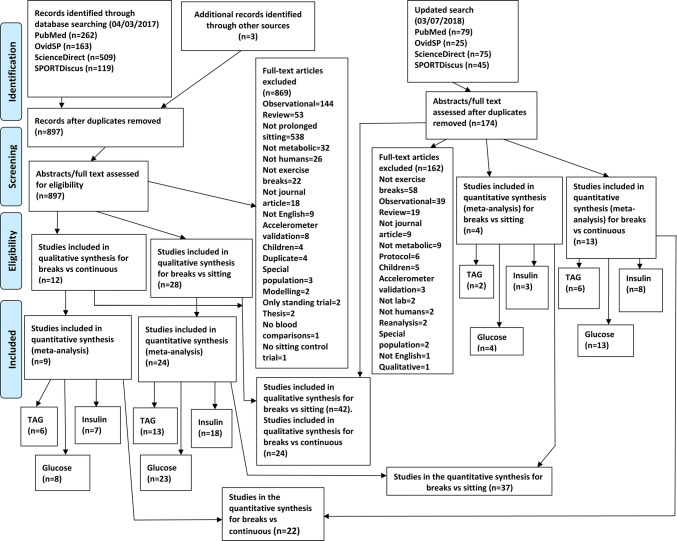
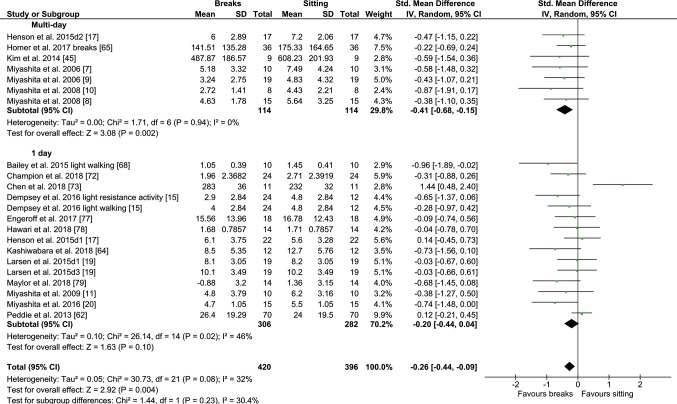
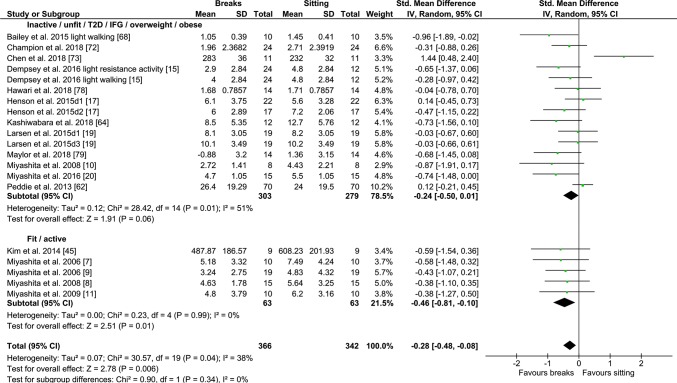
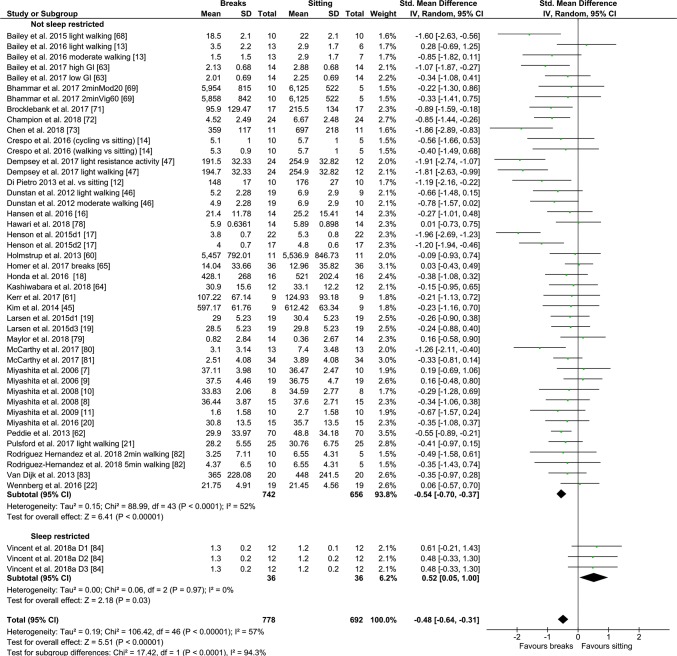
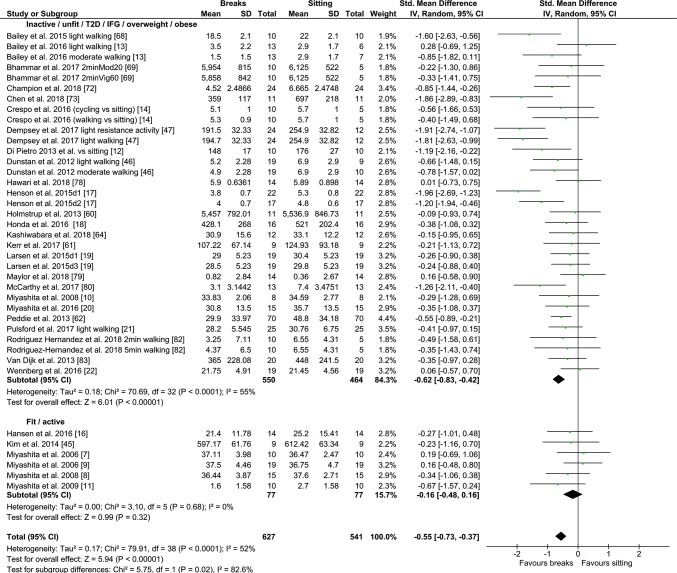
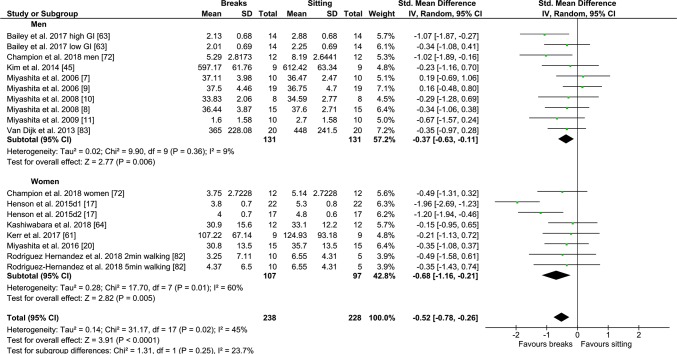
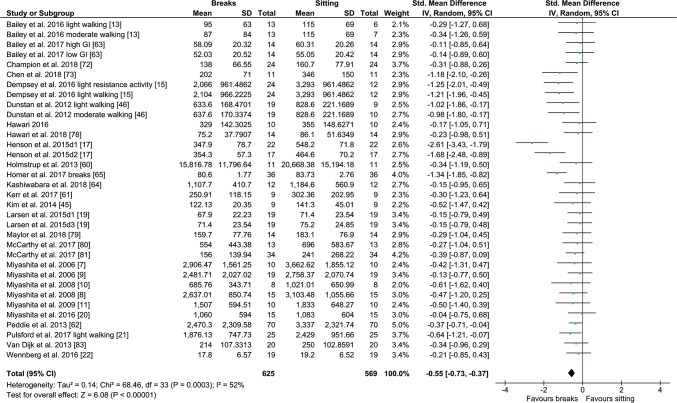
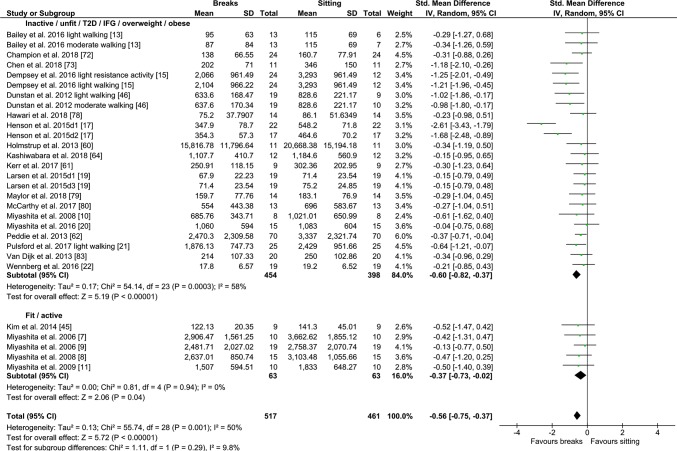
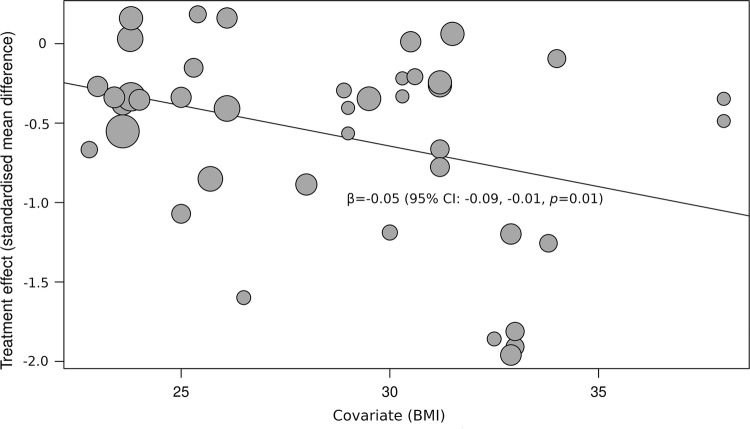
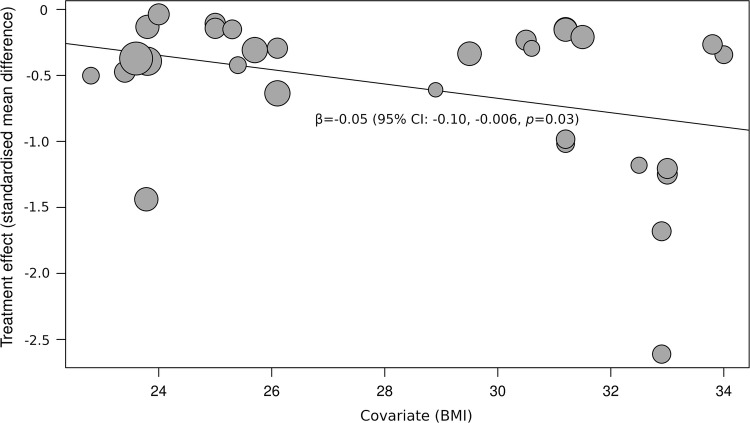
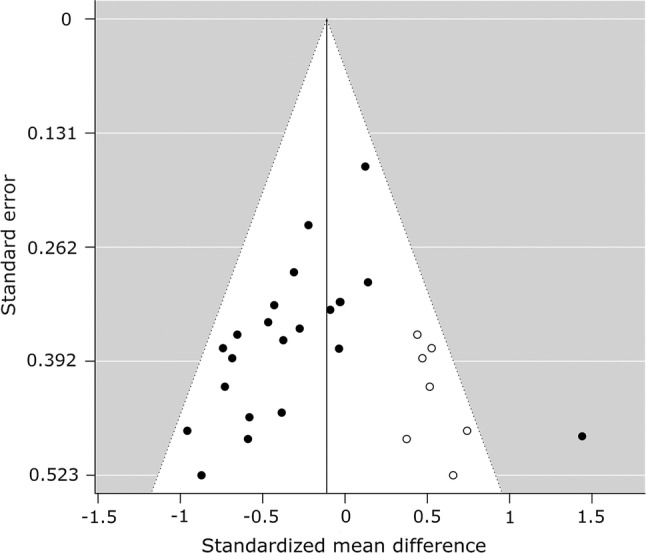
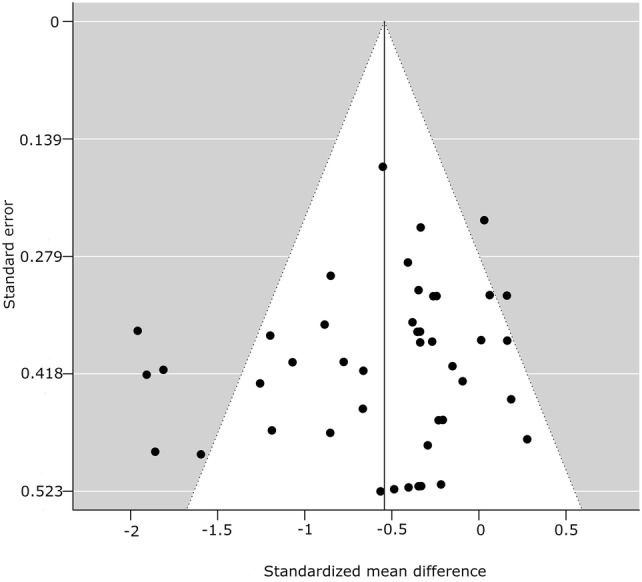
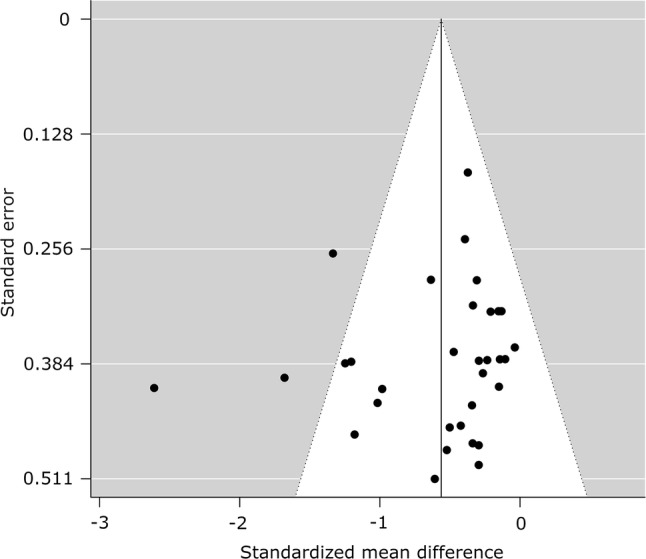
Background: Physical activity (PA) breaks in sitting time might attenuate metabolic markers relevant to the prevention of type 2 diabetes. Objectives: The primary aim of this paper was to systematically review and meta-analyse trials that compared the effects of breaking up prolonged sitting with bouts of PA throughout the day (INT) versus continuous sitting (SIT) on glucose, insulin and triacylglycerol (TAG) measures. A second aim was to compare the effects of INT versus continuous exercise (EX) on glucose, insulin and TAG measures. Methods: The review followed the Preferred Reporting Items for Systematic Reviews and Meta-analyses (PRISMA) recommendations. Eligibility criteria consisted of trials comparing INT vs. SIT or INT vs. one bout of EX before or after sitting, in participants aged 18 or above, who were classified as either metabolically healthy or impaired, but not with other major health conditions such as chronic obstructive pulmonary disease or peripheral arterial disease. Results: A total of 42 studies were included in the overall review, whereas a total of 37 studies were included in the meta-analysis. There was a standardised mean difference (SMD) of − 0.54 (95% CI − 0.70, − 0.37, p = 0.00001) in favour of INT compared to SIT for glucose. With respect to insulin, there was an SMD of − 0.56 (95% CI − 0.74, − 0.38, p = 0.00001) in favour of INT. For TAG, there was an SMD of − 0.26 (95% CI − 0.44, − 0.09, p = 0.002) in favour of INT. Body mass index (BMI) was associated with glucose responses ( β = − 0.05, 95% CI − 0.09, − 0.01, p = 0.01), and insulin ( β = − 0.05, 95% CI − 0.10, − 0.006, p = 0.03), but not TAG ( β = 0.02, 95% CI − 0.02, 0.06, p = 0.37). When energy expenditure was matched, there was an SMD of − 0.26 (95% CI − 0.50, − 0.02, p = 0.03) in favour of INT for glucose, but no statistically significant SMDs for insulin, i.e. 0.35 (95% CI − 0.37, 1.07, p = 0.35), or TAG i.e. 0.08 (95% CI − 0.22, 0.37, p = 0.62). It is worth noting that there was possible publication bias for TAG outcomes when PA breaks were compared with sitting. Conclusion: The use of PA breaks during sitting moderately attenuated post-prandial glucose, insulin, and TAG, with greater glycaemic attenuation in people with higher BMI. There was a statistically significant small advantage for PA breaks over continuous exercise for attenuating glucose measures when exercise protocols were energy matched, but no statistically significant differences for insulin and TAG. PROSPERO Registration: CRD42017080982. PROSPERO Registration: CRD42017080982.
Overview
The claims and statistics of this paper haven’t been checked yet.
Free: it reads the open-access text and checks the first 5 claims that cite a source we can check. Create a free account to check every claim.
Integrity signals
Registry
Cites
Statistics
Figures
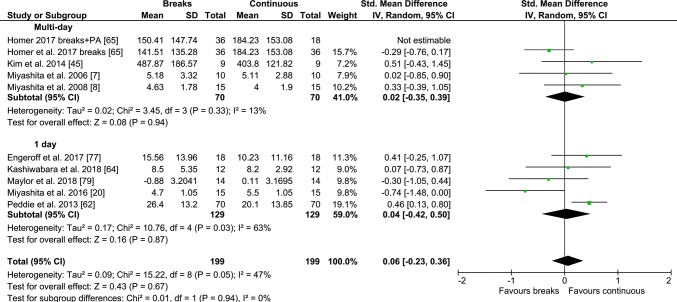
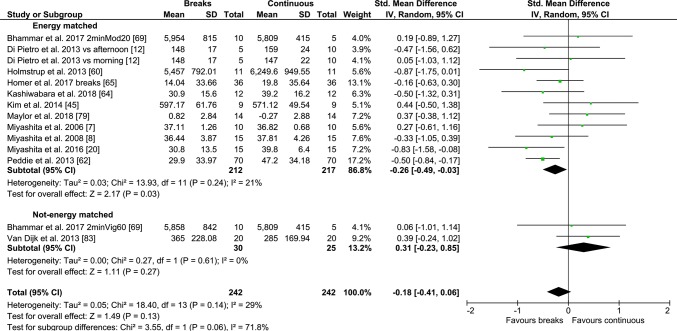
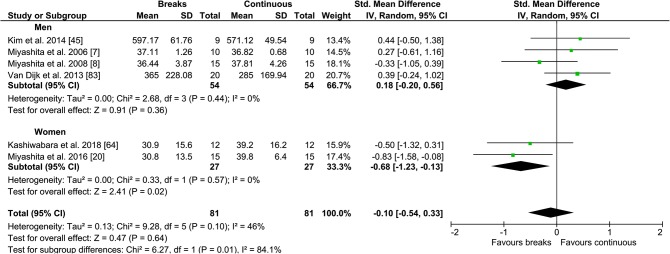
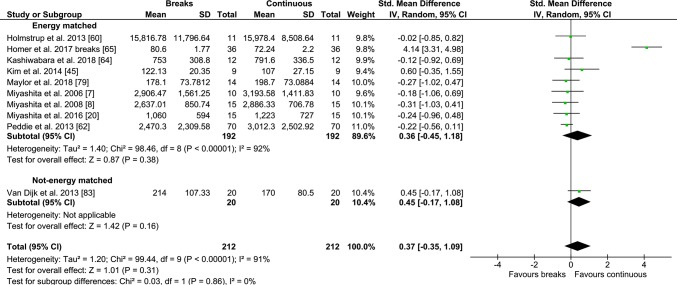
Verification
Claims the paper makes
The claims and statistics of this paper haven’t been checked yet.
Free: it reads the open-access text and checks the first 5 claims that cite a source we can check. Create a free account to check every claim.
Claims other papers make about this one
Each is checked against this paper’s own text: does it say what the citing paper says it does?
The source backs part of the claim, not all of it — or backs it for a different population, condition or comparison.
In the citing paper
“As is the case for persons with T2D, studies have demonstrated beneficial effects of both aerobic and resistance exercise and additive benefits when both forms of exercise are combined.727,847–852”
From American Association of Clinical Endocrinology Clinical Practice Guideline: Developing a Diabetes Mellitus Comprehensive Care Plan-2022 Update. (2022) · cites this paper as [852]
Experimental — accuracy not yet measuredThe source backs part of the claim, not all of it — or backs it for a different population, condition or comparison.
In the citing paper
“In adults with T2D, the interruption of sedentary time with short, regular and frequent episodes of light-intensity physical activity such as walking or simple resistance activities attenuates the level of postprandial glucose, insulin, C-peptide and triglycerides [45], and reduces waist circumference, body mass index (BMI) [46] and blood pressure [47].”
From Impact of a primary care-based mobile health intervention to ‘sit less and move more’ on HbA1c, blood pressure, and other clinical outcomes in office employees with type 2 diabetes: A randomized controlled trial (2025) · cites this paper as [45]
Experimental — accuracy not yet measuredThe cited source says what the claim attributes to it.
In the citing paper
“Instead, PA reinforces cardiorespiratory fitness, 31 inhibits inflammatory responses, 32 and improves glucose metabolism.33”
The check wasn’t confident either way, so it gives no verdict — never disputed.
In the citing paper
“For cardiometabolic conditioning, the guidelines proposed by the ACC/AHA,728,852 AACE,286,674 ADA,199,679 European Society of Cardiology/European Association for the Study of Diabetes,431 and the American College of Sports Medicine727,853 are well aligned.”
From American Association of Clinical Endocrinology Clinical Practice Guideline: Developing a Diabetes Mellitus Comprehensive Care Plan-2022 Update. (2022) · cites this paper as [852]
Experimental — accuracy not yet measured
Self-check
Percentages, sums and reported differences re-computed from the paper’s own numbers.
The self-check needs the paper’s full text.
Citations
Cites
Statistical Power Analysis for the Behavioral Sciences
Muller, K. (1989) · Technometrics · doi:10.1080/00401706.1989.10488618 · Cited by 99,167
Statistical power analysis for the behavioral sciences
(1990) · Computers, Environment and Urban Systems · doi:10.1016/0198-9715(90)90050-4 · Cited by 65,269
Bias in meta-analysis detected by a simple, graphical test
Egger, M., Smith, G. D., Schneider, M., & Minder, C. (1997) · BMJ · doi:10.1136/bmj.315.7109.629 · Cited by 56,722 · cited 2×
“10 Publication Bias Funnel plots, Begg and Mazumdar’s rank correlation test [53], Egger’s regression test [54] and Rosenthal’s fail-safe N [55] were used to assess publication bias if more than ten studies were included in the meta-analysis [26, 56].”
MethodThe Cochrane Collaboration's tool for assessing risk of bias in randomised trials
Higgins, J. P. T., Altman, D. G., Gotzsche, P. C., Juni, P., Moher, D., Oxman, A. D., Savovic, J., Schulz, K. F., Weeks, L., Sterne, J. A. C., et al. (2011) · BMJ · doi:10.1136/bmj.d5928 · Cited by 33,817
Liberati, A., Altman, D. G., Tetzlaff, J., Mulrow, C., Gøtzsche, P. C., Ioannidis, J. P. A., Clarke, M., Devereaux, P. J., Kleijnen, J., & Moher, D. (2009) · PLoS Medicine · doi:10.1371/journal.pmed.1000100 · Cited by 28,164
Liberati, A., Altman, D. G., Tetzlaff, J., Mulrow, C., Gotzsche, P. C., Ioannidis, J. P. A., Clarke, M., Devereaux, P. J., Kleijnen, J., & Moher, D. (2009) · BMJ · doi:10.1136/bmj.b2700 · Cited by 17,648
Operating characteristics of a rank correlation test for publication bias
Begg, C. B., & Mazumdar, M. (1994) · Biometrics · doi:10.2307/2533446 · Cited by 16,955 · cited 2×
“10 Publication Bias Funnel plots, Begg and Mazumdar’s rank correlation test [53], Egger’s regression test [54] and Rosenthal’s fail-safe N [55] were used to assess publication bias if more than ten studies were included in the meta-analysis [26, 56].”
MethodDuval, S., & Tweedie, R. (2000) · Biometrics · doi:10.1111/j.0006-341x.2000.00455.x · Cited by 14,099 · cited 1×
“The trim and fill method, with L0 as the estimator [57], was used to estimate “missing” studies, if any, in the funnel plots.”
MethodShamseer, L., Moher, D., Clarke, M., Ghersi, D., Liberati, A., Petticrew, M., Shekelle, P., Stewart, L. A., & the PRISMA-P Group (2015) · BMJ · doi:10.1136/bmj.g7647 · Cited by 13,120
Sterne, J. A. C., Sutton, A. J., Ioannidis, J. P. A., Terrin, N., Jones, D. R., Lau, J., Carpenter, J., Rucker, G., Harbord, R. M., Schmid, C. H., et al. (2011) · BMJ · doi:10.1136/bmj.d4002 · Cited by 7,709 · cited 2×
“10 Publication Bias Funnel plots, Begg and Mazumdar’s rank correlation test [53], Egger’s regression test [54] and Rosenthal’s fail-safe N [55] were used to assess publication bias if more than ten studies were included in the meta-analysis [26, 56].”
BackgroundMethod
Research works printed but not linked: 1
- Frayn KN Metabolic regulation a human perspective third edition 2010 3 Oxford Wiley-Blackwell
Cited by
Items 301–325 of 325
Ma, T., Sirard, J. R., Yang, L., Li, Y., Tsang, S., & Fu, A. (2024) · Figshare · doi:10.6084/m9.figshare.26755528
Ma, T., Sirard, J. R., Yang, L., Li, Y., Tsang, S., & Fu, A. (2024) · Figshare · doi:10.6084/m9.figshare.26755534
Edwardson, C. L., Maylor, B. D., Biddle, S., Clarke-Cornwell, A. M., Clemes, S., Davies, M. J., Dunstan, D. W., Granat, M. H., Gray, L. J., Hadjiconstantinou, M., et al. (2024) · Figshare · doi:10.6084/m9.figshare.26647830
Ma, T., Sirard, J. R., Yang, L., Li, Y., Tsang, S., & Fu, A. (2024) · Figshare · doi:10.6084/m9.figshare.26755537
Ma, T., Sirard, J. R., Yang, L., Li, Y., Tsang, S., & Fu, A. (2024) · Figshare · doi:10.6084/m9.figshare.26755522
Activité physique et cancer du sein
Duclos, M. (2025) · Les Dossiers de l obstétrique · doi:10.54695/dosf.554.0041
Zeng, L., Han, R., Chen, X., Zeng, D., Yuan, H. B., Meng, L., & Gao, L. (2026) · International Journal of Women s Health · doi:10.2147/ijwh.s574662 · Cited by 1
“45,46 Future research could pay greater attention to increasing moderate-to-vigorous physical activity and to regular activity interruptions to break up sedentary time during pregnancy.”
Lima, D. D. M., Codogno, J. S., de Melo, G. J., de Menezes, V. G., Cavalcanti, M. R. N., da Silva, E. K. S., & da Guarda, F. R. B. (2026) · International Journal of Environmental Research and Public Health · doi:10.3390/ijerph23020221
“…that practicing physical activity is able to reduce overweight and obesity [70], control metabolic rates, such as triglycerides and blood glucose [71], reduce and maintain blood pressure at healthy levels [72], and stimulate the release of hormones that promote the reduction in symptoms of…”
Min, H. J., Kim, H. J., Choi, T. G., Jung, S. S., Kim, B., & Jae, S. Y. (2026) · CardioMetabolic Syndrome Journal · doi:10.51789/cmsj.2026.6.e15
Ma, J., Chua, B. K. T., Chin, Y. H. J., Teo, W., Kim, H., Low, S. T., Li, D., & Chia, M. (2026) · JMIR Research Protocols · doi:10.2196/82510
“Such interventions may mitigate risks associated with prolonged sedentary behavior and contribute to improvements in physical health [9,10], mental health [11,12], and work productivity [13,14].”
Lifestyle Interventions for the Prevention of Type 2 Diabetes Mellitus
Henson, J. J., Davies, M. J., Greaves, C., Khunti, K., & Yates, T. E. (2026) · Elsevier eBooks · doi:10.1016/b978-0-323-87862-3.00003-3
Jørgensen, L. B., Mortensen, S. R., Tang, L. H., Harrison, A. S., Grøntved, A., Brønd, J. C., Jepsen, R., Petersen, T. L., & Skou, S. T. (2026) · European Review of Aging and Physical Activity · doi:10.1186/s11556-026-00407-z
Chen, Y., Lin, Y., Wang, L., Lee, C. L., Su, S., Lu, C.-H., Li, P., Huang, C., Ho, L.-J., Lin, M., et al. (2026) · Nutrition and Diabetes · doi:10.1038/s41387-026-00422-0 · Cited by 1
“Recently, research has demonstrated that breaking up sedentary time improves metabolic health including glycemic control [4 – 6].”
Shen, X., Wang, S., Ge, R., & Wei, M. (2026) · Frontiers in Physiology · doi:10.3389/fphys.2026.1842740
“In addition, regular exercise may promote TG reduction by increasing skeletal muscle lipoprotein lipase activity (Matsumoto et al., 2019),enhancing post-exercise TG clearance (Loh et al., 2020),and reducing hepatic VLDL-TG secretion (Plaisance and Fisher, 2014).”
Liu, X., Xia, Y., Gao, X., & Wang, R. L. (2026) · Frontiers in Public Health · doi:10.3389/fpubh.2026.1850516 · Cited by 1
“By contrast, light-to-moderate snacks may operate more through sedentary interruption, postprandial metabolic regulation, affective response, self-efficacy, adherence, and functional engagement (18).”
Euring, M., Niederer, D., Groneberg, D., & Engeroff, T. (2026) · medRxiv · doi:10.64898/2026.06.20.26356117
Jin, N., Zheng, X., Zhao, Z., Zhao, F., Shang, Z., & Zhou, K. (2026) · Frontiers in Public Health · doi:10.3389/fpubh.2026.1846870 · Cited by 2
Hu, X. W., Sang, X., Xu, J., & Chen, P. (2026) · Frontiers in Endocrinology · doi:10.3389/fendo.2026.1912963
“By focusing speci fi cally on the exercise − snack paradigm, our study observed a larger reduction (postprandial glucose iAUC lowered by 5.69 mmol·h/L), which may be attributable to our strict exclusion of standing interventions and the inclusion of more high − intensity protocols (25).”
InfluentialHan, M., & Li, X. (2026) · Public Health · doi:10.1016/j.puhe.2026.106449 · Cited by 1
Zhang, H., Liu, J., & Zhang, W. (2026) · Frontiers in Physiology · doi:10.3389/fphys.2026.1804202
“Loh et al. (2020) focused on the comparison between interrupting sedentary behavior with intermittent exercise (INT), prolonged sedentary behavior (SIT), and single-bout continuous exercise (EX), with the core focus only on metabolic markers such as blood glucose and insulin.”
Qiao, C., Yang, C., Yang, S., & Wang, Y. (2026) · Metabolites · doi:10.3390/metabo16090635
Cao, S., Wang, H., Zhu, Y., Shan, C., & Chen, W. (2026) · Frontiers in Endocrinology · doi:10.3389/fendo.2026.1901259
“Previous systematic reviews have shown that breaking up sitting can reduce postprandial glucose and insulin responses (21), and exercising more broadly may improve 24-h CGM glucose pro fi les in people with type 2 diabetes (22, 23).”
Meng, Y., Yang, W., Lu, S., An, Y., Zheng, X., Sun, T., You, H., Xue, Y., & Zhang, X. (2026) · Journal of Sports Sciences · doi:10.1080/02640414.2026.2740976
Sandy, D. D., Giurgiu, M., Batista-Ferreira, L., Rodrigues, B. M., & Lima, D. J. M. D. M. (2026) · Work · doi:10.1177/10519815261494574
Park, J., Han, M., Lee, S., Yun, J., Cho, S., & Lee, S. (2026) · Journal of Physical Activity and Health · doi:10.1123/jpah.2026-0236
Metadata
- Authors
- Loh, R., Stamatakis, E., Folkerts, D., Allgrove, J. E., & Moir, H. J.
- Affiliations
- Kingston University London (GB)
- The University of Sydney (AU)
- Corresponding author
- Loh, Roland
- Moir, Hannah J.
- Venue
- Sports Medicine
- Published
- 2019-09-24
- Volume
- 50
- Issue
- 2
- Pages
- 295-330
- ISSN
- 0112-1642 (ISSN-L)
- 1179-2035
- PMC
- PMC6985064
- OpenAlex
- W2975931332
- Cited by
- 326
- References
- 156
- Citations by year
- 2026: 38 · 2025: 40 · 2024: 60 · 2023: 52 · 2022: 50 · 2021: 51 · 2020: 32 · 2019: 1
- FWCI
- 3.94
- Type
- journal article
- Language
- en
- Open access
- hybrid
- doi.org
- Licence
- cc-by
- creativecommons.org/licenses/by/4.0 (tdm)
- creativecommons.org/licenses/by/4.0 (vor)
- Locations
- Sports Medicine (publishedVersion, cc-by)
- Europe PMC (PubMed Central) (publishedVersion, cc-by)
- PubMed Central (publishedVersion, cc-by)
- PubMed (publishedVersion)
- Research Repository (Kingston University London) (acceptedVersion)
- Funders
- Kingston University
- University of Sydney
- Topics
- Health Sciences › Medicine › Public Health, Environmental and Occupational Health › Physical Activity and Health
- Health Sciences › Medicine › Endocrinology, Diabetes and Metabolism › Diabetes, Cardiovascular Risks, and Lipoproteins
- Social Sciences › Human Factors and Ergonomics › Ergonomics and Musculoskeletal Disorders
- Keywords
- prolonged sitting, physical activity breaks, sedentary behavior, blood glucose, insulin, triglycerides, type 2 diabetes prevention, body mass index, energy expenditure, metabolic biomarkers, metabolic health, metabolic dysfunction, glycemic control, insulin sensitivity, dyslipidemia, diabetes risk factors
- MeSH terms
- Sitting Position, Blood Glucose, Diabetes Mellitus, Type 2, Humans, Insulin, Triglycerides, Exercise, Postprandial Period, Sedentary Behavior
About these checks
Registry, retraction, Cites and statistics results are computed, not judged, with one exception: a printed reference that no index lists is read once by a model before it counts as a citation error. Claims are extracted by a model and kept only when their quote appears verbatim in the text; each cited source is then checked, with a model’s help, for whether it says what the claim relies on. Those verdicts can be wrong — read the claim’s quote and the cited source before relying on one.
Statistics and arithmetic are recomputed, not judged.
Confidence bands are shown only for fields calibrated on our annotated test set. None is calibrated yet, so no band is shown.
What counts as a claim ›How we measure confidence ›How we check this ›
Are you an author, or do you see a problem with this page? Request a review
Data sources
Bibliographic data: Semantic Scholar, OpenAlex, Crossref.
Contains information from the Semantic Scholar Academic Graph Datasets, made available under the ODC Attribution License (ODC-BY 1.0).
Semantic Scholar’s data is described in: Kinney, R., et al. (2023). The Semantic Scholar Open Data Platform. arXiv:2301.10140.
