

The DOI matches its Crossref record; 130 of the 131 references it cites were found in a registry or an index.
The Anabolic Response to Plant-Based Protein Ingestion
Open accessAbstract
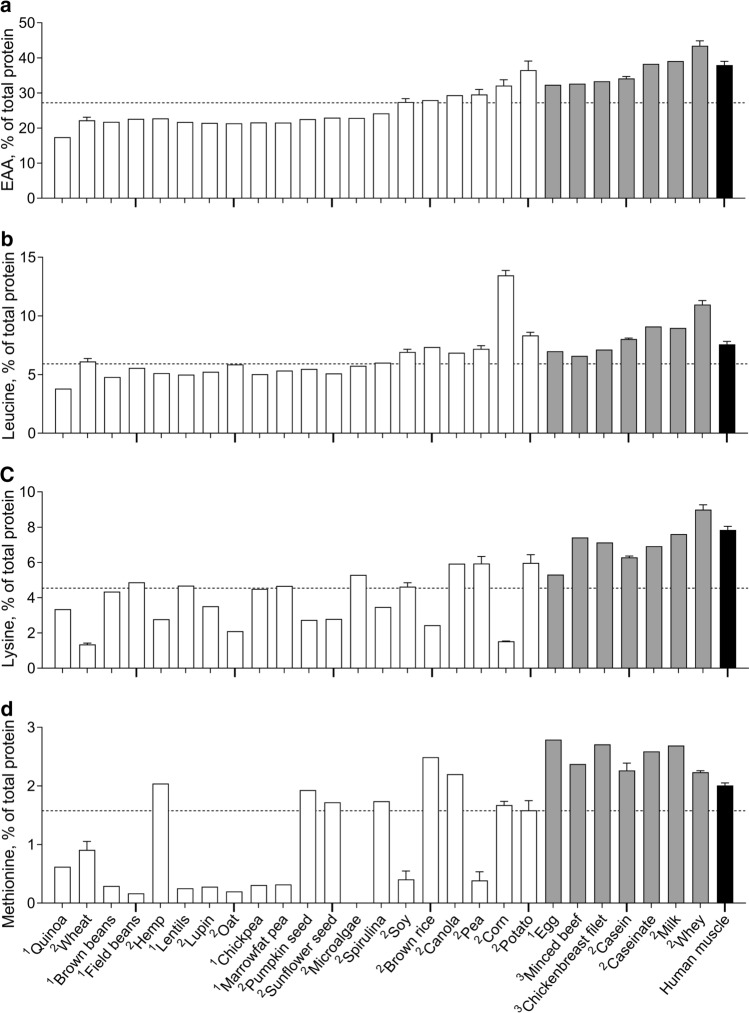
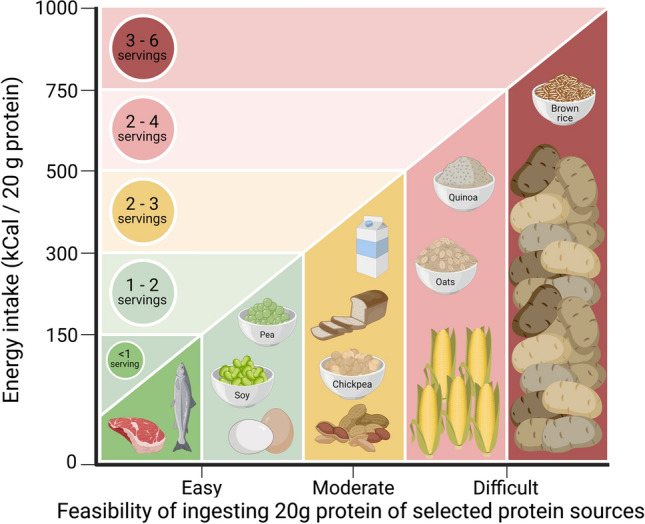
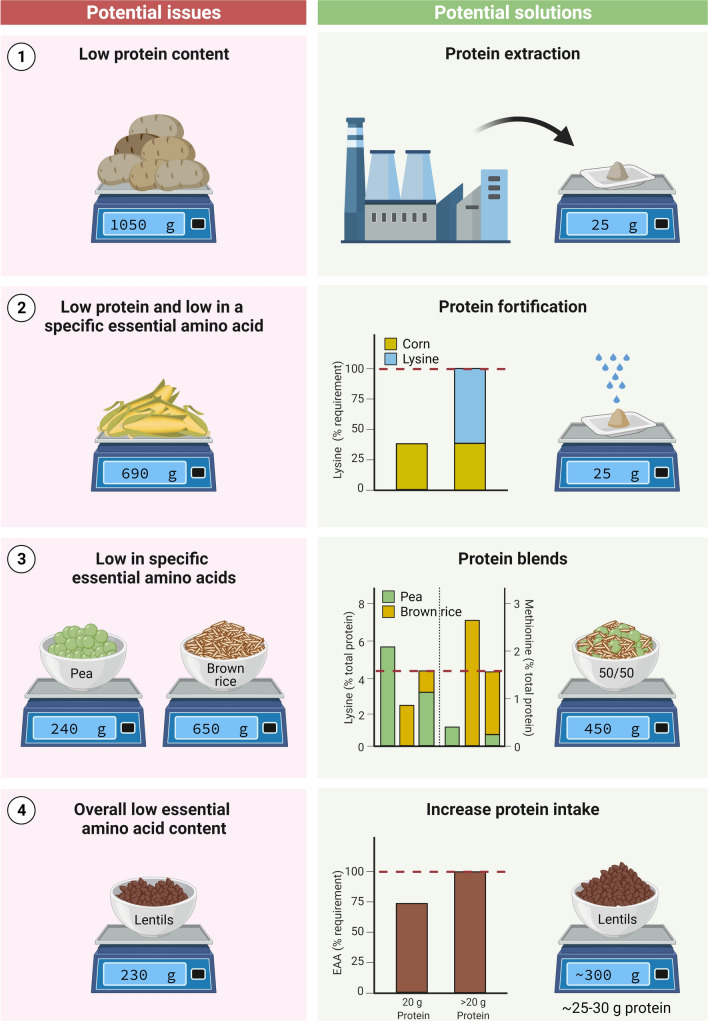
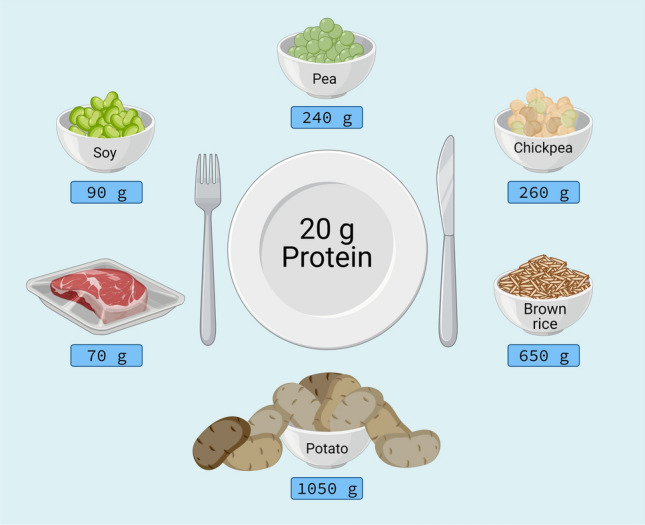
There is a global trend of an increased interest in plant-based diets. This includes an increase in the consumption of plant-based proteins at the expense of animal-based proteins. Plant-derived proteins are now also frequently applied in sports nutrition. So far, we have learned that the ingestion of plant-derived proteins, such as soy and wheat protein, result in lower post-prandial muscle protein synthesis responses when compared with the ingestion of an equivalent amount of animal-based protein. The lesser anabolic properties of plant-based versus animal-derived proteins may be attributed to differences in their protein digestion and amino acid absorption kinetics, as well as to differences in amino acid composition between these protein sources. Most plant-based proteins have a low essential amino acid content and are often deficient in one or more specific amino acids, such as lysine and methionine. However, there are large differences in amino acid composition between various plant-derived proteins or plant-based protein sources. So far, only a few studies have directly compared the muscle protein synthetic response following the ingestion of a plant-derived protein versus a high(er) quality animal-derived protein. The proposed lower anabolic properties of plant- versus animal-derived proteins may be compensated for by (i) consuming a greater amount of the plant-derived protein or plant-based protein source to compensate for the lesser quality; (ii) using specific blends of plant-based proteins to create a more balanced amino acid profile; (iii) fortifying the plant-based protein (source) with the specific free amino acid(s) that is (are) deficient. Clinical studies are warranted to assess the anabolic properties of the various plant-derived proteins and their protein sources in vivo in humans and to identify the factors that may or may not compromise the capacity to stimulate post-prandial muscle protein synthesis rates. Such work is needed to determine whether the transition towards a more plant-based diet is accompanied by a transition towards greater dietary protein intake requirements.
Overview
The claims and statistics of this paper haven’t been checked yet.
Run the check — free, no account needed. It reads the open-access text and checks the sources it cites.
Integrity signals
Registry
Cites
Statistics
Figures
Verification
Claims the paper makes
The claims and statistics of this paper haven’t been checked yet.
Run the check — free, no account needed. It reads the open-access text and checks the sources it cites.
Claims other papers make about this one
Each is checked against this paper’s own text: does it say what the citing paper says it does?
In the citing paper
“Although the protein found in non–animal-derived sources may be equally digestible, plant sources frequently have lower total EAA contents, and leucine, methionine, and/or lysine in particular, which have been suggested to provide limitations for MPS at either the molecular signaling or substrate availability levels [83].”
From Nutritional Considerations for the Vegan Athlete (2023) · cites this paper as [83]
In the citing paper
“Blending plant-based protein sources is a suggested method to obviate EAA deficiencies [71,83].”
From Nutritional Considerations for the Vegan Athlete (2023) · cites this paper as [83]
Self-check
Percentages, sums and reported differences re-computed from the paper’s own numbers.
The self-check needs the paper’s full text.
Citations
Cites
mTOR Signaling in Growth Control and Disease
Laplante, M., & Sabatini, D. M. (2012) · Cell · doi:10.1016/j.cell.2012.03.017 · Cited by 8,509
Protein and amino acid requirements in human nutrition.
(2007) · PubMed · Cited by 2,234
Edible insects: future prospects for food and feed security
van Huis, A., Itterbeeck, J. V., Klunder, H. C., Mertens, E., Halloran, A., Muir, G., & Vantomme, P. (2013) · Socio-Environmental Systems Modeling · Cited by 1,694
Slow and fast dietary proteins differently modulate postprandial protein accretion
Boirie, Y., Dangin, M., Gachon, P., Vasson, M.-P., Maubois, J.-L., & Beaufrère, B. (1997) · Proceedings of the National Academy of Sciences · doi:10.1073/pnas.94.26.14930 · Cited by 1,453
WHO technical report series 200 (1960).
Pittman, M. (1974) · PubMed · Cited by 1,447
Sestrin2 is a leucine sensor for the mTORC1 pathway
Wolfson, R. L., Chantranupong, L., Saxton, R. A., Shen, K., Scaria, S. M., Cantor, J. R., & Sabatini, D. M. (2016) · Science · doi:10.1126/science.aab2674 · Cited by 1,306
Morton, R. W., Murphy, K. T., McKellar, S. R., Schoenfeld, B. J., Henselmans, M., Helms, E., Aragon, A. A., Devries, M. C., Banfield, L., Krieger, J. W., et al. (2018) · British Journal of Sports Medicine · doi:10.1136/bjsports-2017-097608 · Cited by 1,269
Anabolic signaling deficits underlie amino acid resistance of wasting, aging muscle
Cuthbertson, D., Smith, K., Babraj, J., Leese, G., Waddell, T., Atherton, P., Wackerhage, H., Taylor, P. M., & Rennie, M. J. (2005) · The FASEB Journal · doi:10.1096/fj.04-2640fje · Cited by 1,211
Protein content and amino acid composition of commercially available plant-based protein isolates
Gorissen, S. H. M., Crombag, J. J. R., Senden, J. M. G., Waterval, W. A. H., Bierau, J., Verdijk, L. B., & van Loon, L. J. C. (2018) · Amino Acids · doi:10.1007/s00726-018-2640-5 · Cited by 1,169
Mixed muscle protein synthesis and breakdown after resistance exercise in humans
Phillips, S. M., Tipton, K. D., Aarsland, A., Wolf, S. E., & Wolfe, R. R. (1997) · American Journal of Physiology-Endocrinology and Metabolism · doi:10.1152/ajpendo.1997.273.1.e99 · Cited by 1,132
Cited by
Sorted by citations
The Safe and Effective Use of Plant-Based Diets with Guidelines for Health Professionals
Craig, W. J., Mangels, A. R., Fresán, U., Marsh, K. A., Miles, F. L., Saunders, A. V., Haddad, E. H., Heskey, C. E., JOHNSTON, P. K., Larson‐Meyer, E., et al. (2021) · Nutrients · doi:10.3390/nu13114144 · Cited by 379
Strategies to Prevent Sarcopenia in the Aging Process: Role of Protein Intake and Exercise
Rogeri, P. S., Zanella, R., Martins, G. L., Garcia, M. D. A., Leite, G., Lugaresi, R., Gasparini, S. O., Sperandio, G. A., Ferreira, L. H. B., Souza-Junior, T. P., et al. (2021) · Nutrients · doi:10.3390/nu14010052 · Cited by 181
Shaghaghian, S., McClements, D. J., Khalesi, M., García‐Vaquero, M., & Mirzapour‐Kouhdasht, A. (2022) · Trends in Food Science & Technology · doi:10.1016/j.tifs.2022.11.016 · Cited by 169
Advancements in plant based meat analogs enhancing sensory and nutritional attributes
Jang, J., & Lee, D. (2024) · npj Science of Food · doi:10.1038/s41538-024-00292-9 · Cited by 160
Protein digestion and absorption: the influence of food processing
Loveday, S. M. (2022) · Nutrition Research Reviews · doi:10.1017/s0954422422000245 · Cited by 163
Metadata
- Authors
- Pinckaers, P. J. M., Trommelen, J., Snijders, T., & van Loon, L. J. C.
- Affiliations
- Maastricht University Medical Centre (NL)
- Venue
- Sports Medicine
- Published
- 2021-09
- Volume
- 51
- Issue
- S1
- Pages
- 59-74
- ISSN
- 0112-1642 (ISSN-L)
- 1179-2035
- PMC
- PMC8566416
- OpenAlex
- W3200956314
- Cited by
- 170
- References
- 131
- Citations by year
- 2026: 38 · 2025: 44 · 2024: 37 · 2023: 23 · 2022: 22 · 2021: 6
- FWCI
- 2.78
- Type
- journal article
- Language
- en
- Open access
- hybrid
- doi.org
- Licence
- Locations
- Sports Medicine (publishedVersion, cc-by)
- PubMed Central (publishedVersion, cc-by)
- PubMed (publishedVersion)
- Research Publications (Maastricht University) (publishedVersion, cc-by)
- VUBIR (Vrije Universiteit Brussel) (submittedVersion)
- Research Publications (Maastricht University) (submittedVersion, cc-by)
- Funders
- Gran Sasso Science Institute
- Topics
- Health Sciences › Nursing › Nutrition and Dietetics › Muscle metabolism and nutrition
- Life Sciences › Agricultural and Biological Sciences › Food Science › Proteins in Food Systems
- Life Sciences › Biochemistry, Genetics and Molecular Biology › Molecular Biology › Muscle Physiology and Disorders
- Keywords
- plant proteins, muscle protein synthesis, anabolic response, soy protein, wheat proteins, amino acid composition, essential amino acids, lysine, methionine, protein digestion, sports nutrition, protein requirements, plant-based diet
- MeSH terms
- Amino Acids, Essential, Animals, Dietary Proteins, Eating, Humans, Muscle Proteins, Muscle, Skeletal
About these checks
Registry, retraction, Cites and statistics results are computed, not judged, with one exception: a printed reference that no index lists is read once by a model before it counts as a citation error. Claims are extracted by a model and kept only when their quote appears verbatim in the text; each cited source is then checked, with a model’s help, for whether it says what the claim relies on. Those verdicts can be wrong — read the claim’s quote and the cited source before relying on one.
Statistics and arithmetic are recomputed, not judged.
Confidence bands are shown only for fields calibrated on our annotated test set. None is calibrated yet, so no band is shown.
What counts as a claim ›How we measure confidence ›How we check this ›
Are you an author, or do you see a problem with this page? Request a review
