

Contract cheating by STEM students through a file sharing website: a Covid-19 pandemic perspective
Open accessThe DOI matches its Crossref record; 20 of the 20 references it cites were found in a registry or an index; none of the 10 sources its claims cite is checked for support yet.
Abstract
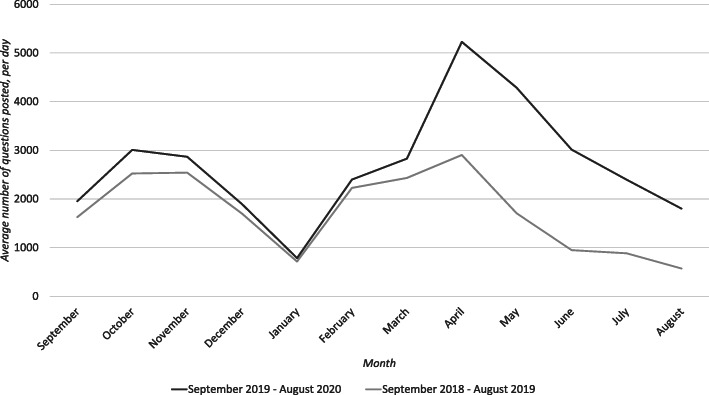
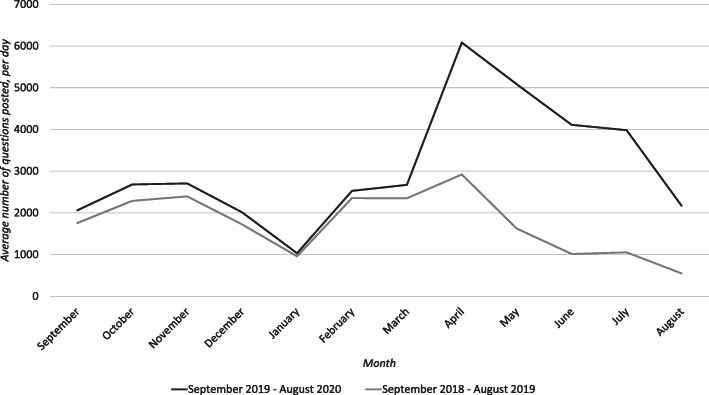
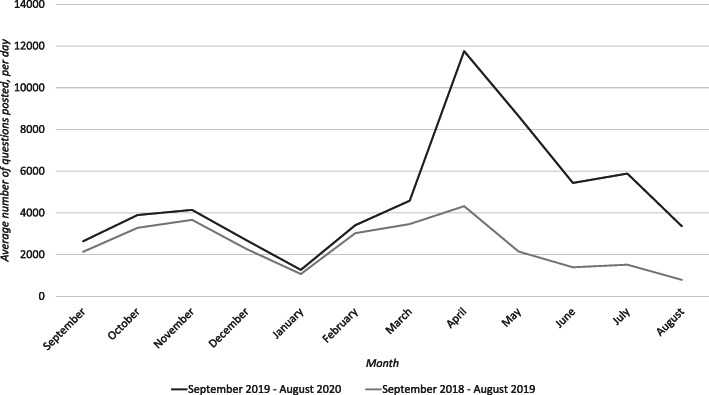
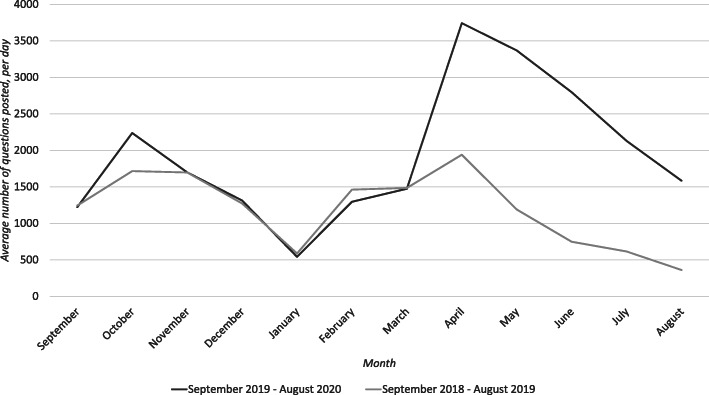
Abstract Students are using file sharing sites to breach academic integrity in light of the Covid-19 pandemic. This paper analyses the use of one such site, Chegg, which offers “homework help” and other academic services to students. Chegg is often presented as a file sharing site in the academic literature, but that is just one of many ways in which it can be used. As this paper demonstrates, Chegg can and is used for contract cheating This is despite the apparent existence of an Honour Code on Chegg which asks students not to breach academic integrity. With pandemic led safety considerations leading to increased online teaching and assessment, the paper analyses data relating to how Chegg is used by students in five STEM subjects, namely Computer Science, Mechanical Engineering, Electrical Engineering, Physics and Chemistry. The results show that students are using Chegg to request exam style questions. They demonstrate that contract cheating requests can be put live and answered within the short duration of an examination. The number of student requests posted for these five subjects increased by 196.25% comparing the time period April 2019 to August 2019 with the period April 2020 to August 2020. This increase corresponds with the time when many courses moved to be delivered and assessed online. The growing number of requests indicates that students are using Chegg for assessment and exam help frequently and in a way that is not considered permissible by universities. The paper concludes by recommending that academic institutions put interventions in place to minimise the risk to educational standards posed by sites such as Chegg, particularly since increased online teaching and assessment may continue after the pandemic.
Overview
CoChat Summary
TL;DR
This paper analyzes Chegg use for contract cheating in five STEM subjects before and during Covid-19, finding large increases in posted questions and evidence of exam-style requests answered quickly. It concludes that file-sharing sites pose a growing academic integrity risk and recommends institutional interventions.
Key findings
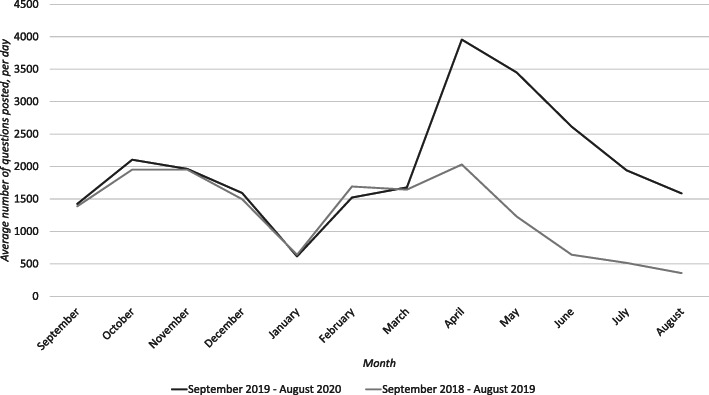
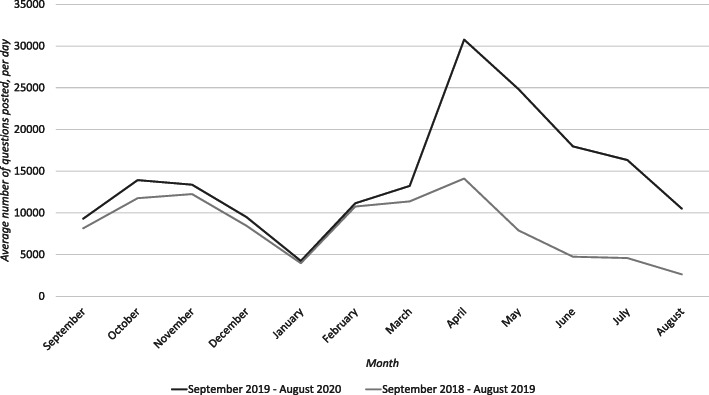
- Across Computer Science, Mechanical Engineering, Electrical Engineering, Physics, and Chemistry, total questions posted rose from 3,050,372 in 18/19 to 5,335,770 in 19/20, a 74.92% increase; the average (mean) number posted was 8,357 in 18/19 and 14,578 in 19/20.
- Comparing April–August 2019 with April–August 2020, requests increased by 196.25%; the September–March increase was 12.68%. The average dropped by 28.92% between September 2018–March 2019 and April–August 2019, but increased by 87.74% between September 2019–March 2020 and April–August 2020.
- On 1 March, 8,276 questions were posted across the five subjects and answered 89.96% of the time; on 1 March 2020, 13,719 questions were posted and answered 85.57% of the time. The paper approximates about 2.6 million questions answered out of 3 million posted in 2018–2019, and around 4.8 million out of 5.3 million in 2019–2020.
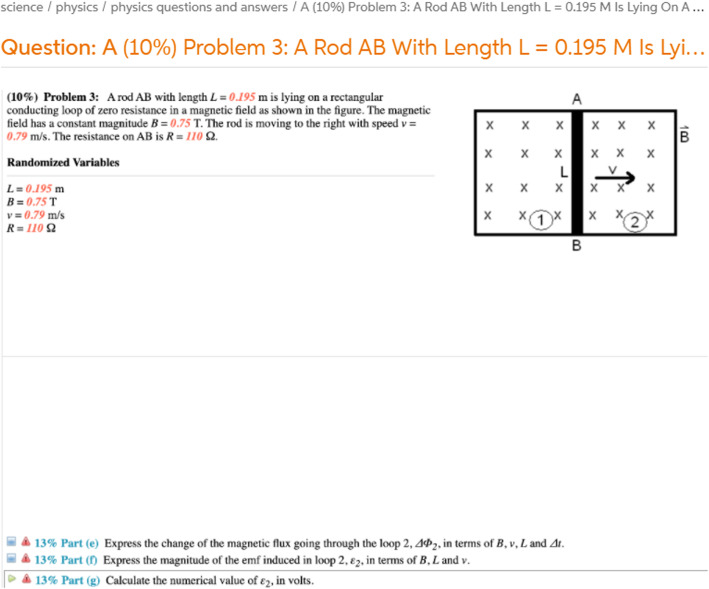
- Exam-style indicators included questions listing marks, randomised variables, and sequences of multiple-choice or short-answer requests; searches for COVID, pandemic, and coronavirus each returned 500 results, the limit of Chegg’s search.
Methods
- The study examined Chegg’s homework help archive for five STEM subjects: Computer Science, Mechanical Engineering, Electrical Engineering, Physics, and Chemistry. Quantitative data on the number of questions posted per subject per day were manually collected from the freely accessible subject-level menu without subscribing, covering 1 September 2018 to 31 August 2020.
- Analysis compared 18/19 with 19/20, calculated monthly averages and percentage changes, and selected a single typical day each year to calculate how many questions received at least one answer. Searches for Covid-related terms were also run across all Chegg questions.
Limitations
- The paper states that data collection was restricted to a limited range of subjects over a two-year period, and that only a single file sharing site was considered, so results may not generalise to other sites. It also notes future research could cover more subjects, longer periods, and content analysis.
- Evident from the text: Chegg does not allow requests to be traced directly to an individual academic provider or country; many questions are posted as low-quality images, making automated processing difficult; and Chegg search results are capped at 500, limiting counts for Covid-related terms.
Model-written summary. Check it against the paper before relying on it.
Integrity signals
Registry
Cites
Statistics
Figures
Verification
Claims the paper makes
0 Valid · 1 Not valid · 10 Not checked · 42 Own results and interpretations
A result the paper reports from its own data — it cites no other source for it, so there is none to check. The quote shows it is in the paper.
In the paper
“The number of student requests posted for these five subjects increased by 196.25% comparing the time period April 2019 to August 2019 with the period April 2020 to August 2020.”
- Also stated in: § Results and discussion · plain
“between April and August the increase was 196.25%”
§ Contract cheating by STEM students through a file sharing website: a Covid-19 pandemic perspective > Abstract
plainstates a causen = 5- Asserted: passes — The authors put it forward as true.
- Checkable: passes — It can be checked against evidence.
- Load-bearing: passes — The paper’s conclusions depend on it.
- Based: passes — The paper gives a reason why it holds.
- Rests on 2 assumptions not shown here.
- Also stated in: § Results and discussion · plain
A result the paper reports from its own data — it cites no other source for it, so there is none to check. The quote shows it is in the paper.
In the paper
“They demonstrate that contract cheating requests can be put live and answered within the short duration of an examination.”
- Also stated in: § Conclusion · hedged
“it appears that there is nothing to stop students posting questions online and receiving answers within the time frame of an exam.”
§ Contract cheating by STEM students through a file sharing website: a Covid-19 pandemic perspective > Abstract
boosted- Asserted: passes — The authors put it forward as true.
- Checkable: passes — It can be checked against evidence.
- Load-bearing: passes — The paper’s conclusions depend on it.
- Based: passes — The paper gives a reason why it holds.
- Rests on an assumption not shown here.
- Also stated in: § Conclusion · hedged
A result the paper reports from its own data — it cites no other source for it, so there is none to check. The quote shows it is in the paper.
In the paper
“This showed an increase in the number of questions posted of 74.92% from 18/19 to 19/20.”
§ Contract cheating by STEM students through a file sharing website: a Covid-19 pandemic perspective > Results and discussion
plainstates a causen = 5- Asserted: passes — The authors put it forward as true.
- Checkable: passes — It can be checked against evidence.
- Load-bearing: passes — The paper’s conclusions depend on it.
- Based: passes — The paper gives a reason why it holds.
A result the paper reports from its own data — it cites no other source for it, so there is none to check. The quote shows it is in the paper.
In the paper
“but increased by 87.74% between the September 2019–March 2020 and April 2020–August 2020 periods.”
§ Contract cheating by STEM students through a file sharing website: a Covid-19 pandemic perspective > Results and discussion
plainstates a cause- Asserted: passes — The authors put it forward as true.
- Checkable: passes — It can be checked against evidence.
- Load-bearing: passes — The paper’s conclusions depend on it.
- Based: passes — The paper gives a reason why it holds.
The paper states this without a source or data behind it here, so there is nothing to check it against. The quote shows it is in the paper.
In the paper
“There is little evidence that account termination has happened.”
§ Contract cheating by STEM students through a file sharing website: a Covid-19 pandemic perspective > Conclusion
hedged- Asserted: passes — The authors put it forward as true.
- Checkable: passes — It can be checked against evidence.
- Load-bearing: passes — The paper’s conclusions depend on it.
- Based: unclear — It is unclear why the paper says it holds.
24 more claims
Create a free account to see all 53 claims and to verify the 10 references still open.
- It may state two separate claims as one. 16
- Probably not a substantial claim. 11
Claims other papers make about this one
Each is checked against this paper’s own text: does it say what the citing paper says it does?
The source backs part of the claim, not all of it — or backs it for a different population, condition or comparison.
In the citing paper
“the COVID-19 pandemic has caused an increase in both the detected number of academic dishonesty cases (Henderson et al., 2022; Jenkins et al., 2022; Lancaster & Cotarlan, 2021)”
From Academic Integrity considerations of AI Large Language Models in the post-pandemic era: ChatGPT and beyond (2023) · cites this paper as Lancaster & Cotarlan, 2021
Experimental — accuracy not yet measured
Self-check
Percentages, sums and reported differences re-computed from the paper’s own numbers.
Each contradiction between two passages listed here was confirmed by an independent check.
Rated minor: it would not touch a result — a value no result rests on, a p-value that stays on the same side of the significance level, or a conflict that is clerical, resolved elsewhere in the paper, or outside its own findings.
In the paper
§ Contract cheating by STEM students through a file sharing website: a Covid-19 pandemic perspective > Results and discussion
“Eight thousand two hundred seventy-six questions were posted 1 March 2018 across all five subjects.”
§ Contract cheating by STEM students through a file sharing website: a Covid-19 pandemic perspective > Methodology
“Quantitative data related to the number of questions posted per subject per day was collected over a two-year period from 1 September 2018 to 31 August 2020.”
Citations
Cites
Contract cheating: a survey of australian university students
Bretag, T., Harper, R., Burton, M., Ellis, C., Newton, P., Rozenberg, P., Saddiqui, S., & van Haeringen, K. (2019) · Studies in Higher Education · doi:10.1080/03075079.2018.1462788 · Cited by 476 · cited 2×
“If contract cheating opportunities are growing as a result of Covid-19, there are other risks to consider.”
BackgroundEncouraging Critical Thinking in Online Threaded Discussions
Arend, B. (2009) · The Journal of Educators Online · doi:10.9743/jeo.2009.1.1 · Cited by 275 · cited 3×
“From a survey of accounting students, King et al. (2009) found that students believed that cheating in online exams was easier than cheating in exams held in person.”
BackgroundOnline exams and cheating: An empirical analysis of business students' views
King, C., Guyette, R., & Piotrowski, C. (2009) · The Journal of Educators Online · doi:10.9743/jeo.2009.1.5 · Cited by 254
Turnaround time and market capacity in contract cheating
Wallace, M. J., & Newton, P. M. (2014) · Educational Studies · doi:10.1080/03055698.2014.889597 · Cited by 113 · cited 1×
“Contract cheating solutions can also be provided quickly (Wallace and Newton 2014).”
BackgroundTesting in the time of COVID-19: A sudden transition to unproctored online exams
Clark, T. M., Callam, C. S., Paul, N. M., Stoltzfus, M. W., & Turner, D. (2020) · Journal of Chemical Education · doi:10.1021/acs.jchemed.0c00546 · Cited by 110
Ellis, C., Zucker, I. M., & Randall, D. (2018) · International Journal for Educational Integrity · doi:10.1007/s40979-017-0024-3 · Cited by 108 · cited 2×
“The literature in this field has revealed that an aggressive industry exists, aiming to implore students to cheat (Ellis et al. 2018; Lancaster 2020a).”
BackgroundRogerson, A. M. (2017) · International Journal for Educational Integrity · doi:10.1007/s40979-017-0021-6 · Cited by 93 · cited 1×
“Rogerson (2017) provided indicators for assessors to look out for, including citation and referencing irregularities, as well as the use of inconsistent language.”
BackgroundContract cheating and blackmail: a risky business?
Yorke, J., Sefcik, L., & Veeran-Colton, T. (2022) · Studies in Higher Education · doi:10.1080/03075079.2020.1730313 · Cited by 76
Online exams for blended assessment. Study of different application methodologies
Ardid, M., Gómez-Tejedor, J. A., Meseguer-Dueñas, J. M., Riera, J., & Vidaurre, A. (2015) · Computers & Education · doi:10.1016/j.compedu.2014.10.010 · Cited by 74 · cited 1×
“Ardid et al. (2015) found no difference in the results students received when taking inperson and online exams, provided both types of exams were proctored.”
ResultPeer-to-Peer File Sharing and Academic Integrity in the Internet Age
Rogerson, A. M., & Basanta, G. (2016) · Springer eBooks · doi:10.1007/978-981-287-098-8_55 · Cited by 63 · cited 1×
“Rogerson and Basanta (2016) define file sharing as being “ when academic lecture materials, notes, assessment tasks, answers, and responses are shared, swapped, and traded over Internet-based sites in fee, free, or barter (credit/exchange) arrangements ” .”
Background
Research works printed but not linked: 9
- Chegg Get 24/7 homework help 2020
- Clarke R Lancaster T Eliminating the successor to plagiarism? Identifying the usage of contract cheating sites. Proceedings of 2nd international plagiarism conference. Newcastle, United Kingdom 2006
- Cluskey G Jr, Ehlen C, Raiborn M (2011) Thwarting online exam cheating without proctor supervision. J Acad Business Ethics 4(1):1–7
- Hero C Make every study hour count 2020
- ICAI ICAI IDOA student group panel kickoff “newscast”. Twenty Live in 20 -- Global Conversations about Contract Cheating 2020
- OneClass Personalized courses, study materials and homework help 2020
- Reddit PSA: Here’s the information Chegg will give an official investigation 2020
- Thinkswap Handpicked study resources for students 2020
- Van de Sande, C (2011). How are students’ problems being solved? The quality of worked solutions on a popular open, online, mathematics, help forum, In: Spada, H, Stahl G, Miyake, N, Law, N (eds) Proceedings of International Conference of Computer-Supported Collaborative Learning (CSCL 2011). Hong Kong: 280–287
Cited by
Perkins, M. (2023) · Journal of University Teaching and Learning Practice · doi:10.53761/1.20.02.07 · Cited by 839
“…the COVID-19 pandemic has caused an increase in both the detected number of academic dishonesty cases (Henderson et al., 2022; Jenkins et al., 2022; Lancaster & Cotarlan, 2021), as well as increases in student or academic staff perceptions of academic dishonesty occurring (Amzalag et al., 2021;…”
The Robots Are Coming: Exploring the Implications of OpenAI Codex on Introductory Programming
Finnie-Ansley, J., Denny, P., Becker, B. A., Luxton-Reilly, A., & Prather, J. (2022) · Proceedings of the 24th Australasian Computing Education Conference · doi:10.1145/3511861.3511863 · Cited by 463
Evaluating Academic Answers Generated Using ChatGPT
Fergus, S., Botha, M., & Ostovar, M. (2023) · Journal of Chemical Education · doi:10.1021/acs.jchemed.3c00087 · Cited by 300
Investigating the Use of an Artificial Intelligence Chatbot with General Chemistry Exam Questions
Clark, T. M. (2023) · Journal of Chemical Education · doi:10.1021/acs.jchemed.3c00027 · Cited by 155
Comas-Forgas, R., Lancaster, T., Calvo-Sastre, A., & Sureda-Negre, J. (2021) · Heliyon · doi:10.1016/j.heliyon.2021.e08233 · Cited by 100
“This matches research that has been conducted using other methodologies, but which has focused mainly on exam cheating in English (Lancaster and Cotarlan, 2021), thus suggesting that online exams in all languages are susceptible to breaches of academic integrity.”
Self-citationCurtis, G. J., McNeill, M., Slade, C., Tremayne, K., Harper, R., Rundle, K., & Greenaway, R. (2022) · Studies in Higher Education · doi:10.1080/03075079.2021.1972093 · Cited by 96
“Data has since emerged suggesting that the COVID-19 pandemic has corresponded with increased contract cheating (e.g. Lancaster and Cotarlan 2021), which is possibly attributable to causes such as rapid changes to online teaching, assessment practices (Reedy et al. 2021), and student distress (Eaton…”
BackgroundResultHeidari, A., Jafari Navimipour, N., Unal, M., & Toumaj, S. (2022) · Computers in Biology and Medicine · doi:10.1016/j.compbiomed.2021.105141 · Cited by 89
“Most of the people affected by this virus were simply cured [3].”
BackgroundContract cheating: an increasing challenge for global academic community arising from COVID-19
Hill, G., Mason, J., & Dunn, A. (2021) · Research and Practice in Technology Enhanced Learning · doi:10.1186/s41039-021-00166-8 · Cited by 89
“As reported, contract cheating through a particular site-sharing website, Chegg, has increased by 196.25% during the pandemic (Lancaster & Cotarlan, 2021).”
BackgroundInfluentialArtificial intelligence: threat or asset to academic integrity? A bibliometric analysis
Rodrigues, M., Silva, R., Borges, A. P., Franco, M., & Oliveira, C. (2025) · Kybernetes · doi:10.1108/k-09-2023-1666 · Cited by 86
Roe, J., Renandya, W. A., & Jacobs, G. M. (2023) · Journal of English and Applied Linguistics · doi:10.59588/2961-3094.1035 · Cited by 66
Walsh, L. L., Lichti, D. A., Zambrano-Varghese, C. M., Borgaonkar, A. D., Sodhi, J. S., Moon, S., Wester, E. R., & Callis-Duehl, K. L. (2021) · International Journal for Educational Integrity · doi:10.1007/s40979-021-00089-3 · Cited by 61
“Our data confirmed that the students we surveyed believed cheating occurred more frequently online, which aligned with other research conducted in the early months of the COVID-19 pandemic (e.g., Eaton 2020; Daniels et al. 2021; Lancaster and Cotarlan 2021).”
BackgroundResultInfluentialClark, T. M., Anderson, E., Dickson-Karn, N. M., Soltanirad, C., & Tafini, N. (2023) · Journal of Chemical Education · doi:10.1021/acs.jchemed.3c00500 · Cited by 62
Rethinking online assessment strategies: Authenticity versus AI chatbot intervention
(2023) · Journal of Applied Learning & Teaching · doi:10.37074/jalt.2023.6.2.2 · Cited by 58
“…a distinct set of circumstances that correlates with an increased number of academic dishonesty cases (Perkins, 2019; Henderson et al., 2022; Lancaster & Cotarlan, 2021) and the perceptions of academic dishonesty among students or academic staff (Amzalag et al., 2021; Reedy et al., 2021;…”
BackgroundRethinking Learning Design in IT Education During a Pandemic
Pappas, I. O., & Giannakos, M. N. (2021) · Frontiers in Education · doi:10.3389/feduc.2021.652856 · Cited by 51
“…objectives in higher education, with studies examining how teachers, administrators, and students can develop a common understanding of the different dimensions of academic integrity (Manly et al., 2015), especially in the times of a pandemic (Guangul et al., 2020; Lancaster and Cotarlan, 2021).”
BackgroundErguvan, I. D. (2021) · Language Testing in Asia · doi:10.1186/s40468-021-00149-y · Cited by 63
“Lancaster and Cotarlan (2021) compared preand post-pandemic numbers of student applications to a file sharing platform and saw the numbers up by 196.25%.”
BackgroundInfluentialIn the nexus of integrity and surveillance: Proctoring (re)considered
Khalil, M., Prinsloo, P., & Slade, S. (2022) · Journal of Computer Assisted Learning · doi:10.1111/jcal.12713 · Cited by 47
Curtis, G. J., Clare, J., Vieira, E., Selby, E., & Jonason, P. K. (2021) · Personality and Individual Differences · doi:10.1016/j.paid.2021.111277 · Cited by 51
“Contract cheating is a substantial, and possibly increasing, problem among higher education students (Curtis et al., 2021; Lancaster & Cotarlan, 2021).”
BackgroundLestari, H., Rahmawati, I., Siskandar, R., & Hadi Dafenta, S. (2021) · Jurnal Penelitian Pendidikan IPA · doi:10.29303/jppipa.v7i2.654 · Cited by 59
“The STEM approach can guide and train students to think logically, critically, evaluatively, creatively in solving problems and making decisions related to dealing with life problems by utilizing technology and applying it in real life (Ceylan & Ozdilek, 2015; Lancaster & Cotarlan, 2021).”
BackgroundDid the COVID-19 pandemic lead to an increase in academic misconduct in higher education?
Ives, B., & Cazan, A. (2023) · Higher Education · doi:10.1007/s10734-023-00996-z · Cited by 53
“These results are consistent with previous findings related to increased cheating on online exams after the pandemic began (Honzíková et al., 2021; Janke et al., 2021; Lancaster & Cotarlan, 2021).”
Chen, B., Lewis, C. M., West, M., & Zilles, C. (2024) · Proceedings of the Eleventh ACM Conference on Learning @ Scale · doi:10.1145/3657604.3662046 · Cited by 39
“Lancaster and Cotarlan analyzed the increase in questions posted on Chegg across five STEM subjects before and after the shift to online instructions due to the COVID-19 pandemic [21].”
Maximizing Academic Integrity While Minimizing Stress in the Virtual Classroom
Novick, P. A., Lee, J. G., Wei, S., Mundorff, E. C., Santangelo, J. R., & Sonbuchner, T. M. (2022) · Journal of Microbiology and Biology Education · doi:10.1128/jmbe.00292-21 · Cited by 39
“25% in the April-August 2020 period compared to the same months in 2019 (8).”
ResultÇelik, İ., Gedrimiene, E., Silvola, A., & Muukkonen, H. (2022) · Policy Futures in Education · doi:10.1177/14782103221078401 · Cited by 62
“The support is needed because students were less familiar with online learning before pandemic (Landrum et al., 2021).”
Background“There are Always Ways to Cheat” Academic Dishonesty Strategies During Online Learning
Herdian, H., Mildaeni, I. N., & Wahidah, F. R. N. (2021) · Journal of Learning Theory and Methodology · doi:10.17309/jltm.2021.2.02 · Cited by 56
“Lancaster & Cotarlan (2021) research results, explained that file sharing sites that provide services to help students in academic work have increased in demand compared to previous years.”
ResultMalik, A. A., Hassan, M., Rizwan, M., Mushtaque, I., Lak, T. A., & Hussain, M. (2023) · Frontiers in Psychology · doi:10.3389/fpsyg.2023.1124095 · Cited by 36
“Students cheat more online because they believe it is easier than cheating in person (Lancaster and Cotarlan, 2021).”
BackgroundRetracted“Math word problem generation with mathematical consistency and problem context constraints,”
Wang, Z., Lan, A., & Baraniuk, R. (2021) · Proceedings of the 2021 Conference on Empirical Methods in Natural Language Processing · doi:10.18653/v1/2021.emnlp-main.484 · Cited by 39
“While new technologies create new learning opportunities, instructors have growing concerns of technologies that enable students to easily search for answers online without actually solving problems on their own (McCabe et al., 2012; Lancaster and Cotarlan, 2021).”
BackgroundAn analysis of university academic integrity policies in New Zealand
Möller, A. (2022) · Journal of Further and Higher Education · doi:10.1080/0309877x.2022.2130195 · Cited by 39
“…could be an attempt to ensure the longevity of a policy’s relevance (Stoesz et al. 2019), the prevalence of such outsourcing-based academic misconduct (Curtis et al. 2021; Lancaster and Cotarlan 2021) highlights the importance of having policies that address these types of activities by name.”
BackgroundSuryani, S., Sudrajat, B., Hendryadi, H., Oktrivina, A., Hafifuddin, H., & Buto, Z. A. (2021) · Journal of Islamic accounting and business research · doi:10.1108/jiabr-03-2021-0103 · Cited by 59
Fighting Language Endangerment: Community Directed Research on Sm'algyax (Coast Tsimshian)
Stebbins, T. N. (2020) · doi:10.26826/1011 · Cited by 28
Seraj, P. M. I., Chakraborty, R., Mehdi, T., & Roshid, M. M. (2022) · Education Research International · doi:10.1155/2022/1534018 · Cited by 46
“[49] To investigate the use of Chegg, a website that offers “homework help” and other academic services to students during the COVID-19 pandemic.”
BackgroundSmith, K. J., Emerson, D. J., Haight, T. D., & Wood, B. G. (2022) · Ethics & Behavior · doi:10.1080/10508422.2022.2104281 · Cited by 39
“It also provides important evidence on the ethical decision-making process underlying the use of online homework assistance services, which have increasingly plagued higher education assessment in recent years (Bain, 2015; Emerson & Smith, 2021; Golden & Kohlbeck, 2020; Lancaster & Cotarlan, 2021).”
BackgroundAddressing Contract Cheating Through Staff-Student Partnerships
Lancaster, T. (2022) · Springer eBooks · doi:10.1007/978-3-031-12680-2_15 · Cited by 27
Self-citationGuilt, Shame and Academic Misconduct
Curtis, G. J. (2023) · Journal of Academic Ethics · doi:10.1007/s10805-023-09480-w · Cited by 34
Pell, D. J., & Amigud, A. (2022) · Journal of Academic Ethics · doi:10.1007/s10805-022-09445-5 · Cited by 43
“A growing worry in the past decade, however, has become collusion and outsourcing of assignments through the now worldwide online ‘essay mill’ and homework help industry (Amigud & Lancaster, 2019; Lancaster & Cotarlan, 2021).”
BackgroundApplying Situational Crime Prevention Techniques to Contract Cheating
Clare, J. (2022) · Springer eBooks · doi:10.1007/978-3-031-12680-2_11 · Cited by 24
Eshet, Y. (2024) · Education Sciences · doi:10.3390/educsci14090986 · Cited by 33
The Impact of COVID-19 on Teachers’ Integration of Digital Technology
Courtney, S. A., Miller, M. E. S., & Gisondo, M. J. (2022) · Contemporary Educational Technology · doi:10.30935/cedtech/12420 · Cited by 41
“According to Lancaster and Cotarlan (2021), the number of tertiary student requests on the Chegg online file sharing site posted by students in five STEM subjects “ increased by 196.25% comparing the time period April 2019 to August 2019 with the period April 2020 to August 2020 ” (p. 2) — a period…”
InfluentialEshet, Y. (2024) · Education and Information Technologies · doi:10.1007/s10639-023-11967-3 · Cited by 18
“Most research conducted before or during the pandemic assessed academic dishon-esty or plagiarism rates via self-reported questionnaires (Alqurshi, 2020; Lancaster & Cotarlan, 2021; Lucky et al., 2019).”
Analysis of Anxiety, Motivation, and Confidence of STEM Students During the COVID-19 Pandemic
Soysal, D., Bani-Yaghoub, M., & Riggers-Piehl, T. A. (2022) · International Electronic Journal of Mathematics Education · doi:10.29333/iejme/11836 · Cited by 24
“Many courses moved to online and were assessed online, which could have influenced students’ opportunities to cheat (Lancaster & Cotarlan, 2021).”
BackgroundAcademic Integrity Policy Analysis of Chilean Universities
Figueroa, B. A. M., & Eaton, S. E. (2024) · Journal of Academic Ethics · doi:10.1007/s10805-024-09515-w · Cited by 23
“Moreover, institutions could face the presence of contract cheating and file-sharing services (Comas-Forgas et al., 2020; Lancaster & Cotarlan, 2021), the challenges of the unauthorized use of artificial intelligence tools that can write text with little input on behalf of the students (Foltýnek et…”
Stoesz, B. M., Quesnel, M. S., & Jaeger, A. E. D. (2023) · International Journal for Educational Integrity · doi:10.1007/s40979-023-00136-1 · Cited by 25
“Lancaster and Cotarlan (2021) analyzed the questions (related to five science, technology, engineering, and mathematics [STEM] fields) posted to these homework help sections during a 2-year period that included the rapid transition to remote instruction.”
BackgroundAcademic integrity in the HyFlex learning environment
Eshet, Y., Dickman, N., & Ben-Zion, Y. (2023) · Heliyon · doi:10.1016/j.heliyon.2023.e13301 · Cited by 27
“This notion is strengthened by the sharp increase in file-sharing websites among STEM students during the pandemic [23].”
BackgroundJohri, A., & Hingle, A. (2023) · Journal of Engineering Education · doi:10.1002/jee.20504 · Cited by 27
“Cheating is a critical concern in online learning, and with an increase in online course offerings during COVID-19, cheating has increased (Flaherty, 2020; Lancaster & Cotarlan, 2021).”
BackgroundBeyond COVID Chaos: What Postsecondary Educators Learned from the Online Pivot
Day, T., Chung, C. K. L., Doolittle, W. E., Housel, J. A., & McDaniel, P. N. (2022) · The Professional Geographer · doi:10.1080/00330124.2022.2081225 · Cited by 23
“There has been a documented rise in student subscriptions to homework help sites during the pandemic (Lancaster and Cotarlan 2021), and increased student use is also reflected in a 2.8-times jump in the price of publicly listed Chegg stock between March 2020 and June 2021.”
BackgroundInfluentialRogerson, A. M. (2022) · Springer eBooks · doi:10.1007/978-3-031-12680-2_6 · Cited by 18
Afellat, F. Z., Abdalla, M. J., & Alipour, H. (2021) · Tourism Management Perspectives · doi:10.1016/j.tmp.2021.100885 · Cited by 20
Higher Education Assessment Design
Sutherland‐Smith, W., & Dawson, P. (2022) · Springer eBooks · doi:10.1007/978-3-031-12680-2_7 · Cited by 21
Kortemeyer, G., & Bauer, W. (2024) · Physical Review Physics Education Research · doi:10.1103/physrevphyseducres.20.010145 · Cited by 27
“The solution to virtually any introductory-physics problem is available shortly after it is published [10], including on commercial sites like Chegg [11, 12]; a typical example can be seen in Fig.”
BackgroundUniversity students’ understanding of contract cheating: a qualitative case study in Kuwait
Erguvan, I. D. (2022) · Language Testing in Asia · doi:10.1186/s40468-022-00208-y · Cited by 24
“According to Lancaster and Cotarlan (2021), the number of requests for answers to academic questions on a popular student website jumped by over 200% during the pandemic.”
BackgroundFlipped Online Active Learning Environment for Large General Chemistry Courses
Brady, D., & Voronova, K. (2023) · Journal of Chemical Education · doi:10.1021/acs.jchemed.2c00602 · Cited by 18
Violations of and threats to academic integrity in online English language teaching
Çelik, Ö., & Lancaster, T. (2021) · The Literacy Trek · doi:10.47216/literacytrek.932316 · Cited by 18
Self-citationContract Cheating and Student Stress: Insights from a Canadian Community College
Ferguson, C. D., Toye, M. A., & Eaton, S. E. (2023) · Journal of Academic Ethics · doi:10.1007/s10805-023-09476-6 · Cited by 23
“The inventory was modified to reflect college norms and gender equity, adding items to reflect behaviours emerging as common today and documented in recent research (e.g., behaviours related to file sharing sites, e-proctoring) (Gonzalez-Gonzalez et al., 2020; Lancaster & Cotarlan, 2021).”
MethodXu, Z., Pang, J., & Chi, J. (2022) · Education Sciences · doi:10.3390/educsci12070472 · Cited by 17
Redefining Cheating on Written Exams
Killam, L. A., Luctkar‐Flude, M., Brune, S., & Plazas, P. C. (2021) · Advances in Nursing Science · doi:10.1097/ans.0000000000000407 · Cited by 14
Detecting contract cheating through linguistic fingerprint
Kutbi, M., Al‐Hoorie, A. H., & Al-Shammari, A. H. (2024) · Humanities and Social Sciences Communications · doi:10.1057/s41599-024-03160-9 · Cited by 19
“Lancaster and Cotarlan (2021) analyzed student requests on one fi le-sharing website, Chegg, and found that exam-style requests increased by almost 200% during the pandemic.”
Academic Integrity Training Module for Academic Stakeholders: IEPAR Framework
Khan, Z. R. (2024) · Journal of Academic Ethics · doi:10.1007/s10805-024-09517-8 · Cited by 22
“In addition, the increasing availability and accessing of online answer-providing services and essay mills (Lancaster & Cotarlan, 2021) further exacerbates the problem.”
Academic Integrity Scholarship: The Importance of Theory
Curtis, G. J., & Clare, J. (2024) · Springer international handbooks of education · doi:10.1007/978-3-031-54144-5_164 · Cited by 14
Kokkinos, C. M., & Antoniadou, N. (2023) · The Journal of Genetic Psychology · doi:10.1080/00221325.2023.2297850 · Cited by 20
“Overall, in a technologically advanced era, academic dishonesty exists in every higher educational institution (e.g. Lancaster & Cotarlan, (2021) and according to some authors, has become ingrained in the students’ culture as a means of ‘beating’ the academic system, which is already perceived as…”
Culture of integrity – institutional response to integrity during COVID19
Khan, Z. R., Priya, J., & Tuffnell, C. (2022) · International Journal for Educational Integrity · doi:10.1007/s40979-022-00118-9 · Cited by 12
“Furthermore, during support sessions, it was observed that although faculty members voiced they thought it may be easier for students to cheat in online assessment, something that can also be seen in Lederman (2020); they also accepted that support provided by the faculties during workshops in understanding assessment…”
BackgroundMcAfee, S. C., & Rodriguez, J.-M. G. (2023) · Journal of Chemical Education · doi:10.1021/acs.jchemed.3c00942 · Cited by 18
Zan, A. M., Nilyani, K., Azriyanti, R., et al. (2023) · Jurnal Penelitian Pendidikan IPA · doi:10.29303/jppipa.v9i6.2678 · Cited by 11
The Impact of COVID-19 Distance Learning on Students’ Math Anxiety: An Exploratory Study
Doz, D., & Doz, E. (2022) · International Journal of Education in Mathematics, Science and Technology · doi:10.46328/ijemst.2219 · Cited by 11
Elkhatat, A. M. (2022) · International Journal for Educational Integrity · doi:10.1007/s40979-022-00103-2 · Cited by 14
Crisis-driven digitalization and academic success across disciplines
Tinjić, D., & Nordén, A. (2024) · PLoS ONE · doi:10.1371/journal.pone.0293588 · Cited by 20
“Since the final exams are of a mathematical and problem-solving nature, it is easier for students to collaborate during exams or use “homework help" websites such as Chegg to cheat during online exams [71].”
Introducing A Reflective Framework for the Assessment and Recognition of Microcredentials
Iniesto, F., Ferguson, R., Weller, M., Farrow, R., & Pitt, R. (2022) · The Open/Technology in Education Society and Scholarship Association Journal · doi:10.18357/otessaj.2022.2.2.37 · Cited by 15
“Contract cheating has been shown to change with the use of file-sharing sites to breach academic integrity during the pandemic (Lancaster & Cotarlan, 2021).”
BackgroundAlam, M. S., Asmawi, A., Fatema, S., Ullah, M. M., & Azad, M. A. K. (2022) · Education Research International · doi:10.1155/2022/6003710 · Cited by 10
“It was possible to set up the clustered (sub-)schools and run them without the prerequisites of online teaching and learning such as teacher training on remote pedagogy [22]; teachers’, students’, and school leaders’ preparedness [30, 31]; adjusting and accommodating the syllabus, contents, and activities suitable for…”
BackgroundPerils and promise of online exams
Schultz, M., & Callahan, D. L. (2022) · Nature Reviews Chemistry · doi:10.1038/s41570-022-00385-7 · Cited by 12
Measuring the level of homework answer copying during COVID-19 induced remote instruction
Chen, Z. (2022) · Physical Review Physics Education Research · doi:10.1103/physrevphyseducres.18.010126 · Cited by 12
Mathematics and academic integrity: institutional support at a Canadian college
Seeland, J., Cliplef, L., Munn, C., & Dedrick, C. (2021) · International Journal of Mathematical Education in Science and Technology · doi:10.1080/0020739x.2021.1981472 · Cited by 10
“Nudging students towards legitimate and approved supports, such as the college academic support centre or online academic integrity guides, may be especially important given the noticeable increase in student use of ‘outside help’ during the COVID19 pandemic (Lancaster & Cotarlan, 2021).”
BackgroundDeterring cheating using a complex assessment design: A case study
Bjelobaba, S. (2021) · The Literacy Trek · doi:10.47216/literacytrek.936053 · Cited by 12
“In addition, many so-called “study aid” tutoring sites such as Chegg and Course Hero have 2021, 7(1) The Literacy Trek emerged during the pandemic to help students with their take-home exams (Lancaster & Cotarlan, 2021).”
BackgroundRoe, J., Perkins, M., Chouynuu, K., & Bhati, A. S. (2023) · Higher Education Research & Development · doi:10.1080/07294360.2023.2258820 · Cited by 13
“Daniels et al. (2021) found that among a group of Canadian undergraduate students ( N = 98) engagement and goals for study achievement decreased during COTA, and Lancaster and Cotarlan (2021) reported an increase in requests for assistance in contract cheating in the early stages of the pandemic.”
BackgroundSomers, R., Cunningham, S., Dart, S., Thomson, S., Chua, C., & Pickering, E. (2023) · IEEE Transactions on Learning Technologies · doi:10.1109/tlt.2023.3234914 · Cited by 9
“…mathematical and programming-based nature of many assessments used in the engineering and information technology disciplines has fueled this practice, given introduc-tory-level problems can often be answered quickly by those with moderate experience and with limited English-speaking ability [10].”
BackgroundMethodInfluentialInclusion, Cheating, and Academic Integrity
Dawson, P. (2022) · Routledge eBooks · doi:10.4324/9781003293101-13 · Cited by 14
Schultz, M., Lim, K. F., Goh, Y. K., & Callahan, D. L. (2022) · Assessment & Evaluation in Higher Education · doi:10.1080/02602938.2022.2048356 · Cited by 13
“Concern regarding contract cheating websites has been growing for several years; however, the onset of the pandemic disruptions resulted in a massive increase in contract cheating (Ahsan, Akbar, and Kam 2021; Hill, Mason, and Dunn 2021; Lancaster and Cotarlan 2021; Lopez and Solano 2021).”
BackgroundCritical Thinking as an Antidote to Contract Cheating
Stoesz, B. M., Eaton, S. E., & Seeland, J. (2022) · Springer eBooks · doi:10.1007/978-3-031-12680-2_8 · Cited by 11
CHEATING DURING ONLINE EXAMINATIONS – LITERATURE REVIEW
Năznean, A. (2021) · Revista de Pedagogie - Journal of Pedagogy · doi:10.26755/revped/2021.2/7 · Cited by 12
Guzsvinecz, T., & Szűcs, J. (2021) · Education Sciences · doi:10.3390/educsci11100576 · Cited by 10
“Screen sharing is also important, as students could use file-sharing websites without it [19], or some students could even log in to their friend’s profiles to download their answer files [20].”
BackgroundReinke, N. B., Parkinson, A. L., & Kafer, G. R. (2025) · AJP Advances in Physiology Education · doi:10.1152/advan.00245.2024 · Cited by 15
Multi-version interactive assessment through the integration of GeoGebra with Moodle
Hamady, S., Mershad, K., & Jabakhanji, B. (2024) · Frontiers in Education · doi:10.3389/feduc.2024.1466128 · Cited by 14
“Additionally, students had access to websites, forums, and platforms providing services to assist in completing assessments (Lancaster and Cotarlan, 2021).”
Collaboration, collusion, and barter-cheating: an analysis of academic help-seeking behaviors
Amigud, A., & Hosseini, S. (2023) · Assessment & Evaluation in Higher Education · doi:10.1080/02602938.2023.2259631 · Cited by 10
“Some studies were eager to draw a correlation between contract cheating rates and lockdowns (Lancaster and Cotarlan 2021; Yazici et al. 2023).”
BackgroundInfluentialAcademic Dishonesty in Online Accounting Assessments—Evidence on the Use of Academic Resource Sites
Conaway, J. K., & Wiesen, T. (2023) · Issues in Accounting Education · doi:10.2308/issues-2021-059 · Cited by 11
The dark side of online transition of exams in higher education: a perspective of an emerging nation
Koswatte, I., Fernando, C., & Jayawardena, N. S. (2023) · VINE Journal of Information and Knowledge Management Systems · doi:10.1108/vjikms-09-2022-0295 · Cited by 9
Emery-Wetherell, M. M., & Wang, R. (2023) · Assessment & Evaluation in Higher Education · doi:10.1080/02602938.2023.2175348 · Cited by 9
“…to be on the rise – while estimates vary and depend on the field, approximately 15% of students self-report anonymously on having engaged in contract cheating (Fendler, Yates and Godbey 2018; Manoharan and Speidel 2020; Lancaster and Cotarlan 2021), a proportion which is rising (Newton 2018).”
BackgroundAcademic Integrity for Computer Science Instructors
Lancaster, T. (2023) · Springer eBooks · doi:10.1007/978-3-031-29386-3_6 · Cited by 10
Self-citationContract Cheat Detection using Biometric Keystroke Dynamics
Agarwal, N., Danielsen, N. F., Gravdal, P. K., & Bours, P. (2022) · International Conference on Emerging eLearning Technologies and Applications (ICETA) · doi:10.1109/iceta57911.2022.9974870 · Cited by 15
“Furthermore, contract cheating has gone rampant during the COVID-19 pandemic with the institutions switching to online learning and remote exams, and thereby, making cheating easier [10], [9].”
BackgroundIdentifying plagiarised programming assignments based on source code similarity scores
Cheers, H., & Lin, Y. (2022) · Computer Science Education · doi:10.1080/08993408.2022.2060633 · Cited by 9
“…Australian National University was to be penalised 30% of their course mark due to a widespread suspicion of contract cheating (Evans, 2020), while Lancaster and Codrin (2021) also reported an increased use of the homework help website Chegg, which can be used by students to obtain help with, or…”
BackgroundSlade, C., Curtis, G. J., & Thomson, S. (2024) · Higher Education Research & Development · doi:10.1080/07294360.2024.2349290 · Cited by 9
“This admission, albeit anecdotal, is consistent with Lancaster and Cotarian ’ s (2021) suggestion that cheating would have occurred because of the pan-demic-related increase in the use of such websites.”
InfluentialPrevention and Detection of Plagiarism in Higher Education: Paper Mills, Online Assessments and AI
Cortinhas, C., & Deák, S. (2023) · doi:10.53593/n3688a · Cited by 8
Sorenson, B., & Hanson, K. (2023) · Journal of Chemical Education · doi:10.1021/acs.jchemed.3c00476 · Cited by 10
Academic and Research Integrity as Transdisciplinary Fields of Scholarship and Professional Practice
Eaton, S. E. (2023) · Springer eBooks · doi:10.1007/978-981-287-079-7_165-1 · Cited by 7
O’Dea, X., & Zhou, X. (2022) · Policy Futures in Education · doi:10.1177/14782103221088154 · Cited by 10
“A recent study conducted by Lancaster and Cotarlan (2021) reported ‘an alarming increase’ in STEM students in the UK purchasing essays online from essay mills during the pandemic.”
BackgroundMitigating the Risk of Contract Cheating in UK Higher Education: A Multi-Level Solution
Spruin, E. (2022) · Journal of Higher Education Policy And Leadership Studies · doi:10.52547/johepal.3.1.109 · Cited by 8
Post-Exam Videos for Assessment in Computing Courses: See and Hear Students' Thinking
VanDeGrift, T. (2022) · ACM Technical Symposium on Computer Science Education (SIGCSE) · doi:10.1145/3478431.3499273 · Cited by 9
“Based on the study in [14], just under 3000 computer science questions were posted to Chegg per day in April 2019 and over 5000 questions were posted per day in April 2020.”
BackgroundAcademic and Research Integrity as Transdisciplinary Fields of Scholarship and Professional Practice
Eaton, S. E. (2024) · Springer international handbooks of education · doi:10.1007/978-3-031-54144-5_165 · Cited by 6
Prevalence, Incidence, and Rates of Contract Cheating
Curtis, G. J., & Clare, J. (2024) · Springer International Handbooks of Education · doi:10.1007/978-3-031-54144-5_110 · Cited by 6
REMOTE: First insights into assessing and evaluating remote learning practices in STEM
Fa, M. C., Llach, J., Matos, V., & Pons, M. (2024) · Procedia Computer Science · doi:10.1016/j.procs.2024.01.115 · Cited by 7
Forgas, R. C., Lancaster, T., Curiel-Marín, E., & Garma, C. T. (2023) · Praxis Educativa · doi:10.5212/praxeduc.v.18.21679.020 · Cited by 16
Self-citationDávila-Díaz, K. (2022) · Journal of Chemical Education · doi:10.1021/acs.jchemed.2c00111 · Cited by 5
Hoseana, J., Stepanus, O., & Octora, E. (2022) · International Journal of Mathematical Education in Science and Technology · doi:10.1080/0020739x.2022.2070084 · Cited by 7
Agha, K., Zhu, X., & Chikwa, G. (2022) · Studies in Computational Intelligence · doi:10.1007/978-3-030-93921-2_25 · Cited by 6
Leveraging College Copyright Ownership Against File-Sharing and Contract Cheating Websites
Seeland, J., Eaton, S. E., & Stoesz, B. M. (2022) · Springer eBooks · doi:10.1007/978-3-031-12680-2_5 · Cited by 6
Metadata
- Authors
- Lancaster, T., & Cotarlan, C.
- Affiliations
- Imperial College London (GB)
- Corresponding author
- Lancaster, Thomas
- ORCID
- Lancaster, Thomas
- Venue
- International Journal for Educational Integrity
- Published
- 2021-02-04
- Volume
- 17
- Issue
- 1
- ISSN
- 1833-2595 (ISSN-L)
- PMC
- PMC7857863
- OpenAlex
- W3127079402
- Semantic Scholar
- 18c15e5b425c60a1c061398cfaf669b3866f03fb
- Cited by
- 312
- References
- 20
- Citations by year
- 2026: 28 · 2025: 32 · 2024: 54 · 2023: 84 · 2022: 73 · 2021: 36
- FWCI
- 77.18
- Type
- journal article
- Language
- en
- Open access
- gold
- doi.org
- Licence
- cc-by
- creativecommons.org/licenses/by/4.0/ (tdm)
- creativecommons.org/licenses/by/4.0/ (vor)
- Locations
- International Journal for Educational Integrity (publishedVersion, cc-by)
- PubMed Central (publishedVersion, cc-by)
- DOAJ (DOAJ: Directory of Open Access Journals) (submittedVersion, cc-by-sa)
- Spiral (Imperial College London) (submittedVersion, other-oa)
- Funders
- Imperial College London
- Topics
- Social Sciences › Education › Academic integrity and plagiarism
- Social Sciences › Business, Management and Accounting › Marketing › Copyright and Intellectual Property
- Social Sciences › Education › Artificial Intelligence in Education
- Keywords
- contract cheating, academic integrity, file-sharing websites, COVID-19 pandemic, online assessment, STEM students, honor codes, exam questions, online learning, academic misconduct
About these checks
Registry, retraction, Cites and statistics results are computed, not judged, with one exception: a printed reference that no index lists is read once by a model before it counts as a citation error. Claims are extracted by a model and kept only when their quote appears verbatim in the text; each cited source is then checked, with a model’s help, for whether it says what the claim relies on. Those verdicts can be wrong — read the claim’s quote and the cited source before relying on one.
A language model drew the claims from the paper on 2026-09-29, under version 3 of the claim definition (model deepseek-v4.1-flash, prompt extract-v3).
A second model labelled each claim on 2026-09-29 (model jev-1.13-20260917, definition revision gold-guideline-v0.2).
Statistics and arithmetic are recomputed, not judged.
Confidence bands are shown only for fields calibrated on our annotated test set. None is calibrated yet, so no band is shown.
What counts as a claim ›How we measure confidence ›How we check this ›
Are you an author, or do you see a problem with this page? Request a review
Data sources
Bibliographic data: Semantic Scholar, OpenAlex, Crossref.
Contains information from the Semantic Scholar Academic Graph Datasets, made available under the ODC Attribution License (ODC-BY 1.0).
Semantic Scholar’s data is described in: Kinney, R., et al. (2023). The Semantic Scholar Open Data Platform. arXiv:2301.10140.
