

The DOI matches its Crossref record; 136 of the 136 references it cites were found in a registry or an index; 2 of the 88 sources its claims cite were checked for support.
Better, Virtually: the Past, Present, and Future of Virtual Reality Cognitive Behavior Therapy
Open accessAbstract
Virtual reality (VR) is an immersive technology capable of creating a powerful, perceptual illusion of being present in a virtual environment. VR technology has been used in cognitive behavior therapy since the 1990s and accumulated an impressive evidence base, yet with the recent release of consumer VR platforms came a true paradigm shift in the capabilities and scalability of VR for mental health. This narrative review summarizes the past, present, and future of the field, including milestone studies and discussions on the clinical potential of alternative embodiment, gamification, avatar therapists, virtual gatherings, immersive storytelling, and more. Although the future is hard to predict, clinical VR has and will continue to be inherently intertwined with what are now rapid developments in technology, presenting both challenges and exciting opportunities to do what is not possible in the real world.
Overview
AI snapshot
Written from the paper’s full text.
TL;DR
This narrative review summarizes the past, present, and future of virtual reality cognitive behavior therapy (VR-CBT), focusing mainly on anxiety disorders. It argues that consumer VR has created a paradigm shift, with automated VR treatments showing strong symptom reductions and growing potential for scalable mental health interventions.
Key findings
- By 2012, k = 21 randomized controlled trials of VR exposure therapy for anxiety disorders were available for meta-analysis, showing that VR exposure outperformed waitlist controls, had similar outcomes to other evidence-based interventions, and had stable long-term effects (Opriş et al. 2012).
- A 2015 meta-analysis found that previously reported within- and between-group effect sizes remained when only trials with in vivo behavioral outcomes were considered, indicating that fear reductions in VR translate to reduced fear in vivo (Morina et al. 2015).
- A 2014 meta-analysis reported an overall significant correlation of r = .28 (95% CI: 0.18–0.38) between self-reported distress and presence during exposure, with significant differences across sample clinical characteristics and VR equipment type (Ling et al. 2014).
- Recent automated VR exposure trials for acrophobia and spider phobia report impressive symptom reductions; one spider phobia trial examined non-inferiority against gold-standard in vivo exposure (Miloff et al. 2019). Adoption remains limited: Steam data in spring 2020 showed around 2% of active users had VR access, roughly 2 million users; Sony reported more than five million PlayStation VR units sold by end of 2019; at least twenty million VR units were distributed worldwide, possibly twice that.
Methods
- Narrative review, not a systematic review or meta-analysis, providing a historical overview and context for VR-CBT and how technology developments have fueled clinical progress.
- Focuses on VR-CBT treatments for anxiety disorders because this application dominates the literature, while also discussing other clinical applications.
- Covers the past (roughly 1968–2013), present (2014–2020), and future, synthesizing milestone studies, meta-analyses, randomized trials, surveys, and technology developments rather than collecting primary data.
Limitations
- The author states the aim is not to provide a systematic review or meta-analysis, the focus is on anxiety disorders, and coverage of VR as an experimental platform for psychopathology and treatment mechanisms is beyond scope.
- The text makes evident that the review is non-exhaustive and selective, and that future-oriented sections are predictions based on gaps, trends, and recent advances rather than demonstrated outcomes.
- The author reports involvement in academia-industry collaborations related to the work, including direct financial reimbursement for consulting for Mimerse, though holds no financial stake in any such company.
Model-written summary. Check it against the paper before relying on it.
Integrity signals
Registry
Cites
Statistics
Figures
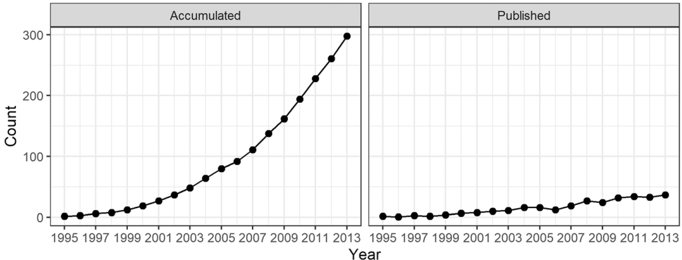
Verification
Claims the paper makes
66 Not checked yet · 24 Own interpretation · 6 No basis given · 1 Supported so far
The sources with a verdict support this claim; the rest weren’t checked yet, have no full text we could read, or their verdicts aren’t rated yet.
In the paper
“Interestingly enough, all three automated VR exposure applications mentioned above opted to include a virtual therapist of some sort (Donker et al. 2019;Freeman et al. 2018;Miloff et al. 2019), either voiceover or as an embodied agent.”
§ Better, Virtually: the Past, Present, and Future of Virtual Reality Cognitive Behavior Therapy > Virtual Therapists
What the sources say
- Supportedcites Donker et al. 2019 source
The Intervention: VR-CBT App section says Donker et al.'s application used a voice-over provided by a virtual therapist. This supports the part of the three-application statement attributed to Donker et al.; the other applications have separate citations. (LLM, conf=0.94)
- Supportedcites Freeman et al. 2018 source
The Introduction says the study programmed a virtual coach to act as the therapist in VR. Methods > Procedures describes that coach as animated from an actor’s motion capture and voiced by the same person, supporting the citing sentence’s description of Freeman et al.’s application. Page numbers are unavailable in our copy. (LLM, conf=0.94)
- Not checked yetcites Miloff et al. 2019 source
plain- Asserted: passes — The authors put it forward as true.
- Checkable: passes — It can be checked against evidence.
- Load-bearing: unclear — It is unclear whether the paper’s conclusions depend on it.
- Based: passes — The paper gives a reason why it holds.
- Supported
In the paper
“A 2014 meta-analysis reported an overall significant correlation of r = .28(95% CI: 0.18-0.38)between self-reported distress and presence during exposure”
§ Better, Virtually: the Past, Present, and Future of Virtual Reality Cognitive Behavior Therapy > The Past
What the sources say
- Not checked yetcites Ling et al. 2014 source
plaincorrelational- Asserted: passes — The authors put it forward as true.
- Checkable: passes — It can be checked against evidence.
- Load-bearing: passes — The paper’s conclusions depend on it.
- Based: passes — The paper gives a reason why it holds.
In the paper
“VR exposure therapy outperformed waitlist control conditions”
§ Better, Virtually: the Past, Present, and Future of Virtual Reality Cognitive Behavior Therapy > The Past
What the sources say
- Not checked yetcites Opriş et al. 2012 source
plaindirect- Asserted: passes — The authors put it forward as true.
- Checkable: passes — It can be checked against evidence.
- Load-bearing: passes — The paper’s conclusions depend on it.
- Based: passes — The paper gives a reason why it holds.
In the paper
“and had stable long-term effects (Opriş et al. 2012).”
§ Better, Virtually: the Past, Present, and Future of Virtual Reality Cognitive Behavior Therapy > The Past
What the sources say
- Not checked yetcites Opriş et al. 2012 source
plain- Asserted: passes — The authors put it forward as true.
- Checkable: passes — It can be checked against evidence.
- Load-bearing: unclear — It is unclear whether the paper’s conclusions depend on it.
- Based: passes — The paper gives a reason why it holds.
In the paper
“Internetadministered CBT (iCBT), which enjoys a robust evidence base with demonstrated efficacy equivalent to face-to-face treatments for mental disorders and psychosomatic conditions (Carlbring et al. 2018)”
§ Better, Virtually: the Past, Present, and Future of Virtual Reality Cognitive Behavior Therapy > Introduction
What the sources say
- Not checked yetcites Carlbring et al. 2018 source
boosted- Asserted: passes — The authors put it forward as true.
- Checkable: passes — It can be checked against evidence.
- Load-bearing: unclear — It is unclear whether the paper’s conclusions depend on it.
- Based: passes — The paper gives a reason why it holds.
In the paper
“albeit with significant differences across sample clinical characteristics and type of VR equipment used (Ling et al. 2014).”
§ Better, Virtually: the Past, Present, and Future of Virtual Reality Cognitive Behavior Therapy > The Past
What the sources say
- Not checked yetcites Ling et al. 2014 source
plaincorrelational- Asserted: passes — The authors put it forward as true.
- Checkable: passes — It can be checked against evidence.
- Load-bearing: unclear — It is unclear whether the paper’s conclusions depend on it.
- Based: passes — The paper gives a reason why it holds.
In the paper
“revealing that fear reductions in VR does indeed translate to reduced fear also in vivo (Morina et al. 2015).”
§ Better, Virtually: the Past, Present, and Future of Virtual Reality Cognitive Behavior Therapy > The Past
What the sources say
- Not checked yetcites Morina et al. 2015 source
boosteddirect- Asserted: passes — The authors put it forward as true.
- Checkable: passes — It can be checked against evidence.
- Load-bearing: passes — The paper’s conclusions depend on it.
- Based: passes — The paper gives a reason why it holds.
In the paper
“and is now implemented in routine care in many countries (Titov et al. 2018).”
§ Better, Virtually: the Past, Present, and Future of Virtual Reality Cognitive Behavior Therapy > Introduction
What the sources say
- Not checked yetcites Titov et al. 2018 source
plain- Asserted: passes — The authors put it forward as true.
- Checkable: passes — It can be checked against evidence.
- Load-bearing: unclear — It is unclear whether the paper’s conclusions depend on it.
- Based: passes — The paper gives a reason why it holds.
In the paper
“By 2012, there were k = 21 randomized controlled trials of VR exposure therapy for anxiety disorders available for meta-analysis”
§ Better, Virtually: the Past, Present, and Future of Virtual Reality Cognitive Behavior Therapy > The Past
What the sources say
- Not checked yetcites Opriş et al. 2012 source
plain- Asserted: passes — The authors put it forward as true.
- Checkable: passes — It can be checked against evidence.
- Load-bearing: unclear — It is unclear whether the paper’s conclusions depend on it.
- Based: passes — The paper gives a reason why it holds.
In the paper
“had similar outcomes to other evidence-based interventions”
§ Better, Virtually: the Past, Present, and Future of Virtual Reality Cognitive Behavior Therapy > The Past
What the sources say
- Not checked yetcites Opriş et al. 2012 source
plain- Asserted: passes — The authors put it forward as true.
- Checkable: passes — It can be checked against evidence.
- Load-bearing: passes — The paper’s conclusions depend on it.
- Based: passes — The paper gives a reason why it holds.
- Probably not a substantial claim. 21
- It may state two separate claims as one. 27
The paper states this without a source or data behind it here, so there is nothing to check it against. The quote shows it is in the paper.
In the paper
“VR technology has been used in cognitive behavior therapy since the 1990s and accumulated an impressive evidence base”
§ Better, Virtually: the Past, Present, and Future of Virtual Reality Cognitive Behavior Therapy > Abstract
plain- Asserted: passes — The authors put it forward as true.
- Checkable: passes — It can be checked against evidence.
- Load-bearing: passes — The paper’s conclusions depend on it.
- Based: fails — The paper may give no reason why it holds.
Probably not a substantial claim. The paper may give no reason why it holds. It may state two separate claims as one.
A conclusion the paper draws from its own results — it cites no other source for it, so there is none to check. The quote shows it is in the paper.
In the paper
“yet with the recent release of consumer VR platforms came a true paradigm shift in the capabilities and scalability of VR for mental health.”
§ Better, Virtually: the Past, Present, and Future of Virtual Reality Cognitive Behavior Therapy > Abstract
plaindirect- Asserted: passes — The authors put it forward as true.
- Checkable: passes — It can be checked against evidence.
- Load-bearing: passes — The paper’s conclusions depend on it.
- Based: fails — The paper may give no reason why it holds.
Probably not a substantial claim. The paper may give no reason why it holds.
A conclusion the paper draws from its own results — it cites no other source for it, so there is none to check. The quote shows it is in the paper.
In the paper
“additionally solves practical issues in providing exposure therapy: there is no need to leave the therapy room, either to perform exposure exercises or prepare stimuli material in advance.”
§ Better, Virtually: the Past, Present, and Future of Virtual Reality Cognitive Behavior Therapy > The Past
plaindirect- Asserted: passes — The authors put it forward as true.
- Checkable: passes — It can be checked against evidence.
- Load-bearing: passes — The paper’s conclusions depend on it.
- Based: unclear — It is unclear why the paper says it holds.
It may state two separate claims as one.
In the paper
“suggesting that presence is a necessary but insufficient requirement for symptom reduction (Price and Anderson 2007), congruent with the 2004 study.”
§ Better, Virtually: the Past, Present, and Future of Virtual Reality Cognitive Behavior Therapy > The Past
What the sources say
- Not checked yetcites Price and Anderson 2007 source
hedgedconditional- Asserted: passes — The authors put it forward as true.
- Checkable: passes — It can be checked against evidence.
- Load-bearing: unclear — It is unclear whether the paper’s conclusions depend on it.
- Based: passes — The paper gives a reason why it holds.
It may state two separate claims as one.
A conclusion the paper draws from its own results — it cites no other source for it, so there is none to check. The quote shows it is in the paper.
In the paper
“revealing the public health and clinical potential of this innovative approach to treatment.”
§ Better, Virtually: the Past, Present, and Future of Virtual Reality Cognitive Behavior Therapy > Automated Treatments
plain- Asserted: passes — The authors put it forward as true.
- Checkable: passes — It can be checked against evidence.
- Load-bearing: passes — The paper’s conclusions depend on it.
- Based: passes — The paper gives a reason why it holds.
It may state two separate claims as one.
In the paper
“One early study reported that nine out of ten spider-fearful individuals would prefer VR exposure over in vivo exposure (Garcia-Palacios et al. 2001)”
§ Better, Virtually: the Past, Present, and Future of Virtual Reality Cognitive Behavior Therapy > The Past
What the sources say
- Not checked yetcites Garcia-Palacios et al. 2001 source
hedged- Asserted: passes — The authors put it forward as true.
- Checkable: passes — It can be checked against evidence.
- Load-bearing: fails — The paper’s conclusions may not depend on it.
- Based: passes — The paper gives a reason why it holds.
Probably not a substantial claim. The paper’s conclusions may not depend on it.
In the paper
“although it demonstrated feasibility and replicated the effect size from the preceding efficacy trial, the sample size was relatively small and for ethical and practical reasons, a single-case design was chosen instead of comparison with treatment-as-usual (Lindner et al. 2020a).”
§ Better, Virtually: the Past, Present, and Future of Virtual Reality Cognitive Behavior Therapy > Beyond Efficacy: Demonstrating Effectiveness
What the sources say
- Not checked yetcites Lindner et al. 2020a
boosted- Asserted: passes — The authors put it forward as true.
- Checkable: passes — It can be checked against evidence.
- Load-bearing: passes — The paper’s conclusions depend on it.
- Based: passes — The paper gives a reason why it holds.
It may state two separate claims as one.
None of the sources cited for this claim have been checked yet.
In the paper
“Three high-quality randomized trials have been published recently, featuring three different applications: two on acrophobia with comparison against waiting-list (Donker et al. 2019;Freeman et al. 2018) and one on spider phobia examining non-inferiority against gold-standard in vivo exposure (Miloff et al. 2019).”
§ Better, Virtually: the Past, Present, and Future of Virtual Reality Cognitive Behavior Therapy > Automated Treatments
What the sources say
plain- Asserted: passes — The authors put it forward as true.
- Checkable: passes — It can be checked against evidence.
- Load-bearing: passes — The paper’s conclusions depend on it.
- Based: passes — The paper gives a reason why it holds.
It may state two separate claims as one.
In the paper
“although display properties in themselves also play a role (Saredakis et al. 2020).”
§ Better, Virtually: the Past, Present, and Future of Virtual Reality Cognitive Behavior Therapy > The Past
What the sources say
- Not checked yetcites Saredakis et al. 2020
plaindirect- Asserted: passes — The authors put it forward as true.
- Checkable: passes — It can be checked against evidence.
- Load-bearing: fails — The paper’s conclusions may not depend on it.
- Based: passes — The paper gives a reason why it holds.
Probably not a substantial claim. The paper’s conclusions may not depend on it.
None of the sources cited for this claim have been checked yet.
In the paper
“symptoms resembling motion sickness believed to be caused primarily by sensory conflict between the visual and vestibular/proprioceptor systems”
§ Better, Virtually: the Past, Present, and Future of Virtual Reality Cognitive Behavior Therapy > The Past
What the sources say
- Not checked yetcites Rebenitsch and Owen 2016 source
- Not checked yetcites Saredakis et al. 2020
plainconditional- Asserted: passes — The authors put it forward as true.
- Checkable: passes — It can be checked against evidence.
- Load-bearing: fails — The paper’s conclusions may not depend on it.
- Based: passes — The paper gives a reason why it holds.
Probably not a substantial claim. The paper’s conclusions may not depend on it.
None of the sources cited for this claim have been checked yet.
In the paper
“although they also reported fears about required training, handling the equipment and, financial costs, and reported an overall low degree of acquaintance with the technology (Schwartzman et al. 2012;Segal et al. 2011).”
§ Better, Virtually: the Past, Present, and Future of Virtual Reality Cognitive Behavior Therapy > The Past
What the sources say
- Not checked yetcites Schwartzman et al. 2012 source
- Not checked yetcites Segal et al. 2011
plain- Asserted: passes — The authors put it forward as true.
- Checkable: passes — It can be checked against evidence.
- Load-bearing: fails — The paper’s conclusions may not depend on it.
- Based: passes — The paper gives a reason why it holds.
Probably not a substantial claim. The paper’s conclusions may not depend on it. It may state two separate claims as one.
In the paper
“although both professional and even recreational experiences of using VR were still rare, and knowledge of VR exposure therapy still low (Lindner et al. 2019d).”
§ Better, Virtually: the Past, Present, and Future of Virtual Reality Cognitive Behavior Therapy > The Past
What the sources say
- Not checked yetcites Lindner et al. 2019d
plain- Asserted: passes — The authors put it forward as true.
- Checkable: passes — It can be checked against evidence.
- Load-bearing: unclear — It is unclear whether the paper’s conclusions depend on it.
- Based: passes — The paper gives a reason why it holds.
It may state two separate claims as one.
In the paper
“In another recent study, participants practiced delivering compassion in one virtual body and then experienced a recorded version of this act embodied as the receiving party, leading to reduced depression and self-criticism and increased self-compassion (Falconer et al. 2016).”
§ Better, Virtually: the Past, Present, and Future of Virtual Reality Cognitive Behavior Therapy > Embodiment
What the sources say
- Not checked yetcites Falconer et al. 2016 source
plaindirect- Asserted: passes — The authors put it forward as true.
- Checkable: passes — It can be checked against evidence.
- Load-bearing: unclear — It is unclear whether the paper’s conclusions depend on it.
- Based: passes — The paper gives a reason why it holds.
It may state two separate claims as one.
None of the sources cited for this claim have been checked yet.
In the paper
“This includes the possibility of using VR head rotation data as a proxy measure of other physiological variables like heart rate that indicate emotional distress, proof-of-concept of which has already been demonstrated (Noori et al. 2019) and is possible with related methods (Lomaliza and Park 2019).”
§ Better, Virtually: the Past, Present, and Future of Virtual Reality Cognitive Behavior Therapy > Full Immersion Through Innovative User Interfaces and Making Use of This Data
What the sources say
- Not checked yetcites Noori et al. 2019 source
- Not checked yetcites Lomaliza and Park 2019
boostedcorrelational- Asserted: passes — The authors put it forward as true.
- Checkable: passes — It can be checked against evidence.
- Load-bearing: unclear — It is unclear whether the paper’s conclusions depend on it.
- Based: passes — The paper gives a reason why it holds.
It may state two separate claims as one.
The paper states this without a source or data behind it here, so there is nothing to check it against. The quote shows it is in the paper.
In the paper
“By comparison, approximately half of the world's population is now estimated to have access to a smartphone.”
§ Better, Virtually: the Past, Present, and Future of Virtual Reality Cognitive Behavior Therapy > Still Awaiting Mass Adoption by Consumers
hedged- Asserted: passes — The authors put it forward as true.
- Checkable: passes — It can be checked against evidence.
- Load-bearing: fails — The paper’s conclusions may not depend on it.
- Based: fails — The paper may give no reason why it holds.
Probably not a substantial claim. The paper’s conclusions may not depend on it. The paper may give no reason why it holds.
In the paper
“The choice of control condition is a long-standing debate and multifaceted issue in psychotherapy research, with placebo interventions remaining the gold-standard despite being hard to implement in research on traditional psychotherapy (Gold et al. 2017).”
§ Better, Virtually: the Past, Present, and Future of Virtual Reality Cognitive Behavior Therapy > Raising Research Quality
What the sources say
- Not checked yetcites Gold et al. 2017 source
plain- Asserted: passes — The authors put it forward as true.
- Checkable: passes — It can be checked against evidence.
- Load-bearing: passes — The paper’s conclusions depend on it.
- Based: passes — The paper gives a reason why it holds.
It may state two separate claims as one.
None of the sources cited for this claim have been checked yet.
In the paper
“The advent of modern consumer VR has resolved most of the logistic barriers to running larger clinical trials (but see below), as reflected in the larger sample sizes found in recent studies (Donker et al. 2019;Freeman et al. 2018;Miloff et al. 2019).”
§ Better, Virtually: the Past, Present, and Future of Virtual Reality Cognitive Behavior Therapy > Raising Research Quality
What the sources say
plaindirect- Asserted: passes — The authors put it forward as true.
- Checkable: passes — It can be checked against evidence.
- Load-bearing: passes — The paper’s conclusions depend on it.
- Based: passes — The paper gives a reason why it holds.
It may state two separate claims as one.
A conclusion the paper draws from its own results — it cites no other source for it, so there is none to check. The quote shows it is in the paper.
In the paper
“Patients, in turn, are also likely to have markedly fewer preconceptions of what constitutes a VR psychological treatment, offering good grounds for (double) blinding.”
§ Better, Virtually: the Past, Present, and Future of Virtual Reality Cognitive Behavior Therapy > Raising Research Quality
hedgedconditional- Asserted: passes — The authors put it forward as true.
- Checkable: passes — It can be checked against evidence.
- Load-bearing: passes — The paper’s conclusions depend on it.
- Based: unclear — It is unclear why the paper says it holds.
It may state two separate claims as one.
- Rests on an assumption: Patients have markedly fewer preconceptions of what constitutes a VR psychological treatment.
In the paper
“Concerns have been raised about research quality of trials examining VR exposure therapy for anxiety disorders, primarily the reliance on small samples, and no or questionable control conditions (Page and Coxon 2016).”
§ Better, Virtually: the Past, Present, and Future of Virtual Reality Cognitive Behavior Therapy > Raising Research Quality
What the sources say
- Not checked yetcites Page and Coxon 2016 source
plaincorrelational- Asserted: passes — The authors put it forward as true.
- Checkable: passes — It can be checked against evidence.
- Load-bearing: passes — The paper’s conclusions depend on it.
- Based: passes — The paper gives a reason why it holds.
Probably not a substantial claim. It may state two separate claims as one.
The paper states this without a source or data behind it here, so there is nothing to check it against. The quote shows it is in the paper.
In the paper
“The fact that modern consumer VR is primarily marketed, and used, as an entertainment platform”
§ Better, Virtually: the Past, Present, and Future of Virtual Reality Cognitive Behavior Therapy > Therapeutic Storytelling
plain- Asserted: passes — The authors put it forward as true.
- Checkable: passes — It can be checked against evidence.
- Load-bearing: passes — The paper’s conclusions depend on it.
- Based: fails — The paper may give no reason why it holds.
Probably not a substantial claim. The paper may give no reason why it holds.
In the paper
“Although there is some preliminary, indirect research in support of this approach (Shin 2018), therapeutic effects on psychopathology have yet to be demonstrated.”
§ Better, Virtually: the Past, Present, and Future of Virtual Reality Cognitive Behavior Therapy > Therapeutic Storytelling
What the sources say
- Not checked yetcites Shin 2018 source
plain- Asserted: passes — The authors put it forward as true.
- Checkable: passes — It can be checked against evidence.
- Load-bearing: unclear — It is unclear whether the paper’s conclusions depend on it.
- Based: passes — The paper gives a reason why it holds.
It may state two separate claims as one.
In the paper
“VR has a long history of studying negative effects in the form of cybersickness (Rebenitsch and Owen 2016)”
§ Better, Virtually: the Past, Present, and Future of Virtual Reality Cognitive Behavior Therapy > Raising Research Quality
What the sources say
- Not checked yetcites Rebenitsch and Owen 2016 source
plain- Asserted: passes — The authors put it forward as true.
- Checkable: passes — It can be checked against evidence.
- Load-bearing: fails — The paper’s conclusions may not depend on it.
- Based: passes — The paper gives a reason why it holds.
Probably not a substantial claim. The paper’s conclusions may not depend on it.
The paper states this without a source or data behind it here, so there is nothing to check it against. The quote shows it is in the paper.
In the paper
“At the end of 2019, Sony confirmed having sold more than five million units of their Playstation VR device.”
§ Better, Virtually: the Past, Present, and Future of Virtual Reality Cognitive Behavior Therapy > Still Awaiting Mass Adoption by Consumers
plain- Asserted: passes — The authors put it forward as true.
- Checkable: passes — It can be checked against evidence.
- Load-bearing: fails — The paper’s conclusions may not depend on it.
- Based: fails — The paper may give no reason why it holds.
Probably not a substantial claim. The paper’s conclusions may not depend on it. The paper may give no reason why it holds.
In the paper
“One recent study compared exposure to standardized catastrophic scenarios in VR, to imaginal exposure with personalized scenarios, and found no difference in evoked anxiety (Guitard et al. 2019), suggesting that perfect tailoring is at least not necessary.”
§ Better, Virtually: the Past, Present, and Future of Virtual Reality Cognitive Behavior Therapy > Full Immersion Through Innovative User Interfaces and Making Use of This Data
What the sources say
- Not checked yetcites Guitard et al. 2019 source
hedged- Asserted: passes — The authors put it forward as true.
- Checkable: passes — It can be checked against evidence.
- Load-bearing: passes — The paper’s conclusions depend on it.
- Based: passes — The paper gives a reason why it holds.
It may state two separate claims as one.
In the paper
“A review article from 1996 on “VR psychotherapy” made a number of interesting predictions on the future of the field: while some predictions did turn out true, most ultimately did not (Glantz et al. 1996).”
§ Better, Virtually: the Past, Present, and Future of Virtual Reality Cognitive Behavior Therapy > Conclusions
What the sources say
- Not checked yetcites Glantz et al. 1996 source
plain- Asserted: passes — The authors put it forward as true.
- Checkable: passes — It can be checked against evidence.
- Load-bearing: unclear — It is unclear whether the paper’s conclusions depend on it.
- Based: passes — The paper gives a reason why it holds.
It may state two separate claims as one.
In the paper
“Recent survey research suggests that ordinary clinicians do continue to see certain risks in using VR in therapy, although positive views outweigh negative (Lindner et al. 2019d).”
§ Better, Virtually: the Past, Present, and Future of Virtual Reality Cognitive Behavior Therapy > Raising Research Quality
What the sources say
- Not checked yetcites Lindner et al. 2019d
hedged- Asserted: passes — The authors put it forward as true.
- Checkable: passes — It can be checked against evidence.
- Load-bearing: unclear — It is unclear whether the paper’s conclusions depend on it.
- Based: passes — The paper gives a reason why it holds.
It may state two separate claims as one.
A conclusion the paper draws from its own results — it cites no other source for it, so there is none to check. The quote shows it is in the paper.
In the paper
“since so-called sandbox-type paradigms require additional developmental resources, which may not be costeffective in relation to efficacy.”
§ Better, Virtually: the Past, Present, and Future of Virtual Reality Cognitive Behavior Therapy > Full Immersion Through Innovative User Interfaces and Making Use of This Data
hedgedconditional- Asserted: passes — The authors put it forward as true.
- Checkable: passes — It can be checked against evidence.
- Load-bearing: fails — The paper’s conclusions may not depend on it.
- Based: fails — The paper may give no reason why it holds.
Probably not a substantial claim. The paper’s conclusions may not depend on it. The paper may give no reason why it holds.
None of the sources cited for this claim have been checked yet.
In the paper
“privacy concerns have already been raised (Slater et al. 2020;Spiegel 2018) and must continue to be discussed within clinical research”
§ Better, Virtually: the Past, Present, and Future of Virtual Reality Cognitive Behavior Therapy > Full Immersion Through Innovative User Interfaces and Making Use of This Data
What the sources say
plain- Asserted: passes — The authors put it forward as true.
- Checkable: passes — It can be checked against evidence.
- Load-bearing: fails — The paper’s conclusions may not depend on it.
- Based: passes — The paper gives a reason why it holds.
Probably not a substantial claim. The paper’s conclusions may not depend on it. It may state two separate claims as one.
In the paper
“with a recent systematic review identifying k = 152 studies investigating different factors of importance (Oh et al. 2018).”
§ Better, Virtually: the Past, Present, and Future of Virtual Reality Cognitive Behavior Therapy > Social VR
What the sources say
- Not checked yetcites Oh et al. 2018
plain- Asserted: passes — The authors put it forward as true.
- Checkable: passes — It can be checked against evidence.
- Load-bearing: fails — The paper’s conclusions may not depend on it.
- Based: passes — The paper gives a reason why it holds.
Probably not a substantial claim. The paper’s conclusions may not depend on it.
A conclusion the paper draws from its own results — it cites no other source for it, so there is none to check. The quote shows it is in the paper.
In the paper
“The field of VR-CBT is expanding rapidly with new publications every week”
§ Better, Virtually: the Past, Present, and Future of Virtual Reality Cognitive Behavior Therapy > Conclusions
plain- Asserted: passes — The authors put it forward as true.
- Checkable: passes — It can be checked against evidence.
- Load-bearing: fails — The paper’s conclusions may not depend on it.
- Based: fails — The paper may give no reason why it holds.
Probably not a substantial claim. The paper’s conclusions may not depend on it. The paper may give no reason why it holds.
A conclusion the paper draws from its own results — it cites no other source for it, so there is none to check. The quote shows it is in the paper.
In the paper
“This question has however received surprisingly little research attention thus far.”
§ Better, Virtually: the Past, Present, and Future of Virtual Reality Cognitive Behavior Therapy > Full Immersion Through Innovative User Interfaces and Making Use of This Data
plain- Asserted: passes — The authors put it forward as true.
- Checkable: passes — It can be checked against evidence.
- Load-bearing: fails — The paper’s conclusions may not depend on it.
- Based: passes — The paper gives a reason why it holds.
Probably not a substantial claim. The paper’s conclusions may not depend on it.
A conclusion the paper draws from its own results — it cites no other source for it, so there is none to check. The quote shows it is in the paper.
In the paper
“The small sample sizes that characterized early (and to a lesser degree, also current) research is not unexpected given the added practical requirements in providing VR treatment, at least with the previous generation of technology”
§ Better, Virtually: the Past, Present, and Future of Virtual Reality Cognitive Behavior Therapy > Raising Research Quality
plaindirect- Asserted: passes — The authors put it forward as true.
- Checkable: passes — It can be checked against evidence.
- Load-bearing: unclear — It is unclear whether the paper’s conclusions depend on it.
- Based: passes — The paper gives a reason why it holds.
It may state two separate claims as one.
A conclusion the paper draws from its own results — it cites no other source for it, so there is none to check. The quote shows it is in the paper.
In the paper
“The recent release of consumer VR platforms constitutes a true paradigm shift in the development and dissemination of clinical VR”
§ Better, Virtually: the Past, Present, and Future of Virtual Reality Cognitive Behavior Therapy > Conclusions
boosteddirect- Asserted: passes — The authors put it forward as true.
- Checkable: fails — It may be too vague to check against evidence.
- Load-bearing: passes — The paper’s conclusions depend on it.
- Based: fails — The paper may give no reason why it holds.
Probably not a substantial claim. It may be too vague to check against evidence. The paper may give no reason why it holds.
In the paper
“Widespread reports of difficulties in implementing exposure therapy for PTSD in clinical settings (Waller and Turner 2016), for example, stress the importance of considering therapist views in efforts to disseminate new treatments.”
§ Better, Virtually: the Past, Present, and Future of Virtual Reality Cognitive Behavior Therapy > Raising Research Quality
What the sources say
- Not checked yetcites Waller and Turner 2016 source
plaincorrelational- Asserted: passes — The authors put it forward as true.
- Checkable: passes — It can be checked against evidence.
- Load-bearing: fails — The paper’s conclusions may not depend on it.
- Based: passes — The paper gives a reason why it holds.
Probably not a substantial claim. The paper’s conclusions may not depend on it.
In the paper
“In fact, human-computer interaction research has shown that head rotation provides an adequate proxy measure of eye gaze: gaze tends to focus around a rotation-controlled crosshair, and gaze shifts above 25° are typically accompanied by subsequent head movement with a lag of 30-150 ms (Sidenmark and Gellersen 2020).”
§ Better, Virtually: the Past, Present, and Future of Virtual Reality Cognitive Behavior Therapy > Full Immersion Through Innovative User Interfaces and Making Use of This Data
What the sources say
- Not checked yetcites Sidenmark and Gellersen 2020 source
plaincorrelational- Asserted: passes — The authors put it forward as true.
- Checkable: passes — It can be checked against evidence.
- Load-bearing: passes — The paper’s conclusions depend on it.
- Based: passes — The paper gives a reason why it holds.
It may state two separate claims as one.
In the paper
“so-called creative bibliotherapy-patient reading selected works of fiction, as opposed to self-help material-has a long history yet has received very little research attention (Troscianko 2018) and can therefore not currently be considered an evidencebased treatment.”
§ Better, Virtually: the Past, Present, and Future of Virtual Reality Cognitive Behavior Therapy > Therapeutic Storytelling
What the sources say
- Not checked yetcites Troscianko 2018 source
plain- Asserted: passes — The authors put it forward as true.
- Checkable: passes — It can be checked against evidence.
- Load-bearing: unclear — It is unclear whether the paper’s conclusions depend on it.
- Based: passes — The paper gives a reason why it holds.
It may state two separate claims as one.
A conclusion the paper draws from its own results — it cites no other source for it, so there is none to check. The quote shows it is in the paper.
In the paper
“Arguably, clinical researchers have only begun to scratch the surface of the clinical potential of virtual embodiment, especially with regard to how such experiences can be merged with traditional, evidence-based CBT techniques.”
§ Better, Virtually: the Past, Present, and Future of Virtual Reality Cognitive Behavior Therapy > Novel Uses of Virtual Embodiment
hedged- Asserted: passes — The authors put it forward as true.
- Checkable: fails — It may be too vague to check against evidence.
- Load-bearing: fails — The paper’s conclusions may not depend on it.
- Based: fails — The paper may give no reason why it holds.
Probably not a substantial claim. It may be too vague to check against evidence. The paper’s conclusions may not depend on it. The paper may give no reason why it holds.
In the paper
“Despite VR now being an accessible and affordable consumer product (Lindner et al. 2017), mass adoption has yet to occur and growth remains linear rather than exponential, hindering the full public health and clinical potential of VR.”
§ Better, Virtually: the Past, Present, and Future of Virtual Reality Cognitive Behavior Therapy > Still Awaiting Mass Adoption by Consumers
What the sources say
- Not checked yetcites Lindner et al. 2017 source
plaindirect- Asserted: passes — The authors put it forward as true.
- Checkable: passes — It can be checked against evidence.
- Load-bearing: passes — The paper’s conclusions depend on it.
- Based: passes — The paper gives a reason why it holds.
It may state two separate claims as one.
In the paper
“However, since the expected effect sizes in these studies were large (as with in vivo exposure therapy), even smaller trials may nonetheless have been well powered; further, the fact that VR allows for a greater, even full degree of standardization should decrease outcome variance and thereby sample size requirement (Lindner et al. 2020b).”
§ Better, Virtually: the Past, Present, and Future of Virtual Reality Cognitive Behavior Therapy > Raising Research Quality
What the sources say
- Not checked yetcites Lindner et al. 2020b
hedgedconditional- Asserted: passes — The authors put it forward as true.
- Checkable: passes — It can be checked against evidence.
- Load-bearing: unclear — It is unclear whether the paper’s conclusions depend on it.
- Based: passes — The paper gives a reason why it holds.
It may state two separate claims as one.
- Rests on an assumption: The expected effect sizes in VR exposure studies were large.
A conclusion the paper draws from its own results — it cites no other source for it, so there is none to check. The quote shows it is in the paper.
In the paper
“6DOF technology, although not new but now much more userfriendly, remains underutilized in clinical VR, in particular as core clinical components.”
§ Better, Virtually: the Past, Present, and Future of Virtual Reality Cognitive Behavior Therapy > Full Immersion Through Innovative User Interfaces and Making Use of This Data
plain- Asserted: passes — The authors put it forward as true.
- Checkable: passes — It can be checked against evidence.
- Load-bearing: fails — The paper’s conclusions may not depend on it.
- Based: fails — The paper may give no reason why it holds.
Probably not a substantial claim. The paper’s conclusions may not depend on it. The paper may give no reason why it holds.
In the paper
“While research has begun to collect and analyze user engagement metrics and selfreported data from self-guided VR interventions (Donker et al. 2020), there has been surprisingly little research on data that offers deeper insight.”
§ Better, Virtually: the Past, Present, and Future of Virtual Reality Cognitive Behavior Therapy > Full Immersion Through Innovative User Interfaces and Making Use of This Data
What the sources say
- Not checked yetcites Donker et al. 2020
plain- Asserted: passes — The authors put it forward as true.
- Checkable: passes — It can be checked against evidence.
- Load-bearing: passes — The paper’s conclusions depend on it.
- Based: passes — The paper gives a reason why it holds.
It may state two separate claims as one.
The paper states this without a source or data behind it here, so there is nothing to check it against. The quote shows it is in the paper.
In the paper
“publically released hardware statistics from the Steam gaming platform in spring 2020 revealed that around 2% of the platform's active user base has access to VR, equivalent to roughly 2 million users.”
§ Better, Virtually: the Past, Present, and Future of Virtual Reality Cognitive Behavior Therapy > Still Awaiting Mass Adoption by Consumers
plain- Asserted: passes — The authors put it forward as true.
- Checkable: passes — It can be checked against evidence.
- Load-bearing: unclear — It is unclear whether the paper’s conclusions depend on it.
- Based: passes — The paper gives a reason why it holds.
It may state two separate claims as one.
In the paper
“In the first effectiveness trial of VR exposure therapy in routine care, the clinic was reimbursed either through existing occupational healthcare contracts or the patients payed out-ofpocket (Lindner et al. 2020a), in no case with any additional cost included to cover the clinics investment in VR.”
§ Better, Virtually: the Past, Present, and Future of Virtual Reality Cognitive Behavior Therapy > Still Awaiting Mass Adoption by Consumers
What the sources say
- Not checked yetcites Lindner et al. 2020a
plain- Asserted: passes — The authors put it forward as true.
- Checkable: passes — It can be checked against evidence.
- Load-bearing: passes — The paper’s conclusions depend on it.
- Based: passes — The paper gives a reason why it holds.
It may state two separate claims as one.
A conclusion the paper draws from its own results — it cites no other source for it, so there is none to check. The quote shows it is in the paper.
In the paper
“Social VR is growing increasingly popular”
§ Better, Virtually: the Past, Present, and Future of Virtual Reality Cognitive Behavior Therapy > Social VR
plain- Asserted: passes — The authors put it forward as true.
- Checkable: passes — It can be checked against evidence.
- Load-bearing: fails — The paper’s conclusions may not depend on it.
- Based: passes — The paper gives a reason why it holds.
Probably not a substantial claim. The paper’s conclusions may not depend on it.
The paper relies on this without support.
VR exposure is always safer than in vivo equivalent exposure.
“Further, VR exposure will always be safer than in vivo equivalent exposure”
The paper relies on this without support.
Consumer VR will achieve mass adoption.
“VR and other mixed reality technologies are still awaiting mass adoption, but when this does happen, there will already be a firm evidence base to inform the next generation of VR interventions for mental health.”
The paper relies on this without support.
VR technology will continue to develop rapidly.
“The future of VR-CBT will continue to be inherently intertwined with the development of VR technology, yet the latter now develops at a pace so rapid that clinical researchers are struggling to keep up”
The paper relies on this without support.
The expected effect sizes in VR exposure studies were large.
“since the expected effect sizes in these studies were large (as with in vivo exposure therapy), even smaller trials may nonetheless have been well powered”
The paper relies on this without support.
Patients have markedly fewer preconceptions of what constitutes a VR psychological treatment.
“Patients, in turn, are also likely to have markedly fewer preconceptions of what constitutes a VR psychological treatment, offering good grounds for (double) blinding.”
Claims other papers make about this one
Each is checked against this paper’s own text: does it say what the citing paper says it does?
The source backs part of the claim, not all of it — or backs it for a different population, condition or comparison.
In the citing paper
“However, relatively limited research has explored the potential therapeutic applications of VR beyond exposure-based cognitive behavioral therapy (CBT) approaches, and research in youth is highly limited [2,5,6,16].”
From A Virtual Reality–Based Cognitive Defusion Application for Youth Depression and Anxiety: Mixed Methods Experimental Study. (2025) · cites this paper as [16]
Experimental — accuracy not yet measuredThe cited source says what the claim attributes to it.
In the citing paper
“Most of this research has focused on VR-based cognitive behavioral treatments (VR-CBTs) [16].”
From A Virtual Reality–Based Cognitive Defusion Application for Youth Depression and Anxiety: Mixed Methods Experimental Study. (2025) · cites this paper as [16]
In the citing paper
“Ellipsis Health is an ML-based mobile app that detects depression using speech analysis of smartphone audio, which can be easily recorded and transmitted, potentially allowing accessible screening and monitoring of depression.”
From Digital health technologies and major depressive disorder (2023) · cites this paper as [114]
Self-check
Percentages, sums and reported differences re-computed from the paper’s own numbers.
Each contradiction between two passages listed here was confirmed by an independent check.
Rated minor: it would not touch a result — a value no result rests on, a p-value that stays on the same side of the significance level, or a conflict that is clerical, resolved elsewhere in the paper, or outside its own findings.
In the paper
§ Better, Virtually: the Past, Present, and Future of Virtual Reality Cognitive Behavior Therapy > References
“11. Carl, E., Stein, T., A., Levihn-Coon, A., Pogue, J. R., Rothbaum, B., Emmelkamp, P., et al. (2018). Virtual reality exposure therapy for anxiety and related disorders: a meta-analysis of randomized controlled trials. Journal of Anxiety Disorders. https://doi.org/10.1016/j.janxdis.2018.08.003.”
§ Better, Virtually: the Past, Present, and Future of Virtual Reality Cognitive Behavior Therapy > References
“12. Carl, E., Stein, A. T., Levihn-Coon, A., Pogue, J. R., Rothbaum, B., Emmelkamp, P., et al. (2019). Virtual reality exposure therapy for anxiety and related disorders: a meta-analysis of randomized controlled trials. Journal of Anxiety Disorders, 61, 27-36. https://doi.org/10.1016/j.janxdis.2018.08.003.”
Citations
Cites
The Rise of Motivational Information Systems: A Review of Gamification Research
Koivisto, J., & Hamari, J. (2017) · International Journal of Information Management · doi:10.1016/j.ijinfomgt.2018.10.013 · Cited by 2,229
A head-mounted three dimensional display
Sutherland, I. E. (1968) · Proceedings of the December 9-11, 1968, fall joint computer conference, part I on - AFIPS '68 (Fall, part I) · doi:10.1145/1476589.1476686 · Cited by 2,065
Virtual Reality in the Assessment, Understanding, and Treatment of Mental Health Disorders
Freeman, D., Reeve, S., Robinson, A., Ehlers, A., Clark, D., Spanlang, B., & Slater, M. (2017) · Psychological Medicine · doi:10.1017/s003329171700040x · Cited by 1,428
Emergency department crowding: A systematic review of causes, consequences and solutions
Morley, C., Unwin, M., Peterson, G. M., Stankovich, J., & Kinsman, L. (2018) · PLOS ONE · doi:10.1371/journal.pone.0203316 · Cited by 1,386
Gamification for health and wellbeing: A systematic review of the literature
Johnson, D., Deterding, S., Kuhn, K.-A., Staneva, A., Stoyanov, S., & Hides, L. (2016) · Internet Interventions · doi:10.1016/j.invent.2016.10.002 · Cited by 1,237
Carlbring, P., Andersson, G., Cuijpers, P., Riper, H., & Hedman-Lagerlöf, E. (2018) · Cognitive Behaviour Therapy · doi:10.1080/16506073.2017.1401115 · Cited by 1,232
Visual dominance: An information-processing account of its origins and significance.
Posner, M. I., Nissen, M. J., & Klein, R. M. (1976) · Psychological Review · doi:10.1037/0033-295x.83.2.157 · Cited by 1,087
Parenting Stress, Mental Health, Dyadic Adjustment: A Structural Equation Model
Rollè, L., Prino, L. E., Sechi, C., Vismara, L., Neri, E., Polizzi, C., Trovato, A., Volpi, B., Molgora, S., Fenaroli, V., et al. (2017) · Frontiers in Psychology · doi:10.3389/fpsyg.2017.00839 · Cited by 1,047
A Systematic Review of Social Presence: Definition, Antecedents, and Implications
Oh, C. S., Bailenson, J. N., & Welch, G. F. (2018) · Frontiers in Robotics and AI · doi:10.3389/frobt.2018.00114 · Cited by 1,032
Parsons, T. D., & Rizzo, A. A. (2008) · Journal of Behavior Therapy and Experimental Psychiatry · doi:10.1016/j.jbtep.2007.07.007 · Cited by 994
Research works printed but not linked: 2
- Alsem, S. (2019). Using interactive virtual reality to treat aggressive behavior problems in children. in 9th World Congress of Behavioural and Cognitive Therapies.
- Carl, E., Stein, A. T., Levihn-Coon, A., Pogue, J. R., Rothbaum, B., Emmelkamp, P., et al. (2019). Virtual reality exposure therapy for anxiety and related disorders: a meta-analysis of randomized controlled trials. Journal of Anxiety Disorders, 61, 27–36. https://doi.org/10.1016/j.janxdis.2018.08.003. · DOI · Paper page
Cited by
Sorted by citations
Torous, J., Linardon, J., Goldberg, S. B., Sun, S., Bell, I., Nicholas, J., Hassan, L., Hua, Y., Milton, A., & Firth, J. (2025) · World Psychiatry · doi:10.1002/wps.21299 · Cited by 323
Artificial intelligence technologies and compassion in healthcare: A systematic scoping review
Morrow, E. M., Zidaru, T., Ross, F., Mason, C. L., Patel, K. D., Ream, M., & Stockley, R. (2023) · Frontiers in Psychology · doi:10.3389/fpsyg.2022.971044 · Cited by 308
“Artificial intelligence (AI) technologies are associated with compassion through extending or enhancing human and digital therapeutic bond and therapeutic alignment (Lindner, 2021).”
BackgroundThe sense of embodiment in Virtual Reality and its assessment methods
Guy, M., Normand, J., Jeunet, C., & Moreau, G. (2023) · Frontiers in Virtual Reality · doi:10.3389/frvir.2023.1141683 · Cited by 131
“…to many applications such as entertainment (Zyda, 2005; Atkinson et al., 2020), interactive training (Claude et al., 2014; Bouville et al., 2015), scienti fi c visualisation (Chandler et al., 2015; Dwyer et al., 2018), and virtual therapy (Wallach et al., 2009; Donker et al., 2019; Lindner, 2020).”
Pira, G. L., Aquilini, B., Davoli, A., Grandi, S., & Ruini, C. (2023) · JMIR Mental Health · doi:10.2196/44998 · Cited by 92
“Although the technology was quite raw, it was sufficiently capable of producing convincing 3D images inside a head-mounted display (HMD) or inside a room where the images were projected on the walls (cave automatic virtual environment) [4].”
BackgroundYang, X., Wu, J., Ma, Y., Yu, J., Cao, H., Zeng, A., Fu, R., Tang, Y., & Ren, Z. (2024) · Journal of Medical Internet Research · doi:10.2196/60845 · Cited by 111
“By incorporating VR into CBT, children can practice coping strategies in simulated real-life emotional and social scenarios, potentially enhancing outcomes [68].”
Metadata
- Authors
- Lindner, P.
- Affiliations
- Region Stockholm (SE)
- Corresponding author
- Lindner, Philip
- ORCID
- Lindner, Philip
- Venue
- International Journal of Cognitive Therapy
- Published
- 2020-10-20
- Volume
- 14
- Issue
- 1
- Pages
- 23-46
- ISSN
- 1937-1209 (ISSN-L)
- 1937-1217
- OpenAlex
- W3093847664
- Semantic Scholar
- f6bc7da21bcb63e0a542b5762a0a47d2df138d1b
- Cited by
- 120
- References
- 136
- Citations by year
- 2026: 19 · 2025: 28 · 2024: 30 · 2023: 24 · 2022: 7 · 2021: 11 · 2020: 1
- FWCI
- 7.83
- Type
- journal article
- Language
- en
- Open access
- hybrid
- doi.org
- Locations
- International Journal of Cognitive Therapy (publishedVersion, cc-by)
- Funders
- Karolinska Institutet
- Topics
- Physical Sciences › Computer Science › Human-Computer Interaction › Virtual Reality Applications and Impacts
- Social Sciences › Psychology › Applied Psychology › Digital Mental Health Interventions
- Social Sciences › Psychology › Clinical Psychology › Psychotherapy Techniques and Applications
- Keywords
- virtual reality, cognitive behavioral therapy, immersive technologies, embodiment, gamification, immersive storytelling, psychotherapy
About these checks
Registry, retraction, Cites and statistics results are computed, not judged, with one exception: a printed reference that no index lists is read once by a model before it counts as a citation error. Claims are extracted by a model and kept only when their quote appears verbatim in the text; each cited source is then checked, with a model’s help, for whether it says what the claim relies on. Those verdicts can be wrong — read the claim’s quote and the cited source before relying on one.
A language model drew the claims from the paper on 2026-10-10, under version 3 of the claim definition (model deepseek-v4.1-flash, prompt extract-v3).
A second model labelled each claim on 2026-10-10 (model jev-1.13-20260917, definition revision gold-guideline-v0.2).
Cited sources are checked with a language model’s help (gpt-6-sol).
Statistics and arithmetic are recomputed, not judged.
Confidence bands are shown only for fields calibrated on our annotated test set. None is calibrated yet, so no band is shown.
What counts as a claim ›How we measure confidence ›How we check this ›
Are you an author, or do you see a problem with this page? Request a review
