

Review of organic and inorganic pollutants removal by biochar and biochar-based composites
Open accessThe DOI matches its Crossref record; 213 of the 213 references it cites were found in a registry or an index; 2 of the 139 sources its claims cite were checked for support.
Abstract
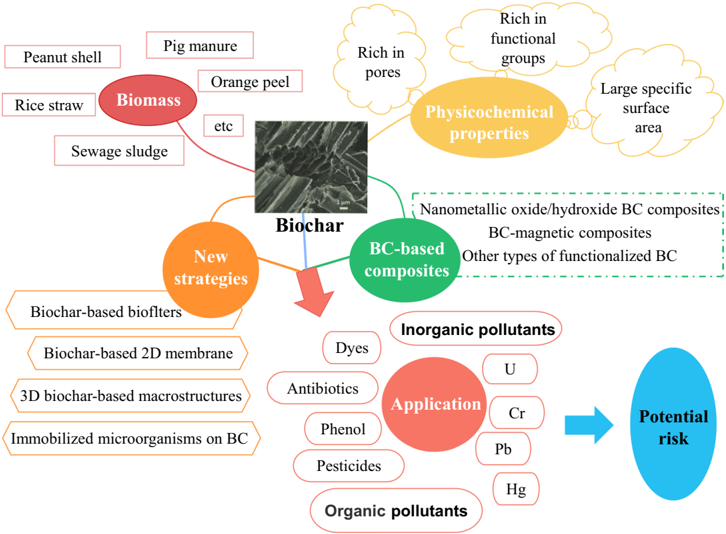
Abstract Biochar (BC) has exhibited a great potential to remove water contaminants due to its wide availability of raw materials, high surface area, developed pore structure, and low cost. However, the application of BC for water remediation has many limitations. Driven by the intense desire of overcoming unfavorable factors, a growing number of researchers have carried out to produce BC-based composite materials, which not only improved the physicochemical properties of BC, but also obtained a new composite material which combined the advantages of BC and other materials.
Overview
CoChat Summary
## TL;DR
This review summarizes how biochar and biochar-based composites are prepared, what physicochemical properties matter, and how they remove inorganic and organic pollutants from water and soil. It concludes that composite materials generally outperform pristine biochar, but stability, biological toxicity, and field validation remain major concerns.
## Key findings
- Pristine biochar showed pollutant removal capacities that the review reports as ranging from 7 × 10^-3 to 161.9 mg/g for inorganic pollutants and 10.4 to 610.1 mg/g for organic pollutants.
- Biochar-based composites improved removal performance: the review reports inorganic pollutant Qmax of 31 to 904 mg/g and that organic pollutant removal by composites was “more than 90%.”
- Examples given include MnO2-biochar removing 100% U(VI) with qmax = 904 mg/g; TiO2-biochar raising Reactive Blue 69 removal from 63.8% to 98.1%; and ZnO-modified biochar achieving 95% photodegradation efficiency after 5 cycles for phenol.
- For specific contaminants, the review reports Cr(VI) removal by pristine biochar through electrostatic attraction, reduction, and complexation, and gives examples such as BC450 removing almost 100% Cd(II) within 1 h and BC700 reducing soil soluble Cr by 93%.
## Methods
- This is a narrative review of prior studies on biochar and biochar-based composite materials, organized around preparation methods, physicochemical properties, contaminant removal performance, and adsorption/removal mechanisms.
- The review draws on published studies and summarizes them in tables (e.g., Tables 1–9), covering biochar preparation conditions, biochar/composite types, and reported adsorption capacities or removal rates.
- Main analysis is comparative synthesis of reported results across contaminant classes: heavy metals/inorganic pollutants and organic pollutants (dyes, phenols, antibiotics, pesticides), plus discussion of potential risks.
## Limitations
- The paper explicitly states that stability and biological toxicity of biochar-based composite materials still need attention and further study.
- It states that field trials are lacking and that most studies are laboratory-based, so laboratory conclusions may not translate directly to field conditions.
- It also states that the mechanisms are still inconclusive and that the relationships among biomass, preparation methods, and material properties are not clear enough.
- Evident from the text: the review is largely qualitative and literature-synthesizing, so it does not present a single controlled experimental dataset of its own.
Model-written summary. Check it against the paper before relying on it.
Integrity signals
Registry
Cites
Statistics
Figures

Verification
Claims the paper makes
2 Valid · 5 Not valid · 120 Not checked · 44 Own results and interpretations
In the paper
“Gao etal. (2020) co-pyrolyzed the mixture of rape straw and KH 2PO4 to prepare BC and the BC displayed a high immobilization capacity to heavy metals (Pb, Cu, and Cd).”
What the sources say
- Not matchedcites Gao etal. (2020)
An author–year citation the paper’s reference list doesn’t settle. We don’t search these by name.
plainstates an association- Asserted: passes — The authors put it forward as true.
- Checkable: passes — It can be checked against evidence.
- Load-bearing: unclear — It is unclear whether the paper’s conclusions depend on it.
- Based: passes — The paper gives a reason why it holds.
- Not matched
A result the paper states — it cites no source for it, so there is none to check. The quote shows it is in the paper.
In the paper
“The Q max of inorganic pollutants removal by BC-based composites ranged from 31 to 904mg/g.”
plain- Asserted: passes — The authors put it forward as true.
- Checkable: passes — It can be checked against evidence.
- Load-bearing: unclear — It is unclear whether the paper’s conclusions depend on it.
- Based: passes — The paper gives a reason why it holds.
A result the paper states — it cites no source for it, so there is none to check. The quote shows it is in the paper.
In the paper
“BC450 (produced at 450°C) showed a good removal efficiency (almost 100% Cd(II) from the aqueous solution within 1h).”
plainstates a cause- Asserted: passes — The authors put it forward as true.
- Checkable: passes — It can be checked against evidence.
- Load-bearing: unclear — It is unclear whether the paper’s conclusions depend on it.
- Based: passes — The paper gives a reason why it holds.
A result the paper states — it cites no source for it, so there is none to check. The quote shows it is in the paper.
In the paper
“the Q max of organic pollutant removal by the pristine BC ranged from 10.4 to 610.1mg/g”
plain- Asserted: passes — The authors put it forward as true.
- Checkable: passes — It can be checked against evidence.
- Load-bearing: unclear — It is unclear whether the paper’s conclusions depend on it.
- Based: passes — The paper gives a reason why it holds.
In the paper
“Wahab etal. (2013) reported that the melanoma cancer cells produced reactive oxygen species (ROS) and apoptosis after contact with nZnO.”
What the sources say
- Not matchedcites Wahab etal. (2013)
An author–year citation the paper’s reference list doesn’t settle. We don’t search these by name.
plainstates a cause- Asserted: passes — The authors put it forward as true.
- Checkable: passes — It can be checked against evidence.
- Load-bearing: unclear — It is unclear whether the paper’s conclusions depend on it.
- Based: passes — The paper gives a reason why it holds.
- Not matched
58 more claims
Create a free account to see all 171 claims and every source verdict.
- Probably not a substantial claim. 30
- It may state two separate claims as one. 88
- The quote only partly states this claim. 3
Self-check
Percentages, sums and reported differences re-computed from the paper’s own numbers.
Self-check results appear here once an independent check has confirmed them.
Cited works that were retracted
Works this paper cites that were later retracted, from the retraction notices publishers deposit. Major when the notice came out before this paper was published.
A note, not an issue: for example, a cited work that was retracted only after this paper was published, which its authors could not have known.
In the paper
“El-Naggar A, Lee MH, Hur J, Lee HY, Igalavithana AD, Shaheen SM, Ryu C, Rinklebe J, Tsang DCW, Ok YS (2019b) Biochar-induced metal immobilization and soil biogeochemical process: an integrated mechanistic approach. Sci Total Environ 698:134112”
Cited work 10.1016/j.scitotenv.2019.134112 · retracted 2026-08-26 · notice 10.1016/j.scitotenv.2026.182256 · this paper published 2021-07-07
Citations
Cites
1 retracted
El-Naggar, A., Lee, M.-H., Hur, J., Lee, Y. H., Igalavithana, A. D., Shaheen, S. M., Ryu, C., Rinklebe, J., Tsang, D. C. W., & Ok, Y. S. (2020) · Science of The Total Environment · doi:10.1016/j.scitotenv.2019.134112 · Cited by 191
RetractedBiochar effects on soil biota – A review
Lehmann, J., Rillig, M. C., Thies, J., Masiello, C. A., Hockaday, W. C., & Crowley, D. (2011) · Soil Biology and Biochemistry · doi:10.1016/j.soilbio.2011.04.022 · Cited by 5,074 · cited 1×
“1 3 the volatilization during pyrolysis and releasing of alkali salt during pyrolysis (Lehmann et al. 2011).”
BackgroundApplication of biochar for the removal of pollutants from aqueous solutions
Tan, X., Liu, Y., Zeng, G., Wang, X., Hu, X., Gu, Y., & Yang, Z. (2015) · Chemosphere · doi:10.1016/j.chemosphere.2014.12.058 · Cited by 2,081 · cited 1×
“Because of the large specific surface area, rich porous structure, abundant surface functional groups, and high mineral content, BC has been applied in various fields including energy production, water contaminants treatment, and other fields (Tan et al. 2015).”
BackgroundSelf-citationGlobal Water Pollution and Human Health
Schwarzenbach, R. P., Egli, T., Hofstetter, T. B., von Gunten, U., & Wehrli, B. (2010) · Annual Review of Environment and Resources · doi:10.1146/annurev-environ-100809-125342 · Cited by 2,076 · cited 1×
“…biomass with high moisture (sewage sludges, manures) or achieved by mixing water and biomass (rich in cellulose, lignin) to produce water-soluble organic matter and carbon-rich solid products under moderate temperatures (150–350 °C) and autogenous pressures (Sevilla and Fuerteshe 2009; Gascó et al.”
BackgroundThe production of carbon materials by hydrothermal carbonization of cellulose
Sevilla, M., & Fuertes, A. B. (2009) · Carbon · doi:10.1016/j.carbon.2009.04.026 · Cited by 2,021
Funke, A., & Ziegler, F. (2010) · Biofuels Bioproducts and Biorefining · doi:10.1002/bbb.198 · Cited by 2,001 · cited 1×
“However, under alkaline conditions, organic acids increased, while sugars decreased, and high pH resulted in a higher H/C ratio of the hydrochar (Funke and Ziegler 2010).”
BackgroundXia, T., Kovochich, M., Brant, J., Hotze, M., Sempf, J., Oberley, T., Sioutas, C., Yeh, J. I., Wiesner, M. R., & Nel, A. E. (2006) · Nano Letters · doi:10.1021/nl061025k · Cited by 1,918
Mechanisms of metal sorption by biochars: Biochar characteristics and modifications
Li, H., Dong, X., da Silva, E. B., de Oliveira, L. M., Chen, Y., & Ma, L. Q. (2017) · Chemosphere · doi:10.1016/j.chemosphere.2017.03.072 · Cited by 1,822
Comparative eco-toxicity of nanoscale TiO2, SiO2, and ZnO water suspensions
Adams, L. K., Lyon, D. Y., & Alvarez, P. J. J. (2006) · Water Research · doi:10.1016/j.watres.2006.08.004 · Cited by 1,543
Islam, M. S., Ahmed, M. K., Raknuzzaman, M., Habibullah -Al- Mamun, M., & Islam, M. K. (2015) · Ecological Indicators · doi:10.1016/j.ecolind.2014.08.016 · Cited by 1,454
Research works printed but not linked: 1
- NS1. J Environ Sci Health Part A Toxic/hazard Subst Environ Eng 38:1857-1866
Cited by
Biochar for the removal of contaminants from soil and water: a review
Qiu, M., Liu, L., Ling, Q., Cai, Y., Yu, S., Wang, S., Fu, D., Hu, B., & Wang, X. (2022) · Biochar · doi:10.1007/s42773-022-00146-1 · Cited by 690
Self-citationRecent advances in metal-organic framework membranes for water treatment: A review
Yu, S., Pang, H., Huang, S., Tang, H., Wang, S., Qiu, M., Chen, Z., Yang, H., Song, G., Fu, D., et al. (2021) · Science of The Total Environment · doi:10.1016/j.scitotenv.2021.149662 · Cited by 682
Self-citationModified biochar: synthesis and mechanism for removal of environmental heavy metals
Liu, Z., Xu, Z., Xu, L., Buyong, F., Chay, T. C., Li, Z., Cai, Y., Hu, B., Zhu, Y., & Wang, X. (2022) · Carbon Research · doi:10.1007/s44246-022-00007-3 · Cited by 426
Self-citationBilal, M., Ihsanullah, I., Younas, M., & Ul Hassan Shah, M. (2021) · Separation and Purification Technology · doi:10.1016/j.seppur.2021.119510 · Cited by 361
Lu, Y., Cai, Y., Zhang, S., Zhuang, L., Hu, B., Wang, S., Chen, J., & Wang, X. (2022) · Biochar · doi:10.1007/s42773-022-00173-y · Cited by 312
Self-citationAbhishek, K., Shrivastava, A., Vimal, V., Gupta, A. K., Bhujbal, S. K., Biswas, J. K., Singh, L., Ghosh, P., Pandey, A., Sharma, P., et al. (2022) · Science of The Total Environment · doi:10.1016/j.scitotenv.2022.158562 · Cited by 255
Jun, B.-M., Lee, H.-K., Park, S., & Kim, T.-J. (2021) · Separation and Purification Technology · doi:10.1016/j.seppur.2021.119675 · Cited by 241
Liu, S., Huang, J., Zhang, W., Shi, L., Yi, K., Zhang, C., Pang, H., Li, J., & Li, S. (2022) · Journal of Hazardous Materials · doi:10.1016/j.jhazmat.2022.128643 · Cited by 197
Luo, N., Chen, C., Yang, D., Hu, W., & Dong, F. (2021) · Applied Catalysis B: Environmental · doi:10.1016/j.apcatb.2021.120664 · Cited by 175
Shaheen, J., Fseha, Y. H., & Sizirici, B. (2022) · Heliyon · doi:10.1016/j.heliyon.2022.e12388 · Cited by 183
“Moreover, they are rich in carbon and oxygen elements which leads to the formation of oxygenated functional groups which play major roles in the removal of contaminants via surface complexation (Fseha et al., 2021; Liang et al., 2021).”
BackgroundAdvancements in Biochar as a Sustainable Adsorbent for Water Pollution Mitigation
Laishram, D., Kim, S., Lee, S., & Park, S. (2025) · Advanced Science · doi:10.1002/advs.202410383 · Cited by 171
Lin, M., Li, F., Li, X., Rong, X., & OH, K. (2023) · Environmental Chemistry Letters · doi:10.1007/s10311-023-01582-6 · Cited by 163
Dehghani, M. H., Ahmadi, S., Ghosh, S., Othmani, A., Osagie, C., Meskini, M., AlKafaas, S. S., Malloum, A., Khanday, W. A., Jacob, A. O., et al. (2023) · Arabian Journal of Chemistry · doi:10.1016/j.arabjc.2023.105303 · Cited by 164
Shaheen, S. M., Mosa, A. A., Natasha, N., Abdelrahman, H. M., Niazi, N. K., Antoniadis, V., Shahid, M. A. R., Song, H., Kwon, E. E., & Rinklebe, J. (2022) · Biochar · doi:10.1007/s42773-022-00149-y · Cited by 167
Dehghani, M. H., Ahmadi, S., Ghosh, S. B., Khan, M. S., Othmani, A., Khanday, W. A., Gökkuş, Ö., Osagie, C., Ahmaruzzaman, M., Mishra, S. R., et al. (2023) · Applied Surface Science Advances · doi:10.1016/j.apsadv.2023.100558 · Cited by 165
Peng, G., Xiang, M., Wang, W., Su, Z., Liu, H., Mao, Y., Chen, Y., & Zhang, P. (2022) · Journal of Hazardous Materials · doi:10.1016/j.jhazmat.2022.128672 · Cited by 152
Adsorption of heavy metals by biochar in aqueous solution: A review
Mei, Y., Zhuang, S., & Wang, J. (2025) · The Science of The Total Environment · doi:10.1016/j.scitotenv.2025.178898 · Cited by 186
Chitosan Nanoparticles as Potential Nano-Sorbent for Removal of Toxic Environmental Pollutants
Benettayeb, A., Seihoub, F. Z., Pal, P., Ghosh, S. B., Usman, M., Chia, C. H., Usman, M., & Sillanpää, M. E. T. (2023) · Nanomaterials · doi:10.3390/nano13030447 · Cited by 165
Flame Retardant Coatings: Additives, Binders, and Fillers
Sabee, M. M. S. M., Itam, Z., Beddu, S. B., Zahari, N. M., Kamal, N. L. M., Mohamad, D., Zulkepli, N. A., Shafiq, M. D., & Hamid, Z. A. A. (2022) · Polymers · doi:10.3390/polym14142911 · Cited by 164
Murtaza, G., Ahmed, Z., Dai, D.-Q., Iqbal, R., Bawazeer, S., Usman, M., Rizwan, M., Iqbal, J., Akram, M. I., Althubiani, A. S., et al. (2022) · Frontiers in Environmental Science · doi:10.3389/fenvs.2022.1035865 · Cited by 176
Wang, Y., Chen, L., Zhu, Y., Fang, W. Q., Tan, Y., He, Z., & Liao, H. (2024) · Environmental Sciences Europe · doi:10.1186/s12302-024-00859-z · Cited by 190
“It is an excellent material for adsorption [14].”
BackgroundSong, Q., Kong, F., Liu, B.-F., Song, X., & Ren, H. (2024) · Environmental Science and Ecotechnology · doi:10.1016/j.ese.2024.100420 · Cited by 148
Standardization and micromechanistic study of tetracycline adsorption by biochar
Zhang, X., Hou, J., Zhang, S., Cai, T., Liu, S., Hu, W., & Zhang, Q. (2024) · Biochar · doi:10.1007/s42773-023-00299-7 · Cited by 158
“The biomass for biochar production originates from solid wastes generated at various sources, including agriculture, aquaculture, and industry, and it is abundant and cost-effective (Liang et al. 2021).”
Anand, A., Gautam, S., & Ram, L. C. (2023) · Journal of Analytical and Applied Pyrolysis · doi:10.1016/j.jaap.2023.105881 · Cited by 146
Jabbar, Z. H., & Ebrahim, S. E. (2022) · Environmental Nanotechnology Monitoring & Management · doi:10.1016/j.enmm.2022.100666 · Cited by 171
Wang, Z., Zhang, L., Zhang, K., Lu, Y., Chen, J., Wang, S., Hu, B., & Wang, X. (2021) · Chemosphere · doi:10.1016/j.chemosphere.2021.132313 · Cited by 133
Self-citationCalculation of carbon emissions in wastewater treatment and its neutralization measures: A review
Liu, Z., Xu, Z., Zhu, X., Yin, L., Yin, Z., Li, X., & Zheng, W. (2023) · The Science of The Total Environment · doi:10.1016/j.scitotenv.2023.169356 · Cited by 148
Xu, H., Zhu, S., Xia, M., Wang, F., & Ju, X. (2021) · Journal of Hazardous Materials · doi:10.1016/j.jhazmat.2021.127192 · Cited by 130
Effective Usage of Biochar and Microorganisms for the Removal of Heavy Metal Ions and Pesticides
Manikandan, S. K., Pallavi, P., Shetty, K., Bhattacharjee, D., Giannakoudakis, D. A., Katsoyiannis, I. A., & Nair, V. (2023) · Molecules · doi:10.3390/molecules28020719 · Cited by 144
“However, biochar may cause toxicity to microorganisms according to their particle size [13].”
BackgroundDong, M., Jiang, M., He, L., Zhang, Z., Gustave, W., Vithanage, M. S., Niazi, N. K., Chen, B., Zhang, X., Wang, H., et al. (2025) · Biochar · doi:10.1007/s42773-024-00412-4 · Cited by 142
“With the development of the biochar industry, many wastes containing pollutants are used as feedstocks to produce biochar (Liang et al. 2021).”
Ball milling boosted the activation of peroxymonosulfate by biochar for tetracycline removal
Zhang, W., Yan, L., Wang, Q., Li, X., Guo, Y., Song, W., & Li, Y. (2021) · Journal of environmental chemical engineering · doi:10.1016/j.jece.2021.106870 · Cited by 107
Sun, P., Wang, Z., An, S., Zhao, J. F., Yan, Y., Zhang, D., Wu, Z., Shen, B., & Lyu, H. (2022) · Journal of Environmental Management · doi:10.1016/j.jenvman.2022.115211 · Cited by 114
Enhanced Adsorption Efficiency through Biochar Modification: A Comprehensive Review
Joshi, M., Bhatt, D., & Srivastava, A. (2023) · Industrial & Engineering Chemistry Research · doi:10.1021/acs.iecr.3c02368 · Cited by 120
Perspectives of Engineered Biochar for Environmental Applications: A Review
Haghighi Mood, S., Pelaez-Samaniego, M. R., & Garcia-Perez, M. (2022) · Energy & Fuels · doi:10.1021/acs.energyfuels.2c01201 · Cited by 104
Juela, D. M. (2021) · Separation and Purification Technology · doi:10.1016/j.seppur.2021.120286 · Cited by 101
Wang, Y., Gong, Y., Lin, N., Jiang, H., Wei, X., Liu, N., & Zhang, X. (2021) · Journal of Molecular Liquids · doi:10.1016/j.molliq.2021.118355 · Cited by 101
Feng, C., Huang, M. H., & Huang, C. (2022) · Chemical Engineering Journal · doi:10.1016/j.cej.2022.138921 · Cited by 111
Patel, A. K., Singhania, R. R., Pal, A., Chen, C.-W., Pandey, A., & Dong, C.-D. (2022) · Science of The Total Environment · doi:10.1016/j.scitotenv.2022.153054 · Cited by 99
Salem, D. B., Ouakouak, A., Touahra, F., Hamdi, N., Eltaweil, A. S., Syed, A., Boopathy, R., & Tran, H. N. (2023) · Bioresource Technology · doi:10.1016/j.biortech.2023.129225 · Cited by 111
Recent advance of macroscopic metal-organic frameworks for water treatment: A review
Lin, H., Jie, B., Ye, J., Zhai, Y., Luo, Z., Shao, G., Chen, R., Zhang, X., & Yang, Y. (2022) · Surfaces and Interfaces · doi:10.1016/j.surfin.2022.102564 · Cited by 104
Nanoremediation for heavy metal contamination: A review
Ali, Q., Zia, M. A., Kamran, M. A., Shabaan, M., Zulfiqar, U., Ahmad, M., Iqbal, R., & Maqsood, M. F. (2023) · Hybrid Advances · doi:10.1016/j.hybadv.2023.100091 · Cited by 114
Moumen, E., Bazzi, L., & Hankari, S. E. (2022) · Process Safety and Environmental Protection · doi:10.1016/j.psep.2022.02.034 · Cited by 101
Fseha, Y. H., Shaheen, J. F., & Sızırıcı, B. (2023) · Emerging contaminants · doi:10.1016/j.emcon.2022.100202 · Cited by 102
On the adsorption characteristics and mechanism of methylene blue by ball mill modified biochar
Wang, J., Tan, Y., Yang, H., Zhan, L., Sun, G., & Luo, L. (2023) · Scientific Reports · doi:10.1038/s41598-023-48373-1 · Cited by 134
“Nevertheless, the original BC still has some limitations in adsorbing dye pollutants 22 .”
BackgroundRecent advances in membrane-enabled water desalination by 2D frameworks: Graphene and beyond
Raza, A., Hassan, J. Z., Mahmood, A., Nabgan, W., & Ikram, M. (2022) · Desalination · doi:10.1016/j.desal.2022.115684 · Cited by 96
Efficient removal of Cd (II) from aqueous solution by chitosan modified kiwi branch biochar
Tan, Y., Wan, X., Ni, X., Wang, L., Zhou, T., Sun, H., Wang, N., & Yin, X. (2021) · Chemosphere · doi:10.1016/j.chemosphere.2021.133251 · Cited by 94
Manea, Y. K., Khan, A. M., Wani, A. A., Saleh, M. A. S., Qashqoosh, M. T. A., Shahadat, M., & Rezakazemi, M. (2021) · Journal of environmental chemical engineering · doi:10.1016/j.jece.2021.106848 · Cited by 88
Hu, X., Yu, Q., Waigi, M. G., Ling, W., Qin, C., Wang, J., & Gao, Y. (2022) · Environment International · doi:10.1016/j.envint.2022.107459 · Cited by 90
Azeem, M., Sun, T., Jeyasundar, P. G. S. A., Han, R., Li, H., Abdelrahman, H. M., Shaheen, S. M., Zhu, Y., & Li, G. (2023) · Critical Reviews in Environmental Science and Technology · doi:10.1080/10643389.2023.2190333 · Cited by 91
“…on biochar surface play a diverse role in the soil-plant environment such as the sequestration of carbon (C) (Khadem et al., 2021), reduction of greenhouse gasses emissions (Case et al., 2014), sorption of nutrients (Hossain et al., 2020) and inorganic/organic compounds (Liang et al., 2021).”
BackgroundYang, B., Dai, J., Zhao, Y., Wu, J., Ji, C., & Zhang, Y. (2022) · Biochar · doi:10.1007/s42773-022-00169-8 · Cited by 93
Yin, T., Meng, X., Wang, S., Yao, X., Liu, N., & Shi, L. (2021) · Separation and Purification Technology · doi:10.1016/j.seppur.2021.119634 · Cited by 83
Self-citationLiu, H., Long, J., Zhang, K., Li, M., Zhao, D., Song, D., & Zhang, W. (2024) · The Science of The Total Environment · doi:10.1016/j.scitotenv.2024.174180 · Cited by 89
Pan, J., Gao, B., Guo, K., Gao, Y., Xu, X., & Yue, Q. (2021) · The Science of The Total Environment · doi:10.1016/j.scitotenv.2021.150413 · Cited by 78
Sun, Y., Wang, T., Bai, L. N., Han, C., & Sun, X. (2022) · Journal of environmental chemical engineering · doi:10.1016/j.jece.2022.108292 · Cited by 77
Liao, J., Xiong, T., Ding, L., Xie, Y. H., Zhang, Y., & Zhu, W. (2022) · Biochar · doi:10.1007/s42773-022-00154-1 · Cited by 80
“Besides, BC was an environment-friendly material that were usually prepared by thermochemical conversion of animal and plant residues, which not only realized the reuse of waste, but also reduced the carbon emissions (Dong et al. 2021; Huang et al. 2019; Liang et al. 2021).”
BackgroundNie, D., Ma, R., Zhang, Y., Wang, W., Liu, G., Liu, G., Liu, W., & Zou, D. (2024) · Separation and Purification Technology · doi:10.1016/j.seppur.2024.127410 · Cited by 77
Gasim, M. F., Choong, Z.-Y., Koo, P.-L., Low, S.-C., Abdurahman, M.-H., Ho, Y.-C., Mohamad, M., Suryawan, I. W. K., Lim, J.-W., & Oh, W.-D. (2022) · Catalysts · doi:10.3390/catal12020210 · Cited by 76
Adeola, A. O., Bayode, A. A., Adenuga, D. O., & Nomngongo, P. N. (2022) · Journal of Contaminant Hydrology · doi:10.1016/j.jconhyd.2022.104019 · Cited by 80
Wang, T., Sun, Y., Bai, L. N., Han, C., & Sun, X. (2022) · Separation and Purification Technology · doi:10.1016/j.seppur.2022.122631 · Cited by 79
Wang, Y., ZWIETEN, L. V., Wang, H., Wang, L., Li, R., Qu, J., & Zhang, Y. (2022) · The Science of The Total Environment · doi:10.1016/j.scitotenv.2022.153686 · Cited by 72
RetractedYan, L., Guo, W., Huang, B., Chen, Y., Ren, X., Shen, Y., Zhou, Y., Cheng, R., Zhang, J., Qiu, M., et al. (2023) · Journal of environmental chemical engineering · doi:10.1016/j.jece.2023.109432 · Cited by 73
Self-citationDad, F. P., Khan, W., Sharif, F., & Nizami, A. (2023) · Environmental Research · doi:10.1016/j.envres.2023.117702 · Cited by 75
Qu, J., Zhang, W., Bi, F., Yan, S., Miao, X., Zhang, B., Wang, Y., Ge, C., & Zhang, Y. (2022) · Environmental Pollution · doi:10.1016/j.envpol.2022.119398 · Cited by 68
Kamran, U., Rhee, K. Y., Lee, S., & Park, S. (2022) · Chemosphere · doi:10.1016/j.chemosphere.2022.135590 · Cited by 70
Li, Z., Ning, S., Zhu, H., Wang, X., Yin, X., Fujita, T., & Wei, Y. (2021) · Chemosphere · doi:10.1016/j.chemosphere.2021.132600 · Cited by 69
Self-citationAdsorption of heavy metal ions in water by surface functionalized magnetic composites: a review
Zeng, X., Zhang, G., Zhu, J., & Wu, Z. (2022) · Environmental Science Water Research & Technology · doi:10.1039/d1ew00868d · Cited by 71
Güleç, F., Williams, O. S. A., Kostas, E. T., Samson, A., Stevens, L. A., & Lester, E. H. (2022) · Fuel · doi:10.1016/j.fuel.2022.125428 · Cited by 77
Wei, J., Li, F., Zhou, L., Han, D., & Gong, J. (2022) · Chinese Journal of Chemical Engineering · doi:10.1016/j.cjche.2022.07.032 · Cited by 65
Hussain, M. K., Khatoon, S., Nizami, G., Fatma, U. K., Ali, M., Singh, B., Quraishi, A., Assiri, M. A., Ahamad, S., & Saquib, M. (2024) · Journal of Water Process Engineering · doi:10.1016/j.jwpe.2024.105705 · Cited by 77
Aldeen, E. S., Jalil, A. A., Mim, R. S., Alhebshi, A., Hassan, N. S. B., & Saravanan, R. (2022) · Chemosphere · doi:10.1016/j.chemosphere.2022.135349 · Cited by 72
Parihar, D. S., Narang, M. K., Dogra, B., Prakash, A., & Mahadik, A. S. (2023) · Environmental Research Communications · doi:10.1088/2515-7620/acb6d4 · Cited by 81
Yang, C., Wu, H., Cai, M., Li, Y., Guo, C., Han, Y. M., Zhang, Y., & Song, B. (2023) · Journal of Cleaner Production · doi:10.1016/j.jclepro.2023.136612 · Cited by 72
Liu, Y., Yu, X., Kamali, M., Zhang, X., Feijoo, S., Al-Salem, S. M., Dewil, R., & Appels, L. (2023) · Chemical Engineering Journal · doi:10.1016/j.cej.2023.143291 · Cited by 71
Zhang, L., Huang, D., Zhao, P., Yue, G., Yang, L., & Dan, W. (2022) · Separation and Purification Technology · doi:10.1016/j.seppur.2022.120718 · Cited by 66
de Farias, M. B., Prediger, P., & Vieira, M. G. A. (2022) · Journal of Cleaner Production · doi:10.1016/j.jclepro.2022.132980 · Cited by 74
Liao, J., Xiong, T., Ding, L., Zhang, Y., & Zhu, W. (2021) · Separation and Purification Technology · doi:10.1016/j.seppur.2021.120140 · Cited by 64
Yu, F., Pan, J., Li, Y., Yang, Y., Zhang, Z., Nie, J., & Ma, J. (2022) · Journal of environmental chemical engineering · doi:10.1016/j.jece.2022.107996 · Cited by 65
Development of a new hydrophobic magnetic biochar for removing oil spills on the water surface
Sun, X., Fu, H., Bao, M., Liu, W., Luo, C., Li, Y., Li, Y., & Lu, J. (2022) · Biochar · doi:10.1007/s42773-022-00184-9 · Cited by 66
Zhao, S., Zhang, C., Zhang, Q., & Huang, Q. (2023) · Journal of Environmental Management · doi:10.1016/j.jenvman.2023.119332 · Cited by 68
Bi, R., Yin, D., Lei, B., Chen, F., Zhang, R., & Li, W. (2022) · Separation and Purification Technology · doi:10.1016/j.seppur.2022.120741 · Cited by 62
Meftah, S., Meftah, K., Drissi, M., Radah, I., Malous, K., Amahrous, A., Chahid, A., Tamri, T., Rayyad, A., Darkaoui, B., et al. (2025) · Discover Sustainability · doi:10.1007/s43621-025-00895-6 · Cited by 97
“Water pollution by inorganic pollutants causes a major concern more than organic pollutants [29], and this is due to the non-degradability properties of inorganic pollutants, their effects on the environment, human health et and remain in water systems for an extended period of time [38].”
The application of modified nano-TiO 2 photocatalyst for wastewater treatment: A review
Mohadesi, M., Fard, M. S., & Shokri, A. (2022) · International Journal of Environmental & Analytical Chemistry · doi:10.1080/03067319.2022.2064751 · Cited by 79
The magic of algae-based biochar: advantages, preparation, and applications
Tan, X., Zhang, F., Wang, H., & Ho, S. (2023) · Bioengineered · doi:10.1080/21655979.2023.2252157 · Cited by 66
“Generally, at neutral pH, the surface charge of unmodified BC is negative and positively charged ions (such as NH, Pb, Cu, Cd, and Zn) are easily adsorbed [118].”
BackgroundGuo, W., Yao, X., Chen, Z., Liu, T., Wang, W., Zhang, S., Xian, J., & Wang, Y. (2024) · Journal of Environmental Management · doi:10.1016/j.jenvman.2024.123212 · Cited by 69
Ahmad, A., Priyadarshini, M., Yadav, S., Ghangrekar, M. M., & Surampalli, R. Y. (2022) · Chemical Engineering Research and Design · doi:10.1016/j.cherd.2022.09.024 · Cited by 62
Sajid, M., & Ihsanullah, I. (2023) · The Science of The Total Environment · doi:10.1016/j.scitotenv.2023.163299 · Cited by 61
(2021) · Biointerface Research in Applied Chemistry · doi:10.33263/briac126.79147926 · Cited by 85
Chen, Z., He, X., Li, Q., Yang, H., Liu, Y., Wu, L., Liu, Z., Hu, B., & Wang, X. (2022) · Journal of Environmental Sciences · doi:10.1016/j.jes.2021.10.003 · Cited by 56
Self-citationHan, L., Khalil, A. M. E., Wang, J., Chen, Y., Li, F., Chang, H., Zhang, H., Liu, X., Li, G., Jia, Q., et al. (2021) · Separation and Purification Technology · doi:10.1016/j.seppur.2021.119605 · Cited by 57
Emmanuel, S. S., Olawoyin, C. O., Adesibikan, A. A., & Opatola, E. A. (2023) · Journal of Polymers and the Environment · doi:10.1007/s10924-023-02986-9 · Cited by 59
Chen, L., Hu, J. H., He, Y., Wang, H., Deng, Q., Mi, B., & Wu, F. (2024) · Separation and Purification Technology · doi:10.1016/j.seppur.2024.127070 · Cited by 57
Su, X., Chen, Y., Li, Y., Li, J., Song, W., Li, X., & Yan, L. (2022) · Journal of Molecular Liquids · doi:10.1016/j.molliq.2022.119083 · Cited by 61
Xiaojun, J., Liu, R., Wang, H., Han, L., Qiu, M., & Hu, B. (2022) · Environmental Science and Pollution Research · doi:10.1007/s11356-021-18432-z · Cited by 59
Self-citationA critical review on biochar for the removal of toxic pollutants from water environment
Sivaranjanee, R., Kumar, P. S., Boobalan, C., & Rangasamy, G. (2024) · Chemosphere · doi:10.1016/j.chemosphere.2024.142382 · Cited by 62
Payel, S., Hashem, M. A., & Hasan, M. A. (2021) · Environmental Technology & Innovation · doi:10.1016/j.eti.2021.102010 · Cited by 57
Li, X., Gan, T., Zhang, J., Shi, Z., Liu, Z., & Xiao, Z. (2022) · Bioresource Technology · doi:10.1016/j.biortech.2022.127646 · Cited by 54
Zhao, F., Mu, B., Zhang, T., Dong, C., Zhu, Y., Zong, L., & Wang, A. (2023) · Biochar · doi:10.1007/s42773-023-00205-1 · Cited by 54
Sharma, M., Laddha, H., Yadav, P., Jain, Y., Sachdev, K., Janu, V. C., & Gupta, R. (2022) · Materials Today Communications · doi:10.1016/j.mtcomm.2022.104020 · Cited by 51
Abed, M. F., & Faisal, A. A. H. (2022) · Alexandria Engineering Journal · doi:10.1016/j.aej.2022.07.055 · Cited by 54
Fang, X., Zhang, D., Chang, Z., Li, R., & Meng, S. (2023) · Environmental Research · doi:10.1016/j.envres.2023.117816 · Cited by 52
Metadata
- Authors
- Liang, L., Xi, F., Tan, W., Meng, X., Hu, B., & Wang, X.
- Affiliations
- Shaoxing University (CN)
- Corresponding author
- Hu, Baowei
- Wang, Xiangke
- Venue
- Biochar
- Published
- 2021-07-07
- Volume
- 3
- Issue
- 3
- Pages
- 255-281
- ISSN
- 2524-7867 (ISSN-L)
- 2524-7972
- OpenAlex
- W3177766267
- Cited by
- 662
- References
- 211
- Citations by year
- 2026: 83 · 2025: 104 · 2024: 124 · 2023: 122 · 2022: 172 · 2021: 57
- FWCI
- 35.30
- Type
- journal article
- Language
- en
- Open access
- hybrid
- doi.org
- Licence
- cc-by
- creativecommons.org/licenses/by/4.0 (tdm)
- creativecommons.org/licenses/by/4.0 (vor)
- Locations
- Biochar (publishedVersion, cc-by)
- Funders
- National Natural Science Foundation of China (41807468)
- Natural Science Foundation of Zhejiang Province (LY18E080018)
- Key Laboratory of Jiangsu Province for Chemical Pollution Control and Resources Reuse (PCRRF18021)
- Topics
- Physical Sciences › Environmental Science › Water Science and Technology › Adsorption and biosorption for pollutant removal
- Physical Sciences › Environmental Science › Environmental Engineering › Environmental remediation with nanomaterials
- Physical Sciences › Environmental Science › Water Science and Technology › Environmental and Analytical Chemistry Studies
- Keywords
- water pollutant removal, organic pollutants, inorganic contaminants, adsorption mechanism, water remediation, biochar physicochemical properties, biochar stability, biotoxicity
About these checks
Registry, retraction, Cites and statistics results are computed, not judged, with one exception: a printed reference that no index lists is read once by a model before it counts as a citation error. Claims are extracted by a model and kept only when their quote appears verbatim in the text; each cited source is then checked, with a model’s help, for whether it says what the claim relies on. Those verdicts can be wrong — read the claim’s quote and the cited source before relying on one.
The claim verdicts this report counts are experimental: their accuracy is not yet measured.
A language model drew the claims from the paper on 2026-10-10, under version 3 of the claim definition (model deepseek-v4.1-flash, prompt extract-v3).
A second model labelled each claim on 2026-10-10 (model jev-1.13-20260917, definition revision gold-guideline-v0.2).
Statistics and arithmetic are recomputed, not judged.
Confidence bands are shown only for fields calibrated on our annotated test set. None is calibrated yet, so no band is shown.
What counts as a claim ›How we measure confidence ›How we check this ›
Are you an author, or do you see a problem with this page? Request a review
Data sources
Bibliographic data: Semantic Scholar, OpenAlex, Crossref.
Contains information from the Semantic Scholar Academic Graph Datasets, made available under the ODC Attribution License (ODC-BY 1.0).
Semantic Scholar’s data is described in: Kinney, R., et al. (2023). The Semantic Scholar Open Data Platform. arXiv:2301.10140.
