

Decreased heart rate variability and its association with increased mortality after acute myocardial infarction
Open accessThe DOI matches its Crossref record; 31 of the 33 references it cites were found in a registry or an index.
Abstract
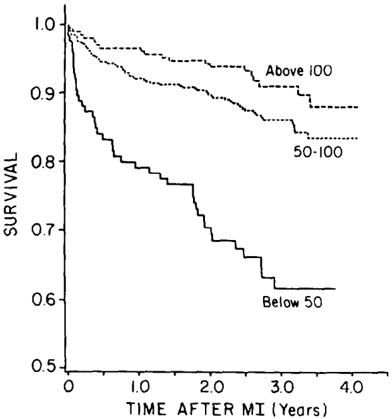
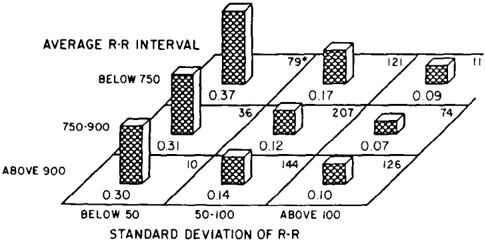
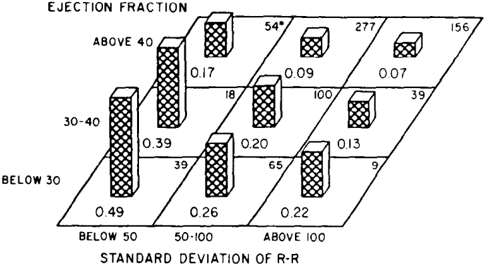
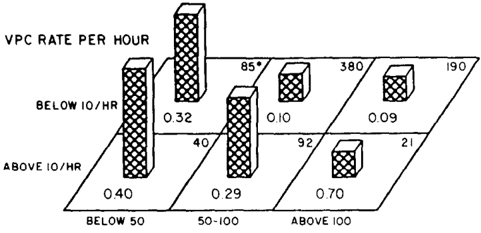
A high degree of heart rate (HR) variability is found in compensated hearts with good function, whereas HR variability can be decreased with severe coronary artery disease, congestive heart failure, aging and diabetic neuropathy. To test the hypothesis that HR variability is a predictor of long-term survival after acute myocardial infarction (AMI), the Holter tapes of 808 patients who survived AMI were analyzed. Heart rate variability was defined as the standard deviation of all normal RR intervals in a 24-hour continuous electrocardiogram recording made 11 +/- 3 days after AMI. In all patients demographic, clinical and laboratory variables were measured at baseline. Mean follow-up time was 31 months. Of all Holter variables measured, HR variability had the strongest univariate correlation with mortality. The relative risk of mortality was 5.3 times higher in the group with HR variability of less than 50 ms than the group with HR variability of more than 100 ms. HR variability remained a significant predictor of mortality after adjusting for clinical, demographic, other Holter features and ejection fraction. A hypothesis to explain this finding is that decreased HR variability correlates with increased sympathetic or decreased vagal tone, which may predispose to ventricular fibrillation.
Overview
The claims and statistics of this paper haven’t been checked yet.
Free: it reads the open-access text and checks the first 5 claims that cite a source we can check. Create a free account to check every claim.
Integrity signals
Registry
Cites
Statistics
Figures
Verification
Claims the paper makes
The claims and statistics of this paper haven’t been checked yet.
Free: it reads the open-access text and checks the first 5 claims that cite a source we can check. Create a free account to check every claim.
Claims other papers make about this one
Each is checked against this paper’s own text: does it say what the citing paper says it does?
The cited source doesn’t support the claim as written.
In the citing paper
“Kleiger et al. (1987) first reported that SDNN ,50 ms was associated with fivefold higher mortality in postmyocardial infarction patients compared to those with SDNN .50 ms.”
From 2017 ISHNE-HRS expert consensus statement on ambulatory ECG and external cardiac monitoring/telemetry (2017) · cites this paper as Kleiger et al. (1987)
Checked by a reasoning model — may be wrong.
Experimental — accuracy not yet measuredThe source backs part of the claim, not all of it — or backs it for a different population, condition or comparison.
In the citing paper
“Decreased HRV values have been consistently reported in post-MI infarction and heart failure patients (Bigger et al., 1992;Kleiger et al., 1987;La Rovere et al., 2003, 2012;Makikallio et al., 2005).”
From 2017 ISHNE-HRS expert consensus statement on ambulatory ECG and external cardiac monitoring/telemetry (2017) · cites this paper as Kleiger et al., 1987
Experimental — accuracy not yet measured
Self-check
Percentages, sums and reported differences re-computed from the paper’s own numbers.
The self-check needs the paper’s full text.
Citations
Cites
Nonparametric Estimation from Incomplete Observations
Kaplan, E. L., & Meier, P. (1992) · Springer Series in Statistics · doi:10.1007/978-1-4612-4380-9_25 · Cited by 45,181
Nonparametric Estimation from Incomplete Observations
Kaplan, E. L., & Meier, P. (1958) · Journal of the American Statistical Association · doi:10.1080/01621459.1958.10501452 · Cited by 39,158
Risk Stratification and Survival after Myocardial Infarction
The Multicenter Postinfarction Research Group (1983) · New England Journal of Medicine · doi:10.1056/nejm198308113090602 · Cited by 1,602
Bigger, J. T., Fleiss, J. L., Kleiger, R., Miller, J. P., & Rolnitzky, L. M. (1984) · Circulation · doi:10.1161/01.cir.69.2.250 · Cited by 1,286
Self-citationThe Electrocardiogram in Population Studies: A Classification System
BLACKBURN, H., KEYS, A., SIMONSON, E., RAUTAHARJU, P., & PUNSAR, S. (1960) · Circulation · doi:10.1161/01.cir.21.6.1160 · Cited by 1,109
Neural Activity and Ventricular Fibrillation
Bleich, H. L., Boro, E. S., Lown, B., & Verrier, R. L. (1976) · New England Journal of Medicine · doi:10.1056/nejm197605202942107 · Cited by 764
Diminished Baroreflex Sensitivity in High Blood Pressure
BRISTOW, J. D., HONOUR, A. J., PICKERING, G. W., SLEIGHT, P., & SMYTH, H. S. (1969) · Circulation · doi:10.1161/01.cir.39.1.48 · Cited by 569
Sudden death in the year following myocardial infarction
Schulze, R. A., Strauss, H. W., & Pitt, B. (1977) · The American Journal of Medicine · doi:10.1016/0002-9343(77)90314-x · Cited by 543
Sinus Arrhythmia in Acute Myocardial Infarction
Wolf, M. M., Varigos, G. A., Hunt, D., & Sloman, J. G. (1978) · Medical Journal of Australia · doi:10.5694/j.1326-5377.1978.tb131339.x · Cited by 486
Moss, A. J., Davis, H. T., DeCamilla, J., & Bayer, L. W. (1979) · Circulation · doi:10.1161/01.cir.60.5.998 · Cited by 466
Self-citation
Research works printed but not linked: 5
- Eckberg, 1972, Defective cardiac parasympathetic responses in patients after myocardial infarction, Am J Cardiol, 285, 877
- Magid, 1983, Low dose atropine reduces ventricular vulnerability in normal and ischemic hearts, J Clin Invest, 31, 261A
- 4. Bigger JT Jr, Coromilas J. How do beta-blocken protect after myocardial York; The Jewish Hospital and St. Luke's Hospital, St. infarction? Ann Intern Med 1964;101:256-256.
- 5. Dibner-Dunlap ME, Eckberg DL, Magid NM. Transcutaneous scopolo- Louis; and University of Arizona Health Science Cen- mine: a potential defense against sudden cardiac death (abstr). J Clin Invest ter, Tucson Medical Center, and St. Joseph's Hospital, 1964;32:473.
- Dibner-Dunlap, 1984, Transcutaneous scopolamine: a potential defense against sudden cardiac death (abstr), J Clin Invest, 32, 473
Cited by
Items 801–900 of 1,028
Improved analysis of heart rate variability by methods of nonlinear dynamics
Voss, A., Kurths, J., Kleiner, H. J., Witt, A., & Wessel, N. (1995) · Journal of Electrocardiology · doi:10.1016/s0022-0736(95)80021-2 · Cited by 72
Circadian rhythm of autonomic activity in patients with obstructive sleep apnea syndrome
Noda, A., Yasuma, F., Okada, T., & Yokota, M. (1998) · Clinical Cardiology · doi:10.1002/clc.4960210408 · Cited by 81
Bhatnagar, D., & Durrington, P. (2003) · International Journal of Clinical Practice · doi:10.1111/j.1742-1241.2003.tb10490.x · Cited by 72
Healthy lifestyle and heart rate variability in young adults
Aeschbacher, S., Bossard, M., Ruperti Repilado, F. J., Good, N., Schoen, T., Zimny, M., Probst-Hensch, N. M., Schmidt-Trucksäss, A., Risch, M., Risch, L., et al. (2016) · European Journal of Preventive Cardiology · doi:10.1177/2047487315623708 · Cited by 71
Reduced Heart Rate Variability in Ischemic Heart Disease Is Only Partially Caused by Ischemia
Wennerblom, B., Lurje, L., Solem, J., Tygesen, H., Udén, M., Vahisalo, R., & Hjalmarson, Å. C. (2000) · Cardiology · doi:10.1159/000047309 · Cited by 71
“Several studies have demonstrated reduced heart rate variability (HRV) in patients with coronary artery disease [ , , ,”
BackgroundHoworka, K., Pumprla, J., & Schabmann, A. (1998) · Journal of the Autonomic Nervous System · doi:10.1016/s0165-1838(98)00015-0 · Cited by 71
Heart Rate Variability Anatomy and Physiology
Shaffer, F., & Venner, J. (2013) · Biofeedback · doi:10.5298/1081-5937-41.1.05 · Cited by 61
NATIONAL RUSSIAN GUIDELINES ON APPLICATION OF THE METHODS OF HOLTER MONITORING IN CLINICAL PRACTICE
Makarov, L. M., Komolyatova, V. N., Kupriyanova, O. A., Pervova, E. V., Ryabykina, G. V., Sobolev, A. V., Тихоненко, В. М., Туров, А. Н., Shubik, Y. V., Av, A., et al. (2014) · Russian Journal of Cardiology · doi:10.15829/1560-4071-2014-2-6-71 · Cited by 147
The heartbreak of depression: ‘Psycho-cardiac’ coupling in myocardial infarction
Headrick, J. P., Peart, J. N., Budiono, B. P., Shum, D., Neumann, D. L., & Stapelberg, N. J. C. (2017) · Journal of Molecular and Cellular Cardiology · doi:10.1016/j.yjmcc.2017.03.007 · Cited by 77
“Early clinical studies identified the importance of autonomic function in mortality following AMI [121,122], with experimental studies establishing the role of vagal activity in limiting arrhythmogenesis and enhancing survival post-AMI [123-127].”
BackgroundInfluentialRaffin, J., Barthélemy, J., Duprè, C., Pichot, V., Berger, M., Féasson, L., Busso, T., Costa, A. D., Colvez, A., Montuy-Coquard, C., et al. (2019) · Sports Medicine · doi:10.1007/s40279-019-01097-7 · Cited by 79
Effects of Depression on QT Interval Variability After Myocardial Infarction
Carney, R. M., Freedland, K. E., Stein, P. K., Watkins, L. L., Catellier, D., Jaffe, A. S., & Yeragani, V. K. (2003) · Psychosomatic Medicine · doi:10.1097/01.psy.0000033129.21715.4b · Cited by 70
Heart rate variability and n‐3 polyunsaturated fatty acids in patients with diabetes mellitus
Christensen, J. H., Skou, H. A., Madsen, T., Tørring, I., & Schmidt, E. B. (2001) · Journal of Internal Medicine · doi:10.1046/j.1365-2796.2001.00841.x · Cited by 73
Danson, E., & Paterson, D. J. (2003) · The Journal of Physiology · doi:10.1113/jphysiol.2002.031781 · Cited by 71
“1994) and high heart rate variability (Kleiger et al. 1987) have been linked to athleticism and emerged as strong independent correlates against sudden cardiac death (Hull et al.”
BackgroundCowan, M. J., Pike, K. C., & Burr, R. L. (1994) · Journal of Electrocardiology · doi:10.1016/s0022-0736(94)80037-5 · Cited by 71
Wennerblom, B., Lurje, L., Tygesen, H., Vahisalo, R., & Hjalmarson, Å. (2000) · Heart · doi:10.1136/heart.83.3.290 · Cited by 71
“and is a powerful and independent predictor of mortality after acute myocardial infarction.”
BackgroundNonlinear analysis of cardiac rhythm fluctuations using DFA method
Absil, P.-A., Sepulchre, R. J., Bilge, A., & Gérard, P. (1999) · Physica A Statistical Mechanics and its Applications · doi:10.1016/s0378-4371(99)00295-2 · Cited by 71
HEDMAN, A. E., TAHVANAINEN, K. U. O., HARTIKAINEN, J. E. K., & HAKUMÄKI, M. O. K. (1995) · Acta Physiologica Scandinavica · doi:10.1111/j.1748-1716.1995.tb09965.x · Cited by 70
Intraindividual Reproducibility of Heart Rate Variability
HOHNLOSER, S. H., KLINGENHEBEN, T., ZABEL, M., SCHRÖDER, F., & JUST, H. (1992) · Pacing and Clinical Electrophysiology · doi:10.1111/j.1540-8159.1992.tb03049.x · Cited by 71
Centenarian Studies: Important Contributors to Our Understanding of the Aging Process and Longevity
Willcox, D. C., Willcox, B. J., & Poon, L. W. (2010) · Current Gerontology and Geriatrics Research · doi:10.1155/2010/484529 · Cited by 78
Riganello, F., Larroque, S. K., Bahri, M. A., Heine, L., Martial, C., Carrière, M., Charland-Verville, V., Aubinet, C., Vanhaudenhuyse, A., Chatelle, C., et al. (2018) · Frontiers in Neurology · doi:10.3389/fneur.2018.00769 · Cited by 70
Nissinen, S. I., Mäkikallio, T. H., Seppänen, T., Tapanainen, J. M., Salo, M., Tulppo, M. P., & Huikuri, H. V. (2003) · The American Journal of Cardiology · doi:10.1016/s0002-9149(02)03410-0 · Cited by 70
Gianaros, P. J., Salomon, K., Zhou, F., Owens, J. F., Edmundowicz, D., Kuller, L. H., & Matthews, K. A. (2005) · Psychosomatic Medicine · doi:10.1097/01.psy.0000170335.92770.7a · Cited by 69
Sleep-disordered breathing and cardiac autonomic modulation in children
Liao, D., Li, X., Rodriguez-Colon, S. M., Liu, J., Vgontzas, A. N., Calhoun, S. L., & Bixler, E. O. (2010) · Sleep Medicine · doi:10.1016/j.sleep.2009.11.012 · Cited by 77
“In the cardiac disease literature, analysis of beat-to-beat HRV has emerged as a clinically and epidemiologically useful non-invasive method to quantitatively assess cardiac autonomic activity [6–21].”
BackgroundMethodDunlap, M. E., Bibevski, S., Rosenberry, T. L., & Ernsberger, P. R. (2003) · American Journal of Physiology-Heart and Circulatory Physiology · doi:10.1152/ajpheart.01051.2002 · Cited by 70
Yamakawa, K., Rajendran, P. S., Takamiya, T., Yagishita, D., So, E. L., Mahajan, A., Shivkumar, K., & Vaseghi, M. (2015) · American Journal of Physiology-Heart and Circulatory Physiology · doi:10.1152/ajpheart.00558.2015 · Cited by 71
Kenig, A., & Ilan, Y. (2019) · Frontiers in Physiology · doi:10.3389/fphys.2019.01542 · Cited by 70
Stein, P. K., Schmieg, R. E., El-Fouly, A., Domitrovich, P. P., & Buchman, T. G. (2001) · Critical Care Medicine · doi:10.1097/00003246-200109000-00014 · Cited by 76
“This compares with an SDNN of 81 6 30 msec in a population of patients shortly after MI (2).”
ResultEstrogen enhances baroreflex control of heart rate in conscious ovariectomized rats
El‐Mas, M. M., & Abdel‐Rahman, A. A. (1998) · Canadian Journal of Physiology and Pharmacology · doi:10.1139/y98-031 · Cited by 74
Fei, L., Anderson, M. H., Katritsis, D., Sneddon, J., Statters, D. J., Malik, M., & Camm, A. J. (1994) · Heart · doi:10.1136/hrt.71.1.16 · Cited by 71
Landolina, M., Mantica, M., Pessano, P., Manfredini, R., Foresti, A., Schwartz, P. J., & Ferrari, G. M. D. (1997) · Journal of the American College of Cardiology · doi:10.1016/s0735-1097(96)00533-5 · Cited by 70
Peripheral cardiac sympathetic hyperactivity in cardiovascular disease: role of neuropeptides
Shanks, J. A., & Herring, N. (2013) · American Journal of Physiology-Regulatory, Integrative and Comparative Physiology · doi:10.1152/ajpregu.00118.2013 · Cited by 74
Cardiac autonomic activity and Type II diabetes mellitus
Manzella, D., & Paolisso, G. (2005) · Clinical Science · doi:10.1042/cs20040223 · Cited by 85
Heritability of ECG measurements in adult male twins
Russell, M. W. W., Law, I. H., Sholinsky, P. D., & Fabsitz, R. R. (1998) · Journal of Electrocardiology · doi:10.1016/s0022-0736(98)80034-4 · Cited by 69
Altered heart rate and blood pressure variability in mice lacking the Mas protooncogene
Walther, T., Wessel, N., Kang, N., Sander, A., Tschöpe, C., Malberg, H., Bäder, M., & Voss, A. (2000) · Brazilian Journal of Medical and Biological Research · doi:10.1590/s0100-879x2000000100001 · Cited by 82
“A reduced HRV together with an increased sympathetic tone, as found in Masdeficient animals, is predictive for an increased cardiac risk in human beings (2,3).”
BackgroundInfluentialOkazaki, Y., Zheng, C., Li, M., & Sugimachi, M. (2009) · The Journal of Physiological Sciences · doi:10.1007/s12576-009-0071-5 · Cited by 73
“Heart rate variability, especially its HF component (at respiratory frequency) reflects background vagal tone and has been shown to be a strong prognostic determinant [15, 16].”
BackgroundLong-term clinical variation of NT-proBNP in stable chronic heart failure patients
Schou, M., Gustafsson, F., Kjær, A., & Hildebrandt, P. R. (2006) · European Heart Journal · doi:10.1093/eurheartj/ehl449 · Cited by 69
“Patients with heart disease tend to have a reduced heart rate variability, and it has been well documented that a reduced variability is an independent risk factor for sudden cardiac death ( 12 , 22).”
BackgroundKiviniemi, A. M., Tulppo, M. P., Wichterle, D., Hautala, A. J., Tiinanen, S., Seppänen, T., Mäkikallio, T. H., & Huikuri, H. V. (2007) · Annals of Medicine · doi:10.1080/07853890600990375 · Cited by 69
Effects of Diesel Exhaust on Cardiovascular Function and Oxidative Stress
Wilson, S., Miller, M. R., & Newby, D. E. (2017) · Antioxidants and Redox Signaling · doi:10.1089/ars.2017.7174 · Cited by 72
“Heart rate variability (HRV) is a non‐invasive measure of cardiac autonomic dysfunction with reduced HRV predicting an increased risk of adverse cardiovascular events in both healthy individuals [169] and vulnerable patients [80].”
Continuous positive airway pressure increases heart rate variability in congestive heart failure
Butler, G. C., Naughton, M. T., Rahman, M., Bradley, T. D., & Floras, J. S. (1995) · Journal of the American College of Cardiology · doi:10.1016/0735-1097(94)00427-r · Cited by 69
Stein, P. K., Kleiger, R. E., Domitrovich, P. P., Schechtman, K. B., & Rottman, J. N. (2000) · Clinical Cardiology · doi:10.1002/clc.4960230311 · Cited by 69
Self-citationDecreased chaos and increased nonlinearity of heart rate time series in patients with panic disorder
Rao, R. K. A., & Yeragani, V. K. (2001) · Autonomic Neuroscience · doi:10.1016/s1566-0702(01)00219-3 · Cited by 72
Yamada, A., Hayano, J., Sakata, S., Okada, A., Mukai, S., Ohte, N., & Kimura, G. (2000) · Circulation · doi:10.1161/01.cir.102.3.300 · Cited by 70
Holmberg, B., Johansson, J., Poewe, W. H., Wenning, G. K., Quinn, N. P., Mathias, C. J., TOLOSA, E. S., Cardozo, A., Dizdar, N., Rascol, O., et al. (2007) · Movement Disorders · doi:10.1002/mds.21501 · Cited by 75
Heragu, N. P., & Scott, W. A. (1999) · The American Journal of Cardiology · doi:10.1016/s0002-9149(99)00173-3 · Cited by 75
Chaos in the Heart: Implications for Clinical Cardiology
Skinner, J. E., Goldberger, A. L., Mayer‐Kress, G., & Ideker, R. E. (1990) · Nature Biotechnology · doi:10.1038/nbt1190-1018 · Cited by 69
Takase, B., Kurita, A., Noritake, M., Uehata, A., Maruyama, T., Nagayoshi, H., Nishioka, T., Mizuno, K., & Nakamura, H. (1992) · Journal of Electrocardiology · doi:10.1016/0022-0736(92)90112-d · Cited by 82
The Defibrillator in Acute Myocardial Infarction Trial (DINAMIT): Study protocol
Hohnloser, S. H., Connolly, S. J., Kück, K., Dorian, P., Fain, E. S., Hampton, J., Hatala, R., Pauly, A. C., Roberts, R. S., Themeles, E., et al. (2000) · American Heart Journal · doi:10.1067/mhj.2000.110088 · Cited by 72
Gao, Y. Y., Lovejoy, J. C., Sparti, A., Bray, G. A., Keys, L. K., & Partington, C. R. (1996) · Obesity Research · doi:10.1002/j.1550-8528.1996.tb00512.x · Cited by 78
Role of genetic and environmental influences on heart rate variability in middle-aged men
Uusitalo, A. L. T., Vanninen, E., Levälahti, E., Battié, M. C., Videman, T., & Kaprio, J. (2007) · American Journal of Physiology-Heart and Circulatory Physiology · doi:10.1152/ajpheart.00475.2006 · Cited by 63
“The present study is relevant, in that it estimates and confirms the remarkable role of genetic factors on HRV, a sign of and predictive marker for cardiac health, morbidity, and mortality (19, 20, 55).”
BackgroundForslund, L., Björkander, I., Ericson, M., Held, C., Kahan, T., Rehnqvist, N., & Hjemdahl, P. (2002) · Heart · doi:10.1136/heart.87.5.415 · Cited by 68
Brenner, I., Thomas, S. G., & Shephard, R. J. (1998) · Sports Medicine · doi:10.2165/00007256-199826020-00003 · Cited by 68
Circadian patterns of heart rate variability in normals, chronic stable angina and diabetes mellitus
Burger, A. J., Charlamb, M. J., & Sherman, H. B. (1999) · International Journal of Cardiology · doi:10.1016/s0167-5273(99)00110-2 · Cited by 74
Circadian Variation in Heart‐Rate Variability in Localization‐related Epilepsy
Persson, H., Kumlien, E., Ericson, M. O., & Tomson, T. (2007) · Epilepsia · doi:10.1111/j.1528-1167.2006.00961.x · Cited by 70
“Both measures predict mortality in other diseases (Kleiger et al., 1987; Bigger et al., 1992b).”
BackgroundYeragani, V. K., Pohl, R. B., Berger, R. D., Balon, R., & Srinivasan, K. (1994) · Pediatric Cardiology · doi:10.1007/bf00797000 · Cited by 74
“Several studies suggest an association between decreased HR variability and an increased risk for cardiovascular morbidity in adults and children with heart disease [4, 9, 10, 13, 14 , 16, 19, 25, 29].”
BackgroundPredictability of normal heart rhythms and deterministic chaos
Lefebvre, J. H., Goodings, D. A., Kamath, M. V., & Fallen, E. L. (1993) · Chaos An Interdisciplinary Journal of Nonlinear Science · doi:10.1063/1.165990 · Cited by 68
The effect of green walking on heart rate variability: a pilot crossover study
de Brito, J. N., Pope, Z. C., Mitchell, N. R., Schneider, I. E., Larson, J. M., Horton, T. H., & Pereira, M. A. (2020) · Environmental Research · doi:10.1016/j.envres.2020.109408 · Cited by 67
Vagal Stimulation in Heart Failure
Ferrari, G. M. D. (2014) · Journal of Cardiovascular Translational Research · doi:10.1007/s12265-014-9540-1 · Cited by 76
Nerve fibers in human myocardial scars
Vracko, R., Thorning, D., & Frederickson, R. G. (1991) · Human Pathology · doi:10.1016/0046-8177(91)90035-n · Cited by 67
The effects of omega-3 polyunsaturated fatty acids on cardiac rhythm: A critical reassessment
Billman, G. E. (2013) · Pharmacology & Therapeutics · doi:10.1016/j.pharmthera.2013.05.011 · Cited by 77
“…and, further, those patients with the greatest reduction in this variable also have the greatest risk for sudden death (Myers et al., 1986; Kleiger et al., 1987; La Rovere et al., 1988; Malik et al., 1989; Farrell et al., 1991; Bigger et al., 1992; Mazzuero et al., 1992; Huikuri et al.,…”
BackgroundBeckers, F., Ramaekers, D., & AUBERT, A. E. (2001) · Cardiovascular Engineering An International Journal · doi:10.1023/a:1015212328405 · Cited by 67
Exercise Intolerance in Adults with Congenital Heart Disease
Dimopoulos, K., Diller, G., Piepoli, M. F., & Gatzoulis, M. Α. (2006) · Cardiology Clinics · doi:10.1016/j.ccl.2006.08.002 · Cited by 75
Stability over time of short-term heart rate variability
Tarkiainen, T. H., Timonen, K. L., Tiittanen, P., Hartikainen, J. E. K., Pekkanen, J., Hoek, G., Ibald-Mulli, A., & Vanninen, E. J. (2005) · Clinical Autonomic Research · doi:10.1007/s10286-005-0302-7 · Cited by 77
The Effect of Colored Illumination on Heart Rate Variability
Schäfer, A., & Kratky, K. W. (2006) · Complementary Medicine Research · doi:10.1159/000092644 · Cited by 75
Acute and chronic stress influence blood pressure variability in mice
Farah, V., Joaquim, L. F., Bernátová, I., & Morris, M. (2004) · Physiology & Behavior · doi:10.1016/j.physbeh.2004.08.004 · Cited by 69
“Reduced HRV is associated with a higher risk of postinfarction mortality [11,28] and occurred before any apparent glycemic alterations in prediabetic patients [29].”
BackgroundHamada, T., Watanabe, M., Kaneda, T., Ohtahara, A., Kinugawa, T., Hisatome, I., Fujimoto, Y., Yoshida, A., & Shigemasa, C. (1998) · Journal of Hypertension · doi:10.1097/00004872-199816010-00016 · Cited by 71
Antiarrhythmic effects of omega-3 fatty acids: from epidemiology to bedside
Caterina, R. D., Madonna, R., Zucchi, R., & Rovere, M. T. L. (2003) · American Heart Journal · doi:10.1016/s0002-8703(03)00327-2 · Cited by 72
Wet Cupping Therapy Restores Sympathovagal Imbalances in Cardiac Rhythm
Arslan, M., Yeşilçam, N., Aydin, D., Yüksel, R., & Dane, Ş. (2014) · The Journal of Alternative and Complementary Medicine · doi:10.1089/acm.2013.0291 · Cited by 72
“8,9 Some other clinical conditions may also be associated with the lower HRV, including congestive heart failure, diabetic neuropathy, depression, sudden infant death syndrome risk, and poor survival in premature babies.”
The circadian pattern of cardiac autonomic modulation in a middle-aged population
Li, X., Shaffer, M. L., Rodriguez-Colon, S. M., He, F., Wolbrette, D. L., Alagona, P., Wu, C., & Liao, D. (2011) · Clinical Autonomic Research · doi:10.1007/s10286-010-0112-4 · Cited by 75
“A cosine periodic regression curve contains three major parameters: the mean (M), amplitude (A), and acrophase (h), where M measures the overall average of a HRV index, which is similar to the mean HRV used in previous literature [1–18], A measures the amplitude of the oscillation of an HRV index, and h measures the c…”
BackgroundMethodCrowley, O. V., McKinley, P. S., Burg, M. M., Schwartz, J. E., Ryff, C. D., Weinstein, M., Seeman, T. E., & Sloan, R. P. (2011) · International Journal of Psychophysiology · doi:10.1016/j.ijpsycho.2011.09.002 · Cited by 74
“Indeed, cardiac vagal control is an established predictor of cardiovascular disease (CVD) risk (Airaksinen, 1999; Kleiger et al., 1987; La Rovere et al., 1998; Tsuji et al., 1996).”
QRS Detection and Heart Rate Variability Analysis: A Survey
Oweis, R. J., & Al-Tabbaa, B. O. (2014) · Biomedical Science and Engineering · doi:10.12691/bse-2-1-3 · Cited by 80
“Previous studies showed apparent implications of SDNN and pNN50 in patients with chronic heart failure (CHF) and acute myocardial infarction (AMI) [157-160].”
Poliakova, N., Després, J., Bergeron, J., Alméras, N., Tremblay, A., & Poirier, P. (2012) · Metabolism · doi:10.1016/j.metabol.2012.02.006 · Cited by 71
“Thus, decreased HRV has been shown to significantly increase CVD risk and it has been considered as a strong mortality predictor [3,11,12].”
BackgroundMethodMalík, M., Xia, R., ODEMUYIWA, O., Staunton, A., Poloniecki, J., & Camm, A. J. (1993) · Medical & Biological Engineering & Computing · doi:10.1007/bf02441992 · Cited by 86
Heart Rate Variability During 24 Hours in Asthmatic Children
Kazuma, N., Otsuka, K., Matsuoka, I., & Murata, M. (1997) · Chronobiology International · doi:10.3109/07420529709001450 · Cited by 67
Physical training and heart rate and blood pressure variability: a 5-yr randomized trial
Uusitalo, A. L. T., Laitinen, T., Väisänen, S. B., Länsimies, E., & Rauramaa, R. (2004) · American Journal of Physiology-Heart and Circulatory Physiology · doi:10.1152/ajpheart.00600.2003 · Cited by 66
Ståhle, A. (1999) · European Heart Journal · doi:10.1053/euhj.1999.1715 · Cited by 67
Heart rate variability and its relation to ventricular arrhythmias in congestive heart failure.
Fei, L., Keeling, P. J., Gill, J., Bashir, Y., Statters, D. J., Poloniecki, J., McKenna, W. J., & Camm, A. J. (1994) · Heart · doi:10.1136/hrt.71.4.322 · Cited by 66
Autonomic Cardiac Modulation in Obstructive Sleep Apnea
Coruzzi, P., Gualerzi, M., Bernkopf, E., Brambilla, L., Brambilla, V., Broia, V., Lombardi, C., & Parati, G. (2006) · Chest · doi:10.1378/chest.130.5.1362 · Cited by 65
Autonomic nervous system assessment using heart rate variability
Grégoire, J.-M., Gilon, C., CARLIER, S. G., & Bersini, H. (2023) · Acta cardiologica. Supplementum · doi:10.1080/00015385.2023.2177371 · Cited by 76
“Coumel et al. established a correlation coefficient of 0.79 between SDNN and HR in 17 normal 20-year-old subjects [10].”
BackgroundInfluentialDiscrimination power of long-term heart rate variability measures
Asyalı, M. H. (2004) · Annual International Conference of the IEEE Engineering in Medicine and Biology Society (EMBC) · doi:10.1109/iembs.2003.1279568 · Cited by 65
Diretrizes para Avaliação e Tratamento de Pacientes com Arritmias Cardíacas
Feitosa, G. S., Nicolau, J. C., Lorga, A. M., Filho, A. L., d’Ávila, A., Rassi, A., de Paola, Â. A. V., Pedrosa, A., da Costa, Á. B., Péres, A. K., et al. (2002) · Arquivos Brasileiros de Cardiologia · doi:10.1590/s0066-782x2002001900001 · Cited by 98
Heart rate deceleration runs for postinfarction risk prediction
Guzik, P., Piskorski, J., Barthel, P., Bauer, A., Müller, A., Junk, N., Ulm, K., Malík, M., & Schmidt, G. P. (2011) · Journal of Electrocardiology · doi:10.1016/j.jelectrocard.2011.08.006 · Cited by 69
Aboa-Éboulé, C., Brisson, C., Maunsell, E., Bourbonnais, R., Vézina, M., Milot, A., & Dagenais, G. R. (2011) · Psychosomatic Medicine · doi:10.1097/psy.0b013e318222b2d8 · Cited by 62
“Abnormalities of autonomic function are reflected by reduced heart rate variability, which is an independent predictor of mortality after an MI (68,69).”
BackgroundAutonomic impairment after myocardial infarction: Role in cardiac remodelling and mortality
Mostarda, C. T., Rodrigues, B., Vane, M. F., Moreira, E. D., Rosa, K. T., Moraes-Silva, I. C., Lacchini, S., Casarini, D. E., Angelis, K. D., & Irigoyen, M. C. (2010) · Clinical and Experimental Pharmacology and Physiology · doi:10.1111/j.1440-1681.2009.05327.x · Cited by 71
“When impaired, it may be indirectly associated with target organ lesions, because removal of the carotid sinus and aortic arch baroreceptors leads to an inability to buffer moment-to-moment changes in pressure, which, in turn, results in increased blood pressure variability (BPV) and decreased heart rate variability (…”
BackgroundInfluentialManfrini, O., Morgagni, G., Pizzi, C., Fontana, F., & BUGIARDINI, R. (2004) · European Heart Journal · doi:10.1016/j.ehj.2004.03.019 · Cited by 67
“The inclusion criteria were: ( 1 ) at least one episode of spontaneous transient myocardial ischaemia documented at ECG monitoring (ST-segment depression >0.1 mV) during bed rest and full medical treatment, (2) single-vessel disease, (3) 80‐90% lumen stenosis (visual estimation) in the left anterior descending coronar…”
MethodInfluentialUlleryd, M. A., Prahl, U., Börsbo, J., Schmidt, C., Nilsson, S., Bergström, G. M. L., & Johansson, M. E. (2017) · PLoS ONE · doi:10.1371/journal.pone.0174974 · Cited by 65
de Araújo, C. G. S., da Nóbrega, A. C. L., & de Castro, C. L. B. (1992) · Clinical Autonomic Research · doi:10.1007/bf01824209 · Cited by 65
Numeric processing of Lorenz plots of R-R intervals from long-term ECGs
Hnatkova, K., Copie, X., Staunton, A., & Malík, M. (1995) · Journal of Electrocardiology · doi:10.1016/s0022-0736(95)80020-4 · Cited by 80
Heart rate variability in premenstrual dysphoric disorder
Landén, M., Wennerblom, B., Tygesen, H., Modigh, K., Sörvik, K., Ysander, C., Ekman, A., Nissbrandt, H., Olsson, M., & Eriksson, E. (2003) · Psychoneuroendocrinology · doi:10.1016/s0306-4530(03)00117-3 · Cited by 70
“Low values of time domain measures have previously been associated with poor prognosis in patients with angina pectoris and myocardial infarction (Kleiger et al., 1987; Rich et al., 1988; La Rovere et al., 1998).”
BackgroundValkama, J. O., Huikuri, H. V., Koistinen, J. M., Yli‐Mäyry, S., Airaksinen, J. K. E., & Myerburg, R. J. (1995) · Journal of the American College of Cardiology · doi:10.1016/0735-1097(94)00392-4 · Cited by 68
Heart rate variability and baroreflex sensitivity in myocardial infarction
Kjellgren, O., & Gomes, J. A. (1993) · American Heart Journal · doi:10.1016/0002-8703(93)90076-l · Cited by 65
Power spectral analysis of heart rate variability after biofeedback training
Cowan, M. J., Kogan, H., Burr, R., Hendershot, S., & Buchanan, L. (1990) · Journal of Electrocardiology · doi:10.1016/0022-0736(90)90081-c · Cited by 64
Multiscale Analysis of Intensive Longitudinal Biomedical Signals and Its Clinical Applications
Nakamura, T., Kiyono, K., Wendt, H., Abry, P., & Yamamoto, Y. (2016) · Proceedings of the IEEE · doi:10.1109/jproc.2015.2491979 · Cited by 64
“Clinically, an ambulatory electrocardiography device called the Holter monitor, used for the diagnosis of arrhythmias, is used to continuously monitor HRV usually for 24 hours [44], and it has been reported that reduced and/or abnormal HRV in cardiac patients is associated with higher mortality during follow-up period…”
MethodHernández-Vicente, A., Hernando, D., Marín-Puyalto, J., Vicente-Rodríguez, G., Garatachea, N., Pueyo, E., & Bailón, R. (2021) · Sensors · doi:10.3390/s21030902 · Cited by 57
Wichi, R. B., Angelis, K. D., Jones, L., & Irigoyen, M. C. (2009) · Clinics · doi:10.1590/s1807-59322009000300017 · Cited by 66
“Therefore, HR variability has been used as an important predictor of death and non-fatal cardiovascular dysfunction.(24) The aging process is associated with a reduction in HR variability, linked to an age-related decline in parasympathetic regulation and greater sympathetic modulation.”
MethodKahraman, S., Dutton, R. P., Hu, P., Stansbury, L. G., Xiao, Y., Stein, D. M., & Scalea, T. M. (2010) · Journal of Neurosurgical Anesthesiology · doi:10.1097/ana.0b013e3181e25fc3 · Cited by 68
“Similarly, although very different data recording, processing, and analysis techniques are used to derive HRV parameters, a decrease in HRV after myocardial infarction is now a well-defined adverse prognostic sign.(7,8) Over the last 20 years, electrophysiologists have characterized, standardized, and improved the rep…”
BackgroundThe short-term effect of water-pipe smoking on the baroreflex control of heart rate in normotensives
Al-Kubati, M., Al-Kubati, A. S., Al’Absi, M., & Fišer, B. (2006) · Autonomic Neuroscience · doi:10.1016/j.autneu.2006.03.007 · Cited by 64
Effects of Tai Chi Exercise on Physical and Psychological Health of Older People
Blake, H., & Hawley-Hague, H. (2012) · Current Aging Science · doi:10.2174/1874609811205010019 · Cited by 68
“This is clinically significant in that reduced HRV has been associated mortality and a range of negative health outcomes (Bigger et al, 1992; Kleiger et al, 1987).”
Backgroundvon Känel, R., Carney, R. M., Zhao, S., & Whooley, M. A. (2010) · Clinical Research in Cardiology · doi:10.1007/s00392-010-0236-5 · Cited by 72
“This cut-off for SDNN, a measure of total HRV, was previously predictive for mortality in patients after MI [31, 32].”
Hayano, J., Kiyono, K., Struzik, Z. R., Yamamoto, Y., Watanabe, E., Stein, P. K., Watkins, L. L., Blumenthal, J. A., & Carney, R. M. (2011) · Frontiers in Physiology · doi:10.3389/fphys.2011.00065 · Cited by 60
“, 1994), which may explain the non-specific associations of decreased HRV with increased risk for all – cause mortality (Kleiger et al., 1987; La Rovere et al., 1998; Schmidt et al., 1999; Bauer et al., 2006).”
BackgroundInfluentialCluster analysis and classification of heart sounds
Amit, G., Gavriely, N., & Intrator, N. (2008) · Biomedical Signal Processing and Control · doi:10.1016/j.bspc.2008.07.003 · Cited by 64
“In particular, ECG-based techniques of heart-rate variability (HRV) have been shown useful in predicting mortality rates in high-risk cardiac patients [9].”
Background
Metadata
- Authors
- Kleiger, R. E., Miller, J. P., Bigger, J. T., & Moss, A. J.
- Affiliations
- Washington University in St. Louis (US)
- Corresponding author
- Kleiger, Robert E.
- Venue
- The American Journal of Cardiology
- Publisher
- Elsevier BV
- Published
- 1987-02
- Volume
- 59
- Issue
- 4
- Pages
- 256-262
- ISSN
- 0002-9149 (ISSN-L)
- OpenAlex
- W1967900132
- Cited by
- 3,995
- References
- 33
- Citations by year
- 2026: 46 · 2025: 68 · 2024: 72 · 2023: 84 · 2022: 78 · 2021: 107 · 2020: 99 · 2019: 119 · 2018: 97 · 2017: 122 · 2016: 115 · 2015: 130 · 2014: 120 · 2013: 134 · 2012: 106
- FWCI
- 26.78
- Type
- journal article
- Language
- en
- Open access
- hybrid
- doi.org
- Licence
- cc-by-nc-nd
- www.elsevier.com/tdm/userlicense/1.0/ (tdm)
- www.elsevier.com/legal/tdmrep-license (tdm)
- creativecommons.org/licenses/by-nc-nd/4.0/ (vor, 6681 d)
- Locations
- The American Journal of Cardiology (publishedVersion, cc-by-nc-nd)
- PubMed (publishedVersion)
- Funders
- National Heart, Lung, and Blood Institute (HL-22982, HL-70204, RR-00645)
- National Center for Research Resources (RR 00645)
- Topics
- Health Sciences › Medicine › Cardiology and Cardiovascular Medicine › Heart Rate Variability and Autonomic Control
- Health Sciences › Medicine › Cardiology and Cardiovascular Medicine › Cardiac Health and Mental Health
- Health Sciences › Medicine › Cardiology and Cardiovascular Medicine › Acute Myocardial Infarction Research
- Keywords
- heart rate variability, acute myocardial infarction, mortality prediction, long-term survival, sympathetic tone, vagal tone, ventricular fibrillation, Holter monitoring, ejection fraction
- MeSH terms
- Arrhythmias, Cardiac, Electrocardiography, Follow-Up Studies, Heart, Heart Failure, Heart Rate, Heart Ventricles, Humans, Middle Aged, Monitoring, Physiologic, Myocardial Infarction, Prognosis, Risk
About these checks
Registry, retraction, Cites and statistics results are computed, not judged, with one exception: a printed reference that no index lists is read once by a model before it counts as a citation error. Claims are extracted by a model and kept only when their quote appears verbatim in the text; each cited source is then checked, with a model’s help, for whether it says what the claim relies on. Those verdicts can be wrong — read the claim’s quote and the cited source before relying on one.
Statistics and arithmetic are recomputed, not judged.
Confidence bands are shown only for fields calibrated on our annotated test set. None is calibrated yet, so no band is shown.
What counts as a claim ›How we measure confidence ›How we check this ›
Are you an author, or do you see a problem with this page? Request a review
Data sources
Bibliographic data: Semantic Scholar, OpenAlex, Crossref.
Contains information from the Semantic Scholar Academic Graph Datasets, made available under the ODC Attribution License (ODC-BY 1.0).
Semantic Scholar’s data is described in: Kinney, R., et al. (2023). The Semantic Scholar Open Data Platform. arXiv:2301.10140.
