

Decreased heart rate variability and its association with increased mortality after acute myocardial infarction
Open accessThe DOI matches its Crossref record; 31 of the 33 references it cites were found in a registry or an index.
Abstract
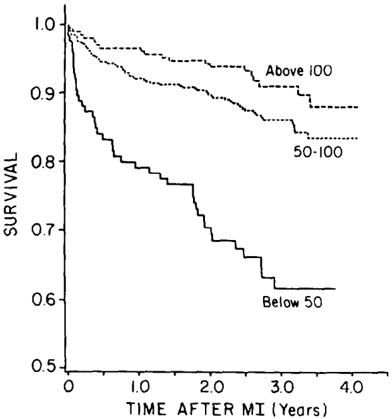
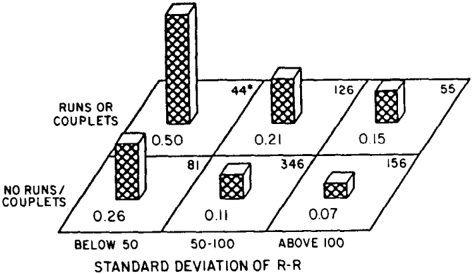
A high degree of heart rate (HR) variability is found in compensated hearts with good function, whereas HR variability can be decreased with severe coronary artery disease, congestive heart failure, aging and diabetic neuropathy. To test the hypothesis that HR variability is a predictor of long-term survival after acute myocardial infarction (AMI), the Holter tapes of 808 patients who survived AMI were analyzed. Heart rate variability was defined as the standard deviation of all normal RR intervals in a 24-hour continuous electrocardiogram recording made 11 +/- 3 days after AMI. In all patients demographic, clinical and laboratory variables were measured at baseline. Mean follow-up time was 31 months. Of all Holter variables measured, HR variability had the strongest univariate correlation with mortality. The relative risk of mortality was 5.3 times higher in the group with HR variability of less than 50 ms than the group with HR variability of more than 100 ms. HR variability remained a significant predictor of mortality after adjusting for clinical, demographic, other Holter features and ejection fraction. A hypothesis to explain this finding is that decreased HR variability correlates with increased sympathetic or decreased vagal tone, which may predispose to ventricular fibrillation.
Overview
The claims and statistics of this paper haven’t been checked yet.
Free: it reads the open-access text and checks the first 5 claims that cite a source we can check. Create a free account to check every claim.
Integrity signals
Registry
Cites
Statistics
Figures
Verification
Claims the paper makes
The claims and statistics of this paper haven’t been checked yet.
Free: it reads the open-access text and checks the first 5 claims that cite a source we can check. Create a free account to check every claim.
Claims other papers make about this one
Each is checked against this paper’s own text: does it say what the citing paper says it does?
The cited source doesn’t support the claim as written.
In the citing paper
“Kleiger et al. (1987) first reported that SDNN ,50 ms was associated with fivefold higher mortality in postmyocardial infarction patients compared to those with SDNN .50 ms.”
From 2017 ISHNE-HRS expert consensus statement on ambulatory ECG and external cardiac monitoring/telemetry (2017) · cites this paper as Kleiger et al. (1987)
Checked by a reasoning model — may be wrong.
Experimental — accuracy not yet measuredThe source backs part of the claim, not all of it — or backs it for a different population, condition or comparison.
In the citing paper
“Decreased HRV values have been consistently reported in post-MI infarction and heart failure patients (Bigger et al., 1992;Kleiger et al., 1987;La Rovere et al., 2003, 2012;Makikallio et al., 2005).”
From 2017 ISHNE-HRS expert consensus statement on ambulatory ECG and external cardiac monitoring/telemetry (2017) · cites this paper as Kleiger et al., 1987
Experimental — accuracy not yet measured
Self-check
Percentages, sums and reported differences re-computed from the paper’s own numbers.
The self-check needs the paper’s full text.
Citations
Cites
Nonparametric Estimation from Incomplete Observations
Kaplan, E. L., & Meier, P. (1992) · Springer Series in Statistics · doi:10.1007/978-1-4612-4380-9_25 · Cited by 45,181
Nonparametric Estimation from Incomplete Observations
Kaplan, E. L., & Meier, P. (1958) · Journal of the American Statistical Association · doi:10.1080/01621459.1958.10501452 · Cited by 39,158
Risk Stratification and Survival after Myocardial Infarction
The Multicenter Postinfarction Research Group (1983) · New England Journal of Medicine · doi:10.1056/nejm198308113090602 · Cited by 1,602
Bigger, J. T., Fleiss, J. L., Kleiger, R., Miller, J. P., & Rolnitzky, L. M. (1984) · Circulation · doi:10.1161/01.cir.69.2.250 · Cited by 1,286
Self-citationThe Electrocardiogram in Population Studies: A Classification System
BLACKBURN, H., KEYS, A., SIMONSON, E., RAUTAHARJU, P., & PUNSAR, S. (1960) · Circulation · doi:10.1161/01.cir.21.6.1160 · Cited by 1,109
Neural Activity and Ventricular Fibrillation
Bleich, H. L., Boro, E. S., Lown, B., & Verrier, R. L. (1976) · New England Journal of Medicine · doi:10.1056/nejm197605202942107 · Cited by 764
Diminished Baroreflex Sensitivity in High Blood Pressure
BRISTOW, J. D., HONOUR, A. J., PICKERING, G. W., SLEIGHT, P., & SMYTH, H. S. (1969) · Circulation · doi:10.1161/01.cir.39.1.48 · Cited by 569
Sudden death in the year following myocardial infarction
Schulze, R. A., Strauss, H. W., & Pitt, B. (1977) · The American Journal of Medicine · doi:10.1016/0002-9343(77)90314-x · Cited by 543
Sinus Arrhythmia in Acute Myocardial Infarction
Wolf, M. M., Varigos, G. A., Hunt, D., & Sloman, J. G. (1978) · Medical Journal of Australia · doi:10.5694/j.1326-5377.1978.tb131339.x · Cited by 486
Moss, A. J., Davis, H. T., DeCamilla, J., & Bayer, L. W. (1979) · Circulation · doi:10.1161/01.cir.60.5.998 · Cited by 466
Self-citation
Research works printed but not linked: 5
- Eckberg, 1972, Defective cardiac parasympathetic responses in patients after myocardial infarction, Am J Cardiol, 285, 877
- Magid, 1983, Low dose atropine reduces ventricular vulnerability in normal and ischemic hearts, J Clin Invest, 31, 261A
- 4. Bigger JT Jr, Coromilas J. How do beta-blocken protect after myocardial York; The Jewish Hospital and St. Luke's Hospital, St. infarction? Ann Intern Med 1964;101:256-256.
- 5. Dibner-Dunlap ME, Eckberg DL, Magid NM. Transcutaneous scopolo- Louis; and University of Arizona Health Science Cen- mine: a potential defense against sudden cardiac death (abstr). J Clin Invest ter, Tucson Medical Center, and St. Joseph's Hospital, 1964;32:473.
- Dibner-Dunlap, 1984, Transcutaneous scopolamine: a potential defense against sudden cardiac death (abstr), J Clin Invest, 32, 473
Cited by
Items 401–500 of 1,028
Heart Rate Variability as a Prognostic Factor for Cancer Survival – A Systematic Review
Kloter, E., Barrueto, K., Klein, S. D., Scholkmann, F., & Wolf, U. (2018) · Frontiers in Physiology · doi:10.3389/fphys.2018.00623 · Cited by 159
“In this field, decreased HRV is a predictor of adverse outcome in myocardial infarction, sudden cardiac death and congestive heart failure (Kleiger et al., 1987; Casolo et al., 1989; Cripps et al., 1991; Ponikowski et al., 1997; La Rovere et al., 1998, 2003; Makikallio et al., 2001).”
BackgroundCorrelation dimension of heartbeat intervals is reduced in conscious pigs by myocardial ischemia.
Skinner, J. E., Carpeggiani, C., Landisman, C. E., & Fulton, K. (1991) · Circulation Research · doi:10.1161/01.res.68.4.966 · Cited by 150
Heart Rate Variability in Congenital Central Hypoventilation Syndrome
Woo, M. S., Woo, M. A., Gozal, D., Jansen, M. T., Keens, T. G., & Harper, R. M. (1992) · Pediatric Research · doi:10.1203/00006450-199203000-00020 · Cited by 150
“A number of disease states are associated with changes in HRV, including heart failure (19, 20), sudden infant death syndrome (21), myocardial infarction (22, 23), prematurity (24), neonatal respiratory distress syndrome (25-28), and diabetes (29).”
BackgroundDe Ferrari, G. M., Sanzo, A., Bertoletti, A., Specchia, G., Vanoli, E., & Schwartz, P. J. (2007) · Journal of the American College of Cardiology · doi:10.1016/j.jacc.2007.08.043 · Cited by 149
Delaney, J. P. A., Leong, K. S., Watkins, A., & Brodie, D. (2002) · Journal of Advanced Nursing · doi:10.1046/j.1365-2648.2002.02103.x · Cited by 144
Heart rate variability: Measurement and emerging use in critical care medicine
Johnston, B. W., Barrett‐Jolley, R., Krige, A., & Welters, I. D. (2019) · Journal of the Intensive Care Society · doi:10.1177/1751143719853744 · Cited by 169
“Similar alterations in HRV have been recognised post myocardial infarction and are associated with a five-fold increase in mortality.(6,7) More recently, reduced HRV parameters have been reported as an independent predictor of 30-day mortality and provided additional predictive value over APACHE II scores in criticall…”
BackgroundDepression, heart rate related variables and cardiovascular disease
Taylor, C. B. (2010) · International Journal of Psychophysiology · doi:10.1016/j.ijpsycho.2010.04.006 · Cited by 157
The effect of carbon dioxide, respiratory rate and tidal volume on human heart rate variability
Pöyhönen, M., Syväoja, S., Hartikainen, J., Ruokonen, E., & Takala, J. (2004) · Acta Anaesthesiologica Scandinavica · doi:10.1111/j.1399-6576.2004.00272.x · Cited by 145
Spectral analysis of heart rate variability in the sepsis syndrome
Garrard, C. S., Kontoyannis, D. A., & Piepoli, M. F. (1993) · Clinical Autonomic Research · doi:10.1007/bf01819137 · Cited by 147
Hohnloser, S. H., Klingenheben, T., van de Loo, A., Hablawetz, E., Just, H., & Schwartz, P. J. (1994) · Circulation · doi:10.1161/01.cir.89.3.1068 · Cited by 147
Prinsloo, G. E., Rauch, H. G. L., & Derman, W. E. (2014) · The Physician and Sportsmedicine · doi:10.3810/psm.2014.05.2061 · Cited by 120
Measurement of Heart Rate Variability
Cowan, M. J. (1995) · Western Journal of Nursing Research · doi:10.1177/019394599501700104 · Cited by 142
Mitrani, R. D., Klein, L. S., Miles, W. M., Hackett, F. K., Burt, R. W., Wellman, H. N., & Zipes, D. P. (1993) · Journal of the American College of Cardiology · doi:10.1016/0735-1097(93)90541-8 · Cited by 146
Georgoulis, A. D., Moraiti, C., Ristanis, S., & Stergiou, N. (2006) · Journal of Clinical Monitoring and Computing · doi:10.1007/s10877-006-1032-7 · Cited by 160
Bigger, J. T., Fleiss, J. L., Rolnitzky, L. M., & Steinman, R. C. (1992) · The American Journal of Cardiology · doi:10.1016/0002-9149(92)90493-i · Cited by 145
Self-citationLin, I. M., Tai, L. Y., & Fan, S. Y. (2014) · International Journal of Psychophysiology · doi:10.1016/j.ijpsycho.2013.12.006 · Cited by 145
“This result can be applied to clinical populations with a low HRV, such as coronary artery disease, major depressive disorder, and anxiety disorder in the future studies (Kemp et al., 2010; Kleiger et al., 1987; Licht et al., 2009).”
BackgroundRisk Stratification for Sudden Cardiac Death: A Plan for the Future
Goldberger, J. J., Basu, A., Boineau, R., Buxton, A. E., CAIN, M. E., Canty, J. M., Chen, P., Chugh, S. S., Costantini, O., Exner, D. V., et al. (2014) · Circulation · doi:10.1161/circulationaha.113.007149 · Cited by 168
Self-citationAutonomic nervous system involvement in pulmonary arterial hypertension
Vaillancourt, M., Chia, P. A., Sarji, S., Nguyen, J., Hoftman, N. N., Ruffenach, G., Eghbali, M., Mahajan, A., & Umar, S. (2017) · Respiratory Research · doi:10.1186/s12931-017-0679-6 · Cited by 144
“Heart rate variability and baroreflex sensitivity in PAH Heart failure is associated with abnormalities in autonomic nervous system control, including decreased heart rate variability and blunted baroreflex sensitivity [37], which were predictors of cardiovascular mortality among postmyocardial infarction patients [38…”
BackgroundDiminished chaos of heart rate time series in patients with major depression
Yeragani, V. K., Rao, K. A. R. K., Smitha, M., Pohl, R. B., Balon, R., & Srinivasan, K. (2002) · Biological Psychiatry · doi:10.1016/s0006-3223(01)01347-6 · Cited by 165
Circadian variation and influence of risk factors on heart rate variability in healthy subjects
Mølgaard, H., Sørensen, K. E., & Bjerregaard, P. (1991) · The American Journal of Cardiology · doi:10.1016/0002-9149(91)90653-3 · Cited by 163
Heart rate variability in insomnia patients: A critical review of the literature
Dodds, K. L., Miller, C. B., Kyle, S. D., Marshall, N. S., & Gordon, C. J. (2017) · Sleep Medicine Reviews · doi:10.1016/j.smrv.2016.06.004 · Cited by 131
Rottman, J. N., Steinman, R. C., Albrecht, P., Bigger, J. T., Rolnitzky, L. M., & Fleiss, J. L. (1990) · The American Journal of Cardiology · doi:10.1016/0002-9149(90)90551-b · Cited by 143
Self-citationPrognostic value of heart rate variability in patients with renal failure on hemodialysis
Oikawa, K., Ishihara, R., Maeda, T., Yamaguchi, K., Koike, A., Kawaguchi, H., Tabata, Y., Murotani, N., & Itoh, H. (2008) · International Journal of Cardiology · doi:10.1016/j.ijcard.2007.10.033 · Cited by 151
Exposure to wood smoke increases arterial stiffness and decreases heart rate variability in humans
Unosson, J., Blomberg, A., Sandström, T., Muala, A., Boman, C., Nyström, R., Westerholm, R., Mills, N. L., Newby, D. E., Langrish, J. P., et al. (2013) · Particle and Fibre Toxicology · doi:10.1186/1743-8977-10-20 · Cited by 139
“Decreased heart rate variability is a risk factor for cardiovascular morbidity and mortality in healthy individuals [33] as well those with existing cardiovascular disease [34,35].”
BackgroundHull, S. S., Evans, A. R., Vanoli, E., Adamson, P. B., Stramba‐Badiale, M., Albert, D. J., Foreman, R. D., & Schwartz, P. J. (1990) · Journal of the American College of Cardiology · doi:10.1016/s0735-1097(10)80351-1 · Cited by 153
Heart Rate and Electrocardiography Monitoring in Mice
Ho, D., Zhao, X., Gao, S., Hong, C., Vatner, D. E., & Vatner, S. F. (2011) · Current Protocols in Mouse Biology · doi:10.1002/9780470942390.mo100159 · Cited by 129
“…decrease in heart rate variability indicates a decrease in the ability of an individual to adapt to stress and has been associated with increased mortality for both myocardial infarction (Bigger et al., 1992; Kleiger et al., 1987) and congestive heart failure (Sandercock and Brodie, 2006) patients.”
BackgroundDimensional analysis of nonlinear oscillations in brain, heart, and muscle
Mayer‐Kress, G., Yates, F. E., Benton, L. A., Keidel, M., Tirsch, W. S., Pöppl, S. J., & Geist, K. (1988) · Mathematical Biosciences · doi:10.1016/0025-5564(88)90063-6 · Cited by 145
The Evolving Role of Ambulatory Arrhythmia Monitoring in General Clinical Practice
Zimetbaum, P. J., & Josephson, M. E. (1999) · Annals of Internal Medicine · doi:10.7326/0003-4819-130-10-199905180-00020 · Cited by 139
Malfatto, G., Facchini, M., Bragato, R., Branzi, G., Sala, L., & Leonetti, G. (1996) · European Heart Journal · doi:10.1093/oxfordjournals.eurheartj.a014905 · Cited by 139
Dynamic brain connectivity is a better predictor of PTSD than static connectivity
Jin, C., Jia, H., Lanka, P., Rangaprakash, D., Li, L., Liu, T., Hu, X., & Deshpande, G. (2017) · Human Brain Mapping · doi:10.1002/hbm.23676 · Cited by 132
“The motivation for this hypothesis stems from evidence in biological systems pointing to dynamic adaptability of function as a hallmark of health [Kleiger et al., 1987].”
BackgroundAge and Sex Differences in Heart Rate Variability and Vagal Specific Patterns – Baependi Heart Study
Geovanini, G. R., Vasques, Ê. R., Alvim, R. D. O., Mill, J. G., Andreão, R. V., Vasques, B. K., Pereira, A. C., & Krieger, J. E. (2020) · Global Heart · doi:10.5334/gh.873 · Cited by 151
Grässler, B., Thielmann, B., Böckelmann, I., & Hökelmann, A. (2021) · Frontiers in Physiology · doi:10.3389/fphys.2021.657274 · Cited by 118
Bonaduce, D., Marciano, F., Petretta, M., Migaux, M. L., Morgano, G., Bianchi, V, Salemme, L., Valva, G., & Condorelli, M. (1994) · Circulation · doi:10.1161/01.cir.90.1.108 · Cited by 136
Heart rate variability in patients with ventricular arrhythmias: Effect of antiarrhythmic drugs
Zuanetti, G., Latini, R., Neilson, J. M. M., Schwartz, P. J., & Ewing, D. J. (1991) · Journal of the American College of Cardiology · doi:10.1016/s0735-1097(10)80172-x · Cited by 139
Impaired vagal heart rate control in coronary artery disease.
Airaksinen, K. E., Ikaheimo, M. J., Linnaluoto, M. K., Niemela, M., & Takkunen, J. T. (1987) · Heart · doi:10.1136/hrt.58.6.592 · Cited by 137
Christian, L. M. (2012) · Progress in Neurobiology · doi:10.1016/j.pneurobio.2012.07.003 · Cited by 154
“, 1996) and poor prognosis in patients with heart disease (Kleiger et al., 1987).”
Freeman, R. L. (2014) · Handbook of clinical neurology · doi:10.1016/b978-0-444-53480-4.00006-0 · Cited by 165
Lombardi, F., Sandrone, G., Mortara, A., Torzillo, D., Rovere, M. T. L., Signorini, M. G., Cerutti, S., & Malliani, A. (1996) · The American Journal of Cardiology · doi:10.1016/s0002-9149(96)00193-2 · Cited by 147
Malfatto, G., Facchini, M., Sala, L., Branzi, G., Bragato, R., & Leonetti, G. (1998) · The American Journal of Cardiology · doi:10.1016/s0002-9149(98)00021-6 · Cited by 156
Autonomic nervous system activity and the spontaneous initiation of ventricular tachycardia
Shusterman, V., Aysin, B., Gottipaty, V. K., Weiss, R., Brode, S., Schwartzman, D. A., & Anderson, K. P. (1998) · Journal of the American College of Cardiology · doi:10.1016/s0735-1097(98)00468-9 · Cited by 144
Exercise training and heart rate variability in older people
SCHUIT, A. J., VAN AMELSVOORT, L. G. P. M., VERHEIJ, T. C., RIJNEKE, R. D., MAAN, A. C., SWENNE, C. A., & SCHOUTEN, E. G. (1999) · Medicine & Science in Sports & Exercise · doi:10.1097/00005768-199906000-00009 · Cited by 131
Kovatchev, B. P., Farhy, L. S., Cao, H., Griffin, M. P., Lake, D. E., & Moorman, J. R. (2003) · Pediatric Research · doi:10.1203/01.pdr.0000088074.97781.4f · Cited by 142
“This limitation is important, as the classical abnormality of HRV in adults after acute myocardial infarction is simply reduced variability (19).”
BackgroundMaser, R. E. (1990) · Archives of Internal Medicine · doi:10.1001/archinte.150.6.1218 · Cited by 138
Malliani, A., Pagani, M., & Lombardi, F. (1994) · The American Journal of Cardiology · doi:10.1016/0002-9149(94)90617-3 · Cited by 152
Homeokinesis and short-term variability of human airway caliber
Que, C., Kenyon, C. M., Olivenstein, R., Macklem, P. T., & Maksym, G. N. (2001) · Journal of Applied Physiology · doi:10.1152/jappl.2001.91.3.1131 · Cited by 147
“(17, 28) and of respiratory rate in coma (20) indicates”
BackgroundTime and frequency domain analyses of heart rate variability in patients with epilepsy
Evrengül, H., Tanriverdi, H. I., Dursunoğlu, D., Kaftan, A., Kuru, Ö., Unlu, U., & Kılıç, M. (2005) · Epilepsy Research · doi:10.1016/j.eplepsyres.2005.02.001 · Cited by 150
Circadian variation of spectral indices of heart rate variability after myocardial infarction
Lombardi, F., Sandrone, G., Mortara, A., Rovere, M. T. L., Colombo, E., Guzzetti, S., & Malliani, A. (1992) · American Heart Journal · doi:10.1016/0002-8703(92)90804-5 · Cited by 134
Prognostic role of heart rate variability in patients with a recent acute myocardial infarction
Lanza, G. A., Guido, V., Galeazzi, M. M., Mustilli, M., Natali, R., Ierardi, C., Milici, C., Burzotta, F., Pasceri, V., Tomassini, F., et al. (1998) · The American Journal of Cardiology · doi:10.1016/s0002-9149(98)00635-3 · Cited by 133
Heart rate dynamics predict poststroke mortality
Mäkikallio, A. M., Mäkikallio, T. H., Korpelainen, J. T., Sotaniemi, K. A., Huikuri, H. V., & Myllylä, V. V. (2004) · Neurology · doi:10.1212/01.wnl.0000125190.10967.d5 · Cited by 133
Ernst, G. (2013) · Springer eBooks · doi:10.1007/978-1-4471-4309-3 · Cited by 162
Billman, G. E., & Hoskins, R. S. (1989) · Circulation · doi:10.1161/01.cir.80.1.146 · Cited by 134
Slatton, M. L., Irani, W. N., HALL, S. A., Marcoux, L., Page, R. L., Grayburn, P. A., & Eichhorn, E. J. (1997) · Journal of the American College of Cardiology · doi:10.1016/s0735-1097(97)00057-0 · Cited by 133
“50 have been shown (38) to be highly correlated with high frequency power and can be used as a marker of parasympathetic activity (38).”
BackgroundPhysiological basis for human autonomic rhythms
Eckberg, D. L. (2000) · Annals of Medicine · doi:10.3109/07853890008995937 · Cited by 154
Stein, K. M., Borer, J. S., Hochreiter, C., Okin, P. M., Herrold, E. M., Devereux, R. B., & Kligfield, P. (1993) · Circulation · doi:10.1161/01.cir.88.1.127 · Cited by 134
Billman, G. E. (2006) · Pharmacology & Therapeutics · doi:10.1016/j.pharmthera.2006.01.002 · Cited by 131
Sudden cardiac death: role of heart rate variability to identify patients at risk
Lombardi, F. (2001) · Cardiovascular Research · doi:10.1016/s0008-6363(01)00221-8 · Cited by 133
Billman, G. E., Castillo, L. C., Hensley, J., Hohl, C. M., & Altschuld, R. A. (1997) · Circulation · doi:10.1161/01.cir.96.6.1914 · Cited by 135
SANDERCOCK, G. R. H., & BRODIE, D. A. (2006) · Pacing and Clinical Electrophysiology · doi:10.1111/j.1540-8159.2006.00457.x · Cited by 130
Guinjoan, S. M., Bernabo, J. L., & Cardinali, D. P. (1995) · Journal of Neurology, Neurosurgery & Psychiatry · doi:10.1136/jnnp.59.3.299 · Cited by 130
Obstructive sleep apnea and vascular disease
Lanfranchi, P., & Somers, V. A. (2001) · Respiratory Research · doi:10.1186/rr79 · Cited by 130
“Depressed heart rate variability after myocardial infarction is a powerful prognostic indicator for both arrhythmia and death [27].”
BackgroundSudden Cardiac Death in Heart Failure
Marbán, E., & Tomaselli, G. F. (1998) · Medical science symposia series · doi:10.1007/978-94-011-5022-4_40 · Cited by 130
Heart rate variability in bipolar disorder: A systematic review and meta-analysis
Faurholt‐Jepsen, M., Kessing, L. V., & Munkholm, K. (2016) · Neuroscience & Biobehavioral Reviews · doi:10.1016/j.neubiorev.2016.12.007 · Cited by 135
“A educed HRV has been found to be an important risk factor for coroary heart disease, atherosclerosis, heart failure, arrhythmias and ortality after an acute myocardial infarction (Algra et al., 1993; ennie et al., 2003; Kleiger et al., 1987; van der Wall and van Gilst, 013).”
BackgroundAutonomic changes associated with spontaneous coronary spasm in patients with variant angina
Lanza, G. A., Pedrotti, P., Pasceri, V., Lucente, M., Crea, F., & Maseri, A. (1996) · Journal of the American College of Cardiology · doi:10.1016/s0735-1097(96)00309-9 · Cited by 136
Pathogenesis of Cardiovascular Disease in Diabetes
Haas, A. V., & McDonnell, M. E. (2018) · Endocrinology and Metabolism Clinics of North America · doi:10.1016/j.ecl.2017.10.010 · Cited by 144
Heart Rate Variability in Patients With Major Depression
Nahshoni, E., Aravot, D., Aizenberg, D., Sigler, M., Zalsman, G., Strasberg, B., Imbar, S., Adler, E., & Weizman, A. (2004) · Psychosomatics · doi:10.1176/appi.psy.45.2.129 · Cited by 119
Sleep-Disordered Breathing: Autonomic Mechanisms and Arrhythmias
Leung, R. S. T. (2008) · Progress in Cardiovascular Diseases · doi:10.1016/j.pcad.2008.06.002 · Cited by 137
“Higher overall HRV is usually considered healthy because diminished HRV in the setting of cardiac disease portends a worse prognosis.(45,46) Heart rate variability can be further divided in the frequency domain into specific bands with differing physiologic interpretation as follows: high-frequency (HF, 0.”
BackgroundHohnloser, S. H., Franck, P., Klingenheben, T., Zabel, M., & Just, H. (1994) · Circulation · doi:10.1161/01.cir.90.4.1747 · Cited by 128
Gutin, B., Barbeau, P., Litaker, M. S., Ferguson, M., & Owens, S. (2000) · Obesity Research · doi:10.1038/oby.2000.3 · Cited by 150
“Low levels of parasympathetic activity (PSA), as indicated by low HRV, are powerful predictors of mortality after myocardial infarction (”
BackgroundEffect of athletic training on heart rate variability
Sacknoff, D. M., Gleim, G. W., Stachenfeld, N. S., & Coplan, N. L. (1994) · American Heart Journal · doi:10.1016/0002-8703(94)90046-9 · Cited by 149
Stevens, M. J., Dayanikli, F., Raffel, D. M., Allman, K. C., Sandford, T., Feldman, E. L., Wieland, D. M., Corbett, J. R., & Schwaiger, M. (1998) · Journal of the American College of Cardiology · doi:10.1016/s0735-1097(98)00128-4 · Cited by 127
Decrease of sympathetic cardiovascular modulation after temporal lobe epilepsy surgery
Hilz, M. J., Devinsky, O., Doyle, W., Mauerer, A., & Dütsch, M. (2002) · Brain · doi:10.1093/brain/awf092 · Cited by 137
“…modulation after temporal lobe epilepsy surgery M. J. Hilz,1,3 O. Devinsky,1 W. Doyle,2 A. Mauerer1 and M. DuÈtsch1,3 1Department of Neurology and 2Department of Neurosurgery, New York University, New York, NY, USA and 3Department of Neurology, University of ErlangenNuremberg, Erlangen, Germany”
BackgroundBritton, A. R., Shipley, M. J., Malík, M., Hnatkova, K., Hemingway, H., & Marmot, M. G. (2007) · The American Journal of Cardiology · doi:10.1016/j.amjcard.2007.03.056 · Cited by 144
Depressive Symptoms and Mortality in Older Mexican Americans
Black, S. A., & Markides, K. S. (1999) · Annals of Epidemiology · doi:10.1016/s1047-2797(98)00025-8 · Cited by 133
Hayano, J., Yamada, A., Mukai, S., Sakakibara, Y., Yamada, M., Ohte, N., Hashimoto, T., Fujinami, T., & Takata, K. (1991) · American Heart Journal · doi:10.1016/0002-8703(91)90664-4 · Cited by 145
Selected physiological effects of ultrafine particles in acute cardiovascular morbidity
Weichenthal, S. (2012) · Environmental Research · doi:10.1016/j.envres.2012.03.001 · Cited by 139
“Specifically, decreased HRV is associated with increased risks of cardiovascular morbidity and mortality (Bigger et al., 1992; Dekker et al., 1997; Kleiger et al., 1987; Liao et al., 1997; Tsuji et al., 1996) and may precede ischemic events among subjects with stable coronary artery disease (Kop et al.”
BackgroundNocturnal exposure to intermittent 60 Hz magnetic fields alters human cardiac rhythm
Sastre, A., Cook, M. R., & Graham, C. H. (1998) · Bioelectromagnetics · doi:10.1002/(sici)1521-186x(1998)19:2<117::aid-bem10>3.0.co;2-n · Cited by 126
Monk, C., Kovelenko, P., Ellman, L. M., Sloan, R. P., Bagiella, E., Gorman, J. M., & Pine, D. S. (2001) · The International Journal of Neuropsychopharmacology · doi:10.1017/s146114570100236x · Cited by 122
“, 1999) as well as mortality following MI (Cripps et al., 1991 ; Kleiger et al., 1987 ; Odemuyiwa et al., 1991 ; Vaishnav et al., 1994).”
BackgroundInfluentialChiou, C.-W., & Zipes, D. P. (1998) · Circulation · doi:10.1161/01.cir.98.4.360 · Cited by 127
Heponiemi, T., Elovainio, M., Pulkki, L., Puttonen, S., Raitakari, O., & Keltikangas-Järvinen, L. (2007) · Health Psychology · doi:10.1037/0278-6133.26.1.13 · Cited by 115
Thermoregulation and Heart Rate Variability
Fleisher, L. A., Frank, S. M., Sessler, D. I., Cheng, C., Matsukawa, T., & Vannier, C. A. (1996) · Clinical Science · doi:10.1042/cs0900097 · Cited by 125
Heart rate variability and clinical cardiology.
Malik, M., & Camm, A. J. (1994) · Heart · doi:10.1136/hrt.71.1.3 · Cited by 120
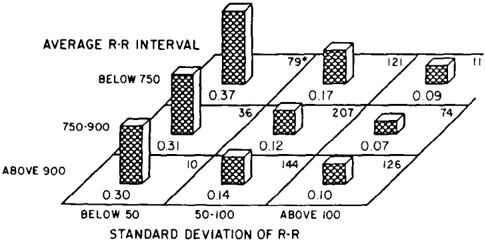
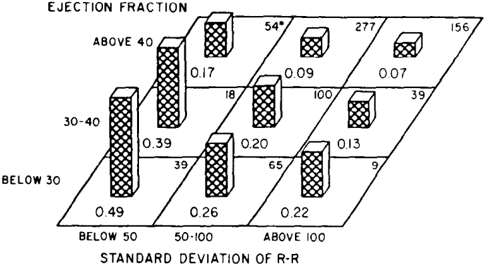
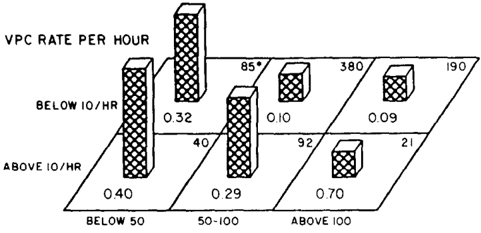
“…report, Kleiger et al showed a strong association between depressed HRV and increased mortality during the first four years after acute infarction.2 By clustering the total population according to mean heart rate, left ventricular ejection fraction, frequency of ventricular extrasystoles, and…”
BackgroundInfluentialNICOLINI, P., CIULLA, M. M., ASMUNDIS, C. D., MAGRINI, F., & BRUGADA, P. (2012) · Pacing and Clinical Electrophysiology · doi:10.1111/j.1540-8159.2012.03335.x · Cited by 123
Barthélemy, J., Pichot, V., Dauphinot, V., Celle, S., Laurent, B., Garcin, A., Maudoux, D., Kerleroux, J., Lacour, J.-R., Kossovsky, M. P., et al. (2007) · Neuroepidemiology · doi:10.1159/000108914 · Cited by 126
Sustained Anxiety and 4-Year Progression of Carotid Atherosclerosis
Paterniti, S., Zureik, M., Ducimetière, P., Touboul, P.-J., Fève, J.-M., & Alpérovitch, A. (2001) · Arteriosclerosis, Thrombosis, and Vascular Biology · doi:10.1161/01.atv.21.1.136 · Cited by 122
Autonomic changes in patients with heart failure and in post-myocardial infarction patients
Frenneaux, M. P. (2004) · Heart · doi:10.1136/hrt.2003.026146 · Cited by 124
“26 In two other small studies published in 1988 and 1992, a low BRS predicted total cardiac mortality and life threatening arrhythmic events respectively.”
BackgroundSpectral analysis of heart rate without resampling
Moody, G. B. (2002) · Proceedings of Computers in Cardiology Conference · doi:10.1109/cic.1993.378302 · Cited by 122
Non-Dipping Blood Pressure Profile in Narcolepsy with Cataplexy
Dauvilliers, Y. A., Jaussent, I., Krams, B., Scholz, S., Lado, S., Levy, P. A., & Pépin, J. (2012) · PLoS ONE · doi:10.1371/journal.pone.0038977 · Cited by 124
“Both lower PLMS-related HR response and the absence of or reduction in the nocturnal dip may be considered highly sensitive predictors of cardiovascular morbidity and mortality [15–19,30–31].”
BackgroundCardiorespiratory coupling in health and disease
Garcia, A. J., Koschnitzky, J. E., Dashevskiy, T., & Ramirez, J. (2013) · Autonomic Neuroscience · doi:10.1016/j.autneu.2013.02.006 · Cited by 141
“Common diagnostic methods to analyze HVR have employed either timeseries data in order to determine standard deviation of the R-R intervals (Kleiger et al., 1987; Kawachi et al., 1995) or frequency-series data in order to perform power spectral analysis (Akselrod et al., 1981; Yeragani et al.,…”
MethodHealth and Aging: Development of The Irish Longitudinal Study on Ageing Health Assessment
Cronin, H., O'Regan, C., Finucane, C., Kearney, P., & Kenny, R. A. (2013) · Journal of the American Geriatrics Society · doi:10.1111/jgs.12197 · Cited by 122
“Low HRV is an independent predictor of mortality after myocardial infarction.(34,35) HRV parameters were derived from electrocardiographic signals measured using a high-sampling-rate (4,000 Hz) Holter monitor (Medilog AR12, Hunt Leigh Healthcare, Woking, UK) with dedicated software (Medilog Darwin, Hunt Leigh Healthca…”
MethodSteinberg, J. S., Varma, N., Cygankiewicz, I., Aziz, P. F., Balsam, P., Baranchuk, A. M., Cantillon, D. J., Dilaveris, P., Dubner, S., El‐Sherif, N., et al. (2017) · Annals of Noninvasive Electrocardiology · doi:10.1111/anec.12447 · Cited by 133
“Decreased HRV values have been consistently reported in post- MI infarction and heart failure patients (Bigger et al., 1992; Kleiger et al., 1987; La Rovere et al., 2003, 2012; Makikallio et al., 2005).”
BackgroundGreiser, K. H., Kluttig, A., Schumann, B., Swenne, C. A., Kors, J. A., Kuß, O., Haerting, J., Schmidt, H., Thiery, J., & Werdan, K. (2009) · European Journal of Epidemiology · doi:10.1007/s10654-009-9317-z · Cited by 134
“A reduced heart rate variability (HRV) as a marker of autonomie dysfunction has been shown to be associated with a poor prognosis of CVD [8-21], and with an increased risk of incident myocardial infarction (MI), cardiovascular mortality, and death from other causes in the general population [22-28].”
BackgroundHeart rate variability and its determinants in patients with severe or mild essential hypertension
Mussalo, H., Vanninen, E. J., Ikäheimo, R., Laitinen, T. P., Laakso, M., Länsimies, E., & Hartikainen, J. E. K. (2001) · Clinical Physiology · doi:10.1046/j.1365-2281.2001.00359.x · Cited by 130
Weston, P. J., & Gill, G. V. (1999) · Diabetic Medicine · doi:10.1046/j.1464-5491.1999.00121.x · Cited by 122
Carbamazepine affects autonomic cardiac control in patients with newly diagnosed epilepsy
Persson, H., Ericson, M. O., & Tomson, T. (2003) · Epilepsy Research · doi:10.1016/j.eplepsyres.2003.10.012 · Cited by 134
Stapelberg, N. J. C., Neumann, D. L., Shum, D. H. K., McConnell, H., & Hamilton-Craig, I. (2011) · Australian & New Zealand Journal of Psychiatry · doi:10.3109/00048674.2011.570427 · Cited by 116
“Early HRV changes have been shown to occur following myocardial infarction (MI) and have been linked prognostically to mortality risk[186-191].”
BackgroundPedretti, R. F. E., Etro, M. D., Laporta, A., Braga, S. S., & Carù, B. (1993) · The American Journal of Cardiology · doi:10.1016/0002-9149(93)90635-p · Cited by 133
Cardioprotection of dapagliflozin and vildagliptin in rats with cardiac ischemia-reperfusion injury
Tanajak, P., Sa‐nguanmoo, P., Sivasinprasasn, S., Thummasorn, S., Siri‐Angkul, N., Chattipakorn, S. C., & Chattipakorn, N. (2017) · Journal of Endocrinology · doi:10.1530/joe-17-0457 · Cited by 132
The perception of work stressors is related to reduced parasympathetic activity
Clays, E., Bacquer, D. D., Crasset, V., Kittel, F., Smet, P. D., Kornitzer, M., Karasek, R. A., & Backer, G. D. (2010) · International Archives of Occupational and Environmental Health · doi:10.1007/s00420-010-0537-z · Cited by 142
“A number of prospective cohort studies have demonstrated the prognostic value of reduced HRV in relation to CHD as well as cardiovascular and all-cause mortality in patients and general population samples ( Kleiger et al. 1987; Tsuji et al. 1994; Liao et al. 1997; Dekker et al. 1997; Britton and Hemingway 2004).”
BackgroundRelationships of Cardiac Autonomic Function With Metabolic Abnormalities in Childhood Obesity
Kaufman, C. L., Kaiser, D. R., Steinberger, J., Kelly, A. S., & Dengel, D. R. (2007) · Obesity · doi:10.1038/oby.2007.619 · Cited by 140
“Although the physiological significance of HRV has recently been debated (34) and has been criticized previously (35), we think that the vast amount of literature supporting its utility in accurately characterizing changes in autonomic modulation due to pharmacological interventions (36), predicting risk of sudden car…”
MethodMovement Variability as a Clinical Measure for Locomotion
Heiderscheit, B. C. (2000) · Journal of Applied Biomechanics · doi:10.1123/jab.16.4.419 · Cited by 121
“For example, following an acute myocardial infarction, a decrease in heart rate variability was a strong predictor of mortality (Kleiger et al., 1987).”
Metadata
- Authors
- Kleiger, R. E., Miller, J. P., Bigger, J. T., & Moss, A. J.
- Affiliations
- Washington University in St. Louis (US)
- Corresponding author
- Kleiger, Robert E.
- Venue
- The American Journal of Cardiology
- Publisher
- Elsevier BV
- Published
- 1987-02
- Volume
- 59
- Issue
- 4
- Pages
- 256-262
- ISSN
- 0002-9149 (ISSN-L)
- OpenAlex
- W1967900132
- Cited by
- 3,995
- References
- 33
- Citations by year
- 2026: 46 · 2025: 68 · 2024: 72 · 2023: 84 · 2022: 78 · 2021: 107 · 2020: 99 · 2019: 119 · 2018: 97 · 2017: 122 · 2016: 115 · 2015: 130 · 2014: 120 · 2013: 134 · 2012: 106
- FWCI
- 26.78
- Type
- journal article
- Language
- en
- Open access
- hybrid
- doi.org
- Licence
- cc-by-nc-nd
- www.elsevier.com/tdm/userlicense/1.0/ (tdm)
- www.elsevier.com/legal/tdmrep-license (tdm)
- creativecommons.org/licenses/by-nc-nd/4.0/ (vor, 6681 d)
- Locations
- The American Journal of Cardiology (publishedVersion, cc-by-nc-nd)
- PubMed (publishedVersion)
- Funders
- National Heart, Lung, and Blood Institute (HL-22982, HL-70204, RR-00645)
- National Center for Research Resources (RR 00645)
- Topics
- Health Sciences › Medicine › Cardiology and Cardiovascular Medicine › Heart Rate Variability and Autonomic Control
- Health Sciences › Medicine › Cardiology and Cardiovascular Medicine › Cardiac Health and Mental Health
- Health Sciences › Medicine › Cardiology and Cardiovascular Medicine › Acute Myocardial Infarction Research
- Keywords
- heart rate variability, acute myocardial infarction, mortality prediction, long-term survival, sympathetic tone, vagal tone, ventricular fibrillation, Holter monitoring, ejection fraction
- MeSH terms
- Arrhythmias, Cardiac, Electrocardiography, Follow-Up Studies, Heart, Heart Failure, Heart Rate, Heart Ventricles, Humans, Middle Aged, Monitoring, Physiologic, Myocardial Infarction, Prognosis, Risk
About these checks
Registry, retraction, Cites and statistics results are computed, not judged, with one exception: a printed reference that no index lists is read once by a model before it counts as a citation error. Claims are extracted by a model and kept only when their quote appears verbatim in the text; each cited source is then checked, with a model’s help, for whether it says what the claim relies on. Those verdicts can be wrong — read the claim’s quote and the cited source before relying on one.
Statistics and arithmetic are recomputed, not judged.
Confidence bands are shown only for fields calibrated on our annotated test set. None is calibrated yet, so no band is shown.
What counts as a claim ›How we measure confidence ›How we check this ›
Are you an author, or do you see a problem with this page? Request a review
Data sources
Bibliographic data: Semantic Scholar, OpenAlex, Crossref.
Contains information from the Semantic Scholar Academic Graph Datasets, made available under the ODC Attribution License (ODC-BY 1.0).
Semantic Scholar’s data is described in: Kinney, R., et al. (2023). The Semantic Scholar Open Data Platform. arXiv:2301.10140.
