

Decreased heart rate variability and its association with increased mortality after acute myocardial infarction
Open accessThe DOI matches its Crossref record; 31 of the 33 references it cites were found in a registry or an index.
Abstract
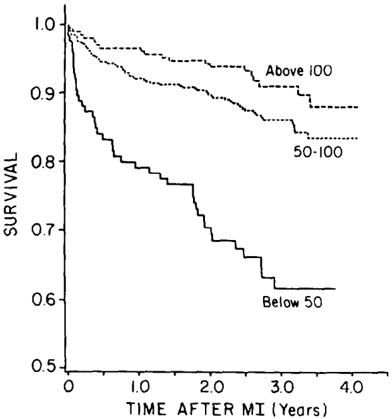
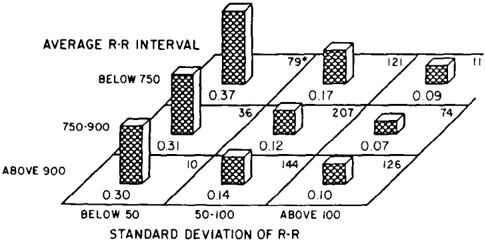
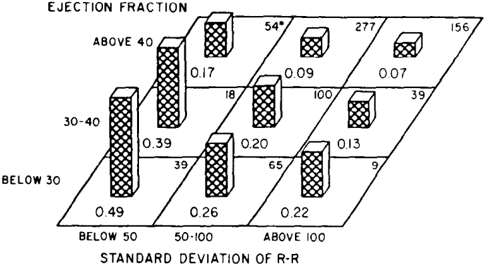
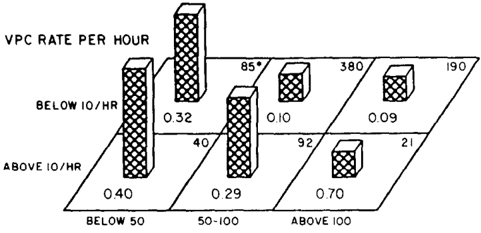
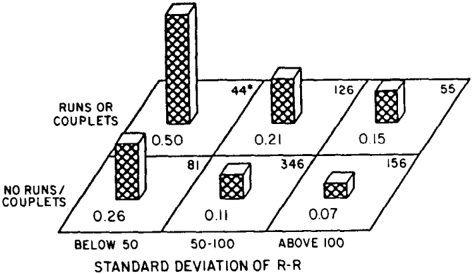
A high degree of heart rate (HR) variability is found in compensated hearts with good function, whereas HR variability can be decreased with severe coronary artery disease, congestive heart failure, aging and diabetic neuropathy. To test the hypothesis that HR variability is a predictor of long-term survival after acute myocardial infarction (AMI), the Holter tapes of 808 patients who survived AMI were analyzed. Heart rate variability was defined as the standard deviation of all normal RR intervals in a 24-hour continuous electrocardiogram recording made 11 +/- 3 days after AMI. In all patients demographic, clinical and laboratory variables were measured at baseline. Mean follow-up time was 31 months. Of all Holter variables measured, HR variability had the strongest univariate correlation with mortality. The relative risk of mortality was 5.3 times higher in the group with HR variability of less than 50 ms than the group with HR variability of more than 100 ms. HR variability remained a significant predictor of mortality after adjusting for clinical, demographic, other Holter features and ejection fraction. A hypothesis to explain this finding is that decreased HR variability correlates with increased sympathetic or decreased vagal tone, which may predispose to ventricular fibrillation.
Overview
The claims and statistics of this paper haven’t been checked yet.
Free: it reads the open-access text and checks the first 5 claims that cite a source we can check. Create a free account to check every claim.
Integrity signals
Registry
Cites
Statistics
Figures
Verification
Claims the paper makes
The claims and statistics of this paper haven’t been checked yet.
Free: it reads the open-access text and checks the first 5 claims that cite a source we can check. Create a free account to check every claim.
Claims other papers make about this one
Each is checked against this paper’s own text: does it say what the citing paper says it does?
The cited source doesn’t support the claim as written.
In the citing paper
“Kleiger et al. (1987) first reported that SDNN ,50 ms was associated with fivefold higher mortality in postmyocardial infarction patients compared to those with SDNN .50 ms.”
From 2017 ISHNE-HRS expert consensus statement on ambulatory ECG and external cardiac monitoring/telemetry (2017) · cites this paper as Kleiger et al. (1987)
Checked by a reasoning model — may be wrong.
Experimental — accuracy not yet measuredThe source backs part of the claim, not all of it — or backs it for a different population, condition or comparison.
In the citing paper
“Decreased HRV values have been consistently reported in post-MI infarction and heart failure patients (Bigger et al., 1992;Kleiger et al., 1987;La Rovere et al., 2003, 2012;Makikallio et al., 2005).”
From 2017 ISHNE-HRS expert consensus statement on ambulatory ECG and external cardiac monitoring/telemetry (2017) · cites this paper as Kleiger et al., 1987
Experimental — accuracy not yet measured
Self-check
Percentages, sums and reported differences re-computed from the paper’s own numbers.
The self-check needs the paper’s full text.
Citations
Cites
Nonparametric Estimation from Incomplete Observations
Kaplan, E. L., & Meier, P. (1992) · Springer Series in Statistics · doi:10.1007/978-1-4612-4380-9_25 · Cited by 45,181
Nonparametric Estimation from Incomplete Observations
Kaplan, E. L., & Meier, P. (1958) · Journal of the American Statistical Association · doi:10.1080/01621459.1958.10501452 · Cited by 39,158
Risk Stratification and Survival after Myocardial Infarction
The Multicenter Postinfarction Research Group (1983) · New England Journal of Medicine · doi:10.1056/nejm198308113090602 · Cited by 1,602
Bigger, J. T., Fleiss, J. L., Kleiger, R., Miller, J. P., & Rolnitzky, L. M. (1984) · Circulation · doi:10.1161/01.cir.69.2.250 · Cited by 1,286
Self-citationThe Electrocardiogram in Population Studies: A Classification System
BLACKBURN, H., KEYS, A., SIMONSON, E., RAUTAHARJU, P., & PUNSAR, S. (1960) · Circulation · doi:10.1161/01.cir.21.6.1160 · Cited by 1,109
Neural Activity and Ventricular Fibrillation
Bleich, H. L., Boro, E. S., Lown, B., & Verrier, R. L. (1976) · New England Journal of Medicine · doi:10.1056/nejm197605202942107 · Cited by 764
Diminished Baroreflex Sensitivity in High Blood Pressure
BRISTOW, J. D., HONOUR, A. J., PICKERING, G. W., SLEIGHT, P., & SMYTH, H. S. (1969) · Circulation · doi:10.1161/01.cir.39.1.48 · Cited by 569
Sudden death in the year following myocardial infarction
Schulze, R. A., Strauss, H. W., & Pitt, B. (1977) · The American Journal of Medicine · doi:10.1016/0002-9343(77)90314-x · Cited by 543
Sinus Arrhythmia in Acute Myocardial Infarction
Wolf, M. M., Varigos, G. A., Hunt, D., & Sloman, J. G. (1978) · Medical Journal of Australia · doi:10.5694/j.1326-5377.1978.tb131339.x · Cited by 486
Moss, A. J., Davis, H. T., DeCamilla, J., & Bayer, L. W. (1979) · Circulation · doi:10.1161/01.cir.60.5.998 · Cited by 466
Self-citation
Research works printed but not linked: 5
- Eckberg, 1972, Defective cardiac parasympathetic responses in patients after myocardial infarction, Am J Cardiol, 285, 877
- Magid, 1983, Low dose atropine reduces ventricular vulnerability in normal and ischemic hearts, J Clin Invest, 31, 261A
- 4. Bigger JT Jr, Coromilas J. How do beta-blocken protect after myocardial York; The Jewish Hospital and St. Luke's Hospital, St. infarction? Ann Intern Med 1964;101:256-256.
- 5. Dibner-Dunlap ME, Eckberg DL, Magid NM. Transcutaneous scopolo- Louis; and University of Arizona Health Science Cen- mine: a potential defense against sudden cardiac death (abstr). J Clin Invest ter, Tucson Medical Center, and St. Joseph's Hospital, 1964;32:473.
- Dibner-Dunlap, 1984, Transcutaneous scopolamine: a potential defense against sudden cardiac death (abstr), J Clin Invest, 32, 473
Cited by
Items 201–300 of 1,028
Guidelines for clinical intracardiac electrophysiological and catheter ablation procedures
Zipes, D. P., Dimarco, J. P., Gillette, P. C., Jackman, W. M., Myerburg, R. J., Rahimtoola, S. H., Ritchie, J. L., Cheitlin, M. D., Garson, A., Gibbons, R. J., et al. (1995) · Journal of the American College of Cardiology · doi:10.1016/0735-1097(95)80037-h · Cited by 282
Pye, M., Quinn, A. C., & Cobbe, S. M. (1994) · Heart · doi:10.1136/hrt.71.6.511 · Cited by 280
Independent importance of psychosocial factors for prognosis after myocardial infarction
Welin, C., Lappas, G., & Wilhelmsen, L. (2000) · Journal of Internal Medicine · doi:10.1046/j.1365-2796.2000.00694.x · Cited by 277
Schmidt, H., Müller-Werdan, U., Hoffmann, T., Francis, D. P., Piepoli, M. F., Rauchhaus, M., Prondzinsky, R., Loppnow, H., Buerke, M., Hoyer, D., et al. (2005) · Critical Care Medicine · doi:10.1097/01.ccm.0000178181.91250.99 · Cited by 284
“(36) first described that a decrease in SDNN 50 msecs after a myocardial infarction is associated with a 5.”
BackgroundLaguna, P., Moody, G. B., & Mark, R. G. (1998) · IEEE Transactions on Biomedical Engineering · doi:10.1109/10.678605 · Cited by 277
Measurement of heart rate variability: a clinical tool or a research toy?
Huikuri, H. V., Mäkikallio, T., Airaksinen, K. E. J., Mitrani, R., Castellanos, A., & Myerburg, R. J. (1999) · Journal of the American College of Cardiology · doi:10.1016/s0735-1097(99)00468-4 · Cited by 277
Stein, P. K., Carney, R. M., Freedland, K. E., Skala, J. A., Jaffe, A. S., Kleiger, R. E., & Rottman, J. N. (2000) · Journal of Psychosomatic Research · doi:10.1016/s0022-3999(99)00085-9 · Cited by 273
Self-citationInfluence of heart rate on mortality after acute myocardial infarction
Hjalmarson, Å., Gilpin, E. A., Kjekshus, J., Schieman, G., Nicod, P., Henning, H., & Ross, J. (1990) · The American Journal of Cardiology · doi:10.1016/0002-9149(90)91029-6 · Cited by 275
Heart Rate Variability-Based Driver Drowsiness Detection and Its Validation With EEG
Fujiwara, K., Abe, E., Kamata, K., Nakayama, C., Suzuki, Y., Yamakawa, T., Hiraoka, T., Kano, M., Sumi, Y., Masuda, F., et al. (2019) · IEEE Transactions on Biomedical Engineering · doi:10.1109/tbme.2018.2879346 · Cited by 261
“Thus, HRV analysis has been used for monitoring stress, and cardiovascular disease [33], [34].”
MethodPrognostic value of baroreflex sensitivity testing after acute myocardial infarction.
Farrell, T. G., Odemuyiwa, O., Bashir, Y., Cripps, T. R., Malik, M., Ward, D. E., & Camm, A. J. (1992) · Heart · doi:10.1136/hrt.67.2.129 · Cited by 269
Mortality in Diabetic Patients with Cardiovascular Autonomic Neuropathy
Rathmann, W., Ziegler, D., Jahnke, M., Haastert, B., & Cries, F. A. (1993) · Diabetic Medicine · doi:10.1111/j.1464-5491.1993.tb00173.x · Cited by 274
Power-Law Relationship of Heart Rate Variability as a Predictor of Mortality in the Elderly
Huikuri, H. V., Mäkikallio, T. H., Airaksinen, K. E. J., Seppänen, T., Puukka, P., Räihä, I. J., & Sourander, L. B. (1998) · Circulation · doi:10.1161/01.cir.97.20.2031 · Cited by 271
Association Between Depressive Symptoms and Mortality in Older Women
Whooley, M. A. (1998) · Archives of Internal Medicine · doi:10.1001/archinte.158.19.2129 · Cited by 270
Biological mechanisms in the relationship between depression and heart disease
Grippo, A. J., & Johnson, A. K. (2002) · Neuroscience & Biobehavioral Reviews · doi:10.1016/s0149-7634(03)00003-4 · Cited by 265
“[137] with permission, copyright 1987 Excerpta Medica Inc.”
BackgroundMethodHeart rate variability during the acute phase of myocardial infarction.
Casolo, G. C., Stroder, P., Signorini, C., Calzolari, F., Zucchini, M., Balli, E., Sulla, A., & Lazzerini, S. (1992) · Circulation · doi:10.1161/01.cir.85.6.2073 · Cited by 267
Posttraumatic Stress Disorder, Cardiovascular, and Metabolic Disease: A Review of the Evidence
Dedert, E. A., Calhoun, P. S., Watkins, L. L., Sherwood, A., & Beckham, J. C. (2010) · Annals of Behavioral Medicine · doi:10.1007/s12160-010-9165-9 · Cited by 263
“Previous research has indicated that reduced 24-h HRV independently predicts mortality in patients with stable CVD [80] or a recent myocardial infarction [81].”
BackgroundLow Heart Rate Variability and the Effect of Depression on Post–Myocardial Infarction Mortality
Carney, R. M., Blumenthal, J. A., Freedland, K. E., Stein, P. K., Howells, W. B., Berkman, L. F., Watkins, L. L., Czajkowski, S. M., Hayano, J., Domitrovich, P. P., et al. (2005) · Archives of Internal Medicine · doi:10.1001/archinte.165.13.1486 · Cited by 258
Carney, R. M., Freedland, K. E., Rich, M. W., & Jaffe, A. S. (1995) · Annals of Behavioral Medicine · doi:10.1007/bf02895063 · Cited by 260
Zuanetti, G., Neilson, J. M. M., Latini, R., Santoro, E., Maggioni, A. P., & Ewing, D. J. (1996) · Circulation · doi:10.1161/01.cir.94.3.432 · Cited by 261
Sympathovagal balance: how should we measure it?
Goldberger, J. J. (1999) · American Journal of Physiology-Heart and Circulatory Physiology · doi:10.1152/ajpheart.1999.276.4.h1273 · Cited by 252
“Several investigators (17, 33) have noted that heart rate variability parameters are predictors of prognosis even when heart rate is included into multivariate models.”
BackgroundInfluentialRich, M. W., Saini, J. S., Kleiger, R. E., Carney, R. M., teVelde, A., & Freedland, K. E. (1988) · The American Journal of Cardiology · doi:10.1016/0002-9149(88)91208-8 · Cited by 259
Self-citationBernardi, L. (1996) · Cardiovascular Research · doi:10.1016/0008-6363(96)00081-8 · Cited by 244
Sampling frequency of the electrocardiogram for spectral analysis of the heart rate variability
Merri, M., Farden, D. C., Mottley, J. G., & Titlebaum, E. L. (1990) · IEEE Transactions on Biomedical Engineering · doi:10.1109/10.43621 · Cited by 248
Abnormal Heart Rate Characteristics Preceding Neonatal Sepsis and Sepsis-Like Illness
Griffin, M. P., O'Shea, T. M., Bissonette, E. A., Harrell, F. E., Lake, D. E., & Moorman, J. R. (2003) · Pediatric Research · doi:10.1203/01.pdr.0000064904.05313.d2 · Cited by 250
“Quantitative analysis of HRV has been studied extensively in adults with heart disease, and a consistent finding is that reduced variability is associated with poorer prognosis (34).”
BackgroundPrediction of sudden cardiac death by fractal analysis of heart rate variability in elderly subjects
Mäkikallio, T. H., Huikuri, H. V., Mäkikallio, A., Sourander, L. B., Mitrani, R. D., Castellanos, A., & Myerburg, R. J. (2001) · Journal of the American College of Cardiology · doi:10.1016/s0735-1097(01)01171-8 · Cited by 250
Mechanisms of morbidity and mortality from exposure to ambient air particles.
Godleski, J. J., Verrier, R. L., Koutrakis, P., Catalano, P. J., Coull, B. A., Reinisch, U., Lovett, E. G., Lawrence, J. E., Murthy, G. G. K., Wolfson, J. M., et al. (2000) · PubMed · Cited by 302
Mäkikallio, T. H., Barthel, P., Schneider, R., Bauer, A., Tapanainen, J. M., Tulppo, M. P., Schmidt, G., & Huikuri, H. V. (2005) · European Heart Journal · doi:10.1093/eurheartj/ehi188 · Cited by 249
Kienzle, M. G., Ferguson, D. W., Birkett, C. L., Myers, G. A., Berg, W. J., & Mariano, D. J. (1992) · The American Journal of Cardiology · doi:10.1016/0002-9149(92)90502-p · Cited by 249
Mäkikallio, T. H., Huikuri, H. V., Hintze, U., Videbæk, J., Mitrani, R. D., Castellanos, A., Myerburg, R. J., & Møller, M. (2001) · The American Journal of Cardiology · doi:10.1016/s0002-9149(00)01312-6 · Cited by 252
Effect of atenolol and diltiazem on heart period variability in normal persons
Cook, J. R., Thomas Bigger, J., Kleiger, R. E., Fleiss, J. L., Steinman, R. C., & Rolnitzky, L. M. (1991) · Journal of the American College of Cardiology · doi:10.1016/s0735-1097(10)80119-6 · Cited by 246
Self-citationAdverse Effects of Cigarette and Noncigarette Smoke Exposure on the Autonomic Nervous System
Middlekauff, H. R., Park, J., & Moheimani, R. S. (2014) · Journal of the American College of Cardiology · doi:10.1016/j.jacc.2014.06.1201 · Cited by 240
Ikeda, T., Sakurada, H., Sakabe, K., Sakata, T., Takami, M., Tezuka, N., Nakae, T., Noro, M., Enjoji, Y., Tejima, T., et al. (2001) · Journal of the American College of Cardiology · doi:10.1016/s0735-1097(01)01197-4 · Cited by 248
“For other noninvasive markers such as heart rate variability (8,23), an association with this syndrome is unknown.”
BackgroundEmodiversity and the emotional ecosystem.
Quoidbach, J., Gruber, J., Mikolajczak, M., Kogan, A., Kotsou, I., & Norton, M. I. (2014) · Journal of Experimental Psychology: General · doi:10.1037/a0038025 · Cited by 207
Depression and Cardiovascular Disorders
Whooley, M. A., & Wong, J. M. (2013) · Annual Review of Clinical Psychology · doi:10.1146/annurev-clinpsy-050212-185526 · Cited by 241
“Lack of variability in heart rate (low HRV) is an independent predictor of mortality after MI (Kleiger et al. 1987).”
BackgroundEvaluation of the role of IKAChin atrial fibrillation using a mouse knockout model
Kovoor, P., Wickman, K., Maguire, C. T., Pu, W., Gehrmann, J., Berul, C. I., & Clapham, D. E. (2001) · Journal of the American College of Cardiology · doi:10.1016/s0735-1097(01)01304-3 · Cited by 239
Relation of High Heart Rate Variability to Healthy Longevity
Zulfiqar, U., Jurivich, D. A., Gao, W., & Singer, D. H. (2010) · The American Journal of Cardiology · doi:10.1016/j.amjcard.2009.12.022 · Cited by 239
Reproducibility and circadian rhythm of heart rate variability in healthy subjects
Huikuri, H. V., Kessler, K. M., Terracall, E., Castellanos, A., Linnaluoto, M. K., & Myerburg, R. J. (1990) · The American Journal of Cardiology · doi:10.1016/0002-9149(90)90308-n · Cited by 236
Billman, G. E. (2009) · American Journal of Physiology-Heart and Circulatory Physiology · doi:10.1152/ajpheart.00534.2009 · Cited by 235
Copie, X., Hnatkova, K., Staunton, A., Fei, L., Camm, A. J., & Malik, M. (1996) · Journal of the American College of Cardiology · doi:10.1016/0735-1097(95)00454-8 · Cited by 234
Age-related changes in spatial and temporal gait variables
Grabiner, P. C., Biswas, S. T., & Grabiner, M. D. (2001) · Archives of Physical Medicine and Rehabilitation · doi:10.1053/apmr.2001.18219 · Cited by 218
Őri, Z., Monir, G., Weiss, J., Sayhouni, X., & Singer, D. H. (1992) · Cardiology Clinics · doi:10.1016/s0733-8651(18)30231-5 · Cited by 223
Fractal analysis of heart rate variability and mortality after an acute myocardial infarction
Tapanainen, J. M., Thomsen, P. E. B., Køber, L., Torp-Pedersen, C., Mäkikallio, T. H., Still, A.-M., Lindgren, K. S., & Huikuri, H. V. (2002) · The American Journal of Cardiology · doi:10.1016/s0002-9149(02)02488-8 · Cited by 239
Binkley, P. F., Haas, G. J., Starling, R. C., Nunziata, E., Hatton, P. A., Leier, C. V., & Cody, R. J. (1993) · Journal of the American College of Cardiology · doi:10.1016/0735-1097(93)90098-l · Cited by 232
Morshedi-Meibodi, A., Larson, M. G., Levy, D., O’Donnell, C. J., & Vasan, R. S. (2002) · The American Journal of Cardiology · doi:10.1016/s0002-9149(02)02706-6 · Cited by 228
De Meersman, R. E., & Stein, P. K. (2007) · Biological Psychology · doi:10.1016/j.biopsycho.2006.04.008 · Cited by 228
“This gradual loss of vagal modulation has been shown to be in part responsible for the increased cardiovascular morbidity and mortality in the aging population at large (Kleiger et al., 1987).”
BackgroundAldosterone escape during angiotensin-converting enzyme inhibitor therapy in chronic heart failure
Struthers, A. D. (1996) · Journal of Cardiac Failure · doi:10.1016/s1071-9164(96)80009-1 · Cited by 225
Balcıoğlu, A. S. (2015) · World Journal of Diabetes · doi:10.4239/wjd.v6.i1.80 · Cited by 220
Hartikainen, J. E. K., Malik, M., Staunton, A., Poloniecki, J., & Camm, A. J. (1996) · Journal of the American College of Cardiology · doi:10.1016/0735-1097(96)00169-6 · Cited by 229
Cardiac Sympathetic Dysinnervation in Diabetes: Implications for Enhanced Cardiovascular Risk
Stevens, M. J., Raffel, D. M., Allman, K. C., Dayanikli, F., Ficaro, E., Sandford, T., Wieland, D. M., Pfeifer, M. A., & Schwaiger, M. (1998) · Circulation · doi:10.1161/01.cir.98.10.961 · Cited by 224
Time course of recovery of heart period variability after myocardial infarction
Bigger, J. T., Fleiss, J. L., Rolnitzky, L. M., Steinman, R. C., & Schneider, W. J. (1991) · Journal of the American College of Cardiology · doi:10.1016/0735-1097(91)90497-w · Cited by 226
Self-citationPhenotypic screening for heart rate variability in the mouse
Gehrmann, J., Hammer, P. E., Maguire, C. T., Wakimoto, H., Triedman, J. K., & Berul, C. I. (2000) · American Journal of Physiology-Heart and Circulatory Physiology · doi:10.1152/ajpheart.2000.279.2.h733 · Cited by 220
Normal Ranges of Heart Rate Variability During Infancy and Childhood
Massin, M., & von Bernuth, G. (1997) · Pediatric Cardiology · doi:10.1007/s002469900178 · Cited by 219
“Since the first report on the use of heart rate variability parameters in 1978 [35], impaired variability was found in adult patients with myocardial infarction [18, 21], left ventricular dysfunction [23, 34], low cardiac output [17], chronic heart failure [23, 28, 33], panic disorder [36], and diabetic neuropathy [7].”
BackgroundObstructive Sleep Apnea and Hypertension: An Update
Konecny, T., Kara, T., & Somers, V. K. (2014) · Hypertension · doi:10.1161/hypertensionaha.113.00613 · Cited by 178
Tuomilehto, J., Borch-Johnsen, K., Molarius, A., Forsén, T., Rastenyte, D., Sarti, C., & Reunanen, A. (1998) · Diabetologia · doi:10.1007/s001250050988 · Cited by 226
“Low cardiac parasympathetic activity has been shown, both in experimental [40] and clinical studies [41] of non-diabetic patients with CHD, to be a major J.”
BackgroundThe effect of heart rate on the heart rate variability response to autonomic interventions
Billman, G. E. (2013) · Frontiers in Physiology · doi:10.3389/fphys.2013.00222 · Cited by 207
Cardiovascular alterations and autonomic imbalance in an experimental model of depression
Grippo, A. J., Moffitt, J. A., & Johnson, A. K. (2002) · American Journal of Physiology-Regulatory, Integrative and Comparative Physiology · doi:10.1152/ajpregu.00614.2001 · Cited by 216
“Decreased HR variability is found in patients with coronary artery disease, and it predicts arrhythmic complications (25) and long-term survival (15) following myocardial infarction.”
BackgroundEwing, D. J., Neilson, J. M., Shapiro, C. M., Stewart, J. A., & Reid, W. (1991) · Heart · doi:10.1136/hrt.65.5.239 · Cited by 216
Ikeda, T., Sakata, T., Takami, M., Kondo, N., Tezuka, N., Nakae, T., Noro, M., Enjoji, Y., Abe, R., Sugi, K., et al. (2000) · Journal of the American College of Cardiology · doi:10.1016/s0735-1097(99)00590-2 · Cited by 225
“At present, various noninvasive indices, such as late potentials (LP) determined by signalaveraged electrocardiography (ECG) (1–3), left ventricular ejection fraction (EF) (1–3), ventricular ectopy determined by Holter monitoring (4), heart rate variability (5), and QT dispersion (6), have been used to identify patien…”
Skinner, J. E., Pratt, C. M., & Vybiral, T. (1993) · American Heart Journal · doi:10.1016/0002-8703(93)90165-6 · Cited by 219
de Geus, E. J. C., Gianaros, P. J., Brindle, R. C., Jennings, J. R., & Berntson, G. G. (2019) · Psychophysiology · doi:10.1111/psyp.13287 · Cited by 219
Korpelainen, J. T., Sotaniemi, K. A., Huikuri, H. V., & Myllylä, V. V. (1996) · Stroke · doi:10.1161/01.str.27.11.2059 · Cited by 219
Antecedent Hypoglycemia Impairs Autonomic Cardiovascular Function
Adler, G. K., Bonyhay, I., Failing, H., Waring, E., Dotson, S., & Freeman, R. (2009) · Diabetes · doi:10.2337/db08-1153 · Cited by 216
Kempler, P., Tesfaye, S., Chaturvedi, N., Stevens, L. K., Webb, D. J., Eaton, S., Kerényi, Z., Tamás, G., Ward, J. D., Fuller, J. H., et al. (2002) · Diabetic Medicine · doi:10.1046/j.1464-5491.2002.00821.x · Cited by 203
Spectral Analysis of Heart Rate Variability: Time Window Matters
Li, K., Rüdiger, H., & Ziemssen, T. (2019) · Frontiers in Neurology · doi:10.3389/fneur.2019.00545 · Cited by 215
“Predict the Patients’ Outcomes Initially, only long-term HRV parameters were used for the prediction of prognosis in patients with cardiovascular diseases (89).”
MethodIellamo, F., Legramante, J. M., Massaro, M., Raimondi, G., & Galante, A. (2000) · Circulation · doi:10.1161/01.cir.102.21.2588 · Cited by 212
ACC/AHA Guidelines for the Management of Patients With ST-Elevation Myocardial Infarction
(2004) · Circulation · doi:10.1161/circ.110.9.e82 · Cited by 215
Heart rate variability in patients with epilepsy
Tomson, T., Ericson, M., Ihrman, C., & Lindblad, L. E. (1998) · Epilepsy Research · doi:10.1016/s0920-1211(97)00094-6 · Cited by 214
Schwartz, J., Park, S. K., O'Neill, M. S., Vokonas, P. S., Sparrow, D., Weiss, S., & Kelsey, K. (2005) · American Journal of Respiratory and Critical Care Medicine · doi:10.1164/rccm.200412-1698oc · Cited by 214
“HRV is a noninvasive measure that independently predicts cardiovascular mortality in patients with and without underlying cardiovascular disease (20, 21).”
BackgroundAir Pollution and Myocardial Infarction in Rome: A Case-Crossover Analysis
D’Ippoliti, D., Forastiere, F., Ancona, C., Agabiti, N., Fusco, D., Michelozzi, P., & Perucci, C. A. (2003) · Epidemiology · doi:10.1097/01.ede.0000082046.22919.72 · Cited by 212
“People with atrioventricular blocks might be more sensitive to particles’ effects and are at increased risk of acute MI. Alternatively, atrioventricular blocks might more often complicate MI associated with air pollution.”
BackgroundInfluentialHeart Rate Variability and Endogenous Sex Hormones During the Menstrual Cycle in Young Women
Leicht, A. S., Hirning, D. A., & Allen, G. D. (2003) · Experimental Physiology · doi:10.1113/eph8802535 · Cited by 201
Psychosocial Factors and Heart Rate Variability in Healthy Women
Horsten, M., Erigson, M., Perski, A., Wamala, S. P., Schenck-Gustafsson, K., & Orth-Gomer, K. (1999) · Psychosomatic Medicine · doi:10.1097/00006842-199901000-00009 · Cited by 206
Mortara, A., Sleight, P., Pinna, G. D., Maestri, R., Prpa, A., La Rovere, M. T., Cobelli, F., & Tavazzi, L. (1997) · Circulation · doi:10.1161/01.cir.96.1.246 · Cited by 211
Exercise training improves baroreflex sensitivity in type 2 diabetes
Loimaala, A., Huikuri, H. V., Kööbi, T., Rinne, M., Nenonen, A., & Vuori, I. (2003) · Diabetes · doi:10.2337/diabetes.52.7.1837 · Cited by 207
Van Hoogenhuyze, D., Weinstein, N., Martin, G. J., Weiss, J. S., Schaad, J. W., Sahyouni, X. N., Fintel, D., Remme, W. J., & Singer, D. H. (1991) · The American Journal of Cardiology · doi:10.1016/0002-9149(91)90327-h · Cited by 206
Heart rate variability in patients with major depression
Yeragani, V. K., Pohl, R., Balon, R., Ramesh, C., Glitz, D., Jung, I., & Sherwood, P. (1991) · Psychiatry Research · doi:10.1016/0165-1781(91)90104-w · Cited by 206
Decreased Heart Rate Variability in Patients With Chronic Obstructive Pulmonary Disease
Volterrani, M., Scalvini, S., Mazzuero, G., Lanfranchi, P., Colombo, R., Clark, A. L., & Levi, G. (1994) · Chest · doi:10.1378/chest.106.5.1432 · Cited by 208
Carney, R. M., Rich, M. W., TeVelde, A., Saini, J., Clark, K., & Freedland, K. E. (1988) · Journal of Psychosomatic Research · doi:10.1016/0022-3999(88)90050-5 · Cited by 207
Chaos Theory, Heart Rate Variability, and Arrhythmic Mortality
Lombardi, F. (2000) · Circulation · doi:10.1161/01.cir.101.1.8 · Cited by 205
Clinical impact of evaluation of cardiovascular control by novel methods of heart rate dynamics
Huikuri, H. V., Perkiömäki, J. S., Maestri, R., & Pinna, G. D. (2009) · Philosophical Transactions of the Royal Society A: Mathematical, Physical and Engineering Sciences · doi:10.1098/rsta.2008.0294 · Cited by 197
Woo, M. A., Stevenson, W. G., Moser, D. K., & Middlekauff, H. R. (1994) · Journal of the American College of Cardiology · doi:10.1016/0735-1097(94)90737-4 · Cited by 200
Sandrone, G., Mortara, A., Torzillo, D., La Rovere, M. T., Malliani, A., & Lombardi, F. (1994) · The American Journal of Cardiology · doi:10.1016/0002-9149(94)90400-6 · Cited by 204
Kamen, P. W., & Tonkin, A. M. (1995) · Australian and New Zealand Journal of Medicine · doi:10.1111/j.1445-5994.1995.tb00573.x · Cited by 202
Pieters, N., Plusquin, M., Cox, B., Kicinski, M., Vangronsveld, J., & Nawrot, T. S. (2012) · Heart · doi:10.1136/heartjnl-2011-301505 · Cited by 196
Clinical Implications of Present Physiological Understanding of HRV Components
Lombardi, F. (2002) · Cardiac Electrophysiology Review · doi:10.1023/a:1016329008921 · Cited by 201
Non-photic solar associations of heart rate variability and myocardial infarction
Cornélissen, G., Halberg, F., Breus, T., Syutkina, E. V., Baevsky, R., Weydahl, A., Watanabe, Y., Otsuka, K., Siegelova, J., Fiser, B., et al. (2002) · Journal of Atmospheric and Solar-Terrestrial Physics · doi:10.1016/s1364-6826(02)00032-9 · Cited by 193
Modified permutation-entropy analysis of heartbeat dynamics
Bian, C., Qin, C., Ma, Q. D. Y., & Shen, Q. (2012) · Physical Review E · doi:10.1103/physreve.85.021906 · Cited by 198
Effect of Beta-blockade on heart rate variability in patients with coronary artery disease
Niemelä, M. J., Airaksinen, K. E. J., & Huikuri, H. V. (1994) · Journal of the American College of Cardiology · doi:10.1016/0735-1097(94)90379-4 · Cited by 198
Ng, G. A., Brack, K. E., Patel, V. H., & Coote, J. H. (2007) · Cardiovascular Research · doi:10.1016/j.cardiores.2006.12.001 · Cited by 203
Krittayaphong, R., Cascio, W. E., Light, K. C., Sheffield, D., Golden, R. N., Finkel, J. B., Glekas, G., Koch, G. G., & Sheps, D. S. (1997) · Psychosomatic Medicine · doi:10.1097/00006842-199705000-00004 · Cited by 200
“be a good predictor of mortality in patients after myocardial infarction (19, 20) in community-based elderly populations (21) and has been associated with increased severity of coronary artery disease (22).”
BackgroundNolan, J., Flapan, A. D., Capewell, S., MacDonald, T. M., Neilson, J. M., & Ewing, D. J. (1992) · Heart · doi:10.1136/hrt.67.6.482 · Cited by 194
Ueda, Y., Slabaugh, T. L., Walker, A. L., Ontiveros, E. S., Sosa, P.-M., Reader, R., Roberts, J. A., & Stern, J. A. (2019) · Frontiers in Veterinary Science · doi:10.3389/fvets.2019.00001 · Cited by 193
“In humans, HRV has been used as a tool to evaluate sympatho-vagal balance in patients with cardiac diseases, and multiple studies revealed decreased HRV as an independent risk factor for higher mortality and cardiac-related SD in these patients (15, 40, 41).”
MethodHOHNLOSER, S. H., KLINGENHEBEN, T., LI, Y., ZABEL, M., PEETERMANS, J., & COHEN, R. J. (1998) · Journal of Cardiovascular Electrophysiology · doi:10.1111/j.1540-8167.1998.tb00101.x · Cited by 195
EXERCISE AND AUTONOMIC FUNCTION IN HEALTH AND CARDIOVASCULAR DISEASE
Rosenwinkel, E. T., Bloomfield, D. M., Allison Arwady, M., & Goldsmith, R. L. (2001) · Cardiology Clinics · doi:10.1016/s0733-8651(05)70223-x · Cited by 188
Ambulatory ECG and analysis of heart rate variability in Parkinson's disease
Haapaniemi, T. H. (2001) · Journal of Neurology, Neurosurgery & Psychiatry · doi:10.1136/jnnp.70.3.305 · Cited by 193
“The conventional time and frequency domain measures of heart rate variability analysed from ambulatory ECG recordings, previously used as predictors of cardiac arrhythmia and mortality in coronary heart disease,”
MethodBILCHICK, K. C., & BERGER, R. D. (2006) · Journal of Cardiovascular Electrophysiology · doi:10.1111/j.1540-8167.2006.00501.x · Cited by 179
Iyengar yoga increases cardiac parasympathetic nervous modulation among healthy yoga practitioners
Khattab, K., Khattab, A. A., Ortak, J., Richardt, G., & Bonnemeier, H. (2007) · Evidence-Based Complementary and Alternative Medicine · doi:10.1093/ecam/nem087 · Cited by 192
Single cardiac vagal fiber activity, acute myocardial ischemia, and risk for sudden death.
Cerati, D., & Schwartz, P. J. (1991) · Circulation Research · doi:10.1161/01.res.69.5.1389 · Cited by 191
The insular cortex and the regulation of cardiac function
Oppenheimer, S., & Cechetto, D. (2016) · Comprehensive Physiology · doi:10.1002/cphy.c140076 · Cited by 191
Biobehavioral factors in sudden cardiac death.
Kamarck, T. W., & Jennings, J. R. (1991) · Psychological Bulletin · doi:10.1037//0033-2909.109.1.42 · Cited by 192
Enhanced cardiovascular and catecholamine responses in women with depressive symptoms
Light, K. C., Kothandapani, R. V., & Allen, M. T. (1998) · International Journal of Psychophysiology · doi:10.1016/s0167-8760(97)00093-7 · Cited by 189
Metadata
- Authors
- Kleiger, R. E., Miller, J. P., Bigger, J. T., & Moss, A. J.
- Affiliations
- Washington University in St. Louis (US)
- Corresponding author
- Kleiger, Robert E.
- Venue
- The American Journal of Cardiology
- Publisher
- Elsevier BV
- Published
- 1987-02
- Volume
- 59
- Issue
- 4
- Pages
- 256-262
- ISSN
- 0002-9149 (ISSN-L)
- OpenAlex
- W1967900132
- Cited by
- 3,995
- References
- 33
- Citations by year
- 2026: 46 · 2025: 68 · 2024: 72 · 2023: 84 · 2022: 78 · 2021: 107 · 2020: 99 · 2019: 119 · 2018: 97 · 2017: 122 · 2016: 115 · 2015: 130 · 2014: 120 · 2013: 134 · 2012: 106
- FWCI
- 26.78
- Type
- journal article
- Language
- en
- Open access
- hybrid
- doi.org
- Licence
- cc-by-nc-nd
- www.elsevier.com/tdm/userlicense/1.0/ (tdm)
- www.elsevier.com/legal/tdmrep-license (tdm)
- creativecommons.org/licenses/by-nc-nd/4.0/ (vor, 6681 d)
- Locations
- The American Journal of Cardiology (publishedVersion, cc-by-nc-nd)
- PubMed (publishedVersion)
- Funders
- National Heart, Lung, and Blood Institute (HL-22982, HL-70204, RR-00645)
- National Center for Research Resources (RR 00645)
- Topics
- Health Sciences › Medicine › Cardiology and Cardiovascular Medicine › Heart Rate Variability and Autonomic Control
- Health Sciences › Medicine › Cardiology and Cardiovascular Medicine › Cardiac Health and Mental Health
- Health Sciences › Medicine › Cardiology and Cardiovascular Medicine › Acute Myocardial Infarction Research
- Keywords
- heart rate variability, acute myocardial infarction, mortality prediction, long-term survival, sympathetic tone, vagal tone, ventricular fibrillation, Holter monitoring, ejection fraction
- MeSH terms
- Arrhythmias, Cardiac, Electrocardiography, Follow-Up Studies, Heart, Heart Failure, Heart Rate, Heart Ventricles, Humans, Middle Aged, Monitoring, Physiologic, Myocardial Infarction, Prognosis, Risk
About these checks
Registry, retraction, Cites and statistics results are computed, not judged, with one exception: a printed reference that no index lists is read once by a model before it counts as a citation error. Claims are extracted by a model and kept only when their quote appears verbatim in the text; each cited source is then checked, with a model’s help, for whether it says what the claim relies on. Those verdicts can be wrong — read the claim’s quote and the cited source before relying on one.
Statistics and arithmetic are recomputed, not judged.
Confidence bands are shown only for fields calibrated on our annotated test set. None is calibrated yet, so no band is shown.
What counts as a claim ›How we measure confidence ›How we check this ›
Are you an author, or do you see a problem with this page? Request a review
Data sources
Bibliographic data: Semantic Scholar, OpenAlex, Crossref.
Contains information from the Semantic Scholar Academic Graph Datasets, made available under the ODC Attribution License (ODC-BY 1.0).
Semantic Scholar’s data is described in: Kinney, R., et al. (2023). The Semantic Scholar Open Data Platform. arXiv:2301.10140.
