

The DOI matches its Crossref record; 50 of the 51 references it cites were found in a registry or an index.
Crosstalk between Gut Microbiota and Dietary Lipids Aggravates WAT Inflammation through TLR Signaling
Open accessAbstract
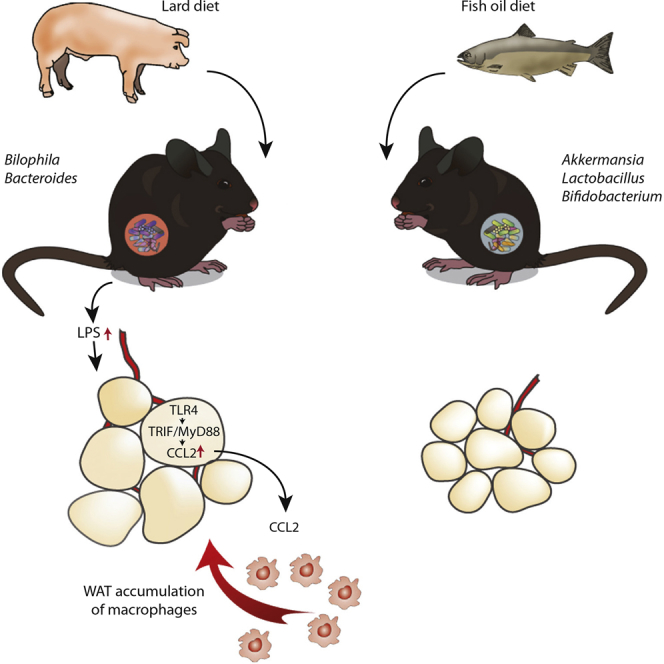
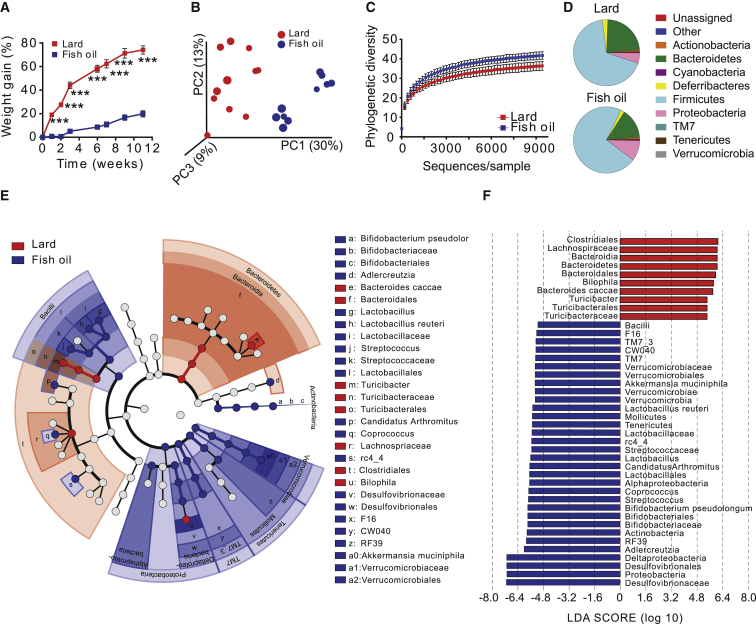
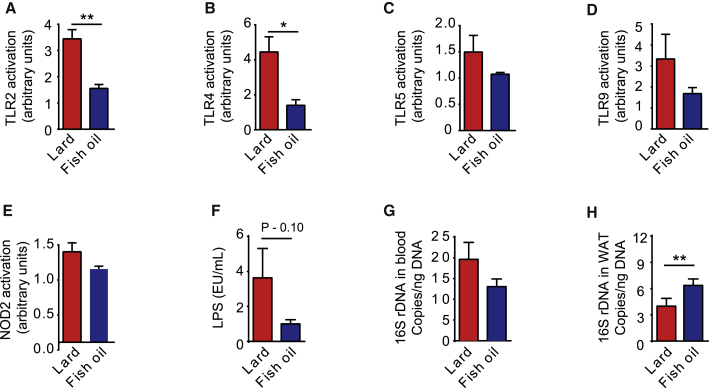
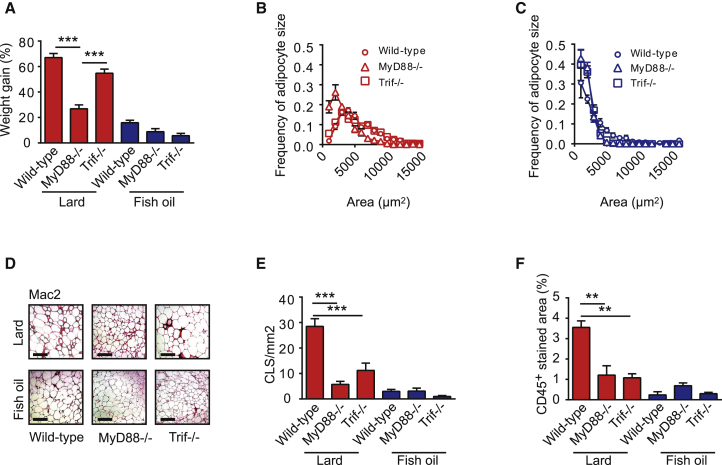
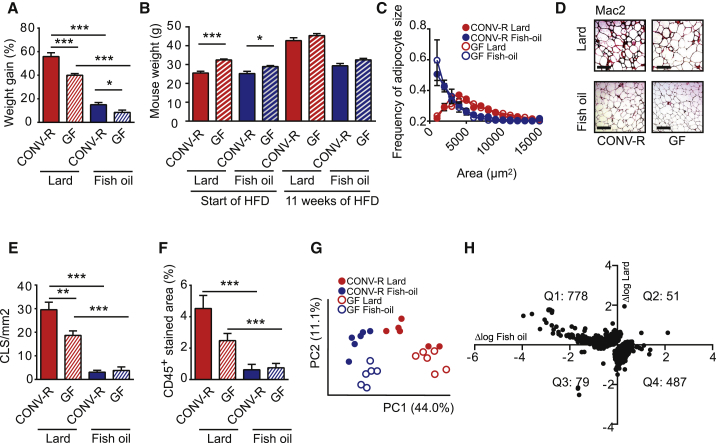
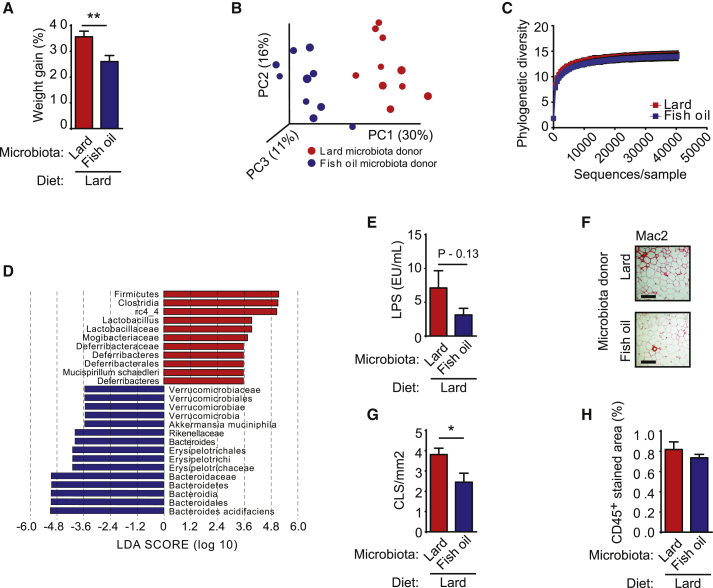
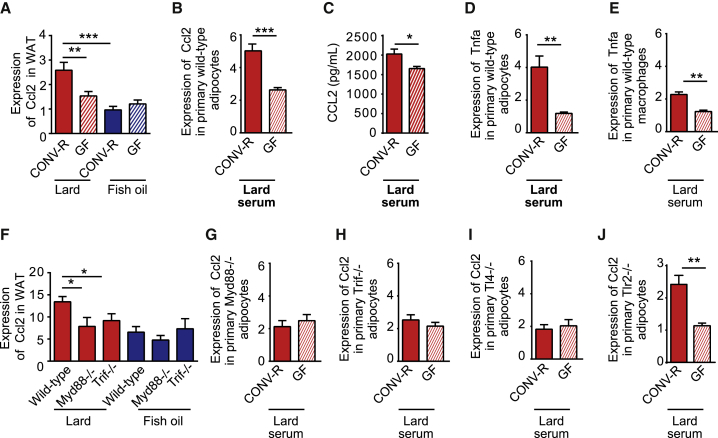
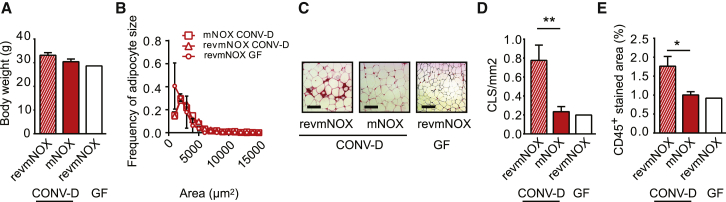
Dietary lipids may influence the abundance of circulating inflammatory microbial factors. Hence, inflammation in white adipose tissue (WAT) induced by dietary lipids may be partly dependent on their interaction with the gut microbiota. Here, we show that mice fed lard for 11 weeks have increased Toll-like receptor (TLR) activation and WAT inflammation and reduced insulin sensitivity compared with mice fed fish oil and that phenotypic differences between the dietary groups can be partly attributed to differences in microbiota composition. Trif(-/-) and Myd88(-/-) mice are protected against lard-induced WAT inflammation and impaired insulin sensitivity. Experiments in germ-free mice show that an interaction between gut microbiota and saturated lipids promotes WAT inflammation independent of adiposity. Finally, we demonstrate that the chemokine CCL2 contributes to microbiota-induced WAT inflammation in lard-fed mice. These results indicate that gut microbiota exacerbates metabolic inflammation through TLR signaling upon challenge with a diet rich in saturated lipids.
Overview
The claims and statistics of this paper haven’t been checked yet.
Run the check — free, no account needed. It reads the open-access text and checks the sources it cites.
Integrity signals
Registry
Cites
Statistics
Figures
Verification
Claims the paper makes
The claims and statistics of this paper haven’t been checked yet.
Run the check — free, no account needed. It reads the open-access text and checks the sources it cites.
Claims other papers make about this one
Each is checked against this paper’s own text: does it say what the citing paper says it does?
In the citing paper
“Saturated and unsaturated fats have profoundly different effects on the gut microbiota, and the altered microbiota that results from feeding unsaturated fats can offer protection from lard-induced weight gain44.”
From Diet–microbiota interactions as moderators of human metabolism (2016) · cites this paper as [44]
In the citing paper
“germ-free mice that are fed a high-fat diet with less sucrose are only partly protected against obesity44”
From Diet–microbiota interactions as moderators of human metabolism (2016) · cites this paper as [44]
In the citing paper
“A switch to a diet rich in saturated fatty acids shifts the composition of the microbiota44.”
From Diet–microbiota interactions as moderators of human metabolism (2016) · cites this paper as [44]
In the citing paper
“Similarly, increased levels of Bilophila and a reduced abundance of Desulfovibrio were observed in mice that were fed lard compared with fish oil as a source of fat44.”
From Diet–microbiota interactions as moderators of human metabolism (2016) · cites this paper as [44]
In the citing paper
“Latest data implied that omega-3 PUFAs modulate the intestinal microbiota composition and help normalize it after disrupting environmental stress [166,168].”
From The Role of Microbiota-Gut-Brain Axis in Neuropsychiatric and Neurological Disorders (2021) · cites this paper as [168]
In the citing paper
“In a rodent study, animals fed lard showed increases in Bacteroides and displayed signs of metabolic dysfunction.”
From The athletic gut microbiota (2020) · cites this paper as [229]
In the citing paper
“In contrast, animals fed fish oil showed increased levels of lactic acid bacteria and were protected from metabolic dysfunction [229].”
From The athletic gut microbiota (2020) · cites this paper as [229]
In the citing paper
“The gut microbiota has been shown to differ between mice fed diets that are high or low in fat and between diets that contain equal amounts of fat but from different sources [10–13] (Fig. 1).”
From Dietary lipids, gut microbiota and lipid metabolism (2019) · cites this paper as [10]
In the citing paper
“In another study where mice fed a high-fat diet containing lard, rich in saturated fat, were compared to mice fed a isocaloric high-fat diet containing fish oil, rich in n-3 PUFA, it was found that phylogenetic diversity and abundance of the beneficial bacteria Akkermansia muciniphila, Lactobacillus and Bifidobacterium were lower in mice on a lard diet [10].”
From Dietary lipids, gut microbiota and lipid metabolism (2019) · cites this paper as [10]
In the citing paper
“Transplantation of cecum microbiota into germ-free (GF) mice showed that the diet-induced differences in host phenotype were partly caused by the gut microbiota.”
From Dietary lipids, gut microbiota and lipid metabolism (2019) · cites this paper as [10]
In the citing paper
“The lard diet also reduced insulin sensitivity and increased inflammation in white adipose tissue (WAT) through activation of Toll-like receptor 4 (TLR4) signaling.”
From Dietary lipids, gut microbiota and lipid metabolism (2019) · cites this paper as [10]
Self-check
Percentages, sums and reported differences re-computed from the paper’s own numbers.
The self-check needs the paper’s full text.
Citations
Cites
Diet rapidly and reproducibly alters the human gut microbiome
David, L. A., Maurice, C. F., Carmody, R. N., Gootenberg, D. B., Button, J. E., Wolfe, B. E., Ling, A. V., Devlin, A. S., Varma, Y., Fischbach, M. A., et al. (2014) · Nature · doi:10.1038/nature12820 · Cited by 10,100
Obesity is associated with macrophage accumulation in adipose tissue
Weisberg, S. P., McCann, D., Desai, M., Rosenbaum, M., Leibel, R. L., & Ferrante, A. W. (2003) · Journal of Clinical Investigation · doi:10.1172/jci200319246 · Cited by 10,041
Metabolic Endotoxemia Initiates Obesity and Insulin Resistance
Cani, P. D., Amar, J., Iglesias, M. A., Poggi, M., Knauf, C., Bastelica, D., Neyrinck, A. M., Fava, F., Tuohy, K. M., Chabo, C., et al. (2007) · Diabetes · doi:10.2337/db06-1491 · Cited by 6,638
Self-citationInduction of Intestinal Th17 Cells by Segmented Filamentous Bacteria
Ivanov, I. I., Atarashi, K., Manel, N., Brodie, E. L., Shima, T., Karaoz, U., Wei, D., Goldfarb, K. C., Santee, C. A., Lynch, S. V., et al. (2009) · Cell · doi:10.1016/j.cell.2009.09.033 · Cited by 4,554
Cross-talk between Akkermansia muciniphila and intestinal epithelium controls diet-induced obesity
Everard, A., Belzer, C., Geurts, L., Ouwerkerk, J. P., Druart, C., Bindels, L. B., Guiot, Y., Derrien, M., Muccioli, G. G., Delzenne, N. M., et al. (2013) · Proceedings of the National Academy of Sciences · doi:10.1073/pnas.1219451110 · Cited by 4,511
Self-citationFunctional interactions between the gut microbiota and host metabolism
Tremaroli, V., & Bäckhed, F. (2012) · Nature · doi:10.1038/nature11552 · Cited by 4,387
Self-citationInteractions Between the Microbiota and the Immune System
Hooper, L. V., Littman, D. R., & Macpherson, A. J. (2012) · Science · doi:10.1126/science.1223490 · Cited by 4,173
TLR4 links innate immunity and fatty acid-induced insulin resistance
Shi, H., Kokoeva, M. V., Inouye, K., Tzameli, I., Yin, H., & Flier, J. S. (2006) · Journal of Clinical Investigation · doi:10.1172/jci28898 · Cited by 3,690
Kim, H. J., Park, S. Y., Choi, Y. J., Han, S. J., Lee, K. W., & Kim, D. J. (2013) · Hormone Research in Paediatrics · doi:10.1159/000348848 · Cited by 3,061
Kanda, H. (2006) · Journal of Clinical Investigation · doi:10.1172/jci26498 · Cited by 2,682
Cited by
Sorted by citations
Items 501–600 of 960
Optimizing the Gut Microbiota for Individualized Performance Development in Elite Athletes
Nolte, S., Krüger, K., Lenz, C., & Zentgraf, K. (2023) · Biology · doi:10.3390/biology12121491 · Cited by 28
“Saturated fats can increase Bacteroides, Bilophila, and Faecalbacterium prausnitzii [7] and show a higher increase in lipopolysaccharides (LPS) than unsaturated fats in a mice model [75].”
Monk, J. M., Liddle, D. M., Brown, M. J., Zarepoor, L., Boer, A. A. D., David, W. L., Power, K. A., & Robinson, L. E. (2015) · Molecular Nutrition & Food Research · doi:10.1002/mnfr.201500541 · Cited by 23
Recombinant Incretin-Secreting Microbe Improves Metabolic Dysfunction in High-Fat Diet Fed Rodents
Ryan, P. M., Patterson, E., Kent, R. M., Stack, H. M., O’Connor, P. M., Murphy, K., Peterson, V. L., Mandal, R., Wishart, D. S., Dinan, T. G., et al. (2017) · Scientific Reports · doi:10.1038/s41598-017-14010-x · Cited by 23
“Fractions were collected and fractions 31–34 from each run were checked for the presence of the 3512 Da KGLP-1 using MALDI TOF mass spectrometry.”
Jian, Y., Cheng, L., Hong, Y., Li, Z., Li, C., Ban, X., Zhu, L., & Gu, Z. (2023) · Nutrients · doi:10.3390/nu15245080 · Cited by 24
Dietary Lipids, Gut Microbiota, and Their Metabolites: Insights from Recent Studies
Mohammadi, F., & Rudkowska, I. (2025) · Nutrients · doi:10.3390/nu17040639 · Cited by 22
“…mice study showed that the abundances of beneficial bacteria such as Akkermansia muciniphila , Lactobacillus , and Bifidobacterium were lower in the GM of mice consuming the lard diet (mainly SFA (45% kcal as fat)) compared to an isocaloric HFD (45% kcal as fat rich in fish oil (n-3 PUFA)) [24].”
Wu, L., Sun, J., Liu, L., Du, X., Liu, Y., Yan, X., Osoro, E. K., Zhang, F., Feng, L., Liang, D., et al. (2020) · International Immunopharmacology · doi:10.1016/j.intimp.2020.106368 · Cited by 23
Marco, P. D., Henriques, A. C., Azevedo, R. M. S., Sá, S. I., Cardoso, A., Fonseca, B. M., Barbosa, J., & Leal, S. M. (2021) · Nutrients · doi:10.3390/nu13093236 · Cited by 22
Dietary regulation of the SIgA-gut microbiota interaction
Han, X., Guo, J., Qin, Y., Huang, W., You, Y., & Zhan, J. (2022) · Critical Reviews in Food Science and Nutrition · doi:10.1080/10408398.2022.2031097 · Cited by 22
Involvement of Gut Microbial Metabolites Derived from Diet on Host Energy Homeostasis
Nishida, A., Ando, Y., Kimura, I., & Miyamoto, J. (2022) · International Journal of Molecular Sciences · doi:10.3390/ijms23105562 · Cited by 23
“Akkermansia muciniphila decreased obesity [16,17] Lactobacillus and Bifidobacterium decreased obesity [20]”
Gut microbiota is associated with dietary intake and metabolic markers in healthy individuals
Gaundal, L., Myhrstad, M. C. W., Rud, I., Gjøvaag, T. F., Byfuglien, M. G., Retterstøl, K., Holven, K. B., Ulven, S. M., & Telle‐Hansen, V. H. (2022) · Food & Nutrition Research · doi:10.29219/fnr.v66.8580 · Cited by 24
“Studies in mice show that dietary fat quality affects inflammation and insulin sensitivity through effects via the gut microbiota composition (24, 25).”
Guo, Z., Ali, Q., Abaidullah, M., Gao, Z., Diao, X., Liu, B., Wang, Z., Zhu, X., Cui, Y., Li, D., et al. (2022) · Applied Microbiology and Biotechnology · doi:10.1007/s00253-022-12203-7 · Cited by 24
Xue, J., Zhao, M., Liu, Y., Jia, X., Zhang, X., Gu, Q., Xie, Y., Qin, S., & Liu, B. (2023) · European Journal of Pharmacology · doi:10.1016/j.ejphar.2023.175698 · Cited by 22
Seo, K., Kim, D., Jeong, D., Yokoyama, W., & Kim, H. (2017) · Journal of Food Biochemistry · doi:10.1111/jfbc.12396 · Cited by 22
Host–Microbiota Mutualism in Metabolic Diseases
Fabbiano, S., Suárez-Zamorano, N., & Trajkovski, M. (2017) · Frontiers in Endocrinology · doi:10.3389/fendo.2017.00267 · Cited by 23
“Both kinds of dietary lipids affect metabolism through compositional changes in the gut microbiota and signaling of microbial byproducts to the host (74).”
Targeting macrophage scavenger receptor 1 promotes insulin resistance in obese male mice
Cavallari, J. F., Anhê, F. F., Foley, K. P., Denou, E., Chan, R. W., Bowdish, D. M. E., & Schertzer, J. D. (2018) · Physiological Reports · doi:10.14814/phy2.13930 · Cited by 22
“Many sources of this metabolic inflammation have been characterized, including microbial or dietary components (Cani et al. 2007; Oliveira et al. 2013; Chi et al. 2014; Henriksbo et al. 2014; Caesar et al. 2015), endogenous metabolites (Mills et al.”
Hosomi, R., Matsudo, A., Sugimoto, K., Shimono, T., Kanda, S., Nishiyama, T., Yoshida, M., & Fukunaga, K. (2019) · Journal of Oleo Science · doi:10.5650/jos.ess19183 · Cited by 22
Early-life gut mycobiome core species modulate metabolic health in mice
Gutierrez, M. W., Bernardes, E. V. T., Ren, E., Kalbfleisch, K. N., Day, M., Lameu, E. L., Glatthardt, T., Mercer, E. M., Sharma, S., Zhang, H., et al. (2025) · Nature Communications · doi:10.1038/s41467-025-56743-8 · Cited by 21
Gut–Adipose Tissue Axis and Metabolic Health
Borozan, S., Fernandez, C. J., Samee, A., & Pappachan, J. M. (2025) · Current Issues in Molecular Biology · doi:10.3390/cimb47060424 · Cited by 21
Dietary phytochemicals that influence gut microbiota: Roles and actions as anti-Alzheimer agents
Wang, Y., Lim, Y. Y., He, Z., Wong, W., & Lai, W. (2021) · Critical Reviews in Food Science and Nutrition · doi:10.1080/10408398.2021.1882381 · Cited by 23
“…and Mitsuhashi 2014; Ikarashi et al. 2017; Nishitsuji et al. 2018; Costantini et al. 2017; Robertson et al. 2017; Biddle et al. 2013; Davis et al. 2017; Caesar et al. 2015) Gut microbiota metabolizes phytochemicals Prebiotics are utilized by gut microbiota producing neurotransmitters and SCFAs.”
InfluentialGupta, M., Krishan, P., Kaur, A., Arora, S., Trehanpati, N., Singh, T. G., & Bedi, O. (2021) · Inflammation Research · doi:10.1007/s00011-021-01480-z · Cited by 21
Influence of gut microbiome on the human physiology
Srivastava, A., Prabhakar, M. R., Mohanty, A., & Meena, S. S. (2021) · Systems Microbiology and Biomanufacturing · doi:10.1007/s43393-021-00052-w · Cited by 23
Kittana, M., Ahmadani, A., Al-Marzooq, F. I., & Attlee, A. (2021) · Nutrients · doi:10.3390/nu13113818 · Cited by 21
Portela, N. D., Galván, C. A., Sanmarco, L. M., Bergero, G., Aoki, M. P., Cano, R. C., & Pesoa, S. (2023) · Nutrients · doi:10.3390/nu15061404 · Cited by 27
“Su et al. showed that the contribution of high doses of PUFAs, especially EPAs and DHAs, reversed the changes produced by HFD in the abundance of Firmicutes and Bacteroidota within a period of 18 weeks [61].”
InfluentialFatty Acids, Gut Bacteria, and Immune Cell Function
Xiang, M. S. W., Tan, J. K., & Macia, L. (2018) · Elsevier eBooks · doi:10.1016/b978-0-12-811297-7.00011-1 · Cited by 20
Nonalcoholic fatty liver disease and the gut microbiome: Are bacteria responsible for fatty liver?
Dong, T. S., & Jacobs, J. P. (2019) · Experimental Biology and Medicine · doi:10.1177/1535370219836739 · Cited by 22
“Fecal transplantation of the lard fat-associated microbiome into germ-free animals induced the donor’s metabolic phenotype in recipients, suggesting that these pathways are in part mediated by the microbiome.(35)”
InfluentialNoh, H., Charvat, H., Freisling, H., Ólafsdóttir, G. H., Ólafsdóttir, E. J., Tryggvadóttír, L., Arnold, M., & Soerjomataram, I. (2019) · International Journal of Cancer · doi:10.1002/ijc.32805 · Cited by 21
“1 and C18–C20, respectively), which have convincing evidence of a causal association with excess BMI.(3,4,6)”
InfluentialLiang, Q., Zheng, Y., Meng, F., Jiang, X., Zhen, Q., Lu, Z., Zhang, S., Du, L., Wu, H., & Guo, X. (2023) · Food Science and Human Wellness · doi:10.26599/fshw.2022.9250073 · Cited by 21
Razi, O., de Moraes, C., Zamani, N., Saeidi, A., Hadjicharalambous, M., Hackney, A. C., Coso, J. D., Laher, I., & Zouhal, H. (2025) · Diabetes/Metabolism Research and Reviews · doi:10.1002/dmrr.70094 · Cited by 24
“…are rich in saturated fatty acids, imitating the composition of the outer membranes of bacteria, including LPS. Overconsumption of saturated fatty acids causes enteric glia to upregulate their TLR4 receptors and changes their phenotype from anti‐inflammatory to pro‐inflammatory types [233, 256].”
Rodriguez, J., Olivares, M., & Delzenne, N. M. (2020) · Molecular Nutrition & Food Research · doi:10.1002/mnfr.201900481 · Cited by 20
Interactions between the gut microbiome and ketogenic diet in refractory epilepsy
Özcan, E., Lum, G. R., & Hsiao, E. Y. (2022) · International review of neurobiology · doi:10.1016/bs.irn.2022.06.002 · Cited by 21
Lao, L., Yang, G., Zhang, A., Liu, L., Guo, Y., Lian, L., Pan, D., & Wu, Z. F. (2022) · Journal of Dairy Science · doi:10.3168/jds.2022-21877 · Cited by 23
Inflammatory crosstalk between saturated fatty acids and gut microbiota–white adipose tissue axis
Jamar, G., & Pisani, L. P. (2022) · European Journal of Nutrition · doi:10.1007/s00394-022-03062-z · Cited by 22
Antibiotic associated diarrhea in outpatient pediatric antibiotic therapy
Başaranoğlu, S. T., Karaaslan, A., Salı, E., Çi̇ftçi̇, E., Aydın, Z. G. G., Kocabaş, B. A., Kaya, C., Sen, S. B., Kara, S. S., Çiftdoğan, D. Y., et al. (2023) · BMC Pediatrics · doi:10.1186/s12887-023-03939-w · Cited by 22
“The recent data showed that a high fat high protein diet was associated with a dysbiotic microbiome and metabolome in the colon [29, 30], while a high fat diet reduced Akkermansia municiniphila and Lactobacillus which are related to healthy metabolic states [31].”
Ma, Y., Zhou, G., Li, Y., Zhu, Y., Yu, X., Zhao, F., Li, H., Xu, X., & Li, C. (2017) · Molecular Nutrition & Food Research · doi:10.1002/mnfr.201700661 · Cited by 19
Redondo, N., García-González, N., Díaz, L. E., Olmedilla‐Alonso, B., Martín‐Diana, A. B., Asensio‐Vegas, C., & Nova, E. (2018) · European Journal of Nutrition · doi:10.1007/s00394-018-1626-0 · Cited by 20
Effects of Attenuated S. agalactiae Strain YM001 on Intestinal Microbiota of Tilapia Are Recoverable
Li, M., Li, L., Huang, T., Liu, Y., Lei, A., Ma, C., Chen, F., & Chen, M. (2019) · Frontiers in Microbiology · doi:10.3389/fmicb.2018.03251 · Cited by 20
Obesity, Akkermansia muciniphila, and Proton Pump Inhibitors: Is there a Link?
Davis, J. A., Collier, F., Mohebbi, M., Stuart, A. L., Loughman, A., Pasco, J. A., & Jacka, F. N. (2020) · Obesity Research & Clinical Practice · doi:10.1016/j.orcp.2020.10.006 · Cited by 20
Crakes, K. R., Pires, J., Quach, N., Ellis-Reis, R. E., Greathouse, R. L., Chittum, K. A., Steiner, J. M., Pesavento, P. A., Marks, S. L., Dandekar, S., et al. (2021) · Scientific Reports · doi:10.1038/s41598-021-92966-7 · Cited by 19
Rondanelli, M., Borromeo, S., Cavioni, A., Gasparri, C., Gattone, I., Genovese, E., Lazzarotti, A., Minonne, L., Moroni, A., Patelli, Z., et al. (2025) · Metabolites · doi:10.3390/metabo15020127 · Cited by 27
Fernández‐Millán, E., & Guillén, C. (2022) · Biomolecules · doi:10.3390/biom12010104 · Cited by 21
“This event has been associated with disruption of tight-junction assembly, increased intestinal permeability, and lipopolysaccharide (LPS) leakage into the portal blood circulation triggering chronic subclinical inflammatory process which promotes insulin resistance through activation of toll-like receptor 4 (TLR4) in…”
Tehrani, L. H.-G., Mousavi, S. N., Chiti, H., & Afshar, D. (2022) · Nutrition Metabolism and Cardiovascular Diseases · doi:10.1016/j.numecd.2022.04.007 · Cited by 21
Mancin, L., Amatori, S., Caprio, M., Sattin, E., Bertoldi, L., Cenci, L., Sisti, D., Bianco, A., & Paoli, A. (2022) · Frontiers in Nutrition · doi:10.3389/fnut.2022.979651 · Cited by 24
“Although our data are in contrast with previous studies identifying a positive association between “high fat diet” and impairment on gut microbiome (14, 34, 35), our results are not surprising since the previous studies investigated the effect of a high-fat, high sugar, Western diet on gut microbiome and did not inves…”
Lee, C.-T., & Tribble, G. D. (2023) · Frontiers in Oral Health · doi:10.3389/froh.2023.1217088 · Cited by 20
“lard-fed mice could partially reduce the diet-induced intestinal inflammation and improve mucosal barrier function (64).”
García, S. G., Rondinella, D., Ponziani, F. R., Miele, L., Gasbarrini, A., Cammarota, G., Lanas, Á., & Gomollón, F. (2024) · Best Practice & Research Clinical Gastroenterology · doi:10.1016/j.bpg.2024.101924 · Cited by 20
Cao, R., Gao, T., Yue, J., Sun, G., & Yang, X. (2024) · Journal of the American Heart Association · doi:10.1161/jaha.123.034230 · Cited by 19
“Seventy-four (ES+ mode, 53; ES− mode, 21) and 59 (ES+ mode, 31; ES− mode, 28) fecal metabolites were significantly different between LVH and controls and LVH and hypertension, respectively.”
Effects of exercise and dietary protein sources on adiposity and insulin sensitivity in obese mice
Fjære, E., Myrmel, L. S., Lützhøft, D. O., Andersen, H., Holm, J. B., Kiilerich, P., Hannisdal, R., Liaset, B., Kristiansen, K., & Madsen, L. (2019) · The Journal of Nutritional Biochemistry · doi:10.1016/j.jnutbio.2019.01.003 · Cited by 23
“The decreased abundance of Desulfovibrionaceae in response to the LF diet shift is difficult to reconcile with the finding that exchanging fish oil with saturated fat is reported to decrease the abundance of Desulfovibrio [33], but content of omega-3 in the HF/HS diet may in part explain this change in abundance.”
InfluentialHarada, N., Hanada, K., Minami, Y., Kitakaze, T., Ogata, Y., Tokumoto, H., Sato, T., Kato, S., Inui, H., & Yamaji, R. (2020) · American Journal of Physiology-Endocrinology and Metabolism · doi:10.1152/ajpendo.00461.2019 · Cited by 19
Pavlišová, J., Horakova, O., Kalendová, V., Buresova, J., Bardová, K., Holendová, B., Plecitá‐Hlavatá, L., Vacková, Š., Windrichová, J., Topolčan, O., et al. (2020) · Food & Function · doi:10.1039/d0fo01942a · Cited by 20
Li, H., Zhuang, P., Zhang, Y., Shou, Q., Lu, Y., Wang, G., Qiu, J., Wang, J., He, L., Chen, J., et al. (2021) · The FASEB Journal · doi:10.1096/fj.202002161rr · Cited by 19
Brown Adipose Tissue: New Challenges for Prevention of Childhood Obesity. A Narrative Review
Verduci, E., Calcaterra, V., Profio, E. D., Fiore, G., Rey, F., Magenes, V. C., Todisco, C. F., Carelli, S., & Zuccotti, G. (2021) · Nutrients · doi:10.3390/nu13051450 · Cited by 20
Role of antigen presentation in the production of pro-inflammatory cytokines in obese adipose tissue
Majdoubi, A., Kishta, O. A., & Thibodeau, J. (2016) · Cytokine · doi:10.1016/j.cyto.2016.01.023 · Cited by 20
Key factors involved in obesity development
Wang, Z., Yuan, D., Duan, Y., Li, S., & Hou, S. (2017) · Eating and Weight Disorders - Studies on Anorexia Bulimia and Obesity · doi:10.1007/s40519-017-0428-3 · Cited by 19
Wu, W., Chen, Z., Han, J., Qian, L., Wang, W., Lei, J., & Wang, H. (2023) · Eating and Weight Disorders - Studies on Anorexia, Bulimia and Obesity · doi:10.1007/s40519-023-01593-w · Cited by 18
“Migration of active NF-κB to the nucleus stimulates the production of proinflammatory proteins as well as signalling pathways such as JNK, p38 MAPK, and ERK, which leads to insulin resistance and obesity [166].”
Chilloux, J., Brial, F., Everard, A., Smyth, D. R., Andrikopoulos, P., Zhang, L., Plovier, H., Myridakis, A., Hoyles, L., Moreno‐Navarrete, J. M., et al. (2025) · Nature Metabolism · doi:10.1038/s42255-025-01413-8 · Cited by 24
“Consistent with the involvement of the TLR signalling pathway at the crossroads between gut microbiota and dietary lipids 49,50 , IRAK4 deletion and its inhibition by TMA and PF06650833 (ref.”
Self-citationvan der Merwe, M., Moore, D., Hill, J. L., Keating, F. H., Buddington, R. K., Bloomer, R. J., Wang, A., & Bowman, D. D. (2021) · Microorganisms · doi:10.3390/microorganisms9040843 · Cited by 18
Park, S., Lee, G., Hoang, T., Lee, H., Kang, I.-Y., Chung, M.-J., Jin, J., & Chae, H. (2021) · PLoS ONE · doi:10.1371/journal.pone.0250354 · Cited by 19
“Advancement of science has shed light on the relation between constipation and gut microbiota, suggesting that it may disturb crosstalk between the intestinal microbiota, the immune system, and intestinal permeability [1, 2].”
Crosstalk between the Gut and Brain in Ischemic Stroke: Mechanistic Insights and Therapeutic Options
Huang, W., Zhu, L., Song, W., Zhang, M., Teng, L., & Wu, M. (2022) · Mediators of Inflammation · doi:10.1155/2022/6508046 · Cited by 18
“In contrast, the lard-fed group had a significant amount of Bilophila wadsworthia and showed evidence of Toll-like receptor 4 (TLR-4) activation [157].”
Zeng, H., Chen, P., Wang, Z., Hu, X., Zhang, Y., & Zheng, B. (2022) · Molecular Nutrition & Food Research · doi:10.1002/mnfr.202200638 · Cited by 18
Reese, A. T., & Carmody, R. N. (2018) · Applied and Environmental Microbiology · doi:10.1128/aem.02246-18 · Cited by 19
“style diets, this may mean focusing on reducing fat intake, altering the proportional intake of fats from different sources (118, 119), and/or combatting downstream microbial effects through alternative diet changes.”
Surendran, S., Jayashri, R., Drysdale, L., Bodhini, D., Lakshmipriya, N., Rani, C. S. S., Sudha, V., Lovegrove, J. A., Anjana, R. M., Mohan, V., et al. (2019) · Genes & Nutrition · doi:10.1186/s12263-019-0649-3 · Cited by 18
“In a study in rodents, it was found that the type of dietary lipids (lard or fish oil) influenced the structure of the microbiome as there was an interaction between gut microbiota and saturated lipids in promoting white adipose tissue inflammation [58].”
Wirkus, J., Ead, A., & Mackenzie, G. G. (2020) · Nutrition Research · doi:10.1016/j.nutres.2020.12.018 · Cited by 18
Li, F. N., Peng, X., & Li, W. (2025) · Food & Function · doi:10.1039/d4fo04430d · Cited by 17
Wada, N., Yamada, H., Motoyama, S., Saburi, M., Sugimoto, T., Kubota, H., Miyawaki, D., Wakana, N., Kami, D., Ogata, T., et al. (2020) · Molecular Metabolism · doi:10.1016/j.molmet.2020.100988 · Cited by 20
“also showed the molecular mechanism of IR development through crosstalk between gut microbiota and adipose tissue inflammation via TRL signaling [67].”
Wang, F., Hu, M., Zhu, H., Yang, C., Xia, H., Yang, X., Yang, L., & Sun, G. (2021) · Nutrition and Diabetes · doi:10.1038/s41387-021-00159-y · Cited by 17
Li, J., Chen, Y., Shi, Q., Sun, J., Zhang, C., & Liu, L. (2023) · Environmental Science and Pollution Research · doi:10.1007/s11356-022-25111-0 · Cited by 17
Dubourdieu, P. M., & Guerendiain, M. (2023) · Frontiers in Nutrition · doi:10.3389/fnut.2023.1202948 · Cited by 20
“activation as compared with the lard diet (53).”
Hyun, K., Yang, J., Kim, K., Yoon, K.-Y., Song, D., Erdene-Ochir, E., Kang, K., Pan, C., & Ko, G. (2020) · Food Research International · doi:10.1016/j.foodres.2020.109495 · Cited by 18
Schröder, L. C., Kaiser, S., Flemer, B., Hamm, J., Hinrichsen, F., Bordoni, D., Rosenstiel, P. C., & Sommer, F. (2020) · Nutrients · doi:10.3390/nu12103032 · Cited by 18
Han, N., He, J., Shi, L., Zhang, M., Zheng, J., & Fan, Y. (2022) · Frontiers in Genetics · doi:10.3389/fgene.2022.1020899 · Cited by 19
“Gut-derived LPS induces inflammatory pathways in adipose tissue through TLR4 signalling, enhancing the recruitment of proinflammatory monocytes (Caesar et al., 2015).”
Improving Mental Health for the Mother-Infant Dyad by Nutrition and the Maternal Gut Microbiome
Bernabé, B. P., Tussing-Humphreys, L. M., Rackers, H., Welke, L., Mantha, A., & Kimmel, M. (2019) · Gastroenterology Clinics of North America · doi:10.1016/j.gtc.2019.04.007 · Cited by 17
Araújo, P. L., Araujo, E. D. S., Barreto, E. M. D. A., Alves, J. L. D. B., Souza, K. M., Freire, M. O. D. L., de Souza, R. M. P., & Pereira, F. D. O. (2025) · Comprehensive Reviews in Food Science and Food Safety · doi:10.1111/1541-4337.70279 · Cited by 16
“Akkermansia has been shown to reduce inflammation (Caesar et al. 2015).”
Wang, D., Liu, J. Y., Zhong, L., Ding, L., Zhang, Q., Yu, M., Li, M., & Xiao, X. (2022) · Frontiers in Pharmacology · doi:10.3389/fphar.2022.1004617 · Cited by 16
“Supplementation with fish oil modified the gut microbiome in a mouse model and increased the abundance of Akkermansia muciniphila (Caesar et al., 2015).”
Abril, A. G., Villa, T. G., Sánchez-Pérez, Á., Notario, V., & Carrera, M. (2022) · International Journal of Molecular Sciences · doi:10.3390/ijms232214333 · Cited by 16
Gut microbiota-mediated IL-22 alleviates metabolic inflammation
Wang, K., Zhou, M., Si, H., & Ma, J. (2023) · Life Sciences · doi:10.1016/j.lfs.2023.122229 · Cited by 17
Wan, H., Lu, Y., Yang, J., Wan, H., Yu, L., Fanɡ, N., He, Y. T., & Li, C. (2024) · Phytomedicine · doi:10.1016/j.phymed.2024.155662 · Cited by 17
Chaudhary, S., Kaur, P., Singh, T. A., Bano, K. S., Vyas, A., Mishra, A. K., Singh, P., & Mehdi, M. M. (2024) · Biogerontology · doi:10.1007/s10522-024-10146-2 · Cited by 17
“This dysbiosis, in turn, impairs intestinal epithelial function and triggers the production of anti-microbial peptides (AMPs), potentially increasing gut permeability (Caesar et al. 2015; Meng et al. 2019; Rinninella et al. 2019; Stolfi et al. 2022) (Fig.”
Leaky Gut Syndrome: An Interplay Between Nutrients and Dysbiosis
Marcari, A. B., Paiva, A. D., Simon, C. R., & dos Santos, M. E. S. M. (2025) · Current Nutrition Reports · doi:10.1007/s13668-025-00614-7 · Cited by 18
“A study from Moszak; Szulinska; Bogdanski (2020) mentioning an article from Caesar et al. (2015) that compares the GM of mice fed either a diet containing saturated fat, such as lard, or a diet containing polyunsaturated fatty acids, such as fish oil, showed differences in diversity and bacterial…”
Endotoxins are associated with visceral fat mass in type 1 diabetes
Lassenius, M. I., Ahola, A. J., Harjutsalo, V., Forsblom, C. M., Groop, P., & Lehto, M. J. (2016) · Scientific Reports · doi:10.1038/srep38887 · Cited by 16
The crosstalk between the gut microbiota and lipids
Gérard, P. (2020) · OCL · doi:10.1051/ocl/2020070 · Cited by 20
Specific Gut Microbial Environment in Lard Diet-Induced Prostate Cancer Development and Progression
Sato, H., Narita, S., Ishida, M., Takahashi, Y., Huang, M., Kashima, S., Yamamoto, R., Koizumi, A., Nara, T., Numakura, K., et al. (2022) · International Journal of Molecular Sciences · doi:10.3390/ijms23042214 · Cited by 16
“A previous study demonstrated that the gut microbiota contributes to the metabolic phenotype in mice fed with LD or FOD through Toll-like receptor activation and white adipose tissue inflammation [36].”
Wu, Z., & Wang, H. X. (2018) · SN Comprehensive Clinical Medicine · doi:10.1007/s42399-018-0033-4 · Cited by 20
“Fish oil Akkermansia muciniphila↑ Bifidobacterium↑ Adlercreutzia↑ Peptostreptococcus↑ Lactobacillus↑ Mice [27]”
Serum-borne lipids amplify TLR-activated inflammatory responses
Sharma, N., Akhade, A. S., Ismaeel, S., & Qadri, A. (2020) · Journal of Leukocyte Biology · doi:10.1002/jlb.3ab0720-241rr · Cited by 16
Han, S., Seo, K., Lee, H. G., & Kim, H. (2023) · Food Research International · doi:10.1016/j.foodres.2023.113476 · Cited by 21
Ma, L., Zhu, Y., La, A. L. T. Z., Lourenco, J. M., Callaway, T. R., & Bu, D. (2023) · Journal of Dairy Science · doi:10.3168/jds.2023-23466 · Cited by 15
“Fish-oil-based diets were associated with Lactobacillus and Akkermansia muciniphila blooming, and reduced gut inflammation (David et al., 2014; Derrien et al., 2017).”
InfluentialXu, J., Xie, L., Fan, R., Shi, X., Xu, W., Dong, K., Ma, D., Yan, Y., Zhang, S., Sun, N., et al. (2024) · European Journal of Clinical Nutrition · doi:10.1038/s41430-024-01525-6 · Cited by 16
Gokulan, K., Kumar, A., Lahiani, M. H., Sutherland, V. L., Cerniglia, C. E., & Khare, S. (2020) · Toxicological Sciences · doi:10.1093/toxsci/kfaa177 · Cited by 16
Hosomi, R., Matsudo, A., Sugimoto, K., Shimono, T., Kanda, S., Nishiyama, T., Yoshida, M., & Fukunaga, K. (2021) · Journal of Oleo Science · doi:10.5650/jos.ess21189 · Cited by 15
Cao, W., Fang, L., Li, R. W., Chin, Y., Wang, Y., Xue, C., & Tang, Q. (2021) · Food Science and Human Wellness · doi:10.1016/j.fshw.2021.07.018 · Cited by 16
Gut microbiome dysbiosis in malnutrition
Chawla, M., Gupta, R., & Das, B. (2022) · Progress in molecular biology and translational science · doi:10.1016/bs.pmbts.2022.07.011 · Cited by 16
Retention of Microbiota Diversity by Lactose-Free Milk in a Mouse Model of Elderly Gut Microbiota
Ntemiri, A., Ribière, C., Stanton, C., Ross, R. P., O’Connor, E. M., & O’Toole, P. W. (2019) · Journal of Agricultural and Food Chemistry · doi:10.1021/acs.jafc.8b06414 · Cited by 15
Watanabe, Y., Fujisaka, S., Ikeda, K., Ishikawa, M., Yamada, T., Nawaz, A., Kado, T., Kuwano, T., Nishimura, A., Bilal, M., et al. (2021) · iScience · doi:10.1016/j.isci.2021.102445 · Cited by 15
Li, J.-M., Wan, Y., Zheng, Z., Zhang, H.-Q., Li, Y., Guo, X.-F., Li, K.-L., & Li, D. (2021) · Food & Function · doi:10.1039/d1fo00906k · Cited by 12
Dubé, L., Spahis, S., Lachaîne, K., Lemieux, A., Monhem, H., Poulin, S.-M., Randoll, C., Travaillaud, E., Ould-Chikh, N.-E.-H., Marcil, V., et al. (2022) · Antioxidants and Redox Signaling · doi:10.1089/ars.2021.0156 · Cited by 15
“To give just an example, mice fed n-3 PUFA displayed specific signature of their microbiota characterized by greater abundance of Akkermansia and Lacto-bacillus , and reduced Bacteroides in their cecum (25).”
New Insights into SARS-CoV-2 and Cancer Cross-Talk: Does a Novel Oncogenesis Driver Emerge?
Rapti, V., Τσαγανός, Θ., Vathiotis, I. A., Syrigos, N. K., Li, P., & Poulakou, G. (2022) · Vaccines · doi:10.3390/vaccines10101607 · Cited by 16
“, NF-kB, JAK/STAT3, c-Jun N-terminal kinase [JNK]) that are known to fuel tumor growth [91,104].”
Fecal microbiota transplantation in a rodent model of short bowel syndrome: A therapeutic approach?
Fourati, S., Dumay, A., Roy, M., Willemetz, A., Ribeiro‐Parenti, L., Mauras, A., Mayeur, C., Thomas, M., Kapel, N., Joly, F., et al. (2023) · Frontiers in Cellular and Infection Microbiology · doi:10.3389/fcimb.2023.1023441 · Cited by 16
Sechovcová, H., Mahayri, T. M., Mrázek, J., Jarošíková, R., Husáková, J., Wosková, V., & Fejfarová, V. (2023) · Folia Microbiologica · doi:10.1007/s12223-023-01119-y · Cited by 14
“In another study (Caesar et al. 2015) investigating the connection between gut microbiota and inflammation, mice were fed an isocaloric diet containing either saturated or polyunsaturated fat.”
mEnrich-seq: methylation-guided enrichment sequencing of bacterial taxa of interest from microbiome
Cao, L., Kong, Y., Fan, Y., Ni, M., Tourancheau, A., Ksiezarek, M., Mead, E. A., Koo, T., Gitman, M., Zhang, X., et al. (2024) · Nature Methods · doi:10.1038/s41592-023-02125-1 · Cited by 14
A ginseng polysaccharide protects intestinal barrier integrity in high-fat diet-fed obese mice
Gao, Y., Guo, M., Chen, J., Sun, Y., & Wang, M. (2024) · International Journal of Biological Macromolecules · doi:10.1016/j.ijbiomac.2024.133976 · Cited by 14
JACOB, T. K., Sindhu, S. T. A. K., Hasan, A., Malik, M. Z., Arefanian, H., Al‐Rashed, F., Nizam, R., Kochumon, S., Thomas, R., Bahman, F., et al. (2024) · Frontiers in Microbiology · doi:10.3389/fmicb.2024.1407258 · Cited by 13
Dietary Fat-Accelerating Leptin Signaling Promotes Protumorigenic Gastric Environment in Mice
Arita, S., Ogawa, T., Murakami, Y., Kinoshita, Y., Okazaki, M., & Inagaki‐Ohara, K. (2019) · Nutrients · doi:10.3390/nu11092127 · Cited by 14
“Previous murine studies have shown that fish oil did not promote white adipose tissue inflammation through Toll-like receptor activation, whereas lard-fed mice did [24].”
Metadata
- Authors
- Caesar, R., Tremaroli, V., Kovatcheva-Datchary, P., Cani, P. D., & Bäckhed, F.
- Affiliations
- University of Gothenburg (SE)
- Walloon Excellence in Lifesciences and Biotechnology (BE)
- University of Copenhagen (DK)
- Corresponding author
- Caesar, Robert
- Bäckhed, Fredrik
- Venue
- Cell Metabolism
- Publisher
- Elsevier BV
- Published
- 2015-10
- Volume
- 22
- Issue
- 4
- Pages
- 658-668
- ISSN
- 1550-4131 (ISSN-L)
- PMC
- PMC4598654
- OpenAlex
- W2096736123
- Cited by
- 960
- References
- 51
- Citations by year
- 2026: 43 · 2025: 52 · 2024: 76 · 2023: 89 · 2022: 124 · 2021: 109 · 2020: 114 · 2019: 105 · 2018: 88 · 2017: 85 · 2016: 59 · 2015: 12
- FWCI
- 35.30
- Type
- journal article
- Language
- en
- Open access
- hybrid
- doi.org
- Licence
- Locations
- Cell Metabolism (publishedVersion, cc-by-nc-nd)
- Europe PMC (PubMed Central) (publishedVersion, cc-by-nc-nd)
- PubMed Central (publishedVersion, cc-by-nc-nd)
- PubMed (publishedVersion)
- Research at the University of Copenhagen (University of Copenhagen) (publishedVersion, cc-by-nc-nd)
- Digital Access to Libraries (submittedVersion, other-oa)
- Funders
- Stiftelsen för Strategisk Forskning
- Fonds De La Recherche Scientifique - FNRS (WELBIO-CR-2012S-02R)
- Knut och Alice Wallenbergs Stiftelse
- Novo Nordisk
- Vetenskapsrådet
- Göteborgs Universitet
- Novo Nordisk Fonden (NNF13OC0008163)
- Walloon excellence in life sciences and biotechnology
- Wageningen University and Research
- Uppsala Multidisciplinary Center for Advanced Computational Science
- FP7 Food, Agriculture and Fisheries, Biotechnology
- Topics
- Life Sciences › Biochemistry, Genetics and Molecular Biology › Molecular Biology › Gut microbiota and health
- Health Sciences › Medicine › Endocrinology, Diabetes and Metabolism › Adipokines, Inflammation, and Metabolic Diseases
- Life Sciences › Immunology and Microbiology › Immunology › Immune Response and Inflammation
- Keywords
- gut microbiota, dietary fat, white adipose tissue inflammation, Toll-like receptor signaling, lard, fish oil, saturated fatty acids, insulin sensitivity, metabolic inflammation, CCL2 chemokine, MyD88, TRIF, germ-free mice
- MeSH terms
- Gastrointestinal Microbiome, Animals, Bacteria, Body Weight, DNA, Bacterial, Fish Oils, Inflammation, Male, Mice, Inbred C57BL, Phylogeny, Signal Transduction, Mice, Knockout, Chemokine CCL2, Adaptor Proteins, Vesicular Transport, Gastrointestinal Tract, Toll-Like Receptors, Mice, Adipose Tissue, White, Myeloid Differentiation Factor 88, Diet, High-Fat
About these checks
Registry, retraction, Cites and statistics results are computed, not judged, with one exception: a printed reference that no index lists is read once by a model before it counts as a citation error. Claims are extracted by a model and kept only when their quote appears verbatim in the text; each cited source is then checked, with a model’s help, for whether it says what the claim relies on. Those verdicts can be wrong — read the claim’s quote and the cited source before relying on one.
Statistics and arithmetic are recomputed, not judged.
Confidence bands are shown only for fields calibrated on our annotated test set. None is calibrated yet, so no band is shown.
What counts as a claim ›How we measure confidence ›How we check this ›
Are you an author, or do you see a problem with this page? Request a review
