

The DOI matches its Crossref record; 11 of the 11 references it cites were found in a registry or an index.
Drug Inducible CRISPR/Cas Systems
Overview
The claims and statistics of this paper haven’t been checked yet.
Run the check — free, no account needed. It reads the open-access text and checks the sources it cites.
Integrity signals
Registry
Cites
Statistics
Figures
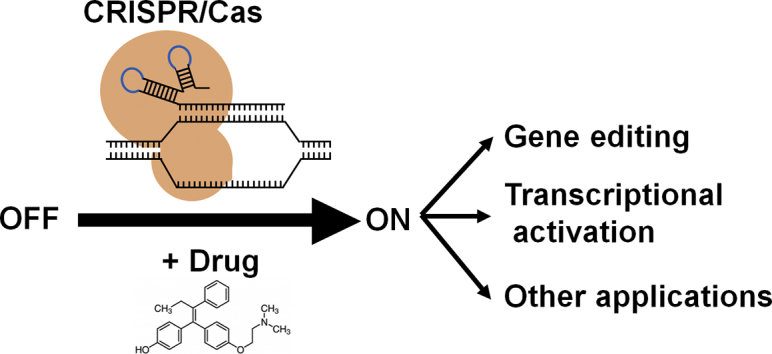
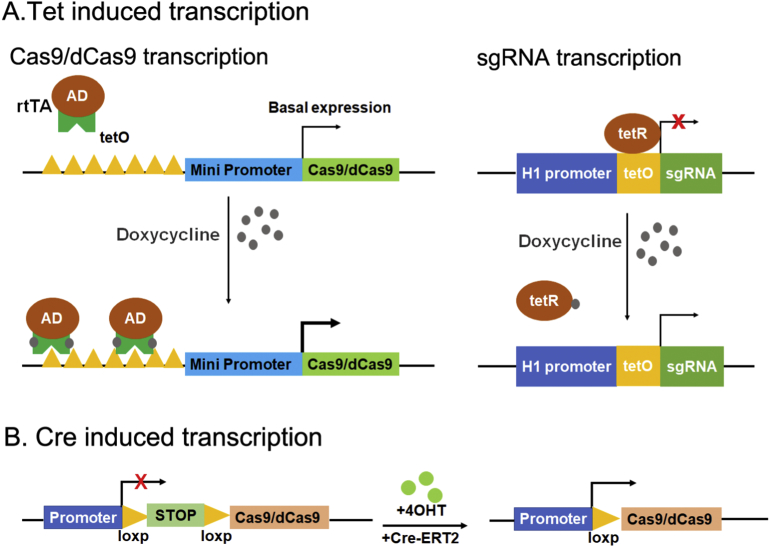
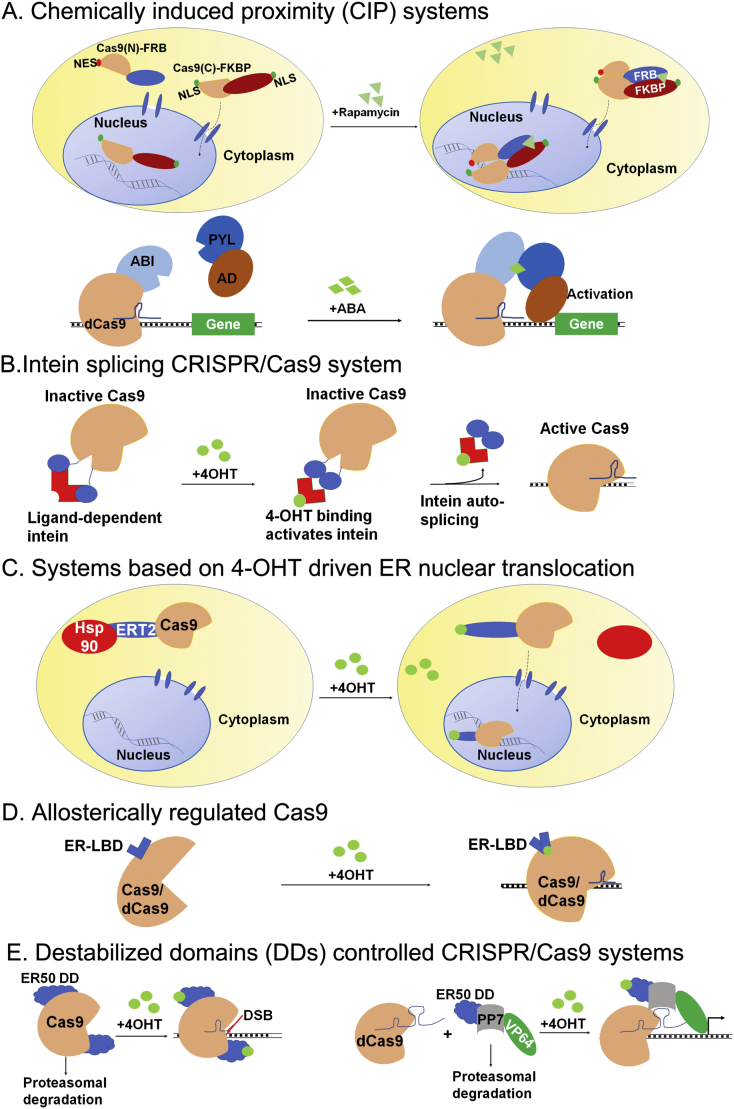
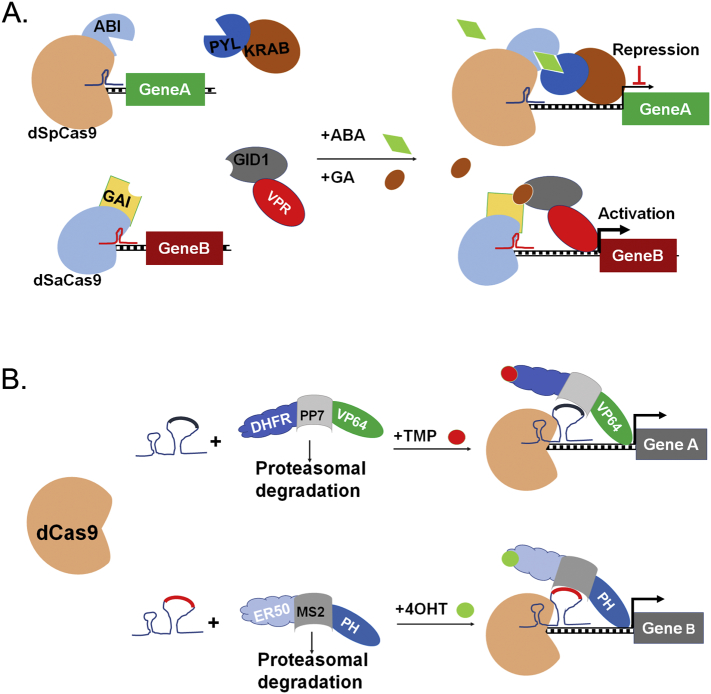
Verification
Claims the paper makes
The claims and statistics of this paper haven’t been checked yet.
Run the check — free, no account needed. It reads the open-access text and checks the sources it cites.
Claims other papers make about this one
Each is checked against this paper’s own text: does it say what the citing paper says it does?
In the citing paper
“This can be considered one of the most powerful and versatile forms of technology both for gene editing and transcriptional control but also for epigenetic modulation [158].”
From Cell Immortality: In Vitro Effective Techniques to Achieve and Investigate Its Applications and Challenges (2024) · cites this paper as [158]
Self-check
Percentages, sums and reported differences re-computed from the paper’s own numbers.
The self-check needs the paper’s full text.
Citations
Cites
The new frontier of genome engineering with CRISPR-Cas9
Doudna, J. A., & Charpentier, E. (2014) · Science · doi:10.1126/science.1258096 · Cited by 7,062
CRISPR-Mediated Modular RNA-Guided Regulation of Transcription in Eukaryotes
Gilbert, L. A., Larson, M. H., Morsut, L., Liu, Z., Brar, G. A., Torres, S. E., Stern-Ginossar, N., Brandman, O., Whitehead, E. H., Doudna, J. A., et al. (2013) · Cell · doi:10.1016/j.cell.2013.06.044 · Cited by 3,696
CRISPR-Cas systems for editing, regulating and targeting genomes
Sander, J. D., & Joung, J. K. (2014) · Nature Biotechnology · doi:10.1038/nbt.2842 · Cited by 3,153
Crystal structure of Cas9 in complex with guide RNA and target DNA
Nishimasu, H., Ran, F. A., Hsu, P. D., Konermann, S., Shehata, S. I., Dohmae, N., Ishitani, R., Zhang, F., & Nureki, O. (2014) · Cell · doi:10.1016/j.cell.2014.02.001 · Cited by 2,306
RNA-guided genetic silencing systems in bacteria and archaea
Wiedenheft, B., Sternberg, S. H., & Doudna, J. A. (2012) · Nature · doi:10.1038/nature10886 · Cited by 1,851
Beyond editing: repurposing CRISPR-Cas9 for precision genome regulation and interrogation
Dominguez, A. A., Lim, W. A., & Qi, L. S. (2016) · Nature Reviews Molecular Cell Biology · doi:10.1038/nrm.2015.2 · Cited by 832
Metzger, D., Clifford, J., Chiba, H., & Chambon, P. (1995) · Proceedings of the National Academy of Sciences · doi:10.1073/pnas.92.15.6991 · Cited by 570
Chemically induced proximity in biology and medicine
Stanton, B. Z., Chory, E. J., & Crabtree, G. R. (2018) · Science · doi:10.1126/science.aao5902 · Cited by 475
Development of an intein-mediated split-Cas9 system for gene therapy
Truong, D.-J. J., Kühner, K., Kühn, R., Werfel, S., Engelhardt, S., Wurst, W., & Ortiz, O. (2015) · Nucleic Acids Research · doi:10.1093/nar/gkv601 · Cited by 371
Manipulation of nuclear architecture through CRISPR-mediated chromosomal looping
Morgan, S. L., Mariano, N. C., Bermudez, A., Arruda, N. L., Wu, F., Luo, Y., Shankar, G., Jia, L., Chen, H., Hu, J.-F., et al. (2017) · Nature Communications · doi:10.1038/ncomms15993 · Cited by 279
Research works printed but not linked: 76
- 10.1016/j.cell.2014.05.010 · DOI · Paper page
- 10.1126/science.1138140 · DOI · Paper page
- 10.1126/science.1179555 · DOI
- 10.1038/nmeth.2600 · DOI · Paper page
- 10.1021/ja512664v · DOI
- 10.1016/j.chembiol.2014.12.011 · DOI
- Toth L.P. and Gersbach C.A.: Mol Ther May, 2015; 23: S275. · DOI
- 10.1038/nbt.3245 · DOI
- Zhou X.X. et al: ACS Chem Biol 2017; 13: 443. · DOI
- Kawano F., Suzuki H., Furuya A. and Sato M.: Nat Commun Feb, 2015; 6. · DOI
- 10.1073/pnas.130192197 · DOI · Paper page
- Cao J. et al: Nucleic Acids Res Nov 2, 2016; 44: e149.
- 10.1016/j.stem.2014.05.018 · DOI
- 10.1038/nbt.3155 · DOI
- 10.1038/nmeth.3312 · DOI · Paper page
- 10.1016/j.celrep.2015.02.002 · DOI
- 10.1073/pnas.0806213105 · DOI
- 10.1016/S1534-5807(03)00399-X · DOI
- 10.1016/j.cell.2014.09.014 · DOI · Paper page
- StOnge L., Furth P.A. and Gruss P.: Nucleic Acids Res Oct 1, 1996; 24: 3875. · DOI
- 10.1016/S0378-1119(99)00045-1 · DOI
- Feil R. et al: Proc Natl Acad Sci U S A Oct 1, 1996; 93: 10887. · DOI · Paper page
- Indra A.K. et al: Nucleic Acids Res Nov 15, 1999; 27: 4324. · DOI
- Kellendonk C. et al: Nucleic Acids Res Apr 15, 1996; 24: 1404. · DOI
- Wunderlich F.T., Wildner H., Rajewsky K. and Edenhofer F.: Nucleic Acids Res May 15, 2001; 29. · DOI
- Oldrini B. et al: Nat Commun Apr 13, 2018; 9: 1466. · DOI
- 10.1038/nbt.3836 · DOI
- 10.1016/1074-5521(94)90002-7 · DOI
- Rivera V.M., Berk L. and Clackson T.: Cold Spring Harbor Protoc Jul 1, 2012; 2012: 821.
- 10.1126/scisignal.2001449 · DOI
- 10.1038/nchembio.922 · DOI
- 10.1016/j.cbpa.2015.09.003 · DOI
- 10.1126/science.273.5272.239 · DOI
- 10.1038/nbt.3149 · DOI
- Nguyen D.P. et al: Nat Commun Jul 1, 2016; 7: 12009. · DOI
- 10.1073/pnas.1501698112 · DOI
- 10.1038/nmeth.4042 · DOI
- 10.1016/j.cell.2015.09.038 · DOI · Paper page
- 10.1038/nature17945 · DOI · Paper page
- 10.1016/j.cell.2016.04.003 · DOI
- Tang X. et al: Nat Plants Feb 17, 2017; 3: 17018. · DOI
- Zhang X. et al: Cell Discov 2017; 3: 17018. · DOI
- Tak Y.E. et al: Nat Methods Dec, 2017; 14: 1163. · DOI
- 10.1146/annurev.biochem.69.1.447 · DOI
- 10.1146/annurev.micro.56.012302.160741 · DOI
- Fine E.J. et al: Sci Rep Jul 1, 2015; 5: 10777. · DOI
- 10.1038/nmeth.3993 · DOI · Paper page
- Ma D., Peng S. and Xie Z.: Nat Commun Oct 3, 2016; 7: 13056. · DOI
- Zeidler M.P. et al: Nat Biotechnol Jul, 2004; 22: 871. · DOI
- Ren W., Ji A. and Ai H.W.: J Am Chem Soc Feb 18, 2015; 137: 2155. · DOI
- 10.1110/ps.04996905 · DOI
- 10.1073/pnas.0402762101 · DOI
- 10.1016/j.chembiol.2011.02.014 · DOI
- 10.1038/nchembio.1793 · DOI
- Danielian P.S., White R., Hoare S.A., Fawell S.E. and Parker M.G.: Mol Endocrinol Feb, 1993; 7: 232.
- 10.1006/bbrc.1997.7124 · DOI
- Danielian P.S., Muccino D., Rowitch D.H., Michael S.K. and McMahon A.P.: Curr Biol Dec 3, 1998; 8: 1323. · DOI
- 10.1093/nar/23.10.1686 · DOI
- 10.1093/nar/26.6.1427 · DOI
- 10.1016/j.omtn.2018.08.022 · DOI
- 10.1038/nchembio.2179 · DOI
- 10.1093/nar/gkx1222 · DOI
- 10.1016/j.cell.2015.08.007 · DOI
- 10.1038/nbt.3528 · DOI
- 10.1016/j.cell.2006.07.025 · DOI · Paper page
- 10.1038/nm.1754 · DOI
- 10.1016/j.chembiol.2010.07.009 · DOI
- 10.1038/nmeth.2640 · DOI
- 10.1073/pnas.1018449108 · DOI
- 10.1038/mt.2013.169 · DOI
- 10.1016/j.stemcr.2015.08.001 · DOI
- 10.1021/ja209933r · DOI
- 10.1038/nchembio.2224 · DOI
- Senturk S. et al: Nat Commun Feb 22, 2017; 8: 1. · DOI
- 10.1016/j.cell.2014.11.052 · DOI · Paper page
- 10.1021/acschembio.7b00606 · DOI
Cited by
Chalak, M., Hesaraki, M., Mirbahari, S. N., Yeganeh, M., Abdi, S., Rajabi, S., & Hemmatzadeh, F. (2024) · Life · doi:10.3390/life14030417 · Cited by 66
Lin, S.-C., Haga, K., Zeng, X.-L., & Estes, M. K. (2022) · Nature Protocols · doi:10.1038/s41596-021-00669-0 · Cited by 63
Metadata
- Authors
- Zhang, J., Chen, L., Zhang, J., & Wang, Y.
- Affiliations
- School of Life Sciences, Beijing University of Chinese Medicine, Beijing 100029, China
- State Key Laboratory of Stem Cell and Reproductive Biology, Institute of Zoology, Chinese Academy of Sciences, Beijing 100101, China
- Venue
- Computational and Structural Biotechnology Journal
- Published
- 2019-01
- Volume
- 17
- Pages
- 1171-1177
- ISSN
- 2001-0370
- PMC
- PMC6709367
- Cited by
- 69
- References
- 11
- Language
- en
- Licence
- Funders
- National Basic Research Program of China (2015CB964800)
- National Natural Science Foundation of China (31701280, 31571514)
- Chinese Academy of Sciences (XDA16010504)
About these checks
Registry, retraction, Cites and statistics results are computed, not judged, with one exception: a printed reference that no index lists is read once by a model before it counts as a citation error. Claims are extracted by a model and kept only when their quote appears verbatim in the text; each cited source is then checked, with a model’s help, for whether it says what the claim relies on. Those verdicts can be wrong — read the claim’s quote and the cited source before relying on one.
Statistics and arithmetic are recomputed, not judged.
Confidence bands are shown only for fields calibrated on our annotated test set. None is calibrated yet, so no band is shown.
What counts as a claim ›How we measure confidence ›How we check this ›
Are you an author, or do you see a problem with this page? Request a review
How to cite
Cite CoChat for the checks on this page, and the paper for its own findings.
- This page
- CoChat. (2026). Citation check: Drug Inducible CRISPR/Cas Systems. https://app.cochat.ai/papers/10.1016/j.csbj.2019.07.015
- The paper
- Zhang, J., Chen, L., Zhang, J., & Wang, Y. (2019). Drug Inducible CRISPR/Cas Systems. Computational and Structural Biotechnology Journal. https://doi.org/10.1016/j.csbj.2019.07.015
