

The DOI matches its Crossref record; 58 of the 58 references it cites were found in a registry or an index.
Sustained Brown Fat Stimulation and Insulin Sensitization by a Humanized Bispecific Antibody Agonist for Fibroblast Growth Factor Receptor 1/βKlotho Complex
Open accessAbstract
Dissipating excess calories as heat through therapeutic stimulation of brown adipose tissues (BAT) has been proposed as a potential treatment for obesity-linked disorders. Here, we describe the generation of a humanized effector-less bispecific antibody that activates fibroblast growth factor receptor (FGFR) 1/βKlotho complex, a common receptor for FGF21 and FGF19. Using this molecule, we show that antibody-mediated activation of FGFR1/βKlotho complex in mice induces sustained energy expenditure in BAT, browning of white adipose tissue, weight loss, and improvements in obesity-associated metabolic derangements including insulin resistance, hyperglycemia, dyslipidemia and hepatosteatosis. In mice and cynomolgus monkeys, FGFR1/βKlotho activation increased serum high-molecular-weight adiponectin, which appears to contribute over time by enhancing the amplitude of the metabolic benefits. At the same time, insulin sensitization by FGFR1/βKlotho activation occurs even before the onset of weight loss in a manner that is independent of adiponectin. Together, selective activation of FGFR1/βKlotho complex with a long acting therapeutic antibody represents an attractive approach for the treatment of type 2 diabetes and other obesity-linked disorders through enhanced energy expenditure, insulin sensitization and induction of high-molecular-weight adiponectin.
Overview
The claims and statistics of this paper haven’t been checked yet.
Run the check — free, no account needed. It reads the open-access text and checks the sources it cites.
Integrity signals
Registry
Cites
Statistics
Figures
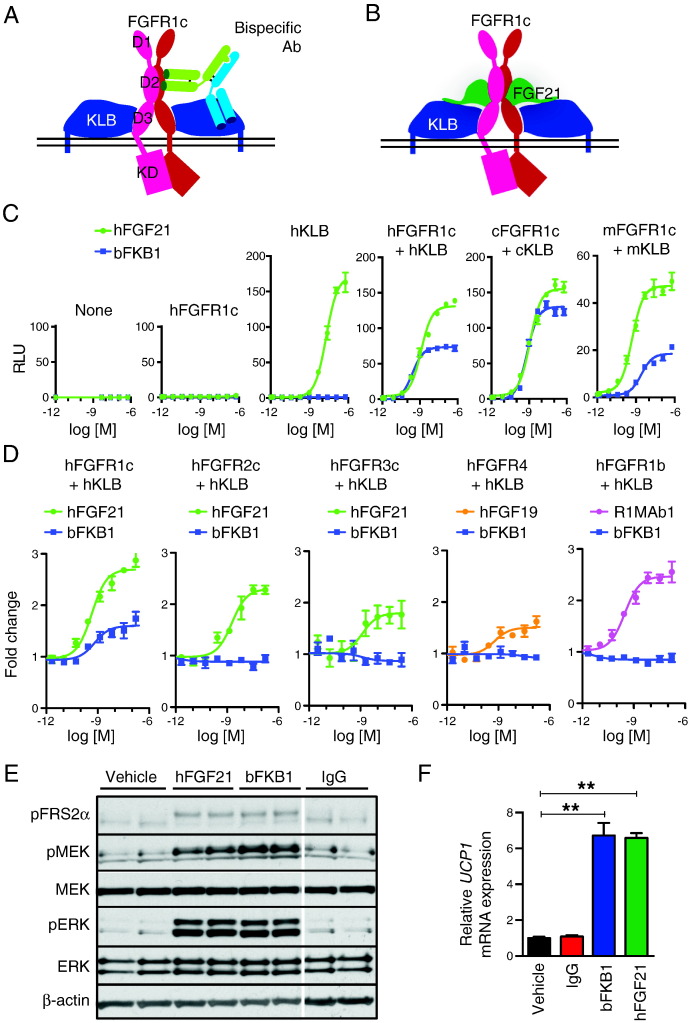
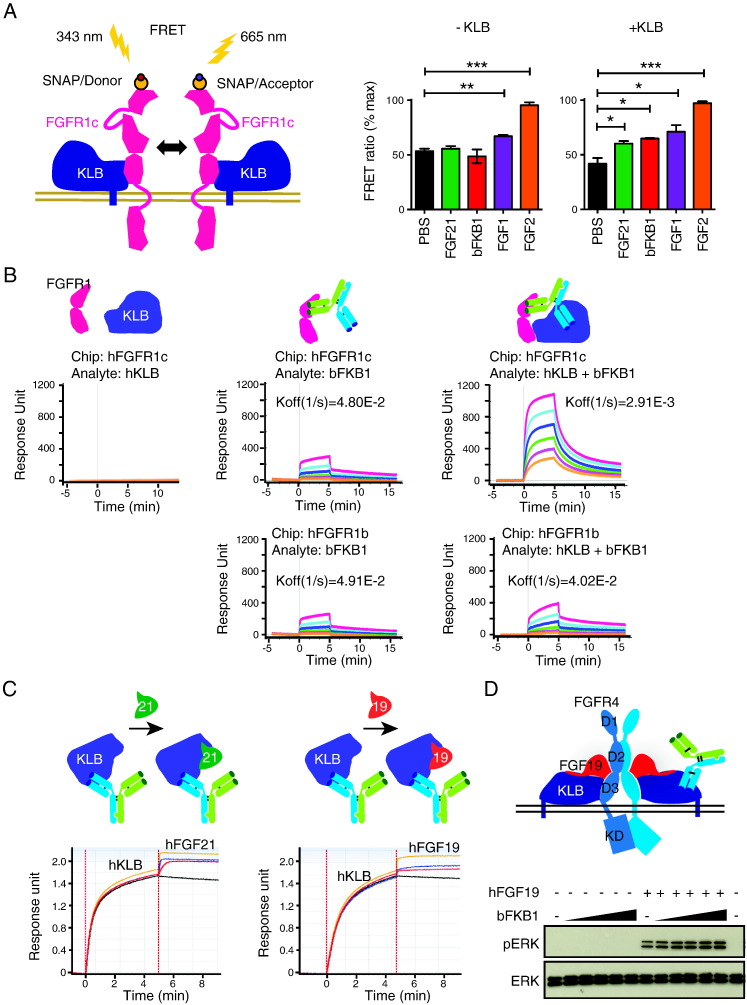
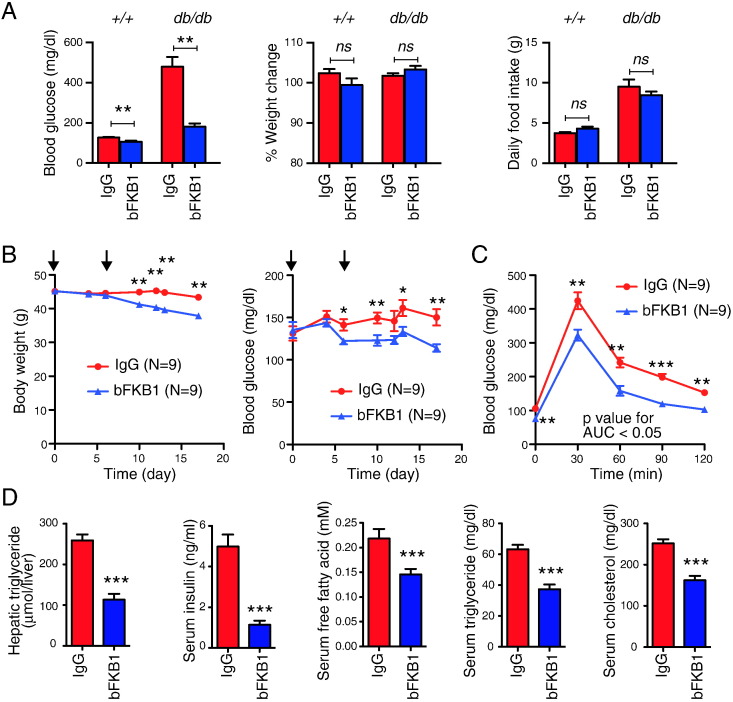
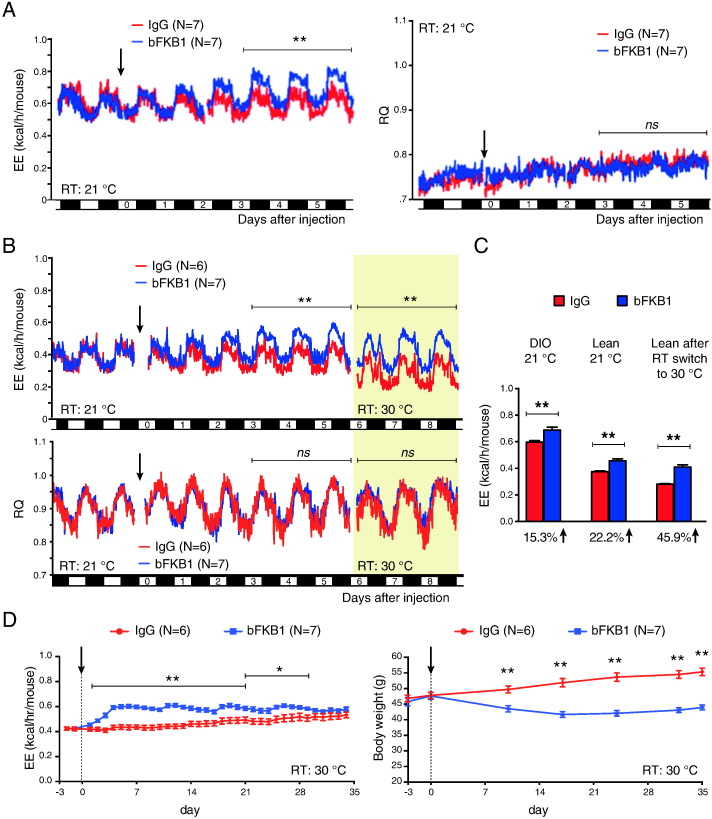
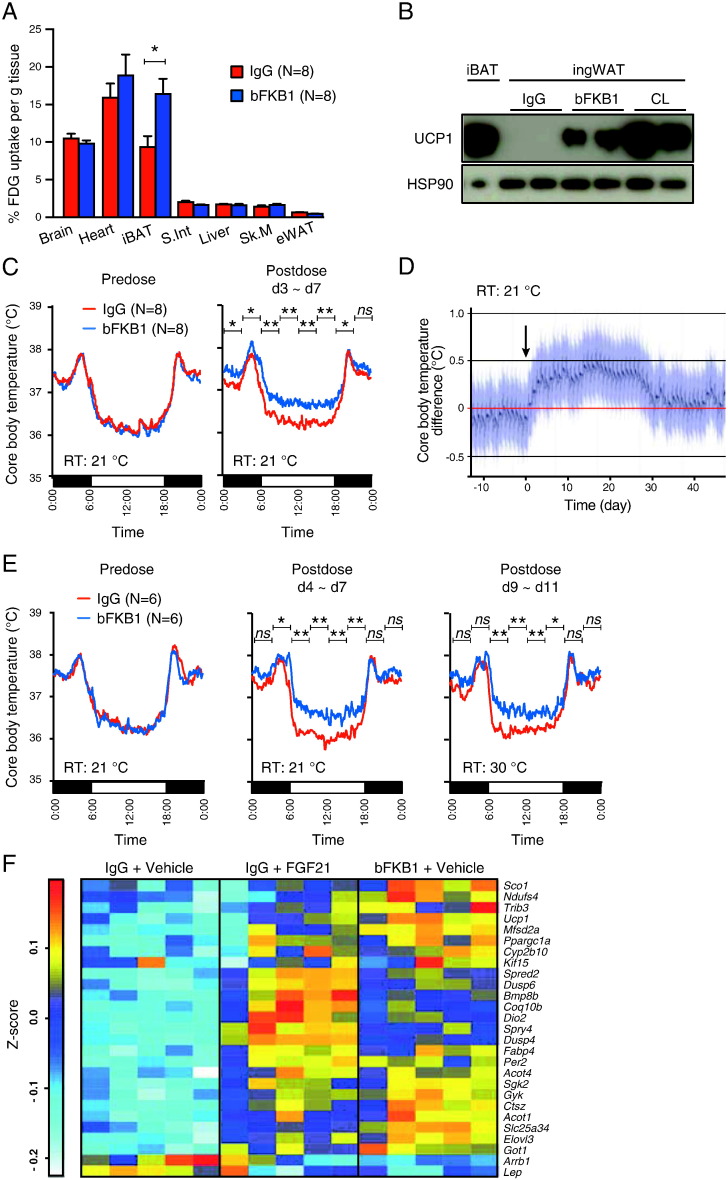
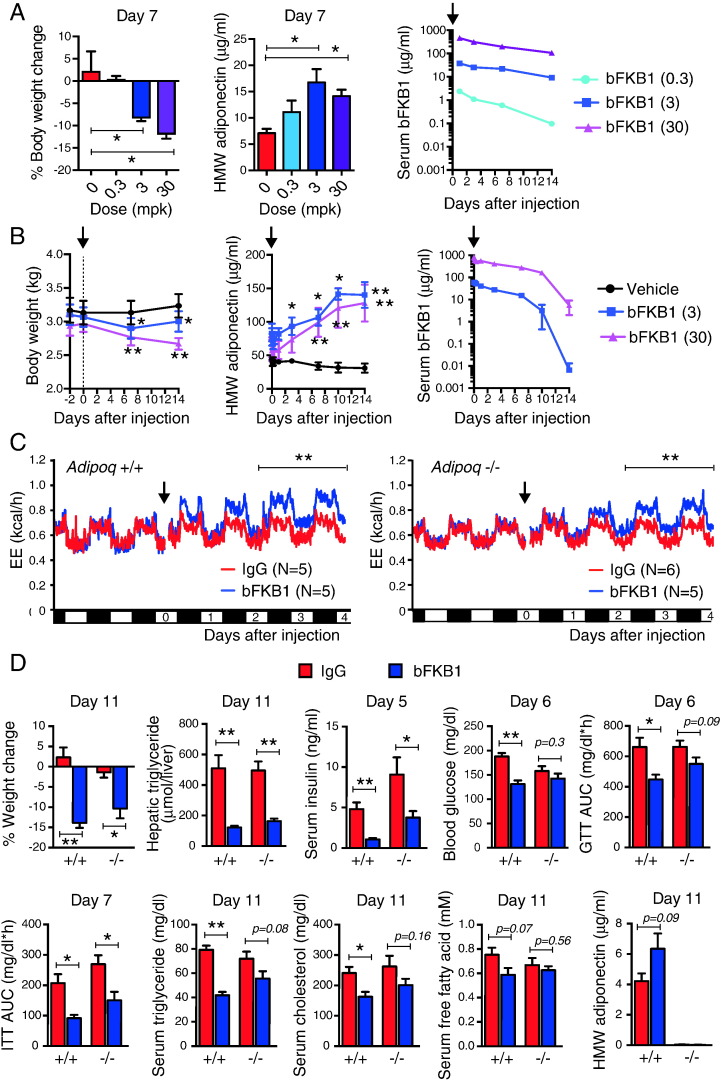
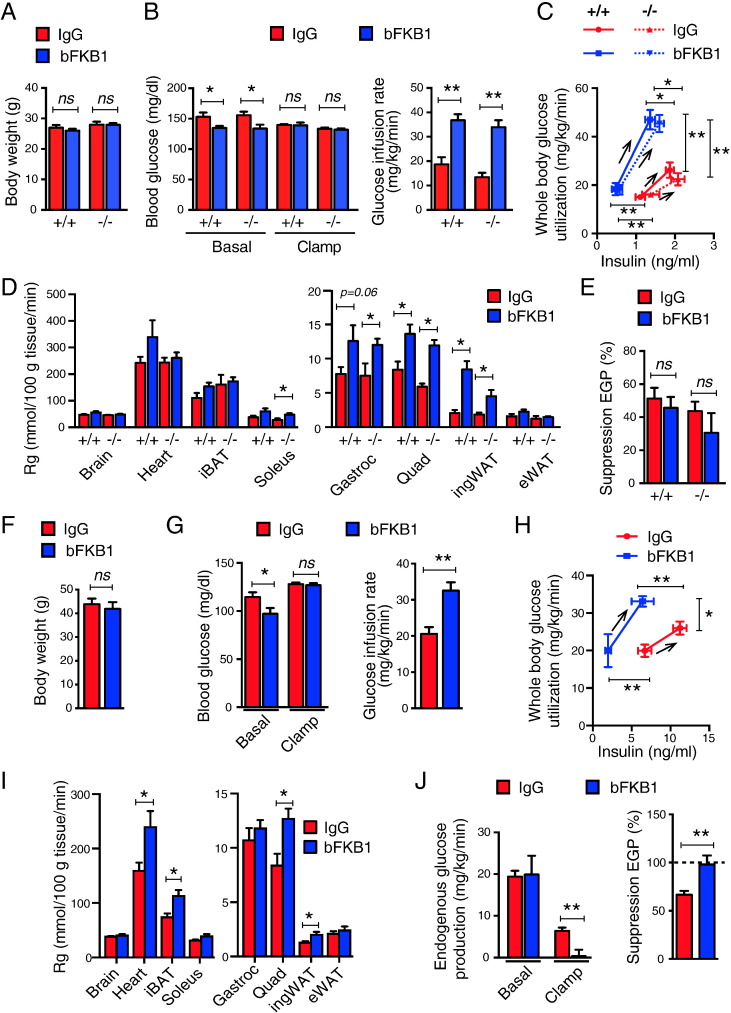
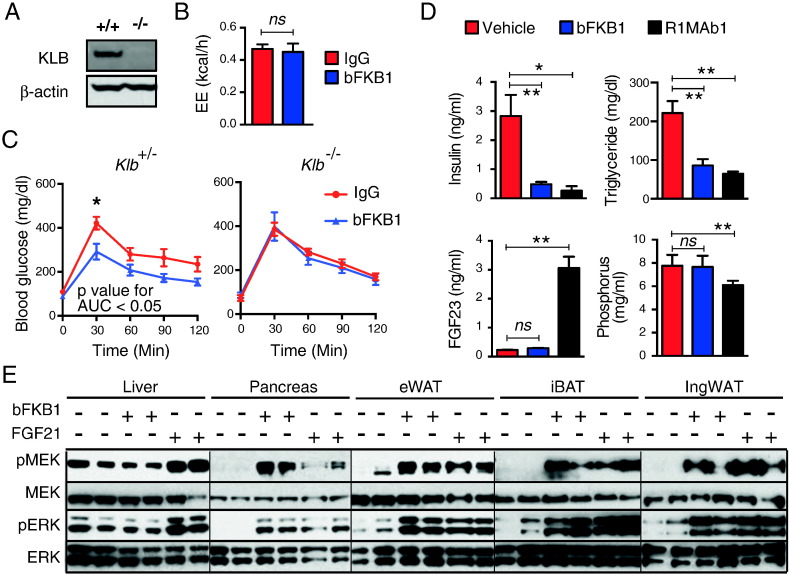
Verification
Claims the paper makes
The claims and statistics of this paper haven’t been checked yet.
Run the check — free, no account needed. It reads the open-access text and checks the sources it cites.
Claims other papers make about this one
Each is checked against this paper’s own text: does it say what the citing paper says it does?
In the citing paper
“Moreover, in contrast to previous studies, both FGF21 (11) and a bispecific activating antibody for the FGFR1–β-klotho receptor complex (70) were found to efficiently retain their acute insulin-sensitizing effects in adiponectin knockout mice (Figure 4).”
From Fibroblast Growth Factor 21: A Versatile Regulator of Metabolic Homeostasis (2018) · cites this paper as [70]
Self-check
Percentages, sums and reported differences re-computed from the paper’s own numbers.
The self-check needs the paper’s full text.
Citations
Cites
Ng, M., Fleming, T., Robinson, M., Thomson, B., Graetz, N., Margono, C., Mullany, E. C., Biryukov, S., Abbafati, C., Abera, S. F., et al. (2014) · The Lancet · doi:10.1016/s0140-6736(14)60460-8 · Cited by 11,952
Brown Adipose Tissue: Function and Physiological Significance
CANNON, B., & NEDERGAARD, J. (2004) · Physiological Reviews · doi:10.1152/physrev.00015.2003 · Cited by 6,433
Unexpected evidence for active brown adipose tissue in adult humans
Nedergaard, J., Bengtsson, T., & Cannon, B. (2007) · American Journal of Physiology-Endocrinology and Metabolism · doi:10.1152/ajpendo.00691.2006 · Cited by 1,824
FGF21 regulates PGC-1α and browning of white adipose tissues in adaptive thermogenesis
Fisher, F. M., Kleiner, S., Douris, N., Fox, E. C., Mepani, R. J., Verdeguer, F., Wu, J., Kharitonenkov, A., Flier, J. S., Maratos-Flier, E., et al. (2012) · Genes & Development · doi:10.1101/gad.177857.111 · Cited by 1,478 · cited 1×
“In addition, FGF21 induces the emergence of UCP1-positive adipocytes in the white adipose tissue (WAT) depot, a process now termed browning (Fisher et al., 2012).”
BackgroundXu, J., Lloyd, D. J., Hale, C., Stanislaus, S., Chen, M., Sivits, G., Vonderfecht, S., Hecht, R., Li, Y.-S., Lindberg, R. A., et al. (2009) · Diabetes · doi:10.2337/db08-0392 · Cited by 1,151
Self-citationEctopic Fat in Insulin Resistance, Dyslipidemia, and Cardiometabolic Disease
Shulman, G. I. (2014) · New England Journal of Medicine · doi:10.1056/nejmra1011035 · Cited by 1,126
Activation of Human Brown Adipose Tissue by a β3-Adrenergic Receptor Agonist
Cypess, A. M., Weiner, L. S., Roberts‐Toler, C., Franquet, E., Kessler, S., Kahn, P. A., English, J., Chatman, K., Trauger, S. A., Doria, A., et al. (2015) · Cell Metabolism · doi:10.1016/j.cmet.2014.12.009 · Cited by 1,053
Alternatively activated macrophages produce catecholamines to sustain adaptive thermogenesis
Nguyen, K. D., Qiu, Y., Cui, X., Goh, Y. P. S., Mwangi, J., David, T., Mukundan, L., Brombacher, F., Locksley, R. M., & Chawla, A. (2011) · Nature · doi:10.1038/nature10653 · Cited by 1,038
Fibroblast Growth Factor 21 Corrects Obesity in Mice
Coskun, T., Bina, H. A., Schneider, M. A., Dunbar, J. D., Hu, C. C., Chen, Y., Moller, D. E., & Kharitonenkov, A. (2008) · Endocrinology · doi:10.1210/en.2008-0816 · Cited by 1,031
Self-citationRecruited brown adipose tissue as an antiobesity agent in humans
Yoneshiro, T., Aita, S., Matsushita, M., Kayahara, T., Kameya, T., Kawai, Y., Iwanaga, T., & Saito, M. (2013) · Journal of Clinical Investigation · doi:10.1172/jci67803 · Cited by 966
Cited by
Sorted by citations
Items 101–108 of 108
Characterization of Bispecific or Other Hybrid Molecules
Lombana, T. N., & Spiess, C. (2017) · Wiley eBooks · doi:10.1002/9781119384434.ch8
Self-citationRajan, S., Sonoda, J., Tully, T., Williams, A. J., Yang, F., Macchi, F. D., Hudson, T., Chen, M. Z., Liu, S., Valle, N., et al. (2018) · Journal of Pharmacological and Toxicological Methods · doi:10.1016/j.vascn.2018.04.002
Self-citationBeall, C., Hanna, L., & Ellacott, K. L. J. (2017) · Comprehensive physiology · doi:10.1002/j.2040-4603.2017.tb00781.x
A bispecific antibody designed to act as a NRP2/PLXNA1 agonist mimics anticancer activity of SEMA3F
Tian, H.-L., Fung, C. P., Burman, L., Chong, Y. E., Liu, C., Geng, Y., Yang, L., Chow, M. W., Zhang, Y., Ho, K. W. H., et al. (2025) · Journal of Biological Chemistry · doi:10.1016/j.jbc.2025.111056
Self-citationLiu, L., Ning, N., Xu, S., Chen, D., Zhou, L., Guo, Z., Liang, X., & Ye, X. (2024) · Figshare · doi:10.6084/m9.figshare.26733019
Rôle des FGFs endocrines et leurs récepteurs au cours de la fibrose pulmonaire idiopathique
Ghanem, M. (2023) · theses.fr (ABES) · doi:10.70675/fd0d64f8zacf4z4856z9b1az66d4df37a332
Peptide hormone-based combinational pharmacotherapies for chronic metabolic diseases
Chui, Z. S. W., Xue, Y., Wu, X., & Xu, A. (2026) · Pharmacological Reviews · doi:10.1016/j.pharmr.2026.100150
Sanyal, A. J., Zou, Y., Zhang, L., Dash, A., Fredrickson, J. O., Gutierrez, J., Yoshida, K., Liu, Y., Kunder, R. S., Wilson, M. E., et al. (2026) · JHEP Reports · doi:10.1016/j.jhepr.2026.102068
Self-citation
Metadata
- Authors
- Kolumam, G., Chen, M. Z., Tong, R., Zavala-Solorio, J., Kates, L., van Bruggen, N., Ross, J., Wyatt, S. K., Gandham, V. D., Carano, R. A. D., Dunshee, D. R., Wu, A.-L., Haley, B., Anderson, K., Warming, S., Rairdan, X. Y., Lewin-Koh, N., Zhang, Y., Gutierrez, J., Baruch, A., Gelzleichter, T. R., Stevens, D., Rajan, S., Bainbridge, T. W., Vernes, J.-M., Meng, Y. G., Ziai, J., Soriano, R. H., Brauer, M. J., Chen, Y., Stawicki, S., Kim, H. S., Comps-Agrar, L., Luis, E., Spiess, C., Wu, Y., Ernst, J. A., McGuinness, O. P., Peterson, A. S., & Sonoda, J.
- Affiliations
- Genentech (US)
- Vanderbilt University (US)
- Corresponding author
- Sonoda, Junichiro
- ORCID
- Kolumam, Ganesh
- Tong, Raymond
- Gandham, Vineela D.
- Carano, Richard A.D.
- Dunshee, Diana Ronai
- Haley, Benjamin
- Anderson, Keith
- Warming, Søren
- Zhang, Yingnan
- Baruch, Amos
- Bainbridge, Travis W.
- Meng, Y. Gloria
- Ziai, James
- Brauer, Matthew J.
- Chen, Yongmei
- Kim, Hok Seon
- Spiess, Christoph
- Wu, Yan
- McGuinness, Owen P.
- Peterson, Andrew S.
- Venue
- EBioMedicine
- Publisher
- Elsevier BV
- Published
- 2015-07
- Volume
- 2
- Issue
- 7
- Pages
- 730-743
- ISSN
- 2352-3964 (ISSN-L)
- PMC
- PMC4534681
- OpenAlex
- W2156319327
- Cited by
- 108
- References
- 58
- Citations by year
- 2026: 3 · 2025: 7 · 2024: 12 · 2023: 5 · 2022: 13 · 2021: 12 · 2020: 9 · 2019: 8 · 2018: 12 · 2017: 13 · 2016: 10 · 2015: 4
- FWCI
- 5.65
- Type
- journal article
- Language
- en
- Open access
- gold
- doi.org
- Licence
- Locations
- EBioMedicine (publishedVersion, cc-by-nc-nd)
- Europe PMC (PubMed Central) (publishedVersion, cc-by-nc-nd)
- PubMed Central (publishedVersion, cc-by-nc-nd)
- PubMed (publishedVersion)
- DOAJ (DOAJ: Directory of Open Access Journals) (submittedVersion, cc-by-sa)
- Funders
- Genentech
- Topics
- Life Sciences › Biochemistry, Genetics and Molecular Biology › Molecular Biology › Fibroblast Growth Factor Research
- Health Sciences › Medicine › Physiology (medical) › Adipose Tissue and Metabolism
- Health Sciences › Medicine › Endocrinology, Diabetes and Metabolism › Adipokines, Inflammation, and Metabolic Diseases
- Keywords
- brown adipose tissue, humanized monoclonal antibody, FGF21, FGF19, energy expenditure, white adipose tissue browning, weight loss, insulin sensitization, high molecular weight adiponectin, obesity, type 2 diabetes, hepatic steatosis, dyslipidemia, hyperglycemia
- MeSH terms
- Klotho Proteins, Animals, Adipose Tissue, Brown, Cell Line, Energy Metabolism, Fibroblast Growth Factors, Humans, Insulin, Macaca fascicularis, Male, Membrane Proteins, Mice, Inbred BALB C, Mice, Inbred C57BL, Mice, Obese, Protein Binding, Weight Loss, Antibodies, Bispecific, Thermogenesis, Receptor, Fibroblast Growth Factor, Type 1, Adiponectin, HEK293 Cells
About these checks
Registry, retraction, Cites and statistics results are computed, not judged, with one exception: a printed reference that no index lists is read once by a model before it counts as a citation error. Claims are extracted by a model and kept only when their quote appears verbatim in the text; each cited source is then checked, with a model’s help, for whether it says what the claim relies on. Those verdicts can be wrong — read the claim’s quote and the cited source before relying on one.
Statistics and arithmetic are recomputed, not judged.
Confidence bands are shown only for fields calibrated on our annotated test set. None is calibrated yet, so no band is shown.
What counts as a claim ›How we measure confidence ›How we check this ›
Are you an author, or do you see a problem with this page? Request a review
