

The DOI matches its Crossref record; 34 of the 34 references it cites were found in a registry or an index.
Saturation in qualitative research: An evolutionary concept analysis
Open accessAbstract
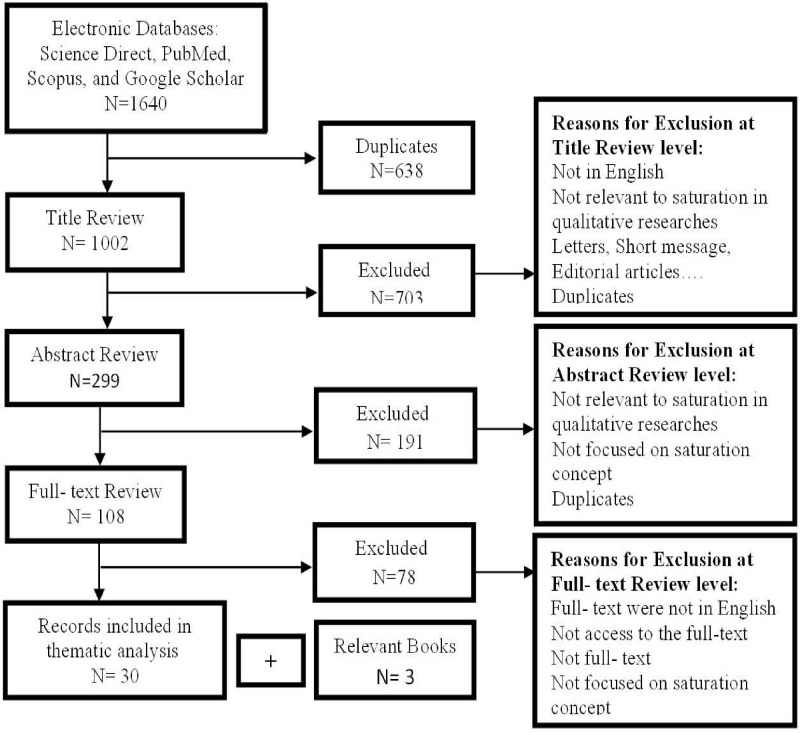
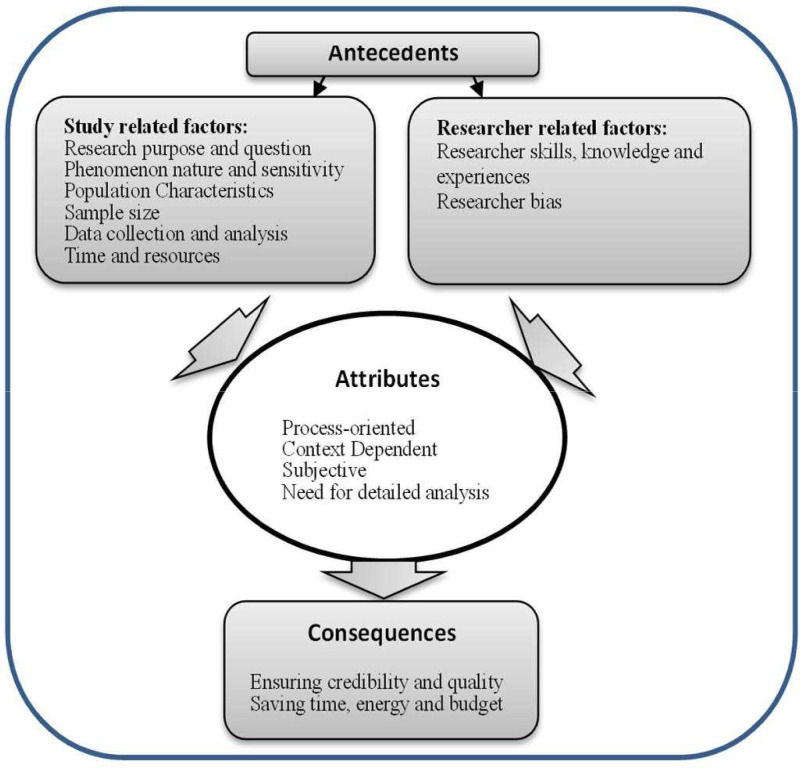
Background and Aim: Qualitative research plays an important role in improving nursing knowledge. Understanding the concept of saturation is essential to conducting rigorous qualitative research that contributes to evidence-based practice. The purpose of this study is to clarify the concept of saturation in qualitative research. Method: Evolutionary concept analysis was performed. A literature search was conducted using a variety of online databases for the years 2005- 2023. In total, 33 articles and books were analyzed using thematic analysis to identify the attributes, antecedents and consequences of saturation. The validity of the data was obtained by examining the analysis process by two independent researchers. Results: Saturation in qualitative research is a context-dependent, subjective process that requires detailed systematic analysis. Saturation is used in four ways in qualitative research: theoretical saturation, data saturation, code or thematic saturation, and meaning saturation. The antecedents of saturation were classified into two categories: study related factors and researcher related factors. The consequences of saturation were identified as: ensuring credibility and quality in qualitative research and time, energy and budget saving. Conclusion: This concept analysis serves to enhance the understanding of the concept of saturation, thereby offering valuable resources for qualitative researchers. By gaining a profound comprehension of saturation and its various types, researchers can ensure the validity of their studies while also optimizing time and resource allocation by avoiding redundant data collection. Future investigation warranted to elucidate how factors associated with reaching saturation impact estimations sample size.
Overview
The claims and statistics of this paper haven’t been checked yet.
Run the check — free, no account needed. It reads the open-access text and checks the sources it cites.
Integrity signals
Registry
Cites
Statistics
Figures
Verification
Claims the paper makes
The claims and statistics of this paper haven’t been checked yet.
Run the check — free, no account needed. It reads the open-access text and checks the sources it cites.
Claims other papers make about this one
Each is checked against this paper’s own text: does it say what the citing paper says it does?
The source backs part of the claim, not all of it — or backs it for a different population, condition or comparison.
In the citing paper
“The number of participating services in the research was determined by theoretical saturation from the qualitative analyses (25) in which the data collection was concluded when the information started to become redundant or repeated, even with the inclusion of new participants and services, as detected through a floating reading of the transcripts of the conducted interviews and fields diaries.”
From A mindfulness-based intervention for Substance Use Disorder in a Brazilian vulnerable population: a feasibility mixed method study (2024) · cites this paper as [25]
Experimental — accuracy not yet measured
Self-check
Percentages, sums and reported differences re-computed from the paper’s own numbers.
The self-check needs the paper’s full text.
Citations
Cites
Qualitative Inquiry and Research Design: Choosing Among Five Approaches
Lewis, S. (2015) · Health Promotion Practice · doi:10.1177/1524839915580941 · Cited by 22,105
How Many Interviews Are Enough?: An Experiment with Data Saturation and Variability
Guest, G., Bunce, A., & Johnson, L. (2006) · Field Methods · doi:10.1177/1525822x05279903 · Cited by 20,808 · cited 10×
“There are several reasons for pseudo-saturation, such as prematurely ending data collection, not exploring different perspectives or contexts, or overlooking important sources of information (Aldiabat & Le Navenec, 2018; Guest et al., 2006; Morse, 2015a).”
BackgroundInfluentialSaturation in qualitative research: exploring its conceptualization and operationalization
Saunders, B., Sim, J., Kingstone, T., Baker, S., Waterfield, J., Bartlam, B., Burroughs, H., & Jinks, C. (2018) · Quality & Quantity · doi:10.1007/s11135-017-0574-8 · Cited by 12,033 · cited 9×
“…still susceptible to false saturation due to the lack of discovery of relationships between codes and obtained themes, and still requires more data for the researcher to fully understand the depth, richness, and complexity of the phenomenon (Hennink et al., 2017; Low, 2019; Saunders et al., 2018).”
BackgroundMethodInfluentialBasics of Qualitative Research: Techniques and Procedures for Developing Grounded Theory
Wuetherick, B. (2010) · Canadian Journal of University Continuing Education · doi:10.21225/d5g01t · Cited by 8,333
(2011) · Cited by 7,157
Sample sizes for saturation in qualitative research: A systematic review of empirical tests
Hennink, M., & Kaiser, B. N. (2022) · Social Science & Medicine · doi:10.1016/j.socscimed.2021.114523 · Cited by 6,311 · cited 10×
“…still susceptible to false saturation due to the lack of discovery of relationships between codes and obtained themes, and still requires more data for the researcher to fully understand the depth, richness, and complexity of the phenomenon (Hennink et al., 2017; Low, 2019; Saunders et al., 2018).”
BackgroundMethodInfluentialBraun, V., & Clarke, V. (2021) · Qualitative Research in Sport, Exercise and Health · doi:10.1080/2159676x.2019.1704846 · Cited by 4,776 · cited 3×
“Information redundancy helps conceptualize saturation (Alam, 2021; Braun & Clarke, 2021; Bryman, 2006).”
BackgroundCode Saturation Versus Meaning Saturation: How Many Interviews Are Enough?
Hennink, M. M., Kaiser, B. N., & Marconi, V. C. (2017) · Qualitative Health Research · doi:10.1177/1049732316665344 · Cited by 4,597
Are We There Yet? Data Saturation in Qualitative Research
Fusch, P., & Ness, L. (2015) · The Qualitative Report · doi:10.46743/2160-3715/2015.2281 · Cited by 4,460
Sample size in qualitative research
Sandelowski, M. (1995) · Research in Nursing & Health · doi:10.1002/nur.4770180211 · Cited by 4,372 · cited 1×
“An important aspect of theoretical saturation is that in an iterative process, the researcher simultaneously engages in sampling, data collection, and data analysis (Sandelowski, 1995).”
Background
Research works printed but not linked: 3
- Aldiabat, 2018, Data saturation: The mysterious step in grounded theory methodology, The qualitative report, 23, 245
- Morse, 2015, 25, 587
- Thomson, 2010, Sample size and grounded theory. Thomson, SB (2010), Grounded Theory-Sample Size. Journal of Administration and Governance, 5, 45
Cited by
Sorted by citations
Items 201–300 of 555
Kikula, A. I., Beňová, L., Molenaar, J., Birabwa, C., Ramaiya, K. L., Peñalvo, J. L., Pembe, A. B., & Sirili, N. S. (2025) · PLOS Global Public Health · doi:10.1371/journal.pgph.0005373 · Cited by 1
“In addition, prolonged engagement and observation supplemented the recognition of the point of data saturation [33,34] through triangulating what was observed with what was shared in the interviews and discussions.”
Exploring challenges of adaptive reusing of vacant shophouses in Penang's heritage zone
Tilaki, M. J. M., Ibrahim, W. M. M. W., & Abdullah, A. (2025) · Cities · doi:10.1016/j.cities.2025.106663 · Cited by 2
Streamlining Safety: Stakeholder Perceptions of DVPO E-Filing Impact, Advantages, and Disadvantages
Moracco, K. E., Campbell, J. K., Emmerich, L., Hudhud, M., Langoni, E. G. A., & Ranapurwala, S. I. (2025) · Feminist Criminology · doi:10.1177/15570851251393628 · Cited by 1
“…like to participate in the interviews than those who viewed it less favorably, but our interview team felt that we had reached thematic saturation in our sample, and it is unlikely that a new major theme or information would have emerged, even with a larger sample size (Rahimi & Khatooni, 2024).”
Agricultural robots: using anticipatory approaches to embed appropriate hygienic design of hardware
Manning, L., Grant, J. H., Huang, Z., & Guevara, L. (2025) · British Food Journal · doi:10.1108/bfj-12-2024-1328 · Cited by 1
From Buzzword to Framework: A Systematic Review of the Massive Transformative Purpose Concept
Derchi, F. (2025) · Administrative Sciences · doi:10.3390/admsci15120472 · Cited by 1
“The process was iterative to achieve coherence between results without additional information, indicating the saturation point (Rahimi & Khatooni, 2024).”
Kaye, D. R., Varma, R., Roud, S., Fish, L. J., Shenoy, D. A., Parnell, H. E., Zullig, L. L., Ubel, P. A., & Sloan, C. E. (2025) · Journal of General Internal Medicine · doi:10.1007/s11606-025-09941-5 · Cited by 1
“34,35”
Mabuto, T., Orievulu, K. S., Bond, V. A., Simwinga, M., Grapsa, E., Khoza, T., Khan-Gillmore, S., Nzimande, L., Craig, M., Khagayi, S., et al. (2025) · Frontiers in Climate · doi:10.3389/fclim.2025.1679392 · Cited by 1
“Data adequacy will be assessed based on the diversity and relevance of information collected in relation to the interview objectives (Rahimi, 2024; Busetto et al., 2020).”
Galazzi, A., Stolt, M., Papastavrou, E., Stefanopoulos, N., Dimitriadou, M., Wiisak, J., Keogh, B., Chiappinotto, S., McCabe, C., Suhonen, R., et al. (2025) · Journal of Nursing Management · doi:10.1155/jonm/6655643 · Cited by 1
“Finally, the transferability of the results was promoted by the involvement of patient representatives on various healthcare issues and by checking the saturation level of each theme [27] by the entire research team at intra-and transnational levels (see authors).”
Humayun, A., Najmussaqib, A., & Muneeb, N. U. A. (2025) · BMC Public Health · doi:10.1186/s12889-025-25701-w · Cited by 1
“Thematic data saturation was monitored to guide the final sample sizes [30].”
Patel, D. M., Panda, A., Fatima, S., Stephens, M. A. C., Gotay-Lehmer, J., Santiago, D., Crews, D. C., & Riekert, K. A. (2025) · Kidney Medicine · doi:10.1016/j.xkme.2025.101220 · Cited by 1
Understanding the pursuit of decent work for South Africa’s blue-collar workers
Koekemoer, E., O’Neil, S., & Kekana, E. (2025) · Journal of Industrial Relations · doi:10.1177/00221856251406906 · Cited by 1
“Since the thirteen groups were already scheduled, the last three were conducted and analysed, con fi rming data saturation (Rahimi and Khatooni, 2024).”
van Dijk, S. V., Brusse-Keizer, M., Rodenburg, B., & Lenferink, A. (2025) · PLoS ONE · doi:10.1371/journal.pone.0338888
Understanding Family Financial Socialization Among Youths in Nepal
Kunwar, K., C., S. B. G., Poudel, R. L., & Yadav, U. S. (2025) · Child & Youth Services · doi:10.1080/0145935x.2025.2603247 · Cited by 1
Zhou, H., Shen, Z., & Wu, H. (2025) · Advances in Health Sciences Education · doi:10.1007/s10459-025-10497-6 · Cited by 1
“This saturation point is consistent with evidence indicating that relatively homogeneous samples—such as students who share similar training structures and clinical exposure—can achieve saturation with a smaller number of interviews (Rahimi & khatooni, 2024 ).”
Singh, H. P., Sıngh, A., Alam, F., Agrawal, V., Al‐Mamary, Y. H., & Abubakar, A. A. (2025) · Sustainability · doi:10.3390/su18010406 · Cited by 1
Kaplan, Z., & Göl-Güven, M. (2025) · Behavioral Sciences · doi:10.3390/bs16010058 · Cited by 3
Braga, L. M., Júnior, P. P. D. P., Siman, A. G., Miranda, T. P. S., do Prado, M. R. M. C., Toledo, L. V., Siqueira‐Batista, R., Gomes, A. P., Vargas, Y. C., Chihuantito-Abal, L. A., et al. (2026) · Nursing Reports · doi:10.3390/nursrep16010014 · Cited by 1
“For each simulated scenario, a single focus group session was sufficient, as data saturation were achieved [18].”
Boggis, J. S., Saunders, E. C., Marsch, L. A., Gallant, T. E., Wolff, K. B., Bryer, C. L., Fowler, R., & Goodman, D. (2026) · Harm Reduction Journal · doi:10.1186/s12954-025-01386-7 · Cited by 2
“Thematic saturation was defined as an ongoing evaluation to substantiate themes [29].”
van der Mee, F. A. M., de Zeeuw, C. B., Jansen, J., Cals, J., & Vries, A. V. D. (2025) · Family Practice · doi:10.1093/fampra/cmaf113 · Cited by 1
“After 14 interviews, data saturation (covering both thematic and meaning saturation) was deemed reached, as no new codes or themes emerged and recurring explanations and interpretations for each code and theme were identified [22].”
Patient perspectives on drug recalls in the Netherlands: a qualitative study
Annema, P. A., van Venrooij, L. M. W., Bouvy, M. L., van Marum, R. J., & Derijks, H. J. (2026) · International Journal of Clinical Pharmacy · doi:10.1007/s11096-025-02082-z · Cited by 1
“Several studies indicate that data saturation in qualitative research using thematic analysis can be achieved with 12 participants [13, 14].”
Loyal, J. P., & Amri, M. M. (2026) · Qualitative Health Research · doi:10.1177/10497323251406459 · Cited by 3
Durante, A. J., MAYNARD, M. G., Liu, S. S., Pereira, S. C., Regelmann, M. O., & Chen, C. W. (2026) · Hormone Research in Paediatrics · doi:10.1159/000550507 · Cited by 1
Modderkolk, L., Schoon, Y., Touw, H. R. W., Engels, Y., & Wichmann, A. B. (2026) · BMC Medicine · doi:10.1186/s12916-026-04662-w · Cited by 1
“We aimed for thematic saturation, which refers to the point at which no new themes or insights emerge from the data [35, 36].”
Bernhard, F. B., Skubik-Peplaski, C., & Dorich, J. M. (2026) · Occupational Therapy In Health Care · doi:10.1080/07380577.2026.2623230 · Cited by 1
Faculty Resource Mobilization During the 2024 Liberate Palestine Student Protest Movement
Houlette, H. (2025) · The Journal of Higher Education · doi:10.1080/00221546.2025.2546766 · Cited by 1
“To promote data saturation (Rahimi & Khatooni, 2024), 25 participants affiliated with 11 distinct higher education institutions were enrolled in the study.”
Basister, M. P., Petersson, J., & Baconguis, R. T. (2026) · Frontiers in Education · doi:10.3389/feduc.2026.1723824 · Cited by 1
Liu, L., Li, M., Peng, M., Yan, X., & Luo, S. X. (2026) · Applied Nursing Research · doi:10.1016/j.apnr.2026.152069 · Cited by 1
Bayer, E., Wolgast, T., Altmann, B. A., & Risius, A. (2026) · Food Ethics · doi:10.1007/s41055-026-00201-8 · Cited by 1
“According to Rahimi and Khatooni ( 2024 ) this code and thematic saturation is an indicator of reliability of the analysed data.”
Employment and financial experiences in millennial family caregivers
Hebdon, M., Dupree, G., Hernandez, J., Gallagher, V. T., Phillips, C., Patten, A., Peterson, N. E., & Thomas, M. (2026) · Frontiers in Public Health · doi:10.3389/fpubh.2026.1670668 · Cited by 1
Combining Play and Pedagogy: A Market Study on an Interactive, Buildable Educational Kit
Melchor, B. T., Ceballos, G., Jaquias, A. A. P., Santiago, J. A., Untalan, E. T., & Tenerife, J. T. (2025) · International Conference on Engineering and Emerging Technologies (ICEET) · doi:10.1109/iceet67911.2025.11423926 · Cited by 1
“Code saturation [13] was reached at the seventh and eighth interviews despite the heterogeneous sample.”
Redefining urban liveability through community voices: insights from Kumasi’s informal settlements
Gagakuma, D., Mejía, G., Ichii, R., & Guevara, J. R. (2026) · City · doi:10.1080/13604813.2026.2634527 · Cited by 1
“While no qualitative sample can claim to be exhaustive, during our analysis of these 24 interviews, we observed significant thematic convergence around the core dimensions of liveability, suggesting a strong foundation for our emergent framework (Sara and Marzieh 2024).”
Pluschke, L.-S., Duve, A., Jürgens, S., Peter, S., Scheunemann, K., & Schwarz, J. (2026) · Child and Adolescent Psychiatry and Mental Health · doi:10.1186/s13034-026-01059-8 · Cited by 1
“Data collection and analysis were conducted iteratively to fill knowledge gaps until thematic saturation was reached [60].”
One Line at a Time: Scaffolding Reflective Code Evaluation through Structured AI Assistance
Qiu, V., Parker, L., Riegel, K., Giacaman, N., Denny, P. C., MacNeil, S., & Prather, J. E. (2026) · Australasian Computing Education Conference · doi:10.1145/3786228.3786243 · Cited by 4
Rotini, C. D., Capellari, M. R., Moro, L. D., Guerra, J. B. A., Faria, Á. C. D., Palmeiras, G. D. B., & Mores, G. D. V. (2026) · Sustainable Development · doi:10.1002/sd.70955 · Cited by 1
Paisansirikul, A., & Tangkiatkumjai, M. (2026) · BMC Complementary Medicine and Therapies · doi:10.1186/s12906-026-05360-z · Cited by 1
“…with each participant recommending another participant, allowing for the recruitment of three participants for each subsequent focus group until data saturation was reached - when previous data repeated itself, indicating that new data no longer contributed to addressing the research question [19].”
Rawnsley, K. L., Spittle, A. J., Cheong, J. L. Y., & Remedios, L. J. (2026) · Developmental Medicine & Child Neurology · doi:10.1111/dmcn.70290 · Cited by 1
Ballering, A., Haan, M., Hogendoorn, E., van der Ziel, S., Burke, S., van Tol, D. G., & Rosmalen, J. G. M. (2026) · Journal of Mixed Methods Research · doi:10.1177/15586898261445829 · Cited by 1
Huang, P., Wang, L., Chen, D., Yi, L., Yang, J., Xueyu, Z., Ouyang, Y., Wang, Z., & Fu, A. (2026) · International Wound Journal · doi:10.1111/iwj.70950 · Cited by 1
“Data collection continued until no new information or unique insights were provided, indicating redundancy and data saturation [25, 26].”
Xuan, Z., Niu, Y., Kang, R., Xiao, Q., Jin, S., Zhao, J., Wang, Y., & Chang, H. (2026) · JMIR Aging · doi:10.2196/82867 · Cited by 1
“Recruitment of participants was stopped when no further significant new information emerged, implying data saturation [49].”
A Roadmap for Preventing Ageism in Healthcare: Perspectives from Slovenian Healthcare Professionals
Mihevc, Š., Galof, K., & Pavlič, D. R. (2026) · Journal of Cross-Cultural Gerontology · doi:10.1007/s10823-026-09586-9 · Cited by 1
“Interviewing was concluded when no new themes were presented during focus groups (Ahmed, 2025; Rahimi & Khatooni, 2024).”
Du, P., Tingting, L., & Xian, X. (2026) · Frontiers in Psychology · doi:10.3389/fpsyg.2026.1785539 · Cited by 1
“In line with theoretical sampling, both group delineation and sample size were determined analytically rather than pre-specified (Foley et al., 2021; Naeem et al., 2024; Rahimi and Khatooni, 2024; Squire et al., 2024).”
InfluentialMudiyanselage, S. D. Y. B. Y., Perera, B. A. K. S., & Kavirathna, A. S. (2026) · Smart and Sustainable Built Environment · doi:10.1108/sasbe-04-2025-0202 · Cited by 1
Crowe, S., Dawson, S., & AlWaer, H. (2026) · Proceedings of the Institution of Civil Engineers - Urban Design and Planning · doi:10.1680/jurdp.25.00115 · Cited by 1
Iliyasu, Z., Ilesanmi, R. T., Umar, A. A., Kwaku, A. A., Tsiga-Ahmed, F. I., Abdullahi, H. M., Amole, T., Iliyasu, B. Z., Salihu, H. M., & Aliyu, M. H. (2026) · AIDS and Behavior · doi:10.1007/s10461-026-05217-z · Cited by 1
Seyitoğlu, F., Atsız, O., & Acar, A. (2024) · Employee Relations · doi:10.1108/er-08-2023-0445 · Cited by 1
Getu, M. A., Kaba, M., Addissie, A., Seife, E., Wang, P., Zhang, X., Chen, C., & Kantelhardt, E. J. (2025) · BMC Cancer · doi:10.1186/s12885-025-13971-x · Cited by 1
“Data saturation is related to data collection and determines whether to continue the interviews or conclude that the data are saturated [16, 17].”
Jensen, R., Schultz, A., Arey, W., Smith, C., Johnson, M., Buchbinder, M. H., & Bryant, A. G. (2025) · Journal of Women s Health · doi:10.1089/jwh.2024.0639 · Cited by 1
Githinji, J. M., Chepchirchir, A., Nyanchoka, B. O., Juttla, P. K., & Nduati, R. W. (2025) · PLoS ONE · doi:10.1371/journal.pone.0326506 · Cited by 1
“No formal sample size was calculated and we applied the information saturation principle [25].”
Kuguyo, O., Mancitshana, L., Mangenah, C., Tumushime, M. K., Ruhode, N., Matsikire, E., Kalweo, J., Terris‐Prestholt, F., Cowan, F. M., & Sibanda, E. L. (2025) · Journal of the International AIDS Society · doi:10.1002/jia2.26461 · Cited by 3
Chawla, G., Gupta, A. K., Kaurav, R. P. S., & Bathla, A. (2025) · International Journal of Quality & Reliability Management · doi:10.1108/ijqrm-11-2024-0387 · Cited by 1
Leong, F. F., Liu, P., Gan, S. W. S., Phang, C. C., & Lim, S. H. (2025) · International Urology and Nephrology · doi:10.1007/s11255-025-04779-6 · Cited by 1
Kuhn, C., Pires, L., Burrone, M. S., Vásquez-Almazán, C. R., Radon, K., & Solís-Soto, M. T. (2024) · Research Square · doi:10.21203/rs.3.rs-5504949/v1 · Cited by 1
Harms from Heat-Health Risks: Morbidity Evidence from India and Global Learnings for Policy ActionPreprint
Dasgupta, P., Dasgupta, R., Ebi, K. L., Sharma, G., Chowdhuri, M., Shankar, S., & Pujari, S. (2025) · medRxiv · doi:10.1101/2025.07.07.25330912 · Cited by 1
Understanding Frailty: Perspectives and Experiences of Rural Older Adults in India
Das, S., Mukhopadhyay, B. K., & Mukhopadhyay, S. (2024) · The Journals of Gerontology Series B · doi:10.1093/geronb/gbae096 · Cited by 1
Perspectives on Online Resources for People Experiencing Pain: A Qualitative Study
Wilson, M., Katz, J. R., Chase, M. D., Bindler, R. J., Rangel, T. L., Penders, R. A., Kohlmeier, P. S., & Lewis, J. (2024) · Pain Management Nursing · doi:10.1016/j.pmn.2024.07.006
CLOTHING CONSUMPTION AND DISPOSAL PATTERN AMONGST COLLEGE GOING GIRLS: AN EXPOLORATRY STUDY
Singh, S., Kajal, & Aggarwal, J. (2024) · ShodhKosh Journal of Visual and Performing Arts · doi:10.29121/shodhkosh.v5.i2.2024.1228
Amado, V., Zandamela, A., Couto, M. T., Wallis, L. A., & Laflamme, L. (2024) · BMJ Open · doi:10.1136/bmjopen-2024-085270
“All consent forms and de-identified transcripts were stored in a protected locker belonging to the PI and first author.”
Framing Heatwave as a Disaster: A Content Analysis of Heatwave Coverage in Digital Broadsheets
Culajara, K. B., & Tudtud, J. M. (2024) · American Journal of Arts and Human Science · doi:10.54536/ajahs.v3i4.3621
A Reflective Evaluation of Current Built-Heritage Management in Hong Kong
Chan, C., Laing, R., & Zecca, C. (2024) · Heritage · doi:10.3390/heritage7120327
“…ration, in that the study was to be undertaken using qualitative research methods (these issues have been discussed in depth by Rahimi and Khatooni [33], who provide an ex‑ cellent theoretical framework for understanding the essential qualities of qualitative data collection, where an emphasis…”
A nationwide survey of bereavement care for siblings provided by paediatric palliative care teams
Ridley, A., Aubry, R., & Frache, S. (2024) · Palliative Care and Social Practice · doi:10.1177/26323524241304782
Use of Artificial Intelligence (AI) in Writing Scientific Works
Andiopenta, A. (2024) · Jurnal Penelitian Pendidikan IPA · doi:10.29303/jppipa.v10i12.9414 · Cited by 1
Service providers’ perspective on gender and cultural practices in juvenile diversion programs
Betances, S., & Weiss, R. A. (2024) · Journal of Ethnicity in Criminal Justice · doi:10.1080/15377938.2024.2443509
“Unlike simple data saturation, theoretical saturation involves actively testing and refining the emerging theory (Rahimi & Khatooni, 2024).”
Asad, A., Sturrock, B. R., Carter, J., Saunders, J., Cassell, J., Rait, G., & McDonagh, L. (2024) · British Journal of General Practice · doi:10.3399/bjgp.2024.0498
“Additional barriers echoed here include time constraints, 11,12,45–50 lack of support for partner notification, 12,45,46,48,49 and difficulties offering men tests.”
Arabnozari, H., Sadeghi, F., Tabatabaie, M., Hosseininozari, G., Baziboron, M., & Bayani, M. (2025) · Gazi Medical Journal · doi:10.12996/gmj.2024.3946
Stakeholder perspectives on an adult cerebral palsy community registry: A qualitative study
Sarmiento, C. A., Hurvitz, E. A., Cohen, J., & Gannotti, M. E. (2025) · Disability and health journal · doi:10.1016/j.dhjo.2025.101822
Ruben, A., Paul, J., Makowsky, M. J., Jones, C. A., & Sadowski, C. A. (2025) · International Journal of Qualitative Methods · doi:10.1177/16094069251324960 · Cited by 1
“Sampling was conducted until thematic saturation, when no new themes were identi fi ed from the conversations, and no new information or relationships emerged between the themes (Rahimi & Khatooni, 2024).”
Ikramullah, A., & Koutrou, N. (2025) · Social Inclusion · doi:10.17645/si.9315
“Additionally, as data analysis was carried out by the researchers, thematic saturation was met from the 33 interviews, where no new themes emerged (Rahimi & Khatooni, 2024), particularly where these themes aligned with themes reviewed in the theoretical framework of sustainability.”
Long, B.-Z. S., Balakrishnar, K., Mazur, M., Maria, E., Hennessy, K., Rose, M. A., & Nowrouzi‐Kia, B. (2025) · Clinical Rehabilitation · doi:10.1177/02692155251336574
Bye, A., Wilson-Lemoine, E., Trevillion, K., Carter, B., & Dutta, R. (2025) · BMC Medical Research Methodology · doi:10.1186/s12874-025-02571-9
“Sample size sufficiency was guided by the concepts of data saturation [31, 32] and information power [33].”
Shashwathi, G., Rao, B. K., Bailey, A., Kumar, P., & Ramachandra, P. (2025) · Brazilian Journal of Physical Therapy · doi:10.1016/j.bjpt.2025.101211
A Lifeline or a Line in the Sand? Nursing Students' Perceptions of the Commonwealth Prac Payment
Ghimire, A., & Qiu, Y. (2025) · The Open Nursing Journal · doi:10.2174/0118744346391002250429074520
The Power of Platform Thinking to Unlock Circular Innovation in Low and Medium Tech IndustriesPreprint
Köhler, J., Sönnichsen, S. D., Beske-Janssen, P., & Thuesen, C. (2025) · SSRN Electronic Journal · doi:10.2139/ssrn.5248904
Women at Work with the Help of Family: Leveraging Family Resources to Tackle Work‐Family Conflict
Neneh, B. (2025) · Canadian Journal of Administrative Sciences-revue Canadienne Des Sciences De L Administration · doi:10.1002/cjas.70015 · Cited by 1
A qualitative study of shift-work nurses’ sleep adaptation process
Yang, H., Kim, S., Kim, S., & Chung, H. C. (2025) · Occupational Medicine · doi:10.1093/occmed/kqaf035
The food delivery apps: a blessing for women?
Baudens, P. (2025) · Gender Technology and Development · doi:10.1080/09718524.2025.2514976
“…apps assist daily planning and cooking responsibilities, and to explore the evolution of practices. it was essential to ensure data saturation (Rahimi & Khatooni, 2024) by selecting a relatively diverse group of women for interviews, varying in socio-economic backgrounds, professions,…”
Knowledge sharing and audit quality: influential factors and effects
Bakhshani, S., & Velashani, M. A. B. (2025) · Journal of Facilities Management · doi:10.1108/jfm-03-2024-0042
Meijers, K., Bols, E. M. J., Beekman, E., Slangen, R., van de Hoef, P. A., Ummels, D., & Crutzen, R. (2025) · JMIR Formative Research · doi:10.2196/72331
“Saturation was determined by reflexive discussions among the researchers during data collection and analysis, based on data saturation (repetition of data) as well as meaning saturation (adequacy and completeness of themes as well as their meaning and coherence with other themes) [55,56].”
Clinical Dental Learning Environment: Exploring Challenges and Strategies for Improvement
Bibi, H., Mehboob, B., Qaiyum, F. A., Amjad, T., Baseer, M., & Awan, A. H. (2025) · Journal of Gandhara Medical and Dental Science · doi:10.37762/jgmds.12-3.669
Transnational business strategies of Serbian entrepreneurs in Vienna
Antonijević, D., Rašić, M., & Barać, L. (2025) · Glasnik Etnografskog instituta · doi:10.2298/gei2501061a
Patel, J. D., Meng, J., Jimenez‐Moreno, C., Coerts, F. B., Venerus, M., Park, S., Haq, I., Gorsh, B., & Tervonen, T. (2025) · SSRN Electronic Journal · doi:10.2139/ssrn.5339360
Kim, M., Thorpe, R. J., & Whitfield, K. E. (2025) · Evaluation & the Health Professions · doi:10.1177/01632787251357596
“Unlike quantitative research, sample size isn ’ t determined by statistical power but by achieving data saturation (Rahimi & Khatooni, 2024).”
Huebl, L., Nnyombi, A., Apoko, P., Okello, D., Walakira, E., & Kutalek, R. (2025) · PLoS neglected tropical diseases · doi:10.1371/journal.pntd.0013251
“Data collection continued until theoretical saturation was reached, meaning that no new categories or insights would emerge from continued interviews, data analysis, and interpretation [38].”
Buami, E. K., Howard, E. K., Asinyo, B. K., Frimpong, C., & Adu-Boachie, C. (2025) · Fashion and Textiles Review. · doi:10.35738/ftr.v6.2024.22
Hellzèn, O., Ness, T. M., Ingstad, K., Ludvigsen, M. S., & Devik, S. A. (2025) · SAGE Open Nursing · doi:10.1177/23779608251362652
“Thematic saturation was considered achieved based on the breadth of the collected data and the repetition of themes during the analysis stage (Rahimi & Khatooni, 2024; Saunders et al., 2018).”
Humayun, A., Najmussaqib, A., & Muneeb, N. U. A. (2025) · medRxiv · doi:10.1101/2025.07.17.25331689
“Thematic data saturation was monitored to guide the final sample sizes (Rahimi & khatooni, 2024).”
Odacı, N., Karaman, S., & Kerse, K. (2025) · Disaster Medicine and Public Health Preparedness · doi:10.1017/dmp.2025.10143
Castro, J. P. D. S., de Carvalho, R. B., da Silva, L. F., & de Castro, J. M. (2025) · Journal of Family Business Management · doi:10.1108/jfbm-05-2025-0149
McCormick, A. J., Pearce, J. W., & Dafny, H. A. (2025) · Prehospital Emergency Care · doi:10.1080/10903127.2025.2553740
“Qualitative literature suggests that data saturation (also known as information power), defined as the point at which no new themes, codes, or insights were visible from the data, can be achieved after 12 interviews are completed (13,14).”
Biney, W. W., Oyeyi, A. G., Biney, N. W., & Rotimi, F. E. (2025) · SSRN Electronic Journal · doi:10.2139/ssrn.5434678
Land, S. R., Baxter, J., Mickel, A. E., Bixler, R. P., Farrell, S., Johnson, S., Carr, W., Robertson, T., Brush, L., & Marchetta, J. (2025) · Society & Natural Resources · doi:10.1080/08941920.2025.2553351
“We concluded the interview process when the interview team recognized the code saturation of our data, as outlined by Rahimi and Khatooni (2024).”
What Counts as a NICU Family Meeting?
Sabnis, A., McArthur, A., Hagen, E., Fojo, S., Hackett, H., & Tarn, D. M. (2025) · Advances in Neonatal Care · doi:10.1097/anc.0000000000001294
Carvajal, B. (2025) · Revista Colombiana de Obstetricia y Ginecología · doi:10.18597/rcog.4550
Rivera, K. C., Olubia, L. T., Lugtu, N. M., & Quintos, R. T. (2025) · Indonesian Journal of Education Research (IJoER) · doi:10.37251/ijoer.v6i4.2130
“All sessions were audio-recorded with consent, transcribed verbatim, and supported by open-ended responses from the survey [27].”
Jimenez, C. J., Vicente, M. A., Seijas, M. S., Nuñez, M. L., Díaz‐Menéndez, M., Buckley, R. D. M., Calle, F., Ayuso-Álvarez, A., & Gold, M. (2025) · Frontiers in Tropical Diseases · doi:10.3389/fitd.2025.1632961
McGee, R. E., Ojemakinde, E. I., Thompson, N. J., Escoffery, C., & Quarells, R. C. (2025) · Epilepsy & Behavior · doi:10.1016/j.yebeh.2025.110755
Retirement and Social Support Networks
Rebelo, B. P. D. A., & Gonçalves, S. P. (2025) · Springer proceedings in business and economics · doi:10.1007/978-3-031-94487-1_49
Abad‐Corpa, E., Espinosa‐Sánchez, M., Barnestein‐Fonseca, P., Camacho‐Bejarano, R., Delgado‐Hito, P., Bonet, R. M., & COMPAS‐Group (2025) · Journal of Advanced Nursing · doi:10.1111/jan.70235
“In the deductive phase, the data will be analysed from the data obtained from the literature review and theoretical framework (Rahimi and Khatooni 2024).”
Buckland, A. J., Delaney, C., Holzberg, J. R., Luna-Cordova, J. A., King, S. E., Surkan, P. J., Caulfield, L. E., & Hurley, K. M. (2025) · Journal of Nutrition · doi:10.1016/j.tjnut.2025.10.012
Owusu, Y., Iddrisu, M., Quaidoo, T. G., Osei-Tutu, F., Mumuni, H. I., & Boateng, A. A. (2025) · Discover Psychology · doi:10.1007/s44202-025-00449-x
“At this point, successive participants provided similar responses, and no new themes emerged [20].”
Metadata
- Authors
- Rahimi, S., & khatooni, M.
- Affiliations
- Qazvin University of Medical Sciences (IR)
- Corresponding author
- Rahimi, Sara
- Venue
- International Journal of Nursing Studies Advances
- Publisher
- Elsevier BV
- Published
- 2024-06
- Volume
- 6
- Pages
- 100174
- ISSN
- 2666-142X (ISSN-L)
- PMC
- PMC11080421
- OpenAlex
- W4390604507
- Cited by
- 560
- References
- 34
- Citations by year
- 2026: 273 · 2025: 236 · 2024: 51
- FWCI
- 704.99
- Type
- journal article
- Language
- en
- Open access
- gold
- doi.org
- Licence
- Locations
- International Journal of Nursing Studies Advances (publishedVersion, cc-by-nc-nd)
- PubMed Central (publishedVersion, cc-by)
- PubMed (publishedVersion)
- DOAJ (DOAJ: Directory of Open Access Journals) (submittedVersion)
- Funders
- Qazvin University of Medical Sciences
- Topics
- Social Sciences › Education › Qualitative Research Methods and Applications
- Social Sciences › Sociology and Political Science › Qualitative Research Methods and Ethics
- Social Sciences › Sociology and Political Science › Focus Groups and Qualitative Methods
- Keywords
- saturation, qualitative research, data saturation, theoretical saturation, research credibility, sample size determination, nursing research
About these checks
Registry, retraction, Cites and statistics results are computed, not judged, with one exception: a printed reference that no index lists is read once by a model before it counts as a citation error. Claims are extracted by a model and kept only when their quote appears verbatim in the text; each cited source is then checked, with a model’s help, for whether it says what the claim relies on. Those verdicts can be wrong — read the claim’s quote and the cited source before relying on one.
Statistics and arithmetic are recomputed, not judged.
Confidence bands are shown only for fields calibrated on our annotated test set. None is calibrated yet, so no band is shown.
What counts as a claim ›How we measure confidence ›How we check this ›
Are you an author, or do you see a problem with this page? Request a review
