

The DOI matches its Crossref record; 76 of the 77 references it cites were found in a registry or an index.
Global analysis of shared T cell specificities in human non-small cell lung cancer enables HLA inference and antigen discovery
Open accessAbstract
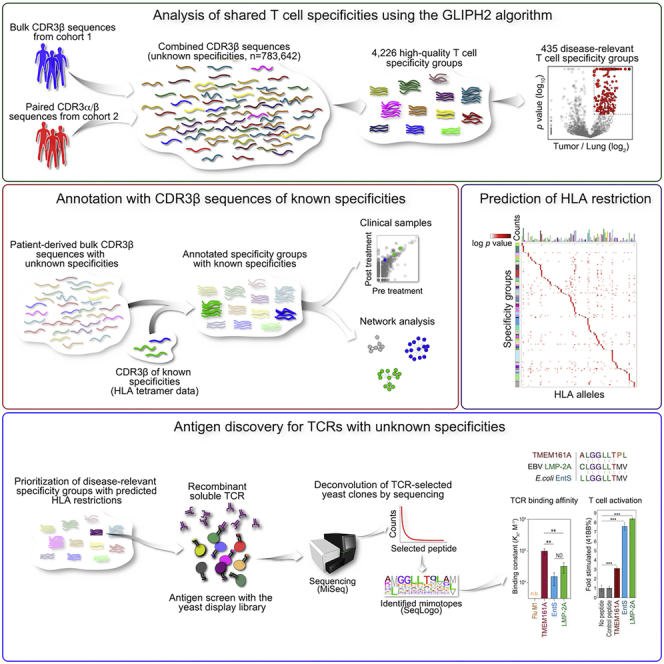
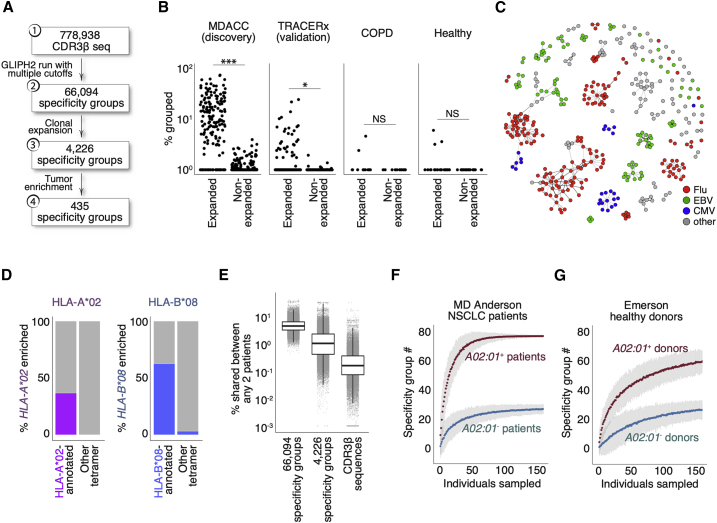
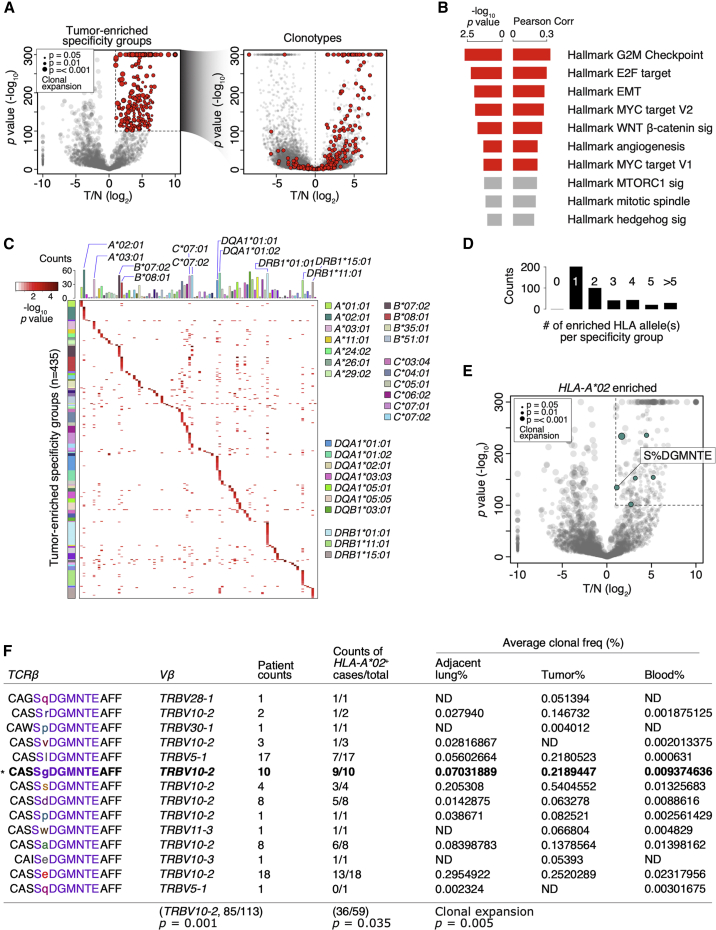
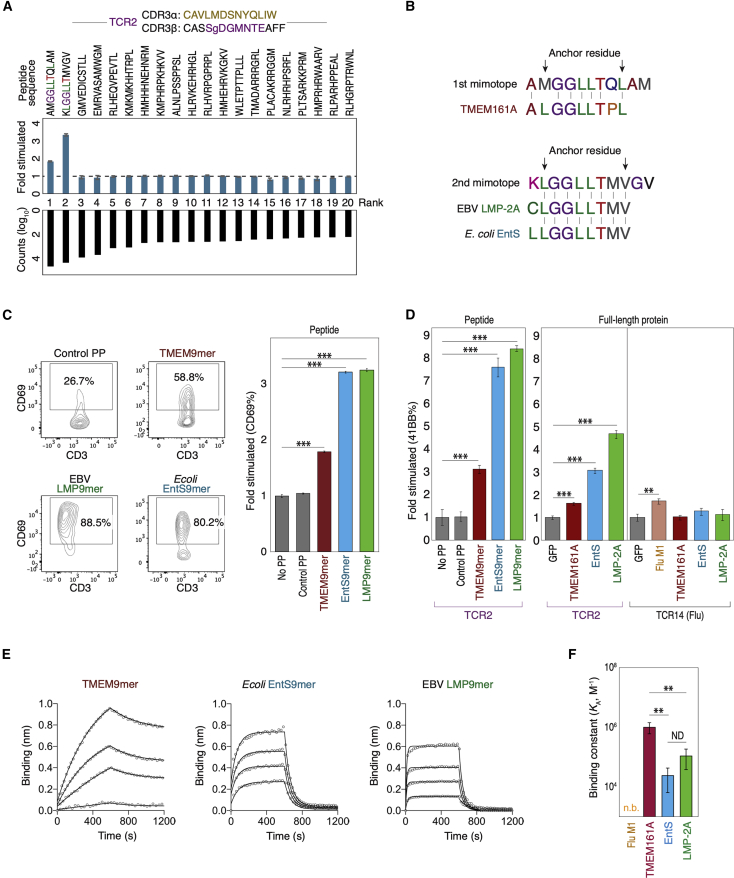
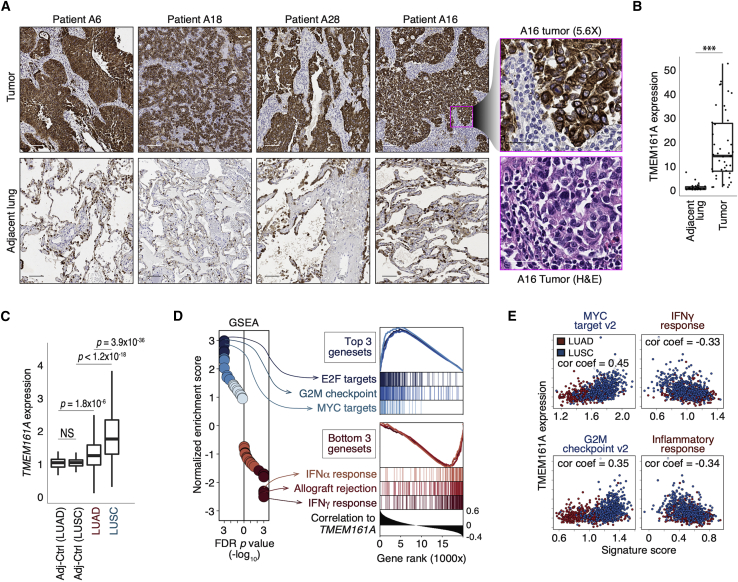
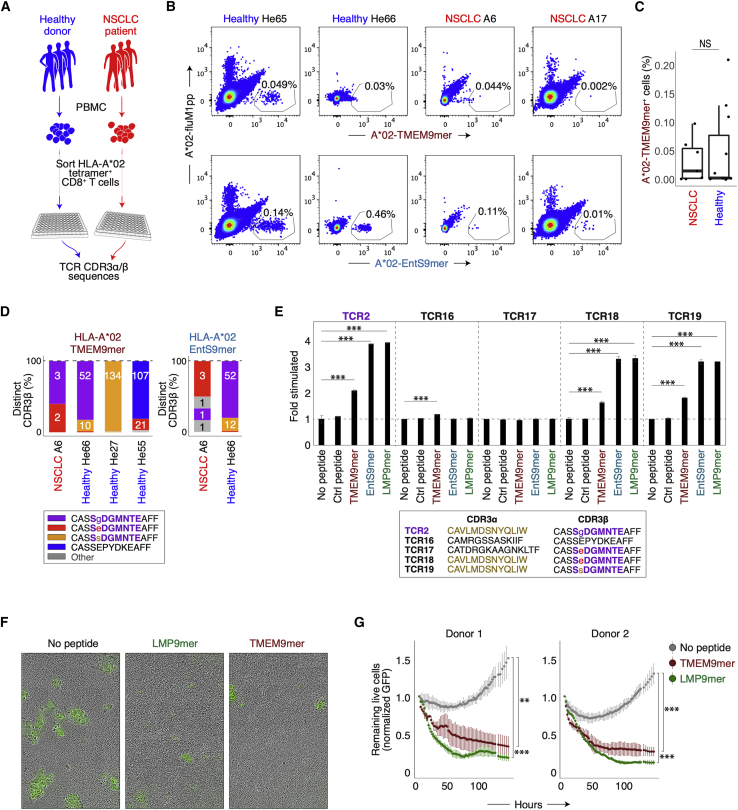
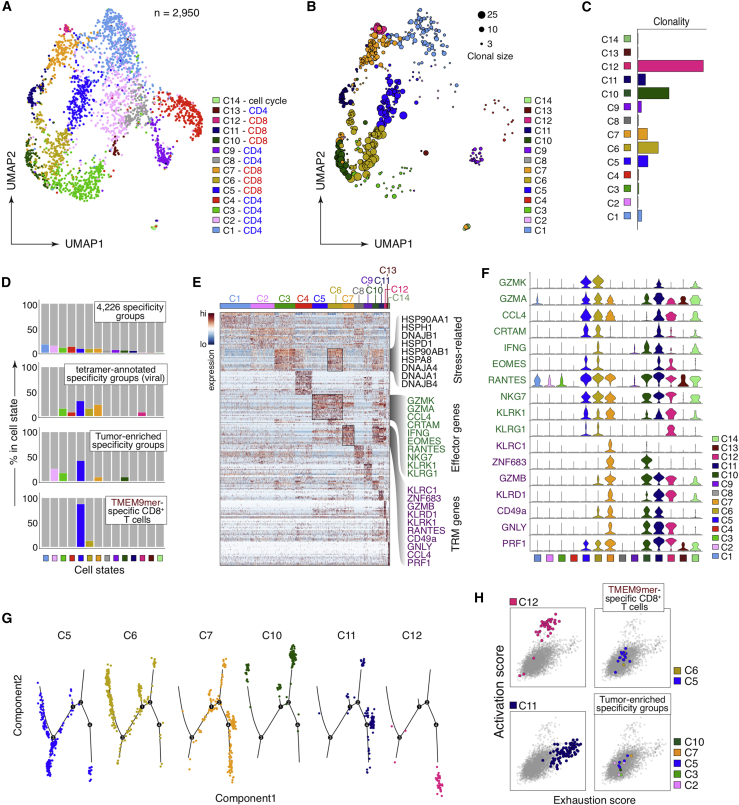
To identify disease-relevant T cell receptors (TCRs) with shared antigen specificity, we analyzed 778,938 TCRβ chain sequences from 178 non-small cell lung cancer patients using the GLIPH2 (grouping of lymphocyte interactions with paratope hotspots 2) algorithm. We identified over 66,000 shared specificity groups, of which 435 were clonally expanded and enriched in tumors compared to adjacent lung. The antigenic epitopes of one such tumor-enriched specificity group were identified using a yeast peptide-HLA A ∗ 02:01 display library. These included a peptide from the epithelial protein TMEM161A, which is overexpressed in tumors and cross-reactive epitopes from Epstein-Barr virus and E. coli . Our findings suggest that this cross-reactivity may underlie the presence of virus-specific T cells in tumor infiltrates and that pathogen cross-reactivity may be a feature of multiple cancers. The approach and analytical pipelines generated in this work, as well as the specificity groups defined here, present a resource for understanding the T cell response in cancer.
Overview
The claims and statistics of this paper haven’t been checked yet.
Run the check — free, no account needed. It reads the open-access text and checks the sources it cites.
Integrity signals
Registry
Cites
Statistics
Figures
Verification
Claims the paper makes
The claims and statistics of this paper haven’t been checked yet.
Run the check — free, no account needed. It reads the open-access text and checks the sources it cites.
Claims other papers make about this one
Each is checked against this paper’s own text: does it say what the citing paper says it does?
The cited source says what the claim attributes to it.
In the citing paper
“These findings highlight virus-specific T cells in anti-tumor responses during ICB.”
From Contrasting cytotoxic and regulatory T cell responses underlying distinct clinical outcomes to anti-PD-1 plus lenvatinib therapy in cancer (2025) · cites this paper as [80]
The cited source says what the claim attributes to it.
In the citing paper
“and suggested in a non-viral-associated cancer.80”
From Contrasting cytotoxic and regulatory T cell responses underlying distinct clinical outcomes to anti-PD-1 plus lenvatinib therapy in cancer (2025) · cites this paper as [80]
Self-check
Percentages, sums and reported differences re-computed from the paper’s own numbers.
The self-check needs the paper’s full text.
Citations
Cites
Fiji: an open-source platform for biological-image analysis
Schindelin, J., Arganda-Carreras, I., Frise, E., Kaynig, V., Longair, M., Pietzsch, T., Preibisch, S., Rueden, C., Saalfeld, S., Schmid, B., et al. (2012) · Nature Methods · doi:10.1038/nmeth.2019 · Cited by 66,890
The Sequence Alignment/Map format and SAMtools
Li, H., Handsaker, B., Wysoker, A., Fennell, T., Ruan, J., Homer, N., Marth, G., Abecasis, G., Durbin, R., & 1000 Genome Project Data Processing Subgroup (2009) · Bioinformatics · doi:10.1093/bioinformatics/btp352 · Cited by 62,041
Subramanian, A., Tamayo, P., Mootha, V. K., Mukherjee, S., Ebert, B. L., Gillette, M. A., Paulovich, A., Pomeroy, S. L., Golub, T. R., Lander, E. S., et al. (2005) · Proceedings of the National Academy of Sciences · doi:10.1073/pnas.0506580102 · Cited by 53,625
STAR: ultrafast universal RNA-seq aligner
Dobin, A., Davis, C. A., Schlesinger, F., Drenkow, J., Zaleski, C., Jha, S., Batut, P., Chaisson, M., & Gingeras, T. R. (2013) · Bioinformatics · doi:10.1093/bioinformatics/bts635 · Cited by 51,709
HTSeq—a Python framework to work with high-throughput sequencing data
Anders, S., Pyl, P. T., & Huber, W. (2015) · Bioinformatics · doi:10.1093/bioinformatics/btu638 · Cited by 21,464
GSVA: gene set variation analysis for microarray and RNA-Seq data
Hänzelmann, S., Castelo, R., & Guinney, J. (2013) · BMC Bioinformatics · doi:10.1186/1471-2105-14-7 · Cited by 15,440
Analysis of protein-coding genetic variation in 60,706 humans
Exome Aggregation Consortium, Lek, M., Karczewski, K. J., Minikel, E. V., Samocha, K. E., Banks, E., Fennell, T., O’Donnell-Luria, A. H., Ware, J. S., Hill, A. J., et al. (2016) · Nature · doi:10.1038/nature19057 · Cited by 9,587
UniProt: a worldwide hub of protein knowledge
The UniProt Consortium (2019) · Nucleic Acids Research · doi:10.1093/nar/gky1049 · Cited by 7,698
Gut microbiome influences efficacy of PD-1-based immunotherapy against epithelial tumors
Routy, B., Le Chatelier, E., Derosa, L., Duong, C. P. M., Alou, M. T., Daillère, R., Fluckiger, A., Messaoudene, M., Rauber, C., Roberti, M. P., et al. (2018) · Science · doi:10.1126/science.aan3706 · Cited by 5,671
Sensitive detection of somatic point mutations in impure and heterogeneous cancer samples
Cibulskis, K., Lawrence, M. S., Carter, S. L., Sivachenko, A., Jaffe, D. B., Sougnez, C. L., Gabriel, S., Meyerson, M. M., Lander, E. S., & Getz, G. A. (2013) · Nature Biotechnology · doi:10.1038/nbt.2514 · Cited by 4,965
Cited by
Sorted by citations
Cold and hot tumors: from molecular mechanisms to targeted therapy
Wu, B., Zhang, B., Li, B., Wu, H., & Jiang, M. (2024) · Signal Transduction and Targeted Therapy · doi:10.1038/s41392-024-01979-x · Cited by 811
Turning cold tumors hot: from molecular mechanisms to clinical applications
Zhang, J., Huang, D., Saw, P. E., & Song, E. (2022) · Trends in Immunology · doi:10.1016/j.it.2022.04.010 · Cited by 534
Self-citationCD8+ T cells in the cancer-immunity cycle
Giles, J. R., Globig, A.-M., Kaech, S. M., & Wherry, E. J. (2023) · Immunity · doi:10.1016/j.immuni.2023.09.005 · Cited by 507
Lee, A., Sun, L., Mochizuki, A. Y., Reynoso, J. G., Orpilla, J. R., Chow, F. E., Kienzler, J. C., Everson, R. G., Nathanson, D. A., Bensinger, S. J., et al. (2021) · Nature Communications · doi:10.1038/s41467-021-26940-2 · Cited by 262
Mayer-Blackwell, K., Schattgen, S., Cohen-Lavi, L., Crawford, J. C., Souquette, A. H., Gaevert, J. A., Hertz, T., Thomas, P. G., Bradley, P. H., & Fiore-Gartland, A. (2021) · eLife · doi:10.7554/elife.68605 · Cited by 204
Metadata
- Authors
- Chiou, S.-H., Tseng, D., Reuben, A., Mallajosyula, V., Molina, I. S., Conley, S., Wilhelmy, J., McSween, A. M., Yang, X., Nishimiya, D., Sinha, R., Nabet, B. Y., Wang, C., Shrager, J. B., Berry, M. F., Backhus, L., Lui, N. S., Wakelee, H. A., Neal, J. W., Padda, S. K., Berry, G. J., Delaidelli, A., Sorensen, P. H., Sotillo, E., Tran, P., Benson, J. A., Richards, R., Labanieh, L., Klysz, D. D., Louis, D. M., Feldman, S. A., Diehn, M., Weissman, I. L., Zhang, J., Wistuba, I. I., Futreal, P. A., Heymach, J. V., Garcia, K. C., Mackall, C. L., & Davis, M. M.
- Affiliations
- Stanford University (US)
- Stanford Medicine (US)
- The University of Texas MD Anderson Cancer Center (US)
- Rutgers, The State University of New Jersey (US)
- Institute for Stem Cell Biology and Regenerative Medicine (US)
- BC Cancer Agency (CA)
- Stanford Cancer Institute (US)
- Howard Hughes Medical Institute (US)
- Corresponding author
- Davis, Mark M.
- ORCID
- Chiou, Shin-Heng
- Tseng, Diane
- Reuben, Alexandre
- Mallajosyula, Vamsee
- Molina, Irene S.
- Wilhelmy, Julie
- McSween, Alana M.
- Yang, Xinbo
- Nishimiya, Daisuke
- Sinha, Rahul
- Nabet, Barzin Y.
- Wang, Chunlin
- Shrager, Joseph B.
- Berry, Mark F.
- Backhus, Leah
- Lui, Natalie S.
- Wakelee, Heather A.
- Neal, Joel W.
- Padda, Sukhmani K.
- Berry, Gerald J.
- Delaidelli, Alberto
- Sorensen, Poul H.
- Sotillo, Elena
- Benson, Jalen A.
- Richards, Rebecca
- Labanieh, Louai
- Klysz, Dorota D.
- Louis, David M.
- Feldman, Steven A.
- Diehn, Maximilian
- Weissman, Irving L.
- Zhang, Jianjun
- Wistuba, Ignacio I.
- Futreal, P. Andrew
- Heymach, John V.
- Mackall, Crystal L.
- Davis, Mark M.
- Venue
- Immunity
- Publisher
- Elsevier BV
- Published
- 2021-03
- Volume
- 54
- Issue
- 3
- Pages
- 586-602.e8
- ISSN
- 1074-7613 (ISSN-L)
- PMC
- PMC7960510
- OpenAlex
- W3134245065
- Cited by
- 133
- References
- 77
- Citations by year
- 2026: 20 · 2025: 19 · 2024: 26 · 2023: 28 · 2022: 29 · 2021: 10
- FWCI
- 8.56
- Type
- journal article
- Language
- en
- Open access
- hybrid
- doi.org
- Licence
- Locations
- Immunity (publishedVersion, cc-by-nc-nd)
- PubMed Central (publishedVersion, cc-by-nc-nd)
- PubMed (publishedVersion)
- Rutgers University Community Repository (Rutgers University) (submittedVersion)
- Funders
- NCI Cancer Moonshot
- Stand up to Cancer
- Topics
- Health Sciences › Medicine › Oncology › Cancer Immunotherapy and Biomarkers
- Life Sciences › Immunology and Microbiology › Immunology › T-cell and B-cell Immunology
- Life Sciences › Immunology and Microbiology › Immunology › Immunotherapy and Immune Responses
- Keywords
- non-small cell lung cancer, T cell clones, cross-reactive epitopes, Epstein-Barr virus, Escherichia coli, virus-specific T cells, tumor immunology
- MeSH terms
- Algorithms, Antigens, Neoplasm, Carcinoma, Non-Small-Cell Lung, Cells, Cultured, Cross Reactions, Humans, Lung Neoplasms, Protein Binding, T-Lymphocytes, HLA-A2 Antigen, Receptors, Antigen, T-Cell, alpha-beta, Antigen Presentation, Epitope Mapping, Epitopes, T-Lymphocyte, T-Cell Antigen Receptor Specificity
About these checks
Registry, retraction, Cites and statistics results are computed, not judged, with one exception: a printed reference that no index lists is read once by a model before it counts as a citation error. Claims are extracted by a model and kept only when their quote appears verbatim in the text; each cited source is then checked, with a model’s help, for whether it says what the claim relies on. Those verdicts can be wrong — read the claim’s quote and the cited source before relying on one.
Statistics and arithmetic are recomputed, not judged.
Confidence bands are shown only for fields calibrated on our annotated test set. None is calibrated yet, so no band is shown.
What counts as a claim ›How we measure confidence ›How we check this ›
Are you an author, or do you see a problem with this page? Request a review
