

The DOI matches its Crossref record; 76 of the 77 references it cites were found in a registry or an index.
Global analysis of shared T cell specificities in human non-small cell lung cancer enables HLA inference and antigen discovery
Open accessAbstract
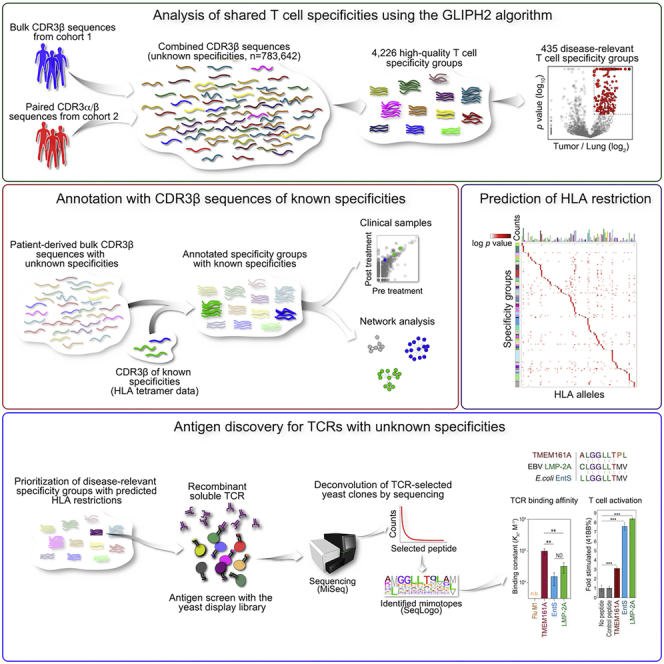
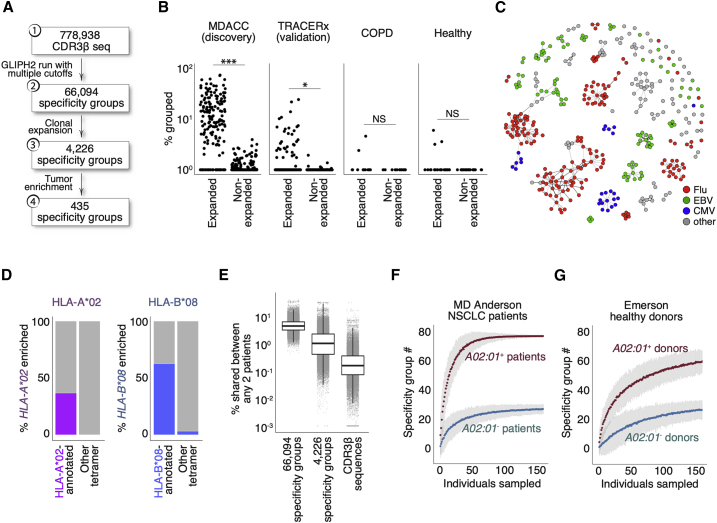
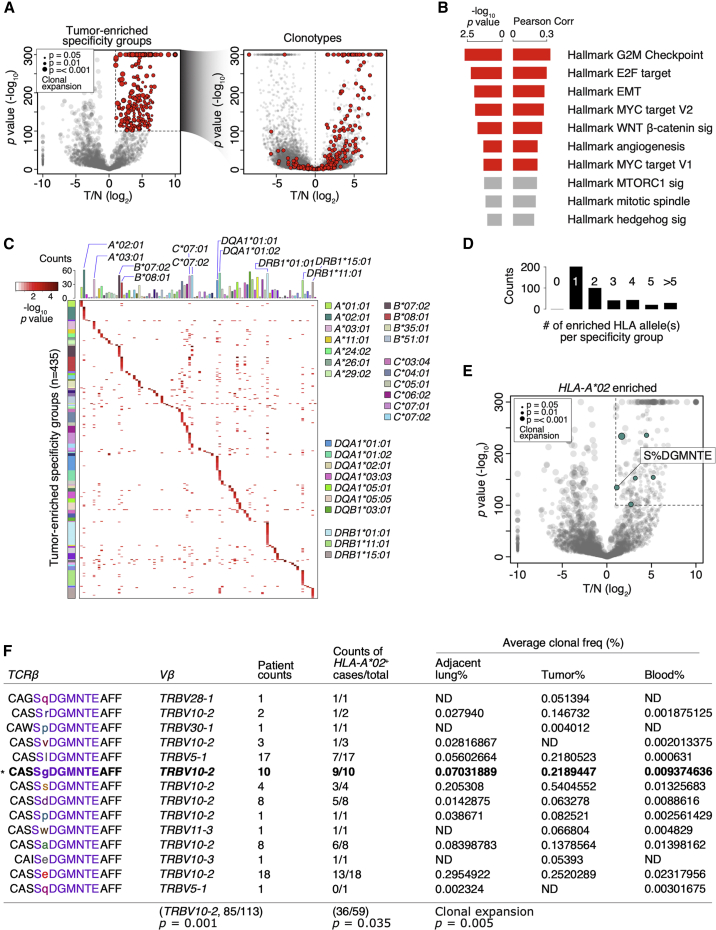
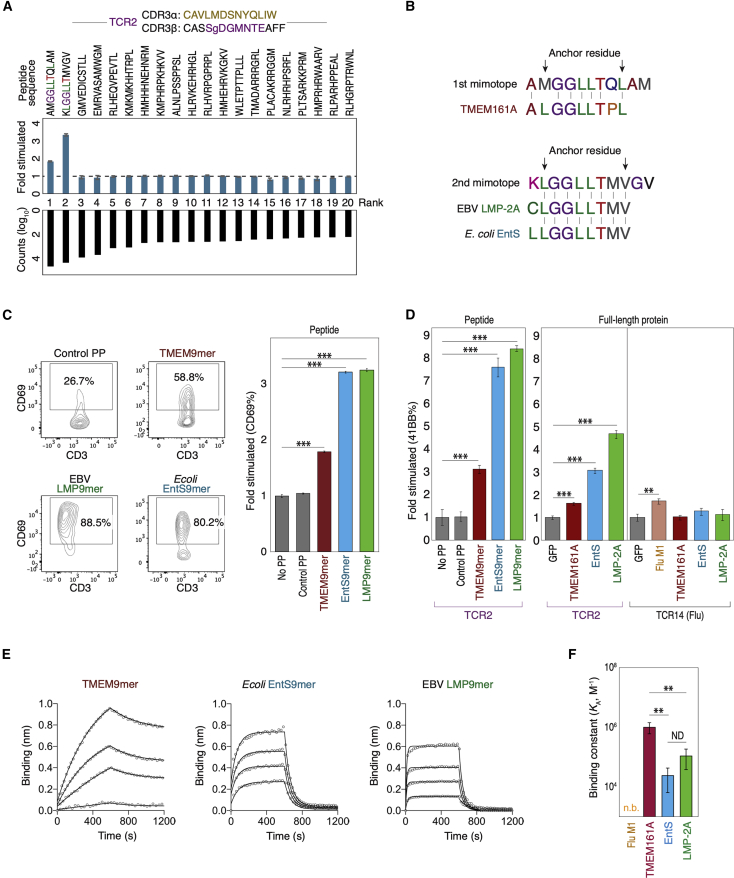
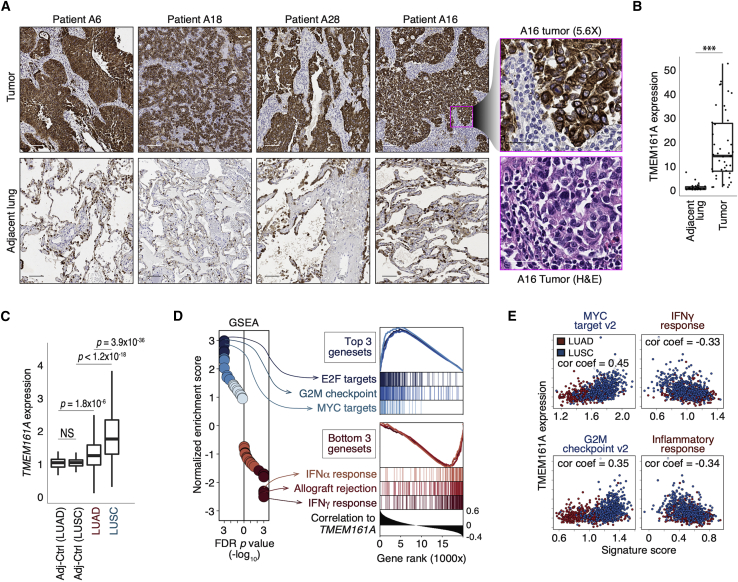
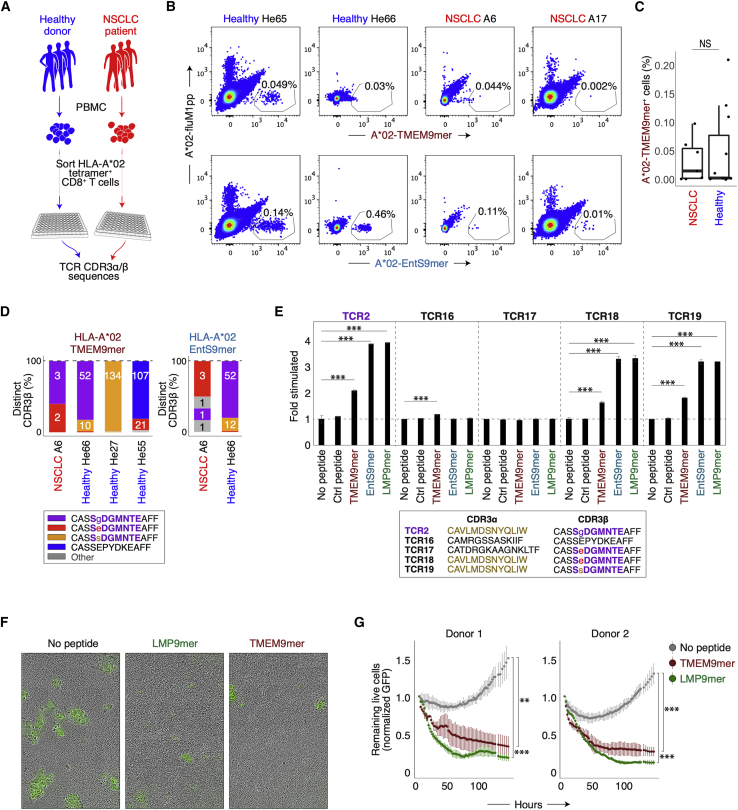
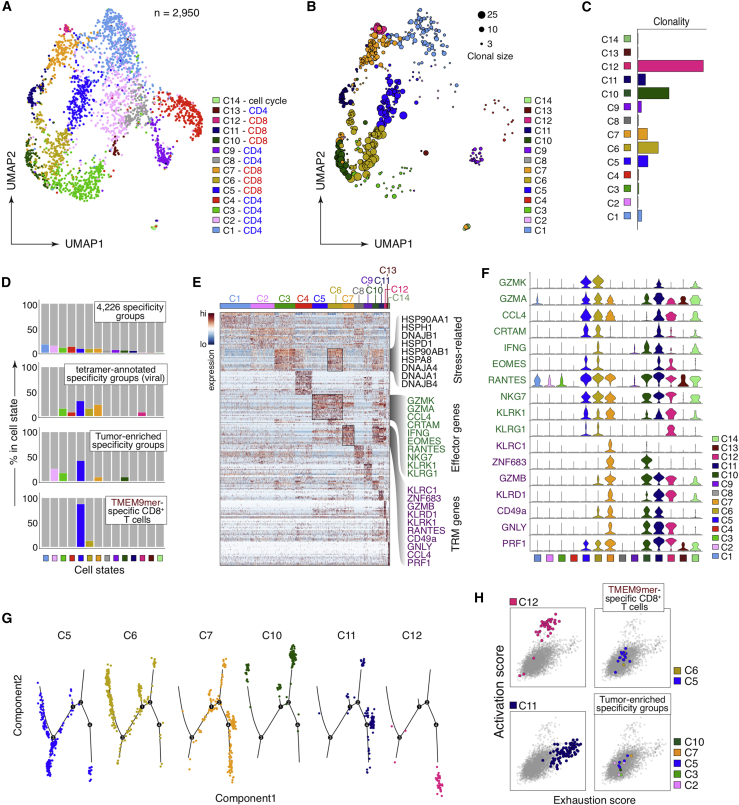
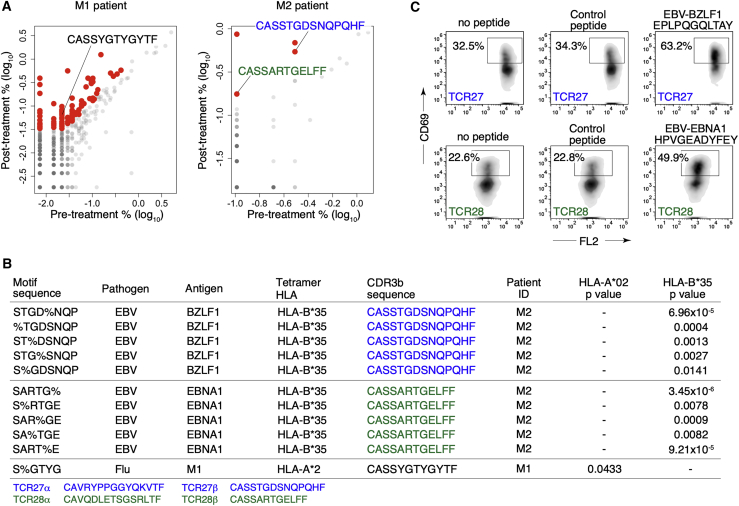
To identify disease-relevant T cell receptors (TCRs) with shared antigen specificity, we analyzed 778,938 TCRβ chain sequences from 178 non-small cell lung cancer patients using the GLIPH2 (grouping of lymphocyte interactions with paratope hotspots 2) algorithm. We identified over 66,000 shared specificity groups, of which 435 were clonally expanded and enriched in tumors compared to adjacent lung. The antigenic epitopes of one such tumor-enriched specificity group were identified using a yeast peptide-HLA A ∗ 02:01 display library. These included a peptide from the epithelial protein TMEM161A, which is overexpressed in tumors and cross-reactive epitopes from Epstein-Barr virus and E. coli . Our findings suggest that this cross-reactivity may underlie the presence of virus-specific T cells in tumor infiltrates and that pathogen cross-reactivity may be a feature of multiple cancers. The approach and analytical pipelines generated in this work, as well as the specificity groups defined here, present a resource for understanding the T cell response in cancer.
Overview
The claims and statistics of this paper haven’t been checked yet.
Run the check — free, no account needed. It reads the open-access text and checks the sources it cites.
Integrity signals
Registry
Cites
Statistics
Figures
Verification
Claims the paper makes
The claims and statistics of this paper haven’t been checked yet.
Run the check — free, no account needed. It reads the open-access text and checks the sources it cites.
Claims other papers make about this one
Each is checked against this paper’s own text: does it say what the citing paper says it does?
The cited source says what the claim attributes to it.
In the citing paper
“These findings highlight virus-specific T cells in anti-tumor responses during ICB.”
From Contrasting cytotoxic and regulatory T cell responses underlying distinct clinical outcomes to anti-PD-1 plus lenvatinib therapy in cancer (2025) · cites this paper as [80]
The cited source says what the claim attributes to it.
In the citing paper
“and suggested in a non-viral-associated cancer.80”
From Contrasting cytotoxic and regulatory T cell responses underlying distinct clinical outcomes to anti-PD-1 plus lenvatinib therapy in cancer (2025) · cites this paper as [80]
Self-check
Percentages, sums and reported differences re-computed from the paper’s own numbers.
The self-check needs the paper’s full text.
Citations
Cites
Fiji: an open-source platform for biological-image analysis
Schindelin, J., Arganda-Carreras, I., Frise, E., Kaynig, V., Longair, M., Pietzsch, T., Preibisch, S., Rueden, C., Saalfeld, S., Schmid, B., et al. (2012) · Nature Methods · doi:10.1038/nmeth.2019 · Cited by 66,890
The Sequence Alignment/Map format and SAMtools
Li, H., Handsaker, B., Wysoker, A., Fennell, T., Ruan, J., Homer, N., Marth, G., Abecasis, G., Durbin, R., & 1000 Genome Project Data Processing Subgroup (2009) · Bioinformatics · doi:10.1093/bioinformatics/btp352 · Cited by 62,041
Subramanian, A., Tamayo, P., Mootha, V. K., Mukherjee, S., Ebert, B. L., Gillette, M. A., Paulovich, A., Pomeroy, S. L., Golub, T. R., Lander, E. S., et al. (2005) · Proceedings of the National Academy of Sciences · doi:10.1073/pnas.0506580102 · Cited by 53,625
STAR: ultrafast universal RNA-seq aligner
Dobin, A., Davis, C. A., Schlesinger, F., Drenkow, J., Zaleski, C., Jha, S., Batut, P., Chaisson, M., & Gingeras, T. R. (2013) · Bioinformatics · doi:10.1093/bioinformatics/bts635 · Cited by 51,709
HTSeq—a Python framework to work with high-throughput sequencing data
Anders, S., Pyl, P. T., & Huber, W. (2015) · Bioinformatics · doi:10.1093/bioinformatics/btu638 · Cited by 21,464
GSVA: gene set variation analysis for microarray and RNA-Seq data
Hänzelmann, S., Castelo, R., & Guinney, J. (2013) · BMC Bioinformatics · doi:10.1186/1471-2105-14-7 · Cited by 15,440
Analysis of protein-coding genetic variation in 60,706 humans
Exome Aggregation Consortium, Lek, M., Karczewski, K. J., Minikel, E. V., Samocha, K. E., Banks, E., Fennell, T., O’Donnell-Luria, A. H., Ware, J. S., Hill, A. J., et al. (2016) · Nature · doi:10.1038/nature19057 · Cited by 9,587
UniProt: a worldwide hub of protein knowledge
The UniProt Consortium (2019) · Nucleic Acids Research · doi:10.1093/nar/gky1049 · Cited by 7,698
Gut microbiome influences efficacy of PD-1-based immunotherapy against epithelial tumors
Routy, B., Le Chatelier, E., Derosa, L., Duong, C. P. M., Alou, M. T., Daillère, R., Fluckiger, A., Messaoudene, M., Rauber, C., Roberti, M. P., et al. (2018) · Science · doi:10.1126/science.aan3706 · Cited by 5,671
Sensitive detection of somatic point mutations in impure and heterogeneous cancer samples
Cibulskis, K., Lawrence, M. S., Carter, S. L., Sivachenko, A., Jaffe, D. B., Sougnez, C. L., Gabriel, S., Meyerson, M. M., Lander, E. S., & Getz, G. A. (2013) · Nature Biotechnology · doi:10.1038/nbt.2514 · Cited by 4,965
Cited by
Sorted by citations
Cold and hot tumors: from molecular mechanisms to targeted therapy
Wu, B., Zhang, B., Li, B., Wu, H., & Jiang, M. (2024) · Signal Transduction and Targeted Therapy · doi:10.1038/s41392-024-01979-x · Cited by 811
Turning cold tumors hot: from molecular mechanisms to clinical applications
Zhang, J., Huang, D., Saw, P. E., & Song, E. (2022) · Trends in Immunology · doi:10.1016/j.it.2022.04.010 · Cited by 534
Self-citationCD8+ T cells in the cancer-immunity cycle
Giles, J. R., Globig, A.-M., Kaech, S. M., & Wherry, E. J. (2023) · Immunity · doi:10.1016/j.immuni.2023.09.005 · Cited by 507
Lee, A., Sun, L., Mochizuki, A. Y., Reynoso, J. G., Orpilla, J. R., Chow, F. E., Kienzler, J. C., Everson, R. G., Nathanson, D. A., Bensinger, S. J., et al. (2021) · Nature Communications · doi:10.1038/s41467-021-26940-2 · Cited by 262
Mayer-Blackwell, K., Schattgen, S., Cohen-Lavi, L., Crawford, J. C., Souquette, A. H., Gaevert, J. A., Hertz, T., Thomas, P. G., Bradley, P. H., & Fiore-Gartland, A. (2021) · eLife · doi:10.7554/elife.68605 · Cited by 204
Microbial peptides activate tumour-infiltrating lymphocytes in glioblastoma
Naghavian, R., Faigle, W., Oldrati, P., Wang, J., Toussaint, N. C., Qiu, Y., Medici, G., Wacker, M., Freudenmann, L. K., Bonté, P.-E., et al. (2023) · Nature · doi:10.1038/s41586-023-06081-w · Cited by 163
Bystander T cells in cancer immunology and therapy
Meier, S. L., Satpathy, A. T., & Wells, D. K. (2022) · Nature Cancer · doi:10.1038/s43018-022-00335-8 · Cited by 162
Granzyme K activates the entire complement cascade
Donado, C., Theisen, E., Zhang, F., Nathan, A., Fairfield, M. L., Rupani, K. V., Jones, D., Johannes, K., Accelerating Medicines Partnership RA/SLE Network, Albrecht, J., et al. (2025) · Nature · doi:10.1038/s41586-025-08713-9 · Cited by 146
Ma, J., Huang, L., Hu, D., Zeng, S., Han, Y., & Shen, H. (2021) · Journal of Experimental & Clinical Cancer Research · doi:10.1186/s13046-021-02128-w · Cited by 140
Musvosvi, M., Huang, H., Wang, C., Xia, Q., Rozot, V., Krishnan, A., Acs, P., Cheruku, A., Obermoser, G., Leslie, A. J., et al. (2023) · Nature Medicine · doi:10.1038/s41591-022-02110-9 · Cited by 112
Self-citationHuman Coronary Plaque T Cells Are Clonal and Cross-React to Virus and Self
Chowdhury, R. R., D’Addabbo, J., Huang, X., Veizades, S. A., Sasagawa, K., Louis, D. M., Cheng, P. P., Sokol, J., Jensen, A., Tso, A., et al. (2022) · Circulation Research · doi:10.1161/circresaha.121.320090 · Cited by 106
Self-citationEffects of immune‐related adverse events ( irAEs ) and their treatment on antitumor immune responses
Blum, S. M., Rouhani, S. J., & Sullivan, R. J. (2023) · Immunological Reviews · doi:10.1111/imr.13262 · Cited by 105
Tiberti, S., Catozzi, C., Croci, O., Ballerini, M., Cagnina, D., Soriani, C., Scirgolea, C., Gong, Z., He, J.-T., Macandog, A. D. G., et al. (2022) · Nature Communications · doi:10.1038/s41467-022-34467-3 · Cited by 103
Guo, X., Nie, H., Zhang, W., Li, J., Ge, J., Xie, B., Hu, W., Zhu, Y., Zhong, N., Zhang, X., et al. (2025) · Cancer Cell · doi:10.1016/j.ccell.2025.01.001 · Cited by 100
Cancer vaccines and the future of immunotherapy
Pail, O., Lin, M. J., Anagnostou, T., Brown, B. D., & Brody, J. (2025) · The Lancet · doi:10.1016/s0140-6736(25)00553-7 · Cited by 98
Wang, Z., Zhang, X., Lu, S., Zhang, C., Ma, Z., Su, R. J., Li, Y., Sun, T., Li, Y., Hong, M., et al. (2023) · Nature Cardiovascular Research · doi:10.1038/s44161-023-00218-w · Cited by 87
“56 ) can predict potential epitopes based on TCR α and TCR β sequences.”
T-Cell Receptor Repertoire Sequencing in the Era of Cancer Immunotherapy
Frank, M. L., Lu, K. J., Erdogan, C., Han, Y., HU, J. L., Wang, T., Heymach, J. V., Zhang, J. J., & Reuben, A. (2022) · Clinical Cancer Research · doi:10.1158/1078-0432.ccr-22-2469 · Cited by 77
Self-citationChen, X., Zhao, J., Yue, S., Li, Z., Duan, X., Lin, Y., Yang, Y., He, J., Gao, L., Pan, Z., et al. (2024) · Nature Cancer · doi:10.1038/s43018-024-00760-x · Cited by 68
Self-citationBorràs, D. M., Verbandt, S., Ausserhofer, M., Sturm, G., Lim, J., Verge, G. A., Vanmeerbeek, I., Laureano, R. S., Govaerts, J., Sprooten, J., et al. (2023) · Cell Discovery · doi:10.1038/s41421-023-00605-4 · Cited by 67
Molecular mimicry and cancer vaccine development
Tagliamonte, M., Cavalluzzo, B., Mauriello, A., Ragone, C., Buonaguro, L., Tornesello, M. L., & Buonaguro, L. (2023) · Molecular Cancer · doi:10.1186/s12943-023-01776-0 · Cited by 68
“TMEM161A ALGGLLTPL EBV CLGGLLTMV A*02:01 Cross-reactive CTL in lung cancer patients [43]”
BackgroundBroadening oncological boundaries: the intratumoral microbiota
Lu, Y.-Q., Qiao, H., Tan, X.-R., & Liu, N. (2024) · Trends in Microbiology · doi:10.1016/j.tim.2024.01.007 · Cited by 66
Xing, X., Shi, J., Jia, Y., Dou, Y., Li, Z., Dong, B., Guo, T., Cheng, X., Li, X., Du, H., et al. (2022) · Journal for ImmunoTherapy of Cancer · doi:10.1136/jitc-2021-003984 · Cited by 63
Self-citationAdaptive immune receptor repertoire analysis
Mhanna, V., Bashour, H., Quý, K. L., Barennes, P., Rawat, P., Greiff, V., & Mariotti‐Ferrandiz, E. (2024) · Nature Reviews Methods Primers · doi:10.1038/s43586-023-00284-1 · Cited by 66
Valkiers, S., de Vrij, N., Gielis, S., Verbandt, S., Ogunjimi, B., Laukens, K., & Meysman, P. (2022) · ImmunoInformatics · doi:10.1016/j.immuno.2022.100009 · Cited by 56
Liu, X., Lu, B., Tang, H. T., Jia, X., Zhou, Q., Zeng, Y., Gao, X., Chen, M., Xu, Y., Wang, M., et al. (2024) · EBioMedicine · doi:10.1016/j.ebiom.2024.105427 · Cited by 54
The spatial landscape of glial pathology and T cell response in Parkinson’s disease substantia nigra
Ma, M., Paryani, F., Jakubiak, K. A., Xia, S., Antoku, S., Kannan, A., Lee, J., Madden, N., Kumar, S. S., Li, J., et al. (2025) · Nature Communications · doi:10.1038/s41467-025-62478-3 · Cited by 61
Functional virus-specific memory T cells survey glioblastoma
Ning, J., Gavil, N. V., Wu, S., Wijeyesinghe, S., Weyu, E., Ma, J., Li, M., Grigore, F.-N., Dhawan, S., Skorput, A. G. J., et al. (2022) · Cancer Immunology Immunotherapy · doi:10.1007/s00262-021-03125-w · Cited by 47
Cross-reactivity between microbial and tumor antigens
Zitvogel, L., & Kroemer, G. (2022) · Current Opinion in Immunology · doi:10.1016/j.coi.2022.102171 · Cited by 40
Clonal driver neoantigen loss under EGFR TKI and immune selection pressures
Bakir, M. A., Reading, J. L., Gamble, S., Rosenthal, R., Uddin, I., Rowan, A., Przewrocka, J., Rogers, A., Wong, Y. N. S., Bentzen, A. K., et al. (2025) · Nature · doi:10.1038/s41586-025-08586-y · Cited by 45
Application of T cell receptor (TCR) repertoire analysis for the advancement of cancer immunotherapy
Joshi, K., Milighetti, M., & Chain, B. (2021) · Current Opinion in Immunology · doi:10.1016/j.coi.2021.07.006 · Cited by 44
Evolution and modulation of antigen-specific T cell responses in melanoma patients
Huuhtanen, J., Chen, L., Jokinen, E., Kasanen, H. H. E., Lönnberg, T., Kreutzman, A. S., Peltola, K. J., Hernberg, M., Wang, C., Yee, C., et al. (2022) · Nature Communications · doi:10.1038/s41467-022-33720-z · Cited by 38
Self-citationTrück, J., Eugster, A., Barennes, P., Tipton, C. M., Prak, E. T. L., Bagnara, D., Soto, C. S., Sherkow, J. S., Payne, A. S., Lefranc, M., et al. (2021) · eLife · doi:10.7554/elife.66274 · Cited by 41
Non-mutational neoantigens in disease
Stern, L. J., Clement, C. C., Galluzzi, L., & Santambrogio, L. (2024) · Nature Immunology · doi:10.1038/s41590-023-01664-1 · Cited by 41
Specificity of Adaptive Immune Responses in Central Nervous System Health, Aging and Diseases
Rickenbach, C., & Gericke, C. (2022) · Frontiers in Neuroscience · doi:10.3389/fnins.2021.806260 · Cited by 33
Komech, E. A., Колтакова, А. Д., Barinova, A. A., Minervina, A. A., Salnikova, M. A., Шмидт, Е., Korotaeva, T. V., Loginova, Е. Y., Erdes, S. F., Bogdanova, E. A., et al. (2022) · Frontiers in Immunology · doi:10.3389/fimmu.2022.973243 · Cited by 33
Clonal dynamics of alloreactive T cells in kidney allograft rejection after anti-PD-1 therapy
Dunlap, G. S., Ditoro, D. F., Henderson, J., Shah, S. I., Manos, M., Severgnini, M., Weins, A., Guleria, I., Ott, P. A., Murakami, N., et al. (2023) · Nature Communications · doi:10.1038/s41467-023-37230-4 · Cited by 34
Shah, P., Forget, M., Frank, M. L., Jiang, P., Sakellariou-Thompson, D., Federico, L., Khairullah, R., Neutzler, C. A., Wistuba, I. I., Chow, C.-W. B., et al. (2022) · Journal for ImmunoTherapy of Cancer · doi:10.1136/jitc-2021-003082 · Cited by 30
Self-citationLeary, A. Y., Scott, D., Gupta, N. T., Waite, J. C., Skokos, D., Atwal, G. S., & Hawkins, P. G. (2024) · Nature Communications · doi:10.1038/s41467-024-48198-0 · Cited by 30
“It can be useful to remove these from downstream analysis or even to understand the role of bystander TCRs for instance in immune-oncology settings [38–40].”
BackgroundDe novo identification of CD4+ T cell epitopes
Zdinak, P. M., Trivedi, N., Grebinoski, S., Torrey, J., Martinez, E. Z., Martínez, S., Hicks, L., Ranjan, R., Makani, V. K. K., Roland, M. M., et al. (2024) · Nature Methods · doi:10.1038/s41592-024-02255-0 · Cited by 26
Immunotherapy in the Treatment of Urothelial Bladder Cancer: Insights From Single-Cell Analysis
Zang, J., Ye, K., Yang, F., Zhang, R., Chen, H., & Zhuang, G. (2021) · Frontiers in Oncology · doi:10.3389/fonc.2021.696716 · Cited by 25
Elkin, R., Oh, J. H., Liu, Y. L., Selenica, P., Weigelt, B., Reis-Filho, J. S., Zamarin, D., Deasy, J. O., Norton, L., Levine, A. J., et al. (2021) · npj Genomic Medicine · doi:10.1038/s41525-021-00259-9 · Cited by 27
Wang, S., Xu, B., Zhang, Y., Chen, G., Zhao, P., Gao, Q., & Yuan, L. (2023) · Cancer Biology and Medicine · doi:10.20892/j.issn.2095-3941.2023.0376 · Cited by 24
“…cross-reacts with human solid tumor-expressed epitope proteasome subunit beta type-4 (PSMB4) 130 , commensal bacterium Bifidobacterium breve epitope SVYRYYGL cross-reacts with the tumor-expressed epitope SIYRYYGL 131 , and E. coli epitope cross-reacts with tumor epithelial protein TMEM161A 132 .”
BackgroundDeWolf, S., Elhanati, Y., Nichols, K. B., Waters, N. R., Nguyen, C. L., Slingerland, J. B., Rodriguez, N. T., Lyudovyk, O., Giardina, P. A., Kousa, A. I., et al. (2023) · Science Translational Medicine · doi:10.1126/scitranslmed.abq0476 · Cited by 23
Gouttefangeas, C., Klein, R., & Maia, A. R. R. (2023) · Frontiers in Immunology · doi:10.3389/fimmu.2023.1212546 · Cited by 25
Wang, Z., Zhao, Y., Wo, Y., Peng, Y., Hu, W., Wu, Z., Liu, P., Shang, Y., Liu, C., Chen, X., et al. (2024) · Cancer Letters · doi:10.1016/j.canlet.2024.216951 · Cited by 23
Fonseca, A. F., & Antunes, D. A. (2023) · Frontiers in Immunology · doi:10.3389/fimmu.2023.1142573 · Cited by 22
Massively-multiplexed epitope mapping techniques for viral antigen discovery
Hu, D., & Irving, A. T. (2023) · Frontiers in Immunology · doi:10.3389/fimmu.2023.1192385 · Cited by 23
Human thymopoiesis produces polyspecific CD8+ α/β T cells responding to multiple viral antigens
Quiniou, V., Barennes, P., Mhanna, V., Stys, P., Vantomme, H., Zhou, Z., Martina, F., Coatnoan, N., Barbié, M., Pham, H., et al. (2023) · eLife · doi:10.7554/elife.81274 · Cited by 26
Multi-tiered approach to detect autoimmune cross-reactivity of therapeutic T cell receptors
Ishii, K., Davies, J. S., Sinkoe, A. L., Nguyen, K. A., Norberg, S. M., McIntosh, C. P., Kadakia, T., Serna, C., Rae, Z., Kelly, M. C., et al. (2023) · Science Advances · doi:10.1126/sciadv.adg9845 · Cited by 20
T cell landscape in the microenvironment of human solid tumors
Maggi, E., Munari, E., Landolina, N., Mariotti, F. R., Azzarone, B. G., & Moretta, L. (2024) · Immunology Letters · doi:10.1016/j.imlet.2024.106942 · Cited by 22
Zhang, S., Zhou, Y., Liu, Z., Wang, Y., Zhou, X., Chen, H., Zhang, X., Chen, Y., Feng, Q., Ye, X.-P., et al. (2025) · Cancer Cell · doi:10.1016/j.ccell.2025.04.009 · Cited by 21
Jing, L., Wu, X., Krist, M. P., Hsiang, T.-Y., Campbell, V. L., McClurkan, C. L., Favors, S. M., Hemingway, L. A., Godornes, C., Tong, D. Q., et al. (2022) · JCI Insight · doi:10.1172/jci.insight.158126 · Cited by 18
Intra-tumoral T cells in pediatric brain tumors display clonal expansion and effector properties
Upadhye, A., Landeros, K. E. M., Ramírez-Suástegui, C., Schmiedel, B. J., Woo, E. B. C., Chee, S., Malicki, D. M., Coufal, N. G., Gonda, D. D., Levy, M. L., et al. (2024) · Nature Cancer · doi:10.1038/s43018-023-00706-9 · Cited by 19
Modulation of the Immune Environment in Glioblastoma by the Gut Microbiota
Green, G. B. H., Cox-Holmes, A. N., Potier, A. C. E., Marlow, G. H., & McFarland, B. C. (2024) · Biomedicines · doi:10.3390/biomedicines12112429 · Cited by 16
Ten challenges and opportunities in computational immuno-oncology
Bao, R., Hutson, A. D., Madabhushi, A., Jönsson, V. D., Rosario, S. R., Barnholtz‐Sloan, J. S., Fertig, E. J., Marathe, H. G., Harris, L. N., Altreuter, J., et al. (2024) · Journal for ImmunoTherapy of Cancer · doi:10.1136/jitc-2024-009721 · Cited by 14
“66 With these insights, clinicians and researchers can better identify patients who are likely to respond to ICIs and potentially improve patient outcomes.”
Ye, Q., & Guo, N. L. (2022) · Cancers · doi:10.3390/cancers14133123 · Cited by 13
McInnis, C. M., Bhatia, S., Vijaykumar, B., Tian, Q., Sun, Y., Leistritz-Edwards, D., Quinn, C. T., Uppaluri, R., Egloff, A. M., Srinivasan, L., et al. (2023) · Journal for ImmunoTherapy of Cancer · doi:10.1136/jitc-2023-006721 · Cited by 17
Tmem161a regulates bone formation and bone strength through the P38 MAPK pathway
Nagai, T., Sekimoto, T., Kurogi, S., Ohta, T., Miyazaki, S., Yamaguchi, Y., Tajima, T., Chosa, E., Imasaka, M., Yoshinobu, K., et al. (2023) · Scientific Reports · doi:10.1038/s41598-023-41837-4 · Cited by 12
“In addition, Tmem161a is reportedly a tumor-associated antigen overexpressed in human non-small cell lung cancer, and it is related to specific gene expression signatures such as MYC and cell cycle genes 12 .”
IgE type multiple myeloma exhibits hypermutated phenotype and tumor reactive T cells
Kehl, N., Kilian, M., Michel, J., Wagner, T. R., Uhrig, S., Brobeil, A., Sester, L. S., Blobner, S., Steiger, S., Hundemer, M., et al. (2022) · Journal for ImmunoTherapy of Cancer · doi:10.1136/jitc-2022-005815 · Cited by 12
Tiemeijer, B. M., Descamps, L., Hulleman, J., Sleeboom, J. J. F., & Tel, J. (2022) · Micromachines · doi:10.3390/mi13111910 · Cited by 13
“For example, singlecell sequencing could be performed to enable the study of TCR sequences which were shown to have high relevance and potential to design better vaccines or autoimmune therapies [66,67].”
BackgroundJiménez-Reinoso, A., Molero-Abraham, M., Cirauqui, C., Blanco, B., Garrido-Martin, E. M., Nehme-Álvarez, D., Domínguez-Alonso, C., Ramírez-Fernández, Á., Díez-Alonso, L., Nuñez-Buiza, Á., et al. (2024) · OncoImmunology · doi:10.1080/2162402x.2024.2392897 · Cited by 13
Microorganisms-derived antigens for preventive anti-cancer vaccines
Buonaguro, L., Cavalluzzo, B., Mauriello, A., Ragone, C., Tornesello, A. L., Buonaguro, F. M., Tornesello, M. L., & Tagliamonte, M. (2023) · Molecular Aspects of Medicine · doi:10.1016/j.mam.2023.101192 · Cited by 11
Molecular mimicry of SARS-COV-2 antigens as a possible natural anti-cancer preventive immunization
Ragone, C., Mauriello, A., Cavalluzzo, B., Cavalcanti, E., Russo, L., Manolio, C., Mangano, S., Cembrola, B., Tagliamonte, M., & Buonaguro, L. (2024) · Frontiers in Immunology · doi:10.3389/fimmu.2024.1398002 · Cited by 11
Polyclonal lymphoid expansion drives paraneoplastic autoimmunity in neuroblastoma
Rosenberg, M. I., Greenstein, E., Buchkovich, M. L., Peres, A., Santoni-Rugiu, E., Yang, L., Mikl, M., Vaksman, Z., Gibbs, D., Reshef, D., et al. (2021) · bioRxiv · doi:10.1016/j.celrep.2023.112879 · Cited by 10
Mayer-Blackwell, K., Schattgen, S., Cohen-Lavi, L., Crawford, J. C., Souquette, A. H., Gaevert, J. A., Hertz, T., Thomas, P. G., Bradley, P. H., & Fiore-Gartland, A. (2020) · bioRxiv (Cold Spring Harbor Laboratory) · doi:10.1101/2020.12.24.424260 · Cited by 10
A tumor-binding antibody with cross-reactivity to viral antigens
Campa, M. J., Gottlin, E. B., Wiehe, K. J., & Patz, E. F. (2025) · Cancer Immunology Immunotherapy · doi:10.1007/s00262-025-03975-8 · Cited by 9
“The prevalence of autoantibodies in tumors, and even as part of the normal autoantibodyome, appears to be much higher than commonly thought, as seen in recent publications (8, 11, 25) and databases.”
Molecular mimicry as a driver of T cell-mediated tumour immunity
Rossjohn, J., Nezi, L., Walz, J. S., Tagliamonte, M., & Buonaguro, L. (2025) · Trends in Immunology · doi:10.1016/j.it.2025.07.012 · Cited by 10
Slone, J. K., Zhang, M., Jiang, P., Montoya, A., Bontekoe, E. G., Rausseo, B. N., Reuben, A., & Kavraki, L. E. (2025) · Computational and Structural Biotechnology Journal · doi:10.1016/j.csbj.2025.09.004 · Cited by 11
“Most existing computational models focus exclusively on the amino acid sequences of the TCR, peptide, and HLA without utilizing structural features [12–16].”
Self-citationChen, R., Li, J., Fujimoto, J., Hong, L., Hu, X., Quek, K., Tang, M., Mitra, A., Behrens, C., Chow, C.-W. B., et al. (2022) · Journal of Experimental & Clinical Cancer Research · doi:10.1186/s13046-022-02361-x · Cited by 10
Self-citationWang, Y., Huang, X., Xian, B., Jiang, H., Zhou, T., Chen, S., Wen, F., & Pei, J. (2022) · Frontiers in Genetics · doi:10.3389/fgene.2022.1005896 · Cited by 9
“Increasing results suggest that tumor-infiltrating immune cells are potential predictors for patients with non-small cell lung cancer (Koyama et al., 2016; He et al., 2017; Chiou et al., 2021).”
BackgroundResultRoy, P., Suthahar, S. S. A., Makings, J., & Ley, K. F. (2024) · Frontiers in Immunology · doi:10.3389/fimmu.2024.1302031 · Cited by 9
Premature skewing of T cell receptor clonality and delayed memory expansion in HIV-exposed infants
Dzanibe, S., Wilk, A. J., Canny, S., Ranganath, T., Alinde, B., Rubelt, F., Huang, H., Davis, M. M., Holmes, S., Jaspan, H. B., et al. (2024) · Nature Communications · doi:10.1038/s41467-024-47955-5 · Cited by 10
Self-citationThe role of reactive enteric glia‐macrophage interactions in acute and chronic inflammation
Schneider, R., Schneider, L. H., Hamza, E., Leven, P., & Wehner, S. (2024) · Neurogastroenterology & Motility · doi:10.1111/nmo.14947 · Cited by 8
“55 Although it remains unclear whether enteric- glial-derived IL-6 functionally affects POI or its underlying inflammation, it has recently been shown to trigger SPP1 + protumorigenic tumor-associated macrophage polarization, 56 emphasizing its potential to shape the immune microenvironment…”
Luo, H., Zu, R., Huang, Z., Li, Y., Liao, Y., Luo, W., Zhou, P., Wang, D., Chen, S., Li, W., et al. (2022) · Signal Transduction and Targeted Therapy · doi:10.1038/s41392-022-01169-7 · Cited by 8
“1h), which is consistent with the previous study.(3) Next, a robust support vector machine model was constructed and its parameters were optimized with genetic algorithm (Supplementary Fig.”
The impact of antigenic molecular mimicry on anti-cancer T-cell immune response
Tagliamonte, M., & Buonaguro, L. (2022) · Frontiers in Oncology · doi:10.3389/fonc.2022.1009247 · Cited by 9
“Moreover, tumor-infiltrating lymphocytes exhibit cross-reactivity against non-mutated TMEM161A tumor antigens and Epstein Barr virus (EBV) antigens (14).”
BackgroundHøye, E., Dagenborg, V. J., Torgunrud, A., Lund‐Andersen, C., Fretland, Å. A., Lorenz, S., Edwin, B., Hovig, E. J., Fromm, B., Inderberg, E. M., et al. (2022) · GigaScience · doi:10.1093/gigascience/giad032 · Cited by 7
“Although TCR sequencing data suggest the presence of NACT-driven clonal expansion,further exploration of the sequential makeup and possible sequential convergence of antigen binding TCR clones is warranted [39].”
Microbiome‐driven anticancer therapy: A step forward from natural products
Guan, Y., Wu, D., Wang, H., & Liu, N. (2024) · mLife · doi:10.1002/mlf2.12118 · Cited by 7
Soleimani, S., Li, X., Wang, B. X., Pedersen, S., Bruce, J. P., Eagles, J., Liu, Z. A., Bratman, S. V., Butler, M. O., Hansen, A. R., et al. (2025) · Cell Reports · doi:10.1016/j.celrep.2025.116190 · Cited by 7
Immune characteristics associated with lymph node metastasis in early-stage NSCLC
Zhang, Z., Li, L., Gao, Y., Xiao, X., Ji, L., Zhou, Z., Jiang, J., Liu, S., An, J., Deng, P., et al. (2023) · Cellular Oncology · doi:10.1007/s13402-023-00873-y · Cited by 7
“Thus, this seems to be explained by the previous studies of pathogen-specific T cells infiltrating tumors which is proved to be cross-reactive to tumor antigens [33-35].”
Giovenzana, A., Bezzecchi, E., Bichisecchi, A., Cardellini, S., Ragogna, F., Pedica, F., Invernizzi, F., di Filippo, L., Tomajer, V., Aleotti, F., et al. (2024) · iScience · doi:10.1016/j.isci.2024.109032 · Cited by 7
Characterizing the T Cell Repertoire in the Proximal Airway in Health and Disease
Clark, E. A., Talatala, E. R. R., Ye, W., Davis, R. J., Collins, S. L., Hillel, A. T., Ramirez-Solano, M. A., Sheng, Q., Wanjalla, C. N., Mallal, S. A., et al. (2023) · The Laryngoscope · doi:10.1002/lary.31088 · Cited by 7
“Studies investigating the TCR repertoires of more common disorders such as lung cancer 43,44 or viral infections 45,46 have access to orders of magnitude more CDR3 β sequences.”
BackgroundLi, M., Song, S., Tian, G., Yao, Z., Chen, Y., Huang, H., Jiao, W., Yu, Y., & Lv, G. (2022) · American Journal of Transplantation · doi:10.1111/ajt.17112 · Cited by 6
The Unexpected Benefit of TCR Cross-Reactivity in Cancer Immunotherapy
Bieberich, F., & Reddy, S. T. (2023) · Cancer Research · doi:10.1158/0008-5472.can-23-2594 · Cited by 6
Ye, Q., & Guo, N. L. (2022) · Cells · doi:10.3390/cells12010101 · Cited by 5
Luo, H., Guo, W., Luan, X., Yue, T., Yu, S., Yin, X., Zu, R., Rao, L., Hu, B., Liu, X., et al. (2025) · Cancer Research · doi:10.1158/0008-5472.can-25-1407 · Cited by 5
“Multiple studies have demonstrated that lung cancer tissue exhibits increased T-cell clonality and distinct transcriptional profiles compared with normal lung tissue (16, 17).”
Self-citationNenclares, P., Lärkeryd, A., Manodoro, F., Lee, J. Y., Lalondrelle, S., Gilbert, D. C., Punta, M., O’Leary, B., Rullan, A., Sadanandam, A., et al. (2024) · Frontiers in Oncology · doi:10.3389/fonc.2023.1296948 · Cited by 5
Survival prediction and analysis of drug-resistance genes in HER2-positive breast cancer
Yang, L., Chen, S., Wang, M., Peng, S., Zhao, H., Yang, P., Bao, G., & He, X. (2024) · Heliyon · doi:10.1016/j.heliyon.2024.e38221 · Cited by 5
“…and cross-reactive epitopes from Epstein-Barr virus and E. coli; CD8 + T cells with the “ S%DGMNTE ’’ motif cross-react with the TMEM161A tumor antigen, and recognition of the cross-reactive TMEM161A antigen on HLA-A*02 leads to target cell lysis by CD8 + T cells with the ‘‘S%DGMNTE ’’ motif [31].”
BackgroundAge-dependent cytokine surge in blood precedes cancer diagnosis
Chen, G., Mohsin, A., Zheng, H., Rosenberg‐Hasson, Y., Padilla, C., Sarin, K. Y., Dekker, C. L., Grant, P., Maecker, H. T., Lü, Y., et al. (2025) · Proceedings of the National Academy of Sciences · doi:10.1073/pnas.2420502122 · Cited by 5
Self-citationLi, X., Zheng, A., Liu, J., Shi, M., Liao, B., Xie, S., Yan, R., Gan, Y., Zuo, X., Gong, M., et al. (2023) · Antiviral Research · doi:10.1016/j.antiviral.2023.105608 · Cited by 5
Lrp10 suppresses IL7R limiting CD8 T cell homeostatic expansion and anti-tumor immunity
Russell, J., Chen, L., Liu, A., Wang, J., Ghosh, S., Zhong, X. Y., Shi, H., Beutler, B., & Nair‐Gill, E. (2024) · EMBO Reports · doi:10.1038/s44319-024-00191-w · Cited by 5
“One possibility is that these CD8 T cells express TCRs that are cross-reactive with tumor antigens and endogenous, self, or microbial antigens, a population called “ false bystanders ” (Bessell et al, 2020; Chiou et al, 2021; Meier et al, 2022).”
Crosstalk Between Intratumoral Microbes and Tumor Immunity: Implications for Tumor Therapy
Li, F., Qiao, L., Liang, X., Zhang, Y., Liang, N., Xie, J., Deng, G., Hao, Y., Hu, P., Wu, X., et al. (2026) · Cancer Medicine · doi:10.1002/cam4.71575 · Cited by 4
“…over-expressed in tumor tissues compared to normal tissues, and their findings suggest that this cross-reactivity may underlie the presence of virus-specific T cells in tumor infiltrates and that pathogen cross-reactivity may be a feature of multiple cancers [73] Y e a s t a n d H . p y l o r i —”
Self-citationImmune responses and immunotherapeutic approaches in the treatment against cancer
Leong, S. P. L. (2024) · Clinical & Experimental Metastasis · doi:10.1007/s10585-024-10300-7 · Cited by 4
“This study opens new avenues for exploring how TCR specificity and cross-reactivity influence immune responses in the cancer microenvironment [93].”
BackgroundMethodHuang, X.-F., Xiong, L., Zhang, Y., Peng, X., Ba, H., & Peng, Y. (2024) · Scientific Reports · doi:10.1038/s41598-024-78955-6 · Cited by 4
Han, X., Han, X., Hao, Y., Wang, B., Luo, L., Chen, S., Zou, L., Huang, J., Chen, T., Wang, W., et al. (2025) · Journal of Translational Medicine · doi:10.1186/s12967-025-06094-1 · Cited by 4
Li, X., Zhang, Y., Guo, S., Wu, Z., Wang, H., Huang, Y., Wang, Y., Qiu, M., Lang, J., Xiao, Y., et al. (2024) · Journal of Cancer Research and Clinical Oncology · doi:10.1007/s00432-024-05645-1 · Cited by 4
“Previous studies have shown that the HLA and CDR3 had a preference; a set of CDR3β sequences might have the same or similar antigen specificity, that is, they can recognize the same or similar peptide-MHC complexes (Chiou et al. 2021; Day et al. 2011; Madi et al. 2017; Madura et al. 2019).”
BackgroundMethodResultInfluentialFive plus Three for the Pancreas
Löhr, M. J., & Pantel, K. (2023) · Clinical Cancer Research · doi:10.1158/1078-0432.ccr-22-3977 · Cited by 3
Zhang, S., Cao, G., Hu, X., Chen, C., & Chen, P. (2026) · International Journal of Molecular Sciences · doi:10.3390/ijms27021120 · Cited by 2
“This cross-reactivity may explain the presence of virus-specific T cells in tumor infiltrates and could be a feature of multiple cancers [138].”
mRNA vaccines transform personalized lung cancer treatment
Wei, K., Wan, Z., Wen, M., Xin, S., Zhou, Y., Wei, J. C., Zhu, J., Tang, C., Xiong, Y., Jiang, T., et al. (2026) · Frontiers in Immunology · doi:10.3389/fimmu.2025.1707654 · Cited by 2
Tumor-associated bacterial effectors: novel frontiers in tumor biology and immunity
Dai, J.-H., Lu, Y.-Q., Feng, S.-Y., Tan, X.-R., Li, L., Zeng, Y.-C., Chen, J., Ma, J., & Liu, N. (2026) · 中国科学通报:英文版 · doi:10.1016/j.scib.2026.04.034 · Cited by 3
Wesley, J. D., Pagni, P. P., Bergholdt, R., Kreiner, F. F., & von Herrath, M. (2022) · Current Opinion in Endocrinology Diabetes and Obesity · doi:10.1097/med.0000000000000742 · Cited by 2
Metadata
- Authors
- Chiou, S.-H., Tseng, D., Reuben, A., Mallajosyula, V., Molina, I. S., Conley, S., Wilhelmy, J., McSween, A. M., Yang, X., Nishimiya, D., Sinha, R., Nabet, B. Y., Wang, C., Shrager, J. B., Berry, M. F., Backhus, L., Lui, N. S., Wakelee, H. A., Neal, J. W., Padda, S. K., Berry, G. J., Delaidelli, A., Sorensen, P. H., Sotillo, E., Tran, P., Benson, J. A., Richards, R., Labanieh, L., Klysz, D. D., Louis, D. M., Feldman, S. A., Diehn, M., Weissman, I. L., Zhang, J., Wistuba, I. I., Futreal, P. A., Heymach, J. V., Garcia, K. C., Mackall, C. L., & Davis, M. M.
- Affiliations
- Stanford University (US)
- Stanford Medicine (US)
- The University of Texas MD Anderson Cancer Center (US)
- Rutgers, The State University of New Jersey (US)
- Institute for Stem Cell Biology and Regenerative Medicine (US)
- BC Cancer Agency (CA)
- Stanford Cancer Institute (US)
- Howard Hughes Medical Institute (US)
- Corresponding author
- Davis, Mark M.
- ORCID
- Chiou, Shin-Heng
- Tseng, Diane
- Reuben, Alexandre
- Mallajosyula, Vamsee
- Molina, Irene S.
- Wilhelmy, Julie
- McSween, Alana M.
- Yang, Xinbo
- Nishimiya, Daisuke
- Sinha, Rahul
- Nabet, Barzin Y.
- Wang, Chunlin
- Shrager, Joseph B.
- Berry, Mark F.
- Backhus, Leah
- Lui, Natalie S.
- Wakelee, Heather A.
- Neal, Joel W.
- Padda, Sukhmani K.
- Berry, Gerald J.
- Delaidelli, Alberto
- Sorensen, Poul H.
- Sotillo, Elena
- Benson, Jalen A.
- Richards, Rebecca
- Labanieh, Louai
- Klysz, Dorota D.
- Louis, David M.
- Feldman, Steven A.
- Diehn, Maximilian
- Weissman, Irving L.
- Zhang, Jianjun
- Wistuba, Ignacio I.
- Futreal, P. Andrew
- Heymach, John V.
- Mackall, Crystal L.
- Davis, Mark M.
- Venue
- Immunity
- Publisher
- Elsevier BV
- Published
- 2021-03
- Volume
- 54
- Issue
- 3
- Pages
- 586-602.e8
- ISSN
- 1074-7613 (ISSN-L)
- PMC
- PMC7960510
- OpenAlex
- W3134245065
- Cited by
- 133
- References
- 77
- Citations by year
- 2026: 20 · 2025: 19 · 2024: 26 · 2023: 28 · 2022: 29 · 2021: 10
- FWCI
- 8.56
- Type
- journal article
- Language
- en
- Open access
- hybrid
- doi.org
- Licence
- Locations
- Immunity (publishedVersion, cc-by-nc-nd)
- PubMed Central (publishedVersion, cc-by-nc-nd)
- PubMed (publishedVersion)
- Rutgers University Community Repository (Rutgers University) (submittedVersion)
- Funders
- NCI Cancer Moonshot
- Stand up to Cancer
- Topics
- Health Sciences › Medicine › Oncology › Cancer Immunotherapy and Biomarkers
- Life Sciences › Immunology and Microbiology › Immunology › T-cell and B-cell Immunology
- Life Sciences › Immunology and Microbiology › Immunology › Immunotherapy and Immune Responses
- Keywords
- non-small cell lung cancer, T cell clones, cross-reactive epitopes, Epstein-Barr virus, Escherichia coli, virus-specific T cells, tumor immunology
- MeSH terms
- Algorithms, Antigens, Neoplasm, Carcinoma, Non-Small-Cell Lung, Cells, Cultured, Cross Reactions, Humans, Lung Neoplasms, Protein Binding, T-Lymphocytes, HLA-A2 Antigen, Receptors, Antigen, T-Cell, alpha-beta, Antigen Presentation, Epitope Mapping, Epitopes, T-Lymphocyte, T-Cell Antigen Receptor Specificity
About these checks
Registry, retraction, Cites and statistics results are computed, not judged, with one exception: a printed reference that no index lists is read once by a model before it counts as a citation error. Claims are extracted by a model and kept only when their quote appears verbatim in the text; each cited source is then checked, with a model’s help, for whether it says what the claim relies on. Those verdicts can be wrong — read the claim’s quote and the cited source before relying on one.
Statistics and arithmetic are recomputed, not judged.
Confidence bands are shown only for fields calibrated on our annotated test set. None is calibrated yet, so no band is shown.
What counts as a claim ›How we measure confidence ›How we check this ›
Are you an author, or do you see a problem with this page? Request a review
