

The DOI matches its Crossref record; 72 of the 73 references it cites were found in a registry or an index.
Cytotoxic CD4+ T cells in cancer: Expanding the immune effector toolbox
Open accessAbstract
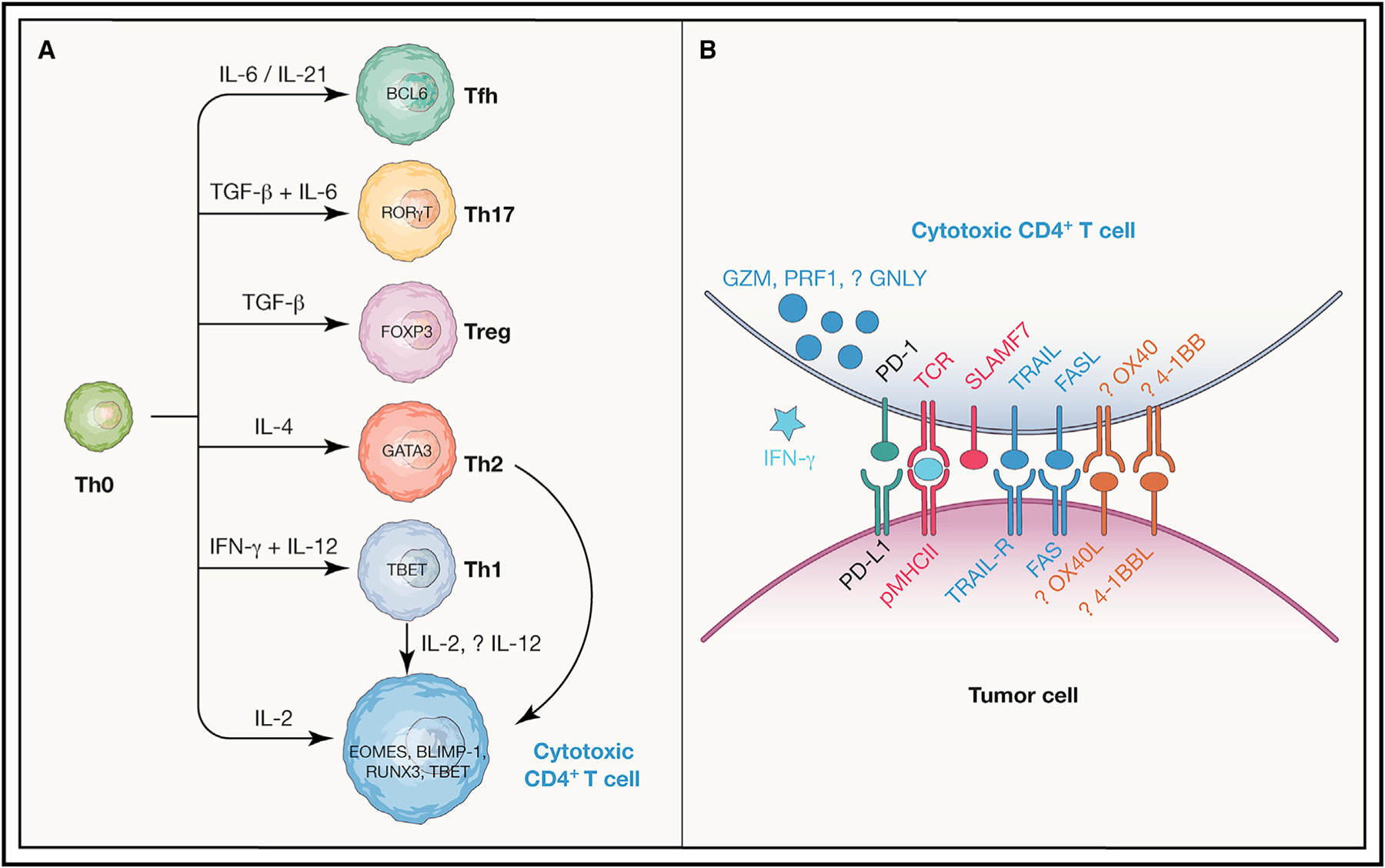
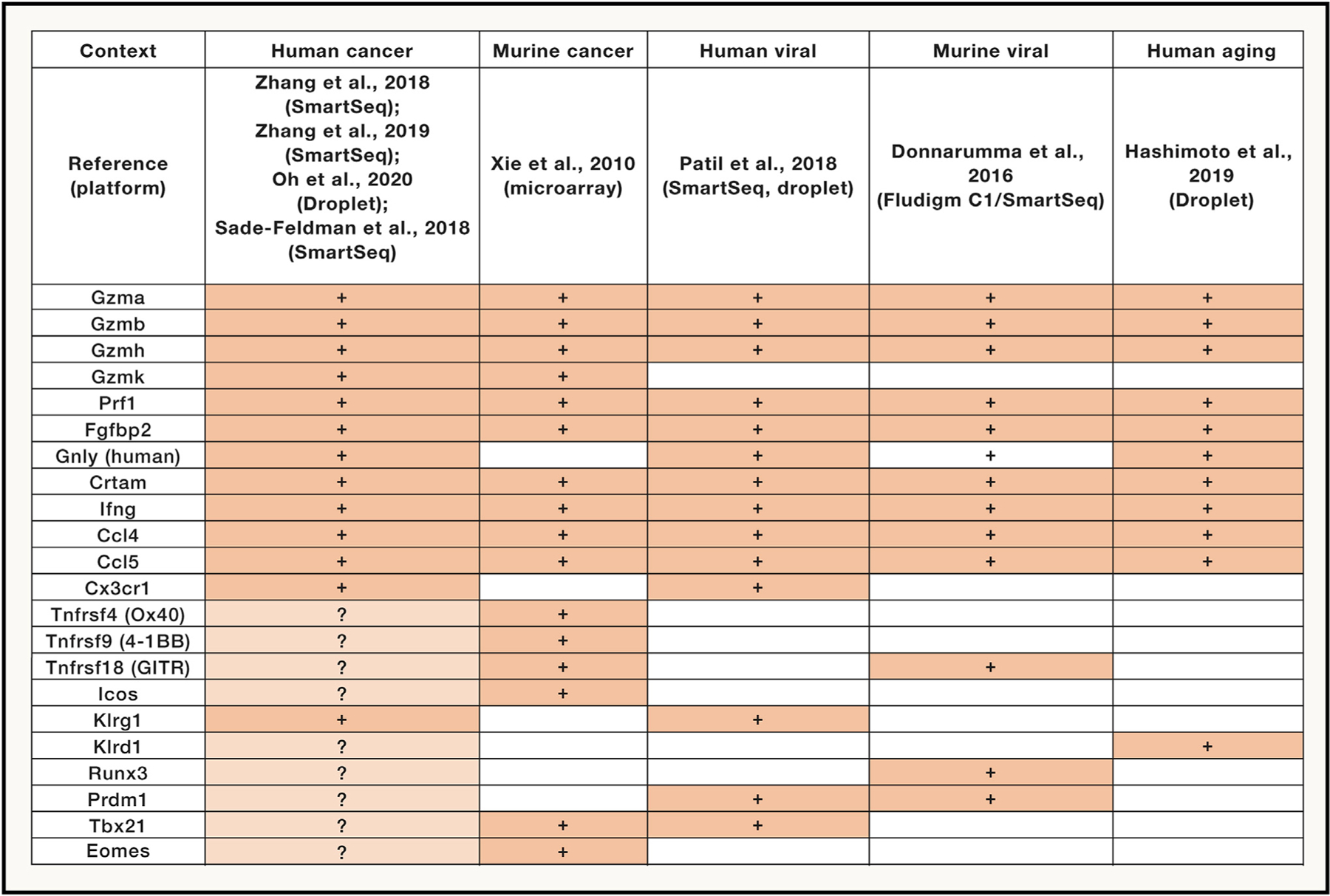
Cytotoxic T cells are important effectors of anti-tumor immunity. While tumor killing is ascribed to CD8 + T cell function, pre-clinical and clinical studies have identified intra-tumoral CD4 + T cells that possess cytotoxic programs and can directly kill cancer cells. Cytotoxic CD4 + T cells are found in other disease settings including infection and autoimmunity. Here, we review the phenotypic and functional characteristics of cytotoxic CD4 + T cells in non-cancer and cancer contexts. We conduct a comparative examination of cytolytic mechanisms of cytotoxic CD4 + T cells across disease states and synthesize features that define these cells independent of context. We discuss regulatory mechanisms driving ontogeny and effector function and evidence for the clinical relevance of cytotoxic CD4 + T cells in cancer. In this context, we highlight important gaps in understanding in the biology of cytotoxic CD4 + T cells as well as the potential use of these cells in immunotherapies for specific cancers.
Overview
The claims and statistics of this paper haven’t been checked yet.
Run the check — free, no account needed. It reads the open-access text and checks the sources it cites.
Integrity signals
Registry
Cites
Statistics
Figures
Verification
Claims the paper makes
The claims and statistics of this paper haven’t been checked yet.
Run the check — free, no account needed. It reads the open-access text and checks the sources it cites.
Claims other papers make about this one
Each is checked against this paper’s own text: does it say what the citing paper says it does?
The source backs part of the claim, not all of it — or backs it for a different population, condition or comparison.
In the citing paper
“we observed a significant increase in the total CD4+ T cells expressing IFN-γ (figure 4H) and granzyme B (GZMB; figure 4J),60–65 NK cells (figure 4N), and the amount of GZMB expression in CD8+ T cells (figure 4L) in the post-cryoablated RMS 76-9STINGwt TME as compared with RMS 76-9STING-/- TME in wild-type mice, as was Foxp3+ CD4+ cells (figure 4M).”
From Functional tumor cell-intrinsic STING, not host STING, drives local and systemic antitumor immunity and therapy efficacy following cryoablation (2023) · cites this paper as [64]
Experimental — accuracy not yet measured
Self-check
Percentages, sums and reported differences re-computed from the paper’s own numbers.
The self-check needs the paper’s full text.
Citations
Cites
An immunogenic personal neoantigen vaccine for patients with melanoma
Ott, P. A., Hu, Z., Keskin, D. B., Shukla, S. A., Sun, J., Bozym, D. J., Zhang, W., Luoma, A., Giobbie-Hurder, A., Peter, L., et al. (2017) · Nature · doi:10.1038/nature22991 · Cited by 2,936 · cited 1×
“Interestingly, in a complementary approach where high-risk resected stage III or stage IV melanoma patients were immunized with pools of long peptides containing predicted neoantigens prioritized based solely on HLA-A or HLA-B predicted binding affinity, neoantigen-specific CD4+ T cell responses were seen in addition…”
Puram, S. V., Tirosh, I., Parikh, A. S., Patel, A. P., Yizhak, K., Gillespie, S., Rodman, C., Luo, C. L., Mroz, E. A., Emerick, K. S., et al. (2017) · Cell · doi:10.1016/j.cell.2017.10.044 · Cited by 2,557
Personalized RNA mutanome vaccines mobilize poly-specific therapeutic immunity against cancer
Sahin, U., Derhovanessian, E., Miller, M., Kloke, B.-P., Simon, P., Löwer, M., Bukur, V., Tadmor, A. D., Luxemburger, U., Schrörs, B., et al. (2017) · Nature · doi:10.1038/nature23003 · Cited by 2,488
Defining T Cell States Associated with Response to Checkpoint Immunotherapy in Melanoma
Sade-Feldman, M., Yizhak, K., Bjorgaard, S. L., Ray, J. P., de Boer, C. G., Jenkins, R. W., Lieb, D. J., Chen, J. H., Frederick, D. T., Barzily-Rokni, M., et al. (2018) · Cell · doi:10.1016/j.cell.2018.10.038 · Cited by 2,053
Single-Cell Map of Diverse Immune Phenotypes in the Breast Tumor Microenvironment
Azizi, E., Carr, A. J., Plitas, G., Cornish, A. E., Konopacki, C., Prabhakaran, S., Nainys, J., Wu, K., Kiseliovas, V., Setty, M., et al. (2018) · Cell · doi:10.1016/j.cell.2018.05.060 · Cited by 1,976
Cancer Immunotherapy Based on Mutation-Specific CD4+ T Cells in a Patient with Epithelial Cancer
Tran, E., Turcotte, S., Gros, A., Robbins, P. F., Lu, Y., Dudley, M. E., Wunderlich, J. R., Somerville, R. P. T., Hogan, K., Hinrichs, C. S., et al. (2014) · Science · doi:10.1126/science.1251102 · Cited by 1,737
Global characterization of T cells in non-small-cell lung cancer by single-cell sequencing
Guo, X., Zhang, Y., Zheng, L., Zheng, C., Song, J., Zhang, Q., Kang, B., Liu, Z., Jin, L., Xing, R., et al. (2018) · Nature Medicine · doi:10.1038/s41591-018-0045-3 · Cited by 1,651
Landscape and Dynamics of Single Immune Cells in Hepatocellular Carcinoma
Zhang, Q., He, Y., Luo, N., Patel, S. J., Han, Y., Gao, R., Modak, M., Carotta, S., Haslinger, C., Kind, D., et al. (2019) · Cell · doi:10.1016/j.cell.2019.10.003 · Cited by 1,624
Lineage tracking reveals dynamic relationships of T cells in colorectal cancer
Zhang, L., Yu, X., Zheng, L., Zhang, Y., Li, Y., Fang, Q., Gao, R., Kang, B., Zhang, Q., Huang, J. Y., et al. (2018) · Nature · doi:10.1038/s41586-018-0694-x · Cited by 1,505
Treatment of Metastatic Melanoma with Autologous CD4+ T Cells against NY-ESO-1
Hunder, N. N. H., Wallen, H. D., Cao, J., Hendricks, D. W., Reilly, J. Z., Rodmyre, R. M., Jungbluth, A. A., Gnjatic, S., Thompson, J. A., & Yee, C. (2008) · New England Journal of Medicine · doi:10.1056/nejmoa0800251 · Cited by 904
Cited by
Sorted by citations
The cancer-immunity cycle: Indication, genotype, and immunotype
Mellman, I., Chen, D. S., Powles, T. B., & Turley, S. J. (2023) · Immunity · doi:10.1016/j.immuni.2023.09.011 · Cited by 1,018
Dynamics and specificities of T cells in cancer immunotherapy
Oliveira, G., & Wu, C. J. (2023) · Nature reviews. Cancer · doi:10.1038/s41568-023-00560-y · Cited by 574
Speiser, D. E., Chijioke, O., Schaeuble, K., & Münz, C. (2023) · Nature Cancer · doi:10.1038/s43018-023-00521-2 · Cited by 511
Xu, Z., Chen, Y., Ma, L., Chen, Y., Liu, J., Guo, Y., Yu, T., Zhang, L., Zhu, L., & Shu, Y. (2022) · Molecular Therapy · doi:10.1016/j.ymthe.2022.01.046 · Cited by 337
“Th cells can be further divided into Th1, Th17, and Tregs.(177)”
Nanomaterials for bone metastasis
Hao, X., Jiang, B., Wu, J., Xiang, D., Xiong, Z., Li, C., Li, Z., He, S., Tu, C., & Li, Z. (2024) · Journal of Controlled Release · doi:10.1016/j.jconrel.2024.07.067 · Cited by 240
The advent of immune stimulating CAFs in cancer
Tsoumakidou, M. (2023) · Nature reviews. Cancer · doi:10.1038/s41568-023-00549-7 · Cited by 192
Roles of reactive oxygen species in inflammation and cancer
Yu, Y., Liu, S., Yang, L., Song, P., Liu, Z., Liu, X., Yan, X., & Dong, Q. (2024) · MedComm · doi:10.1002/mco2.519 · Cited by 180
Cytotoxic CD4 + T Cells Eliminate Senescent Cells by Targeting Commensal Cytomegalovirus Antigen
Hasegawa, T., Oka, T., Son, H. G., Oliver-Garcia, V. S., Azin, M., Eisenhaure, T., Lieb, D., Hacohen, N., & Demehri, S. (2022) · Cell · doi:10.1016/j.cell.2023.02.033 · Cited by 163
Reactive Oxygen Species Bridge the Gap between Chronic Inflammation and Tumor Development
Yu, W., Tu, Y., Long, Z., Liu, J., Kong, D., Peng, J., Wu, H., Zheng, G., Zhao, J., Chen, Y., et al. (2022) · Oxidative Medicine and Cellular Longevity · doi:10.1155/2022/2606928 · Cited by 168
“CD4 + helper T cells (Th), such as Th1, Th2, and Th17, also a ff ect CD8 + T cell proliferation and cytotoxicity by secreting a series of in fl ammatory cytokines [127].”
CD4+ T cells in antitumor immunity
Montauti, E. I., Oh, D. Y., & Fong, L. H. (2024) · Trends in cancer · doi:10.1016/j.trecan.2024.07.009 · Cited by 154
Self-citationEosinophil–lymphocyte interactions in the tumor microenvironment and cancer immunotherapy
Grisaru‐Tal, S., Rothenberg, M. E., & Munitz, A. (2022) · Nature Immunology · doi:10.1038/s41590-022-01291-2 · Cited by 131
Runx3 drives a CD8+ T cell tissue residency program that is absent in CD4+ T cells
Fonseca, R., Burn, T. N., Gandolfo, L. C., Devi, S., Park, S. L., Obers, A., Evrard, M., Christo, S. N., Buquicchio, F. A., Lareau, C. A., et al. (2022) · Nature Immunology · doi:10.1038/s41590-022-01273-4 · Cited by 131
Cancer Resistance to Immunotherapy: Comprehensive Insights with Future Perspectives
Said, S. S., & Ibrahim, W. N. (2023) · Pharmaceutics · doi:10.3390/pharmaceutics15041143 · Cited by 134
Clinical advances of mRNA vaccines for cancer immunotherapy
Yaremenko, A. V., Khan, M. M., Zhen, X., Tang, Y., & Tao, W. (2025) · Med · doi:10.1016/j.medj.2024.11.015 · Cited by 133
CTLs heterogeneity and plasticity: implications for cancer immunotherapy
Peng, S., Lin, A., Jiang, A., Zhang, C., Zhang, J., Cheng, Q., Luo, P., & Bai, Y. (2024) · Molecular Cancer · doi:10.1186/s12943-024-01972-6 · Cited by 114
Extremely Differentiated T Cell Subsets Contribute to Tissue Deterioration During Aging
Soto‐Heredero, G., Heras, M. M. G. D. L., Escrig-Larena, J. I., & Mittelbrunn, M. (2023) · Annual Review of Immunology · doi:10.1146/annurev-immunol-101721-064501 · Cited by 96
Li, H., Zhang, M.-J., Zhang, B., Lin, W., Li, S., Xiong, D., Wang, Q., Wang, W.-D., Yang, Q., Huang, C., et al. (2025) · Nature Communications · doi:10.1038/s41467-025-59341-w · Cited by 107
“12e), aligning with recent discoveries indicating that cytotoxic CD4 + T cells within tumors can directly kill cancer cells 29,30 .”
Correction of age-associated defects in dendritic cells enables CD4+ T cells to eradicate tumors
Zhivaki, D., Kennedy, S. N., Park, J., Borriello, F., Devant, P., Cao, A., Bahleda, K. M., Murphy, S. M., Aubin, C., Evavold, C. L., et al. (2024) · Cell · doi:10.1016/j.cell.2024.05.026 · Cited by 102
Roles of CD4+ T cells as mediators of antitumor immunity
Kravtsov, D., Erbe, A. K., Sondel, P. M., & Rakhmilevich, A. L. (2022) · Frontiers in Immunology · doi:10.3389/fimmu.2022.972021 · Cited by 91
Thomas, M. F., Slowikowski, K., Manakongtreecheep, K., Sen, P., Samanta, N., Tantivit, J., Nasrallah, M., Zubiri, L., Smith, N. P., Tirard, A. J., et al. (2024) · Nature Medicine · doi:10.1038/s41591-024-02895-x · Cited by 94
“These cells are akin to cytotoxic CD4 T cells in human cancer and viral infection 36 and are predicted to be pathologic in irColitis.”
Preglej, T., & Ellmeier, W. (2022) · Immunology Letters · doi:10.1016/j.imlet.2022.05.001 · Cited by 86
Takahara, T., Nakamura, S., Tsuzuki, T., & Satou, A. (2023) · Cancers · doi:10.3390/cancers15030835 · Cited by 81
CD4 + T cell immunity against cutaneous melanoma encompasses multifaceted MHC II–dependent responses
Bawden, E., Wagner, T., Schröder, J., Effern, M., Hinze, D., Newland, L., Attrill, G. H., Lee, A. R., Engel, S., Freestone, D., et al. (2024) · Science Immunology · doi:10.1126/sciimmunol.adi9517 · Cited by 76
“There is a growing appreciation for the critical contributions of CD4 + T cells to cancer immunity ( 11 , 32 , 33 ).”
BackgroundThe Cancer Epitope Database and Analysis Resource (CEDAR)
Koşaloğlu‐Yalçın, Z., Blazeska, N., Vita, R., Carter, H. K., Nielsen, M., Schoenberger, S. P., Sette, A., & Peters, B. (2022) · Nucleic Acids Research · doi:10.1093/nar/gkac902 · Cited by 73
“They orchestrate cancer-specific antibody responses, secrete various inflammatory cytokines, and are also capable of direct cytotoxicity (13,14).”
BackgroundEvaluation of the Role of the Immune System Response After Minibeam Radiation Therapy
Bertho, A., Iturri, L., Brisebard, É., Juchaux, M., Gilbert, C., Ortiz, R., Sebrié, C., Jourdain, L., Lamirault, C., Ramasamy, G., et al. (2022) · International Journal of Radiation Oncology*Biology*Physics · doi:10.1016/j.ijrobp.2022.08.011 · Cited by 82
Stem-like CD4 + T cells in perivascular tertiary lymphoid structures sustain autoimmune vasculitis
Sato, Y., Jain, A. K., Ohtsuki, S., Okuyama, H., Sturmlechner, I., Takashima, Y., Le, K. C., Bois, M. C., Berry, G. J., Warrington, K. J., et al. (2023) · Science Translational Medicine · doi:10.1126/scitranslmed.adh0380 · Cited by 72
Chen, X., Zhao, J., Yue, S., Li, Z., Duan, X., Lin, Y., Yang, Y., He, J., Gao, L., Pan, Z., et al. (2024) · Nature Cancer · doi:10.1038/s43018-024-00760-x · Cited by 68
Regulation and impact of tumor-specific CD4+ T cells in cancer and immunotherapy
Guo, M., Liu, M. Y. R., & Brooks, D. G. (2024) · Trends in Immunology · doi:10.1016/j.it.2024.02.005 · Cited by 66
Exosomes Derived from Immune Cells: The New Role of Tumor Immune Microenvironment and Tumor Therapy
Wang, S., & Shi, Y. X. (2022) · International Journal of Nanomedicine · doi:10.2147/ijn.s388604 · Cited by 70
Li, D., Cao, D., Sun, Y., Cui, Y., Zhang, Y., Jiang, J., & Cao, X. (2024) · Frontiers in Immunology · doi:10.3389/fimmu.2024.1331641 · Cited by 67
Sievers, C. M., Craveiro, M., Friedman, J., Robbins, Y. L., Yang, X., Bai, K., Nguyen, A., Redman, J. M., Chari, R., Soon‐Shiong, P., et al. (2023) · Cancer Cell · doi:10.1016/j.ccell.2023.03.014 · Cited by 60
Harnessing Antitumor CD4+ T Cells for Cancer Immunotherapy
Khelil, M. B., Godet, Y., Abdeljaoued, S., Borg, C., Adotévi, O., & Loyon, R. (2022) · Cancers · doi:10.3390/cancers14010260 · Cited by 63
“Available evidence suggests that CD4+ CTL express RUNX3, BLIMP-1 and EOMES transcription factors in TME while T bet expression remains not clear depending on specific conditions and disease [118].”
BackgroundZhu, Q., Han, Y., He, Y., Meng, P., Fu, Y., Yang, H., He, G., Long, M., & Shi, Y. (2024) · Phytomedicine · doi:10.1016/j.phymed.2024.155560 · Cited by 62
Stražar, M., Park, J., Abelin, J. G., Taylor, H. B., Pedersen, T. K., Plichta, D. R., Brown, E., Eraslan, B., Hung, Y.-M., Ortiz, K., et al. (2023) · Immunity · doi:10.1016/j.immuni.2023.05.009 · Cited by 56
Cytotoxic CD4+ T cells in chronic viral infections and cancer
Malyshkina, A., Brüggemann, A., Paschen, A., & Dittmer, U. (2023) · Frontiers in Immunology · doi:10.3389/fimmu.2023.1271236 · Cited by 56
“Although CD4 + CTL have been recognized for decades in viral infections, they only recently attracted attention as direct anti-tumor effectors in solid cancers (176).”
BackgroundRole of CAR T Cell Metabolism for Therapeutic Efficacy
Saborido, J. R., Völkl, S., Aigner, M., Mackensen, A., & Mougiakakos, D. (2022) · Cancers · doi:10.3390/cancers14215442 · Cited by 56
Lin, A., Ding, Y., Li, Z., Jiang, A., Liu, Z., Wong, H. Z. H., Cheng, Q., Zhang, J., & Luo, P. (2025) · Biomarker Research · doi:10.1186/s40364-025-00765-3 · Cited by 60
“Among these, CD4 + T cells can crucially enhance the body’s anti-tumor immune response [16, 89, 90].”
Phulphagar, K. M., Ctortecka, C., Jácome, A. S. V., Klaeger, S., Verzani, E. K., Hernandez, G. M., Udeshi, N. D., Clauser, K. R., Abelin, J. G., & Carr, S. A. (2023) · Molecular & Cellular Proteomics · doi:10.1016/j.mcpro.2023.100563 · Cited by 49
“In addition, cytotoxic CD4+ T cells can secrete granzyme B and perforin to kill the tumor cells in an HLA-II-restricted manner (18).”
BackgroundThe role of CD4+ T cells in tumor and chronic viral immune responses
Xie, L., Fang, J., Yu, J., Zhang, W., He, Z., Ye, L., & Wang, H. (2023) · MedComm · doi:10.1002/mco2.390 · Cited by 54
“14 However, they also help form an immunosuppressive environment, which can prevent a favorable outcome in antitumor immunity.”
BackgroundWeymar, G. H. J., Bar‐On, Y., Oliveira, T. Y., Gaebler, C., Ramos, V., Hartweger, H., Breton, G., Caskey, M. F., Cohn, L. B., Janković, M., et al. (2022) · Cell Reports · doi:10.1016/j.celrep.2022.111311 · Cited by 42
“They are prominently expanded in HIV-1, cytomegalovirus (CMV), Epstein-Barr virus (EBV) infection, chronic inflammatory diseases, and virally induced malignancies (Abana et al., 2017; Appay et al., 2002; Juno et al., 2017; Oh and Fong, 2021; Zaunders et al., 2004).”
BackgroundYu, J., Yuan, A., Liu, Q., Wang, W., Sun, Y., Li, Z., Meng, C., Zhou, Y., & Cao, S. (2024) · World Journal of Surgical Oncology · doi:10.1186/s12957-024-03348-y · Cited by 42
“CD8 + T cells function as immunosuppressive cells, inhibiting antibody secretion and T cell proliferation, and may represent cytotoxic cells [47].”
BackgroundLu, X., Luo, Y., Nie, X., Zhang, B., Wang, X., Li, R., Liu, G., Zhou, Q., Liu, Z., Fan, L., et al. (2023) · Nature Communications · doi:10.1038/s41467-023-44305-9 · Cited by 43
He, M., Li, A., Gu, Y., Qingqing, C., Huanhuan, C., Xiaoyan, L., & Jiyong, L. (2024) · Journal of Nanobiotechnology · doi:10.1186/s12951-024-02835-4 · Cited by 45
“CD4 + T cells, also known as helper T cells, can assist CD8 + T cells in cellular immune killing, clearing tumor cells, and assisting B cells in humoral immunity [118].”
BackgroundWang, M., Zhang, L., Chang, W., & Zhang, Y. (2023) · Frontiers in Immunology · doi:10.3389/fimmu.2022.1096551 · Cited by 44
Kim, J.-H., Kim, Y., La, J., Park, W. H., Kim, H.-J., Park, S. H., Ku, K. B., Kang, B. H., Lim, J., Kwon, M. S., et al. (2023) · Cell Reports · doi:10.1016/j.celrep.2023.113220 · Cited by 39
The potential and promise for clinical application of adoptive T cell therapy in cancer
Li, Y., Zheng, Y., Liu, T., Liao, C., Shen, G., & He, Z. (2024) · Journal of Translational Medicine · doi:10.1186/s12967-024-05206-7 · Cited by 41
“Another subset of CD4 + T cells could mediate cytotoxicity in cancers by expressing GZM and perforin, or directly exerting cytotoxic effects [30].”
BackgroundTumor Microenvironment in Melanoma—Characteristic and Clinical Implications
Sikorski, H., Zmijewski, M. A., & Piotrowska, A. (2025) · International Journal of Molecular Sciences · doi:10.3390/ijms26146778 · Cited by 38
Shin, H., Kim, Y., & Jon, S. (2023) · ACS Nano · doi:10.1021/acsnano.3c00764 · Cited by 38
Learning from the nexus of autoimmunity and cancer
Mangani, D., Yang, D., & Anderson, A. C. (2023) · Immunity · doi:10.1016/j.immuni.2023.01.022 · Cited by 33
Active ingredients of traditional Chinese medicine for enhancing the effect of tumor immunotherapy
Yang, C., Li, D., Ko, C.-N., Wang, K., & Wang, H. (2023) · Frontiers in Immunology · doi:10.3389/fimmu.2023.1133050 · Cited by 35
Heiduk, M., Klimová, A., Reiche, C., Digomann, D., Beer, C., Aust, D. E., Distler, M., Weitz, J., Seifert, A. M., & Seifert, L. (2023) · Clinical Cancer Research · doi:10.1158/1078-0432.ccr-23-0258 · Cited by 31
“In CD4 þ T cells, EOMES may drive cells into a cytotoxic phenotype (29).”
Synergist for antitumor therapy: Astragalus polysaccharides acting on immune microenvironment
Xu, Q., Cheng, W., Wei, J., Ou, Y., Xiao, X. M., & Jia, Y. (2023) · Discover Oncology · doi:10.1007/s12672-023-00798-w · Cited by 31
T cells in cancer: mechanistic insights and therapeutic advances
Pu, J., Liu, T., Zhou, Y., Chen, M., Fu, X., Wan, Y., Wang, J., Chen, B., Sharma, A., Lukacs‐Kornek, V., et al. (2025) · Biomarker Research · doi:10.1186/s40364-025-00807-w · Cited by 33
“Their roles in cancer vaccines and adoptive T cell therapies are increasingly recognized, with evidence suggesting that CD4 + T cells may improve treatment outcomes [118, 125].”
Beyond T-cell subsets: stemness and adaptation redefining immunity and immunotherapy
Zou, D., Li, X. C., & Chen, W. (2025) · Cellular and Molecular Immunology · doi:10.1038/s41423-025-01321-7 · Cited by 30
Cancer-Homing CAR-T Cells and Endogenous Immune Population Dynamics
Guerra, E., Pietro, R. D., Basile, M., Trerotola, M., & Alberti, S. (2021) · International Journal of Molecular Sciences · doi:10.3390/ijms23010405 · Cited by 30
“Inhibition of CD4+ and CD8+ T cells by Treg allows maintaining self-tolerance [96] through the secretion of immunosuppressive cytokines, e.g., IL-2, IL-10, IL-35, TGF-β, and the expression of checkpoint molecules such as CTLA-4 and PD-1.”
BackgroundInfluentialTranscriptional and Clonal Characterization of Cytotoxic T Cells in Crescentic Glomerulonephritis
Mueller, A., Zhao, Y., Cicek, H., Paust, H., Sivayoganathan, A., Linke, A., Wegscheid, C., Wiech, T., Huber, T. B., Meyer‐Schwesinger, C., et al. (2023) · Journal of the American Society of Nephrology · doi:10.1681/asn.0000000000000116 · Cited by 30
Wang, Y., Liu, M., Zhang, L., Liu, X., Ji, H., Wang, Y., Gui, J., Yan, Y., & Wen, Z. (2023) · Cell Death and Disease · doi:10.1038/s41419-023-06336-4 · Cited by 31
Zhao, Y., Bai, Y., Li, M., Nie, X., Meng, H., Shimizu, S., Liu, L., Yang, Q., Shen, M., & Li, Y. (2024) · Journal of Nanobiotechnology · doi:10.1186/s12951-024-02677-0 · Cited by 29
Cao, X., Kang, Y., Tai, P., Zhang, P., Lin, X. H., Xu, F., Nie, Z., & He, B. (2024) · Clinics and Research in Hepatology and Gastroenterology · doi:10.1016/j.clinre.2024.102510 · Cited by 29
Cid, L. L., Wong, J., Botana, I. F., Paul, Y., Wierz, M., Pilger, L.-M., Floerchinger, A., Tan, C. L., Gonder, S., Pagano, G., et al. (2025) · Nature Communications · doi:10.1038/s41467-025-61822-x · Cited by 33
Dai, H., Wang, X., Wu, Q., Tan, Y., Shen, H., Gu, Y., Su, C., & Chen, A. (2025) · Cell Division · doi:10.1186/s13008-025-00172-y · Cited by 29
“CD4 T cells exert anti-tumor effects by elevating the level of killing insights of other effector cells within the environment [35, 36].”
Lau, D., Khare, S., Stein, M. M., Jain, P., Gao, Y., BenTaieb, A., Rand, T., Salahudeen, A. A., & Khan, A. A. (2022) · Nature Communications · doi:10.1038/s41467-022-31769-4 · Cited by 32
Thelen, B., Schipperges, V., Knörlein, P., Hummel, J. F., Arnold, F., Kupferschmid, L., Klose, C. S. N., Arnold, S. J., Boerries, M., & Tanriver, Y. (2023) · Frontiers in Immunology · doi:10.3389/fimmu.2023.1058267 · Cited by 29
Ribonuclease 1 Enhances Antitumor Immunity against Breast Cancer by Boosting T cell Activation
Wang, Y., Lee, H., Jiang, Z., Chan, L.-C., Hortobágyi, G. N., Yu, D., & Hung, M. (2023) · International Journal of Biological Sciences · doi:10.7150/ijbs.84592 · Cited by 28
“Notably, pre-clinical and clinical studies have clarified the roles of cytotoxic CD4+ T cells in various human cancer types, including breast cancer, in which intra-tumoral CD4+ T cells that express cytolytic proteins, such as granzymes, can directly kill tumor cells independently of conventional CD8+ T cells [67].”
BackgroundEngineering dendritic cell biomimetic membrane as a delivery system for tumor targeted therapy
Liu, H., Lu, Y., Zong, J., Zhang, B., Li, X., Qi, H., Yu, T., & Li, Y. (2024) · Journal of Nanobiotechnology · doi:10.1186/s12951-024-02913-7 · Cited by 34
“CD4 + T cells predominantly amplify CTLs anti-tumor activity through immune regulation but have also been found to possess direct cytotoxic capabilities in both preclinical and clinical studies, with cytotoxic CD4 + T cells identified in human cancer research [53–55].”
BackgroundDucellier, S., Demeules, M., Letribot, B., Gaetani, M., Michaudel, C., Sokol, H., Hamzé, A., Alami, M., Nascimento, M., & Apcher, S. (2024) · Journal for ImmunoTherapy of Cancer · doi:10.1136/jitc-2023-007588 · Cited by 27
Immune modulation in malignant pleural effusion: from microenvironment to therapeutic implications
Ge, S., Zhao, Y., Liang, J., He, Z., Li, K., Zhang, G., Hua, B., Zheng, H., Guo, Q., Qi, R., et al. (2024) · Cancer Cell International · doi:10.1186/s12935-024-03211-w · Cited by 28
Aging reshapes the adaptive immune system from healer to saboteur
Delgado-Pulido, S., Yousefzadeh, M. J., & Mittelbrunn, M. (2025) · Nature Aging · doi:10.1038/s43587-025-00906-1 · Cited by 29
“These cells may have a role in cancer protection 104 as well as in the elimination of senescent cells 31 .”
β-adrenergic signaling blockade attenuates metastasis through activation of cytotoxic CD4 T cells
Fjæstad, K. Y., Johansen, A. Z., Linder, H., Baker, K. J., Schattefor, M., Czajkowski, N. K., Thorseth, M., Siersbæk, M. S., Kurzay, A., Perez-Penco, M., et al. (2025) · Nature Communications · doi:10.1038/s41467-025-65048-9 · Cited by 27
Epigenetic regulation of tumor-immune symbiosis in glioma
Liu, Y., Ali, H. A., Khan, F., Pang, L., & Chen, P. (2024) · Trends in Molecular Medicine · doi:10.1016/j.molmed.2024.02.004 · Cited by 26
De novo identification of CD4+ T cell epitopes
Zdinak, P. M., Trivedi, N., Grebinoski, S., Torrey, J., Martinez, E. Z., Martínez, S., Hicks, L., Ranjan, R., Makani, V. K. K., Roland, M. M., et al. (2024) · Nature Methods · doi:10.1038/s41592-024-02255-0 · Cited by 26
“Recognition of foreign antigens such as those from SARS-CoV-2 and tumor neoantigens by CD4 + T cells leads to their protective function 5,6 .”
Zhu, C., Lai, Y., Liu, C., Teng, L., Zhu, Y., Lin, X., Fu, X., Lai, Q., Liu, S., Zhou, X., et al. (2024) · Frontiers in Pharmacology · doi:10.3389/fphar.2024.1387243 · Cited by 27
“As an indispensable member of anti-tumor immunity, CD4 + T cells promote anti-tumor immunity by assisting CD8 effector T cells or directly eliminate tumor cells by acting as cytotoxic T cells (Oh and Fong, 2021).”
BackgroundSTING in cancer immunoediting: Modeling tumor-immune dynamics throughout cancer development
Zhang, X., Chen, Y., Liu, X., Li, G., Zhang, S., Zhang, Q., Cui, Z., Qin, M., Simon, H., Terzić, J., et al. (2025) · Cancer Letters · doi:10.1016/j.canlet.2024.217410 · Cited by 28
Jagodinsky, J. C., Bates, A. M., Clark, P. A., Sriramaneni, R. N., Havighurst, T. C., Chakravarty, I., Nystuen, E. J., Kim, K., Sondel, P. M., Jin, W. J., et al. (2022) · Journal for ImmunoTherapy of Cancer · doi:10.1136/jitc-2022-005103 · Cited by 25
Wang, Y., & Ding, S. (2024) · Journal of Translational Medicine · doi:10.1186/s12967-024-05266-9 · Cited by 25
“Moreover, EVs might also boost the cytotoxicity of T cells against tumor cells [255, 256], aiding in tumor suppression and potentially easing the effects of cachexia.”
BackgroundWang, Z., Fan, G., Zhu, H., Yu, L., She, D., Wei, Y., Huang, J., Li, T., Zhan, S., Zhou, S., et al. (2022) · Frontiers in Oncology · doi:10.3389/fonc.2022.980390 · Cited by 25
Piezo1 facilitates optimal T cell activation during tumor challenge
Abiff, M., Alshebremi, M., Bonner, M., Myers, J., Kim, B., Tomchuck, S. L., Santin, A., Kingsley, D., Choi, S. H., & Huang, A. Y.-C. (2023) · OncoImmunology · doi:10.1080/2162402x.2023.2281179 · Cited by 25
“Next, we interrogated the quality of the CD4 + T cell pool 23,24 and were surprised to find a trend toward increased CD25 expression among CD4 + T cells in cryoablated P1KO mice when compared to WT (Figure 2h).”
MethodHernández-López, P., van Diest, E., Brázda, P., Heijhuurs, S., Meringa, A. D., Heyningen, L. H. V., Riillo, C., Schwenzel, C., Zintchenko, M., Johanna, I., et al. (2023) · Nature Immunology · doi:10.1038/s41590-023-01665-0 · Cited by 23
“Moreover, TEG001-NKG2D-4-1BB CD28TM cells promoted the development of cytotoxic CD4 + T cells, a cell population that has been associated with good prognosis in individuals with cancer 44 and with longevity 45 .”
Yamada, K., Saito, M., Ando, M., Abe, T., Mukoyama, T., Agawa, K., Watanabe, A., Takamura, S., Fujita, M., Urakawa, N., et al. (2022) · Cells · doi:10.3390/cells12010086 · Cited by 23
“In the TIME, CD4+ T cells are traditionally considered as “helpers” of CD8+ T cells; however, recent studies have shown that a cluster of CD4+ T cells have cytotoxic activity and anti-tumor effects like CD8+ T cells [14,15].”
BackgroundImmunity‐Modulating Metal‐Based Nanomaterials for Cancer Immunotherapy
Sun, X., Xu, X., Li, F., Wang, H., Sun, Y., Yang, H., Li, X., Kong, B., Hou, H., Liu, H., et al. (2025) · Advanced Functional Materials · doi:10.1002/adfm.202502646 · Cited by 24
Harnessing mRNA-lipid nanoparticles as innovative therapies for autoimmune diseases
Razavi, R., Kegel, M., Muscat-Rivera, J., Weissman, D., & Melamed, J. R. (2025) · Molecular Therapy — Methods & Clinical Development · doi:10.1016/j.omtm.2025.101566 · Cited by 27
TCF-1 Is Required for CD4 T Cell Persistence Functions during AlloImmunity
Mammadli, M., Suo, L., Sen, J. M., & Karimi, M. A. (2023) · International Journal of Molecular Sciences · doi:10.3390/ijms24054326 · Cited by 22
Wang, J., Li, R., Wang, W., Pan, H., Xie, C., Yau, L., Wang, X., Long, W.-L., Chen, R., Liang, T.-L., et al. (2023) · Pharmacological Research · doi:10.1016/j.phrs.2023.106850 · Cited by 23
Climent, F., Nicolae, A., de Leval, L., Dirnhofer, S., Leoncini, L., Ondrejka, S. L., Soma, L. A., Wotherspoon, A. C., Zamò, A., Quintanilla‐Martínez, L., et al. (2023) · Archiv für Pathologische Anatomie und Physiologie und für Klinische Medicin · doi:10.1007/s00428-023-03616-4 · Cited by 23
“The CTLs are mostly represented by alpha/ beta CD8+ T cells and in minor proportion by gamma/delta T cells and CD4+ T cells [2, 3].”
BackgroundKeshari, S., Shavkunov, A. S., Miao, Q., Saha, A., Minowa, T., Molgora, M., Williams, C. D., Chaib, M., Highsmith, A. M., Pineda, J. E., et al. (2024) · Cell Reports · doi:10.1016/j.celrep.2024.114875 · Cited by 28
An, Q., Duan, L., Wang, Y., Wang, F., Liu, X., Liu, C., & Hu, Q. (2025) · Journal of Translational Medicine · doi:10.1186/s12967-025-06167-1 · Cited by 28
Enhanced human T cell expansion with inverse opal hydrogels
Santos, F., Valderas-Gutiérrez, J., del Río, E. P., Castellote‐Borrell, M., Rodríguez, X. R., Veciana, J., Ratera, I., & Guasch, J. (2022) · Biomaterials Science · doi:10.1039/d2bm00486k · Cited by 22
Eschke, M., Moore, P. F., Chang, H., Alber, G., & Keller, S. M. (2023) · Frontiers in Immunology · doi:10.3389/fimmu.2023.1123366 · Cited by 22
Kumar, A., Ramani, V., Bharti, V., Bellan, D. D. L., Saleh, N., Uzhachenko, R. V., Shen, C., Arteaga, C. L., Richmond, A. J., Reddy, S. M., et al. (2023) · Journal for ImmunoTherapy of Cancer · doi:10.1136/jitc-2022-006019 · Cited by 23
Fonseca, A. F., & Antunes, D. A. (2023) · Frontiers in Immunology · doi:10.3389/fimmu.2023.1142573 · Cited by 22
Cui, Z., Zou, F., Wang, R., Wang, L., Cheng, F., Wang, L., Pan, R., Guan, X., Zheng, N., & Wang, W. (2023) · World Journal of Surgical Oncology · doi:10.1186/s12957-023-03187-3 · Cited by 22
Choi, Y., Na, D., Yoon, G., Kim, J., Min, S., Yi, H., Cho, S., Cho, J. H., Lee, C., & Jang, J. (2025) · Advanced Science · doi:10.1002/advs.202411769 · Cited by 26
Sex differences in bladder cancer: understanding biological and clinical implications
Chaudhary, P., Singha, B., Abdel-Hafiz, H. A., Velegraki, M., Sundi, D., Satturwar, S. P., Parwani, A. V., Grivennikov, S. I., You, S., Goodridge, H. S., et al. (2025) · Biology of Sex Differences · doi:10.1186/s13293-025-00715-6 · Cited by 25
“Expression of several cytokines, such as IL-6, IL-1 or IL-10 can be further regulated in sex-dependent manner including by AR or ER signaling and transcription complexes such as selective AR modulators (SARM) and SERM [190, 191].”
Uncoupling CD4+ TIL-Mediated Tumor Killing from JAK-Signaling in Melanoma
Draghi, A., Presti, M., Jensen, A. W. P., Chamberlain, C. A., Albieri, B., Rasmussen, A.-C. K., Andersen, M. H., Crowther, M. D., Svane, I. M., & Donia, M. (2023) · Clinical Cancer Research · doi:10.1158/1078-0432.ccr-22-3853 · Cited by 21
Ouyang, W., Peng, Q., Lai, Z., Huang, H., Huang, Z., Xie, X., Lin, R., Wang, Z., Yao, H., & Yu, Y. (2024) · Heliyon · doi:10.1016/j.heliyon.2024.e27151 · Cited by 20
Wu, C. J., Duan, L., Li, H., Liu, X., Cai, T., Yang, Y., Yin, Y., Chang, W., Zhong, L., Zhang, L., et al. (2023) · Clinical and Translational Medicine · doi:10.1002/ctm2.1303 · Cited by 20
“12,13 Activation of different T helper cell subtypes may exert contradictory effects on tumour immune response.”
BackgroundLi, P., Du, Y., Qiu, J., Li, D., Li, G., & Shan, G. (2023) · Advanced Healthcare Materials · doi:10.1002/adhm.202301517 · Cited by 20
CD4 T cells acquire Eomesodermin to modulate cellular senescence and aging
Elyahu, Y., Feygin, I., Eremenko, E., Pinkas, N., Zemer, A., Shicht, A., Berner, O., Avigdory-Meiri, R., Nemirovsky, A., Reshef, K., et al. (2025) · Nature Aging · doi:10.1038/s43587-025-00953-8 · Cited by 19
Zhao, Z., Liu, S., Sun, R., Zhu, W., Zhang, Y., Liu, T., Li, T., Jiang, N., Guo, H., & Yang, R. L. (2023) · Frontiers in Immunology · doi:10.3389/fimmu.2023.1085476 · Cited by 19
Wang, Y., Zhou, C.-P., Wang, D.-T., Ma, J., Sun, X., Wang, Y., & Zhang, Y. (2024) · Frontiers in Immunology · doi:10.3389/fimmu.2024.1343512 · Cited by 19
“Previous investigation have revealed that CD4+ T cells not only express key molecules associated with cytolysis (such as Granzymes [GZM] and Perforin [PRF1]) but also possess direct cytotoxicity, forming the basis for their protective immunity, including in cancer (40).”
Background
Metadata
- Authors
- Oh, D. Y., & Fong, L.
- Affiliations
- University of California, San Francisco (US)
- Corresponding author
- Fong, Lawrence
- Venue
- Immunity
- Publisher
- Elsevier BV
- Published
- 2021-12
- Volume
- 54
- Issue
- 12
- Pages
- 2701-2711
- ISSN
- 1074-7613 (ISSN-L)
- PMC
- PMC8809482
- OpenAlex
- W4200244347
- Cited by
- 467
- References
- 73
- Citations by year
- 2026: 81 · 2025: 127 · 2024: 116 · 2023: 101 · 2022: 41 · 2021: 1
- FWCI
- 6.86
- Type
- journal article
- Language
- en
- Open access
- hybrid
- doi.org
- Licence
- Locations
- Immunity (publishedVersion, cc-by)
- PubMed (publishedVersion)
- PubMed Central (acceptedVersion, cc-by)
- eScholarship (California Digital Library) (submittedVersion, cc-by)
- Funders
- NCI
- National Institutes of Health (K08AI139375)
- Prostate Cancer Foundation (R35CA253175)
- Bavarian Nordic
- Genentech
- Parker Institute for Cancer Immunotherapy
- AbbVie
- Amgen
- Merck
- Merck KGaA
- Topics
- Life Sciences › Immunology and Microbiology › Immunology › T-cell and B-cell Immunology
- Health Sciences › Medicine › Oncology › Cancer Immunotherapy and Biomarkers
- Life Sciences › Immunology and Microbiology › Immunology › Immunotherapy and Immune Responses
- Keywords
- cytotoxic CD4+ T cells, antitumor immunity, cytotoxicity mechanism, cancer immunotherapy, infection, autoimmunity
- MeSH terms
- Animals, Cytotoxicity, Immunologic, Humans, Neoplasms, T-Lymphocytes, Cytotoxic, CD4-Positive T-Lymphocytes, Immunotherapy, Adoptive
About these checks
Registry, retraction, Cites and statistics results are computed, not judged, with one exception: a printed reference that no index lists is read once by a model before it counts as a citation error. Claims are extracted by a model and kept only when their quote appears verbatim in the text; each cited source is then checked, with a model’s help, for whether it says what the claim relies on. Those verdicts can be wrong — read the claim’s quote and the cited source before relying on one.
Statistics and arithmetic are recomputed, not judged.
Confidence bands are shown only for fields calibrated on our annotated test set. None is calibrated yet, so no band is shown.
What counts as a claim ›How we measure confidence ›How we check this ›
Are you an author, or do you see a problem with this page? Request a review
