

The DOI matches its Crossref record; 72 of the 73 references it cites were found in a registry or an index.
Cytotoxic CD4+ T cells in cancer: Expanding the immune effector toolbox
Open accessAbstract
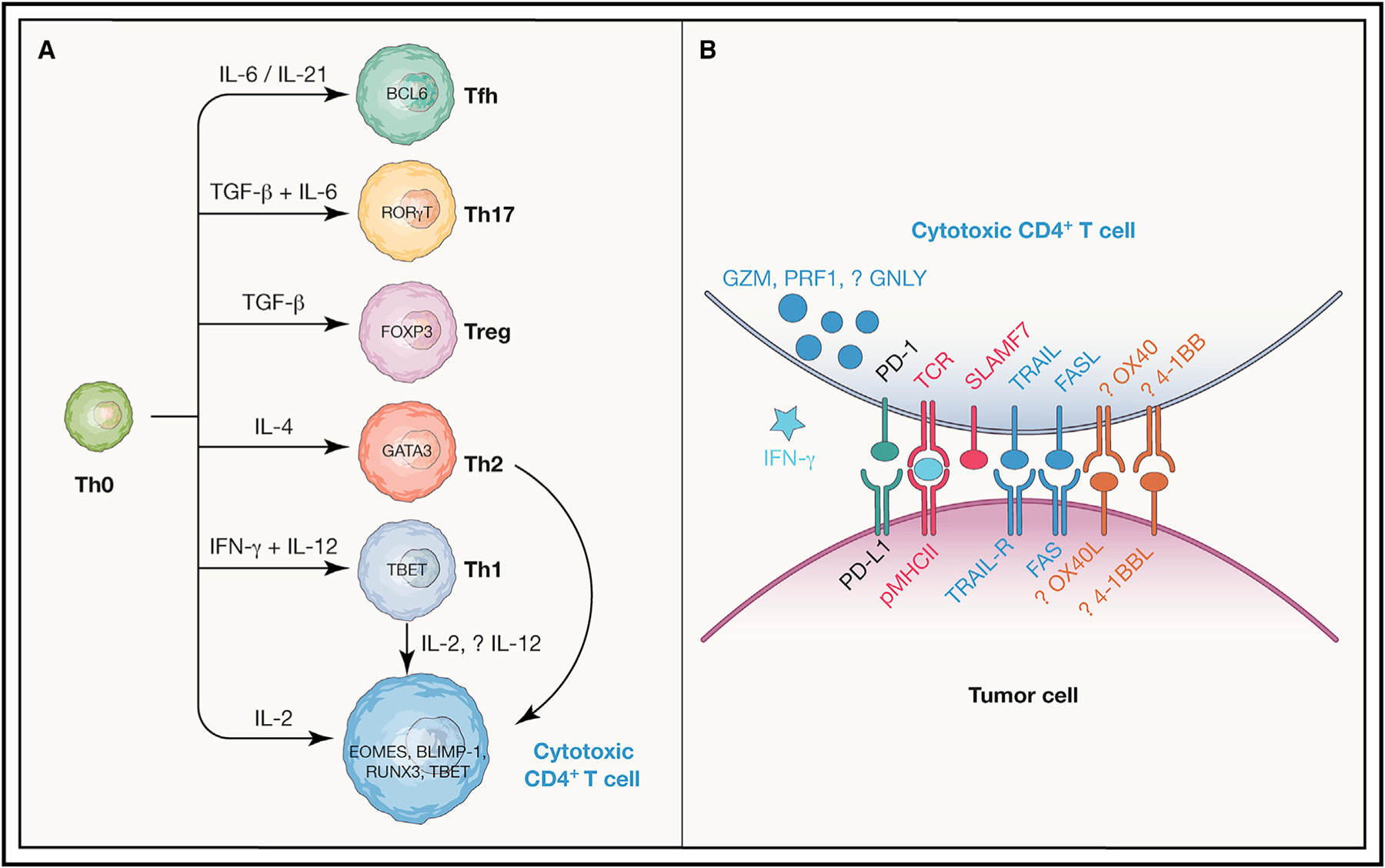
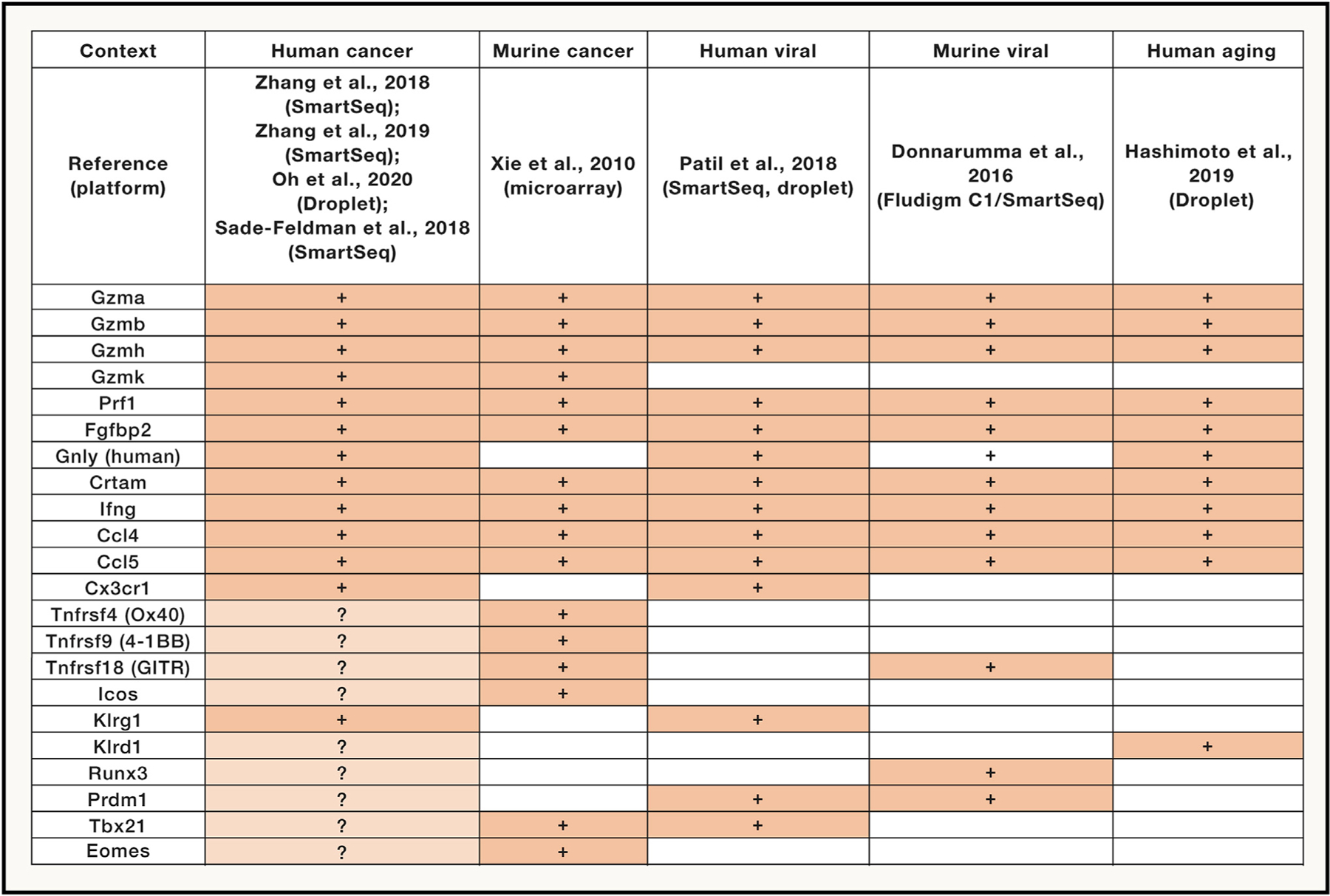
Cytotoxic T cells are important effectors of anti-tumor immunity. While tumor killing is ascribed to CD8 + T cell function, pre-clinical and clinical studies have identified intra-tumoral CD4 + T cells that possess cytotoxic programs and can directly kill cancer cells. Cytotoxic CD4 + T cells are found in other disease settings including infection and autoimmunity. Here, we review the phenotypic and functional characteristics of cytotoxic CD4 + T cells in non-cancer and cancer contexts. We conduct a comparative examination of cytolytic mechanisms of cytotoxic CD4 + T cells across disease states and synthesize features that define these cells independent of context. We discuss regulatory mechanisms driving ontogeny and effector function and evidence for the clinical relevance of cytotoxic CD4 + T cells in cancer. In this context, we highlight important gaps in understanding in the biology of cytotoxic CD4 + T cells as well as the potential use of these cells in immunotherapies for specific cancers.
Overview
The claims and statistics of this paper haven’t been checked yet.
Run the check — free, no account needed. It reads the open-access text and checks the sources it cites.
Integrity signals
Registry
Cites
Statistics
Figures
Verification
Claims the paper makes
The claims and statistics of this paper haven’t been checked yet.
Run the check — free, no account needed. It reads the open-access text and checks the sources it cites.
Claims other papers make about this one
Each is checked against this paper’s own text: does it say what the citing paper says it does?
The source backs part of the claim, not all of it — or backs it for a different population, condition or comparison.
In the citing paper
“we observed a significant increase in the total CD4+ T cells expressing IFN-γ (figure 4H) and granzyme B (GZMB; figure 4J),60–65 NK cells (figure 4N), and the amount of GZMB expression in CD8+ T cells (figure 4L) in the post-cryoablated RMS 76-9STINGwt TME as compared with RMS 76-9STING-/- TME in wild-type mice, as was Foxp3+ CD4+ cells (figure 4M).”
From Functional tumor cell-intrinsic STING, not host STING, drives local and systemic antitumor immunity and therapy efficacy following cryoablation (2023) · cites this paper as [64]
Experimental — accuracy not yet measured
Self-check
Percentages, sums and reported differences re-computed from the paper’s own numbers.
The self-check needs the paper’s full text.
Citations
Cites
An immunogenic personal neoantigen vaccine for patients with melanoma
Ott, P. A., Hu, Z., Keskin, D. B., Shukla, S. A., Sun, J., Bozym, D. J., Zhang, W., Luoma, A., Giobbie-Hurder, A., Peter, L., et al. (2017) · Nature · doi:10.1038/nature22991 · Cited by 2,936 · cited 1×
“Interestingly, in a complementary approach where high-risk resected stage III or stage IV melanoma patients were immunized with pools of long peptides containing predicted neoantigens prioritized based solely on HLA-A or HLA-B predicted binding affinity, neoantigen-specific CD4+ T cell responses were seen in addition…”
Puram, S. V., Tirosh, I., Parikh, A. S., Patel, A. P., Yizhak, K., Gillespie, S., Rodman, C., Luo, C. L., Mroz, E. A., Emerick, K. S., et al. (2017) · Cell · doi:10.1016/j.cell.2017.10.044 · Cited by 2,557
Personalized RNA mutanome vaccines mobilize poly-specific therapeutic immunity against cancer
Sahin, U., Derhovanessian, E., Miller, M., Kloke, B.-P., Simon, P., Löwer, M., Bukur, V., Tadmor, A. D., Luxemburger, U., Schrörs, B., et al. (2017) · Nature · doi:10.1038/nature23003 · Cited by 2,488
Defining T Cell States Associated with Response to Checkpoint Immunotherapy in Melanoma
Sade-Feldman, M., Yizhak, K., Bjorgaard, S. L., Ray, J. P., de Boer, C. G., Jenkins, R. W., Lieb, D. J., Chen, J. H., Frederick, D. T., Barzily-Rokni, M., et al. (2018) · Cell · doi:10.1016/j.cell.2018.10.038 · Cited by 2,053
Single-Cell Map of Diverse Immune Phenotypes in the Breast Tumor Microenvironment
Azizi, E., Carr, A. J., Plitas, G., Cornish, A. E., Konopacki, C., Prabhakaran, S., Nainys, J., Wu, K., Kiseliovas, V., Setty, M., et al. (2018) · Cell · doi:10.1016/j.cell.2018.05.060 · Cited by 1,976
Cancer Immunotherapy Based on Mutation-Specific CD4+ T Cells in a Patient with Epithelial Cancer
Tran, E., Turcotte, S., Gros, A., Robbins, P. F., Lu, Y., Dudley, M. E., Wunderlich, J. R., Somerville, R. P. T., Hogan, K., Hinrichs, C. S., et al. (2014) · Science · doi:10.1126/science.1251102 · Cited by 1,737
Global characterization of T cells in non-small-cell lung cancer by single-cell sequencing
Guo, X., Zhang, Y., Zheng, L., Zheng, C., Song, J., Zhang, Q., Kang, B., Liu, Z., Jin, L., Xing, R., et al. (2018) · Nature Medicine · doi:10.1038/s41591-018-0045-3 · Cited by 1,651
Landscape and Dynamics of Single Immune Cells in Hepatocellular Carcinoma
Zhang, Q., He, Y., Luo, N., Patel, S. J., Han, Y., Gao, R., Modak, M., Carotta, S., Haslinger, C., Kind, D., et al. (2019) · Cell · doi:10.1016/j.cell.2019.10.003 · Cited by 1,624
Lineage tracking reveals dynamic relationships of T cells in colorectal cancer
Zhang, L., Yu, X., Zheng, L., Zhang, Y., Li, Y., Fang, Q., Gao, R., Kang, B., Zhang, Q., Huang, J. Y., et al. (2018) · Nature · doi:10.1038/s41586-018-0694-x · Cited by 1,505
Treatment of Metastatic Melanoma with Autologous CD4+ T Cells against NY-ESO-1
Hunder, N. N. H., Wallen, H. D., Cao, J., Hendricks, D. W., Reilly, J. Z., Rodmyre, R. M., Jungbluth, A. A., Gnjatic, S., Thompson, J. A., & Yee, C. (2008) · New England Journal of Medicine · doi:10.1056/nejmoa0800251 · Cited by 904
Cited by
Sorted by citations
Items 201–300 of 476
TIGIT Blockade Reshapes the Tumor Microenvironment Based on the Single-cell RNA-Sequencing Analysis
Lang, Y., Huang, H., Jiang, H., Wu, S., Chen, Y., Xu, B., Liu, Y., Zhu, D., Zheng, X. W., Chen, L., et al. (2024) · Journal of Immunotherapy · doi:10.1097/cji.0000000000000511 · Cited by 6
“26,27 30 It has been widely reported that Tregs express high levels of TIGIT in the TME.”
BackgroundPeng, S., Yuan, X., Li, H., Huang, H., Li, C., Wei, C., Ren, J., Zhang, Q., Ding, G., & Bai, J. (2024) · Materials & Design · doi:10.1016/j.matdes.2024.112893 · Cited by 6
Pan, Y., Han, J., Wang, G., Zhong, T., Liu, S., Qi, Y., & Huang, Y. (2025) · Chemical Engineering Journal · doi:10.1016/j.cej.2025.160128 · Cited by 8
Shen, W., Hu, D., Gong, C., Cheng, F., Luo, J., Wang, L., Yao, C., Wu, H., Zhao, C., & Zhu, S. (2025) · Chinese Medicine · doi:10.1186/s13020-025-01134-w · Cited by 7
Bergero, G., Mazzocco, Y. L., Rosso, S. D., Liu, R., Gallardo, Z. M. C., Robson, S. C., Rottenberg, M. E., & Aoki, M. P. (2025) · Journal of Clinical Investigation · doi:10.1172/jci186785 · Cited by 6
“While cell-mediated cytotoxicity has traditionally been attributed to CD8 + T cells, recent studies have highlighted the role of cytotoxic CD4 + T cells in combating intracellular pathogens and tumors (21, 35).”
Shifman, S. G., O’Connor, J. L., Radin, D. P., Sharma, A., Infante, L., Ferraresso, F., Kastrup, C. J., Lawrence, D. A., & Tsirka, S. E. (2025) · Journal of Experimental & Clinical Cancer Research · doi:10.1186/s13046-025-03473-w · Cited by 6
“This result suggests that MDI-2268 may support the development of a successful cancer immune response [45].”
Cinque, S., Verheyden, Y., Adnane, S., Marino, A., Hanache, S., Vendramin, R., Cuomo, A., Poźniak, J., Calabuig, Á. C., Baldewijns, M. M. L. L., et al. (2025) · The Journal of Experimental Medicine · doi:10.1084/jem.20251507 · Cited by 8
Frouard, J., Telwatte, S., Luo, X., Gill, N., Thomas, R., Arneson, D. V., Roychoudhury, P., Butte, A. J., Wong, J. K., Hoh, R., et al. (2026) · Nature Communications · doi:10.1038/s41467-026-68797-3 · Cited by 12
“Active viral replicationmaypromotetheacquisitionandmaintenanceof cytotoxic functions by CD4 +T cells by eliciting a sustained pro-in fl ammatory environment, which has been shown in the context of cancer 70 as well as during in fl uenza infection 71 .”
Sun, R., Gao, Y., & Shen, F. (2022) · Frontiers in Genetics · doi:10.3389/fgene.2022.1042540 · Cited by 6
“David Y’s study showed that CD4T cells can also mediate cytotoxicity in cancer should lead to novel approaches to further enhance their direct anti-tumor activity in patients (Oh and Fong 2021).”
BackgroundPeng, X., Lee, J., Adamow, M. J., Maher, C. A., Postow, M. A., Callahan, M. K., Panageas, K. S., & Shen, R. (2023) · Cell Reports Methods · doi:10.1016/j.crmeth.2023.100546 · Cited by 5
Ma, X., Zuo, Y., Hu, X., Chen, S., Zhong, K., Xue, R., Gui, S., Liu, K., Li, S., Zhu, X., et al. (2024) · CNS Neuroscience & Therapeutics · doi:10.1111/cns.14682 · Cited by 6
Interaction of immune cells with renal cancer development: Mendelian randomization (MR) study
Lü, Z., Yin, Y., Rao, T., Xu, X., Zhao, K., Liu, Z., Qin, C., & Tang, M. M. (2024) · BMC Cancer · doi:10.1186/s12885-024-12196-8 · Cited by 6
“Additionally, scientific evidence supports the utilization of CD4/8 cells as an immunotherapeutic strategy for renal cell carcinoma (RCC) [24, 25].”
BackgroundThe effect of smoking on tumor immunoediting: Friend or foe?
Jiang, Y., & Li, H. (2024) · Tobacco Induced Diseases · doi:10.18332/tid/189302 · Cited by 6
Wang, J., Tan, Z., Huang, Y., Li, C. H., Zhan, P., Wang, H., & Li, H. (2024) · Aging · doi:10.18632/aging.206021 · Cited by 6
Dong, L., Qiu, X., Li, Z., Ge, W., Tang, X., Zhou, R., Chen, W., Xu, X., & Wang, K. (2024) · International Immunopharmacology · doi:10.1016/j.intimp.2024.113231 · Cited by 7
NKG2D-mediated cytotoxicity of CD4 cytotoxic T cells in multiple myeloma
Kim, S., Kwak, J.-E., Koh, J., Lee, J. E., Kook, H. W., Kim, M., Chung, H., Kim, Y. R., Kim, S., Kim, J. S., et al. (2025) · Blood · doi:10.1182/blood.2024025875 · Cited by 7
Spatiotemporal and cell-state control of antigen presentation during tolerance and immunity
Hor, J. L., & Germain, R. N. (2023) · Current Opinion in Immunology · doi:10.1016/j.coi.2023.102357 · Cited by 6
Wang, M., & Li, Z. (2023) · International Journal of Hyperthermia · doi:10.1080/02656736.2023.2259140 · Cited by 6
“T helper cells play a crucial role in the adaptive immune system by releasing cytokines and chemokines that promote the activity of other immune cells [43] and have been shown to have a direct cytotoxic effect on tumors in various types of cancer [44].”
BackgroundAttenuated Salmonella carrying siRNA-CD24 improved the effect of oxaliplatin on HCC
Li, B., Zhao, T., Shao, M., Cai, J., Chen, S., Chen, X., Yang, M., Zheng, Y., Cui, C., Guo, S., et al. (2023) · International Immunopharmacology · doi:10.1016/j.intimp.2023.111025 · Cited by 6
Li, Q., Huang, X., & Zhao, Y. (2023) · Cancer Biotherapy and Radiopharmaceuticals · doi:10.1089/cbr.2023.0103 · Cited by 6
Muccioli, S., Ciaccio, R., Brillo, V., & Leanza, L. (2022) · Cell Death Discovery · doi:10.1038/s41420-022-01087-1 · Cited by 6
“Among them, HLA-DMB [46], HLA-DRA [47], IL12A, and IL12B [48], whose determinant role in cancer outcome as immune adjuvants has already been published, are found in the top 500 TG2 positively correlating genes.”
BackgroundWang, G., Wang, Z., Lu, H., Zhao, Z., Guo, L., Kong, F., Wang, A., & Zhao, S. (2022) · Frontiers in Pharmacology · doi:10.3389/fphar.2022.972934 · Cited by 6
“Therefore, immunotherapy approaches have shifted from only stimulating CD8 T cells to targeting and assessing CD4 subsets and increasing numbers of clinical studies have demonstrated that targeting CD4 T cells is safe and effective (Li T. et al., 2020; Cachot et al., 2021; Oh and Fong, 2021).”
BackgroundCid, L. L., Wong, J., Botana, I. F., Paul, Y., Wierz, M., Floerchinger, A., Gonder, S., Pagano, G., Chazotte, M., Bestak, K., et al. (2022) · bioRxiv (Cold Spring Harbor Laboratory) · doi:10.1101/2022.12.15.519719 · Cited by 6
Zhang, J., Tang, C., Liu, Y., Sun, J., Li, X., Long, K., Kong, F., Chen, S., Liang, H., Ding, Y., et al. (2025) · Scientific Data · doi:10.1038/s41597-025-04957-2 · Cited by 6
Mercado, M. A. B., Li, Q., Quick, C. M., Kim, Y., Palmer, R., Huang, L., & Li, L. (2024) · PLoS Pathogens · doi:10.1371/journal.ppat.1011983 · Cited by 5
“The emerging roles of cytotoxic CD4 T cells have been demonstrated in a variety of infection models, autoimmune diseases and cancer [59,60].”
BackgroundMacrophage crosstalk and therapies: Between tumor cells and immune cells
Fan, C.-Y., Zheng, J.-S., Hong, L., & Ling, Z. (2024) · International Immunopharmacology · doi:10.1016/j.intimp.2024.113037 · Cited by 5
Helper ILCs in the human hematopoietic system
Su, X., Deng, Z., Lan, Y., Liu, B., & Liu, C. (2025) · Trends in Immunology · doi:10.1016/j.it.2025.01.009 · Cited by 5
Peng, X., Li, Y., Tang, F., Ma, Y., Bai, J. Y., Li, L., & Zhang, L. (2025) · Cancer Science · doi:10.1111/cas.70139 · Cited by 5
Xu, X., Chang, D., Cai, Y., Wang, J., Liu, J., Xu, P., & Ma, Y. (2025) · Nano Biomedicine and Engineering · doi:10.1016/j.nbe.2025.100001 · Cited by 5
Leveraging T cells for cancer immunotherapy
Bates, A., Fletcher, N. E., Gao, F., Pinho, M. P., & Dong, T. (2025) · Immunity & Inflammation · doi:10.1007/s44466-025-00007-z · Cited by 8
“Although cytotoxic CD4 + T cells have been described [34], activated CD4 + T cells predominantly attract and support other immune cells within tumour draining lymph nodes and the tumour microenvironment (TME) [35].”
Zhao, J., Feng, D., Zhang, F., Cai, S., Xiong, Y., Pan, G., Ma, J., Tan, J., Zhong, M., Lin, Z., et al. (2026) · Cell Reports · doi:10.1016/j.celrep.2025.116863 · Cited by 6
Antigenic targets in clear cell renal cell carcinoma
Schindler, N. R., & Braun, D. A. (2023) · Kidney Cancer · doi:10.3233/kca-230006 · Cited by 6
Deciphering CD4+ T cell‐mediated responses against cancer
Kirkpatrick, C. A., & Lu, Y. (2024) · Molecular Carcinogenesis · doi:10.1002/mc.23730 · Cited by 6
Liu, A., Zhang, G., Yang, Y., Xia, Y., Li, W., Liu, Y., Cui, Q., Wang, D., & Yu, J. (2024) · Cancer Immunology Immunotherapy · doi:10.1007/s00262-024-03738-x · Cited by 5
Han, H., Lu, Y., Xu, S., Zhang, W., Lin, W., Zhan, J., Chen, G., & Gu, B. (2024) · International Archives of Allergy and Immunology · doi:10.1159/000542404 · Cited by 5
“Yet, deeper insights into antitumor immune mechanisms have revealed that regulatory T cells (Tregs), a distinct subset of CD4 + T cells, can mediate immunosuppression within the TME, thereby enabling tumor immune evasion [6, 7].”
Chen, J., Zhu, X., Huo, J., Wu, S., Zhou, T., Cheng, C., Dong, H., Li, Y., Dong, X., & Chen, Y. (2025) · Biomedical Technology · doi:10.1016/j.bmt.2025.100112 · Cited by 5
Heat shock protein 90 C-terminal inhibitor PNSA promotes anticancer immunology of CD8+ T cells
Zhang, A., Li, M., Wang, Y., Xiong, Y., Zhu, T., Qi, X., & Li, J. (2023) · International Immunopharmacology · doi:10.1016/j.intimp.2023.110471 · Cited by 5
Yu, X., You, Z., Liu, Y., Fang, J., Zhao, Q., Sun, Z., Song, Y., Liu, J., & Sun, C. (2024) · Cancer Medicine · doi:10.1002/cam4.7423 · Cited by 5
Huo, J., Huang, Y., Zheng, Z. Y., Tay, X. N., Mahfut, F. B., Zhang, W., Lam, K., Yang, Y., & Xu, S. (2022) · Antibody Therapeutics · doi:10.1093/abt/tbac012 · Cited by 5
“This finding is consistent with recent findings that CD4 cytotoxic T cells are also important for anti-tumor immunity and have potential use in immunotherapy for specific cancers [34].”
ResultThe Roles of RUNX Proteins in Lymphocyte Function and Anti-Tumor Immunity
Seo, W., Nomura, A., & Taniuchi, I. (2022) · Cells · doi:10.3390/cells11193116 · Cited by 5
Cinque, S., Verheyden, Y., Adnane, S., Marino, A., Katopodi, V., Demesmaeker, E., Knezevic, Z., Hanache, S., Vendramin, R., Cuomo, A., et al. (2023) · bioRxiv (Cold Spring Harbor Laboratory) · doi:10.1101/2023.01.06.523012 · Cited by 5
Xia, Y., Wang, J., Wang, P., Liu, X., Li, C., Ju, Y., Liu, S., Dong, Y., Wang, J., Tuohetaerbaike, B., et al. (2024) · bioRxiv (Cold Spring Harbor Laboratory) · doi:10.1101/2024.07.15.603490 · Cited by 5
“3D), aligning with prior studies ( 23, 24 ).”
ResultFrouard, J., Telwatte, S., Luo, X., Elphick, N., Thomas, R., Arneson, D. V., Roychoudhury, P., Butte, A. J., Wong, J. K., Hoh, R., et al. (2024) · bioRxiv (Cold Spring Harbor Laboratory) · doi:10.1101/2024.12.17.629023 · Cited by 5
“Active viral replication may promote the acquisition and maintenance of cytotoxic functions by CD4+ T cells by eliciting a sustained pro-inflammatory environment, which has been shown in the context of cancer 68 as well as during influenza infection 69 .”
Asymmetric Dimethylarginine Disrupts Tumor Antigen Presentation in Breast Cancer
Li, M., Chen, Y.-L., Pearce, L. M., Hammett, A., Sharma, F. H., Miller, D. S., & Chen, K. E. (2025) · International Journal of Molecular Sciences · doi:10.3390/ijms26104482 · Cited by 4
“Macrophages have been reported to make up approximately 50% of tumor-infiltrating immune cells in both human and mouse studies [25,26], while T cells are among the most potent anti-tumor effectors [27,28].”
Laheurte, C., Boullerot, L., Ndao, B., Malfroy, M., Queiroz, L., Guillaume, P., Loyon, R., Seffar, E., Gravelin, E., Renaudin, A., et al. (2025) · Cell Reports Medicine · doi:10.1016/j.xcrm.2025.102196 · Cited by 5
“22,53 Because most tumors are MHC class II negative, we assume that IFN γ produced by vaccine-specific CD4 + T cells can upre-gulate HLA-DR expression in tumor cells, making them susceptible to lysis.”
Tumor immunotherapy: past, present, and future
Huang, Y., Ge, H., Zhang, Z., Liu, X., Zhong, K., Tong, A., Li, G., & Zhou, L. (2025) · International Journal of Surgery · doi:10.1097/js9.0000000000002919 · Cited by 6
“It has recently been reported that CD4 + T cells are also capable of differentiating into cytotoxic CD4 + T cells, which have been observed to exert direct tumor-killing effects comparable to those of cytotoxic CD8 + T cells [ 139 ] .”
Tan, H., Li, N., Shu, S., Fan, Z., Deng, J., Wu, J., Xu, Z., Huang, Q., & Cao, X. (2025) · Journal of Controlled Release · doi:10.1016/j.jconrel.2025.114242 · Cited by 4
CD4 aptamer-engineered cell platforms enhance anti-tumor immunity in triple-negative breast cancer
Tang, H., Xiong, Y., Gan, S., Fei, L., Guo, L., Zhang, K., Li, H., Fu, T., Wu, Q., & Tan, W. (2025) · Cell Biomaterials · doi:10.1016/j.celbio.2025.100218 · Cited by 5
Song, X., Lu, C., Shi, T., Wang, H., Liu, W., Luo, Y., Zhou, X., Wang, Y., Ren, S., Yu, L., et al. (2025) · Med · doi:10.1016/j.medj.2025.100936 · Cited by 4
Wang, M., Qiu, L., Tang, C., Huang, D., Zheng, Q., Li, Z., Zhang, Z., Wei, S., Chen, L., Huang, H., et al. (2025) · Journal for ImmunoTherapy of Cancer · doi:10.1136/jitc-2025-011665 · Cited by 4
A pan-cancer single-cell transcriptomic atlas of human bone metastases
Wang, S., Ma, F., Wang, D., Yu, Q., Zheng, H., Chen, Z., Zhao, S., Xu, L., Ye, Q., Tan, Y., et al. (2026) · Cell Reports Medicine · doi:10.1016/j.xcrm.2025.102583 · Cited by 7
Huang, C., Phann, T. T., Ouyang, F., Zhou, D., Guo, P., Wang, Y., Huang, Y., Zeng, T., Gao, Q. S., Wei, H. Z., et al. (2026) · Journal of Nanobiotechnology · doi:10.1186/s12951-026-04167-x · Cited by 4
Sperling, A. S., Derman, B. A., Nikiforow, S., Alonso, A., Ikegawa, S., Orwitz, N., Quinn, D. S., Pearson, D. E., 部德秀, Milanez‐Almeida, P., et al. (2026) · Science Translational Medicine · doi:10.1126/scitranslmed.adx1799 · Cited by 4
Immunotherapies in breast cancer: harnessing the cancer immunity cycle
Lok, V. M., Olson-Mcpeek, S. K., Spiegelhoff, G., Cortez, J., Detz, D., & Czerniecki, B. J. (2024) · Expert Opinion on Therapeutic Targets · doi:10.1080/14728222.2024.2427038 · Cited by 4
Kwek, S. S., Yang, H., Li, T. Y., Ilano, A., Chow, E. D., Zhang, L., Chang, H., Luong, D., Lea, A., Clark, M., et al. (2025) · JCI Insight · doi:10.1172/jci.insight.177373 · Cited by 4
Self-citationZhang, W., He, T., Fang, K., Gao, Y., Sun, Y., Nan, F., Ding, J., Chen, Y., & Fang, Y. (2025) · Acta Pharmacologica Sinica · doi:10.1038/s41401-025-01646-z · Cited by 4
Kurose, K., Sakaeda, K., Fukuda, M., Sakai, Y., Yamaguchi, H., Takemoto, S., Shimizu, K., Masuda, T., Nakatomi, K., Kawase, S., et al. (2022) · Advances in clinical chemistry · doi:10.1016/bs.acc.2022.09.004 · Cited by 5
Zhong, J., Shen, X., Zhou, J.-J., Yu, H.-P., Wang, B.-R., Sun, J., Wang, J., & Liu, F. (2023) · Frontiers in Oncology · doi:10.3389/fonc.2023.1077342 · Cited by 5
You, Z., He, J., & Gao, Z. (2023) · Heliyon · doi:10.1016/j.heliyon.2023.e23661 · Cited by 4
“This also provides a potential target for future clinical drug development [62].”
BackgroundCardador, C. M., de Castro, T. B., de Castro, R. J. A., Bocca, A. L., Camargo, L. C., Pacheco, T. J. A., Muehlmann, L. A., & Longo, J. P. F. (2024) · Current Pharmaceutical Design · doi:10.2174/0113816128316870240610045550 · Cited by 4
Environmental Low-Dose Radiation Activates Th1 Immunity through the Mitochondria-STING Pathway
Yao, X., Huo, W., Wang, Y., Xia, D., Chen, Y., Tang, Y., Tang, H., Yang, W., Liu, Y., Xue, J., et al. (2024) · Environmental Science & Technology · doi:10.1021/acs.est.4c08009 · Cited by 4
Mutated DNMT3A creates a public HLADQ- binding neoantigen on acute myeloid leukemia
van der Lee, D. I., Argiro, E. M., Laan, S. N. J., Honders, M. W., de Jong, R. C. M., Struckman, N. E., Falkenburg, J. H. F., & Griffioen, M. (2025) · Frontiers in Immunology · doi:10.3389/fimmu.2025.1556121 · Cited by 4
“Some CD4 T cells are also capable of directly killing HLA class II-expressing tumor cells (25).”
Kim, H. J., JOO, B. K., BYUN, J.-S., & KIM, D.-Y. (2025) · Oncology Research Featuring Preclinical and Clinical Cancer Therapeutics · doi:10.32604/or.2025.062207 · Cited by 4
“While immunomodulatory strategies typically focus on bolstering tumor-in fi ltrating CD8+ T cell activity, CD4+ T cells also signi fi cantly in fl uence the TME by secreting cytokines that enhance CD8+ T cell in fi ltration [115].”
Li, W., Yang, G., Dong, H., Zhu, J., & Liu, T. (2022) · Frontiers in Medicine · doi:10.3389/fmed.2022.1055785 · Cited by 5
Ethgen, L., Pastore, C., Lin, C., Reed, D. R., Hung, L., Douglas, B. B., Sinker, D., Herbert, D. R., & Belle, N. M. (2024) · Mucosal Immunology · doi:10.1016/j.mucimm.2024.02.003 · Cited by 4
Wittling, M. C., Knochelmann, H. M., Wyatt, M. M., Rivera, G. O. R., Cole, A. C., Lesinski, G. B., & Paulos, C. M. (2024) · Journal for ImmunoTherapy of Cancer · doi:10.1136/jitc-2023-008715 · Cited by 4
“15 16 To date, how different forms of non-myeloablative preconditioning regimens impact the efficacy of transferred antitumor T helper cells has not been explored in a systematic manner.”
BackgroundMercier‐Letondal, P., Kumar, A., Marton, C., Bonnefoy, F., Fredon, M., Boullerot, L., Dehecq, B., Adotévi, O., Godet, Y., & Galaine, J. (2024) · Frontiers in Immunology · doi:10.3389/fimmu.2024.1202017 · Cited by 3
“Oh & Fong (10) reviewed current knowledge on the topic and described a cytotoxic-associated CD4+ T cell phenotypic pattern.”
BackgroundGong, H., Griffin, J. D., Groer, C. E., Wu, X., Li, M., Abdelaziz, M. M., Xu, L., Forrest, M. L., & Berkland, C. J. (2025) · Drug Delivery and Translational Research · doi:10.1007/s13346-025-01798-9 · Cited by 3
“Even though eliciting a lower percentage of CD45 + immune cells compared with CpG alone, R4B monotherapy induced higher frequencies of activated cytotoxic T cells and effector T cells, which may indicate that these T cell subtypes are contributing to anticancer immunity [68, 69].”
Liu, L., Wan, X., Liu, C., Yu, C., Xue, H., Wang, J., Zhu, L., Liu, K., Chen, C., & Wang, J. (2025) · Genes & Diseases · doi:10.1016/j.gendis.2025.101760 · Cited by 3
Deng, Z., Li, L., Yang, Z., Zeng, G., & Liu, R. (2025) · BMC Immunology · doi:10.1186/s12865-025-00733-4 · Cited by 5
Feng, Y., Jin, W., Li, Z., Fan, G., Zhao, J., Zhu, M., Wang, S., Zhang, Y., Li, Y., & Dong, Z. (2025) · International Journal of Nanomedicine · doi:10.2147/ijn.s531001 · Cited by 3
“46,47 Conversely, aberrant differentiation of CD4+ Th cells into dysfunctional subsets may lead to the secretion of immuno-modulatory cytokines such as IL-10, IL-17, and IFN-γ, which exert pleiotropic effects on immune regulation.”
Cui, X., Li, C., Zhong, X., Sun, A., Lan, Y., & Wang, Z. (2026) · Biochimica et Biophysica Acta (BBA) - Reviews on Cancer · doi:10.1016/j.bbcan.2026.189532 · Cited by 3
Kim, E., Yang, Y., Won, S., Lee, N., Kim, Y.-I., Shin, S.-K., Lee, S., Park, M.-J., Kim, H., Oh, K., et al. (2026) · Molecular Therapy · doi:10.1016/j.ymthe.2026.01.043 · Cited by 3
Tang, Y., Ding, Y., Wang, L., Yang, Y., Han, Y., Zhou, P., Qu, H., Deng, K., & Xia, J. (2026) · Cancer Medicine · doi:10.1002/cam4.71769 · Cited by 3
Zhu, L., Jiang, N., & Zhang, Z. (2026) · Immunity & Inflammation · doi:10.1007/s44466-026-00043-3 · Cited by 3
“They are highly heterogeneous, can differentiate into multiple effector subsets—including Th1, Th2, Th17, and follicular helper T cells (Tfh cells)—and can even acquire direct cytotoxic activity in certain contexts [43, 44].”
Cao, J., Wu, C., Han, Z., Liu, Z., Yang, Z., Ren, M., & Wang, X. (2023) · Scientific Reports · doi:10.1038/s41598-023-47096-7 · Cited by 3
A comprehensive analysis of deubiquitinase USP20 on prognosis and immunity in pan‐cancer
Wang, T., Bai, Y., Dong, Y., Qin, J., Zhou, X., Wang, A., Liu, D., Li, X., Ma, Z., & Hu, Y. (2025) · The FASEB Journal · doi:10.1096/fj.202402603r · Cited by 3
“37,38 However, neutrophils, macrophages, and DCs have been identified as potential immunosuppressive cells that contribute to immune resistance.”
Harnessing dendritic cells as immunological bridges to potentiate mRNA cancer vaccines
Wu, R., Li, H., Li, Z., Hao, K., & Tian, H. (2025) · Journal of Materials Chemistry B · doi:10.1039/d5tb00995b · Cited by 3
Zhong, Y., Stalin, A., Dai, Y.-S., He, Z., Yang, S., Zou, R.-Q., Zhai, A., Li, F., & Hu, H. (2025) · Scientific Reports · doi:10.1038/s41598-025-10876-4 · Cited by 3
“Specifically, we observed reduced infiltration of cytotoxic T lymphocytes, such as B cells, CD4 + T cells, and CD8 + T cells, which are essential for directly attacking and eliminating tumor cells 36,37 .”
Maggadottir, S. M., Kvalheim, G., Wernhoff, P., Sæbøe‐Larssen, S., Revheim, M.-E. R., Josefsen, D., Wälchli, S., Helland, Å., & Inderberg, E. M. (2022) · Frontiers in Oncology · doi:10.3389/fonc.2022.1031232 · Cited by 4
Wespiser, M., Marguier, A., Lecoester, B., Richard, T., Boullerot, L., Malfroy, M., Kumar, A., Laheurte, C., & Adotévi, O. (2023) · Journal of Immunotherapy · doi:10.1097/cji.0000000000000454 · Cited by 3
“Stage IV 12 (100) Immunotherapy Pembrolizumab 11 (92) Atezolizumab 1 (8) Chemotherapy Platins—pemetrexed 9 (75)”
Backgroundvan Not, O. J., van den Eertwegh, A. J. M., Haanen, J. B. A. G., van Rijn, R. S., Aarts, M. J. B., van den Berkmortel, F. W. P. J., Blank, C. U., Boers‐Sonderen, M. J., van Eijs, M. J. M., de Groot, J. B., et al. (2023) · European Journal of Cancer · doi:10.1016/j.ejca.2023.03.009 · Cited by 3
Shi, B., Tai, Q., Chen, J., Shi, X., Chen, G., Yao, H., Mi, X., Sun, J., Zhou, G., Gu, W., et al. (2023) · Journal of Clinical Medicine · doi:10.3390/jcm12062320 · Cited by 3
“Apart from producing cytokines, different subsets of CD4+ T cell has been identified, including cytotoxic CD4+ T cells, which possess cytotoxic programs and can directly kill cancer cells [17].”
BackgroundSong, H.-Y., Park, W. Y., Han, J. M., Yoo, B.-G., Kang, B. S., & Byun, E. (2023) · Journal of Functional Foods · doi:10.1016/j.jff.2023.105738 · Cited by 3
Zhang, J., Li, L., Shang, H., Feng, Z., & Chao, T. (2023) · Frontiers in Oncology · doi:10.3389/fonc.2023.1288698 · Cited by 3
Chen, D., Yin, Z., Chen, Y., Bai, Y., You, B., Sun, Y., & Wu, Y. (2023) · Translational Cancer Research · doi:10.21037/tcr-23-846 · Cited by 3
“And CD4 + T cells can also mediate cytotoxicity in cancer (19).”
BackgroundWang, N., Tan, X., Cao, S., & Liu, M. (2024) · Pathology - Research and Practice · doi:10.1016/j.prp.2024.155270 · Cited by 3
Expressions of CXCR3 and PD-1 on T cells and their clinical relevance in colorectal cancer
Wang, S., Zhang, Y., Chen, G., Zhao, P., Wang, X., Xu, B., & Yuan, L. (2024) · International Immunopharmacology · doi:10.1016/j.intimp.2024.111988 · Cited by 3
Liu, F., Sun, H. H., Liu, B., Zhang, J., Wu, C., Yan, S., Tai, C., Tong, Y., Su, R., Xiang, X., et al. (2025) · Advanced Science · doi:10.1002/advs.202507684 · Cited by 3
Reimann, H., Moosmann, C., Schober, K., Lang, V., Verhagen, J., Zeun, J., Mackensen, A., Kremer, A. N., Völkl, S., & Aigner, M. (2023) · Immunobiology · doi:10.1016/j.imbio.2023.152720 · Cited by 2
Keshari, S., Shavkunov, A. S., Miao, Q., Saha, A., Williams, C. D., Highsmith, A. M., Pineda, J. E., Alspach, E., Hu, K. H., Pauken, K. E., et al. (2024) · SSRN Electronic Journal · doi:10.2139/ssrn.4755484 · Cited by 3
Lu, B., Chai, L., Zhang, Z., Zhao, G., Shao, Y., Zheng, Y., Jin, X. K., Zheng, J., Chai, D., & Ding, J. (2024) · International Journal of Biological Macromolecules · doi:10.1016/j.ijbiomac.2024.138515 · Cited by 2
Cai, P., Sun, H., Jiang, T., Li, H., Huang, D., Hao, X., Wang, W., Xing, W., & Liang, G. (2025) · Cancer Immunology Immunotherapy · doi:10.1007/s00262-025-03960-1 · Cited by 2
“Cytotoxic CD4+ T cells could produce massive cytokines to enhance immunotherapy responses in cancer [22].”
Evoking the Cancer-immunity cycle by targeting the tumor-specific antigens in Cancer immunotherapy
Guo, X., Bai, J., Wang, X., Guo, S., Shang, Z., & Shao, Z. (2025) · International Immunopharmacology · doi:10.1016/j.intimp.2025.114576 · Cited by 3
CD22 TCR-engineered T cells exert antileukemia cytotoxicity without causing inflammatory responses
Nguyen, K. A., Liu, Z., Davies, J. S., McIntosh, C. P., Draper, L. M., Norberg, S. M., Rae, Z., Achar, S. R., Altan-Bonnet, G. Y., Zhang, L., et al. (2025) · Science Advances · doi:10.1126/sciadv.adq4297 · Cited by 4
Syngeneic CAR T cells engineered for persistent delivery of desired proteins
Newmyer, S. L., Radhakrishnan, H., Javitz, H. S., & Bhatnagar, P. (2025) · Journal of Controlled Release · doi:10.1016/j.jconrel.2025.113960 · Cited by 2
Mazzaschi, G., Rosati, R., D’Agnelli, S., Minari, R., Trentini, F., Tamarozzi, P., Manini, M., Ronzoni, M. Z., Dodi, A., Gnetti, L., et al. (2025) · Immunotherapy · doi:10.1080/1750743x.2025.2549240 · Cited by 2
Adaptive-like CAR-iPSC-CD4⁺ T cells outperform CD8⁺ counterparts in sustained ALL control
Guo, Q., Zhang, C., Wang, B., Iriguchi, S., Ishikawa, A., Minagawa, A., Ishii, T., Kawai, Y., & Kaneko, S. (2026) · Inflammation and Regeneration · doi:10.1186/s41232-025-00402-4 · Cited by 3
Komahashi, M., Horaguchi, S., Tsuji, K., Hoshino, D., Kishida, T., Usui, K., Nakaigawa, N., Sato, S., Hamana, H., Kishi, H., et al. (2026) · Frontiers in Immunology · doi:10.3389/fimmu.2026.1729388 · Cited by 2
“Notably, in smaller tumors (KID001/002), TCR-T cells expressing CD4-derived TCRs demonstrated anti-tumor activity, suggesting the presence of cytotoxic CD4 + T cells (27, 28).”
CD8+ T cell exhaustion driven by metabolic reprogramming
Deng, W., Li, C., Wang, Q., Jiang, X., & Xie, Y. (2026) · Cancer Cell International · doi:10.1186/s12935-026-04287-2 · Cited by 2
“Effector T cells arise under persistent antigen stimulation and inflammatory conditions, representing a metabolically highly active population responsible for target cell killing and cytokine secretion [11].”
Influential
Metadata
- Authors
- Oh, D. Y., & Fong, L.
- Affiliations
- University of California, San Francisco (US)
- Corresponding author
- Fong, Lawrence
- Venue
- Immunity
- Publisher
- Elsevier BV
- Published
- 2021-12
- Volume
- 54
- Issue
- 12
- Pages
- 2701-2711
- ISSN
- 1074-7613 (ISSN-L)
- PMC
- PMC8809482
- OpenAlex
- W4200244347
- Cited by
- 467
- References
- 73
- Citations by year
- 2026: 81 · 2025: 127 · 2024: 116 · 2023: 101 · 2022: 41 · 2021: 1
- FWCI
- 6.86
- Type
- journal article
- Language
- en
- Open access
- hybrid
- doi.org
- Licence
- Locations
- Immunity (publishedVersion, cc-by)
- PubMed (publishedVersion)
- PubMed Central (acceptedVersion, cc-by)
- eScholarship (California Digital Library) (submittedVersion, cc-by)
- Funders
- NCI
- National Institutes of Health (K08AI139375)
- Prostate Cancer Foundation (R35CA253175)
- Bavarian Nordic
- Genentech
- Parker Institute for Cancer Immunotherapy
- AbbVie
- Amgen
- Merck
- Merck KGaA
- Topics
- Life Sciences › Immunology and Microbiology › Immunology › T-cell and B-cell Immunology
- Health Sciences › Medicine › Oncology › Cancer Immunotherapy and Biomarkers
- Life Sciences › Immunology and Microbiology › Immunology › Immunotherapy and Immune Responses
- Keywords
- cytotoxic CD4+ T cells, antitumor immunity, cytotoxicity mechanism, cancer immunotherapy, infection, autoimmunity
- MeSH terms
- Animals, Cytotoxicity, Immunologic, Humans, Neoplasms, T-Lymphocytes, Cytotoxic, CD4-Positive T-Lymphocytes, Immunotherapy, Adoptive
About these checks
Registry, retraction, Cites and statistics results are computed, not judged, with one exception: a printed reference that no index lists is read once by a model before it counts as a citation error. Claims are extracted by a model and kept only when their quote appears verbatim in the text; each cited source is then checked, with a model’s help, for whether it says what the claim relies on. Those verdicts can be wrong — read the claim’s quote and the cited source before relying on one.
Statistics and arithmetic are recomputed, not judged.
Confidence bands are shown only for fields calibrated on our annotated test set. None is calibrated yet, so no band is shown.
What counts as a claim ›How we measure confidence ›How we check this ›
Are you an author, or do you see a problem with this page? Request a review
