

The DOI matches its Crossref record; 72 of the 73 references it cites were found in a registry or an index.
Cytotoxic CD4+ T cells in cancer: Expanding the immune effector toolbox
Open accessAbstract
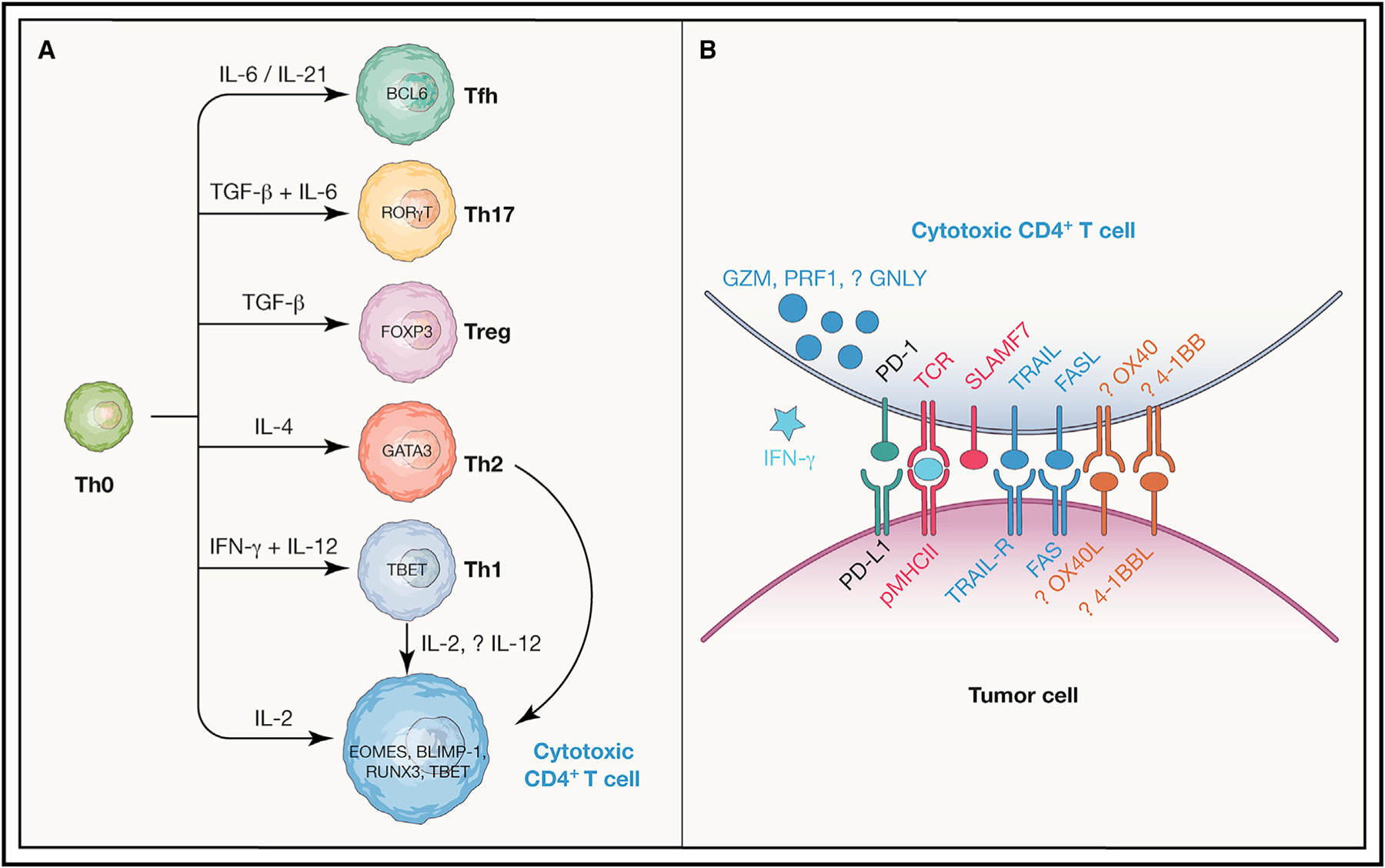
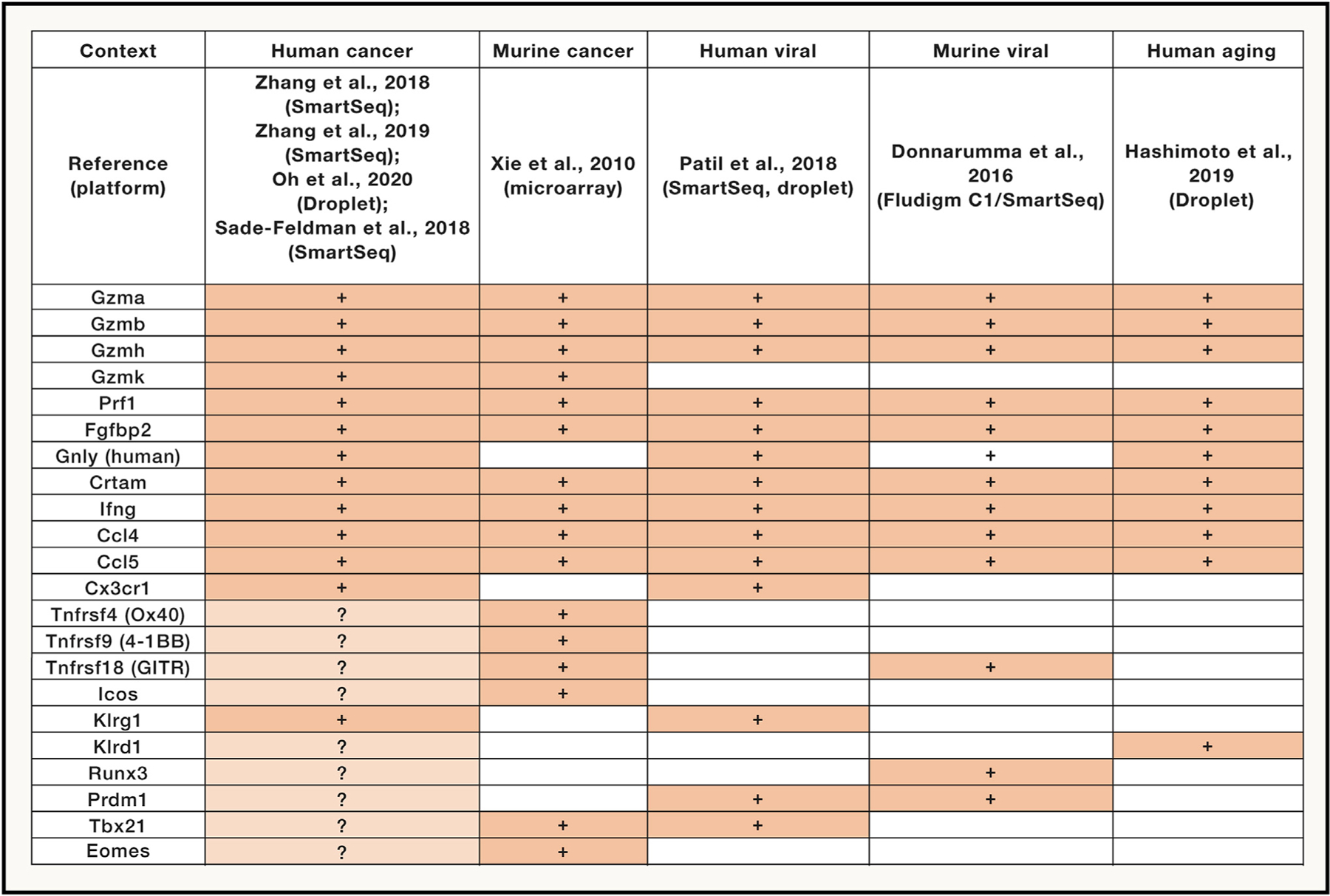
Cytotoxic T cells are important effectors of anti-tumor immunity. While tumor killing is ascribed to CD8 + T cell function, pre-clinical and clinical studies have identified intra-tumoral CD4 + T cells that possess cytotoxic programs and can directly kill cancer cells. Cytotoxic CD4 + T cells are found in other disease settings including infection and autoimmunity. Here, we review the phenotypic and functional characteristics of cytotoxic CD4 + T cells in non-cancer and cancer contexts. We conduct a comparative examination of cytolytic mechanisms of cytotoxic CD4 + T cells across disease states and synthesize features that define these cells independent of context. We discuss regulatory mechanisms driving ontogeny and effector function and evidence for the clinical relevance of cytotoxic CD4 + T cells in cancer. In this context, we highlight important gaps in understanding in the biology of cytotoxic CD4 + T cells as well as the potential use of these cells in immunotherapies for specific cancers.
Overview
The claims and statistics of this paper haven’t been checked yet.
Run the check — free, no account needed. It reads the open-access text and checks the sources it cites.
Integrity signals
Registry
Cites
Statistics
Figures
Verification
Claims the paper makes
The claims and statistics of this paper haven’t been checked yet.
Run the check — free, no account needed. It reads the open-access text and checks the sources it cites.
Claims other papers make about this one
Each is checked against this paper’s own text: does it say what the citing paper says it does?
The source backs part of the claim, not all of it — or backs it for a different population, condition or comparison.
In the citing paper
“we observed a significant increase in the total CD4+ T cells expressing IFN-γ (figure 4H) and granzyme B (GZMB; figure 4J),60–65 NK cells (figure 4N), and the amount of GZMB expression in CD8+ T cells (figure 4L) in the post-cryoablated RMS 76-9STINGwt TME as compared with RMS 76-9STING-/- TME in wild-type mice, as was Foxp3+ CD4+ cells (figure 4M).”
From Functional tumor cell-intrinsic STING, not host STING, drives local and systemic antitumor immunity and therapy efficacy following cryoablation (2023) · cites this paper as [64]
Experimental — accuracy not yet measured
Self-check
Percentages, sums and reported differences re-computed from the paper’s own numbers.
The self-check needs the paper’s full text.
Citations
Cites
An immunogenic personal neoantigen vaccine for patients with melanoma
Ott, P. A., Hu, Z., Keskin, D. B., Shukla, S. A., Sun, J., Bozym, D. J., Zhang, W., Luoma, A., Giobbie-Hurder, A., Peter, L., et al. (2017) · Nature · doi:10.1038/nature22991 · Cited by 2,936 · cited 1×
“Interestingly, in a complementary approach where high-risk resected stage III or stage IV melanoma patients were immunized with pools of long peptides containing predicted neoantigens prioritized based solely on HLA-A or HLA-B predicted binding affinity, neoantigen-specific CD4+ T cell responses were seen in addition…”
Puram, S. V., Tirosh, I., Parikh, A. S., Patel, A. P., Yizhak, K., Gillespie, S., Rodman, C., Luo, C. L., Mroz, E. A., Emerick, K. S., et al. (2017) · Cell · doi:10.1016/j.cell.2017.10.044 · Cited by 2,557
Personalized RNA mutanome vaccines mobilize poly-specific therapeutic immunity against cancer
Sahin, U., Derhovanessian, E., Miller, M., Kloke, B.-P., Simon, P., Löwer, M., Bukur, V., Tadmor, A. D., Luxemburger, U., Schrörs, B., et al. (2017) · Nature · doi:10.1038/nature23003 · Cited by 2,488
Defining T Cell States Associated with Response to Checkpoint Immunotherapy in Melanoma
Sade-Feldman, M., Yizhak, K., Bjorgaard, S. L., Ray, J. P., de Boer, C. G., Jenkins, R. W., Lieb, D. J., Chen, J. H., Frederick, D. T., Barzily-Rokni, M., et al. (2018) · Cell · doi:10.1016/j.cell.2018.10.038 · Cited by 2,053
Single-Cell Map of Diverse Immune Phenotypes in the Breast Tumor Microenvironment
Azizi, E., Carr, A. J., Plitas, G., Cornish, A. E., Konopacki, C., Prabhakaran, S., Nainys, J., Wu, K., Kiseliovas, V., Setty, M., et al. (2018) · Cell · doi:10.1016/j.cell.2018.05.060 · Cited by 1,976
Cancer Immunotherapy Based on Mutation-Specific CD4+ T Cells in a Patient with Epithelial Cancer
Tran, E., Turcotte, S., Gros, A., Robbins, P. F., Lu, Y., Dudley, M. E., Wunderlich, J. R., Somerville, R. P. T., Hogan, K., Hinrichs, C. S., et al. (2014) · Science · doi:10.1126/science.1251102 · Cited by 1,737
Global characterization of T cells in non-small-cell lung cancer by single-cell sequencing
Guo, X., Zhang, Y., Zheng, L., Zheng, C., Song, J., Zhang, Q., Kang, B., Liu, Z., Jin, L., Xing, R., et al. (2018) · Nature Medicine · doi:10.1038/s41591-018-0045-3 · Cited by 1,651
Landscape and Dynamics of Single Immune Cells in Hepatocellular Carcinoma
Zhang, Q., He, Y., Luo, N., Patel, S. J., Han, Y., Gao, R., Modak, M., Carotta, S., Haslinger, C., Kind, D., et al. (2019) · Cell · doi:10.1016/j.cell.2019.10.003 · Cited by 1,624
Lineage tracking reveals dynamic relationships of T cells in colorectal cancer
Zhang, L., Yu, X., Zheng, L., Zhang, Y., Li, Y., Fang, Q., Gao, R., Kang, B., Zhang, Q., Huang, J. Y., et al. (2018) · Nature · doi:10.1038/s41586-018-0694-x · Cited by 1,505
Treatment of Metastatic Melanoma with Autologous CD4+ T Cells against NY-ESO-1
Hunder, N. N. H., Wallen, H. D., Cao, J., Hendricks, D. W., Reilly, J. Z., Rodmyre, R. M., Jungbluth, A. A., Gnjatic, S., Thompson, J. A., & Yee, C. (2008) · New England Journal of Medicine · doi:10.1056/nejmoa0800251 · Cited by 904
Cited by
Sorted by citations
Items 401–476 of 476
Feng, Z., Shi, X., Li, Z., Lou, M., Cui, B., Chen, M., Zhang, L., Yujie, S., Zhang, H., Li, Y., et al. (2025) · Journal for ImmunoTherapy of Cancer · doi:10.1136/jitc-2025-012908
Erbe, A. K., Feils, A. S., Gao, A., VandenHeuvel, S. N., Boyenga, S., Hampton, A. A., Heck, M., Zaborek, J., Spiegelman, D., Tsarovsky, N. W., et al. (2025) · bioRxiv (Cold Spring Harbor Laboratory) · doi:10.64898/2025.12.11.693807
Lu, Z., Yin, Y., Rao, T., Xu, X., Zhao, K., Liu, Z., Qin, C., & Tang, M. (2024) · Figshare · doi:10.6084/m9.figshare.26704458
Lu, Z., Yin, Y., Rao, T., Xu, X., Zhao, K., Liu, Z., Qin, C., & Tang, M. (2024) · Figshare · doi:10.6084/m9.figshare.26704452
Ai, L.-J., Li, G.-D., Chen, G., Sun, Z.-Q., Zhang, J.-N., & Liu, M. (2024) · Figshare · doi:10.6084/m9.figshare.26701951
Lu, Z., Yin, Y., Rao, T., Xu, X., Zhao, K., Liu, Z., Qin, C., & Tang, M. (2024) · Figshare · doi:10.6084/m9.figshare.25572623
Yu, J., Yuan, A., Liu, Q., Wang, W., Sun, Y., Li, Z., Meng, C., Zhou, Y., & 曹守根 (2024) · Figshare · doi:10.6084/m9.figshare.25632982
Lu, Z., Yin, Y., Rao, T., Xu, X., Zhao, K., Liu, Z., Qin, C., & Tang, M. (2024) · Figshare · doi:10.6084/m9.figshare.26704464
Additional file 1 of Immune cell infiltration and inflammatory landscape in primary brain tumours
Luce, A., Abate, M., Scognamiglio, G., Montella, M., Iervolino, D., Campione, S., Mauro, A. D., Sepe, O., Gigantino, V., Tathode, M. S., et al. (2024) · Figshare · doi:10.6084/m9.figshare.26727772
Lu, Z., Yin, Y., Rao, T., Xu, X., Zhao, K., Liu, Z., Qin, C., & Tang, M. (2024) · Figshare · doi:10.6084/m9.figshare.26704455
Lu, Z., Yin, Y., Rao, T., Xu, X., Zhao, K., Liu, Z., Qin, C., & Tang, M. (2024) · Figshare · doi:10.6084/m9.figshare.25572698
Zhao, Y., Bai, Y., Li, M., Nie, X., Meng, H., Shimizu, S., Liu, L., Yang, Q., Shen, M., & Li, Y. (2024) · Figshare · doi:10.6084/m9.figshare.26315543
Ai, L.-J., Li, G.-D., Chen, G., Sun, Z.-Q., Zhang, J.-N., & Liu, M. (2024) · Figshare · doi:10.6084/m9.figshare.26701954
Lu, Z., Yin, Y., Rao, T., Xu, X., Zhao, K., Liu, Z., Qin, C., & Tang, M. (2024) · Figshare · doi:10.6084/m9.figshare.26704446
Lu, Z., Yin, Y., Rao, T., Xu, X., Zhao, K., Liu, Z., Qin, C., & Tang, M. (2024) · Figshare · doi:10.6084/m9.figshare.26704449
Lu, Z., Yin, Y., Rao, T., Xu, X., Zhao, K., Liu, Z., Qin, C., & Tang, M. (2024) · Figshare · doi:10.6084/m9.figshare.26704461
Recent advances in tumor vaccine development: a comprehensive review
Chen, Y., Ding, Z., & Wei, Y. (2024) · Chinese Science Bulletin (Chinese Version) · doi:10.1360/tb-2023-1332
Liu, Z., Guo, S., Xu, X., Tang, P., Xue, H., & Long, X. (2026) · Clinical Breast Cancer · doi:10.1016/j.clbc.2026.01.011
The value of immunogenic cell death-related gene model in the prognosis of gastric cancer
Lang, Y., Wang, X.-Y., Liu, Z., Man, C., Gong, D., Zhang, S., Gao, Z., & Fan, Y. (2026) · Discover Oncology · doi:10.1007/s12672-025-04296-z
The human and murine immune systems: regulated by dichotomous molecules
Silva, R. C. M. C. (2026) · International Immunopharmacology · doi:10.1016/j.intimp.2026.116329
PIGU overexpression and regulation of cellular biological functions in bladder cancer
Li, S.-H., Liu, Z.-S., Chen, Y.-J., Li, J.-D., Long, W., Chen, Y.-Y., Zhang, W., Huang, Z.-G., Chen, Z.-D., Chen, G., et al. (2026) · World Journal of Clinical Oncology · doi:10.5306/wjco.v17.i3.117055
Li, C., Fang, F., Cheng, X., Song, J., Peng, Z., Chang, K., Jiang, M., Zhang, Y., Chen, J., & Shu, X. (2026) · European journal of medical research · doi:10.1186/s40001-026-04349-1
“Anti-CTLA4 treatment could significantly enhance the tumor-suppressive effect of cytotoxic CD4 + T by inducing BLIMP-1 expression and repressing BCL6 and TCF7 transcription [42].”
Modulation de l'activation des lymphocytes T et des réponses anti-tumorales par le fer
Porte, S. (2022) · theses.fr (ABES) · doi:10.70675/4251e200zd50ez4a76zb869zb97fa8d3e879
Developing logic-gated CAR T cells for saferT-cell lymphoma therapy
Bourbon, E. (2025) · theses.fr (ABES) · doi:10.70675/11e2363dzeb1fz46bcza38dz6f6c7aa5545d
Mercier‐Letondal, P. (2025) · theses.fr (ABES) · doi:10.70675/fb692847z0188z4b0czaf29za1e4d337e717
Cenerenti, M., Garnica, J., Saillard, M., Gueguen, P., Wolf, B., Lemaître, F., Marone, R., Liu, Y., Cornu, A., Dumez, A., et al. (2026) · bioRxiv (Cold Spring Harbor Laboratory) · doi:10.64898/2026.04.13.718113
Targeting histamine H4 receptor improves anti-tumoral response in a murine model of breast cancer
Vázquez, R., Saibene, P., Boix, M. E., Maio, M., Salamone, G. V., Balboa, L., & Vermeulen, M. E. (2026) · Frontiers in Immunology · doi:10.3389/fimmu.2026.1770957
“CD8 + lymphocytes play a fundamental role in antitumor immunity (37).”
T cells restrain inflammation driven by TNF-induced cell deathPreprint
Přibíková, M., Paprčková, D., Knizkova, D., Synackova, A., Šemberová, T., Drobek, A., Niederlová, V., Michalik, J., Kratochvilova, A., Štěpánek, O., et al. (2026) · bioRxiv (Cold Spring Harbor Laboratory) · doi:10.64898/2026.04.21.719867
Subhash, S., Bammert, M., Yueh, B., Chu, T. H., Barbi, M., Alici-Garipcan, A., Eskiocak, O., Ozler, K., Nizam, A., Katcher, A. H., et al. (2026) · bioRxiv (Cold Spring Harbor Laboratory) · doi:10.64898/2026.04.21.720013
HLA Evolutionary Divergence and Paediatric Disease Risk: Unveiling Genetic Associations
Madalese, D., Auriemma, L., Esposito, M., Toriello, M., Nappo, S., Lama, S., Topo, F., Gallo, L., Castellano, G., Martino, N., et al. (2026) · HLA · doi:10.1111/tan.70721
“While these loci are traditionally associated with T helper cell responses, they are increasingly recognised for their broader role in orchestrating CD4 + T cell immunity, which can include direct cytotoxic activity against tumour cells [18, 19].”
Microbiome influence on cancer
Khan, F., Ahmed, S., & Tayyaba, U. (2026) · Elsevier eBooks · doi:10.1016/b978-0-443-40551-8.00005-6
Huang, X., Hu, S.-T., Zhou, G., & Zhang, J. (2026) · International Immunopharmacology · doi:10.1016/j.intimp.2026.116790
Yue, J., Chen, M., Xiong, Z., Qiu, J., Liu, Y., & Chen, L. (2026) · International Journal of Nanomedicine · doi:10.2147/ijn.s595199 · Cited by 1
Adaptive-like CAR-iPSC-CD4+ T cells outperform CD8+ counterparts in sustained ALL control
Qiang, G., Chaoqi, Z., 20994916, Chaoqi, Z., Bo, W., Shoichi, I., Akihiro, I., Minagawa, A., Tomoko, I., Yohei, K., et al. (2026) · Terrestrial Environment Research Center (University of Tsukuba)
Inhibition of salt-inducible kinases reprograms T cells and antitumor immunity in ovarian cancer
Dong, H., Ray, A., Rotter, L. K., Wang, J., Grabski, I., Mewada, H., Wang, L., Huang, K., Tian, Y., Meylan, M., et al. (2026) · Nature Immunology · doi:10.1038/s41590-026-02512-8
“Cytotoxic CD4 + T cells have been shown to be of clinical significance in recent studies of solid cancers 45 and we speculate that further activation of cytotoxic CD4 + T cells may be harnessed to increase immunotherapies.”
Fungal metabolite-based immunotherapy overcomes tumor-associated macrophage immunosuppression
Hu, J., Ju, X., Deng, B., Tang, K., Yuan, D., Sun, X., Kong, L., Xu, Y., Fu, Z., Koda, S., et al. (2026) · Cell Reports Medicine · doi:10.1016/j.xcrm.2026.102833
“50,51 Recent evidence suggests that CD4 + T cells may also possess direct cytotoxic capabilities, 52 raising the possibility that these cells contribute independently to tumor control in IM502-treated models.”
Vespasiani, D. M., Quig, A., Lancaster, J., Shen, C. (., Cooper, J., Tuong, Z. K., Jackson, A., Schulz, S., Tsang, S. W. Y., Deckert, K., et al. (2026) · bioRxiv (Cold Spring Harbor Laboratory) · doi:10.64898/2026.05.21.726432
Macrophages as predictors and new targets for immunotherapy in colorectal cancer
Sudarskikh, T., Shalygina, K., Shmakova, E., Iamshchikov, P. S., Dobrodeev, А. Y., Larionova, I., & Kzhyshkowska, J. G. (2026) · Exploration of Digestive Diseases · doi:10.37349/edd.2026.1005124
Chen, Y., Luo, X., Xu, B., Zhu, X., Mou, J., Wang, M., Gu, Q., Wang, Y., Bai, X., Zhang, S., et al. (2026) · BMC Medicine · doi:10.1186/s12916-026-04975-w
“The secretion of granzyme A (Gzma) represents a classical pathway through which CD4 + T cells exert cytotoxic effects [6–8].”
Liu, D., Luo, J., Guo, W., Ma, J., Yang, X., Xia, Y., Li, P. H., Xu, D., & Gu, Z. (2026) · OncoImmunology · doi:10.1080/2162402x.2026.2684116
Wang, Y., Luo, C., Li, Y., Pei, J., Wang, D., Wang, P., & Li, J. (2026) · Frontiers in Oncology · doi:10.3389/fonc.2026.1818240
Zhang, Y., Kawamoto, R., Kumazoe, M., Lee, S., Fujimura, Y., Takagaki, A., Tomioka, R., SUZUKI, M., & Tachibana, H. (2026) · ACS Pharmacology & Translational Science · doi:10.1021/acsptsci.6c00167
Niederlová, V., Kimler, K., Zheng, H. B., Elosua-Bayés, M., Hedderman, R., Keskula, P., Pacáková, I., Věcek, J., Casal, J. D. S., Kwong, A. C., et al. (2026) · medRxiv · doi:10.64898/2026.06.16.26354238
Zhao, N., Wang, H., Shi, B., Wang, C., Cao, F., & Wei, C. (2026) · Journal of Radiation Research and Applied Sciences · doi:10.1016/j.jrras.2026.102536
Zhu, Y.-Y., Li, A., Yang, F., Dong, Y.-X., Huang, Y.-S., Meng, X.-J., Zhang, D.-Z., Li, Y., Xian, Y., Zhu, D., et al. (2026) · Acta Pharmacologica Sinica · doi:10.1038/s41401-026-01845-2
“Speci fi cally, CD4 + T cells have been shown to express key cytolytic molecules, such as granzymes (GZMs) perforin (PRF1), enabling them to mediate direct tumor cell killing [7].”
Debnath, T., Jin, W. J., Patel, R. B., Carlson, P. M., Rahman, M. M., Berg, T. J., Kerr, C. P., Welch, R., Wang, Y., Hyun, M., et al. (2026) · Cancer Immunology Research · doi:10.1158/2326-6066.cir-25-1475
de Joode, K., Balcioglu, H. E., van Brakel, M., López-Cascales, M. T., Hurkmans, D. P., Basak, E. A., Hoop, E. O., Lamers, C. H. J., Aerts, J. G. J. V., Mathijssen, R. H. J., et al. (2026) · The Journal of Immunology · doi:10.1093/jimmun/vkag171
Hasegawa, T., Nishitani, K., & Kabashima, K. (2026) · International Immunology · doi:10.1093/intimm/dxag037
Liu, Z., He, L., Tian, Y., Feng, S., Yang, X., Wu, H., Pu, Q., Wang, Y., & Yuan, X. (2026) · Frontiers in Immunology · doi:10.3389/fimmu.2026.1871598
“Effector T cells are among the most important targets of the amino acid metabolic network (80, 81).”
Avraham, Y., Barth, N., Bar-On, T. Y., Toval, B., Menachem, A. H., Blanga, J., Herzog, E., Rotem, H., Itai, Y. S., Feferman, T., et al. (2026) · Nature Cancer · doi:10.1038/s43018-026-01207-1
“…multiple pathways, including licensing of cDCs to prime CD8 + cells as CD4 + helper cells 48 and direct tumor cell killing as CD4 + cytotoxic cells 49 . scRNA-seq analysis of CD4 + T cells in the TME following treatment with the Fc-optimized (GA-aFuc) anti-GITR mAbs revealed an intrinsic…”
Cytotoxic CD4 + T Cells in Visceral Leishmaniasis Patients
Chauhan, S. B., Singh, S. S., Singh, B., Kumar, S. B., Tiwari, R., Gautam, V., Rivera, F. D. L., Nylén, S., Engwerda, C. R., Sundar, S., et al. (2026) · Parasite Immunology · doi:10.1111/pim.70097
“Additionally, CD4 CTLs play a part in autoimmune diseases [24] and cancer [25], and they are found in individuals who have been vaccinated against smallpox [26] and polio [27].”
Jain, D., Pandey, N., Jha, S. K., Sinha, S., Singh, R., Alam, J., Aggarwal, B., Chauhan, N., Acharya, A., Anu, P. V., et al. (2026) · Cell Reports Medicine · doi:10.1016/j.xcrm.2026.102994 · Cited by 1
Cytotoxic CD4+ T cells induce age-associated myelopoiesis through CCL5–CCR5 signaling
Gabandé‐Rodríguez, E., Soto‐Heredero, G., Carrasco, E., Anerillas, C., Escrig-Larena, J. I., Martínez-Cano, J., Delgado-Pulido, S., Francos-Quijorna, I., Desdín-Micó, G., Смирнова, Т. А., et al. (2026) · Nature Aging · doi:10.1038/s43587-026-01209-9 · Cited by 2
“Regarding their function, CD4 + CTLs are responsible for eliminating senescent cells in the skin 30 and may be involved in the control of tumor growth 31,32 .”
Oxidative stress: mechanisms, implications and emerging therapeutic strategies
Namratha, B., Martis, G. J., Sushma, S., Hakkimane, S. S., & Gaonkar, S. L. (2026) · Advances in Redox Research · doi:10.1016/j.arres.2026.100191
Gilioli, D., Fusco, S., Tavella, T., Volpari, T., Santoro, A., Schönlein, M., Giannetti, K., Carsana, E., Gualandi, N., Noberini, R., et al. (2026) · Nature Communications · doi:10.1038/s41467-026-76853-1
Widłak, P., Han, J., Głuszko, A., Mika, J., Zebrowska, A., Mondal, S. K., Gawin, M., Najjar, Y. G., Polańska, J., Pietrowska, M., et al. (2026) · European Journal of Immunology · doi:10.1002/eji.70273
“As T cells in the tumor-bearing hosts frequently have compromised immune competence [ 26–28 ], the examination of T cell-derived CD3( + )sEV, which mimic parent T cells, could inform about the phenotypic and functional status of patients’ T cells.”
TIGIT+ CD4+ T Cell Enrichment in Colorectal Liver Metastases Is Associated with Shorter Survival
von Renesse, J., Langsdorf, J., Kalb, E., Beer, C., Digomann, D., Natusch, L., Aust, D. E., Weitz, J., Seifert, L., & Seifert, A. M. (2026) · Cancers · doi:10.3390/cancers18182977
T-cell exhaustion and senescence in cancer: Regulatory circuits and therapeutic state engineering
Han, J., Lyu, X., Wu, M., Lin, C., Zhou, Y., & Wang, W. (2026) · Cancer Letters · doi:10.1016/j.canlet.2026.218841
Celesti, F. (2026) · Experimental and Molecular Pathology · doi:10.1016/j.yexmp.2026.105078
Wu, Y., Chen, X., Chen, Z., Liang, Y., Sun, W., Zhang, Q., & Li, M. (2026) · Medicine Discovery · doi:10.1016/j.medd.2026.100005
Demeules, M., Letribot, B., Giraldo, L., Li, C., Maucuer, A., Geoerger, B., Alami, M., & Apcher, S. (2026) · Molecular Therapy Oncology · doi:10.1016/j.omton.2026.201355
“These findings further support the idea that CD4 + CTLs, a population still underexplored in cancer immunology, 29 may make a meaningful contribution to anti-tumor immunity.”
Nguyen, N. D. N. T., Guleed, S., Subratheepam, S., López, E. M., Tilbeurgh, M. V., Léonec, M., Gallouët, A.-S., Wørzner, K., Woodworth, J. S., Lindenstrøm, T., et al. (2026) · The Journal of Immunology · doi:10.1093/jimmun/vkag265
Fu, J., Pei, S., Du, J., Deng, X., Wang, X., Li, T., Huang, H., Ye, J., Xu, J., Wang, X., et al. (2026) · Immunity · doi:10.1016/j.immuni.2026.09.004
Faggiano, A., Argentiero, A., Borghesani, G., Haxhi, J., Camastra, S., Cinieri, S., Cortellini, A., Re, M. D., Gallo, M., Natalicchio, A., et al. (2026) · Obesity Reviews · doi:10.1111/obr.70231
Ning, Y., 荣晔婧, Meng, H., Lin, Y., Chen, W., 史巧芸, Zhang, S., Li, H., & Yang, Y. (2026) · Molecular Biomedicine · doi:10.1186/s43556-026-00570-w
“Immunogenic cell death (ICD) is known to induce antitumor immune responses within the tumor micro-environment (TME) [29].”
Kong, J., Tang, J., Zhang, P., Zhao, Y., Dai, Y., & Ding, Z. (2026) · Journal of Immunotherapy · doi:10.1097/cji.0000000000000620
Gao, A., Xu, Y., 王婷婷, Chen, L., Wang, Q., Zhang, S., Fang, C., & Zheng, P. (2026) · Science Progress · doi:10.1177/00368504261494032
Immune and cellular determinants of response to HMA‐venetoclax regimens in acute myeloid leukemia
Alfredo, M., Lazzaroni, F., Vià, M. D., Lionetti, M., Maggioni, G., Campagna, A., Ventura, D., Croci, G. A., Marella, A., Maeda, A., et al. (2026) · HemaSphere · doi:10.1002/hem3.70498
“26,27 Similarly, responders showed preferential selection of cytotoxic CD8 T cell clones.”
Tomuț, A. N., Cozac-Szőke, A. R., Szász, E. A., Tinca, A. C., Sabău, A.-H., Cocuz, I. G., Chiorean, D. M., & Cotoi, O. S. (2026) · Immuno · doi:10.3390/immuno6040067
Taking the brakes off cytolytic CD4+ T cells
Wertheimer, T. (2026) · Blood · doi:10.1182/blood.2026035655
Metadata
- Authors
- Oh, D. Y., & Fong, L.
- Affiliations
- University of California, San Francisco (US)
- Corresponding author
- Fong, Lawrence
- Venue
- Immunity
- Publisher
- Elsevier BV
- Published
- 2021-12
- Volume
- 54
- Issue
- 12
- Pages
- 2701-2711
- ISSN
- 1074-7613 (ISSN-L)
- PMC
- PMC8809482
- OpenAlex
- W4200244347
- Cited by
- 467
- References
- 73
- Citations by year
- 2026: 81 · 2025: 127 · 2024: 116 · 2023: 101 · 2022: 41 · 2021: 1
- FWCI
- 6.86
- Type
- journal article
- Language
- en
- Open access
- hybrid
- doi.org
- Licence
- Locations
- Immunity (publishedVersion, cc-by)
- PubMed (publishedVersion)
- PubMed Central (acceptedVersion, cc-by)
- eScholarship (California Digital Library) (submittedVersion, cc-by)
- Funders
- NCI
- National Institutes of Health (K08AI139375)
- Prostate Cancer Foundation (R35CA253175)
- Bavarian Nordic
- Genentech
- Parker Institute for Cancer Immunotherapy
- AbbVie
- Amgen
- Merck
- Merck KGaA
- Topics
- Life Sciences › Immunology and Microbiology › Immunology › T-cell and B-cell Immunology
- Health Sciences › Medicine › Oncology › Cancer Immunotherapy and Biomarkers
- Life Sciences › Immunology and Microbiology › Immunology › Immunotherapy and Immune Responses
- Keywords
- cytotoxic CD4+ T cells, antitumor immunity, cytotoxicity mechanism, cancer immunotherapy, infection, autoimmunity
- MeSH terms
- Animals, Cytotoxicity, Immunologic, Humans, Neoplasms, T-Lymphocytes, Cytotoxic, CD4-Positive T-Lymphocytes, Immunotherapy, Adoptive
About these checks
Registry, retraction, Cites and statistics results are computed, not judged, with one exception: a printed reference that no index lists is read once by a model before it counts as a citation error. Claims are extracted by a model and kept only when their quote appears verbatim in the text; each cited source is then checked, with a model’s help, for whether it says what the claim relies on. Those verdicts can be wrong — read the claim’s quote and the cited source before relying on one.
Statistics and arithmetic are recomputed, not judged.
Confidence bands are shown only for fields calibrated on our annotated test set. None is calibrated yet, so no band is shown.
What counts as a claim ›How we measure confidence ›How we check this ›
Are you an author, or do you see a problem with this page? Request a review
