

The DOI matches its Crossref record; 141 of the 147 references it cites were found in a registry or an index.
CRISPR/Cas: A powerful tool for gene function study and crop improvement
Open accessAbstract
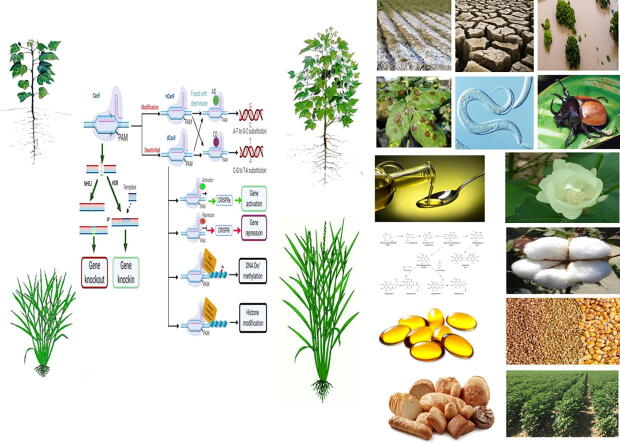
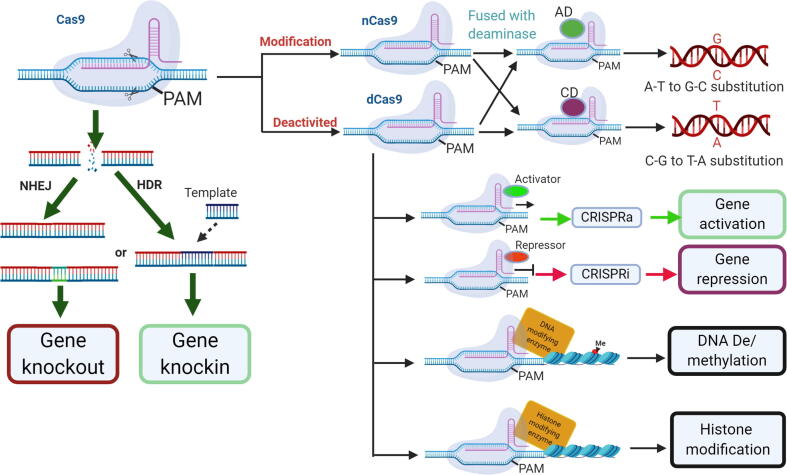
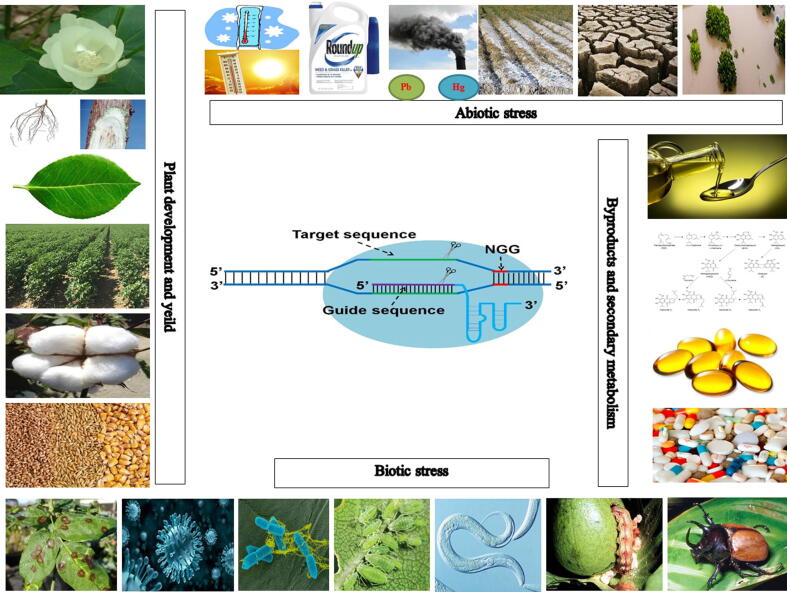
It is a long-standing goal of scientists and breeders to precisely control a gene for studying its function as well as improving crop yield, quality, and tolerance to various environmental stresses. The discovery and modification of CRISPR/Cas system, a nature-occurred gene editing tool, opens an era for studying gene function and precision crop breeding. In this review, we first introduce the brief history of CRISPR/Cas discovery followed the mechanism and application of CRISPR/Cas system on gene function study and crop improvement. Currently, CRISPR/Cas genome editing has been becoming a mature cutting-edge biotechnological tool for crop improvement that already used in many different traits in crops, including pathogen resistance, abiotic tolerance, plant development and morphology and even secondary metabolism and fiber development. Finally, we point out the major issues associating with CRISPR/Cas system and the future research directions. Key Scientific Concepts of Review: CRISPR/Cas9 system is a robust and powerful biotechnological tool for targeting an individual DNA and RNA sequence in the genome. It can be used to target a sequence for gene knockin, knockout and replacement as well as monitoring and regulating gene expression at the genome and epigenome levels by binding a specific sequence. Agrobacterium-mediated method is still the major and efficient method for delivering CRISPR/Cas regents into targeted plant cells. However, other delivery methods, such as virus-mediated method, have been developed and enhanced the application potentials of CRISPR/Cas9-based crop improvement. PAM requirement offers the CRISPR/Cas9-targted genetic loci and also limits the application of CRISPR/Cas9. Discovering new Cas proteins and modifying current Cas enzymes play an important role in CRISPR/Cas9-based genome editing. Developing a better CRISPR/Cas9 system, including the delivery system and the methods eliminating off-target effects, and finding key/master genes for controlling crop growth and development is two major directions for CRISPR/Cas9-based crop improvement.
Overview
The claims and statistics of this paper haven’t been checked yet.
Run the check — free, no account needed. It reads the open-access text and checks the sources it cites.
Integrity signals
Registry
Cites
Statistics
Figures
Verification
Claims the paper makes
The claims and statistics of this paper haven’t been checked yet.
Run the check — free, no account needed. It reads the open-access text and checks the sources it cites.
Claims other papers make about this one
Each is checked against this paper’s own text: does it say what the citing paper says it does?
The source backs part of the claim, not all of it — or backs it for a different population, condition or comparison.
In the citing paper
“| Delivery methods improvement | Application in vivo [95–105] | AAV: Last for years in terminally differentiated cell types | May cause accumulation of off-target mutations |”
From Off-target effects in CRISPR/Cas9 gene editing (2023) · cites this paper as [101]
Experimental — accuracy not yet measuredThe source backs part of the claim, not all of it — or backs it for a different population, condition or comparison.
In the citing paper
“| Delivery methods improvement | Application in vivo [95–105] | LNP: Can be quickly degraded in vivo | Eliminate off-target effects |”
From Off-target effects in CRISPR/Cas9 gene editing (2023) · cites this paper as [101]
Experimental — accuracy not yet measuredThe cited source says what the claim attributes to it.
In the citing paper
“Designing sgRNA is more convenient, programmable and cost-effective than designing DNA binding domains, thus CRISPR/Cas9 is more favored than ZFNs and TALENs and has revolutionized the biotechnology field (Zhang et al., 2021; Tran et al., 2022).”
From Off-target effects in CRISPR/Cas9 gene editing (2023) · cites this paper as Zhang et al., 2021
The cited source says what the claim attributes to it.
In the citing paper
“Designing sgRNA is more convenient, programmable and cost-effective than designing DNA binding domains, thus CRISPR/Cas9 is more favored than ZFNs and TALENs and has revolutionized the biotechnology field (Zhang et al., 2021; Tran et al., 2022).”
From Off-target effects in CRISPR/Cas9 gene editing (2023) · cites this paper as Zhang et al., 2021
The check wasn’t confident either way, so it gives no verdict — never disputed.
In the citing paper
“| Delivery methods improvement | Application in vivo [95–105] | AAV: Last for years in terminally differentiated cell types | May cause accumulation of off-target mutations |”
From Off-target effects in CRISPR/Cas9 gene editing (2023) · cites this paper as [101]
Experimental — accuracy not yet measured
The check wasn’t confident either way, so it gives no verdict — never disputed.
In the citing paper
“| Delivery methods improvement | Application in vivo [95–105] | LNP: Can be quickly degraded in vivo | Eliminate off-target effects |”
From Off-target effects in CRISPR/Cas9 gene editing (2023) · cites this paper as [101]
Experimental — accuracy not yet measured
Self-check
Percentages, sums and reported differences re-computed from the paper’s own numbers.
The self-check needs the paper’s full text.
Citations
Cites
A Programmable Dual-RNA–Guided DNA Endonuclease in Adaptive Bacterial Immunity
Jinek, M., Chylinski, K., Fonfara, I., Hauer, M., Doudna, J. A., & Charpentier, E. (2012) · Science · doi:10.1126/science.1225829 · Cited by 17,116
Multiplex Genome Engineering Using CRISPR/Cas Systems
Cong, L., Ran, F. A., Cox, D., Lin, S., Barretto, R., Habib, N., Hsu, P. D., Wu, X., Jiang, W., Marraffini, L. A., et al. (2013) · Science · doi:10.1126/science.1231143 · Cited by 15,339
RNA-Guided Human Genome Engineering via Cas9
Mali, P., Yang, L., Esvelt, K. M., Aach, J., Guell, M., DiCarlo, J. E., Norville, J. E., & Church, G. M. (2013) · Science · doi:10.1126/science.1232033 · Cited by 9,210
Repurposing CRISPR as an RNA-Guided Platform for Sequence-Specific Control of Gene Expression
Qi, L. S., Larson, M. H., Gilbert, L. A., Doudna, J. A., Weissman, J. S., Arkin, A. P., & Lim, W. A. (2013) · Cell · doi:10.1016/j.cell.2013.02.022 · Cited by 5,016 · cited 2×
“If the system binds to the promoter region, the CRISPR/dCas system will block transcription factor and RNA polymerase (RNAP) binding to the promoter region and inhibit transcription initiation; otherwise, if the CRISPR/dCas system binds to the coding region, it will block RNAP binding and inhibit transcription elongat…”
BackgroundSearch-and-replace genome editing without double-strand breaks or donor DNA
Anzalone, A. V., Randolph, P. B., Davis, J. R., Sousa, A. A., Koblan, L. W., Levy, J. M., Chen, P. J., Wilson, C., Newby, G. A., Raguram, A., et al. (2019) · Nature · doi:10.1038/s41586-019-1711-4 · Cited by 4,767
Cpf1 Is a Single RNA-Guided Endonuclease of a Class 2 CRISPR-Cas System
Zetsche, B., Gootenberg, J. S., Abudayyeh, O. O., Slaymaker, I. M., Makarova, K. S., Essletzbichler, P., Volz, S. E., Joung, J., van der Oost, J., Regev, A., et al. (2015) · Cell · doi:10.1016/j.cell.2015.09.038 · Cited by 4,761
ZFN, TALEN, and CRISPR/Cas-based methods for genome engineering
Gaj, T., Gersbach, C. A., & Barbas, C. F. (2013) · Trends in Biotechnology · doi:10.1016/j.tibtech.2013.04.004 · Cited by 3,820
CRISPR-Mediated Modular RNA-Guided Regulation of Transcription in Eukaryotes
Gilbert, L. A., Larson, M. H., Morsut, L., Liu, Z., Brar, G. A., Torres, S. E., Stern-Ginossar, N., Brandman, O., Whitehead, E. H., Doudna, J. A., et al. (2013) · Cell · doi:10.1016/j.cell.2013.06.044 · Cited by 3,696 · cited 3×
“At the same time, if a transcription activator binds to the dCas9 protein, the CRISPR/dCas system will enhance the expression of the targeted genes [68].”
BackgroundInfluentialGenetic screens in human cells using the CRISPR-Cas9 system
Wang, T., Wei, J. J., Sabatini, D. M., & Lander, E. S. (2014) · Science · doi:10.1126/science.1246981 · Cited by 2,856
Gasiunas, G., Barrangou, R., Horvath, P., & Siksnys, V. (2012) · Proceedings of the National Academy of Sciences · doi:10.1073/pnas.1208507109 · Cited by 2,769
Research works printed but not linked: 3
- Martyn, 1991, Resistance to races 0, 1, and 2 of Fusarium wilt of watermelon in Citrullus sp, PI-296341 -FR., 26, 429
- Zhang, 2016, Efficient and transgene-free genome editing in wheat through transient expression of CRISPR/Cas9 DNA or RNA, Nat Commun, 7, 12617, 10.1038/ncomms12617 · DOI
- Hu, 2018, Evolved Cas9 variants with broad PAM compatibility and high DNA specificity, Nature, 556, 57, 10.1038/nature26155 · DOI · Paper page
Cited by
Sorted by citations
Items 301–372 of 372
Role of CRISPR-Cas9 in agricultural science
Angon, P. B. (2022) · Archive of Food and Nutritional Science · doi:10.29328/journal.afns.1001043
Evaluation of Biosynthetic Pathway and Engineered Biosynthesis of Morphine with CRISPR
Hao, L. (2023) · BIO Web of Conferences · doi:10.1051/bioconf/20235901022
Nutraceutical Potential of Rapeseed: Breeding and Biotechnological Approaches
Gupta, M., & Kaur, G. (2023) · Springer eBooks · doi:10.1007/978-981-19-3627-2_13-1
Nutraceutical Potential of Rapeseed: Breeding and Biotechnological Approaches
Gupta, M., & Kaur, G. (2023) · Springer eBooks · doi:10.1007/978-981-19-4169-6_13
Melgar, A. E., Palacios, M. B., Tosar, L. M., & Zelada, A. M. (2024) · bioRxiv (Cold Spring Harbor Laboratory) · doi:10.1101/2024.01.20.576358
CRISPR-based precision breeding of fruits, vegetables, and ornamental plants
Atia, M. A. M., Salah, A., Elsawah, A., Karam, A., & Abdelmoneim, T. K. (2024) · Elsevier eBooks · doi:10.1016/b978-0-443-13229-2.00010-7
The Potential of Gene Editing Technology in Agriculture: Cre-Loxp and CRISPR-Cas9
Duan, R. (2024) · MedScien · doi:10.61173/x0mgng91
Application of CRISPR–Cas Technology in Drug Development
Altaf, S., Saleem, F., Ikram, H. M., Iftikhar, A., & Anwar, H. (2024) · Springer eBooks · doi:10.1007/978-981-97-0814-7_8
Precise and adaptable knock-out generation in wheat thanks to a multi-stop cassettePreprint
Kadner, M., BENEDIT, S., Paul, W., Pichon, J.-P., Tassy, C., & Barret, P. (2024) · Research Square · doi:10.21203/rs.3.rs-3952449/v1
Rai, M. N., Rhodes, B., Jinga, S., Kanchupati, P., Ross, E., Carlson, S. R., & Moose, S. P. (2024) · bioRxiv (Cold Spring Harbor Laboratory) · doi:10.1101/2024.10.21.619474
Crispr-Cas Technology: Targeted Genome Editing in Plant Physiology
Habibi, M. M. (2024) · BENTHAM SCIENCE PUBLISHERS eBooks · doi:10.2174/9789815305845124020013
MicroRNA tools for gene silencing
Radhakrishnan, A., Manchanda, M., Chattopadhayay, R., & Srivastav, R. (2025) · Elsevier eBooks · doi:10.1016/b978-0-443-21682-4.00014-2
Farinati, S., Betto, A., Garcia, A. F. S., & Barcaccia, G. (2025) · Acta Horticulturae · doi:10.17660/actahortic.2025.1417.6
Regulatory genes for the improvement of salt and drought tolerance
Jha, S., Singh, J., Dutta, S., Varshney, V., Mishra, V., Choudhary, D. K., & Tak, N. (2025) · Elsevier eBooks · doi:10.1016/b978-0-443-13490-6.00023-0
Genome Editing for Horticultural Crop Improvement: Applications, Challenges, and Future Perspectives
Qadri, R. W. K., Khan, M. M., Akram, M. T., Hussain, K., Ahmed, A. H., & Al-Maskri, A. Y. (2025) · Sustainable landscape planning and natural resources management · doi:10.1007/978-3-031-81639-0_15
CRISPR plants against drought stress: Methods and applications
Khatun, M., Sarkar, S., Gangashetty, P. I., Srivastava, R. K., Dar, M. H., & Islam, A. K. M. A. (2025) · Elsevier eBooks · doi:10.1016/b978-0-443-24135-2.00011-6
Application of Advanced CRISPR/Cas-9 and Other Genomic Tools in RNA-Based Therapeutics
Awan, T. F., & Khan, M. J. (2025) · Springer eBooks · doi:10.1007/978-981-96-3456-9_2
Samanta, S., & Roychoudhury, A. (2025) · doi:10.1002/9781394280049.ch9
Reddy, N. R., Rajesh, J., Kavya, K., Rithesh, L., Kumar, A., & Pooja, P. (2025) · Wiley eBooks · doi:10.1002/9781394280049.ch14
Buhmann, B., van der Woude, J., Winkelmann, T., & van der Ent, A. (2025) · Natural Products and Bioprospecting · doi:10.1007/s13659-025-00532-9
Advanced genetic technologies to improve crop abiotic stress resilience
Chowdhury, S., Kar, K., Chakraborty, P., Ganguly, S. C., Jit, T., & Majumder, R. (2025) · Elsevier eBooks · doi:10.1016/b978-0-443-14139-3.00005-1
Non-coding RNA-Mediated Signaling Pathways in Abiotic Stress Tolerance
Mishra, P., Ng, P. J., Kumar, P., Tiwari, S., & Gotarkar, D. (2025) · Concepts and strategies in plant sciences · doi:10.1007/978-981-96-9859-2_8
Molecular Insights Into CRISPR-edited Pest-resistant Crops Studied by Multiple Omics Approaches
Parihar, R. D., Dhiman, U., Sharma, S., Bandral, S., Singh, N., Sharma, V., Jasrotia, S., Sharma, R., Gupta, P., & Ohri, P. (2025) · CABI biotechnology series. · doi:10.1079/9781800627307.0017
Kumari, R., Saurav, G. K., Suman, K., Lakra, S. G., Karmakar, S., Kumari, P., Islam, M. A., Yirang, L., & Mahto, B. K. (2025) · CABI biotechnology series. · doi:10.1079/9781800627307.0001
Long noncoding RNAs: Involvement in plant–pathogen interactions and plant immunity
Taoussi, M., Radi, M., Farhaoui, A., Kouighat, M., Assougeum, A., Sagouti, T., Belabess, Z., & Lahlali, R. (2025) · Elsevier eBooks · doi:10.1016/b978-0-443-33341-5.00014-8
Pramanik, S., Seth, D., Das, A., & Debnath, S. (2025) · Elsevier eBooks · doi:10.1016/b978-0-443-33341-5.00015-x
Shen, Y., Yang, Z., Zheng, L., Shi, J., Jiao, J., Wang, M., Zhang, K., Hao, P., Zhao, Y., Liu, Y., et al. (2025) · Horticulturae · doi:10.3390/horticulturae11101211
Chen, X., Xiao, L., Wang, Q., Zhou, L., Xu, Y., Zhou, C., Dai, M., Wang, F., Xu, H., Luo, D., et al. (2025) · Biotechnology Letters · doi:10.1007/s10529-025-03669-2
Shiwani, S., Mobassareen, Mohanty, A., Kumar, R. R., Ansar, M., Bala, K. S., Kishore, C., & Ranjan, T. (2025) · Springer eBooks · doi:10.1007/978-981-95-2852-3_11
Knockout of NtARF2 enhances salt tolerance in tobacco by modulating K/Na ratio and ABA content
Wu, B., Yu, Q., Cai, H., Xiwen, S., Cao, T., Wu, X., Luo, Z., Dai, Y., & Jia, H. (2025) · Plant Stress · doi:10.1016/j.stress.2025.101149
Li, P., Zhao, Z., Wang, W., Wang, T., Hu, N., Wei, Y., Sun, Z., Chen, Y., Li, Y., Liu, Q., et al. (2024) · Figshare · doi:10.6084/m9.figshare.26733786
Bui, T. P., Le, H., Ta, D. T., Nguyen, C. X., Le, N. T., Tran, T. T., Van Nguyen, P., Stacey, G., Stacey, M. G., Pham, N. B., et al. (2024) · Figshare · doi:10.6084/m9.figshare.26635191
Li, P., Zhao, Z., Wang, W., Wang, T., Hu, N., Wei, Y., Sun, Z., Chen, Y., Li, Y., Liu, Q., et al. (2024) · Figshare · doi:10.6084/m9.figshare.26733789
Future Directions and Challenges in Plant Epigenetics Research
Anand, S., Kumar, R., Sarangi, P. K., Khaspuria, G., Singh, A. K., & Rathore, S. S. (2025) · IGI Global eBooks · doi:10.4018/979-8-3693-8648-4.ch017
A comparative review of vector insertion techniques in Saccharomyces cerevisiae
Gopalakrishnan, R., Kannan, K., Gunasekaran, R., Ramachandran, P., Ganapathy, D., & Sivaperumal, P. (2025) · Journal of Microbiological Methods · doi:10.1016/j.mimet.2025.107378
Neisiani, A. A., Karimi-Fard, A., Saidi, A., & TohidFar, M. (2024) · Genetic Engineering and Biosafety Journal · doi:10.61882/gebsj.13.1.8
Kim, K. U., Jeong, H.-E., Han, K.-H., & Kim, W.-C. (2025) · Journal of Biological Engineering · doi:10.1186/s13036-025-00615-8
Dong, N., Geng, X., He, S., Peng, Z., Li, H., Li, Y., Hu, D., Yang, Q., Pan, X., Du, X., et al. (2026) · Functional & Integrative Genomics · doi:10.1007/s10142-025-01786-9
Nanoparticles for Plant Genetic Engineering
Azra, B. H., Afzal, S., & Faizan, M. (2026) · Smart nanomaterials technology · doi:10.1007/978-981-95-4709-8_8
Applications of CRISPR-Cas for Genetic Improvement of Triticeae
Munawar, N., Ijaz, A., Zovia, I., Zaini, P., Khan, M. N., Al-Harrasi, A., & Ahmad, A. (2026) · Sustainability Sciences in Asia and Africa · doi:10.1007/978-981-95-6722-5_13
Genetic basis and breeding application of flowering time variation in Brassica napus
Lin, S., Wan, M., Song, Y., Liang, G. U. O., Yang, G., & Hong, D. (2026) · Scientia Sinica Vitae · doi:10.1360/ssv-2025-0262
Harnessing the Power of ncRNAs
Nawaz, T., Fahad, S., Faiz, S., Joshi, N., Aslam, R., Ikram, M., Saud, S., Khan, I., & Latif, R. (2026) · doi:10.1002/9781394373642.ch6
Advances in breeding and genetic engineering in micro- and macro-algae
Saeger, J. D. (2026) · Elsevier eBooks · doi:10.1016/b978-0-443-33492-4.01002-0
Pandey, H., Sharma, A., Misra, V., Mall, A. K., Kumar, R., Kartha, B. D., Tehri, N., Vashishth, A., & Devadas, V. S. (2026) · Discover Plants. · doi:10.1007/s44372-026-00541-z
RNA Modifications as Drug Targets: Unlocking the Therapeutic Potential of the Epitranscriptome
Taumar, D., Singh, A. P., Sharma, H., & Chaudhary, V. (2026) · Current Genomics · doi:10.2174/0113892029406032260414100243
Turnip Mosaic Virus‐Based gRNA Delivery System for Plant Genome Editing
Khwanbua, E., Lappe, R. R., Bierl, A., & Whitham, S. A. (2026) · Plant Direct · doi:10.1002/pld3.70191
Ezeobiora, C. E., Igbokwe, N. H., Amin, D. H., & Mendie, U. E. (2026) · 3 Biotech · doi:10.1007/s13205-026-04781-4
Zhang, Y. Y., Zhu, Y., Yang, Y., Chen, D., & Wang, J. (2026) · Journal of Nanobiotechnology · doi:10.1186/s12951-026-04483-2 · Cited by 2
Khalifa, M. A. S., Zhang, Q., Moussa, A. A., Amin, N., Jiao, P., Liu, L., & Wang, P. (2026) · Journal of Crop Science and Biotechnology · doi:10.1007/s12892-026-00354-2
Gene-edited staple crops: Global research and development and industrial prospects
Cheng, X., Liu, Q., Chen, M., Wang, L., Lu, D., Yang, Y., Gao, Y., Zhang, H., & Youhua, W. A. N. G. (2026) · The Crop Journal · doi:10.1016/j.cj.2026.03.024
A Novel Bmr6 Allele (bmr34) Confers the Brown Midrib Phenotype Without Biomass Penalty in Sorghum
Li, L., Wang, Y., Shen, Q., Tu, W., Wang, K., Hu, D., Wang, L., Wang, Y.-H., & Li, J. (2026) · Plants · doi:10.3390/plants15111630
Bioengineering of plant natural products: Concepts and processes in synthetic biology
Malik, J., Jain, A., & Verma, S. (2026) · Elsevier eBooks · doi:10.1016/b978-0-443-34129-8.00027-4
CRISPR revolution in plant genetics: promises, challenges and future prospects
Kumar, A. G. V., & Yau, Y. (2026) · Vegetos · doi:10.1007/s42535-026-01702-x
Recent Trends in Aquaculture Biotechnology
Rout, S. S., Rout, A. K., Panda, A., Kumar, N., Tripathy, P. S., Parida, S. N., Parida, C. K., Kushwaha, C. S., & Behera, B. K. (2026) · Springer eBooks · doi:10.1007/978-3-032-21053-1_14
Disruption of rcnB modulates colistin susceptibility in Acinetobacter baumannii AB5075
Zhang, Y., Xing, J., Zhang, H., Kong, J., Nang, S. C., Zhang, M., Pan, Y., Zhai, Y., Yuan, L., Zhao, J., et al. (2026) · Virulence · doi:10.1080/21505594.2026.2697100
Dutt, A., Keithellakpam, A., Laskar, A., Kachari, A., Chikkaputtaiah, C., & Saikia, B. (2026) · Elsevier eBooks · doi:10.1016/b978-0-443-44994-9.00011-0
Engineering Resilience in Chickpea: Omics and Microbiome Approaches for Abiotic Stress Tolerance
Chaudhary, S., Mehdi, M. M., & Prakash, S. (2026) · Journal of Plant Diseases and Protection · doi:10.1007/s10343-026-01386-y
Genetic engineering approach for remediation of emerging contaminants in industrial wastewater
Rachid, N. A., Aydoğdu, E. Ö. A., Güngör, N. D., & Sağlam, N. G. (2026) · Elsevier eBooks · doi:10.1016/b978-0-443-45503-2.00033-9
Improving Nutritional Quality of Crops With Gene Editing
Qin, X., Fatima, I., Munir, M., Shirin, J., & Waseem, M. (2026) · IGI Global eBooks · doi:10.4018/979-8-3373-9534-0.ch004
Adedeji, O. S., & Park, K. I. (2026) · Plant Cell Tissue and Organ Culture (PCTOC) · doi:10.1007/s11240-026-03562-4
Aioub, A. A. A., & Zhang, Q. (2026) · Springer eBooks · doi:10.1007/978-3-032-23267-0_9
Wang, W., Wang, Y., Zhan, J., Zhang, P., Jia, Z., Song, R., Yang, Y., Zhang, S., Wang, S., & Jia, H. (2026) · Plant Science · doi:10.1016/j.plantsci.2026.113384
Maize Nutritional Enhancement Through Biochemical Interventions
Bhushan, B., Devi, J., Devi, V., Kumar, P., Chaudhary, A., & Das, A. K. (2026) · Springer eBooks · doi:10.1007/978-981-92-0722-0_9
Global Nanotechnology Research for Agriculture
Khan, K., Zameer, F., Jain, P., Padyana, S., & Yadav, A. N. (2026) · doi:10.1002/9781119808527.ch18
Topology-Dependent Application of Fluorinated bPEI and PAMAM G4 in Gene Delivery
Qin, H., Wang, Y., Li, X., Zhang, X., & Zhao, G. (2026) · Biomacromolecules · doi:10.1021/acs.biomac.6c00917
Chukwurah, P. N., Anwar, A. F., Demisse, T. B., Kendi, F. Z. E., Ewona, E., Chrifi, D. J., Mumm, R. H., Ibrahim, S., & Ntui, V. O. (2026) · Global Food Security · doi:10.1016/j.gfs.2026.100942
Hit me with your best shot: combining gene editing events to deliver iron and zinc biofortified rice
Menguer, P. K., Lenhardt, L. A., Bönes, M., & Ricachenevsky, F. K. (2026) · Frontiers in Plant Science · doi:10.3389/fpls.2026.1878163
Advances in plant metabolic engineering through synthetic biology
Alsuwat, H., Alvarez, D., & Al‐Babili, S. (2026) · Frontiers in Plant Science · doi:10.3389/fpls.2026.1957203
Moescheid, M. F., Wisitpongpun, P., Gross, V., Mann, V. H., Quack, T., Rognon, A., Grunau, C., Ittiprasert, W., Brindley, P. J., & Grevelding, C. G. (2026) · Science Advances · doi:10.1126/sciadv.aeh0455
Zhang, F., Gou, H., Yuan, A., Chu, M., Zhang, H., & An, Y. (2026) · Journal of Agricultural and Food Chemistry · doi:10.1021/acs.jafc.6c05554
Maharajan, T., Ceasar, S. A., Thakur, N. R., & Ahmad, A. (2026) · Plant Science · doi:10.1016/j.plantsci.2026.113512
Metadata
- Authors
- Zhang, D., Zhang, Z., Unver, T., & Zhang, B.
- Affiliations
- Henan Agricultural University (CN)
- Henan Institute of Science and Technology (CN)
- East Carolina University (US)
- Corresponding author
- Zhang, Dangquan
- Zhang, Zhiyong
- Zhang, Baohong
- Venue
- Journal of Advanced Research
- Publisher
- Elsevier BV
- Published
- 2021-03
- Volume
- 29
- Pages
- 207-221
- ISSN
- 2090-1224 (ISSN-L)
- 2090-1232
- PMC
- PMC8020163
- OpenAlex
- W3094156280
- Cited by
- 373
- References
- 147
- Citations by year
- 2026: 53 · 2025: 95 · 2024: 93 · 2023: 67 · 2022: 46 · 2021: 18
- FWCI
- 3.16
- Type
- journal article
- Language
- en
- Open access
- gold
- doi.org
- Licence
- Locations
- Journal of Advanced Research (publishedVersion, cc-by-nc-nd)
- PubMed Central (publishedVersion, cc-by-nc-nd)
- PubMed (publishedVersion)
- DOAJ (DOAJ: Directory of Open Access Journals) (submittedVersion, cc-by-sa)
- Funders
- National Natural Science Foundation of China (31172257, 31571600, 31271648)
- Science and Technology Innovation Talents in Universities of Henan Province (114100510008)
- Cotton Incorporated
- National Science Foundation (1658709)
- Topics
- Life Sciences › Biochemistry, Genetics and Molecular Biology › Molecular Biology › CRISPR and Genetic Engineering
- Life Sciences › Agricultural and Biological Sciences › Plant Science › Genetically Modified Organisms Research
- Life Sciences › Agricultural and Biological Sciences › Plant Science › Plant Molecular Biology Research
- Keywords
- CRISPR/Cas9, genome editing, gene function, crop improvement, precision breeding, pathogen resistance, abiotic stress tolerance, plant development, secondary metabolism, fiber development, protospacer adjacent motif, off-target effects, Cas proteins, gene knock-in, gene knockout, epigenome editing
- MeSH terms
- Plant Breeding, Gene Editing, Agriculture, Humans, Phenotype, Stress, Physiological, Gene Targeting, Crops, Agricultural, Genome, Plant, Plants, Genetically Modified, Gene Knock-In Techniques, Agrobacterium, Plant Development, Clustered Regularly Interspaced Short Palindromic Repeats, CRISPR-Cas Systems
About these checks
Registry, retraction, Cites and statistics results are computed, not judged, with one exception: a printed reference that no index lists is read once by a model before it counts as a citation error. Claims are extracted by a model and kept only when their quote appears verbatim in the text; each cited source is then checked, with a model’s help, for whether it says what the claim relies on. Those verdicts can be wrong — read the claim’s quote and the cited source before relying on one.
Statistics and arithmetic are recomputed, not judged.
Confidence bands are shown only for fields calibrated on our annotated test set. None is calibrated yet, so no band is shown.
What counts as a claim ›How we measure confidence ›How we check this ›
Are you an author, or do you see a problem with this page? Request a review
