

The DOI matches its Crossref record; 83 of the 83 references it cites were found in a registry or an index.
Differential Contribution of Pancreatic Fibroblast Subsets to the Pancreatic Cancer Stroma
Open accessAbstract
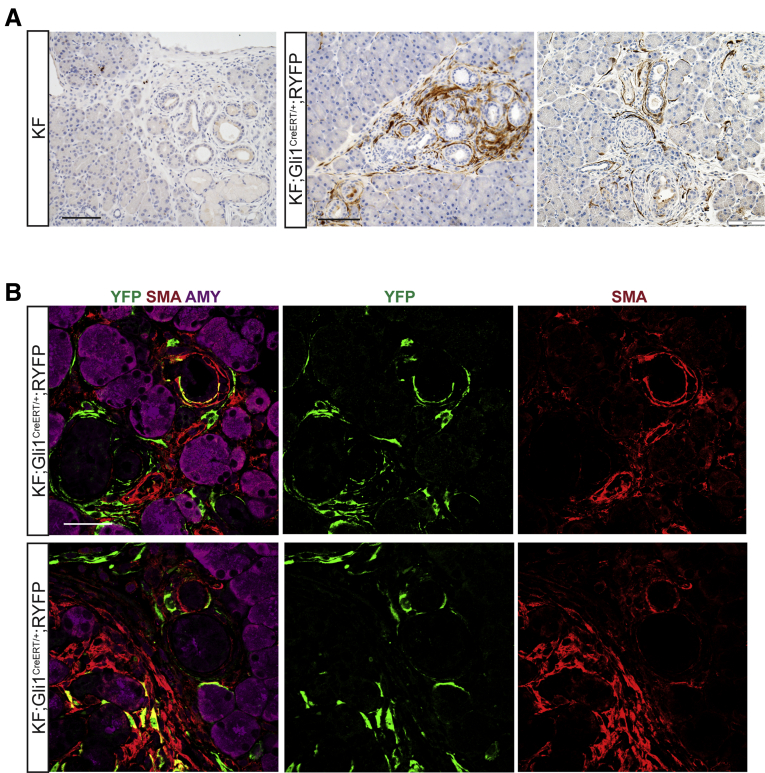
Background & Aims Although the healthy pancreas consists mostly of epithelial cells, pancreatic cancer and the precursor lesions known as pancreatic intraepithelial neoplasia, are characterized by an extensive accumulation of fibroinflammatory stroma that includes a substantial and heterogeneous fibroblast population. The cellular origin of fibroblasts within the stroma has not been determined. Here, we show that the Gli1 and Hoxb6 markers label distinct fibroblast populations in the healthy mouse pancreas. We then set out to determine whether these distinct fibroblast populations expanded during carcinogenesis. Methods We developed genetically engineered models using a dual-recombinase approach that allowed us to induce pancreatic cancer formation through codon-optimized Flp recombinase-driven epithelial recombination of Kirsten rat sarcoma viral oncogene homolog while labeling Gli1 + or Hoxb6 + fibroblasts in an inducible manner. By using these models, we lineage-traced these 2 fibroblast populations during the process of carcinogenesis. Results Although in the healthy pancreas Gli1 + fibroblasts and Hoxb6 + fibroblasts are present in similar numbers, they contribute differently to the stroma in carcinogenesis. Namely, Gli1 + fibroblasts expand dramatically, whereas Hoxb6 + cells do not. Conclusions Fibroblasts present in the healthy pancreas expand during carcinogenesis, but with a different prevalence for different subtypes. Here, we compared Gli1 + and Hoxb6 + fibroblasts and found only Gli1 + expanded to contribute to the stroma during pancreatic carcinogenesis.
Overview
The claims and statistics of this paper haven’t been checked yet.
Run the check — free, no account needed. It reads the open-access text and checks the sources it cites.
Integrity signals
Registry
Cites
Statistics
Figures
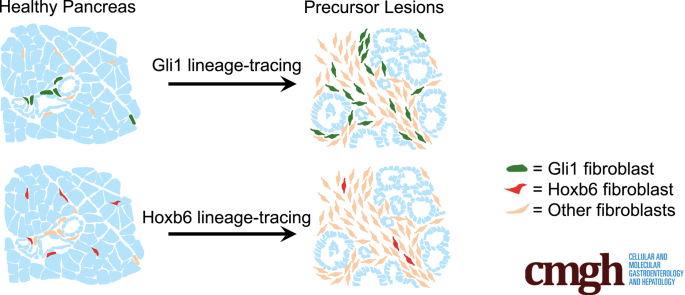
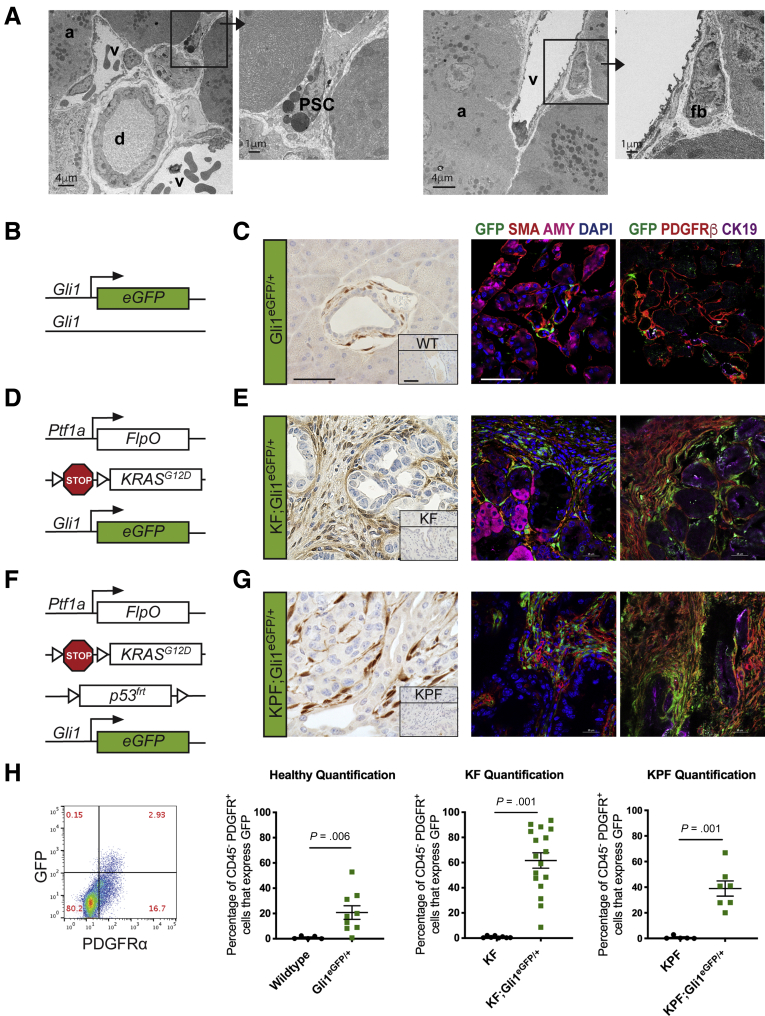
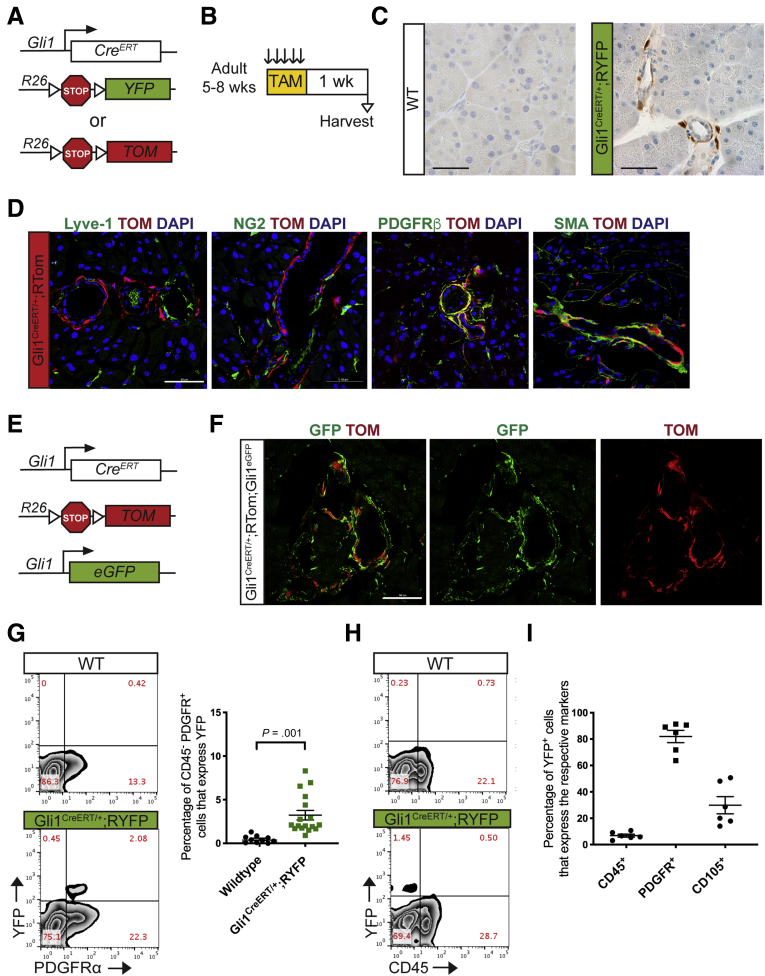
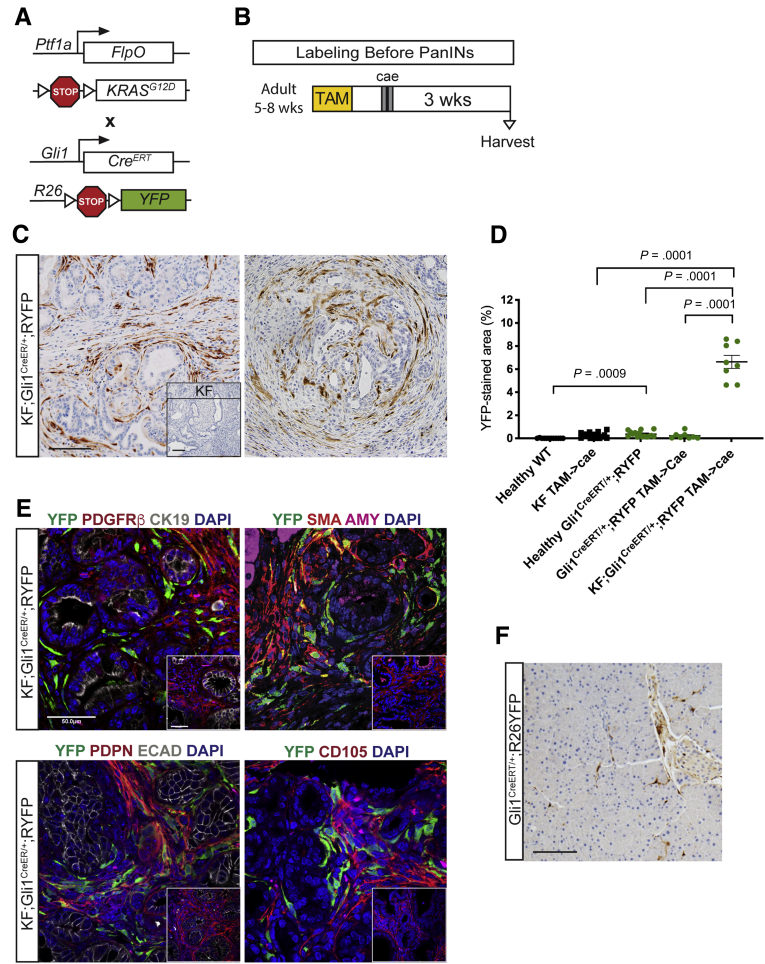
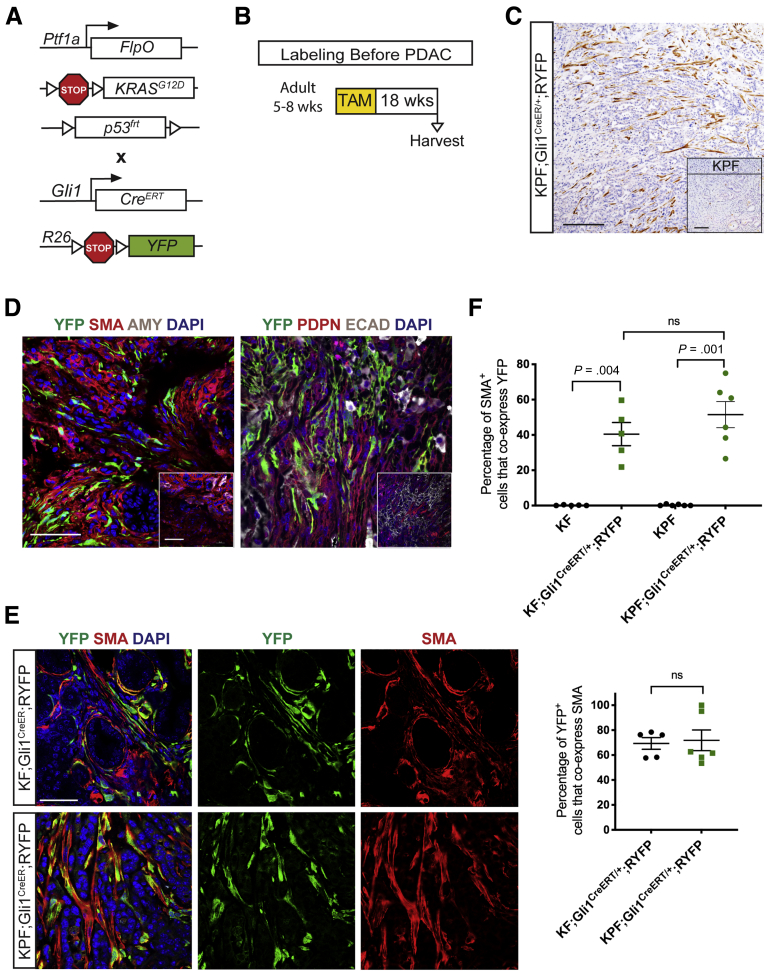
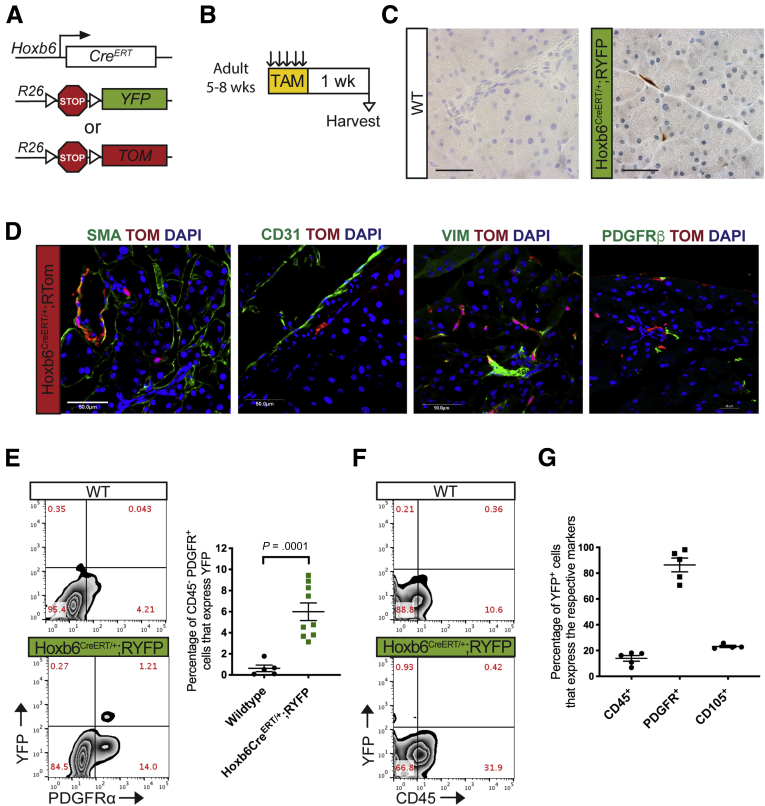
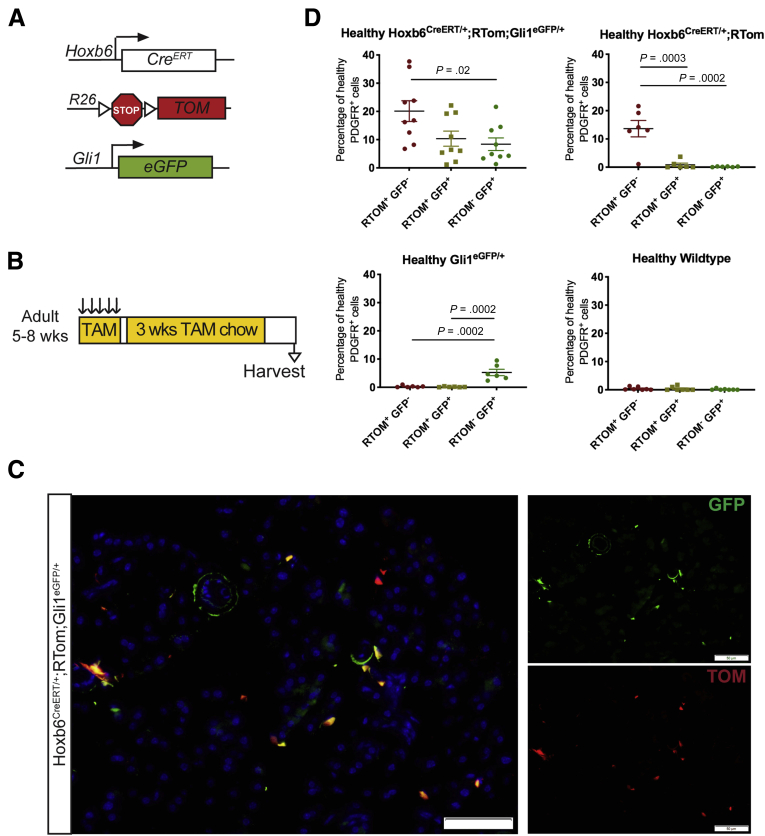
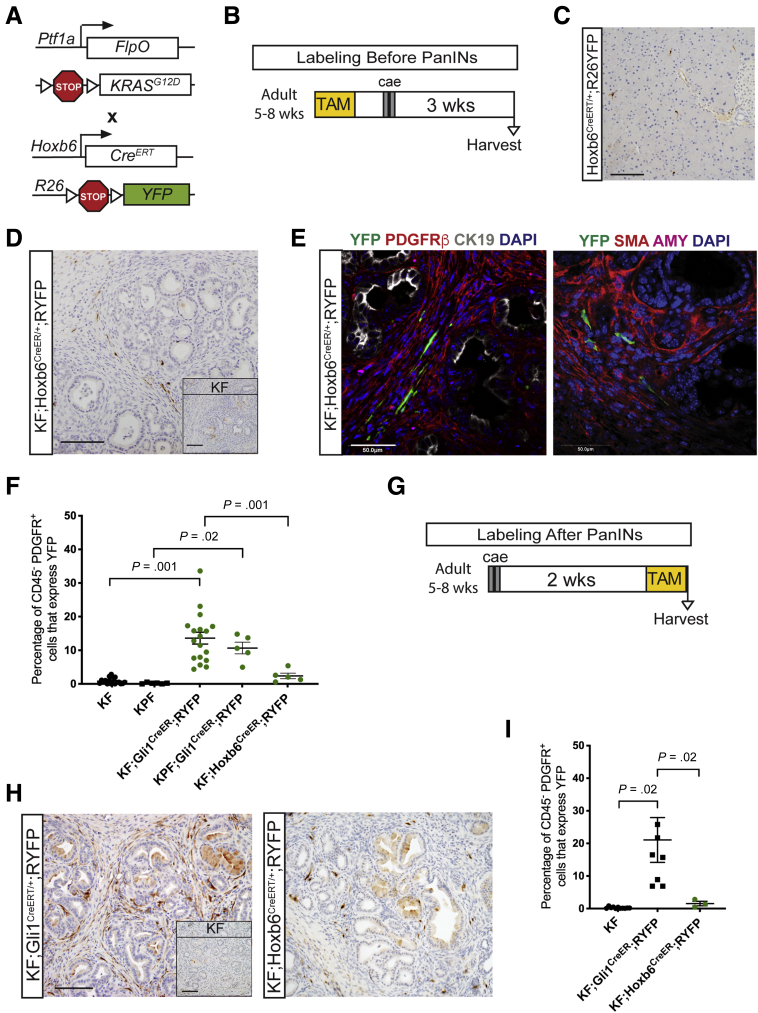
Verification
Claims the paper makes
The claims and statistics of this paper haven’t been checked yet.
Run the check — free, no account needed. It reads the open-access text and checks the sources it cites.
Claims other papers make about this one
Each is checked against this paper’s own text: does it say what the citing paper says it does?
In the citing paper
“recent lineage tracing studies targeting Fabp4+ stellate cells revealed that they give rise to a minority of CAFs142,143”
From Pancreatic cancer: Advances and challenges (2023) · cites this paper as [143]
Self-check
Percentages, sums and reported differences re-computed from the paper’s own numbers.
The self-check needs the paper’s full text.
Citations
Cites
Rahib, L., Smith, B. D., Aizenberg, R., Rosenzweig, A. B., Fleshman, J. M., & Matrisian, L. M. (2014) · Cancer Research · doi:10.1158/0008-5472.can-14-0155 · Cited by 7,094 · cited 1×
“ancreatic ductal adenocarcinoma (PDAC) is a deadly Pmalignancy that is projected to become the second leading cause of cancer-related death by 2030.(1) The 5-year”
BackgroundA framework for advancing our understanding of cancer-associated fibroblasts
Sahai, E., Astsaturov, I., Cukierman, E., DeNardo, D. G., Egeblad, M., Evans, R. M., Fearon, D., Greten, F. R., Hingorani, S. R., Hunter, T., et al. (2020) · Nature Reviews Cancer · doi:10.1038/s41568-019-0238-1 · Cited by 3,863
Olive, K. P., Jacobetz, M. A., Davidson, C. J., Gopinathan, A., McIntyre, D., Honess, D., Madhu, B., Goldgraben, M. A., Caldwell, M. E., Allard, D., et al. (2009) · Science · doi:10.1126/science.1171362 · Cited by 3,170
Özdemir, B. C., Pentcheva-Hoang, T., Carstens, J. L., Zheng, X., Wu, C.-C., Simpson, T. R., Laklai, H., Sugimoto, H., Kahlert, C., Novitskiy, S. V., et al. (2014) · Cancer Cell · doi:10.1016/j.ccr.2014.04.005 · Cited by 2,681 · cited 1×
“However, other results suggested that fibroblasts could restrain tumor formation and that depleting them might accelerate carcinogenesis.(13) This paradox might be explained by the observation that fibroblasts are not a homogenous population, but exist in subsets with different roles.”
ResultPericytes: Developmental, Physiological, and Pathological Perspectives, Problems, and Promises
Armulik, A., Genové, G., & Betsholtz, C. (2011) · Developmental Cell · doi:10.1016/j.devcel.2011.07.001 · Cited by 2,653 · cited 1×
“In the pancreas, themesenchyme surrounds and supports epithelium development(50) and differentiates to form cell types such as fibroblasts, pancreatic stellate cells, and pericytes.(51,52) Activated fibroblasts, also known as myofibroblasts, help regulate wound repair and recovery,(53,54) but in the context of certain…”
BackgroundHingorani, S. R., Wang, L., Multani, A. S., Combs, C., Deramaudt, T. B., Hruban, R. H., Rustgi, A. K., Chang, S., & Tuveson, D. A. (2005) · Cancer Cell · doi:10.1016/j.ccr.2005.04.023 · Cited by 2,609
Distinct populations of inflammatory fibroblasts and myofibroblasts in pancreatic cancer
Öhlund, D., Handly-Santana, A., Biffi, G., Elyada, E., Almeida, A. S., Ponz-Sarvise, M., Corbo, V., Oni, T. E., Hearn, S. A., Lee, E. J., et al. (2017) · Journal of Experimental Medicine · doi:10.1084/jem.20162024 · Cited by 2,590
Preinvasive and invasive ductal pancreatic cancer and its early detection in the mouse
Hingorani, S. R., Petricoin, E. F., Maitra, A., Rajapakse, V., King, C., Jacobetz, M. A., Ross, S., Conrads, T. P., Veenstra, T. D., Hitt, B. A., et al. (2003) · Cancer Cell · doi:10.1016/s1535-6108(03)00309-x · Cited by 2,471
Self-citationEpidemiology of Pancreatic Cancer: Global Trends, Etiology and Risk Factors
Rawla, P., Sunkara, T., & Gaduputi, V. (2019) · World Journal of Oncology · doi:10.14740/wjon1166 · Cited by 2,269 · cited 1×
“survival rate for PDAC is only 10%, which can be attributed to the aggressive and chemoresistant nature of the cancer, in addition to the frequently late diagnosis.(2) In PDAC, more”
BackgroundElyada, E., Bolisetty, M., Laise, P., Flynn, W. F., Courtois, E. T., Burkhart, R. A., Teinor, J. A., Belleau, P., Biffi, G., Lucito, M. S., et al. (2019) · Cancer Discovery · doi:10.1158/2159-8290.cd-19-0094 · Cited by 2,241 · cited 1×
“populations with potentially distinct functions and activation pathways.(14,15,20) Here, we sought to determine which fibroblasts in the”
Background
Cited by
Sorted by citations
Items 101–110 of 110
Li, W., Jihad, M., Lloyd, E. G., Mucciolo, G., Henríquez, J. A., Zaccaria, M., Cheng, P. S. W., Harish, S., Mills, S., Johnson, P. M., et al. (2025) · bioRxiv (Cold Spring Harbor Laboratory) · doi:10.64898/2025.12.05.692494
Reyes, J. (2026) · Dipòsit Digital de la Universitat de Barcelona (Universitat de Barcelona) · doi:10.5281/zenodo.18892592
Role of the stromal microenvironment in PDAC and resistance to therapies
Ode, A. (2024) · theses.fr (ABES) · doi:10.70675/0452e0e9z98e8z47d9za007zd4b472926aab
Understanding development and cellular plasticity in the pancreas in health and disease
Torres-Cano, A., & Spagnoli, F. M. (2026) · Nature Reviews Gastroenterology & Hepatology · doi:10.1038/s41575-026-01211-x · Cited by 1
Qin, Z., Xu, Y., Wang, Y., Ma, J., Zou, J., Wang, Y., Zhang, K., Qiu, J., Ju, R., & Guo, L. (2026) · European Journal of Pharmacology · doi:10.1016/j.ejphar.2026.179141
Arioka, M., & Takahashi‐Yanaga, F. (2026) · Biochemical Pharmacology · doi:10.1016/j.bcp.2026.118380
Cheng, P. S. W., Lloyd, E. G., Jihad, M., Zaccaria, M., Burgess, K., Mucciolo, G., Harish, S., Luo, W., Manansala, J. S., Li, W., et al. (2026) · bioRxiv (Cold Spring Harbor Laboratory) · doi:10.64898/2026.09.08.750042
Hao, Y., Wang, Y., Du, Q., & Li, G. (2026) · Frontiers in Immunology · doi:10.3389/fimmu.2026.1971880
Gan, L., Liu, Z., Cao, L., Meng, X., Liu, X., Wang, X., & He, Y. (2026) · Experimental Hematology and Oncology · doi:10.1186/s40164-026-00837-6
“Similarly, lineage-tracing studies in pancreatic cancer have shown that Gli1 + and Hoxb6 + fibroblasts represent distinct populations in the healthy pancreas, with Gli1 + fibroblasts preferentially expanding and contributing to the tumor stroma during carcinogenesis [40].”
Metadata
- Authors
- Garcia, P. E., Adoumie, M., Kim, E. C., Zhang, Y., Scales, M. K., El-Tawil, Y. S., Shaikh, A. Z., Wen, H.-J., Bednar, F., Allen, B. L., Wellik, D. M., Crawford, H. C., & Pasca di Magliano, M.
- Affiliations
- University of Michigan (US)
- University of Wisconsin–Madison (US)
- ORCID
- Venue
- Cellular and Molecular Gastroenterology and Hepatology
- Publisher
- Elsevier BV
- Published
- 2020
- Volume
- 10
- Issue
- 3
- Pages
- 581-599
- ISSN
- 2352-345X (ISSN-L)
- PMC
- PMC7399194
- OpenAlex
- W3027333363
- Cited by
- 110
- References
- 83
- Citations by year
- 2026: 16 · 2025: 16 · 2024: 25 · 2023: 18 · 2022: 16 · 2021: 14 · 2020: 5
- FWCI
- 4.78
- Type
- journal article
- Language
- en
- Open access
- gold
- doi.org
- Licence
- Locations
- Cellular and Molecular Gastroenterology and Hepatology (publishedVersion, cc-by-nc-nd)
- PubMed Central (publishedVersion, cc-by-nc-nd)
- PubMed (publishedVersion)
- DOAJ (DOAJ: Directory of Open Access Journals) (submittedVersion, cc-by-sa)
- Funders
- National Cancer Institute
- Topics
- Health Sciences › Medicine › Oncology › Pancreatic and Hepatic Oncology Research
- Health Sciences › Medicine › Surgery › Pancreatitis Pathology and Treatment
- Health Sciences › Medicine › Endocrinology, Diabetes and Metabolism › Pancreatic function and diabetes
- Keywords
- pancreatic cancer, pancreatic stroma, pancreatic fibroblasts, fibroblast heterogeneity, Gli1, HOXB6, pancreatic intraepithelial neoplasia, carcinogenesis
- MeSH terms
- Zinc Finger Protein GLI1, Animals, Disease Models, Animal, Fibroblasts, Humans, Mice, Transgenic, Pancreas, Pancreatic Neoplasms, Proto-Oncogene Proteins p21(ras), Homeodomain Proteins, Carcinoma, Pancreatic Ductal, Mice, Carcinogenesis
About these checks
Registry, retraction, Cites and statistics results are computed, not judged, with one exception: a printed reference that no index lists is read once by a model before it counts as a citation error. Claims are extracted by a model and kept only when their quote appears verbatim in the text; each cited source is then checked, with a model’s help, for whether it says what the claim relies on. Those verdicts can be wrong — read the claim’s quote and the cited source before relying on one.
Statistics and arithmetic are recomputed, not judged.
Confidence bands are shown only for fields calibrated on our annotated test set. None is calibrated yet, so no band is shown.
What counts as a claim ›How we measure confidence ›How we check this ›
Are you an author, or do you see a problem with this page? Request a review
