

The DOI matches its Crossref record; 83 of the 87 references it cites were found in a registry or an index.
Dual-drug loaded nanoparticles of Epigallocatechin-3-gallate (EGCG)/Ascorbic acid enhance therapeutic efficacy of EGCG in a APPswe/PS1dE9 Alzheimer's disease mice model
Open accessAbstract
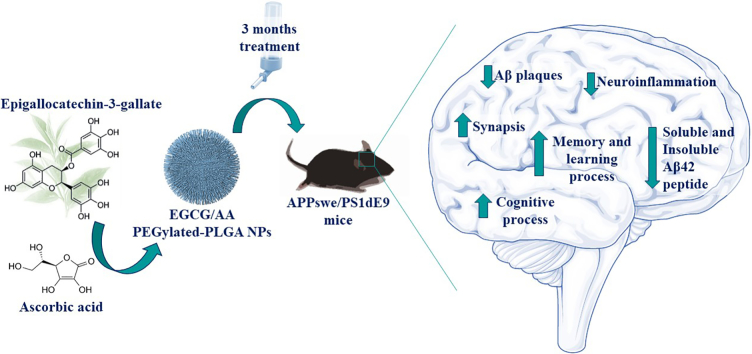
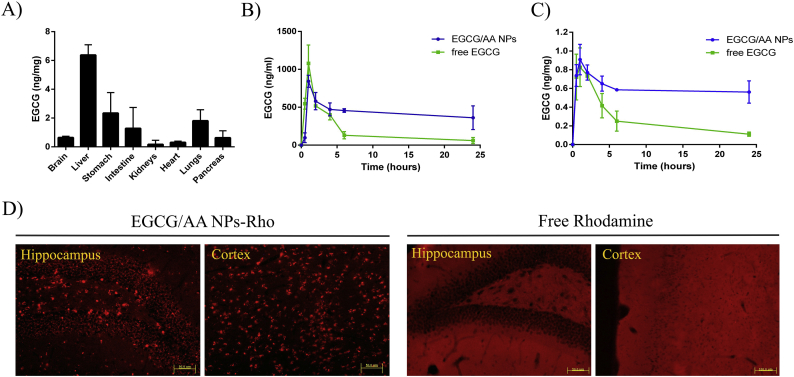
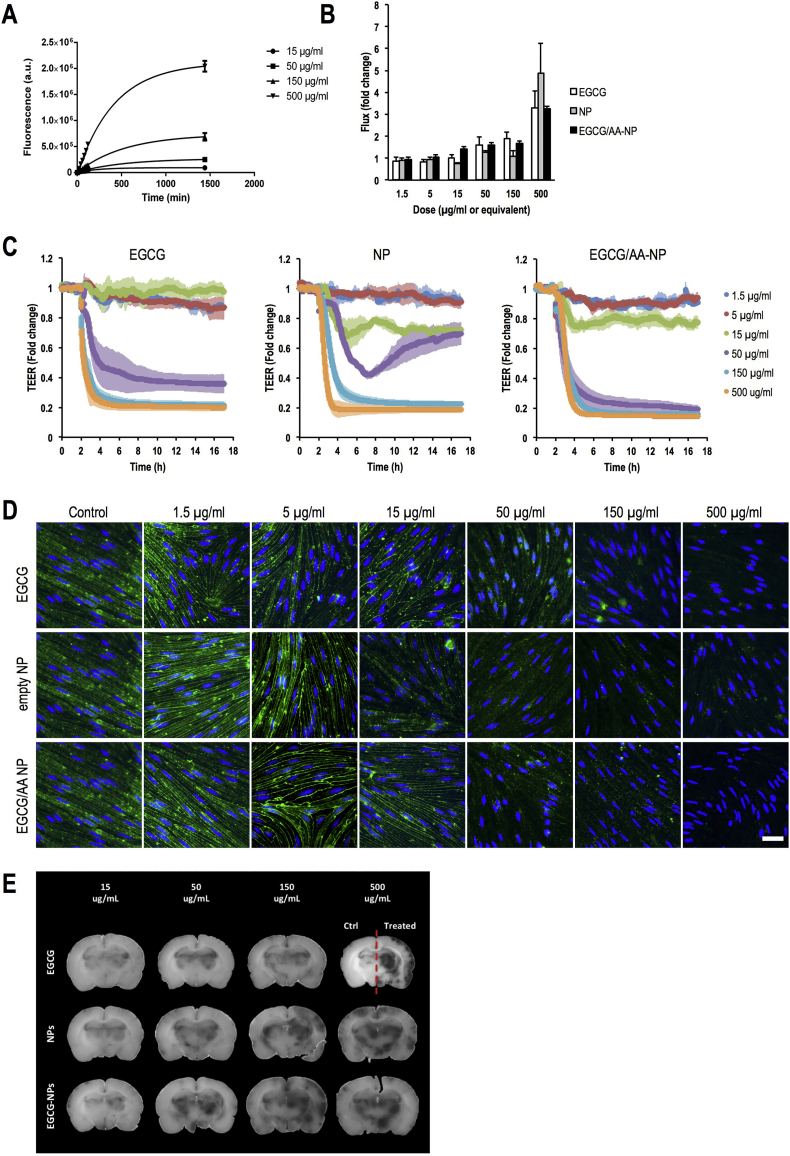
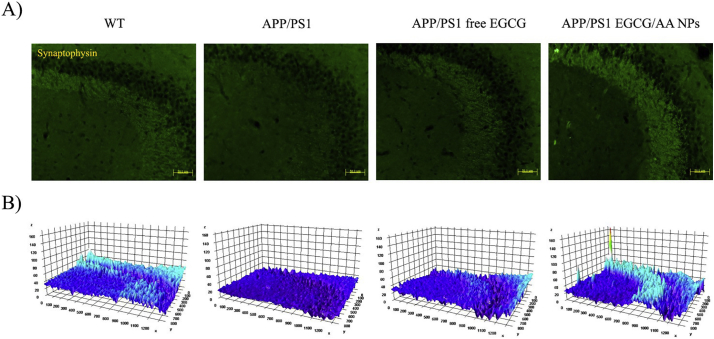
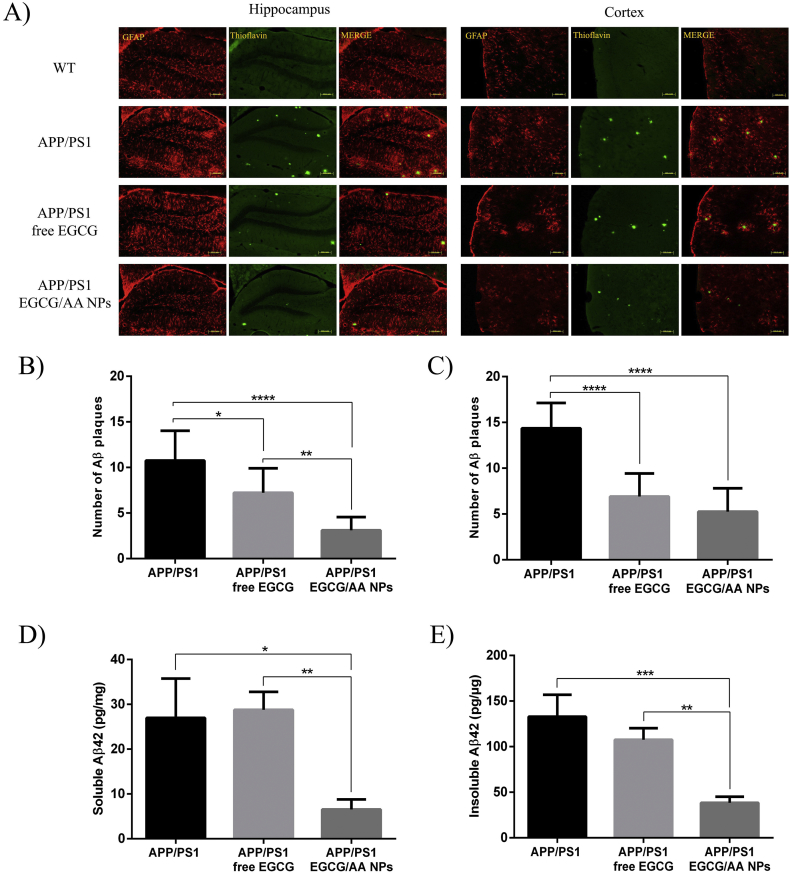
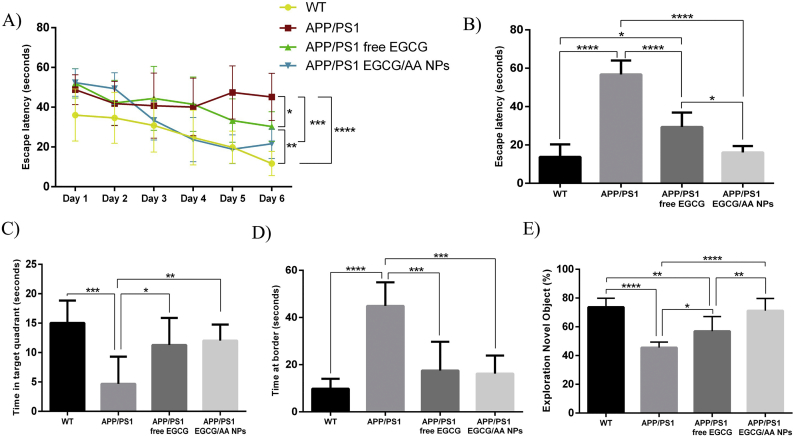
Epigallocatechin-3-gallate (EGCG) is a candidate for treatment of Alzheimer's disease (AD) but its inherent instability limits bioavailability and effectiveness. We found that EGCG displayed increased stability when formulated as dual-drug loaded PEGylated PLGA nanoparticles (EGCG/AA NPs). Oral administration of EGCG/AA NPs in mice resulted in EGCG accumulation in all major organs, including the brain. Pharmacokinetic comparison of plasma and brain accumulation following oral administration of free or EGCG/AA NPs showed that, whilst in both cases initial EGCG concentrations were similar, long-term (5–25 h) concentrations were ca. 5 fold higher with EGCG/AA NPs. No evidence was found that EGCG/AA NPs utilised a specific pathway across the blood-brain barrier (BBB). However, EGCG, empty NPs and EGCG/AA NPs all induced tight junction disruption and opened the BBB in vitro and ex vivo. Oral treatment of APPswe/PS1dE9 (APP/PS1) mice, a familial model of AD, with EGCG/AA NPs resulted in a marked increase in synapses, as judged by synaptophysin (SYP) expression, and reduction of neuroinflammation as well as amyloid β (Aβ) plaque burden and cortical levels of soluble and insoluble Aβ(1-42) peptide. These morphological changes were accompanied by significantly enhanced spatial learning and memory. Mechanistically, we propose that stabilisation of EGCG in NPs complexes and a destabilized BBB led to higher therapeutic EGCG concentrations in the brain. Thus EGCG/AA NPs have the potential to be developed as a safe and strategy for the treatment of AD.
Overview
The claims and statistics of this paper haven’t been checked yet.
Run the check — free, no account needed. It reads the open-access text and checks the sources it cites.
Integrity signals
Registry
Cites
Statistics
Figures
Verification
Claims the paper makes
The claims and statistics of this paper haven’t been checked yet.
Run the check — free, no account needed. It reads the open-access text and checks the sources it cites.
Claims other papers make about this one
Each is checked against this paper’s own text: does it say what the citing paper says it does?
In the citing paper
“In an interesting in vivo study, oral delivery of epigallocatechin-3-gallate (EGCG) NP formulation in an APP/PS1 AD mouse model reduced neuroinflammation and AB plaque (Fig. 3a–c).”
From Targeted therapy in chronic diseases using nanomaterial-based drug delivery vehicles (2019) · cites this paper as [114]
In the citing paper
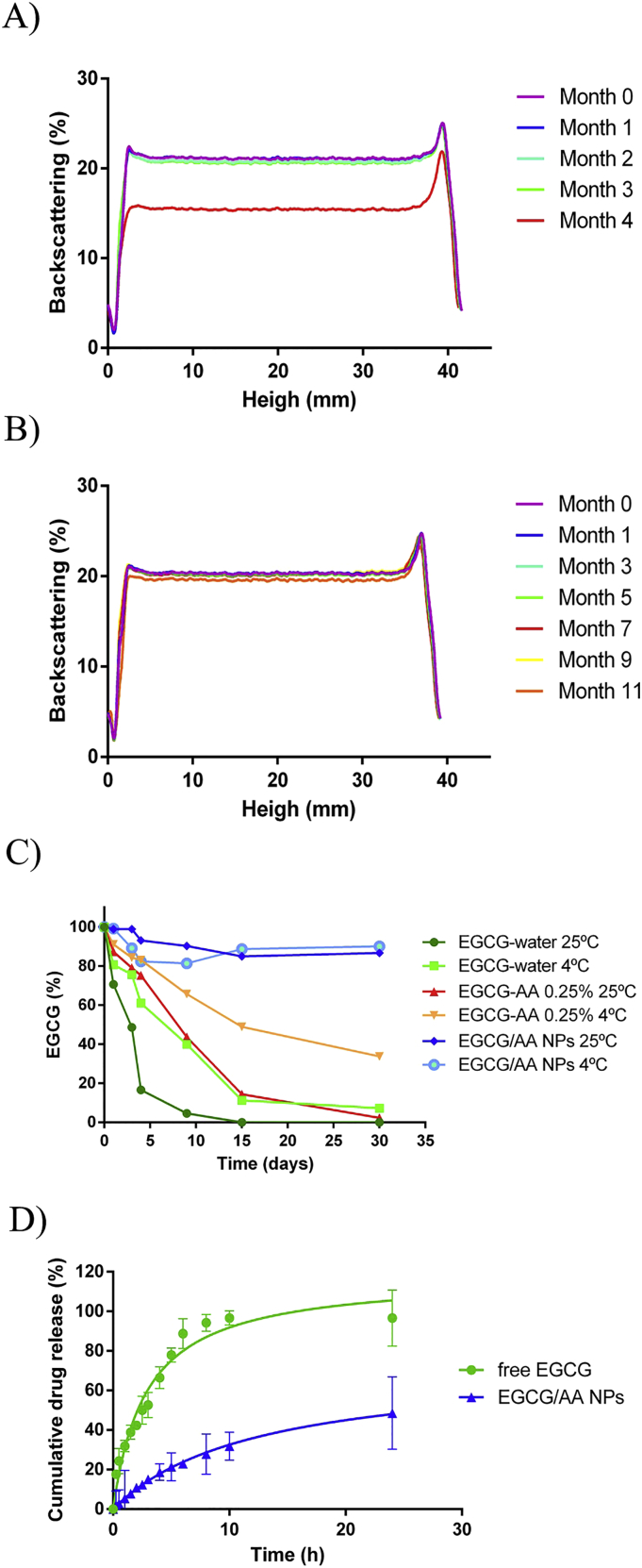
“EGCG in combination with PEGylated PLGA NPs (EGCG/AA NPs) displayed increased stability and sustained release with high bioavailability compared to that of free EGCG.”
From Targeted therapy in chronic diseases using nanomaterial-based drug delivery vehicles (2019) · cites this paper as [114]
In the citing paper
“Furthermore, these data were supported by significantly improved spatial learning and memory (Fig. 3d, e).114”
From Targeted therapy in chronic diseases using nanomaterial-based drug delivery vehicles (2019) · cites this paper as [114]
Self-check
Percentages, sums and reported differences re-computed from the paper’s own numbers.
The self-check needs the paper’s full text.
Citations
Cites
Polazzi, E., Mengoni, I., Caprini, M., Peña‐Altamira, E., Kurtys, E., & Monti, B. (2012) · Neurosignals · doi:10.1159/000337115 · Cited by 9,023
Place navigation impaired in rats with hippocampal lesions
Morris, R. G. M., Garrud, P., Rawlins, J. N. P., & O'Keefe, J. (1982) · Nature · doi:10.1038/297681a0 · Cited by 6,340
Global prevalence of dementia: a Delphi consensus study
Ferri, C. P., Prince, M. J., Brayne, C., Brodaty, H., Fratiglioni, L., Ganguli, M., Hall, K. S., Hasegawa, K., Hendrie, H. C., Huang, Y., et al. (2005) · The Lancet · doi:10.1016/s0140-6736(05)67889-0 · Cited by 5,336
2016 Alzheimer's disease facts and figures
Alzheimer's Association (2016) · Alzheimer's & Dementia · doi:10.1016/j.jalz.2016.03.001 · Cited by 5,069
Soluble protein oligomers in neurodegeneration: lessons from the Alzheimer's amyloid β-peptide
Haass, C., & Selkoe, D. J. (2007) · Nature Reviews Molecular Cell Biology · doi:10.1038/nrm2101 · Cited by 4,744
Microglia: Active sensor and versatile effector cells in the normal and pathologic brain
Hanisch, U.-K., & Kettenmann, H. (2007) · Nature Neuroscience · doi:10.1038/nn1997 · Cited by 3,676
Biodegradable polymeric nanoparticles as drug delivery devices
Soppimath, K. S., Aminabhavi, T. M., Kulkarni, A. R., & Rudzinski, W. E. (2001) · Journal of Controlled Release · doi:10.1016/s0168-3659(00)00339-4 · Cited by 3,549
Biodegradation and biocompatibility of PLA and PLGA microspheres
Anderson, J. M., & Shive, M. S. (1997) · Advanced Drug Delivery Reviews · doi:10.1016/s0169-409x(97)00048-3 · Cited by 2,617
Ballard, C., Gauthier, S., Corbett, A., Brayne, C., Aarsland, D., & Jones, E. (2011) · The Lancet · doi:10.1016/s0140-6736(10)61349-9 · Cited by 2,336
Saraiva, C., Praça, C., Ferreira, R., Santos, T., Ferreira, L., & Bernardino, L. (2016) · Journal of Controlled Release · doi:10.1016/j.jconrel.2016.05.044 · Cited by 1,609
2017 Alzheimer's disease facts and figures
(, T. D. B. T. A.-R. C. C. A. S. O. A. C. B. S., different, ). J. A. I. A., destroyed, S. A. T. A. S. T. M. E. T. M. C. I. S. I. A. G. W. A. T. R. N. I. T. O. B. T. F. N. T. B. D. A. D. A. U. I. B. R. I. I. F. N. M. A. N. I. O. P. O. T. B. A. D. A., difficulties, I. E. O., agitation, I. N. S. S. A., & delusions., S. A. (2017) · Alzheimer s & Dementia · doi:10.1016/j.jalz.2017.02.001 · Cited by 1,366
Crossing the blood-brain barrier with nanoparticles
Zhou, Y., Peng, Z., Seven, E. S., & Leblanc, R. M. (2018) · Journal of Controlled Release · doi:10.1016/j.jconrel.2017.12.015 · Cited by 837
The blood-brain barrier in Alzheimer’s disease
Zenaro, E., Piacentino, G., & Constantin, G. (2017) · Neurobiology of Disease · doi:10.1016/j.nbd.2016.07.007 · Cited by 767
Therapeutics of Alzheimer's disease: Past, present and future
Anand, R., Gill, K. D., & Mahdi, A. A. (2013) · Neuropharmacology · doi:10.1016/j.neuropharm.2013.07.004 · Cited by 765
PEG — A versatile conjugating ligand for drugs and drug delivery systems
Kolate, A., Baradia, D., Patil, S., Vhora, I., Kore, G. G., & Misra, A. R. (2014) · Journal of Controlled Release · doi:10.1016/j.jconrel.2014.06.046 · Cited by 650
Nance, E. A., Woodworth, G. F., Sailor, K. A., Shih, T.-Y., Xu, Q., Swaminathan, G., Xiang, D., Eberhart, C., & Hanes, J. (2012) · Science Translational Medicine · doi:10.1126/scitranslmed.3003594 · Cited by 649
Strategic roadmap for an early diagnosis of Alzheimer's disease based on biomarkers
Frisoni, G. B., Boccardi, M., Barkhof, F., Blennow, K., Cappa, S., Chiotis, K., Démonet, J.-F., Garibotto, V., Giannakopoulos, P., Gietl, A., et al. (2017) · The Lancet Neurology · doi:10.1016/s1474-4422(17)30159-x · Cited by 626
Polymeric nanoparticles: Promising platform for drug delivery
El‐Say, K. M., & El‐Sawy, H. S. (2017) · International Journal of Pharmaceutics · doi:10.1016/j.ijpharm.2017.06.052 · Cited by 611
SZE, C.-I., TRONCOSO, J. C., KAWAS, C., MOUTION, P., PRICE, D. L., & MARTIN, L. J. (1997) · Journal of Neuropathology and Experimental Neurology · doi:10.1097/00005072-199708000-00011 · Cited by 562
Drug delivery to the central nervous system by polymeric nanoparticles: What do we know?
Kreuter, J. (2014) · Advanced Drug Delivery Reviews · doi:10.1016/j.addr.2013.08.008 · Cited by 554
Alzheimer's disease drug development pipeline: 2017
Cummings, J., Lee, G., Mortsdorf, T., Ritter, A., & Zhong, K. (2017) · Alzheimer's & Dementia: Translational Research & Clinical Interventions · doi:10.1016/j.trci.2017.05.002 · Cited by 549
Nanoparticles and targeted drug delivery in cancer therapy
Bahrami, B., Hojjat‐Farsangi, M., Mohammadi, H., Anvari, E., Ghalamfarsa, G., Yousefi, M., & Jadidi‐Niaragh, F. (2017) · Immunology Letters · doi:10.1016/j.imlet.2017.07.015 · Cited by 521
Deficient brain insulin signalling pathway in Alzheimer's disease and diabetes
Liu, Y. M., Liu, F., Grundke, I., Iqbal, K., & Gong, C. (2011) · The Journal of Pathology · doi:10.1002/path.2912 · Cited by 505
Synthesis of highly stable dispersions of nanosized copper particles using l-ascorbic acid
Xiong, J., Wang, Y., Xue, Q., & Wu, X. (2011) · Green Chemistry · doi:10.1039/c0gc00772b · Cited by 500
Absorption, distribution, elimination of tea polyphenols in rats.
Chen, L., Lee, M., Li, H., & Yang, C. S. (1997) · PubMed · Cited by 459
Drug development in Alzheimer’s disease: the path to 2025
Cummings, J., Aisen, P. S., DuBois, B., Frölich, L., Jack, C. R., Jones, R. W., Morris, J. C., Raskin, J., Dowsett, S. A., & Scheltens, P. (2016) · Alzheimer's Research & Therapy · doi:10.1186/s13195-016-0207-9 · Cited by 459
Blood-Brain Barrier Dysfunction and the Pathogenesis of Alzheimer’s Disease
Yamazaki, Y., & Kanekiyo, T. (2017) · International Journal of Molecular Sciences · doi:10.3390/ijms18091965 · Cited by 451
In vivo evaluation of the biodistribution and safety of PLGA nanoparticles as drug delivery systems
Semete, B., Booysen, L., Lemmer, Y., Kalombo, L., Katata, L., Verschoor, J., & Swai, H. S. (2010) · Nanomedicine: Nanotechnology, Biology and Medicine · doi:10.1016/j.nano.2010.02.002 · Cited by 425
Poly(lactic-co-glycolic) Acid-Controlled-Release Systems: Experimental and Modeling Insights
Hines, D. J., & Kaplan, D. L. (2013) · Critical Reviews in Therapeutic Drug Carrier Systems · doi:10.1615/critrevtherdrugcarriersyst.2013006475 · Cited by 399
Revnic, C. R. S., Revnic, F. G., & Voinea, S. C. (2017) · Alzheimer s & Dementia · doi:10.1016/j.jalz.2017.06.033 · Cited by 370
PLGA-based nanoparticles: A new paradigm in biomedical applications
Sharma, S., Parmar, A., Kori, S., & Sandhir, R. (2015) · TrAC Trends in Analytical Chemistry · doi:10.1016/j.trac.2015.06.014 · Cited by 350
Son, G.-H., Lee, B., & Cho, C. (2017) · Journal of Pharmaceutical Investigation · doi:10.1007/s40005-017-0320-1 · Cited by 331
Scientific opinion on the safety of green tea catechins
(ANS), E. P. O. F. A. A. N. S. A. T. F., Younes, M., Aggett, P. J., Aguilar, F., Crebelli, R., Dusemund, B., Filipič, M., Fernández, M. J. F., Galtier, P., Gott, D. M., et al. (2018) · EFSA Journal · doi:10.2903/j.efsa.2018.5239 · Cited by 326
Anti-inflammatory Action of Green Tea
Ohishi, T., Goto, S., Monira, P., Isemura, M., & Nakamura, Y. (2016) · Anti-Inflammatory & Anti-Allergy Agents in Medicinal Chemistry · doi:10.2174/1871523015666160915154443 · Cited by 317
de la Torre, R., de Sola, S., Hernández, G., Farré, M., Pujol, J., Rodríguez, J. C., Espadaler, J. M., Langohr, K., Cuenca‐Royo, A., Príncipe, A., et al. (2016) · The Lancet Neurology · doi:10.1016/s1474-4422(16)30034-5 · Cited by 291
Neuroinflammation – An Early Event in Both the History and Pathogenesis of Alzheimer’s Disease
Eikelenboom, P., van Exel, E. R., Hoozemans, J. J. M., Veerhuis, R., Rozemüller, A. J. M., & van Gool, W. A. (2010) · Neurodegenerative Diseases · doi:10.1159/000283480 · Cited by 259
Potential of insulin nanoparticle formulations for oral delivery and diabetes treatment.
Wong, C. Y., Al-Salami, H., & Dass, C. R. (2017) · Journal of Controlled Release · doi:10.1016/j.jconrel.2017.09.003 · Cited by 257
Vaidyanathan, J. B., & Walle, T. (2003) · Journal of Pharmacology and Experimental Therapeutics · doi:10.1124/jpet.103.054296 · Cited by 242
The relationship between the structure and biological actions of green tea catechins
Braicu, C., Ladomery, M., Chedea, V. S., Irimie, A., & Berindan‐Neagoe, I. (2013) · Food Chemistry · doi:10.1016/j.foodchem.2013.05.122 · Cited by 239
Krupkova, O., Ferguson, S. J., & Wuertz‐Kozak, K. (2016) · The Journal of Nutritional Biochemistry · doi:10.1016/j.jnutbio.2016.01.002 · Cited by 238
Yuan, H., Chen, C., Chai, G., Du, Y., & Hu, F. (2013) · Molecular Pharmaceutics · doi:10.1021/mp300649z · Cited by 234
Specific role of polysorbate 80 coating on the targeting of nanoparticles to the brain
Sun, W., Xie, C., Wang, H., & Hu, Y. L. (2003) · Biomaterials · doi:10.1016/j.biomaterials.2003.09.087 · Cited by 215
Wobst, H. J., Sharma, A. M., Diamond, M. I., Wanker, E. E., & Bieschke, J. (2014) · FEBS Letters · doi:10.1016/j.febslet.2014.11.026 · Cited by 207
Lee, Y., Choi, D., Yun, Y., Han, S., Oh, K., & Hong, J. T. (2012) · The Journal of Nutritional Biochemistry · doi:10.1016/j.jnutbio.2012.06.011 · Cited by 196
Ellulu, M. S., Rahmat, A. B., Ismail, P., Khaza’ai, H., & Abed, Y. A. (2015) · Drug Design Development and Therapy · doi:10.2147/dddt.s83144 · Cited by 195
Mandel, S. A., Amit, T., Kalfon, L., Reznichenko, L., Weinreb, O., & Youdim, M. B. H. (2008) · Journal of Alzheimer s Disease · doi:10.3233/jad-2008-15207 · Cited by 173
Horisawa, E., Kubota, K., Tuboi, I., Sato, K., Yamamoto, H., Takeuchi, H., & Kawashimà, Y. (2002) · Pharmaceutical Research · doi:10.1023/a:1014260513728 · Cited by 169
Cascella, M., Bimonte, S., Muzio, M. R., Schiavone, V., & Cuomo, A. (2017) · Infectious Agents and Cancer · doi:10.1186/s13027-017-0145-6 · Cited by 168
Radhakrishnan, R., Kulhari, H., Pooja, D., Gudem, S., Bhargava, S. K., Shukla, R., & Sistla, R. (2016) · Chemistry and Physics of Lipids · doi:10.1016/j.chemphyslip.2016.05.006 · Cited by 166
Therapeutic Potential of Epigallocatechin Gallate Nanodelivery Systems
Granja, A., Frias, I., Neves, A. R., Pinheiro, M., & Reis, S. (2017) · BioMed Research International · doi:10.1155/2017/5813793 · Cited by 166
Protective role of epigallocatechin-3-gallate in health and disease: A perspective
Chowdhury, A., Sarkar, J., Chakraborti, T., Pramanik, P. K., & Chakraborti, S. (2016) · Biomedicine & Pharmacotherapy · doi:10.1016/j.biopha.2015.12.013 · Cited by 164
Recent advances in the neurobiology and neuropharmacology of Alzheimer’s disease
Kumar, K., Kumar, A., Keegan, R. M., & Deshmukh, R. R. (2017) · Biomedicine & Pharmacotherapy · doi:10.1016/j.biopha.2017.12.053 · Cited by 159
Cellular distribution of injected PLGA-nanoparticles in the liver
Park, J., Utsumi, T., Seo, Y.-E., Deng, Y., Satoh, A., Saltzman, W. M., & Iwakiri, Y. (2016) · Nanomedicine Nanotechnology Biology and Medicine · doi:10.1016/j.nano.2016.01.013 · Cited by 154
El‐Hammadi, M. M., Delgado, Á. V., Melguizo, C., Prados, J. C., & Arias, J. L. (2016) · International Journal of Pharmaceutics · doi:10.1016/j.ijpharm.2016.11.012 · Cited by 148
Zhang, R., Xue, G., Wang, S., Zhang, L., Shi, C., & Xie, X. (2012) · Journal of Alzheimer s Disease · doi:10.3233/jad-2012-120151 · Cited by 146
Hybrid protein-inorganic nanoparticles: From tumor-targeted drug delivery to cancer imaging
Elzoghby, A. O., Hemasa, A. L., & Freag, M. S. (2016) · Journal of Controlled Release · doi:10.1016/j.jconrel.2016.10.023 · Cited by 145
PEG-functionalized microparticles selectively target inflamed mucosa in inflammatory bowel disease
Lautenschläger, C., Schmidt, C., Lehr, C., Fischer, D., & Stallmach, A. (2013) · European Journal of Pharmaceutics and Biopharmaceutics · doi:10.1016/j.ejpb.2013.09.016 · Cited by 139
Awasthi, M., Singh, S., Pandey, V. P., & Dwivedi, U. N. (2016) · Journal of the Neurological Sciences · doi:10.1016/j.jns.2016.01.008 · Cited by 139
Md, S., Ali, M., Baboota, S., Sahni, J. K., Bhatnagar, A., & Ali, J. (2014) · Drug Development and Industrial Pharmacy · doi:10.3109/03639045.2012.758130 · Cited by 138
Improvement of the encapsulation efficiency of oligonucleotide-containing biodegradable microspheres
Freytag, T., Dashevsky, A., Tillman, L., Hardee, G. E., & Bodmeier, R. A. (2000) · Journal of Controlled Release · doi:10.1016/s0168-3659(00)00299-6 · Cited by 135
Wei, J. C., Huang, H., Chen, W. J., Huang, C., Peng, C., & Lin, C. (2015) · European Journal of Pharmacology · doi:10.1016/j.ejphar.2015.11.048 · Cited by 130
Fangueiro, J. F., Calpena, A. C., Clares, B., Andreani, T., Egea, M. A., Veiga, F., García, M. L., Silva, A. M., & Souto, E. B. (2016) · International Journal of Pharmaceutics · doi:10.1016/j.ijpharm.2016.02.039 · Cited by 130
Self-citationMinogue, A. M., Jones, R. S., Kelly, R. J., McDonald, C., Connor, T. J., & Lynch, M. A. (2014) · Neurobiology of Aging · doi:10.1016/j.neurobiolaging.2013.12.026 · Cited by 112
Singh, R., Kesharwani, P., Mehra, N. K., Singh, S. K., Banerjee, S., & Jain, N. K. (2015) · Drug Development and Industrial Pharmacy · doi:10.3109/03639045.2015.1019355 · Cited by 106
A practical algorithm for managing Alzheimer's disease: what, when, and why?
Cummings, J. L., Isaacson, R., Schmitt, F. A., & Velting, D. M. (2015) · Annals of Clinical and Translational Neurology · doi:10.1002/acn3.166 · Cited by 97
Schimidt, H. L., Garcia, A., Martins, A., Mello‐Carpes, P. B., & Carpes, F. P. (2017) · Food Research International · doi:10.1016/j.foodres.2017.07.026 · Cited by 97
Cano, A. C., Ettcheto, M., Espina, M., Auladell, C., Calpena, A. C., Folch, J., Barenys, M., Sánchez‐López, E., Camins, A., & García, M. L. (2018) · Nanomedicine Nanotechnology Biology and Medicine · doi:10.1016/j.nano.2018.01.019 · Cited by 95
Self-citationDifferential Apicobasal VEGF Signaling at Vascular Blood-Neural Barriers
Hudson, N., Powner, M. B., Sarker, M. H., Burgoyne, T., Campbell, M., Ockrim, Z., Martinelli, R., Futter, C. E., Grant, M. B., Fraser, P. A., et al. (2014) · Developmental Cell · doi:10.1016/j.devcel.2014.06.027 · Cited by 90
Self-citationPLA/PLGA nanoparticles for delivery of drugs across the blood-brain barrier
Li, J., & Sabliov, C. M. (2013) · Nanotechnology Reviews · doi:10.1515/ntrev-2012-0084 · Cited by 90
Chen, T., Li, C., Li, Y., Yi, X., Wang, R., Lee, S. M.-Y., & Zheng, Y. (2017) · ACS Applied Materials & Interfaces · doi:10.1021/acsami.7b01171 · Cited by 89
Silva-Abreu, M., Calpena, A. C., Andrés‐Benito, P., Aso, E., Romero, I. A., Roig-Carles, D., Gromnicova, R., Espina, M., Ferrer, I., García, M. L., et al. (2018) · International Journal of Nanomedicine · doi:10.2147/ijn.s171490 · Cited by 83
Self-citationProniuk, S., Liederer, B. M., & Blanchard, J. D. (2002) · Journal of Pharmaceutical Sciences · doi:10.1002/jps.10009 · Cited by 81
Vega, E., Egea, M. A., Garduño-Ramı́rez, M. L., García, M. L., Sánchez‐López, E., Espina, M., & Calpena, A. C. (2013) · Colloids and Surfaces B Biointerfaces · doi:10.1016/j.colsurfb.2013.04.045 · Cited by 67
Self-citationRole of NADPH Oxidase in Retinal Microvascular Permeability Increase by RAGE Activation
Warboys, C. M., Toh, H.-B., & Fraser, P. A. (2009) · Investigative Ophthalmology & Visual Science · doi:10.1167/iovs.08-2730 · Cited by 61
Mata-Bilbao, M. L., Andrés‐Lacueva, C., Roura, E., Jáuregui, O., Torre, C., & Lamuela-Raventós, R. M. (2007) · Journal of Agricultural and Food Chemistry · doi:10.1021/jf0713962 · Cited by 55
Porquet, D., Andrés-Benito, P., Griñán-Ferré, C., Camins, A., Ferrer, I., Canudas, A. M., Del Valle, J., & Pallàs, M. (2015) · AGE · doi:10.1007/s11357-015-9747-3 · Cited by 53
Self-citationDey, S., & Bishayi, B. (2017) · Microbial Pathogenesis · doi:10.1016/j.micpath.2017.12.048 · Cited by 51
Fangueiro, J. F., Parra, A., Silva, A. M., Egea, M. A., Souto, E. B., García, M. L., & Calpena, A. C. (2014) · International Journal of Pharmaceutics · doi:10.1016/j.ijpharm.2014.08.053 · Cited by 50
Self-citationEttcheto, M., Sánchez‐López, E., Pons, L., Busquets, O., Olloquequi, J., Beas‐Zárate, C., Pallàs, M., García, M. L., Auladell, C., Folch, J., et al. (2017) · Redox Biology · doi:10.1016/j.redox.2017.06.003 · Cited by 39
Self-citationSalem, S. A., Ng, M. H., Saim, A. B., Ho, C. C. K., Sagap, I., Singh, R. K., Yusof, M. R., Zainuddin, Z. M., & Idrus, R. B. H. (2013) · Journal of Biomedical Materials Research Part A · doi:10.1002/jbm.a.34518 · Cited by 30
Expectant futures and an early diagnosis of Alzheimer's disease: Knowing and its consequences
Swallow, J. (2017) · Social Science & Medicine · doi:10.1016/j.socscimed.2017.05.017 · Cited by 30
Sparks fly between ascorbic acid and iron-based nanozymes: A study on Prussian blue nanoparticles
Zhang, W., Wu, Y., Dong, H., Yin, J., Zhang, H., Wu, H., Song, L., Chong, Y., Li, Z.-X., Gu, N., et al. (2018) · Colloids and Surfaces B Biointerfaces · doi:10.1016/j.colsurfb.2018.01.010 · Cited by 28
Li, Q., Gordon, M. N., Tan, J., & Morgan, D. (2006) · Experimental Neurology · doi:10.1016/j.expneurol.2006.02.062 · Cited by 21
Research works printed but not linked: 1
- 2009, Development and validation of in vitro release testing methods for semisolid formulations, vol. 10, 1
Cited by
Sorted by citations
Polymeric Nanoparticles: Production, Characterization, Toxicology and Ecotoxicology
Zielińska, A., Carreiró, F., Oliveira, A. M., Neves, A., Pires, B., Venkatesh, D. N., Durazzo, A., Lucarini, M., Eder, P., Silva, A. M., et al. (2020) · Molecules · doi:10.3390/molecules25163731 · Cited by 1,560
Self-citationTargeted therapy in chronic diseases using nanomaterial-based drug delivery vehicles
Singh, A. P., Biswas, A., Shukla, A., & Maiti, P. (2019) · Signal Transduction and Targeted Therapy · doi:10.1038/s41392-019-0068-3 · Cited by 645
Zhao, X., Pei, D., Yang, Y., Xu, K., Yu, J. X., Zhang, Y., Zhang, Q., He, G., Zhang, Y., Li, A., et al. (2021) · Advanced Functional Materials · doi:10.1002/adfm.202009442 · Cited by 510
Functionalized Nanomaterials Capable of Crossing the Blood–Brain Barrier
Zha, S., Liu, H., Li, H., Li, H., Wong, K.-L., & All, A. H. (2024) · ACS Nano · doi:10.1021/acsnano.3c10674 · Cited by 378
Applications of Phyto-Nanotechnology for the Treatment of Neurodegenerative Disorders
Bhattacharya, T., Soares, G. A. B. E., Chopra, H., Rahman, M. M., Hasan, Z., Swain, S. S., & Cavalu, S. D. (2022) · Materials · doi:10.3390/ma15030804 · Cited by 267
Metadata
- Authors
- Cano, A., Ettcheto, M., Chang, J.-H., Barroso, E., Espina, M., Kühne, B. A., Barenys, M., Auladell, C., Folch, J., Souto, E. B., Camins, A., Turowski, P., & García, M. L.
- Affiliations
- Biomedical Research Networking Center on Neurodegenerative Diseases (ES)
- University College London (GB)
- Hospital Sant Joan de Déu Barcelona (ES)
- Institut de Nanociència i Nanotecnologia de la Universitat de Barcelona (ES)
- Universitat de Barcelona (ES)
- University of Coimbra (PT)
- Corresponding author
- Turowski, Patric
- García, Maria Luisa
- ORCID
- Venue
- Journal of Controlled Release
- Publisher
- Elsevier BV
- Published
- 2019-05
- Volume
- 301
- Pages
- 62-75
- ISSN
- 0168-3659 (ISSN-L)
- PMC
- PMC6510952
- OpenAlex
- W2920901214
- Cited by
- 337
- References
- 87
- Citations by year
- 2026: 31 · 2025: 55 · 2024: 45 · 2023: 52 · 2022: 58 · 2021: 49 · 2020: 38 · 2019: 8
- FWCI
- 26.22
- Type
- journal article
- Language
- en
- Open access
- hybrid
- doi.org
- Licence
- Locations
- Journal of Controlled Release (publishedVersion, cc-by)
- PubMed Central (publishedVersion, cc-by)
- PubMed (publishedVersion)
- Dipòsit Digital de la Universitat de Barcelona (Universitat de Barcelona) (submittedVersion, cc-by-nc-nd)
- UCL Discovery (University College London) (submittedVersion)
- Funders
- British Heart Foundation (FS/16/26/32193)
- Ministerio de Ciencia e Innovación (PI2016/01, SAF2017-84283-R, MAT 2014-59134-R, CB06/05/0024)
- Centro de Investigación Biomédica en Red sobre Enfermedades Neurodegenerativas
- European Regional Development Fund
- Generalitat de Catalunya (CVE-DOGC-B-14206020-2014)
- Topics
- Life Sciences › Neuroscience › Cellular and Molecular Neuroscience › Alzheimer's disease research and treatments
- Physical Sciences › Materials Science › Biomaterials › Nanoparticle-Based Drug Delivery
- Life Sciences › Agricultural and Biological Sciences › Food Science › Tea Polyphenols and Effects
- Keywords
- epigallocatechin gallate, vitamin C, Alzheimer's disease, APP/PS1 mice, blood-brain barrier disruption, tight junctions, oral bioavailability, brain accumulation, amyloid-beta, neuroinflammation, synaptophysin, spatial learning and memory, drug stability
- MeSH terms
- Polylactic Acid-Polyglycolic Acid Copolymer, Alzheimer Disease, Animals, Antioxidants, Ascorbic Acid, Brain, Catechin, Disease Models, Animal, Drug Carriers, Male, Mice, Inbred C57BL, Mice, Transgenic, Polyethylene Glycols, Amyloid beta-Peptides, Endothelial Cells, Rats, Nanoparticles, Drug Liberation
About these checks
Registry, retraction, Cites and statistics results are computed, not judged, with one exception: a printed reference that no index lists is read once by a model before it counts as a citation error. Claims are extracted by a model and kept only when their quote appears verbatim in the text; each cited source is then checked, with a model’s help, for whether it says what the claim relies on. Those verdicts can be wrong — read the claim’s quote and the cited source before relying on one.
Statistics and arithmetic are recomputed, not judged.
Confidence bands are shown only for fields calibrated on our annotated test set. None is calibrated yet, so no band is shown.
What counts as a claim ›How we measure confidence ›How we check this ›
Are you an author, or do you see a problem with this page? Request a review
