

The DOI matches its Crossref record; 39 of the 39 references it cites were found in a registry or an index.
Replication fork slowing and reversal upon DNA damage require PCNA polyubiquitination and ZRANB3 DNA translocase activity.
Open accessAbstract
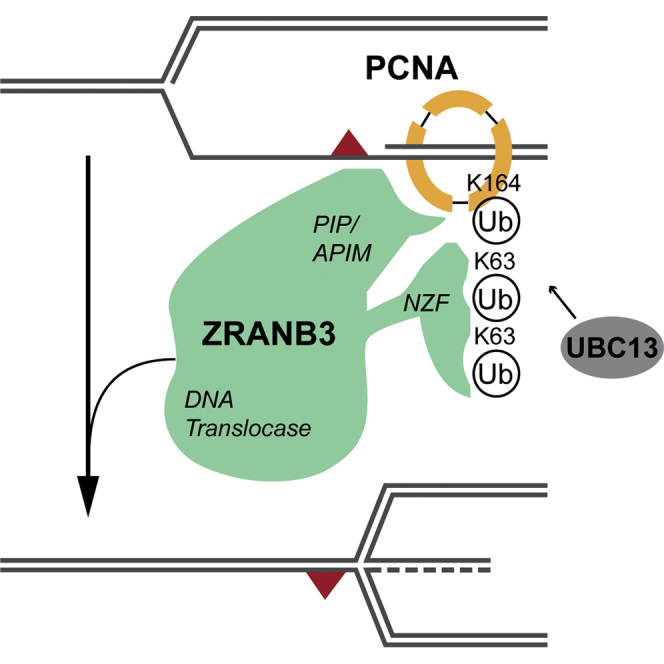
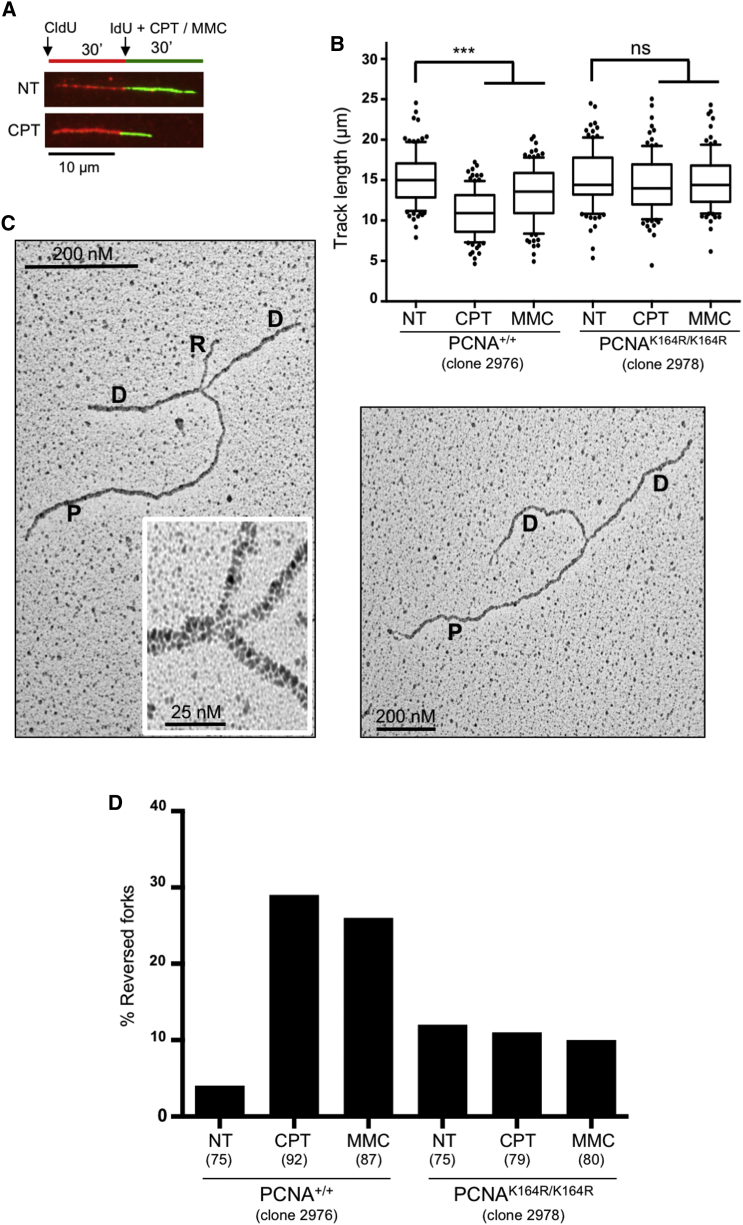
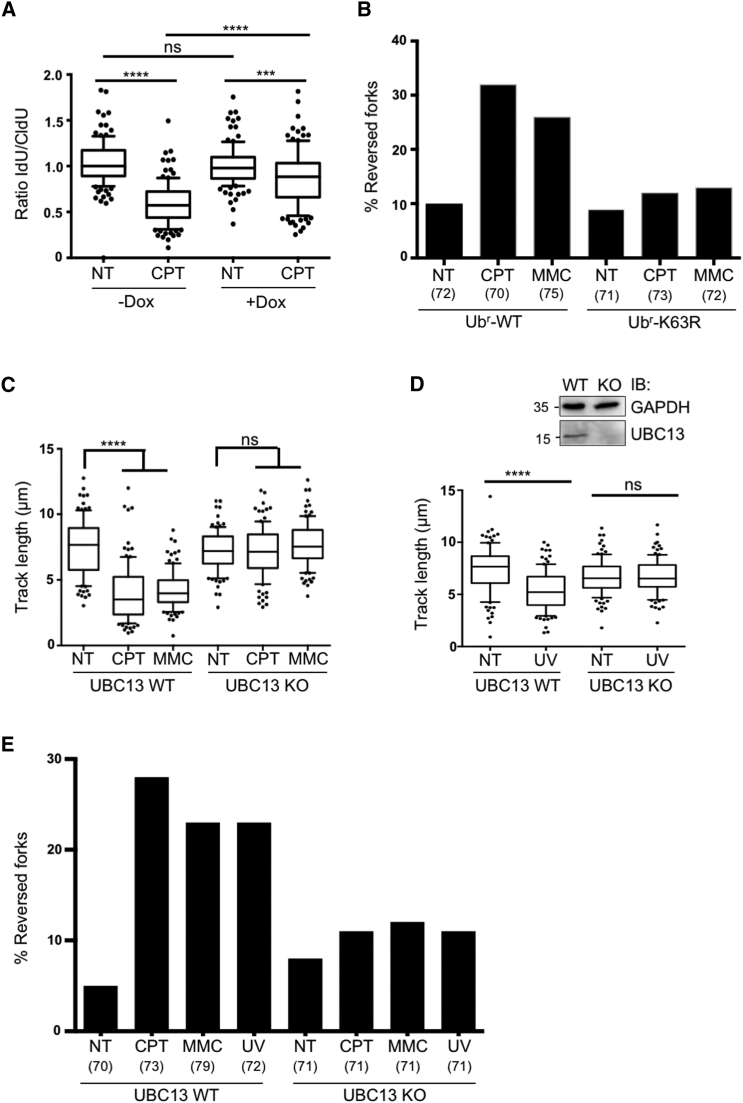
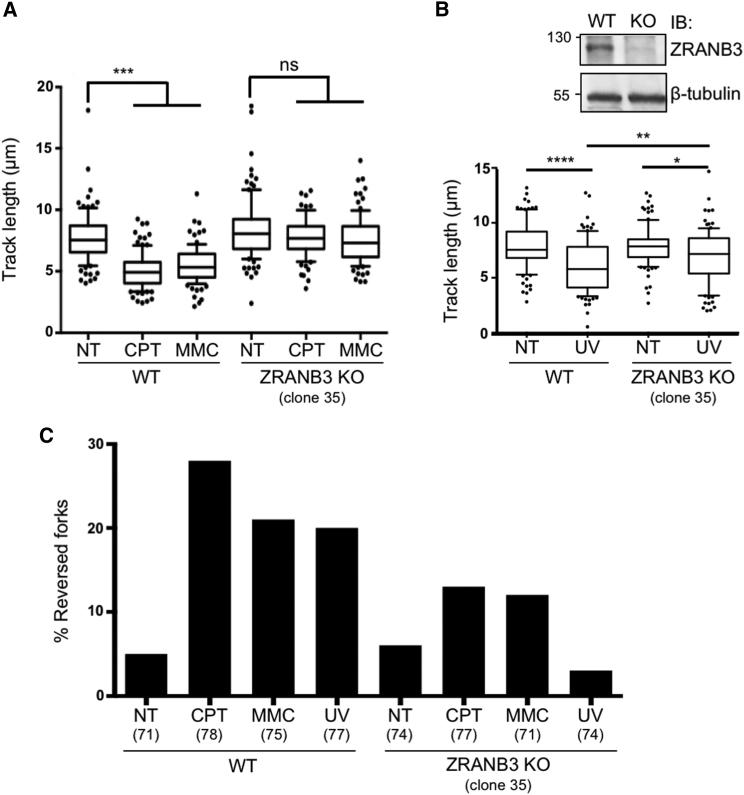
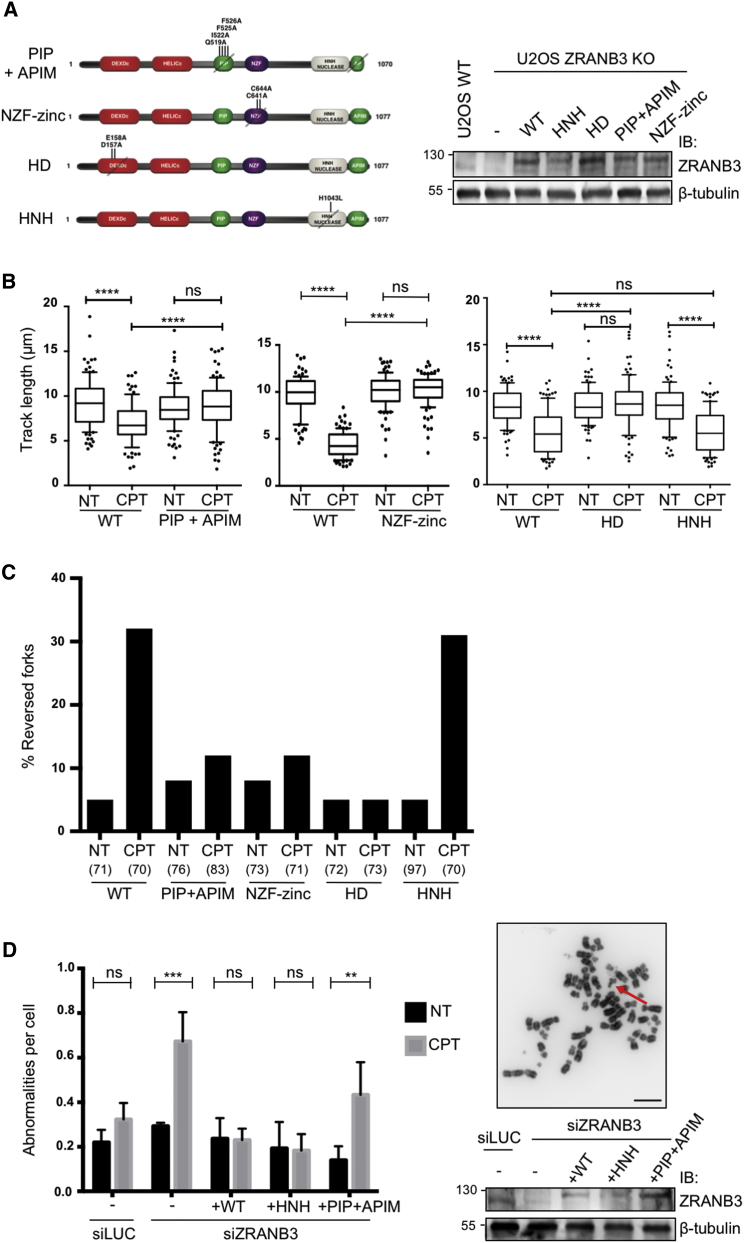
DNA damage tolerance during eukaryotic replication is orchestrated by PCNA ubiquitination. While monoubiquitination activates mutagenic translesion synthesis, polyubiquitination activates an error-free pathway, elusive in mammals, enabling damage bypass by template switching. Fork reversal is driven in vitro by multiple enzymes, including the DNA translocase ZRANB3, shown to bind polyubiquitinated PCNA. However, whether this interaction promotes fork remodeling and template switching in vivo was unknown. Here we show that damage-induced fork reversal in mammalian cells requires PCNA ubiquitination, UBC13, and K63-linked polyubiquitin chains, previously involved in error-free damage tolerance. Fork reversal in vivo also requires ZRANB3 translocase activity and its interaction with polyubiquitinated PCNA, pinpointing ZRANB3 as a key effector of error-free DNA damage tolerance. Mutations affecting fork reversal also induced unrestrained fork progression and chromosomal breakage, suggesting fork remodeling as a global fork slowing and protection mechanism. Targeting these fork protection systems represents a promising strategy to potentiate cancer chemotherapy.
Overview
The claims and statistics of this paper haven’t been checked yet.
Run the check — free, no account needed. It reads the open-access text and checks the sources it cites.
Integrity signals
Registry
Cites
Statistics
Figures
Verification
Claims the paper makes
The claims and statistics of this paper haven’t been checked yet.
Run the check — free, no account needed. It reads the open-access text and checks the sources it cites.
Claims other papers make about this one
Each is checked against this paper’s own text: does it say what the citing paper says it does?
In the citing paper
“Recently, K63-linked polyubiquitination of PCNA was found to stimulate template switching by creating a binding platform for the DNA translocase, ZRANB3 (Vujanovic et al., 2017).”
From USP7 Is a Master Regulator of Genome Stability (2020) · cites this paper as Vujanovic et al., 2017
Self-check
Percentages, sums and reported differences re-computed from the paper’s own numbers.
The self-check needs the paper’s full text.
Citations
Cites
RAD6-dependent DNA repair is linked to modification of PCNA by ubiquitin and SUMO
Hoege, C., Pfander, B., Moldovan, G., Pyrowolakis, G., & Jentsch, S. (2002) · Nature · doi:10.1038/nature00991 · Cited by 2,202
The Bloom's syndrome helicase suppresses crossing over during homologous recombination
Wu, L., & Hickson, I. D. (2003) · Nature · doi:10.1038/nature02253 · Cited by 1,087
Fork Reversal and ssDNA Accumulation at Stalled Replication Forks Owing to Checkpoint Defects
Sogo, J. M., Lopes, M., & Foiani, M. (2002) · Science · doi:10.1126/science.1074023 · Cited by 824
Self-citationUbiquitin-binding domains in Y-family polymerases regulate translesion synthesis.
Bienko, M., Green, C. M., Crosetto, N., Rudolf, F., Zapart, G., Coull, B., Kannouche, P., Wider, G., Peter, M., Lehmann, A. R., et al. (2005) · Science · doi:10.1126/science.1120615 · Cited by 712
Rad51-mediated replication fork reversal is a global response to genotoxic treatments in human cells
Zellweger, R., Dalcher, D., Mutreja, K., Berti, M., Schmid, J. A., Herrador, R., Vindigni, A., & Lopes, M. (2015) · The Journal of Cell Biology · doi:10.1083/jcb.201406099 · Cited by 691
Self-citationTopoisomerase I poisoning results in PARP-mediated replication fork reversal
Chaudhuri, A. R., Hashimoto, Y., Herrador, R., Neelsen, K. J., Fachinetti, D., Bermejo, R., Cocito, A., Costanzo, V., & Lopes, M. (2012) · Nature Structural & Molecular Biology · doi:10.1038/nsmb.2258 · Cited by 524
Self-citationReplication fork reversal in eukaryotes: from dead end to dynamic response
Neelsen, K. J., & Lopes, M. (2015) · Nature Reviews Molecular Cell Biology · doi:10.1038/nrm3935 · Cited by 523
Self-citationA model for replication repair in mammalian cells
Higgins, N. P., Kato, K., & Strauss, B. S. (1976) · Journal of Molecular Biology · doi:10.1016/0022-2836(76)90156-x · Cited by 444
Histone H1 couples initiation and amplification of ubiquitin signalling after DNA damage
Thorslund, T., Ripplinger, A., Hoffmann, S., Wild, T., Uckelmann, M., Villumsen, B. H., Narita, T., Sixma, T. K., Choudhary, C., Bekker‐Jensen, S., et al. (2015) · Nature · doi:10.1038/nature15401 · Cited by 438
Betous, R., Mason, A. C., Rambo, R. P., Bansbach, C. E., Badu-Nkansah, A., Sirbu, B. M., Eichman, B. F., & Cortez, D. (2012) · Genes & Development · doi:10.1101/gad.178459.111 · Cited by 313
Self-citation
Cited by
Sorted by citations
Items 101–200 of 226
Spatiotemporal regulation of PCNA ubiquitination in damage tolerance pathways
Masuda, Y., & Masutani, C. (2019) · Critical Reviews in Biochemistry and Molecular Biology · doi:10.1080/10409238.2019.1687420 · Cited by 28
Jackson, L. M., Dhoonmoon, A., Hale, A., Dennis, K. A., Schleicher, E. M., Nicolae, C. M., & Moldovan, G. (2021) · Nucleic Acids Research · doi:10.1093/nar/gkab1184 · Cited by 28
The Tip of an Iceberg: Replication-Associated Functions of the Tumor Suppressor p53
Gottifredi, V., & Wiesmüller, L. (2018) · Cancers · doi:10.3390/cancers10080250 · Cited by 30
Physiological and Pathological Roles of RAD52 at DNA Replication Forks
Malacaria, E., Honda, M., Franchitto, A., Spies, M., & Pichierri, P. (2020) · Cancers · doi:10.3390/cancers12020402 · Cited by 25
Polymerase iota (Pol ι) prevents PrimPol-mediated nascent DNA synthesis and chromosome instability
Mansilla, S. F., Bertolin, A. P., Arbilla, S. V., Castaño, B. A., Jahjah, T., Singh, J. K., Siri, S. O., Castro, M. V., de la Vega, M. B., Quinet, A., et al. (2023) · Science Advances · doi:10.1126/sciadv.ade7997 · Cited by 30
RFWD3 promotes ZRANB3 recruitment to regulate the remodeling of stalled replication forks
Moore, C. E., Yalcindag, S. E., Czeladko, H., Ravindranathan, R., Hanthi, Y. W., Levy, J. C., Sannino, V., Schindler, D., Ciccia, A., Costanzo, V., et al. (2023) · The Journal of Cell Biology · doi:10.1083/jcb.202106022 · Cited by 26
Self-citationThe Adaptive Mechanisms and Checkpoint Responses to a Stressed DNA Replication Fork
Saldanha, J., Rageul, J., Patel, J. A., & Kim, H. (2023) · International Journal of Molecular Sciences · doi:10.3390/ijms241310488 · Cited by 28
Nuclear RNR-α antagonizes cell proliferation by directly inhibiting ZRANB3
Fu, Y., Long, M. J. C., Wisitpitthaya, S., Inayat, H., Pierpont, T. M., Elsaid, I. M., Bloom, J. C., Ortega, J., Weiss, R. S., & Aye, Y. (2018) · Nature Chemical Biology · doi:10.1038/s41589-018-0113-5 · Cited by 25
Biber, S., Pospiech, H., Gottifredi, V., & Wiesmüller, L. (2020) · Nucleic Acids Research · doi:10.1093/nar/gkaa974 · Cited by 25
Bertolin, A. P., Canal, B., Yekezare, M., Early, A. E., Zeng, J., Instrell, R., Howell, M., & Diffley, J. F. X. (2025) · Molecular Cell · doi:10.1016/j.molcel.2025.06.002 · Cited by 27
Diverse mechanisms of PARP inhibitor resistance in ovarian cancer
Wakefield, M. J., Nesic, K., Kondrashova, O., & Scott, C. L. (2019) · Biochimica et Biophysica Acta (BBA) - Reviews on Cancer · doi:10.1016/j.bbcan.2019.08.002 · Cited by 24
PARP1 recruits DNA translocases to restrain DNA replication and facilitate DNA repair
Ho, Y.-C., Ku, C.-S., Tsai, S.-S., Shiu, J.-L., Jiang, Y., Miriam, H. E., Zhang, H., Chen, Y., Chiu, W., Chang, S., et al. (2022) · PLoS Genetics · doi:10.1371/journal.pgen.1010545 · Cited by 26
Işık, E., Shukla, K., Pospíšilová, M., König, C., Andrš, M., Rao, S., Rosano, V., Dobrovolná, J., Krejčí, L., & Janščák, P. (2024) · Science Advances · doi:10.1126/sciadv.adk2685 · Cited by 24
Impact of the interplay between stemness features, p53 and pol iota on replication pathway choices
Ihle, M., Biber, S., Schroeder, I. S., Blattner, C., Deniz, M., Damia, G. L. M., Gottifredi, V., & Wiesmüller, L. (2021) · Nucleic Acids Research · doi:10.1093/nar/gkab526 · Cited by 23
RecA‐independent recombination: Dependence on the Escherichia coli RarA protein
Jain, K., Wood, E. A., Romero, Z. J., & Cox, M. M. (2020) · Molecular Microbiology · doi:10.1111/mmi.14655 · Cited by 24
Romero, Z. J., Armstrong, T. J., Henrikus, S. S., Chen, S. H., Glass, D. J., Ferrazzoli, A. E., Wood, E. A., Chitteni‐Pattu, S., van Oijen, A. M., Lovett, S. T., et al. (2019) · Nucleic Acids Research · doi:10.1093/nar/gkz960 · Cited by 20
FANCD2-dependent mitotic DNA synthesis relies on PCNA K164 ubiquitination
Leung, W., Baxley, R. M., Traband, E. L., Chang, Y., Rogers, C. B., Wang, L., Durrett, W., Bromley, K., Fiedorowicz, L., Thakar, T., et al. (2023) · Cell Reports · doi:10.1016/j.celrep.2023.113523 · Cited by 21
Gallo, D., & Brown, G. W. (2019) · Critical Reviews in Biochemistry and Molecular Biology · doi:10.1080/10409238.2019.1651817 · Cited by 21
Disparate requirements for RAD54L in replication fork reversal
Uhrig, M. E., Sharma, N., Maxwell, P., Gómez, J., Selemenakis, P., Mazin, A. V., & Wiese, C. (2024) · Nucleic Acids Research · doi:10.1093/nar/gkae828 · Cited by 20
Non-Recombinogenic Functions of Rad51, BRCA2, and Rad52 in DNA Damage Tolerance
Prado, F. (2021) · Genes · doi:10.3390/genes12101550 · Cited by 23
RNF4 controls the extent of replication fork reversal to preserve genome stability
Ding, L., Luo, Y., Tian, T., Xu, C., Yang, Y., Bu, M., Han, J., Yang, B., Yan, H., Liu, T., et al. (2022) · Nucleic Acids Research · doi:10.1093/nar/gkac447 · Cited by 21
Self-citationFANCM branchpoint translocase: Master of traverse, reverse and adverse DNA repair
Abbouche, L., Bythell‐Douglas, R., & Deans, A. J. (2024) · DNA repair · doi:10.1016/j.dnarep.2024.103701 · Cited by 20
Fork Protection and Therapy Resistance in Hereditary Breast CancerPreprint
Cantor, S. B., & Calvo, J. A. (2017) · Cold Spring Harbor Symposia on Quantitative Biology · doi:10.1101/sqb.2017.82.034413 · Cited by 20
Harnessing DNA replication stress to target RBM10 deficiency in lung adenocarcinoma
Machour, F. E., Abu‐Zhayia, E. R., Kamar, J., Barisaac, A. S., Simon, I., & Ayoub, N. (2024) · Nature Communications · doi:10.1038/s41467-024-50882-0 · Cited by 20
Takahashi, T. S., Wollscheid, H.-P., Lowther, J., & Ulrich, H. D. (2020) · Nucleic Acids Research · doi:10.1093/nar/gkaa053 · Cited by 19
PRIMPOL ensures robust handoff between on-the-fly and post-replicative DNA lesion bypass
Mellor, C., Nassar, J., Šviković, S., & Sale, J. E. (2023) · Nucleic Acids Research · doi:10.1093/nar/gkad1054 · Cited by 20
Ubiquitylation at the Fork: Making and Breaking Chains to Complete DNA Replication
Yates, M., & Maréchal, A. (2018) · International Journal of Molecular Sciences · doi:10.3390/ijms19102909 · Cited by 19
Ercilla, A., Feu, S., Aranda, S., Llopis, A., Brynjólfsdóttir, S. H., Sørensen, C. S., Toledo, L. I., & Agell, N. (2019) · Cellular and Molecular Life Sciences · doi:10.1007/s00018-019-03206-1 · Cited by 21
Wu, X. Y., & Wang, B. (2021) · Nature Communications · doi:10.1038/s41467-021-24665-w · Cited by 20
Genetic Connections and Convergent Evolution of Tropical Indigenous Peoples in Asia
Deng, L., Pan, Y., Wang, Y., Chen, H., Yuan, K., Chen, S., Lu, D., Lü, Y., Mokhtar, S. S., Rahman, T. H. A., et al. (2021) · Molecular Biology and Evolution · doi:10.1093/molbev/msab361 · Cited by 20
Ubiquitin and SUMO as timers during DNA replication
Martín-Rufo, R., de la Vega-Barranco, G., & Lecona, E. (2022) · Seminars in Cell and Developmental Biology · doi:10.1016/j.semcdb.2022.02.013 · Cited by 19
The TIP60-ATM axis regulates replication fork stability in BRCA-deficient cells
Schleicher, E. M., Dhoonmoon, A., Jackson, L. M., Khatib, J. B., Nicolae, C. M., & Moldovan, G. (2022) · Oncogenesis · doi:10.1038/s41389-022-00410-w · Cited by 20
Chen, S., Pan, C., Huang, J., & Liu, T. (2024) · The EMBO Journal · doi:10.1038/s44318-024-00066-9 · Cited by 19
Self-citationYasinskyi, Y., Protsenko, O. V., Maistrenko, O. M., Rybalchenko, V. K., Prylutskyy, Y. І., Täuscher, E., Ritter, U., & Kozeretska, I. A. (2019) · Toxicology Letters · doi:10.1016/j.toxlet.2019.03.006 · Cited by 18
XLF and H2AX function in series to promote replication fork stability
Chen, B.-R., Quinet, A., Byrum, A. K., Jackson, J., Berti, M., Thangavel, S., Bredemeyer, A. L., Hindi, I., Mosammaparast, N., Tyler, J. K., et al. (2019) · The Journal of Cell Biology · doi:10.1083/jcb.201808134 · Cited by 23
Post-Translational Modifications of PCNA: Guiding for the Best DNA Damage Tolerance Choice
Bellı́, G., Colomina, N., Castells‐Roca, L., & Lorite, N. P. (2022) · Journal of Fungi · doi:10.3390/jof8060621 · Cited by 19
Nuclear myosin VI maintains replication fork stability
Shi, J., Hauschulte, K., Mikičić, I., Maharjan, S., Arz, V., Strauch, T., Heidelberger, J. B., Schaefer, J. V., Dreier, B., Plückthun, A., et al. (2023) · Nature Communications · doi:10.1038/s41467-023-39517-y · Cited by 17
Elfar, G. A., Aning, O. A., Ngai, T. W., Yeo, P., Chan, J. W. K., Sim, S. H., Goh, L., Ju, Y., Phua, C. Z. J., Yeo, J. Z. Z., et al. (2024) · Nucleic Acids Research · doi:10.1093/nar/gkae811 · Cited by 17
Zhu, C., Iwase, M., Li, Z., Wang, F., Quinet, A., Vindigni, A., & Shao, J. (2022) · Nature Communications · doi:10.1038/s41467-022-34310-9 · Cited by 16
Precision cancer therapy: profiting from tumor specific defects in the DNA damage tolerance system
Buoninfante, O. A., Pilzecker, B., Aslam, M. A., Zavrakidis, I., van der Wiel, R., van de Ven, M., van den Berk, P. C. M., & Jacobs, H. (2018) · Oncotarget · doi:10.18632/oncotarget.24777 · Cited by 16
Self-citationKang, H. J., Park, H., Yoo, E. J., Lee, J. H., Choi, S. Y., Lee‐Kwon, W., Lee, K., Hur, J., Seo, J. K., Ra, J. S., et al. (2019) · iScience · doi:10.1016/j.isci.2019.07.021 · Cited by 16
Wegmann, S., Meister, C., Renz, C., Yakoub, G., Wollscheid, H.-P., Takahashi, T. S., Mikičić, I., Beli, P., & Ulrich, H. D. (2022) · Molecular Cell · doi:10.1016/j.molcel.2022.02.016 · Cited by 16
Mechanisms of eukaryotic replisome disassembly
Moreno, S. P., & Gambus, A. (2020) · Biochemical Society Transactions · doi:10.1042/bst20190363 · Cited by 15
Shiu, J.-L., Wu, C.-K., Chang, S., Sun, Y.-J., Chen, Y., Lai, C., Chiu, W., Chang, W., Myung, K., Su, W., et al. (2020) · Oncogenesis · doi:10.1038/s41389-020-00289-5 · Cited by 15
Yates, M., Marois, I., St-Hilaire, E., Ronato, D. A., Djerir, B., Brochu, C., Morin, T., Hammond-Martel, I., Gezzar-Dandashi, S., Casimir, L., et al. (2024) · PLoS Biology · doi:10.1371/journal.pbio.3002552 · Cited by 14
Targeting proliferating cell nuclear antigen (PCNA) for cancer therapy
Søgaard, C. K., & Otterlei, M. (2024) · Advances in pharmacology · doi:10.1016/bs.apha.2024.04.002 · Cited by 14
Mocanu, C., & Chan, K. (2021) · Royal Society Open Science · doi:10.1098/rsos.201932 · Cited by 14
Bromodomain proteins: protectors against endogenous DNA damage and facilitators of genome integrity
Lee, S. Y., Kim, J. J., & Miller, K. M. (2021) · Experimental & Molecular Medicine · doi:10.1038/s12276-021-00673-0 · Cited by 15
Single-Molecule Techniques to Study Chromatin
Chanou, A., & Hamperl, S. (2021) · Frontiers in Cell and Developmental Biology · doi:10.3389/fcell.2021.699771 · Cited by 16
Genome maintenance meets mechanobiology
Spegg, V., & Altmeyer, M. (2023) · Chromosoma · doi:10.1007/s00412-023-00807-5 · Cited by 14
Batenburg, N. L., Mersaoui, S. Y., Walker, J. R., Coulombe, Y., Hammond-Martel, I., Würtele, H., Masson, J., & Zhu, X. (2021) · Nucleic Acids Research · doi:10.1093/nar/gkab1173 · Cited by 12
LAP2α preserves genome integrity through assisting RPA deposition on damaged chromatin
Bao, K., Zhang, Q., Liu, S., Song, N., Guo, Q., Liu, L., Tian, S., Hao, J., Zhu, Y., Zhang, K., et al. (2022) · Genome biology · doi:10.1186/s13059-022-02638-6 · Cited by 13
RAD51 is chromatin enriched and targetable in BRCA1-deficient cells
Peng, M., Lee, S., Nair, H. G., MacGilvary, N. J., Cong, K., Kraemer, M., Li, R., McConnell, J., Baer, C. E., Deng, B., et al. (2025) · Molecular Cell · doi:10.1016/j.molcel.2025.08.017 · Cited by 11
DNA replication and replication stress response in the context of nuclear architecture
González‐Acosta, D., & Lopes, M. (2023) · Chromosoma · doi:10.1007/s00412-023-00813-7 · Cited by 12
Self-citationYao, R., Shi, L., Wu, C., Qiao, W., Liu, L., & Wu, J. (2018) · Applied and Environmental Microbiology · doi:10.1128/aem.01988-18 · Cited by 12
Muraszko, J., Kramarz, K., Argunhan, B., Ito, K., Baranowska, G., Kurokawa, Y., Murayama, Y., Tsubouchi, H., Lambert, S., Iwasaki, H., et al. (2021) · Nucleic Acids Research · doi:10.1093/nar/gkab511 · Cited by 11
Homologous recombination defects and how they affect replication fork maintenance
Son, M. Y., & Hasty, P. (2018) · Global Medical Genetics · doi:10.3934/genet.2018.4.192 · Cited by 14
Clofarabine Commandeers the RNR-α-ZRANB3 Nuclear Signaling Axis
Long, M. J. C., Zhao, Y., & Aye, Y. (2019) · Cell chemical biology · doi:10.1016/j.chembiol.2019.11.012 · Cited by 11
Ko, J. H., Son, M. Y., Zhou, Q., Molnárová, L., Song, L., Mlčoušková, J., Je̅kabsons, A., Montagna, C., Krejčí, L., & Hasty, P. (2020) · Cell Reports · doi:10.1016/j.celrep.2020.108543 · Cited by 11
CK2-dependent degradation of CBX3 dictates replication fork stalling and PARP inhibitor sensitivity
Ma, J., Ren, D., Wang, Z., Li, W., Li, L., Liu, T., Ye, Q., Lei, Y., Jian, Y., Ma, B., et al. (2024) · Science Advances · doi:10.1126/sciadv.adk8908 · Cited by 10
Wang, Y.-C., Kelso, A. A., Karamafrooz, A., Chen, Y., Chen, W., Cheng, C.-T., Qi, Y., Gu, L., Malkas, L. H., Taglialatela, A., et al. (2023) · Cell Reports · doi:10.1016/j.celrep.2023.112296 · Cited by 9
Self-citationImplications of Translesion DNA Synthesis Polymerases on Genomic Stability and Human Health
Venkadakrishnan, J., Lahane, G. P., Dhar, A., Xiao, W., Bhat, K. M., Pandita, T. K., & Bhat, A. (2023) · Molecular and Cellular Biology · doi:10.1080/10985549.2023.2224199 · Cited by 10
Batenburg, N. L., Sowa, D. J., Walker, J. R., Andres, S. N., & Zhu, X. (2024) · Nucleic Acids Research · doi:10.1093/nar/gkae154 · Cited by 8
BRCA2 deficiency and replication stress drive APOBEC3-Mediated genomic instability
Situ, K., Duan, H., Godin, S. K., Yang, J., McCloskey, G. Q., Naeem, B., Gillis, M. K., Zeb, M. H., Salhotra, S., Rawal, P., et al. (2025) · Nature Communications · doi:10.1038/s41467-025-64578-6 · Cited by 10
RFWD3 and translesion DNA polymerases contribute to PCNA modification–dependent DNA damage tolerance
Kanao, R., Kawai, H., Taniguchi, T., Takata, M., & Masutani, C. (2022) · Life Science Alliance · doi:10.26508/lsa.202201584 · Cited by 9
TFIP11 promotes replication fork reversal to preserve genome stability
Chen, J., Wu, M., Yang, Y., Ruan, C., Luo, Y., Song, L., Wu, T., Huang, J., Yang, B., & Liu, T. (2024) · Nature Communications · doi:10.1038/s41467-024-45684-3 · Cited by 8
Self-citationRole of Cockayne Syndrome Group B Protein in Replication Stress: Implications for Cancer Therapy
Walker, J. R., & Zhu, X. (2022) · International Journal of Molecular Sciences · doi:10.3390/ijms231810212 · Cited by 9
A RAD18–UBC13–PALB2–RNF168 axis mediates replication fork recovery in BRCA1-deficient cancer cells
Cybulla, E., Wallace, S., Meroni, A., Jackson, J., Agashe, S., Tennakoon, M., Limbu, M., Quinet, A., Lomonosova, E. E., Noia, H. M., et al. (2024) · Nucleic Acids Research · doi:10.1093/nar/gkae563 · Cited by 11
TRF1 relies on fork reversal to prevent fragility at human telomeres
Vaurs, M., Claude, E., Zanella, E., Rodrigues, J., Nassour, J., Karlseder, J., Azzalin, C. M., Doksani, Y., & Decottignies, A. (2025) · Nature Communications · doi:10.1038/s41467-025-61828-5 · Cited by 7
Zeinali, E., Mashayekhi, F., Farraj, R. A., Hasanni, T., Caron, M., Coulombe, Y., Fitieh, A. M., Glover, J. N. M., Masson, J., & Ismail, I. H. (2025) · Science Advances · doi:10.1126/sciadv.adv0381 · Cited by 8
Sang, P. B., Jaiswal, R. K., Lyu, X., & Chai, W. (2024) · Nucleic Acids Research · doi:10.1093/nar/gkae078 · Cited by 6
Just bypass it: mechanisms of DNA damage tolerance
Minocha, S., Oliva-Santiago, M., Gadi, S. A., & Duxin, J. P. (2025) · Trends in Biochemical Sciences · doi:10.1016/j.tibs.2025.07.004 · Cited by 8
Yang, Y., Jayaprakash, D., Jhujh, S. S., Reynolds, J. J., Chen, S., Gao, Y., Anand, J. R., Mutter‐Rottmayer, E., Ariel, P., An, J., et al. (2024) · Nucleic Acids Research · doi:10.1093/nar/gkae918 · Cited by 6
Remodeling Collapsed DNA Replication Forks for Cancer Development
Sotiriou, S. K., & Halazonetis, T. D. (2019) · Cancer Research · doi:10.1158/0008-5472.can-19-0216 · Cited by 6
Mórocz, M., Qorri, E., Pekker, E., Tick, G., & Haracska, L. (2023) · Journal of Biotechnology · doi:10.1016/j.jbiotec.2023.12.001 · Cited by 7
Wilkins, R. J., & Petermann, E. (2025) · Journal of Cell Science · doi:10.1242/jcs.264148 · Cited by 5
CSB Regulates Pathway Choice in Response to DNA Replication Stress Induced by Camptothecin
Batenburg, N. L., Walker, J. R., & Zhu, X. (2023) · International Journal of Molecular Sciences · doi:10.3390/ijms241512419 · Cited by 5
The interferon response at the intersection of genome integrity and innate immunity
Duzanic, F. D., & Penengo, L. (2024) · DNA repair · doi:10.1016/j.dnarep.2024.103786 · Cited by 5
Self-citationChromatin-remodeling factor CHR721 with non-canonical PIP-box interacts with OsPCNA in Rice
Zhang, Y., Chen, Q., Zhu, G., Zhang, D., & Liang, W. (2022) · BMC Plant Biology · doi:10.1186/s12870-022-03532-w · Cited by 5
Mammalian life depends on two distinct pathways of DNA damage tolerance
Buoninfante, O. A., Pilzecker, B., Spanjaard, A., de Groot, D., Preković, S., Song, J., Lieftink, C., Ayidah, M., Pritchard, C. E. J., Vivié, J., et al. (2023) · Proceedings of the National Academy of Sciences · doi:10.1073/pnas.2216055120 · Cited by 7
Self-citationSynergistic protection of nascent DNA at stalled forks by MSANTD4 and BRCA1/2–RAD51
Xie, H., Song, L., Mao, G., Han, J., Pu, J., Wu, Z., Chen, J., Zhou, J., Huang, J., Dong, F., et al. (2025) · Nature Chemical Biology · doi:10.1038/s41589-024-01833-9 · Cited by 4
Self-citationZhou, Y., Deng, Z., Xiong, S., Li, W., Luo, W., Luo, M., Tang, H., Wu, W., Wong, C. C., Yin, D., et al. (2025) · Journal of Biological Chemistry · doi:10.1016/j.jbc.2025.108551 · Cited by 5
Mohamed, T. M., Adolph, M. B., & Cortez, D. (2022) · Journal of Biological Chemistry · doi:10.1016/j.jbc.2022.101672 · Cited by 4
Self-citationRad51 at the Crossroads: Bridging DNA Repair, Tumorigenesis, and Immune Regulation
Qin, Z., Lu, M., Guo, J., Wang, C., & Ma, T. (2025) · Med Research · doi:10.1002/mdr2.70032 · Cited by 3
Ski2-like helicase ASCC3 unwinds DNA upon fork stalling to control replication stress responses
Cui, S., Batenburg, N. L., Coulombe, Y., Arumugam, A., Walker, J. R., Sheida, S. V., Bielinsky, A., Wahl, M. C., Masson, J., & Zhu, X. (2026) · Cell Reports · doi:10.1016/j.celrep.2026.117051 · Cited by 3
Implications of ubiquitination and the maintenance of replication fork stability in cancer therapy
Xia, D., Zhu, X., Wang, Y., Gong, P., Su, H.-S., & Xu, X. (2023) · Bioscience Reports · doi:10.1042/bsr20222591 · Cited by 3
Trex2 responds to damaged replication forks in diverse ways
Hasty, P. (2021) · Molecular & Cellular Oncology · doi:10.1080/23723556.2021.1881394 · Cited by 3
Yang, Y., Jayaprakash, D., Hollingworth, R., Chen, S., Jablonski, A. E., Gao, Y., Anand, J. R., Mutter‐Rottmayer, E., An, J., Cheng, X., et al. (2021) · bioRxiv (Cold Spring Harbor Laboratory) · doi:10.1101/2021.03.17.435897 · Cited by 2
The mechanism of checkpoint-dependent DNA replication fork stabilization in human cellsPreprint
Bertolin, A. P., Canal, B., Yekezare, M., Zeng, J., Instrell, R., Howell, M., & Diffley, J. F. X. (2024) · bioRxiv (Cold Spring Harbor Laboratory) · doi:10.1101/2024.11.01.621514 · Cited by 3
H2BK120ub and its reader RNF169 sequentially regulate replication fork remodeling and stability
Duzanic, F. D., Mohana-Natarajan, V., Fisicaro, S., Bakker, C., Aouami, M., Amaral, G., Lopes, M., Taneja, N., & Penengo, L. (2025) · The EMBO Journal · doi:10.1038/s44318-025-00602-1 · Cited by 2
Self-citationThe Zinc Finger Ran-Binding Protein 3 (ZRANB3): An Advanced Perspective
Pelucchi, P., Mosca, E., Tomsič, N., Waheed, Y., Tigani, W., Chiodi, A., Mojumdar, A., Gerdol, M., & March, M. D. (2026) · International Journal of Molecular Sciences · doi:10.3390/ijms27020574 · Cited by 2
Roy, S., Fimreite, M. M., Chen, Y., Citron, F., Draetta, G. F., & Schlacher, K. (2026) · Nature Communications · doi:10.1038/s41467-026-70716-5 · Cited by 2
DPY30 Is an Epigenetic Decoupler Linking Replication Stress to Immunoediting in Pancreatic Cancer
Citron, F., Cecchetto, L., Granato, E., Ho, I.-L., Liu, Z., Balestrieri, C., Yen, E.-Y., Perelli, L., Zhang, L., Castillo, L. A., et al. (2026) · Cancer Research · doi:10.1158/0008-5472.can-25-3849 · Cited by 2
The BRCA1-A complex restricts replication fork reversal-dependent DNA repair in ATM deficient cells
Datta, A., Jackson, J., Morozov, Y. I., Qiu, J., Vindigni, A., & Greenberg, R. A. (2026) · Nature Communications · doi:10.1038/s41467-026-75271-7 · Cited by 2
Replication fork plasticity upon replication stress requires rapid nuclear actin polymerizationPreprint
Palumbieri, M. D., Merigliano, C., González‐Acosta, D., von Känel, T., Welter, B., Stoy, H., Krietsch, J., Ulferts, S., Sanchi, A., Grosse, R., et al. (2023) · bioRxiv (Cold Spring Harbor Laboratory) · doi:10.1101/2023.03.24.534097 · Cited by 2
Self-citationMolecular dependencies and genomic consequences of a global DNA damage tolerance defect
de Groot, D., Spanjaard, A., Shah, R., Kreft, M., Morris, B., Lieftink, C., Catsman, J. J. I., Ormel, S., Ayidah, M., Pilzecker, B., et al. (2024) · Genome biology · doi:10.1186/s13059-024-03451-z · Cited by 1
Self-citationMDC1 counteracts replication fork reversal and mediates chemosensitivity in BRCA1/2-deficient tumors
Hülya, D., Liptay, M., Barbosa, J. S., Gogola, E., Duarte, A. A., Schmid, J. A., Klebic, I., Mutlu, M., Siffert, M., Francica, P., et al. (2025) · Oncogene · doi:10.1038/s41388-025-03659-8 · Cited by 2
Self-citationExo1 cooperates with Tel1/ATM in promoting recombination events at DNA replication forks
Galli, M., Frigerio, C., Colombo, C. V., Casari, E., Longhese, M. P., & Clerici, M. (2024) · iScience · doi:10.1016/j.isci.2024.110410 · Cited by 1
Rogers, C. B., Leung, W., Baxley, R. M., Kram, R. E., Wang, L., Buytendorp, J. P., Le, K., Largaespada, D. A., Hendrickson, E. A., & Bielinsky, A. (2025) · Biomolecules · doi:10.3390/biom15010150 · Cited by 1
Huang, J., Taglialatela, A., Acharya, A., Leuzzi, G., Nambiar, T. S., Cuella-Martin, R., Hayward, S. B., Brunette, G. J., Anand, R., Soni, R. K., et al. (2019) · bioRxiv (Cold Spring Harbor Laboratory) · doi:10.1101/751974 · Cited by 1
Self-citation
Metadata
- Authors
- Vujanovic, M., Krietsch, J., Raso, M. C., Terraneo, N., Zellweger, R., Schmid, J. A., Taglialatela, A., Huang, J.-W., Holland, C. L., Zwicky, K., Herrador, R., Jacobs, H., Cortez, D., Ciccia, A., Penengo, L., & Lopes, M.
- Affiliations
- University of Zurich (CH)
- Columbia University Irving Medical Center (US)
- Vanderbilt University (US)
- The Netherlands Cancer Institute (NL)
- Corresponding author
- Lopes, Massimo
- ORCID
- Venue
- Molecular Cell
- Publisher
- Elsevier BV
- Published
- 2017-09
- Volume
- 67
- Issue
- 5
- Pages
- 882-890.e5
- ISSN
- 1097-2765 (ISSN-L)
- PMC
- PMC5594246
- OpenAlex
- W2751450140
- Cited by
- 227
- References
- 39
- Citations by year
- 2026: 10 · 2025: 19 · 2024: 25 · 2023: 27 · 2022: 23 · 2021: 28 · 2020: 35 · 2019: 26 · 2018: 27 · 2017: 7
- FWCI
- 10.62
- Type
- journal article
- Language
- en
- Open access
- hybrid
- doi.org
- Licence
- Locations
- Molecular Cell (publishedVersion, cc-by-nc-nd)
- Europe PMC (PubMed Central) (publishedVersion, cc-by-nc-nd)
- PubMed Central (publishedVersion, cc-by-nc-nd)
- PubMed (publishedVersion)
- DORA PSI (Paul Scherrer Institute) (submittedVersion, cc-by-nc-nd)
- Funders
- SNF (31003A_146924, 31003A_169959, 31003A_166370)
- ERC Consolidator (617102)
- Helmut Horten
- NIH (R01CA197774, GM116616)
- KWF (NKI-2012-5243)
- ZonMW Top (91213018)
- Topics
- Life Sciences › Biochemistry, Genetics and Molecular Biology › Molecular Biology › DNA Repair Mechanisms
- Life Sciences › Biochemistry, Genetics and Molecular Biology › Molecular Biology › Ubiquitin and proteasome pathways
- Life Sciences › Biochemistry, Genetics and Molecular Biology › Molecular Biology › Epigenetics and DNA Methylation
- Keywords
- replication fork reversal, DNA damage tolerance, ZRANB3, DNA translocase, Ubc13, K63-linked polyubiquitin, template switching, chromosome breakage, cancer chemotherapy
- MeSH terms
- Animals, DNA Damage, DNA Replication, DNA Helicases, DNA, Neoplasm, Humans, Kinetics, Mutation, Neoplasms, Transfection, Replication Origin, Proliferating Cell Nuclear Antigen, Polyubiquitin, RNA Interference, Ubiquitin-Conjugating Enzymes, HCT116 Cells, Mice, Ubiquitination, HEK293 Cells, CRISPR-Cas Systems
About these checks
Registry, retraction, Cites and statistics results are computed, not judged, with one exception: a printed reference that no index lists is read once by a model before it counts as a citation error. Claims are extracted by a model and kept only when their quote appears verbatim in the text; each cited source is then checked, with a model’s help, for whether it says what the claim relies on. Those verdicts can be wrong — read the claim’s quote and the cited source before relying on one.
Statistics and arithmetic are recomputed, not judged.
Confidence bands are shown only for fields calibrated on our annotated test set. None is calibrated yet, so no band is shown.
What counts as a claim ›How we measure confidence ›How we check this ›
Are you an author, or do you see a problem with this page? Request a review
